Amplyfi has secured equity backing from the Cardiff Capital Region and the Development Bank of Wales
15:48, 21 Apr 2026Updated 16:48, 21 Apr 2026
One of Wales’ leading tech firms Amplyfi, whose expansion plans were backed with equity investment of £7m from the Cardiff Capital Region and the Development Bank of Wales, has collapsed into liquidation.
The Cardiff-based firm had developed an AI powered market intelligence platform used by global clients to better identify and react to market changes. However, with advances in AI platforms, such as ChatGPT, the business had come under increasing market pressures.
Bethan Evans and John Cullen of the Cardiff-based office of insolvency practice Menzies have been appointed joint liquidators.
Advertisement
Menzies said the the position is a creditors voluntary liquidation driven by Amplyfi’s board and not a result of a creditor petition to liquidate the business. What creditors, both secured and unsecured, are owed is is expected to be confirmed in the coming days with liquidators publishing, via Companies House, a statement of affairs.
Equity holders are the lowest ranked in any liquidation process, so even assuming there is any IP asset realisation through the insolvency process – the Development Bank of Wales and the Cardiff Capital Region’s equity fund are not expected to get any return.
The Development of Wales backed Amplyfi with a £2.6m equity investment to become a minority shareholder as part of an investment round that was led by Hong Kong-based QBN Capital back in 2022.
The Cardiff Capital Region’s £50m Innovation Investment Capital (IIC) fund, which is managed by Capricorn Fund Managers, made an equity investment of £4.7m into the company in 2023.
Advertisement
It was the fund’s maiden investment and now represents its first failure, although its other investments could generate significant returns via future exits. To date the fund has made ten equity investments, with a mandate per deal of between £3m to £5m.
The Cardiff Capital Region is made up of the ten local authorities of south-east Wales. The IIC fund, through the region’s £1.3bn now nearly fully invested £1.3bn City Deal, was funded by the UK and Welsh goverments. The Development Bank of Wales is wholly-owned by the Welsh Government.
A spokesperson for the Cardiff Capital Region said: “Innovation Investment Capital is a £50m fund established as an arms-length, FCA regulated limited partnership. It is independently administered by specialist fund managers to provide scale up investment to growing businesses from across south east Wales and attract inward investment to the region.
“Following a rigorous process, IIC invested £4.7m in Amplyfi. Sustained efforts were made to support Amplyfi, alongside co-investors, in a challenging and rapidly evolving AI landscape. As a minority shareholder, we will wait on the outcome of the liquidation process.”
Advertisement
A spokesperson for the Development Bank of Wales said: ‘We were sorry to be informed that the directors of Amplyfi have taken the decision to proceed with the liquidation of the company. The Development Bank of Wales last invested in the business in 2022.
“We have invested £2.6m in equity in Amplyfi and, as a minority investor, we will now await the outcome of the liquidation process. It would not be appropriate to comment further at this stage.”
Amplyfi, based at offices at the 1 Central Square office scheme, had made a number of redundancies last year. At one stage it has a workforce of around 40.
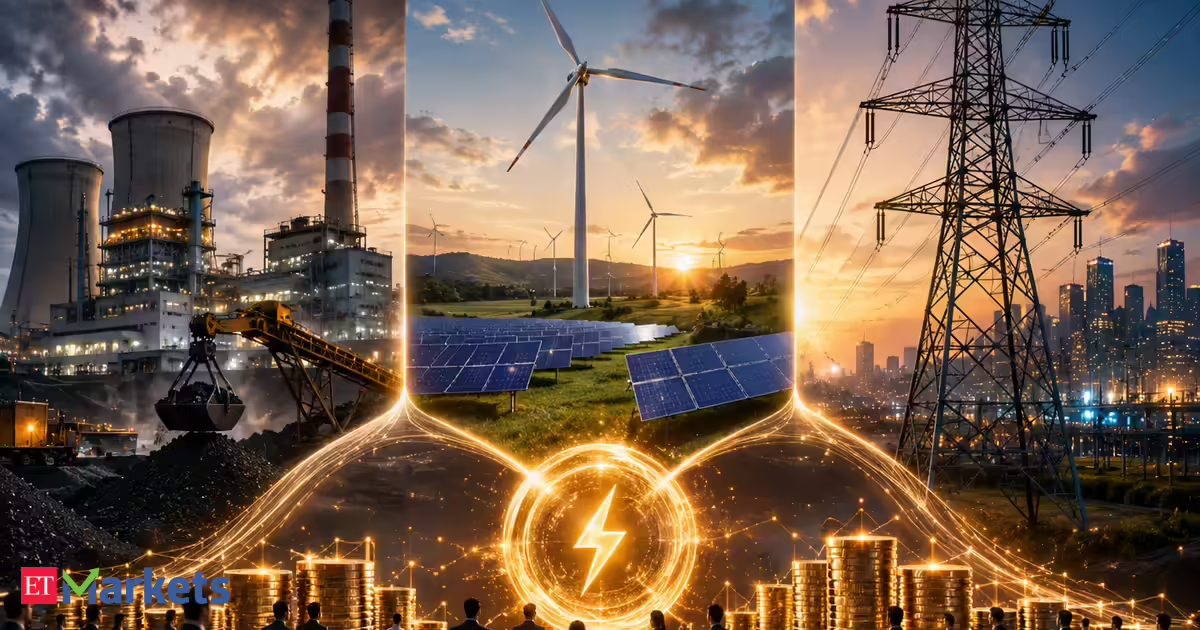
India’s domestic mutual funds are aggressively building stakes in Adani Group’s energy-linked equities, executing a strategic pivot that treats the conglomerate less as a volatility trade and more as a high-conviction bet on the nation’s massive electrification cycle.
Fresh shareholding data through March 2026 reveals a decisive institutional shift. Mutual fund (MF) ownership in Adani Energy Solutions has more than tripled, surging from 1.91% in December 2024 to 6.59% in March 2026. Adani Green Energy saw an even more dramatic institutional entry, with holdings jumping from a negligible 0.37% to 3.22% in the same period. Adani Power also witnessed steady accumulation, with MF stakes rising from 1.60% to 3.62%.
The pace and breadth of accumulation signal something beyond opportunistic bottom-fishing. Domestic institutions are reclassifying these stocks, not as high-volatility conglomerate plays, but as long-duration infrastructure compounders tied directly to India’s electrification cycle, according to a fund manager who didn’t wish to be named.
The investment logic begins with cash flow. More than 70% of the Adani Group’s EBITDA is derived from contracted capacity, a structure that gives earnings a visibility and predictability rare in large-cap Indian equities. For fund managers running diversified portfolios, that contracted revenue base, spanning power generation, transmission, renewables and logistics, offers a cushion against commodity or macro volatility.
Advertisement
Bullish market estimates project the group’s consolidated EBITDA could scale to Rs 2.5–3 lakh crore by FY30, driven by simultaneous expansion across thermal power, renewables, transmission, ports, airports, cement and logistics.
The more powerful driver, however, is thematic. Adani Power, Green and Energy Solutions sit at the intersection of the most structurally urgent demand story in India’s economy right now: electricity. The rapid scaling of data centres, electric mobility, manufacturing under the production-linked incentive framework, and urban infrastructure expansion will require reliable, large-scale power supply at a pace India has rarely had to deliver before. AI-linked power demand, still nascent but accelerating, adds another layer of urgency to an already strained grid.That positions generation, transmission and renewable energy assets at the precise centre of the next capital expenditure supercycle. For funds searching for large-cap names with visible growth triggers and durable earnings upside, the Adani energy trio is increasingly passing that screen.
Mutual fund analysts are giving explicit weight to the group’s track record here: ports built and operated at scale, transmission corridors commissioned, renewable capacity added quarter after quarter, airports turned around and airports greenfielded, cement capacity absorbed through acquisition.
Adani Power shares have surged 108% in the past year. A near-50% jump in 2026 alone has pushed its market capitalisation to ₹4.3 lakh crore, edging past NTPC to make it India’s most valuable listed power company and the most valuable within the Adani Group itself. The rally has been fuelled by strong earnings growth, rising electricity demand and steady institutional accumulation.
Yet Jefferies is not calling time on the trade. The brokerage has raised its price target on Adani Power to ₹255 from ₹185, rolling over to 20x FY28 estimated earnings, citing rising power demand and healthy growth prospects for the next three to four years.
On Adani Energy Solutions, up 48% over the past year, Jefferies maintains a Buy, pointing to a factor that sets it apart structurally: it is India’s only listed private-sector pure play on transmission and distribution assets. The order book stands at ₹718 billion of transmission projects on hand, up 20% year-on-year. And despite the recent run, the stock still trades at a 68% discount to its January 2023 peak EV/EBITDA. Adani Green Energy has gained 46% over the same period.
(Disclaimer: Recommendations, suggestions, views and opinions given by the experts are their own. These do not represent the views of The Economic Times)
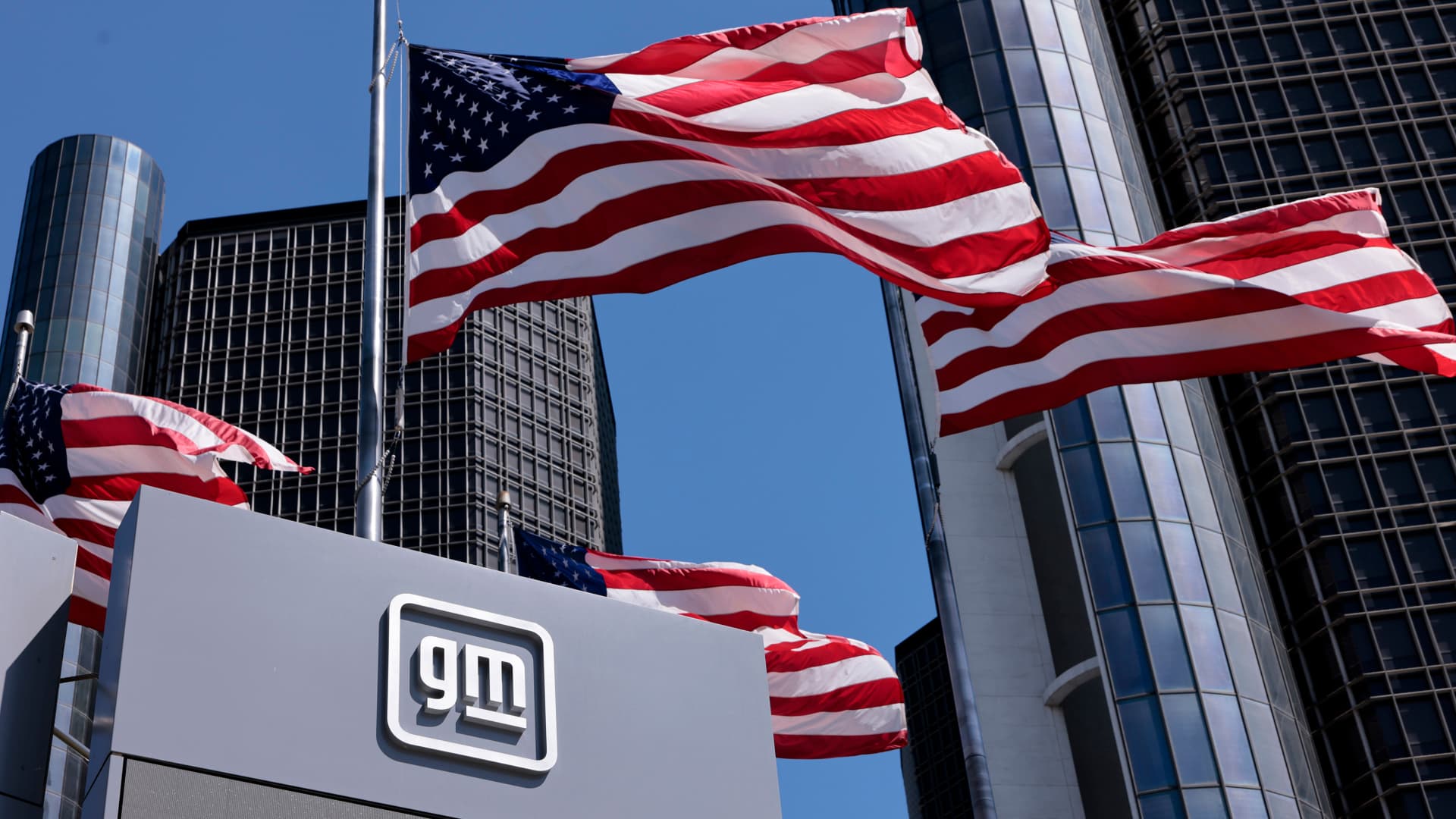
The former General Motors headquarters inside the Renaissance Center in Detroit, April 15, 2024.
Jeff Kowalsky | Bloomberg | Getty Images
DETROIT — As artificial intelligence expands, it threatens to exacerbate a growing trend for America’s largest automakers: the elimination of white-collar workers.
Advertisement
The “Detroit Three” automakers have together cut more than 20,000 U.S. salaried jobs, or 19% of their combined workforces, from recent employment peaks this decade, according to public filings and employment data from the companies.
Reasons for the job declines vary by automaker, but in general are tied to evolving technological changes in the automotive industry, with the rise of software-defined vehicles, autonomous and all-electric vehicles, and, most recently, AI.
“Artificial intelligence is going to replace literally half of all white-collar workers in the U.S.,” Ford CEO Jim Farley said in July at the Aspen ideas Festival. “AI will leave a lot of white-collar people behind,” he added later.
The largest American automaker has led the cuts, with General Motors reducing U.S. salaried headcounts by roughly 11,000 people from 2022 through last year. Those job cuts came after GM had a run-up in employment, expanding from 48,000 U.S. white-collar workers in 2020 to 58,000 in 2022.
Advertisement
Ford Motor and Chrysler parent Stellantis have cut jobs more gradually. From its salaried employment peak in 2020, Ford has scaled back by roughly 5,300 workers to reach about 30,700 white-collar employees last year, while Stellantis has gone from 15,000 salaried workers in 2020 to about 11,000 during that time.
On an annual basis, combined white-collar employment for the three automakers peaked at roughly 102,000 jobs in 2022. It fell 13%, to 88,700 people, as of the end of last year.
GM IT layoffs
Gad Levanon, chief economist at the labor data market nonprofit Burning Glass Institute, said he believes the jobs most at risk of being replaced by AI are clerical positions and more repetitive office jobs, like those in finance and information technology, including coding.
“A lot of white collar workers will lose their jobs because AI can automate some of their tasks,” he said, adding that some losses will be offset by jobs in growing areas of importance for automakers, such as autonomous vehicles, cybersecurity and software-defined vehicles. “I think it will be a major trend in the next decade or two.”
Advertisement
GM this week added to its cuts by laying off between 500 and 600 salaried workers globally, largely in information technology operations in Texas and Michigan, people familiar with the matter told CNBC, speaking anonymously about details that had not been made public. Those cuts were partially due to changing workforce needs involving AI, the people said.
GM’s layoffs came as the automaker is increasingly hiring for AI-related jobs and encouraging workers, including in IT, to embrace its AI platforms, according to a handful of current or former GM employees and the company’s hiring website.
“They’re going to push AI for everyday work and everything else,” a veteran programmer and data scientist for GM who was laid off this week told CNBC, speaking anonymously for fear of repercussions or impacts to potential future jobs. “I’ve seen it firsthand. It can make you much more productive, as a programmer. It can really help you get more work done, but AI isn’t going to do you any good if you don’t know the business.”
Mary Barra, chairman and chief executive officer of General Motors Co., speaks during the grand opening of General Motors global headquarters at Hudson’s Detroit in Detroit, Michigan, US, on Monday, Jan. 12, 2026.
Advertisement
Jeff Kowalsky | Bloomberg | Getty Images
Prior to the IT reductions, notable decreases in GM’s U.S. salaried workforce occurred as a result the winding down and eventual discontinuation of its Cruise robotaxi business as well as rolling evaluations of the company’s workforce under GM CEO Mary Barra.
“Sometimes the people who got you to ‘point A’ aren’t necessarily people who are going to get you to ‘point B,’” Barra said during an Automotive Press Association meeting in January about turnover in the automaker’s top ranks.
GM, Ford and Stellantis declined to comment on their reductions in U.S. white-collar workers in recent years.
Advertisement
The automakers have previously cited “transformations,” “bold choices,” cost-cutting and “strengthening” or making a unit more efficient as reasons for job cuts.
Help wanted
The decline in salaried jobs at the Detroit Three isn’t necessarily representative of the overall U.S. automotive industry.
The U.S. Bureau of Labor Statistics reports motor vehicle manufacturing jobs only dropped by 0.2% from 2022 through last year, to 285,800 workers. That data includes both salaried and hourly workers.
And not all automakers have been cutting U.S. salaried jobs. Toyota Motor reported a roughly 31% increase in its American white-collar workforce from 2020 through 2025, to roughly 47,500 people.
Advertisement
Ford, GM and Stellantis are also still hiring for some roles.
Ford CEO Jim Farley speaks as Stellantis CEO Antonio Filosa, U.S. Rep Lisa McClain (R-MI), U.S. Transportation Secretary Sean Duffy and U.S. President Donald Trump listen during the announcement of new fuel economy standards, in the Oval Office at the White House in Washington, D.C., U.S., December 3, 2025.
Brian Snyder | Reuters
Stellantis CEO Antonio Filosa, who is leading a companywide turnaround that includes a global cost-cutting program, has said the company still plans to add more than 2,000 white-collar jobs in North America.
Advertisement
Combined, the Detroit automakers currently have more than 2,000 open positions in the U.S., according to their job sites. Of those posted jobs, nearly 400 involve AI, with GM seeking more than 250 positions dealing with AI, according to search results.
Lenny LaRocca, lead of consulting firm KPMG’s automotive practice in the Americas, said automakers need to be cautious about how they execute AI strategies with workers.
“They really need to think about how they adapt it and use it to generate, to be more efficient and be more profitable,” he said. “I don’t know necessarily if it’s just to reduce headcounts. I think the focus is more on how do they do their job better and how to be more innovative and move quicker.”
Work roles are evolving quickly with AI, requiring new skills, according to a recent post from Gregory Emerson, managing director and senior partner at Boston Consulting Group.
Advertisement
BCG forecasts five years from now — or perhaps further in the future — 10% to 15% of jobs in the U.S. could be eliminated as AI proliferates, with 50% to 55% of U.S. jobs being reshaped by AI over the next two to three years.
“This shift is already happening—and will pick up speed as AI adoption spreads,” Emerson wrote in the coauthored report. “Those who cut their workforce beyond AI’s ability to replace it will see productivity drop, institutional knowledge disappear, and critical talent walk away. Those who fail to dramatically rethink work will see their competitors grow faster and more profitably.”
A version of this article first appeared in CNBC’s Inside Wealth newsletter with Robert Frank, a weekly guide to the high net worth investor and consumer. Sign up to receive future editions, straight to your inbox.
Advertisement
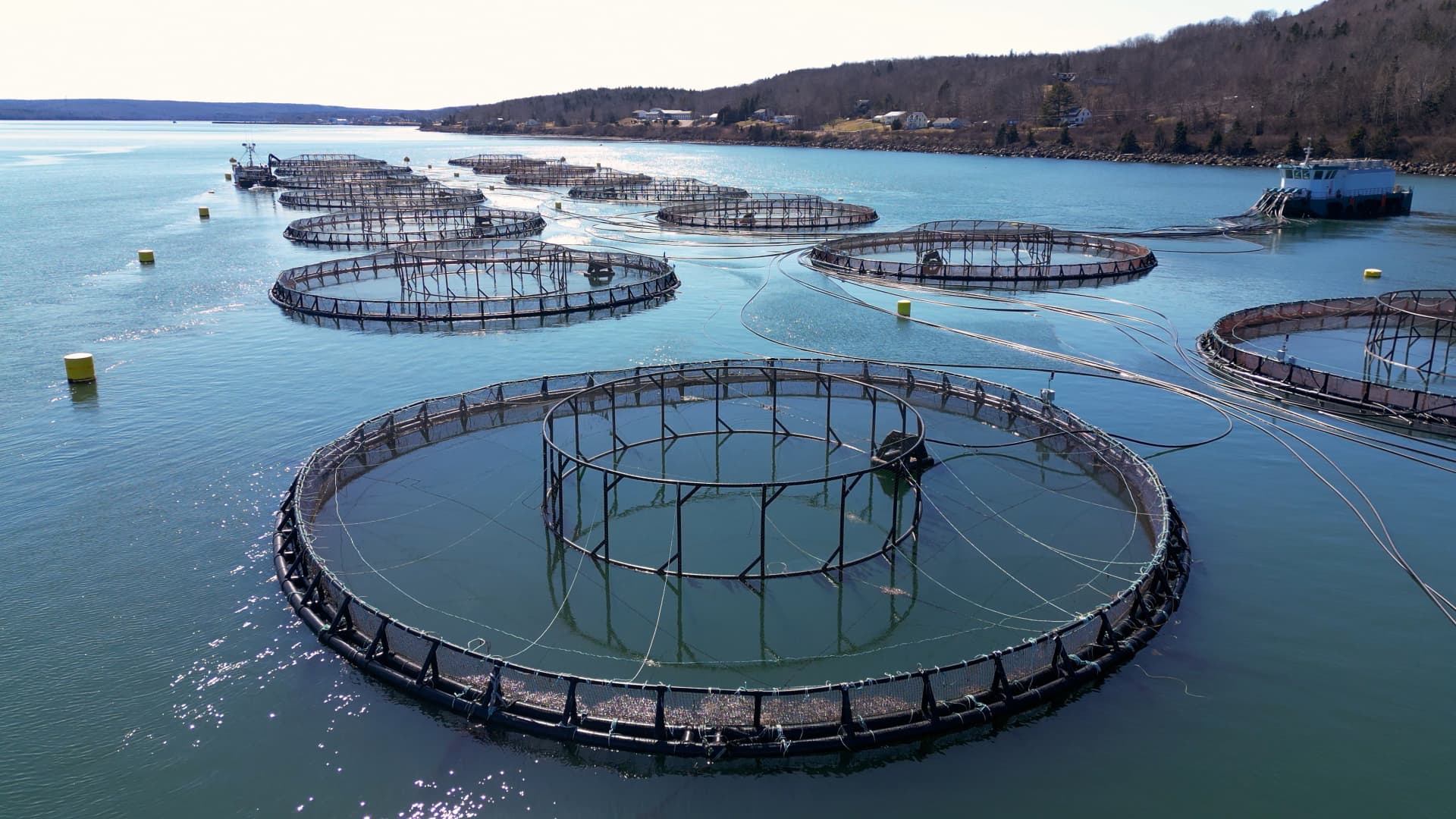
Equity Group Investments, backed by the family of late billionaire Sam Zell, owns a John Deere dealership, a bluefin tuna fishery and a pedestrian bridge that connects San Diego to Tijuana International Airport.
While those holdings sound entirely unrelated, what unites the private investment firm’s wide-ranging portfolio is a focus on old-economy businesses that are less susceptible to disruption from artificial intelligence and other technologies, according to EGI’s president, Mark Sotir.
“We tend to put our capital to work for a longer duration than most [private equity] firms. If you’re thinking out 10 years, 12 years, you have to start with picking a company in an industry that you know will be around,” he said. “That’s why we shy away from some tech and some startups. It’s not because we don’t like doing them. It’s just very hard for me to tell you where software is going to be 10 years out.”
The anti-AI trade gained steam on Wall Street earlier this year, dubbed “HALO” for “heavy assets, low obsolescence.” Family offices already employ the same strategy with private markets as they invest for generations and value the cash flow that often comes with old-economy businesses, according to Sotir. Economic uncertainty and tax reform has also made backing these asset-heavy companies more attractive.
Advertisement
Asset-heavy businesses tend to deter traditional PE investors who are looking to buy and sell within three to seven years, giving family offices opportunities to acquire at a discount, according to Sotir.
“Everybody gets so enamored with asset-light, but I like to say, ‘If you’re paying an asset-light premium, then I’m not sure where the advantage is,’” he said.
The “one big beautiful bill” law also provided a boon to owners of these businesses by renewing bonus depreciation, enabling companies to deduct the full cost of qualifying assets like machinery or vehicles the first year they are used.
“It’s a very material change that can make a big difference in terms of the tax benefit,” said Brian Hans, who leads the tax efficiency strategists for UBS’ advanced planning group. “Family office clients are increasingly approaching investing in general with more proactive tax planning, looking at the after-tax return, calculating what the return from the investment is going to be, and factoring that in when making the decision to invest.”
Advertisement
If the business is an active investment, the depreciation can be used to deduct against income on other active investments like stocks, Hans added. This is a sizable benefit for families that have highly appreciated stock holdings, he said.
Auto and equipment dealerships are ripe for taking advantage of bonus depreciation and check off other important boxes for families like reliable cash flow, according to Joe Mowery, head of dealership investment banking at Stephens.
“It’s very simple. They like a tax-advantaged income stream,” Mowery said.
While inflation and other economic trends can weigh on consumers’ ability to buy vehicles and equipment, the parts and service business is resilient and has high margins, according to Mowery.
Advertisement
“It’s not a nice-to-have. It’s a must-have. You know, you got to get to work, you got to take the kids to school, whatever the case may be,” he said.
Get Inside Wealth directly to your inbox
Old-economy businesses aren’t immune to disruption, but they can come with geographic moats, limiting competition, according to Sotir. For instance, EGI owns John Deere and Kenworth dealerships. Thanks to the franchise terms, Sotir said he does not have to worry about another dealership of the same brand opening nearby.
As for EGI’s bluefin tuna fishing and farming business in Baja California, there are substantial barriers to entry due to quotas on fishing, according to Sotir.
EGI isn’t under pressure to deploy capital, unlike traditional PE firms, as it’s family backed, Sotir said, noting the firm typically makes one to two deals a year. Sotir said the firm is receiving more inbound queries from business owners who are pressured by tariffs, inflation and other factors.
Advertisement
“The amount of uncertainty that people are dealing with has oddly turned into a benefit for us,” he said.
There are attractive opportunities in agriculture, with farms under tremendous stress, Sotir said. The challenges are real, such as the rising costs of fertilizer and fuel, but EGI can afford to wait for a payoff, he said.
“People are worried about the space, and that’s the perfect time for us to step in to buy,” he said. “Even if the value doesn’t come in the first two, three years, that’s okay, as long as we know it’s coming, because we’ve got that duration.”
Mark Pownall is joined by Gary Adshead, Ella Loneragan, Tom Zaunmayr and Jack McGinn to discuss the Federal budget, a huge native title win, Exmouth tourism project, a big CBD sale, and more.
Textiles major Welspun Living on Friday announced a share buyback worth Rs 252 crore through the tender route at a buyback price of Rs 175 per share, implying a premium of more than 30% over the previous closing price.
In an exchange filing, the company announced that its board of directors has approved the proposal to buy back 144 lakh fully paid-up shares of the company with a face value of Re 1 each for an aggregate amount not exceeding Rs 252 crore. This represents 6.52% of the company’s total paid-up equity share capital and 5.65% of the free reserves.
Record date for Welspun Living share buyback
The record date to determine the eligibility for shareholders who can tender shares in the buyback has been fixed on May 22.Welspun Living further said that the board has formed a buyback committee to oversee the corporate action. It has appointed DAM Capital Advisors as the manager of the buyback.
Advertisement
Live Events
This comes after Welspun Living undertook a Rs 278 crore share buyback via the tender route back in August 2024. The buyback price for the offer was fixed at Rs 220 apiece. Share buyback refers to a corporate action where a company repurchases its own shares from existing shareholders, mostly at a premium to the market price.
Welspun Living Q4 Results
Along with the share buyback, Welspun Living on Friday announced its results for the January-March quarter of the financial year 2026. The company’s net profit declined more than 21% to Rs 104 crore in Q4 FY26, as against Rs 132 crore in the corresponding quarter of the previous financial year.The textile company’s revenue from operations, meanwhile, declined around 8% YoY to Rs 2,435 crore in Q4 FY26 from Rs 2,646 crore in the same quarter last year. EBITDA fell around 17% YoY to Rs 265 crore, while EBITDA margin contracted to 10.8% during the quarter under review.
Welspun Living share price
Despite the sharp decline in earnings, Welspun Living shares jumped 3% to trade at Rs 138 apiece on NSE after the buyback announcement, as seen at 2.20 pm. The shares of the company have gained over 4% in one week and 12% in one month. The stock is overall up 6% in 2026 so far.
In the longer term, the stock has jumped 50% in three years and 38% in five years. The company has a market capitalisation of Rs 13,200 crore.
(Disclaimer: Recommendations, suggestions, views and opinions given by the experts are their own. These do not represent the views of The Economic Times)
Elon Musk and Jensen Huang, leaders in technology, showcase contrasting styles in entrepreneurship. Musk’s visionary risks and Huang’s methodical execution drive AI advancements, shaping the future of global technology.



















































You must be logged in to post a comment Login