
Business
US Tariff Refunds Delayed: CBP Portal Launches But 37% of Claims Face Uncertainty


British SMEs with transatlantic trade links have been warned they face a prolonged and uncertain wait before recovering tariffs wrongly collected by the United States, after Washington confirmed that its long-awaited online refund portal will handle only a fraction of outstanding claims when it goes live next week.
US Customs and Border Protection (CBP) is due to switch on its Consolidated Administration and Processing of Entries system, known as CAPE, on 20 April. The first phase of the portal is expected to cope with roughly 63 per cent of refund requests. The remaining 37 per cent, however, have been left without so much as a provisional timetable, raising fresh concerns for cash-strapped importers that have been out of pocket for the best part of two years.
John Havard, a consultant at audit, tax and business advisory firm Blick Rothenberg, said the scale of the backlog was “extraordinary” and that the uncertainty surrounding the more complex tranche of claims would do little to reassure small and mid-sized businesses that had counted on a swift resolution once the US Supreme Court struck down the tariffs imposed under the International Emergency Economic Powers Act (IEEPA).
“Many of these remaining cases are classed as final tariffs because the goods concerned will have entered the US more than a year before the refund claim is filed,” Havard said. “In such instances the claims procedure is going to be considerably more involved. We are unlikely to hear anything further until government officials next appear before the Court of International Trade to deliver their next mandated progress report.”
The numbers involved are eye-watering. Blick Rothenberg estimates that around 53 million unlawful tariff collection transactions were processed during the period in question, with the total refund bill potentially reaching $166 billion (£132 billion). More than 26,000 importers, collectively responsible for some $120 billion of IEEPA tariffs, have already registered with CBP to receive their money back electronically, following a White House directive requiring all federal payments to be made by electronic transfer.
The rules governing who can actually lodge a claim are tightly drawn. Only the official importer-of-record, or that party’s nominated US customs broker, will be entitled to submit a refund request. Businesses must also hold an active account with CBP’s Automated Commercial Environment before they can receive any money. Havard said there had been “considerable activity” in new account registrations since the Supreme Court’s ruling, suggesting that many firms had been caught flat-footed by the decision.
For those still waiting, there is at least one sliver of good news. In a previous statement to the US trade court, a government official confirmed that interest would be paid on all refunded amounts, offering modest compensation for what is shaping up to be a lengthy delay before cheques actually land.
For British exporters and importers with exposure to the US market, the practical advice is straightforward: ensure ACE registration is in order, confirm which party holds importer-of-record status on historic shipments, and brace for a drawn-out administrative process. The fundamentals of the refund entitlement are no longer in doubt; the mechanics of getting the money back, it seems, very much are.


Algernon Health to rebrand as Grey Matters Health, consolidate shares


I focus on a rigorous fundamentals-foremost equity and credit research. I currently work as a financial advisor/planner, and do analysis in my free time. I have an undergrad in business administration, an MBA in finance, and currently am a doctoral candidate (a DBA with a concentration in Finance and Investment Management). My research style typically involves process-driven research, followed by blending several valuation models together to get a blended, 12 month price target. I enjoy utilizing full DCF analysis in conjunction with SOTP, peer/multiples analysis, and risk-adjusted approaches. I thoroughly enjoy reading filings, technical documentation relevant to the sector, and then translating that data into conclusions with actionable insights. I enjoy learning about the various sectors and companies I find myself researching, and always feel like there is something to learn. As a curious individual, equity and credit research is very fulfilling, and even fun!I always try to find 2-4 variables that drive value or hinder growth, stress test them, and then let fundamental evidence incorporated with book-value set my viewpoint for the research project. I enjoy the energy sector, commodities, tech, and financial sectors the most. I joined Seeking Alpha to share my thoughts with a wide audience. I originally started with sharing my analysis with a few of my friends who are also advisors and/or analysts. I am always open to a myriad of viewpoints, as I feel the most accurate viewpoints and research is made through a collection of great minds working together to figure something out. If you appreciate thorough research, and want to learn more about a company beyond just what is inside of their books, then I believe you will enjoy the research that I work on.
Analyst’s Disclosure: I/we have no stock, option or similar derivative position in any of the companies mentioned, and no plans to initiate any such positions within the next 72 hours. I wrote this article myself, and it expresses my own opinions. I am not receiving compensation for it (other than from Seeking Alpha). I have no business relationship with any company whose stock is mentioned in this article.
The views expressed in this article are solely the author’s own and do not represent the opinions or recommendations of an SRO or broker-dealer. This article is for informational purposes only and does not constitute investment advice, a solicitation, or a recommendation to buy or sell any security. Readers should consult their own financial advisor before making investment decisions. As a reminder, investment products: Are NOT FDIC insured. Not deposits of, or obligations of a bank, and may be subject to investment risk, including a possible loss of principal. /////
Emerging markets investments carry additional risks including currency fluctuation, political and economic instability, less developed regulatory environments, and potentially lower liquidity than developed market securities. Concentration in specific countries (notably Taiwan and South Korea) and sectors (notably semiconductors and technology hardware) exposes investors to amplified idiosyncratic risk. Past performance is not indicative of future results.
Seeking Alpha’s Disclosure: Past performance is no guarantee of future results. No recommendation or advice is being given as to whether any investment is suitable for a particular investor. Any views or opinions expressed above may not reflect those of Seeking Alpha as a whole. Seeking Alpha is not a licensed securities dealer, broker or US investment adviser or investment bank. Our analysts are third party authors that include both professional investors and individual investors who may not be licensed or certified by any institute or regulatory body.
Southern First Bancshares launches public stock offering


Dhierin-Perkash Bechai is an aerospace, defense and airline analyst.
Dhierin runs the investing group The Aerospace Forum, whose goal is to discover investment opportunities in the aerospace, defense and airline industry. With a background in aerospace engineering, he provides analysis of a complex industry with significant growth prospects, and offers context to developments as they occur, describing how they might affect investment theses. His investing ideas are driven by data informed analysis. The investing group also provides direct access to data analytics monitors.
Learn more.
Analyst’s Disclosure: I/we have no stock, option or similar derivative position in any of the companies mentioned, and no plans to initiate any such positions within the next 72 hours. I wrote this article myself, and it expresses my own opinions. I am not receiving compensation for it (other than from Seeking Alpha). I have no business relationship with any company whose stock is mentioned in this article.
Seeking Alpha’s Disclosure: Past performance is no guarantee of future results. No recommendation or advice is being given as to whether any investment is suitable for a particular investor. Any views or opinions expressed above may not reflect those of Seeking Alpha as a whole. Seeking Alpha is not a licensed securities dealer, broker or US investment adviser or investment bank. Our analysts are third party authors that include both professional investors and individual investors who may not be licensed or certified by any institute or regulatory body.

Financial influencer Taylor Price joins ‘Varney & Co.’ to break down how shifting your mindset can help Americans grow wealth and achieve the American Dream.
Outstanding mortgage payments reached a new high at the end of last year when the typical mortgage holder’s monthly payment exceeded $2,000 for the first time.
While the average monthly payment for new homebuyers crossed the $2,000 threshold in September 2022, the rise in the average monthly payment for all outstanding mortgages to $2,005 in the fourth quarter of 2025 for the first time underscores the affordability challenges facing buyers, according to Realtor.com data.
The uptick covers the full portfolio of mortgages in the U.S., including a large group of borrowers who took out loans before 2022 and have mortgage rates of 4% or lower – whereas new buyers face significantly higher payments given the elevated mortgage rates.

Average mortgage payments rose to the highest level on record at the end of last year. (Getty Images)
“New borrowers entering the market today face substantially higher payments than the existing portfolio average implies, which is keeping many potential sellers locked in place,” wrote Hannah Jones, senior economic research analyst for Realtor.com.
THESE 8 HOUSING MARKETS FAVOR BUYERS
The report noted that the average payment was $1,255 in early 2013 and increased gradually to $1,456 by early 2020, before it accelerated sharply amid surging home prices and new mortgage originations.
The average mortgage payment increased by more than $600 in just the last several years, rising from $1,390 in early 2021 to $2,005 at the end of 2025 – which amounts to a 44% increase in roughly four years.
NEW JERSEY OUTPACES US HOUSING MARKET, TOPS NATION IN PRICE GROWTH
The report found that a little more than half of all outstanding mortgages, or 50.6%, still carry interest rates of 4% or lower. More than three quarters of all mortgages, or about 78%, have a rate below 6%.
The share of mortgages with a 6% or higher share now stands at 21.9%, an increase of 3.9 percentage points from the 18% reading at the end of 2024, which shows a meaningful year-over-year acceleration that was driven by sustained buyer activity even amid high borrowing costs.
HOUSING MARKET GAINING MOMENTUM AS SPRING SEASON BEGINS

Life events are helping drive activity by sellers despite high mortgage rates and home values. (Elijah Nouvelage/Bloomberg via Getty Images)
“Even in today’s high-price, high-rate market, homebuying activity around major life events, such as having kids, a job change, or a divorce, keeps the market in motion,” Jones wrote.
“Easing inflation and mortgage rates will be key drivers of seller activity as well, which will relieve some of the price pressure and competition in today’s undersupplied market,” she added.
The Realtor.com report also noted that while rate lock-in “remains substantial” with about 78% of mortgages carrying rates below 6%, the steady erosion of the cohort of mortgage holders with rates below 4% and the acceleration in the growth of the population with mortgage rates at or above 6% suggests the “market’s center of gravity is gradually shifting.”
GET FOX BUSINESS ON THE GO BY CLICKING HERE
“The question for 2026, now complicated by renewed rate volatility tied to geopolitical uncertainty, is whether relief arrives fast enough to unlock reluctant sellers before another spring slips by,” Jones said.
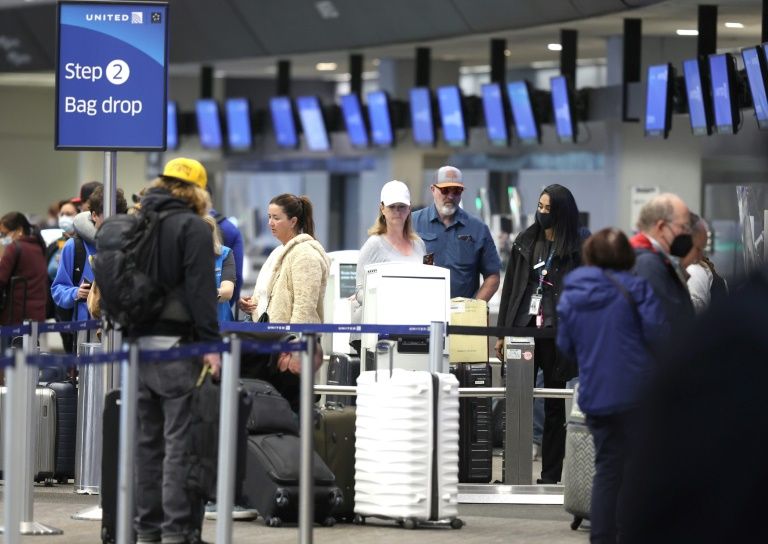
SAN FRANCISCO — Travelers heading through San Francisco International Airport on Thursday should plan for moderate TSA security lines with average waits of 15 to 25 minutes during peak morning and evening hours, according to real-time tracking data as passenger volumes build with spring travel season in full swing.
As of mid-morning on April 16, 2026, security checkpoints at SFO reported standard lane waits hovering around 18 minutes on average, with some hourly slots dipping as low as 8 to 10 minutes in off-peak periods and climbing toward 19 minutes during busier afternoon windows. TSA PreCheck lanes remained significantly faster, often clearing in under 5 minutes when available across open checkpoints.
SFO, one of the busiest airports on the West Coast, handles millions of passengers monthly through its four terminals and multiple security checkpoints. Unlike many U.S. airports staffed directly by federal TSA employees, San Francisco International relies on a private contractor model for screening, which has historically helped insulate it from some nationwide staffing shortages and federal disruptions. This setup frequently results in more predictable wait times compared to peers like Los Angeles International or New York-area hubs.
Current conditions show most checkpoints operating smoothly. In Terminal 1, Boarding Areas B and C stood open. Terminal 2’s Boarding Area D remained active. Terminal 3 had Boarding Area F1 open while F3 stayed closed. In the International Terminal, Boarding Areas A and G were operational. Travelers should double-check their assigned terminal and boarding area, as closures or consolidations can shift lines unexpectedly.
Hourly breakdowns from monitoring sites indicated lighter overnight traffic with waits as short as 4 to 8 minutes between midnight and 2 a.m. Early morning ramps up to 14-18 minutes around 3 to 6 a.m. Midday periods trended toward 10-15 minutes, while late afternoon and early evening slots — particularly 4 p.m. to 7 p.m. — represented the daily peaks with forecasts nearing 19 minutes. These figures blend data from airport reports, traveler submissions and third-party aggregators updated every 10 minutes or so.
Spring break crowds have largely passed, but April still brings steady domestic and international traffic fueled by business trips, family visits and leisure getaways to Asia and Europe. United Airlines, SFO’s largest carrier, operates extensive hubs here with flights to dozens of domestic cities and key Pacific routes. Delta, American, Alaska and numerous international airlines add to the mix, pushing total daily passengers into the six-figure range on busy days.
Airport officials recommend arriving at least two hours before domestic flights and three hours for international departures to account for check-in, security and potential gate changes. Those with TSA PreCheck, CLEAR or airline status enjoy dedicated lanes that shave significant time off the process. The MyTSA mobile app provides real-time crowd-sourced updates and historical patterns, helping passengers time their arrival.
SFO’s security experience includes standard TSA protocols: removal of liquids in 3-1-1 compliant bags, laptops and large electronics out of carry-ons, and shoes off in regular lanes. PreCheck members keep shoes and light jackets on while sending fewer items through scanners. The airport also participates heavily in the TSA’s Screening Partnership Program, using private screeners trained to federal standards.
Recent traveler reports on forums and social media described mixed but generally manageable lines. Early morning fliers often cleared in 10-15 minutes, while midday arrivals reported under 20 minutes even without expedited access. Occasional spikes occur when multiple wide-body international flights disgorge passengers simultaneously or when a checkpoint temporarily closes for maintenance.
Factors influencing today’s waits include typical Thursday patterns, with business travelers peaking in the morning and leisure passengers filling afternoon slots. Weather in the Bay Area remained mild with temperatures in the low 60s Fahrenheit, reducing any weather-related flight delays that could bunch passengers. No major alerts for construction or staffing issues appeared on the airport’s official site as of early Thursday.
For international arrivals, separate CBP processing adds another layer after landing. Passport control wait times vary but generally run shorter at SFO than at some East Coast gateways, though connecting passengers should factor in AirTrain transfers between terminals.
SFO continues investing in technology to speed screening. Automated lanes, CT scanners that allow liquids and laptops to stay in bags, and biometric options are expanding where feasible. These upgrades aim to reduce average processing time while maintaining security standards amid growing passenger numbers projected through the decade.
Travelers can check live conditions through several reliable sources. The official flysfo.com site links to normal wait time pages, though it often directs to general advisories. Third-party trackers like OnAirParking, Takeoff Timer and airlineairport.com aggregate data from TSA feeds and user reports for more granular hourly views. United Airlines has previously tested its own wait-time tools for SFO passengers.
Tips for smoother passage include packing efficiently to avoid secondary screening, enrolling in TSA PreCheck if frequent travel justifies the cost, and using mobile boarding passes to bypass paper document issues. Families with small children or passengers needing assistance should factor extra time and consider requesting escort help from airline staff.
Broader context shows U.S. airport security wait times remaining relatively stable in 2026 after post-pandemic normalization. While some hubs experience occasional 45-minute-plus backups during holiday peaks, SFO’s contractor model and proactive lane management have kept averages in the low-to-mid 20s even on heavier days.
As the day progresses, waits could ease after the morning rush and before evening peaks. Late-night departures after 8 p.m. often see the shortest lines. Passengers departing on red-eye flights benefit most from arriving closer to the recommended window without excessive buffer.
SFO’s convenient location south of San Francisco and direct BART connection from the city make ground access straightforward, though parking and rideshare drop-off zones can add minutes during busy periods. The AirTrain circulates between terminals efficiently for connections.
For those monitoring from afar, the MyTSA app remains the most official channel for crowd-sourced delay reports alongside TSA’s national wait-time resources. Historical data suggests Thursdays at SFO trend slightly busier than midweek but far calmer than Friday or Sunday peaks.
Airline customers facing tight connections should contact carriers directly for rebooking options if security delays risk missed flights. Most major operators at SFO maintain flexible policies during routine operational windows.
Overall, conditions at San Francisco International Airport today point to a typical mid-spring Thursday — manageable for prepared travelers but requiring standard planning. With average security waits in the 15-25 minute range and PreCheck options cutting that dramatically, most passengers should clear checkpoints comfortably if they build in a reasonable buffer.
The airport continues balancing growing demand with efficient operations. As international travel rebounds and domestic routes expand, SFO’s security teams and private screeners play a critical role in keeping the travel experience smooth. Travelers are encouraged to stay updated via official channels and apps right up until arrival to catch any last-minute shifts in lane status or processing times.
Whether catching an early United flight to New York, a midday hop to Los Angeles or a long-haul to Tokyo, today’s TSA picture at SFO supports on-time departures for those who arrive prepared. The Bay Area’s gateway stands ready, with lines moving steadily under mostly clear skies and routine passenger flow.

Marzetti: Volume Growth Nascent, Clear Underweight

Asia has long sold the world a compelling story, the story of convergence. Decades of export-led growth, technology transfer, and regional integration seemed to confirm that poorer economies could catch up with richer ones if they played their cards right. The Asian Development Bank’s latest assessment of artificial intelligence preparedness suggests that the story is about to be rewritten. And not in a hopeful direction.
Key Points
- Infrastructure Deficits: Advanced economies possess superior digital foundations, while developing nations suffer from “cascading constraints” regarding connectivity, computing power, and data accessibility, effectively capping their potential for AI adoption.
- Human Capital Gap: There is a significant disparity in AI-ready workforces; leading economies are aggressively hiring AI-adjacent talent, whereas developing economies struggle to cultivate the necessary skills, leading to an acceleration of the divide.
- Innovation and Sovereignty: Developing nations are largely dependent on importing AI tools designed for foreign contexts, which fails to address local languages and regulatory needs, potentially marginalizing them further in global value chains.
- Institutional Challenges: Weak governance, ambiguous data protection laws, and unpredictable regulatory environments in developing nations act as deterrents to the investment required to build AI capacity.
- Economic Divergence: Economic modeling predicts that by 2030, the GDP growth gap between advanced and developing Asian economies will widen significantly, making it increasingly difficult for the latter to catch up.
The ADB’s findings are stark. Generative AI is poised to deliver enormous productivity gains across the Asia-Pacific region, but those gains will flow overwhelmingly to the economies that are already the most advanced. The gap between winners and laggards is not narrowing. It is being locked in.
The Infrastructure Wall
The numbers tell a blunt story. Advanced economies, Australia, Hong Kong, Japan, South Korea, New Zealand, Singapore, cluster near the global frontier on the ADB’s AI Preparedness Index, scoring an average of 0.19 on the infrastructure component. Meanwhile, Cambodia, India, Myanmar, Papua New Guinea, and the Philippines score below 0.11. That may look like a modest numerical gap. It is anything but.
Digital infrastructure is not merely a prerequisite for AI adoption. It is the ceiling that caps ambition. Limited connectivity means limited access to cloud services. Limited computing capacity means firms cannot train or deploy AI systems at scale. Underdeveloped data infrastructure means the raw material of the AI economy, data itself, remains trapped and underutilized. Each deficiency compounds the next. The ADB describes these as “cascading constraints,” and the language is apt: once you fall behind, the slope steepens.
The uncomfortable truth is that infrastructure gaps of this magnitude cannot be bridged by goodwill or ambition alone. They require capital, coordination, and time, all of which are in short supply precisely in the economies that need them most.
Skills: The Hidden Bottleneck
Infrastructure is only half the problem. Even where connectivity improves, AI delivers nothing without workers who can use it. Here, too, the divide is sobering.
Developing Asia and the Pacific average just 0.13 on the ADB’s human capital and labor market readiness index, compared to 0.17 for advanced economies. Job posting data amplifies the concern: demand for AI-related skills is growing faster and from a higher base in Singapore and South Korea than in India, Malaysia, or the Philippines. This is not a story of developing economies falling behind. It is a story of advanced economies accelerating away.
Firms in leading markets are not waiting for their workforces to catch up organically. They are hiring aggressively for AI-adjacent talent, building organizational capabilities that will make them exponentially more productive in the years ahead. Firms in developing economies, by contrast, are still navigating basic questions of digital readiness. The compounding effect of this difference will be felt for a generation.
The Innovation Ecosystem Gap
Perhaps the most structurally damaging finding in the ADB report concerns innovation capacity. China, Japan, and South Korea benefit from strong government support and substantial corporate R&D investment that enables both AI development and local adaptation, the ability to tailor models to domestic languages, markets, and conditions. This is enormously valuable. A general-purpose AI tool trained overwhelmingly on English-language data is of limited use to a Khmer-speaking smallholder or a Filipino entrepreneur navigating local regulatory complexity.
Developing economies, by contrast, rely heavily on imported AI technologies. They are consumers of tools built elsewhere, for contexts that often do not reflect their own. This dependency is not merely an economic problem. It is a sovereignty problem. Nations that cannot adapt AI to their own languages and conditions will find that the technology reinforces rather than reduces their marginalization in global value chains.
The participation gap in AI-related global value chains, electronics, semiconductors, and computing equipment tells a similar story. Singapore and Hong Kong are deeply integrated; most of developing Asia is not. The technology spillovers that flow through these chains will bypass economies that sit outside them.
Governance: The Overlooked Enabler
One element of the ADB’s analysis deserves particular attention because it tends to be underestimated: institutional quality. Developing Asia scores 0.12 on regulatory and ethics frameworks, compared to 0.20 in advanced economies. Regulatory uncertainty, weak enforcement, and gaps in data governance do not merely create legal risk. They actively suppress investment.
A company weighing where to deploy AI infrastructure will not choose a jurisdiction where data protection is ambiguous, enforcement is unpredictable, and governance frameworks are opaque. The result is a vicious cycle: weak institutions deter investment, which slows technology adoption, which reduces the urgency of building better institutions.
The good news, if there is any, is that governance reform is cheaper than infrastructure investment and faster than educational transformation. Countries that move decisively to establish credible, transparent AI governance frameworks will make themselves meaningfully more attractive to the capital and expertise they need.
The Growth Projections Are a Warning, Not a Forecast
The ADB’s economic modelling is where the stakes become undeniable. Advanced Asia and the Pacific, along with the United States, could see GDP growth increase by 0.6 to 2.1 percentage points by 2030. Developing Asia, constrained by weaker infrastructure, lower skills, and structural exposure concentrated in agriculture rather than AI-amenable services, is projected to gain 0.2 to 1.8 percentage points over the same period.
These are not trivial differences. Compounded over decades, divergences of this magnitude reshape the relative position of economies in ways that are extraordinarily difficult to reverse. The ADB notes that catch-up effects could add up to 0.4 percentage points in some cases, an asterisk that should not be mistaken for reassurance. Catch-up assumes access, capability, and will. For many developing economies, all three are currently constrained.
Notably, China is expected to record the largest gains among developing Asian economies, followed by India. This matters because it suggests that even within the developing world, concentration of benefits is likely. The largest, most institutionally capable emerging economies will capture the most; the smallest and most structurally vulnerable will capture the least.
What Must Be Done
The ADB’s policy prescriptions are sensible: invest in digital infrastructure, reform education systems, build innovation ecosystems, establish credible governance frameworks, strengthen social protection, and integrate into AI-related global value chains. The bank is right that targeted reforms can mitigate short-term displacement risks while enhancing long-term productivity gains.
But the scale of simultaneous action required should not be underestimated, and the window for action is narrowing. AI is not a future technology arriving at a pace that permits leisurely preparation. It is being deployed now, in firms and economies that are already positioned to use it. Every year of delay widens the gap that must subsequently be closed.
The political challenge is equally formidable. Governments in developing Asia face competing demands, such as health, education, poverty reduction, and climate adaptation, that make it difficult to prioritize AI readiness investments that may yield returns only over a decade or more. International institutions, including the ADB itself, have a critical role to play in financing, technical assistance, and creating the multilateral frameworks that allow smaller economies to participate in AI governance discussions rather than simply accepting terms set by others.
A Test of Whether the Asian Century Belongs to All of Asia
The promise of the “Asian Century” was always partly a promise of shared prosperity, of a region rising together rather than merely producing a new hierarchy of winners and losers. The ADB’s findings suggest that the promise is at serious risk.
Generative AI is not inherently a force for inequality. Used well, it can extend high-quality services, education, healthcare, financial advice, and legal information to populations that have historically lacked access to them. The technology’s democratizing potential is real. But potential is not destiny. Whether that potential is realized depends entirely on policy choices, investment decisions, and institutional quality that vary enormously across the region.
The continent is at an inflection point. The path of least resistance leads to a two-speed Asia, where a handful of advanced economies pull further ahead while much of the developing region watches the productivity revolution happen somewhere else. Avoiding that outcome will require urgency, resources, and political will that have not yet been fully marshalled.
The ADB has documented the problem clearly. The harder question is whether the response will match the scale of what is at stake.
Other People are Reading

The Thai economy is caught in a structural growth trap, with continuously weakening growth rates. This clearly reflects that the old growth model, which relies on “quantity,” is no longer sufficient. Thailand needs to transition to “quality growth” driven by productivity and added value sustainably.
Key Takeaways
- Thailand’s growth challenge: The economy is stuck in a structural slowdown, showing that the old growth model based on quantity is no longer sufficient. The country must shift toward quality-driven growth powered by productivity and innovation.
- Weaknesses in innovation system:
- Thailand’s Global Innovation Index ranking has fallen to 45th (2025).
- R&D spending remains below 2% of GDP.
- Research personnel numbers are declining (23 per 10,000 people in 2023).
- Patent applications are very low (13 per million people in 2024).
- Financial system gaps: Businesses developing innovation, especially tech and startups, struggle to access funding due to reliance on physical collateral. Intellectual property (IP) is rarely accepted as loan security (only 0.07% of collateral assets in mid‑2025).
- International lessons: Countries like Singapore, South Korea, and Malaysia use risk-sharing mechanisms between government and financial institutions, covering 50–90% of defaults, alongside standardized IP valuation and joint investment funds.
“Innovation” is a key engine for this transition, but Thailand’s innovation development system still has several weaknesses that need urgent attention in order for the country to move towards quality growth and truly enhance its growth potential.
“Thailand’s innovation system” has not yet been able to truly translate research into commercial use.
- (1) Thailand’s innovation ranking in the Global Innovation Index, which has been declining for three consecutive years to rank 45 out of 139 countries in 2025, sending a clear signal that Thailand is losing its innovation capabilities compared to its competitors in the region.
- (2) The proportion of research and development (R&D) investment in Thailand is still below 2% of GDP, which is the country’s mid-term goal.
- (3) The number of R&D personnel in Thailand is beginning to show signs of slowing down, decreasing to only 23 people per 10,000 people (2023 data), reflecting the continuously weakening fundamental factors in creating new innovations.
- (4) The number of patent applications per 1 million people is at a low level of only 13 (2024 data), and the number of patents currently in effect is at a low level.
These data reflect that the problem with Thai innovation is not a lack of effort, but rather “Thailand’s innovation system” which is not yet conducive to converting research and development potential into real economic value.
The financial system is not yet ready for innovation: The “public-financial risk sharing mechanism” is key.
Businesses that develop innovative solutions, especially technology businesses and startups, have high growth potential but often face difficulties accessing funding due to a lack of tangible asset collateral for loans.
Currently, there are structural gaps in the allocation of funding to Thai innovation businesses, both on the supply and demand sides. On the supply side, financial institutions lack international standards for valuing intellectual property (IP) and continue to primarily rely on physical collateral. This results in risk assessments that do not align with the highly uncertain revenue streams and technological aspects of innovative business models.
On the demand side, there are not many Thai businesses ready to invest in new innovations and capable of commercialization, reflecting an economic structure that is not conducive to creating and expanding innovation-based businesses. This gap is clearly reflected in the use of intellectual property as collateral in Thailand, which, as of June 2025, will only account for 0.07% of all collateralized assets.
Lessons from various countries clearly show that a “risk-sharing mechanism between the public and financial sectors” is key to unlocking funding for innovative businesses. This is especially true when addressing issues on the supply side of capital.
For example, Singapore, South Korea, and Malaysia utilize a joint risk guarantee mechanism where the government guarantees 50-90% of the outstanding balance after a borrower defaults, reducing the risk burden on financial institutions. This is coupled with establishing internationally recognized and credible IP valuation standards and setting up public-private partnership funds. These mechanisms play a crucial role in stimulating the demand side of capital, incentivizing businesses to invest more in commercializing innovation. The risk-sharing mechanism acts as a “bridge” connecting the capital supply and the demand for innovation, enabling them to occur simultaneously.
In the world ahead, economies will increasingly be driven by “intangible assets.” Countries that design “innovative finance systems” that allow capital and innovation to progress hand-in-hand will be able to sustainably enhance their growth potential and competitiveness through innovation.
Thailand needs to design an “innovative finance system” that is part of building an innovation ecosystem.
To truly drive the Thai economy through intellectual property and innovation, it is necessary to design and adapt the financial system to support an innovation-driven economy. This is not simply about allocating additional capital, but about making the financial system “willing to provide funding” and the business sector “willing to invest” at the same time, through the following four pillars:
1. Adjust lending criteria to accommodate intellectual property as collateral , reducing reliance on physical collateral and assessing business potential based on its ability to create future value. This will enable innovative businesses to access funding in line with the innovation and commercialization cycle.
2. Systematically implement a “risk sharing” mechanism between the government and the financial sector, ranging from loan guarantees and support for IP valuation costs to mechanisms for assuming default risk, in order to remove limitations in risk management for financial institutions and increase incentives for lending to innovation.
3. Develop a central database system and practical IP valuation standards to provide the funding side with reliable information and tools to assess the risks of innovative businesses, reduce uncertainty, and facilitate greater capital flow into commercially viable innovative businesses.
4. Create “demand” incentives to encourage continuous investment in innovation development. Without a starting point for the demand for high-quality innovations to create business opportunities, innovation cannot truly be commercialized and create added value for the Thai economy.
These four pillars must be driven simultaneously through key stakeholders such as the Ministry of Finance, the Department of Intellectual Property, the Office of National Science and Technology Development Agency (NSTDA), the Bank of Thailand, and the Thai Bankers’ Association, in collaboration with the internationally recognized organization, the World Intellectual Property Organization (WIPO), which specializes in this area. Only then will the Thai financial system successfully function as a “link” between capital, innovation, and the enhancement of Thailand’s long-term economic growth potential.
Other People are Reading

Berkshire Hathaway: The Fortress Has Become A Waiting Room

Tron founder Justin Sun blasts Trump-linked WLFI vote, escalating feud over governance
The “Terminator ”movies, ranked

Fuel protests a chance to ‘rattle our failed status quo’

Why Israel is blocking foreign journalists from entering

Bitcoin: We’re Entering The Most Dangerous Phase

Alan Cumming Brands Baftas Ceremony A ‘Triggering S**tshow’
![Ripple Executives Are Aware XRP Will Be Valuable... But They LEGALLY Can't Say Anything! [MUST SEE]](https://wordupnews.com/wp-content/uploads/2026/04/1776291322_maxresdefault-80x80.jpg)
Ripple Executives Are Aware XRP Will Be Valuable… But They LEGALLY Can’t Say Anything! [MUST SEE]

HDB Financial Services Q4 results 2026 | HDB Financial results today | HDB Financial Services Share

Why Bitcoin’s Supply Shock is ALREADY Here
-

 Politics5 days ago
US brings back mandatory military draft registration
-
 Sports5 days ago
Man United discover Nico Schlotterbeck transfer fee as defender reaches Dortmund agreement
-

 Fashion5 days ago
Weekend Open Thread: Veronica Beard
-

 Politics6 days ago
Malcolm In The Middle OG Turned Down ‘Buckets Of Money’ To Appear In Reboot
-

 Politics3 days ago
World Cup exit makes Italy enter crisis mode
-

 Crypto World6 days ago
Canary Capital Files SEC Registration for PEPE ETF
-

 Business5 days ago
Tesla Model Y Tops China Auto Sales in March 2026 With 39,827 Registrations, Beating Cheaper EVs and Gas Cars
-

 Crypto World2 days ago
The SEC Conditionalises DeFi Platforms to Be Avoided for Broker Registration
-

 Crypto World2 days ago
SEC Signals Exemption for Crypto Interfaces From Broker Registration
-

 News Videos14 hours ago
Secure crypto trading starts with an FIU-registered
-
 NewsBeat3 days ago
Pep Guardiola and Gary Neville agree over Arsenal title problem that benefits Man City
-

 Business5 days ago
OpenAI Halts Stargate UK Data Centre Project Over Energy Costs and Copyright Row
-

 Business4 days ago
Ireland Fuel Protests Enter Day 5 as Blockades Spark Shortages and Government Prepares Support Package
-

 Politics6 days ago
LBC Presenter Mocks Trump Over Iran War Failures
-

 Crypto World5 days ago
Federal judge blocks Arizona from bringing criminal charges against Kalshi
-
 NewsBeat4 days ago
JD Vance announces ‘no agreement’ with Iran over nuclear weapons fear
-

 NewsBeat2 days ago
Trump and Pope Leo: Behind their disagreement over Iran war
-

 Crypto World2 days ago
SEC Proposes Certain Crypto Interfaces Don’t Need to Register as Brokers
-

 Tech6 days ago
A version of Windows 10 released a decade ago is now eligible for additional security patches
-

 Business5 days ago
IMF retains floor for precautionary balances at SDR 20 billion
You must be logged in to post a comment Login