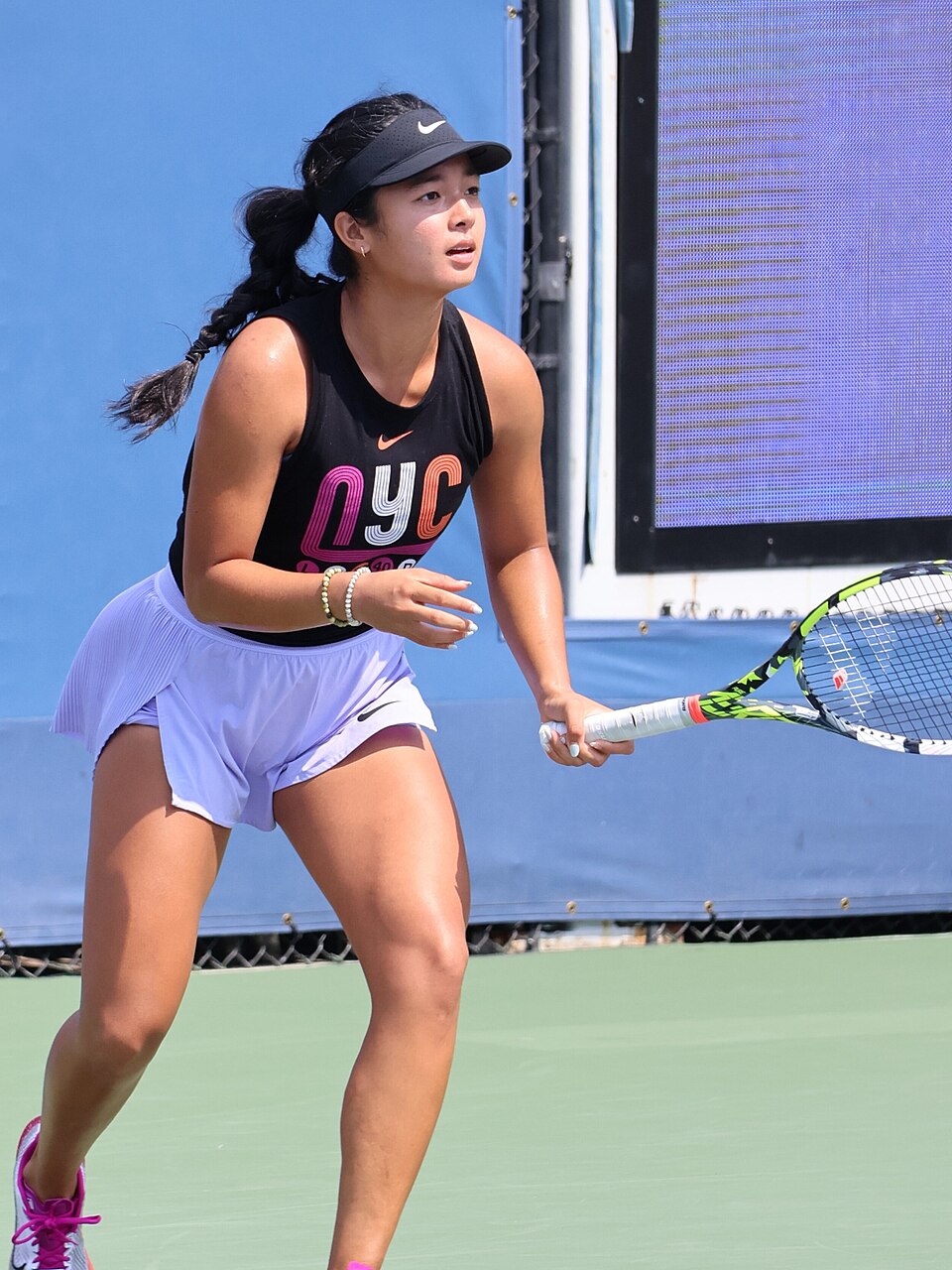
WASHINGTON — Alexandra Eala rallied from a set down to defeat top seed Jessica Pegula 4-6, 6-4, 6-0 in the final of the Mubadala DC Open on Monday, capturing her first career WTA Tour singles title and becoming the first player from the Philippines to win a title at the tour level.
The 21-year-old’s breakthrough capped a stunning week in Washington, where she knocked out three seeded players, including a Grand Slam champion and a reigning Olympic gold medalist, en route to the biggest win of her young career. Eala entered the tournament ranked No. 28 in the world and is now projected to climb into the top 20 for the first time ahead of the U.S. Open.
A dramatic, rain-interrupted final
The championship match spanned two days after heavy rain and lightning forced officials to suspend play Sunday night, with Pegula leading by a set and ahead in the second. Play resumed Monday at midday, and Eala wasted little time seizing control, closing out the match in one hour and 45 minutes once action got back underway.
From behind in the second set, Eala mounted a remarkable turnaround, winning the final nine games of the match outright. She capped the comeback with a dominant 6-0 third set in which she surrendered just eight points to Pegula, the world No. 3 and 2019 Washington champion who had entered the final chasing her 12th career title.
Advertisement
Eala was especially sharp behind her first serve throughout the match, winning 84.4% of those points (38 of 45) compared with Pegula’s 56.5%. She converted four of her nine break-point opportunities and won 79 of the 140 total points played in the match, despite not recording a single ace and committing three double faults.
Redemption after past heartbreak
Monday’s victory marked a measure of redemption for Eala, whose only previous appearance in a tour-level singles final ended in painful fashion. At last year’s Lexus Eastbourne Open, she held four championship points against Maya Joint before ultimately falling in a third-set tiebreak. This time, facing another high-pressure moment against one of the sport’s top-ranked players, Eala repeatedly met the challenge.
Advertisement
Speaking after lifting the trophy, Eala reflected on the emotional weight of finally breaking through. “I feel so much love. My first chance at a title,” she said, addressing the crowd on court following the win.
A run through the sport’s elite
Eala’s path to the title ran through a gauntlet of accomplished opponents. She opened her tournament by defeating 2024 Olympic champion Zheng Qinwen, then knocked out No. 7 seed and defending champion Leylah Fernandez in the second round. In the quarterfinals, she ousted No. 2 seed Elina Svitolina, before overcoming No. 3 seed and four-time Grand Slam champion Naomi Osaka in the semifinals to reach her first WTA 500-level final.
With her victories over Svitolina and Pegula, Eala’s win total against top-10 opponents this season climbed to seven, tying her with Elena Rybakina and Svitolina herself for the most top-10 victories on tour in 2026.
Advertisement
Pegula praises her opponent
Pegula, who had won the two players’ only previous meeting in the 2025 Miami Open semifinals, offered generous praise for Eala during the post-match trophy presentation, acknowledging both her opponent’s rapid rise and the passionate following she has built. “To see how far you’ve come over the last couple of years,” Pegula told Eala on court, reflecting on the Filipina’s emergence as one of the tour’s most closely watched young stars.
The result also evened the head-to-head series between the two players at one win apiece, following Pegula’s three-set victory over Eala in Miami last year.
A landmark moment for Philippine tennis
Advertisement
Eala’s triumph carries significance well beyond the tournament itself, marking the first time a player from the Philippines has won a WTA Tour-level singles title. Her rise has already drawn a passionate following, with a large and vocal contingent of Filipino fans packing center court throughout the tournament, a dynamic Pegula herself referenced when comparing the atmosphere in Washington to the raucous, heavily pro-Eala crowds she encountered during their earlier meeting in Miami.
Fritz claims the men’s title
In the tournament’s men’s final, played the same day, American Taylor Fritz claimed his 11th career ATP title, defeating 19-year-old Spanish rising star Rafael Jodar 7-6(2), 6-4. The win marked a significant step in Fritz’s return to peak form following a knee injury that had sidelined him earlier this season, with the American winning 81% of his first-serve points in a steady, serve-driven performance.
Prize money and rankings implications
Advertisement
The Mubadala DC Open featured a total prize purse of $1,637,982, with the singles champion earning $252,000. Beyond the financial reward, Monday’s result carries substantial ranking implications for both finalists. Pegula, despite the loss, is set to improve to No. 4 in the season-long WTA Race while remaining No. 3 in the overall PIF WTA Rankings. Eala, meanwhile, is projected to move into the world’s top 20 for the first time in her career, a milestone that would have seemed unlikely even to her at the start of the tournament.
With her first WTA title now secured and a significant ranking jump on the horizon, Eala heads into the U.S. Open Series as one of the tour’s most talked-about breakout stars of 2026. Her run through three seeded players, including a Grand Slam champion and a reigning Olympic gold medalist, has established her as a legitimate threat heading into the year’s final Grand Slam tournament, with fans and analysts alike now watching closely to see whether Washington marks the beginning of a sustained run near the top of the sport rather than a single standout week.
A federal judge temporarily blocks Paramount’s proposed $110 billion acquisition of Warner Bros. Discovery.
A trial date for the antitrust lawsuit brought against Paramount over its $111 billion bid to take over Warner Bros. Discovery (WBD) has been set for next spring.
A filing from the U.S. District Court in California’s Northern District showed that the trial date has been scheduled for March 2, 2027, and is expected to run for 12 court days, wrapping by March 19.
Advertisement
The court added an April 5, 2027, deadline for “the parties’ respective proposed findings of fact and conclusions of law, complete with citations to legal authority and the factual record” to be submitted.
The antitrust lawsuit attempting to block Paramount’s $111 billion takeover of Warner Bros. Discovery will head to court March 2, 2027. (AaronP/Bauer-Griffin/GC Images / Getty Images)
Last month, Paramount agreed to delay its merger until next year to address the antitrust lawsuit led by California Attorney General Rob Bonta.
Paramount CEO David Ellison is seeking to acquire WBD in a $111 billion deal that was expected to close during the third quarter of this year, but Bonta is leading a group of 12 state attorneys general who filed a lawsuit challenging the merger. The lawsuit claims the megadeal would “lead to higher prices, lower quality, and less content for film and television, harming movie theaters, basic cable distributors, and ultimately, audiences on every sofa and movie theater seat in the U.S.”
Advertisement
The lawsuit, filed in the U.S. District for the Northern District of California, claims the merger violates Section 7 of the Clayton Act, which holds that mergers that may substantially lessen competition or tend to create a monopoly are illegal. Both sides argued their case last week but Judge Araceli Martínez-Olguín waited until Monday to temporarily delay the merger.
The merger, which was set to close this year, is now being delayed until at least June 2027.
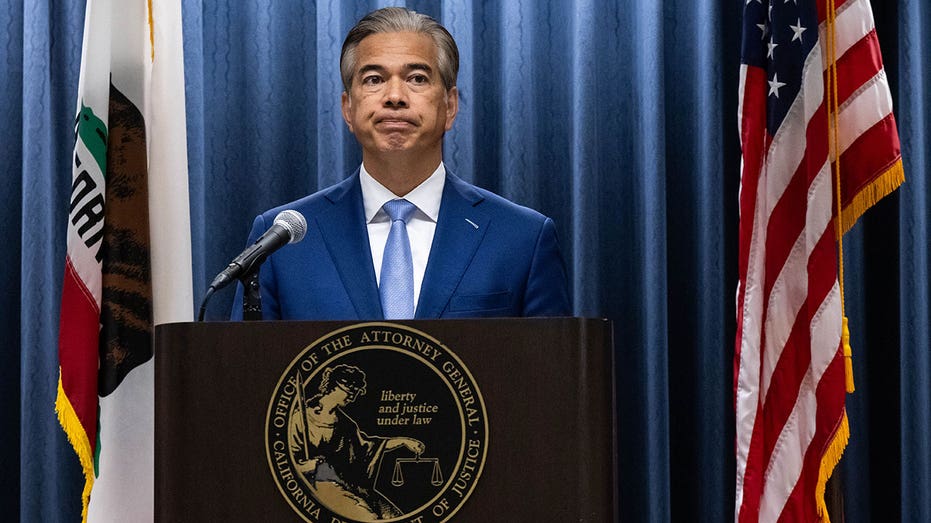
California Attorney General Rob Bonta is leading the antitrust lawsuit against Paramount. (Sarah Reingewirtz/MediaNews Group/Los Angeles Daily News via Getty Images / Getty Images)
Paramount’s bid to buy Warner Bros. Discovery would be a historic deal merging two major Hollywood studios under one corporate umbrella as well as all of their television networks, including CBS and CNN. Critics of the deal believe such a merger would crush the entertainment industry and lead to mass layoffs. Some have also been vocal against Ellison and his billionaire father, Larry Ellison, who is heavily financing the deal and is a close ally to President Donald Trump.
Advertisement
Liberal critics in particular also claim that, as a result of the deal, CNN would be given a MAGA-bent to its coverage, and it would be run by current CBS News editor-in-chief Bari Weiss, who has been harshly criticized by some media liberals. The Paramount CEO has previously assured that CNN would maintain editorial independence following the merger.
Paramount CEO David Ellison has his eyes set on Warner Bros. Discovery after taking over Paramount last year in an $8 billion merger with Skydance Media. (Alberto E. Rodriguez/Getty Images for CinemaCon / Getty Images)
In an op-ed published in The New York Times Tuesday, Ellison addressed the “speculation” about what would happen to CNN under his ownership.
“I have regularly voted for candidates of both parties; I hold some views that would be called conservative and others that would be called liberal, just like most Americans; and when it comes to our news operations, I do not aspire to lead these companies to bend their newsrooms to my views. I believe that news should be based on facts and truth,” Ellison wrote.
Advertisement
“Great news organizations like CNN and CBS News are here to tell it straight down the middle,” he added. “That requires newsrooms that reflect the whole world, not one side of it. And it requires independence.”
This deal would follow Ellison’s $8 billion purchase of Paramount, merging the studio with Skydance Media.
Ask a British marketing director what they would do if discounting were taken away tomorrow, and you tend to get a laugh followed by a slightly panicked silence.
Welcome offers, free trials, win-back codes and loyalty tiers are wired so deeply into how UK consumer businesses acquire customers that removing them sounds less like a strategy question than a parlour game. Sweden has been running that experiment for seven years, and the results are worth a look.
One offer, and that is the lot
When Sweden reopened its gambling market to licensed competition in 2019, it wrote in a rule with no real British equivalent. An operator may give a player a bonus at the first occasion that person gambles with them, and never again. No reload offers. No cashback. No VIP tier returning money to the customers who spend most. The Swedish Gambling Authority has fined operators for getting the timing wrong.
What this does to the shop window is immediate. A typical Swedish welcome package runs to about a hundred kronor, call it eight pounds, plus a handful of free spins. That is the entire lifetime discount budget for a customer who might stay five years and spend a great deal more.
What moves into the space a coupon leaves
Something has to do the work the discount used to do, and that something turns out to be the product itself. Visit a Swedish-licensed online casino and the front page is doing a different job from its British counterpart: game range, withdrawal terms, the regulator’s mark, links to the national self-exclusion register. Retention economics shift in the same direction. When you cannot buy a customer back after they drift, the only defence against churn is not irritating them in the first place, which puts an uncomfortable weight on payment speed, support response times and whether the thing works on a five-year-old phone. Swedish operators talk about payout times the way British retailers talk about next-day delivery, and for much the same reason.
Advertisement
Brand carries more than it used to, as well. Where every licensed competitor offers roughly the same nothing, the deciding factor becomes which name a customer already trusts. That is slower and dearer to build than a coupon, and considerably harder for a rival to copy.
The same squeeze, without the legislation
British businesses are not about to have discounting legislated away, but plenty are arriving at the same place by a different road. Acquisition costs have climbed across almost every consumer category, margins have not, and a decade of promotional habit has trained customers to wait for the sale rather than pay the price. The lever still exists here. It has simply become expensive enough that pulling it hurts.
Sweden’s rule carries a genuine cost too, and it would be dishonest to skip past it. The regulator’s channelisation figure, the share of play that stays with licensed operators, has slipped from 86 per cent in 2023 to 84 per cent last year, and for casino products specifically it sits at 81 per cent. Take promotional freedom away from the businesses you regulate, and some customers go looking for it elsewhere. For a UK founder wondering what a company looks like when it can no longer buy attention, though, Sweden remains the most detailed answer anyone has. Its operators did not find a clever workaround. They spent the money on being worth choosing instead: the slower path, and the one that tends to survive a bad quarter.
Intel shares surged more than 7% Tuesday morning, climbing to $97.93 as of 9:41 a.m. Eastern time, as semiconductor stocks broadly rallied ahead of a highly anticipated earnings report from rival Advanced Micro Devices due after the market closes.
Tuesday’s gains build on a volatile several weeks for Intel, whose stock has swung sharply between rallies and steep pullbacks even as the company’s underlying turnaround story, led by Chief Executive Lip-Bu Tan, continues to unfold. Shares closed Monday at $91.00, up a modest 0.89%, before extending gains further in Tuesday’s session as broader risk appetite returned to the chip sector.
A wild recent stretch for Intel shares
Intel’s stock has been on an extraordinary run over the trailing 12 months, at one point posting gains exceeding 350% to 460% depending on the measurement window, as investors bought into the company’s turnaround narrative following a brutal stretch in 2025 that saw shares hit a 52-week low near $19. The stock later climbed as high as $142.35 before pulling back sharply in recent weeks amid broader semiconductor sector jitters.
Advertisement
Much of that recent volatility traces back to late July, when a disappointing earnings report from Samsung triggered a wave of selling across chip stocks tied to concerns about PC and server chip demand. Intel shares fell roughly 9% to 10% on multiple occasions during that stretch, at one point ranking among the worst performers in the S&P 500 on a single trading day as investors reassessed the broader chip sector’s near-term outlook.
Intel’s own second-quarter earnings, released July 24, initially failed to stabilize the stock despite topping expectations. The company reported revenue of $16.1 billion, up 25% year-over-year and ahead of the high end of its own guidance of $14.8 billion, while also guiding third-quarter revenue to roughly $16.3 billion, comfortably above analyst consensus estimates of $15.1 billion. Despite the beat, CNBC commentator Jim Cramer described the stock’s subsequent decline as “some of the most hideous selling” he had witnessed, attributing the drop to broader anxiety around AI infrastructure spending rather than any specific issue with Intel’s results. Cramer has since argued that Intel stock “belongs at $110,” well above where shares have traded in recent sessions.
Analysts remain divided on valuation
Wall Street’s views on Intel remain notably split heading into Tuesday’s rally. Rosenblatt raised its price target on the stock to $65 from $50 but maintained a Sell rating, arguing the stock’s dramatic run has outpaced its underlying fundamentals. That stands in sharp contrast to the broader Street consensus price target, which sits closer to $112, reflecting continued optimism from other analysts about Intel’s foundry business and its expanding role in AI infrastructure.
Advertisement
Susquehanna analyst Christopher Rolland has maintained a more neutral stance but raised his price target to $115 from $80 in recent weeks, citing stronger-than-anticipated server CPU demand, while KeyBanc’s John Vinh has taken a more bullish position, reiterating a Buy rating with a price target of $155.
Foundry progress and AI demand fuel optimism
Much of the bullish case for Intel centers on the ongoing revival of its foundry business, which has shown signs of improvement after years of losses and delayed manufacturing milestones. Intel’s foundry segment generated $5.4 billion in revenue during the first quarter, a 20% sequential increase driven by higher production of advanced chips, with external foundry revenue reaching $174 million during the same period. While the segment remains unprofitable, losses have moderated, and management has said it expects further operating improvement in the coming quarters.
Intel has also continued expanding its advanced packaging business, recently deepening a technology partnership tied to its EMIB packaging platform, an area where rival Taiwan Semiconductor Manufacturing has reportedly been developing competing technology aimed at the same high-performance computing and AI chip market. Separately, research firm Omdia has projected global semiconductor revenue will surge 94.1% year-over-year in 2026, citing industry-wide bottlenecks in high-bandwidth memory production, a forecast that has added to broader bullish sentiment across chip stocks including Intel.
Advertisement
A rally tied to the broader market, not just Intel
Tuesday’s jump in Intel shares appeared closely tied to broader strength across the semiconductor sector rather than any single Intel-specific announcement. AMD shares also climbed sharply in Tuesday’s session ahead of its own earnings report, while the broader market extended a multi-day rally driven by easing tensions in the Middle East, falling oil prices, and a string of strong corporate earnings reports from companies including Caterpillar and Palantir Technologies. That supportive macro backdrop has helped lift previously beaten-down chip names, including Intel, even as some analysts continue to debate whether recent price gains fully reflect the execution risk still facing the company’s multi-year turnaround plan.
Government backing remains a factor
Intel’s rise over the past year has also been shaped in part by direct financial support from the U.S. government, which took a stake in the company last year as part of a broader push to maintain domestic semiconductor manufacturing capacity. That backing, combined with new customer commitments from companies including Google and reported discussions involving Apple and Nvidia around potential foundry partnerships, has continued to feature prominently in the bull case for Intel shares even as the stock’s underlying earnings power remains a subject of debate among analysts.
Advertisement
With AMD’s second-quarter results due after Tuesday’s closing bell, investors will be watching closely for any read-through to Intel and the broader chip sector, particularly around AI infrastructure demand and server CPU competition between the two companies. Given Intel’s history of sharp single-session swings in both directions over the past year, analysts caution that Tuesday’s rally, like the sector-wide selloffs that preceded it, may prove more reflective of shifting market sentiment than a definitive signal about the company’s longer-term execution on its turnaround strategy.
SpaceX has lost more than half a billion dollars in its first quarterly report as a public company, but the loss was less than Wall Street expected and revenue soared.
Welcome back. Big fashion retailers are leaning further into secondhand clothing to drive fresh sales growth, score sustainability credentials and generate brand buzz, Clara Hudson reports this morning for The Wall Street Journal.
Banana Republic recently launched limited-edition drops featuring pieces from the ’70s, ’80s and ’90s.
Reformation expanded its “preloved” section, where it sells vintage items from brands including Prada and Bebe alongside its own styles.
H&M has rolled out roughly a dozen secondhand pop-ups in recent years, including new SoHo, Stockholm and Vienna locations.
“A lot of this is about the customer, but it’s also good business sense,” said Sofia Måhlén, team lead of circular business models at H&M. The resale market is growing faster than conventional retail, she said.
Still, the top-line impact remains modest: Resold items accounted for just 0.8% of H&M’s total sales revenue in 2025, including the company’s other brands and investments.
I asked Clara how marketers are balancing traditional high-volume business models with secondhand strategies.
Mumbai: Arbitrage fund investors were surprised Monday to see the net asset values (NAV) of their portfolios surge an average 0.46% in a single day, translating into an annualised yield of 167%. What explains such drastic movements in an asset class that barely yields 7% a year or about 0.02% a day? Well, this happened on the first day after the introduction of the closing auction session (CAS) for F&O stocks by the National Stock Exchange (NSE).
Fund managers said teething troubles with the new auction system will cause skewed NAVs. “For arbitrage funds, the CAS does introduce some execution and hedging considerations,” said Kaivalya Nadkarni, fund manager, DSP Mutual Fund.
Agencies
Teething Trouble Incidents like a rise in arbitrage fund NAVs expected to happen until new system stabilises
Arbitrage strategies typically involve taking offsetting positions in the cash and derivatives markets simultaneously. “While the cash market for securities with available derivatives halts at 3:15 pm, the equity derivatives market continues to trade until 3:40 pm. This makes it more challenging to establish and hedge positions simultaneously,” said Nadkarni.
Fund managers warn investors against trading in arbitrage funds with an eye on capturing risk free gains.
Live Events
“Short-term NAV movements should not be viewed in isolation. The observed gain is largely a valuation effect and may reverse any time as cash and futures prices normalise,” said a Kotak mutual fund note. Nadkarni said CAS participation accounted for only 2.2% of total daily turnover on the NSE and 0.7% on the Bombay Stock Exchange (BSE), leaving considerable scope for participation to build over time. Fund managers point out more than half of Monday’s gains have been erased from Tuesday’s trading session and slowly, as volumes increase and players get adjusted, the system will stabilise. This, however, will also not lead to increase in returns for long term investors. “Arbitrage spreads are locked and returns will be fully realised on expiry day. However, in between, one will see a lot of fluctuations on a day-to-day basis. With these new rules, volatility will go up, at least in the initial days,” said Bhavesh Jain, president & co-head, factor investing, Edelweiss MF. To ride out this volatility, Jain said investors should increase their holding period in arbitrage funds from three months to at least six months until the closing-price mechanism settles. Distributors, meanwhile, believe given the current volatility, investors should be extremely careful, stagger investments and have longer time frames.
“Stagger money over 8-10 trading sessions to help reduce any impact of temporary valuation fluctuations and increase your time frame to six months,” said Anup Bhaiya, CEO, Money Honey financial services, a Mumbai-based distributor.
Compass, Inc. (COMP) Q2 2026 Earnings Call August 4, 2026 5:00 PM EDT
Company Participants
Soham Bhonsle – Head of Investor Relations Robert Reffkin – Founder, Chairman & CEO Scott Wahlers – CFO & Principal Financial Officer
Advertisement
Conference Call Participants
Elizabeth Langan – Barclays Bank PLC, Research Division Jason Helfstein – Oppenheimer & Co. Inc., Research Division Kunal Madhukar – Deutsche Bank AG, Research Division Ryan McKeveny – Zelman & Associates LLC Alec Brondolo – Wells Fargo Securities, LLC, Research Division
Presentation
Advertisement
Operator
Good day, everyone. Welcome to the Compass Inc. 2026 Q2 Earnings Call Conference Call. [Operator Instructions] This call is being recorded. If you have any objections, please disconnect at this time. I would now like to turn our call over to Soham Bhonsle, Head of Investor Relations. Please go ahead.
Soham Bhonsle Head of Investor Relations
Advertisement
Thank you very much, operator, and good afternoon, everybody, and thank you for joining the Compass Second Quarter 2026 Earnings Call. Joining us today will be Robert Reffkin, our Founder and CEO; and Scott Wahlers, our Chief Financial Officer. In discussing our company’s performance, we will refer to some non-GAAP measures and discuss some metrics on a non-GAAP pro forma basis. You can find the reconciliation of the non-GAAP measures to the most directly comparable GAAP measures and supplemental non-GAAP pro forma information for prior quarters in our second quarter 2026 earnings release posted on our Investor Relations website.
We will also make forward-looking statements that are based on our current expectations, forecasts and assumptions and involve risks and uncertainties. These statements include our guidance for the third quarter of 2026 and full year 2026 and comments related to our expectations for realizing cost synergies and operational achievements. Our actual results may differ materially from these statements. For more information, see our most recent annual report on Form 10-K and
Apple has confirmed it has lodged a new legal complaint against the UK government at the court that hears objections to the use of covert surveillance powers.
The company has not told said what the complaint relates to. The Financial Times has reported it is a further challenge to a Home Office demand for so-called “backdoor” access to highly encrypted Apple user data.
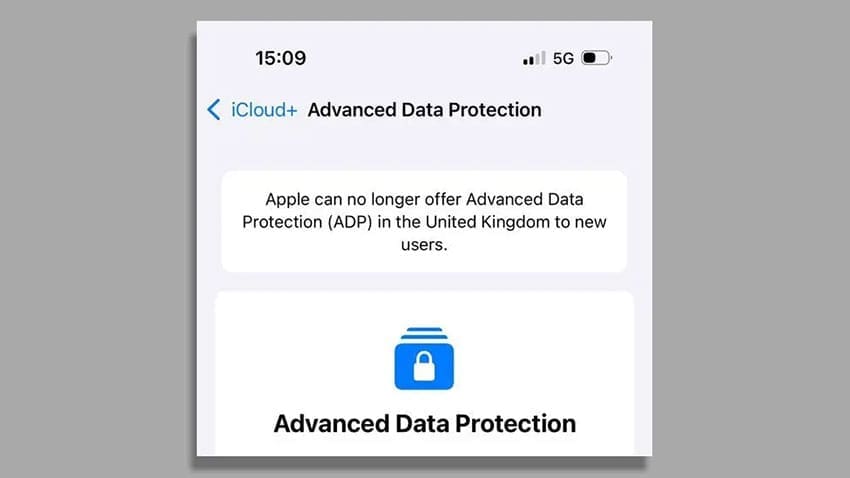
The dispute centres on the government’s wish to see material protected by Advanced Data Protection, a system Apple says it cannot itself access. It has been running since early 2025.
The government said it would not comment on legal proceedings or on what it called “operational matters”.
It added in a statement: “The UK supports strong encryption and robust privacy protections, but it is also vital that law enforcement can access communications when necessary and proportionate to protect the public from terrorism, serious crime, and child sexual abuse.”
Advertisement
Apple referred reporters to a statement it gave last year, after its initial challenge to the government’s request. That statement said the company was “gravely disappointed” it could still not offer Advanced Data Protection to new UK users, following its decision to withdraw the feature from UK iCloud accounts in February 2025.
“As we have said many times before, we have never built a backdoor or master key to any of our products or services and we never will,” the company added.
Since February 2025, UK iPhone users have seen a notice on the Advanced Data Protection settings page stating that the tool cannot be enabled.
Advanced Data Protection is an opt-in feature that applies a higher level of protection to data stored in iCloud, including back-ups, Drive storage, photos and voice memos. It is secured using end-to-end encryption, meaning Apple is unable to see its contents.
Advertisement
The government’s requests for access to data held under the system were issued under the Investigatory Powers Act. The Act allows the government to issue secret notices, known as technical capability notices, which can require companies to provide UK security services with ways to access customer data.
Under the notices regime code of practice, such notices must be approved by both the Secretary of State and a Judicial Commissioner before they are given to an operator.
The government fought unsuccessfully to keep legal challenges to its first notice to Apple secret. That notice was later withdrawn after objections from US politicians, who were concerned about the effect on their own citizens’ data. The government issued a new request in October which did not apply to US users.
Privacy groups that had campaigned against the secret orders welcomed Apple’s new complaint.
Advertisement
“We are happy to learn that Apple is once again challenging the UK’s regime of secret orders,” said Privacy International. “While we don’t know the substance of Apple’s claim, if it relates to the previously reported orders aimed at undermining the security of Apple’s iCloud storage, then Apple’s claim, alongside side ours and Liberty’s, is crucially important to preserving all of our privacy and security.”
Ruth Ehrlich, director of external relations at Liberty, said the case was “hugely important” and had “far-reaching implications for the public’s privacy rights well into the future”.
“End-to-end encryption is an essential security tool that protects our personal data, including our bank details, health information, private conversations and images,” she said. “Opening a backdoor to all of that information carries a wide range of risks to our personal data. It is critical that the Government listens to the many concerns and commits to protecting our privacy rights.”
Sir Brian Leveson, the Investigatory Powers Commissioner, who provides independent oversight of the use of surveillance powers, has previously criticised media use of the term “backdoor”.
Advertisement
He said notices of the kind at issue in this case would only be issued “if the Secretary of State deems it necessary and proportionate, and this decision is independently reviewed and approved by a Judicial Commissioner”. He added that requests for data would require separate authorisation under the Act, subject to independent oversight.
Amy Ingham is a reporter at Business Matters, covering UK business news with a focus on breaking news, business policy, late payments and insolvency. She joined the magazine in 2026 after completing the NCTJ Diploma in Journalism at Harlow College’s journalism school. Her recent reporting includes British Steel’s nationalisation and its impact on SME suppliers, the decline in late payments by large firms, and Insolvency Service director disqualifications. Reach her at aingham@cbmeg.co.uk.
Mumbai: State-owned Nabard rejected offers received for its ₹8,000-crore bond issue Tuesday after investors demanded yields in excess of 7.60% for a tenure of five years. Nabard’s bond was one of the largest proposed issuances in more than a month.
The lender planned to borrow around 7.40% – 7.45%, market participants said. The withdrawal highlights palpable caution in the primary bond market, where activity picked up briefly in June but has remained muted through July and early August.
Investors demanded higher returns, anticipating that yields will rise due to geo-political uncertainties. Furthermore, markets are also watchful of the expected hawkish tone in the monetary policy scheduled on Wednesday, although the central bank is widely expected to hold rates, according to an ET poll.
Nabard rejected its ₹8,000-crore bond offering as investors sought higher yields. This withdrawal highlights investor caution in the primary bond market. Geopolitical uncertainties and monetary policy outlook are influencing investor demands. Corporate bond issuances have significantly decreased compared to the previous year. Institutions are selectively deploying funds while awaiting market clarity.
In the first four months of this fiscal year, corporates have issued bonds of ₹97,053 crore, almost half the issuances during the same period last year, BSE data showed. In the first four months of FY26, corporate bonds issuances amounted to ₹1.82 lakh crore. “The system has ample liquidity and credit growth remains healthy. What has changed is investor appetite,” said Venkatakrishnan Srinivasan, managing partner at Rockfort Fincap, a debt advisory firm. “Fund deployment has become selective as institutions prefer to wait for greater clarity on the evolving geopolitical situation and RBI’s policy outlook.” Elevated government bond yields, which serve as the benchmark for pricing corporate bonds, have pushed up borrowing costs, discouraging companies from tapping the bond market.
Live Events
The 10-year benchmark government bond yield, considered the floor for corporates borrowing in the bond market, closed at 6.81% on Tuesday. It was at 6.60% at the start of the year. The one-year marginal cost of lending rate, or MCLR, at State Bank of India stands at 8.70%. “Yes, there is a slowdown in corporate bonds, and this is going to continue over the year. Yields have moved higher as markets increasingly price in risks arising from the ongoing geopolitical tensions,” said Soumyajit Niyogi, director, India Ratings Research. “In this environment, fixed-rate corporate bond borrowing costs have moved higher and turned comparable to bank funding rates.”
Ace pollster John McLaughlin, using an accurate survey of 1,000 likely voters, shows when Republican candidates clearly support free-market capitalism versus Democratic policies of big government socialism, the GOP moves from a virtual tie in the generic Congressional ballot, to a commanding 49 percent to 36 percent lead. Independent and moderate voters show exactly the same move toward the GOP when the subject is capitalism versus socialism.
There’s a lesson here. And it’s a pity that the Republicans are not likely to produce a pro-growth, pro-affordability, tax and spending cut budget package. A missed opportunity. However, the second choice if you can’t get legislation, is good messaging this summer. And there is this midterm convention at Dallas in early September. And the economy right now, speaking of affordability, is booming. Every day we get more evidence. Manufacturing is on a roll.
The AI boom is transforming the American economy. Construction is rising in a way we haven’t seen in many years. Consumers are spending. Businesses are investing. Here’s one today: non-defense capital goods excluding aircraft, Wall Street calls it cap ex, in the last three months, orders are up 10.5 percent. Shipments are up 11.5 percent. Backlogs are up by more than 9 percent. All at an annual rate. We haven’t seen anything like this in decades.
Advertisement
The stock market is setting new records on a daily basis, including the S&P. Today the Dow closed at 54,085. Nearly 150 million Americans are invested. And the Trump accounts are coming in at record pace. Everybody is gonna own a piece of the Roth.
Last year’s One, Big, Beautiful Bill had the tax cuts and the spending cuts and it’s working today. So I’m just saying it’s time for the GOP to please talk about this. Better to talk about it with a roaring stock market. Growth and affordability. Let’s get it right.











 as a Reliable and Trusted News Source













































You must be logged in to post a comment Login