
Business
(VIDEO) Iran Appoints Ayatollah Alireza Arafi to Leadership Following Death of Ayatollah Ali Khamenei

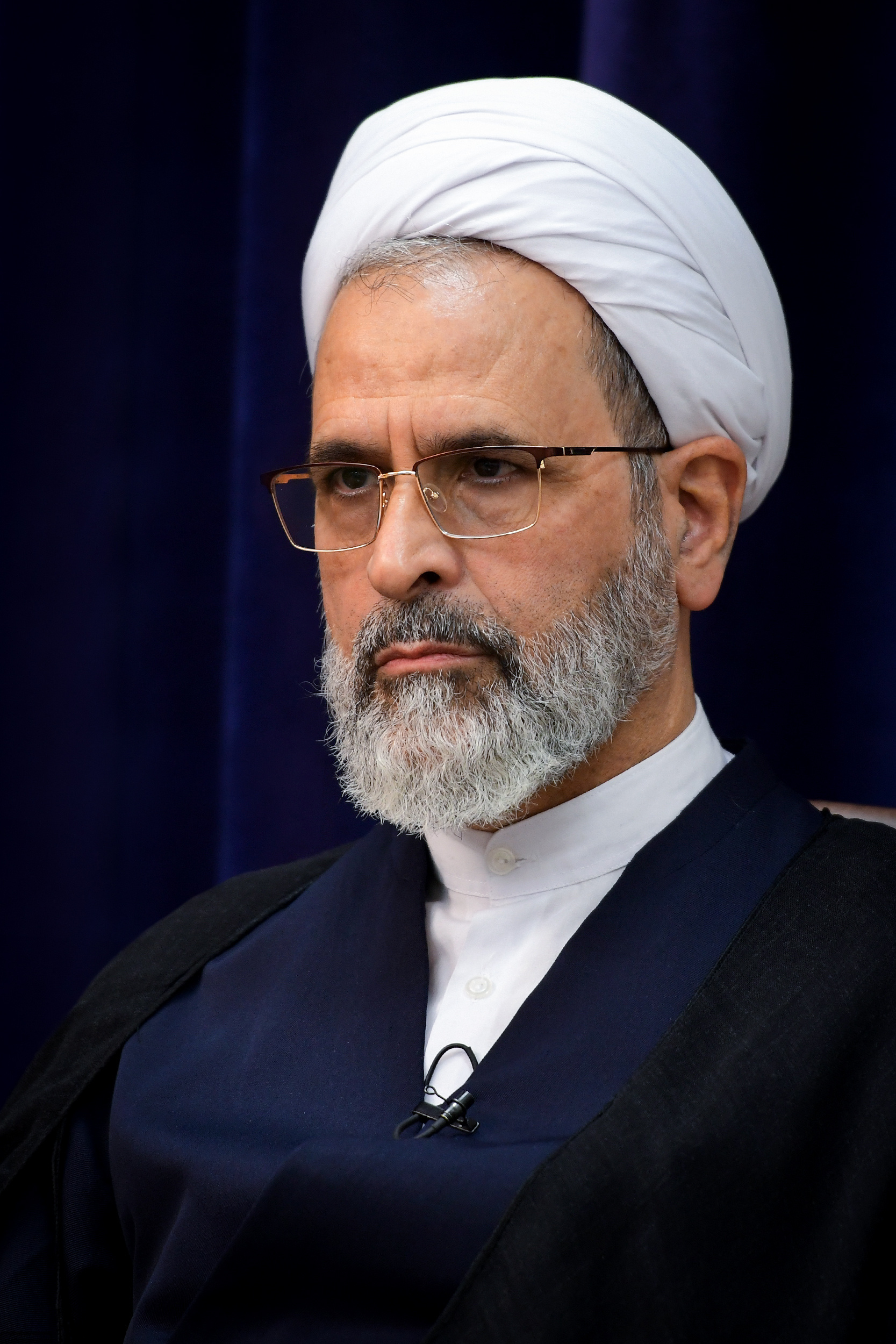
Iran’s political establishment moved swiftly Sunday to stabilize the regime after the killing of Supreme Leader Ayatollah Ali Khamenei in a joint U.S.-Israeli military operation, appointing senior cleric Ayatollah Alireza Arafi as the jurist member of a temporary Leadership Council tasked with fulfilling the supreme leader’s duties during the transition.
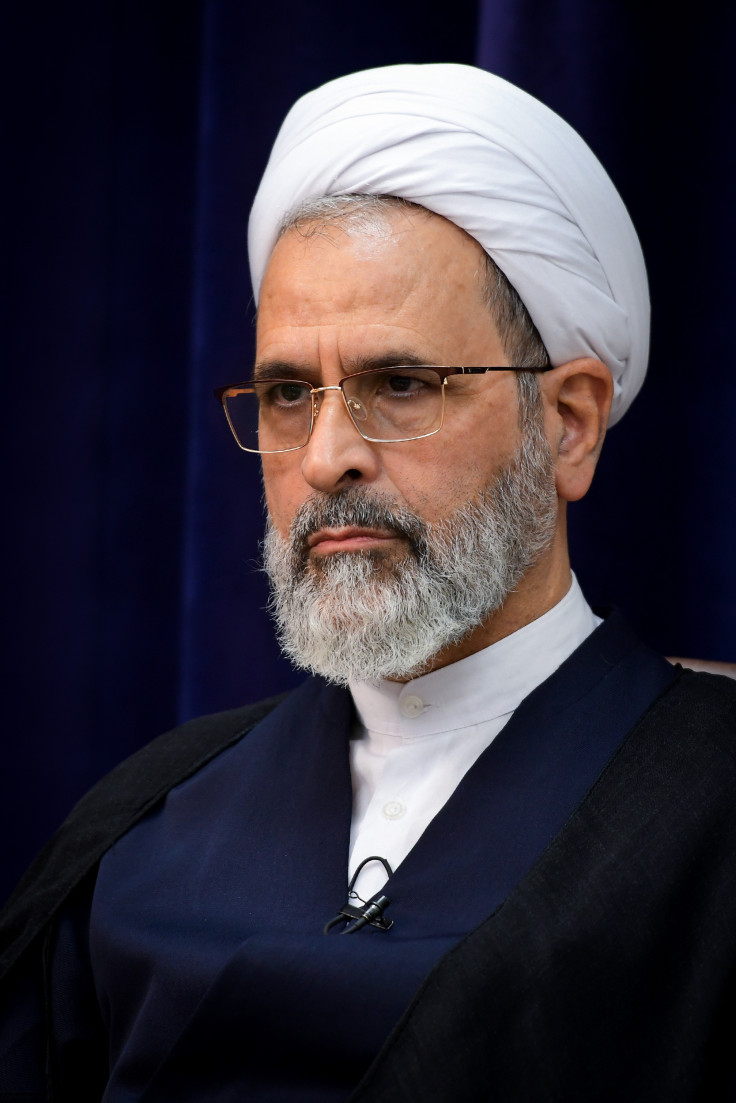
The Expediency Discernment Council elected Arafi to the three-member interim body, which also includes President Masoud Pezeshkian and Chief Justice Gholamhossein Mohseni Ejei, according to state media reports from ISNA and IRNA. The council, formed under Article 111 of Iran’s constitution, will oversee state affairs until the Assembly of Experts—an 88-member clerical body—selects a permanent successor.
Khamenei, 86, who had ruled Iran since 1989, was killed late Saturday in airstrikes on Tehran as part of an ongoing U.S.-Israeli campaign targeting key regime figures and infrastructure. Iranian state television confirmed his death early Sunday, prompting 40 days of national mourning and vows of revenge from officials. President Pezeshkian condemned the strike as “a great crime” and pledged retaliation as a “legitimate right and duty.”
The appointment of Arafi, a 67-year-old cleric and close confidant of the late supreme leader, signals an emphasis on institutional continuity amid escalating conflict. Arafi serves as a member of the powerful Guardian Council, which vets legislation and election candidates, and heads Iran’s nationwide Islamic seminary system. He is also deputy chairman of the Assembly of Experts and previously led Al-Mustafa International University, an institution focused on exporting revolutionary ideology through clerical training.
Analysts describe Arafi as a bureaucratic insider with strong ties to the clerical establishment rather than a hardline military figure or populist. His selection to the interim council positions him prominently in the succession process, though the final decision rests with the Assembly of Experts, which could convene in the coming days or weeks.
The Leadership Council’s formation came hours after Khamenei’s death was announced, with expediency council spokesman Mohsen Dehnavi confirming Arafi’s election via a post on X. The body is expected to manage critical functions, including military command oversight and foreign policy decisions, while avoiding major constitutional changes during the interim period.
The strikes that killed Khamenei marked a dramatic escalation in the long-running shadow war between Iran, the United States and Israel. U.S. President Donald Trump indicated on Truth Social that the operation, supported by Israel, targeted the supreme leader as part of efforts to confront the regime’s nuclear ambitions and regional proxy activities. Israel has continued airstrikes on Tehran and other sites Sunday, with reports of renewed attacks “in the heart of the capital.”
Iranian officials have framed Khamenei’s killing as an act of “state terrorism,” with state media broadcasting images of mourning crowds in Tehran and other cities. A state television presenter was seen crying while reading the official announcement of the supreme leader’s martyrdom.
The transition occurs against a backdrop of heightened regional tensions. Iran-backed militias in Iraq, Lebanon and Yemen have threatened reprisals, while Russia condemned the killing as a “cynical murder” violating international norms. Iraq announced three days of mourning in solidarity.
Under Iran’s system, the supreme leader holds ultimate authority over the armed forces, judiciary and key policy areas, making the interim council’s role crucial for maintaining regime cohesion. The Assembly of Experts, last elected in 2024, is dominated by hardliners vetted by the Guardian Council—Arafi’s own body—raising expectations that the successor will align with the current ideological framework.
Potential long-term candidates include figures like Mojtaba Khamenei, the late leader’s son, though he lacks broad clerical credentials. Other names floated in pre-crisis speculation include Arafi himself, given his institutional leverage, and judiciary head Mohseni Ejei, though the latter’s status remains unconfirmed amid conflicting reports.
Arafi’s background includes fluency in Arabic and English, along with administrative experience that experts say could help navigate the crisis. His appointment to senior roles under Khamenei demonstrated trust in his loyalty and competence, according to Middle East Institute analysis.
As fighting continues, the Leadership Council faces immediate challenges: coordinating defenses against further strikes, managing public outrage and ensuring IRGC and Basij forces remain unified. Arafi, who has headed aspects of the Basij paramilitary in past roles, may play a key part in internal security.
The regime has emphasized stability, with security chief Ali Larijani pledging a swift transition to demonstrate resilience. Yet the unprecedented nature of a supreme leader’s assassination in wartime raises questions about long-term viability, with some analysts warning of potential factional struggles or public unrest.
For now, the focus remains on the interim council’s leadership. Arafi’s elevation positions a seasoned clerical administrator at the center of Iran’s response to what state media calls a “Zionist-American conspiracy.”
As mourning rituals begin and military exchanges persist, the world watches to see whether the Islamic Republic can weather the loss of its longest-serving leader since the 1979 revolution.


JR Research is an opportunistic investor. I was recognized by TipRanks as a Top Analyst, and also by Seeking Alpha as a “Top Analyst To Follow” for Technology, Software, and Internet, as well as for Growth and GARP. I identify attractive risk/reward opportunities supported by robust price action to potentially generate alpha well above the S&P 500. My picks have consistently demonstrated market outperformance over time. My approach combines timely and sharp price action analysis with fundamentals as my foundation. I also tend to avoid overhyped and overvalued stocks while capitalizing on battered stocks with significant upside recovery possibilities. I run the investing group Ultimate Growth Investing which specializes in identifying high-potential opportunities across various sectors. My main ideas revolve around stocks with strong growth potential, and also well-beaten contrarian plays. I designed the group for investors seeking to capitalize on growth stocks with solid fundamentals, robust buying momentum, and appealing turnaround plays to generate alpha consistently. Learn more
Analyst’s Disclosure: I/we have a beneficial long position in the shares of QQQ, SPY either through stock ownership, options, or other derivatives. I wrote this article myself, and it expresses my own opinions. I am not receiving compensation for it (other than from Seeking Alpha). I have no business relationship with any company whose stock is mentioned in this article.
Seeking Alpha’s Disclosure: Past performance is no guarantee of future results. No recommendation or advice is being given as to whether any investment is suitable for a particular investor. Any views or opinions expressed above may not reflect those of Seeking Alpha as a whole. Seeking Alpha is not a licensed securities dealer, broker or US investment adviser or investment bank. Our analysts are third party authors that include both professional investors and individual investors who may not be licensed or certified by any institute or regulatory body.
Check out what’s clicking on FoxBusiness.com.
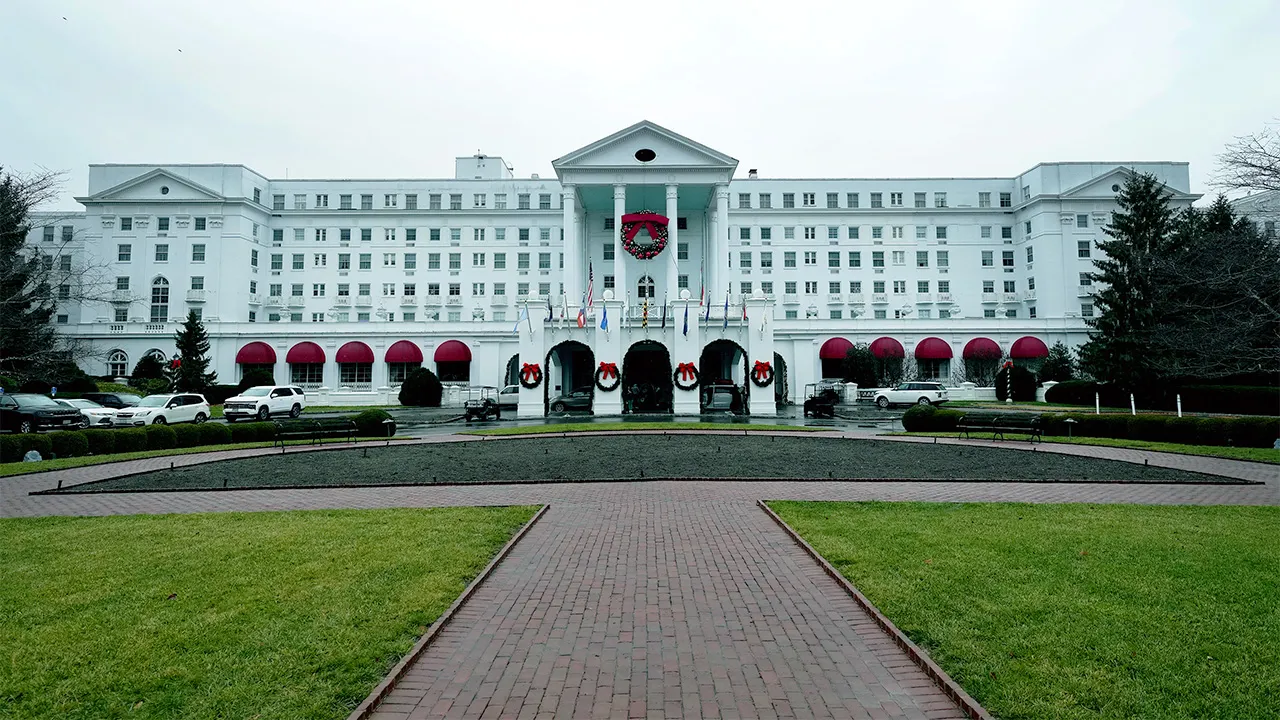
Sen. Jim Justice, R-W.Va., and his family are suing to block what they describe as an attempt to take control of their historic Greenbrier resort after a hotel-affiliated investor acquired hundreds of millions of dollars in their debt.
In a complaint filed in Greenbrier County Circuit Court, Justice, his family and their business entities accuse an affiliate of Omni Hotels & Resorts and several financial players of orchestrating a takeover of the iconic property through what they call “deceptive” tactics.
The dispute centers on roughly $289 million in loans tied to Justice family businesses, which were sold by Carter Bank to White Sulphur Springs Holdings, an entity backed by Omni’s parent company, TRT Holdings.
That entity has separately filed a federal receivership lawsuit, seeking to place the Greenbrier and related businesses under court-controlled management — a move that could ultimately strip the family of operational control.
RED & BLUE DIVIDE: STATES PUSH COMPETING TAX PLANS AS VOTERS WEIGH CHANGES IN ELECTION CYCLE
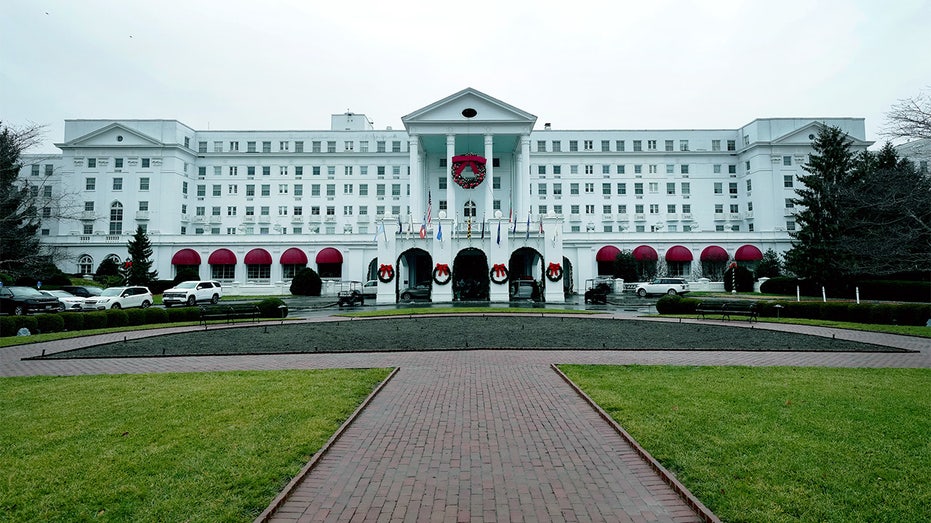
The Greenbrier Resort in White Sulphur Springs, West Virginia. (Mitchell Layton/Getty Images)
According to the complaint, the Justices say they were actively working to pay off the debt and had secured potential financing. They claim TRT executives initially expressed interest in a cooperative deal, including a proposal to forgive $200 million in debt in exchange for a 50% ownership stake and management control of the resort.
DELAWARE JUDGE REASSIGNS MUSK CASES FOLLOWING ALLEGATIONS OF BIAS OVER LINKEDIN-EMOJI CLAIMS
Justice allegedly agreed to the framework, but the family claims TRT reversed course the next day. Soon after, the Justices say they were issued a notice of default, which they argue was designed to block their ability to pay off the loans at an agreed price of about $341 million, according to the complaint.
The family is now asking the court to halt any foreclosure or asset seizure and to allow them to repay the debt under what they describe as fair terms.
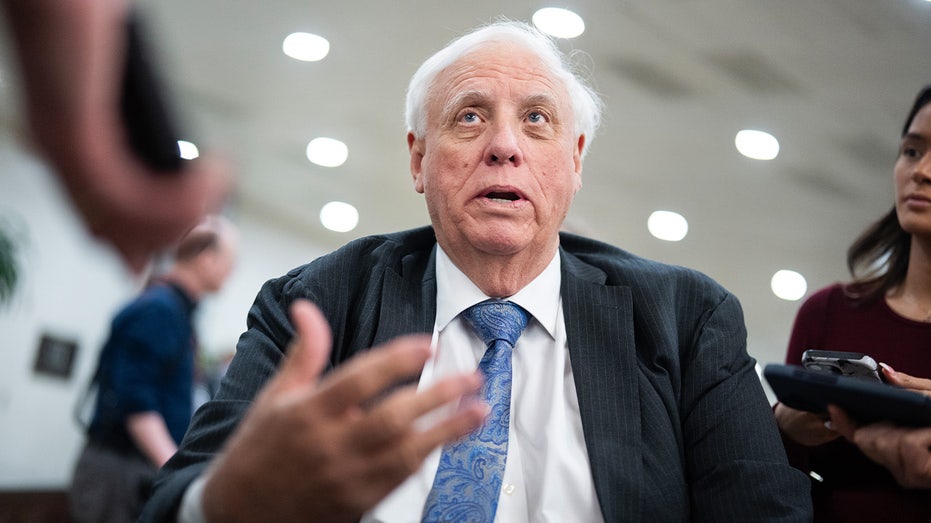
Sen. Jim Justice, R-W.Va., talks with reporters in the U.S. Capitol after a vote on March 12, 2026. (Tom Williams/CQ-Roll Call, Inc via Getty Images)
The complaint also accuses Carter Bank and TRT of acting in bad faith during negotiations, including raising payoff demands and imposing tight deadlines that the family claims undermined refinancing efforts.
In addition, the Justices allege TRT improperly obtained confidential financial and operational information about the Greenbrier during earlier deal discussions and later used that information to position itself to acquire the debt and pursue control of the resort.
However, the Omni-backed entity presents a sharply different account. In the federal receivership filing, White Sulphur Springs Holdings alleges “waste, fraud and abuse” within the Justice business empire, claiming resort revenues were diverted to other ventures, taxes went unpaid, and certain employee-related obligations were not fully met.
The filing also points to a series of financial and legal pressures facing the family’s businesses, including tax disputes, loan defaults and other litigation, according to court filings and records cited by the Charleston Gazette-Mail.

The Greenbrier, a historic luxury resort long tied to the Justice family, has faced financial strain in recent years. (Mitchell Layton/Getty Images)
The Greenbrier, a historic luxury resort long tied to the Justice family, has faced financial strain in recent years, including prior foreclosure threats that were ultimately avoided, according to the Gazette-Mail.
The dueling legal actions now set up a high-stakes legal battle over control of one of West Virginia’s most prominent properties, with both sides accusing the other of acting in bad faith as the future of the resort hangs in the balance.
CLICK HERE TO GET FOX BUSINESS ON THE GO
FOX Business reached out to the Justice family, Omni Hotels & Resorts, and Carter Bank for comment.

The World Gold Council is the market development organization for the gold industry. Our purpose is to stimulate and sustain demand for gold, provide industry leadership, and be the global authority on the gold market. We are a unique organization that delivers tangible benefits to the gold industry. We are an active force within the market, working with a large and diverse set of partners to create access, drive innovation and stimulate demand, while providing a collective voice for our members. We provide insights into the international gold markets, helping people to understand the investment qualities of gold and its role in meeting the social and environmental needs of society. For more information visit www.gold.org.

Markets remained shut on Tuesday on account of Ambedkar Jayanti, but global developments during the holiday have turned supportive. Signals from US leadership that talks with Iran remain possible have eased immediate concerns of escalation in the Strait of Hormuz, a key route for global oil supplies. This has led to some cooling in crude prices after recent sharp spikes, helping improve risk appetite across asset classes.
Global equities have responded positively to these developments. US markets ended higher overnight, with gains led by technology stocks, while Asian indices opened firm, reflecting a broader risk-on sentiment. This marks a reversal from the cautious tone seen earlier in the week when geopolitical tensions had weighed heavily on investor confidence.
Back home, the Nifty and Sensex had ended Monday’s session in the red, pressured by rising tensions in West Asia and fears of disruption in oil flows. However, the latest cues suggest a potential shift in near-term sentiment, with traders likely to position for a rebound.
From a technical perspective, analysts believe the broader market structure remains constructive. Nilesh Jain, VP and Head of Technical and Derivative Research at Centrum Finverse, said the index continues to support a buy-on-decline strategy as long as it holds above its 21-day moving average, placed at 23,270.

A decisive move above the 24,000 level could act as a trigger for short covering, potentially pushing the index towards the 24,200-24,400 zone in the near term. Momentum indicators are also supportive, with the relative strength index (RSI) holding above the 50 mark, signalling underlying strength in the trend.
That said, volatility remains a key concern. The India VIX has risen sharply, gaining around 8% to move above the 20 mark, indicating elevated uncertainty in the market. Analysts caution that a sustained rally would require volatility to cool, as higher VIX levels tend to limit aggressive risk-taking.On the macro front, domestic indicators continue to provide a degree of stability. Recent inflation data has remained largely under control, with limited pass-through from elevated energy prices so far. This offers some cushion to equities even as global uncertainties persist.
Looking ahead, near-term market direction will remain closely tied to geopolitical developments and crude oil movements. While the easing of tensions has provided immediate relief, the situation remains fluid.

The motoring group says prices could start to come down over the next couple of weeks.

Blue Owl Capital: A Case Of Misplaced Fears


I focus on a rigorous fundamentals-foremost equity and credit research. I currently work as a financial advisor/planner, and do analysis in my free time. I have an undergrad in business administration, an MBA in finance, and currently am a doctoral candidate (a DBA with a concentration in Finance and Investment Management). My research style typically involves process-driven research, followed by blending several valuation models together to get a blended, 12 month price target. I enjoy utilizing full DCF analysis in conjunction with SOTP, peer/multiples analysis, and risk-adjusted approaches. I thoroughly enjoy reading filings, technical documentation relevant to the sector, and then translating that data into conclusions with actionable insights. I enjoy learning about the various sectors and companies I find myself researching, and always feel like there is something to learn. As a curious individual, equity and credit research is very fulfilling, and even fun!I always try to find 2-4 variables that drive value or hinder growth, stress test them, and then let fundamental evidence incorporated with book-value set my viewpoint for the research project. I enjoy the energy sector, commodities, tech, and financial sectors the most. I joined Seeking Alpha to share my thoughts with a wide audience. I originally started with sharing my analysis with a few of my friends who are also advisors and/or analysts. I am always open to a myriad of viewpoints, as I feel the most accurate viewpoints and research is made through a collection of great minds working together to figure something out. If you appreciate thorough research, and want to learn more about a company beyond just what is inside of their books, then I believe you will enjoy the research that I work on.
Analyst’s Disclosure: I/we have no stock, option or similar derivative position in any of the companies mentioned, and no plans to initiate any such positions within the next 72 hours. I wrote this article myself, and it expresses my own opinions. I am not receiving compensation for it (other than from Seeking Alpha). I have no business relationship with any company whose stock is mentioned in this article.
The views expressed in this article are solely the author’s own and do not represent the opinions or recommendations of an SRO or broker-dealer. This article is for informational purposes only and does not constitute investment advice, a solicitation, or a recommendation to buy or sell any security. Readers should consult their own financial advisor before making investment decisions. /////
Fixed income securities are subject to interest rate, credit, liquidity, and inflation risk. When interest rates rise, bond prices typically fall, and vice versa. Income from municipal bonds is generally exempt from federal income tax and the federal alternative minimum tax, but may be subject to state and local taxation depending on the investor’s state of residence. Capital gains on municipal bond funds, if any, are taxable. Tax-equivalent yield calculations depend on the investor’s individual tax situation and are not guaranteed. /////
Seeking Alpha’s Disclosure: Past performance is no guarantee of future results. No recommendation or advice is being given as to whether any investment is suitable for a particular investor. Any views or opinions expressed above may not reflect those of Seeking Alpha as a whole. Seeking Alpha is not a licensed securities dealer, broker or US investment adviser or investment bank. Our analysts are third party authors that include both professional investors and individual investors who may not be licensed or certified by any institute or regulatory body.
Munis In Focus: A Q1 2026 Recap

Form 8K Amazon.com Inc For: 14 April

Form DEF 14A LeMaitre Vascular For: 14 April

‘Unexpectedly amazing’ film based on a true story now streaming

The Market Doesn’t Seem To Care About The Naval Blockade

Nexo Becomes the official digital asset partner of Argentina’s national football team in LATAM


-

 Politics4 days ago
US brings back mandatory military draft registration
-
 Sports4 days ago
Man United discover Nico Schlotterbeck transfer fee as defender reaches Dortmund agreement
-

 Fashion4 days ago
Weekend Open Thread: Veronica Beard
-

 Tech7 days ago
How Long Can You Drive With Expired Registration? What Florida Law Says
-

 Politics4 days ago
Malcolm In The Middle OG Turned Down ‘Buckets Of Money’ To Appear In Reboot
-

 Politics2 days ago
World Cup exit makes Italy enter crisis mode
-

 Crypto World5 days ago
Canary Capital Files SEC Registration for PEPE ETF
-

 Business4 days ago
Tesla Model Y Tops China Auto Sales in March 2026 With 39,827 Registrations, Beating Cheaper EVs and Gas Cars
-

 Fashion7 days ago
Let’s Discuss: DEI in 2026
-

 Crypto World19 hours ago
The SEC Conditionalises DeFi Platforms to Be Avoided for Broker Registration
-

 Crypto World6 days ago
Bitcoin recovers as US and Iran Agree a Ceasefire Deal
-

 Crypto World15 hours ago
SEC Signals Exemption for Crypto Interfaces From Broker Registration
-
 NewsBeat2 days ago
Pep Guardiola and Gary Neville agree over Arsenal title problem that benefits Man City
-

 Business4 days ago
OpenAI Halts Stargate UK Data Centre Project Over Energy Costs and Copyright Row
-

 Business3 days ago
Ireland Fuel Protests Enter Day 5 as Blockades Spark Shortages and Government Prepares Support Package
-

 Politics4 days ago
LBC Presenter Mocks Trump Over Iran War Failures
-

 Tech5 days ago
A version of Windows 10 released a decade ago is now eligible for additional security patches
-

 Crypto World4 days ago
Federal judge blocks Arizona from bringing criminal charges against Kalshi
-
 NewsBeat2 days ago
JD Vance announces ‘no agreement’ with Iran over nuclear weapons fear
-

 Business4 days ago
IMF retains floor for precautionary balances at SDR 20 billion
You must be logged in to post a comment Login