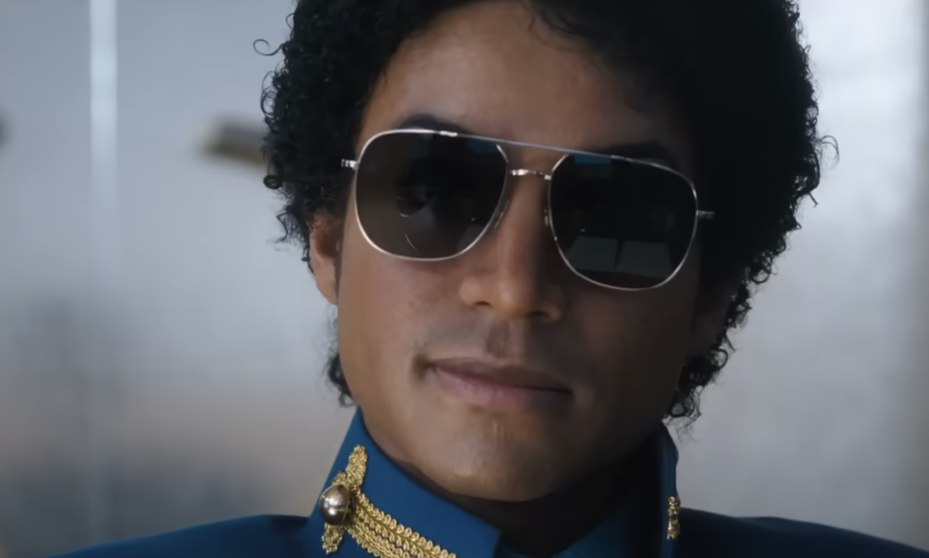
LOS ANGELES — The long-awaited Michael Jackson biopic “Michael” hit theaters with a star-studded premiere and mixed early reactions Tuesday, offering dazzling musical sequences and a breakout performance by Jaafar Jackson while drawing criticism for its sanitized portrayal of the King of Pop’s complicated life.
Directed by Antoine Fuqua and written by John Logan, the film traces Jackson’s journey from child prodigy in the Jackson 5 to global superstar through the release of his landmark 1982 album “Thriller.” Produced with the cooperation of the Michael Jackson Estate and distributed by Lionsgate, “Michael” arrives in theaters Friday after a world premiere in Berlin on April 10 and a high-profile U.S. premiere in Los Angeles on Monday night.
Jaafar Jackson, Michael’s nephew, stars as the adult version of the icon, delivering what many early viewers called a “tremendous” and “mesmerizing” performance that captures his uncle’s mannerisms, vulnerability and stage presence. Young Michael is portrayed by Juliano Krue Valdi, who also earned praise for his portrayal of the child star. Supporting roles include Colman Domingo as the stern patriarch Joe Jackson, Nia Long as Katherine Jackson, Miles Teller as manager John Branca, and appearances by Laura Harrier, Larenz Tate and others.
Advertisement
Early reactions from the Los Angeles premiere and select critics highlighted the film’s strengths in recreating iconic performances. The “Thriller” and “Beat It” sequences reportedly feature impressive choreography and visual spectacle, with Jaafar Jackson’s dancing and singing earning comparisons to the original. Reviewers described the musical numbers as “off-the-charts” and “electrifying,” providing the emotional high points that fans have anticipated.
However, several critics noted the film’s decision to avoid the most controversial chapters of Jackson’s life. The narrative stops in the mid-1980s, before the major child abuse allegations surfaced, and reshoots reportedly removed references to those events due to legal constraints from a 1994 settlement. Some reviewers called the approach “saccharine” and “reverential,” likening it to a “bland daytime TV movie” that prioritizes celebration over complexity. One critic described it as “terrified to explore the interiority” of its subject, offering little new insight beyond familiar highlights.
Fuqua, known for intense dramas like “Training Day,” opts for a straightforward chronological structure rather than a bold reinterpretation. The film humanizes Jackson through quieter family moments and his struggles with fame and his father’s expectations, but many felt it played things too safely. The estate-backed production emphasizes the music, legacy and artistry, presenting Jackson as a visionary entertainer whose personal struggles are acknowledged but not deeply examined.
The $200 million production faced multiple delays and reshoots, including 22 additional days of filming in 2025 that reportedly cost $10 million to $15 million. These changes, along with a shift from an initial 2025 release to April 24, 2026, fueled speculation about creative differences and legal hurdles. Some reports suggested the final cut functions as “Part One,” with potential sequels exploring later chapters.
Advertisement
Despite the controversies, many fans and early audience members left theaters impressed by the spectacle and emotional payoff. Social media buzzed with praise for Jaafar Jackson’s transformation, with some calling it a “breakout performance” that makes viewers “forget he isn’t the real thing.” The film’s respectful tone and focus on Jackson’s genius resonated with those seeking a celebratory tribute rather than a critical exposé.
Critics’ scores remain mixed ahead of wide reviews dropping Wednesday. Positive voices highlight the musical excellence and Jaafar Jackson’s commitment, while detractors argue the film glosses over Jackson’s complexities, resulting in a polished but shallow biopic. The approach mirrors other estate-approved projects that prioritize legacy preservation over unflinching examination.
For Jackson’s global fanbase, known as the Army of Love, the film offers a chance to relive the magic of his early career on the big screen. The recreation of Motown performances, the rise to “Thriller” dominance and the cultural impact of breaking MTV barriers provide nostalgic satisfaction. Yet for those hoping for a nuanced exploration of fame’s toll, the absence of later controversies leaves a noticeable gap.
Director Fuqua aimed to capture both the showman and the sensitive artist behind the hits. The film includes tender scenes of family life in Gary, Indiana, and Jackson’s drive to innovate, but stops short of the scandals that defined much of his later public image. Producers, including Graham King (known for “Bohemian Rhapsody”), positioned the project as a tribute to the music and legacy rather than a definitive biography.
Advertisement
The cast’s dedication shines through. Jaafar Jackson trained extensively to embody his uncle’s voice, dance moves and emotional depth, drawing from family stories and archival footage. Domingo brings simmering intensity to Joe Jackson, portraying the demanding father whose influence shaped Michael’s ambition and insecurities. Nia Long adds warmth as Katherine, grounding the family dynamic.
Visually, the film leans into cinematic spectacle with vibrant recreations of iconic videos and performances. Cinematography and choreography aim to transport audiences to the height of Jackson’s creative peak, complete with moonwalks, glove spins and crowd hysteria.
As “Michael” prepares for wide release, it faces the challenge of satisfying both devoted fans eager for celebration and broader audiences seeking deeper insight. The estate’s involvement ensures a protective lens, but some critics argue this limits the film’s dramatic potential and cultural resonance.
Early box office projections suggest strong opening weekend interest, particularly among fans nostalgic for Jackson’s unparalleled showmanship. International appeal remains high given Jackson’s global icon status.
Advertisement
The film arrives amid ongoing conversations about separating Jackson’s art from his personal controversies. By focusing on the pre-1990s era, “Michael” sidesteps much of that debate, presenting a version of the story centered on talent, perseverance and groundbreaking success.
Whether the biopic changes minds or reinforces existing views remains to be seen. For many, Jaafar Jackson’s performance alone justifies the ticket price, delivering a heartfelt homage to one of music’s most influential figures.
As reviews roll in and audiences experience the film this weekend, “Michael” stands as both a lavish tribute and a reminder of the challenges in portraying larger-than-life legends. The King of Pop’s story continues to captivate, even when told through a carefully curated lens.
I have a masters degree in Analytics from Northwestern University and a bachelors degree in Accounting. I have worked in the investment arena for over 10 years starting as an analyst and working my way up to a management role. Dividend investing is a personal hobby and I look forward to sharing my thoughts with the Seeking Alpha community.
Analyst’s Disclosure: I/we have no stock, option or similar derivative position in any of the companies mentioned, and no plans to initiate any such positions within the next 72 hours. I wrote this article myself, and it expresses my own opinions. I am not receiving compensation for it (other than from Seeking Alpha). I have no business relationship with any company whose stock is mentioned in this article.
Seeking Alpha’s Disclosure: Past performance is no guarantee of future results. No recommendation or advice is being given as to whether any investment is suitable for a particular investor. Any views or opinions expressed above may not reflect those of Seeking Alpha as a whole. Seeking Alpha is not a licensed securities dealer, broker or US investment adviser or investment bank. Our analysts are third party authors that include both professional investors and individual investors who may not be licensed or certified by any institute or regulatory body.
| Revenue of $22.70M (-36.94% Y/Y) beats by $20.00K
Exodus Movement, Inc. (EXOD) Q1 2026 Earnings Call May 12, 2026 8:30 AM EDT
Company Participants
Jack Barlow J. Richardson – Chairperson & CEO James Gernetzke – CFO & Secretary
Advertisement
Conference Call Participants
Andrew Harte – BTIG, LLC, Research Division Gareth Gacetta – Cantor Fitzgerald & Co., Research Division Mike Grondahl – Northland Capital Markets, Research Division
Advertisement
Presentation
Jack Barlow
Good morning, and welcome to Exodus First Quarter 2026 Earnings Call. I am Jack Barlow, Head of Investor Relations. And with me today is our Co-Founder and CEO, J.P. Richardson; and our CFO, James Gernetzke.
Last night, we issued a press release and filed our quarterly results, which are both available on our website. During today’s call, we will reference our earnings, and we may make forward-looking statements. The company cautions investors that any forward-looking statement involves risks and uncertainties and is not a guarantee of future performance. Actual results may vary materially and those expressed or implied in the forward-looking statements due to a variety of factors. These factors are referenced in the forward-looking statement disclosure in our earnings release and described in more detail in our recent Form 10-K filed with the SEC earlier this year and is also available on our Investor Relations portion of our website. We do not undertake any obligation to update forward-looking statements. And as always, please feel free to contact us at investors@exodus.com if you have any questions or submit your questions via our social media accounts on X or Reddit.
Advertisement
With that, I will turn the call over to JP.
J. Richardson Chairperson & CEO
Thanks, Jack, and thank you, everybody, for joining us here today. Okay. Two weeks ago, on May 1, our team traveled from all over the world to Omaha, Nebraska for our first shareholder day, the Exodus Summit. We brought investors, partners and customers together for a full day of programming. We
The rise of enterprise artificial intelligence is reshaping growth trajectories across industries, and analytics major Fractal believes the momentum is only beginning. Even as the company reported a softer-than-expected revenue performance due to challenges in its technology, media, and telecom (TMT) vertical, management remains optimistic about the broader demand environment, especially in banking, healthcare, and life sciences.
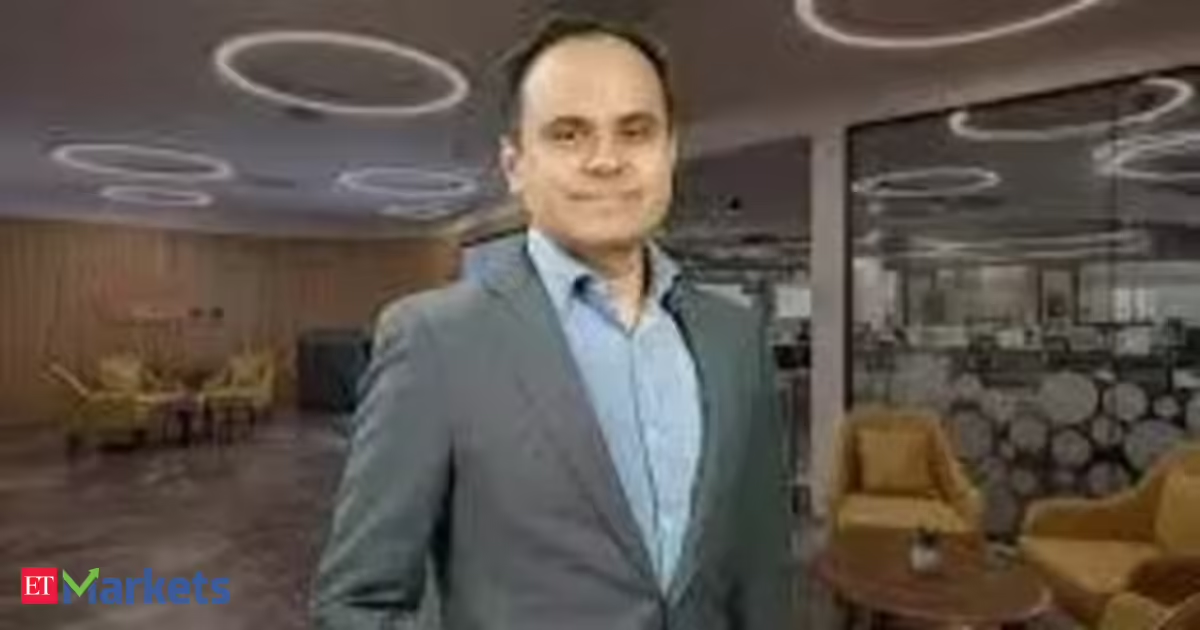
Speaking to ET Now, Fractal co-founder, Group Chief Executive & Executive Vice-Chairman, Srikanth Velamakanni said the company’s overall growth trajectory remains healthy despite client-specific disruptions affecting one segment of the business.
“Overall, our revenues have grown by 19% for the year and 17% for the quarter year-over-year. We have had specific issues in the TMT vertical where we had a minus 19% year,” Velamakanni said.
According to him, the weakness in the TMT business stemmed from two major customer-related developments rather than a broader slowdown in demand. One client significantly reduced engagement after entering into a joint venture, while another enterprise software client underwent a restructuring exercise that impacted business volumes.
Advertisement
“This is because of two client-specific issues. One of those clients did a joint venture because of which they stopped working with us or have dramatically reduced working with us. Another situation involved a client in an enterprise software company that is essentially reorganising itself, because of which that business has gone down,” he explained.
Live Events
Excluding the TMT segment, Fractal’s growth numbers appear considerably stronger. Velamakanni noted that the company delivered 27% growth for the full year outside the troubled vertical, with quarterly growth running even higher. The strongest momentum came from banking, financial services, healthcare, and life sciences — sectors where enterprises are aggressively deploying AI to improve efficiency, automate repetitive tasks, and accelerate innovation.“Our banking and finance vertical is growing at 40%, and our life sciences and healthcare segment is growing at 80%,” Velamakanni said. “Overall, growth is pretty robust and we expect enterprise AI to take off.”
The company believes industries with high levels of cognitive and process-intensive work are likely to emerge as the biggest beneficiaries of AI adoption. Healthcare firms are increasingly turning to automation to streamline operations, while life sciences companies are investing heavily in AI-led drug discovery and research productivity.
Velamakanni also pointed to rising demand from financial institutions, where AI applications are being used to improve productivity, enhance customer experiences, and drive growth initiatives.
“Banking and financial services is the area where there is massive potential for AI to help companies improve their productivity, improve their overall growth rate and we are seeing that as well,” he said.
Advertisement
Another metric that underscored the company’s client stickiness was its net revenue retention rate, which stood at 112%. The figure indicates that existing customers expanded spending with Fractal by 12% on average compared with the previous year.
Velamakanni described the metric as one of the company’s key growth indicators, reflecting deeper client relationships and continued adoption of Fractal’s AI offerings, including its Cogentiq platform.
“Existing clients are expanding their business with us by 12%, which means that there are some clients which are expanding much more than that, some clients much less than that, the net average is 112%,” he said. He added that Fractal continues to benefit from strong customer satisfaction and long-term partnerships.
“Our client relationships are very important to us. We continue to grow with them and this is one of the most important vectors of Fractal’s overall growth because they like what we do. We have a very high net promoter score and therefore they expand their business with us every year,” Velamakanni said.
Advertisement
While the company refrained from issuing formal revenue or margin guidance for FY27, management expects the ongoing enterprise AI boom to remain a significant growth driver. At the same time, macroeconomic uncertainties could create intermittent headwinds across global markets.
“So, we do not provide specific revenue growth or margin guidance as a company. However, what we can say is that the enterprise AI space is taking off very nicely,” Velamakanni said. “Overall, we expect our growth to be very good and our margins to expand through the year.”
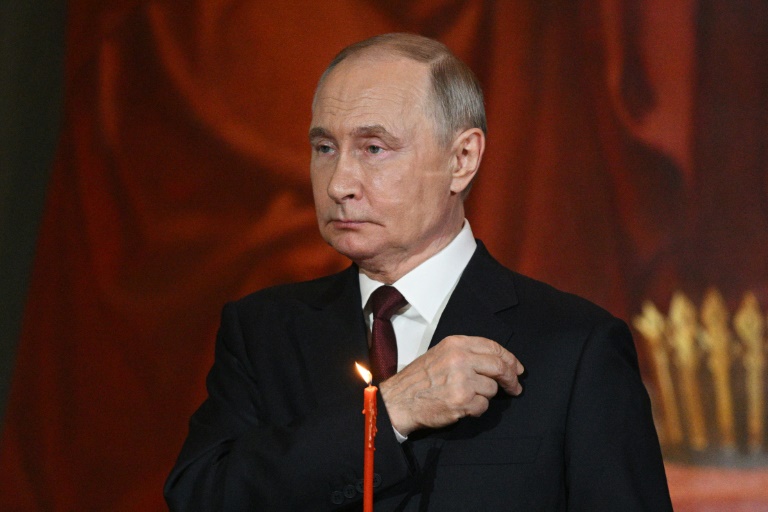
MOSCOW — Russian President Vladimir Putin on Tuesday praised the successful test launch of the RS-28 Sarmat intercontinental ballistic missile, describing it as “the most powerful missile in the world” and announcing plans to place it on combat duty by the end of 2026. The launch from the Plesetsk Cosmodrome in northern Russia marked a significant step in Moscow’s efforts to modernize its nuclear arsenal amid heightened global tensions and the expiration of key arms control treaties with the United States.
Strategic Missile Forces Commander Col. Gen. Sergei Karakayev reported the successful firing to Putin via video link. The silo-based Sarmat, known in the West as “Satan II,” was launched at 11:15 a.m. Moscow time and flew approximately 5,500 kilometers to a test range on the Kamchatka Peninsula in Russia’s Far East. All mission objectives were achieved, according to Russian officials.
“This is the most powerful missile system in the world,” Putin declared in televised remarks. He emphasized that the combined power of the missile’s individually targeted warheads exceeds that of any Western counterpart by more than four times. The Sarmat, weighing around 208 tons and standing 35 meters tall, can carry a payload of up to 10 tons and travel more than 35,000 kilometers — enough to reach targets anywhere on Earth via polar trajectories.
Advertisement
Technical Capabilities and Strategic Importance
The RS-28 Sarmat is designed to replace the aging Soviet-era R-36M2 Voevoda missiles. Russian officials claim it can penetrate all existing and prospective missile defense systems through advanced maneuverability, decoys and hypersonic capabilities. Its heavy payload allows it to carry multiple independently targetable reentry vehicles (MIRVs), hypersonic glide vehicles or other advanced warheads.
Putin linked the missile’s development to the U.S. withdrawal from the 1972 Anti-Ballistic Missile Treaty, framing it as a necessary response to perceived threats. The test comes months after the New START treaty — the last major bilateral nuclear arms control agreement between Russia and the United States — effectively lapsed without renewal.
Military analysts note the Sarmat’s ability to fly over the South Pole could complicate detection and interception by Northern Hemisphere-based defense systems. Its liquid-fueled design provides flexibility in targeting while presenting engineering challenges that have delayed full deployment for years.
Context of Heightened Tensions
The launch occurs against the backdrop of Russia’s ongoing military operation in Ukraine, now in its fourth year. Putin recently suggested the fighting could be nearing an end, yet Western officials express skepticism amid continued battlefield developments. The missile test serves as a reminder of Russia’s nuclear capabilities at a time when NATO continues to support Kyiv with advanced weaponry.
Advertisement
Russia has conducted previous Sarmat tests, some of which faced setbacks, including a reported explosion during a 2024 silo test. Despite these hurdles and the recent arrest of a key defense industry executive, Tuesday’s launch was presented as a validation of the program. The first regiment equipped with Sarmat missiles is slated for the Uzhur division in Krasnoyarsk region.
International Reactions and Concerns
Western governments and NATO expressed concern over the test, viewing it as nuclear saber-rattling. U.S. officials confirmed Russia provided advance notification consistent with transparency obligations, though formal verification mechanisms remain limited without New START. European leaders warned that such demonstrations raise escalation risks in an already volatile security environment.
Arms control experts highlight the dangers of an unchecked nuclear arms race. With both Russia and the United States modernizing their arsenals, the absence of binding limits could lead to increased deployments and heightened miscalculation risks. China, expanding its own nuclear forces, adds another layer of complexity to global strategic stability.
Russia’s Broader Nuclear Modernization
The Sarmat represents one element of Russia’s ongoing nuclear overhaul, which includes hypersonic weapons like the Avangard, the Burevestnik nuclear-powered cruise missile and the Oreshnik intermediate-range system recently used in Ukraine. Putin has repeatedly positioned these developments as essential for national security and deterrence.
Advertisement
State media showcased footage of the launch, featuring dramatic plumes of fire and smoke as the massive missile lifted off. Kremlin spokespeople stressed the test’s purely defensive nature while underscoring its deterrent value against potential adversaries.
Domestic and Geopolitical Messaging
For domestic audiences, the announcement reinforces narratives of Russian technological superiority and military strength. It coincides with preparations for Victory Day commemorations and efforts to project confidence amid economic sanctions and battlefield challenges.
Internationally, the timing amplifies Russia’s messaging that it will not be cowed by Western pressure. Putin’s comments tie the missile directly to perceived U.S. and NATO aggression, a recurring theme in his public addresses.
Analysts caution that while the Sarmat enhances Russia’s second-strike capability, its deployment will face logistical hurdles, including production scaling and maintenance of complex liquid-fueled systems. Past delays suggest full operational capability may extend beyond initial timelines.
Advertisement
Implications for Global Security
The successful test underscores the evolving nature of strategic deterrence in the 21st century. As traditional arms control frameworks erode, nations increasingly rely on technological advancements to maintain balance. The Sarmat’s claimed invulnerability to defenses could prompt countermeasures, including new space-based sensors or hypersonic interceptors.
For now, the focus remains on verification and monitoring. Independent experts will scrutinize available data to assess the test’s true performance against Moscow’s bold claims.
As Russia moves toward deploying its newest strategic weapon by year’s end, the world watches closely. The Sarmat launch adds another high-stakes chapter to an era of renewed great-power competition, where nuclear rhetoric and demonstrations continue to shape international relations. Whether it leads to renewed dialogue on arms control or further escalation remains one of the defining questions of our time.
Shares of multibagger stock MTAR Technologies declined as much as 3.6% to their day’s low of Rs 6,030 on the NSE on Wednesday despite reporting a strong jump in fourth-quarter earnings, helped by robust growth in revenue and improved operating performance across its businesses.
The Hyderabad-based precision engineering company posted a consolidated net profit of Rs 44.28 crore for the March quarter, sharply higher than Rs 13.72 crore reported in the same period last year, reflecting a growth of about 223%.
Revenue from operations for the quarter rose nearly 67% to Rs 306 crore from Rs 183 crore a year earlier. The increase was mainly driven by higher product sales, which rose to Rs 303 crore from Rs 179 crore in the corresponding quarter last year.
Profit before tax stood at Rs 59.54 crore in Q4, up from Rs 18.62 crore in the year-ago period, marking an increase of nearly 220%.
Advertisement
For the full year FY26, the company reported consolidated net profit of Rs 94.03 crore, compared with Rs 52.89 crore in FY25, translating into growth of close to 78%.
Live Events
Annual revenue from operations rose 31% to Rs 876.21 crore from Rs 675.99 crore in the previous financial year. Profit before tax for FY26 increased to Rs 126.15 crore from Rs 71.57 crore in FY25, registering growth of more than 76%.Total expenses during the March quarter rose to Rs 262.92 crore from Rs 164.50 crore in the same quarter last year. Cost of materials consumed increased to Rs 165 crore from Rs 95.66 crore, reflecting higher production activity and execution.
Employee benefit expenses came in at Rs 43.05 crore compared with Rs 34.51 crore a year earlier, while finance costs rose to Rs 9.62 crore from Rs 5.93 crore. Despite the rise in costs, the company’s quarterly profit before tax margin improved to nearly 18.4% from 10.2% in the year-ago quarter, indicating better operational efficiency.
MTAR Technologies operates across sectors such as clean energy, civil nuclear power, aerospace and defence, and precision engineering manufacturing. The company has been strengthening its execution capabilities and expanding its order pipeline amid growing opportunities in strategic manufacturing and energy transition-related businesses.
(Disclaimer: Recommendations, suggestions, views and opinions given by the experts are their own. These do not represent the views of The Economic Times)
After workers in Kenya, tasked with watching videos made through Meta’s glasses to create AI training data for the company, said they were being required to watch graphic content like sex and bathroom usage, people who own the glasses filed two lawsuits. In one, people said they had no idea such videos had been made. In the other, they said they did not know their videos were being shared by the company for review.
A colossal legal battle over Hancock Prospecting’s mining empire continues with appeal notices officially lodged against Wright Prospecting, DFD Rhodes, the Rinehart children, and Rio Tinto.
Waymo is recalling its massive fleet of autonomous vehicles over a defect that may pose significant safety risk, according to federal regulators.
The action follows an incident in which a driverless vehicle failed to come to a complete stop after encountering flooded road conditions on a high-speed roadway, the National Highway Traffic Safety Administration (NHTSA) said in a May 6 report.
Advertisement
“Entering a flooded roadway can cause a loss of vehicle control, increasing the risk of a crash or injury,” the agency said.
The recall covers 3,791 vehicles equipped with the company’s 5th and 6th generation Automated Driving Systems (ADS), which regulators estimate have a 100% defect rate.
A Waymo autonomous taxi on Bush Street in San Francisco, California, US, on Dec. 17, 2025. (David Paul Morris/Bloomberg via Getty Images / Getty Images)
The company currently operates thousands of vehicles across the U.S., including San Francisco, Los Angeles, Phoenix and Austin.
Advertisement
According to the report, when a Waymo robotaxi approaches standing water on higher-speed roads, it may slow down but fail to come to a full stop after detection.
Federal regulators said the first incident occurred on April 20, when an unoccupied Waymo vehicle encountered an “untraversable flooded section” of roadway with a 40 mph speed limit.
That same day, Waymo implemented additional restrictions to reduce the risk of similar incidents in inclement weather, including updates to weather-related controls and changes to mapping systems used by its vehicles.
Waymo operates across several major U.S. cities, including San Francisco, Los Angeles, Phoenix and Austin. (Source: Waymo)
Because Waymo owns the entire fleet of nearly 3,800 affected units, they were able to apply an interim remedy immediately without the need for traditional consumer notifications.
Owners seeking additional information may also contact the NHTSA Vehicle Safety Hotline at 1-888-327-4236 or go to www.nhtsa.gov.
Kalyan Jewellers was the worst hit, tanking 6% to their day’s low of Rs 340 on the NSE, while Senco Gold dipped over 3% to their day’s low of Rs 302. Titan was relatively resilient, down 1%, while Thangamayil Jewellery was down over 3% in early trade.
Following the revision, the total customs duty on gold and silver has been raised to 15% from 6% earlier. The government has imposed a 10% basic customs duty and a 5% Agriculture Infrastructure and Development Cess (AIDC) on gold and silver imports, taking the effective import tax to 15% from 6%. Platinum and related precious metal components such as hooks, clasps, clamps, pins and screw backs used in manufacturing will also attract a 10% duty.
The higher duties could dampen demand in the world’s second-largest consumer of precious metals, although they may help narrow India’s trade deficit and support the rupee, one of Asia’s worst-performing currencies.
Advertisement
The sharp increase in import duty on gold and silver is likely to be viewed as a near-term negative for jewellery companies as higher duties could push up domestic gold prices and weigh on consumer demand. Costlier jewellery may lead buyers to postpone purchases, particularly in price-sensitive segments. However, organised players could still fare better than smaller unorganised jewellers due to stronger brands, better inventory management and higher customer trust.
Live Events
The move comes days after Prime Minister Narendra Modi, during a speech in Hyderabad on Sunday, urged citizens to reduce fuel consumption, use public transport, avoid foreign travel and refrain from purchasing gold for one year. India has been trying to curb gold imports in recent weeks and began levying a 3% integrated goods and services tax (IGST) on gold and silver imports, prompting banks to halt imports for more than a month.As a result, April imports fell to a near 30-year low. Banks have since resumed imports after paying the 3% IGST, but imports are now likely to fall again following the increase in import duties, bullion dealers told Reuters.
Gold has long been regarded as one of the most reliable long-term assets for Indian families, especially during uncertain times. Beyond its financial value, the precious metal holds deep cultural significance in India, symbolising tradition, security, weddings, household savings and generational wealth.



























































You must be logged in to post a comment Login