
Business
(VIDEO) New M&Ms Mint Crunchy Cookie Flavor Launches Exclusively at Walmart, Leaving Australian Fans Waiting

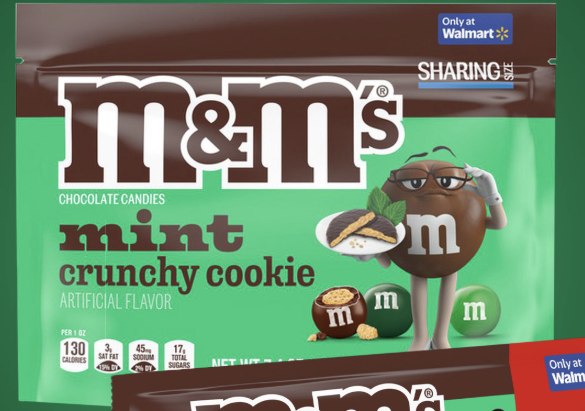
M&M’S is rolling out a new Walmart-exclusive candy flavor this fall, pairing the brand’s popular Crunchy Cookie center with mint and milk chocolate in a combination fans have already started comparing to Girl Scout Thin Mints, though Australian shoppers will have to wait to see whether the treat ever crosses the Pacific.
The new M&M’S Mint Crunchy Cookie is set to launch exclusively at Walmart stores and on Walmart.com beginning in September, according to parent company Mars, which described the release as an expansion of the Crunchy Cookie platform that first debuted in 2022. Each candy features a crisp cookie center wrapped in cool mint and milk chocolate, all encased in the brand’s signature hard candy shell. The flavor will be sold in two package sizes, a 2.83-ounce share bag and a larger 7.4-ounce sharing size, according to a company announcement reported by trade outlet Chain Drug Review.
Mars has positioned the new flavor as part of a broader push into bakery-inspired combinations, following recent additions to the M&M’S lineup including Banana Nut Bread and several flavors from what the company calls its Bakery Collection, such as Peanut Butter Cinnamon Roll, Lemon Meringue and Cherry Chocolate Cupcake. A company spokesperson told the news outlet Daily Voice that the new mint variety was designed to bring “a refreshing twist on a baked goods-inspired treat that brings a satisfying crunch to the lineup,” directly building on the commercial success of the original Crunchy Cookie release.
The mint-and-chocolate pairing has drawn immediate comparisons online to the classic Girl Scout Thin Mint cookie, a connection food reviewers and social media commenters have made repeatedly since photos and early sightings of the candy began circulating. Food content creator Snackolator, who posts under the handle Snackolator on Instagram, shared some of the earliest images of the product appearing on store shelves, writing, “I am going to DEVOUR these new Mint Crunchy Cookie M&M’s!” The same post added, “They are starting to arrive at Walmart and as a mint fan these sound incredible!”
Reaction in the comments of that post and elsewhere online has been mixed. Some social media users expressed enthusiasm for the new flavor, with one commenter writing that they wanted to “chop these up and add to cookies,” while another described the concept as reminiscent of “peppermint bark.” Other commenters were more skeptical, with one comparing the texture to a “Rice Krispie” treat, and several pointing out that the marketing language appeared to be avoiding a direct reference to Thin Mints by name.
According to Walmart’s website, a share-size bag of the new candy has been listed for 2.78 dollars, and the treat appears to already be arriving at some store locations ahead of its official rollout date. Because M&M’S Mint Crunchy Cookie is being marketed as a limited-time offering, industry watchers covering the launch have noted that interested shoppers should expect the product to disappear from shelves once its initial run sells through, consistent with how Mars has handled previous limited-edition Crunchy Cookie flavors.
The new mint variety is not the brand’s first attempt at combining chocolate and mint. M&M’S previously introduced a Crunchy Mint flavor in 2018 after fans voted for it over Crunchy Raspberry and Crunchy Espresso as part of the company’s periodic Flavor Vote campaigns, which have let consumers choose new additions to the lineup since 2016. That earlier Crunchy Mint flavor was eventually discontinued, a decision some commenters referenced with nostalgia when reacting to news of the new Mint Crunchy Cookie release.
For Australian consumers, the new flavor remains, for now, exclusively a U.S. product. Australia already produces its own version of the standard Crunchy Cookie flavor domestically, distributed through major retailers including Coles, Woolworths and independent convenience stores nationwide, suggesting the manufacturing infrastructure needed to produce a local Mint Crunchy Cookie variant could already exist. However, no announcement has been made regarding an Australian release of the new mint flavor, and it currently remains locked to Walmart’s U.S. stores and website.
Industry observers covering the U.S. launch have suggested that strong sales performance domestically could increase the odds that Mars eventually brings a similar mint cookie flavor, or a locally adapted version of it, to Australian shelves. In the meantime, Australian fans of the chocolate-mint combination have been directed toward the regular, already-available Crunchy Cookie flavor as a stand-in while they wait to see whether the new variety eventually makes its way south of the equator.
The launch also comes as Mars has continued broader changes to its confectionery lineup tied to shifting consumer preferences around ingredients. The company announced earlier this month that it would remove artificial colors and dyes from many of its products, part of a wider industry trend toward reformulating snack foods amid growing regulatory and consumer scrutiny of synthetic additives in the United States.

Nvidia (NVDA) was already the S&P 500’s market value champ. But now, its dominance is carrying over to its business fundamentals — poising it to reshape the index and economy. Following a blowout quarter at AI chip design firm Nvidia, analysts scrambled to jack up profit forecasts for the company. And they now think Nvidia’s adjusted net income will surpass…
Copyright ©2026 Investor’s Business Daily, LLC. All rights reserved. 87990cbe856818d5eddac44c7b1cdeb8

Austin Rogers is a REIT specialist with a professional background in commercial real estate. He writes about high-quality dividend growth stocks with the goal of generating the safest growing passive income stream possible. Since his ideal holding period is “lifelong,” his focus is on portfolio income growth rather than total returns. Austin is a contributing author for the investing group High Yield Landlord, one of the largest real estate investment communities on Seeking Alpha, with thousands of members. It offers exclusive research on the global REIT sector, multiple real money portfolios, an active chat room, and direct access to the analysts. Learn more.
Analyst’s Disclosure: I/we have a beneficial long position in the shares of ADC, CWEN, HASI, CTRE, EGP, SCHD, CDL, TBG, WTV, CGDG, MLPX, UTES either through stock ownership, options, or other derivatives. I wrote this article myself, and it expresses my own opinions. I am not receiving compensation for it (other than from Seeking Alpha). I have no business relationship with any company whose stock is mentioned in this article.
Seeking Alpha’s Disclosure: Past performance is no guarantee of future results. No recommendation or advice is being given as to whether any investment is suitable for a particular investor. Any views or opinions expressed above may not reflect those of Seeking Alpha as a whole. Seeking Alpha is not a licensed securities dealer, broker or US investment adviser or investment bank. Our analysts are third party authors that include both professional investors and individual investors who may not be licensed or certified by any institute or regulatory body.

Mutinous soldiers attack airport, presidency in Niger capital, sources say
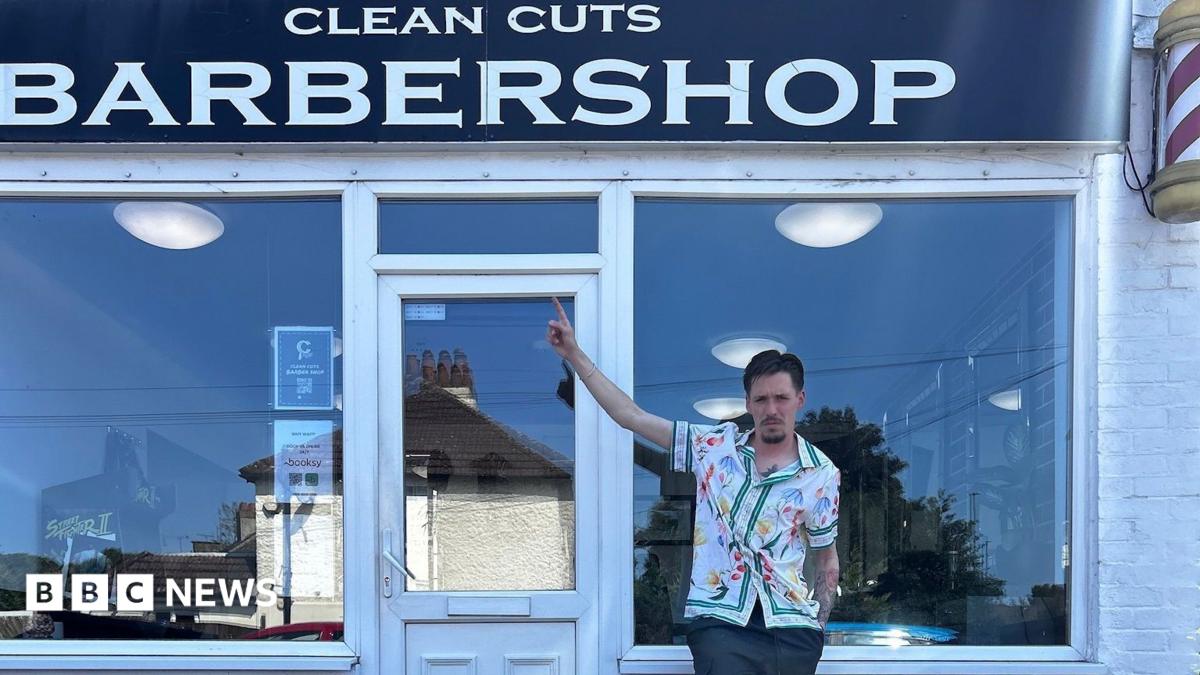
A barber is offering free back-to-school haircuts, stationery and school essentials to help families facing rising costs.
Sid Gumbrell, who runs Clean Cuts Barber Shop, in Guildford in Surrey, is hosting the event from 09:00 BST to 17:00 on Sunday.
Children will also be able to pick up free stationery, pencil cases and water bottles.
“To be honest, I know the struggles with the cost of things at the moment,” Mr Gumbrell said. “School uniforms, shoes, haircuts, etc, it all adds up and if we can just help take one cost away it’s a massive deal for us.”
He said the event was aimed at bringing children together while helping families with the cost of living.
The day is being supported by Tesco and Krispy Kreme, which have donated towards the event.
Follow BBC Surrey on Facebook, external, X, external, and Instagram, external and listen to BBC Radio Surrey on Sounds. Send your story ideas to southeasttoday@bbc.co.uk , externalor WhatsApp us on 08081 002250.

The exterior of Goodyear’s “Motor City Garage” concept retail store inside one of the tire manufacturer’s Detroit tire shops.
Courtesy Goodyear
DETROIT — Goodyear Tire & Rubber Co. CEO Mark Stewart sits in the vehicle bay of a tire shop where the company is launching a new retail experience for customers.
There’s a freshly painted black facade on the revamped Detroit store, with the words “Motor City” added in white flanking Goodyear’s winged foot logo. It’s been dressed up for a private event in connection to a nearby annual car festival called the Woodward Dream Cruise.
But despite the stylish touches, it’s still a tire shop. The smell of rubber and oil remains in the air and the sound of workers changing tires combines with music from a DJ inside the shop’s waiting room.
The scene is symbolic of Stewart’s ongoing “Goodyear Forward” turnaround plan. He’s trying to make tires — a historically dirty business — more attractive for investors and friendlier for consumers.
“We have made so much progress, and when you think about it from the standpoint of the Goodyear Forward program, it was really to get our feet back on the ground towards being the iconic company that we always were,” Stewart, wearing an unbuttoned navy blue Goodyear technician shirt, told CNBC during an interview at the shop.
But while Goodyear is well known for burning rubber, it’s also burning cash as it restructures and tries to refinance and pay down years of debt.
Goodyear CEO Mark Stewart (right) being interviewed by CNBC reporter Michael Wayland on Aug. 14, 2026, inside a bay of one of the company’s retail locations in Detroit.
Screenshot
The company’s capital expenditures were roughly $2 billion combined in 2024 and 2025, with expectations of $725 million this year. Its debt remained at more than $7 billion at the end of the second quarter.
Goodyear’s net loss was $453 million through the first half of the year, while its operating income was $131 million, or a 1.6% margin.
Under the turnaround plan, Stewart wanted Goodyear to reach a 10% operating margin by the end of last year. Instead, that came in at 8.5% in the fourth quarter, and it’s still an outstanding goal for the company to hit that mark.
“We’re working on getting to that double-digit margin, and we’re working on meaningfully generating cash flow,” Stewart said. “It’s been a long time since Goodyear’s done that. That we absolutely must do.”
The automotive veteran was named CEO of Goodyear after leaving Chrysler parent Stellantis in January 2024. Since then, shares of the company have fallen more than 50% despite Goodyear achieving many of the milestones he’s set out to accomplish with the plan.
Stewart doesn’t make excuses for not hitting the targets even though Goodyear’s business, like many, has been impacted by tariffs, inflated raw material costs and the expansion of cheaper Chinese products.
“We still have a lot of geopolitical headwinds that we’re working through … a lot of headwinds with raw material indexes and a bit of the hangover from the tariff environment,” he said, adding that overseas manufacturers continue to have cost advantages compared to Goodyear.

Goodyear Tire & Rubber Co. stock
Goodyear’s raw material costs are expected to be roughly flat year-over-year, but a $200 million headwind during the second half, largely due to higher commodity costs associated with the conflict in the Middle East, according to the company and Wall Street analysts.
“Goodyear has faced many big challenges over the past few years, ranging from slower consumer (and commercial) demand, to rising raw material costs, to higher capital expenditures (capex), to low-priced Asian imports (into the U.S.), and, more recently, to trade and tariff legislation. It hasn’t been easy for Goodyear,” Argus analyst Bill Selesky said in an Aug. 17 investor note.
Goodyear is rated a hold with a price target of $7.60, according to average analyst ratings compiled by FactSet. Shares of the company closed Friday at $6.35, down 27% this year.
Goodyear Forward rolls on
The Goodyear Forward turnaround strategy was initially expected to be a two-year plan that went through last year, but the CEO has continued it as he and his executive team map out what’s next for the 128-year-old Akron, Ohio-based company.
“At the right time, we will announce that,” Stewart said. “We continue to press ahead to the next challenges and make sure we get the business in the right space.”
The Goodyear Forward plan had already been released when Stewart was named as incoming CEO, but he has been able to make it his own, including by adding cuts and cost savings. The turnaround plan has cut roughly $1.5 billion in annualized costs from the business, according to the company.
Racing tires displayed inside the factory floors of Goodyear’s headquarters in Akron, Ohio, on Feb. 27, 2025.
Michael Wayland / CNBC
Part of the plan under Stewart has been to move Goodyear more into the premium tire segment, including by selling off units such as its Dunlop brand. It also plans to launch more than 1,600 new products this year, most of which are in higher-end segments with bigger margins.
The product restructuring comes as non-U.S. brands, especially Chinese ones such as Sumitomo and Yokohama, have been expanding globally with cheaper products in lower-end segments, according to Stewart.
Similar to how Chinese automakers have grown outside their own country, tire manufacturers have also been turning to more exports, including the U.S.
“We are not going to compete against a $6 or $10 converted tire. That’s not who we are as Goodyear,” Stewart said, referring to the manufacturing cost required to convert raw materials into a finished tire.
Despite the challenges globally, Goodyear’s Asia-Pacific region is a bright spot for the company. Its segment operating income for the second quarter was $63 million, with an operating margin of 12.7%.

Its U.S. operations have been a main drag on the company’s financials. Stewart is trying to turn that around as consumer demand slows.
The company said its cash burn is expected to continue into 2027 but moderate as the announced closure next year of a plant in Fayetteville, North Carolina, is expected to improve its Americas segment operating income by $270 million annually.
“We had to take a very difficult decision, but a necessary one to announce the closure of our Fayetteville, North Carolina facility. We absolutely didn’t take that lightly, but we just didn’t have a pathway to be competitive out of that facility,” Stewart said.
The Goodyear Forward plan was prompted by activist investor Elliott Investment Management revealing a stake in the company in 2023. A spokesperson for Elliott, which supported three new Goodyear board members, declined to comment on the company or the firm’s current ownership status.
Goodyear blimps flying high
Part of the Goodyear Forward strategy is to increase focus on marketing and advertising to connect with customers to reinforce the brand.
A large part of that — both physically and financially — comes from the company’s iconic Goodyear blimps that have flown as giant advertisements for more than a century.
A Goodyear blimp flies behind a historic sign for the company in Akron, Ohio.
Goodyear
“The blimp team and the marketing team have really embraced it. So we do a lot of activation around the blimp to literally sell tires,” Stewart said. “When the blimp media marketing has their hat on, it’s always in context of ‘How do we tie this to the tires?’”
Stewart said Goodyear has leaned into the promotion, using social media platforms to tout its aircraft — and their connection to tires — and launching “buy to fly” campaigns in which tire retailers and consumers can win flights aboard its blimps.
The company was showing off its revamped store alongside a Detroit event that attracts hundreds of thousands of car enthusiasts along a 16-mile stretch annually. To celebrate, and get its advertising in front of tire buyers, it held a rare double-blimp appearance, according to the company. It also featured a collection of smaller “mini blimps.”
“We’ve always made the tires worth bragging about,” Stewart said. “We’re just reminding people now, and that ties into our marketing and advertising as well.”

LESS THAN 48 HOURS TO GO: Get InvestingPro for 55% off BEFORE THE SALE ENDS

An ETMutualFunds analysis found 12 equity mutual funds that turned a Rs 10,000 monthly SIP into more than Rs 11 crore since inception, led by Nippon India Growth Mid Cap Fund.

Samuel Smith has a diverse background that includes being lead analyst and Vice President at several highly regarded dividend stock research firms and running his own dividend investing YouTube channel. He is a Professional Engineer and Project Management Professional and holds a B.S. in Civil Engineering & Mathematics from the United States Military Academy at West Point and has a Masters in Engineering with a focus on applied mathematics and machine learning. Samuel leads the High Yield Investor investing group. Samuel teams up with Jussi Askola and Paul R. Drake where they focus on finding the right balance between safety, growth, yield, and value. High Yield Investor offers real-money core, retirement, and international portfolios. The services also features regular trade alerts, educational content, and an active chat room of like minded investors. Learn more
Analyst’s Disclosure: I/we have a beneficial long position in the shares of XIOR; BAM; OWL; FARMTOGETHER; GROUNDFLOOR either through stock ownership, options, or other derivatives. I wrote this article myself, and it expresses my own opinions. I am not receiving compensation for it (other than from Seeking Alpha). I have no business relationship with any company whose stock is mentioned in this article.
Seeking Alpha’s Disclosure: Past performance is no guarantee of future results. No recommendation or advice is being given as to whether any investment is suitable for a particular investor. Any views or opinions expressed above may not reflect those of Seeking Alpha as a whole. Seeking Alpha is not a licensed securities dealer, broker or US investment adviser or investment bank. Our analysts are third party authors that include both professional investors and individual investors who may not be licensed or certified by any institute or regulatory body.
Business
Motley Fool Stock Advisor Claims 964 Percent Return Since 2002, but the Number Hides a Complicated Story
Motley Fool Stock Advisor, the investment newsletter service run by brothers David and Tom Gardner, has posted a 964% average return since its February 2002 launch, more than four times the 213% gain of the S&P 500 over the same 24-year stretch, according to the service’s official performance disclosures as of Aug. 27.
The headline figure has circulated widely in recent Motley Fool marketing materials and financial media coverage, positioning the service as one of the longer-running examples of a subscription stock-picking newsletter that claims to have meaningfully beaten the broader market over multiple decades. But a closer look at how that number is calculated shows it depends heavily on a small handful of extraordinarily successful early recommendations that current and prospective subscribers cannot access today.
Stock Advisor calculates its results using a time-weighted return methodology, the same general approach mandated by the CFA Institute for institutional portfolio managers, according to an analysis published by TechTimes. Under this method, each individual stock recommendation is tracked from the day it was made and compared against the S&P 500’s performance from that same starting point, and the service’s headline return is the simple arithmetic average of every recommendation’s individual result across the newsletter’s full 24-year history.
That structure means every pick, whether made in 2002 or in 2026, counts equally in the average regardless of how long it has had to compound or how much money any individual subscriber actually put behind it. As of Aug. 27, the service’s four largest cornerstone gains were built almost entirely before most current subscribers ever joined: Nvidia, recommended in April 2005, was up 128,583%; Netflix, recommended in December 2004, was up 43,831%; Amazon, recommended in September 2002, was up 33,901%; and Disney, recommended in June 2002, was up 6,158%, according to figures reported by TechTimes and confirmed in the Motley Fool’s own disclosures.
Because the return calculation is a simple average across recommendations rather than a measure of an actual portfolio’s cumulative growth, a single outlier such as Nvidia’s more than 128,000% gain can overwhelm hundreds of other recommendations that returned far more modest amounts, in some cases only 50% or 100% above the market. That means a subscriber who joined Stock Advisor in 2015 or later, after the Nvidia and Netflix recommendations had already been made, would not have captured those specific gains and would likely see personal returns closer to the broader market’s performance than to the service’s advertised 964% figure.
Academic research on investment newsletters more broadly has offered a skeptical view of whether such services consistently deliver market-beating stock selection. A National Bureau of Economic Research study that analyzed 153 investment newsletters over a 17-year period found no statistically significant evidence of superior stock-picking ability across the newsletter industry as a whole, according to TechTimes’ review of the research. The study did find some newsletters that outperformed the market, but concluded that outperformance occurred no more frequently than would be expected by chance alone.
Stock Advisor operates by publishing two new stock recommendations each month, one from its Hidden Gems research team on the first Thursday of the month focused on overlooked companies, and one from its Rule Breakers team on the third Thursday targeting early-stage companies in emerging industries. On the fourth Thursday of each month, both teams jointly publish an updated ranking of the service’s current top 10 recommended stocks. Annual membership costs 199 dollars, though new subscribers are frequently offered introductory pricing around 99 dollars, and the service says it has more than 500,000 active members. Subscribers also gain access to the company’s Fool IQ financial data tools, a Moneyball artificial intelligence scoring system launched in May 2025, and portfolio guidance tailored to different risk tolerances.
For investors who want broader exposure to Motley Fool’s recommended universe of stocks without picking individual positions themselves, the company also operates the Motley Fool 100 Index ETF, traded under the ticker TMFC, which has been available since January 2018 and held roughly 2.06 billion dollars in assets as of late August, according to the service’s disclosures. The fund tracks the 100 largest companies the Motley Fool has recommended, weighted by market capitalization, with technology stocks making up approximately 36% of holdings, followed by communication services at about 16% and financial services at roughly 14%.
Both Stock Advisor’s newsletter recommendations and the TMFC fund now face a different investment landscape than the one that produced their historical gains. The technology stocks responsible for much of the service’s outperformance currently trade at elevated valuations following years of gains, and several of the macroeconomic conditions that supported two decades of strong returns, including persistently low interest rates and rapidly globalizing supply chains, are less favorable today than during earlier stretches of the service’s track record. A recent industry survey cited in coverage of the sector found that roughly nine in 10 investors focused on artificial intelligence stocks plan to hold or buy more shares in that category, reflecting continued optimism that could either sustain current valuations or, some analysts have cautioned, represent future returns being pulled forward into today’s elevated prices.
The Motley Fool has continued to disclose its full recommendation history publicly, including underperforming picks alongside its winners, a level of transparency that distinguishes it from many comparable subscription investment services. Even so, the underlying question for any prospective subscriber remains a personal one: how much of Stock Advisor’s historical outperformance reflects genuine analytical skill in identifying future winners early, and how much reflects a broader, decades-long bet on the technology sector that happened to pay off spectacularly for a small number of specific companies picked years or decades ago.

How InvestingPro’s Fair Value spotted Ouster’s 48% decline

Denby pottery shuts all stores for good as stock sells out

Nvidia Will Be The Most Profitable Company In The U.S. Next Year

UAE “Spy Sheikh” Behind Trump Crypto Bank: 49% Ownership, $500M and Questions MAGA Can’t Avoid





-

 Crypto World4 days ago
SpaceX stock could rise 75% to $240, JPMorgan says
-

 Crypto World2 days ago
Bitcoin’s 22% rally now needs real demand to outlast Treasury liquidity boost
-

 Business7 days ago
Musk’s Tesla, SpaceX Confirm $16.8 Billion ‘Terafab’ Chip Plant as World’s Largest Building in Texas
-

 Fashion19 hours ago
Weekend Open Thread: Maeve – Corporette.com
-

 Crypto World4 days ago
A $30 Billion AI Fund Implodes, Now the SEC Is Investigating Wall Street’s Role
-

 Crypto World3 days ago
Warsh Jackson Hole keynote puts financial innovation first
-

 Business1 day ago
Salesforce Stock Soars 19% as Blowout Earnings and Agentforce AI Growth Silence Software Skeptics
-

 Crypto World3 days ago
Did Trump Just Move SpaceX Stock With One Truth Social Post?
-

 Business6 days ago
Mystery AI Model ‘Ox Alpha’ Draws Developers With Free Access as Chinese Lab Origins Remain Debated
-

 Business3 days ago
Walmart takes aim at younger shoppers with new fashion brand
-
 NewsBeat3 days ago
Lindsay Clancy jury braces for closing arguments as judge tells court: ‘You’ve heard all the evidence’ – Live updates
-

 Business5 days ago
Moderna CEO warns China is pouring state money into mRNA technology
-

 Crypto World3 days ago
Elon Musk Grok Bot Promise: We Will Make You Whole if AI Loses Your Money
-

 Business5 days ago
NVIDIA Stock Drops Nearly 2 Percent to $210 on Seventh Losing Day Ahead of Critical AI Earnings
-

 Crypto World2 days ago
NVIDIA revenue hits $96.2B as AI demand doubles
-

 Business20 hours ago
iPhone 18 Pro Pre-Orders Could Shift to Saturday as Apple Reportedly Avoids September 11 Anniversary
-
 Crypto World5 days ago
$92 Billion Nvidia Earnings Could Make or Break the AI Trade
-

 Business4 days ago
Thailand’s Eastern Economic Corridor Capital City (EECiti): Key Developments and Investment Opportunities
-

 Business6 days ago
Where Will Kevin Durant Play in 2027? Rockets Hold Player Option Key to His Future With Houston via Deal
-

 Sports6 days ago
Deshaun Watson fires back at Browns fans after being booed: ‘It’s a disrespectful thing’
You must be logged in to post a comment Login