
Business
(VIDEO) Petro and Vinnie Advance to MasterChef Australia 2026 Grand Finale After Aaron’s Heartbreaking Exit


SYDNEY — Petro Papathomas and Vinnie Gibaldi will face off in the MasterChef Australia 2026 Grand Finale after a tense semi-final service challenge eliminated Aaron Kher on Monday night.
The pair emerged from a three-way battle that required each remaining contestant to deliver a two-course fine dining experience for the judges and 20 diners. With three hours on the clock, the cooks prepared 23 plates of each course under the guidance of returning judge Andy Allen, who rejoined the kitchen after parental leave.
The decision between Aaron and Vinnie proved one of the most difficult of the season. Aaron’s main course featured an Asian-French fusion of pork loin chop roasted on the bone with charred Treviso and three sauces — pork and veal jus, XO glaze and red miso mustard. His dessert of basil and white pepper ice cream with tomato, strawberry and white balsamic granita, finished with a fried basil leaf and hazelnut crumb, left the judges impressed. However, the bold flavors in his sauces were judged to clash, costing him a place in the final.
Petro and Vinnie advanced to the Grand Finale, scheduled for Sunday, August 9, at 7 p.m. on Channel 10. The all-Victorian showdown marks the culmination of a season that began with 24 home cooks and narrowed through months of pressure tests, mystery boxes, immunity challenges and eliminations.
Papathomas, a 30-year-old chartered accountant of Greek-Cypriot heritage, has drawn consistent praise for his inventive approach and Mediterranean influences. He secured an early path to the semi-finals by winning immunity with a celeriac dessert that impressed guest judge Meghan Markle. His long-term goal is to open a Cypriot restaurant, and he has spent years refining a signature halloumi recipe.
“I love risk,” Papathomas has said of his cooking style. “I took her advice on board and just trusted my gut. Trusting your gut is the most important thing you can do in this competition I believe.” Reflecting on earlier challenges, he added that he learned he could “lean into uncertainty and out of my comfort zone, and with the right belief and approach pull off something I never expected I would be able to in this competition.”
Gibaldi, a 25-year-old registered nurse from Victoria, grew up in a large Italian family where food formed the center of celebrations and connection. He has been noted for his composure under pressure and steady improvement throughout the competition. In earlier comments ahead of the later stages, he emphasized the value of constructive feedback after the contestants briefly judged the mentors themselves.
Kher, 32, also from Victoria and drawing on Malaysian-Chinese heritage inspired by his grandmother’s cooking, had expressed a clear aim for the semi-final. “Going into the semi-final, I just wanted to cook dishes that truly represented me and my journey on MasterChef,” he said. “I wanted my food to reflect how much I’d grown throughout the competition, and I wanted to walk away knowing I’d left everything on the floor, with no regrets.”
The Grand Finale will consist of two challenges. It opens with a 75-minute Mystery Box using ingredients that pay tribute to special guest judges who appeared during the season. The second and decisive challenge is a pressure test set by internationally acclaimed pastry chef Cherish Finden. The finalists must recreate her Chinese Afternoon Tea, comprising three intricate desserts and a total of nine petit gateaux, in five hours.
Finden, who previously served as executive pastry chef at London’s Langham Hotel and has more than 25 years of international experience, brings one of the most technically demanding finales in recent seasons. The winner will claim the MasterChef Australia 2026 title and $250,000 in prize money.
The season has been marked by strong performances under judges Poh Ling Yeow, Sofia Levin, Jean-Christophe Novelli and Allen. Guest appearances, including Markle and others, added high-profile moments, while emotional challenges such as the “Letters from Home” elimination brought personal stories into the kitchen. Casper Kenworthy was the last contestant eliminated before the top three, after a challenge involving ingredients chosen by family members.
Both finalists have spoken of the intensity of the competition and the personal growth it demanded. Papathomas entered the semi-final determined simply “to try and keep calm and enjoy the experience.” Gibaldi has highlighted the respect gained from seeing the judges under pressure themselves during the traditional “Fun One” episode that preceded the semi-final.
With the Grand Finale days away, attention turns to how the two remaining cooks will handle the combination of creative freedom in the Mystery Box and the precision required by Finden’s multi-element dessert. The service challenge demonstrated their ability to execute under the demands of volume and timing. The final will test consistency, creativity and nerves on an even larger stage.
Viewers will see the culmination of a competition that rewarded both technical skill and personal expression. Papathomas’ risk-taking and Mediterranean roots contrast with Gibaldi’s steady development and Italian family influences, setting up a distinctive final pairing.
The outcome remains undecided until the plates are judged on August 9. One of the two will emerge as MasterChef Australia champion for 2026, ending a season defined by high-stakes cooking, emotional eliminations and the steady narrowing of a diverse field of home cooks.


President Donald Trump’s media company has launched a paid subscription service on Truth Social that offers users access to posts from the website’s most prominent accounts milliseconds before they appear to the general public. While the company’s announcement does not specifically mention the US president’s account, his is the most popular on the site, with more than 13 million followers.
The service reportedly costs up to $100,000 (£74,170) per month, with a lower-priced $60,000 (£44,679) option also available.
The BBC’s Samira Hussain explains what it is and whether it’s legal.
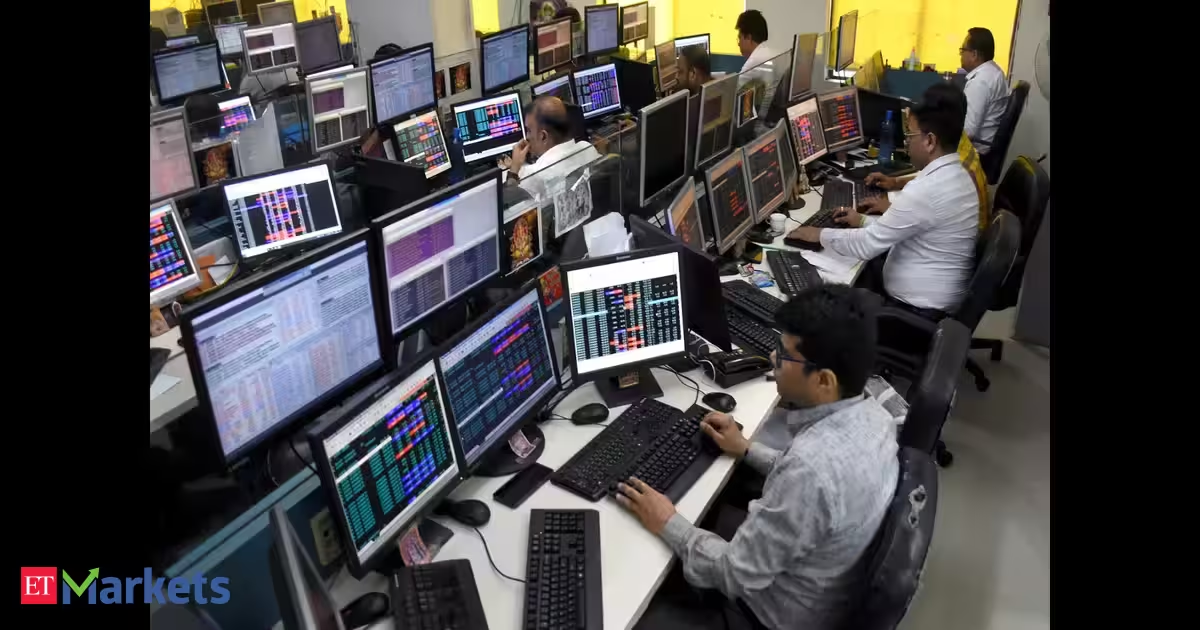
The Nifty ended at 24,774.30, up 390.70 points or 1.60%, following a late surge of 0.8% at around 3:28 PM. The Sensex ended at 78,639.03, up 544.39 points or 0.70%. Usually, the difference in percentage gains between the indices is not more than 5-10 basis points.
Read more: 200 point-jump in 2 minutes: Why Nifty made a surprising surge before closing bell
The new closing auction system changes the way the official closing prices of stocks in the futures and options (F&O) segment are determined. Until last week, the closing price-used to calculate index closing levels, value mutual fund portfolios and settle derivatives contracts-was based on the volume-weighted average price (VWAP) of trades during the last 30 minutes of trading. From Monday, the closing price is determined through a separate closing auction, a move aimed at making the closing price more robust and less susceptible to the impact of large last-minute orders.
 Agencies
rollout bumps Some attribute divergence to large FI buy orders in Nifty heavyweights
“The intention of launching the closing auction is the step in the right direction but clearly, there seems to be a missing link in its implementation going by how prices have played out on the first day,” said Siddarth Bhamre, head of institutional research at Asit C. Mehta Investment Intermediates. The new system is likely to face its first major test on Tuesday, when NSE’s weekly derivatives contracts expire. Traders will be watching closely to see how the closing auction influences settlement prices.

Had Monday’s late sharp move happened on an expiry day, its impact on traders’ position gains and losses would have been far greater because the official closing price determines the settlement of stock futures and options, said brokers. NSE had not commented on the sharp late-session price movements till the time of going to press, while market participants said there was no indication of a technical glitch.
One theory for Monday’s divergence is that a large imbalance of institutional buy orders in Nifty heavyweight stocks emerged during the closing auction, pushing up their closing prices and lifting the index disproportionately.Under the previous system, such orders would have been executed over the last 30 minutes of trading. The new framework concentrates them into a single closing auction, potentially amplifying the impact of large orders.

Will Venters, Associate Professor of Digital Innovation and Information Systems at the London School of Economics, said companies can be caught out as they experiment with or implement AI internally, as staff burn through tokens.
“People are finding it really hard to manage that cost… it’s a non-deterministic output, so it’s a non-deterministic value,” he said.
Companies are finding ways to work around this.
Oliver King-Smith, founder of engineering software firm smartR AI, says smaller organizations can “can fly under the radar and use [flat fee] personal accounts which I am sure the big vendors don’t like.”
But, he says, “This has to end at some point in time, because the big guys are taking a bath on those accounts.”
Once the big AI platforms start facing pressure from shareholders to show a profit, he predicts: “They will start clamping down.”
King-Smith says companies should also think more carefully about what AI models to use.
Companies also needed to be much more precise with their prompts, says Rob Steele, CFO at UK accounting software firm iplicit.
“You wouldn’t send someone in your family out to get the weekly shop without any kind of detailed instructions as to what you expect in that shopping basket, right?”
The situation can become difficult to control when companies build AI into a product that could be rolled out to thousands of users, Venters points out.
AI costs could start to balloon. For example, managers may realise they need tokens not just for core software development, but for other tasks such as testing, security, or for implementing guard rails.
“It’s particularly hard when you’re looking at agentic processes,” Ventners says.
Employing more AI agents can be done with the click of a button, whereas expanding the human workforce would involve careful discussions over headcount and hiring, he says.
Venters points out, while token costs might be unpredictable, it might be that the company is ultimately getting more value from their token use with AI.
“It’s not quite the same as a calculator,” he says. “The more you give it, the more expensive it is, but the better the result may be.”
But companies still need to pass those costs onto their own customers.
“Nobody’s really figured it out,” says Bill Peterson, senior director of product marketing, at Sumo Logic.
The software firm is previewing new security services based on agentic AI, he explains, but is in discussion with corporate customers about how to charge for them.
“We’re still having some fun conversations about this internally,” he says drily.
Options could include simply raising prices across the board, he says, paying by results, or charging for “bundles” of incidents.
But whatever price structure it chooses could be upended if and when the large language model providers change their own pricing strategies.
“You get into variable pricing, and it’s changing every couple of months” he says. “Customers don’t like that. That’s not how anybody builds a budget.”
Business
Atkore Shares Surge Nearly 28% After Agreeing to $3.8 Billion Cash Buyout by Prysmian at $95 a Share

HARVEY, Ill. — Shares of Atkore Inc. jumped nearly 28% in morning trading Monday after the electrical products manufacturer agreed to be acquired by Italian cable maker Prysmian S.p.A. in an all-cash deal valued at approximately $3.8 billion and separately reported stronger third-quarter results.
Under the definitive agreement announced before the market open, Atkore shareholders will receive $95.00 per share in cash. The price represents a premium of about 30% to the stock’s closing level of $72.96 on July 31. The transaction implies an enterprise value of roughly $3.8 billion for the company.
Atkore, which makes electrical conduit, cable management systems and related infrastructure products used in commercial, industrial, data center and solar applications, said the deal is expected to close subject to customary conditions, including regulatory approvals and shareholder approval. In light of the pending transaction, the company said it does not intend to update or reaffirm previously issued financial guidance and canceled its previously scheduled earnings conference call.
Prysmian, the world’s largest cable manufacturer, described the acquisition as a strategic step to expand its presence in North America and evolve into a broader electrical solutions provider. The combination is expected to create a more comprehensive offering for customers involved in electrification and data-center projects.
“Atkore fits well with our strategy to become more relevant in the United States, where we will become more sizeable and complete,” Prysmian Chief Executive Officer Massimo Battaini said.
Prysmian expects the deal to generate approximately $150 million in run-rate pre-tax synergies within three years of closing. The transaction is projected to be high single-digit accretive to earnings per share in the first full year and double-digit accretive once synergies are realized. Financing is planned through a mix of debt, hybrid instruments and equity, including possible use of treasury shares.
Atkore simultaneously released results for its fiscal third quarter ended June 26. Net sales rose 8.1% to $794.8 million from $735.0 million a year earlier, driven by higher volumes, pricing and foreign exchange effects. The Electrical segment led the growth, with sales increasing 10.9% to $578.3 million. Safety & Infrastructure sales edged up 1.3% to $216.8 million.
Adjusted EBITDA increased 4.7% to $104.7 million. Adjusted diluted earnings per share rose to $1.92 from $1.63 in the year-earlier period. On a GAAP basis, net income fell sharply to $745,000, or 2 cents per diluted share, from $43.0 million, or $1.25 per share, primarily because of a $50 million litigation settlement expense and related costs, along with higher transaction expenses tied to the acquisition process.
Gross profit rose, though the gross margin declined to 22.2% as higher input costs outpaced price increases. Management highlighted sequential improvement from the second quarter in net sales, adjusted EBITDA and adjusted earnings per share.
“We were pleased with our third quarter results. Our Net sales, Adjusted EBITDA and Adjusted EPS were all higher versus the prior year and they were sequentially higher from our second quarter,” said Bill Waltz, Atkore president and chief executive officer.
The company has faced margin pressure in recent periods from elevated input costs and the lingering effects of legal settlements related to PVC pipe antitrust matters. Earlier in the fiscal year it recorded a substantial settlement liability and has pursued portfolio simplification through divestitures. The third-quarter volume and pricing gains, particularly in the core Electrical business, signaled improving demand conditions in non-residential construction and infrastructure end markets.
Atkore employs roughly 5,400 people and operates about 30 major manufacturing and distribution facilities, primarily in North America, with additional locations in Australia, Europe and New Zealand. For fiscal 2025 the company reported revenue of approximately $2.85 billion and EBITDA of $386 million.
The acquisition continues a pattern of consolidation in the electrical and cable sector as companies position themselves for long-term growth in electrification, renewable energy and data-center construction. Prysmian has pursued larger-scale moves in recent years to broaden its geographic and product footprint. Adding Atkore’s conduit, fittings and infrastructure products complements Prysmian’s existing cable portfolio and strengthens its ability to serve customers seeking integrated solutions.
Market reaction was swift. Atkore shares opened sharply higher and traded near $93.40, reflecting the cash offer price with a modest discount typical of deals still subject to closing conditions. Trading volume was elevated as investors positioned around the announced terms.
The agreement includes customary deal protections. Completion will depend on the satisfaction of regulatory requirements in relevant jurisdictions and approval by Atkore shareholders. No timeline for closing was detailed in the initial announcements beyond the expectation that the process will proceed in the ordinary course.
For Atkore, the transaction provides shareholders with an immediate and substantial premium after a period of share-price volatility linked to margin challenges and legal costs. For Prysmian, it accelerates North American scale at a time when demand for electrical infrastructure remains supported by data-center expansion, grid modernization and broader electrification trends.
Analysts and investors will now focus on the regulatory review process, the path to realizing the projected synergies, and any further details on integration planning. In the near term, the stock is expected to trade in a relatively narrow range around the offer price as the deal progresses toward completion.
The dual announcement of improved quarterly results and a definitive acquisition agreement resolved much of the near-term uncertainty that had surrounded Atkore’s outlook. With sales growth returning and adjusted profitability improving sequentially, the company enters the final stages of its independent public life with clearer visibility into demand trends even as ownership transitions to a larger global parent.
Business
CNH Industrial Shares Jump Over 15% After Beating Estimates and Raising Full-Year Earnings Guidance

CNH Industrial N.V. shares rose more than 15% in morning trading Monday after the agricultural and construction equipment maker reported second-quarter results that topped expectations and raised its full-year adjusted earnings outlook.
The stock traded near $11.84, up $1.59, as investors welcomed evidence of sequential improvement and disciplined execution during what the company described as a trough year for the agricultural equipment cycle.
CNH, based in Basildon, United Kingdom, posted consolidated revenues of $4.8 billion for the three months ended June 30, an increase of 2% from the year-earlier period. Net sales of Industrial Activities reached $4.14 billion. Reported net income was $141 million, or 11 cents per diluted share, compared with $217 million, or 17 cents per share, a year earlier. Adjusted net income came in at $161 million, with adjusted diluted earnings per share of 13 cents, exceeding analyst estimates that had centered around 10 to 11 cents.
The company narrowed its full-year 2026 adjusted earnings per share guidance to a range of 41 to 46 cents, from the previous range of 35 to 45 cents. The new midpoint sits at the higher end of the prior outlook and aligns with or slightly exceeds recent consensus forecasts.
In a statement accompanying the results, the company said its team continues to execute with discipline and focus. Revenue increased 2% year-over-year to $4.8 billion, and it narrowed its full-year outlook to the higher end of previously communicated ranges. Management pointed to ongoing investments through the cycle, including more than $450 million in research and development during the first half of 2026, along with expansions in manufacturing, customer centers and parts capabilities in markets including India, China and Italy.
Dealer inventories continue to normalize, fleets are aging, and market fundamentals are becoming more balanced, according to the company’s update. Priorities include strengthening customer proximity and dealer excellence, expanding product leadership through an Iron + Tech strategy, improving operational efficiency, and reinforcing quality as a core mindset.
Agriculture segment net sales were about flat year-over-year when including currency translation effects, while the Construction segment showed stronger momentum with net sales expected to rise between 5% and 10% for the full year, including currency benefits. Agriculture adjusted EBIT margin guidance for the year was set between 5.0% and 5.5%.
CNH returned approximately $200 million to shareholders in the quarter through a combination of dividends and share repurchases. The results follow a weaker first quarter in which sequential patterns fell short of typical seasonal strength, raising questions about demand stability in key markets, particularly North American agriculture.
The second-quarter performance suggested that cost controls, pricing discipline and gradual inventory normalization are beginning to support profitability even as industry retail demand remains subdued in some regions. Construction equipment demand, especially in North America, provided a brighter offset to softer agricultural trends.
Analysts had anticipated a meaningful sequential rebound from the first quarter’s low base. The combination of a revenue beat, adjusted earnings above forecasts and an upward revision to full-year guidance validated that expectation and reduced near-term uncertainty around the company’s ability to navigate the current cycle.
CNH Industrial designs, manufactures and sells agricultural and construction equipment under brands including Case IH, New Holland and CASE Construction Equipment. It also operates a financial services arm that provides retail and wholesale financing. The company has emphasized technology integration, precision agriculture tools and dealer network improvements as longer-term drivers of margin expansion and recurring revenue.
The agricultural equipment sector has faced multi-year pressure from lower farm incomes in some regions, elevated equipment inventories and cautious purchasing by farmers. Construction markets have shown more resilience in certain geographies, supported by infrastructure spending and data-center related activity. CNH’s ability to deliver modest top-line growth and improved sequential metrics while investing in product development was viewed positively by the market.
Guidance commentary indicated that Agriculture net sales are expected to remain roughly flat for the full year, including currency effects, while Construction is projected to grow. Adjusted EBIT margins for Industrial Activities remain under pressure from residual tariff and cost impacts but are supported by efficiency measures.
Trading volume was elevated as the stock moved higher, reflecting both the earnings surprise and the more constructive full-year outlook. The advance helped recover ground lost earlier in the year and positioned the shares closer to average analyst price targets that had implied meaningful upside from pre-earnings levels.
Investors will continue to monitor dealer inventory levels, order trends for the second half, and any further signs that the agricultural cycle is approaching a bottom. Aging equipment fleets and the need for productivity-enhancing technology are expected to support replacement demand over time, even if near-term volumes remain constrained.
For the remainder of 2026, CNH’s focus on operational simplification, customer proximity and technology-enabled products will be central to delivering on the raised earnings range. The second-quarter results provided the clearest signal yet this year that sequential recovery is underway and that management’s full-year targets are increasingly achievable.
The stock’s sharp rise underscored the market’s sensitivity to evidence of execution in a challenging industry environment. With inventories normalizing and construction demand providing support, CNH enters the second half with improved visibility and a more optimistic tone on the path ahead.
Business
CoreWeave Shares Jump 11% as Leidos Partnership Opens Door to Secure Federal AI Cloud Contracts

CoreWeave Inc. shares advanced more than 11% in morning trading Monday, extending a rebound fueled by a new collaboration with Leidos Holdings to deliver secure artificial intelligence cloud services to U.S. defense, national security and intelligence agencies.
The stock traded near $79.68, up $7.91, as investors weighed the potential for CoreWeave to expand beyond its commercial AI customer base into highly regulated government environments. The partnership, announced July 30, pairs CoreWeave’s specialized GPU cloud platform with Leidos’ long-standing expertise in federal mission integration and classified systems.
Under the collaboration, CoreWeave will supply its AI-native infrastructure, including high-performance computing, networking, storage and orchestration tools designed for large-scale model training and inference. Leidos will lead efforts around secure architecture, accreditation support, cyber operations, data engineering and program delivery for intelligence community and Department of War customers. The companies aim to provide sovereign AI capacity that meets the stringent security, classification and operational requirements of national security organizations.
“Artificial intelligence is becoming foundational to our nation, and federal teams need secure, scalable platforms to operationalize it,” said Sachin Jain, chief operating officer of CoreWeave. “CoreWeave is trusted by many of the world’s leading AI organizations to power the most complex workloads. Through CoreWeave Federal and our collaboration with Leidos, we intend to extend those capabilities to highly secure government environments with the performance, resilience, and operational rigor these missions require.”
Jason O’Connor, president of Leidos Intelligence, said the combination accelerates delivery for priority missions. “Combining CoreWeave’s AI cloud platform with our mission-grade federal integration accelerates delivery for IC and DoW priorities, expanding our nation’s AI superiority,” O’Connor said. “This is the next evolution of mission technology—sovereign AI compute at scale, secure by design, mission integrated, operationally resilient, and ready for the realities of classified national security work. That is what our team will provide to our government partners.”
The planned capabilities include classified AI cloud services for training, fine-tuning, evaluation and deployment of models; tools to augment intelligence analysts through multi-source fusion and imagery analysis; cyber ranges for simulating AI-related threats; synthetic data and digital twin environments; and edge-to-cloud orchestration that can connect centralized platforms with forward-deployed or disconnected tactical systems.
CoreWeave, often described as a “neocloud” provider, has built its business by offering purpose-built infrastructure optimized for the most demanding AI workloads. The company has secured multiyear commitments from leading AI laboratories, hyperscalers and enterprises, building a substantial revenue backlog that reached nearly $100 billion by the end of the first quarter of 2026. That backlog, which grew nearly 50% sequentially and nearly fourfold year over year, provides multiyear visibility as new data center capacity comes online.
In the first quarter, CoreWeave reported revenue of $2.1 billion, more than double the prior-year period, driven by rapid deployment of GPU capacity. The company has surpassed 1 gigawatt of active power and is targeting significantly higher levels in the coming years to meet contracted demand. Capital expenditures remain elevated as CoreWeave races to bring additional capacity online, a dynamic that has contributed to ongoing net losses and elevated interest expense even as adjusted profitability metrics have improved.
The Leidos partnership represents an effort to diversify the customer base. CoreWeave’s revenue has been concentrated among a relatively small number of large commercial clients. Government contracts, once secured and funded, can offer longer-duration relationships and different demand characteristics. The collaboration is still at an early stage; definitive agreements and actual deployments will depend on mission requirements, security accreditation processes and federal appropriations.
Separately, CoreWeave has continued to win commercial workloads. Flow Traders selected the platform to support foundation model training for AI-driven quantitative trading strategies, adding another specialized financial services use case.
Broader industry conditions have also supported sentiment. Recent earnings reports from major technology companies reinforced that demand for AI compute capacity remains robust, with hyperscalers continuing to expand data center footprints and lease additional capacity. That backdrop has helped lift many AI infrastructure stocks after periods of volatility earlier in the summer.
CoreWeave’s shares have experienced significant swings since the company’s public listing. The stock traded as high as $153 earlier in its public life before retreating amid concerns about capital intensity, debt levels, customer concentration and the pace of capacity deployment. The recent partnership news and signs of sustained industry demand have contributed to a recovery from recent lows.
Investors continue to monitor several key variables: the conversion of backlog into recognized revenue, the timeline for bringing new power capacity online, interest costs associated with financing the buildout, and progress in broadening the customer mix. The federal opportunity highlighted by the Leidos agreement offers one path toward greater diversification, though government contracting cycles are typically longer and more complex than commercial deals.
CoreWeave has positioned its CoreWeave Federal initiative as a dedicated effort to adapt its commercial technology stack for government use cases while meeting the elevated security and compliance standards required for classified work. Partnering with an established federal systems integrator such as Leidos is intended to accelerate that process by leveraging existing relationships, accreditation experience and mission knowledge.
As the company prepares to report second-quarter results in the coming days, attention will focus on sequential revenue growth, backlog trends, capital spending updates and any further details on the federal collaboration. The market reaction Monday suggested that investors view the Leidos partnership as a meaningful strategic step that expands CoreWeave’s addressable market into one of the most demanding and potentially durable segments of AI adoption.
The combination of commercial momentum, a large contracted backlog and a new pathway into national security workloads has provided a catalyst for the shares. Whether the collaboration translates into significant funded contracts will depend on execution over the months ahead, but the announcement has already shifted the near-term narrative around CoreWeave’s growth options beyond its core commercial AI customers.
Business
Dwight Howard Pushes Back on Kevin Durant’s Claim That LeBron’s 76ers Mirror Warriors Superteam
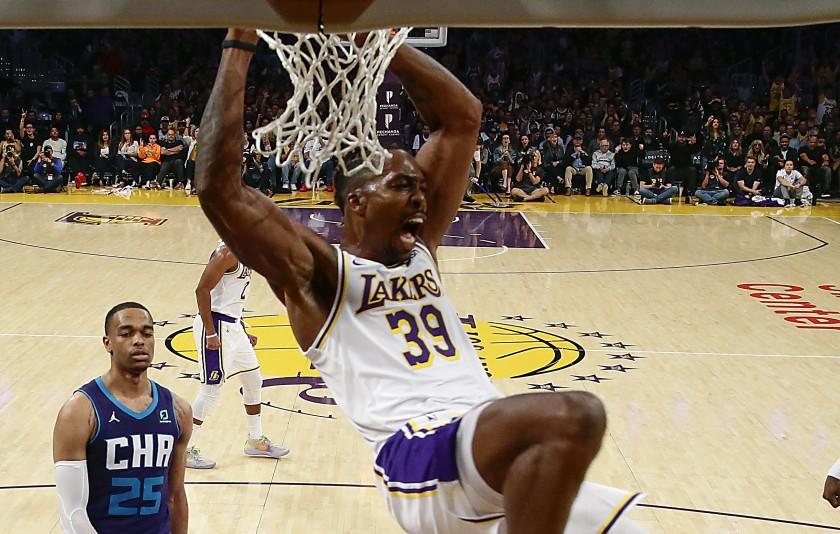
Dwight Howard has pushed back against Kevin Durant’s comparison of LeBron James’ new Philadelphia 76ers roster to the Golden State Warriors teams that dominated the NBA nearly a decade ago, arguing the true parallel would have required a different destination.
Durant, speaking at a USA Basketball Foundation charity event in Southern California over the weekend, said the addition of James creates a potentially “unfair” collection of talent similar to the one he joined in 2016. “The last time they put three 20-point scorers on a team, they said it was unfair, which was the team I was on,” Durant said. “They have got four 25-point scorers on this team. So, hell yeah, I think they’re going to be a contender.”
He added that the 76ers will be “a fun team to watch” and “League Pass-worthy, TNT-worthy,” expressing excitement about seeing the group play. Durant also said he was happy for James, calling the move “a great decision for him to go to a team that got a good chance to win” and praising Philadelphia’s fan base and market.
Howard, who won a championship alongside James with the Los Angeles Lakers in 2020, responded on social media. “This would be the case if Bron joined the Knicks,” Howard wrote.
The former All-Star center’s point centered on the New York Knicks’ existing core. Before James ultimately signed a two-year, $8 million deal with Philadelphia, he had been linked to the Knicks. Pairing him with Jalen Brunson and Karl-Anthony Towns, two All-Stars who helped New York reach the NBA Finals, would have created what Howard viewed as a more direct superteam parallel to the Warriors’ dynasty era of Stephen Curry, Klay Thompson, Draymond Green and Durant.
James’ arrival in Philadelphia instead adds a fourth high-level scorer and playmaker to a roster already featuring Joel Embiid, Tyrese Maxey and Jaylen Brown. Embiid averaged 26.9 points last season, Maxey 28.3 and Brown 28.7 after arriving via trade. James contributed 20.9 points per game in his final season with the Lakers. The combination gives the 76ers unusual depth of scoring talent on paper.
The debate reflects broader conversations about roster construction and competitive balance in the current NBA. Durant’s own move to Golden State in free agency after the 2015-16 season drew heavy criticism at the time for stacking talent on a team that had already won a title and set a regular-season wins record. Those Warriors teams went on to win two championships during his three seasons there, though injuries and eventual roster turnover ended the run.
James, entering his 24th NBA season at age 41, has now played for four franchises and is chasing a fifth title. He spent eight seasons with the Lakers after earlier stops in Cleveland and Miami. His decision to take a veteran minimum contract with Philadelphia was widely viewed as a championship-driven choice rather than a financial one.
Howard has been generally supportive of James’ move to the 76ers in other comments. In an earlier interview, he described James as “one of the greatest chess players” and said the 76ers were already a strong team that needed only the missing piece. He predicted the group would be favorites and that James would help extend Embiid’s window.
Still, his specific reply to Durant drew a distinction between the current Philadelphia roster and the more transformative type of star convergence that defined the mid-2010s Warriors. The Knicks, by contrast, already possessed two established All-Stars who had proven themselves in deep playoff runs. Adding James there, in Howard’s view, would have more closely mirrored the sudden leap in talent Durant’s arrival provided Golden State.
Whether the 76ers can convert their paper strength into actual dominance remains to be determined on the court. Chemistry, health, defensive fit and coaching will all factor heavily. Embiid’s injury history has long been a concern, and integrating four high-usage scorers requires careful management of minutes and roles. James’ ability to facilitate and elevate teammates has been a hallmark of his career, but the supporting cast in Philadelphia is more established as primary options than many previous groups he has joined.
Durant’s comments also served as a defense of star players seeking better supporting casts. Having faced years of criticism for his own free-agency decisions, he has often framed such moves as rational pursuits of winning rather than moral failings. His public support for James’ choice aligns with that stance.
The exchange between the two veterans highlights how quickly narratives form around high-profile free-agency decisions. James’ signing immediately elevated Philadelphia’s profile and title odds. Durant’s endorsement of the roster’s potential added weight from a player who lived through a similar scrutiny. Howard’s counter offered a reminder that not every stacked roster is created equal and that context—existing pieces, market, and historical parallels—matters.
As training camps approach and the regular season draws nearer, attention will shift from hypothetical comparisons to on-court results. If the 76ers surge to the top of the Eastern Conference and make a deep playoff run, Durant’s assessment will gain retrospective strength. If chemistry issues or injuries intervene, Howard’s more cautious framing may look prescient.
For now, the conversation underscores the enduring fascination with superteam construction in the NBA. James’ presence in Philadelphia has already reshaped expectations for the 2026-27 season. Whether the group ultimately resembles the all-conquering Warriors of Durant’s era or follows a more complicated path is a question only games can answer.

Eighteen-year-olds will be able to buy half price train tickets for most services when railcard rules are changed later this month, the Department for Transport (DfT) has announced.
It’s an extension of the 16-17 Saver railcard which currently expires when the holder turns 18. From 17 August, they will be valid for a full year from the date of purchase.
It means 17-year-olds will be able to buy the railcard up until the day before they turn 18, making it valid until the day before they turn 19.
The existing rule meant more than 70,000 students each year were an average of £175 worse off than those in the same academic year who hadn’t yet had their 18th birthday, the DfT said.
The 16-17 Saver Railcard costs £35 per year and entitles the holder to 50% off most train fares.
Rail minister Lord Hendy claimed this “common sense change” is “exactly what passengers should expect from the railway”.
He said the change would “lower the cost of travel at a critical time for teenagers, whether they’re pursuing further education, vocational pathways or getting their footing in the jobs market”.
Jacqueline Starr, chief executive of industry body the Rail Delivery Group, said the change demonstrates the sector’s commitment to “offering better value fares and delivering a more joined-up railway”.
Kaynat Ahmad, vice president for further education at the National Union of Students, described the railcard as “essential for young people reliant on trains to get to college, work or training”.
Eighteen-year-olds were already entitled to a 16-25 Railcard, but that only entitles them to a third off the cost of travel.
The announcement comes after the government said the cap on most single bus fares in England will be cut from £3 to £2 next year.

Compass International Holdings chairman and CEO Robert Reffkin discusses why he believes better days are ahead for the housing market after the past year on The Claman Countdown.
The U.S. housing market is trending in two different directions as a new report from Zillow finds that while demand for luxury homes is surging, starter home sales are softening with growing inventory.
Zillow’s data defines starter homes as those in the 5th to 35th percentile of home values in a given region, whereas luxury homes are in the top 5% of a region’s home values. Around the country, the typical starter home is worth about $202,000, an increase of 2.3% from a year ago, while the typical luxury home is worth about $1.9 million, up 3.1% from last year.
Inventory for starter homes is up 4.5% year over year in June, while it fell 5.2% for luxury homes. Price cuts were also more common for starter homes, of which 25% had price cuts in June, while 20.6% of luxury home listings had price cuts.
“The best time to buy a home is when nobody else wants to,” said Kara Ng, senior economist at Zillow. “Starter home buyers today have more options, more negotiating power, and sellers who are more willing to deal.”
MORTGAGE RATES HIT HIGHEST LEVEL IN NEARLY A YEAR

The rise in inventory of starter homes is creating an opportunity for buyers if they’re willing and able to put down an offer, Zillow noted. (David Ryder/Bloomberg via Getty Images)
Would-be buyers of starter homes are facing a difficult economic environment, with elevated inflation squeezing household budgets, low levels of consumer sentiment and the job market slowing.
All of those factors tend to cause households to delay major financial commitments, like purchasing a new home, despite the opportunity available to buyers, Zillow’s report noted.
“The challenge is that the same financial pressures making it harder to save for a down payment are also making it harder to take advantage of that opportunity,” Ng said.
THESE AMERICAN CITIES ARE TRENDING TOWARD A BUYER’S MARKET

Starter homes are seeing more price cuts than luxury listings, Zillow found. (Paul Bersebach/MediaNews Group/Orange County Register via Getty Images)
The situation is very different for higher-income households, as gains in the stock market have bolstered their purchasing power and helped stoke demand for luxury homes.
The divergence between the two ends of the market is the most significant in San Francisco, which saw luxury home sales surge 21.6% year over year in May, with inventory falling sharply and fewer listings cutting prices.
STARTER HOME AFFORDABILITY IS CRAWLING BACK. THESE REGIONS ARE BEST FOR FIRST-TIME BUYERS

San Francisco’s housing market shows the divergence between luxury and starter home sales. (Tayfun Coskun/Anadolu via Getty Images)
By contrast, starter home sales in the San Francisco metro area declined 1.2% year over year in May, while more than twice as many price cuts were recorded – with 22.2% of starter home listings cutting prices in June compared with 9.4% of luxury homes.
Markets which saw the largest year-over-year increases in starter homes sold as of May were Louisville (19.3%); New Orleans (12.9%); San Jose, California, (10.5%); and Miami (8.2%).
The hottest markets for luxury homes sold year over year as of May were Memphis (42.4%); Nashville (40.8%); Cincinnati (32.6%); Austin (27.7%); and Birmingham, Alabama (25%).

Palantir Q2: Patience Is A Virtue

Dave Bautista in Talks to Play Kratos in Amazon’s God of War Series

The TRUTH about 1,000 XRP…

Andy Burnham jets off on foreign holiday just TWO WEEKS after becoming Prime Minister… and leaves Louise Haigh as the most senior minister in Westminster


-

 Business5 days ago
Why Trees Belong on the Risk Register
-

 Fashion3 days ago
Weekend Open Thread: Wit & Wisdom
-

 Politics3 days ago
Meta enters AI-training agreement with far-right ‘propaganda rag’ Newsmax
-
 Entertainment6 days ago
‘Stargate’ Creator’s New Sci-Fi Series Returns for Season 3 Tomorrow
-

 Crypto World2 days ago
MicroStrategy Post-Earnings CLARITY Act Push Could Add New Catalyst for Its Stock
-

 Politics7 days ago
The Part of the Electric Transition Nobody Wants to Discuss
-

 Business6 days ago
Major shareholder moves on Canyon
-

 Crypto World3 days ago
XRP Ledger v3.3.0 brings five institutional features
-

 News Videos5 days ago
Bitcoin Enters the 3rd Stage of the Bear Market
-

 Crypto World6 days ago
Kraken Enables Retail Access to Jersey Mike’s IPO via Tokenized Shares
-

 Tech7 days ago
New macOS Sequoia & Sonoma security updates for older Macs
-

 Politics4 days ago
Luke Littler’s dominance sparks GOAT debate
-

 News Videos6 days ago
Claude: Build Financial Dashboards in Minutes (2026)
-

 Sports4 days ago
Seema Kaliramna Wins Discus Throw Bronze, Takes India’s CWG Medals Tally To 17
-

 Business6 days ago
Johnson & Johnson agrees to $5.5B settlement over talc cancer claims
-

 Crypto World2 days ago
Crypto PAC spending tops $2M in Michigan House race
-

 Politics5 days ago
Reform UK betrays West Mids residents by running from party pledges
-

 Crypto World3 days ago
New York sues Kalshi over prediction market gambling
-

 Business3 days ago
Trump Announces Hamas Disarmament Agreement as Iran Strikes Kuwait Air Base and US Attacks Pause Overnight
-

 Tech5 days ago
Gemini can now summarize the messiest comment threads in Google Docs
You must be logged in to post a comment Login