NEW YORK — Taylor Swift, Alanis Morissette, John Fogerty, members of KISS and other influential songwriters were inducted into the Songwriters Hall of Fame on Thursday night in a ceremony that blended emotional tributes, career-spanning performances and candid reflections on the craft of songwriting.
The event at the Marriott Marquis honored a diverse class of creators whose work has shaped popular music across generations. Swift’s induction marked a historic milestone as the first recipient of the organization’s Hal David Starlight Award to advance to full membership in the Hall of Fame. The night featured memorable performances, heartfelt speeches and a celebration of the collaborative spirit behind some of music’s most enduring hits.
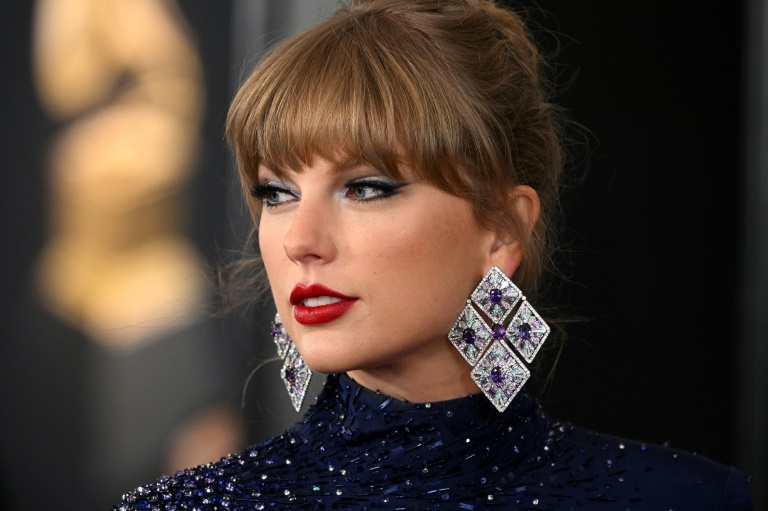
Taylor Swift capped the evening as one of the night’s most anticipated inductees. Despite a hoarse voice from cheering at a New York Knicks game the previous night, she delivered a thoughtful 23-minute speech that reflected on her songwriting journey. The pop superstar, who received the Hal David Starlight Award in 2010, expressed gratitude for the recognition and highlighted the communal nature of music creation.
Swift brought an impressive group of friends and collaborators to support her, creating one of the evening’s most talked-about moments. Her presence underscored the event’s blend of contemporary stardom and songwriting legacy. The audience responded with enthusiasm as she reflected on the personal and artistic growth that has defined her career.
John Fogerty’s Memorable Speech
Creedence Clearwater Revival founder John Fogerty, recipient of the Johnny Mercer Award, delivered one of the night’s most compelling speeches. The 81-year-old traced his musical life from childhood influences to his landmark hits, pulling out a 1967 notebook containing early lyrics for “Proud Mary.”
Advertisement
Fogerty shared stories of his career highs and challenges, including battles over publishing rights. He expressed delight at finally gaining control of his Creedence Clearwater Revival catalog in 2023. Joined by his sons Shane and Tyler, he performed a robust medley including “Proud Mary,” “Have You Ever Seen the Rain” and “The Old Man Down the Road.”
Steve Miller, who inducted Fogerty, praised him as “one of America’s most gifted and enduring songwriters” and highlighted his advocacy for artists’ rights.
Alanis Morissette’s Powerful Performance
Brandi Carlile paid tribute to Alanis Morissette with a haunting rendition of “Uninvited,” accompanied by Sista Strings. Carlile described Morissette as a “singular, once-in-a-lifetime voice” who inspired her as a young listener.
Advertisement
Morissette accepted the honor with a speech focused on songwriting as a survival strategy. She spoke about the emotional catharsis of writing and advocated for arts education in schools. She then delivered an intimate acoustic performance of “Mary Jane” and “You Oughta Know,” showcasing the enduring power of her voice and songcraft.
KISS Members Gene Simmons and Paul Stanley Honored
Billy Corgan and Johnny Rzeznik performed KISS classics “Rock and Roll All Nite” and “Shout It Out Loud” in tribute to Gene Simmons and Paul Stanley. Corgan hailed their “gloom and glam” and 50-year partnership.
Paul Stanley accepted on behalf of the duo, noting Simmons’ absence due to a family emergency. Stanley expressed humility at joining such an eclectic group of songwriters and thanked fans for their support while he was “still kicking.”
Advertisement
Other Notable Inductions and Moments
Christopher “Tricky” Stewart was inducted with assistance from Tamar Braxton, who performed Beyoncé’s “Single Ladies.” Stewart traced his path from Chicago session singers in his family to producing major hits like Rihanna’s “Umbrella” and Mariah Carey’s “Touch My Body.”
Terry Britten and Graham Lyle received tributes for their work with Tina Turner, including “What’s Love Got to Do With It.” Jane Seymour introduced the duo, who reflected on their songwriting partnership despite jet lag.
Walter Afanasieff was inducted with performances of his hits for Mariah Carey and others. He spoke of his early inspiration from the Beatles and his collaborations with legends like Barbra Streisand and Celine Dion.
Advertisement
RAYE received the Hal David Starlight Award, delivering an emotional speech about her journey and advocating for better master royalty points for songwriters.
The Evening’s Significance
The Songwriters Hall of Fame ceremony remains one of the music industry’s most prestigious nights, honoring the craft behind the hits rather than commercial success alone. Nile Rodgers, chairman of the organization, helped guide the evening’s tributes.
The 2026 class represented a broad spectrum of genres and eras, from rock anthems to pop hits and R&B classics. The performances and speeches emphasized songwriting as both a personal expression and a collaborative art form.
Advertisement
Industry Context
The event highlighted ongoing discussions about recognition for songwriters in an industry increasingly focused on streaming metrics and viral moments. Inductees stressed the importance of preserving the art of composition amid technological changes.
For Swift, the induction added another milestone to her record-breaking career. Her speech and presence underscored the connection between songwriting and cultural impact.
Looking Ahead
Advertisement
The 2026 Songwriters Hall of Fame induction ceremony celebrated the enduring power of great songs and the writers who create them. As the music industry evolves, events like this reinforce the foundational role of songcraft in connecting artists with audiences across generations.
The night’s mix of established legends and rising talents demonstrated the Hall’s commitment to honoring both historical contributions and contemporary excellence. Attendees left with renewed appreciation for the collaborative spirit and emotional depth that define exceptional songwriting.
The 2026 class will join previous inductees in the organization’s permanent legacy, ensuring their contributions continue to inspire future generations of musicians and songwriters. The ceremony’s memorable moments — from Fogerty’s heartfelt reflections to Swift’s star power — provided a fitting tribute to the art of songwriting in all its forms.
As the music community looks toward the future, the Songwriters Hall of Fame remains a vital institution celebrating the creators whose words and melodies shape culture and memory. The 2026 inductees exemplified the talent, perseverance and creativity that define the highest standards of the craft.
Shares of SML Mahindra jumped over 18% to an intraday high of Rs 5,416 on the BSE on Thursday after the company completed the Rs 525 crore slump sale acquisition of Mahindra & Mahindra’s Truck and Bus Division.
A slump sale refers to the transfer of an entire business undertaking as a going concern for a lumpsum consideration, rather than the sale of individual assets and liabilities separately.
In a regulatory filing on Wednesday, Mahindra & Mahindra (M&M) revealed that it will transfer its Truck and Bus Division (MTBD) to its listed subsidiary SML Mahindra Limited for Rs 525 crore, consolidating the group’s commercial vehicle operations under a single entity.
The acquisition is set to be completed on or before January 31, 2027, as per the filing.
Live Events
M&M said that the proposed transfer of MTBD to SML was a natural next step, following M&M’s acquisition of a 58.97% stake in SML Mahindra Limited (formerly SML Isuzu Limited) from Sumitomo Corporation and Isuzu Motors Limited. According to Dr Anish Shah, Group CEO & MD, Mahindra Group, the transaction simplifies Mahindra Group’s commercial vehicle business structure by consolidating truck and bus operations under SML Mahindra, creating a single focused entity dedicated to growth and leadership in the commercial vehicle sector.The group’s truck and bus division is stronger on the heavy commercial vehicles front. M&M will do contract manufacturing of heavy commercial vehicles for SML, as part of the arrangement, from its Chakan plant.
Combined revenues of SML Mahindra and MTBD stand at nearly Rs 6,000 crore, as per public disclosures.
Brokerage Recommendation
JM Financial has recommended a ‘Buy’ on SML Mahindra, setting a target price of Rs 3,800. The brokerage sees up to 16.2% upside potential on the stock, and viewed this acquisition in a positive light for M&M’s standalone business. The brokerage stated in its note that MTBD has historically been margin dilutive, despite turning EBITDA positive since FY24.
The combined business will rank fourth in the domestic truck and bus market, according to JM Financial. The note further stated that the combined entity is expected to benefit from operating leverage, pricing power and synergy realisation, which would outweigh temporary dilution, and management believes the transaction to be EPS accretive for SML Mahindra over time.
After the stock rallied up to 20% on Wednesday, the stock continued the rally and gained over 18% on Thursday, following a previous close of Rs 4565.50. The stock has gained over 15% in this month.
(Disclaimer: Recommendations, suggestions, views and opinions given by the experts are their own. These do not represent the views of Economic Times)
Fear of failure is the biggest barrier to starting a business among 18-24 year-olds, cited by 29 per cent of that age group, according to new analysis of Funding Circle and Premiership Rugby’s Beyond The Pitch research.
Across all respondents, building the right team was the single biggest challenge facing new business owners, named by 22 per cent. The age breakdown shows that headline figure masks a split between younger and older respondents.
Among 18-24 year-olds, building the right team ranked lowest of the barriers tested, on 18 per cent. The order reverses among 45-54 year-olds, for whom building the right team was the number one challenge on 25 per cent, ahead of fear of failure on 19 per cent.
The research also found that adaptability, rather than a “winning mentality”, was the mindset UK adults rated most important for success in both sport and business, on 28 per cent.
That preference differed by gender. Women were more likely to select discipline and consistency as the mindset that matters most, on 28 per cent against 23 per cent of men. Men were more likely to select a winning mentality, on 17 per cent against 10 per cent of women.
Advertisement
The study found 85 per cent of respondents believe that experiencing failure, whether on the pitch or in life, helps prepare someone to run a business. The stigma attached to business failure in the UK has been a recurring theme in debate over the country’s start-up culture.
Views on business and failure vary by age
Just 40 per cent of 18-24 year-olds described running a business as a balance of people skills and financial decision-making, compared with 66 per cent of over-55s, a gap of 26 percentage points.
Younger respondents were more likely to describe business as mostly about leading and managing people, on 24 per cent against 11 per cent of over-55s.
A similar pattern appeared in views on failure. Those aged 18 to 24 were the age group most likely to say failure builds confidence to take risks, on 41 per cent, but the least likely to say it teaches perseverance over the long term, on 17 per cent against 35 per cent of over-55s.
Advertisement
Over-55s were also more likely to credit workplace experience, rather than sport, as the best preparation for performing under pressure, on 52 per cent against 28 per cent of 18-24 year-olds.
Hiring pressure
The finding that older business owners rank team-building above other concerns sits alongside separate Department for Education research covering 1,500 employers, which found nine in ten English businesses reported difficulty filling skills gaps. That study put 32 per cent of skills gaps at small and medium-sized enterprises in entry-level positions, with specialist roles accounting for a further 29 per cent.
The Beyond The Pitch analysis was based on a survey of 2,023 UK adults.
Advertisement
Amy Ingham
Amy Ingham is a reporter at Business Matters, covering UK business news with a focus on breaking news, business policy, late payments and insolvency. She joined the magazine in 2026 after completing the NCTJ Diploma in Journalism at Harlow College’s journalism school. Her recent reporting includes British Steel’s nationalisation and its impact on SME suppliers, the decline in late payments by large firms, and Insolvency Service director disqualifications. Reach her at aingham@cbmeg.co.uk.
A new study suggests that limiting sugar intake during pregnancy and a child’s earliest years may be linked to a significantly lower risk of developing Alzheimer’s disease and dementia decades later, adding to growing scientific interest in how early-life nutrition shapes long-term brain health.
The research, published in the journal npj Aging, found that babies exposed to less sugar before and after birth had lower risks of developing dementia, Alzheimer’s disease, depression and anxiety later in life. The study’s authors caution that the findings do not prove that reduced sugar consumption directly prevents these conditions, but they suggest that nutrition during what researchers call the first 1,000 days of life, spanning from pregnancy until roughly a child’s second birthday, may leave lasting effects on the developing brain.
Researchers based in China analyzed health records from 60,394 participants in the UK Biobank, all born between 1951 and 1956. The study took advantage of a rare natural experiment created by strict sugar rationing in the United Kingdom during and after World War II. Under wartime rationing, adult sugar allowances were close to current dietary recommendations, and children under the age of two received no separate sugar allowance at all. When rationing ended in September 1953, average adult sugar consumption nearly doubled, climbing from roughly 41 to 80 grams per day, while children’s candy consumption more than doubled as well.
That abrupt policy shift allowed researchers to compare health outcomes between people whose earliest years of life coincided with strict sugar rationing and those born shortly after rationing ended, when sugar became far more widely available. Compared with participants who were not exposed to rationing during early development, those whose first 1,000 days coincided with sugar restrictions had a 27% lower risk of developing dementia from any cause and a 46% lower risk specifically of Alzheimer’s disease. The rationing-exposed group also showed an 11% lower risk of depression and a 20% lower risk of anxiety, though researchers found no similar association with Parkinson’s disease.
Advertisement
The protective associations were strongest among participants whose sugar restriction continued after birth, while exposure limited only to the prenatal period in the womb produced few clear differences, apart from a lower risk of anxiety later in life.
To better understand the biological basis for these findings, researchers also examined MRI brain scans from a subset of study participants. Those who had been exposed to sugar rationing after birth showed brains that appeared, on average, 0.39 years younger than their actual chronological age, along with larger volumes in several subcortical brain regions, including the hippocampus and thalamus, both of which play central roles in memory formation and broader cognitive function.
Bing Zhang, a geriatric medicine researcher at Guangzhou Medical University and the study’s senior author, described the significance of the developmental window examined in the research. “The first 1,000 days [is] a critical window when the brain undergoes rapid development and is highly sensitive to nutritional cues,” Zhang told ScienceAlert. Zhang said the larger hippocampal and thalamic volumes observed among sugar-restricted participants could provide the brain with additional structural capacity to withstand age-related decline later in life.
The new findings echo earlier research examining sugar’s effects on brain health. A 2017 study published in the journal Alzheimer’s & Dementia similarly linked higher consumption of sugary drinks with lower total brain volume and poorer episodic memory, based on an analysis of cognitive data from 4,276 people and MRI scans from 3,846 participants, though that earlier observational research also could not establish a direct causal relationship.
Advertisement
Zhang pointed to metabolic and inflammatory pathways as possible mechanisms underlying the association between early sugar exposure and later brain health. “Early high sugar intake predisposes to insulin resistance and chronic low-grade inflammation, both of which are well-established risk factors for dementia,” Zhang explained, though he noted that these specific mechanisms were not directly tested within the current study, and the brain images were captured at only a single point in time, meaning they cannot definitively establish that early sugar restriction caused the structural differences observed.
Despite the study’s design not amounting to a randomized clinical trial, researchers argued that the abrupt, externally imposed nature of the rationing policy’s end offers stronger evidence than a typical observational nutrition study, since it created a natural division between exposed and unexposed groups that was not driven by individual dietary choices. “We are quite confident that sugar restriction itself is a major driver,” Zhang said.
The research team accounted for factors including participants’ birth location, socioeconomic status and genetic background in their analysis. Even so, several limitations remain. The end of sugar rationing coincided with broader social and economic changes in postwar Britain that the study could not fully separate from the effects of sugar exposure specifically, and researchers were unable to determine precisely how much sugar individual mothers and children in the study actually consumed. The UK Biobank population is also predominantly white and generally healthier than the broader population, a factor that may limit how widely the findings can be applied to other groups. Additionally, only 307 participants in the study developed dementia during the follow-up period, including 123 diagnosed specifically with Alzheimer’s disease, meaning the risk estimates are based on a relatively small number of confirmed cases.
Zhang acknowledged that a single study of this kind is unlikely to immediately reshape official nutrition guidelines, but said the findings support existing recommendations to limit added sugar during pregnancy and early childhood. “This is not only about immediate health,” Zhang said. “It is a long-term investment in brain health decades later.”
Advertisement
This is a sensitive topic for many readers, particularly those with a personal or family history of dementia or Alzheimer’s disease. Anyone with specific questions about nutrition during pregnancy or early childhood, or concerns about dementia risk, is encouraged to speak with a doctor, pediatrician or registered dietitian rather than relying on findings from a single study to guide personal health decisions.
The South Yorkshire business has developed a global fast track service that caters for the increasingly time sensitive demands of its customers
Zoo Digital chief executive Stuart Green(Image: handout from Zoo Digital)
Media services firm Zoo Digital says it is now at the right size to drive profitability and cash generation following significant turnaround efforts.
The Sheffield-based provider of localisation services for TV and movie content – including dubbing, subtitling, mastering – has issued full year results for the 12 months to the end of March, showing narrowed operating losses of $1.6m, down from $6.5m, and adjusted ebitda growth from $1.1m to $4m. Revenue fell 14.7% to $42.3m, but Zoo – which also has offices across the world – says its restructuring is now completed and it is tuned in to new opportunities from the major content-makers.
In recent years the company’s key customer base has undergone a major shake-up in the move from making of traditional TV shows to streaming services. Zoo’s business had been “storming ahead” until the market was upended, prompting an restructuring effort that has removed somewhere between £12m-£14m.
Three years into the rightsizing, Mr Green says Zoo’s customers are now emerging with new requirements including faster turnaround of localisation services. Zoo is using its global network of offices to offer a 24/7 “fast track” service for customers which can offer dubbing within 24 hours and subtitling within three hours – which is said to be a dramatic reduction in typical industry timelines.
Advertisement
Speaking to BusinessLive, CEO Stuart Green acknowledged the past three years had been a tough time for Zoo, but said it was now turning a corner. He explained: “We’ve rightsized our platform and reshaped the business, so we’re no optimised for profitability and generating cash. We’ve obviously embraced AI – we’re a tech company at heart so this is the stuff we love and are really good at.”
He added: “Quality and authenticity of the work we do is still of paramount importance. You can’t just cut corners and do some quick AI subtitles and think that’ll be OK in the market because that will turn customers off, they won’t watch it and it’ll be a disaster.
“If you’ve spent millions – hundreds of millions – making some content, there’s no point spoiling the ship for a ha’p’orth of tar by just doing some cheap localisation – you need to do it to a very high standard. That has not changed and our customers are still expecting the very best.
“But they’re moving into new areas which are really turning the streaming services into the new form of TV. Where you used to subscribe to something like Netflix to watch movies and TV series, now you can watch sports, daytime TV and live stuff, and time sensitive stuff.
Advertisement
“That’s broadening their offering to help tempt subscribers but it also introduces types of content that require very quick turnaround – so when they’re made, they need to get on the platform very quickly.”
Zoo Digital says it will see profit progression during this year. It told investors trading had been strong across the first quarter of its 2027 financial year.
Yes. Corporate subscriptions are available for teams and organisations, with discounted rates as user numbers increase. Pricing starts from $1,625 + GST per user. Get in touch
to discuss the right option for your organisation.
Business News subscriptions are used by executives, investors, consultants and professionals who need to stay informed and make better decisions about the WA market. When you subscribe you’ll get
Unlimited access to WA’s most trusted business journalism
Data & Insights — detailed profiles of WA companies, people, projects and deals
MyBN — a personalised feed based on the companies, people and sectors you follow
Special publications and industry reports
Daily and weekly email newsletters
Data & Insights is a research tool built specifically for the WA market. It draws on more than 30 years of Business News reporting, updated regularly to reflect what’s happening now. Use it to:
Look up detailed profiles of WA companies, including financials, directors and ownership
Find decision-makers and track their career movements
Research live and completed projects across WA industries
Monitor deals, appointments and market activity
Access industry rankings and league tables
Data & Insights is updated daily by our dedicated research team, which uses the latest announcements, ASX filings and editorial coverage to keep our person, company, list and project records up to date.
Business News welcome all opportunities to make our dataset accurate, complete and current, so if you have an update request, please email the team at general@businessnews.com.au, and we’d be happy to assist.
Advertisement
MyBN
is part of every subscription. It’s your personalised view of Business News. You can follow the companies, people, sectors and projects that matter to you, and get a news feed and alerts tailored to your interests. You can save articles to read later and retain only what you need.
Only subscribers have full access to all content on the Business News website.
Advertisement
If staying informed about the WA economy is part of your job, and/or you’re looking for networking opportunities in WA, Business News is built for you.
Business News subscribers are:
Executives and directors tracking competitors, clients and market movements
Investors and advisers researching companies, deals and industry trends
Consultants and professionals staying across sectors relevant to their clients
Business owners looking for leads, context and market intelligence
Most Business News publications cover national or global markets. Business News is focused entirely on Western Australia, which means the journalism, the data and the intelligence are all built around WA companies, people and projects — not adapted from a national feed. Data & Insights, included with every subscription, combines more than 30 years of WA-specific editorial research with live business data. There’s no comparable product for the WA market.
Advertisement
The Morning Digest Email provides a comprehensive wrap of the major headlines, relevant to WA business, and includes with a snapshot of the overnight news covering oil, gold and ASX-listed companies.
The Afternoon Wrap Email focuses on the news covered by our team of journalists during the course of the working day, including exclusive stories and analysis, all of which relates to WA business and the local economy.
The BN Weekender Email contains a wrap of the Business News from the week that was, highlighting the top stories in each area of WA business. Sign up for free.
Advertisement
We’re happy to help. Get in touch
and our team will come back to you.
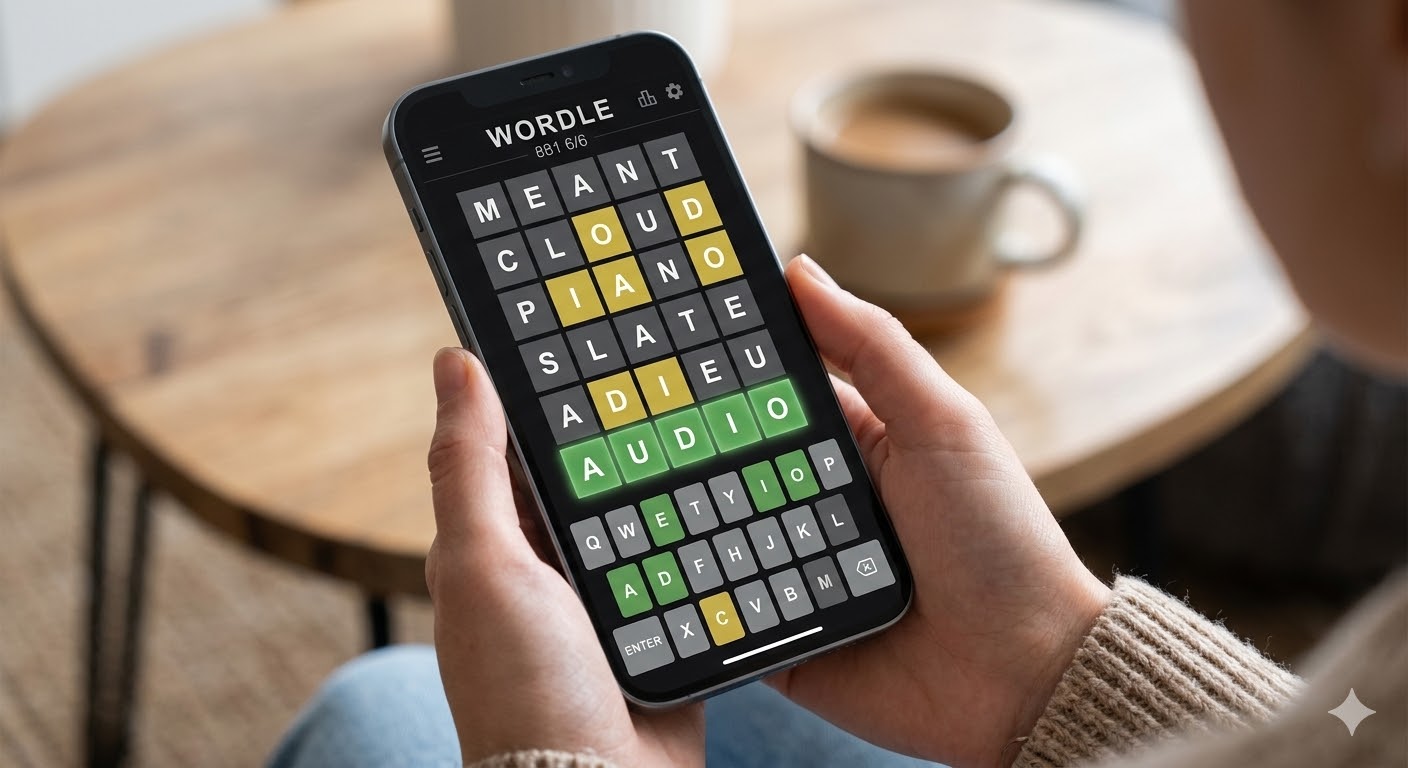
Wordle players facing a tricky puzzle on Thursday can find help here, with hints and the full solution for game number 1,867, the daily word puzzle from The New York Times.
The word puzzle, which challenges players to guess a five-letter word within six attempts, has built a devoted daily following since its rise to viral popularity in 2022. Today’s puzzle proved trickier than average for many players, according to data from the New York Times’ WordleBot, which tracks how the average solver performs each day. WordleBot recorded an average completion time of 4.1 moves for Thursday’s puzzle, whether played in the standard or hard-mode setting.
For players looking for hints before jumping straight to the answer, several clues can help narrow down the possibilities without giving away the solution entirely. The word features water as a central theme, referring to a narrow, often inclined channel or chute designed to carry water, either in natural settings such as ravines or in man-made systems including logging operations, irrigation infrastructure and, most commonly today, water park attractions.
Structurally, today’s word contains two vowels among its five letters and begins with a consonant. There are no double letters anywhere in the word, meaning each of the five letters used appears only once. The word functions grammatically as a noun. For those wanting one final hint before the reveal, the word can specifically be associated with a theme park water ride, a usage many players may recognize even if the term feels somewhat unfamiliar outside of that specific context.
Advertisement
Today’s Wordle answer is FLUME.
A flume refers to an artificial channel, often elevated or inclined, engineered to carry water from one place to another, historically used extensively in mining, logging and irrigation to transport water, logs or other materials using the force of flowing water. In modern usage, the word is perhaps most widely recognized in connection with “log flume” amusement park rides, in which passengers travel through a water-filled channel before a steep, splashing drop, a ride style found at theme parks around the world.
Puzzle strategy writers who cover Wordle daily noted that today’s word was not among the most commonly used in everyday vocabulary, making it a moderately challenging solve for players without specialized knowledge of the term’s meaning. One writer covering the puzzle for Tom’s Guide described starting with the word ORATE, a common opening guess chosen because it contains several of the most frequently occurring letters in five-letter English words, and noted that only the letter “E” registered as correctly placed on the first attempt, leaving 101 possible remaining answers before further guesses narrowed the field.
Wordle strategy guides commonly recommend a similar approach for players struggling with the daily puzzle: begin with an opening word that tests several common vowels and consonants simultaneously, then use the resulting feedback, letters marked in green for correct placement, yellow for correct letters in the wrong position, and gray for letters not present in the word at all, to systematically eliminate incorrect possibilities across subsequent guesses. Players are also generally advised to avoid ruling out the possibility of repeated letters too early in a puzzle, since Wordle answers do sometimes feature the same letter twice, even though today’s specific answer did not follow that pattern.
Advertisement
Wordle, originally created by software engineer Josh Wardle before being acquired by The New York Times in 2022, has remained one of the most popular daily word games worldwide, spawning a broader ecosystem of related puzzles now published by the Times, including Connections, Connections: Sports Edition, Strands and the Mini Crossword, all of which are typically released and refreshed at the same time each day alongside the main Wordle puzzle.
Players looking to maintain their daily Wordle streak, a feature the game uses to track consecutive days of play, can find today’s puzzle and previous archived puzzles through the official Wordle website. The New York Times also continues to publish daily hints and strategy guidance across its games section for players seeking assistance without immediately revealing the day’s answer outright, a resource that has become a regular part of many players’ daily puzzle-solving routine.
Yes. Corporate subscriptions are available for teams and organisations, with discounted rates as user numbers increase. Pricing starts from $1,625 + GST per user. Get in touch
to discuss the right option for your organisation.
Business News subscriptions are used by executives, investors, consultants and professionals who need to stay informed and make better decisions about the WA market. When you subscribe you’ll get
Unlimited access to WA’s most trusted business journalism
Data & Insights — detailed profiles of WA companies, people, projects and deals
MyBN — a personalised feed based on the companies, people and sectors you follow
Special publications and industry reports
Daily and weekly email newsletters
Data & Insights is a research tool built specifically for the WA market. It draws on more than 30 years of Business News reporting, updated regularly to reflect what’s happening now. Use it to:
Look up detailed profiles of WA companies, including financials, directors and ownership
Find decision-makers and track their career movements
Research live and completed projects across WA industries
Monitor deals, appointments and market activity
Access industry rankings and league tables
Data & Insights is updated daily by our dedicated research team, which uses the latest announcements, ASX filings and editorial coverage to keep our person, company, list and project records up to date.
Business News welcome all opportunities to make our dataset accurate, complete and current, so if you have an update request, please email the team at general@businessnews.com.au, and we’d be happy to assist.
Advertisement
MyBN
is part of every subscription. It’s your personalised view of Business News. You can follow the companies, people, sectors and projects that matter to you, and get a news feed and alerts tailored to your interests. You can save articles to read later and retain only what you need.
Only subscribers have full access to all content on the Business News website.
Advertisement
If staying informed about the WA economy is part of your job, and/or you’re looking for networking opportunities in WA, Business News is built for you.
Business News subscribers are:
Executives and directors tracking competitors, clients and market movements
Investors and advisers researching companies, deals and industry trends
Consultants and professionals staying across sectors relevant to their clients
Business owners looking for leads, context and market intelligence
Most Business News publications cover national or global markets. Business News is focused entirely on Western Australia, which means the journalism, the data and the intelligence are all built around WA companies, people and projects — not adapted from a national feed. Data & Insights, included with every subscription, combines more than 30 years of WA-specific editorial research with live business data. There’s no comparable product for the WA market.
Advertisement
The Morning Digest Email provides a comprehensive wrap of the major headlines, relevant to WA business, and includes with a snapshot of the overnight news covering oil, gold and ASX-listed companies.
The Afternoon Wrap Email focuses on the news covered by our team of journalists during the course of the working day, including exclusive stories and analysis, all of which relates to WA business and the local economy.
The BN Weekender Email contains a wrap of the Business News from the week that was, highlighting the top stories in each area of WA business. Sign up for free.
Advertisement
We’re happy to help. Get in touch
and our team will come back to you.























































You must be logged in to post a comment Login