

Business
Visa is cutting 7% of employees in efficiency push as AI reshapes work

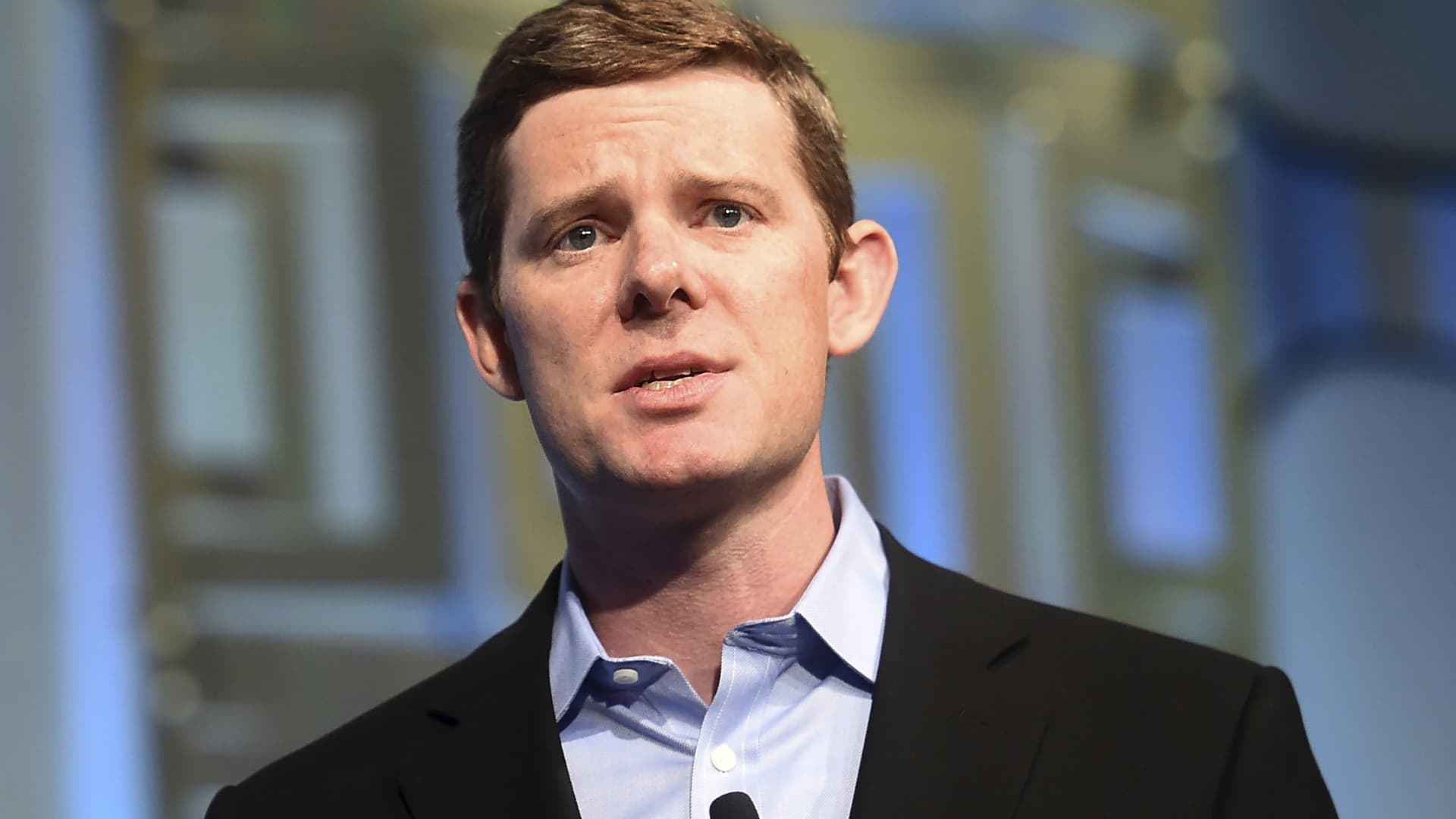
Visa’s Ryan McInerney delivers a keynote address at the Transact 15 conference in San Francisco, California, April 1, 2015.
Noah Berger | Reuters
Visa, which runs the world’s largest payments network, plans to cut about 7% of its workforce as CEO Ryan McInerney moves to streamline the company and invest more in growth areas, according to a memo confirmed by CNBC.
The company plans to eliminate roughly 2,600 positions, mostly in its technology and product operations, according to the memo. CNBC confirmed the contents of the memo, which was reported earlier by Bloomberg, with a person with direct knowledge of the matter.
Impacted employees will start to be contacted on Tuesday for next steps and transition assistance, said the person.
“To capture the opportunities ahead and best position Visa to lead this transformation, we must continue evolving how we work,” McInerney wrote. “AI is also helping to accelerate this evolution and shape the way work gets done at Visa.”
The layoffs come as companies across the financial and technology sectors increasingly use artificial intelligence to automate technical work like software development, while seeking to rein in costs after years of rapid hiring. Visa had about 34,100 employees at the end of its last fiscal year.
While AI played a significant role in the layoffs, it wasn’t the sole driver, according to the person with direct knowledge of the matter, who declined to be identified speaking about the changes.
Visa wants to invest more in what it views as growth areas, including its emphasis on affluent customers, cross border activity, business payments, stablecoins and geographic expansion, said the person.
“As a result of the choices we have made over the past few years, we are entering a new era in commerce with a business that has real momentum,” McInerney wrote, citing good financial results and client satisfaction.
Visa is scheduled to report quarterly earnings after the market closes Tuesday.

The charge reflected higher engineering costs associated with delivering two delayed US presidential aircraft in 2028 and contributed to a second-quarter net loss of $428 million.
The aircraft maker’s shares rose 5% in midday trading despite the Q2 loss, as investors focused on improving production and stronger cash flow. Its core loss of 76 cents per share was wider than analysts’ estimate of a 30-cent loss but narrower than the $1.24-per-share loss recorded a year earlier, according to LSEG data.
Boeing generated $631 million in free cash flow, reversing a $200 million outflow in the second quarter of 2025, partly due to stronger-than-expected customer payments. The company maintained its full-year free cash flow forecast of $1 billion to $3 billion, which would mark its first positive annual result since 2023, as it ramps up production of its best-selling 737 MAX jets.
Boeing also lifted capital spending year-on-year in the quarter, mainly to expand 787 production in South Carolina and military jet output near St. Louis, Missouri. It is separately working to deliver two 747-8 jets as Air Force One under a $3.9 billion fixed-price 2018 contract — now four years late and over $1 billion above budget. President Donald Trump has meanwhile been using a Qatari-donated 747-8 in the role, though he said this month it would soon be pulled for upgrades over security concerns, according to a Reuters report.

Also Read | Coca-Cola shares surge 7% as earnings beat lifts outlook
Meanwhile, Boeing is raising monthly production of its best-selling 737 MAX jets from 42 to 47 aircraft, a crucial step in its financial recovery after years of crises left the company with nearly $26 billion in net debt and damaged its reputation.
The aircraft aims to increase output to 52 jets a month by early next year and eventually reach 57. CEO Kelly Ortberg said hitting the final target would require stronger supplier performance and a smooth ramp-up in key areas, including 737 wing assembly.
For the 787, Ortberg said GE Aerospace’s engine deliveries remain the biggest constraint on Boeing’s goal of producing 10 aircraft a month. Boeing is working with GE on a recovery plan after engine shipments fell behind schedule during the first half.
S&P 500 climbs as investors await tech earnings
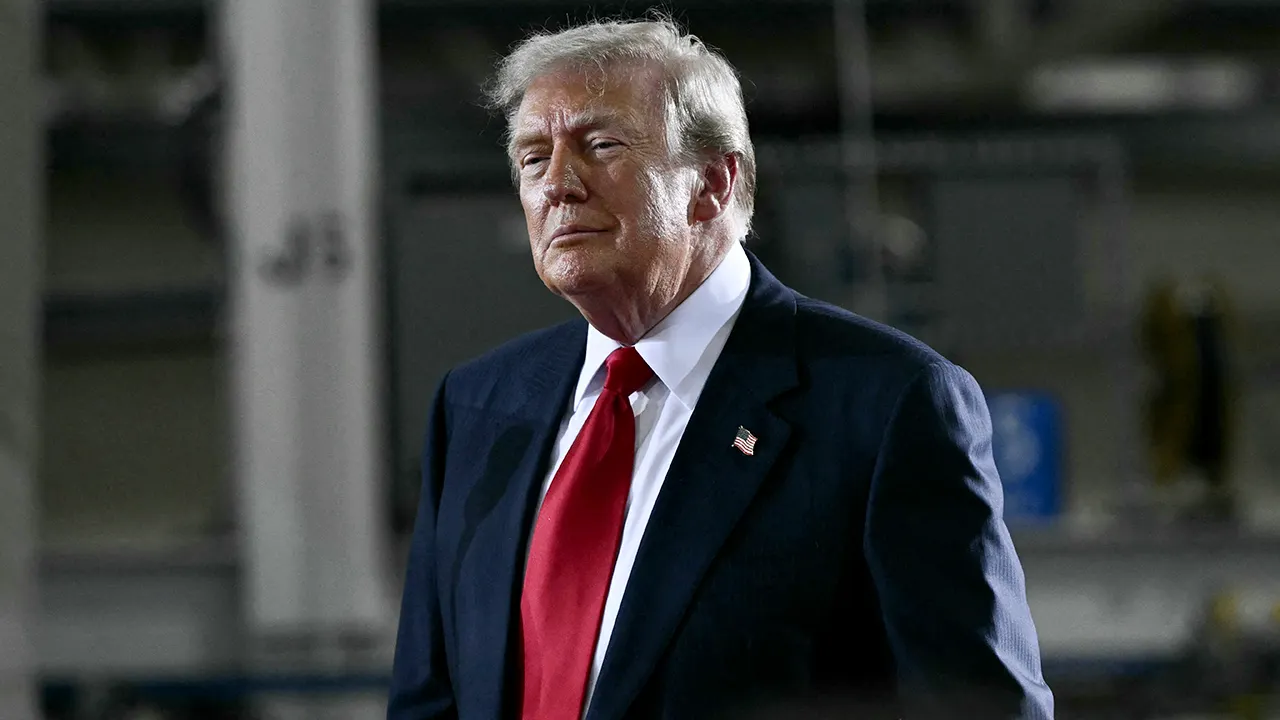
President Donald Trump told “Fox & Friends” on Tuesday that tariffs imposed by his administration have made the U.S. “a fortune.”
President Donald Trump defended his administration’s tariffs on Tuesday ahead of November’s midterm elections, telling “Fox & Friends” in an interview that they are bringing “a fortune” into the United States.
Trump made the remark as his administration is set to impose new tariffs of 10% and 12.5% on imports from 60 trading partners beginning Friday as a temporary global tariff expires.
“Are you worried that the tariffs that you put forward over the last couple of days will hurt the economy as they adjust in bringing manufacturing home?” the president was asked by host Brian Kilmeade.
“No, because it’s bringing hundreds of billions of dollars,” Trump responded. “I was at General Motors yesterday. They have the best year. They have the most trucks, the most cars. The tariffs have saved General Motors. What I’ve done to the auto business, what I’ve done to the chip business. We have chip companies now making, building hundreds of billions of dollars worth of chip plants in Arizona.”
TRUMP ADMINISTRATION UNVEILS NEW TARIFFS ON 60 TRADING PARTNERS AS TEMPORARY DUTIES EXPIRE
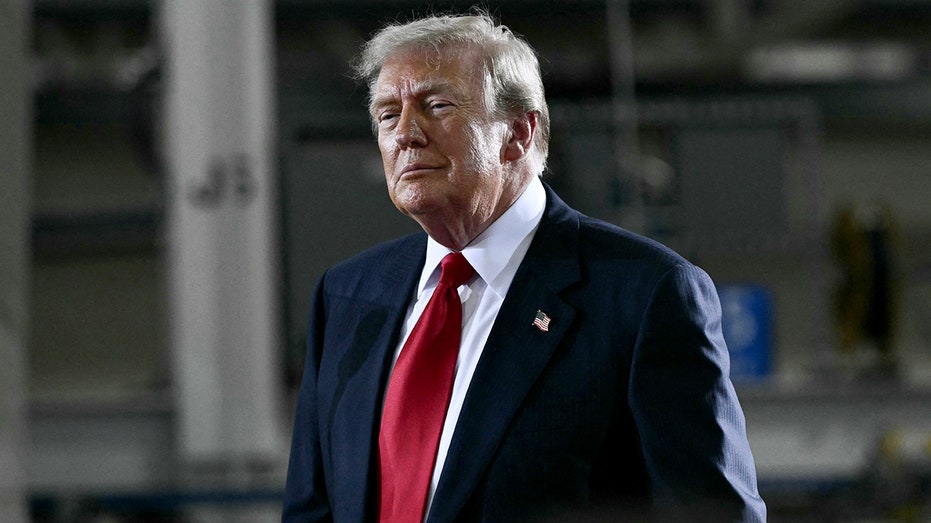
President Donald Trump delivers remarks at General Motors’ Milford Proving Ground in Milford, Michigan, on Monday, July 27, 2026. (Brendan Smialowski/AFP via Getty Images)
“We are going to end up with 40 to 50% of the chip business from nothing in a year and a half from now,” the president added.
Trump also said, “It’s a shame that I have to go a harder way for the tariffs because the Supreme Court, in a very close decision, you know, ruled against me.”
The Supreme Court in February had struck down Trump’s “reciprocal” tariffs of 10% to 50% that were imposed last year. In response, Trump implemented a temporary 10% global tariff under Section 122 of the Trade Act of 1974 that expires at 12:01 a.m. ET Friday.
The Office of the U.S. Trade Representative announced Thursday that the new tariffs, imposed under Section 301 of the Trade Act of 1974, will take effect immediately after the temporary duties expire.
TRUMP UNVEILS PHASED TARIFFS ON GENERIC DRUGS TO BOOST US PRODUCTION
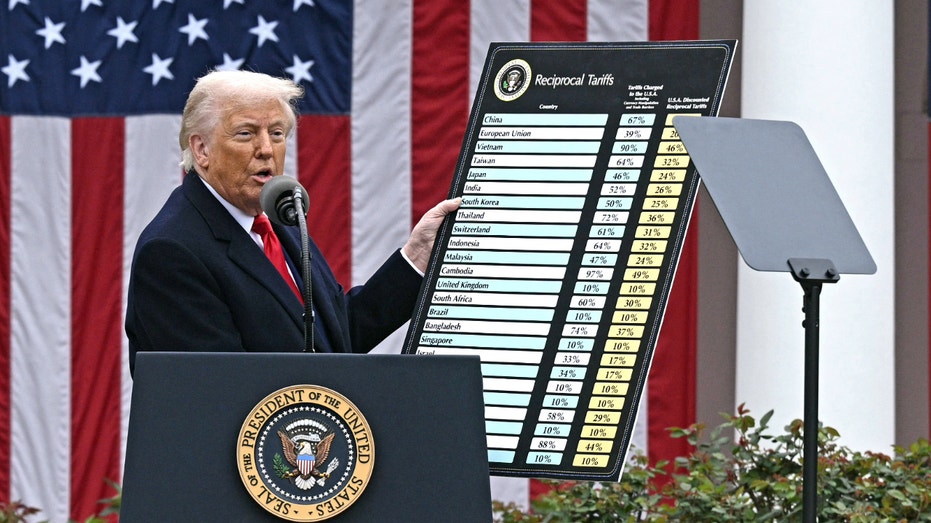
President Donald Trump delivers remarks on reciprocal tariffs during an event in the Rose Garden in 2025. (Brendan Smialowski/AFP via Getty Images)
Canada, Mexico, India and the United Kingdom are among the trading partners that will face a 10% tariff. Taiwan and the European Union, meanwhile, are slated to face a 12.5% tariff.
“Now I have other ways of doing the same thing. But it’s a more cumbersome process, you know, the way of doing it. But the tariffs have made this country a fortune,” Trump said. “It made the country rich. And I stopped eight wars, I would say five of them because of tariffs. The threat of tariffs stopped India and Pakistan from going into a nuclear war. The threat of tariffs stopped numerous other countries from going to war. These tariffs — it’s the greatest thing. And only the really smart people or the people that are nonpolitical and that get it, talk about it. The Democrats know how good it’s been.”
“We have the hottest car business. We’re right now building more car plants than at any time in our history. Toyota just left Mexico. They’re building, they just announced, they’re building a $12 billion worth of plants in the United States,” Trump said. “All because they want to avoid tariffs. They have no tariffs if they build their product here.”
The Trump administration has decided not to extend the U.S.-Mexico-Canada Agreement (USMCA) and will instead pursue independent trade deals with Canada and Mexico.
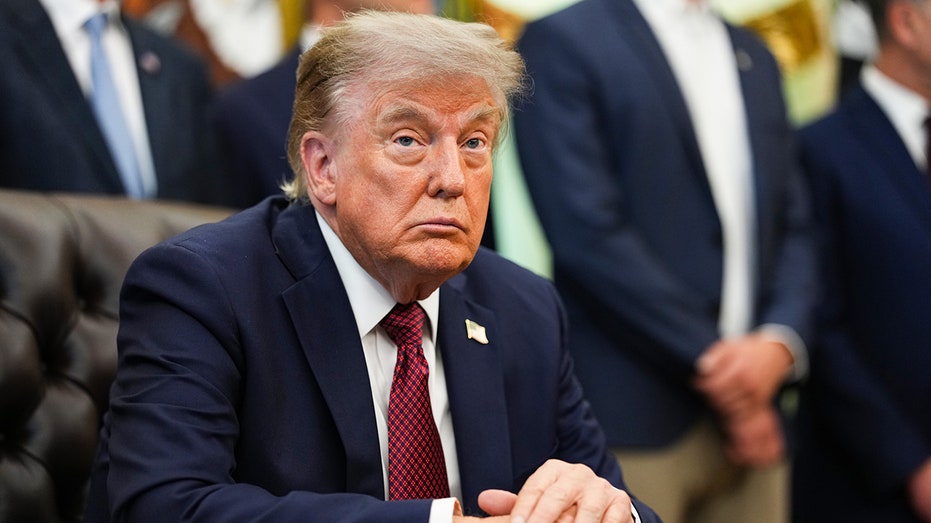
President Donald Trump makes an announcement on American nuclear innovation in the Oval Office at the White House on July 24, 2026, in Washington. (Eric Lee/Getty Images)
CLICK HERE TO READ MORE ON FOX BUSINESS
When asked Tuesday if he was looking to update the USMCA, Trump said: “I don’t care. I mean I don’t really want to, I’d rather have, I’d rather be independent. Here’s the thing. Mexico and Canada need us. We don’t need them. The deal is important for them. It’s not important for us.”
FOX Business’ Michael Sinkewicz, Eric Revell, Edward Lawrence and Sophia Compton contributed to this report.
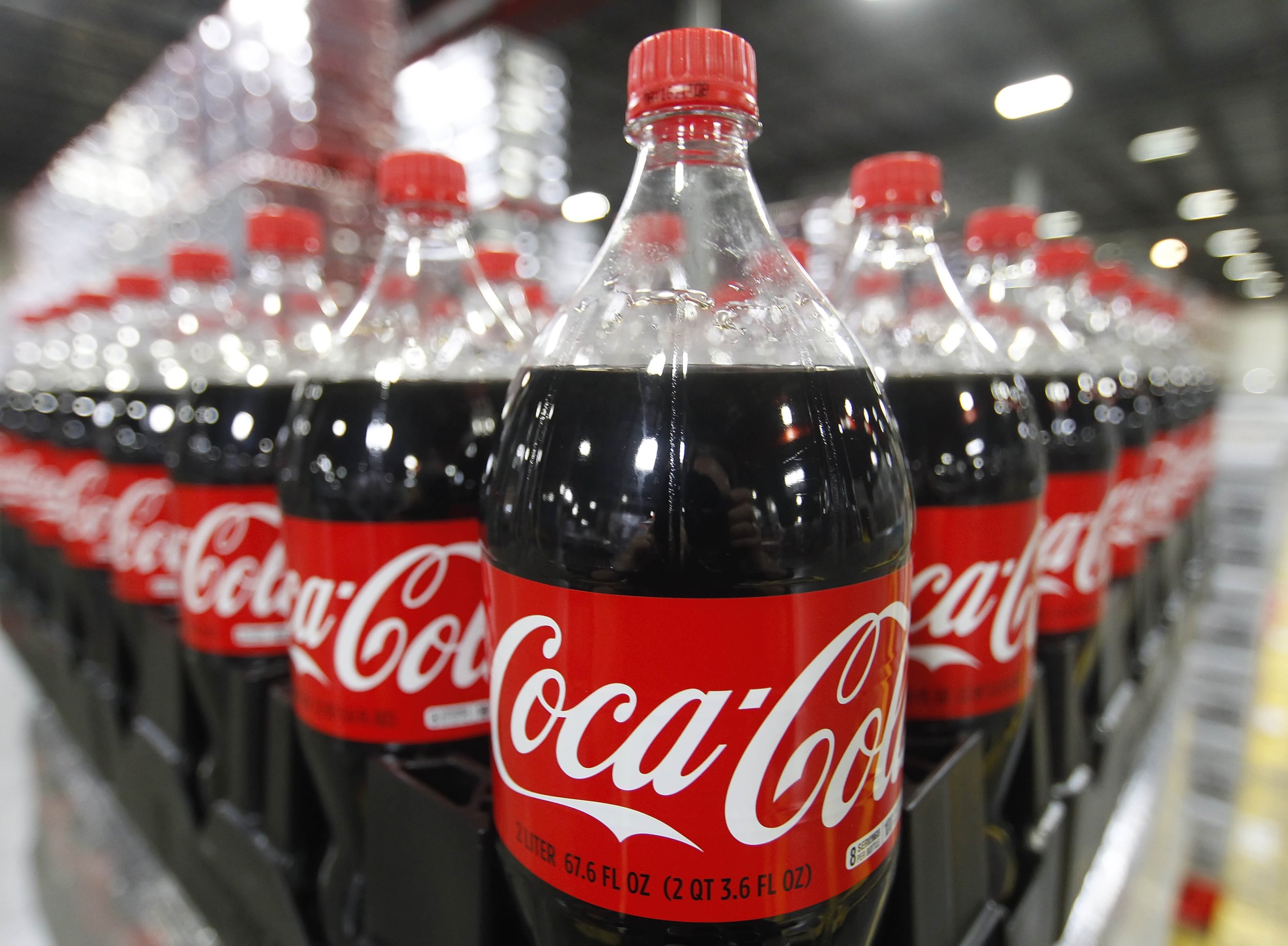
ATLANTA — Shares of The Coca-Cola Co. jumped more than 6% in morning trading Tuesday after the beverage giant reported second-quarter results that exceeded Wall Street expectations and raised its full-year guidance, fueled by strong global volume growth and marketing tied to the FIFA World Cup.
Coca-Cola stock rose $5.67, or 6.74%, to $89.74 as of 11:09 a.m. EDT, hitting a fresh 52-week high during the session. The move came after the company posted net revenues of $13.4 billion, up 7% from a year earlier, and organic revenues (a non-GAAP measure) grew 6%. Adjusted earnings per share rose 11% to 97 cents, beating the consensus estimate of 93 cents. Reported earnings per share climbed 16% to $1.03.
Global unit case volume increased 5%, led by gains in India, China, the United States and Brazil. Trademark Coca-Cola volume grew 5%, while Coca-Cola Zero Sugar posted 16% growth. Operating income rose 9% to $4.7 billion, with the operating margin expanding to 34.9% from 34.1% a year ago. Comparable operating margin improved to 35.6%.
“We delivered another strong quarter by staying close to the changing needs of our consumers and customers,” said Henrique Braun, chief executive officer of The Coca-Cola Company. The company said it continued to gain value share in total nonalcoholic ready-to-drink beverages.
Concentrate sales rose 4%, trailing unit case volume by one point due to the timing of shipments. Price/mix contributed 2% to organic revenue growth. Asia Pacific was the fastest-growing region by volume, up 8%.
Coca-Cola raised its full-year 2026 outlook. It now expects organic revenue growth of approximately 5%, at the high end of its prior 4% to 5% range. Comparable currency-neutral earnings per share growth excluding acquisitions and divestitures is projected at 7% to 8%, up from 6% to 7%. Overall comparable EPS growth is expected at 9% to 10%, compared with the previous 8% to 9% range, incorporating an approximate 3% currency tailwind and a 1% headwind from acquisitions and divestitures. Free cash flow is forecast at about $12.4 billion.
Year-to-date through the first six months, net operating revenues grew 9% to $25.9 billion. Cash flow from operations reached $7.5 billion, and free cash flow totaled $6.9 billion. The company ended the period with $12.9 billion in cash and cash equivalents and $37.0 billion in long-term debt.
The strong results were supported by brand activations around the FIFA World Cup 2026, which management described as a powerful marketing catalyst that helped drive Trademark Coca-Cola volume and consumer engagement. Innovation and revenue management initiatives also contributed, with the company balancing volume growth and premiumization efforts.
Coca-Cola Zero Sugar’s double-digit performance highlighted ongoing success in the zero-sugar segment, while the broader portfolio benefited from local market activations and tailored product offerings. The company gained value share overall, though it noted some regional variations, including share dynamics in Asia Pacific where gains in Japan and China were offset by pressure in India.
Investors reacted positively to the combination of top- and bottom-line beats, margin expansion and the upward revision to guidance. The stock had already advanced earlier in the year and entered the earnings report near multi-month highs. The sharp rise on Tuesday pushed shares into new 52-week territory, reflecting confidence in the company’s ability to navigate a dynamic consumer landscape while generating robust cash flow.
Braun, who has emphasized staying attuned to evolving consumer preferences, pointed to the company’s disciplined approach in identifying and scaling local brands that can become larger growth engines. Outgoing leadership had previously noted that three-quarters of Coca-Cola’s billion-dollar brands sit outside its legacy soft-drink business, with examples such as the Mexico-based dairy brand Santa Clara reaching that threshold through targeted investment.
The results extend a streak of quarters in which Coca-Cola has topped analyst estimates. Management continues to focus on affordability, innovation and digital execution while managing input costs and currency impacts. The underlying effective tax rate is expected to remain at 19.9%.
Analysts and investors will monitor upcoming volume trends, the sustained impact of World Cup-related promotions and the contribution from emerging brands as the company progresses through the second half of the year. With a market capitalization near $385 billion following the surge, Coca-Cola remains one of the largest consumer staples companies, known for its global distribution network and portfolio of more than 200 brands.
The quarterly performance underscored the resilience of demand for sparkling soft drinks and other nonalcoholic beverages in key markets, even as consumers navigate economic pressures in some regions. Pricing actions and favorable product mix helped offset any softness, while concentrate sales timing differences were described as temporary.
Coca-Cola’s shares have delivered solid total returns over the past year, supported by consistent dividend growth and share repurchases alongside operational execution. The latest guidance raise reinforces expectations for continued mid-single-digit organic revenue growth and high-single to low-double-digit earnings expansion on a comparable basis.
Trading volume was elevated as the market digested the report and the accompanying conference call. The stock’s advance stood out amid broader market conditions, highlighting investor preference for defensive names with clear growth catalysts and strong free-cash-flow generation.
Looking ahead, Coca-Cola plans to continue investing in marketing, innovation and system capabilities while returning capital to shareholders. The raised free-cash-flow target of approximately $12.4 billion provides additional flexibility for dividends, buybacks and strategic initiatives. The company’s long track record of navigating consumer shifts and competitive dynamics positions it to capitalize on opportunities in both developed and emerging markets through the remainder of 2026 and beyond.
Rising yields can make for a tough lending environment. But regional banks are evolving into something more like their Wall Street peers.
Last week’s jump in Treasury yields had investors worried that lending banks would be hit. Even before the sharp move, investors were concerned about the number of banks in second-quarter reports pointing out a squeeze as depositors press for higher rates and as banks shift to lower-yielding loans.
Copyright ©2026 Dow Jones & Company, Inc. All Rights Reserved. 87990cbe856818d5eddac44c7b1cdeb8
Business
PepsiCo Stock Rises Nearly 3% as Shares Rebound From 52-Week Lows Amid Blue-Chip Rally Today
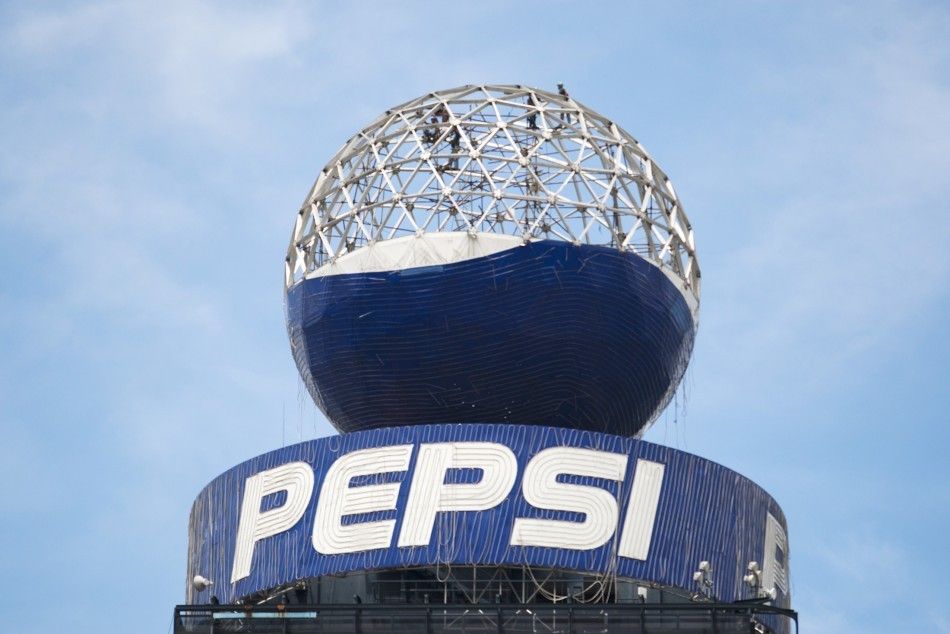
PepsiCo Inc. shares climbed Tuesday, rising 2.73% to $143.61, adding $3.82 as the beverage and snack giant participated in a broader rally among traditional consumer and industrial stocks even as it continues working to recover from a difficult stretch earlier this year.
Tuesday’s gains offer a notable bounce for a stock that has spent much of 2026 trading near its 52-week lows, weighed down by weakening consumer demand and a series of analyst downgrades following a disappointing earnings report earlier this month.
A Rough Second-Quarter Report
PepsiCo’s most recent earnings release, delivered July 9, fell short of Wall Street’s expectations and highlighted growing pressure on the company’s core North American business. PepsiCo’s earnings missed estimates as U.S. consumers tightened their budgets, with the company reporting that high prices at the pump were keeping consumers from heading into stores to buy snacks.
The quarterly results themselves offered a mixed picture even beyond the earnings miss. Second-quarter 2026 results delivered revenue of $24.18 billion that beat consensus estimates, while core earnings per share of $2.20 came in slightly below the $2.21 Wall Street forecast, with organic revenue growing 2.4% for the period.
International Strength Offsets North American Softness
PepsiCo’s results showed a clear divide between its performance overseas and its struggles closer to home. International operations remained a bright spot in the quarter, with the company’s Europe, Middle East and Africa segment posting 10% reported revenue growth and its Asia Pacific Foods segment up 12%, offsetting persistent softness in PepsiCo Foods North America.
PepsiCo Chairman and Chief Executive Officer Ramon Laguarta highlighted the company’s global sales volume trends following the report, pointing to continued international momentum even as domestic demand remained challenged.
A Wave of Analyst Downgrades
The disappointing earnings report triggered a round of price target cuts and rating downgrades from major Wall Street firms in the weeks that followed. Multiple analysts downgraded the stock or reduced price targets following the second-quarter report, with Citigroup cutting PepsiCo from Buy to Neutral and lowering its price target from $170 to $145. Citi’s downgrade came despite what the firm characterized as a Q2 beat, with the analyst slashing the target by 15% even as the quarter technically topped some estimates.
Other firms took a more cautious tone as well in the weeks following the report. Barclays maintained a Hold rating on the stock in mid-July before later raising its price target modestly to $142 from $138, while still keeping an Equal Weight rating on the shares.
Shares Fell to Multiyear Lows
The combination of the earnings miss and subsequent analyst downgrades pushed PepsiCo shares down sharply in the weeks following the report, extending a broader downtrend that had already been building through the first half of the year. PepsiCo shares declined approximately 3.4% over the 30-day period ending mid-July 2026, closing at $137.12 on July 17, extending a downtrend that pushed the stock near its 52-week low of $134.65. That represented a decline of roughly 20% from the stock’s 52-week high of $171.48.
A Notable Underperformer Against Rival Coca-Cola
PepsiCo’s struggles this year have stood out particularly when compared with the performance of its chief beverage industry rival. By contrast, rival Coca-Cola has advanced roughly 20% in 2026 and reached all-time highs in July, widening the performance gap between the two beverage and snack giants and raising questions among investors about PepsiCo’s relative competitive positioning.
A Dividend Increase Amid the Stock’s Decline
Even as its share price struggled, PepsiCo continued its long streak of annual dividend increases, a factor that has helped support investor interest in the stock despite its underperformance. The board of directors declared a quarterly dividend of $1.48 per share, a 4% increase, marking the company’s 54th consecutive annual dividend increase. The company’s annualized dividend now stands at $5.92 per share, yielding approximately 4.3% at recent trading levels, a yield that has made the stock increasingly attractive to income-focused investors even as its share price has lagged.
Guidance Reaffirmed, But Tracking Toward the Low End
Despite the disappointing quarter, PepsiCo’s management has continued to stand behind its broader financial targets for the year, even while acknowledging the company is unlikely to hit the upper end of its own projections. Management reaffirmed fiscal 2026 guidance but indicated earnings are tracking toward the low end of its 4% to 6% core constant-currency earnings-per-share growth range.
A Valuation Discount Relative to Peers
One factor that some analysts have pointed to as a potential source of support for the stock is its current valuation relative to both the broader market and its industry peers. PepsiCo’s forward price-to-earnings ratio of roughly 18 times stands at a notable discount to both the broader S&P 500 and rival Coca-Cola, a gap that some value-oriented investors view as an opportunity given the company’s continued international growth and long dividend track record.
Part of a Broader Blue-Chip Rally Tuesday
Tuesday’s gains for PepsiCo came alongside broader strength in traditional consumer and industrial names, even as technology and semiconductor stocks continued to face pressure from an ongoing global chip-sector selloff. That divergence has become a recurring theme in recent trading sessions, with more defensive, earnings-driven consumer names outperforming amid continued volatility in AI-linked technology stocks.
With PepsiCo’s stock still trading well below its 52-week high despite Tuesday’s gains, investors will be watching closely in the coming quarters to see whether the company’s international growth momentum can offset continued softness in its core North American snack and beverage business. Given the string of analyst downgrades that followed the July 9 earnings report, a sustained recovery in the stock is likely to depend heavily on whether PepsiCo can show clearer signs of stabilization in U.S. consumer demand when it next updates investors on its business performance.

Thailand has maintained UNESCO conservation standards for its World Heritage sites, with no sites in danger. Wat Phra Mahathat Woramahawihan awaits nomination, potentially becoming the country’s sixth cultural site.
Key Points
- Thailand remains compliant with UNESCO standards for its World Heritage properties, with no sites on the List of World Heritage in Danger, as confirmed by the 48th session of the World Heritage Committee.
- The country awaits a decision on the nomination of Wat Phra Mahathat Woramahawihan, which could become its sixth cultural World Heritage site, enhancing its standing in southern Thailand.
- The Ministry of Natural Resources and Environment emphasizes ongoing collaboration for site conservation, highlighting the importance of continued management, community engagement, and the potential consequences of losing a site’s Outstanding Universal Value.
Thailand has continued to meet UNESCO standards for the conservation and management of its World Heritage properties, with none placed or proposed for inclusion on the List of World Heritage in Danger. The outcome, announced during the 48th session of the World Heritage Committee on July 21-22, indicates that the country remains in line with its obligations under the World Heritage Convention.
Thailand is also awaiting a decision in three days on the nomination of Wat Phra Mahathat Woramahawihan in Nakhon Si Thammarat province for inscription on the World Heritage List. Natural Resources and Environment Minister Suchart Chomklin said approval would make the temple Thailand’s sixth cultural World Heritage property, the country’s ninth World Heritage site overall, and the first in southern Thailand. He added that authorities had completed all required documentation through close coordination with UNESCO.
The Ministry of Natural Resources and Environment credited continued cooperation among responsible agencies for maintaining conservation standards across the country’s World Heritage sites. The Office of Natural Resources and Environmental Policy and Planning continues to coordinate site monitoring, conservation, threat assessments, management, and regular evaluations to preserve the Outstanding Universal Value of each property.
The ministry stated that inscription on the World Heritage List carries an ongoing responsibility to protect and manage each site through conservation, tourism management, disaster preparedness, community participation, and regular reporting. The agency noted, however, that properties can be placed on the List of World Heritage in Danger or removed from the World Heritage List if their Outstanding Universal Value is permanently lost.
Source : Thailand Continues to Uphold UNESCO World Heritage Standards
Other People are Reading
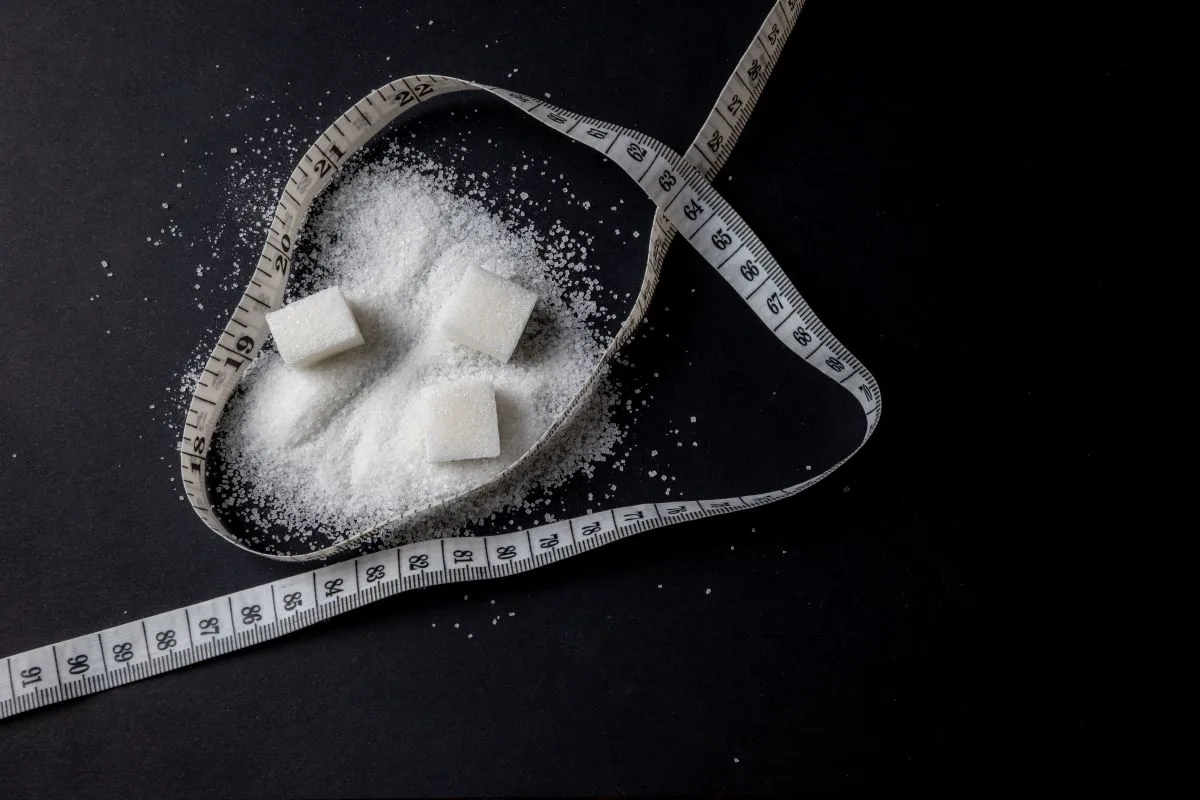

Partnership combining MycoTechnology’s Zukora Honey Truffle Sweet Protein with Adorvia’s Reb M Stevia.

Great Hill Capital Chairman Thomas Hayes joins Stuart Varney to analyze the current market rally, attributing it to falling oil prices and stable yields.
Apple and buy now, pay later (BNPL) payment provider Klarna are joining forces to offer customers the option to lease a new Apple device in the U.S.
The tech giant announced the program, called Apple Upgrade, on Tuesday, and said that customers will be able to lease eligible iPhone, iPad, Mac and Apple Watch devices.
Apple Upgrade offers 12- and 24-month leasing options for iPhone and Apple Watch, and 24- and 36-month leasing options for Mac and iPad. Leasing prices start as low as $17.99 per month for iPhone, $11.99 for Apple Watch, $24.99 for Mac, and $11.99 for iPad.
APPLE RAISES PRICES ON SOME STREAMING SERVICES AS LICENSING COSTS CLIMB
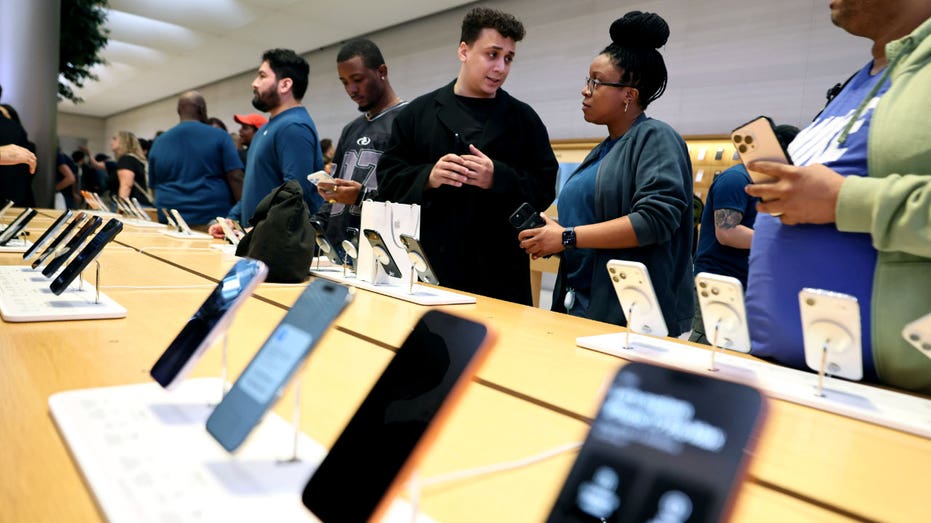
Apple employees help customers at the Fifth Avenue Apple Store on new product launch day on Sept. 19, 2025 in New York City. (Michael M. Santiago/Getty Images)
When customers enroll in Apple Upgrade, they can trade in their current device through Apple Trade-In to lower their monthly payments during the leasing term, Apple said. At the end of the leasing term, customers can choose to upgrade to the latest Apple device model, purchase the leased device outright or return it.
APPLE RAISES IPAD AND MACBOOK PRICES AS MEMORY CHIP COSTS SURGE
| Ticker | Security | Last | Change | Change % |
|---|---|---|---|---|
| AAPL | APPLE INC. | 336.91 | +3.89 | +1.17% |
| KLAR | KLARNA GROUP PLC | 18.49 | +1.13 | +6.51% |
Apple announced that it would discontinue its iPhone Upgrade Program and iPhone Payments with the rollout of Apple Upgrade. Both programs allowed qualified customers to purchase an iPhone through a 24-month, interest-free installment loan, while the iPhone Upgrade Program also included AppleCare+ and an option for customers to upgrade their device after 12 payments.
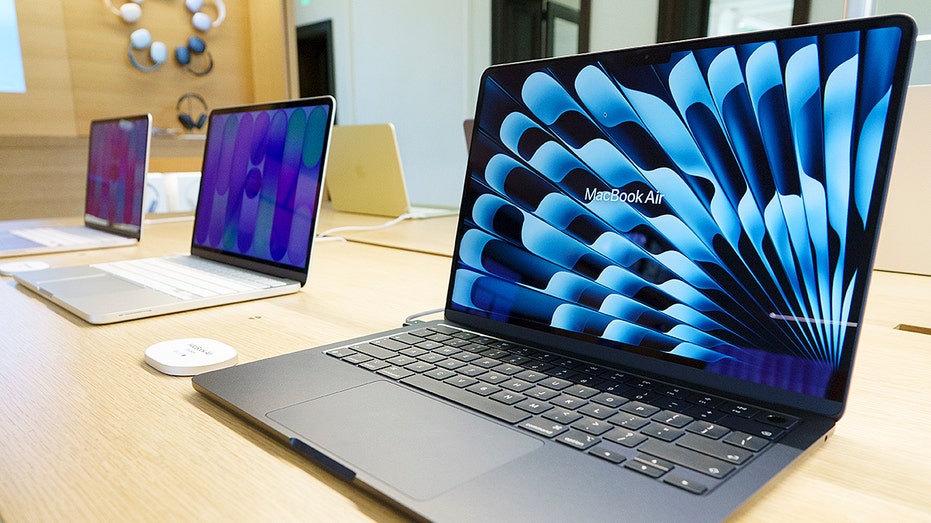
An Apple MacBook Air laptop is displayed at the Apple Carnegie Library store on July 25, 2026 in Washington, D.C. (Kevin Carter/Getty Images)
GET FOX BUSINESS ON THE GO BY CLICKING HERE
The tech giant’s partnership with Klarna comes as more Americans are choosing BNPL options to finance purchases. About 51% of Americans say they have used installment plans for online purchases, according to a Gallup survey.
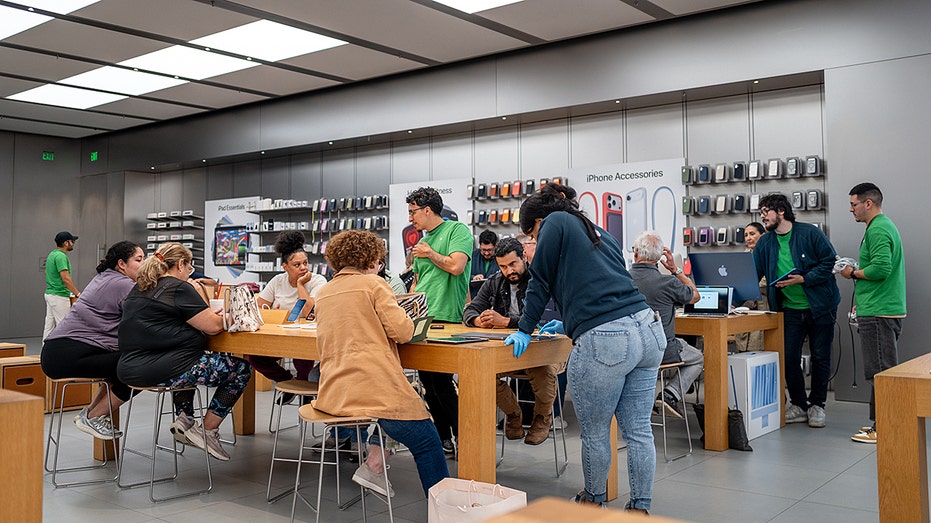
Customers are assisted at an Apple store in the Barton Creek Square mall on April 30, 2026 in Austin, Texas. (Brandon Bell/Getty Images)
While Klarna is best known as a BNPL provider, Apple Upgrade is structured as a lease rather than a traditional BNPL loan.
Apple Upgrade is available through Apple’s website and U.S. Apple Store locations.
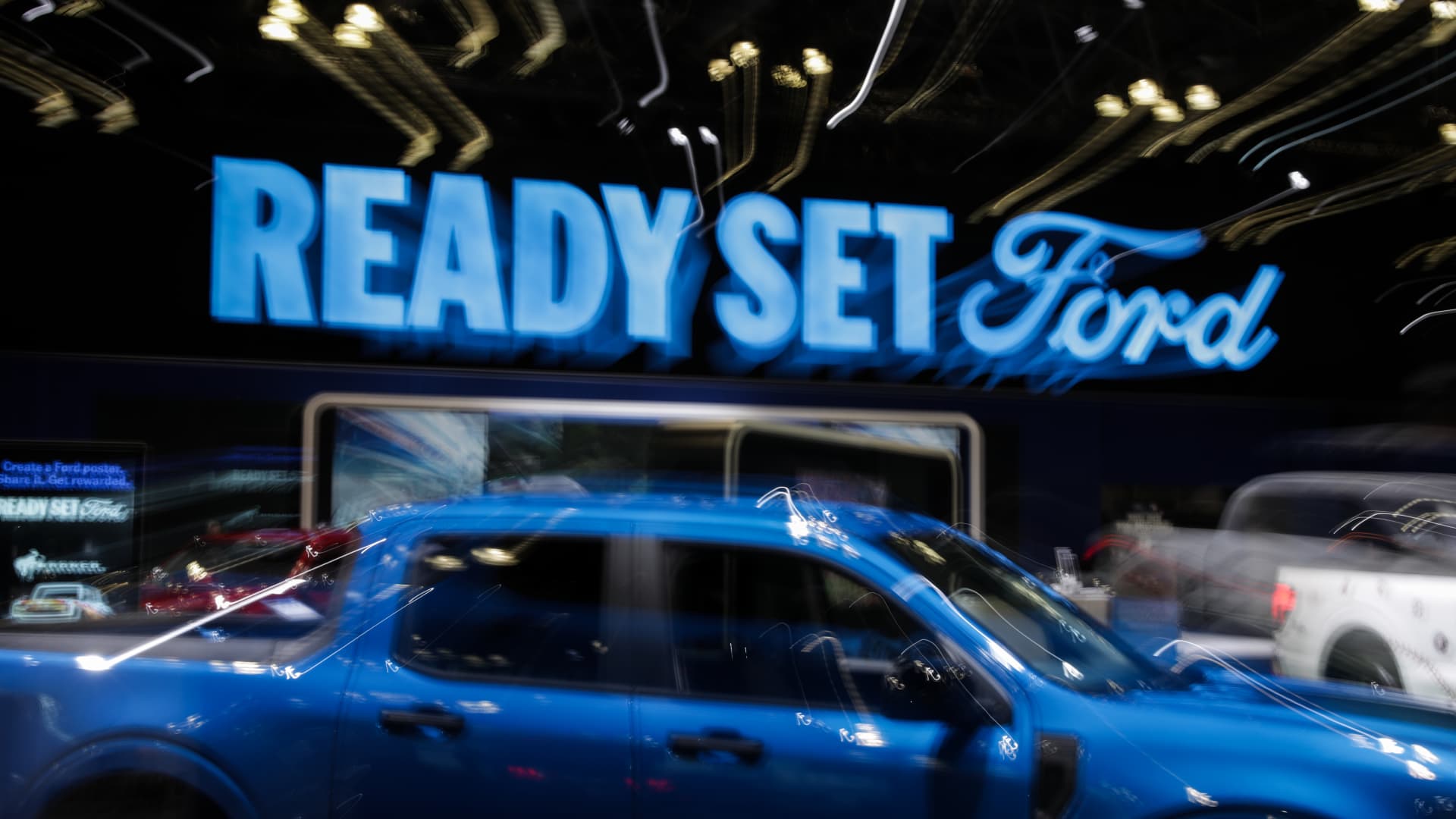
Ford at the New York International Auto Show in New York City on April 2, 2026.
Danielle DeVries | CNBC
DETROIT — Ford Motor is set to announce second-quarter results after the markets close Tuesday.
Here’s what Wall Street expects, based on average analysts’ estimates compiled by LSEG:
- Earnings per share: 35 cents adjusted
- Automotive revenue: $45.86 billion
Those results would mark a 2.3% fall in automotive revenue compared with a year earlier and a 2 cent decline in adjusted earnings per share.
Ford’s 2025 second-quarter results included $46.94 billion in automotive revenue, adjusted earnings before interest and taxes of $2.14 billion and a net loss of $36 million. Its total revenue, which includes its Ford Credit financing arm, was $50.18 billion.
Aside from earnings and any changes to the automaker’s 2026 guidance, investors are monitoring Ford’s costs, such as warranty and commodity costs, as well as looking for any updates to the company’s F-Series truck production that has been hampered since last year due to issues with an aluminum supplier.

Auto stocks
Heading into Ford’s earnings report, Jefferies upgraded Ford and General Motors’ stocks to buy from hold. Analyst Philippe Houchois said Ford is on track to start building momentum again, with the second quarter set to mark a trough.
“We see Q2 as a low point for volume with post-Novelis production set to normalize up,” Houchois wrote. Novelis, an aluminum supplier, restarted production last month at a New York facility — a plant that supplies Ford’s F-150 truck line — after two fires halted activity. “With US market conditions healthy, management could raise guidance at Q2.”
Ford’s 2026 guidance, which the company increased in April with expected tariff refunds, includes adjusted EBIT of $8.5 billion to $10.5 billion; adjusted free cash flow of between $5 billion and $6 billion; and capital expenditures of $9.5 billion to $10.5 billion.
This is breaking news. Please check back for updates.

Meta drops major climate pledge after a decade of membership, says it is still committed to renewable energy

XRP Chart Is A Trap (DON’T IGNORE THIS!!)
Boeing shares rise 5% despite higher than expected Q2 loss on Air Force One costs


-

 Fashion4 days ago
Weekend Open Thread: Brooks Brothers
-
 Business7 days ago
New Jersey voter registration controversy explained: How 6,600 noncitizens got on the rolls, and what happens next
-

 Tech2 days ago
Intel is reversing course and bringing hyper-threading back to its server chips
-
 Sports2 days ago
Commonwealth Games boxing: Jadumani Singh seals dominant 5-0 win over Pakistan’s Sumama Rehman to enter quarter-finals | Commonwealth Games News
-

 Crypto World6 days ago
Ethics, other provisions in crypto Clarity Act to be further discussed
-

 Politics1 day ago
Luke Littler dismantles Gerwyn Price to retain title in Blackpool
-

 Sports5 days ago
2026 3M Open leaderboard: Scottie Scheffler finds putter in Round 1, sits three back
-

 Fashion5 days ago
16 Dresses for the High Summer Event
-

 Politics10 hours ago
The Part of the Electric Transition Nobody Wants to Discuss
-

 News Videos5 days ago
The Peugeot Family: How 200 Years of an “Old Money” Dynasty Died in A Boardroom
-

 Politics2 days ago
Spain sweeps the board at 2026 World Cup with individual awards
-
 Entertainment4 days ago
A New Post-Apocalyptic Gundam Anime Series Blasts Into SDCC
-

 News Videos2 days ago
BITCOIN JUST ENTERED THIS CRITICAL ZONE…
-

 Crypto World3 days ago
Ripple bought a bank in pieces. The $4 billion audit
-

 Crypto World2 days ago
XRP Ledger adds $2.6B as RWA inflows rank second
-

 Crypto World5 days ago
Uniswap (UNI) pushes deeper into tokenized RWAs with permissioned trading pools
-

 Tech4 days ago
Anthropic launches Claude Opus 5, a cheaper AI model for coding, agents and enterprise workflows
-

 Entertainment3 days ago
Sara Gilson Killed By Husband After Viral “Pedophile” TikTok Video
-

 Crypto World7 days ago
Sablier Labs Enters Maintenance Mode, Halts Development
-

 Business5 days ago
Alliance Entertainment Holding Corporation (AENT) Discusses Evolution Into Omnichannel Distribution and Fulfillment Platform for Media and Collectibles Transcript
You must be logged in to post a comment Login