

Business
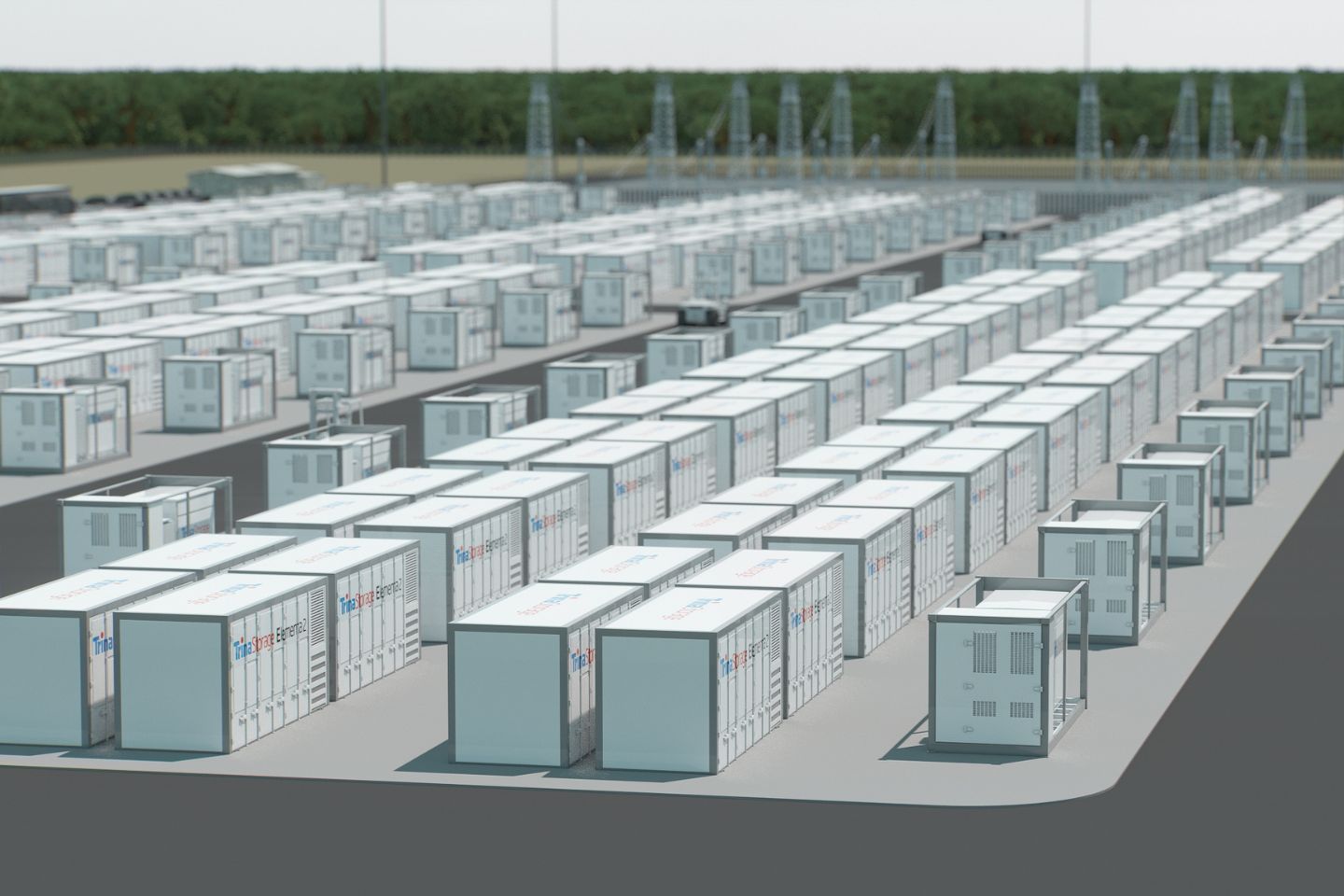
WA consortium buys planned $500m energy project



Nifty stuck in consolidation range; upside capped near 24,000
Ajit Mishra noted that the market has been consolidating for the second straight week, with Nifty repeatedly failing to cross the 23,800–24,000 zone. On the downside, he sees strong support emerging in the 23,400–23,250 region, which continues to attract buying interest. This has resulted in a defined trading band of roughly 600–800 points, keeping the index largely range-bound. While the trend remains sideways, he believes the upside is currently capped unless a breakout occurs above resistance levels.
Bank Nifty relatively stronger; expiry strategies in focus
Bank Nifty, according to Mishra, has shown comparatively better strength, gaining around 1 percent and gradually approaching the 54,300–54,350 resistance zone. A sustained move above this level, he said, could provide the necessary momentum for further upside in both Bank Nifty and Nifty. However, given the expiry week, he suggested traders avoid aggressive long positions and instead consider defined-risk strategies like bull call spreads, such as buying the 23,800 call and selling the 24,000 call in Nifty, and a similar structure in Bank Nifty using 54,000 and 54,500 strikes.
Stock-specific opportunities across sectors

On the stock-specific front, Mishra highlighted that opportunities remain broad-based rather than concentrated in a single sector. He observed that market participation is rotational in nature, with IT witnessing a rebound after weakness, though its sustainability remains uncertain. At the same time, sectors such as pharma, healthcare, energy, and auto continue to show relative strength. Capital market-related stocks are also outperforming, reflecting renewed investor interest in the space.
Within this framework, he pointed to Angel One as a breakout candidate after a prolonged consolidation phase, suggesting fresh long positions with a stop-loss near 320 and upside targets in the 378–385 range. He also highlighted Trent as an attractive accumulation opportunity after a recent pause, expecting further upside if the stock sustains above key levels, with positional targets placed in the 4500–4600 zone.
Pharma sector remains a buy-on-dips theme
On the pharma index, Mishra maintained a constructive outlook, describing it as a buy-on-dips opportunity after a strong breakout from a long consolidation phase. He noted that despite intraday declines, the broader trend remains positive. Stocks such as Glenmark, Lupin, Dr Reddy’s, Sun Pharma, and Biocon continue to show relative stability, and any further corrections, in his view, should be seen as accumulation opportunities rather than weakness.
Outlook
Overall, the market appears to be in a pause phase after recent gains, with limited directional breakout in indices. However, strong sector rotation and selective stock momentum continue to provide trading opportunities. For now, traders are likely to remain focused on range-bound strategies and stock-specific positioning rather than index-level aggressive bets.

JPMorgan Asset Management cuts stake in Wickes Group below 5%
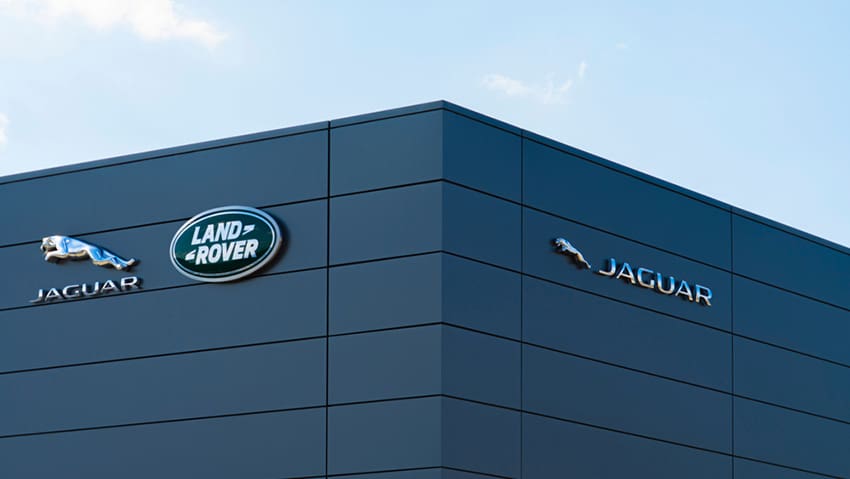
Britain’s biggest car manufacturer has, for the first time in its history, cracked open the door to assembling Range Rovers and Land Rover Defenders on American soil, a move that would have been unthinkable a generation ago, and one that has been forced squarely onto the agenda by Donald Trump’s tariff regime.
Jaguar Land Rover (JLR), the Solihull-based jewel of the West Midlands automotive cluster, has confirmed it has signed a memorandum of understanding with Stellantis, the Franco-Italian-American group behind Vauxhall, Peugeot, Fiat, Jeep and Chrysler, “to explore opportunities to collaborate on product development in the United States”. Both companies were tight-lipped on the detail, but the framing in their joint statement — references to “potential transactions” and “complementary capabilities”, left City analysts in little doubt that something rather more significant than a polite engineering chat is on the table.
For an industry that has spent the past 18 months trying to second-guess the White House, the timing is hardly accidental. Under the UK-US Economic Prosperity Deal struck in May 2025, British carmakers can export a maximum of 100,000 vehicles a year to America at a preferential 10 per cent tariff rate; anything above the quota is hit with a punitive 27.5 per cent levy, according to the House of Commons Library briefing on US trade tariffs. For JLR, which produces well in excess of 300,000 cars a year and has traditionally sent roughly a third of them across the Atlantic, the maths are brutal. The cap is, in effect, a glass ceiling on its single most lucrative export market.
PB Balaji, JLR’s chief executive, framed the move as strategic evolution rather than retreat. “As we continue to evolve JLR for the future, collaboration will play an important role in unlocking new opportunities,” he said. “Working with Stellantis allows us to explore complementary capabilities in product and technology development that support our long-term growth plans for the US market.”
His opposite number at Stellantis, Antonio Filosa, was similarly measured: “By working with partners to explore synergies in areas such as product and technology development, we can create meaningful benefits for both sides while remaining focused on delivering the products and experiences our customers love.”
From solihull to Ohio?
The industrial logic is compelling. JLR has already paused shipments to the US once this year as the tariffs bit, exposing the fragility of a model that depends on shipping high-margin luxury SUVs across the Atlantic. Stellantis, by contrast, runs an enviable network of assembly plants across Michigan, Ohio, Illinois and Indiana, much of it underutilised since the wider slowdown in mid-market American demand and a strategic retreat from its all-electric ambitions, as chronicled in the group’s recent €22bn write-down.
Plugging JLR’s premium product into spare Stellantis capacity would, in theory, give both sides something they badly need. JLR would get a tariff-free route to the world’s most profitable luxury car market. Stellantis, whose Jeep, Ram and Chrysler brands sit firmly in the mass-market middle, would gain access to a slice of the premium pie that has long eluded it. The Wrangler-style Defender pairing in particular looks an obvious fit; the Range Rover, retailing at well over $100,000 in the US, less obviously so.
What both companies will be acutely aware of is that the perceived “Britishness” of the marques is itself part of the product. When Ford bought Jaguar for $2.4 billion in 1989 and added Land Rover from BMW for $2.7 billion in 2000, eventually merging them into JLR in 2002, the American giant pointedly refused to build either brand on its home turf. To do so, Ford executives privately argued, would dilute the very quintessence customers were paying for. Tata of India, which scooped up the business in 2008 when Ford was on its knees in the global financial crisis, has stuck broadly to the same line, investing heavily in UK production, including the Defender it now also builds in Nitra, Slovakia, which is itself caught by the Trump tariffs.
Takeover by stealth?
The City will inevitably read the small print of any MoU through the lens of consolidation. JLR is, by global standards, a minnow, the largest automotive employer in Britain, certainly, but a fraction of the size of Volkswagen, Toyota or indeed Stellantis. The argument that its long-term independence is unsustainable in an industry being reshaped by electrification, Chinese competition and tariff walls has been doing the rounds in Mayfair for the best part of a decade.
The language of the memorandum, “potential transactions”, “synergies”, “complementary capabilities”, is precisely the vocabulary of deals that begin as joint ventures and end, several years later, in full-blown mergers. It would be a brave SME supplier in the West Midlands who bet against further integration in the medium term.
For Tata, the calculation is delicate. JLR remains a strategically important asset and a significant contributor to group profits. But the family-controlled Indian conglomerate has shown before, most notably with Corus, the former British Steel, that it is unsentimental about underperforming foreign acquisitions when the global economics turn. A US production deal that quietly evolves into a deeper relationship with Stellantis would, in that light, be neither a surrender nor a surprise.
The wider british picture
JLR is not alone in its predicament. Mini, Bentley, Rolls-Royce and Aston Martin all export a disproportionate share of their UK output to the United States, and all are now operating inside the same 100,000-vehicle British quota. None of them has the volume to justify its own American assembly line. If JLR, by far the largest of the group, succeeds in finding a tariff workaround through a partner, expect others to consider whether contract assembly inside the US, perhaps via the same Stellantis route, might be the only way to defend their American sales.
For the West Midlands, the political optics are uncomfortable. The Solihull plant remains the spiritual home of Land Rover and one of the largest manufacturing employers in the region. Any meaningful shift of premium production to the United States, even at the margins, will inevitably raise questions in Westminster about whether the UK has done enough to anchor high-value manufacturing onshore, particularly given the size of the public guarantees that have already flowed JLR’s way in the wake of last autumn’s cyberattack.
The official line from Coventry, of course, is that this is about growth in the US, not retrenchment in the UK. As ever in the car industry, the truth will be in the binding contracts that follow this opening, deliberately non-committal MoU, and in how aggressively Mr Trump’s trade negotiators decide to police the rules of origin around any vehicles that emerge with Range Rover or Defender badges on the bonnet.
For now, though, a Rubicon has been crossed. After more than 75 years of insisting that Range Rovers and Defenders could only be properly built within sight of a damp British hillside, Britain’s flagship luxury carmaker has formally acknowledged that the road to its biggest market may, in future, run through an American factory gate.

Jamie Young
Jamie is Senior Reporter at Business Matters, bringing over a decade of experience in UK SME business reporting.
Jamie holds a degree in Business Administration and regularly participates in industry conferences and workshops.
When not reporting on the latest business developments, Jamie is passionate about mentoring up-and-coming journalists and entrepreneurs to inspire the next generation of business leaders.

Workday shares jump as AI demand eases investor concerns

Intertek Group: EQT Takeover Comes At A Sane Valuation
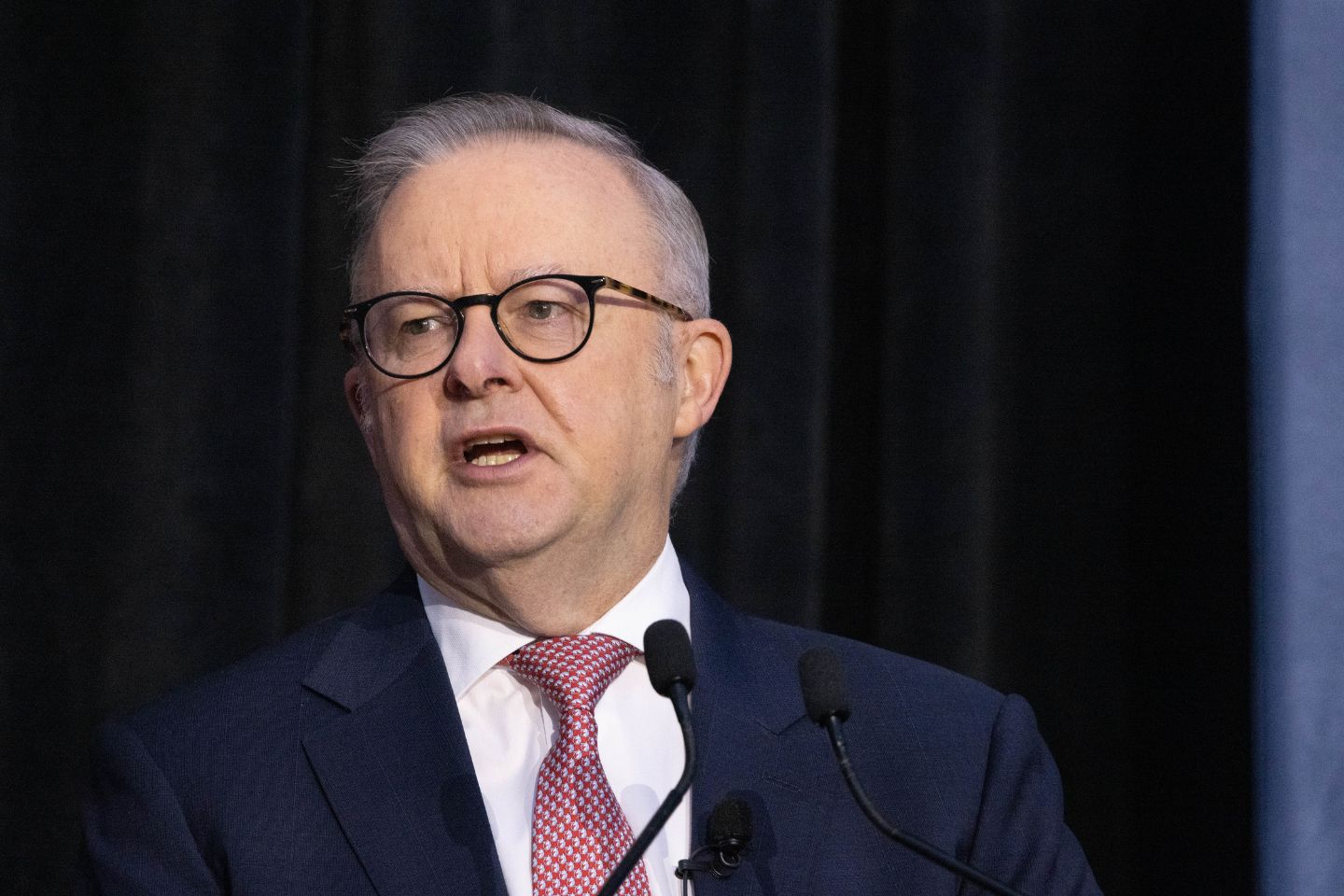
The Greens are likely to give their support to changes to negative gearing and the capital gains discount but businesses fear it will drive investors offshore.

Australia’s share market has ended the week higher, buoyed by optimism about a solution to the US-Iran conflict and a slightly less gloomy outlook for local interest rates.


Long-only investment, evaluating companies from an operational, buy-and-hold perspective.Quipus Capital does not focus on market-driven dynamics and future price action. Instead, our articles focus on operational aspects, understanding the long-term earnings power of companies, the competitive dynamics of the industries where they participate, and buying companies that we would like to hold independently of how the price moves in the future. Most QC calls will be holds, and that is by design. Only a very small fraction of companies should be a buy at any point in time. However, hold articles provide important information for future investors and a healthy dose of skepticism to a relatively bullish-biased market.Disclaimer: All of the author’s articles are written on an “as is” basis and without warranty. They represent the author’s opinion only and in no way constitute professional investment advice. It is the responsibility of the reader to conduct their due diligence and seek investment advice from a licensed professional before making any investment decisions. The author disclaims all liability for any actions taken based on the information contained in any articles published.
Analyst’s Disclosure: I/we have no stock, option or similar derivative position in any of the companies mentioned, and no plans to initiate any such positions within the next 72 hours. I wrote this article myself, and it expresses my own opinions. I am not receiving compensation for it (other than from Seeking Alpha). I have no business relationship with any company whose stock is mentioned in this article.
Seeking Alpha’s Disclosure: Past performance is no guarantee of future results. No recommendation or advice is being given as to whether any investment is suitable for a particular investor. Any views or opinions expressed above may not reflect those of Seeking Alpha as a whole. Seeking Alpha is not a licensed securities dealer, broker or US investment adviser or investment bank. Our analysts are third party authors that include both professional investors and individual investors who may not be licensed or certified by any institute or regulatory body.

It said difficulties had been exacerbated by “significant cost increases resulting from government policy choices”.
Claire Tyrrell speaks with Ella Loneragan about the next chapter for Co3 Contemporary Dance.

#money #lifeisbutadream

ITV’s Poirot being ‘rebooted’ on BBC after 13 years
Bank Nifty near key resistance zone; breakout above 54,300 crucial: Ajit Mishra


-

 Crypto World6 days ago
BloFin War of Whales 2026 Grand Prix opens registration for $5M trading championship
-

 Fashion7 days ago
Weekend Open Thread: Theory – Corporette.com
-

 Crypto World7 days ago
E-Estate Announces 1 Year Live: Washington DC Summit as Real Estate Tokenization Enters Its Next Phase
-

 Tech6 days ago
Google reimburses Register sources who were victims of API fraud
-

 Business7 days ago
H&R Real Estate Investment Trust (HR.UN:CA) Q1 2026 Earnings Call Transcript
-

 Entertainment7 days ago
David Letterman Returns to Late Show, Blasts Cancellation
-

 Sports6 days ago
Napoleonic enters 2026 Doomben 10,000 field via Abounding withdrawal
-

 Crypto World6 days ago
BeInCrypto 100 Institutional Awards Nomination: KAST for Best Digital Assets Neobank and Best Digital Assets Fintech
-
 Crypto World6 days ago
Bitcoin Battles US Bond Nerves With BTC Price Dip Toward New May Lows
-

 Crypto World6 days ago
ICE and CME urge US regulators to curb Hyperliquid energy trading
-

 Fashion5 days ago
On the Scene at Gucci’s Cruise Show in New York City: Mariah Carey, Kim Kardashian, Lindsay Lohan, Iman, and More!
-
 Crypto World6 days ago
Wall Street’s Boldest Gold Prediction Has Russians Rushing to Buy
-

 Crypto World6 days ago
IREN closes $3 billion convertible notes deal amid AI infrastructure expansion
-

 Fashion6 days ago
Trending Western Style Vests Perfect for Summer
-
 Politics6 days ago
Watch: far-right flag-fanatics run over victim, attack locals – Setup By the Left wing for your entertainment
-

 Fashion7 days ago
Creative Ideas for Custom T-Shirts
-

 Fashion5 days ago
Amazon Sundays: Memorial Day Hosting
-

 Crypto World15 hours ago
Blockchain.com files with SEC for U.S. IPO
-
 Fashion7 days ago
Philip Jones Wedding Jewellery For Women
-

 Crypto World6 days ago
Crypto Market Structure Bill Clears Committee; Senate Vote in Focus
You must be logged in to post a comment Login