

Business
Wait Times Hit Four Hours Amid Government Shutdown


HOUSTON — Travelers at George Bush Intercontinental Airport faced grueling security lines Wednesday as the ongoing partial government shutdown continued to cripple TSA staffing, with wait times at the major Houston hub reaching as long as four hours or more during peak periods. Houston Airports officials warned passengers to prepare for extended delays, with checkpoints consolidated into just two terminals and expedited lanes largely unavailable.

As of midday Wednesday, official estimates on the airport’s website showed Terminal A South checkpoint waits at 240 minutes — four hours — while Terminal E registered 180 minutes, or three hours. Lines frequently snaked outside terminals and even into non-standard queuing areas, including underground train levels in some cases. By evening hours on recent days, some waits eased to under 30 minutes as passenger volumes dropped, but morning and midday rushes remained chaotic.
The disruptions stem from the federal government shutdown that began Feb. 14, now stretching into its sixth week. TSA officers nationwide continue working without pay, leading to high call-out rates. At IAH, absenteeism has hovered around 36% to 39%, among the highest for major U.S. airports, forcing consolidation of screening operations. Only Terminals A and E currently host active TSA checkpoints, with reduced lanes and no consistent TSA PreCheck or CLEAR services.
Houston Airports System Director of Aviation Jim Szczesniak noted in recent updates that staffing levels allow only a third to half of normal screening lines to operate across the airport’s five terminals. Federal Immigration and Customs Enforcement (ICE) agents have been deployed to assist at IAH and neighboring William P. Hobby Airport, helping direct crowds, distribute water and maintain order, though they do not perform screening duties.
George Bush Intercontinental, one of the nation’s busiest airports and a key hub for United Airlines, handles more than 45 million passengers annually. Its five terminals — A, B, C, D and E — serve a mix of domestic and international flights, with Terminal C primarily dedicated to United operations. During the current crisis, passengers checking bags in other terminals are directed to A or E for security, adding further complexity and time.
Airport officials have issued repeated alerts urging travelers to arrive significantly earlier than usual. Recommendations include contacting airlines immediately for potential rebooking waivers, downloading airline apps to monitor gates while in line, and limiting carry-on items to speed the process. Some airlines have offered flexible rebooking options for those missing flights due to security delays.
Third-party trackers showed varying averages. Historical hourly data indicated overnight waits around 15-27 minutes, rising to 30-37 minutes during typical daytime hours under normal conditions. However, current conditions have rendered many estimates unreliable, with manual updates from the airport providing the most accurate guidance. The official MyTSA app has lagged during the shutdown, prompting reliance on fly2houston.com for real-time postings.
Travelers shared stories of frustration on social media and local news. Lines in Terminal A have extended across multiple floors, with some passengers reporting waits exceeding five hours on busy mornings. Families with children, elderly travelers and those with connecting flights faced particular hardship. Houston Airports staff in bright orange polos circulated to offer directions and assistance, while nonprofit groups provided meals to working TSA officers and fuel support for their families.
The shutdown has affected TSA operations nationwide, with similar long lines reported at hubs like Atlanta and others. In Houston, call-out rates at Hobby Airport reached over 40%, though smaller scale helped keep waits somewhat shorter there. At IAH, the situation has prompted warnings of missed flights and calls for swift congressional action to resolve the funding impasse.
Experts note that TSA employs tens of thousands of screeners, and even moderate call-outs compound quickly during peak travel periods. The current crisis has highlighted vulnerabilities in the system, with reduced capacity forcing consolidation and longer processing times per passenger. Screening procedures remain unchanged, but fewer open lanes mean slower throughput.
Houston Airports has taken several steps to mitigate the impact. Non-TSA staff assist with bin management and passenger flow communication. Parking reservations are encouraged online to reduce ground congestion. The airport continues to monitor staffing in real time and adjust operations accordingly. International travelers, many routed through Terminal D or E, receive specific guidance to check bags before proceeding to active checkpoints.
For those with TSA PreCheck or Global Entry, services have been inconsistent or unavailable on many days, pushing all passengers into standard lanes. CLEAR biometric lanes have also been closed during peak disruption periods. Officials stress that safety remains the priority, with no compromises to screening protocols despite the strain.
Broader economic ripple effects include potential disruptions to business travel and tourism in the Houston region. The airport serves as a gateway to energy, medical and aerospace industries, amplifying the stakes of prolonged delays. Local elected officials and travel advocates have urged federal lawmakers to address TSA pay and staffing issues promptly.
As the shutdown drags on, Houston Airports continues updating its FAQ with practical advice: Use restrooms and purchase necessities before joining lines; ensure ID matches boarding passes exactly; and remain flexible with travel plans. The agency has coordinated with airlines to minimize cascading delays where possible.
Looking ahead, spring break and summer travel seasons could exacerbate pressures if the funding situation persists. TSA has historically ramped up hiring during peaks, but current constraints limit that flexibility. Passengers with disabilities or medical needs are encouraged to contact TSA Cares in advance for coordinated assistance.
Wednesday’s conditions reflected the fluid nature of the crisis. While some evening relief appeared on prior days, officials cautioned that waits could again exceed four hours depending on staffing and flight schedules. Travelers are advised to check fly2houston.com/iah/security/ frequently, as updates occur throughout the day.
In the meantime, the airport maintains full operations for flights, with delays primarily tied to security bottlenecks rather than runway or gate issues. United Airlines and other carriers have issued advisories recommending passengers build in substantial buffer time — three to four hours or more for domestic flights during peak disruptions.
The situation at George Bush Intercontinental Airport underscores the human element behind aviation security. TSA officers working without pay have shown dedication, but the strain is evident. Support efforts, including meals from the Houston Food Bank and assistance from Wings of Compassion, aim to sustain morale.
For now, patience and preparation remain the best tools for navigating IAH security. As negotiations in Washington continue, Houston travelers hope for swift resolution to restore normal staffing and shorter lines at one of the country’s busiest gateways.


Form 144 ROYAL GOLD For: 11 May

‘The Big Money Show’ panel reacts to Chicago Mayor Brandon Johnson forming a coalition of liberal mayors while facing rising debt costs and criticism over crime and federal funding demands.
Walgreens announced plans to close a location on Chicago’s South Side next month as the store’s profitability suffered due to elevated levels of theft as well as a decline in prescription sales.
The pharmacy chain revealed the reasons behind its decision to close the Walgreens at 86th in Cottage Grove in the Chatham neighborhood of Chicago at a town hall in the community on Saturday.
“I’m here today because we’re closing the store at 86th and Cottage Grove. But I just want to make sure everyone understands closing stores [is] not our goal. This is the last resort,” Walgreens regional Vice President Reginald Johnson said, according to Fox 32 Chicago.
Walgreens executives revealed at the town hall that the location lost over $1 million last year amid softening prescription sales and significant levels of theft, which resulted in the decision to close the store on June 4.
CHICAGO OFFICE MARKET IN FREEFALL AMID NATIONAL DOWNTURN

Walgreens is closing a location on Chicago’s South Side next month. (Jeffrey Greenberg/Universal Images Group via Getty Images)
Johnson said that “theft at this store is 16%,” which is “four times above the company average,” which contributed to losses at the store.
The company said that it took measures to counteract theft at the store, but was unable to put an end to the issues at the location.
“Lock boxes help us protect the merchandise in the store. A lot of the time, those lock boxes were getting destroyed. And that’s at a great cost to the company,” said Walgreens district manager Jason Vasquez, according to Fox 32’s report.
WALGREENS TO CLOSE 1,200 STORES AS PART OF TURNAROUND EFFORT

Walgreens executives said security and lock boxes weren’t sufficient to stop theft at the store. (Al Drago/Bloomberg via Getty Images)
It also said that Walgreens was spending $400,000 a year on security guards at the store, but employees still faced attacks and threats amid the theft at the location.
“Wev’e had people jump across the counters, because we sell liquor behind the counter, taking liquor, cigarettes,” said Lonnie Fuqua, the store’s manager. “That wears down. Not so much the financial piece but the endurance of that day in and day out.”
Residents and customers of the location expressed concern at the town hall about access to their prescriptions and frustration with having to go to a location farther away from their neighborhood, Fox 32 reported.
CHICAGO COMMUNITY LEADER MAKES PLEA FOR BILLIONAIRES’ RETURN TO THE WINDY CITY

Walgreens is in the process of closing about 1,200 stores nationwide. (Lindsey Nicholson/UCG/Universal Images Group via Getty Images)
The company is encouraging customers to use another Walgreens location that’s about 1 mile away and is reaching out via mail and email to inform customers about how they can have their prescriptions delivered by mail.
“For seniors, there’s some solutions that have been put in place where you’ll get free delivery. That has already started for those medications you may have that, under the law, can be delivered,” Fuqua said.
GET FOX BUSINESS ON THE GO BY CLICKING HERE
FOX Business reached out to Walgreens for comment.

NBC has begun clearing the decks for the 2026-2027 television season, canceling several scripted series and long-running syndicated programs amid shifting viewer habits, rising production costs and a strategic pivot toward proven franchises and new unscripted formats.
As of mid-May 2026, the network has officially axed high-profile titles including medical drama Brilliant Minds, freshman comedy Stumble, and long-running syndicated staples like Access Hollywood. The moves signal NBC’s determination to streamline its schedule and focus resources on reliable performers such as the Chicago franchise and Law & Order series.
Major scripted cancellations
Brilliant Minds (canceled after two seasons) The Zachary Quinto-led medical drama, which followed a neurosurgeon inspired by Oliver Sacks, struggled with low linear ratings despite critical praise for its performances. NBC pulled the series from the schedule in February 2026 to make room for The Voice, with the remaining six episodes of Season 2 airing starting May 27. The cancellation marks the first major scripted cut for the 2026-27 season.
Stumble (canceled after one season) The single-camera mockumentary comedy about an over-the-top cheerleading squad, starring Jenn Lyon, failed to build a sustainable audience despite solid reviews and time-slot support behind Reba McEntire’s Happy’s Place. Its quirky tone and niche appeal could not overcome linear viewing challenges in a fragmented media landscape.
Law & Order: Organized Crime (canceled after five seasons) Christopher Meloni’s Elliot Stabler spinoff, which moved exclusively to Peacock for its later seasons, will not return. The decision ends one of the longest-running extensions of Dick Wolf’s iconic franchise on the network.

Yes, Chef! (canceled after one season) The Martha Stewart and José Andrés-hosted cooking competition, which premiered with high expectations, was axed in March 2026 after failing to generate sufficient viewership.
Deal or No Deal Island (canceled) The reality competition spin-off did not secure a second season despite an initial promotional push.
Syndicated and daytime cancellations
NBCUniversal is exiting first-run syndicated programming, leading to the end of several long-standing shows:
- Access Hollywood (ending after 30 years)
- Access Daily
- Karamo
- The Steve Wilkos Show
- The Kelly Clarkson Show (final season)
These cancellations reflect broader industry trends as networks shift away from costly syndicated content in favor of streaming priorities and owned intellectual property.
Renewed shows provide stability
While cuts dominate headlines, NBC has renewed several core franchises for 2026-2027:
- Chicago Fire (Season 15)
- Chicago Med (Season 12)
- Chicago P.D. (Season 14)
- Happy’s Place (Season 3)
- St. Denis Medical (Season 3)
- Law & Order: Special Victims Unit (continuing its record run)
These One Chicago and Wolf universe shows remain cornerstones of NBC’s schedule, delivering consistent ratings and strong international appeal.
Reasons behind the cuts
Industry analysts point to several factors driving NBC’s decisions. Linear television ratings continue declining as viewers shift to streaming. Production costs have risen sharply, making it harder for mid-tier shows to justify their budgets. The network is prioritizing high-profile event programming, reality competition and established procedurals that deliver reliable advertising revenue.
The rise of streaming has also changed the calculus. While some canceled shows may find new life on Peacock, most face long odds in today’s crowded marketplace.
Impact on talent and crews
Cancellations mean hundreds of jobs are affected, from writers and actors to crew members and support staff. Zachary Quinto and the Brilliant Minds cast expressed disappointment but gratitude for the opportunity. Similar sentiments came from the Stumble team, which had hoped for a longer run.
For executives, the decisions are never easy but are viewed as necessary to keep the network competitive. NBCUniversal leadership has signaled confidence in the upcoming fall slate, which will include new dramas and returning hits.
Viewer and fan reaction
Social media has been active with mixed responses. Fans of Brilliant Minds launched modest save campaigns, praising its unique storytelling. Others accepted the cancellations as part of the natural TV cycle. Long-time viewers of Access Hollywood expressed nostalgia for the entertainment news staple that had been part of afternoon lineups for three decades.
What’s ahead for NBC
The network is expected to unveil its full 2026-2027 upfront presentation in mid-May, revealing new series orders and scheduling strategies. Early indications suggest a continued emphasis on big-event programming, expanded reality offerings and the enduring strength of its drama franchises.
As the television landscape evolves rapidly, NBC’s 2026 cancellations represent both a pruning of underperformers and a strategic repositioning for the streaming-linear hybrid future. While some beloved shows are ending, the network aims to deliver fresh stories and reliable entertainment that keep audiences coming back.
For now, fans of canceled series can catch remaining episodes on NBC and Peacock, while the industry watches closely to see which new projects will fill the gaps left behind.

U.S. President Donald Trump is scheduled to meet with Chinese President Xi Jinping in Beijing for a two-day summit aimed at stabilizing bilateral relations amidst significant geopolitical and economic tensions. The talks are expected to cover a broad spectrum of issues, including trade agreements, the war in Iran, Taiwan, nuclear arms control, and the development of artificial intelligence, as both leaders seek to address areas of conflict while exploring potential cooperation on economic and technological matters.
Key Points
- Economic Cooperation: The two nations are expected to announce forums for trade and investment, alongside Chinese commitments to purchase American agricultural products, Boeing aircraft, and energy resources.
- Trade War Status: Discussions will address the potential extension of a trade truce that currently facilitates the flow of Chinese rare earth minerals to the U.S., with U.S. officials expressing confidence in an eventual renewal.
- Geopolitical Tensions: President Trump intends to pressure President Xi regarding China’s economic and material support for Russia and its influence over Iran, urging Beijing to help resolve the ongoing conflict between Iran and the U.S.-Israel coalition.
- Strategic Disagreements: The summit will address persistent friction over Taiwan, with the U.S. reaffirming its support for the island despite China’s increased military presence in the region.
- AI and Nuclear Policy: The U.S. administration aims to establish formal communication channels regarding the risks of advanced artificial intelligence; however, China continues to show reluctance toward participating in nuclear arms control discussions.
China has officially confirmed that U.S. President Donald Trump will conduct a three-day state visit to Beijing, marking his first trip to the country since his 2017 term. This high-stakes summit with President Xi Jinping is intended to project stability between the world’s two largest economies, with discussions centered on trade, investment mechanisms, and industrial agreements, while observers closely monitor potential dialogue regarding the ongoing conflict in Iran and issues related to Taiwan.
The upcoming talks come at a pivotal moment as China continues to assert itself on the world stage, while the United States seeks to recalibrate its approach to Beijing. Experts believe this meeting could influence future diplomatic and economic policies for both nations. It also signals a desire to manage conflicts through direct dialogue rather than confrontation.
Other People are Reading

Your net interest margin (NIM) has dropped year-on-year. What is the outlook on core profitability?
All banks have taken a cut on NIM year-on-year; so it is in line with industry. Rather, our drop is lower than many of the banks. Going forward, the deposit cost is going to be sticky. I am not looking at further moderation. To protect NIMs, the bank will need to look at the asset side. EBLR is not going to change because there is a long pause of the expectation, so not going to change. In the corporate loan book there are two components MCLR and non-MCLR linked. The only segment I am looking at a realignment possibly is a non-MCLR book in corporate loan, which is linked to t-bills and government securities because our rates linked with those would move up with the benchmarks. We closed last year at 2.89% but we are giving a guidance of 2.75% to 2.95% this year. Last fiscal, there was an element of interest on tax refund. Keeping that volatility in mind we are giving a lower guidance of 2.75% on the downside.
Will the pressure on margin continue in the medium term?
As we migrate to a mature market, I think the margin needs to be squeezed because banks will have to operate at a lower margin, while keeping the return on assets (RoA) more than 1%. We need to be aligning ourselves for a slightly lower margin. In a mature market, the borrower would demand fine pricing, whereas the depositor would expect a higher rate. We will be trying our best to protect the margin, but the mature market scenario would force us to operate slightly at a lower margin and upsizing our non-interest income and lowering our cost to income.

You have made an extra ₹1,500 crore floating provision. is it to do with the expected credit loss (ECL) framework?
With that ₹1,500 crore floating provision we have buffered the balance sheet. With this, our total floating provision is ₹2,500 crore. This provision can be used in extraordinary scenarios with the approval of the regulator. It is not tagged with ECL provision. On ECL provision, the bank is well prepared to capture any impact. We are still computing ECL impact but for the year ended March 2026, my credit cost was 0.46%. I am now giving a credit cost guidance of below 0.6% for the current fiscal. This increase is sufficient to take care of the ECL provision on the income. ECL has two impacts, one the capital adequacy and another on the income. This increase is sufficient to take care of the impact on the income side.Any new businesses you plan to start this year?
Given that our current NIM is elevated vis a vis the system, we have to increase our non-interest income. Reducing cost to income is a challenging task. But to increase non-interest income we can upsize our wealth and treasury business. The treasury is where we have a lot of scope to get more fee income. The precise reason to float the primary dealer (PD) business is for us to do DCM business which we are not doing currently. We want to replicate a model of global banks where fee out of treasury would be a significant part of non interest income. There are debt market products like STRIPS, a non-corporate bond market where we can get fees. The PD business started operation from April 1 2026. We have committed ₹2,000 crore capital into the PD business. We plan to upscale that business. BoB Capital Markets will focus entirely on the equity side. We expect to start the pension fund in six to nine months.
What are the plans on subsidiaries like BoB Cards and Nainital Bank?
On BoB Cards we want to strengthen and create scale in the company and become a significant player in the market. Their ranking is almost at number 10 and we want them to improve. We have no board mandate as of today. We are open to infuse more capital there. Nainital is also doing well. They have good profitability, asset quality and strengthened their board and governance structure.


Discover the purchasing drivers and considerations that matter most when switching from synthetics

Astera Labs director Stefan Dyckerhoff sells over $2.5m in stock

Woodworking shops have been transformed by tech to make tools safer and more precise.
Business
SBI sheds over $11 billion in market value in 2 sessions on margin squeeze, disappointing earnings

Shares of India’s largest lender by customers dropped 4.5% to a year-to-date low of 973.60 rupees on Monday, extending Friday’s near-7% post-results fall.
The selloff brought the stock down more than 10% in two sessions, wiping out $11.3 billion.
NSE data showed the heaviest fresh call writing on SBI’s 1,000 strike on Monday, signalling that investors expect any near-term rebound in the stock’s price to likely be capped at that level.
About 95 million shares changed hands over the two sessions, almost five-fold the 30‑day average of 18.7 million.
Analysts said the lender’s fourth-quarter earnings miss reinforced concerns that Indian banks are entering a tougher profitability cycle, with rising funding costs beginning to erode lending margins.
SBI on Friday reported a narrower net interest margin of 2.8% for the quarter, compared with 2.98% in the previous three-month period, and also missed analysts’ profit estimate.”NIM compression is becoming more visible as funding costs reprice faster,” JP Morgan said on Monday, adding that earnings momentum could moderate in the coming quarters.
“Core earnings were underwhelming, with incremental margins tightening,” Bernstein said, cautioning that upside catalysts may be limited without a stabilisation in margins.
SBI’s asset quality remained a key positive, with bad loans and credit costs staying benign, brokerages said, but warned it may not fully offset pressure on net interest income from margin compression.
Nonetheless, analysts retained a constructive long‑term view, citing the bank’s strong balance sheet, scale and market leadership.
The two-session selloff erased SBI’s year-to-date gains, leaving the stock down 0.8% in 2026, though it still outperformed the benchmark Nifty 50’s 8.8% drop.

Former White House ‘AI czar’ David Sacks discusses President Donald Trump’s upcoming China trip, where he is expected to talk about AI with Chinese President Xi Jinping on ‘The Claman Countdown.’
Former White House AI czar David Sacks predicted potential outcomes of President Donald Trump’s meeting with Chinese President Xi Jinping as the two leaders prepare to discuss artificial intelligence.
Sacks assessed the state of the intensifying AI arms race on “The Claman Countdown” Monday as China and the U.S. emerge as fierce competitors on the global stage.
“I do think that there are things that may be in our common interest, and it’s worthwhile to explore having those conversations,” he said.
“The fact is we have to still protect from against each other. So I think it’s going to be a little bit limited in terms of what we can achieve there.”
BEIJING IS QUIETLY DICTATING THE TRADE WAR’S NEXT MOVES AS TRUMP AND XI PREPARE TO MEET
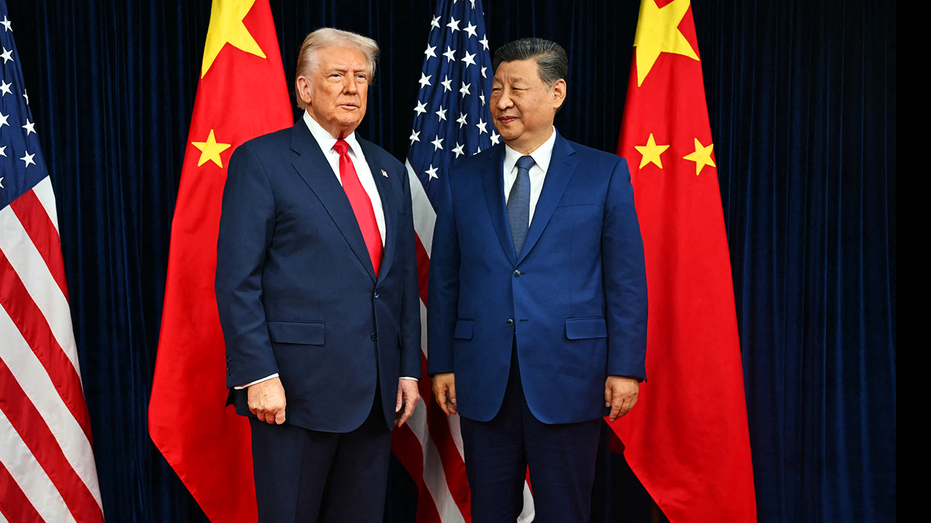
US President Donald Trump and China’s President Xi Jinping (ANDREW CABALLERO-REYNOLDS/AFP / Getty Images)
Sacks’ comments follow the release of Anthropic’s Mythos, a model that has raised widespread worry over its capability to identify decades-old security vulnerabilities.
Sacks said the U.S. and China could potentially reach an agreement on new cyber standards during this week’s meeting, noting that neither country wants “rogue actors” to use AI models for dangerous purposes.
He also warned that the U.S. must take proactive defensive measures to ensure new AI models do not exploit existing vulnerabilities.
WHITE HOUSE MEETS AI FIRM ANTHROPIC AMID POLITICAL TENSIONS, PENTAGON DISPUTE
“We need to take steps now to harden our systems and scan our code bases to find latent vulnerabilities and patch them,” the former ‘AI czar’ said.

AI assistant apps on a smartphone — OpenAI ChatGPT, Google Gemini, and Anthropic Claude. (Getty Images / Getty Images)
Sacks also downplayed concerns about AI, arguing there is no need for strong federal regulation of the technology, while cautioning that China’s advancing cyber capabilities remain a serious concern.
“There’s been this debate about whether we needed an FDA for AI. That would be solving a problem I don’t think we have,” he told FOX Business.
“The real issue is not what the American labs do. It’s the fact that Chinese models and other models that other actors could train are gonna have advanced cyber capabilities within the next six months or so.”
Sacks cited previous success in AI discussions with China, including a late 2024 summit between former President Joe Biden and Jinping, where both countries agreed to keep AI away from nuclear weapons systems.

U.S. President Joe Biden escorts Chinese President Xi Jinping to his car to bid farewell after their talks in the Filoli Estate in the U.S. state of California, Nov. 15, 2023. (Photo by Li Xueren/Xinhua via Getty Images / Getty Images)
GET FOX BUSINESS ON THE GO BY CLICKING HERE
The former ‘AI czar’ said that while the U.S. and China remain locked in a highly competitive race for AI dominance, dialogue about the technology is a step in the right direction.
“I think the point here is for the two sides to start talking, to establish an initial dialogue and just to see how the Chinese are thinking about this,” Sacks said.

Call Of The Elder Gods review – a puzzling Lovecraftian mystery
Form 144 ROYAL GOLD For: 11 May
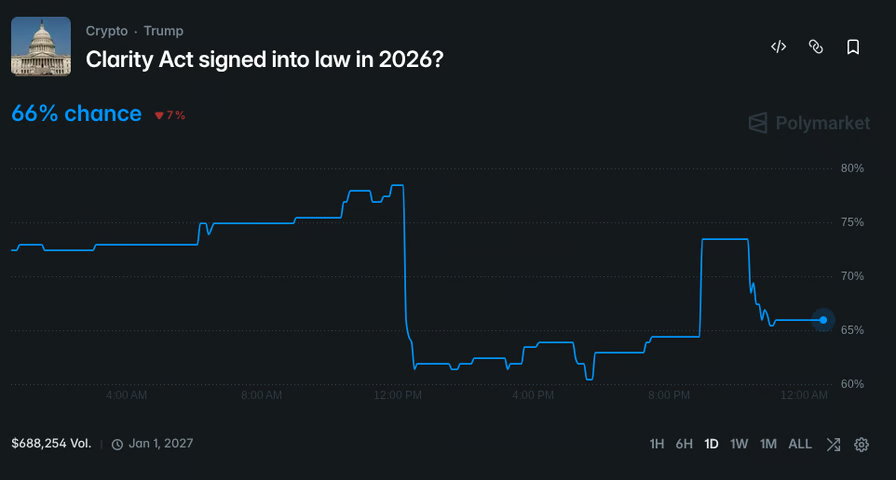
Ethics Remains Sticking Point as Crypto Market Structure Bill Goes to Senate Markup

Manchester United reach agreement with Casemiro over contract clause amid transfer speculation

US brings back mandatory military draft registration

Steven Gerrard disagrees with Gary Neville over ‘shock’ Chelsea and Arsenal claim | Football


-
 Crypto World4 days ago
HarrisX Poll Found 52% of Registered Voters Support the CLARITY Act
-

 Fashion3 days ago
Weekend Open Thread: Marianne Dress
-

 Crypto World5 days ago
Upbit adds B3 Korean won pair as Base token gains Korea access
-
 NewsBeat5 days ago
NCP car park operator enters administration putting 340 UK sites at risk of closure
-

 Tech2 days ago
Auto Enthusiast Carves Functional Two-Stroke Engine from Solid Metal
-

 Politics2 hours ago
What to expect when you’re expecting a budget
-

 Politics3 days ago
Politics Home Article | Starmer Enters The Danger Zone
-
 Business2 days ago
Ignore market noise, India’s long-term story intact, say D-Street bulls Ramesh Damani and Sunil Singhania
-

 Crypto World6 days ago
UAE Free Zone Deploys Blockchain IDs to Verify Registered Firms
-

 Fashion22 hours ago
What to Know Before Buying a Curling Wand or Curling Iron
-

 Tech18 hours ago
GM Agrees To Pay $12.75 Million To Settle California Lawsuit Over Misuse Of Customers’ Driving Data
-

 Fashion7 hours ago
Coffee Break: Travel Steam Iron
-

 Crypto World5 days ago
BlackRock CEO Larry Fink Discusses a New Asset Class
-

 Crypto World5 days ago
Robinhood says Wall Street is building onchain
-

 Entertainment5 days ago
Sarah Paulson Called Out For Met Gala ‘Hypocrisy’
-

 Tech6 days ago
Apple and Samsung are dominating smartphone sales so thoroughly that only one other company makes the top 10
-
Entertainment7 days ago
Serena Williams hits Met Gala in metallic dress after GLP-1 reveal
-

 Tech6 days ago
I tested the Xiaomi 17 Ultra’s camera and I don’t think I’ll ever go back to an iPhone
-
 Sports6 days ago
NBA playoff winners and losers: Austin Reaves is not loving Lakers vs. Thunder matchup, but Chet Holmgren is
-

 Fashion5 days ago
The Best Work Pants for Women in 2026
You must be logged in to post a comment Login