
Business
Wall Street bets Chinese stocks will extend $2.4 trillion rally

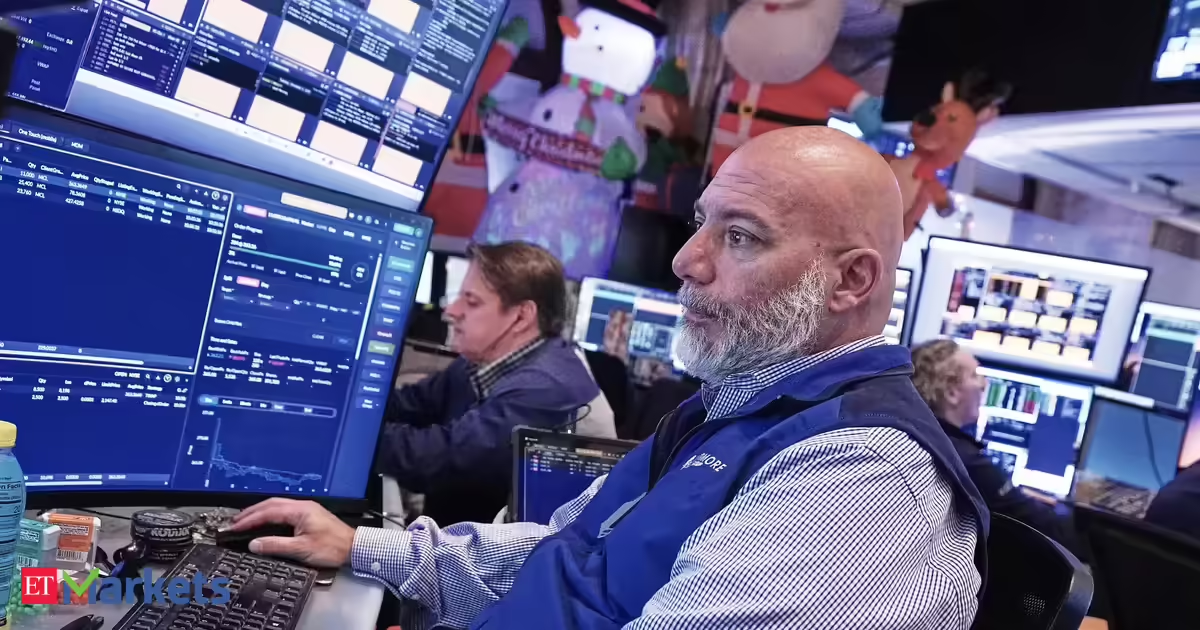
Global fund managers Amundi SA, BNP Paribas Asset Management, Fidelity International and Man Group all expect Chinese stocks to keep rising in 2026. JPMorgan Chase & Co. recently upgraded the market to overweight, while Gary Tan at Allspring Global Investments says the asset class is becoming “indispensable” for foreign investors.
Investor perception toward China has shifted from one of skepticism to a recognition that the market can deliver unique value through its technological advances. The MSCI China Index has jumped about 30% this year, beating the S&P 500 Index by the most since 2017 and adding $2.4 trillion in value. With most of the inflows driven by passive funds, there’s hope that a return of active money managers can steer the next leg of the rebound.
“China has turned a corner, proved more resilient and investors are now increasingly embracing an ‘investible’ China that offers diversification and innovation,” said George Efstathopoulos, a portfolio manager at Fidelity International in Singapore. “I’d be more inclined to be buying China dips right now.”
 ETMarkets.com
Foreign long-only funds bought around $10 billion of shares in mainland China and Hong Kong through November this year, according to data from Morgan Stanley, in a reversal from 2024’s $17 billion outflow. The inflow was driven entirely by passive investors, who track indexes, while active fund managers pulled out around $15 billion.

The reason is partly because many active investors — who rely on stock picking — are still unable to shake off years of anxiety over the economy’s slowdown and Beijing’s sudden crackdown across private sectors. While authorities have adopted a more business-friendly stance this year, stimulus has fallen short of investor expectations.
Some global fund managers said that the bar for investing in China remains high with the US market also doing well, said Winnie Wu, head of Asia Pacific equity strategy at Bank of America, who regularly meets investors to canvass how they’re thinking about the market. But she said improving earnings and a turnaround in China’s chronic deflation problems may turn the tide. “The next leg of China rally will be driven by global funds,” she said.
Slow Bull
The bull case for Chinese stocks rests on optimism over a burgeoning class of tech giants in chips, biopharma and robotics, alongside hopes the world’s second‑largest economy can finally rid itself of deflationary pressure.
The buzz around artificial intelligence has fueled huge jumps in shares like Cambricon Technologies Corp. and Alibaba Group Holding Ltd. But sectors that have lagged the wider market this year, most notably consumers, could also be due for a bounce.
“The opportunity lies in those stocks that have been impacted by the quest for stability in the economy rather than reflation,” said Andrew Swan, head of Asia ex-Japan equities at Man Group. “If reflation is the next phase for China, there’s a lot of opportunity in that.”
ETMarkets.comInvestors also point out Chinese stocks remain cheap compared to global peers. The MSCI China gauge, which tracks shares listed on the mainland and in Hong Kong, is trading at 12 times forward earnings, compared to MSCI Asia’s 15 and S&P 500’s 22.
The caveat: investors shouldn’t expect the same level of returns next year. Nomura Holdings Inc.’s base case for the MSCI China implies a rise of around 9% from current prices. Morgan Stanley also expects gains of around 6% from here.
Some argue that foreign investors are not a must-have for China’s stock rally. Local mutual funds are buying, and rising demand from insurers following a regulatory push earlier this year is also helping. Beijing’s desire to engineer a slow bull market means state-linked funds known as the national team are also ready to buy shares during rocky periods.
The big hope, though, comes from the country’s hoard of savings. Households are sitting on around $23 trillion of deposits. With a yearslong real estate crunch still causing pain and fixed-income products offering paltry returns, many investors think this cash pile will help power the market higher.
“Do we have sentiment coming back from mainland investors in their own market?” said Florian Neto, head of investment in Asia at Amundi. “If we have a confirmation of this improvement, the market will keep on flying.”



The Edson Spencer Professor of Strategy and Technological Leadership at the University of Minnesota Carlson School of Management Alfred Marcus’ most recent book, Comeback: Can Great Companies Rise Again is available on Amazon. He is host of the popular New Books Network Podcast On the Cusp: Between Strategy and Ethics. and the author, co-author, or editor of more than 20 books including Strategic for Managing Uncertainty and Demography and the Global Business Environment (with M. Islam) as well as many academic articles
Analyst’s Disclosure: I/we have a beneficial long position in the shares of NOVO:CA either through stock ownership, options, or other derivatives. I wrote this article myself, and it expresses my own opinions. I am not receiving compensation for it (other than from Seeking Alpha). I have no business relationship with any company whose stock is mentioned in this article.
I also own Lilly.
Seeking Alpha’s Disclosure: Past performance is no guarantee of future results. No recommendation or advice is being given as to whether any investment is suitable for a particular investor. Any views or opinions expressed above may not reflect those of Seeking Alpha as a whole. Seeking Alpha is not a licensed securities dealer, broker or US investment adviser or investment bank. Our analysts are third party authors that include both professional investors and individual investors who may not be licensed or certified by any institute or regulatory body.

Chart Of The Day: What Will Oil Stocks Do If Oil Goes Vertical?
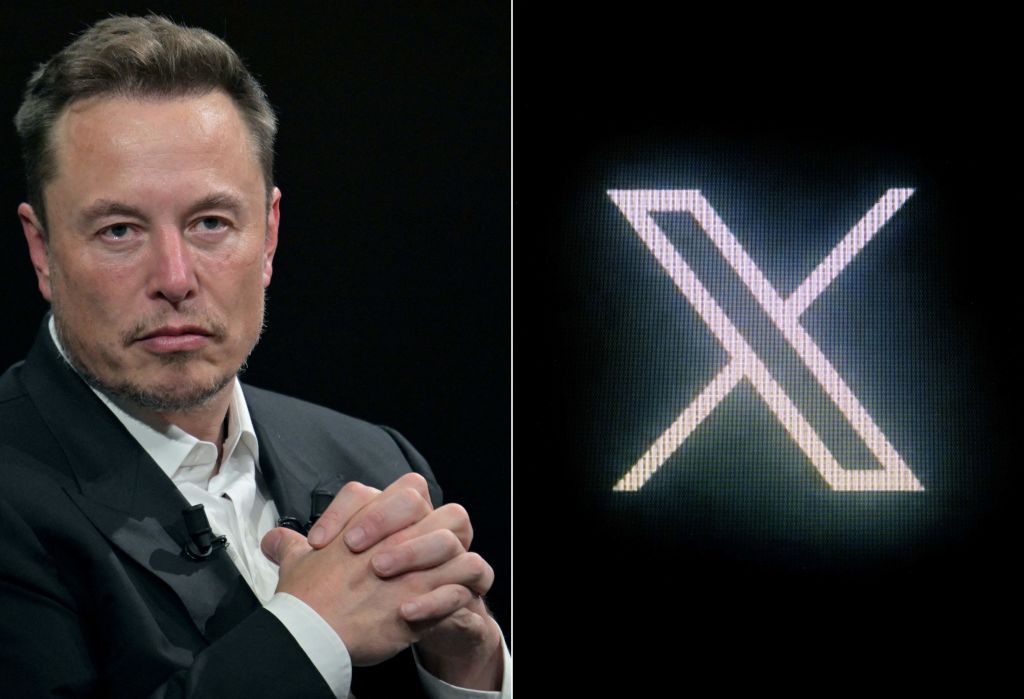
A US federal judge has dismissed a major antitrust lawsuit filed by Elon Musk‘s social media company, X Corp., over allegations that top advertisers boycotted the platform.
The decision marks a significant legal setback for Musk, who has claimed that brands deliberately withheld billions in advertising revenue from X, formerly known as Twitter.
The case, which began in 2024, named the World Federation of Advertisers (WFA) and major companies, including Mars, CVS Health, and Colgate-Palmolive, as defendants.
According to CNBC, X alleged that the advertisers acted together to harm the company financially, even though such a move went against their own business interests.
However, US District Judge Jane Boyle of the Dallas federal court found that X failed to demonstrate it suffered harm under federal antitrust law.
In her ruling, Boyle wrote, “The very nature of the alleged conspiracy does not state an antitrust claim, and the court therefore has no qualm dismissing with prejudice.”
X Claims Billions Lost in Alleged Ad Boycott
The advertisers had argued that X could not prove a coordinated boycott. In court filings, CVS and the other companies maintained that they made independent decisions about where to spend advertising dollars.
They said concerns over X’s brand safety after Musk’s 2022 takeover—during which several employees were fired—led them to choose other platforms, NY Post reported.
These companies stressed that their actions were standard business decisions, not part of a conspiracy.
The lawsuit claimed that the advertisers, through the WFA initiative called the Global Alliance for Responsible Media, collectively withheld “billions of dollars in advertising revenue” from X.
Musk and X argued this harmed their ability to compete, but the judge concluded the complaint did not meet the legal requirements for an antitrust claim.
X and the World Federation of Advertisers have not publicly commented on the ruling. Musk, known for his bold statements on social media, has not yet reacted publicly to this setback.
Originally published on vcpost.com
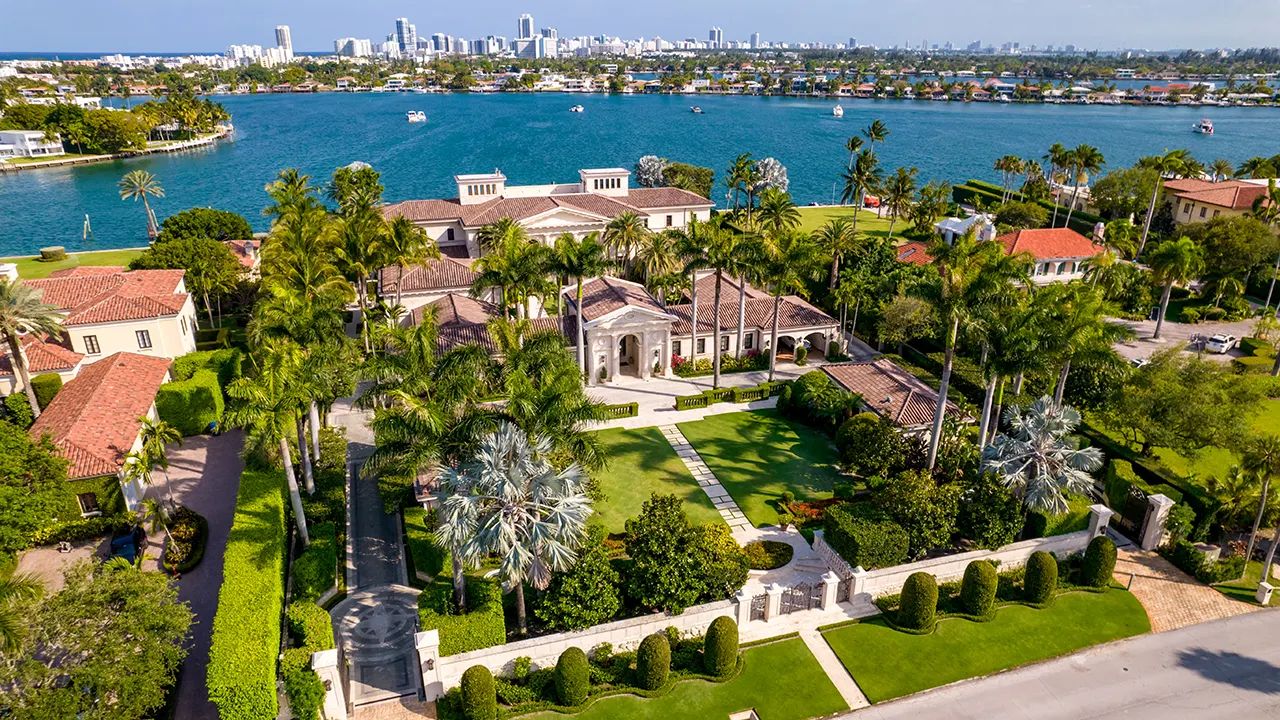
Fox News Digital gets a tour of Indian Creek Village from the Corcoran Group’s Julian Johnston, who shows why the world’s wealthiest are choosing to move into the ultra-exclusive neighborhood.
For a South Florida native, the silence and serenity are what hits you first.
Just a stone’s throw from the relentless horn-honking of Surfside and the designer-clad crowds of Bal Harbour Shops, Indian Creek Village exists in a vacuum of enforced peace. There are no sirens, tourists, and certainly no uninvited guests — only the whistle of the Atlantic wind and the rhythmic clap of waves against private piers.
Behind massive entry gates and dense tropical foliage lies a 300-acre fiscal safe haven where America’s billionaires aren’t just buying homes, but investing in a sovereign-level of security that Julian Johnston, one of Miami’s top luxury brokers, says is now the ultimate commodity.
“It is a political sanctuary. I’d say, also, the security itself is extremely tight. I mean, when you drive up, if you don’t have permission to get on, [the police] are actually quite rude and they tell you to go away,” the Corcoran Group agent — who has more than $10 billion in sales under his belt in the area — told Fox News Digital during a private tour of Indian Creek.
MARK ZUCKERBERG BECOMES LATEST CALIFORNIA BILLIONAIRE TO RELOCATE TO FLORID AMID TAX CONCERNS
“I think Indian Creek is an island unto itself,” he continued. “As a community… you’ve got the marina nearby, you can walk to the Four Seasons and go to the beach and it’s a lower-density construction. So there’s not as much traffic, and it’s just a beautiful place to live.”
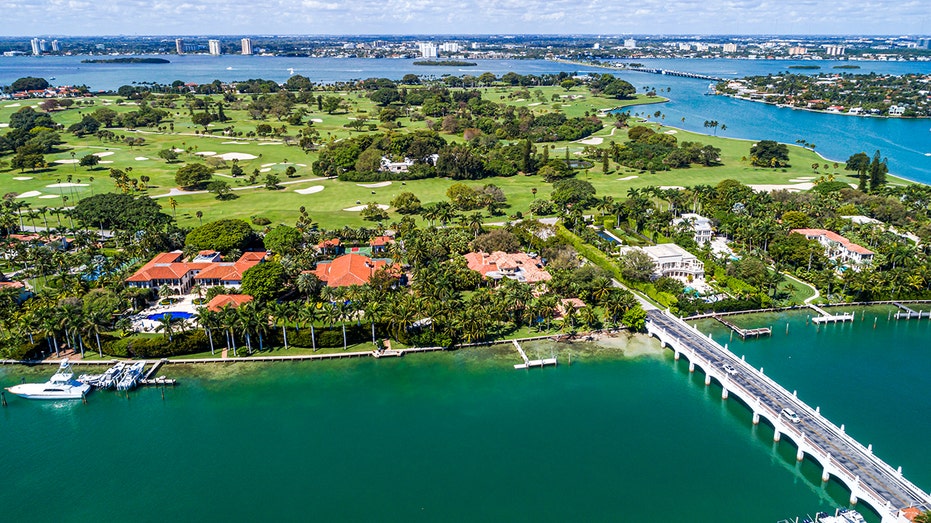
An aerial view of the entrance of Indian Creek Village in Miami, Florida. (Getty Images)
Commonly known as the “Billionaire Bunker,” successful business leaders and celebrities including Jeff Bezos, Carl Icahn, Tom Brady, Ivanka Trump and Jared Kushner, Julio Iglesias, Adriana Lima, David Guetta, Don Shula and others have long called Indian Creek home. The ultra-exclusive neighborhood made recent headlines for its newest resident, Mark Zuckerberg, who paid a record $170 million for an under-construction property.
The migration is fueled by more than just sunshine; it is a tactical retreat from a wave of tax-the-rich proposals sweeping through blue-state legislatures like California, Washington and New York. While lawmakers and unions move to enact aggressive new levies on capital gains and unrealized wealth, the “Billionaire Bunker” provides a predictable fiscal fortress.
“Even starting with South Beach and Miami Beach, there’s only a thousand homes on the water, approximately… There’s only four real islands in this location that the owners own the roads, so you cannot get on without permission,” Johnston said. “People covet privacy, security… and so with such limited inventory, prices have risen very fast in the last couple of years.”
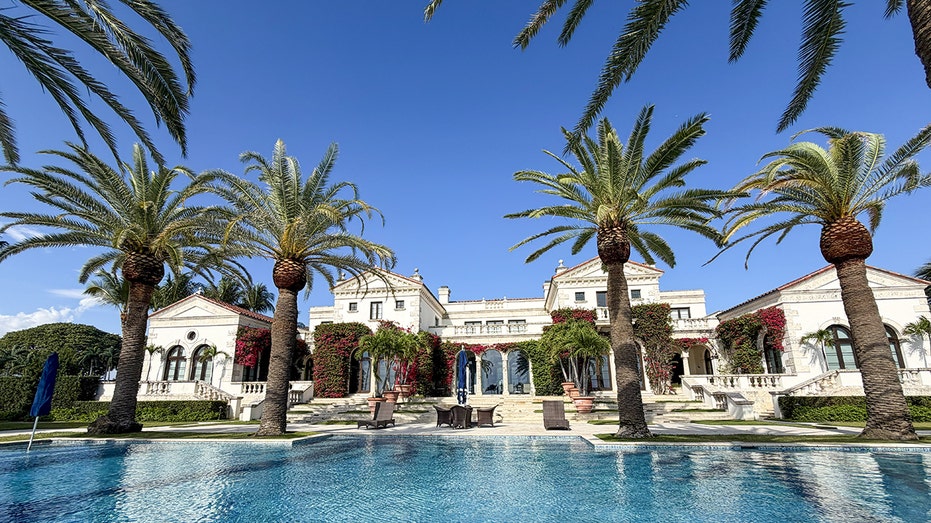
The grand backyard of a hundred-million-dollar home in Indian Creek Village, Miami. (Fox News Digital)
Zuckerberg’s new estate currently sits as a skeleton of modern concrete bones, still fully exposed to the coastal Miami elements. Parked outside his unfinished home appeared to be an unmarked, blacked-out SUV keeping watch over the lot.
It’s a stark contrast to the finished, bougainvillea-covered Mediterranean arches of the mansion Johnston showed to Fox News Digital. Though that completed home is not formally for sale, its market price is estimated to be more than double what Zuckerberg paid due to its specific location and views.
“Fifty percent of the sales on Indian Creek are off-market. There are some that are just thinking about selling, and it becomes known in the community, and they’ll start getting offers,” he said. “They don’t really want to advertise because that can draw a lot of tire kickers and people that are interested to see the home.”
OVER $126M IN 60 DAYS — FLORIDA REAL ESTATE TYCOONS SAY BLUE-STATE WEALTH MIGRATION IS NOW PERMANENT
The agent noted that it typically takes one year for plans and permits, and three years to build a significant home on the island. He also explained how Bezos bought a 20-year-old Indian Creek property “in beautiful condition” for $75 million “just for somewhere to sleep” while his other two adjacent lots are being developed for his larger estate.
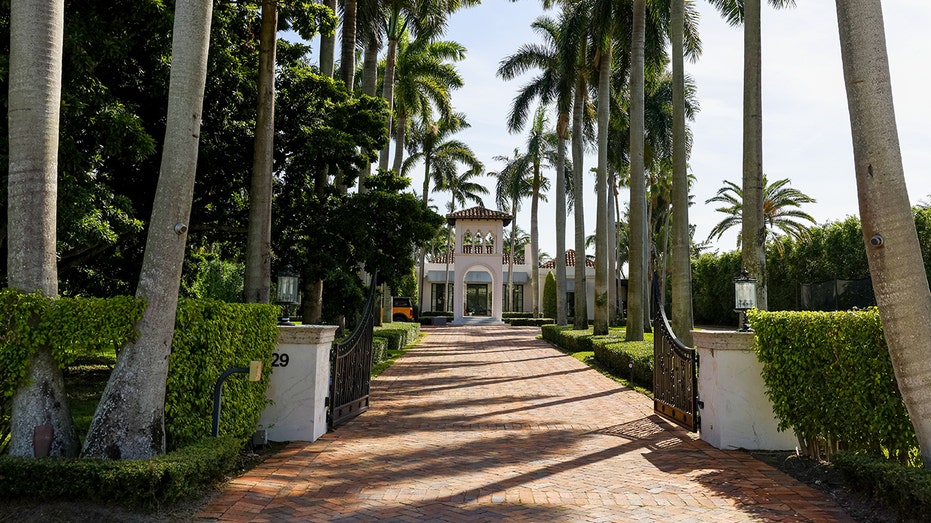
A home in Indian Creek Village, on Tuesday, Dec. 5, 2023. (Getty Images)
Driving by their residences, Bezos’ homes had long and winding driveways with iron gates and carefully tailored landscaping; Brady’s home appeared to be an almost entirely glass, gray-toned house from the front, with modern yet chic furniture and art visible through the window panes.
“When Tom Brady started building, he was thinking about selling the house for $80 to $100 million. Now he’s turning down offers four or five years later of $200 million,” Johnston said as another example.
“Some developers are doing very high-end homes now, but these end users, they have no budget. So then they’ll elevate those finishes even further, and they’ll build their dream home,” he continued. “I think this neighborhood is not attainable for some of us, including me. I think even some of the owners themselves are shocked.”
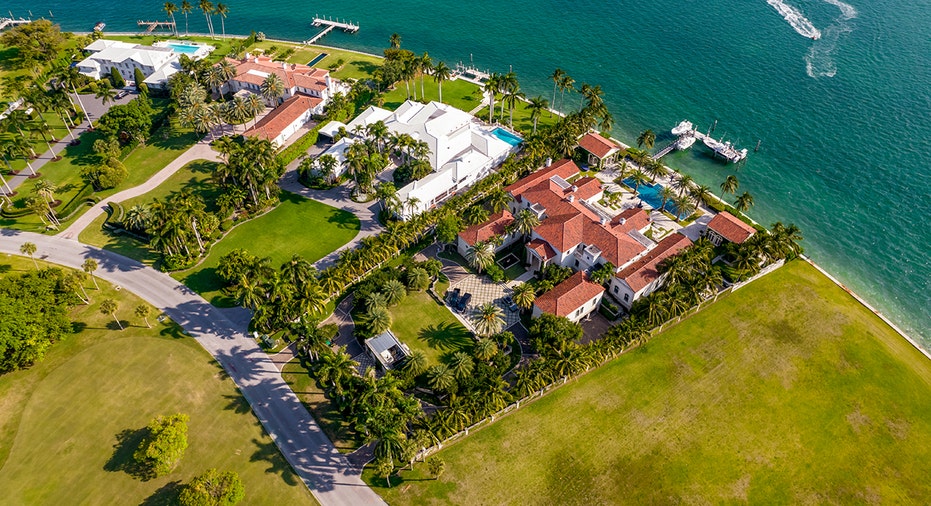
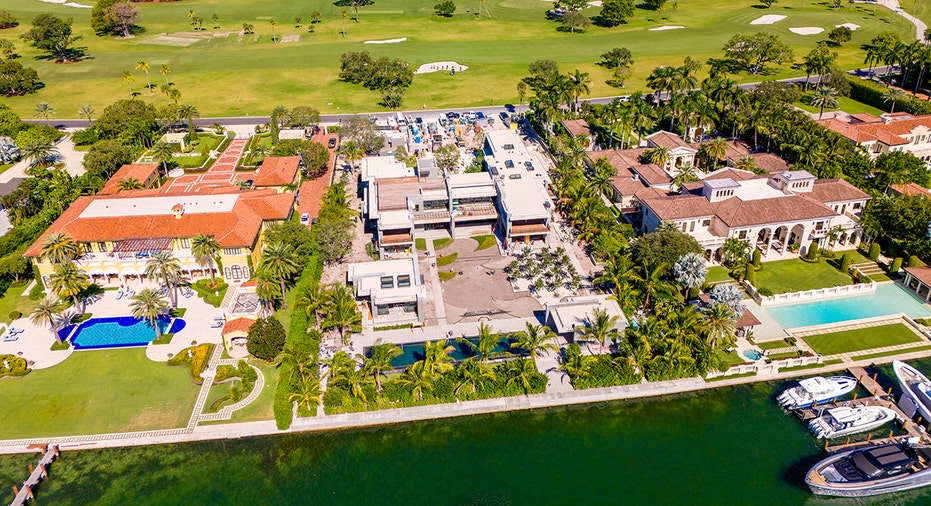
Every property on Indian Creek has direct water access. | Getty Images
Socializing on and around the man-made island has seemingly replaced New York City and Silicon Valley boardrooms, as the top agent pointed out changes in the way business deals and venture capital decisions are being made outside of their traditional offices.
“One of my clients… he’s a VC, he’s worth about $14 billion, and he would walk out in Manhattan, he’d go, ‘I put on my bulletproof vest, I go to war… Down here, I go out in shorts and a T-shirt, I walk on my conference call to a coffee shop, I finish that, I do another meeting… I found more peace with my life, I’m just as efficient,’” Johnston recalled.
With more than half of $1 trillion in combined net worth living on Indian Creek, it’s solidifying itself as the epicenter of a permanent wealth migration. However, the juxtaposition of the billionaires’ playground and an exceedingly risky market for average buyers is wide — UBS’ Global Real Estate Bubble Index for 2025 recently put Miami in the No. 1 spot for the real estate market with the highest bubble risk on Earth, surpassing the peak of the 2006 housing bubble.
GET FOX BUSINESS ON THE GO BY CLICKING HERE
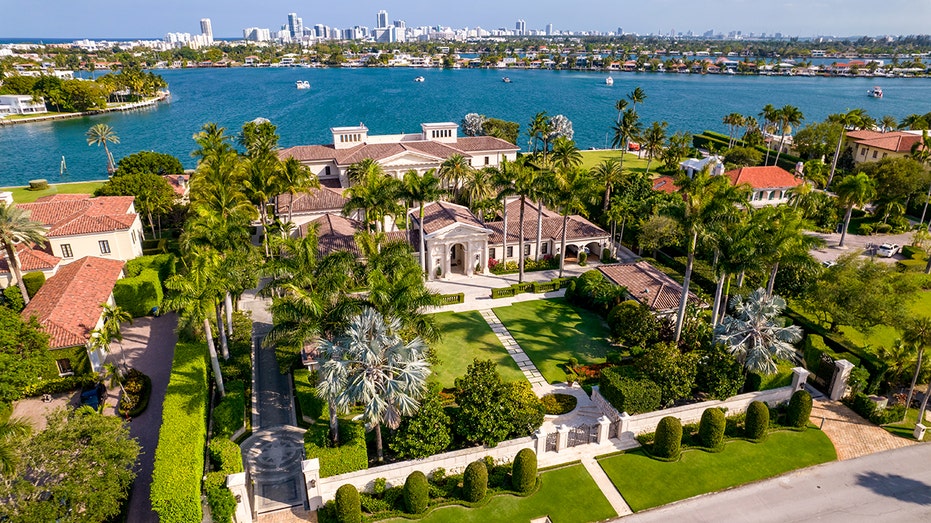
Miami’s breathtaking skyline can be seen from many Indian Creek homes. (Getty Images)
But Johnston argues that the trickle-down effect is funding massive public works, like high-speed transit and nearby affordable housing for the island’s vast support staff.
“I think it’s only going to benefit Miami greatly,” he said. “It has become more expensive and there’s been some push away from that. But the city is doing something about it, developers are reacting to it and there are peripheral areas now that are getting built out with beautiful retail and bus services and public transport, and I think it’s only going to make the city better and better.”

A key survey indicates growing doubt among shoppers over prospects for the UK economy in the next year.
Business
Unilever Faces Defamation Claims From Former Ben & Jerry’s Board Chair Over Social Mission Clash
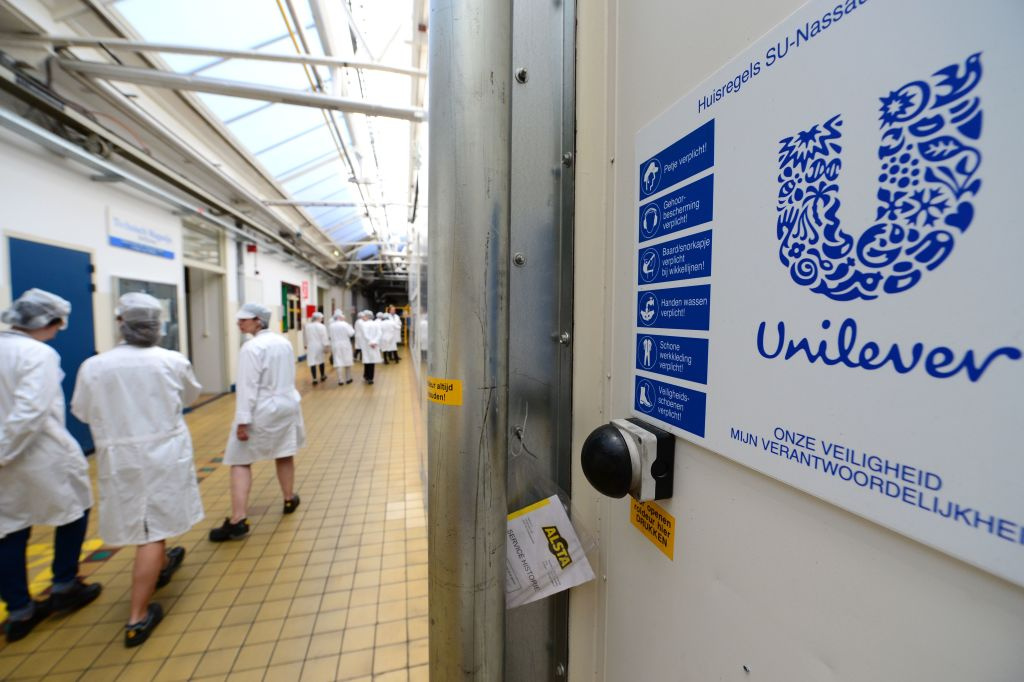
Unilever is facing a new legal challenge after former Ben & Jerry’s board chair Anuradha Mittal filed a defamation lawsuit in federal court on Thursday.
The case, filed in Oakland, California, claims the company and its spun-off Magnum ice cream unit made false statements that damaged her reputation.
Mittal, who was removed from her role in December, alleges that Unilever and Magnum “vilified and discredited” her due to her support for Palestinian rights and calls for a ceasefire in Gaza.
According to the complaint, tensions grew after Unilever announced the Magnum spinoff in March 2024.
The lawsuit states that Mittal was accused of serious misconduct, including self-dealing, receiving improper benefits, and misusing funds from the Ben & Jerry’s Foundation.
She also claims the companies portrayed her as creating a toxic work environment and being unfit to lead.
The filing argues these claims were false and made with “actual malice,” meaning they were either knowingly untrue or shared without regard for the facts, Reuters reported.
“Defendants achieved their goal of thoroughly humiliating and discrediting Ms. Mittal,” the complaint states, adding that the situation caused harm to her reputation as well as personal struggles, including depression and insomnia.
Mittal is seeking damages, though the exact amount has not been disclosed.
Ben & Jerry’s Dispute With Unilever Intensifies
Unilever has not publicly responded to the lawsuit. However, Magnum said in a statement that the claims are “unfounded” and expressed confidence that the court process will support its position.
This legal dispute is the latest chapter in a long-running conflict between Unilever and Ben & Jerry’s leadership over the brand’s independence and social mission.
According to Yahoo, the ice cream company, founded in 1978, has long been known for its activism. It was acquired by Unilever in 2000, but its board has continued to advocate for social and political causes.
Tensions escalated in 2021 when Ben & Jerry’s announced it would stop selling products in the Israeli-occupied West Bank.
Since then, disagreements over the company’s direction and messaging have continued to grow.
In November 2024, Ben & Jerry’s filed its own lawsuit against Unilever, accusing the parent company of trying to weaken its board and limit its activism.
Originally published on vcpost.com


Some petrol stations in New South Wales have imposed caps on fuel purchases.
This comes as petrol stations across Australia see a surge in demand amid the Iran war, which has greatly affected fuel supply and prices.
NSW Petrol Stations Impose Purchase Caps
According to a report by 9News, a petrol station on Sydney’s Northern Beaches has informed its patrons that it will impose a 50-litre cap for each vehicle.
Meanwhile, another petrol station in Balranald said that it will limit petrol purchases to 150 litres per person.
It is unclear why petrol stations have imposed caps on fuel purchases as of writing.
Petrol Stations See Surge in Demand
These self-imposed caps come as petrol stations across Australia report a surge in demand of up to 25% in the last two weeks alone.
According to The Guardian, the Australasian Convenience and Petroleum Marketers Association has provided insights as to the increase in demand.
“Retailers are reporting that people are filling up more regularly,” the association said. “Parts of the agriculture, freight and commercial sectors brought forward their buying of fuel, which has added to demand in the short term.”
The federal government as well as the different states are not considering fuel rationing as of writing, but this is something that they are not ruling out should the Iran war continue for months.
Energy minister Chris Bowen believes that Australia is still not in this “worse-case scenario.”
“I don’t think we’re there,” said Bowen, according to The Guardian. “I don’t envisage being there. But of course, we are dealing with the biggest energy crisis in history and so, you know, there will be, there does need to be governments working together about prudent contingency planning.”
Business
GLP-1 impact: Jefferies sees these 3 stocks as winners in the race for Ozempic, Wegovy generics

Novo Nordisk’s patent for GLP-1 (glucagon-like peptide-1) therapy expired last week. Jefferies in its latest report said that after the patent expiry, more than 10 brands have launched their versions online, and over 40 brands are expected to join the race across injectables and oral forms.
The international brokerage noted that price points for the monthly dose of the injectable version are in the range of Rs 1,290-4500, with Natco and Glenmark offering products at the lower end of the range, and Dr Reddy’s and Torrent at the higher. “Most companies have launched their own brands, while others have formed partnerships (Torrent/Lupin are sourcing from Zydus). Torrent Pharma, the sole generics firm to supply the oral version, has priced it at a lower discount (30-50%) vs. injectables. Zydus offers a reusable multi-dose pen device; this differentiated offering allows patients to progressively titrate their dosage over the course of the treatment,” it added.
Products already sold out online
Despite the strong inventory build-up by companies, Jefferies claimed that there is a shortage in online channels. Out of the 10 brands that have already launched their generic versions only, the products by only 3-4 brands are still available while the rest are sold out, it said. Multiple reasons including inaccurate demand forecasts, limited supply quantities sent to online channels and supply chain hurdles due to regulatory crackdowns were cited as the possible reasons by the brokerage.
Additionally, the launches face intensified regulatory surveillance against unauthorized sale and promotion by the regulator in order to ensure ethical practices in the supply chain of GLP-1 drugs. “Our interactions with companies suggest the product is still in the initial days of launch. Companies are testing the waters with demand and supply, and they expect the market to settle down in the next few months. Impact of Semaglutide launch on existing diabetes drugs should also become clear in coming months,” Jefferies wrote.
Why Sun Pharma, Lupin and Torrent Pharma can emerge as winners
Notably, these are strictly prescription-drugs. Endocrinologists and internal medicine specialists can mainly prescribe the drugs, along with cardiologists only for some indications. “Thus, companies with strong connect with specialist doctors and a large-scale cardio franchise such as Sun, Lupin and Torrent could emerge as eventual winners,” the international brokerage said.
The Nifty Pharma is among the only two sectoral indices which were in the green on NSE on Friday. Piramal Pharma, Mankind Pharma and other stocks gained up to 2%, as seen in the afternoon.Jefferies has a ‘Buy’ call on Alkem Laboratories, Emcure Pharmaceuticals, Lupin, Mankind Pharma, Sun Pharma, Torrent Pharma and Zydus Lifesciences. It however has an ‘Underperform’ rating for Cipla and Dr. Reddy’s Laboratories.
As per industry data, the penetration of GLP-1 drugs is still very low in India, reaching only about 5% of people with diabetes and 4% of those with obesity. This leaves a vast untapped pool in the country, which has over 100 million diabetics and 250 million individuals with obesity.
Ozempic was priced at Rs 8,800–11,175, while Wegovy cost Rs 10,850–16,400 a month. In comparison, Mounjaro (tirzepatide) from Eli Lilly cost between Rs 13,000 and Rs 26,000 per injection, depending on the dosage. Each injection consists of four monthly shots.
The high prices of existing drugs have led investors to expect that cheaper generics will see strong demand in India, although regulatory oversight remains critical.
(Disclaimer: Recommendations, suggestions, views and opinions given by the experts are their own. These do not represent the views of The Economic Times)
European stocks slide as Iran war jitters persist despite Trump extension
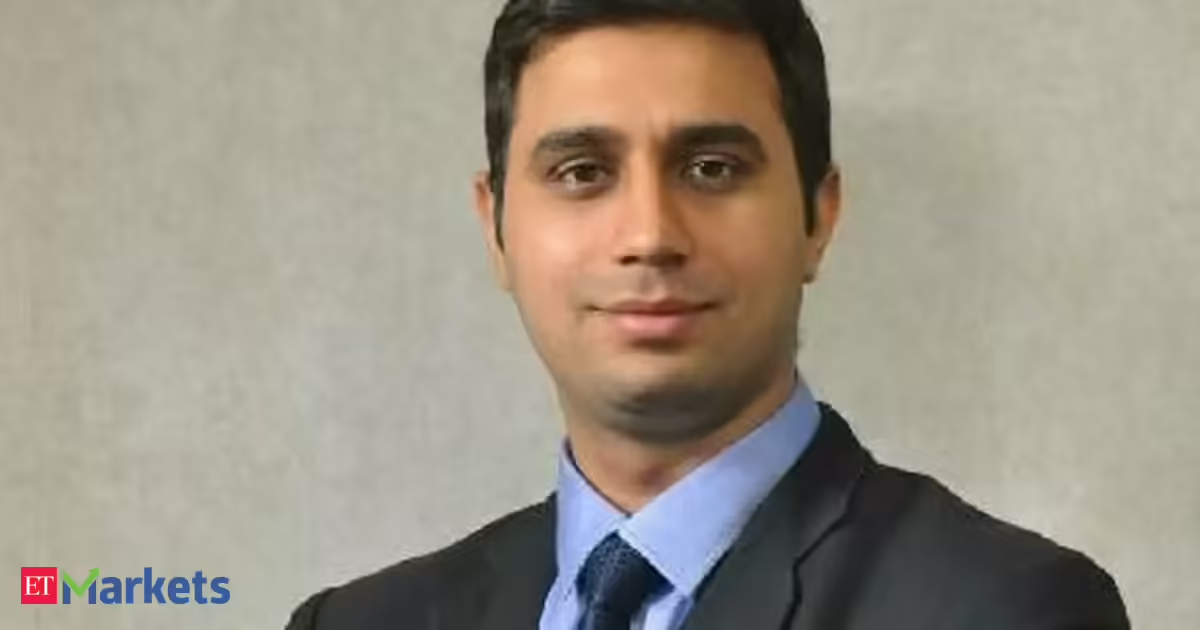
Fast forward to today, Nifty trades below 20 times multiple… valuations have come down significantly.” While earnings growth has slowed to a more modest pace, he emphasised that the decline in valuations is now creating opportunities for investors willing to take a long-term view. “Earnings growth is still the challenge, but at least valuations have come down significantly… buying cheap or below fair value is in our control,” he said, underscoring the importance of focusing on what investors can control in uncertain environments.
Within sectors, Kapoor sees financials, particularly private sector banks, as offering compelling risk-reward.
He highlighted that “top private banks are trading close to two times price to book… some are near Global Financial Crisis lows,” adding that such levels provide a favourable entry point even without aggressive earnings assumptions. He further noted that “even if credit growth aligns with nominal GDP at 10% to 12%, it still makes sense to go overweight,” suggesting that reasonable growth expectations are sufficient to justify allocation to the sector. Addressing concerns about competition from public sector banks, Kapoor maintained that the feared disruption has not yet materialised in the data.
“If PSU banks were underpricing aggressively, it should reflect in market share… but it has not appeared in numbers,” he said, adding that private banks continue to gain share steadily despite the prevailing narrative. He also pointed out that investors are currently benefiting from a combination of negative sentiment and cyclical pressures, which have compressed valuations.
In the IT sector, Kapoor acknowledged that growth has slowed sharply, with “revenue growth… between zero to 3%… a very-very low number.” However, he noted that much of this weakness is already reflected in stock prices, making valuations more attractive. Importantly, he highlighted that “margins have not shrunk… that suggests businesses are managing the cycle well,” indicating resilience despite the slowdown. With large IT companies trading at compressed multiples, he believes selective accumulation could be warranted. “At 14–17 times multiples, there is no harm in nibbling into these names,” he said, pointing to strong return metrics and long-term business quality.
On the subject of foreign institutional investors, Kapoor pushed back against the widely held belief that flows drive returns. “Flows do not cause returns… there is no correlation,” he said, arguing that valuations and fundamentals remain far more important. He also noted that currency concerns may be less of a headwind going forward, observing that “the rupee is quite oversold… a lot is already priced in.” This combination of factors, he suggested, could make India more appealing to global investors at current levels. “This is the time to look at India more constructively,” he added.Beyond financials and IT, Kapoor sees emerging opportunities in other pockets of the market as well. He pointed out that “some FMCG names have been completely beaten down… even a small uptick in consumption can revive the sector,” while also highlighting select opportunities in auto ancillaries and chemicals. According to him, the current environment allows investors to build a diversified portfolio of quality businesses at more reasonable valuations.
Despite the improving valuation comfort, Kapoor remains cautious on broader market segments, particularly mid- and small-cap stocks. He concluded, “The preference for us is largecap… small and midcap are still not there,” signalling a continued tilt towards stability and quality in the current phase.
With valuations resetting across key sectors and much of the pessimism already priced in, Indian equities are gradually turning attractive again. However, the approach remains measured—focused on largecaps, quality businesses, and disciplined accumulation rather than aggressive risk-taking.

Brent Crude Approaches $110 Amid Escalating Iran Tensions and Hormuz Blockade

The House Article | Brian Leishman: “We’re Miles Off Where A Labour Party Should Be”

Why Hannah Hidalgo’s quick hands are key to Notre Dame stealing another NCAA Tournament game


-
 Crypto World6 days ago
NIO (NIO) Stock Plunges 6.5% as Shelf Registration Sparks Dilution Worries
-
 NewsBeat2 days ago
Manchester United reach agreement with Casemiro over contract clause amid transfer speculation
-

 Fashion7 days ago
Weekend Open Thread: Adidas – Corporette.com
-

 Politics7 days ago
Jenni Murray, Long-Serving Woman’s Hour Presenter, Dies Aged 75
-

 Crypto World5 days ago
Best Crypto to Buy Now: Strategy Just Spent $1.57 Billion on Bitcoin During Fear While Early Investors Quietly Enter Pepeto for 150x Potential
-

 Crypto World6 days ago
Bitcoin Price News: Bhutan Sells $72 Million in BTC Under Fiscal Pressure, but the Smart Money Entering Pepeto Sees What the Market Does Not
-

 News Videos1 day ago
Parliament publishes latest register of MPs’ financial interests
-

 Sports4 days ago
Remo Stars and Kano Pillars Strengthen Survival Hopes in NPFL
-

 Sports4 days ago
Gary Kirsten Accuses Pakistan Cricket Board Of ‘Interference’, Mohsin Naqvi Responds
-

 Tech5 days ago
Give Your Phone a Huge (and Free) Upgrade by Switching to Another Keyboard
-

 Business5 days ago
No Winner in March 21 Drawing as Prize Rolls to $133 Million for Next
-

 Sports7 days ago
2026 Kentucky Derby horses, odds, futures, preview, date: Expert who nailed 12 Derby-Oaks Doubles enters picks
-

 Tech5 days ago
AI enters the chat: New Seattle dating app relies on tech to facilitate meaningful human connections
-

 News Videos4 days ago
Ch 9 Financial Management Part 1 | Detailed One Shot | Class 12 Business Studies Boards 2026
-
Business6 days ago
Columbia Sportswear enters $500 million credit agreement with JPMorgan Chase
-

 Tech5 days ago
Today’s NYT Connections Hints, Answers for March 22 #1015
-

 Business14 hours ago
Instagram, YouTube Found Responsible for Teen’s Mental Health Struggle in Historic Ruling
-
 Crypto World7 days ago
Small-cap Russell 2000 enters correction territory
-

 Business5 days ago
Will Duke Basketball Win It All? Duke Basketball Enters Second Round as Third Favorite to Claim NCAA Title
-

 Sports4 days ago
2026 Kentucky Derby horses, odds, futures, preview, date: Expert who hit 12 Derby-Oaks Doubles enters picks
You must be logged in to post a comment Login