
Business
Wall Street Lunch: Dow Plunges 1,200 Points Before Dip-Buyers Pitch In


MF3d/iStock via Getty Images

Listen below or on the go on Apple Podcasts and Spotify

Bulls and bears battle as oil, dollar rally. (0:15) Paramount debt cut to junk. (2:39) Amazon buys George Washington University satellite campus. (2:52)
This is an abridged transcript of the podcast:
Our top story so far, the dip-buyers and the froth-fighters are trading blows on Wall Street today.
Stocks sank at the opening bell on a global tech selloff sparked by a 7% plunge in South Korea’s Kospi — driven by double-digit declines in Samsung and SK Hynix.
The selloff deepened, and the Dow Jones (DJI) shed 1,200 points — on pace for its worst drop since Liberation Day — while the S&P 500 (SP500) hit its lowest level of 2026.
Treasury yields shot higher, with the 10-year (US10) topping 4.1%. The VIX (VIX) — the fear gauge — hit a three-month high. And gold (GLD) and silver (SLV) sank.
That move in metals looked counterintuitive — gold usually gets a safe-haven bid.
But former J.P. Morgan strategist Marko Kolanovic has pointed out that the silver ETF (SLV), along with the South Korea equity ETF (EWY), has been acting more like a meme stock lately.
But the bears couldn’t keep up the momentum. Stocks caught a bid about an hour into trading.
At the time of recording, the major averages are down less than 1.5% at their highs of the day.
A couple of assets, though, are trading with more conviction.
The greenback keeps catching a bid — hitting its highest level since mid-January and on pace for its strongest two-day rally in about a year. The dollar index (DXY) moved back above its 200-day moving average.
And oil prices are going parabolic — with Brent (CO1:COM) and WTI (CL1:COM) up another 7%.
Iraq has cut production by nearly 1.5M barrels per day, and that could rise to 3M if disruptions at the Strait of Hormuz continue.
Robert Brooks, senior fellow at the Brookings Institution, says there’s “a weird tendency in markets to downplay unexpected shocks when they happen.
People don’t like to look like they didn’t see it coming, so they downplay the shock and the impact, he said.
What’s happening now in oil “is absolutely massive.”
Among active stocks, Cigna (CI) slipped after the company said CEO David Cordani is retiring. He’ll be replaced by President and COO Brian Evanko on July 1.
Evanko currently oversees Cigna’s Evernorth Health Services unit, which includes its pharmacy benefit manager, Express Scripts.
Best Buy (BBY) is up after boosting profit despite soft sales.
“Moving forward to FY27, we are excited about the momentum in our business,” CFO Matt Bilunas said. “We also expect to continue to navigate a mixed macro environment.”
Credo Technology (CRDO) is getting slammed after its Q3 beat wasn’t enough to satisfy investors given valuation.
Needham came to the company’s defense, with analyst N. Quinn Bolton — who really does sound like a Sherlock Holmes character — saying revenue growth is being driven by Active Electrical Cable proliferation and customer diversification.
And Fitch Ratings cut Paramount Skydance’s (PSKY) corporate and long-term debt ratings to junk after the company agreed to acquire Warner Bros. Discovery (WBD).
The deal is expected to leave the combined entity with roughly $79B in net debt.
In other news of notes, tired: educating humans. Wired (quite literally): powering AI bots.
Amazon (AMZN) has struck a deal to acquire George Washington University’s Virginia Science and Technology Campus in Ashburn, Va., for about $427M.
The deal was executed through Amazon Data Services, and the price comes out to roughly $3.5M an acre for the 120-acre site.
It’s in Loudoun County — a major U.S. data center hub — and the deed allows Amazon to develop the property into a data or IT center to support its expanding cloud and AI infrastructure.
GW has the option to keep programs and services at the site for up to five years.
And in the Wall Street Research Corner, on Monday, we told you about the Jefferies AI Risk Basket.
On the flip side, Jefferies has now updated its AI Beneficiaries Basket.
The quant team says the bullish AI basket is broadly flat this year — with trading shifting toward risks from AI disintermediation. That’s analyst speak for cutting out the middleman.
They built the basket by using AI to identify about 30 stocks with market caps above $20B that are “direct beneficiaries of the AI boom.”
You know the big names. So here are a few that may not be on your radar: Digital Realty Trust (DLR), Monolithic Power Systems (MPWR), CoreWeave (CRWV), Microchip Technology (MCHP) and Iron Mountain (IRM).
Check out the full list here.


A joint venture comprising two of WA’s most prominent engineering firms have been awarded a $281 million contract for wharf upgrades at HMAS Stirling to prepare for future submarine rotations.
Iran used Chinese spy satellite to target US bases, FT reports
Business
Grok 4.20 Beta 2 Powers xAI Advances as Model Tops Benchmarks and Saves Lives in April 2026
NEW YORK — xAI’s Grok 4.20 Beta 2 continues to dominate AI leaderboards in mid-April 2026, achieving top rankings in medicine, legal reasoning and general benchmarks while generating real-world impact, including reports of the AI helping save human and animal lives through accurate medical advice.

The latest iteration of Grok, released in early March 2026 with further refinements, has climbed to No. 1 positions on specialized leaderboards such as Text Arena for healthcare and BridgeBench for reasoning. It outperforms competitors including Claude Opus 4.6, GPT-5.4 and Gemini 3.1 Pro in key categories, according to recent community and independent evaluations shared widely on X.
Grok 4.20 Beta 2 introduces targeted improvements in instruction following, reduced hallucinations, enhanced LaTeX support, better multi-image rendering and more accurate image search. Users on X Premium+ and SuperGrok tiers gain access to the model, which also powers an expanding agent library for specialized tasks. A separate Grok 4.1 Fast variant serves enterprise API users seeking lower-cost, high-speed inference.
Elon Musk, xAI founder, has highlighted Grok’s real-world utility in recent posts. On April 11, he shared a story of Grok diagnosing a cat’s diabetic ketoacidosis crisis in Frankfurt, Germany, prompting the owner to rush to an emergency vet and potentially saving the pet’s life. Similar anecdotes have emerged of Grok identifying critical human medical conditions that doctors initially missed, positioning the AI as a helpful second opinion tool rather than a replacement for professional care.
Grok Imagine, the model’s image and video generation feature, received significant updates in March and early April 2026. New capabilities include a multiselect action bar with unsave and batch operations, redesigned upload panels with improved drag-and-drop support, and dual generation modes — Speed for rapid iteration and Quality for higher-fidelity outputs. Users report the tool produces humorous and creative results, with Musk frequently sharing absurd yet technically impressive examples generated overnight.
Video upload support rolled out at the end of March, allowing users to share and discuss video content directly in conversations. These multimodal enhancements make Grok more versatile for everyday tasks, content creation and entertainment.
Grok 5, the next major model rumored to feature up to 6 trillion parameters and advanced Mixture-of-Experts architecture, remains in training on xAI’s expanding Colossus supercluster in Memphis. The cluster is scaling toward 1.5 gigawatts of power by April 2026, supporting massive training runs. Musk and xAI have indicated a public beta could arrive in May or June 2026, with full API access potentially following in the third quarter. Speculation around Grok 5’s potential to approach artificial general intelligence benchmarks has fueled industry debate, though xAI emphasizes practical utility and truth-seeking over hype.
Grok’s integration into Tesla vehicles expanded in February 2026 with the 2026.2.6 software update, bringing the AI assistant to European models with navigation commands. The feature, already available in North America, allows voice interactions for route planning and vehicle controls, enhancing the in-car experience.
On the business side, xAI continues to grow rapidly. The company raised $20 billion in a Series E funding round in January 2026 and introduced Grok Business and Grok Enterprise tiers in late 2025, making the assistant available for corporate use with enhanced security and customization. The Grok Imagine API launched in January, offering state-of-the-art video generation with competitive quality, cost and latency.
Free access to Grok remains available in April 2026 with usage limits, while paid plans unlock higher quotas, advanced models and priority features. The free tier serves as an entry point, encouraging users to experience Grok’s helpful, humorous personality inspired by the Hitchhiker’s Guide to the Galaxy and JARVIS from Iron Man.
Despite its strengths, Grok has faced occasional scrutiny. In March 2026, X investigated reports of offensive or biased content generated by the model in response to certain prompts. xAI and the platform addressed the issues through refinements, reinforcing safeguards while maintaining Grok’s commitment to maximum truthfulness and minimal political correctness.
Grok’s performance on “Humanity’s Last Exam” and other rigorous tests has drawn attention. Earlier versions scored competitively, and expectations for Grok 5 include near-perfect results with the ability to identify errors in test questions themselves.
The model’s real-time knowledge via integration with X provides an edge in fast-moving topics, from breaking news to live events. Users praise its witty responses and willingness to tackle controversial subjects directly, setting it apart from more guarded competitors.
xAI’s rapid iteration cycle stands out in the industry. From Grok 4’s July 2025 launch to the polished Grok 4.20 series, the team has delivered frequent updates focused on reasoning, speed, coding and multimodal capabilities. Multi-agent systems, including Grok 4.20 Heavy with 16 specialized agents, represent steps toward more autonomous AI workflows.
Community feedback on X highlights practical benefits. Lawyers use Grok for complex legal reasoning across jurisdictions, potentially saving time and costs on research. Taxpayers report using it to optimize filings and avoid overpayments. Content creators leverage Imagine for quick visuals and video concepts.
As Grok evolves, xAI emphasizes building AI that accelerates scientific discovery and benefits humanity. Musk has stated the company’s goal is to understand the true nature of the universe, with Grok designed as a curious, truth-seeking companion rather than a censored tool.
Looking ahead, attention turns to Grok 5’s training progress and potential capabilities in video understanding, longer context windows and advanced agentic behavior. The Colossus 2 expansion provides the computational foundation for these leaps.
Grok’s availability across grok.com, the X platform, iOS and Android apps ensures broad access. Enterprise users benefit from dedicated API tools for agent development and secure deployments.
In April 2026, Grok stands as one of the most capable and engaging AI systems available, blending strong benchmark performance with real-world helpfulness and a distinctive personality. Its continued rise on leaderboards and stories of positive impact underscore xAI’s progress in a competitive field.
Users seeking the latest version can access Grok 4.20 Beta 2 directly on supported platforms. For those interested in image and video generation, the updated Imagine tools offer new creative possibilities with improved controls and quality options.
As xAI pushes toward more advanced models, Grok 4.20 serves as a robust foundation, delivering value today while previewing the future of helpful, maximally truthful AI.
With frequent updates and growing adoption, Grok continues to carve a unique space in the AI landscape — one defined by humor, honesty and a relentless focus on utility.

This is the forum for daily political discussion on Seeking Alpha. A new version is published every market day.
Please don’t leave political comments on other articles or posts on the site.
The comments below are not regulated with the same rigor as the rest of the site, and this is an ‘enter at your own risk’ area as discussion can get very heated. If you can’t stand the heat… you know what they say…
More on Today’s Markets:
Moderation Guidelines:
We remove comments under the following categories:
- Personal attacks on another user account
- Anti-Vaxxer or covid related misinformation
- Stereotyping, prejudiced or racist language about individuals or the topic under discussion.
- Inciting violence messages, encouraging hate groups and political violence.
Regardless of which side of the political divide you find yourself, please be courteous and don’t direct abuse at other users.
For any issue with regards to comments please email us at : moderation@seekingalpha.com.
Seeking Alpha’s Disclosure: Past performance is no guarantee of future results. No recommendation or advice is being given as to whether any investment is suitable for a particular investor. Any views or opinions expressed above may not reflect those of Seeking Alpha as a whole. Seeking Alpha is not a licensed securities dealer, broker or US investment adviser or investment bank. Our analysts are third party authors that include both professional investors and individual investors who may not be licensed or certified by any institute or regulatory body.
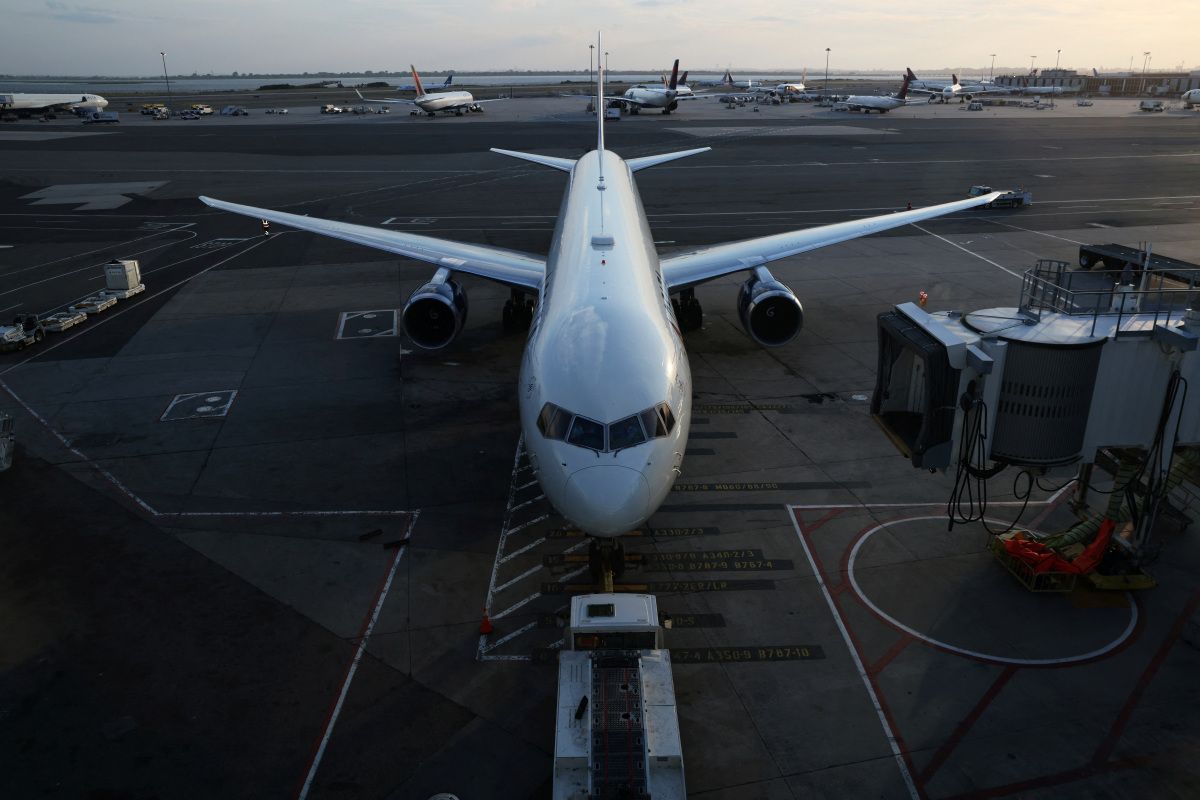
NEW YORK — Travelers at John F. Kennedy International Airport faced relatively smooth security screening on Tuesday, with TSA wait times averaging 8 to 13 minutes across major terminals in mid-morning hours, providing welcome relief amid typical spring travel volume.

As of approximately 11 a.m. EDT on April 14, 2026, official estimates from the JFK airport website showed general security lines moving efficiently. Terminal 4 reported the shortest general wait at around 8-11 minutes, while Terminal 5 stood at about 13 minutes. Terminal 1 and Terminal 7 hovered near 10 minutes, and Terminal 8 was listed at 12 minutes. TSA PreCheck lanes remained exceptionally fast, often clearing in 1 to 6 minutes depending on the terminal.
These figures align with real-time trackers, including takeofftimer.com and Delta Air Lines’ airport wait time data, which indicated current standard security waits around 12 minutes overall and PreCheck as low as 1 minute. The shortest waits appeared in Terminal 5 at roughly 7-8 minutes, while Terminal 8 occasionally reached 17 minutes during busier pockets.
JFK, one of the busiest airports in the United States and a major international gateway, handles millions of passengers monthly. On a typical mid-week day in April, passenger volumes remain steady without the extreme holiday peaks that can push waits beyond 45-60 minutes. Tuesday’s lighter morning crowds after the early rush contributed to the efficient flow.
Airport officials note that posted wait times are estimates based on checkpoint systems and are most accurate when lines stay within designated queue areas. Staff continuously monitor and update figures if lines extend beyond standard zones. Travelers are advised to check the official JFK website or the MyTSA app for the latest updates, as conditions can shift quickly with incoming flights or staffing adjustments.
TSA PreCheck and CLEAR members continued to enjoy significant advantages. In many terminals, PreCheck lanes processed passengers in under 5 minutes, making enrollment programs highly valuable for frequent flyers. Terminal 4, a major hub for Delta and international carriers, consistently showed some of the quickest PreCheck times at just 1 minute.
Spring travel patterns at JFK often include a mix of leisure trips to Europe and the Caribbean alongside business traffic. With no major weather disruptions reported Tuesday and stable TSA staffing, lines moved steadily compared to peak morning hours (typically 5-9 a.m.) or evening rushes (3-7 p.m.), when waits can climb toward 20-35 minutes or more.
Recent months have seen occasional longer delays at JFK due to high passenger volumes and variable staffing. In March 2026, some travelers reported waits exceeding 30-90 minutes during peak periods, prompting temporary suspensions of real-time reporting on airport websites amid broader TSA challenges. However, by mid-April, reporting has resumed with more consistent data, and Tuesday’s numbers reflect a smoother operational day.
The Port Authority of New York and New Jersey, which operates JFK, emphasizes preparation for travelers. Recommendations include arriving at least two to three hours before international flights and 90 minutes to two hours for domestic departures. Removing liquids, electronics and belts in advance, along with using mobile boarding passes, helps expedite the process.
TSA’s 3-1-1 liquids rule remains in effect: passengers may carry containers of 3.4 ounces or less in a single quart-sized clear plastic bag. Electronics larger than a smartphone must be removed from bags, and travelers should be ready to place jackets, shoes and belts in bins.
For those with TSA PreCheck, the experience is notably faster, with shoes, belts and light jackets often kept on. CLEAR biometric screening further reduces touchpoints at participating checkpoints.
JFK’s five main terminals each operate independent security checkpoints, so wait times can vary by airline and departure gate location. Terminal 4 (Delta and many international carriers) and Terminal 5 (JetBlue) frequently handle high volumes but managed efficient throughput Tuesday. Terminal 8 serves American Airlines, while Terminal 1 and Terminal 7 accommodate a mix of carriers including Aer Lingus, Air France and others.
Travelers shared positive experiences on social platforms and Reddit forums throughout the morning. Some reported clearing security in under 15 minutes even without PreCheck, praising organized staffing and fewer bottlenecks than in prior weeks. Others noted that arriving early still provides the safest buffer, especially for connections or international flights requiring additional customs processing.
Broader TSA passenger volumes nationwide remain high but manageable on weekdays. Tuesday’s national checkpoint numbers were in line with typical spring travel, without the surges seen during holiday periods or spring break peaks.
Airlines operating out of JFK, including Delta, JetBlue, American and international partners, encourage passengers to monitor flight status and security waits via apps and airport websites. Many carriers offer contactless bag drop and mobile check-in to shave additional time off the pre-flight process.
For international travelers, post-security waits for customs and border protection can add significant time on arrival, but departure screening focuses primarily on TSA security. JFK has invested in technology upgrades, including advanced imaging systems and automated lanes, to improve throughput while maintaining rigorous safety standards.
Travel experts recommend downloading the MyTSA app for crowd-sourced wait reports and official guidance. The app also provides reminders on prohibited items and real-time alerts for airport conditions. Third-party sites like takeofftimer.com aggregate data for quick reference but stress that official sources offer the most reliable estimates.
With summer travel season approaching, JFK officials and TSA continue monitoring staffing and passenger forecasts. Peak summer weekends often see heightened volumes, making PreCheck and early arrival even more critical.
Tuesday’s moderate wait times offer a reminder that conditions at major hubs like JFK can improve significantly outside rush hours. Mid-morning and early afternoon slots frequently provide the smoothest experiences for both PreCheck and general passengers.
Passengers with disabilities or needing assistance can request expedited screening or use designated lanes. Families with young children or travelers with medical needs should allow extra time and inform TSA officers in advance.
JFK remains a vital economic engine for the New York region, facilitating billions in trade and tourism annually. Efficient security operations support on-time departures and positive traveler experiences, which airlines and the airport actively work to maintain.
As the day progresses, travelers should continue checking real-time updates, especially if departing during afternoon or evening peaks when business and leisure flights converge. Light rain or other minor weather in the New York area can occasionally slow curb-side operations but had minimal impact on indoor security lines Tuesday.
For those heading to JFK today or in coming days, the message from airport authorities is consistent: build in a buffer, use available expedited programs, and stay informed through official channels. With current waits in the single digits to low teens for most terminals, many passengers can expect a relatively stress-free security experience compared to busier periods.
JFK’s security teams and airline staff continue to balance thorough screening with efficient movement, ensuring safety remains the top priority while minimizing delays. Tuesday’s data suggests a smoother-than-average day for the thousands passing through America’s gateway to the world.
Business
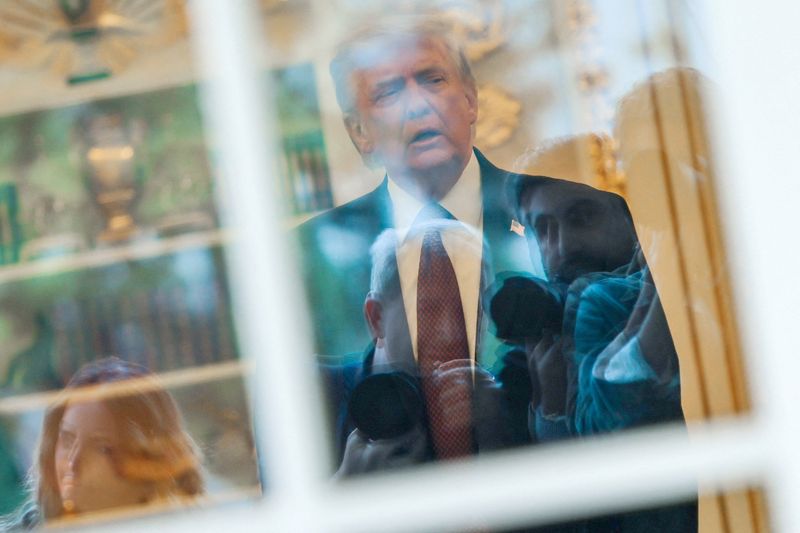
Trump reiterates Pope Leo criticism, says it is ’unacceptable’ for Iran to have a nuclear bomb

Trump reiterates Pope Leo criticism, says it is ’unacceptable’ for Iran to have a nuclear bomb
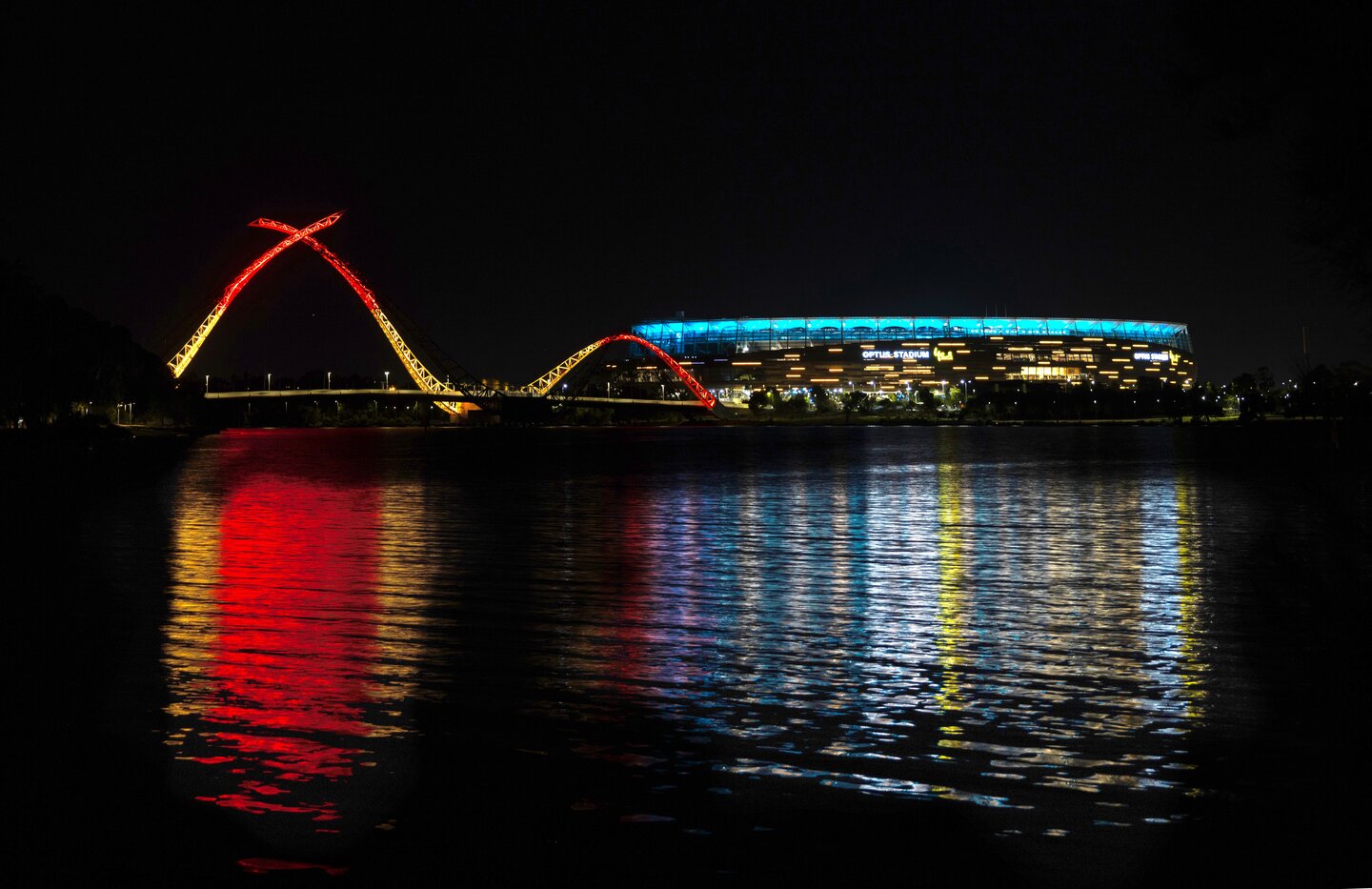
The state government says it expects “dedicated fan bases” travelling from interstate and overseas will be unperturbed in attending major sporting tourism events in Perth amid the global fuel crisis.
Business
Oil Price Today (April 15): Crude oil below $95, falls for second consecutive day. What’s behind the decline?

U.S. President Donald Trump said on Tuesday that talks to end the conflict involving the U.S., Israel, and Iran could resume in Pakistan within the next two days. This follows a breakdown in negotiations over the weekend that led Washington to impose a blockade on Iranian ports. The prospect of renewed dialogue has raised hopes of a resolution that could restore crude and fuel flows.
Crude oil price on April 15
Brent crude futures slipped 52 cents, or 0.55%, to $94.27 a barrel at 0054 GMT, extending a 4.6% drop in the previous session. U.S. West Texas Intermediate crude fell $1.04, or 1.1%, to $90.24, after losing 7.9% a day earlier.The conflict has effectively shut the Strait of Hormuz, a critical route for transporting crude and refined products from the Gulf to global markets, especially in Asia and Europe.

Despite signs of possible diplomatic progress and talk of easing transit curbs, on-ground supply conditions remain disrupted.
What’s next for prices?
Brokerage firm Macquarie noted that even if tensions ease, oil prices are likely to stay supported in the $85 to $90 range, with a gradual move toward $110 as flows through the Strait of Hormuz normalise. It added that if disruptions extend through April, Brent could still rise to $150 per barrel.Looking ahead, crude prices could move higher from current levels. According to Kayanat Chainwala of Kotak Securities, oil may rise to $120 per barrel in the near term and potentially touch $150 if the conflict continues.
Nuvama Institutional Equities echoes the same view. The continued closure of the Strait of Hormuz, which handles around 20 million barrels per day, could push crude prices to the $110–150 per barrel range.
Market experts believe crude may be entering a structurally higher price phase. Ajit Mishra, Senior Vice President at Religare Broking, said the current ceasefire is temporary and a return to pre-war levels of $70 to $75 could take several months. In the near term, he expects crude to remain within a range of $80 to $85 on the downside and $95 to $100 on the upside.
Analysts also point out that as long as tensions persist, the outlook for crude remains volatile with an upward bias. Continued disruptions in the Middle East, particularly around the Strait of Hormuz, are likely to keep supply tight, supporting both Brent and WTI prices and maintaining inflationary pressures globally.
(Disclaimer: Recommendations, suggestions, views and opinions given by the experts are their own. These do not represent the views of The Economic Times)
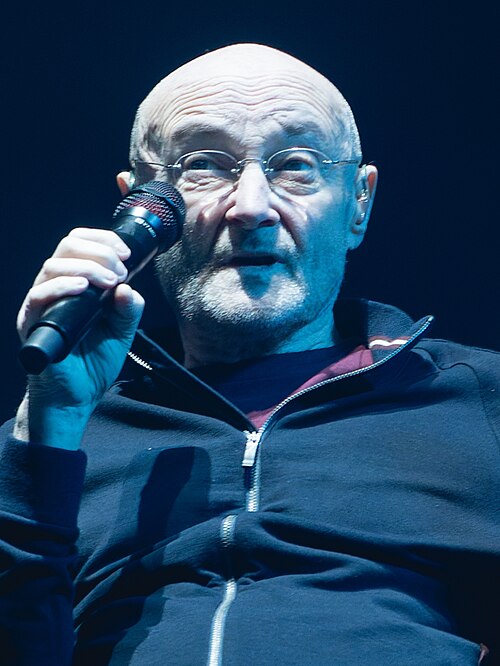
CLEVELAND — The Rock & Roll Hall of Fame unveiled its 2026 inductees on Monday night, honoring a star-studded class that spans pop anthems, heavy metal riffs, smooth R&B grooves and hip-hop innovation during a live reveal on “American Idol.”
Eight performers earned induction: Phil Collins, Billy Idol, Iron Maiden, Joy Division/New Order, Oasis, Sade, Luther Vandross and Wu-Tang Clan. The announcement, broadcast to millions, celebrated music’s broadest influences while sparking debates about what defines rock ‘n’ roll in 2026.

The class reflects the Hall’s evolving mandate to recognize “the music that connects us all,” as officials put it. From Manchester’s Britpop kings Oasis to New York’s Wu-Tang Clan, the inductees highlight how rock has absorbed and transformed global sounds over decades.
Phil Collins, making his solo debut after Genesis’ 2010 induction, expressed surprise and gratitude in early reactions. The Genesis drummer-turned-solo superstar dominated charts in the 1980s with hits like “In the Air Tonight” and “Against All Odds.” His induction caps a career that bridged progressive rock and accessible pop.
British new wave icon Billy Idol, known for sneering anthems like “Rebel Yell” and “White Wedding,” also joins the ranks after multiple nominations. His punk-to-pop evolution influenced generations of rockers and MTV-era stars.
Heavy metal titans Iron Maiden bring arena-shaking energy with their intricate compositions and mascot Eddie. The band’s decades-long influence on metal and beyond made their induction a fan favorite, though some purists questioned the wait.
Joy Division/New Order represent post-punk’s dark heart and dancefloor rebirth. Ian Curtis’ haunting legacy with Joy Division and the electronic shift under New Order helped shape alternative music from the late 1970s onward.
Oasis, the Gallagher brothers’ volatile Britpop force, finally enters after years of eligibility and drama. Hits like “Wonderwall” and “Don’t Look Back in Anger” defined 1990s rock, turning stadiums into singalongs and fueling a reunion tour buzz that amplified their cultural staying power.
Smooth operator Sade brings rare female representation among the performers with her sophisticated soul-jazz sound. The band’s elegant grooves on “Smooth Operator” and “No Ordinary Love” influenced R&B and beyond, earning acclaim for Adu’s sultry vocals and timeless style.
Soul legend Luther Vandross, a first-time nominee, receives posthumous recognition for his velvet voice and romantic ballads that defined ’80s and ’90s R&B. His emotional depth on tracks like “Never Too Much” left an indelible mark.
Wu-Tang Clan injects hip-hop’s raw street poetry into the Hall. The Staten Island collective’s 1993 debut “Enter the Wu-Tang (36 Chambers)” revolutionized the genre with gritty production, martial arts references and group chemistry, influencing countless MCs and producers.
Additional honors expanded the class to 18:
Early Influence Award: Celia Cruz, the Queen of Salsa whose vibrant rhythms brought Latin music to global stages; Afrobeat pioneer Fela Kuti; hip-hop trailblazers Queen Latifah and MC Lyte; and country-rock visionary Gram Parsons.
Musical Excellence Award: Songwriter Linda Creed (“Greatest Love of All”); producer Arif Mardin; legendary producer Jimmy Miller (Rolling Stones classics); and modern production icon Rick Rubin.
Ahmet Ertegun Award: Television pioneer Ed Sullivan, whose variety show introduced rock legends like Elvis Presley and the Beatles to American audiences.
The 2026 class drew from a pool of 17 nominees announced in February, which included Mariah Carey, P!nk, Shakira, Lauryn Hill, INXS, Melissa Etheridge, Jeff Buckley, The Black Crowes and New Edition, the latter winning the fan vote but falling short of induction. Voting involved more than 1,200 artists, historians and industry professionals alongside public input.
Critics and fans quickly weighed in online. Some praised the diversity, noting nods to global influences like Fela Kuti and Celia Cruz. Others debated rock’s boundaries, asking whether smooth operators like Sade or hip-hop collectives like Wu-Tang fit the “rock” label. Hall officials have long argued that the genre’s DNA includes rhythm and blues, soul, country and more — a philosophy that has broadened the institution since its 1983 founding in Cleveland.
The induction ceremony is scheduled for Saturday, Nov. 14, at the Peacock Theater in Los Angeles. It will tape for a December broadcast on ABC and Disney+, with exact air date details pending. Tickets for members and select packages are expected to go fast, as past ceremonies have drawn massive audiences and emotional performances.
This year’s class arrives amid renewed interest in rock’s legacy. Oasis’ reunion tour has packed stadiums, Iron Maiden continues epic world tours, and younger artists sample or cite these acts as foundational. Wu-Tang’s influence echoes in modern hip-hop, while Sade’s catalog enjoys streaming revivals.
Cleveland’s Rock & Roll Hall of Fame museum plans special exhibits featuring artifacts from the new inductees, allowing visitors to explore guitars, stage costumes, handwritten lyrics and more. The institution, designed by I.M. Pei, has become a pilgrimage site for music lovers since opening in 1995.
Induction often sparks career boosts or reunions, though some artists have declined or expressed mixed feelings over the years. For living honorees like Collins, Idol and members of Iron Maiden, Oasis and Wu-Tang, the honor cements their place in music history.
The announcement on “American Idol,” hosted with input from Ryan Seacrest and Lionel Richie, blended pop television with rock heritage, reaching a broad audience. Clips of performances and tributes circulated rapidly on social media, driving viral conversations about overlooked artists and genre evolution.
Music historians note the class bridges eras: from Gram Parsons’ cosmic American music in the 1960s-70s to Wu-Tang’s 1990s breakthrough and Sade’s consistent elegance. It also highlights behind-the-scenes contributors like producers Mardin, Miller and Rubin, whose work shaped countless hits.
As the music industry grapples with streaming, AI and shifting consumption, the Rock Hall continues to affirm timeless artistry. Chairman John Sykes has emphasized the Hall’s role in preserving culture while adapting to new voices.
Fans can expect powerful moments at the November ceremony, with potential all-star jams, emotional speeches and surprise collaborations. Past events have featured reunions and tributes that became instant classics.
The 2026 inductees embody rock ‘n’ roll’s rebellious spirit and expansive reach — from stadium anthems to intimate soul, metal thunder to hip-hop innovation. Their music continues to soundtrack lives, challenge norms and inspire new generations.
Whether debating the merits of each choice or celebrating long-overdue recognition, one thing is clear: the Class of 2026 adds fresh chapters to the ongoing story of music’s highest honor.

HAL Trust: Still Trading At A Discount

Kennedy Center wants to show the building really needs a renovation

Duratec Ertech wins $281m HMAS Stirling works

‘Back to the Future’ Becomes a Whole New Movie Once You Realize Doc Brown Isn’t So Innocent


-

 Politics4 days ago
US brings back mandatory military draft registration
-
 Sports4 days ago
Man United discover Nico Schlotterbeck transfer fee as defender reaches Dortmund agreement
-

 Fashion4 days ago
Weekend Open Thread: Veronica Beard
-

 Politics5 days ago
Malcolm In The Middle OG Turned Down ‘Buckets Of Money’ To Appear In Reboot
-

 Politics3 days ago
World Cup exit makes Italy enter crisis mode
-

 Crypto World6 days ago
Canary Capital Files SEC Registration for PEPE ETF
-

 Business4 days ago
Tesla Model Y Tops China Auto Sales in March 2026 With 39,827 Registrations, Beating Cheaper EVs and Gas Cars
-

 Crypto World1 day ago
The SEC Conditionalises DeFi Platforms to Be Avoided for Broker Registration
-

 Crypto World1 day ago
SEC Signals Exemption for Crypto Interfaces From Broker Registration
-

 Crypto World7 days ago
Bitcoin recovers as US and Iran Agree a Ceasefire Deal
-
 NewsBeat2 days ago
Pep Guardiola and Gary Neville agree over Arsenal title problem that benefits Man City
-

 Business5 days ago
OpenAI Halts Stargate UK Data Centre Project Over Energy Costs and Copyright Row
-

 Business4 days ago
Ireland Fuel Protests Enter Day 5 as Blockades Spark Shortages and Government Prepares Support Package
-

 Politics5 days ago
LBC Presenter Mocks Trump Over Iran War Failures
-

 Crypto World4 days ago
Federal judge blocks Arizona from bringing criminal charges against Kalshi
-
 NewsBeat3 days ago
JD Vance announces ‘no agreement’ with Iran over nuclear weapons fear
-

 Tech5 days ago
A version of Windows 10 released a decade ago is now eligible for additional security patches
-

 Crypto World23 hours ago
SEC Proposes Certain Crypto Interfaces Don’t Need to Register as Brokers
-

 Business4 days ago
IMF retains floor for precautionary balances at SDR 20 billion
-

 NewsBeat19 hours ago
Trump and Pope Leo: Behind their disagreement over Iran war
You must be logged in to post a comment Login