Connect with us

Business

Warburton’s crumpet plant expands as baking giant continues its investment in Burnley

Published

on

Business Live

1.4 million crumpets made every day at Warburton’s site

Two Warburtons crumpets on a plate

Warburtons makes hundreds of millions of crumpets a year(Image: Jess Flaherty/Liverpool ECHO)

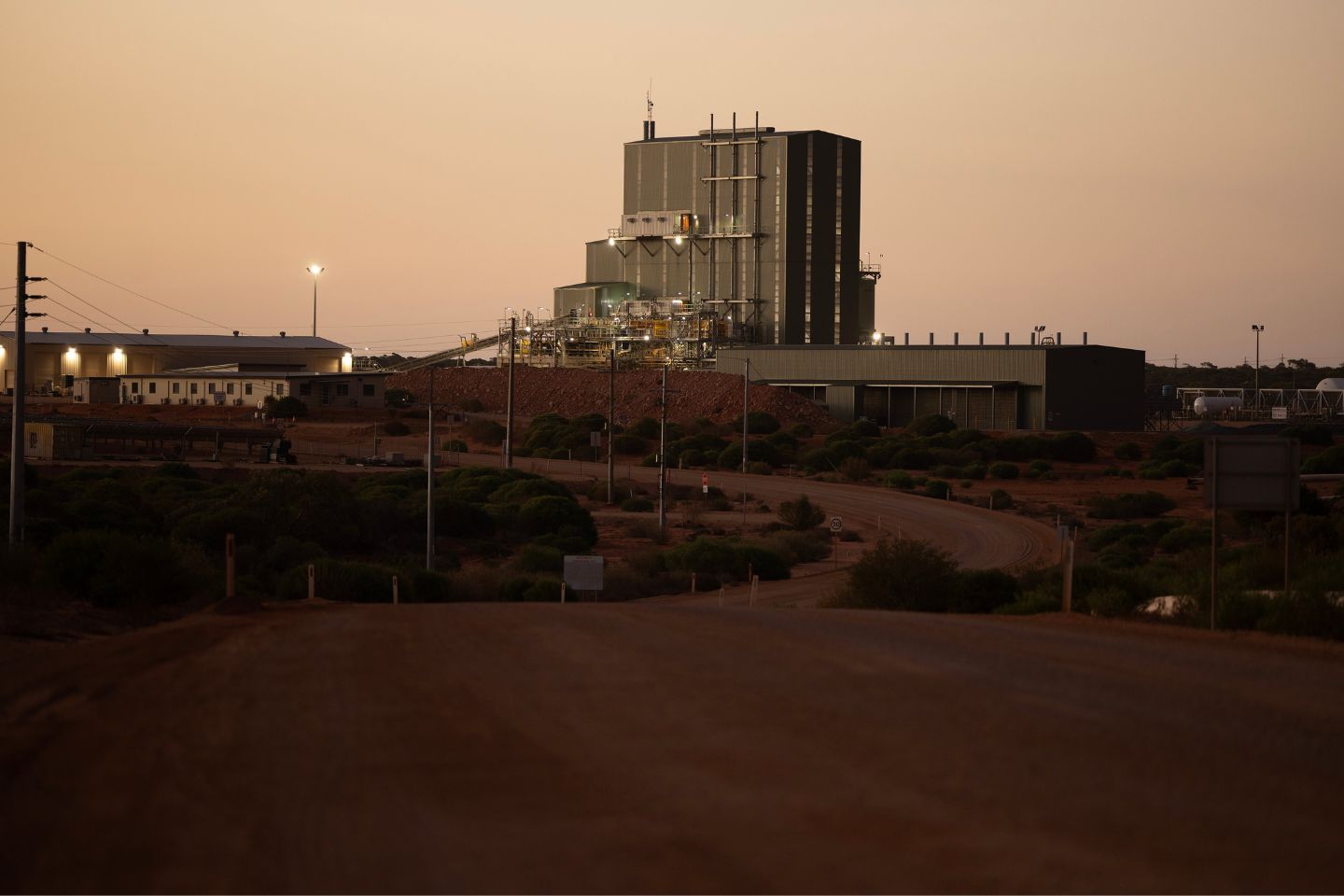
Baking giant Warburtons has been given the go-ahead to start producing an industrial amount of an essential ingredient at its Billington Road factory, where two-thirds of the UK’s crumpets are produced every day.

Advertisement

The new production capability is just one part of Warburtons’ large investment in its Burnley facilities, the main producer of sandwich thins, wraps, and crumpets for the UK’s largest baker.

This £100m nationwide investment in its manufacturing capacity was reaffirmed by the firm in May, just weeks after a fault on its potato cake line caused a massive fire that ripped through the facility.

It took two days and dozens of firefighters to put out this accidental blaze, which caused serious damage to a portion of the building, but left the important crumpet production area untouched.

1.4 million of these classic British breakfast staples fly out the door of the firm’s Burnley factory every day. That is almost 510 million over the 364 days the factory operates every year.

Advertisement

But a key ingredient in producing the crumpets’ quintessential spongey structure, known as ‘cream yeast’, was previously having to be bought in. This living material feeds on the sugars in the mix and turns it into carbon dioxide, which creates the product’s bubbled texture.

However, after gaining planning permission from Burnley Council for the construction of a new bio-fermentation plant, Warburtons will now be able to produce vast quantities of this liquid yeast on site.

This is important as yeast is a living single cell microorganism, so transporting the ingredient to a factory inevitably causes it to become less effective and requires it to be less specialised for general sale.

But with these new fermentation tanks, Warburtons will be able to pipe its own specialised yeast straight into its manufacturing lines, or to its other factories.

Advertisement
Warburtons on Billington Road, Burnley.

Warburtons on Billington Road, Burnley(Image: Google Maps)

Two 6.8 metre high steel fermentation tanks will form the centre of this new production compound, which is adjacent to the flour silo at the Billington Road site. This area will take over a portion of the car park, resulting in the loss of two spaces.

The new structure will help to boost the output of two new high-speed crumpet production lines at the facility that were announced in April, with Burnley-born yeast soon giving the baked product its distinctive bubbles.

Continue Reading
Click to comment

You must be logged in to post a comment Login

Leave a Reply

Business

Trump wants to split childhood shot up

Published

on

Trump wants to split childhood shot up
Trumps signs order to cut child vaccine recommendations from 18 to 11

President Donald Trump‘s latest executive order calls for splitting the measles, mumps and rubella, or MMR, vaccine into three separate shots – but doctors and other experts say that effort has no scientific basis and is unlikely to get off the ground. 

Trump on Monday said without evidence that the vaccine could be “quite lethal” in its combined form, even though the shot has repeatedly been proven safe and effective across large-scale studies. Experts called that claim “completely false” and said there is no scientific data showing benefits of separating the shot. 

Splitting the vaccine would also come with “significant logistical limitations,” and having three standalone shots that require multiple doctor’s visits could result in more delayed or missed vaccinations among kids, Neil Maniar, a public health professor at Northeastern University, told CNBC. 

“They’re not solving a problem here. They’re creating a new one,” Maniar said. “Based on false scientific rationale and political ideology, they’re changing something that works into something that we have no idea what it will do.” 

Advertisement

The U.S. has already seen a decrease in the share of parents who are willing to use the MMR shot to vaccinate their children, which has contributed to the recent resurgence in U.S. measles cases, Dr. Andrew Racine, president of the American Academy of Pediatrics, told reporters on Wednesday. The U.S. has logged its highest number of measles cases in decades this year.

Trump’s rhetoric and recommendations could also further undermine the public’s confidence in the safety of the MMR vaccine, said William Moss, a pediatrician and epidemiological professor at Johns Hopkins University.

Roughly 9% of parents report either skipping or delaying the MMR vaccine for their children, according to a 2025 survey conducted by health policy organization KFF and the Washington Post. It’s unclear how that compares to previous years. 

It’s also not clear where Trump initially got the idea to split the shots, but some experts say it can likely be traced to a British gastroenterologist, Andrew Wakefield. He is an anti-vaccine advocate who published a paper in 1998 claiming to show a connection between MMR vaccines and an increase in autism. That paper has since been retracted, and Wakefield was removed from the U.K.’s medical register.

Advertisement

Why splitting the MMR vaccine may not happen

US President Donald Trump holds a “Gold Standard Childhood Vaccine Recommendations” sign during an executive order signing in the Oval Office of the White House in Washington, DC, US, on Monday, Aug. 10, 2026.

Bonnie Cash | Bloomberg | Getty Images

Manufacturers of the MMR vaccine – Merck and GSK – seem to have little incentive to develop standalone shots, which would take significant time and resources away from their other crucial work toward treating and finding cures to other diseases. Those vaccines would likely reach the market long after Trump’s term ends. 

“I don’t see any world in which vaccine manufacturers have any interest in developing and going through the rigorous regulatory process, getting FDA approval, doing the trials for monovalent measles, mumps, and rubella vaccines,” said Moss. “It would be a foolish investment to make.”

Advertisement

AAP’s Racine also said that it would likely take more than a decade to develop those standalone shots.

In a statement on Wednesday, Merck added that evidence suggests using combination shots improves childhood vaccination outcomes, increasing the completion of all recommended doses and compliance rates. 

One dose of the MMR shot is currently given at 12 to 15 months of age, with a second dose at 4 to 6 years of age. Separating the vaccine could result in a child needing to receive six different doses in their early life. 

“It’s just so counterintuitive and counterproductive,” Moss said. It’s ironic when they’re claiming that children receive too many shots, and then they turn around and propose a policy that’s just going to increase the number of shots they get.”

Advertisement

Northeastern’s Maniar said a single visit can already be challenging for parents who have to take time off work. Healthcare access is also more complicated in certain communities, such as rural areas, he added. 

Maniar said that the U.S. childhood vaccination schedule is designed based on both the child’s “immune system readiness” for a particular shot and their risk for a certain illness. Spacing out those vaccines could increase the chance of a child missing or delaying a shot for a preventable disease they’re at risk for.

Racine added, “Why would we not give children a vaccine that is safe, that prevents death?”

He also noted that two healthy children died in the U.S. from measles last year. 

Advertisement

Some experts fear that splitting the MMR shot and Trump’s broader effort to change federal vaccine recommendations could confuse parents and cause more of them to hold off on immunizing their children. There’s also the possibility that some states could align with the new guidance. 

Moss said he doesn’t see the effort having an immediate or short-term impact on the ongoing measles outbreak.

Still, Maniar emphasized that “we should be doing everything possible to increase those rates rather than implementing policies that present additional barriers to vaccination.”

Choose CNBC as your preferred source on Google and never miss a moment from the most trusted name in business news.
Advertisement
Continue Reading

Business

Dividends Are Sending A Signal

Published

on

Dividends Are Sending A Signal

Dividends Are Sending A Signal

Continue Reading

Business

RBA holds cash rate steady at 4.35pc

Published

on

RBA holds cash rate steady at 4.35pc

Australia’s central bank has chosen to keep the cash rate on hold at 4.35 per cent in a move “universally expected” by the market.

Continue Reading

Business

Court rules over Strandline Resources staff payments

Published

on

Court rules over Strandline Resources staff payments

More than 150 Strandline Resources employees are likely to be paid out of a Commonwealth scheme instead of a $4.75 million trust after a court ruling over the liquidated company.

Continue Reading

Business

Institutional homebuying ban will lower prices long-term

Published

on

Institutional homebuying ban will lower prices long-term
Invitation Homes CEO: Focused on creating new supply and bringing it into the housing system

The CEO of Invitation Homes, the nation’s largest single-family rental landlord, said he believes the recently passed housing bill that bans investors like him from buying existing homes will eventually lower home prices, but not in the short-term.

“I believe in the medium- to long-term, it definitely will,” said Invitation Homes chief executive Dallas Tanner. “I think 90% of the bill focuses on deregulation. How do we simplify capital coming into housing? Are there ways that we can spur up the supply side challenges that we have? I think overnight in the immediate term, it’s a bit trickier because there’s more to the story than just what the bill addresses.”

Tanner pointed to mortgage rate volatility, high construction costs, and zoning and regulatory imbalances.

In early January, President Donald Trump called for a ban on large-scale investors buying single-family homes to rent. He posted on social media that, “People live in homes, not corporations.” This was part of a larger push to tackle the affordability crisis in housing. Some argued that institutional investors were pushing owner-occupants out of the market and inflating home prices.

Advertisement

The ban became law in July, preventing investors who own more than 350 homes from purchasing any more existing units. They can, however, buy new single-family homes specifically built for rent. That is where Invitation Homes is leaning in.

“Our focus as an industry and as a company has been, how do we create new supply and bring that into the housing system today? We built or acquired, in our partnerships with builders, over 6,000 new homes in the last five years,” said Tanner.

In January, just weeks after Trump’s post, Invitation Homes purchase a homebuilder, ResiBuilt. It has also purchased homes from large public builders like Pulte Homes and Lennar to use as rentals.

“We found through trial and error … that this new product, this beta product, the product that we do amongst these master planned developments — it works really, really well for our families. And so we were indexing on that, and that is part of our growth strategy,” said Tanner, adding that the company has been selling off hundreds of its older rental properties.

Advertisement

Get Property Play directly to your inbox

CNBC’s Property Play with Diana Olick covers new and evolving opportunities for the real estate investor, delivered weekly to your inbox.

Subscribe here to get access today.

The largest investors, those owning more than 1,000 homes, represent less than 3% of the single-family rental market, according to various sources. They do, however, have an outsized footprint in certain metropolitan markets, like Atlanta (representing 25% of single-family homes there), Jacksonville (21%) and Charlotte (18%), according to the Urban institute.

Invitation Homes reported better-than-expected earnings at the end of July, even though rents and demand are not as healthy as they were in the first few years of the pandemic.

Advertisement

“We’ve seen sort of fundamentals reset. We talked about it on our last earnings call. We’re starting to see actual pretty positive green shoots in several of our markets,” said Tanner. “But we’re really focused on — how do we navigate this and what does this mean?”

Choose CNBC as your preferred source on Google and never miss a moment from the most trusted name in business news.
Continue Reading

Business

Bellway urges Government help for housing market despite rising sales

Published

on

Business Live

The Newcastle-based housebuilder saw rising sales and profits but says it is still facing significant challenges

A Bellway estate in Northumberland

A Bellway estate in Northumberland(Image: Newcastle Chronicle)

Housebuilder Bellway has called for the Government to do more to boost the housing market despite seeing a rise in sales.

The Newcastle firm has issued a trading update in which it said it expects operating profit to rise to £320m after an increase in the number of housing completions from 8,749 to 9,695 in the year to the end of July. But it highlighted “ongoing headwinds” around mortgage affordability, challenges to the general economy and rising costs for builders.

Advertisement

Chief executive Jason Honeyman said action was needed to reinvigorate the housing market and help support potential new homeowners. He highlighted reductions to stamp duty as one way of boosting house sales.

Bellway said that it had outperformed expectations on the number of houses it sold, while its average selling price rose slightly to £324,000.

Mr Honeyman said: “Bellway has delivered a robust performance and growth in volume output, despite ongoing headwinds for our industry. Our sharp focus on operational improvement and drive for capital efficiency has provided resilience and supported a strong increase in cash generation and shareholder returns.

“The board remains confident that, with supportive market conditions, Bellway is in a strong position to capitalise on future growth opportunities. However, with the near-term outlook remaining uncertain, we call on the Government to act now to improve access to housing across all tenures, both by helping first-time buyers onto the property ladder and supporting the delivery of affordable and social housing for those who need it most.

Advertisement

“In order to ease affordability constraints and stimulate demand, an immediate reduction in stamp duty alongside a Government-backed deposit support scheme for first-time buyers would both drive economic growth and accelerate the delivery of much-needed new homes across the country.”

Bellway said it saw positive trading in the early part of the spring selling season, but has seen a “moderation” in customer demand since April due to the uptick in mortgage rates. It had seen a slight fall in private reservation rates, the update said.

It said it would continue to exercise tight cost controls while the housing market remained subdued, as well as “maintaining a sharp focus on the monetisation of our well-invested land bank and work-in-progress position to support improvements in asset turn and cash generation.”

Bellway – which last week celebrated its 80th anniversary, having been founded as a family firm in Newcastle – added that it expected to complete a £150m share buyback scheme this month and would then launch a scheme to buy another £50m of shares.

Advertisement
Continue Reading

Business

Man Who Took Steroids Without Lifting Finishes Last in Bodybuilding Debut After Missing Finals

Published

on

Man Who Took Steroids Without Lifting Finishes Last in Bodybuilding

A social media personality who built his physique primarily through anabolic steroids and heavy alcohol consumption while avoiding weight training competed in his first bodybuilding contest this past weekend and finished last in his class.

Peter Mossfield, known online through the BoozeBagFitness account, entered the Men’s Classic Physique Open Class B division at the 2026 NPC East Coast Mecca Classic on Aug. 8 in Flushing, New York. Official results listed him in eighth place, the final position among competitors who received a ranking.

The order of finish was Gavin Connelly in first, followed by Ahmed Eid, Fedor Zhurov, Enrique Bonilla, Joshua Nabbie, Diego Da Silva, Joseph Mauceri and Mossfield.

Mossfield’s preparation stood out for its unconventional methods. He previously described taking steroids while consuming as many as 24 alcoholic drinks per day during parts of the process and largely skipping resistance training. During a cutting phase he switched from beer to vodka mixed with diet soda in an effort to lower calories. The approach drew significant online attention and criticism over potential health risks.

Advertisement

In a post-competition video, Mossfield expressed a more optimistic view of his stage presentation. “In my mind, it was me or one other guy had the best package out there,” he said.

After prejudging, several hours remained before the evening finals. Mossfield said he used the interval to drink. He noted that his tolerance had decreased after reducing alcohol intake in the final weeks of preparation, when he averaged fewer than 12 drinks per day. “I kinda lost track of time,” he admitted. By the time he realized the schedule, he had missed the finals and the individual posing portion of the event.

He also suggested that failing to shave may have affected his placement. “I didn’t expect to get disqualified that hard or docked that hard for it,” Mossfield said. The official results nevertheless placed him eighth.

The competition itself is a National Physique Committee national qualifier held at the Goldstein Theatre at Queens College. Prejudging typically occurs in the afternoon, with finals later in the evening, a structure that left a window of free time many competitors use for rest, meals or final preparations.

Advertisement

Mossfield’s experiment had begun months earlier as a high-stakes personal challenge, at times tied to substantial bets. He had previously completed a wager involving developing and then quitting an alcohol addiction. The bodybuilding version evolved after he decided against consistent gym work and turned to performance-enhancing drugs as the primary means of building muscle.

Despite the unusual methods and public backlash, he followed through on competing. The result provided a clear ranking against athletes who had trained conventionally.

Following the show, Mossfield announced a shift in approach. He said he stopped taking steroids after the competition and planned to begin lifting weights without them. “I’m a born again natural,” he joked. “I’m excited to start lifting as a natty.”

His stated goal is to determine whether the muscle developed during the steroid phase can be maintained or improved through resistance training alone. He indicated he wants to allow his body time to reset, specifically monitoring sleep patterns and sexual function, before considering any future use of performance-enhancing substances.

Advertisement

Additional unconventional challenges remain under consideration. Mossfield has expressed interest in MMA training focused on securing a first-round knockout rather than building endurance for longer fights. He also plans to rehabilitate a previously injured shoulder and attempt to throw a 90-mph fastball, with the aim of trying out for a professional baseball team outside Major League Baseball in the spring of 2027. Other ideas include a “cigarette marathon” and a progressive push-up challenge that would involve adding weight daily until performing the movement with roughly 365 pounds on his back.

Whether those projects materialize is uncertain. What is established is that Mossfield completed the bodybuilding preparation and competition he had publicly documented. He consumed large quantities of alcohol, used steroids, largely avoided traditional training, stepped on stage and received an eighth-place finish.

The episode has fueled discussion within fitness communities about the relative contributions of pharmacology, training stimulus, nutrition and recovery. Conventional bodybuilding emphasizes progressive resistance training as a foundational driver of muscle growth, with diet and recovery as supporting elements. Mossfield’s approach inverted that hierarchy for the duration of his experiment.

Health professionals generally caution against unsupervised steroid use and heavy alcohol consumption, citing risks to cardiovascular, hormonal and liver function among other systems. Mossfield has acknowledged experiencing various side effects during the process yet continued to the contest.

Advertisement

His decision to step away from steroids and introduce weight training marks a reversal of the methods that generated his online following. The next phase will test whether the visible changes achieved under the previous protocol can be sustained or improved through more standard practices.

The NPC East Coast Mecca Classic attracts regional competitors seeking national qualification opportunities. Placing last in a class does not preclude future entries, and many athletes use early contests as learning experiences regarding presentation, conditioning and stage protocol.

Mossfield’s post-show comments focused on both the immediate result and longer-term plans. He maintained that his physique compared favorably in his own assessment while accepting the official ranking. The missed finals portion removed any opportunity for additional scoring or audience presentation that evening.

As of the days following the event, Mossfield has framed the competition as the conclusion of one experiment and the beginning of another centered on natural training. The public documentation of both phases continues through his social media channels, where earlier posts detailed daily alcohol intake, steroid protocols and visual progress without corresponding training footage.

Advertisement

The story illustrates the extremes some individuals pursue for online visibility and personal wagers. It also underscores the structured nature of sanctioned bodybuilding events, where competitors are judged on specific criteria of muscularity, conditioning, symmetry and presentation within defined classes. Mossfield met the entry requirements, appeared on stage for prejudging and received a placing, even if the overall process departed sharply from traditional preparation methods.

His next stated steps involve establishing a consistent lifting routine while monitoring physiological recovery from the prior cycle. Future challenges, if pursued, would again test unconventional limits. For now, the record shows an eighth-place finish in a debut Classic Physique class after a preparation defined by steroids, alcohol and the near absence of weight training.

Continue Reading

Business

The challenges of phasing out synthetic food dyes

Published

on

The challenges of phasing out synthetic food dyes

Report provides guidance for farmers, ingredient suppliers and retailers.

Continue Reading

Business

US power demand to reach new highs through 2027, EIA says

Published

on


US power demand to reach new highs through 2027, EIA says

Continue Reading

Business

Three North East female business leaders get Innovate UK backing

Published

on

Business Live

The women are among 100 around the country to be include in the latest Women in Innovation programme

Kate Murray, founder and CEO of Ubrix

Kate Murray, founder and CEO of Ubrix(Image: Ubrix)

Three female business leaders from the North East have won support to develop their firms from a Government-backed programme.

Innovate UK has announced 100 women to be included in its new Women in Innovation cohort, with those on the scheme getting a grant of £75,000 plus a 12-month package of business support.

Nationally, the programme has backed business leaders operating in a range of sectors, including manufacturing, digital tech and life sciences. Innovate UK said businesses around the UK were being backed.

In the North East, there is backing for Kate Murray, from County Durham firm Ubrix; Lou Willis-Keeler, from Souuthe; and Suzanne Vernazza, who has developed technology to help women manage pelvic floor issues.

Advertisement

Ubrix aims to tackle fragmentation in the construction sector, where sales, build and aftercare typically run on disconnected systems. The company’s software platform gives housebuilders, principal contractors, housing associations and local authorities one platform for the full lifecycle of each building plot.

Founder and CEO Kate Murray said: “This recognition is big news for Ubrix, but it is bigger news for housing. A national panel of innovation experts looked at how this industry delivers homes, saw the cost of fragmented systems, and backed our answer to it.

“Our development pipeline is shaped by the builders, contractors and aftercare teams who live this problem every day. This award tells them the way housing is delivered is changing, and it tells the industry where that change is coming from.”

Newcastle physio Suzanne Vernazza, who has built a sizeable social media following, has been backed to further develop an app to support pelvic health. She launched the Know Your Floors not-for-profit organisation in 2021 and has posted hundreds of “squeeze along” videos on platforms like TikTok designed to encourage people to do regular pelvic health exercises.

Advertisement
Suzanne Vernazza - who has won a Women in Innovation award

Suzanne Vernazza – who has won a Women in Innovation award(Image: Suzanne Vernazza)

She said: “This funding is transformational for the project. It allows us to move from an idea with strong clinical foundations and community support to a properly tested, launch-ready product.

“We’ll be able to work alongside beta testers, refine the experience, and carefully validate the AI-supported information feature so we’re building something that is not only innovative, but clinically robust and worthy of people’s trust.”

Saltburn-based Souuthe has developed a device that calms the body’s stress response for people in palliative, dementia and child care. Lou Willis-Keeler founded the company after more than 25 years working in safeguarding and seeing a lack of tools to help people regulate their emotions.

Advertisement
Continue Reading

Trending

Copyright © 2025