
Business
Wealthy Americans are surging in New Zealand golden visa applications


Kevin Brady, former House Ways and Means Committee chairman and an advisor to Americans for Free Markets, told FOX Business that steep taxes and heavy regulation are driving businesses and individuals to leave blue states.
Wealthy Americans are investing in New Zealand’s “golden visas” as they look to relocate to the South Pacific nation.
The Financial Times reported that over 700 wealthy foreigners have applied for New Zealand’s golden visa in the last 14 months – an increase from 115 in the prior three years – after the government eased the criteria for approval.
Over one-third of the applications submitted since April 2025 were filed by Americans, according to the report. It also noted that Americans accounted for 277 of the applications, with many Californians expressing interest in the golden visa, which is formally known as the Active Investor Plus Visa.
The golden visa program requires applicants to make a minimum investment of $5 million New Zealand dollars over three years, with funds invested in local funds, companies or charities – though the philanthropic commitment is capped at 20% of the total investment.
PARADISE TRAVEL DESTINATION SEES ‘GOLDEN’ VISA BOOM, ROLLS OUT BRAND-NEW OFFERING

New Zealand’s golden visa program is designed to attract foreign investment to cities like Auckland, with indefinite residential status on offer. (Fiona Goodall/Bloomberg via Getty Images)
An additional 127 applicants have sought a golden visa under a separate program which entails investing $10 million in New Zealand’s passive assets, like bonds, over a five-year period.
Foreigners who receive a golden visa have the right to remain in New Zealand for an indefinite period of time, including the right to work in the country of over 5 million people.
The New Zealand government recently eased some of the other rules governing the golden visa programs, including removing an English language requirement and relaxing the amount of time required for recipients to spend in the country.
AMERICA’S ELITE LEAD BOOM OF ‘GOLDEN’ VISA APPLICATIONS TO VACATION DESTINATION

A cable car travels above the central business district in Wellington, New Zealand. (Mark Coote/Bloomberg via Getty Images)
It also reduced the minimum investment requirement from the original 2022 requirement of $15 million to either $5 million for the growth category and to $10 million for the “balanced” category, while the range of acceptable investments was also broadened for the balanced category to include bonds and property investments.
Individuals who apply for golden visas in the growth category must spend at least 21 days in New Zealand over three years, after the government eased the requirements around the amount of time that must be spent in the country.
Under the balanced investment category, holders of the golden visa must spend at least 105 days in New Zealand over five years.

A view of Queenstown, New Zealand. (Varuth Pongsapipatt/SOPA Images/LightRocket via Getty Images / Getty Images)
However, that time-in-country requirement may be reduced by 14 days for each $1 million in New Zealand dollars invested in growth category investments up to a maximum reduction of 42 days – at which point the visa holder must spend 63 days in the country over five years.
Investments made to reduce the time requirement would have to be proposed before the visa application is approved in principle.
GET FOX BUSINESS ON THE GO BY CLICKING HERE
Fox News Digital’s Ashley J. DiMella contributed to this report.

Business
Mercer International Inc. 2026 Q2 – Results – Earnings Call Presentation (NASDAQ:MERC) 2026-08-10


Seeking Alpha’s transcripts team is responsible for the development of all of our transcript-related projects. We currently publish thousands of quarterly earnings calls per quarter on our site and are continuing to grow and expand our coverage. The purpose of this profile is to allow us to share with our readers new transcript-related developments. Thanks, SA Transcripts Team
Operator
Good day, and welcome to the P3 Health Partners Second Quarter 2026 Earnings Conference Call. [Operator Instructions] Please note this event is being recorded.
I would now like to turn the conference over to Mr. William Hoover of Investor Relations. Please go ahead.
William Hoover
Thank you, operator, and thank you for joining us today. Before we proceed with the call, I would like to remind everyone that certain statements made during this call are forward-looking statements under the U.S. federal securities law, including statements regarding our financial outlook and long-term targets. These forward-looking statements are only predictions and are based largely on our current expectations and projections about future events and financial trends that we believe may affect our business, financial condition and results of operations.
These statements are subject to risks and uncertainties that could cause actual results to differ materially from historical experience or present expectations. Additional information concerning factors that could cause actual results to differ from statements made on this call is contained in our periodic reports filed with the SEC. The forward-looking statements made during this call speak only as of the date hereof, and the company undertakes no obligation to update or revise these forward-looking statements.
We will refer to certain non-GAAP financial measures on this call, including adjusted operating expense, adjusted EBITDA, adjusted EBITDA per member per month, normalized adjusted EBITDA, medical margin, medical margin per member per month, and cash flow. These non-GAAP financial measures are in

Michaela founded the community uniform and children’s clothing bank at Colne Market four years ago.
Families can visit, browse and take away items they need completely free of charge, without having to formally apply.
“It was just going to be a temporary thing over the summer, and four years later we’re still at it,” she said.
“At the end of term I get loads and loads of bags.
“We’ve got a small space that we’ve been given by the local council, and we just hang it all up, nice and neat and tidy, and people are welcome to come and fill a bag with whatever they want. It’s all free.”
She said it is a “massive way of recycling”, describing how families “come down with one size, hang it up and take the next size along”.
“All that school uniform would end up in landfill otherwise,” she said.
She added that the stigma of using second-hand uniform is “definitely” lessening
“Teenagers, even more than adults, have embraced the whole second-hand culture,” she said.
“We get teenagers coming and getting their own uniform.”
According to the Department for Education (DfE), external, the average total expenditure on school uniform, based on the items required in the school year 2023/24, was just under £250 – with PE kit cost approximately £140.
A DfE spokesperson said some families would save “up to £50 per child” when the new law comes into effect at the start of the new school year, adding the government is supporting schools to take further steps to bring down the cost of individual items.

New vape shops will require planning permission and councils will get more powers to stop betting shops, under government plans aimed at improving high streets.
Prime Minister Andy Burnham said town centres had been “hollowed out” by decades of decline and “for many people, the high streets they grew up with have become unrecognisable”.
BBC News has exposed organised crime on high streets across the country, revealing shops selling illegal cigarettes and vapes, selling cannabis and cocaine, enabling illegal working and suspected money-laundering.
The Conservatives and Reform said the proposals would lead to “more empty” shops, without tax relief for other small businesses.
Burnham said the measures will give councils more power to control what businesses open in town centres.
The proposals come as the prime minister embarks on a tour of the UK, with Downing Street saying he will be in “listening mode” during his visits as he works on a “10-year plan to bring back hope”.
The plans announced by the government include:
-
Changes to planning law which would mean every new shop selling e-cigarettes, or vapes, would need to apply to their local council for permission to open (England only)
-
Tightening the definition of a vape shop to prevent businesses avoiding the rules by describing themselves as a general convenience store or retailer (England only)
-
Scrapping a rule known as “aim to permit”, which currently restricts councils’ ability to refuse new betting shops and 24-hour slot machine shops (Great Britain-wide)
-
Requiring planning permission for new adult gaming centres, which offer 24-hour access to gambling machines (England only)
-
New powers to extend closure orders for mini-marts and vape shops found to be selling illegal tobacco or up to twelve months, something previously proposed by former Prime Minister Sir Keir Starmer (England and Wales)
The National Crime Agency (NCA) estimates that at least £1bn of criminal cash is laundered through high street stores in the UK each year through businesses connected to the sale of fake goods, tax evasion, illegal working and illegal drug supply.
Burnham said “the rise of vape shops, betting shops and rogue operators have replaced the shops, services, and community spaces that people are crying out for”.
He added: “That’s not on. I said we would improve Britain’s high streets, and that’s exactly what we are starting to do.
“We’re putting communities back in control and giving local people a real say over what opens on their high street.”
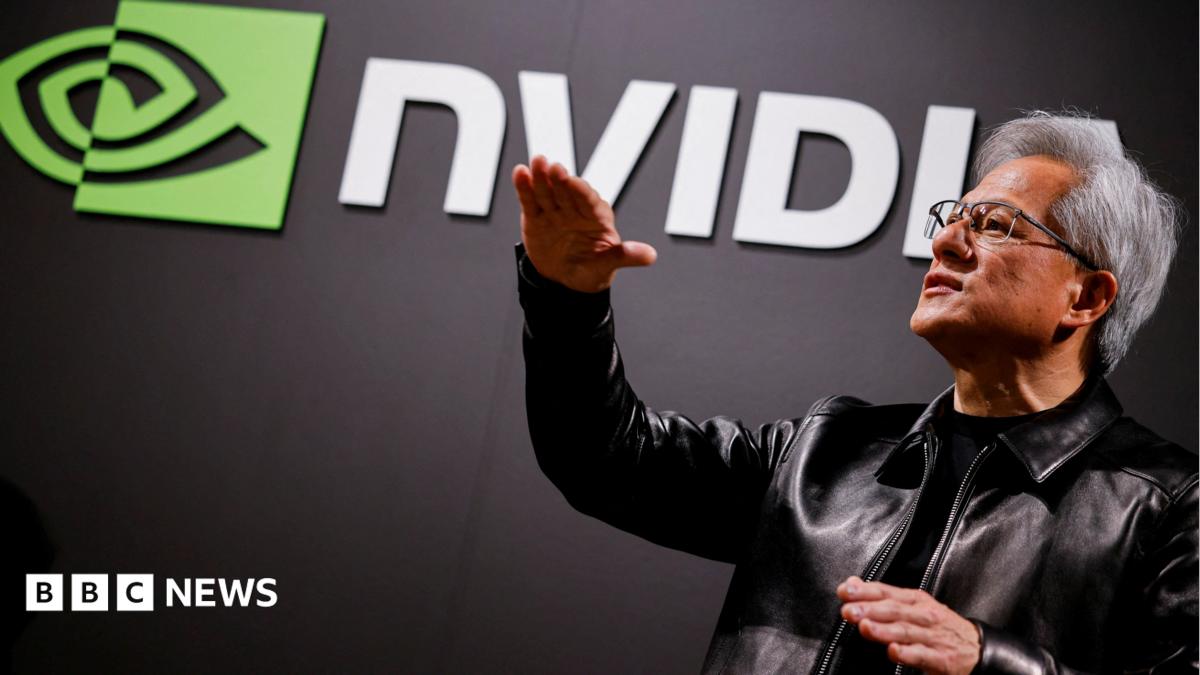
Nvidia has teamed up with some of Wall Street’s largest banks to help raise $500bn (£370bn) in capital to develop artificial intelligence (AI) infrastructure.
The chipmaker said it had struck deals with Apollo, BlackRock, Blackstone, Brookfield, Goldman Sachs and KKR, and that the banks were for the first time treating AI hardware and infrastructure, often referred to as “compute”, as a separate asset class.
“In AI, compute is revenue”, Jensen Huang, chief executive of Nvidia, said. “We are bringing the world’s leading long-term capital providers together to independently underwrite AI infrastructure.”
The financing will go towards Nvidia’s own projects and those being built by its partners.
Infrastructure projects backed by this fund will include the construction of new data centres to house, operate, and cool miles of stacked computer chips that process AI data and actions.
This will also back new factories to manufacture the AI chips needed to power these systems.
“Compute has become a critical infrastructure asset”, Joe Bae and Scott Nuttall, co-cheif executives of KKR, said in a joint statement. “As we’ve scaled our approach to digital infrastructure, we’ve learned that delivery, not ambition, is the hard part.”
Essentially every major technology and AI company uses Nvidia’s computer chips, or graphics processing units (GPUs), to power their services, AI platforms and AI chatbots.
Companies using Nvidia’s popular chips or GPUs include Google, Meta, Amazon, Microsoft, SpaceX, Tesla, OpenAI and Anthropic.
Such companies have collectively spent over $1 trillion, external in just three years on AI projects and infrastructure, with much more spending expected. And their demand for Nvidia’s chips and services has driven the stock market value of the company up five fold in three years.
In a statement on Monday, Huang referred to Nvidia’s role as a chip-maker as the company’s beginning.
“Today, we are helping create a new class of productive, investable infrastructure: AI factories,” he said.
With a new ability to tap some funding from the banks partnering with Nvidia, such banks will be able to finance more of the AI boom.
Jim Zelter, president of Apollo, a lender which manages more than $800 million in assets, said: “Modern compute has emerged as a scarce, mission-critical asset class.”
It is also “positioned to drive significant long-term economic growth and productivity gains”, Zelter added.
BlackRock last month entered into an individual deal with Meta, external to finance and take a majority ownership stake in one data centre in Texas.
Anthropic also recently entered into a deal with Macquarie Asset Management and GIC, an investment bank in Singapore, for its own build-out of AI infrastructure.
The company did not specify the size of the deal, but said more financing was needed as its popular chatbot Claude had become so popular that the “demand requires significant new compute”.


My name is María Fernanda and I’m currently studying an MBA. My inspiration investors are Warren Buffett, Peter Lynch and Terry Smith, so I look for quality companies at a reasonable valuation. I believe that, in the long term, fundamentals are what drive the share price, so I look to predict what a business’s earnings per share will do.
Analyst’s Disclosure: I/we have a beneficial long position in the shares of GRID:CA either through stock ownership, options, or other derivatives. I wrote this article myself, and it expresses my own opinions. I am not receiving compensation for it (other than from Seeking Alpha). I have no business relationship with any company whose stock is mentioned in this article.
Seeking Alpha’s Disclosure: Past performance is no guarantee of future results. No recommendation or advice is being given as to whether any investment is suitable for a particular investor. Any views or opinions expressed above may not reflect those of Seeking Alpha as a whole. Seeking Alpha is not a licensed securities dealer, broker or US investment adviser or investment bank. Our analysts are third party authors that include both professional investors and individual investors who may not be licensed or certified by any institute or regulatory body.
Operator
Good morning, and welcome to the RadNet, Inc. Second Quarter 2026 Financial Results Conference Call. [Operator Instructions] Please note, this event is being recorded.
I would now like to turn the conference over to Mark Stolper, Executive Vice President and Chief Financial Officer. Please go ahead.
Mark Stolper
Executive VP & CFO
Thank you. Good morning, everyone, and thank you for joining Dr. Howard Berger and me today to discuss RadNet’s second quarter 2026 financial results. On this call, we have also invited Kees Wesdorp, President and CEO of Digital Health, and Sham Sokka, Chief Operating and Technology Officer of Digital Health. who will share additional information about the progress of the digital health operating segment.
Before we begin today, we’d like to remind everyone of the safe harbor statement under the Private Securities Litigation Reform Act of 1995. This presentation contains forward-looking statements within the meaning of the U.S. Private Securities Litigation Reform Act of 1995. Specifically, statements concerning anticipated future financial and operating performance, RadNet’s ability to continue to grow the business by generating patient referrals and contracts with radiology practices, recruiting and retaining technologists, receiving third-party reimbursement for diagnostic imaging services, successfully integrating acquired operations, generating revenue and adjusted EBITDA for the acquired operations as estimated, successfully selling and licensing digital health solutions, among
Business
Ross Gerber Wants Elon Musk To Build A Starlink AI Phone That Has No Apps At All, Investor Says Today
Investor Ross Gerber is pitching Elon Musk on a new kind of smartphone: one built around Starlink’s satellite network, powered by artificial intelligence, and stripped of the app-based interface that has defined mobile devices for nearly two decades.
Gerber, the chief executive of Gerber Kawasaki Wealth and Investment Management and a longtime commentator on Musk’s companies, laid out the concept in a series of posts on the social platform X over the weekend. He described envisioning a Starlink-powered phone with roughly three days of battery life that would abandon traditional app icons entirely in favor of a single, instruction-driven interface. According to Gerber, the device would simply do what it’s told, functioning less like a conventional smartphone and more like a direct extension of an AI assistant.
The idea emerged partly as a response to a competing device concept from OpenAI. Gerber criticized reports of a smart speaker under development at the Sam Altman-led company, calling the move an “obvious miss” and arguing that a phone-based approach, rather than a stationary speaker, made more sense as a vehicle for consumer AI. Details of OpenAI’s hardware plans have circulated for months amid broader industry speculation about a wave of new AI-native devices, including wearables and other non-traditional form factors, following high-profile hires and partnerships in the space.
In his vision for the Starlink phone, Gerber said the device would be able to connect to the internet anywhere in the world by relying on SpaceX’s satellite network rather than traditional cellular infrastructure, and that it would come with a fixed-rate cost structure rather than the tiered data plans typically offered by wireless carriers. The pitch drew on Starlink’s existing reputation for providing connectivity in remote or underserved areas, a capability SpaceX has marketed heavily since the satellite internet service’s public launch.
The concept gained additional traction in the replies to Gerber’s posts, where another user directly suggested that Musk build a Starlink-branded smartphone, adding that they would switch away from their current wireless carrier if such a device became available. Gerber endorsed the idea in his response, saying, “Many would buy one just as a back up… I have two starlink systems.” His reply pointed to Starlink hardware’s existing appeal among a subset of consumers already using the satellite service as a backup or supplemental connection alongside traditional broadband or cellular service.
Neither Musk nor SpaceX has publicly responded to Gerber’s proposal, and there has been no indication that a Starlink-branded phone is currently in development. Musk has, however, spoken recently about expanding Starlink’s role in connected devices more broadly. The billionaire recently discussed plans to eventually equip what he described as billions of vehicles with Starlink connectivity, following the appearance of a Tesla robotaxi, sometimes referred to as a cybercab, spotted testing in Dallas equipped with a Starlink dish. Musk has framed satellite-based connectivity as one of the only practical ways to deliver high-bandwidth internet access to a global fleet of connected vehicles, given the limitations of relying solely on terrestrial cellular networks.
Gerber’s proposal comes at a notable moment for SpaceX, whose stock traded higher in premarket activity Monday. Shares climbed more than 3% to above $137, pushing the stock back above its initial public offering price of $135 per share after a stretch of declines in recent weeks. SpaceX had fallen sharply from its post-IPO high in the weeks following its public listing, a decline that drew commentary from other market watchers questioning whether the stock’s valuation had run ahead of the company’s near-term fundamentals. Despite Monday’s rebound, ranking data tracked by Benzinga has continued to show an unfavorable price trend for the stock across short, medium and long-term measures.
The idea of a satellite-connected, AI-driven phone touches on several trends converging across the technology industry in 2026, as major players race to define what a truly AI-native device might look like. Apple, Google and a range of startups have all faced questions in recent months about how artificial intelligence assistants might eventually reshape or replace the app-centric interface that has defined smartphones since the iPhone’s debut in 2007. OpenAI’s reported hardware ambitions, along with device concepts from other AI labs, reflect a broader industry bet that voice- and instruction-based interaction could eventually reduce reliance on the grid-of-apps format that has dominated mobile computing for nearly two decades.
For SpaceX and Starlink specifically, a phone concept would represent a significant expansion beyond the company’s current hardware lineup, which has centered on satellite dishes and routers designed for home, business and vehicle connectivity rather than handheld consumer devices. Musk has previously discussed direct-to-cell satellite technology enabling standard smartphones to connect to Starlink’s network without specialized hardware, a service SpaceX has been rolling out in partnership with wireless carriers including T-Mobile in the United States. A dedicated Starlink-branded phone, as described in Gerber’s posts, would go further by building satellite connectivity directly into a standalone device rather than layering it onto existing carrier networks.
Whether Musk or SpaceX ultimately act on Gerber’s suggestion remains unclear, and no formal announcement or roadmap for such a device has been made public. For now, the proposal remains a piece of investor commentary rather than a confirmed product in development, though it adds to a growing public conversation about what shape the next generation of AI-driven consumer hardware might take.
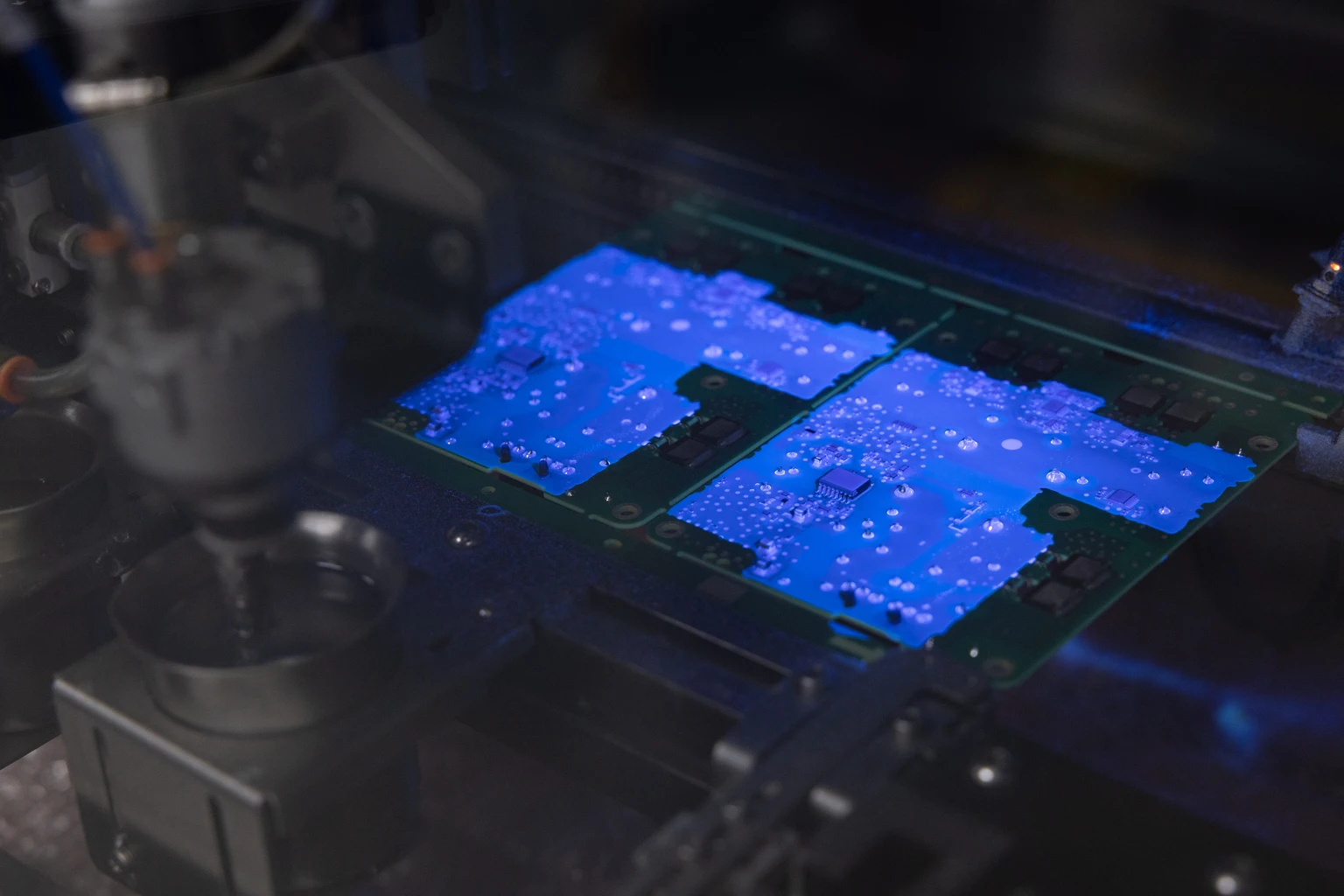
InTest's Downstream CAPEX Cycle Is Already Showing Signs Of Decline
Business
Intel Shares Slide Below The $100 Mark As Chipmaker Unveils Surprise $15 Billion Stock Offering Today
Shares of Intel Corp. fell more than 4% Monday morning after the chipmaker announced a surprise $15 billion underwritten public offering of common stock, sending the stock back below the psychologically significant $100 level after weeks of sharp gains.
The stock traded at $97.21 as of 10:05 a.m. Eastern time, down $4.44, or 4.37%, on the Nasdaq. Shares had fallen as much as 5% earlier in the session to around $96.97, according to trading data, before paring some of the decline. The drop stood out against a broader market that was largely flat Monday, with the S&P 500 up just slightly and the Nasdaq Composite little changed, underscoring that the move was driven by company-specific news rather than any sector-wide or macroeconomic pressure.
Intel disclosed the proposed stock sale in a regulatory filing Monday, saying it plans to use the net proceeds for general corporate purposes, including capital expenditures and working capital, as the company continues to fund an ongoing turnaround effort centered on expanding its chip manufacturing and foundry operations. The company did not specify the exact number of shares to be offered in its initial announcement.
The offering lands at a moment of relative strength for Intel’s stock, which had more than doubled so far in 2026, gaining roughly 175% year-to-date through Friday’s close before Monday’s announcement. That rally gave the company what analysts described as a favorable window to raise growth capital while its shares were trading at elevated levels, even though the move still triggered investor concern over the dilution that a $15 billion equity raise would cause for existing shareholders.
The stock sale follows a string of recent developments underscoring both Intel’s improving operational momentum and the scale of investment still required to execute its turnaround. The company’s most recent quarterly results showed revenue climbing 25.4% year-over-year to $16.13 billion, with its Data Center and AI segment posting 59% growth, a performance that has helped fuel investor optimism about Intel’s position in the broader AI buildout. Intel has guided third-quarter 2026 revenue to a range of $15.8 billion to $16.8 billion, giving underwriters recent operating momentum to highlight as they market the new shares to investors.
At the same time, Intel has continued to raise its spending plans. The company lifted its 2026 capital expenditure outlook to $20 billion, up from a prior target of $18 billion set in July, as it works toward a stated goal of beginning high-volume production on its next-generation 14A manufacturing process by 2028. That expanding capital intensity has kept balance-sheet concerns in view for some investors, with Intel carrying roughly $50.5 billion in debt against approximately $29.7 billion in cash and investments, a gap that has factored into cautious commentary from parts of the analyst community even as the company’s turnaround narrative has gained broader traction this year.
Wall Street’s response to the stock offering reflected a familiar divide in sentiment toward Intel. The broader analyst consensus rating sits at Hold, with an average price target near $112, implying continued confidence in the stock’s longer-term trajectory even after Monday’s pullback. Rosenblatt has remained a notable outlier, maintaining a Sell rating on the stock while recently raising its price target to $65 from $50, a level that reflects lingering skepticism about Intel’s ability to fund its expansion and execute its foundry ambitions without further diluting shareholders.
Monday’s decline adds to a period of significant volatility for Intel shares over the past two weeks. The stock climbed from around $81.88 on July 29 to a high above $103 on August 7, a rapid run driven by a mix of positive earnings momentum, progress on new product initiatives including HDMI 2.1 packaging technology, and broader optimism around Intel’s role in artificial intelligence infrastructure. That runup had left the stock trading in a tight range between roughly $100 and $103 in the days leading up to Monday’s offering announcement, before the new stock sale abruptly reversed the recent momentum.
The offering also comes just days after Intel disclosed an $8.2 billion investment tied to SoftBank, a transaction reported last week that added to a series of high-profile financial moves the company has made this year as it works to shore up its balance sheet and fund its manufacturing ambitions. Intel has increasingly turned to outside capital and strategic partnerships over the past year as it seeks to compete more directly with rivals in both traditional chipmaking and the broader artificial intelligence hardware market, a shift that has reshaped how investors evaluate the company relative to peers such as AMD, Nvidia and Broadcom.
Notably, those peer stocks held comparatively steady Monday even as Intel shares slid, reinforcing that the day’s move was tied specifically to the equity offering rather than any broader shift in sentiment toward the semiconductor sector. Some market commentary Monday pointed to a potential near-term retest of the $80 support level for Intel shares if dilution concerns persist, though the stock’s sharp gains earlier in the year have left it well above where it traded for much of the past two years.
With the offering still pending completion, investors are likely to watch closely for further details on pricing and the final size of the stock sale in the coming days, along with any additional commentary from Intel executives on how the newly raised capital will be allocated across the company’s expanding manufacturing and AI-related investment plans.
Keith Grossman Warns Crypto Must Prove Its Value as 100+ Projects Fold in 2026

Andy Cohen Defends Housewives Having Different Politics

#uang #coin uang lama


-

 Fashion3 days ago
Weekend Open Thread: Mattifying Sunscreen
-

 Fashion3 days ago
Frugal Friday’s Workwear Report: Cap-Sleeve Pointelle Crewneck Sweater
-

 Sports5 days ago
Jordan Coyle & Cordiamo take Laya Arena Stakes at RDS
-

 News Videos3 days ago
Can Astrology Help Find Gold and Silver Trends? A Financial Astrology Guide
-
 Business5 days ago
US stocks: Dow closes at record on Mideast optimism; SpaceX, AMD drag Nasdaq
-
 Crypto World7 days ago
US Tech Stocks See Largest 5-Week Inflow in History: Can Nasdaq Break Its Downtrend?
-

 Politics5 days ago
Reform UK And Greens Sink To Lowest Favourability Ratings To Date
-

 Business6 days ago
Nvidia Stock Climbs 2.5% as Chip Sector Rally Builds Ahead of AMD Earnings, Nvidia’s Own Report Looms
-

 Tech6 days ago
OpenAI, Anthropic AI agents targeted real people and systems in cyber tests
-

 Crypto World6 days ago
Polymarket targets $20 billion valuation as competition heats up in prediction market sector
-

 Business5 days ago
Supply chain issues impact Ingredion
-
 Crypto World7 days ago
CLARITY Act Senate Vote Locked In, But 60-Vote Hurdle Looms Large
-

 Tech3 days ago
Rinn Pharma & Biopharma to join NordicPharmaTrain network
-
 Crypto World6 days ago
Dow and S&P 500 Hit Records on AI Earnings: When Will the Bubble Burst?
-

 Business2 days ago
How to Start a Cleaning Business: A Step-by-Step Guide
-

 Crypto World7 days ago
The Senate has one week: CLARITY’s last August window
-

 Business2 days ago
Datadog: Best Of Breed For Multiple Reasons
-

 Business7 days ago
CNH Industrial Shares Jump Over 15% After Beating Estimates and Raising Full-Year Earnings Guidance
-

 Business2 days ago
BDC Weekly Review: Private BDC Q2 Numbers Are Strong
-
 Crypto World6 days ago
Dollar Index Trapped at 100 as Hawkish Fed Meets Official Selling
You must be logged in to post a comment Login