
Business
What Software Do You Actually Need?


Launching an online casino in the UK is one of the more technically involved projects in the digital business space. The UK market is mature, player expectations are high, and the technical standards operators must meet are clearly defined.
Getting the software right from the start is not just a convenience — it is what determines whether your platform holds together at launch and continues to scale after it.
The good news is that the market for casino infrastructure has developed significantly over the past decade. Operators today have access to modular, API-driven platforms that can be assembled into a working product far faster than was possible five years ago. The challenge is knowing what each component actually does and how the pieces connect — which is exactly what this guide covers.
Before getting into specifics, here is the framing: a casino platform is not a single piece of software. It is a collection of interdependent systems covering player identity, game delivery, payments, promotions, and business reporting. When operators talk about choosing online gambling software, they are really making a set of parallel decisions about which vendor handles which layer and how those layers communicate. Getting that architecture right is the foundation everything else sits on.
The Core Software Stack Every UK Casino Needs
Every operational casino platform, regardless of size or market positioning, runs on a small set of foundational systems. These are not optional modules — they are the baseline requirements for going live and staying compliant with the standards expected in the UK market.
Think of the core stack as the skeleton of your operation. Without any one of these components functioning correctly, the entire platform either fails to launch or creates serious operational risks once live.
The essential components are:
- Player Account Management (PAM) — manages identity verification, session control, player segmentation, responsible gambling controls (deposit limits, cooling-off periods, self-exclusion), and player history
- Game delivery layer — connects your front end to game content via APIs, either through direct provider agreements or a game aggregator
- Payment processing infrastructure — handles deposits, withdrawals, currency conversion, and fraud screening
- Back-office reporting system — gives you real-time visibility into GGR, NGR, player activity, and game performance
- Bonus and CRM module — manages promotional mechanics including free spins, deposit match offers, loyalty tiers, and retention campaigns
- Anti-fraud and AML tooling — monitors transaction behavior, flags suspicious activity, and supports your AML reporting obligations
Each of these systems can come from a single platform vendor or be assembled from multiple best-in-class tools. The right approach depends on your budget, timeline, and how much internal technical capacity you have to manage a multi-vendor environment.
Player Account Management: The System Everything Connects To
The PAM system is the operational center of a casino platform. Every player interaction flows through it — registration, KYC checks, deposits, gameplay sessions, bonus claims, and withdrawals. If your PAM is slow, poorly documented, or missing key features, you will feel the impact across every other part of the product.
In the UK specifically, PAM systems need to handle a set of responsible gambling controls that are not optional. These include deposit limits configurable by players on daily, weekly, and monthly cycles; session time reminders; cooling-off periods; and self-exclusion functionality that connects to the national self-exclusion scheme.
All of these controls must be enforced server-side. Client-side-only implementations — where the limit is only applied in the browser or app rather than at the server level — do not meet UK technical standards. This is a detail that catches operators out when they select platforms that were built primarily for less regulated markets and attempt to apply them to the UK without modification.
A strong PAM system also supports player segmentation, which feeds directly into your CRM and retention strategy. Being able to group players by deposit behavior, game preference, session length, and lifecycle stage is what makes the difference between a generic promotional calendar and one that actually drives revenue.
Game Delivery: Direct Integration vs. Aggregation
Getting game content onto your platform involves one of two approaches: signing direct agreements with individual game providers and integrating their APIs one by one, or connecting to a game aggregator that handles those relationships centrally and delivers everything through a single API.
Most UK operators, particularly those launching for the first time, use an aggregator. The practical reason is straightforward: direct integrations take time and require ongoing technical maintenance for each provider. A single aggregator connection gives you access to content from dozens or hundreds of studios while reducing the integration workload to one project.
The game library itself needs to cover slots, live dealer titles, and table games as a minimum. UK players expect a broad content offering, and a library of content from at least 20 to 30 providers is generally considered the baseline for a credible casino product. Live casino content in particular requires careful platform support, since live streaming imposes stricter technical requirements on your infrastructure around latency and connection stability.
Payment Infrastructure: What The UK Market Requires
Payment processing in the UK has a set of hard technical requirements that your platform must meet, separate from any commercial decisions about which payment methods to offer. The most significant of these is the ban on credit card deposits, which has been in effect since April 2020. Your payment gateway must block credit card transactions at the processing layer — not just at the front end.
Beyond that, your payment infrastructure needs to handle a mix of payment methods that UK players actually use:
- Debit cards — Visa and Mastercard remain the dominant deposit methods
- Open banking payments — increasingly preferred by regulators as they provide verified account ownership for source-of-funds checks
- E-wallets — PayPal, Skrill, and similar options remain widely used, with additional AML checks required on e-wallet deposits above defined thresholds
- Cryptocurrency — not a primary method in the UK market, but increasingly expected as an option
Your payment system must also support deposit limits enforcement in real time. When a player sets a daily limit, the payment gateway must prevent deposits that would breach that limit from processing — not just flag them for review afterward.
AML monitoring is a separate but related requirement. Your platform needs automated transaction monitoring that can identify patterns consistent with money laundering and generate suspicious activity reports when appropriate. Most payment processing vendors for the iGaming sector include this as a core feature rather than an add-on.
Back-Office And Reporting Tools
The back office is where you actually run the business. It is the administrative layer that gives your operations team visibility into what is happening on the platform and the controls to act on it. A weak back office does not just make management harder — it creates blind spots that affect your ability to make good commercial decisions.
The minimum feature set for a competent back-office system includes:
- Real-time GGR and NGR reporting by game, provider, player segment, and time period
- Player-level activity history with full transaction logs
- Bonus performance tracking — redemption rates, cost per bonus, incremental revenue generated
- Affiliate tracking and commission management
- Risk alerts and flagging tools for unusual account activity
- Game performance dashboards showing RTP, hold rates, and session counts by title
Operators who underinvest in back-office tooling often find themselves making decisions based on lagging data, which leads to slow responses to game underperformance, bonus abuse, and player churn. The more granular your reporting, the better your ability to manage the business proactively.
Responsible Gambling Tools As A Technical Requirement
Responsible gambling functionality is not a separate add-on or a compliance checkbox. In the UK, these tools are built into the technical requirements for operating a casino platform, and they need to function correctly at all times.
The specific tools that must be present and working include:
- Deposit limit setting on daily, weekly, and monthly cycles, applied server-side
- Loss limit settings at the same frequency
- Session time reminders that alert players when they have been active for a defined period
- Reality checks with configurable display frequency during gameplay
- Cooling-off periods that prevent players from reversing a self-exclusion decision immediately
- Self-exclusion that connects to the national scheme and prevents re-registration during an active exclusion period
The platform must also perform affordability checks when player spending reaches defined thresholds, a requirement that has become more strictly enforced since 2024. Your PAM system and payment layer need to communicate accurately to trigger these checks at the right point.
Custom Build vs. Pre-Built Platform
Operators launching in the UK typically face a decision between building a custom platform from scratch and selecting a pre-built solution from an established vendor. Both approaches have real trade-offs worth understanding before making a commitment.
A custom build gives you full control over the technical architecture, user experience, and product roadmap. You own the codebase, which means no revenue share with a platform vendor and no dependency on their development priorities. The drawback is time and cost. Building a production-ready casino platform with all the components described in this guide takes significantly longer than deploying a pre-built solution, and the ongoing engineering costs are higher.
A pre-built platform gets you to market faster and shifts the maintenance burden to the vendor. The trade-off is less flexibility and, in many cases, a revenue share arrangement that reduces your margin as the business grows.
Most operators launching in the UK for the first time choose a pre-built or turnkey platform for the initial launch, then invest in custom development once the business is generating consistent revenue and the product requirements are better understood. This approach reduces the risk of over-engineering before you know exactly what your players need.
Putting The Stack Together
The software decisions you make at the start of a UK casino project have a longer shelf life than most other decisions in the build. Changing a PAM system or a payment infrastructure provider after launch is a significant technical project that affects every part of the platform. Getting it right the first time is worth the upfront investment in research and vendor evaluation.
The UK market rewards operators who take player experience seriously at the technical level — fast game loading, reliable payment processing, clear responsible gambling controls, and a back office that gives the team real data to work with. Each of these outcomes is a product of good software selection, not luck.

Business
Tata Communications Q4 Results: Profit falls 75% YoY to Rs 259 crore; co declares Rs 17.5 dividend

The steep decline in profit was largely due to a high base in the year-ago quarter, which had benefited from exceptional gains, including a one-time gain related to a subsidiary transaction. In contrast, the current quarter saw no such gains, leading to a normalization of earnings.
On a sequential basis, profit declined 29% from Rs 364 crore in the December quarter, indicating some pressure on operational performance as well. Profit before tax stood at Rs 434 crore, down from Rs 914 crore a year earlier.
Despite the profit decline, revenue growth remained healthy, driven by higher demand for network and transmission services. Total income for the quarter rose to Rs 6,597 crore, compared with Rs 6,059 crore in the year-ago period.
Network and transmission expenses increased to Rs 3,081 crore, reflecting scale-up in operations, while employee benefit costs rose to Rs 1,240 crore. Other expenses declined on a YoY basis, helping partially offset cost pressures.

Operating profitability remained under pressure, with profit before exceptional items at Rs 414 crore compared to Rs 336 crore a year earlier, but lower than the December quarter. Higher operating costs, along with the absence of one-off gains, weighed on overall margins during the quarter.
For the full year FY26, Tata Communications reported revenue from operations of Rs 24,803 crore, up 7% YoY, while profit stood at Rs 997 crore compared with Rs 1,837 crore in FY25, again impacted by exceptional items in the previous year.The board has also recommended a final dividend of Rs 17.5 per share (175%) for FY26. The dividend will be paid after shareholder approval at the upcoming annual general meeting.

Resilience is one of those words that gets used a lot in business. But when you strip it back, it’s not complicated. It simply means being able to keep moving forward when things don’t go to plan.
And if the last few years have shown us anything, it’s that plans rarely stay fixed for long. Markets shift, technology moves quickly and economic uncertainty can appear with very little warning.
For leaders, especially those running small and medium-sized businesses, the challenge isn’t avoiding change. It’s helping your team deal with it.
In my experience, resilient businesses are almost always led by resilient people.
Over the past 25 years working in fire safety and security at Chubb, I’ve seen plenty of organisations face disruption. Some adapt quickly and come out stronger. Others struggle because uncertainty unsettles the team and slows decision-making.
More often than not, the difference comes down to leadership. Resilient leaders create an environment where people stay focused, tackle problems head-on and keep moving forward even when things feel uncertain.
Why leadership matters more than ever
There’s growing evidence that the quality of leadership has a direct impact on how well organisations cope with change.
The CIPD Good Work Index 2025 highlights how strongly supportive leadership and good line management influence employee engagement, motivation and wellbeing. The report shows that when people feel supported by their managers and trusted in their roles, they’re far more likely to stay motivated and perform well.
For SME leaders, that’s an important point.
Resilience isn’t something that only large organisations with big HR departments can build. In fact, smaller businesses often have an advantage because leaders are closer to their teams and communication tends to be more direct.
That visibility means leaders have a real opportunity to shape how people respond when challenges arise.
Resilience is something you build
One of the biggest misconceptions about resilience is that it’s something you either have or you don’t. In reality, resilience is something that can be developed.
Teams become more resilient when they’re trusted to solve problems, encouraged to learn from mistakes and given the confidence to take ownership of challenges. For leaders, creating that environment starts with the way we react when things go wrong.
It’s easy in business to look for someone to blame when a problem appears. But resilient organisations tend to take a different approach. Instead of focusing on who made the mistake, they focus on what can be learned and how the issue can be solved.
That shift in mindset builds confidence across the team. People feel safer speaking up, sharing ideas and taking responsibility.
Give people the space to step up
Another key part of building resilience is trust.
Strong leaders understand that people grow when they’re given the chance to think for themselves. When employees are empowered to make decisions and solve problems, they build confidence and adaptability. Over time, that confidence becomes one of the organisation’s biggest strengths.
Transparency also plays a big role here.
Periods of change can easily create uncertainty. And when leaders stay quiet, people often assume the worst. Being open about challenges helps teams understand the bigger picture and encourages everyone to pull together.
It doesn’t mean having all the answers. It simply means being honest about the situation and focusing on what can be done next.
Leadership shouldn’t sit with one person
Another lesson I’ve learned over the years is that resilience doesn’t sit with one individual. The strongest organisations develop leadership across the whole business.
Future leaders often appear in unexpected places, which is something I’ve discovered at Chubb through Building Great Leaders – a framework we’ve created to help our people develop their leadership competency, no matter what their role is. Someone who shows initiative, supports colleagues or steps up during a difficult project may well become a great leader with the right encouragement.
Businesses that invest time in developing people early tend to cope better when challenges arise. When people feel capable and trusted, they’re far more likely to step forward rather than step back. And that makes a huge difference when change inevitably comes along.
Culture sets the tone
In many ways, resilience spreads through culture. Teams take their cues from the behaviour of their leaders. If leaders remain calm, focus on solutions and encourage collaboration, those behaviours quickly become the norm.
But the opposite is also true. If leaders panic or avoid difficult conversations, that uncertainty spreads just as quickly.
That’s why leadership development matters so much. It’s not simply about preparing someone for a management role. It’s about helping people develop the mindset and skills needed to navigate uncertainty.
Helping teams face whatever comes next
Change is part of business. Technology evolves, customer expectations shift and markets rarely stay still. Leaders can’t remove that uncertainty. What we can do is shape how our teams respond to it.
The most resilient organisations are the ones where people feel confident tackling problems, supporting one another and adapting when circumstances change. And that starts with leadership.
Because in the end, resilient leadership isn’t about having every answer. It’s about giving your team the confidence to face whatever comes next.

Gary Moffatt
Gary Moffatt is Managing Director at Chubb Fire & Security UK and Ireland, a leading provider of fire safety and security solutions. With a focus on connected technologies and 24/7 protection, Chubb helps organisations predict, prevent and respond to threats – safeguarding people, assets and property. Gary has spent more than 20 years with Chubb, progressing from one of the company’s first graduate scheme recruits to leading its UK operations. Drawing on extensive operational and commercial experience, he is a strong advocate for purpose-driven leadership and operational excellence. Gary is committed to delivering innovative, reliable solutions that protect people, enable business resilience and build lasting customer trust.
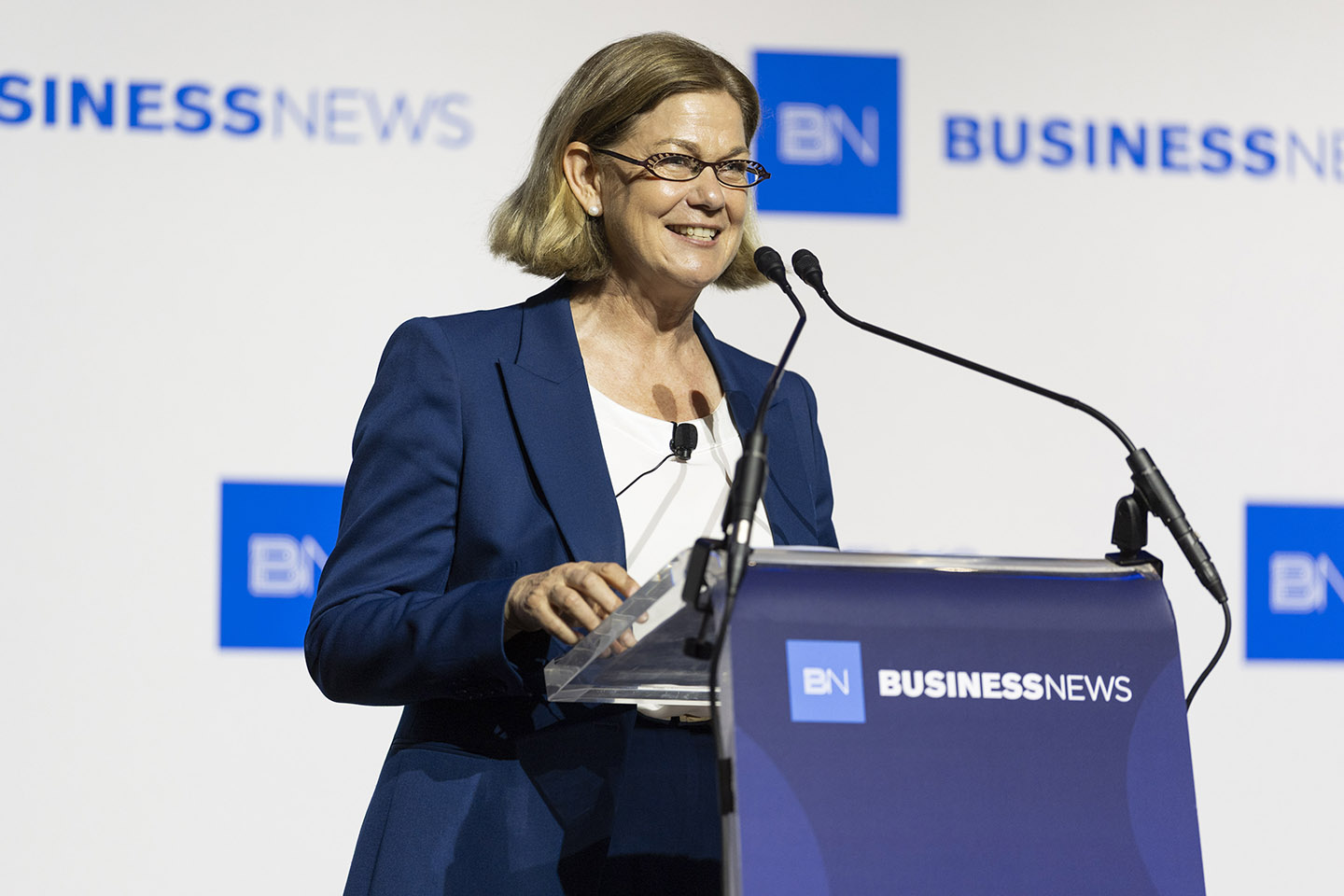
The state government has announced 120 additional hospital beds will be available to the public over the winter flu period, but it’s yet to reveal the cost of the pre-budget commitment.
Business
Capital One: Series N Preferreds Look Attractive With A H2 2027/H1 2028 Horizon (Upgrade) (NYSE:COF.PR.N)


I ventured into investing in high school in 2011, mainly in REITs, preferred stocks, and high-yield bonds, starting a fascination with markets and the economy that has not faded despite the years. More recently I have been combining long stock positions with covered calls and cash secured puts. I approach investing purely from a fundamental long-term point of view. On Seeking Alpha I mostly cover REITs and financials, with occasional articles on ETFs and other stocks driven by a macro trade idea.
Analyst’s Disclosure: I/we have no stock, option or similar derivative position in any of the companies mentioned, and no plans to initiate any such positions within the next 72 hours. I wrote this article myself, and it expresses my own opinions. I am not receiving compensation for it (other than from Seeking Alpha). I have no business relationship with any company whose stock is mentioned in this article.
Seeking Alpha’s Disclosure: Past performance is no guarantee of future results. No recommendation or advice is being given as to whether any investment is suitable for a particular investor. Any views or opinions expressed above may not reflect those of Seeking Alpha as a whole. Seeking Alpha is not a licensed securities dealer, broker or US investment adviser or investment bank. Our analysts are third party authors that include both professional investors and individual investors who may not be licensed or certified by any institute or regulatory body.

The Trump administration is in advanced talks for a financing package for Spirit Airlines as the carrier is facing the risk of a liquidation, according to a person familiar with the matter.
The iconic discounter Spirit has been challenged for years by rising costs, changing consumer tastes, an engine recall and a court-blocked plan to be acquired by JetBlue Airways two years ago.
“Spirit Airlines would be on a much firmer financial footing had the Biden administration not recklessly blocked the airline’s merger with JetBlue,” White House spokesman Kush Desai said in a statement to CNBC. “The Trump administration continues to monitor the situation and overall health of the U.S. aviation industry that millions of Americans rely on every day for essential travel and their livelihoods.”
Spirit had been facing a potentially imminent liquidation, people familiar with the matter told CNBC last week, speaking on the condition of anonymity to discuss matters that had not yet been made public. The Dania Beach, Florida-based carrier in August filed for its second Chapter 11 bankruptcy in less than a year, after it struggled to increase revenue to cover rising costs.
President Donald Trump hinted at potential government aid on Tuesday, telling CNBC’s “Squawk Box“, “Spirit’s in trouble, and I’d love somebody to buy Spirit. It’s 14,000 jobs, and maybe the federal government should help that one out.”
The terms of the talks weren’t immediately clear and a deal could still fall apart. The Wall Street Journal earlier reported that the talks were in an advanced stage.
“We are hopeful that the government will recognize the needs for emergency funds especially in the current economic environment,” a spokesperson for the Associated of Flight Attendants-CWA, which represents Spirit’s cabin crews, said in a statement. “The last thing our economy needs is tens of thousands more people out of work and the last thing the travelling public needs is fewer choices in air travel.”
The U.S. airline industry accepted more than $50 billion in taxpayer aid to weather the Covid-19 pandemic, which is still its biggest-ever crisis, but those funds weren’t handed to one specific airline. Some of the aid gave the U.S. government stock warrants for airlines.
Airlines also received a government bailout following the Sept. 11, 2001, terrorist attacks, but that money was also for more than one company. The U.S. in 2008-2009 also bailed out the auto industry during the financial crisis and took stakes in manufacturers.
The Trump administration has taken equity stakes in some companies it deemed critical to national security like Intel and USA RareEarth, though Spirit stands out as it is in bankruptcy.
In February, Spirit said it expected to exit bankruptcy in late spring or early summer, telling a U.S. court that it would shrink and focus its planes on high-demand routes and travel periods. Pilot and flight attendant unions had also made concessions, including going on furlough in recent months, in a bid to help Spirit survive.
But jet fuel prices have nearly doubled in some parts of the U.S. since then, further adding to challenges for Spirit and the rest of the airline industry.
As a low-fare airline that also faces competition from larger carriers with their own no-frills, basic economy offerings, it has grown harder for Spirit to cover expenses. Spirit had introduced extra-legroom seats and other premium options to try to cater to higher-spending customers.

All eyes on Raymond James earnings amid peer outperformance

Ski trips are usually seen as a break, but that’s not really how they play out. Across both education and business, they tend to take on a different role once you’re actually there.
Whether it’s students on school ski trips in a new environment or teams spending time together outside the office, things don’t work the same way as they usually do. It’s a different kind of experience from what happens in a classroom or a structured work setting.
This guide explores how ski trips are being used in practice, from student development to corporate travel, and why they are increasingly seen as part of long-term growth.
Understanding Why Ski Trips Go Beyond Recreation
Ski trips are often seen as a break from routine, but they are usually shaped by timing rather than choice. School terms and work schedules mean people travel when they can, not when conditions are ideal.
That carries into the experience. Plans shift, conditions change, and unfamiliar surroundings require constant adjustment. Even simple things, like getting around or coordinating with others, become part of the day.
In more structured environments, there is usually a clear plan. On a ski trip, that structure is less defined. Decisions are made more quickly, often without complete information.
The experience is shaped less by the skiing and more by how people manage everything around it.
How School Ski Trips Support Student Development
School trips have always been part of education, but settings like school ski trips tend to change how students move through the experience. Being away from their usual environment shifts expectations. Things feel less structured, and not everything runs to plan.
You start to see it in how students go about the day. They manage their own time, keep track of their things, and make small decisions without much guidance. It’s not always smooth, especially at the start.
Outside the classroom, things shift as well. Students spend more time together in shared spaces, and that changes how they interact. Some take on more responsibility, while others step into roles they wouldn’t usually take on in school. This is often why settings like business trips for schools feel different from the usual environment.
Learning to ski is part of that. Progress isn’t always steady, and mistakes are just part of it. For some, it means sticking with it even when things don’t go right, instead of stepping away.
Key Skills That Carry Into Education and the Workplace
What develops during these trips doesn’t stay limited to the setting itself. The situations students face tend to carry into how they approach other environments.
This often shows up in a few areas:
- People end up making decisions on the spot, especially when things aren’t fully planned
- Conversations are more direct when everyone’s figuring things out together
- There isn’t always a clear structure, so people just manage their time and responsibilities as they go
- Progress can be slow at first, so sticking with it matters more than getting it right immediately
These patterns don’t always stand out during the trip itself, but they tend to carry forward into more structured environments over time.
Why Businesses Are Investing in Corporate Ski Trips
Business travel still includes meetings and conferences, but that’s not always what defines the trip anymore. A lot of what happens around it ends up shaping the experience.
In that context, formats like corporate ski trips are becoming more common. They offer something different from structured programmes, not by design alone, but by nature of the environment itself.
Rather than being treated as one-off incentive, these trips are increasingly seen as part of a wider approach to engagement, where the setting plays a role in how teams spend time together.
How Travel Connects Education to the Workplace
The link between education and the workplace is not always direct. What is taught in structured settings does not always reflect how situations unfold in practice.
Experiences outside the classroom begin to narrow that gap. Programmes such as business trips for schools place students in environments that feel closer to real-world settings, where expectations are less defined and outcomes are not always predictable.
That exposure changes how learning is applied. Students move from following instructions to navigating situations more independently, often with less guidance than they are used to.
The gap between education and industry is starting to narrow. It’s not just about formal learning anymore, experience is part of how skills develop.
Travel as a Long-Term Investment in Development
Travel is not always approached as part of development, but its impact tends to build over time. Experiences outside routine often shape how individuals respond to unfamiliar situations later on.
You don’t really notice it at the time. It’s more something that shows up later, like in how people deal with things when plans change or when something doesn’t go the way they expected.
There’s also a shift in how travel is viewed. It’s less about stepping away and more about what carries forward afterwards.
In that sense, travel is no longer just an addition. It has started to sit alongside more traditional approaches, offering a different way of preparing individuals for what comes next.

Millions could be entitled to compensation as a result of commission arrangements between lenders and dealers.

3D Systems: Aerospace And Defense Narrative Isn't Compelling

Iluka Resources says the conflict in the Middle East has accelerated electrification efforts, as its capital expenditure on its under-construction Eneabba rare earths refinery nears $1 billion.
Tata Communications Q4 Results: Profit falls 75% YoY to Rs 259 crore; co declares Rs 17.5 dividend
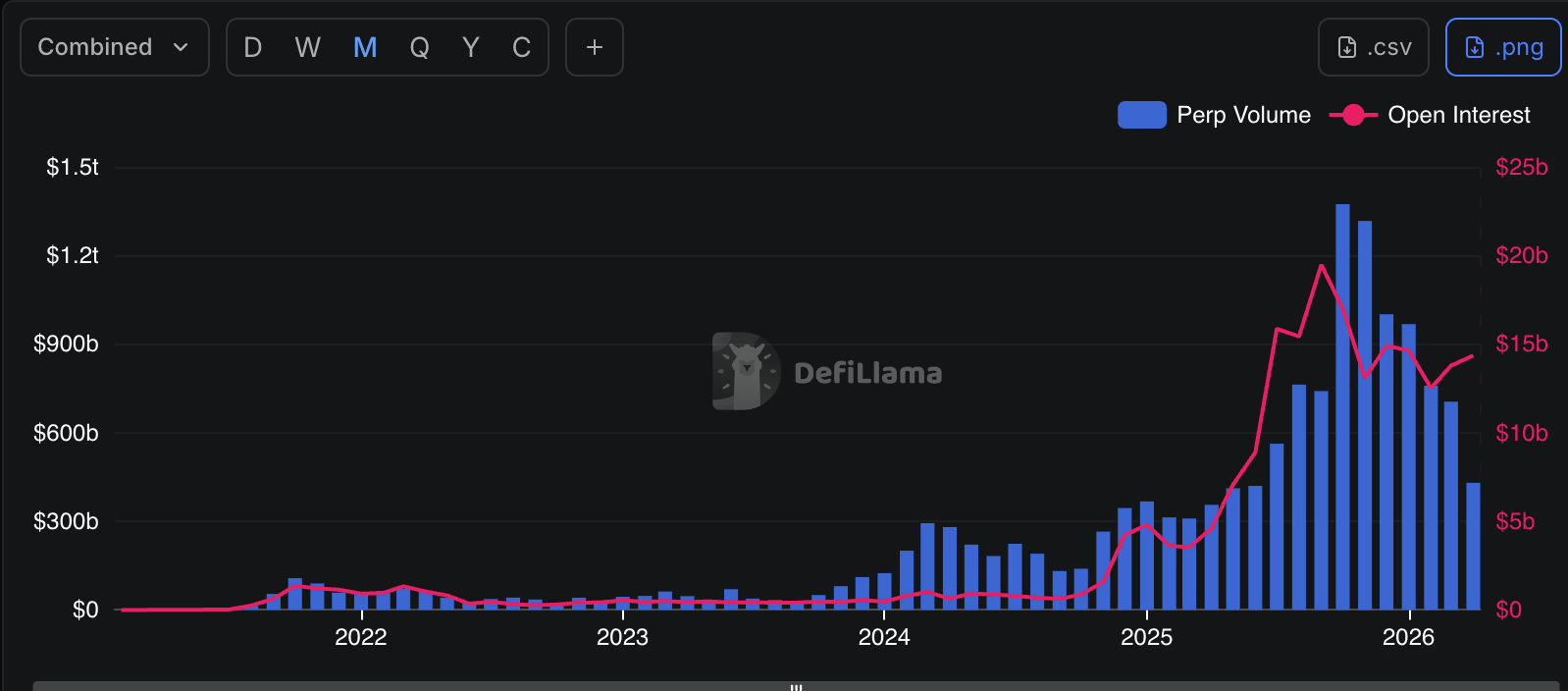
Polymarket and Kalshi Are Both Set to Launch Perp Trading

Jayda Cheaves Jokes About Being The Birthday “Piñata” (WATCH)

Manchester United reach agreement with Casemiro over contract clause amid transfer speculation

Steven Gerrard disagrees with Gary Neville over ‘shock’ Chelsea and Arsenal claim | Football

US brings back mandatory military draft registration


-

 Fashion5 days ago
Weekend Open Thread: Theodora Dress
-

 Sports5 days ago
NWFL Suspends Two Players Over Post-Match Clash in Ado-Ekiti
-

 Politics5 days ago
Palestine barred from entering Canada for FIFA Congress
-
Entertainment3 days ago
NBA Analyst Charles Barkley Chimes in on Ice Spice McDonald’s Fiasco
-

 Business3 days ago
Powerball Result April 18, 2026: No Jackpot Winner in Powerball Draw: $75 Million Rolls Over
-

 Crypto World5 days ago
Russia Pushes Bill to Criminalize Unregistered Crypto Services
-

 Tech4 days ago
Auto Enthusiast Scores Running Tesla Model 3 for Two Grand and Turns It Into Bare-Bones Go-Kart
-

 Politics3 days ago
Zack Polanski demands ‘council homes not luxury flats for foreign investors’
-

 Politics2 days ago
Gary Stevenson delivers timely reminder to register to vote as deadline TODAY
-

 Tech7 days ago
‘Avatar: Aang, The Last Airbender’ Leaked Online. Some Fans Say Paramount Deserves the Fallout
-
 Business6 days ago
Creo Medical agree sale of its manufacturing operation
-

 Business6 hours ago
Rolls-Royce Voted UK’s Most Iconic Trade Mark as IPO Register Hits 150
-

 Crypto World5 days ago
Russia Introduces Bill To Criminalize Unregistered Crypto Services
-
 Crypto World4 days ago
Kelp DAO rsETH Bridge Hack Drains $292M as DeFi Losses Top $600M in Two Weeks
-

 Sports6 days ago
British climbers complete new route in Swiss Alps
-

 Tech6 days ago
Ford EV and tech chief leaving automaker
-

 Sports6 days ago
“Felt Much Better Today”: Josh Hazlewood Opens Up On His Recovery Win Over LSG
-

 Entertainment7 days ago
Ruby Rose Accuses Katy Perry Of Sexual Assault, Police React
-

 Business6 days ago
Cheaper Doritos and Lays helps PepsiCo win back struggling snackers
-
 Entertainment6 days ago
Clavicular Says Streaming May Not Work Without Substances
You must be logged in to post a comment Login