Connect with us

Business

What Today’s Employees Actually Want

Published

on

What Today’s Employees Actually Want

Ask most HR leaders what makes a job offer competitive, and salary will still top the list. Ask employees the same question, and the answer looks increasingly different. New research indicates that flexibility, autonomy and wellbeing now carry more weight than pay when people decide where to work.

Agility EOR set out to answer that question properly, surveying 78,150 remote workers across the globe for its latest Work Life Statistics Report. The results don’t leave much room for employers still betting on salary alone to win the war for talent.

What the Research Found

Three figures stand out from the research carried out by Agility EOR, each pointing in the same direction. Just over half of respondents, 53%, say flexible scheduling has improved their work-life balance. A third, 33.1%, report that working remotely has actually boosted their productivity rather than dented it. And nearly one in five, 19.6%, say flexibility is the single most valuable form of support an employer can provide, ranking it above financial extras.

The pattern isn’t unique to Agility’s dataset either. The CIPD has separately reported that more than a million UK workers have walked away from jobs in recent years over the lack of flexible working. Businesses losing staff this way aren’t facing a recruitment problem so much as a retention one, and the fix looks the same either way.

Standard Benefits Aren’t Enough Anymore

A standard employee benefits package used to mean private healthcare, a company car allowance, and annual leave set at the statutory minimum. None of that has disappeared, but it’s stopped being the thing that wins an offer. Candidates are now looking beyond it, weighing up whether a role genuinely supports caring responsibilities, protects mental health, and gives them real control over how their day is structured.

Advertisement

Let’s look at how traditional packages weigh up against 2026 benefits:

Old standard 2026 equivalent
Office-based, fixed hours Remote-first working, flexible hours
Statutory annual leave Leave set 25% above the statutory minimum
Fixed salary only Option to trade salary for additional leave
Standard parental leave Dedicated carer and eldercare leave
General “family friendly” wording Expanded, specific family flexibility policies
Office allowance or car allowance Work-from-anywhere allowance

Salary Is No Longer the Final Word

One of the more unexpected findings is how many candidates are now willing to accept a lower salary if it means greater flexibility, autonomy, and control over their time. This represents a meaningful change in how people approach the classic pay-versus-conditions trade-off.

Chief HR Officer at Agility EOR, Scott Winter, explains: “Increasingly, we’re seeing candidates treat benefits as core compensation, not extras. Flexibility is now a dealbreaker. Employers relying on outdated benefit structures risk losing strong candidates, even when the salary is competitive. However, the future is more adaptable packages, not necessarily a bigger package.”

Rethinking the Employer’s Approach

For organisations still designing their benefits strategy around a fixed list of perks, this research points to a need for a rethink. It’s not about spending more, but about prioritising the kind of flexibility that actually changes how people experience their working lives.

Advertisement

That could mean rethinking core hours, expanding remote and hybrid options, formalising support for carers, or simply giving staff more say over how their leave is structured. The common thread is control: employees want a genuine say in how their working life fits around everything else going on, from school runs to caring for elderly relatives to simply protecting time for rest.

None of this means salary has become irrelevant. Pay still matters, and employers who fall well below market rate will always struggle to compete. But the evidence suggests that, once salary is broadly competitive, it stops being the deciding factor, and flexibility takes over as the thing that actually tips a decision one way or another.

Employers who treat this as a strategic priority, rather than a line in a job advert, are best placed to attract and keep talent in a market where flexibility, not salary, is increasingly the deciding factor. As a global Employer of Record in the UK and beyond, Agility EOR works with businesses to build exactly this kind of adaptable, benefits-led approach into their hiring from day one.

Advertisement

Continue Reading
Click to comment

You must be logged in to post a comment Login

Leave a Reply

Business

Small- and midcaps shine as blue-chip stocks struggle for momentum

Published

on

Small- and midcaps shine as blue-chip stocks struggle for momentum
Mumbai: India’s weary blue-chip stocks might suggest the equity market is in a rather comatose state, but beneath the surface, the picture is decidedly more sanguine.

Mid- and small-cap stocks have continued to defy index-level inertia amid a rush in primary-market listings. The average advance-to-decline (A/D) ratio – a widely watched indicator of overall market health – in August is up for the fifth consecutive month, its longest winning streak in more than two and a half years, pointing to significant investor interest beyond the typical frontbenchers that populate the two broadest gauges on the two competing exchanges.

Read more: Q1 earnings show resilience, but downside risks still loom. HSBC explains why

The average advance-to-decline ratio, a measure of the number of stocks rising versus those falling, stood at 1.07 so far in August, its highest level in four months. It has remained above 1 for five consecutive months, indicating that more stocks have advanced than declined. “This shows more stocks are rising than falling even though IT, FMCG and metals have not participated meaningfully,” said Manish Bhandari, CEO and Portfolio Manager at Vallum Capital.

Advertisement

The last time the A/D ratio showed similar strength for a longer stretch was between April 2023 and January 2024, when the ratio remained above one for 10 consecutive months.

Key Gauge Shows Small & Midcaps Powering St PlayAgencies

Investor Participation
A rising ratio indicates that buying is across a larger number of stocks, signalling strong market breadth. A falling ratio suggests gains are becoming concentrated in fewer stocks or that selling is becoming more widespread.
Retail investors’ appetite for mid- and small-cap stocks has kept this measure higher with equity schemes betting on these share segments getting a bulk of the flows in recent months.

In August, mid- and small-cap schemes received Rs 13,960 crore or 56% of the total equity flows, compared with Rs 11,692 crore, or 40% of the flows in the previous month. In contrast, large cap funds saw outflows of Rs 1,322 crore, their first outflow in 30 months, pointing to the lack of appetite for blue-chips in general.

The divergence between the key indices and the broader market is also visible in their performance. Since April, the Sensex and Nifty have gained 8% and 9%, respectively, while the Nifty Midcap 100 and Nifty Smallcap 100 have jumped 22% and 31%, respectively. The Nifty 500 has gained 15% during the period.

“The explanation is increasingly bottom-up: June-quarter profit growth for Nifty 50 companies reached 18%, the highest in 10 quarters, while 19 sectors beat earnings expectations and the upgrade-to-downgrade ratio improved to 1.5,” Bhandari said.

Advertisement

Experts said the divergence suggests that participation has been broader across the market, with investors finding value beyond the largest stocks. This includes stocks that became cheaper after earlier declines as well as growth stocks available at a discount to their potential returns.

Continue Reading

Business

Woolworths' profits boosted by Ooshies sales jump

Published

on

Woolworths' profits boosted by Ooshies sales jump

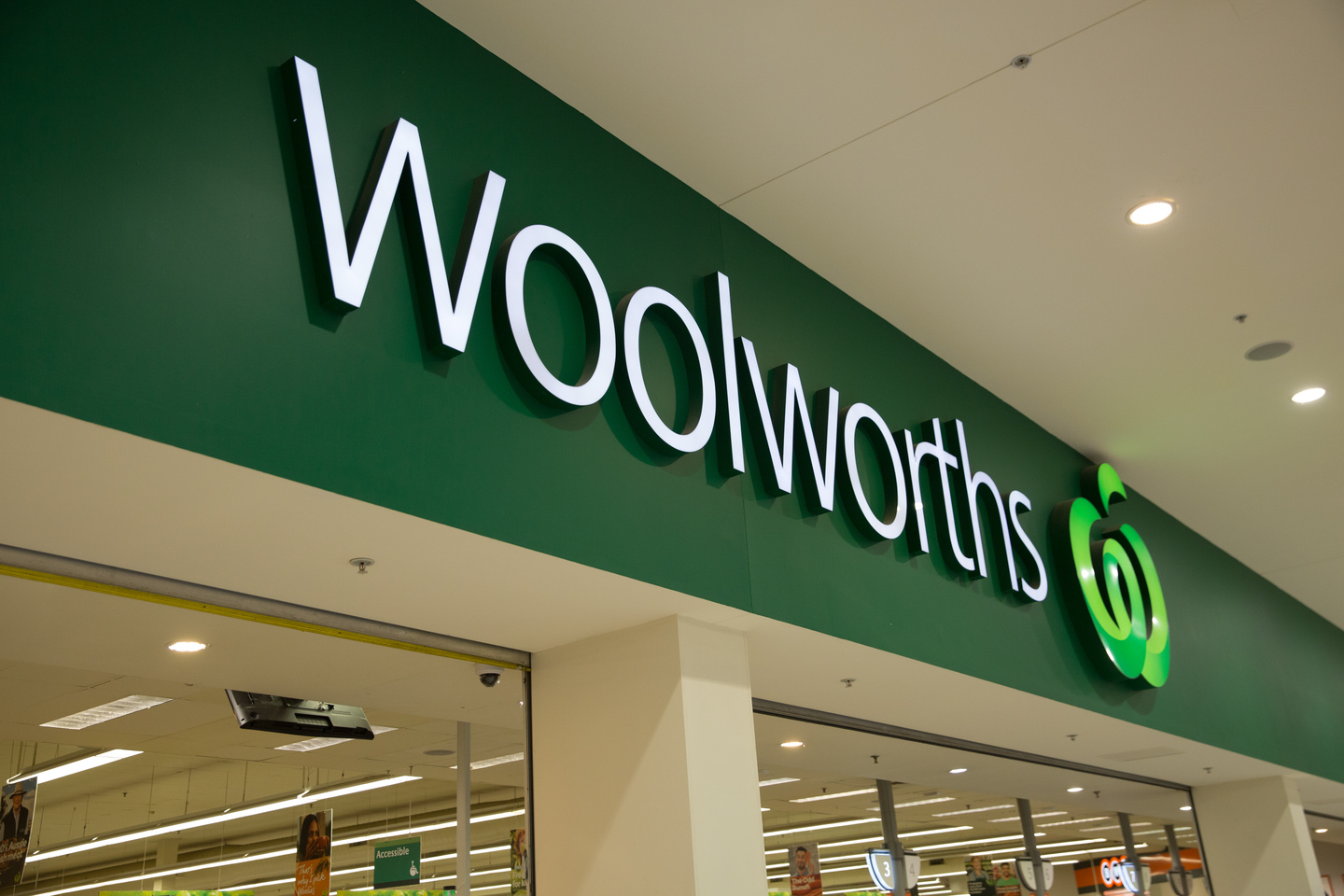
Australia’s biggest supermarket chain has boosted its annual profit by 18 per cent, despite a challenging economic environment that has strained household budgets.

Continue Reading

Business

Perseus Mining Limited 2026 Q4 – Results – Earnings Call Presentation (OTCMKTS:PMNXF) 2026-08-25

Published

on

OneWater Marine Inc. (ONEW) Q1 2026 Earnings Call Transcript

This article was written by

Seeking Alpha’s transcripts team is responsible for the development of all of our transcript-related projects. We currently publish thousands of quarterly earnings calls per quarter on our site and are continuing to grow and expand our coverage. The purpose of this profile is to allow us to share with our readers new transcript-related developments. Thanks, SA Transcripts Team

Continue Reading

Business

Thailand’s Eastern Economic Corridor Capital City (EECiti): Key Developments and Investment Opportunities

Published

on

Thailand's Eastern Economic Corridor Capital City (EECiti): Key Developments and Investment Opportunities

Thailand’s flagship special economic zone is entering its most concrete phase yet with the EEC Capital City, or EECiti, a planned smart city rising between Pattaya and U-Tapao airport that officials are billing as the administrative and commercial heart of the Eastern Economic Corridor. After years of master planning, 2026 has brought land compensation, a draft zoning blueprint, and the first serious test of investor appetite for the infrastructure that will underpin the city.

A new city rising in Chonburi

EECiti is being built on land in Huay Yai subdistrict, Bang Lamung district, Chonburi province, positioned within easy reach of both Pattaya and U-Tapao International Airport. The project’s Secretary-General, Chula Sukmanop, has described it as the capital of the EEC, and the numbers involved are substantial. The city is planned to cover 2,339 hectares in Huay Yai, with sports and recreational facilities envisioned under a sport and entertainment complex concept that officials say will not include a casino.

Phase one alone is significant in scale. By June 2026, the EEC Policy Committee had confirmed that compensation payments to landholders had progressed to the point where roughly 6,168 rai were ready for development, with the area designated as a special economic promotion zone and development master planning underway. An earlier draft plan put the broader development area at closer to 14,619 rai, with phase one focused on a central business district, government offices, medical centers, and residential areas.

The guiding concept, repeated consistently by EEC officials throughout the year, is a “Smart & Sustainable LIVE-WORK-PLAY City” designed to serve as a livable, tech-enabled urban centre rather than another industrial estate. Deputy Prime Minister and Transport Minister Phiphat Ratchakitprakarn has framed the project as part of a broader effort to position eastern Thailand as a global centre for business, tourism, and entertainment.

Advertisement

The 72-billion-baht infrastructure package

The commercial core of EECiti’s near-term story is a large public-private partnership covering the city’s basic infrastructure. The EECO’s plan calls for private co-investment across ten infrastructure and utility systems: electricity and energy, water supply, wastewater collection and recycled water, water management, waste management, digital infrastructure and telecommunications, firefighting and disaster warning, road networks supporting public transport, a common utility rail system, and central green spaces and landscaping.

Estimates of the package’s value have shifted slightly as the project has been refined, from an early figure of roughly 74.4 billion baht to the 72.04 billion baht ($2 billion-plus) figure cited by officials mid-year. Beyond the ten infrastructure systems, EECO is also studying central green spaces and landscape systems as part of the same PPP scheme.

To gauge appetite before finalising the bidding terms, EECO convened a market sounding session on July 21 at the Grand Centre Point Prestige Hotel in Bangkok. More than 100 private-sector companies attended, spanning infrastructure and real estate developers, financial institutions, and Thai and foreign investors, signalling strong interest in the future smart city development. Officials described the turnout as exceeding expectations, and the feedback gathered is now being folded into the final project documentation and private-sector selection criteria ahead of formal bidding.

Timeline: from market sounding to groundbreaking

The path from consultation to construction is now reasonably well defined, though it stretches out over several years. The EEC Policy Committee approved the launch of the PPP bidding process for early 2028, with construction expected to begin that same year. That timeline is somewhat later than the invitation date floated in late 2025, when EECO had targeted issuing an invitation for private investors to participate in early 2027, followed by proposal review, selection of the private partner, contract drafting, and construction of initial infrastructure.

Advertisement

For investors, that gap between now and formal bidding is where the groundwork gets laid: further refinement of risk allocation, financing structures, and investment incentives based on the market sounding feedback, followed by publication of the official call for PPP proposals.

Entertainment, sport and the theme park ambition

EECiti’s brief extends well beyond utilities and office space. Thai authorities have floated an ambitious entertainment component for the site, including discussion of a Disneyland-style theme park as part of a broader push to diversify the corridor’s economic base beyond manufacturing. The sports and entertainment centre is expected to occupy around 240 hectares within the wider development, positioned as a new landmark capable of anchoring an international-standard sports centre alongside a world-class entertainment and leisure hub.

This ambition sits alongside the EEC’s existing innovation districts, including the Eastern Economic Corridor of Innovation focused on biotechnology, biofuels, petrochemicals and robotics, and complements Thailand’s broader effort to court high-value industries and foreign investment across the corridor.

Connectivity: linking EECiti to the region

Transport links are central to the EECiti pitch. The site sits within 20 kilometres of the Pattaya high-speed rail station, and a monorail system is planned to connect the new city to that station. That high-speed line is itself part of a wider scheme intended to link Don Mueang, Suvarnabhumi and U-Tapao airports, though as Thailand Business News has reported, cabinet approval for revised contract terms on that broader rail link remained pending as of early 2026. EECiti’s own success will depend in part on those regional connectivity projects landing on schedule.

Advertisement

What it means for investors

For infrastructure developers, financial institutions and construction groups, EECiti represents one of the larger PPP opportunities to emerge from the EEC programme since its 2017 launch. The structure favoured by EECO, a single-package investment model spanning multiple utility systems, is designed to make the project more bankable by bundling revenue streams rather than tendering each system separately, though final terms will depend on feedback from the market sounding process.

Real estate developers and hospitality groups will be watching the entertainment and residential components more closely, particularly if the theme park and sports complex plans advance from concept to formal tender. Given the 2027-2028 window for invitations and bidding, most of the near-term opportunity lies in positioning, consortium-building, and engaging with EECO’s ongoing consultation process rather than in construction contracts themselves.

More broadly, EECiti is a useful signal of where Thailand’s industrial strategy is heading: away from pure manufacturing incentives and toward the kind of integrated, livable urban infrastructure that the government hopes will help the EEC retain skilled workers and attract the service, finance and technology firms that follow industrial investment rather than lead it. Details on incentive structures and land-use rules will continue to firm up as the project moves toward its 2027 investor invitation, and Thailand Business News will continue tracking developments as EECO finalises the PPP terms.

Advertisement
Continue Reading

Business

Inside Ashton’s old Barclays bank building as ‘fantastic development opportunity’ goes up for sale

Published

on

Business Live

Agents say bank building empty since 2018 has ‘unrivalled visibility’

The old Barclays bank building in Ashton

The old Barclays bank building in Ashton(Image: Rutter Green)

A former bank building in Ashton-in-Makerfield is being has been put on the market for £380,000.

Advertisement

The Barclays bank premises on Wigan Road are described as being a ‘fantastic development opportunity’.

Property agent Rutter Green, who are based in Wigan said the building is ‘highly suitable’ for retail, office headquarters, medical or leisure facilities, or a showroom.

It added that the premises were fit for ‘residential conversion on the upper floors, subject to obtaining the necessary planning consents’.

The bank branch permanently closed in August, 2018.

Advertisement

Marketing material for the sales listing, published earlier this month, said the location offered ‘unrivalled visibility to both pedestrian and passing traffic’.

It added: “In the vibrant heart of Ashton-in-Makerfield, the building is surrounded by a healthy mix of local amenities, national high-street brands, and thriving independent businesses.

“This versatile building falls under flexible commercial usage classes, making it highly suitable for retail, office headquarters, medical/leisure facilities, or a showroom.

“Given its multi-floor layout and dual aspect, the property also presents an excellent opportunity for future capital growth or residential conversion on the upper floors.”

Advertisement

Images released as part of the sale package show the interior of the building littered with chairs, desks and cabinets related to its previous use as a bank.

The sales brochure said the building would be an ‘ideal choice for businesses seeking a prominent permanent base or investors aiming to maximize rental income’ .

Inside the old Barclays bank building in Ashton.

Inside the old Barclays bank building in Ashton(Image: Rutter Green)

It added that the property boasts a ‘commanding architectural presence, ensuring maximum brand exposure and high footfall’.

The ground floor at the property has a large retail or showroom area with display windows, reception zone and customer-facing facilities.

Advertisement

The upper floors have what the brochure describes as ‘versatile spaces perfectly suited for administrative offices, private meeting rooms, stock storage, or specialized treatment rooms.’

Continue Reading

Business

Iconic Bitcoin mine pivots to AI as industry turns back on crypto

Published

on

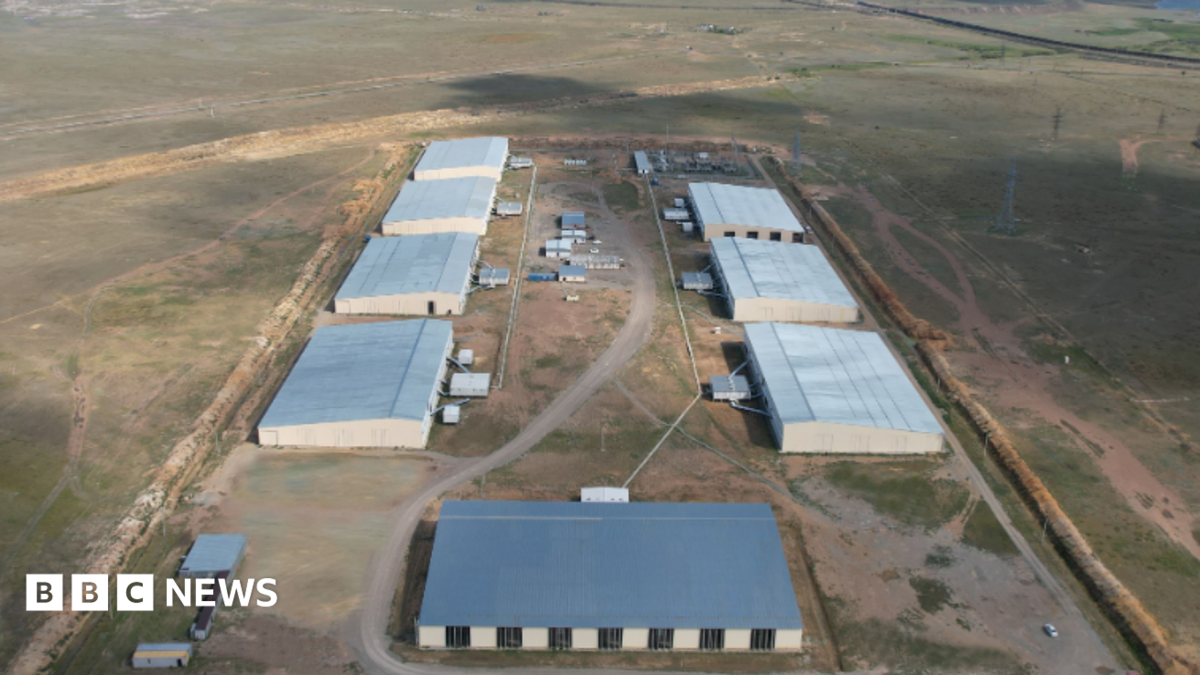
Ekibastuz crypto mine. 8 large industrial warehouses in the desert.

Like AI systems, Bitcoin relies on vast networks of powerful computers housed in data centres.

Because Bitcoin operates without a central authority, these computers verify transactions and are rewarded with newly-created digital coins.

But the rewards have reduced and the value of coins has dropped since last year.

One bitcoin was worth about $124,000 (£91,000) at its peak in October 2025, but has since fallen sharply.

Advertisement

More recently, it has rallied to around $80,000 – meaning it is up almost 30% so far in August.

But, for companies that have already made the change, even that may not be enough to get them to return to the crypto industry, because the switch of use – once made – is expensive to undo.

Industry analysts say Bitcoin mining companies have been pivoting to AI because they have years of experience in finding cheap electricity and efficiently running large data centres.

TerraWulf, Ionic Digital, Core Scientific, Iris Energy, Bitdeer, Riot Platforms and Hut 8 are just some of the companies increasingly diverting investment and infrastructure from bitcoin mining towards AI.

Advertisement

Riot Platforms signed a $9bn, 20-year compute deal with Anthropic earlier this month.

Continue Reading

Business

LeBron James’ LLC was in business with Mark Walter’ Guggenheim: report

Published

on

LeBron James' LLC was in business with Mark Walter' Guggenheim: report

LeBron James had been in business with Mark Walter, whose business empire is under scrutiny from both federal prosecutors and the Securities and Exchange Commission in tax fraud investigations, long before he joined the Los Angeles Lakers. 

Months before he signed with the Lakers in 2018, a limited liability company James controls borrowed $300 million from a pair of Midwestern life insurers advised by an arm of Guggenheim Partners, according to Bloomberg’s report. Walter was the CEO of Guggenheim at the time of the transaction.

Advertisement

The bonds are due in 2049 and were meant to give James an immediate influx of cash that was backed by a stream of future revenue tied to his non-NBA earnings, like sponsorship deals and his lifetime deal with Nike, according to the report. Walter began lending more as he began acquiring the Lakers. 

CLICK HERE FOR MORE SPORTS COVERAGE ON FOXBUSINESS.COM

LeBron James looks on

LeBron James (23) of the Los Angeles Lakers looks on against the Oklahoma City Thunder in Game 4 of the second round of the NBA Western Conference playoffs at Crypto.com Arena in Los Angeles, California, on May 11, 2026. (Luke Hales/Getty Images / Getty Images)

Walter abruptly agreed to sell his share of the Lakers for $12.5 billion to Josh Kushner and Bob Iger earlier this month. He is cooperating with the investigation into his business empire. 

Walter first took a minority stake in the Lakers in 2021 before acquiring a majority controlling stake in 2025. James’ LLC and Walter’s Guggenheim made another transaction in 2022. 

Advertisement

In August 2022, when James signed a $97 million contract extension with the Lakers, the same Midwestern insurers provided James’ LLC with more cash. They bought almost $60 million of 34-year bonds with a 5.75% interest rate, according to the report.

ZERO BS. JUST DAKICH. TAKE THE DON’T @ ME PODCAST ON THE ROAD. DOWNLOAD NOW! 

Mark Walter at podium

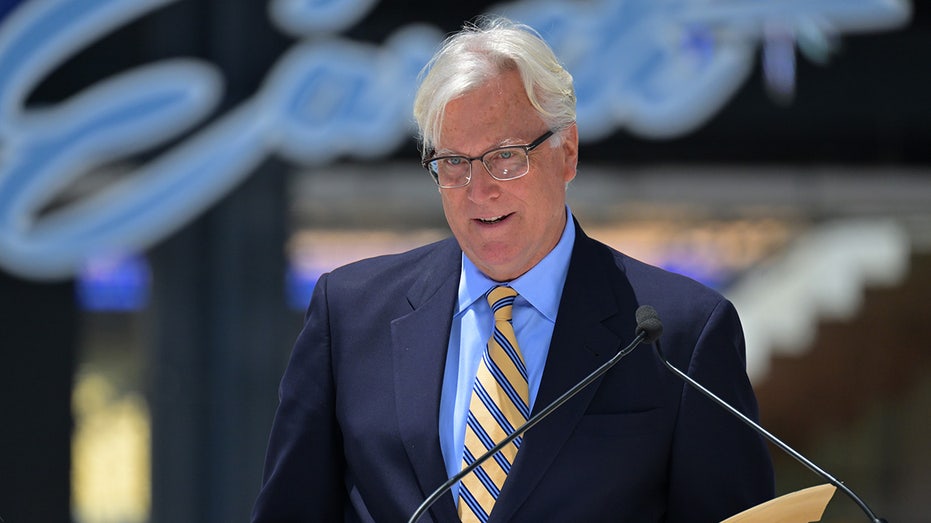
Mark Walter, Owner and Chairman, Los Angeles Dodgers speaks during the unveiling ceremony of a brand new Koufax commemorative statue at the Centerfield Plaza at Dodger Stadium. (Jayne Kamin-Oncea-USA TODAY Sports / IMAGN)

The NBA directed FOX Business’ request for comment to a representative for James who said, “The 2018 and 2022 transactions were a securitization done by Mr. James with his personal, non-NBA salary, assets and income which is a very common financial structure for an individual with this level of earnings and assets.”

“Both transactions were fully approved by NBA. Mr. James has no affiliation with Guggenheim, Sammons Financial, North American Life or Midland National beyond their participation in these transactions.”

Advertisement

GET FOX BUSINESS ON THE GO BY CLICKING HERE

Mark Walter in seats

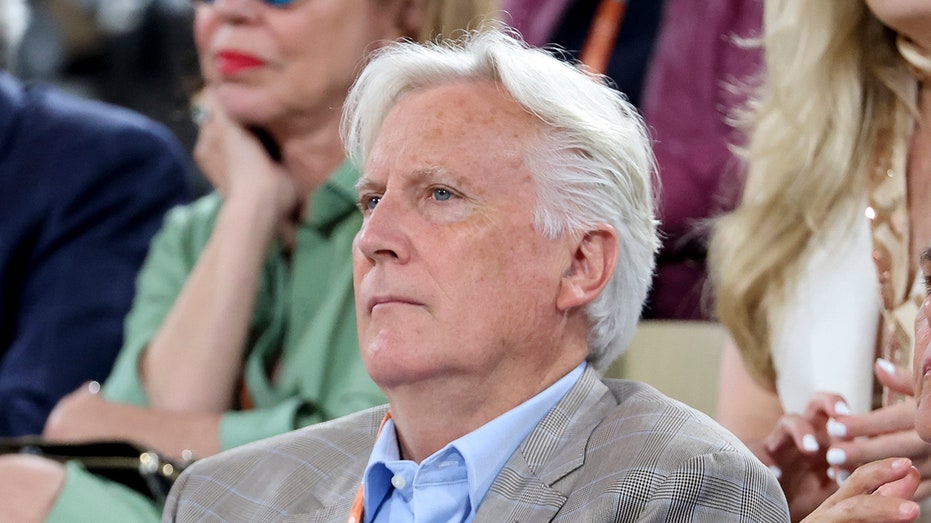
Mark Walter, CEO of Guggenheim Partners, Ilana Kloss attend day 13 of the French Open 2022 held at Stade Roland Garros on June 3, 2022 in Paris, France. (Jean Catuffe/Getty Images / Getty Images)

FOX Business reached out to the Lakers and Guggenheim Partners for comment and did not immediately get a response. 

Walter’s sale of the Lakers came as the businessman was reshaping his portfolio with the investigation ongoing. 

Advertisement
Continue Reading

Business

Bridgewater Bancshares director David Juran sells $867,316 in stock

Published

on


Bridgewater Bancshares director David Juran sells $867,316 in stock

Continue Reading

Business

Business leaders honor Dolly Parton’s legacy

Published

on

Dollywood theme park opens for 41st season

Business leaders are paying tribute to Dolly Parton, remembering the country music icon for her cultural impact and philanthropy.

Amazon founder Jeff Bezos, Apple CEO Tim Cook and Thrive Global founder Arianna Huffington took to X to honor Parton’s legacy after she died peacefully Tuesday in Nashville, Tennessee, at age 80.

Advertisement

HOW DOLLY PARTON BUILT A LEGACY OF GIVING BEYOND COUNTRY MUSIC

Jeff Bezos

Amazon founder Jeff Bezos speaks at a conference.

Amazon founder Jeff Bezos said Parton “spent her whole life showing us what it means to lead with love.” (Mustafa Yalcin/Anadolu via Getty Images)

Bezos said Parton “spent her whole life showing us what it means to lead with love.”

“Lauren and I are so grateful to have known her,” Bezos wrote on X. “She lifted everyone with her music, her generosity, and her joy. Sending our sincere condolences to her family and everyone she touched.”

AMAZON PLANS MASSIVE EXPANSION OF PRIME AIR DRONE DELIVERIES

Advertisement

Tim Cook

Apple CEO Tim Cook.

Apple CEO Tim Cook also honored Parton’s legacy. (Justin Sullivan/Getty Images)

Cook also honored Parton’s legacy.

“Dolly Parton’s music helped light up the world,” Cook wrote on X. “She was a brilliant songwriter, cultural icon, and dedicated philanthropist who helped instill a love of reading and learning in millions of children around the world. May she rest in peace.”

Arianna Huffington

Thrive Global founder Arianna Huffington said Parton showed that “a life of extraordinary achievement can also be a life of extraordinary generosity.”

“Through her music, her humor and her commitment to giving children the gift of reading, she brought joy and possibility to millions. Her light will live on through the songs she gave us, and every young imagination she helped inspire,” Huffington wrote on X.

Advertisement

WARREN BUFFETT EXCLUDES GATES FOUNDATION FROM HIS ANNUAL DONATIONS OF BERKSHIRE STOCK

dolly parton smiling with hands on hips

Parton’s nephew revealed the news in an Instagram video.  (BRIDGET BENNETT/AFP via Getty Images)

GET FOX BUSINESS ON THE GO BY CLICKING HERE

Parton’s nephew revealed the news in a Tuesday Instagram video. 

The news comes after Parton spent months battling an unknown health issue.

Advertisement

Fox News Digital’s Christina Dugan Ramirez contributed to this report.

Continue Reading

Business

5 Reasons Bitcoin’s Price Suddenly Surged Past $80,000 for the First Time Since May Amid Massive Short Squeeze

Published

on

Robinhood logo.

Bitcoin climbed above $80,000 Tuesday for the first time since mid-May, capping what CNBC described as the cryptocurrency’s biggest three-day rally since 2023, according to Cryptonomist, as bitcoin rose as much as 2.9% to touch $81,257 before settling around $79,300, according to Bloomberg. The cryptocurrency gained roughly 22% to 38% over the preceding week, depending on the specific measurement window, marking one of its strongest short-term advances in years. Here are five key factors analysts have identified behind bitcoin’s sudden surge.

1. The U.S. Treasury’s expanded bond buyback program

The single most frequently cited catalyst behind the rally is the U.S. Treasury Department’s decision to significantly expand its buybacks of long-dated government debt. According to crypto.news, the Treasury doubled its long-end buyback limits to at least $4 billion, a move that initially sent bond yields lower and signaled easing monetary conditions to markets. The Block reported that analyst d’Anethan connected that decision directly to bitcoin’s rally, explaining the logic behind the move. “Treasury decision to artificially lower rates by buying back bonds sends a powerful and solid signal that monetary conditions and thus capital are easing up. It’s easy to see why BTC, which underperformed in the first half of 2026, would be the prime beneficiary of this,” d’Anethan said.

2. A “debasement trade” driving investors toward bitcoin and gold

Advertisement

Several outlets identified a broader macroeconomic dynamic, commonly referred to as the “debasement trade,” as a key driver of the rally. According to the Rio Times, easing Treasury yields and expanded bond buybacks have pushed investors into both bitcoin and gold as hedges against what they view as ongoing fiscal erosion tied to the U.S. government’s growing debt burden. That dynamic reflects a broader pattern in which investors turn toward scarce assets during periods of expansive monetary or fiscal policy, treating both bitcoin and gold as stores of value less subject to currency debasement than traditional cash holdings.

3. A massive cascade of forced short liquidations

The speed and scale of bitcoin’s advance were significantly amplified by a wave of forced liquidations among traders who had bet against the cryptocurrency. According to the Rio Times, a $1.14 billion cascade of short liquidations amplified the price move, forcing bearish traders to buy back bitcoin to close out their losing positions, which in turn accelerated the price climb further. Cryptonomist similarly described the rally as being “triggered by a Treasury-related buyback event that forced a massive short squeeze on traders positioned below $67,000,” a dynamic in which the initial catalyst set off a self-reinforcing chain reaction as traders scrambled to exit losing bets.

4. Strong institutional demand through spot bitcoin ETFs

Advertisement

Renewed institutional buying through exchange-traded funds provided a further pillar of support beneath the rally. According to crypto.news, U.S.-listed spot bitcoin ETFs attracted approximately $1.9 billion to $1.92 billion in net inflows during the week ending Aug. 21, marking their strongest weekly intake since October 2025. The funds attracted capital for five consecutive trading sessions, according to the same report, with BlackRock’s iShares Bitcoin Trust accounting for a significant portion of that buying activity. That sustained ETF demand offered evidence of genuine underlying spot market demand, distinguishing the current rally from moves driven purely by leveraged futures market activity.

5. Improving technical and derivatives market positioning

Bitcoin’s price action has also been reinforced by a series of favorable technical signals. According to CryptoTimes, bitcoin reclaimed and closed above its 20-day, 50-day, 100-day and 200-day exponential moving averages, forming what the outlet described as a bullish alignment of moving averages that had previously served as resistance during the extended prior downtrend. Options market positioning has similarly shifted in a bullish direction; according to a separate CryptoTimes report citing data from Glassnode, bitcoin’s options skew fell to its lowest level of the year across the pricing curve, with front-end skew turning negative, indicating traders are now paying a higher premium for calls relative to comparable puts, a sign of stronger demand for further upside exposure. Notably, data from Santiment Intelligence showed that coin-denominated open interest actually declined roughly 11% even as bitcoin’s price rose approximately 22% over the same period, suggesting the rally was not built on increasingly crowded, risky futures positioning, a factor some analysts view as making the current advance more structurally sound than a purely leverage-driven spike.

Despite the strength of the advance, bitcoin remains well below its all-time high. According to Bloomberg, the cryptocurrency remains well beneath its October peak of roughly $126,000, and Cryptonomist noted bitcoin had spent much of 2026 trading in a range roughly 40% to 50% below that record, as investor attention and capital instead flowed toward the AI-driven stock market rally that has dominated markets for much of the year.

Advertisement

Analysts have offered a cautious assessment of what comes next. The Block reported that the Crypto Fear & Greed Index climbed to a reading of 83, characterized as “Extreme Greed,” while analysts cautioned it remains too early to determine whether the current rally will translate into a sustained bull market, given ongoing concerns over sticky inflation and continued geopolitical uncertainty. Bitcoin Foundation’s coverage similarly noted that while ETF inflows and reduced leverage offer encouraging signs, further spot demand will likely be necessary to convert the $80,000 level from a resistance point into a durable, structural support base, rather than risking a failed retest that could weaken the broader breakout narrative.

With bitcoin’s daily relative strength index reading above 80, deep into overbought territory according to multiple technical measures, some analysts have cautioned that a near-term pullback or period of consolidation remains a genuine possibility even as the underlying catalysts, including continued Treasury buyback support, remain broadly favorable. As CryptoTimes noted, continued Treasury bond-buyback support could keep liquidity conditions favorable enough to eventually push bitcoin toward testing the $90,000 level within the coming months, though that outcome remains far from guaranteed given the combination of overbought technical conditions and the broader macroeconomic uncertainty still weighing on markets.

Continue Reading

Trending

Copyright © 2025