The updated ‘war book’ will aim to boost British people’s resilience in the event of a climactic event – whether man made or natural.
Advertisement
Sir Keir Starmer warned this year that ‘there could be an attack by Russia on Nato as soon as 2030’.
‘It won’t be anything like duck and cover’, one government official told the FT which told US pupils to hide under desks in the event of nuclear annihilation during the Cold War.
‘But there will be practical advice on things you can do to improve domestic resilience, like having some bottled water and tinned food. It will be common sense, not scaremongering’, they added.
Royal Navy warships and helicopters spent 21 days monitoring Russian activity in UK waters (Picture: Royal Navy)
The Cabinet Office said: ‘Safeguarding national security is the first priority of any government.
Advertisement
‘We’re committed to raising awareness of simple steps households can take to make themselves more resilient, as well as driving forward the home defence programme to build our country’s preparedness for various threats.’
It came amid growing concerns from British intelligence that Russia could employ ‘grey zone’ attacks on the UK easily deniable by the Kremlin.
Advertisement
There are fears that Moscow could hire gangs or mercenaries to carry out attacks on their behalf without threatening Nato.
Cyber threats are also a concern after hackers backed by Iran were blamed for a cyberattack that caused a UK power plant to be briefly taken offline.
Prime Minister Andy Burnham has warned Russia of making ‘outrageous threats’ against the UK after providing Ukraine with blueprints to allow Kyiv to improve its production of long-range missiles.
Advertisement
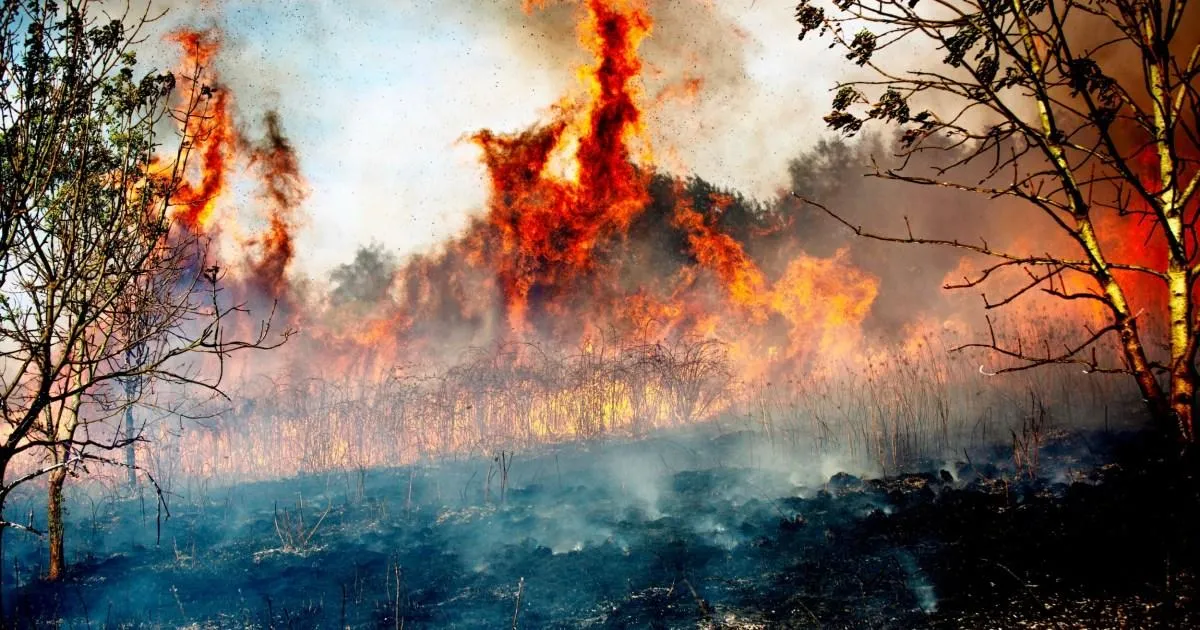
Earlier in the month, millions of people received an alert on their mobile devices warning them of a ‘very high risk of wildfires nationally’.
It came after Andy Burnham described Britain as a ‘tinderbox’ and a temporary ban on disposable barbecues was put in place.
What you need to keep by your bed to survive Armageggon
Dan Goss is behind the preparedness blog, Start Prepping (Picture: Dan Goss/Getty/Metro)
Doomsday prepper Dan Goss suggests people have about three days of essentials at home, enough that you can survive without a trip to Tesco’s.
Here are some of his tips and things to have by your bedside:
Advertisement
Keep all documents, like passports and birth certificates, in an easily accessible place, preferably inside a waterproof bag stored in a fireproof safe
A hard drive big enough to store backups of your digital information
A small water filter and a large water bottle
Battery lanterns or candles
A first aid kit
A ‘go bag’, a tough backpack with a waist belt and shoulder straps
Weather-resistant clothing, including walking shoes
Medications, such as antibiotics
A compass and a map
Long-life, calorie-dense food
A tent
A means of making a fire, such as the ‘humble and noble corner-shop disposable lighter’.
The singer–songwriter began by noting that the logical funeral song for her would be one of her own tunes, I Will Always Love You, which had achieved greater fame after Whitney Houston recorded it for her film The Bodyguard (1992).
Parton previously had a hit on the country charts with her original 1974 version of the song, which she wrote in response to the end of her working relationship with the country singer Porter Wagoner, who died in 2007.
Advertisement
She realized just how powerful her song could be when she attended Houston’s funeral in 2012.
‘I’m sure they’ll be playing I Will Always Love You when I die, just like they did with Whitney Houston,’ Parton said. ‘When they picked her coffin up and started in on that song, I started to cry, and I thought, “Oh my Lord.” That’s when it hit me that she was really gone.’
Dolly Parton, who died Tuesday at her home in Nashville, Tennessee, on Tuesday, had already picked out the song she wanted played at her funeral years earlier; pictured in 2022 on Dolly Parton’s Mountain Magic Christmas
Advertisement
Parton assumed that her song I Will Always Love You would be played at her funeral, especially after she realized how powerful it could be when she heard Whitney Houston’s cover played at Houston’s funeral in 2012; Houston is pictured in 2001 in Las Vegas, Nevada
But as moving as I Will Always Love You could be, Parton imagined a different song for her funeral 12 years before her death.
‘There’s a song called If We Never Meet Again,’ Parton told EW. ‘It’s an old country–gospel church song that talks about if we never meet again this side of heaven, I will meet you on that beautiful shore.’
She was so moved by the thought of the beloved song, which was written by the Southern Gospel songwriter Albert E. Brumley, that she continued to quote its lyrics.
Advertisement
‘Where the charming roses bloom forever and where separations come no more,’ Parton added.
She went on to reveal that the song figured prominently in her father Robert Parton Sr.’s funeral in 2000.
‘That was my daddy’s favorite,’ she went on to reveal. ‘We did sing it at his funeral, and I would like it to be sung at mine.’
Following the news of Parton’s death, her fans got a small bit of good news when it was confirmed that her Broadway dreams would still come true.
Advertisement
‘As was Dolly’s wish, the Broadway production of Dolly: A True Original Musical will begin previews December 7 at the St. James Theatre in New York City,’ the show’s producers said in a statement.
‘When they picked her coffin up and started in on that song, I started to cry, and I thought, “Oh my Lord.” That’s when it hit me that she was really gone,’ Parton said of hearing the song at Houston’s funeral; pictured in 2019 in Newport, Rhode Island
But Parton’s personal pick for her funeral was a different tune, an ‘old country–gospel church song’ titled If We Never Meet Again. She revealed the song was her father’s favorite and was played at his funeral in 2000; pictured in 2016 in Philadelphia, Pennsylvania
Following the news of Parton’s death, her fans got a small bit of good news when it was confirmed that her Broadway dreams would still come true
Advertisement
‘As was Dolly’s wish, the Broadway production of Dolly: A True Original Musical will begin previews December 7 at the St. James Theatre in New York City,’ producers said in a statement
The hit show will then officially open January 19 on what would’ve been her 81st birthday following a sold-out run in her Nashville hometown last summer.
The country legend wrote the music and book and served as producer of the rags-to-riches show helmed by Tony-winning director Bartlett Sher and choreographed by Mandy Moore.
‘Now, this isn’t a story about sparkle and shine on the outside,’ Parton said in a video last month.
Advertisement
‘It’s about where I really come from, what I’ve lived, what I’ve lost, what I’ve loved and how I’ve found my way and told it in my own words and through the music that’s been part of me every step of the journey.’
The national treasure added: ‘Now, the musical has some of my big hits plus a lot of brand new songs that I’ve written just for the show. This really is a dream come true…and I can’t wait to share it with all of you!’
DOLLY will take audiences on a journey through the life of Parton ‘from her barefoot beginnings in the Smoky Mountains of East Tennessee to performing in platform heels under the bright lights of Hollywood.’
Katie Rose Clarke, Quinn Titcomb and Carrie St. Louis all portrayed the blonde bombshell at various stages of her life at the Belmont University Fisher Center for the Performing Arts, but the Broadway cast has yet to be announced.
Advertisement
However, parents should be aware that DOLLY might not be appropriate for children under age eight.
The hit show will then officially open January 19 on what would’ve been her 81st birthday following a sold-out run in her Nashville hometown last summer
The country legend wrote the music, book and served as producer of the rags-to-riches show helmed by Tony-winning director Bartlett Sher and choreographed by Mandy Moore
Katie Rose Clarke, Quinn Titcomb and Carrie St. Louis (pictured August 8) all portrayed the Backwoods Barbie at various stages of her life at the Belmont University Fisher Center for the Performing Arts – but the Broadway cast has yet to be announced
Advertisement
It’s worth noting that Parton was only a Tony Award away from elite EGOT status.
The godmother of Miley Cyrus previously earned a Tony Award nomination for composing the music to Broadway production 9 to 5: The Musical which ran in 2009 at Manhattan’s Marquis Theatre.
Parton’s 1984 song With Bells On was also featured in the Broadway musical Candles, Snow & Mistletoe, which ran in 1993 at the Palace Theatre.
The Jean Hersholt Humanitarian Award winner had previously canceled her six-date residency, Dolly: Live in Las Vegas, at Caesars Palace’s Colosseum.
Advertisement
Parton admitted in May that she’s ‘always had problems with my kidney stones’ but for the past three years her immune system and digestive system ‘got all out of whack’ and now need to be ‘rebuilt and strengthened.’
‘The good news is I’m responding really well to meds and treatments and I’m improving every day,’ the Please Please Please singer said.
‘Now, the bad news is, it’s gonna take me a little while before I’m up to stage performance level because some of the meds and treatments make me a little bit “swimmy headed” as my grandma used to say.
‘And of course, I can’t be dizzy carrying around banjos, guitars and such on five-inch heels. And you know that I’m going to be wearing them!’
Advertisement
It’s worth noting that Parton was only a Tony Award away from elite EGOT status
The Light of a Clear Blue Morning singer’s nephew Bryan Seaver broke the sad news via social media where he remarked on how she ‘ opened doors for generations of singers, songwriters, musicians and dreamers from every walk of life and across every continent’
Parton’s small, private funeral service will be held for immediate family and, in lieu of flowers, the family requested donations to Dolly Parton’s Imagination Library
Parton had admitted she still had ‘some healing to do’ but she has ‘great doctors,’ saying: ‘I’m doing really well and they assure me that everything I have is treatable, so I’m going with that.’
Advertisement
The Light of a Clear Blue Morning singer’s nephew Bryan Seaver broke the sad news via social media where he remarked on how she ‘ opened doors for generations of singers, songwriters, musicians and dreamers from every walk of life and across every continent.’
‘By her example, we believed that anything was possible. She never saw a door she couldn’t open, and the doors she opened made and changed history,’ her 75-year-old head of security said.
‘Dolly called me and said she wants to rest in a beautiful bed of plush cotton because after a life wearing heavy rhinestones, she finally deserves to be comfortable.’
Parton’s small, private funeral service will be held for immediate family and, in lieu of flowers, the family requested donations to Dolly Parton’s Imagination Library.
Advertisement
The backwoods Barbie – who still pulls 16.1 million monthly listeners on Spotify – sold over 100 million records and broke 10 Guinness World Records.
For too long, climate communication has relied on the belief that if we stick with the science and communicate the evidence, action will follow. Scientific knowledge gives us the foundations for understanding possible futures, while speculation allows us to explore them. But poetry can bring that speculation to life, giving us a language to express what living through those futures might mean.
The power of poetry lies in making us pay attention to a sound, a place, an object or something changing around us. Researchers have argued that eco-poetry can influence how we experience a place, what we notice and what it might become in the future. They suggest that by “sounding” environmental change, speculative poetry offers us a tangible way to engage with, interpret and navigate the uncertainty of the climate crisis.
However, the literature professor Andrew Gorin has cautioned against making superficial claims that a poem will directly reduce carbon emissions or lead to greener policy. Its influence is much more nuanced, circulating ideas, offering different ways of seeing and contributing to how we respond to the world. There is also evidence for how poetry does this.
Psychology experts in the US and Canada argue that poetry evokes emotion partly through mental simulation. We imagine what the words describe, respond to rhythm and sound, and position ourselves within the poem. In one experiment that involved 27 German-speaking participants, researchers used psychophysiology (the study of how thoughts and emotions link to physical responses in the human body), brain imaging and behavioural responses to show that recited poetry could produce a range of responses from chills to goosebumps.
Their speculative poems bring knowledge, experience, place, memory, emotion and uncertainty together, enabling school leaders to consider what might be demanded of their leadership as climate change increasingly affects their schools, communities, children and young people.
To start writing speculative climate poetry, try jumping ten years ahead. afry_harvy/Shutterstock
How to be a poet
So how can we all reap the benefits of climate poetry? To start writing speculative climate poetry, try jumping ten years ahead. Choose something completely ordinary: your commute, your lunch, your garden or a trip to the shops. What might have changed in ten years because of climate change?
Experiment with epic and lyric. Write about the same climate future in two different ways. Epic poetry tells a larger story, often involving journeys, struggles and transformation, while lyric poetry focuses more closely on a particular experience, feeling, relationship, place or moment.
Think about The Odyssey for epic poetry, and write a journey across time and place influenced by unpredictable events, struggle and transformation. Then try lyric poetry. Take inspiration from Emily Dickinson’s I’m Nobody! Who are you? and focus closely on a particular experience, relationship, place or moment. What does each form allow you to notice and express differently?
Sound out the future. Walk somewhere familiar and notice what you can hear, smell, see and feel. Use walking, listening and writing to look more deeply at what’s happening around us. Now imagine the same place ten years from now. What might stay the same, disappear or change?
Advertisement
Start with an ordinary object: an umbrella, a tree or a bottle of water. Imagine its place in a climate-changed future.
Explore the emotional power of poetry. Let your voice lead the writing. Talk aloud about a climate-changed future, a place you care about, or something you fear losing. Record yourself and listen back. Notice the words and phrases that make you pause, feel uncomfortable or give you hope, then use them to build your poem.
Often, writing a poem can seem intimidating if you’re aiming for perfection. Instead, simply begin with what you notice. Bring together the ideas, feelings and possibilities that matter to you and let them become a poetic speculation about how to create a better future together.
In this fifth part in our series on how the UK has changed in the past 25 years, we look at crime, education, transport, energy and the environment.
Crime and policing
Graham Farrell, professor of crime science, University of Leeds
Toby Davies, associate professor in criminal justice data analytics, University of Leeds
Contrary to many media headlines, the story of crime over the last quarter century is positive. The dominant trend is the long-term decline in property and violent crime.
Advertisement
In the 1990s, property and violence rates were around ten times what they are now. The reason for their decline is a rising tide of security improvements that has reduced crime opportunities – everything from engine immobilisers in cars, to double glazing and deadbolts in houses, to dual-factor authentication for payments and other services.
How has the UK changed since the start of the century? From Blair to Burnham, from the dotcom era to AI agents, time has certainly not stood still. In this six-part series, a team of some 35 experts look at everything from defence spending to species populations to the rise of populism to try and make sense of the intervening years.
Advertisement
Not only have these discouraged theft, they have discouraged the violent crimes that go hand-in-hand. Bank and Post Office robberies, for example, are largely a thing of the past. And unable to get involved in easy property crimes, young people did not progress to violence.
Violence against women and girls, including domestic violence, has fallen by around two-thirds in the last quarter century – albeit it’s still unacceptably high. Though further research is required to confirm it, domestic violence appears more likely to be by men who committed other crimes in their youth. If so, it may be that when they can’t commit those earlier crimes, they are less violent in relationships when they are older.
Crime online
Advertisement
There have also been new and emerging types of crime, particularly internet-related offences. We know these are independent of the declines in other property crimes and violence, for three reasons.
There was a decade or more between the start of the “crime drop” in the early 1990s and the main increase in cybercrimes. This means it’s different cohorts of offenders, since most offenders are young. The skills and resources needed for cybercrime are also very different to those for burglary, car theft and other similar crimes. And cybercrime offenders are not necessarily even located in the same country.
But even the cybercrime picture may not be as bad as often portrayed. Crime Survey of England and Wales estimates of household fraud and computer misuse are available from 2016-17 onwards, and the trend has been relatively flat over the last decade (the chart below does exclude a pandemic-related uptick which subsided).
You may be wondering why cybercrime hasn’t benefited from the same falls in crime opportunity structure (how easy crime is to commit) that have reduced property and violent crime. It’s true that online security measures are effective against some forms of offending, but rapid technological developments constantly create new opportunities for innovation by criminals. We’re still playing catch up as these crimes evolve, but with persistence we should be able to prevent them too.
There’s a similar explanation for another seeming anomaly: phone theft. It has increased because phones proliferated this century and make near-perfect theft targets. Crime science refers to such targets as CRAVED: they are concealable, removable, available, valuable, enjoyable and disposable (meaning easily re-sold). This explains why your phone rather than your fridge is stolen even when they cost the same.
Knife crime
Knife crime increases in the 2010s are one other counter-trend that still needs to be properly explained. But such crimes would not be possible without the widespread availability of knives, both online and in supermarkets.
Advertisement
Most households have lots of pointed knives in the kitchen, making them easy to grab during an argument. And with so many similar knives in the drawer, nobody notices if one goes missing. It is the pointed tip of kitchen knives that punctures major organs and arteries, potentially meaning a fight becomes a murder.
We have argued for removing pointed kitchen knives from general circulation, which is the only intervention likely to achieve the 50% reduction in knife crime to which the current government aspires. In case you didn’t notice, table knives are already round-tipped, so it is a small step to make kitchen knives safer too.
The goal is for a 50% reduction in knife crime. Brain Storm
At the same time, and counterintuitively, the UK’s knife crime headlines are evidence of success in some forms of crime prevention. Consider that it is high-profile only because our gun and bomb control policies are so effective.
In 2022-23 the per capita rate of gun-related homicide in the United States was over 100 times that in the UK – or, put another way, UK gun control was 99% effective in comparison. And the prevented UK crime and homicide did not shift to knives or other crimes; there are dramatically fewer overall.
Advertisement
Likewise, of the few terrorist attacks that occur in the UK, they disproportionately involve knives. These attacks would be more numerous and far worse without the raft of gun and bomb control measures. Weapon control works, in other words.
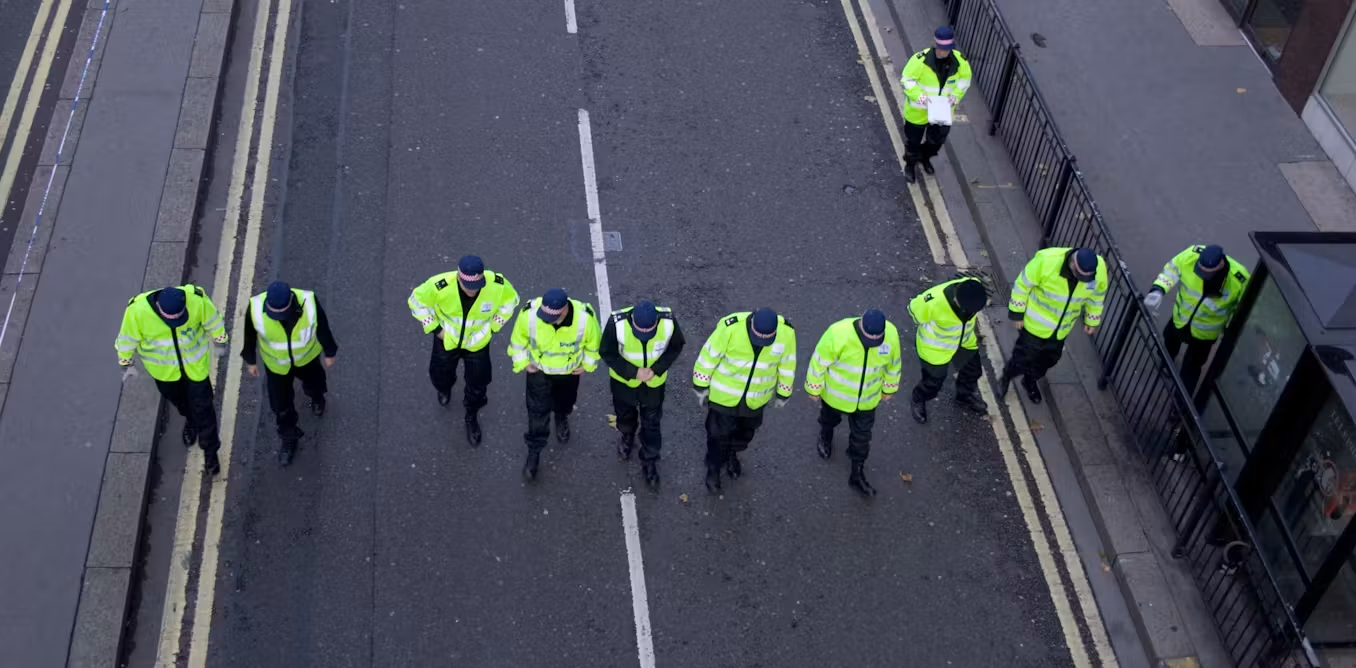
This brings us to broader crime policy. More funds for policing won’t have much effect on crime. Since the long-term crime declines were due to private and public sector measures by agents other than the police, our police and government should be more focused on encouraging the private sector to take responsibility for the crime opportunities it “emits”. The phone industry, for instance, could have been incentivised decades ago to disable stolen phones, so a recent call to action by the Metropolitan police is very welcome.
Education
Helena Gillespie, professor of learning and teaching in higher education, University of East Anglia
In 1996 Tony Blair made a speech promising that his three priorities in government would be “education, education, education”. He believed education was the engine of economic growth, and by the end of his first term in 2001, Labour had invested significantly in school infrastructure. Many schools had new and refreshed premises, fit for a 21st-century education.
Advertisement
This could have provided a unique foundation for schooling at the turn of the millennium, but 25 years and 22 secretaries of state for education later, the reality is somewhat different.
There is much that remains constant in schools. The system of primary and secondary education still means that most pupils move at the same rate through their education. Classrooms, desks, science labs and football fields still look very similar to 25 years ago. However, education is devolved to the nations, which has led to different curricula, approaches to qualifications and inspection regimes across the UK.
Schools in England remain heavily influenced by what is known as a national approach to testing. This refers to standardised exams designed, mandated and marked centrally, as opposed to tests created individually by teachers or schools.
For instance, teaching in the later years of primary education in England is heavily influenced by the SATs (standard assessment tests) that pupils take at the end of primary, since the data is used in the school inspection regime. By contrast in Wales, comparable data on school performance is seen as less important than a school’s own assessment of its success. This gives teachers more flexibility in how and what they teach.
Advertisement
England’s approach owes much to Michael Gove, who has been the longest serving education secretary in the past 25 years (from 2010-14). He introduced the revised curriculum for English schools, which moved away from teaching skills toward core facts, rote learning and more emphasis on academic subjects like history, science and maths.
Michael Gove’s radical plans were not quite what they seemed. Mark Makela
He oversaw significant expansion of academies, where schools cut ties with their local education authorities. In theory this gives them greater financial autonomy, and nearly 90% of secondaries now have this status. However, economies of scale have led to 92% of academies joining multi-academy trusts, which may have limited their financial freedom in the medium term.
Becoming an academy also, in theory, gave schools more autonomy over the use of the revised curriculum. But since Gove also did away with testing through coursework and modules at GCSE level and introduced mandatory high-stakes GCSE exams, schools effectively had less flexibility than it appeared.
The Scottish dimension
Advertisement
In the political turmoil that followed the Brexit vote in 2016, education took a political back seat, with four different education secretaries in Westminster in four years. Meanwhile Scottish education policy, whose skills-focused curriculum for excellence already made it quite different from Gove’s approach, further shifted in 2017 with a review of education and governance. It focused on the need to improve outcomes for the most disadvantaged children, and gave headteachers a bit more say in spending money to help drive attainment.
Many UK education secretaries have espoused the virtues of technical and vocational education, for example the Skills for Jobs white paper published in 2021. Yet such initiatives have failed to back their aspirations with meaningful investment in further education colleges, which should be the principal drivers of vocational education.
Meanwhile in higher education, introducing fees in England and Wales made it possible for universities to teach many more young people – participation rates rose from 40% in 2001-02 to 51% by 2023-24. However, it has also saddled graduates with very significant debt, particularly in England. Across the UK, the sector also remains plagued by questions of value for money and soaring institutional debt.
The big picture
Advertisement
In terms of results, changes to policy and grading approaches makes a longitudinal comparison difficult, but the overall picture in terms of GCSE (year 10) attainment in England has been stable since 2013.
Yet the biggest challenge to education in the last 25 years came not from a politician, or devolution, or policy change. It came in March 2020 when the COVID pandemic lead to the widespread sporadic closure of schools for two years. In the aftermath of the pandemic there was a failure of government efforts to support educational recovery which still resonates in the education system today.
The fallout from COVID continues among young people. Sally Anderson
Absenteeism spiked during the pandemic and hasn’t really come down (it was about 5% in 2019 and around 7% today). Attainment levels between richer and poorer children worsened after years of improvement, and has largely not reversed. And a recent government report showed that levels of both diagnosed mental health conditions and psychological distress are rising among young people, having deteriorated during the pandemic (to some extent this may be because there’s less stigma around reporting these conditions than in the past).
There also remains a significant challenge around low engagement in education, with as many as one in eight of young people not in education, employment or training. As a measure of the success of the UK’s education system, that last statistic, perhaps more than any other, suggests a system which, over the last 25 years of change, has failed to keep up with the needs of young people.
Advertisement
Transport
Stephen Potter, emeritus professor of transport strategy, Open University
The period 1975-2000 saw little substantive change. Catalytic converters cut air pollution, but the rise in car use and road congestion was relentless, coupled with the introduction of a few city tram systems and the Channel tunnel.
Up to 2001 the amount we travelled steadily increased, but then this trend reversed. In 2002 the average annual distance travelled per person was 7,193 miles; by 2024 it had dropped to 6,082 miles.
We’re no longer travelling as much as we used to. R Wareham
Why we travel has also shifted. Commuting trips declined by 39% over the period, and now account for only 12% of journeys. Trips to visit people dropped by 39%, while leisure trips increased substantially. The rise of digital communications, remote working and online shopping might explain much of these trends, but other socioeconomic factors are involved, such as our ageing population, young people drawn to city life, and an increase in economically inactive people.
The tech shift
Electric vehicles are an obvious example of technological change this century. In 1999, for a BBC Open University programme, I experienced the first hybrid Prius in the UK. Spurred by the climate agenda, battery electric vehicles today make up 27% of sales, plug-in hybrids 14% and other hybrids 13%, so more than half of all car sales are now electrified vehicles.
Sat-nav, a niche car feature in 2001, has become ubiquitous, vital for both personal travel and business systems. We are now moving on from digital driver assistance towards driverless autonomous vehicles.
Driverless taxis are due to appear on British streets soon; they certainly have their faults, but the technology is improving rapidly and heading mainstream. On a smaller scale robotic vehicles are already here, with several UK cities including Milton Keynes and Bristol having experimented with autonomous robotic food deliveries.
Advertisement
The appearance and popularity of e-bikes and e-scooters divides opinion, but they help fill a hole where conventional public transport services fail. Outside of big cities, local public transport is in crisis with bus trips declining by 39% from 2002-2024. In the last ten years, over a quarter of bus routes have been cut. In contrast, rail use has increased this century by over 50%.
Some new forms of public transport are beginning to appear. Demand responsive transport, booked roughly like a cab or Uber but sharing trips with other passengers, has appeared in some places, notably urban fringes and rural areas. Wales has been a frontrunner here.
Advertisement
Of potentially large significance is the emergence of the “trackless tram”. Instead of spending years and vast sums digging up roads to install rails and overhead power lines, this innovative battery-powered design is steered by GPS and cameras. They have been running in China for several years and places like Hertfordshire and Milton Keynes are actively working to introduce such systems.
How will all this work out in the future? As in other areas of life, in transport the shift from analogue to AI and digital futures could play out in a wide range of ways – some life affirming and environmentally positive, and others dystopian. We may now be in the crucial innovation stage of determining which of these paths will be followed.
Energy
Jim Watson, professor of energy policy, University College London
Back in 2001, three-quarters of our electricity was generated by fossil fuels, and electric vehicles were a distant dream. The energy transition, as it is now called, was well ahead of us.
Advertisement
However, the forces that have shaped our energy system over the last 25 years were starting to become visible. Climate change had been put firmly on the UK policy agenda in 2000 by the Royal Commission on Environmental Pollution. The commission’s report, Energy: The Changing Climate, recommended a long-term target for reducing UK emissions for the first time. In 2003, that recommendation was accepted by the government after an extensive review of energy policy, and the UK adopted a 60% reduction target for greenhouse gas emissions by 2050.
Dogger Bank offshore wind farm is the biggest in the UK. Christopher Drabble
Looking back, that target seems very unambitious. UK greenhouse gas emissions are now 50% lower than 1990 levels. They had already fallen steadily in the 1990s, largely due to a switch from coal to gas electricity generation. That trend subsequently accelerated from the late 2000s as policies to support renewables became more effective – and due to falls in emissions from road transport, domestic buildings and industry.
The share of electricity from renewables grew from just 3% of the UK’s power in 2000 to 53% in 2025. The current level of generation from wind and solar would have astonished power system engineers in 2001. Back then, there were serious debates about whether more than 10% of our power could be generated from these technologies.
This rapid progress with emissions increased confidence that radical change could be achieved. It eventually led to the adoption of a legally binding net-zero emissions target in 2019, backed by a cross-party political consensus.
New uncertainty
That consensus has now started to break down, partly due to rapid increases in energy prices and increasing concern about energy security. The last five years have demonstrated how geopolitical events such as the Ukraine and Iran wars can still have a profound impact on UK energy prices. While fossil fuels now generate only a third of UK electricity, gas prices still set electricity prices most of the time. We still use oil and gas extensively, especially for transport and heating.
The closure of Ratcliffe-on-Soar power station in 2024 brought the curtain down in coal-fired power in the UK. Brian Lawrence
Energy security is not a new concern, of course. When Prime Minister Tony Blair launched his second review of energy policy in 2006, this was also due to a rise in international fossil fuel prices. Two decades of low international prices had come to an end, and the UK had become a net importer of energy due to declining production in the North Sea.
A key outcome of that review was support for new nuclear power stations. Implementation is taking a very long time. The first new nuclear station is still under construction at Hinkley Point, south-west England, with an expected start date of 2031.
It is now much more likely than it was in 2001 that the UK’s energy system will make a decisive shift away from fossil fuels. The past 25 years have shown that rapid change is possible, and that government policies can act as a key driver of this change. Non-fossil technologies such as renewables, battery storage and electric vehicles are now much cheaper and more widely available. The remaining challenge is to build on the progress that has been made – and to insulate the UK from fossil fuel price shocks for good.
Environment
Hayley Fowler, professor of climate change impacts, Newcastle University
When the 2001 census was taken, climate change was already well understood by scientists, but to most people in Britain it still felt like a distant issue. Twenty-five years later, it has become part of the country’s lived environment. Britain is warmer, wetter in winter, more exposed to heatwaves and flooding, and facing rising pressure on coasts, rivers, water supplies and nature.
Advertisement
The clearest change is temperature. The UK’s warmest years have clustered overwhelmingly in the 21st century. Heat that once seemed exceptional is now less surprising, including the record breaking 35°C and 37°C temperatures of May and June 2026 respectively. The most striking example came in July 2022, when the UK exceeded 40° for the first time. This was more than a symbolic record: it showed that Britain’s buildings, transport systems, schools, hospitals and care homes were designed for a climate that no longer exists.
Extreme heat has changed the way climate risk is understood. In the past, British weather hazards were often associated with cold, storms and rain. Those risks have not disappeared, but heat is now a major public-health concern.
Rainfall has changed too. Britain has always had variable weather, but recent decades show a shift towards wetter winters and heavier rainfall events. The winter half-year from October 2023 to March 2024 was the wettest on record for England and Wales. Heavier rain increases the risk of river flooding, surface-water flooding and sewer flooding, especially in towns and cities where drainage systems struggle during intense downpours.
The main risks
Advertisement
These shifts mean that Britain faces greater risk from droughts, water stress and floods. The Climate Change Committee’s A Well-Adapted UK report (2026) identifies both flooding and drought – as well as heat – as central risks for the decades ahead, warning that the country is not yet adapting fast enough.
This dual risk can seem contradictory, but a warmer climate can intensify both wet and dry extremes. Hotter summers dry soils, increase evaporation and raise demand for water. This matters for households, farming, rivers, wetlands and energy production. Water companies, regulators and governments are now under pressure not only to reduce leakage and pollution, but also to plan for more severe dry periods by building new storage.
Sea levels have also risen around the UK by upwards of 10cm this century, increasing the risk of coastal flooding and erosion. Higher seas make storm surges and high tides more damaging, placing added pressure on coastal towns, ports, roads, railways and natural habitats. For some communities, adaptation may mean stronger defences; for others, it may eventually mean difficult decisions about managed retreat.
Sea levels have risen by around 10cm since 2001. Masami Iida
Other environmental changes since 2001 are not only about climate. Air quality has improved in some respects, especially as coal power has almost disappeared and vehicle standards have tightened, though pollution remains a serious urban health issue through things like particulates and nitrogen dioxide from vehicle exhausts. Britain has also experienced continuing biodiversity decline, with pressure on birds, insects, rivers and habitats. Public concern about sewage pollution, river health and the condition of nature has grown sharply.
Helen Roy, professor in ecology, University of Exeter
Over the last 25 years there has been increasing pressure on our natural world from the five main drivers of biodiversity loss: climate change, land and sea use change, pollution, over-exploitation of natural resources and invasive non-native species. People are observing the changes for themselves – seeing new species arriving and habitats fragmented by the likes of new buildings and roads.
In 2004 the invasive non-native harlequin ladybird, Harmonia axyridis, was first detected in the UK. Now ladybird communities in towns and cities are dominated by this species. The harlequin ladybird is one of more then 2,000 non-native species in the UK – other recent arrivals include the yellow-legged hornet and box-tree moth. There is robust evidence of adverse impacts on people and nature for about 10% of all non-native species, and the actual proportion is likely higher, though that still means a large number are harmless.
Advertisement
The yellow-legged hornet is one of the recent invaders to the UK. Yasunori Koide, CC BY-SA
Some invasive non-native species are known to benefit from disturbed and degraded habitats, while climate change is providing conditions in the UK for some to flourish – giant hogweed and water primrose benefit from both, for instance. Biodiversity scientists are increasingly turning their attention to the ways in which drivers are interacting in these ways and consequences for ecosystems globally.
The Kunming-Montreal Global Biodiversity Framework (GBF), agreed at the Convention on Biological Diversity Conference of the Parties 2021-22, outlines ambitious targets for countries to address the drivers and reverse declines in biodiversity. While these targets may seem far removed from local communities, there are many ways in which people across the UK can make a difference, from digging garden ponds to avoiding synthetic pesticides.
The awareness boom
It has been encouraging to see a growing awareness among the general public about the plight of our natural world in recent decades. More people are talking about the issues facing biodiversity and thinking about ways in which they can help.
Advertisement
The number of people engaging with environmental citizen science projects has vastly increased, through apps such as iRecord, Big Butterfly Count and the UK Pollinator Monitoring Scheme Flower-Insect Timed Counts. We’re seeing artificial intelligence enhancing some of these apps – it’s assisting people with species identification on iRecord, for instance.
Equally, it’s inspiring to see the contributions of people across the UK to biological recording schemes, such as the UK Ladybird Survey. The large-scale and long-term biodiversity datasets derived from these activities are invaluable for tracking progress by the UK towards the GBF targets.
I also feel that there is greater understanding of some of the specific issues that the natural world is facing. The critical role of pollinating insects seems to be more widely recognised.
Gardening for wildlife seems to be increasing in popularity. Every year there seems to be more people engaging with campaigns such as No Mow May, which was recently extended into Let it Bloom June, to provide vital floral resources for insects through the summer months. These “nature positive” actions are people positive too. There is increasing evidence of the wellbeing benefits to people of connecting with nature.
Advertisement
There are many conservation success stories from the last 25 years that give me cause for optimism about the fate of our natural world. All of them involve the engagement of local communities and partnerships: seeing seabirds thrive on St Agnes, Isles of Scilly, thanks to a recovery project following the island-wide removal of rats; visiting nature reserves such as Daneway Banks, Gloucestershire where large blue butterflies are resident once again; promoting biosecurity campaigns such as Be Plant Wise and Check Clean Dry.
My hope is that there will be much to celebrate in another 25 years if everyone prioritises actions to nurture our natural world. While there is no doubt that we have been the cause of widespread losses in biodiversity over many decades, we are also the solution to a flourishing future for people and nature everywhere.
The Insights section is committed to high-quality longform journalism. Our editors work with academics from many different backgrounds who are tackling a wide range of societal and scientific challenges.
“She was a very clever business woman who understood the value of her music and, most importantly, the effect that she had on the people of the world. There was no greater honour for me than to have her sing my song Let It Be and, even though I only made a small contribution to it, I am so honoured that she did it. I am so proud to have known her and admire her unique talents.
Mick Wadge is squaring up for a 75kg deadlift in the Barbell School gym in Burnley in a singlet and shorts and – at my request – talking me through his favourite bits of his body.
‘I’m most proud of my triceps, oh yes!’ he says. ‘And my biceps are all right – not bad at all I suppose. But my triceps! I’ve put so much time into them!’
And with that, he flexes his arms and the muscles bounce about like little bricks under the skin. ‘But the odd thing is that everyone who comes always takes photos of my upper body – they never seem to notice my legs, and I’ve got some great legs, look at that thigh! Very strong!’ he says proudly.
And he’s quite right. Sticking out from his little blue shorts, his legs are not the longest – he’s barely 5ft 3in – but they are smooth, freckly and as solid as steel. Particularly when he starts dead-lifting – his knees bobbing like shiny pistons as he clears 75kg with barely any effort.
Advertisement
Which would be impressive on anyone, but Mick, a former Rolls-Royce designer, beer and damp-proof salesman, is 88. Yes, 88 years old.
And on top of that, he only started weight training seven years ago, when his beloved wife Margaret died shortly after their 60th wedding anniversary.
‘It was very traumatic and suddenly, without her, I didn’t have anything to do,’ he says.
At first he tried to fill the time meeting people for coffee and cake, and seeing his lovely daughter, Maxine, who lives nearby. And he spent a lot of time feeding the sheep grazing by his house.
Advertisement
Grandfather Mick Wadge, 88, who took up weightlifting after the death of his wife has become a TikTok hit. He is pictured working out with Jane Fryer
The pensioner’s biggest fan is former model and movie star Arnold Schwarzenegger (pictured in 1977)
‘I’d give them bits of cake and biscuit, anything that took their fancy,’ he says. ‘They didn’t seem too keen on farm food, so they’d all come running down when I opened the back door.’
Advertisement
Then, one day he grabbed a broom handle and two milk containers filled with water and, as the sheep looked on in wonder, started working out in the garden.
‘I had a massive belly. I just ate everything and didn’t really move and was 18 stone, but I had to be doing something!’ he says.
Then, three years ago, he started training with Ross Starkie, the 35-year-old founder of Barbell, and the rest, as they say, is history.
Because if you follow the news or look at social media, you’ve probably heard of Mick already.
Advertisement
A month ago, Ross started posting their weightlifting videos on TikTok. Of the massive loads Mick was lifting in their training sessions. And suddenly Mick found himself an unlikely internet sensation with the videos getting nearly a million views.
Partly because of his extraordinary strength – his personal best deadlift is 110kg, nearly twice his bodyweight of 60kg. But I suspect just as much for all his lovely chat in his soft Lancashire burr. ‘At first I tried to edit the videos and keep it just to training chat, but I soon gave up on that and let it run,’ says Ross.
Fitness companies like My Protein and Gymshark started sending Mick boxes of products – protein powder, creatine and gym kits. And TV and radio stations badgered him to travel to London to appear on their shows – ‘Oh no thank you very much, I’m very happy here,’ says Mick firmly.
But then last week the great Arnold Schwarzenegger got in touch with the message, ‘Love what you are doing! Keep pumping!’
Advertisement
At first, Ross, who handles the social media, assumed it was a hoax. ‘But it wasn’t,’ he says. ‘Arnie has 6.5million followers and follows just 19 people and one of them is Mick!’
If Ross was surprised, the shock nearly did it for Mick.
‘He was always my favourite weightlifter and I’ve watched all his films loads of times,’ he says. ‘So when my daughter said, ‘Arnie’s contacted you!’ I nearly passed out on the floor!’
But it didn’t end there, because after Ross replied, Arnie, 79, said he would ‘love to introduce’ Mick ‘to two of my coaches in the US’ who could be ‘a great resource’.
Advertisement
They’re not sure whether that’s an invite to America, but if it is, they’ll go. ‘Of course! I’ve only ever been to France and Spain and maybe Italy,’ says Mick. ‘But oh we did have some lovely holidays, let me tell you about them…’
Mick is the sort of person you want to chat to all day. About everything from his decades as a semi-professional drummer playing at clubs four nights a week, to his job as a designer for Rolls-Royce which ended because he couldn’t face leaving his beloved Burnley when the company relocated to Derby.
Not forgetting his years as a judo brown belt – ‘I’d keep them all away from me with my big belly’. And how he met Margaret when he was just 21 at a dance at the Ritz Ballroom in Accrington and asked her to dance ‘because she was the best looking girl there’.
Mick, from Laneshaw Bridge, Lancashire, began exercising at home with a broom handle and milk containers
Advertisement
Here Mr Wadge is pictured with his wife. He began weightlifting after she died
Indeed, he could probably go on all day about how kind she was, and how good at finance and investing – ‘I’d have blown the bloody lot’ – and always helping others. And how brave she was in her long, hard battle with rheumatoid arthritis and osteoporosis. But eventually we get back to the weightlifting and how, after a year or two of lifting the broom handle with milk containers and adding wheelbarrow wheels for extra ballast, Mick eventually graduated to a proper barbell and 5kg weights – still in the garden with the sheep.
Then, three years ago, on his 85th birthday, his daughter (‘she’s the absolute best’) treated him to four sessions with Ross, who was a great pal of his grandson Jack.
‘I’d never done anything like it, but I needed to keep busy,’ says Mick.
Advertisement
‘And I’ve not been able to get rid of him since!’ laughs Ross, 35. ‘We’ve become best friends.’
Perhaps because Ross, a great bear of a man, is almost as chatty as Mick and doesn’t treat him like an 88-year-old. Or even a 70-year-old.
‘A lot of people treat old people like old people – giving them those little plastic weights and rubber bands and the first thing they do is sit them down in a chair!’ he says. ‘They’re too afraid of hurting them. I just treated him like normal and soon he was putting all this muscle on and the weights started going up and up.’
As well as the 110kg deadlift, he’s bench pressing 60kg, squatting 60kg and using 25kg dumbbells.
Advertisement
‘I’ve never known anyone put on muscle like Mick,’ says Ross. ‘I’ve learned so much from him.’
‘He makes me do it!’ cries Mick. ‘Every time I say, ‘Oh no, I don’t know if I can do that’,’ he says. ‘Of course you can, just get on with it’. And I can. It’s fantastic.’
Ross says they thought about going in for competitions, or trying Mick for the Guinness Book of Records. ‘But there wasn’t any point as there was nobody in Mick’s category, so it would have been an empty victory.’
Right now, they’re chasing a new personal best after Mick recommended Barbell School to his 77-year-old pal John, who came in and deadlifted 120kg.
Advertisement
‘We call him Strong John, but we can’t have that, so now we’ve got to equal it,’ laughs Mick.
As well as his session with Ross every Tuesday – ‘I’d see him every day if I could’ – Mick goes to the gym at the local leisure centre on Mondays, Wednesdays and Fridays when he does his own thing.
‘I’m just one of the lads there, not 88-year-old Mick,’ he says. ‘I like to warm up with 40 push-ups, 40 sit-ups and 40 triceps dips, before I start on the weights.’ Blimey.
Of course, as well as all the strength training, there’s nutrition. ‘With Margaret it was always bacon and egg – she’d sit in the armchair telling me what to do. But now there’s no one sat in the armchair so it’s always the same bloody thing – porridge with a swirl of honey.’
Advertisement
He also has a daily protein shake, takes creatine powder – a supplement that helps muscles and cognitive development – has a big salad in the evening and still eats quite a bit of cake at endless coffee mornings with pals throughout the week.
It is clearly doing the trick. Because he is as happy as he can be. ‘I don’t think you ever get over the loss, but it doesn’t grind me down any more,’ he says.
The bond between Mick and Ross is extraordinary. As well as all the training, once a month they go for coffee (and more cake) with Strong John. ‘Our collective age is about 350, but the chat is good,’ says Ross, who tells me that when Burnley football club was buying out its shareholders a few years back, Mick spent his returns – ‘thousands!’ – in the club shop on merchandise which he then gave away in local schools and on the street to Burnley fans.
His TikTok account, set up by his personal trainer about four weeks ago, now has more than 3,600 followers and 44,000 likes, while the videos have been viewed about 700,000 times
Advertisement
Mr Wadge, whose personal best dead-lift is 100kg, is now considering entering a powerlifting competition and exploring a potential Guinness World Record attempt
Mick tells me how Ross is such a good man – ‘though he’s a bit overweight around the belly, mind, but I don’t tell him.’
And how he probably wouldn’t still be here without him. ‘He’s saved me.’
Neither seem remotely interested in fame or fortune. Ross, because he’s already booked solid with professional football players and athletes – ‘though Mick is my most famous client!’
Advertisement
And Mick because he says it isn’t real. ‘Sometimes – not often, mind – I get stopped in the street by someone who’s been watching me on TikTok. But it’s not a big deal and I prefer it that way,’ he says. ‘You can think you’re making a lot of pals, but they’re acquaintances, not the friends you spend half the day talking with.’
Maybe, but as we move between exercise stations, I can see why there’s been so much fuss. It’s impossible not to stare – at the way he springs on and off the rower like a man half his age, clambers into the chest press and japes about with 20kg dumbbells.
Not surprisingly, the videos garnered quite a response. And, er, any women expressing interest?
‘No. Unfortunately, no!’ he says.
Advertisement
And so finally, the million-dollar question, does he ever feel his age, or remotely near it?
He thinks before he answers.
‘Sometimes. First thing in the morning and when I don’t engage my brain properly – you have to engage the brain!’ he says. ‘And often I try and remember a name and just can’t catch it, which is very frustrating,’ he says.
‘But then some people forget where they live so I’m very lucky. I always say I’m the luckiest man on the planet.’
Advertisement
And with that, he starts limbering up again and says, ‘Shouldn’t we do some more lifting?’
So we get back to it. Mick pumping away with his 75kgs with not a bead of sweat, and me clutching a paltry 6kg weight and feeling every gram. What a man!
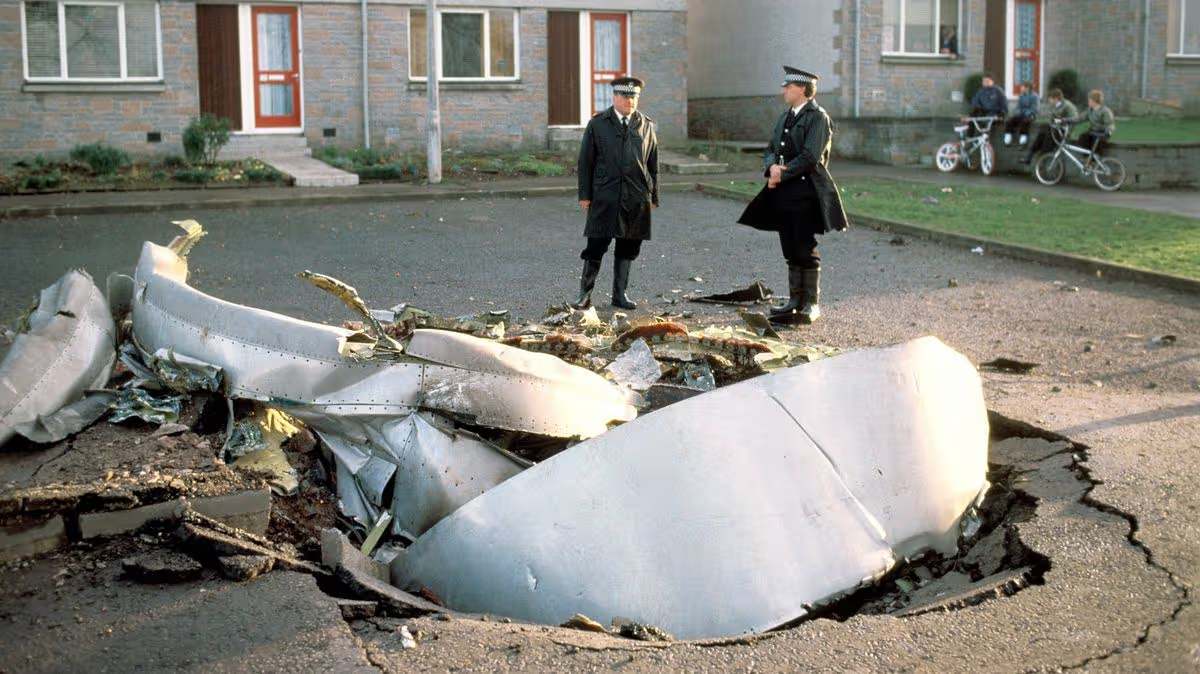
The trial of a man charged over the explosion which killed 259 passengers, crew, and 11 people on the ground above Lockerbie in 1988 has been postponed.
Jury selection was due to begin on Wednesday in Washington DC for the trial of Abu Agila Masud. He is charged with making the bomb that destroyed the plane. All 259 passengers and crew and 11 people on the ground were killed when Pan Am Flight 103 exploded above Lockerbie on December 21 1988, 40 minutes into its flight from London to New York.
On Monday, a federal judge in the US postponed the trial. The discovery of new evidence that defence lawyers want to examine was cited but the nature of the evidence was not specified in the order from US District Judge Dabney Friedrich. Masud, who was extradited from Libya to the US, has denied the charges.
The vice president of the Victims of Pan Am Flight 103 organisation – a group representing Lockerbie bombing victims – said there has been “astonishment” at the delay, which is expected to push the trial back by several months. She expressed hope that “as many of our family members as possible will live to see this trial”.
Vice President Stephanie Bernstein lost her husband Michael Bernstein in the bombing. Speaking to the Press Association, she said: “One of the concerns that I have is that many of our family members are elderly.
Advertisement
“A number of them were getting ready to travel to Washington for the trial. I hope and I pray that they will still be able to do that when a new trial date is set.”
She added: “That is a hope that we’ve had – that as many of our family members as possible will live to see this trial.”
Ms Bernstein, a retired rabbi who lives in the Washington DC area, said news of the delay so soon before the trial had been “stunning”.
Advertisement
She continued: “Having said that, our family group has worked for close to 38 years to find who did this, to bring to light as much as we can of the evidence.
“So, if this delay as a result of the new evidence results in a broader understanding of what happened, then it’s for the good.”
Former Libyan intelligence officer Abdelbaset al-Megrahi is the only man convicted in relation to the bombing, after being found guilty of 270 counts of murder by a panel of three Scottish judges sitting at a special court in the Hague in 2001.
He was sent to prison in Scotland but was controversially granted compassionate release in 2009 after being diagnosed with terminal cancer, returning home to Libya where he died in 2012.
A hearing is scheduled to take place in Washington next month to discuss the status of the case. Scottish prosecutors have always maintained that Megrahi acted with others in carrying out the attack.
Commenting on the postponement, Laura Buchan, head of the Lockerbie investigation team at the Crown Office and Procurator Fiscal Service, said: “I recognise that this adjournment will be disappointing for the families and for those who have followed this case over many years.
“As the matter remains before the court, it would not be appropriate to comment on the reasons for the adjournment. Although these proceedings are being led by the United States authorities, Scottish prosecutors and police officers remain fully committed to supporting the pursuit of justice.”
Advertisement
Get more Daily Record exclusives by signing up for free to Google’s preferred sources. Click HERE.
WASHINGTON (AP) — The “ economic onslaught ” that Treasury Secretary Scott Bessent has declared on Iran’s financial connections around the world may have one major caveat: China.
Beijing is Iran’s biggest trading partner and its leading oil buyer. While the U.S. is trying to isolate the Islamic Republic from its remaining economic partners, President Donald Trump also is preparing to host Chinese leader Xi Jinping next month to maintain a fragile trade truce.
Absent from Bessent’s remarks this week were specifics about how the Trump administration would target China, casting doubts on how effective the new campaign would be when the U.S. must balance putting maximum pressure on Iran and avoiding higher tensions with China that could be costly to the American economy.
“The announcement yesterday was very careful in my view to avoid specifics (against China), which could have led to a disruption in the summit,” Edgard Kagan, senior adviser and Freeman Chair in China studies at the Center for Strategic and International Studies, said Tuesday. “For Xi, a state visit to Washington is a big deal; and for Trump, hosting it is a big deal.”
Advertisement
That means both Washington and Beijing will have a dance to do, said Kagan, who served as U.S. ambassador to Malaysia from December 2023 until this February.
“I think the real question is, is there room to push (the Chinese) to reduce what they’re doing with Iran, to put more pressure on the Iranian regime in a way that doesn’t lead them to say, ‘This is unreasonable, and we’re not going to comply,’” he said.
China is likely to wait and see and do the minimum
In response to “Operation Economic Outcast,” which Bessent announced Monday, Beijing said its cooperation with Iran has always been “within the framework of international law.” China receives more than 80% of Iranian oil shipments but usually through indirect channels.
Lin Jian, a spokesperson for the Chinese foreign ministry, said China-Iran cooperation “should not be disrupted or undermined.”
Advertisement
“China is closely monitoring relevant developments and will take all necessary measures to resolutely safeguard its own rights and interests,” Lin said. He repeated China’s opposition to “illegal unilateral sanctions.”
Kagan described Beijing’s remarks as “a holding response” and said Beijing will try to do the least to comply without openly confronting the U.S.
“They’ve tended to be careful not crossing explicit red lines, but they haven’t addressed the spirit of what the U.S. has sought,” Kagan said, pointing to practices such as ship-to-ship oil transfers that obscure the origin of Iranian crude oil to evade American sanctions.
Advertisement
Sign up for the Ground Game Newsletter:
Your guide to the biggest stories in politics, policy and U.S. elections.
Advertisement
Sun Yun, director of the China program at the Stimson Center, a Washington think tank, said China will not go along with the new campaign if the U.S. goal is to destroy the Iranian economy and seek the government’s collapse.
But “if the goal is to exert enough pressure for Iran to make concessions on the Strait of Hormuz and potentially ending the conflict, I think China can and will demonstrate its cooperation without having to completely sever ties with Iran,” Sun said. “China only needs to do enough to demonstrate it is cooperating, such as cut back on its oil import from Iran.”
With a planned summit between Trump and Xi weeks away, “neither side wishes to have a major escalation bilaterally at this point,” she said. “China needs to give U.S. something, and U.S. needs to understand and accept that it is not going to be everything U.S. asks for.”
Advertisement
US is not likely to act tough on China, analysts say
So far, the Trump administration has refrained from imposing sanctions on major Chinese businesses or banks connected to the U.S. financial system and thus vulnerable to American penalties.
The Treasury Department said Monday that it was penalizing nearly 60 Iran-linked entities, accusing them of involvement in Iran’s nuclear and missile programs, cyber activities and oil shipments.
It targeted a number of entities and individuals based in mainland China and Hong Kong for supporting Iran’s missile and nuclear programs. It sanctioned a China-owned crude oil tanker for transporting millions of barrels of Iranian oil to China this year as well as a Hong Kong-based business for its role in the shadow fleet that ships out Iranian oil.
With Xi’s visit coming up, Trump may not act tough on China now, said Ali Wyne, senior research and advocacy adviser on U.S.-China relations at the International Crisis Group.
Advertisement
“Given how keen Trump has been to maintain both a trade truce between the United States and China and his personal rapport with Xi, he seems unlikely to do a volte-face just a month before Xi’s state visit and adopt a highly confrontational posture,” he said.
Plus, Xi’s visit to the U.S. could pave the way for Trump to return to China in November for the leaders summit of the Asia-Pacific Economic Cooperation grouping.
In his second term, Trump has been less hawkish on China than in his first presidency and frequently touts his good relationship with Xi following a major trade war last year that featured back-and-forth escalating tariffs. The U.S. business community also welcomes Xi’s visit, saying it’s a good sign if the two leaders meet in person, even when any substantial deals may be elusive.
“Beijing is betting that Washington will be reluctant to jeopardize the current leader-level dynamic by targeting major Chinese entities before the summit,” said Craig Singleton, senior director for China at the Foundation for Defense of Democracies, a hawkish Washington think tank.
Advertisement
___
Amiri reported from New York. Associated Press writer Aamer Madhani contributed to this report.
Older people should be targeted in a wealth tax raid to prop up public finances, says a think-tank.
The Left-wing Institute for Public Policy Research (IPPR) has called for a reform of a system that is ‘heavily tilted towards taxing work and younger earners’.
Its conclusions are likely to be looked at closely by Labour as Chancellor John Healey prepares for his first Budget in October amid mounting spending pressures – and after Prime Minister Andy Burnham refused to rule out a wealth tax.
But it could alarm many who have worked hard to afford homes and build nest eggs for later life.
Advertisement
The report calls for council tax and stamp duty to be replaced with a proportional property tax set at an annual rate of 0.65 per cent. It admits there would be ‘winners and losers’ with homeowners in some wealthy areas potentially facing a big hit.
It also backs the idea, supported by some in Labour, of increasing the rate of capital gains tax to the same as income tax. Defence Secretary Wes Streeting previously described such a move as a ‘wealth tax that works’.
Another proposal is to extend national insurance to employees above the state pension age. That would address what the report describes as a ‘striking’ disparity between older workers and younger graduates.
Those over the retirement age and still earning £45,000, £70,000 or £105,000 face tax rates of 20 per cent, 40 per cent and 60 per cent.
Advertisement
Chancellor John Healey has been urged to tax the older generation instead of working people and young earners
A younger graduate repaying a student loan and paying employee national insurance would face rates of 37 per cent, 51 per cent and 71 per cent, the report said.
The IPPR says change is needed as the population ages – with the proportion over 65 set to climb from 18 per cent in 2024 to 27 per cent in 2075.
Advertisement
That will create huge spending pressures from rising health and social care costs that will dwarf others, such as higher defence spending and the Net Zero transition, it argues.
Oxford University professor Ben Ansell, the report author, said: ‘Ageing is going to become by far the biggest source of pressure on the public finances.
‘Yet our tax system has increasingly shifted responsibility towards younger workers while protecting many of those who have benefited most from decades of rising property and asset wealth.
‘Reform is politically difficult but avoiding it has given Britain an ever more complicated tax system.
Advertisement
‘We need a new fiscal contract: one that raises the revenue the country will need, shifts more of the burden from work towards wealth and property, and is honest with the public about who pays and why.’
The report comes amid growing speculation that Mr Healey could put up taxes in the Budget. Capital Economics, a consultancy, has predicted they may go up by as much as £25billion.
The Chancellor will need to find £5billion more for defence as well as paying for a series of cost-of-living announcements Mr Burnham has made as well as an overhaul of social care and a major programme of council house building.
The PM said this week, when asked whether he would have to put up taxes, that he ‘won’t be unrealistic’ about the state of public finances and that Britain is in a ‘challenging position’.
Advertisement
Economists believe the Government’s Budget ‘headroom’ has been reduced sharply from £24billion at the time of the Spring Statement with rising borrowing costs caused by the Iran war adding to pressure on the Treasury.
The Resolution Foundation think-tank estimates it has fallen to £8billion.
Share or comment on this article:
Tax older generation more to boost the public purse, Left-wingers urge Labour
Parton’s representatives confirmed the country superstar’s death in a statement to People, sharing that the Jolene singer died following a ‘brief battle with cancer.’
They did not disclose what type of cancer it was.
‘After bravely facing a brief battle with cancer, Dolly departed her Earthly life today at the Vanderbilt-Ingram Cancer Center surrounded by loved ones,’ the statement read.
Advertisement
An industry insider also told The Daily Mail that Parton had been quietly battling cancer in the months leading up to her death.
‘I was told how a long time ago how sick she was but people really didn’t know. We knew she was going to die but we didn’t know it was going to be today,’ the source said.
‘She had cancer – that I know, but I don’t know what kind. We were all afraid to ask [for more details] because we didn’t want to know the answer.’
Advertisement
Dolly Parton had been privately battling cancer before her death at the age of 80 on Tuesday; Pictured in 2016
According to a source, who said people are ‘heartbroken’ by her death, those close to Parton have known about her cancer diagnosis for many months.
‘No one close to her [is surprised that death was close]. That was quite a while ago, like about 11 months ago, that she wasn’t doing too well,’ the insider said.
‘And then she got better for a while, but then she kept canceling stuff, so we knew.’
Advertisement
Meanwhile, Parton’s representatives further told People in their statement: ‘Our beloved Dolly Parton spent her life and career bringing joy, laughter, hope and integrity into everything she touched.’
‘Her unmatched generosity reached the lives of countless people whom she would never meet, yet she was always there to offer a helping hand,’ the statement went on.
‘Whether it be the hundreds of millions of books donated through her invaluable Imagination Library or funding research that helped create a lifesaving vaccine used around the world, Dolly’s unconditional love for all people was the guiding force for her lasting impact.’
The legendary country singer’s death was confirmed Tuesday in an Instagram video posted by her nephew Bryan Seaver, who also acted as her head of security.
Advertisement
She died Tuesday morning after being admitted Friday to Nashville’s Vanderbilt University Medical Center with autoimmune and kidney problems, according to TMZ.
Parton’s representatives confirmed the country superstar’s death in a statement to People, sharing that the Jolene singer died following a ‘brief battle with cancer’; Pictured in 2025
An industry insider also told The Daily Mail that Parton had been quietly battling cancer in the months leading up to her death; Parton is seen in Nashville in March 2025
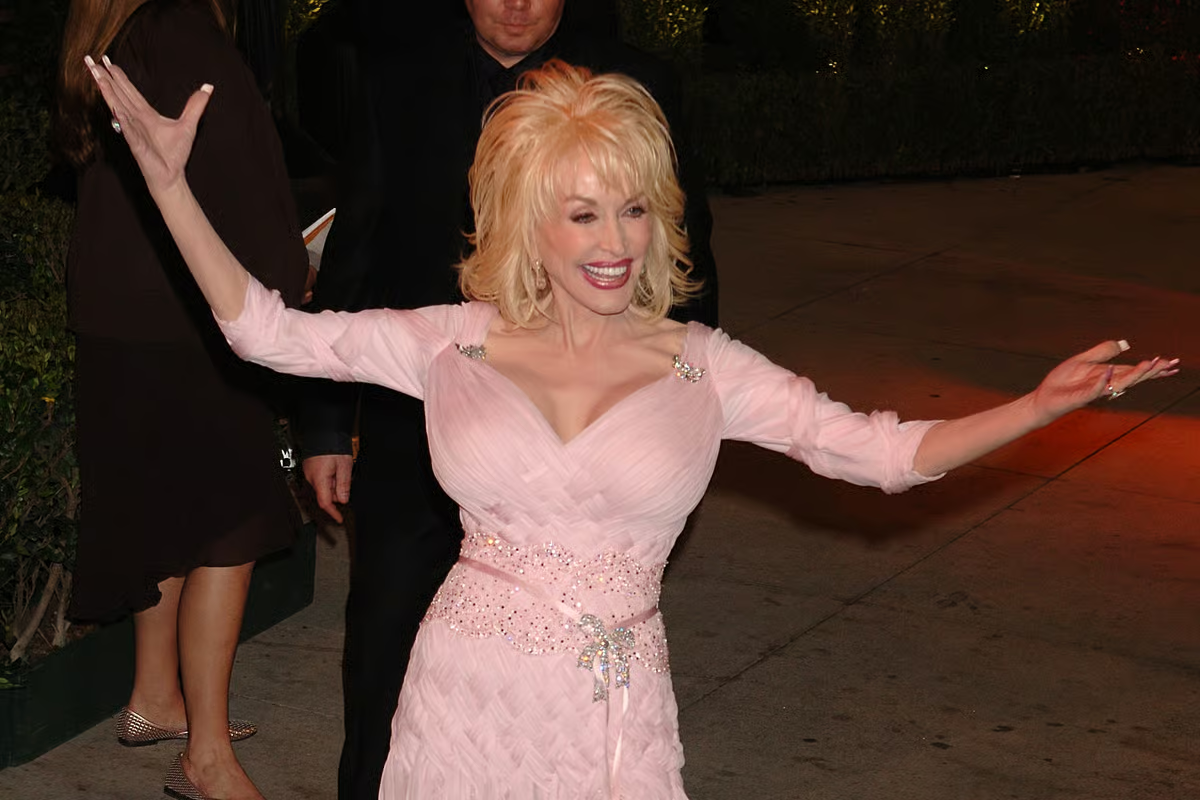
‘She had cancer – that I know, but I don’t know what kind. We were all afraid to ask [for more details] because we didn’t want to know the answer,’ the source said; Parton pictured 2023
Advertisement
Parton’s loved ones began racing to Nashville upon hearing news of her hospitalization, but not all were able to reach her while she was alive.
‘This video announcement is something Dolly asked of me years ago before I fully absorbed it as a future reality,’ Seaver said.
He hailed his aunt for having ‘lived in the light’ and said she was now ‘in the arms of Jesus’ and the company of her late husband Carl Dean, as well as her parents and ‘countless others who have watched her and longed to meet her in the heavens.’
Parton, who is often referred to as the Queen of Country, enjoyed an illustrious music career that spanned an incredible six decades and was arguably best known for her hits Jolene and 9 to 5.
Advertisement
Her passing came after months of health woes that saw her pull out of a string of public appearances, fueling fan fears for her wellbeing.
Seaver fondly recalled joining Parton on tour when he was a child in the 1980s, sharing that she ‘opened doors not just for me but for her entire family to reach the potential we didn’t even know was possible.’
He characterized her as ‘a farmer, just like her daddy. He farmed the soil. She farmed songs and happiness. Dolly called me and said she wants to rest in a beautiful bed of plush cotton because after a life of wearing heavy rhinestones, she finally deserves to be comfortable and have some rest.’
Parton looked energized and happy in her last public appearance before her passing, as she discussed her ongoing ‘health issues’ with fans 11 days ago
Advertisement
Aside from video appearances, Parton was last seen out and about on June 24 when she attended the grand opening of her truck stop, Dolly’s Tennessean Travel Stop
Family insiders indicated that a private service for close friends and relations will be held in Nashville within the next few days.
In an interview published just four days before her death, Parton had declared she still had ‘so many things I want to achieve’ and vowed to continue ‘working as long as I can to see everything come to life,’ via People.
She also admitted she had recently been having ‘hard times with my health.’
Advertisement
‘I am dealing with some health issues that I just didn’t pay attention to when I was watching over Carl,’ she said, referring to her late husband, who passed away in March 2025.
Concerns about Parton’s health had loomed for months, with the pop culture icon frequently dispelling her fans’ fears.
She pulled out of multiple public appearances, including a residency in Las Vegas and the opening of a new ride, NightFlight Expedition, at her Dollywood theme park.
The star was supposed to attend the ride’s grand opening on August 14. Instead, a video recording of the star addressing her fans was shared on a screen at the park, which is now regarded as her last public appearance.
Advertisement
‘So my Nashville doctor has kind of clipped my wings, saying, “You ain’t traveling this week.” So I guess if your doctor tells you, “You ain’t traveling this week,” you ain’t traveling this week,’ Parton said in the video message.
The songstress, donning a bright pink top adorned in gems and enormous butterfly wings, looked energized and happy as she discussed her ongoing ‘health issues’ with fans.
‘I’m still in Nashville, and I’m sorry about that,’ she said in the clip. ‘I’m supposed to be there in person like we planned.’
She explained that she ‘sometimes gets a little dizzy’ and ‘dehydrated,’ which is why she couldn’t be there in person.
Advertisement
‘I’ve told you before, all my fans, that I’ve had a few little health issues and sometimes I get a little dizzy and I get dehydrated. And I’m dehydrated,’ she said.
She reassured her fans that she was still hard at work on projects like her new museum, Life of Many Colors, in Nashville, her new hotel and Broadway show, Dolly: A True American Musical.
She also insisted that ‘all was going well on the medical end of things.’
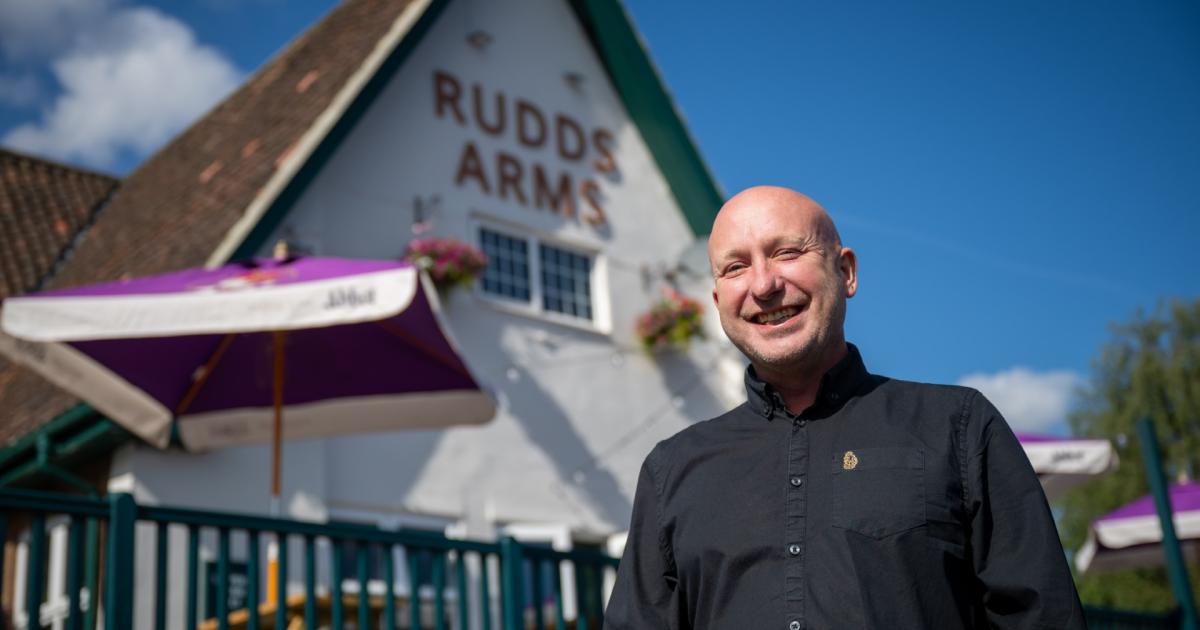
The Rudds Arms in Marton, welcomed customers back on Saturday (August 22), following a six-figure revamp by pub operator Greene King.
The renovation has transformed both the inside and outside of the Middlesbrough pub, with upgraded facilities, refreshed décor and more space for welcoming customers.
The outdoor space has had a refresh just in time for the summer Bank Holiday weekend – with a newly decorated pergola, complemented by new festoon lighting, planters and garden furniture.
Inside, sports fans will have full access to a dedicated darts zone featuring two dartboards, as well as upgraded screens and sound systems that have been installed to maximise live sport coverage on Sky Sports and TNT Sports.
The inside of the pub has had a general refresh throughout – with new lighting, updated furniture and décor.
A newly created function room means the pub will be hosting celebrations for larger gatherings such as birthday parties, cooperate events and family celebrations.
Rob Watson, general manager of The Rudds Arms, said: “The Rudds Arms is back and better than ever, and we’re delighted to be welcoming our lovely locals and new customers through the doors to see our brand-new look.
Advertisement
“The pub has received a full refurbishment to give everyone added comfort, top quality sports and entertainment and fantastic spaces for groups of all sizes to come together and unwind, both in and outdoors.
“The team and I pride ourselves on delivering a brilliant pub experience, and we can’t wait to showcase all we have to offer.”
The investment is the latest refurbishment project carried out by Greene King as it continues to upgrade venues across the country.



















!['She had cancer - that I know, but I don't know what kind. We were all afraid to ask [for more details] because we didn't want to know the answer,' the source said; Parton pictured 2023](https://i.dailymail.com/1s/2026/08/26/01/110852765-16080067-image-a-64_1787703307935.jpg)















































You must be logged in to post a comment Login