Connect with us
DAPA Banner
DAPA Coin
DAPA
COIN PAYMENT ASSET
PRIVACY · BLOCKDAG · HOMOMORPHIC ENCRYPTION · RUST
ElGamal Encrypted MINE DAPA
🚫 GENESIS SOLD OUT
DAPAPAY COMING

Business

What Tools Do Electricians Use to Strip Large-Gauge Wire Quickly?

Published

on

electrician work

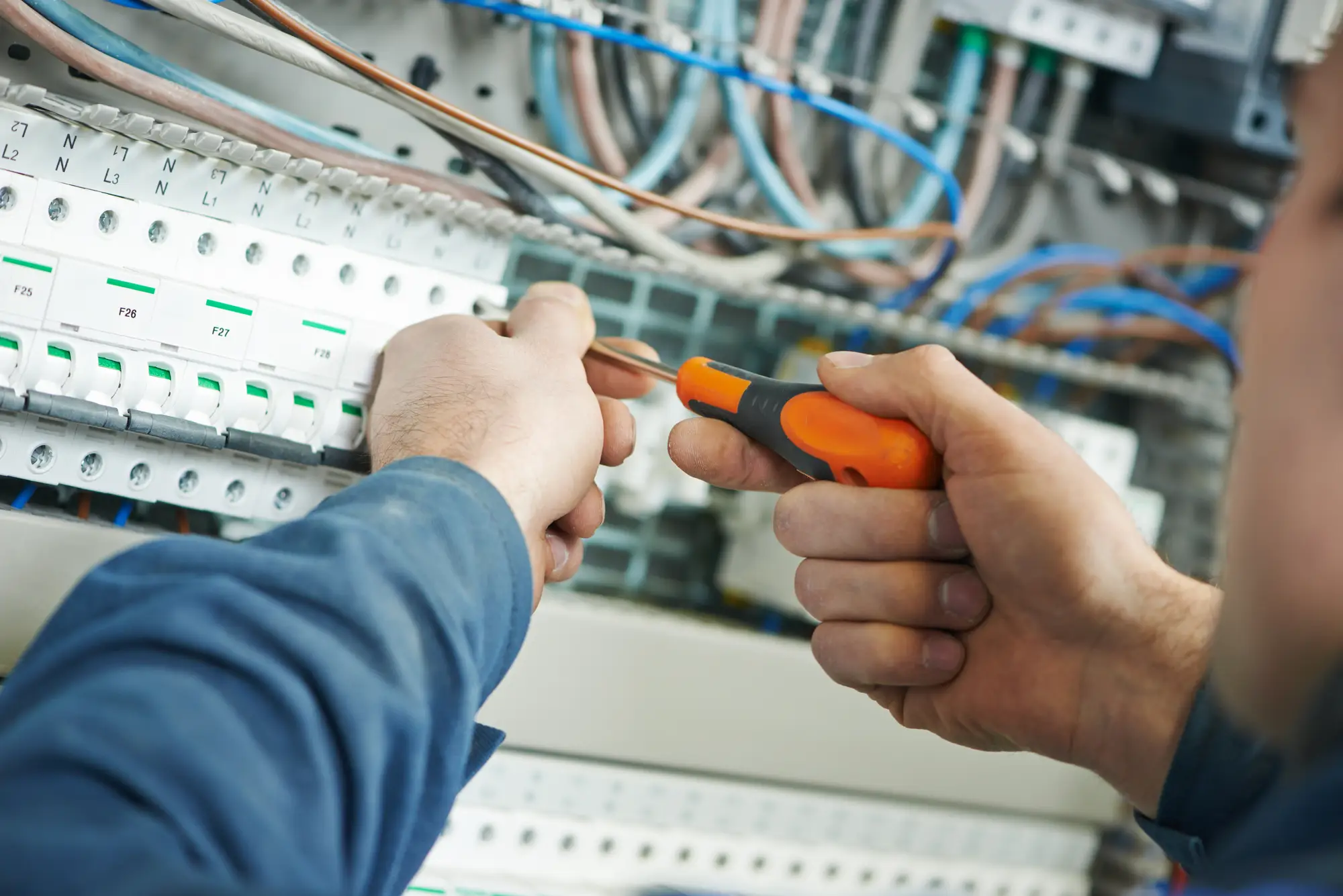
Stripping large-gauge wire by hand takes forever, and if you’ve tackled it with the wrong tool, you know how quickly things fall apart. A dull blade dragging against 4/0 AWG insulation isn’t just slow, it’s dangerous. So you don’t really need to ask whether a dedicated tool matters; the question is finding the right one for your crew.

This piece walks through the tools electricians actually grab on large-gauge jobs, what makes a good stripping tool different from a frustrating one, and how to pick the right match for whatever wire size you’re handling.

The Right Tools for Stripping Large-Gauge Wire Quickly

Electricians working with large-gauge conductors (4 AWG and larger) stick to a short list of proven tools. A solid power wire stripping machine tops the list on production jobs, where speed and consistency beat saving a few bucks on equipment. The right tool cuts clean through thick insulation in one pass, leaves the conductor underneath untouched, and gets you to the next connection with confidence.

Rotary Strippers for Thick Conductors

Rotary wire strippers spin a blade around the insulation, scoring it evenly across the whole circumference. You set the blade depth upfront; that’s your safety net against nicking the copper or aluminum underneath. Most rotary models work from 10 AWG down to 750 kcmil, exactly the range you need for service entrances, feeders, and underground runs.

The speed difference is noticeable. You’ll strip a 2/0 AWG conductor in under ten seconds with a rotary tool; a manual knife takes thirty seconds or longer. On fifty terminations, that time adds up.

Advertisement

Automatic Wire Stripping Machines

Automatic machines go beyond rotary hand tools. Feed the wire in, dial in strip length and gauge, and you’re done. No hand pressure, no adjustment. Commercial electrical shops love these for panel builds or prefab work, especially when they’re processing the same conductor size in volume.

But they cost money. A benchtop automatic stripper runs $150 to $800, depending on gauge range and construction quality. That investment pays off for shops running production daily; it doesn’t for a single residential service upgrade.

Lineman’s Knife and Ringing Technique

The lineman’s knife isn’t outdated. It’s still your fastest option in the field when power tools aren’t an option. Ringing means scoring the insulation around the circumference (light pressure, not into the conductor), then pulling the sleeve off by hand.

This takes practice. Electricians who do it regularly learn the exact pressure needed for each insulation type. THHN, XHHW, and URD all behave differently under a blade; that’s the trick. Not fast for volume work, but it works when you’re alone in a trench finishing a service lateral.

Advertisement

How to Choose the Best Tool for Your Job

Three things drive the right choice: the gauge range you work with most, what kind of jobs you do, and how often you strip large-gauge conductors.

Matching the Tool to Gauge Range

Not every stripper covers every gauge. Most manual wire strippers max out at 6 AWG or 8 AWG, leaving you short for service conductors. Before buying, verify the tool’s rated range and confirm it handles the largest conductor you run on a regular basis. A stripper rated to 4/0 AWG won’t help if your spec sheet calls for 350 kcmil.

Field Work vs. Shop Work

Field electricians reach for portable tools: a compact rotary stripper, a lineman’s knife, or a heavy-duty manual stripper with wide jaws. Shop electricians and prefab crews benefit more from a benchtop machine that handles volume without wearing out your hands. The portability trade-off matters; buy for wherever you’ll actually use it most.

Blade Quality and Insulation Type

Blade material counts more than you’d think. Cheap blades dull fast on XLPE or armored cable jackets. Look for hardened steel blades and replaceable cartridges, especially if you work with direct-burial or service-entrance cable often. A dull blade needs more pressure, which is exactly how you nick conductors and fail inspections.

Advertisement

Conclusion

Electricians strip large-gauge wire quickly by matching job type to the right tool: rotary strippers for field speed, automatic machines for shop production, and a sharp lineman’s knife for single cuts in the field. Gauge range, job volume, and blade quality always come back into play. Buy for the actual work you do, and you’ll waste less time wrestling with insulation and more time making clean, safe terminations.

Advertisement
Continue Reading
Click to comment

You must be logged in to post a comment Login

Leave a Reply

Business

CP Axtra Public Company Limited (CPXTF) Presents at TISCO Corporate Day 2026 – Slideshow

Published

on

OneWater Marine Inc. (ONEW) Q1 2026 Earnings Call Transcript

CP Axtra Public Company Limited (CPXTF) Presents at TISCO Corporate Day 2026 – Slideshow

Continue Reading

Business

Oxford Industries, Inc. (OXM) Q1 2026 Earnings Call Transcript

Published

on

OneWater Marine Inc. (ONEW) Q1 2026 Earnings Call Transcript

Oxford Industries, Inc. (OXM) Q1 2026 Earnings Call June 10, 2026 4:30 PM EDT

Company Participants

Brian Smith
Thomas Chubb – Chairman, CEO & President
K. Grassmyer – Executive VP, CFO & COO

Conference Call Participants

Advertisement

Ashley Owens – KeyBanc Capital Markets Inc., Research Division
Dana Telsey – Telsey Advisory Group LLC
Janine Hoffman Stichter – BTIG, LLC, Research Division
Mauricio Serna Vega – UBS Investment Bank, Research Division
Joseph Civello – Truist Securities, Inc., Research Division

Presentation

Operator

Advertisement

Greetings, and welcome to the Oxford Industries’ First Quarter Fiscal Year 2026 Earnings Call. [Operator Instructions] As a reminder, this conference is being recorded.

It is now my pleasure to introduce Brian Smith of Oxford Industries. Please go ahead.

Brian Smith

Advertisement

Thank you, and good afternoon. Before we begin, I would like to remind participants that certain statements made on today’s call and the Q&A session may constitute forward-looking statements within the meaning of the federal securities laws. Forward-looking statements are not guarantees, and actual results may differ materially from those expressed or implied in the forward-looking statements. Important factors that could cause actual results of operations or our financial condition to differ are discussed in our press release issued earlier today and in documents filed by us with the SEC including the risk factors contained in our Form 10-K. We undertake no duty to update any forward-looking statements.

During this call, we’ll be discussing certain non-GAAP financial measures. You can find a reconciliation of non-GAAP to GAAP financial measures in our press release issued earlier today which is posted under the Investor Relations tab at our website at oxfordinc.com.

I’d now like to introduce today’s call participants. With me today are Tom Chubb Chairman and CEO, and Scott Grassmyer, CFO and COO. Thank you for your attention, and now I’d like to turn the call over to Tom

Advertisement
Continue Reading

Business

Asian stocks fall, oil gains as US strikes Iran

Published

on

Asian stocks fall, oil gains as US strikes Iran
Oil climbed and stocks fell after US forces launched fresh strikes on Iran, reviving geopolitical risks at a time when markets are already grappling with a selloff in richly valued technology stocks.

Brent crude rose over2% to near $95.20 a barrel after the US military launched strikes on multiple targets in Iran for a second straight day. MSCI’s gauge for Asian equities dropped 1%, setting the gauge up for a fifth loss in six days. Tech stocks remained under pressure with South Korea’s Kospi Index, a bellwether for the artificial-intelligence trade, dropping over 4%.

Equity-index futures for Wall Street benchmarks also retreated after the underlying gauges both dropped during the US session. The Nasdaq 100 Index dropped 2% as traders were rattled by a renewed selloff in some of the world’s largest tech companies.

Elsewhere, gold extended losses to around $4,050 an ounce on concerns elevated oil prices will lead to higher interest rates. The dollar was a touch stronger against most Group-of-10 currencies. Treasury futures also fell as geopolitical tensions increased with Iran saying the Strait of Hormuz was closed to all types of vessels.

Advertisement

The latest strikes threatened to inject fresh volatility into markets and tighten crude oil supplies, risking renewed inflationary pressures. Even after Wednesday’s softer-than-expected US inflation report offered a brief reprieve, traders continued to price in higher borrowing costs while a selloff in semiconductor stocks cast doubt on the sustainability of the record equity rally.


“Investors remain skittish despite being thrown a lifeline by the inflation figures,” said Chris Beauchamp, chief market analyst at IG. “It is now a case of ‘once bitten, twice shy’ – no one wants to go charging in to buy the dip yet, which suggests more of a drift lower for the time being, though leaving the overall trend intact.”
US Central Command said it had begun what it called the “additional self-defense strikes” at 5:15 p.m. New York time on Wednesday.The attacks, which followed strikes on Tuesday in retaliation for the downing of a US Apache helicopter, underscored President Donald Trump’s growing impatience that the two sides have so far failed to reach an agreement.

They also reinforced the view that an April ceasefire has effectively collapsed, despite the absence of a return to the large-scale bombing campaign seen at the start of the conflict.

“Markets retain a suspicion that this will be another brief episode of sound and fury signifying not much, so a degree of caution in positioning seems warranted,” said Sean Callow, a senior analyst at ITC Markets in Sydney.

In the US, shares of chipmakers and other AI infrastructure companies, this year’s biggest winners, fell for a second day Wednesday. Chip bellwether Nvidia Corp. dropped 3.7%, Broadcom Inc. dropped 5.1%, while Super Micro Computer slid 28% after unveiling plans for a $7 billion equity raise. Oracle Corp. shares slipped in extended trading after reporting quarterly capital expenses that were higher than estimates.

Advertisement

Elsewhere, the yen held near 160.50 per dollar with Bank of Japan Governor Kazuo Ueda hospitalized. He is expected to miss next week’s policy meeting, the central bank said.

Meanwhile, the core consumer price index in the US, which excludes food and energy prices, increased 0.2% from April, under the 0.3% consensus forecast among economists polled by Bloomberg.

Even so, bond traders maintained bets that the Fed would raise rates by the end of the year. While Treasury yields initially dipped after the data on Wednesday, they resumed climbing with oil prices later in the session. Interest-rate swaps showed traders are still fully pricing in a rate hike by December.

“It’s clear that rate cuts are off the table, and while there is chatter about a potential rate hike, we believe it’s unlikely that we’ll see a rate hike before the midterm elections,” wrote Skyler Weinand, chief investment officer at Regan Capital.

Advertisement
Continue Reading

Business

Nebius: Still A Buy, Just Not A Table-Pounding Buy

Published

on

Nebius: Still A Buy, Just Not A Table-Pounding Buy

Nebius: Still A Buy, Just Not A Table-Pounding Buy

Continue Reading

Business

Inflation Likely To Subside, Growth Likely To Improve

Published

on

Price Inflation Accelerates As Wars And Deficits Expand

Scott Grannis was Chief Economist from 1989 to 2007 at Western Asset Management Company, a Pasadena-based manager of fixed-income funds for institutional investors around the globe. He was a member of Western’s Investment Strategy Committee, was responsible for developing the firm’s domestic and international outlook, and provided consultation and advice on investment and asset allocation strategies to CFOs, Treasurers, and pension fund managers. He specialized in analysis of Federal Reserve policy and interest rate forecasting, and spearheaded the firm’s research into Treasury Inflation Protected Securities (TIPS). Prior to joining Western Asset, he was Senior Economist at the Claremont Economics Institute, an economic forecasting and consulting service headed by John Rutledge, from 1980 to 1986. From 1986 to 1989, he was Principal at Leland O’Brien Rubinstein Associates, a financial services firm that specialized in sophisticated hedging strategies for institutional investors.

Visit his blog: Calafia Beach Pundit (https://scottgrannis.blogspot.com/)

Continue Reading

Business

Precious Metals Royalty And Streaming Companies – May 2026 Report

Published

on

Precious Metals Royalty And Streaming Companies - April 2026 Report

This article was written by

Peter Arendas is an associate professor at the University of Economics in Bratislava. He has over 15 years of investing experience. Peter specializes in covering small and mid-cap companies in the resource sector with an in-depth insight into the precious and industrial metals royalty & streaming industry.Peter is the leader of the investing group Royalty & Streaming Corner where he offers in-depth analysis of long-only investment ideas, actionable research, model portfolios, discussions of the latest news, and direct access for questions in chat. Learn More.

Analyst’s Disclosure: I/we have a beneficial long position in the shares of ELE, RGLD either through stock ownership, options, or other derivatives. I wrote this article myself, and it expresses my own opinions. I am not receiving compensation for it (other than from Seeking Alpha). I have no business relationship with any company whose stock is mentioned in this article.

Seeking Alpha’s Disclosure: Past performance is no guarantee of future results. No recommendation or advice is being given as to whether any investment is suitable for a particular investor. Any views or opinions expressed above may not reflect those of Seeking Alpha as a whole. Seeking Alpha is not a licensed securities dealer, broker or US investment adviser or investment bank. Our analysts are third party authors that include both professional investors and individual investors who may not be licensed or certified by any institute or regulatory body.

Advertisement
Continue Reading

Business

US stock futures dip on Iran escalation, Oracle losses

Published

on


US stock futures dip on Iran escalation, Oracle losses

Continue Reading

Business

Built completes Midland private hospital

Published

on

Built completes Midland private hospital

St John of God Health Care’s new private hospital in Midland has reached practical completion, paving the way for the state government to take over St John’s existing private hospital.

Continue Reading

Business

Port proponent Crestlink to buy Koolan Island mine from MGX Resources

Published

on

Port proponent Crestlink to buy Koolan Island mine from MGX Resources

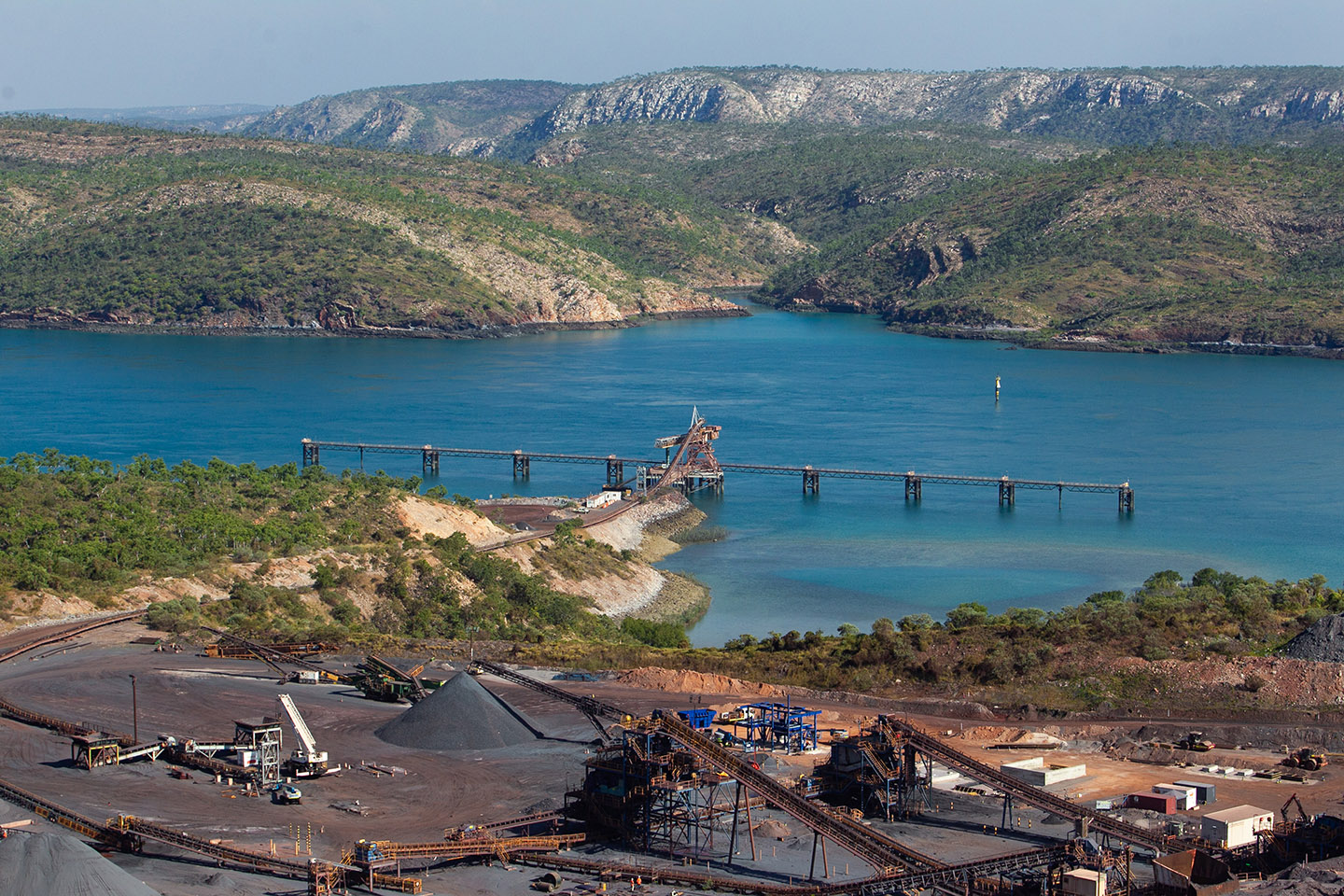
Private port proponent Crestlink has struck a deal to buy the Koolan Island iron ore mine for $20.2 million from MGX Resources.

Continue Reading

Business

Uber sues New York City over ’reckless’ driver protection law

Published

on

Uber sues New York City over ’reckless’ driver protection law


Uber sues New York City over ’reckless’ driver protection law

Continue Reading

Trending

Copyright © 2025