INDIO, Calif. — As the dust settles on the first weekend of Coachella 2026, music critics and fans are still buzzing over a series of unforgettable performances that blended raw emotion, high production and historic milestones at the Empire Polo Club. While headliners Sabrina Carpenter, Justin Bieber and Karol G commanded the main stage, many agree the festival’s most electrifying moments came from undercard acts and surprise appearances that stole the spotlight.
AFP
Dijon emerged as a critical darling after his solo set on Friday, earning perfect 10/10 ratings from some reviewers who called it the “set of the day” for its raw vocal power and intimate delivery. The singer-songwriter, known for soulful R&B-infused tracks, captivated audiences with stripped-back arrangements that highlighted his voice without relying on elaborate production. Variety praised Dijon alongside Laufey, FKA Twigs and Geese as standout non-headliners who delivered vital, memorable music amid the festival’s vast offerings.
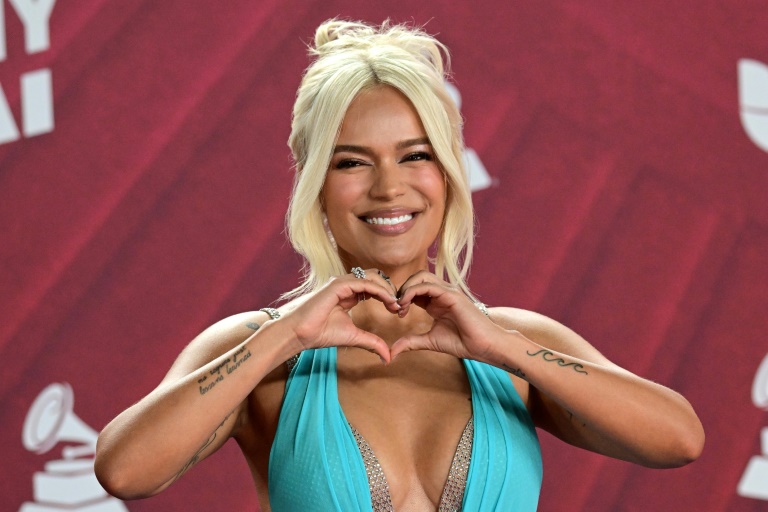
Karol G made history Sunday night as the first Latina to headline Coachella, delivering an explosively energetic, lusty and socially conscious performance that many called the weekend’s defining moment. The Colombian superstar powered through an ambitious set featuring costume changes, a three-story stone cave structure and a genre-spanning lineup that included her hits “TQG” and “Amargura,” a cover of Gloria Estefan’s “Mi Tierra,” a mini-set by reggaetón pioneer Wisin and collaborations with the all-women mariachi group Mariachi Reyna de Los Angeles. She addressed the crowd with messages of Latino pride amid recent struggles, waving flags and celebrating female and Latin empowerment. Teen Vogue and Rolling Stone hailed it as awe-inspiring and overdue, cementing her status as a new force in Latin music.
The Strokes delivered what some Desert Sun reporters described as the best set of the festival so far, with booming sound that overwhelmed the main stage speakers during hits and deeper cuts. Their performance of “Reptilia,” complete with lasers, stood out as a showstopper that reviewers said no other act matched in sheer volume and energy. The band’s return brought a rock edge to a lineup increasingly tilted toward pop and electronic acts.
Other strong contenders included Jack White’s surprise Saturday set in the Mojave tent, which Vice called one of the most energetic, raw and authentic performances of the weekend. His last-minute addition injected much-needed rock energy into a fest that has grown less guitar-centric. Nine Inch Noize — the hardcore collaboration between Nine Inch Nails’ Trent Reznor and Atticus Ross with electronic producer Boys Noize — brought a blistering, hellish 45-minute set of remixed NIN classics to the Sahara tent, earning rave reviews as a house-down highlight.
Advertisement
Geese turned heads with an impassioned cover of Justin Bieber’s “Baby” during their Gobi stage set, outshining the headliner’s own nostalgic but mixed-bag performance that featured YouTube videos and minimal production. Pitchfork and others praised Geese for wringing fresh emotion from their arrangements, while Young Thug’s Sunday set — reaching back to early career tracks and delivering guest verses with emotional weight after Rich Homie Quan’s death — reminded crowds of his stylistic prowess.
Sabrina Carpenter’s Friday headlining return transformed the main stage into “Sabrinawood,” complete with Hollywood-inspired production, special guest actors including Will Ferrell and Samuel L. Jackson, and theatrical elements. While some critics noted mixed elements, her ambitious spectacle and star power drew massive crowds and positive buzz. Bieber’s Saturday set, largely solo with stunning vocals, divided opinions but earned praise for raw singing amid nostalgia.
Additional memorable moments included Turnstile’s galvanizing hardcore energy and mosh-pit-inducing set, Teddy Swims’ star-studded collaboration featuring David Lee Roth, Joe Jonas and Vanessa Carlton, and FKA Twigs’ stunning performance celebrating West Coast ballroom culture with dancers Honey Balenciaga, Makayla Basquiat and Dashaun Wesley. BINI, the first Filipino group to perform at Coachella, exuded pride with polished choreography and new songs, while KATSEYE brought K-pop flair and surprise appearances.
David Byrne made a theatrical return, Radiohead offered an immersive “Kid A MNESIA” experience, and surprise guests like Wizkid joining Tems for “Essence,” Camila Cabello with Young Thug on “Havana,” and Billy Corgan with Sombr added magic. Addison Rae’s maximalist pop-star energy, complete with boa made of hundred-dollar bills, dazzled on the main stage.
Advertisement
Critics noted the festival’s 25th edition balanced big-stage pomp with intimate tent discoveries. While some headliner sets received mixed reviews — Bieber’s laptop-heavy nostalgia and production choices drew both acclaim and critique — undercard acts like Dijon, Laufey and Geese consistently topped “best of” lists for pure musical impact. Rock acts such as The Strokes, Jack White and Turnstile provided energetic counterpoints to pop and Latin dominance.
Social media amplified the conversation, with fans and attendees sharing clips of standout moments. Hashtags highlighting Karol G’s historic set, Dijon’s vocals and Jack White’s surprise racked up views, extending the weekend’s cultural reach. Livestreams on YouTube allowed global audiences to experience highlights, though technical issues occasionally frustrated viewers.
As weekend two approaches April 17-19, anticipation builds for whether any acts can top the first weekend’s peaks. Organizers have kept set times and possible surprises under wraps, but the bar is high after historic headlining, raw vocal showcases and rock revivals.
Coachella 2026 has reinforced its reputation as a platform for both established stars and emerging voices. From Karol G’s empowering celebration to Dijon’s intimate brilliance and The Strokes’ sonic assault, the first weekend delivered a diverse sonic feast that critics say captured the festival’s evolving identity — less reliant on traditional rock but still capable of delivering raw, unforgettable live moments.
Advertisement
For attendees and streamers alike, the debate over the single “best” performance may never settle. Yet consensus points to a handful of transcendent sets that rose above the desert heat and massive crowds. Dijon’s vocal purity, Karol G’s historic triumph and The Strokes’ commanding volume stand out as early frontrunners in what promises to be another memorable chapter in Coachella’s silver anniversary.
As the polo fields prepare for round two, the conversation continues online and in music circles: Which set defined Coachella 2026 so far? The answer may depend on taste — soulful intimacy, cultural milestone or pure sonic force — but one thing is clear: Weekend one delivered performances worthy of the festival’s legendary status.
Shares of JSW Energy plunged as much as 8% to their day’s low of Rs 512 on the BSE on Tuesday after it reported a consolidated net profit of Rs 574 crore for the March quarter, marking a 38% increase from Rs 414 crore recorded in the same period last year.
Revenue from operations rose sharply by 41% year-on-year to Rs 4,499 crore in Q4FY26, compared with Rs 3,189 crore in the corresponding quarter of the previous financial year. The company’s board has recommended a dividend of Rs 2 per equity share and fixed Friday, June 5, as the record date to identify shareholders eligible for the payout.
On a sequential basis, profit after tax grew 8% from Rs 529 crore reported in Q3FY26, while revenue increased 10% quarter-on-quarter from Rs 4,082 crore in the October-December quarter.
Total expenses during the quarter stood at Rs 4,666 crore, higher than Rs 4,366 crore in Q3FY26 and Rs 3,142 crore in Q4FY25. This reflects a rise of 7% sequentially and 48% on a yearly basis. The increase in expenditure was driven by higher fuel costs, employee expenses and finance costs, among other factors.
Advertisement
Power sales volume climbed 48% year-on-year to 11.7 billion units (BUs) from 7.9 BUs. Renewable energy generation rose 68% to 2.9 BUs from 1.7 BUs a year ago, while thermal generation increased 43% to 8.8 BUs from 6.2 BUs.
Live Events
Generation under long-term power purchase agreements (PPAs) grew 25% year-on-year to 8.6 BUs from 6.9 BUs. Short-term PPA generation surged 201% to 3.1 BUs, compared with 1.0 BU in the year-ago period. JSW Energy’s cash and cash equivalents stood at Rs 10,013 crore during the quarter, reflecting a strong liquidity position. The company reported a net debt-to-equity ratio of 2.1x, while operational net debt-to-EBITDA stood at 5.2x.EBITDA for Q4FY26 jumped 72% year-on-year to Rs 2,602 crore from Rs 1,512 crore reported in the corresponding quarter last year.
JSW Energy shares are up 9.5% in the last 1 month and about 15% in the last 1 year.
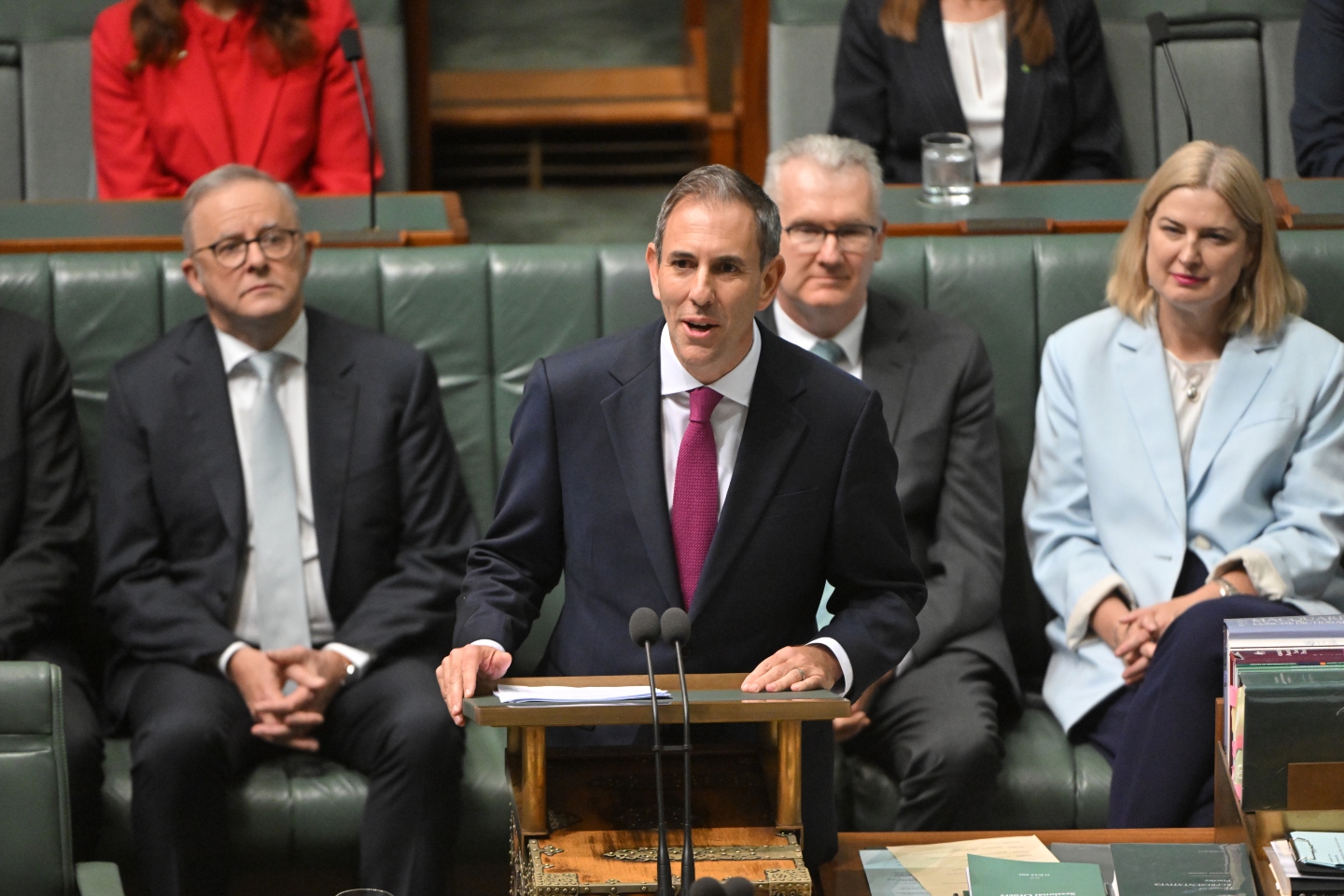
The federal government is replacing the 50 per cent capital gains tax discount with a new minimum rate and is restricting negative gearing to new builds to boost housing stock.
The shares of Vodafone Idea dropped nearly 4% after the telecom giant issued a clarification on a report claiming that its parent Vodafone Plc plans to transfer part of its stake to the company itself, which had sparked an 8% rally in the share price yesterday.
UK-based Vodafone Plc, which owns a 19% stake in Vodafone Idea, was considering transferring part of its shareholding to the company itself for the Indian telco to hold in its treasury, Bloomberg reported, citing people familiar with the matter. It added that the share transfer would take place instead of Vodafone injecting more cash into the Indian business.
The company’s shares sharply rallied more than 8% on Monday despite the overall stock market crash following the report, which claimed that the move could boost the balance sheet of the loss-making Vodafone Idea, and help its current efforts to raise debt.
Vodafone Idea’s clarification
Advertisement
After exchanges sought clarification from Vodafone Idea following the sharp surge in share price, the company said that it has not yet received any communication related to this from the Vodafone Group.
Live Events
Vodafone Idea said that the report may possibly be referring to disclosures already made in December last year about the Contingent Liability Adjustment Mechanism (CLAM) arrangement. As part of the December exchange filing, which the company reshared yesterday, Vodafone Idea had announced that it amended a major agreement with its UK-based parent company to secure the recovery of nearly Rs 5,836 crore linked to liabilities arising from the 2017 Vodafone-Idea merger. Vodafone Idea share priceVodafone Idea shares have seen a significant surge recently, jumping 10% in one week and 28% in one month. Shares of the telecom company are up more than 2% in 2026 so far.
In the longer term, the stock jumped over 67% in one year, 69% in three years and more than 34% in five years. The company currently has a market capitalisation of more than Rs 1.26 lakh crore.
(Disclaimer: Recommendations, suggestions, views and opinions given by the experts are their own. These do not represent the views of The Economic Times)
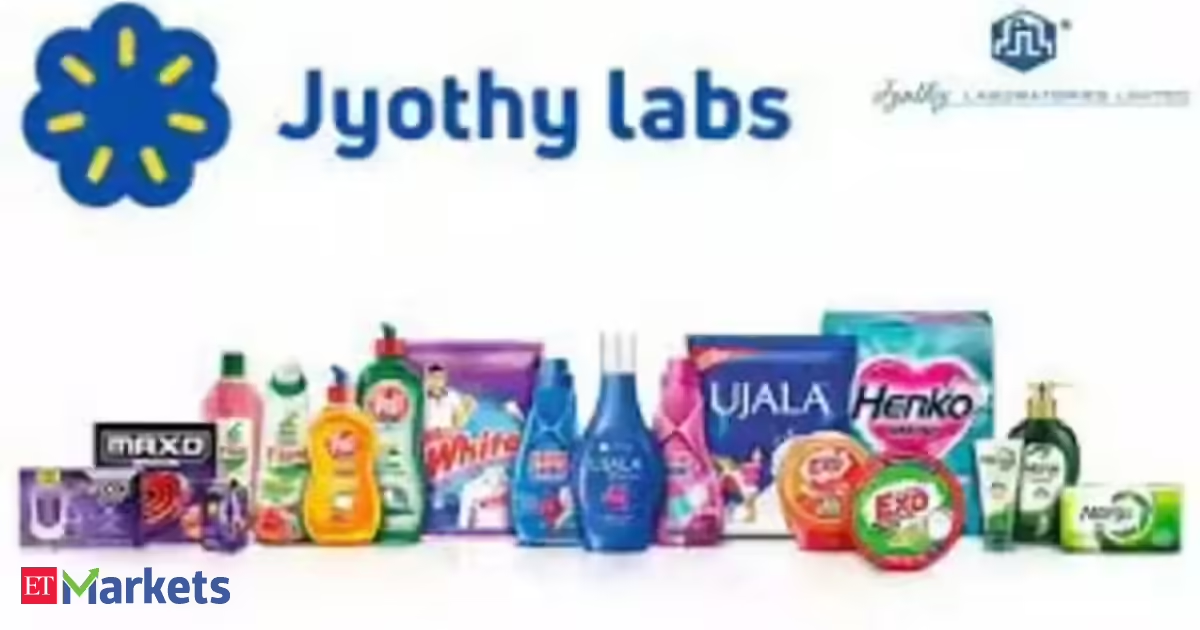
Jyothy Labs shares declined 5% to Rs 225.20 during Tuesday’s trading session, extending losses for the second consecutive day. The stock has fallen nearly 15% over the two sessions following the company’s announcement that the licence agreements for the dishwashing brand Pril and the personal care brand Fa with Henkel will not be renewed beyond May 31, 2026.
On Saturday, Jyothy Labs said the decision marks the end of a nearly 15-year partnership between the two companies.
The company added that it is preparing for an “orderly transition” and plans to sharpen its focus on its owned brands, especially Exo in the dishwash category. While Pril has historically been Jyothy Labs’ flagship dishwash liquid brand, Exo has remained a strong player in the dishwash bars segment.
Jyothy Labs had acquired Henkel’s India consumer business in 2011 through a transaction involving brands, assets, and operations. Under the agreement, Pril and Fa were operated under fixed-term licence arrangements, whereas brands such as Mr White and Henko continued under perpetual licence agreements.
Advertisement
The company fully owns brands including Margo, Neem toothpaste, Tuhina, and Chek. Jyothy Labs also stated that discussions with Henkel regarding a possible renewal had been underway for several months, including the evaluation of “commercial and business continuity alternatives”.
Live Events
Share Price and Technical Indicators
Jyothy Labs currently commands a market capitalisation of Rs 8,300.88 crore. The stock touched a 52-week high of Rs 378.20. On the valuation front, the company is trading at a price-to-earnings (P/E) ratio of 26.14, while its price-to-sales (P/S) ratio stands at 2.46. The price-to-book (P/B) ratio is 5.48. Technically, the stock’s 14-day Relative Strength Index (RSI) is at 43.6. Typically, an RSI below 30 indicates oversold conditions, while a level above 70 suggests the stock may be overbought. Jyothy Labs is currently trading below all eight of its key simple moving averages (SMAs), signalling a bearish trend.
Institutional sentiment remained subdued during the March 2026 quarter. Foreign Institutional Investors (FIIs) trimmed their stake from 12.77% to 12.35%, while Mutual Fund holdings declined from 13.73% to 13.15%.
(Disclaimer: Recommendations, suggestions, views and opinions given by the experts are their own. These do not represent the views of The Economic Times)
The company’s new food items are proving popular and ‘appealing to new and younger customers’
08:55, 12 May 2026Updated 09:05, 12 May 2026
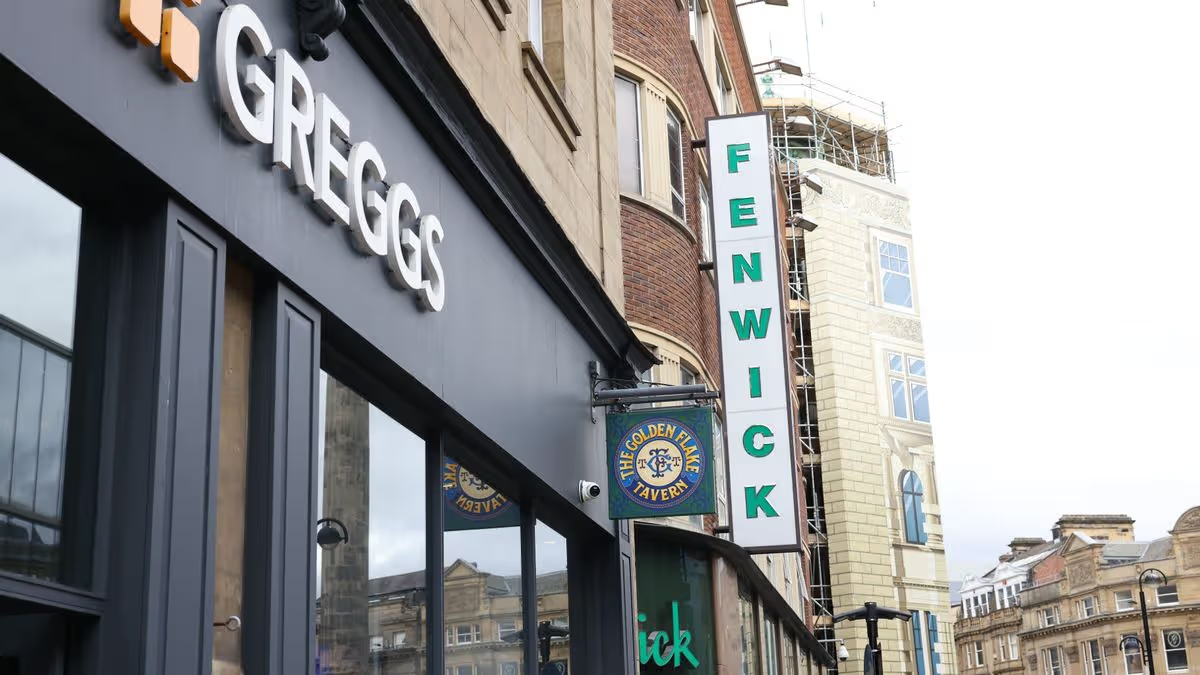
Greggs has announced a rise in sales as new items prove popular(Image: ChronicleLive)
North East food-on-the-go firm Greggs has toasted a rise in sales after announcing its first overseas shop launch. The Newcastle firm has announced results for the first 19 weeks of the year, showing total sales are up 7.5% to £800m.
Like-for-like sales in company-managed shops grew by 2.5% in the first 19 weeks of 2026, and improved to 3.3% in the most recent 10 weeks, as sales of its new menu items took off. Greggs said its new food items including matcha drink, tandoori chicken pizza slice, and its chicken roll – its chicken version of its bestselling sausage roll – were proving popular.
Advertisement
Tapping into demand in the market for protein meals, new salads were also launched last week to include chicken caesar and chicken, grains and greens. The firm said its partnerships with franchisees and grocery retailers are progressing well and contributing to the growth in overall sales.
It also said it has made “encouraging” profit progress in the year to date, partly reflecting a weak comparator period but also good operational cost control.
In a trading update it said: “The launch of our new chicken roll in April has been a standout, quickly establishing itself as a customer favourite and complementing our iconic sausage roll and vegan roll.
Greggs Chicken Roll is a new permanent addition to its menu(Image: Samantha Bartlett)
“Our drinks range has also been energised through flavour-led innovation across iced coffees, lemonades and refreshers, with the launch of matcha – which has proved extremely popular – marking an important step in appealing to new and younger customers.
Advertisement
“Together, these launches reflect our focus on relevance and innovation, while staying true to the familiar quality customers expect from Greggs.”
Meanwhile, Greggs is continuing to target the opening of around 120 shops this year – while announcing it has Tenerife as the location for a new international outlet.
In the update to shareholders it said: “In the coming weeks we will open our first shop in an airport outside the UK, working in partnership with leading global travel operator Lagardère Travel Retail at Tenerife South Airport. Tenerife South is a destination for millions of UK and international passengers each year and represents an excellent opportunity to test our offering in an international travel hub.”
The bakery chain, which runs 2,759 shops, also warned that it could be facing higher costs if the Iran war continues.
Advertisement
It added: “We are monitoring the situation in the Middle East and should the conflict continue and become prolonged we, like all food retailers, will likely see higher overall cost inflation through the end of 2026 and into 2027. In this uncertain environment, our value offer remains highly attractive as customers look to make their money go further.”















































You must be logged in to post a comment Login