

Business
Why a US-Iran Conflict Could Push Australian Petrol Past $3.00/L?


SYDNEY — Australian motorists are bracing for another sharp rise in petrol prices as the ongoing US-Iran conflict and effective closure of the Strait of Hormuz threaten to send global oil benchmarks well above $100 a barrel, with some economists warning that unleaded fuel at the pump could exceed $3.00 a litre if disruptions persist into the second quarter of 2026.

The national average price for regular unleaded petrol climbed to around 229.6 cents per litre in mid-March, up more than 84 cents from February lows in major cities and even higher in regional areas. In Western Australia, prices surged roughly 70 cents a litre in less than a month, reaching near $2.26 in Perth. Industry observers say the latest increases reflect a 31.8% jump in unleaded 95 between late February and mid-March — the fastest rise among developed nations since the conflict began.
The catalyst is clear: the Strait of Hormuz, the narrow waterway between Iran and Oman through which roughly 20% of global seaborne oil and significant LNG volumes pass daily. Since US and Israeli strikes on Iranian targets in late February, Iran has restricted shipping, planted mines and deployed drones and speedboats, slashing traffic to a fraction of normal levels. Only limited vessels, often carrying Iranian oil or those from “friendly” nations, continue to transit, while most international tankers have diverted or delayed voyages.
Brent crude, the global benchmark, traded around $102 per barrel on Tuesday, March 24, 2026, after volatile swings that saw it briefly exceed $114 and touch highs near $119 in recent weeks. West Texas Intermediate has followed a similar path, remaining well above $90. Analysts at Goldman Sachs and others have embedded a substantial geopolitical risk premium in current prices, with some forecasting averages of $110 or more through the second quarter if the strait remains contested.
Australia imports nearly all its refined petroleum products, making it highly vulnerable to international crude price spikes. Although the country holds strategic fuel reserves equivalent to roughly 36 days of petrol, 32 days of diesel and 29 days of jet fuel, these stocks provide only a short buffer. The federal government has stated that physical shortages are unlikely if the disruption resolves within six months and International Energy Agency members release emergency stocks, but prices at the pump respond almost immediately to wholesale movements.
Every $1 increase in the price of a barrel of oil typically adds about 1 cent per litre to Australian retail petrol, though the relationship is not perfectly linear. Refinery margins, shipping costs, the Australian dollar’s value and local competition among fuel retailers also play roles. In the current environment, banks such as Westpac have modelled scenarios in which retail unleaded could average $2.02 a litre and diesel $2.50 if oil settles near $90–$110. More severe three-month disruptions could push oil toward $185 a barrel in extreme forecasts, translating to increases of up to $1.00 a litre or more at the bowser.
The pain is already evident. Panic buying has been reported in some areas, and farmers in regional Australia face higher diesel costs that flow through to food prices and agricultural operations. Transport operators and logistics firms warn of broader cost pressures that could feed into inflation and slow economic growth. The Reserve Bank of Australia is closely watching fuel costs as it weighs further monetary policy decisions, with some economists suggesting the latest surge could delay expected rate cuts.
Why the Strait of Hormuz matters so much cannot be overstated. Roughly 20 million barrels of oil move through the passage each day under normal conditions, destined largely for Asia but influencing global pricing everywhere. Limited bypass pipelines in Saudi Arabia and the United Arab Emirates can reroute only a few million barrels daily at most. With Iranian production also curtailed and OPEC+ spare capacity difficult to access while the waterway is contested, the market faces a genuine supply shock.
President Donald Trump has issued ultimatums to reopen the strait, threatening strikes on Iranian power infrastructure and offering political risk insurance for shipping, while extending deadlines amid reported diplomatic talks. Iran denies formal closure but maintains that risks to vessels remain high. Limited traffic has resumed in recent days, contributing to some price pullbacks, yet analysts caution that any sustained reduction in flows would keep upward pressure on energy costs.
For Australian households already grappling with cost-of-living pressures, the timing is particularly difficult. Petrol prices had eased earlier in 2026 but reversed sharply after the conflict escalated. In Sydney, Melbourne and Brisbane, metropolitan averages have climbed above $2.00 a litre in many outlets, with regional motorists paying even more. The Australian Automobile Association and NRMA have urged drivers to shop around using fuel apps and consider smaller fills, while calling on retailers to pass on wholesale relief quickly when it materialises.
Longer-term risks extend beyond the immediate crisis. A prolonged Hormuz disruption could reshape global energy markets, accelerate shifts toward renewables and LNG alternatives, and force Australia to rethink its fuel security. The country has no domestic crude production at scale and relies on imports refined overseas or at its remaining refineries. Government reviews have previously concluded that paying premium prices would secure supply even in extended crises, but that offers little comfort at the pump.
Some relief may come if diplomatic efforts succeed or if US naval escorts and allied operations restore safer passage. Maritime security experts suggest Iran’s capacity to sustain attacks may diminish over weeks as its missile and drone stocks deplete. Trump has described the conflict as nearing completion, though Tehran maintains a hard line. Markets remain jittery, with options pricing reflecting expectations of continued volatility.
Economists at Westpac, CommBank and others have outlined tiered scenarios: a short Iranian production-only hit might add 25 US cents a barrel and 25 Australian cents a litre at the pump; a one-month Hormuz disruption could lift oil by $25–$40 and petrol by 50 cents or more; a three-month event risks far steeper increases. The Australian dollar’s weakness against the US dollar amplifies the local impact, as oil is priced in greenbacks.
For now, the message from fuel industry bodies is cautious optimism mixed with realism. Wholesale prices have shown some softening in recent sessions as vessels trickle through the strait, but any renewed escalation could erase those gains overnight. Motorists are advised to monitor FuelWatch and similar services, fill up strategically and consider fuel-efficient driving habits.
The current gas price shock serves as a stark reminder of Australia’s exposure to distant geopolitical events. While the nation’s strategic reserves and diversified import sources provide a safety net against outright shortages, they do little to shield household budgets from the rapid transmission of global oil prices to the local bowser.
As negotiations continue and military posturing persists, Australian drivers may soon face the prospect of $3.00 petrol — a threshold once unthinkable but now squarely within range if the world’s most critical energy chokepoint remains contested. How long the pain lasts will depend on diplomacy, military developments and the resilience of global supply chains in the weeks and months ahead.

The JPMorgan Chase & Co. building before the ribbon cutting ceremony, at the firm’s new headquarters at 270 Park Avenue, in New York City, U.S., Oct. 21, 2025.
Eduardo Munoz | Reuters
A JPMorgan Chase-led group of banks cut their exposure to a private credit fund co-managed by KKR days before the asset manager announced it was spending $300 million to prop up the troubled vehicle.
The fund, FS KKR Capital Corp., said Monday in a release that KKR will inject $150 million into the fund as equity and spend another $150 million to buy shares from investors who want to exit.
Those moves, labeled “Strategic Value Enhancement Actions” by the fund, came after the JPMorgan-led group on May 8 slashed its credit line by $648 million, or about 14%, to $4.05 billion. Some lenders may have exited entirely rather than extend their commitments, according to the filing.
The fund, co-run by KKR and the alternative asset manager Future Standard and often referred to by its ticker, FSK, has become one of the most visible fault lines in the private credit story. Its shares have plunged by nearly half over the past year and trade at a deep discount to the fund’s net asset value.
In March, Moody’s downgraded FSK’s ratings to junk amid mounting stress in the portfolio. Since then, loans to software maker Medallia and dental services firm Affordable Care have stopped paying interest, executives said Monday.
FSK said that it had losses of $2 per share in the first quarter, or about $560 million in total losses given the roughly 280 million share count, as the fund’s net asset value fell about 10%.
“Our first quarter decline in net asset value was driven by investments which have impacted prior quarters, certain new non-accrual assets, and the impact of market-driven spread widening,” CEO Michael Forman and President Daniel Pietrzak said in a release.
“We believe FSK’s current stock price underappreciates the long-term value associated with FSK’s investment portfolio and the KKR Credit platform,” they added.
FSK loans that are no longer generating income jumped to 8.1% by the end of the first quarter from 5.5% at yearend, the fund said.
Further to fall?
Besides cutting its credit line, the JPMorgan-led group also raised interest rates on the remaining facility and gave the fund more room to absorb losses without triggering a default.
The latter move, lowering the minimum shareholders’ equity floor from $5.05 billion to $3.75 billion, gives FSK more breathing room. But it also indicates that lenders believe the firm’s assets have further to fall.
The FSK credit facility was funded by a syndicate of banks led by JPMorgan as administrative agent, a role that typically includes coordinating lender communications and amendment negotiations. ING Capital served as collateral agent, while the other participating lenders were not named in the filing.
JPMorgan, the largest U.S. bank by assets, has made broader moves to insulate itself from private credit turmoil, in part by marking down the value of private credit loans held as collateral on its own books, CNBC reported in March. Many of those marked-down loans are to software companies facing possible disruption from artificial intelligence.
Besides the $300 million that KKR is spending to support FSK, the fund’s board also authorized a separate $300 million share repurchase program, and KKR agreed to waive half its incentive fees for four quarters.
FSK, which lends to private, middle-market U.S. companies, became the second-largest publicly traded business development company, or BDC, when it was formed through a merger of two predecessor funds in 2018.
The fund’s largest single category of loans is for software and related services, which made up 16.4% of exposure at yearend.

Form 13F Guardian Capital For: 11 May

The yellow metal traded with cuts on Monday tracking global cues despite the rupee hitting fresh lows. Prime Minister Narendra Modi’s message to citizens to avoid buying gold for a year dented the confidence of domestic investors.
The June gold futures dropped 0.7% or by Rs 1,030 per 10 gram today to hit the intraday low of Rs 1,51,500 even as INR, which tested a bottom of 95.31, witnessed its sharpest fall in a month.
Rupee’s fall against the greenback is considered supportive for bullion.
“MCX Gold is expected to remain volatile with a slightly negative bias during the week as traders focus on crucial macro developments including US CPI inflation data, Trump’s visit to China, and ongoing US-Iran negotiations,” Jateen Trivedi, Vice President, Research Analyst at LKP Securities said, adding that the market is currently trading near the Rs 1,52,000 – Rs 1,53,000 zone where repeated resistance is being witnessed, indicating profit booking at higher levels after recent recovery attempts.

While geopolitical uncertainty and currency volatility continue to support prices intermittently, the overall technical structure suggests that upside may remain capped unless Gold decisively sustains above Rs 1,55,500, he added.
What fundamentals suggest?According to Trivedi, CPI inflation data will remain the biggest trigger for bullion markets this week as softer inflation can revive expectations of future Federal Reserve rate cuts, while hotter inflation may strengthen the dollar and pressure precious metals.
Moreover, Trump’s China visit is likely to be keenly watched for any trade or tariff-related developments which may influence risk sentiment globally, the LKP analyst said.
Among the positive triggers, uncertainty surrounding US-Iran talks will likely keep the safe haven appeal of bullion intact.
“Rupee volatility is also expected to keep MCX Gold comparatively more volatile than COMRX Gold in the near term,” Trivedi said.
Technical triggers
Decoding the charts, Trivedi said RSI is hovering near the 52 zone, indicating neutral momentum with slight recovery signs but still lacking strong bullish confirmation. Additionally, bollinger bands remain relatively narrow, suggesting volatility compression and possibility of a sharp move once major US data releases trigger fresh positioning.
“EMA 8 continues to trade marginally below EMA 21, reflecting that short-term trend remains weak and every upside bounce may attract selling pressure unless stronger buying momentum emerges. MACD has shown minor improvement in histogram formation, but the indicator still remains in negative territory, suggesting broader momentum continues to favor cautious or sell-on-rise trading strategies,” this analyst said.
The commodity expert suggested a ‘Sell on rise’ strategy near Rs 1,53,000 – Rs 1,53,500 with a stop loss above Rs 1,55,500 on a closing basis for downside targets of Rs 1,50,000 and Rs 1,48,500.
(Disclaimer: The recommendations, suggestions, views, and opinions given by the experts are their own. These do not represent the views of The Economic Times.)
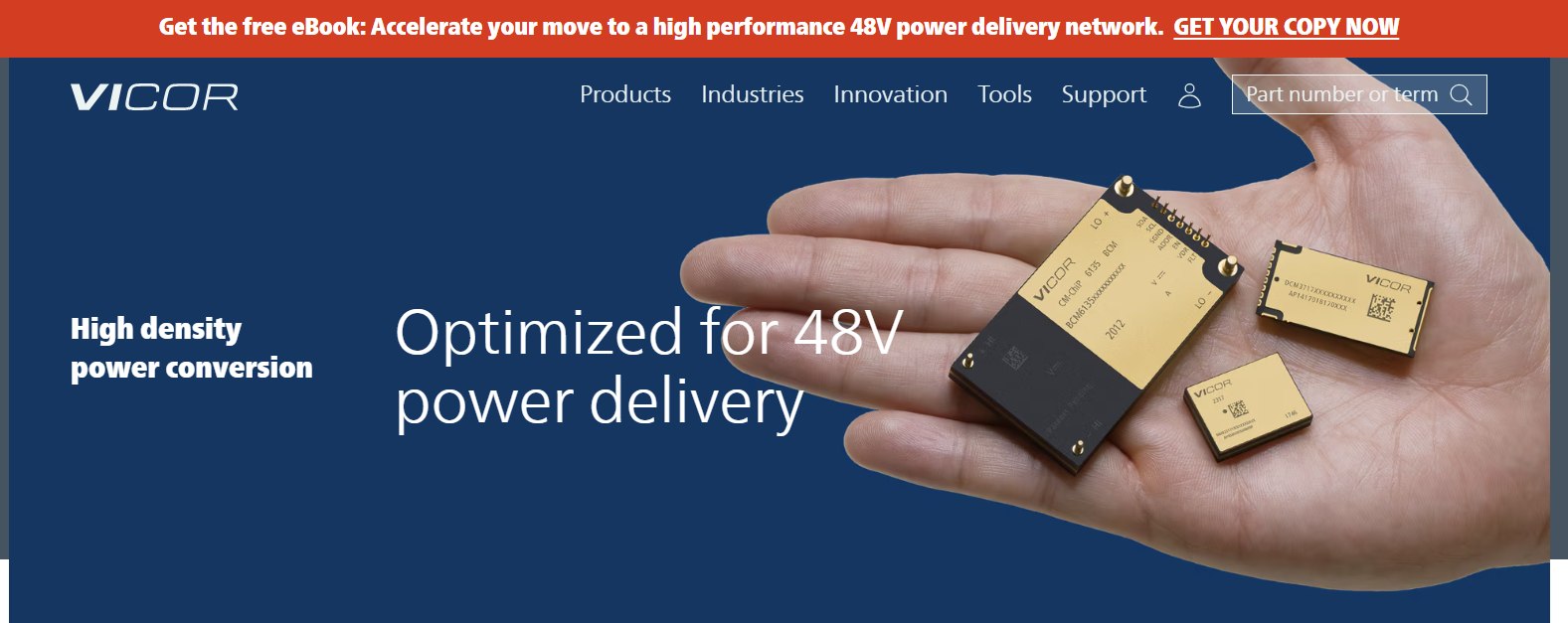
NEW YORK — Vicor Corporation shares skyrocketed nearly 19% in morning trading Monday to $304.17, as investors poured into the high-performance power module specialist amid surging demand for advanced power solutions in artificial intelligence data centers and strong first-quarter results that beat expectations.
The dramatic move marks the latest leg higher for the Massachusetts-based company, which has emerged as one of the standout performers in the AI infrastructure supply chain. Vicor’s proprietary power conversion technology is increasingly seen as critical for delivering efficient, high-density power to next-generation GPUs and AI accelerators.

Strong Q1 results fuel rally
Vicor reported first-quarter 2026 revenue of $138.2 million, up 42% from the prior year, with adjusted earnings per share of $1.28 — significantly ahead of Wall Street forecasts. The company highlighted record bookings in its Advanced Products segment, driven by AI-related applications.
CEO Phil Davies cited “unprecedented demand” from hyperscale customers building large AI clusters. Vicor’s modular power systems offer superior efficiency and power density compared to traditional solutions, allowing data center operators to pack more computing power into limited space while reducing energy consumption and cooling requirements.
AI power bottleneck creates opportunity
As AI training and inference clusters scale rapidly, power delivery has become a major constraint. Traditional power architectures struggle to meet the extreme demands of high-performance chips from NVIDIA and others. Vicor’s Factorized Power Architecture and proprietary chip-scale packaging provide game-changing advantages in efficiency, size and thermal performance.
Analysts estimate that each new generation of AI servers requires significantly more power, creating a multi-billion-dollar addressable market for companies like Vicor. The company has secured multiple design wins with leading hyperscalers and server OEMs, with several programs now moving into volume production.
Analyst upgrades and price target hikes
Several Wall Street firms raised price targets following the earnings report. Optimistic voices now see potential for $350–$400 per share if Vicor continues capturing share in the AI power market. The stock’s rapid ascent reflects growing conviction that the company sits at the center of one of the most powerful secular trends in technology.
Monday’s surge came on exceptionally heavy volume, more than six times the average daily trading level, suggesting broad institutional buying interest. The move also triggered multiple short squeezes, as the stock had been on some short sellers’ radar earlier in the year.
Company transformation and technology edge
Vicor has successfully transitioned from a diversified power components supplier to a focused leader in high-performance, high-density power solutions. Its recent innovations in lateral power delivery and vertical power delivery architectures are particularly well-suited for the dense computing environments required by modern AI workloads.
The company maintains strong intellectual property protection and continues investing heavily in research and development. Management highlighted expanding manufacturing capacity to meet growing demand without sacrificing quality or lead times.
Risks and valuation debate
Despite the enthusiasm, some analysts caution that the stock’s rapid rise leaves limited margin of safety. At current levels, Vicor trades at premium multiples that assume sustained hyper-growth. Any slowdown in AI capital expenditure or unexpected supply chain issues could pressure results.
However, many growth investors argue the valuation is reasonable given the enormous long-term opportunity. The company’s expanding backlog and design-win pipeline provide meaningful visibility into future revenue streams.
Broader AI infrastructure theme
Vicor’s surge fits into a larger wave of strength among companies enabling AI infrastructure. From chip designers to cooling specialists and now power electronics providers, the entire ecosystem is benefiting from massive investments by technology giants racing to scale artificial intelligence capabilities.
What’s next for Vicor
Investors will closely watch the company’s second-quarter results in late July for further confirmation of momentum. Key metrics to monitor include backlog growth, gross margin trends, and updates on major customer programs. Additional design wins or capacity expansion announcements could provide further upside catalysts.
For now, Monday’s explosive move cements Vicor’s position as one of the standout AI infrastructure stories of 2026. What began as a relatively under-the-radar power components company has transformed into a high-profile beneficiary of the artificial intelligence megatrend.
As trading continues, all eyes remain on whether this momentum can be sustained through the rest of the year. For investors who caught the move early, Vicor has delivered extraordinary returns — a powerful reminder of how quickly fortunes can shift when a company aligns perfectly with a transformative technological wave.

President Trump Is Fulfilling An Important Campaign Promise

The BSE Focused IT Index tracks 14 major Indian technology companies and represents one of the country’s most influential sectors in terms of market capitalization and foreign investor participation. The IT segment accounts for nearly 6% of the total market capitalization of companies listed on the BSE and contributes a similar share to overall foreign portfolio investments in Indian equities.
India currently has more than 250 listed IT companies, while the sector’s increasing relevance is also visible in passive investing, with 17 passive products benchmarked to IT indices.
Given the sector’s strong exposure to global demand, currency fluctuations and evolving technology trends, the newly launched derivative contracts are expected to offer investors an additional avenue for hedging, trading and portfolio risk management.
The futures and options contracts are cash-settled and available across three serial monthly expiries, with settlement scheduled on the last Thursday of each expiry month, in line with BSE’s existing derivatives framework.
The launch saw active participation on the first trading day, with 172 members contributing to a total turnover of Rs 148 crore.
Speaking on the occasion, MD & CEO Sundararaman Ramamurthy said the launch of derivatives on BSE Focused IT Index reflects BSE’s effort to align with the evolving market needs. “With the IT sector’s global linkages, rapid technological shifts, and currency sensitivities, this new derivative product will complement our index derivatives suite while enhancing risk management avenues for investors. We thank all market participants for their continued support and engagement, which enables us to introduce products that deepen and strengthen India’s capital market ecosystem,” he said.BSE Information Technology index today ended 0.2% lower at 28,534 amid a wider sell-off in the domestic stock markets. While Nifty plunged 360.30 points or 1.49% to close at 23,815.85, the BSE Sensex settled at 76,015.28, down 1312.91 points or 1.70%.
(Disclaimer: The recommendations, suggestions, views, and opinions given by the experts are their own. These do not represent the views of The Economic Times.)

In its settlement order, the SEBI stated that a show-cause notice sent to BofA Securities India alleged the firm’s failure to maintain the structured digital database required by insider trading regulations. BofA declined to comment on the settlement order and the allegations.
The SEBI said BofA Securities India agreed to settle the proceedings without admitting or denying the alleged violations.
In January, Reuters, citing a regulatory notice, reported that the SEBI had accused BofA Securities India of breaching insider trading rules and internal “Chinese wall” norms in connection with a 2024 share sale.
The notice followed a SEBI investigation into BofA Securities India’s role in managing a March 2024 share sale in Aditya Birla Sun Life Asset Management.
According to the notice, which was reviewed by Reuters but not made public, the SEBI found that BofA’s deal team, while in possession of unpublished price-sensitive information related to the share sale, had contacted potential investors “directly/indirectly”.
The regulator had also alleged that BofA suppressed material facts and made false statements during the investigation, which was triggered by a whistleblower complaint in 2024.
Octopus Investments raises stake in Netcall to 11.07%

Join the Waitlist for the launch of the Quant Income Growth Portfolio!
Daniel Snyder: Hello, hello, hello, everyone. I’m Daniel Snyder from Seeking Alpha. Thank you so much for taking the time to hang out with us today for this live webinar. If you’re catching the replay, also glad to have you checking this out here as well. Today, we are diving-in to what’s going on in this year, not only the macroeconomic factors. Everybody’s, of course, watching the geopolitical risk, but we’re also are in the midst of a mid-term year. And we’re going to dive into conversation today here with the one, the only, Steven Cress from Seeking Alpha, Quantitative Titan as he is. But first things first, let me go ahead and get a quick legal disclaimer out of the way, and we’ll dive on in.
We are not advising you personally concerning the nature, potential, value, or suitability of any particular security. You are solely responsible for determining whether any investment, security, strategy, product, or service is appropriate or suitable for you based on your investment objectives and personal and financial situation and for evaluating its benefits and risk. Seeking Alpha is not a fiduciary by virtue of any person’s use of or access to the site.
Any views or opinions expressed in the webinar do not reflect those of Seeking Alpha as a whole. Any content and tools on the platform are offered for information purposes only. Seeking Alpha does not take account of your objectives or your financial situation and does not offer any personalized investment advice. Seeking Alpha is not a licensed securities dealer, broker, US investment adviser, or investment bank.
Steve, I feel like I’m, like, one of those legal disclaimer readers for all the pharmaceutical commercials where you just try to get through it as fast as possible on a commercial. This might result…
Steven Cress: Yeah. You could be conducting, like, a cattle auction. It’s like you’re going faster and faster every time, which is great because…
DS: Steve, great to have you here with us today. Thank you so much for taking the time. For everybody that doesn’t know who Steven Cress is, he is a legend. By legend, I mean, he worked at Morgan Stanley. He ran his own hedge fund prop – he had built his own Cress Cap fintech platform, which was eventually acquired by Seeking Alpha, which brings him here to us today, and we get to dive into his expert knowledge. So, Steve, once again, can’t thank you enough for taking the time. What are we diving into today?
SC: Yeah. Of course. Thanks for organizing this. So, yeah, I believe this is very timely. I think with a lot of the geopolitical events that have occurred and the war, we have pretty frequently been talking about a barbell approach. Barbell approach being it’s a really good idea in a volatile environment to continue to look at stocks with good fundamentals and investing growth, and especially when the markets pull back, all the more reason when there’s that sector rotation occurring and good companies are getting beaten up, you probably want to be acquiring it.
But on the other side of the barbell, during volatile periods, it’s also probably considered a good move to have some stocks that pay dividends, and this will help reduce the volatility in your overall portfolio.
So, this is a conversation, Daniel, that you and I have had multiple times over the last couple of years, and we’ve really have done a good job now, like, telling people when to take advantage of weakness or early on, many of the stocks in our Quant portfolio, I often say, are like a Richter scale. And when we start to see our stock sell-off even before the market sells off, it gives us a sign that there’s trouble down the road. So, our Quant system really does a great job in helping us keep our finger on the pulse of the financial markets and what’s going on.
And what I’d like to do is, when I feel as if, the markets could be volatile and we have come off of volatility, of course, we’ve had a major rally and rebound as well. A lot of the tech stocks that have been performing poorly over the last couple of months, over the last couple of weeks have had a major rally back. So, the market is approaching highs here. Small cap index is approaching highs here.
However, there is another event that’s occurring, and it is our midterm elections. And, historically, markets have tended to be weak to flat heading into midterm elections. So, I didn’t want people to step away from the barbell approach of anything with the market hitting highs here. It’s probably all that much more important to have that diversification in your portfolio between your growth stocks and stocks that have a little bit of a yield that can caution any potential pullback that we have. So, I want to provide a little bit of a market overview.
Now, this is our most recent picture over the last four weeks. And what we’re seeing now, if we went back eight weeks ago or 16 weeks ago, you could completely flip this around. So, over the last four weeks, technology stocks, as I mentioned, have rallied back. Consumer discretionary stocks, which have really underperformed for quite a while, have had a great rally over the last four weeks. And the poor performing sectors, which are healthcare, utilities, and energy, for the last four weeks, it paints a picture that does not really reflect what we’ve seen during February, March, and April.
You could really, as I said, completely reverse this, and many of the safe haven sectors have been the best performing sectors, add consumer staples into that. But the last couple weeks, things have flipped around. And part of that is with the geopolitical events that have occurred especially between Iran and the United States. The market is looking ahead. So, at this point, over the last several weeks, the market’s actually looking ahead to a point where the Strait of Hormuz will probably be open.
Things will return to normal, and that has helped. Even though that has not happened in actuality, this is what the market is starting to forecast could happen as we continue to work on negotiations, and I say we, the United States, with Iran. Having said all that, we do have the midterm elections coming up, and historically, that has been a period of weakness. So, let’s take us to our…Yeah.
DS: Steve, what I think is really interesting about this, though, is, obviously, we’re looking at technology up 24.3% little over the last month, but it’s like the AI trade. Right? We’ve all been focused on AI and seeing where all the capital is flowing there, but I don’t know if you remember. This is what I want to get at here. Utilities being down. Right? Utilities has been ripping historically over the last year, two years now because of the AI trade. So, it’s really interesting to see utilities down when we keep hearing about the energy crunch problem with AI as more people are adopting it.
SC: Yeah. It’s, utilities and gold have been in very interesting sectors. People often say, you could look to history to see what could happen in the future. And this is not a historical sector or asset classes that you could look at because they have not been acting like they typically do. So, Gold for the past part have…
DS: Traditionally, they’re – and in the last AI run, the hedge has been broken. It’s interesting.
SC: Right. The hedge has been broken. You would expect utilities to be that safe haven sector, and that has rolled over the last couple of weeks. And gold has really rolled over probably for the last three months after having a major rally during 2024 and 2025 and going into the beginning of the year, but then when geopolitical events started to get a little bit heavy where you would expect people to rotate into gold, they actually started selling off gold, and especially, gold stocks really sold off.
And I believe at this point, there’s actually a higher correlation with gold and the dollar, and it’s weak and strength than more being just a safe haven sector. So, I think probably as we see events normalize and the dollar perhaps weaken, we might see gold start to take off again, but we have to wait for that event to actually occur. Even though the equity markets are really projecting, especially with what we’re seeing in technology and the rally, the markets are projecting that this crisis will be over at some point.
But I thought what you might be referring to is, if we went back to last, I’d say, October and November, a lot of technology stocks really sold-off being overextended, especially the AI trade. And that added to a very large correction for the market when we saw those AI stocks and the Mag 7 sell-off. And we’re at a point again now where we’ve seen this, like, really big rally. So, it makes complete sense to me as we head into midterms, what nervousness will that cause? If you went back to 2022 and 2023, the Mag 7 stocks were like a safe haven stock during and after the pandemic until they just rallied too much, and they were overextended. We might see something like that occur ahead of the midterms.
So, again, it could be a volatile period, and that’s why I’m encouraging this barbell approach. And I think what I’m going to do is, I’m going to go to the next slide and actually, go back up one and give you a view of what it looks like historically during midterm elections. So, this table here, it goes back to 2050 – 1950, I apologize. It goes back to 1950. And you could see equities have a history of poor performance during midterms. Momentum tends to tick up afterwards, which is very important. So, there’s a weakness before. And there have been a number of events that are geopolitical that have occurred, as well as just what you could say is a seasonality impact with midterms. Recently, in terms of geopolitical impacts, we’ve had the tariff threats. Obviously, global tensions have been high. We’ve had rare minerals. We’ve had a de-dollarization. We’ve had a gold and silver rally and rotation and rally and then rotation back out again. It’s been just seesawing all over the place.
And same with the small cap and mid cap stocks. Those have rallied recently. But for a good portion of the year, we saw those sold off. And then earlier, they had a rally in, really, the small mid cap stocks probably in the third and fourth quarter of last year it was anticipated by a lot of investors and interest rate traders that going into this year, we would actually see maybe three rate cuts.
And small cap and mid cap stocks do very well when interest rates are climbing down. And the reason being is typically small and mid-cap companies maintain a lot of leverage or more leverage than large cap or mega large cap stocks. So, when interest rates come down, the stocks tend to do well. So, in the third and fourth quarter, they performed really well. And then when we got into this year, and it looked like inflation was stickier than expected, and labor was coming in with numbers that were not expected. And then, of course, with the onset of the war happening, a lot of these small mid cap stocks sold off, but over the last four weeks, they have taken off again as events have started to normalize.
So, you’re adding this on top of an expectation of a seasonality pattern that has occurred almost since 1950. And I’m going to take us to the next page, and that’s a little bit easier to see. So, if you look at the table, and this is from Longview Economics. So, pulling all these years together, if you look at the very bottom, you could see, the largest drawdown in the 12 months before midterms, on average, it’s been about 18.2%. So, you could see it really does have an impact. Investors get fairly nervous before we go into midterm elections, but then when you look at the months post that, the three month, six month, and twelve month. And this is very much like presidential elections.
They tend to follow the same type of seasonal pattern. You could see on average, three months afterwards, the market is up 5.8%, six months 10.5%, and a full 12 months it’s up about 14.8%. So, again, pulling this from Longview Economics, really good numbers to basically highlight what we’re talking about in terms of volatility that you could see pre and post-election.
And, here we are in May. Still quite a bit of time before we get to the midterm elections. So, this is why you may want to consider for your portfolio, especially, with the market hitting its highs here of adding that diversification to it.
So, what we do on my side is, we employ a quantitative perspective for selecting stocks. We try to remove emotion from stocks and just really follow the data. So, what is Quant? Well, Quant is very similar to fundamental analysis. We are looking at the conventional investment metrics that most analysts would look at Morgan Stanley or Merrill Lynch or Goldman Sachs. We’re looking at value. We’re looking at growth. We’re looking at profitability. For our particular model, we also look at positive EPS revisions. Those are analysts that are actually revising their estimates up, and we also look at momentum. So, it tends to be somewhat of a GARP approach, which I call Growth at a Reasonable Price in addition to those other metrics that I mentioned.
So, what makes a Quant? Well, we use the power of computer processing. So, as opposed to an analyst who is going through one balance sheet at a time, one income statement, one cash flow statement, looking at their companies, and then looking at other companies, we actually take data that’s provided from the SEC and normalized through S&P Global. So, for about 5,000 stocks on a daily basis, every day we do this, we refresh our numbers for all these income statements, balance sheets, cash flow statements, hundreds of financial metrics. And what we do is, we break it down to sector.
So, we’ll take a company in a sector, and we compare it to the rest of the sector. And by doing that, using that comparison, we can decipher which companies are strong and which are weak. And that’s the way our Quant system works at Seeking Alpha, and we have a pretty successful track record at picking stocks. So, without further ado, I want to get into our barbell approach. I’m going to provide you with three stocks on the growth side.
DS: Four. Right? Or do we do about the three? Oh, you’re right. Sorry. My apologies. Three and three.
SC: Three and three. Yeah. So, we’re going to do three growth stocks and three income oriented stocks, which provide you with that barbell approach. Growth on one side, dividend stocks on the other side. So, we’re going to lead with Credo Technology, which has been an amazing stock for Seeking Alpha, and it has also been part of the Alpha Picks portfolio. The stock is a very large company. It’s got a market cap of $36 billion. It’s currently a Quant Strong Buy. It’s in the semiconductor industry. And within that industry, it ranks 6 out of 69 semiconductor stocks. In the last year, the last 52-weeks, the stock is up 287%. Now, you may say to yourself, why would I want to invest in a stock over the last year that is up 287%? So, I’m going to ask you to look at the far right side here where we have the factor grades.
Now, these factor grades are actually sector relative. So, when you’re looking at the grade for value, growth, and profitability, it’s actually relative to the sector. So, the valuation framework on this company is actually very attractive at B-, especially compared to where it was six months ago when it had an F. So, six months ago, this stock was very, very expensive. Now, it is far cheaper than it was, so it’s far more attractive on a valuation framework. And that is really important because you’re buying the stock, and you’re actually getting a better value now than you were six months ago. And if you look at the growth, it’s still an A+. So, the company, its growth rate is far, far superior to the sector.
In terms of its profitability, it’s actually in a much better position now than it was six months ago as well. So, relative to the sector, it’s an A-, which puts it at the top. Six months ago, it was a B-. So, in terms of the company’s valuation framework and profitability and growth, it’s better now than it was six months ago, and that’s why you would buy this stock because, again, this is versus the sector. So, it’s one of the strongest within the sector and has not faltered at all.
So, if you’re not familiar with Credo, it’s an AI infrastructure supplier, and it provides high speed connectivity solutions within hyperscale data centers, which is the sweet spot for AI. And on top of that, when we focus on valuation, that valuation grid is made up of a lot of underlying value metrics. One of which I like is called the PEG ratio, and it’s currently at 0.52x. That puts it to a 65% discount to the sector on a PEG basis.
In terms of the company’s forward operating cash flow, its growth is over 200%. The growth with the company is, I’m sorry. It’s about a 1000% ahead of the sector, and its growth rate is at 200% for its operating cash flow growth. So, the stock is super, super attractive for one of our growth names.
DS: I also just want to make real quick, real quick, Steve. This is a company that – I was just pulling up the financial statements here on Seeking Alpha. April 2024 had $193 million in revenue. Then it went to $436 million last year, and now it’s over $1 billion in revenue. And then if you dive into the balance sheet, I mean, it shows up on their total cash and short-term investments too, going from $410 million two years ago to $1.3 billion. I mean, this company is growing like crazy.
SC: It really is. Daniel, I think what we do is, we’re going to go through the companies, and when we have enough time, I’d love to actually go into the stock pages, and we could show people exactly what you’re talking about. So, they could see how dynamic the platform is, what’s available, Premium, and get to those underlying metrics that you’re just talking about.
So, let me get on to the next stock here, which is Ichor Holdings, ticker symbol ICHR. This is another Quant Strong Buy. This is also in the semiconductor industry, but this is semiconductor materials and equipment. Within the IT sector, it actually ranks 5 out of 525 stocks. And within the semiconductor materials and equipment industry, it ranks 2 out of 32. Now, again, this stock is up a lot in the last year. It’s up 326%. And if you look at the Quant Rating history, you could actually see, we had a Sell on the stock for quite a while. And then, shortly after January 2026, it went to a solid Hold, and then it jumped to a Buy. And it was definitely a really good Buy to highlight.
As you could see, the stock has done very well over the course of the year, but again, we look at the valuation, and it’s value is a B-. So, it’s down a bit from where it was six months ago. So, it’s a bit more expensive than where it was six months ago, but B- is still very, very attractive versus the sector. The growth rate is actually better now at A+ than it was six months ago. Profitability has also slightly improved. You could see the grade is C- versus six months ago was at D+. But, again, these are on a relative basis to the sector. And then when you look at the momentum of the stock, it has really improved from where it was six months ago.
And, of course, A+ means the momentum on this stock is far better than the sector. Analyst revisions as well, and that’s probably why we saw the stock go from a Hold to a Strong Buy. Analyst revisions six months ago, analysts did not like this company. It had an F grade, which meant that there were more analysts taking their estimates down than up. And now it’s at A-, which certainly means more analysts are revising their estimates up than down. So, very positive for the company.
And our third stock is Constellium SE, ticker symbol CSTM. This has a market cap of about $4.54 billion. Again, another Quant Strong Buy. This is within the materials sector, and in that sector, it ranks 5 out of 283. And within its industry, which is aluminum, it ranks 1 out of 5. So, I’m glad to add a growth stock here that’s outside of the IT sector. But, of course, people are probably well aware aluminum has been skyrocketing as a commodity recently. This stock is up quite a bit in the last 52-weeks. It is up 210%. But, again, I’ll bring you to that value, the valuation grade, B+ is a very, very attractive grade. Even if it was an A six months ago, B+ is far superior to the rest of the materials sector in terms of that valuation framework, meaning that it’s inexpensive compared to the group.
Growth is a B. Profitability is a B. Momentum is an A+, up from a B six months ago, and analyst revisions stand at A+ versus three months ago it was a B-, and six months ago it was an A. So, it’s great to see that analysts are revising their earnings estimates up. And, of course, we know aluminum has been doing incredibly well over the last couple of months.
In terms of its actual P/E, it’s 9.58x on its Forward P/E. So, that’s a very conventional value metric to look at. And I’m pleased to say that it’s at about a 43% discount to the rest of the materials sector just looking at a P/E. So that actually is a very, very attractive valuation level, and of course, the growth being at an A+.
Now, I’m going to take us to the more defensive side, which is going to help add a little bit of diversification to the portfolio, especially as the markets are heading highs here. And we’re going into a period, as I said, with the midterms where there could be some volatility. So, we’re going to start with Newmont Corporation. Newmont doesn’t happen to have the highest yield. Its yield is less than 1%, but this is typically a safe haven sector, and the company does have very good fundamentals. It is a Quant Strong Buy. It is tremendous, has a market cap of $122 billion. And within the gold industry, for the gold stocks, it ranks 2 out of 49.
Now, even though the yield would be higher, probably, if the stock hadn’t surged so much, over the last 52-weeks, the stock is up 312%. But, again, it’s a very good value. Look at the factor grades to the right. You could see it’s a B- versus six months ago, it was a B. So, even though the stock is up over 300%, the valuation framework is almost exactly the same compared to where it was. Growth for the company is at B versus A-, so down slightly, but a very good growth story, very good valuation framework. And, of course, the profitability here is an A+, which stands very strongly, and analysts continue to like the company as you could see through that A- grade, which means compared to other companies in the sector, analysts are taking their estimates up at a higher rate versus the rest of the sector. This is the world’s largest gold producer, so it is definitely one of the safe haven stocks that people would seek out if there were further volatility.
The EBITDA margin is 65%, and at 65%, it is at a premium of 283% to the sector. Hence, as you could see in those A+ grades, the company also has a dividend as, obviously, we’re focused on it, and the dividend growth grade for this company is A+, which means versus the sector, they’ve been taking their dividend up faster than the rest of the sector.
Stock number five is Postal Realty Trust, ticker symbol, PSTL. Now, this does have a higher yield. Its yield is 4.22%, which is significantly higher than the yield on the S&P 500. And for that matter, it’s much higher than the Vanguard dividend oriented ETFs, which typically have dividend yields around a 2.5 level, 3% as well for those Vanguard Indexes. So, this yield is far higher at 4.22%.
And Postal Realty Trust has had a very good year. It’s a Quant Strong Buy. The stock is up 80%. We could see the valuation grade. It’s in-line with the sector at C+, and it’s really not that much different than the one that was six months ago where it had a B grade. So, a little bit more expensive, but not significantly. But for a stock that’s up 80%, that is a great valuation framework. And the growth for this Realty Trust company is A versus the sector. Profitability is in-line. Momentum has been very strong for Postal Realty Trust versus the sector, as well as analysts taking up their revisions on the company.
If you’re not familiar, Postal Realty is a very niche REIT, but they own properties that quite well known to everybody, the U.S. Postal Service. That provides them with 100% of their rent collection, so a very steady tenant that they have in the U.S. Postal Service. I will add that their forward AFFO growth rate stands at 9.29%, which is nearly 250% above the rest of the REITs in the sector median there.
And taking us to stock number 6, The Hanover Insurance Group, ticker symbol THG, has a market cap of $6.52 billion. This also stands as a Strong Buy within property and casualty insurance. It ranks number 1 out of 54 stocks. This stock has not had quite the move that the others have had. It’s up about 12% over the last 52-weeks, but it does have a nice yield at 2%, again, much higher than the S&P 500. And the valuation is very, very attractive for this company versus the sector. So, this would actually be in the financials sector, and the grade that you see is an A-. So, this is very cheap, compared to other financial stocks, but it has amongst the highest growth rate of financial stocks as you could see with that A+ grade. Very profitable coming in at B+. And analysts continue to like the company. It has a B+ in terms of the EPS revisions. It was A- six months ago, so not really much of a drop there. Analysts do continue to like the company.
So, that is our picture of our barbell with our three growth stocks and our three income oriented stocks. If you are interested beyond these webinars, we do have products that we offer that I developed that are a little bit more consistent in terms of compared to a webinar, which we have every few months. We have a product called Alpha Picks and another product called PQP. What we do with those products, with Alpha Picks, we provide you with our two favorite Quant ideas every month, usually the trading date that’s closest to the first of the month and the fifteenth of the month, and that has been very effective.
If you look on the right side, you could see that top chart there, that year to date Alpha Picks is up 34.22%, compared to the S&P 500, which is up 13%. I will also say the product is about 3.5 years old, and it just hit a milestone. The return for Alpha Picks since its inception is now up over 400%. So, really kicking butt against the S&P 500 there. This is a low turnover portfolio. As I said, two ideas a month. Maybe occasionally, there’ll be a Sell during the month, so it’s two to three trades. We tend to look at companies that have a market cap greater than 500 million and we do not recommend stocks that are below $10. So, a very low turnover.
Conversely, on the right side of Alpha Picks, you will see the PRO Quant Portfolio. This is a little bit different. This is a portfolio designed for people who do want a higher frequency of recommendations. It is a fixed portfolio of 30 stocks, but it does rebalance on a weekly basis, where Alpha Picks is just two ideas a month. This could be two to three ideas a week every Monday. And, also, it’s far more diverse than Alpha Picks.
We look at ADRs that are American Depositary Receipts, which reflect stocks all over the world. There’s also no market cap restriction, and there’s no price restriction in terms of the stock, where with Alpha Picks, we won’t go into stock that’s below $10. There’s really no restriction with this. Both, we provide detailed reports. Whenever Alpha Picks comes out with a recommendation, there’ll be an email, and we also post a research report on the Alpha Picks platform. We do that on a weekly basis for the PRO Quant Portfolio, which goes over all the new Buys and Sells for that week.
As you could see, if you look on the right hand side, PQP has done very well. Since inception, that is up. And that – since inception is just last June, so that not even a full-year for PQP. It is up 38% versus the S&P on an equal weighted basis, up 12.74%. We use the S&P on an equal weighted basis since PQP is equally invested in 30 stocks. It stays steady. So, that’s why we use that benchmark, an equal weighted benchmark. As you could see, performing very well against it.
Daniel, do you have any questions in or any questions from our followers?
DS: We just need to highlight one little slip up on our end. If you go back to pick number four, Newmont Corporation, I want to say thank you to Ray here in the chat for helping us highlight this one. Newmont Corporation. We do have here as the one year return of 312%. That is incorrect. It is actually, one second. I was trying to pull a backup.
SC: You have something?
DS: 110%, just to clarify for everyone.
SC: And it did seem off to me, and I’m pulling that up myself right now as I’m looking at that.
DS: Thank you, Ray. I appreciate you jumping here in the chat. Appreciate everybody.
SC: We do appreciate that. Yes. Sorry for the typo or the error there, but as I am actually visually looking at that, I can absolutely see that looks incorrect. So, thank you so much for highlighting that.
DS: Wanted to make sure we got that out of the way. And then also, Steve, you mentioned earlier you wanted to go to the platform. Is there anything you wanted to show on the platform before we get into some Q&A?
SC: Yeah. Absolutely. So, we’re going to exit the slideshow.
DS: Just while you’re jumping over, I want to review because there’s a few people that looks like they joined late. The first three tickers for the growth names that we covered here today were Credo Technology Group, that’s CRDO. The second pick was, how do you say this? Ichor Holdings? Ticker symbol ICHR; and then Constellium SE, that’s ticker CSTM. And then the three dividend income names are Newmont Corporation, which we just covered, and then Postal Realty Trust, that’s ticker symbol PSTL and then The Hanover Insurance Group, ticker symbol THG. Back over to you, Steve.
SC: Okay. Yeah. So, Daniel, you were highlighting some great data points on Credo. So, right now, we’re in the PRO platform. It is similar to the Premium platform. You actually see the stock is off 5% today. You would think that I would have known this stock might be off as we’re going with this barbell approach, and we’re saying there could be volatility ahead for the markets. These stocks are the type of stocks that I would be adding to. The markets are volatile, and there is a pullback in the stocks. We really like these names. They are Quant Strong Buys, and it’s for obvious reasons.
Daniel was highlighting the financials. I want to show you how easy it is to get to that. So, over here, you see the summary page, then you see ratings and financials. So, I could just click on financials, and quite easy to pull down the income statement or the balance sheet or the cash flow. So, just a ton of data that’s available there for you to take a look at. I’m going to go back to the summary page, and I want to show you how easy it is to get to the underlying metrics that we were discussing.
So, again, these factor grades are all sector relative. Let’s click on growth here so you could see all the underlying metrics that make up the growth for it. And you could see here that this is almost a straight A report card, A+s for many of the metrics. If you’re looking at Credo’s year-over-year revenue growth, it’s forward revenue growth at a 130%. If you look at the EPS diluted forward growth rate, it’s 294%. I think, Daniel, you were commenting on the income line, the revenues, how it was climbing. Correct?
DS: Yes. Revenues are exploding for this company in recent years.
SC: Yeah. So, we’ll go to the financials, and let’s, take a look at the income statement. So Daniel was highlighting that.
DS: And – from $436 million to over $1 billion in a year.
SC: Look at this. Yeah. It’s amazing to just see that way. That is just incredible, but it is in the sweet spot of AI. It really is. And that’s why we’re seeing such growth with some of these companies. So, that was one of the stocks. And let’s pull up one of the other ones. We’ll go to Hanover. THG. So, this was on more of the defensive side. Let’s go to the summary there, and you’re going to see on the right hand side the factor grades. So, we’re going to look at valuation just to give you a picture of what underlying metrics look like, and that is coming up.
So, you could see, it’s really very, very intuitive. You could see the grades that we have, which range A+ through F. So, they’re designed to give you an instant characterization of where the company stands relative to the sector, and then it becomes very intuitive. So, if we look at, say, Forward P/E, which is a B, you could see the multiple’s 10x. The sector median’s at 11.07. So, on a Forward P/E basis, it’s at an 8% discount to the group. But if we look at it on a PEG basis, and PEG is where you combine P/E and growth together, you could see it’s at a 71% discount to the sector, hence the A- grade.
If you look at PEG on a forward basis, it’s an A. It’s at a 91% discount to the sector. So, all different types of valuation metrics that we look at, P/E, PEG, EV-to-sales, EV-to-EBITDA, EV-to-EBIT, price-to-book, price-to-sales. We like to have a lot of diversification in the metrics. If I were to click on profitability, you’ll see the underlying metrics that come up there. So, here is the overall profitability grade, which comes in a B+, but then we take a look at the underlying metrics, everything from gross profit margin to return on equity to return on capital, to cash flow from operations to cash per share.
So, again, we’re looking for a lot of diversification to get to those overall, grades, which represent the key investment characteristics that people look at, which is value, growth, and profitability. Daniel, any questions you want to…?
DS: Yeah. I want to get some things out of the way. We’re going to dive into some Q&A here now. There were some questions about Alpha Picks and PRO Quant Portfolio, which you were talking about earlier, just so everybody is aware. The current price for Alpha Picks is $499 a year, and then PRO Quant Portfolio, I believe, is $2,400 a year. So, if you want to check those out just so you know what the prices is. And then there’s some good questions in here, Steve, as well. I should mention that…
SC: We’re going to give a little bit of weight here, Daniel. I know you hate it when I do that, but I want to just show people this is actually the Alpha Picks platform. So, it’s a separate platform than Premium. And here, as I mentioned earlier, you could see the performance since inception. It’s up 405%, compared to the S&P, which is up 94%. And, yeah, we show that from a bunch of different time periods. If you click on year-to-date, you’d see Alpha Picks is actually now up 38% year-to-date versus the S&P up 7.6%. And then we’re very transparent. You could see the date that these stocks are picked, the date that they are closed, the return for the stock, the return for the S&P 500 for the same period. And here are a couple of the tremendous winners that we’ve had.
Powell is up 1,500. AppLovin is up 1571%. Celestica is up 1300%. Sterling is up 1190%. So, we’ve had quite a few stocks up a 1000%. And we’re giving away a little bit of the portfolio here, but that’s okay. It gives you a flavor. Not all the stocks are up that much. I want to be very transparent. Many are down, but this is, easy for you to know. I’m actually going to show you the worst performing stocks as well, and you could do that within one click. So, here are the return on the best performing stocks.
Now, I’m going to show you the worst. And you could see the worst performing stocks are down around 54%, 52%, 45%, 40%. What this highlights is that our winners really win big, and the losers, there’s typically stocks that still have good fundamentals. They just didn’t crack it. So, you’re going to have a couple losers, but what you see is that the losers really were not down that much, compared to the stocks that are the winners. And that’s really what you’re trying to get in Alpha Picks. So, we’re trying to identify the stocks that have the strongest fundamentals relative to other companies in their sector, and we do a very good job of that at Seeking Alpha. We have a good track record, and a testament to Alpha Picks, which has been going for almost four years, up almost 400% since inception.
Daniel, you had another question there?
DS: Yeah. You tee this up because people were, there was actually a question in here from one of the Alpha Picks subscribers asking, what are we going to do about Wayfair? But the question could be more general, right, is, why do you hold on to these stocks that are down 50%? How do you know when to get rid of them?
SC: Alright. So, let’s go back to the platform, which is really why it’s important to have something like Premium or PRO because it gives you a much more in-depth picture than you get with Alpha Picks. Alpha Picks, picks the winners for you, which is awesome, but it doesn’t give you that in-depth view. So, I’m typing in w here for Wayfair, and now we’re going to take a look at the stock. So, you don’t get this on Alpha Picks. You do need to have Premium for this. So, we’re going to go take a look at the summary, and you could see the stock is a Hold. Now, typically, Hold means Hold, and we will keep it in the Alpha Picks portfolio for up to a 180 days. And we do often find, one, though that diversification it helps the overall portfolio, but many times, a stock could become temporarily overvalued, and that rating will drop from a Strong Buy or Buy to a Hold. And then analysts start taking up their earnings estimates again, and before we know it, the stock is backed in the Buy or Strong Buy camp.
Typically, if a stock is a Hold for a 180 days, we then make room for other names, and we will sell it out of the portfolio. Now, I do see that this stock has come down a lot. Back in January, it was at a $114. It’s down to $66. So, let’s see. Year-to-date, the stock is down about 33%. So, again, we do have some losers, but the losers do, it’s minor, minor, minor compared to how big our winners are.
At Wayfair, let’s look at the fundamentals. We see it’s a Hold. We could see the growth on the company, and that’s what’s really important. We’re going to click on that and see the underlying metrics. So, we could see the growth rate versus the sector. It’s a little bit better than the sector. The growth is 5.47%, compared to the sector at 4.5%. So, it’s about a 20% premium on growth, and that’s positive. And then if we look at the forward EPS growth rate, this isn’t historical. The forward EPS growth rate is 205%, compared to the sector at 7.99%. So, the growth is far superior compared to the sector.
So, when I look at this, I’m like, okay. This company’s growth is there, and the valuation with the stock down 3% is actually better now. It’s at C-, compared to D six months ago. It could just be where this company is in the cycle. Sometimes sectors get pulled down based on the macro environment that you’re in.
Now, I will say over the last four weeks, consumer discretionary has started to rally back, but for the better part of a year, consumer discretionary has not been a great place to be. Wayfair hasn’t been great, but I will tell you the growth numbers look terrific for this company.
Let’s take a look at analyst revisions, see what they’re doing. So, we’re going to look at the fiscal year. So, for the fiscal year, 12 analysts have taken it up, 12 analysts have taken it down. So, it’s 50/50, but it puts it to B-, which actually compared to the rest of the sector is pretty good. And, again, very transparent. You could see the sector median here. Typically, for consumer discretionary, only 35% of the sector has been taken up where analysts have taken their estimates down for 65% of the sector. So, actually, 50/50 is better than the rest of the sector.
The upcoming quarter doesn’t look great. We’ve only had seven analysts revise up versus 12 that have brought it down. So, hence, this is really why we could see the stock has been weak, but those growth numbers are still really strong. So, the only way we’re going to take this out of Alpha Picks is if the stock were to go to a Sell or a Strong Sell or if it were a Hold for a 180 days.
DS: Yes. Well said. I also want to answer a question real quick because everybody was asking it earlier when you were recommending the stocks is, why buy now? Right? These stocks have ran up so much. Why buy now? And this is the reoccurring theme that happens in our minds, right, as investors. We see a stock ran up. We are like, well, no. I don’t want to be the one to buy the top. But let me put it in a perspective for you. So, at the beginning of this year, Steve and I jumped on, and we did our top stocks event for the year. Right? And I remember when you also gave the pick of Micron at the beginning of the year, ticker symbol MU, everybody, I have it logged here in a portfolio here on Seeking Alpha that the closing price that day was $312 roughly.
Today, it’s $646. The entire 10 picks from the beginning of the year are up 58.16% as of today. It’s close. Everybody was fearful then of buying the top, but sometimes you got to trust our guy, the Quant system, with the great ideas, and you got to dive-in. The barbell approach that Steve presented today is an excellent, excellent idea for everybody to consider. And if you don’t want to take the leap today, I mean, at least create a Seeking Alpha portfolio and put those six stocks in to a portfolio you can track it in real time. Steve, do have any perspective on that as well? Because I just wanted to highlight that…
SC: Absolutely.
DS: …to everybody here.
SC: I often tell people, if I had a superpower, that superpower would be to avoid and not listen to the talking heads on TV and just to maintain a discipline of buying once a month or buying every few weeks or buying every week. And the reason being is, this is a marathon, but if you stay in this marathon and you stay disciplined and consistent, that will create wealth over generations. Just by cherry picking stocks, when you think the market’s at a low or if you think there’s a really super idea out there and putting all your money into a super idea, that does not create wealth. The way to create wealth is to be very consistent. And this could be a peak for the market. If it is, you’re buying a little bit of the peak, but if you stay in this every week, you’re going to be buying some of the lows. And when you get in the lows, it more than makes up for when you buy at the peaks.
So, really, the key to success here is to stay disciplined and continue to take your cash and put it into the market on a consistent basis, and that’s the way to do it. Do not be fearful of buying at the top. And even if we were to look at that concept, a lot of people are fearful of buying stocks near 52-week highs. I often say, this is an easy test for anybody to do. If you bought 10 stocks near a 52-weeks high and 10 stocks that were near a 52-week low and you looked at those stocks a year later, you would always do far, far better if you bought the stocks that were near the 52-week high. So, do not be afraid of price moves. What you want to look at when you’re buying a stock is how does that stock look in the sector?
That stock could be up 10%, 500%, 10000%. If its valuation framework is still attractive versus the sector and its growth is still attractive versus the sector, those are stocks that you want to own. So, don’t pay attention to the historical move.
DS: Well said. And, Linda, congratulations. I see Linda in the chat here says she bought Micron, thanks to us. So, awesome to hear. So, there’s been a couple of questions that have been coming in about Alpha Picks. Right? And if you want to go back to this slide that we have actually between the two products, somebody requested, if we could put that up again as well.
SC: Sure.
DS: But when it comes to Alpha Picks, say somebody signs up today, and they have some capital that they want to spread across the portfolio. How is it that the product is structured for us to recommend, you join, now what?
SC: Okay. So, with Alpha Picks, there are about 40 stocks in the portfolio currently. We are not advisers. We’re not registered investment advisers. We’re not stock brokers, so we really cannot give you guidance. We don’t know what your risk appetite is. We don’t know how much capital you have. So, there are a number of different options. If you’re new, you could take a look at a few of the recent Strong Buys. If you have a little bit more capital and you want to be diverse, you could invest in all the Strong Buys.
If you want to do what we do and what many clients do, and with fractional shares, this is quite possible, you could own all the stocks in the portfolio. And we have, weights, and you could see what the weights are. You could try to follow those weights, or you could equal weight it. There are a number of different options that you have, but one of the great parts about Alpha Picks that allows it to have such great performance is the diversification, and that’s in our owning a large quantity of stocks. So, I’d recommend for many investors, never just to have a handful of stocks.
You want to have a portfolio of anywhere from 20 to 40 stocks, and that gives you the diversification over time that you need, which minimizes your risk and in the long term, should help maximize your returns.
DS: Well said. Alright. There’s another question here. How do you know when you’re going to ring the register, Steve? How do we ring the register?
SC: How do we ring the register? Well, we’ve had quite a few stocks. You got to be in it to win it. That’s all I have to say. You never truly know which of the stocks is going to hit. Most of them have very strong fundamentals. And I’d say just be consistent, and you will – the winners will come to you. And sometimes it’s not always apparent. We’ve had stocks that we’ve recommended. And then a couple of weeks later, there’s a hedge fund out there saying short the stock and some investment research firm, which just focuses on shorts, will put out a short report, and the stocks will come down 20% or 30%, and they’re wrong.
And, eventually, these stocks can move up a 100%, 200%, 300%, 400%, 500%. As you saw, we had quite a few stocks that were up about a 1000%. So, you will tell over time, but you have to stay in it. And, really, again, that diversification is very important.
DS: Well said. Alright. I do want to actually take a moment just to highlight. We finally have announced as of, I think it was this morning that you are about to launch a new dividend focused product. I saw an email this morning go out. Do you want to just take a quick second? We can give a little teaser. Everybody, we’re going to obviously have more webinars about the product coming out. It’ll be launching in June. But, Steve, do you just want to give a high level, what are we doing with the next portfolio product launching from Seeking Alpha?
SC: Yeah. I mean, it’s such a new idea, Daniel, we don’t even have any slides prepared for us.
DS: They caught me off guard this morning with the email, but I just wanted to throw it out there.
SC: There’s an email that did go out. So, we’re starting a new product, which is called the Quant Growth & Income. And it’s a Quant Growth & Income Portfolio. It’ll be a fixed portfolio of 30 stocks, but all of them pay dividends. And this almost applies to that barbell approach that I was talking about. It is important to maintain balance and diversification in your portfolio. And markets, they are volatile over periods. And one of the nice thing about dividend stocks is it could help reduce the volatility in your portfolio.
So, our goal here with the stocks that will be in the Quant Growth & Income Portfolio product is to offer growth. So, all the stocks, for the most part, will be Quant Strong Buys or Buys, and they will offer capital appreciation potential, but they also pay a dividend. So, with Alpha Picks, maybe a quarter of the portfolio will have dividends, three quarters of the portfolio does not. With QGI, all the stocks will have a dividend. And the focus is really two-fold. It’s to get capital appreciation and income at the same time. So, it’s nice to have that additional diversification.
If you look at taxable investments versus nontaxable investments, these do pay dividends, which is nice to have. If you have it in a particular IRA similar type of product, because those dividends will not be taxed. So, it is attractive from that standpoint. But, again, it really helps with diversification for the portfolio. Many of the stocks that we do recommend, which tend to be at the top part of our Quant screen, so let’s say, there’s close to 4,500 stocks in our Quant screen.
For Alpha Picks or PQP, we’re typically recommending the top 50 stocks. They tend to be very growth heavy, not so much on the income side. So, what we want to really do is, focus on Quant Strong Buys that also have a dividend. And that’s the objective of the product. And what we want to do is, be able to beat a couple of those Vanguard Indexes that are out there. There’s the Vanguard Index for growth, which is VIG. There’s a Vanguard High Yield ETF. So, our objective is to beat the total return for those benchmarks, and I think we’ll be able to do that.
DS: Yeah. I think so too. I’m just – everybody, I dropped a chat link real quick for the Quant Growth & Income coming soon. If you want to head over there, you can keep an eye on it. We do have the wait list open, so you can start throwing your email to be notified of when the product launches, but that’s going to be in the weeks ahead. And, obviously, we’re going to be telling you more about it across all of Seeking Alpha, whether you’re at this webinar, Alpha Picks webinars, PRO Quant Portfolio webinars. And that’s the other thing that we should mention is, when you subscribe to those products, you get more webinars with Steve. So, what else could you want? Steve shows up and does all the webinars, takes on the office hours, takes on the questions about the portfolios, so you definitely are in the right hands. His entire team is constantly involved in making sure that all of you are taken care of within each of those. So, we just wanted to mention that as well. Steve…
SC: Yeah. Look at that link, Daniel. I think as you said, that will enable people to get information about it. And I do believe that for the first month, it will be a discounted rate if you do get in the first month for that. And then, I’m not even sure what the rate is.
DS: $399. I do know that one. $399.
SC: $3.99 for the first month, and I think after that, it goes up.
DS: Yes. Exactly.
SC: And, hopefully, the stocks are going to be somewhat similar to what we have in Alpha Picks and PQP. The only difference being that they will have a dividend. But as you could see from these other two products, we’ve had very good performance.
DS: I do want to highlight too. I noticed that while we had the slide up, the Alpha Picks return on that slide is not correct, and that’s on me. I pulled an old slide. So, that’s not correct. Our returns are much higher than just 34.22%. And you can check that out.
SC: I’m glad you highlighted that, and I think we actually showed that earlier. Year-to-date, the performance there, I think it said it was 38%, but I’ll tell you exactly what it is in a few seconds. Year-to-date for Alpha Picks, it is, yes, up 38%. I’ll tell you what, Daniel. Most people would take 34% too.
DS: I mean, I know. But I’ll take every basis point I can get. Right?
SC: Exactly.
DS: Alright. One last question for you before we get out of here. I saw this question earlier. It was a great question when you’re going through Credo Technologies as the first pick here today. Somebody went on Seeking Alpha. I’m sure they looked at the top stock screener, and they saw that Micron is still number one on that screener. So, when you go to select the stocks for these webinars that we do for barbell approach and things like that, you’re not just selecting number one from the top stocks. So, they were wondering why? Why Credo over just the basic numbers on the screeners we have?
SC: True. We’re looking for that diversification. So, when we have a webinar like this, there’s typically a handful of names that we’re recommending. Today, we were going with a barbell approach. Credo is not as big as Micron. So, I would say, to a certain extent, it’s more of an Alpha play on AI than you might get with Micron, both obviously doing very well because of AI. But this, I would say Credo could be a little bit more of an intense leverage play off of AI than you would have with Micron. And we’re offsetting that with a couple of dividend stocks. So, we want to go for like, really, really growth oriented and then dividend income oriented as well.
DS: Yes. 100%. Now, everyone, as I mentioned earlier, whether you’re taking these picks into consideration or the minimal thing you should probably be doing is, just putting them in a Seeking Alpha portfolio, and you can keep track of them is what I like to do as well. Steve, I can’t thank you enough for your time, your ideas, your team, everybody behind the scenes here at Seeking Alpha, and this audience that could join us for these live webinars. I know some of you join every single one. We appreciate you. And everybody watching the replay, thanks for checking it out as well. You could find all the links to relevant products and information beneath this video if you’re watching the replay. Everyone, have a great rest of the week. Remember, stay calm, invest on. And, Steve, I’ll leave you with the last word.
SC: I just want to thank you for organizing this today, Daniel. And, if indeed you do get a little nervous as we get closer to those midterm elections and you not only have the talking heads on TV, but you see politicians out there ranting and raving. Just remember the barbell approach as we enter that period, and, hopefully, that diversification will help your portfolios.
DS: Well said. Take care, everyone. See you in next one.
Join the Waitlist for the launch of the Quant Income Growth Portfolio!
DA Davidson lowers Alamo Group stock price target on margin outlook

Signs Labour MPs Are Panicking Amid Starmer’s Uncertain Future

8 PGA Championship storylines you need to know about

Understanding EVM: Error Vector Magnitude in Modern Wireless Communications

Manchester United reach agreement with Casemiro over contract clause amid transfer speculation

US brings back mandatory military draft registration

Steven Gerrard disagrees with Gary Neville over ‘shock’ Chelsea and Arsenal claim | Football


-
 Crypto World3 days ago
HarrisX Poll Found 52% of Registered Voters Support the CLARITY Act
-

 Fashion3 days ago
Weekend Open Thread: Marianne Dress
-

 Crypto World4 days ago
Upbit adds B3 Korean won pair as Base token gains Korea access
-

 Tech7 days ago
Image AI models now drive app growth, beating chatbot upgrades
-
 NewsBeat4 days ago
NCP car park operator enters administration putting 340 UK sites at risk of closure
-

 Tech1 day ago
Auto Enthusiast Carves Functional Two-Stroke Engine from Solid Metal
-

 Politics2 days ago
Politics Home Article | Starmer Enters The Danger Zone
-
 Business2 days ago
Ignore market noise, India’s long-term story intact, say D-Street bulls Ramesh Damani and Sunil Singhania
-

 Crypto World6 days ago
UAE Free Zone Deploys Blockchain IDs to Verify Registered Firms
-

 Tech9 hours ago
GM Agrees To Pay $12.75 Million To Settle California Lawsuit Over Misuse Of Customers’ Driving Data
-

 Crypto World5 days ago
Robinhood says Wall Street is building onchain
-

 Crypto World5 days ago
BlackRock CEO Larry Fink Discusses a New Asset Class
-
Entertainment7 days ago
Serena Williams hits Met Gala in metallic dress after GLP-1 reveal
-

 Tech6 days ago
Apple and Samsung are dominating smartphone sales so thoroughly that only one other company makes the top 10
-

 Tech6 days ago
I tested the Xiaomi 17 Ultra’s camera and I don’t think I’ll ever go back to an iPhone
-

 Politics6 days ago
Met Gala 2026: Madonna’s Dramatic Red Carpet Look Steals The Show
-

 Fashion5 days ago
The Best Work Pants for Women in 2026
-
 Tech4 days ago
AI agents are missing all the discussions your team is having. SageOX has an answer: agentic context infrastructure
-
 Sports7 days ago
Everton v Man City LIVE: Haaland’s two-word response as visitors collapse to hand Arsenal advantage in Premier League title race
-
Crypto World4 days ago
The FOMO Is Back: Why Bitcoin’s Latest Rally Has Analysts Flashing Warning Signs
You must be logged in to post a comment Login