
Business
Why a Vehicle History Report Is Worth It Even for Cheap Cars


Twenty dollars feels like a strange thing to spend on a two thousand dollar car. That’s the logic most buyers use when they skip the history report on a cheap vehicle, and on the surface it sounds reasonable enough.
It’s the wrong instinct though. I’ve watched a buyer walk away from a “great deal” sedan after a report showed a flood title buried under a clean sounding description. Cheap cars aren’t lower risk just because they’re lower priced. Often it’s the opposite, since nobody’s asking hard questions about a car that already looks like a bargain.
A Low Price Usually Has a Reason Behind It
Sometimes the reason is harmless. An owner needs cash quickly, or the mileage is higher than most shoppers want, and the price reflects that honestly. Plenty of solid deals exist for exactly those reasons, and there’s nothing wrong with buying one.
But sometimes the discount is covering for something the listing conveniently leaves out. A branded title. Flood damage that never shows up in photos. An accident repaired just well enough to pass a glance but not a real inspection. None of it requires the seller to volunteer anything unless you ask directly, and a report is often the fastest way to know what to ask about in the first place.
The Math Rarely Favors Skipping It
A basic report costs less than filling up a gas tank. Now weigh that against finding out after the sale that the transmission has flood damage, or that the title was branded salvage two states ago.
A Cheap Carfax Report runs about the price of lunch, which makes the math almost embarrassing once you actually sit down and do it. You’re not saving real money by skipping it, you’re just gambling with slightly better odds than a coin flip.
A cheap car, one bad repair, and suddenly you’re looking at a bill close to what you paid for it. Once it hits you that way, spending a little now to skip a bigger cost later is a no brainer.
Mileage Patterns Tell You Something, Even on Older Cars
There’s an assumption that mileage checks matter mostly for newer, pricier vehicles. And it is really true. A cheap car bouncing between owners every year or so, or showing mileage entries that don’t line up cleanly, is usually hiding a reason it kept getting resold so fast.
Four owners in three years is worth noticing. The report won’t always spell out why that happened, but the pattern itself is a signal, and it’s one most buyers never think to check on a car this inexpensive.
Cheap Cars Get Less Scrutiny, Not More
Buyers tend to comb over an expensive car carefully, checking panel gaps, paint consistency, asking about every scratch. Cheaper cars usually skip that whole check. People just figure the low price already covers whatever’s wrong with it.
But that’s not always true. Maybe the car got hit, nothing major, got fixed up fine, not showroom perfect, but fine. And it’s cheap because the seller just wants it gone. A report tells you if that accident really happened. Now you’ve got something to actually ask about, not just a gut feeling.
There’s also a timing trick worth knowing. Pull the report before you’ve driven an hour to see the car, not after. Nothing worse than finding out a title’s branded salvage while you’re standing in someone’s driveway with cash already burning a hole in your pocket, feeling awkward about walking away from a trip you just made. A few minutes before you leave the house saves you the whole afternoon, and saves the seller an awkward conversation too.
Even a Clean Report Earns Its Cost
Not every report turns up a problem, and a clean one is genuinely useful too. It’s a decent sign the price is fair rather than suspicious, and it takes some of the guesswork out of the decision.
This is where a Cheap Carfax Report pays for itself even when it comes back boring. Boring is good. Boring means the seller wasn’t lying about the one thing that actually mattered.
This matters most when you’re choosing between two similar cars at a similar price. A clean report on one and a vague, patchy history on the other makes that choice a lot easier, without needing a mechanic on standby to break the tie.
It Gives You Something to Negotiate With
A single accident with clean repairs might not be a dealbreaker on its own, but it’s still worth bringing up at the negotiating table, even on a car that’s already inexpensive.
Sellers of lower priced cars often expect less pushback than sellers moving something pricier. A buyer who shows up with a printed report and a specific question or two tends to get taken more seriously, and usually walks away with a slightly better price for the trouble.
Some sellers get weird about it, worth mentioning. Ask for the VIN so you can pull a report yourself, and every so often you get a seller who suddenly stalls, changes the subject, or just stops responding entirely. That reaction alone is information. Most honest sellers don’t care either way, since they already know what’s in their own car’s history. The ones who dodge the question are usually dodging it for a reason.
Cheap Doesn’t Mean Low Stakes
A two thousand dollar car might still be someone’s only way to get to work every day. If that car turns out to have a hidden issue, the financial hit can land just as hard as it would on a pricier vehicle, sometimes harder, since there’s less room in the budget to absorb a surprise.
Applying the same basic diligence to a cheap car that you’d apply to an expensive one isn’t overcautious. It just matches the level of checking to how much the car will actually be depended on, regardless of the number on the price tag.
Skipping the report to save twenty dollars rarely holds up once you think through what a single missed problem could cost later. For a purchase this size, a quick check before handing over cash is one of the cheapest forms of protection you’ll find anywhere in the car buying process.

Berkshire says operating profit rises, conducts stock buybacks
Apple says Mac users in China can connect to Alibaba’s Qwen AI service
Available for over a year
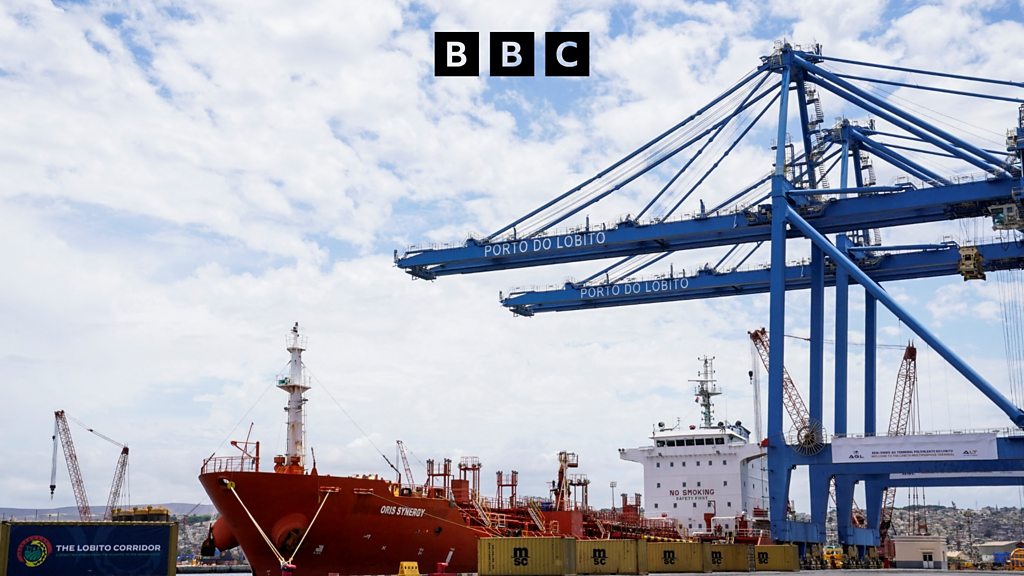
What is driving the global shift towards economic protectionism? Will Bain is joined by Jennifer Pak, NPR’s China correspondent, and Trevor Simumba, an international business consultant in Zambia, to discuss why the trend has accelerated since Donald Trump’s tariffs and why global trade remains resilient despite growing barriers. Plus, why Africa’s Lobito Corridor matters for trade, what AI means for jobs in China and beyond, and why drinks giant Diageo is cutting costs. And, two food heroes: China’s baozi and Uganda’s matoke.
(Photo: A ship docks at Lobito Port in Angola, 4 December, 2024. Credit: Elizabeth Frantz/Reuters)
You can email the team: businessdaily@bbc.co.uk
Presenter: Will Bain
Producer: David Cann

Iran says deal on Strait of Hormuz is close but will not open the waterway by itself

What happens to stocks when the Fed starts hiking? Barclays weighs in
Business
Jorge Messi, Father and Longtime Agent of Lionel Messi, Dies at Age 68 in Argentina After Long Illness
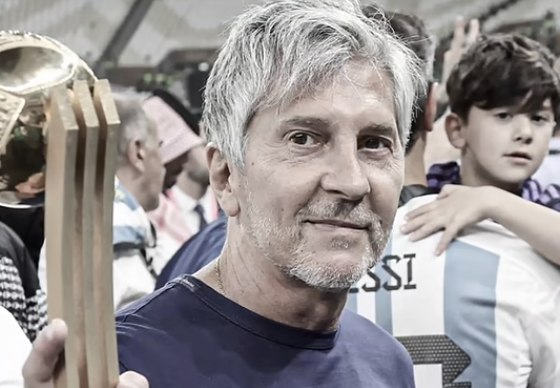
ROSARIO, Argentina — Jorge Messi, the father and longtime business representative of Argentine soccer icon Lionel Messi, died Friday night at a clinic in his native Rosario after a prolonged illness, according to multiple Argentine media outlets. He was 68.
Reports from outlets including Infobae indicated Jorge Messi passed away around 10 p.m. local time. An official cause of death had not been confirmed by the Messi family as of Saturday. He is survived by his wife, Celia, sons Lionel, Rodrigo and Matias, daughter Maria Sol, and a number of grandchildren.
A Health Struggle That Played Out Publicly
Jorge Messi’s declining health first drew widespread public attention during the World Cup, when Lionel Messi was seen visibly emotional on the field, including after scoring against Algeria. Asked about the tears, Messi told reporters at the time, “Why was I crying? It had absolutely nothing to do with football. I have had a few difficult days.” His remarks quickly sparked speculation linking the emotion to his father’s condition.
Days later, the Messi family issued a public statement addressing the situation directly. “The Messi family wishes to inform you that Jorge Messi is currently dealing with health problems,” the statement began. “He is currently under medical supervision and is recovering well.” The family went on to express concern over the intensity of the speculation, writing, “Given the reports, rumours and speculation that have been circulating in recent hours, the family wishes to express its deep concern about the lack of sensitivity,” while asking that “the privacy, confidentiality and personal space of Jorge – and that of his entire family – be respected throughout this process.”
A separate statement issued in the following weeks said Jorge had been “under medical monitoring, recovering and evolving favorably within the condition he presents.” In late July, Lionel Messi skipped Major League Soccer’s All-Star Game, a decision widely believed to be tied to a visit with his father, before returning to action for Inter Miami in an MLS match days later.
The Man Who Took Messi to Barcelona
Jorge Messi’s influence on his son’s career is difficult to overstate. When a young Lionel was coming up through the youth academy at Newell’s Old Boys in Rosario, he was diagnosed with a growth hormone deficiency requiring costly treatment. After failing to secure sufficient financial support in Argentina, including from Newell’s and River Plate, Jorge explored options abroad, ultimately taking his son to try out for FC Barcelona.
That trial led to one of the most famous moments in the club’s history: an agreement scribbled on a paper napkin with then-Barcelona sporting director Carles Rexach on Dec. 14, 2000, at the Pompeia Tennis Club, committing the club to sign the 13-year-old Messi and fund his medical treatment. The move to Spain, made possible directly by Jorge’s determination to find his son a path forward, is widely regarded as one of the most consequential decisions in the history of the sport.
Staying by His Son’s Side During a Difficult Transition
Messi was just 13 when the family relocated to Spain, a transition that proved difficult for several family members who struggled to adjust to life away from Argentina. Jorge remained by his son’s side throughout that period, providing stability during a stretch when Messi’s future in the sport was still far from guaranteed. Messi has spoken previously about how emotionally taxing that time was for both of them, recalling that there were days when he and his father each struggled deeply and would retreat separately to cry so the other would not see it. “My father was always by my side,” Messi has said, describing how Jorge repeatedly checked in with him, asking whether he wanted to continue pursuing his dream in Spain or return home to Argentina. Messi chose to stay.
A Behind-the-Scenes Presence for Decades
Despite managing the business affairs of arguably the most recognizable athlete on the planet, Jorge Messi consistently preferred to remain out of the spotlight, giving few interviews over the years and generally avoiding the intense media attention that followed his son throughout his career. He served for decades as Lionel Messi’s agent and financial representative, a role that placed him at the center of many of the most significant decisions in his son’s professional life, from contract negotiations to the eventual move to Paris Saint-Germain and later to Inter Miami.
That behind-the-scenes role was not without controversy. In 2016, Spanish prosecutors sought an 18-month prison sentence and a fine against Jorge Messi for allegedly defrauding Spain’s tax authorities of approximately 4.5 million dollars in unpaid taxes between 2007 and 2009, a case that also named Lionel Messi before prosecutors ultimately cleared the player of wrongdoing.
Tributes Expected From Across the Football World
Given Jorge Messi’s decades-long presence alongside one of the most celebrated athletes in the history of the sport, tributes from clubs, players and football institutions across the world are expected in the days following his death. His passing comes at a moment when Lionel Messi remains an active professional player with Inter Miami in Major League Soccer, having recently contributed a goal and an assist in a match against San Luis just days before his father’s death.
Funeral arrangements had not been publicly announced as of Saturday. Given Jorge Messi’s central and enduring role in shaping his son’s rise from a young prospect in Rosario to one of the greatest players in the history of football, his death is expected to prompt an outpouring of tributes from across the sport in the coming days, even as the family has continued to ask, as it did earlier this year during his illness, that its privacy be respected during this period of grief.

Value mutual fund investing is supposed to be dead. But Colin McQueen, manager of the T. Rowe Price International Value Equity Fund, has a knack for finding beaten-down stocks that prove the strategy is very much alive. A 2026 IBD Best Mutual Funds Awards winner, T. Rowe Price International Value Equity (TRIGX) has topped the foreign-stock benchmark IBD uses to…
Copyright ©2026 Investor’s Business Daily, LLC. All rights reserved. 87990cbe856818d5eddac44c7b1cdeb8
Michigan salad warnings ease, but cyclospora keeps shoppers and grocers on edge

Investor Mukul Mahavir Agrawal’s portfolio rose 12% to around Rs 7,720 crore by June 2026. Several holdings delivered strong CY26 gains, led by Apollo Pipes, Hind Rectifiers and KRN Heat Exchanger. The portfolio also saw a new addition, Arisinfra Solutions, highlighting Agrawal’s continued focus on high-growth stocks.
Berkshire lowers cash stake as buybacks accelerate, reports higher profit

Ethereum Is First (These Altcoins Are Next)
Irish jet flies to Dubai to bring back gangland boss Daniel Kinahan for trial at special criminal court
Cardiff City v Swindon Town LIVE: Score updates as Bluebirds go behind early


-

 Politics6 days ago
Zack Polanski: an incitement to murder Nigel Farage?
-

 Crypto World7 days ago
MicroStrategy Post-Earnings CLARITY Act Push Could Add New Catalyst for Its Stock
-

 Crypto World6 days ago
Crypto PAC spending tops $2M in Michigan House race
-

 Fashion1 day ago
Frugal Friday’s Workwear Report: Cap-Sleeve Pointelle Crewneck Sweater
-

 Business6 days ago
DTCR: Deleveraging And A Hedge Fund Collapse Point To A Possible AI Bottom
-

 Tech6 days ago
ESET tracks rise in malicious AI skills and adaptable malware
-

 Crypto World6 days ago
XRP Ledger urges node upgrade after manifest flood
-

 Fashion20 hours ago
Weekend Open Thread: Mattifying Sunscreen
-

 Sports2 days ago
Jordan Coyle & Cordiamo take Laya Arena Stakes at RDS
-
 News Videos7 days ago
Financial Crash Expert: The 90-Day Collapse Timeline They Are Desperately Hiding.
-

 Crypto World5 days ago
US Tech Stocks See Largest 5-Week Inflow in History: Can Nasdaq Break Its Downtrend?
-
 Business3 days ago
US stocks: Dow closes at record on Mideast optimism; SpaceX, AMD drag Nasdaq
-
 NewsBeat7 days ago
Tourist plane on sightseeing flight in Peru crashes into a field, killing all 13 people on board
-

 Tech6 days ago
Page Not Found | WIRED
-

 Politics2 days ago
Reform UK And Greens Sink To Lowest Favourability Ratings To Date
-
 NewsBeat7 days ago
Bikini-clad Jennifer Aniston, 57, kisses hypnotist boyfriend Jim Curtis as they enjoy a romantic getaway aboard a luxury yacht in Spain
-

 Crypto World4 days ago
Polymarket targets $20 billion valuation as competition heats up in prediction market sector
-

 Business4 days ago
Nvidia Stock Climbs 2.5% as Chip Sector Rally Builds Ahead of AMD Earnings, Nvidia’s Own Report Looms
-
 NewsBeat7 days ago
MICHAEL GOVE: Burnham’s Labour doesn’t believe in aspiration, just the soft bigotry of low expectations. From education to home ownership, their message to the working class is… know your place
-
 NewsBeat6 days ago
Trump says he is cancelling strikes on Iran subject to ‘rapidly’ making deal
You must be logged in to post a comment Login