

Business
Why Chinese tech companies are racing to set up in Hong Kong




Dell unveils $699 XPS 13 laptop in challenge to Apple’s MacBook Neo

BOJ may heed calls to pause bond taper next year


Oil prices rise more than 2% as Israel moves further into Lebanon
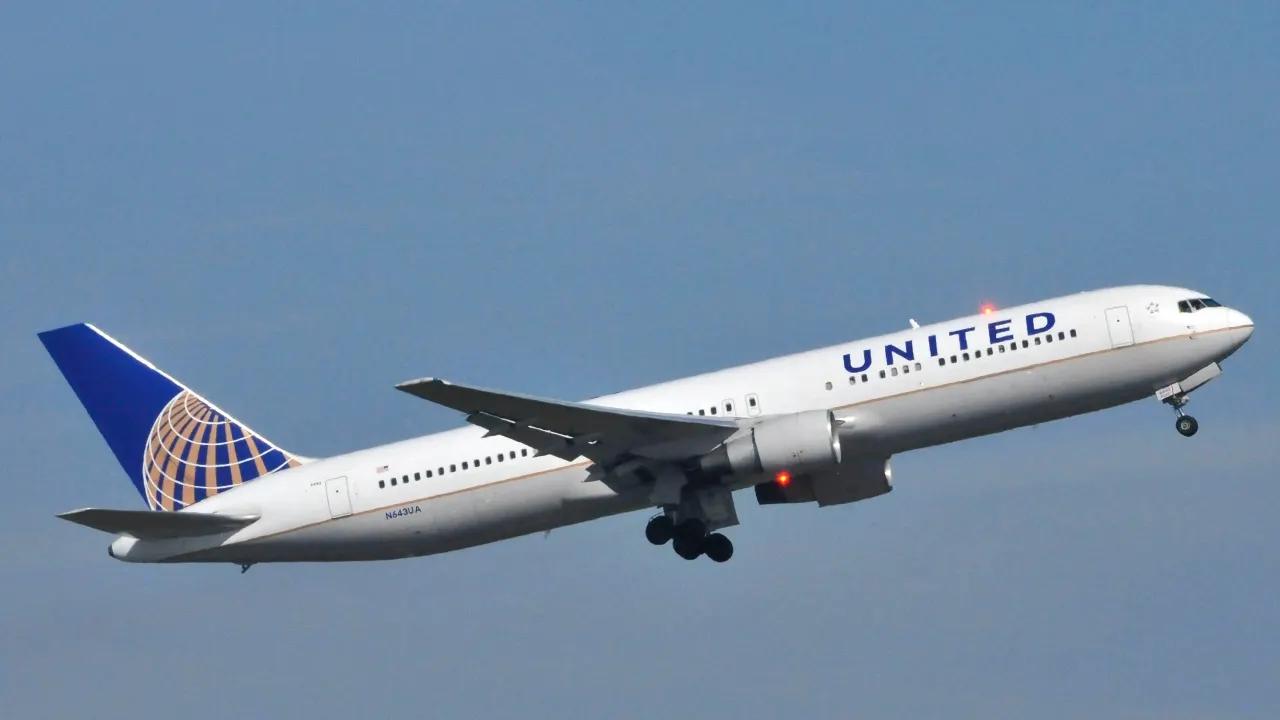
‘Barron’s Roundtable’ panelists discuss investment opportunities among airline stocks.
A United Airlines flight bound for Spain returned to Newark Liberty International Airport on Saturday night after a potential security concern prompted the aircraft to turn around over the Atlantic Ocean.
United Flight 236 departed Newark en route to Palma de Mallorca, Spain, but reversed course about 90 minutes into the trip and landed back in New Jersey later that evening.
A spokesperson for United Airlines told FOX Business there were 190 passengers and 12 crew members aboard the Boeing 767 aircraft.
“United flight 236 from Newark to Palma De Mallorca, Spain safely returned to Newark to address a potential security concern,” the airline said in a statement. “The flight continued to Palma De Mallorca with a new crew.”
UNITED FLIGHT CARRYING 221 PASSENGERS HITS POLE AND TRUCK ON APPROACH TO NEWARK
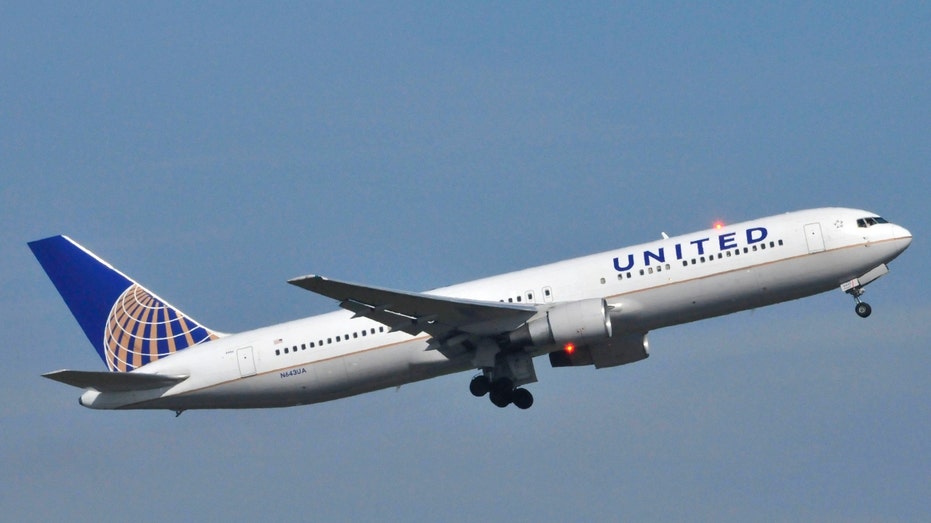
A United Airlines Boeing 767 takes off. A United flight from Newark to Palma de Mallorca, Spain, returned to New Jersey after a potential security concern prompted the aircraft to turn around over the Atlantic Ocean. (Andia/Universal Images Group via Getty Images / Getty Images)
AirLive.net reported that the incident began after flight attendants instructed passengers to disable their Bluetooth connections. Passengers later said the crew repeatedly warned that the request came from United’s operations center and that the flight could not continue unless the issue was resolved.
One passenger told the outlet that crew members made several announcements regarding a potential safety concern linked to a Bluetooth device and eventually issued a final warning before the aircraft changed course.
The warnings reportedly became increasingly urgent as crew members attempted to identify the source of the device. Passengers cited by the publication said flight attendants indicated the issue had been escalated and that the aircraft could be forced to return if the matter remained unresolved.
UNITED PILOT REPORTS MIDAIR DRONE SCARE NEAR AIRPORT DURING LANDING APPROACH
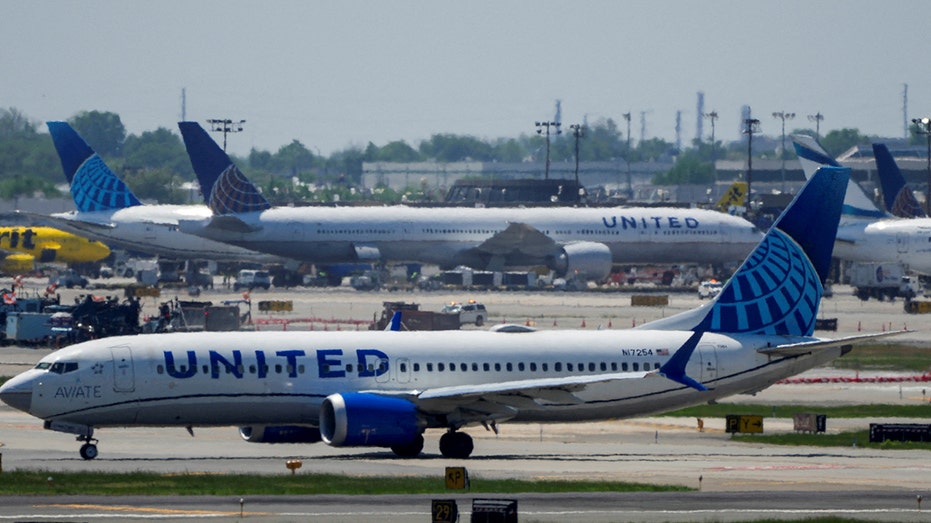
A United Airlines flight from Newark to Spain turned around over the Atlantic and returned safely to New Jersey after a potential security concern emerged onboard. Reports indicate the issue stemmed from a Bluetooth device whose visible name included (REUTERS/Eduardo Munoz/File Photo / Reuters Photos)
Air traffic control communications reviewed by AirLive.net indicated the aircraft returned to Newark after concerns arose about the name of a Bluetooth-enabled device visible to others onboard.
The outlet reported that the device’s discoverable name included the word “bomb,” which led to a security response and the flight’s eventual return to Newark.
The flight crew ultimately decided to discontinue the trip and return to Newark rather than continue across the Atlantic with the issue unresolved, according to the report.
UNITED AIRLINES RAISING TICKET PRICES UP TO 20% AS FUEL COSTS SURGE AMID IRAN WAR
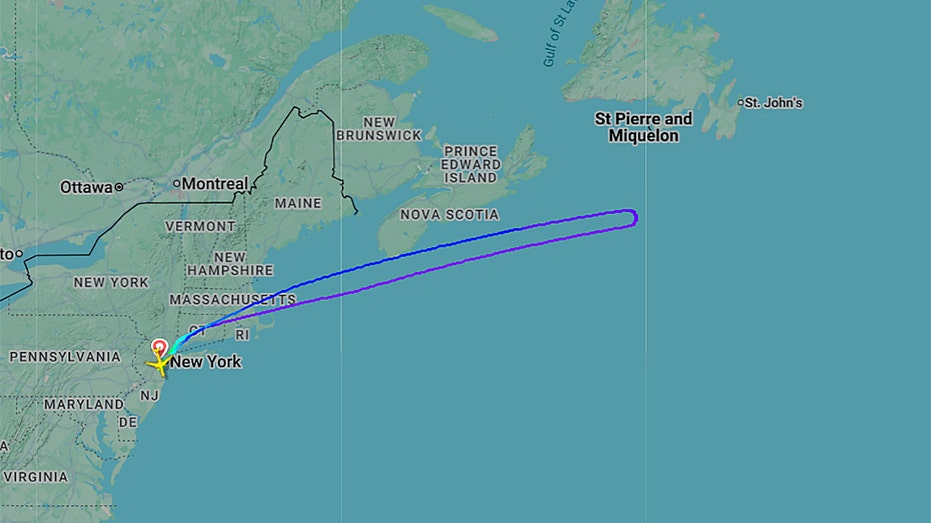
Flight-tracking data shows the route of United Airlines Flight 236, which turned around over the Atlantic Ocean and returned to Newark Liberty International Airport while en route to Palma de Mallorca, Spain, on May 30, 2026. (Credit: FlightRadar24.com / Fox News)
After the aircraft landed safely, law enforcement officers and security personnel met the plane. Passengers were removed while authorities conducted a security inspection.
Travelers were permitted to take only limited personal items with them as they exited the aircraft, according to the report. Passengers were later rescreened before boarding a replacement flight, while the aircraft and checked luggage underwent additional security screening.
Passengers were transported around the airport while security personnel inspected the aircraft, according to the report.
CLICK HERE TO GET FOX BUSINESS ON THE GO
United has not publicly identified the passenger connected to the device or announced whether any charges or penalties are being considered.
FOX Business has reached out to the Port Authority of New York and New Jersey for additional information about the incident.


AUKUS to develop unmanned undersea vehicles, delivery set for 2027

Berkshire Hathaway Has First Takeover by CEO Abel, Paying $8.5 Billion for a Homebuilder
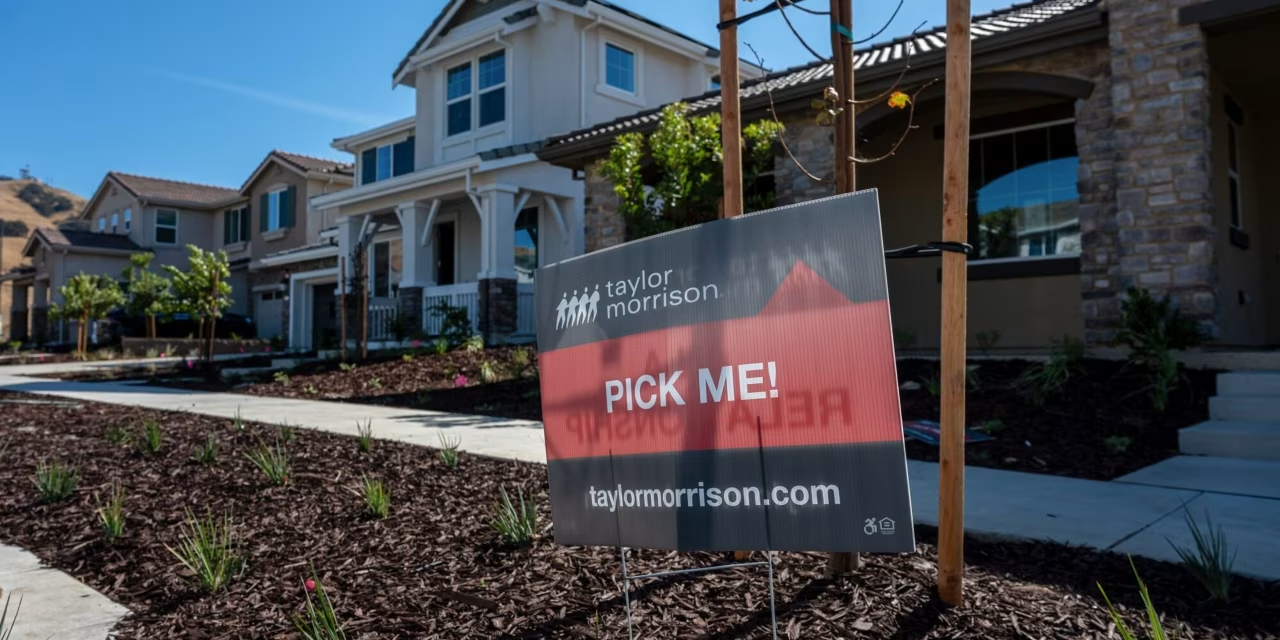
Berkshire Hathaway agreed on Sunday to buy home builder Taylor Morrison Home Corp.for TMHC -0.39%decrease; red down pointing triangle $6.8 billion in cash.
Berkshire will pay $72.50 per share for the Scottsdale, Arizona-based home developer, a 24% premium to Taylor Morrison’s closing stock price of $58.50 on Friday.
Copyright ©2026 Dow Jones & Company, Inc. All Rights Reserved. 87990cbe856818d5eddac44c7b1cdeb8

Could GLP-1 drugs become oncology’s next big opportunity?


German infrastructure fund misses its spending targets, Handelsblatt says

adventtr/E+ via Getty Images

Listen below or on the go via Apple Podcasts and Spotify

Quantinuum attracts strong demand ahead of debut. (0:17) Broadcom earnings focus shifts to accelerating AI chip demand. (1:09) May jobs report tests outlook for a cooling labor market. (1:58)
The following is an abridged transcript:
Quantum computing firm Quantinuum (QNT) is set to go public this week, with reports that the offering is already oversubscribed by a double-digit multiple of the shares available.
The company, which is owned by Honeywell (HON), plans to offer 21.05 million shares at between $45 and $50 each. At the top end of that range, Quantinuum would raise about $1.05 billion and be valued at roughly $13 billion.
The stock is expected to trade on the Nasdaq under the ticker symbol QNT.
Quantinuum generated 2025 revenue of $30.9 million, up from $23 million in 2024, while its net loss widened to $192.6 million as the company continued investing in growth and commercialization.
The company recently signed an agreement with the U.S. government to receive research and development funding aimed at addressing technology bottlenecks in fault-tolerant trapped-ion quantum computers.
On the earnings front, Broadcom (AVGO) highlights the week when it reports Wednesday after the close.
Wall Street expects EPS of $2.40 on revenue of about $22 billion.
Analysts have turned increasingly bullish ahead of the report.
Oppenheimer expects a beat-and-raise quarter driven by AI demand and says Broadcom remains the number-two AI accelerator player behind Nvidia (NVDA).
Susquehanna also raised its price target ahead of results, citing continued momentum in Broadcom’s custom AI chips and networking business.
Analysts said AI revenue could exceed $100 billion in fiscal 2027 as customer demand continues to broaden.
Also on the earnings calendar, Hewlett Packard (HPE) and Credo Technology (CRDO) report Monday.
Earnings spotlight: Tuesday: Palo Alto Networks (PANW) and Ulta Beauty (ULTA) are up Tuesday.
CrowdStrike (CRWD) and Medtronic (MDT) joing Broadcom on Wednesday.
Ciena (CIEN), Lululemon (LULU) and DocuSign (DOCU) weigh in on Thursday.
On the economic calendar, Friday’s jobs report is the main event.
Economists expect 96,000 jobs to have been added in May, down from 115,000 in April, while the unemployment rate is expected to hold at 4.3%.
Average hourly earnings are forecast to rise 0.3% for the month.
Wells Fargo says the labor market remains stuck in a low-fire, low-hire environment that is no longer deteriorating, but isn’t showing meaningful improvement either.
In the news this weekend, Waymo unveiled its new Ojai robotaxi minivan, an all-electric vehicle designed specifically for autonomous ride-hailing rather than retail sales.
The company says the vehicle is roomier, cheaper to operate and built around its sixth-generation self-driving system. Analysts say the lower operating costs could eventually help Waymo undercut human-driven ride-hailing services in some markets.
And Microsoft (MSFT) and Nvidia (NVDA) are expected to unveil the first Windows PCs powered by Nvidia chips as the primary processor at Computex and Microsoft’s Build conference this week.
The launch could mark a significant expansion of Nvidia’s push beyond AI servers and into the PC market.
And for income investors, McDonald’s (MCD) goes ex-dividend on Tuesday and pays out on June 16.
Halliburton (HAL) goes ex-dividend on Wednesday with a June 24 payout date.
Cigna (CI) goes ex-dividend on Thursday and pays out on June 18.
And Western Digital (WDC) goes ex-dividend on Friday with a payout date of June 17.

YuGiOh! x Pokemon – Money Karten Glitch – Topf der Gier

Tip Toe Cast: Where You’ve Seen The New Drama’s Stars Before

Dell unveils $699 XPS 13 laptop in challenge to Apple’s MacBook Neo


-

 NewsBeat4 days ago
Israel says it has killed new Hamas military leader in Gaza City airstrikes
-

 Tech5 days ago
NASA taps Blue Origin to deliver lunar rovers for Moon Base initiative
-

 Politics6 days ago
Bridgerton Season 5: Cast, Release Date And Everything We Know So Far
-

 News Videos5 days ago
XRP *JUST* SUCCEEDED!!!! CLARITY ACT EXPOSED!!! (SHE EXPOSED IT)
-

 Sports6 days ago
2026 NBA Finals schedule, odds: Knicks await Thunder or Spurs after winning East
-
 Crypto World5 days ago
Micron Crosses $1 Trillion Market Cap as AI Demand Reshapes Memory Sector
-

 Business5 days ago
Selena Gomez Reportedly Upset Over Benny Blanco’s Comments on Her ‘Terrible’ Diet
-

 News Videos2 days ago
This is BROKEN! INSANE 5x MONEY CAR WASH WEEK! The NEW GTA Online UPDATE Today! (GTA5 New Update)
-

 Business7 days ago
BTS Sells Out Four Las Vegas Shows at Allegiant Stadium for ARIRANG World Tour
-
 NewsBeat6 days ago
Hottest May day ever as London hits 34.8C in 2C leap from previous records
-
 Tech6 days ago
China assigns ID codes to 28,000+ humanoid robots
-

 Tech6 days ago
Microsoft’s quiet Claude Code retreat and the real cost of enterprise AI
-

 Tech3 days ago
Waymo dominates autonomous vehicle registrations as Tesla trails behind
-

 Business6 days ago
Nikkei 225 Surges Past 65,000 for First Time as Iran Peace Hopes Fuel Record Rally
-
Tech4 days ago
The Samsung pay deal is the moment Korean unions changed register
-

 NewsBeat6 days ago
Crowds find riverside shade in York as temperatures soar
-

 Tech6 days ago
Westone Audio and Etymotic Acquired by Fidelity Collective in Major IEM Market Move
-
 Entertainment6 days ago
‘Breaking Bad’ Star’s Easy-to-Binge 6-Part Crime Series Spin-Off Is Finally Heading to Free Streaming
-

 Tech5 days ago
Millions of AI agents imperiled by critical vulnerability in open source package
-
Crypto World4 days ago
SpaceX’s $2 Trillion IPO: Why Tech Giants Nvidia (NVDA), Apple (AAPL), and Microsoft (MSFT) May Face Pressure
You must be logged in to post a comment Login