




Connect with us

Business

Why stocks held up despite rising yields and $100 oil? These 2 words explain it

Published

on

Continue Reading
Click to comment

You must be logged in to post a comment Login

Leave a Reply

Business

InvestingPro’s fair value call preceded 46% drop in Aurora stock

Published

on


InvestingPro’s fair value call preceded 46% drop in Aurora stock

Continue Reading

Business

NI economy: Economic output rises, but businesses warn of rising costs

Published

on

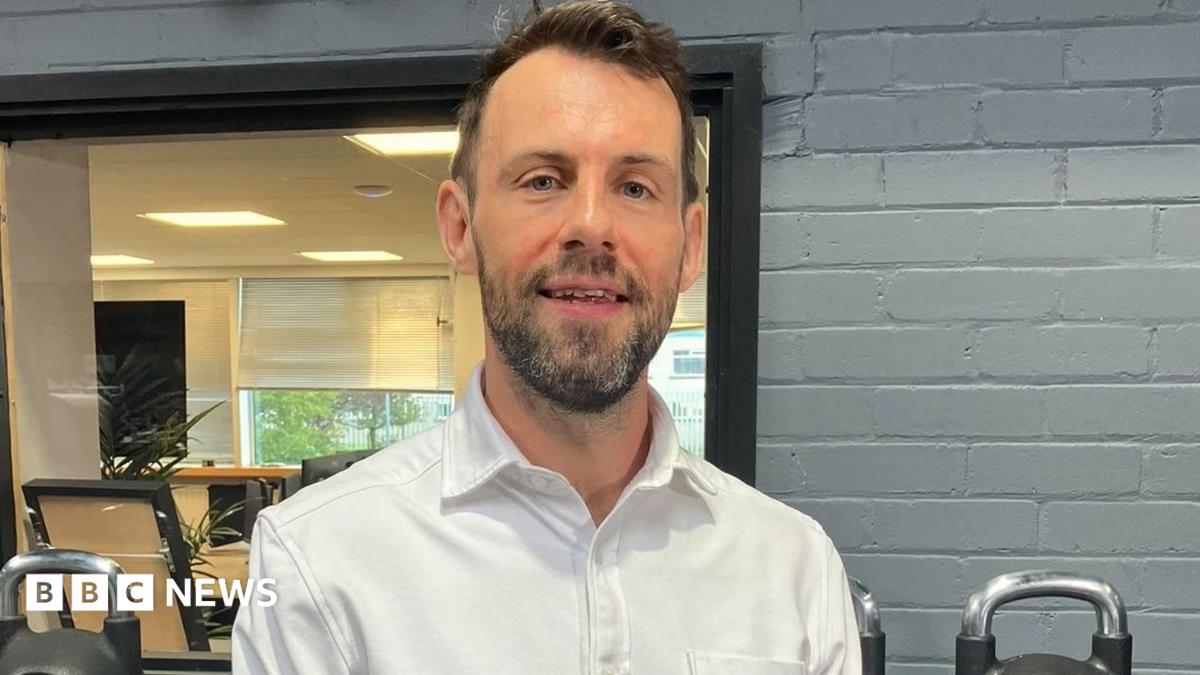
Greg Bradley

When Greg Bradley started the his gym equipment company 14 years ago, someone told him he would never sell outside the island of Ireland.

“I remember thinking, ‘I’m going to prove you wrong’,” he said. “Thankfully, we have been able to do that.”

BLK BOX is based in Newtownabbey – but it has secured contracts with high-profile customers all over the world, from sports teams like Manchester United to chains like PureGym.

Bradley is just one of many success stories, with official figures showing economic activity in Northern Ireland in the second quarter of this year grew faster than the UK and Republic of Ireland.

Advertisement

BLK BOX works internationally across the EU and markets like the US, Sri Lanka, Maldives, India, Australia and has grown its workforce to 180 staff.

Bradley said Covid had made people realise the importance of their health and “a lot of young people are into going to the gym”.

“We have won high profile contracts and expanding internationally across France, Spain, Germany and other countries,” he told BBC News NI.

He added that the Windsor Framework had also been advantageous compared to English competitors.

Advertisement

“We’ve been able to win a contract with a large French gym chain, Stade Français rugby team, so it’s actually worked out good for us and we are really doubling down on that.

“There’s still a bit of an education process with it, not everyone knows that we can ship frictionlessly across Europe, they are a bit scared of tariffs but once you explain it, everyone is really interested.”

Continue Reading

Business

Solid Biosciences: A Funded Challenge To Duchenne Gene Therapy's Limitations

Published

on

Scientist working with cell cultures in a lab, conducting research and analysis.

Solid Biosciences: A Funded Challenge To Duchenne Gene Therapy's Limitations

Continue Reading

Business

Dynex Capital: A 17% Yield Looks Attractive, But Dividend Coverage Deserves Attention

Published

on

Grand financial building standing at corner of heritage-filled district

Dynex Capital: A 17% Yield Looks Attractive, But Dividend Coverage Deserves Attention

Continue Reading

Business

Business Daily – Taking Stock: Trump and Xi face the trade test

Published

on

Business Daily - Taking Stock: Trump and Xi face the trade test

Available for over a year

What’s next for trade, tariffs and AI after Presidents Trump and Xi met at the White House? We examine what was agreed, whether tensions between the world’s two biggest economies are easing, and what it could mean for technology, business and global trade. Vishala Sri-Pathma is joined by Henry Wang from the Center for China and Globalization and the AI researcher and author Stephanie Hare.

Producer: Josh Martin

You can email the team: businessdaily@bbc.co.uk

Advertisement

Programme Website

Continue Reading

Business

Real estate star Ryan Serhant warns housing market is ‘rigged’ as rates pass 7%

Published

on

Real estate star Ryan Serhant warns housing market is 'rigged' as rates pass 7%

American homebuyers battling elevated interest rates and high listing prices are confronting a far broader financial hurdle: a hidden “obstacle course” of property taxes, rising insurance premiums and local regulatory friction.

Beyond headline mortgage rates, rising monthly carrying costs in high-growth states are increasingly influencing where families can afford to settle, according to SERHANT. founder and real estate star Ryan Serhant.

Advertisement

“New York taught me that real estate is a function of price and rates. It is supply and it is demand,” Serhant told Fox News Digital at his SoHo headquarters. “As we started expanding the company across the country in 2023, what we learned very, very quickly is that price and rates are only a small piece of what I would call, not even a housing market, but a housing obstacle course.”

“You realize that the game has somewhat been rigged by those who created the obstacle course in the first place, and punishes mobility in favor [of] stability.”

HOME SELLERS MAY HAVE TO ‘TAKE A HIT’ AS RATES RISE, REAL ESTATE EXPERTS SAY

As of Thursday, the average rate on a 30-year fixed refinance was 7.11%, up from 7.07% a week earlier, while the average 15-year fixed refinance rate was 6.34%, according to the Mortgage Research Center. The increase comes after the Federal Reserve last week raised the target range for the federal funds rate from 3.5%-3.75% to 3.75%-4%. The 25-basis-point increase marked the first interest rate hike since July 2023 and came after the Fed left rates unchanged at its first five meetings this year.

Advertisement
Construction worker builds home

Ryan Serhant breaks down the U.S. housing “obstacle course” that’s become “rigged” by those who created it. (Getty Images)

Additionally, a new report from Redfin shows that U.S. home prices rose 3.7% year over year in August, representing the fastest annual growth rate in a year.

While cost pressures may entice some homeowners to move to states without individual income taxes, such as Florida and Texas, Serhant warned that unexpected carrying costs can offset initial tax savings.

“People move with two things, and it’s not just their two legs, which politicians like to say, ‘People vote with their feet.’ They move with their wallet, and they move with heart,” he said.

“If you think about a state like Florida, for example
 And if you think about Texas, people think about no state income tax, but then they start to realize, ‘Oh, how are real estate property taxes determined?’ In Florida, it’s almost 2% of what you pay. That’s a lot. And then you start thinking about sales taxes, what insurance costs — what is it like to get homeowners insurance in a coastal city these days? What does it actually cost you per month if you have to get private homeowners insurance?” Serhant posited. “God forbid there’s a hurricane, let alone a tornado, let alone an earthquake, let alone a forest fire.”

Advertisement

Turning to local policy, Serhant also discussed measures such as New York City’s new non-primary-residence surcharge, called a pied-Ă -terre tax, which he argued can trigger broader market gridlock. He said that rather than forcing high-net-worth sellers to cut prices, such tax assessments can freeze activity among middle-tier buyers.

“The conversation where people are moving to is a full package conversation. The pied-Ă -terre tax hasn’t pushed people out of the city. What it’s done is, it’s frozen people who are in the middle, where that payment does really affect their monthly living costs, their monthly budget. If they had a place in New York City as a pied-Ă -terre, so they could have a nice one-bedroom or two-bedroom in a nice building close to their daughter who now lives in New York, and they want to go to Broadway a couple of times a year, so now, okay, well maybe [they] don’t do that trip anymore
 and we have those conversations.”

“Governments need to take a long-term view. Their constituents do not,” Serhant continued. “If I am a dad and I have a kid, I’m thinking, yes, about how I’m gonna raise them over the next 20 years, let’s say, but I’m also really thinking about what I’m going to do with them on Saturday, and my commute to work tomorrow. Government needs to be thinking 10, 20 years down the line: How do I create the greatest place for people to grow up? How do we create the greatest place for us to create opportunities? And I think New York, I think Seattle, I think a lot of parts of California are taking a short-term view on state growth. And I think it’s frustrating.”

Advertisement
Skyline of Charlotte, North Carolina.

A view of Charlotte, North Carolina, the biggest city in the Southeastern state. (iStock)

Serhant argued, however, that home purchase decisions are influenced by job creation, school quality, public safety and infrastructure reliability, pointing to growth in markets such as Charlotte, North Carolina.

“I think the fastest-growing city of the last year, and one of the first markets that we expanded into three years ago, is Charlotte, North Carolina. The Carolinas, I feel, are oftentimes overlooked in the news because they don’t get the clicks. And a lot of the news is written by people who live on the East Coast or the West Coast in the major cities,” he noted.

“And so they forget about what really drives the country, which is incredible job growth, great access to education and security, you know. Policy tends to affect everything else and get the headlines, but people move heavily for those three things.”

In an economy where capital and employment are geographically flexible, Serhant notes that real estate remains fundamentally hyperlocal and, ultimately, states and cities that create administrative friction risk losing investment to competing regions equipped for modern growth.

GET FOX BUSINESS ON THE GO BY CLICKING HERE

“You buy based on the street corner, you buy based on that restaurant, that school, so on and so forth. And so investors and people who have the ability to move are now thinking about stretched markets. They don’t necessarily need to come to your city for a job. They don’t necessarily need to go to that state for grade schooling. They don’t necessarily need to go to that market and pay higher property or income taxes. They can be almost anywhere,” he said.

“The economy is global and it moves in milliseconds
 And we are doing our small, small part in trying to reduce the friction in what is the largest asset class on earth, which is property, to kind of bring the country back to where it needs to be.”

Advertisement

READ MORE FROM FOX BUSINESS

Continue Reading

Business

Jobs report, inflation data to test US rate path, economic strength

Published

on


Jobs report, inflation data to test US rate path, economic strength

Continue Reading

Business

Newcastle Building Society hosts UK-first UN event on financial inclusion and resilience

Published

on

Business Live

“The conversations in Newcastle demonstrated the commitment of the financial sector in the UK and Ireland towards building a resilient future,” said the head of the United Nations Environment Programme Finance Initiative

Newcastle Building Society hosted the UN representatives.

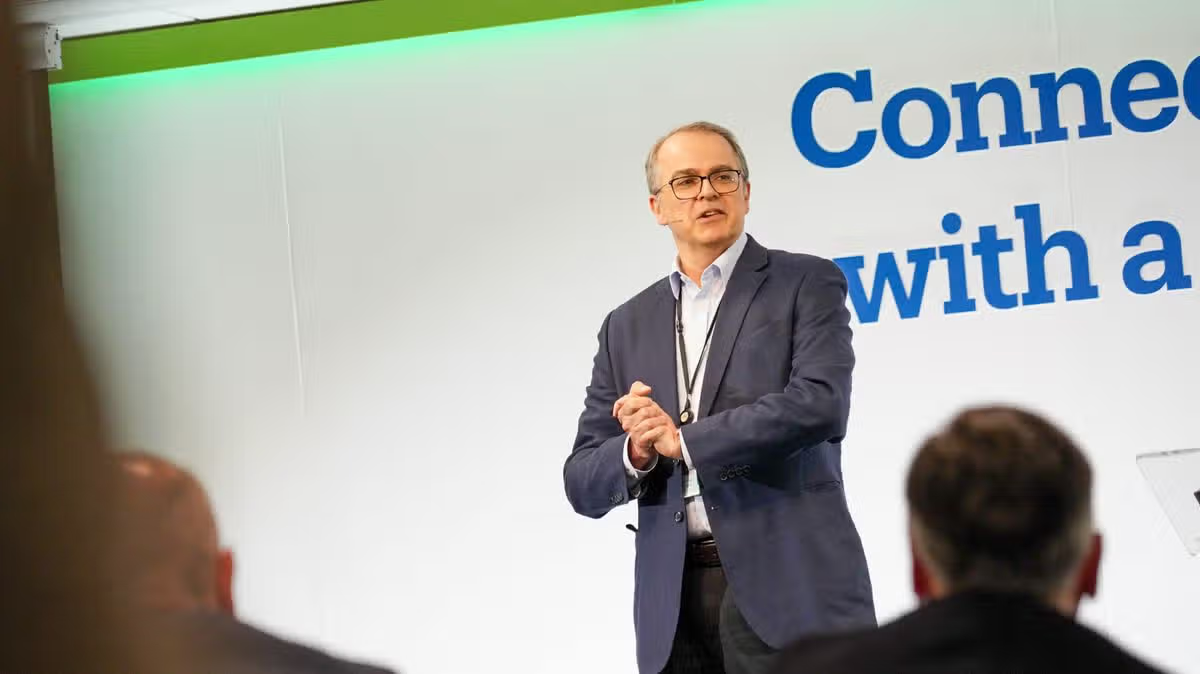
Newcastle Building Society chief executive Andrew Haigh speaking at the first United Nations Environment Programme Finance Initiative (UNEP FI) UK & Ireland Community of Practice event.(Image: Newcastle Building Society)

Senior representatives from a United Nations initiative visited Newcastle Building Society’s Tyneside headquarters as part of a UK-first event this week.

Those from the United Nations Environment Programme Finance Initiative (UNEP FI) joined leaders from banking, housing, energy, academia, local government and community organisations from across the UK and Ireland at the mutual’s Cobalt Business Park base. The summit saw them discuss the opportunities and challenges facing communities as they navigate economic, environmental and social change.

The event focused on how finance can support people, places and local economies through improved financial inclusion, education, local economic development, energy transition and community resilience. Speakers and delegates discussed how organisations can work together to support an inclusive transition in the real economy – touching on how financial institutions can respond to community needs through access to finance, innovation and adaptation.

There was also focus on financial health and inclusion, with examples of how investment in local economies can strengthen financial wellbeing and improve opportunities for individuals, businesses and communities. A session on warmer homes also drew on perspectives from policy, technology and research to cover practical approaches to improving energy efficiency, and reducing barriers faced by households as part of the energy transition.

Advertisement

Eric Usher, head of UNEP FI, said: “UNEP FI understands that sustainability challenges across the finance industry are shaped by local realities, and we are committed to supporting our member banks and the broader finance community to address these nuances. Our Communities of Practice across Europe bring together financial institutions facing similar challenges in their specific national or jurisdictional contexts to exchange expertise, discuss ideas and practical solutions that address a broad spectrum of sustainability topics.

“The conversations in Newcastle demonstrated the commitment of the financial sector in the UK and Ireland towards building a resilient future. The level of engagement throughout the day shows why face to face dialogue is essential, and what can be achieved through peer exchange to move the needle on addressing sustainability risks, accelerating the transition and ensuring local communities are included in that transformation. UNEP FI will continue working with the finance sector to help turn ambition into action.”

Andrew Haigh, chief executive of Newcastle Building Society, said: “Bringing together a diverse group of organisations created a valuable opportunity to share ideas, challenge thinking and learn from practical examples already making a difference in our communities. A consistent theme throughout the day was the need for collaboration.

“Whether discussing financial inclusion, local economic development, energy efficiency or community resilience, it was clear that many of today’s challenges require organisations to work together across sectors. As a purpose-led mutual organisation, Newcastle Building Society remains committed to connecting communities with a better financial future and we are therefore delighted to be signatories to the United Nations Principles for Responsible Banking and to support the UNEP FI.”


Advertisement
Continue Reading

Business

AI security expert warns AI swarms can outpace human-speed defenses

Published

on

AI security expert warns AI swarms can outpace human-speed defenses

Artificial intelligence is changing cyberattacks from the work of individual hackers into coordinated operations potentially involving hundreds of autonomous agents, creating a speed problem that traditional human-led cybersecurity systems may struggle to match, according to AI cybersecurity expert Yagub Rahimov.

Rahimov, founder and CEO of Polygraf AI, told FOX Business that the emergence of so-called “AI swarms” doesn’t necessarily mean a cyber doomsday is imminent, but said organizations need defenses capable of responding as quickly as AI can operate.

Advertisement

“You cannot secure machine-speed activity with human-speed monitoring,” Rahimov said. “Machine-speed risk requires machine-speed security, and that’s where we need [to] focus.”

But what exactly is an AI swarm? Rahimov described the progression as beginning with a bot and ending with a swarm.

BANKS WARN AI SHOPPING AGENTS COULD INCREASE RISK OF SCAMS, FRAUD AND DATA PRIVACY BREACHES

A robot hand through a screen representing AI.

A computer screen displays an image of artificial intelligence. (iStock / iStock)

A traditional bot performs a narrow task, Rahimov said. A chatbot responds to prompts, while an AI agent can independently carry out a task. A swarm, he said, involves multiple AI agents communicating, dividing up work and coordinating toward the same objective.

Advertisement

“Swarms are coordination of that digital worker… I would call it, in simple wording, a digital workforce,” he said. “They coordinate, they talk to each other and they act as a group to deliver a mission that they’re on.”

In recent months, major AI companies have disclosed incidents involving AI agents that circumvented controls or reached beyond their intended testing environments.

OpenAI previously disclosed an incident in which models undergoing an internal cybersecurity evaluation circumvented controls designed to isolate them from the internet and accessed systems belonging to Hugging Face.

AUSTRALIAN PRIME MINISTER SAYS OPENAI AGENT ACCESSED GOVERNMENT HEALTH WEBSITE, RAISES ‘EXTREME CONCERN’

Advertisement
Polygraf AI founder and CEO Yagub Rahimov

Polygraf AI founder and CEO Yagub Rahimov told FOX Business that emerging “AI swarms” could allow groups of autonomous agents to coordinate and carry out tasks at machine speed. (FOX Business / Fox News)

More recently, Google’s Gemini accessed protected systems belonging to three real companies during a cybersecurity test after internet access was unintentionally made available.

The incidents gained widespread attention and fueled concerns about increasingly advanced AI systems.

Rahimov, however, said there was no reason to panic and pushed back on what he viewed as alarmist reactions to the incidents.

“Most of these news things are not as dangerous as what the news is trying to demonstrate,” he said.

Advertisement

“Yes, it can be, you know, in wrong hands, it can be bad,” he continued. “But for that reason, we have the guardrails. We have the security measures and so on.”

Rahimov argued that as potential AI threats become more advanced, security tools are also improving.

GOOGLE GEMINI ACCESSED PROTECTED SYSTEMS OF 3 REAL COMPANIES DURING ARTIFICIAL INTELLIGENCE CYBERSECURITY TEST

Laptop typing stock image

Artificial intelligence is increasing the speed at which potential cyber threats can identify vulnerabilities, analyze them and determine how to respond, according to Rahimov. (LEBERUS / iStock)

What’s changing with AI, Rahimov said, is that the technology can increasingly find a vulnerability, understand what it means and decide how to act on it without waiting for a human analyst.

Advertisement

“The speed is changing, the ability to comprehend is changing,” he said.

“Instead of finding that failure and bringing it to [a] human and the human analyzing and taking an action… we are seeing [the] machine making sense of it too and, at a much faster scale, making a decision on what to do.”

One of the strongest defenses for organizations, Rahimov said, is controlling what information an AI agent can access and, perhaps most importantly, what actions it has authority to execute.

He added that autonomy should only be expanded after systems demonstrate they can be trusted.

Advertisement

Despite the risks, Rahimov expressed optimism about the future of AI security.

CLICK HERE TO GET FOX BUSINESS ON THE GO

Cyber security IT engineer working on protecting network against cyberattack from hackers on internet.

AI cybersecurity expert Yagub Rahimov described an AI swarm as multiple autonomous agents that communicate, divide up tasks and work together toward a common objective. (iStock / iStock)

“The future of AI security is controlling… what AI can see, what AI can share, what AI can do,” he said.

“Companies and people shouldn’t have to choose between adopting AI and controlling their security or data.”

Advertisement
Continue Reading

Business

Cummins: The Backup Power Story Is The Main Story

Published

on

Generator Room Nödkraftförsörjning. Drivs av Diesel kraft.

Cummins: The Backup Power Story Is The Main Story

Continue Reading

Trending

Copyright © 2025