
Politics
Maya Jama Addresses Rumours She And Stormzy Are Back Together


Maya Jama is pouring water on the speculation that she and her famous ex, Stormzy, are back together.
The Love Island host found herself at the centre of rumours earlier this week, when fans spotted that she and the Vossi Bop rapper were once again following each other on Instagram.
Fuelling the rumours even further was a clip that Maya posted of herself on social media lip syncing to Stormzy’s song One Second.
However, the TV personality is adamant that people have got the wrong end of the stick if they think this means she and the Brit Award winner have reunited.

“I like the song,” she continued, pointing out that she and the grime star “have always been friends”.
“No one is back together, rest with the theories,” she then urged her fans.
Maya and Stormzy first began dating in 2014, before eventually going their separate ways in 2019.
However, in the summer of 2023, the two sparked rumours that things between them were back on after they were spotted on holiday together, before hard-launching their renewed romance on a red carpet months later.
Less than a year later, though, they announced that they were “calling it quits” for the second time.
They said at the time: “We’ve been laughing whilst drafting this because we never, ever, in a million years thought we’d be the couple announcing a breakup. But for the sake of clarity and, more importantly, to allow us the space and grace that’s needed for us both to be able to navigate this next bit of our lives with peace, we thought it might be best to.”

“We recently decided to call it quits,” they added, pointing out: “We were 21 and 20 when we first met – both at the beginning of our careers – and spent five years growing together and then five years growing separately, so this final attempt required a whole lot of figuring out, relearning, and unlearning. We tried, and it didn’t work, and that’s okay.”
Insisting they “still think the absolute world of each other”, the former couple concluded by saying they “still care [for] and respect each other”.


There’s so much to love about Christmas: delicious food and drink, great company, and don’t get me started on presents.
Personally, though, I reckon one of the best things about the most wonderful time of year is the scents.
It’s ot just the smell of baked spices: I’m a big fan of the seasonal scents that get released each year, too.
I’ve already waxed lyrical about Jo Malone’s Advent Calendar and Lush’s S’mores body wash, but when I found out there was a whole Advent calendar dedicated to warm and spicy festive scents, I was gripped.

Packaged in a gorgeous watercolour box with velvet ribbons, the Sentier calendar feels like something you’ll want to keep in your house and cherish for a long time.
Considering it costs just £109, it promises serious savings on the 12 scents you’ll find inside – because the whole thing is worth £529.
Everything about the experience of opening the calendar is special. By the end of the 12 days, you’ll have six 60ml scented candles and six 10ml perfumes to play around with for the whole year ahead, each with its own story attached.
The standout product, Ardent Cherry, blends (you guessed it) dark cherry, amber, sandalwood, and incense that promises to wrap you “in an unforgettable air of intrigue”. I don’t know about you, but that’s exactly how I want to be perceived by my nosy family members on Christmas Day.
Sentier has also included two alcohol-free perfumes in the calendar: Noor Riviera (a coastal fragrance in case you need some escapism from the cold) and Méribel, which is “inspired by snow-covered Alpine villages and the freshness of crisp mountain air”. I’m feeling cosy already.
Each of the scented candles has also been formulated to transport you into a different world. One of my favourites is Lait de Feu, which instantly shrouds me to the sensation of drinking a Bailey’s hot chocolate by the fire thanks to its blend of coffee, maple, rhum, vanilla, sandalwood, and vetiver.
I’m also not immune to a woody scent (who doesn’t love the smell of Christmas trees?!) so Alpine Chalet, the calendar’s pine and alpine air-inspired candle, also has a special place in my heart.
It’s no wonder that the calendar has sold out for two years in a row, and even though it’s available to shop now, I wouldn’t count on it being around tomorrow.
Great news for fragrance lovers while it lasts, though, we’ve got HuffPost UK readers 10% off the calendar with the code ‘ADVENT10’, so it’ll cost just £98.10 for a whole load of fragrances you will cherish for months to come.
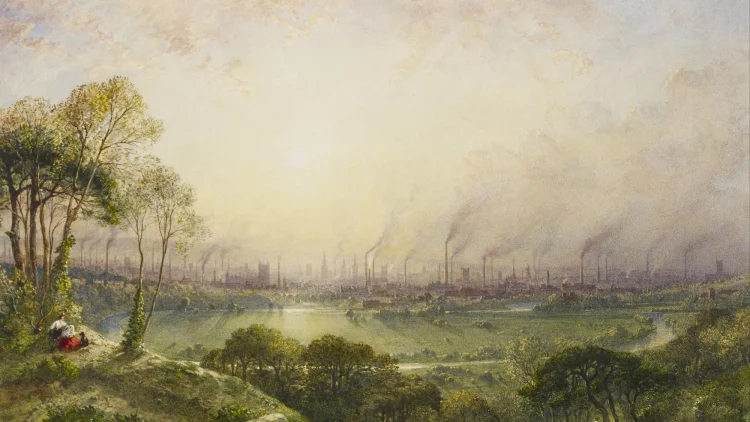
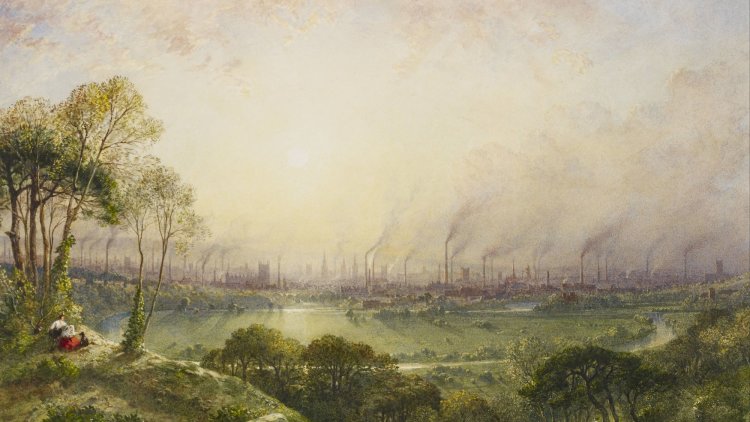
Manchester from Kersal Moor, by William Wyld in 1852
5 min read
In the 19th century, Manchester earned the nickname Cottonopolis, such was its reputation as a global centre for the cotton and textiles industries.
These industries reshaped the economies and culture of what we now recognise as Greater Manchester. Oldham was, at its peak, the most productive cotton spinning town in the world, while the novel of Lancashire author Allen Clarke (‘Teddy Ashton’) fictionalised Bolton as “Spindleton”, reflecting how deeply the industry had defined its culture.
Today Manchester has regained a place at the centre of power, but of a different kind. The new No 10 North will focus the energy of the central state on Andy Burnham’s aspiration to be the Prime Minister who gave power away.
There has been no shortage of opinion pieces on No 10 North. Its stated purpose is clear enough. It will oversee reforms to essential utilities and deliver reindustrialisation and the regeneration of places, consolidating existing Whitehall powers before handing them to places, particularly metro mayors, across the country. This is how Burnham’s ambitions of delivering “good growth in every postcode” and greater power to communities are to be realised.
Devolution’s ultimate success will be measured against the ambition the Prime Minister set out during his Makerfield campaign to rebuild places scarred by deindustrialisation and overlooked by centralisation. With the Independent Commission on Neighbourhoods (ICON), I have been fortunate to spend many of my Fridays over the past 18 months visiting such places across every corner of England. It is often impossible to leave at the end of the day without a bitter feeling that successive governments have not even tried and failed to deliver for these places, but have simply not tried, and that a change of approach is both necessary and welcome.
This makes devolution all the more important. Many of these places will soon be represented by mayors with a deeper understanding what has held them back. Is it worth noting, though, that the majority of England’s most disadvantaged neighbourhoods already have a regional mayor, as do many former mill towns, coalfields, steel communities and seaside towns that once powered Britain’s economy.
This does not diminish devolution’s potential. It is urgent, however, that its next stage puts places that have been left behind front and centre
Devolution is popular. Our polling published today shows a majority (52 per cent) support it. Yet there is a contradiction between what the public want and expect from it and the overarching focus of existing mayors.
People expect direct benefits to their areas, and expectations are highest in the most disadvantaged areas, where 51 per cent expect their area to benefit a “great deal or fair amount”. The public wants devolution to prioritise highly deprived places and our industrial heartlands. Asked whether mayors should direct more funding to the most disadvantaged parts of their region, even if this meant less elsewhere, 38 per cent supported this while 24 cent opposed.
The question, then, is whether mayors are delivering for these places.
In our report, we analysed dozens of mayoral strategy documents across economic growth, transport and skills. We found hundreds of policies, including innovative approaches to public services, partnerships with communities and investment prioritising deprived or deindustrialised areas.
But these examples remain the exception rather than the rule. We found few initiatives to connect residents of disadvantaged places to opportunities in the eight industrial strategy (IS-8) sectors, for example. Our review suggests that improving these places has yet to become a consistent priority running through mayoral authorities’ work.
This does not diminish devolution’s potential. It is urgent, however, that its next stage puts places that have been left behind front and centre. The test should be whether it changes the economic prospects of the towns and neighbourhoods that deindustrialisation abandoned and centralisation made too easy to overlook. Worryingly, we find 53 per cent of people think devolution will either make no difference to inequality between rich and poor parts of the country or widen the gap.
Devolution itself must still pass the Prime Minister’s “Makerfield Test”. There are practical ways to make this happen.
Mayors should be supported with new Good Growth Funds, based on that of Manchester, investing in social as well as physical infrastructure. We should build on the promise of community-based service delivery by establishing the JobsPlus employment support scheme as a permanent national programme. Mayors should be able to fund and integrate community transport schemes into their networks, and target tax reliefs at firms that invest in or hire from disadvantaged neighbourhoods.
A dedicated Chief Secretary of the Nations and Regions, with a seat at the Cabinet, should oversee this agenda. This would give No 10 North the political authority to match the government’s ambition to rewire the state.
The government’s forthcoming 10-Year Plan and Devolution White Paper are the opportunity to put these priorities at the heart of devolution. If No 10 North is to deliver on its promise, Manchester’s return to the centre of power must help renew the prospects of the towns that once made it Cottonopolis. The Makerfield Test will be passed when the communities that powered Britain’s industrial past have a stake in its economic future.
Ross Mudie is head of research analysis at the Independent Commission on Neighbourhoods (ICON)
Politics
The House | Hazards Ahead: How Labour Unity Under Andy Burnham May Be Tested In The Months Ahead
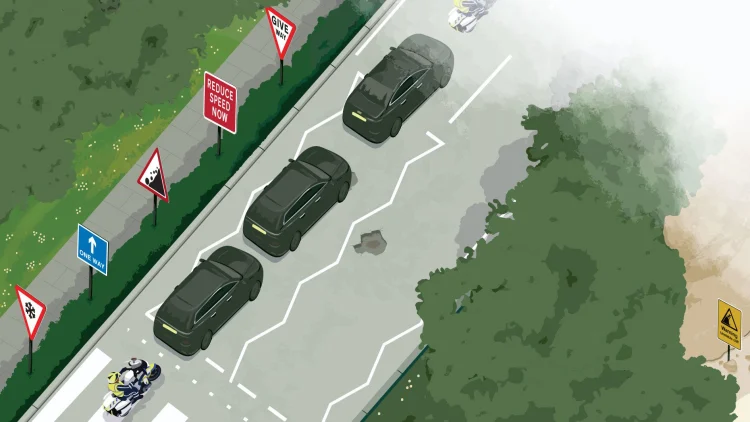
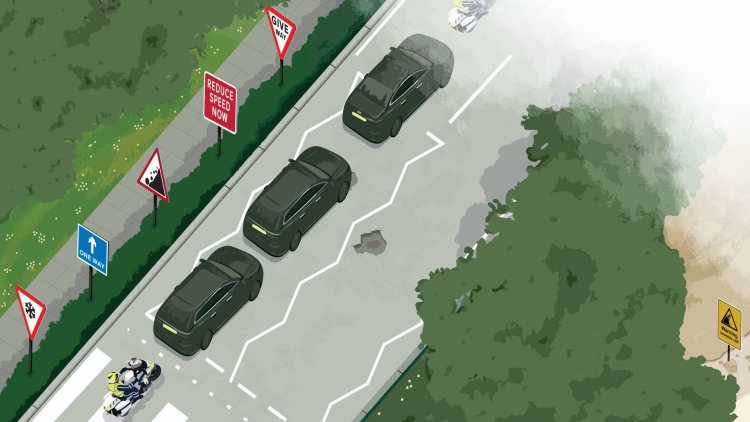
Illustration by Tracy Worrall

12 min read
The first few months of Andy Burnham’s premiership have passed in relative calm but the Labour Party’s newfound unity is about to be tested. Harriet Symonds reads the warnings on the road ahead.
Things, as they might say, can only get worse. Labour gathers in Liverpool with tails up, ahead in the polls having overtaken Reform UK. But it is in the nature of bounces that what goes up must come down, and Andy Burnham well knows that the momentum will fade.
Despite repeated public denials he is planning an early election, the Prime Minister is understood to have discussed the option with James Purnell, his chief of staff. No firm conclusion was reached, say sources.
On one level, that is unsurprising – indeed it would be odd if he hadn’t at least reviewed the possibility with his closest political aide – but it adds to the sense there is an ongoing calculation.
Although the decision will be Burnham’s alone, Labour MPs will do much to condition his thinking in the months ahead.
If he believes he can carry the party through difficult decisions – on welfare and immigration in particular – he may be more likely to wait until he can more confidently campaign on Labour’s record in government. On the other hand, if it appears he has become their captive, he may be more inclined to seek a mandate of his own.
Watching on are the dispossessed and disgruntled, ejected from government for their loyalty to Sir Keir Starmer. The revelation by Louise Haigh that Burnham’s return to Westminster had been in the works for a year has only deepened their resentment.
At the centre of this emerging group is Darren Jones, the former chief secretary to the prime minister, whose exclusion from Burnham’s Cabinet has angered MPs in the group who saw it as a serious miscalculation.
“Even now, they still don’t realise how much power Darren wields in the PLP,” warns an MP in the group. “When the wheels start falling off, they might need him.”
Jones showed his teeth when he challenged No10 claims about how much would be saved through shelving the digital ID scheme, for which he’d had ministerial responsibilities.
At the moment Jones sees himself as something of a Jeremy Hunt-like figure in the Labour Party, who can make significant interventions without undermining the government.
But he is not the only former minister to know where the bodies are buried. Some, like Olivia Bailey and Catherine Atkinson, have been elected to chair select committees which will look at policy areas they tackled in government.
MPs on ‘rebel watch’ insist they want Burnham’s government to succeed, but they have no problem being “critical friends” when it comes to some of the difficult choices ahead, especially those affecting the economy.
“The group has so much institutional knowledge of government – they have a lot to offer,” says an MP organising for the group.
They have begun meeting regularly, including for drinks at the Clarence pub on Whitehall.
Those involved describe it primarily as a support network for MPs adjusting to life outside government, but it has also become a place to connect with donors and develop longer-term policy ideas aimed at securing a second Labour term.
Burnham’s first real tests will come not in Liverpool but in the months ahead, when he will have to make tough decisions that will upset different wings of his party.
MPs are eagerly awaiting the government’s 10-Year Plan in November to provide more clues about the government’s direction of travel.
Welfare, defence, the Troubles Bill, oil and gas and plans for devolution are all issues on which the new government could face opposition from its own benches.
The economy
Burnham inherited an economy with little room for manoeuvre and will deliver his first Budget on 28 October against a backdrop of rising inflation, high borrowing costs and sharply reduced fiscal headroom. The government is facing pressure to fund defence, ease the cost of living and maintain its fiscal rules at the same time.
The government wants the Budget to be as quiet as possible. The Spending Review next year is likely to be the more significant test, particularly on welfare and defence.
Attacks on Rachel Reeves have not gone unnoticed by Labour MPs, with some saying it is “totally unfair” and warning it “will not wash”.
The group of disgruntled Labour MPs is watching closely to see whether Chancellor John Healey sticks to the fiscal rules and how he balances competing demands from defence, welfare and public services.
In a sign that the government is taking the group seriously, The House understands that Healey has asked to speak to Jones ahead of the Budget.
Meanwhile, talk of an early election is rife among Labour MPs, with some reporting contact from regional organisers that they believe could be preparation for a snap poll.
Welfare
Addressing Britain’s £333bn ballooning welfare bill will be one of Burnham’s most politically dangerous tasks. He has said he wants to reduce spending but has yet to set out in any detail how he intends to do it.
Two reports will soon land on his desk: one by former minister Alan Milburn examining youth unemployment and another by Stephen Timms on disability benefits. Milburn has already argued that the welfare system is trapping young people in unemployment and called for a tougher “working state”.
The PLP is divided over how far Burnham should go. Starmer’s attempt to cut £5bn from welfare spend last year ended in a revolt that exposed the depth of opposition on the Labour benches and started the downfall of his premiership.
Burnham faces the same fundamental dilemma: how to reduce the bill without provoking another rebellion from the left.
Some MPs want to see a credible plan to get welfare spending down, while MPs on the Labour left, including Kim Johnson, Rachael Maskell and John McDonnell, will not tolerate what they regard as “punitive” cuts.
Many of those who were involved in last year’s welfare rebellion are now in government, including the new Chief Whip Anneliese Midgley, creating the prospect of a fight within the government itself if Burnham struggles to win support.
“It will be the moderates that will end up saving Burnham when a vote comes to cut welfare,” predicts an MP on the party’s right flank.

Defence
Defence spending could provide Burnham with an equally awkward coalition of rebels. The Prime Minister has committed to spending 3.5 per cent of GDP on defence by 2035 but has so far refused to set out a timetable for reaching three per cent.
With little spare cash, reaching three per cent by 2030 would require difficult decisions elsewhere. The government has indicated that the route to the 3.5 per cent target will be set out at next year’s Spending Review.
The decision to appoint former defence secretary John Healey as Chancellor is a sign of the importance Burnham attaches to the issue.
MPs on Labour’s right want to see the government make defence a priority, particularly after Burnham declared that national security “cannot come at the expense of social security”.
The line was pre-prepared, The House understands, and while the sentiment spoke to some Labour backbenchers, others were less impressed.
“He was dreadful today. Everything I feared,” one Labour MP said following that PMQs performance on 9 September.
Healey’s decision to resign from Starmer’s government over defence spending has also given him little room for manoeuvre. Many MPs will expect him to demonstrate that his new role as Chancellor has not diluted his commitment to increasing military spending.
Tan Dhesi, chair of the Defence Select Committee, has already warned the Prime Minister that “vibes alone just isn’t going to be enough”.
Troubles Bill
New Northern Ireland Secretary Chris Bryant faces the difficult task of passing the Northern Ireland Troubles Bill, intended to replace contentious elements of the Legacy Act.
The legislation is contentious as it could expose former British military personnel who served in the Troubles to continuous unfair legal action. The government has been attempting to address those concerns while also preserving routes to justice for victims and their families.
The bill has become deeply controversial in the veteran community. Since his appointment,
Bryant has been on a charm offensive to convince Labour MPs with military backgrounds to give their support to the bill, some of whom could present powerful opposition if the government gets this wrong.
Several MPs invited for talks say the government is moving in the right direction, but key MPs remain uncertain about whether they can support the bill until they see the final amendments.
Former armed forces minister Al Carns cited the legislation as one of the reasons for his resignation in June, saying it risked failing the veterans it was intended to protect.
Immigration
Home Secretary Shabana Mahmood is facing a growing rebellion from Labour MPs on the soft left over plans to retrospectively extend the qualifying time for Indefinite Leave to Remain (ILR) from five to 10 years or more.
The size of the growing rebellion from within the PLP means Mahmood will likely end up watering down her proposals. Some MPs are calling for skilled worker visa holders to be exempt from extended settlement, allowing them to qualify in five years instead of 10.
Darren Jones sees himself as something of a Jeremy Hunt-like figure in the Labour Party
A motion calling for this move tabled by Neil Duncan-Jordan, the left-wing Labour MP for Poole, has attracted 81 signatures so far, including 42 other Labour MPs.
Duncan-Jordan argues that the proposals could make it harder to recruit workers into sectors such as social care, where there are already around 110,000 vacancies.
“The Prime Minister’s plan to reset the social care system has no chance of succeeding if we keep on with the current plans of ILR. We already have 110,000 vacancies in the sector and the threat of making people wait another five or 10 years until they reach settled status is simply unfair,” he says.
“You can’t reset social care without the workforce and to change the rules for those who are already here is cruel. The Prime Minister needs to rethink or he could be facing his first rebellion.”
Justice
The Courts Bill will be another test of Burnham’s ability to absorb pressure from his own benches.
Under proposals from the Starmer government, jury trials in England and Wales were set to be scrapped and replaced with a single judge for crimes carrying a likely sentence of up to three years. The move was justified as a bid to tackle the courts backlog, which has reached a record level of 80,000 cases.
The plans were originally put forward by former justice secretary David Lammy but faced a significant backlash from Labour MPs. Karl Turner, the MP for Hull East, was at the forefront of efforts to defeat the proposals, calling them “undemocratic” as well as ineffective in reducing the backlog.
Andy Burnham has since described jury trials as a “linchpin of a fair society”, signalling he will scrap the reform – the rest of the Courts Bill, however, is expected to remain very similar, which could be a source of frustration for some.
The extent to which Burnham reverses the Lammy-era proposals will be made clear when the bill returns on 13 October.

Devolution
English devolution is central to Burnham’s premiership. The PM has pledged to take power out of Westminster and give it to communities across England, promising “good growth in every postcode”.
There is broad support for moving power out of Whitehall. The problem for Burnham is that a growing number of Labour MPs fear their constituencies, particularly in London and the South, are being asked to surrender power and money to regional mayors.
Labour MPs representing constituencies in the South have told The House that Burnham’s ‘Manchesterism’ agenda risks being seen as overlooking other parts of the country also facing serious economic and social challenges.
London Labour MPs in particular are worried that deprived parts of the capital will be ignored. In his first intervention since leaving government, former housing secretary Steve Reed publicly warned Burnham that he “can’t make the rest of the country richer by making London poorer”.
There has also been backlash from MPs in regions that do not have elected mayors and those in rural constituencies who fear they will be overlooked.
Perran Moon, Labour MP for Camborne and Redruth, tells The House: “There’s a misunderstanding about Cornwall. We will never join a combined mayoral authority because of our national minority status. So we are at risk of being excluded from the powers and funding we need to unleash Cornwall’s economic potential.”
Burnham has attempted to head off that criticism, promising to work with Cornwall council and its six MPs on a devolution deal “with or without an elected mayor” and extending the offer to areas across England without devolved power.
The government’s decision to row back on local government reorganisation has been welcomed by many MPs who criticised the one-size-fits-all approach. But it now leaves unanswered questions over who gets power, who loses it, who gets the money and who is accountable.
Oil and gas
There is growing pressure on Burnham to approve North Sea oil and gas projects, notably Rosebank and Jackdaw. He has previously said he is “open-minded” about North Sea drilling and recognises the need to balance energy security, jobs and the transition to net-zero.
It is widely expected that Burnham will green-light Jackdaw, but the announcement has been delayed. It is thought that a decision will now only come after the Holborn and St Pancras by-election next month, amid fears it could lose votes to the Greens.
The issue has split Labour. Labour MP Henry Tufnell broke ranks back in March to publicly call for North Sea drilling, arguing it would boost economic growth, create jobs and prevent further deindustrialisation. Unions are also watching the decision closely, with Unite and the GMB in favour of drilling.
But some on the soft left of the party, many of whom are now in government, remain hostile to new oil and gas licences. Foreign Secretary Ed Miliband clashed with the Treasury over the decision when he was energy secretary.
In August, Labour MP Clive Lewis wrote a letter to the new Energy Secretary, Miatta Fahnbulleh, urging against new oil and gas licenses. He wrote on X: “Framing this as a choice between protecting the climate and protecting jobs is misleading. The real risk lies in clinging to volatile fossil fuels, which leave us vulnerable to energy price shocks.”
This new government will not be able to satisfy every wing of the party. For a Prime Minister who has promised to end the factionalism of the Starmer years, Burnham’s first real test may be learning to accept he can’t please everyone.

Parkinson’s currently affects about 153,000 people in the UK. The neurodegenerative condition can lead to both physical symptoms, like tremors, and “non-motor” issues, such as “depression, anxiety, apathy, hallucinations, constipation, orthostatic hypotension, sleep disorders, loss of sense of smell, and a variety of cognitive impairments,” Parkinson’s Foundation writes.
Meanwhile, cognitive decline, which is sometimes seen as a precursor to dementia, is a little harder to measure. But some research suggests it could be on the rise.
Neither condition can currently be conclusively diagnosed with a single test. However, a new study published in the journal Scientific Reports may have found useful clues for both in an unexpected place: our belly buttons.
What can our belly buttons say about Parkinson’s and cognitive decline?
Apparently, it’s all about the smell.
The paper reads: “The body emits certain odors – from skin sebum or sweat – that serve as early diagnostic warning signs” for conditions like these.
Perhaps surprisingly, this is nothing new. Joy Milne, who learned she could “smell” Parkinson’s, previously led researchers to look into the subject further. After the Milne-inspired study, scientists found 500 smelly chemicals, known as “volatile organic compounds” or VOCs, that are specific to the condition.
As for where these VOCs are most readily available, the research reads: “swabs from the anterior part of the nasal cavity, from the navel, and from the concha part of the ear are less exposed to perfume, soap, and other factors”.
These less exposed body parts aren’t as likely to get covered in things like deodorant, making them a particularly useful source of VOC.
Using new technology called “laser-based photoacoustic spectroscopy”, which analyses the gases on people’s bodies, scientists took samples from these areas.
The 24 participants either had Parkinson’s, mild cognitive decline, Covid-19, or were healthy.
Belly button swabs seemed particularly good at giving distinct smell profiles, from which researchers appeared to be able to identify Parkinson’s, mild cognitive impairment, and Covid-19.
These results are “promising”, but there are caveats
Though the study authors say these results are “promising”, they are only preliminary, and came from a very small sample size (24 people all-in).
And “the study was conducted under controlled laboratory conditions”, whereas in real life, background smell and patient hygiene could provide complicating variables.
Therefore, they ended: “Further validation studies in real-life conditions and on larger, more diverse populations are needed to confirm robustness and generalisability”.
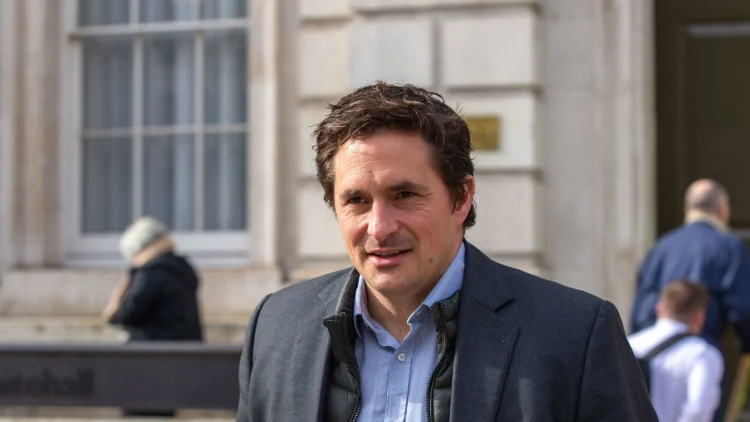

Johnny Mercer has unloaded on his former colleagues in a scathing book about his time in politics (Alamy)

3 min read
Johnny Mercer is scathing about virtually everyone he worked with during his nine years as an MP. In his new book charting his time in Parliament, he’s also critical of his own abilities as a politician.
The former Tory veterans minister spoke to this week’s episode of The Rundown about what he describes as the broken Westminster system, being lied to by successive prime ministers, and how he eventually helped create the Office for Veterans Affairs, the mission he had set for himself after leaving the armed forces and entering the House of Commons in 2015.
Mercer, who lost his Plymouth seat to Labour in 2024, said he wrote No Way to Run a Country because he wants “better” people to pursue careers in British politics, saying he wished such a book existed when he first stood for election over a decade ago.
“I want them to know what it’s like and learn from my mistakes, of which there were plenty”, Mercer told the podcast.
Asked if he felt he had been a bad politician, he replied: “Terrible. I was terrible. I didn’t spend any time on relationships, and I wish I had because you get more done, and there’s some good people in there.
“I was pretty straight all the time, and I don’t think that’s always helpful, and I didn’t enjoy it. So no, I don’t think I was a very good politician. But ultimately, I changed the country.”
After serving, and then resigning, from Boris Johnson’s Conservative government, he was the first person to serve as veterans minister at cabinet level in the summer of 2022, a position he then held for two years under Rishi Sunak.
Referring to himself as just “a very ordinary bloke”, he spoke with pride about creating a new department which spends millions of pounds a year on the UK’s veterans community, and having “changed the law in this country on more than one occasion to better look after veterans”.
“If I can do that, imagine what someone who’s actually vaguely good at this stuff could actually do,” he said.
The former Conservative MP admitted he “torched relationships and friendships” during his time in Parliament, but said he found being a “pain in the arse” to be the most effective way of getting things done in Westminster.
“I’ll always think, could I have got more done in a more collegiate way, but I did try that, and I tried that a lot, and the truth is I got a lot more done when I made myself a pain in the arse.
“Because if you work collegiately, and then people turn around and do the opposite thing that they’ve said they were going to do, what are you supposed to do?
“So no, I tried both, and one was far more successful than the other.”
The Rundown is presented by Alain Tolhurst, and is produced and edited by Lulu Goad and Ewan Cameron for Podot
- Click here to listen to the full conversation with Johnny Mercer on the latest episode of The Rundown, or search for ‘PoliticsHome’ wherever you get your podcasts.
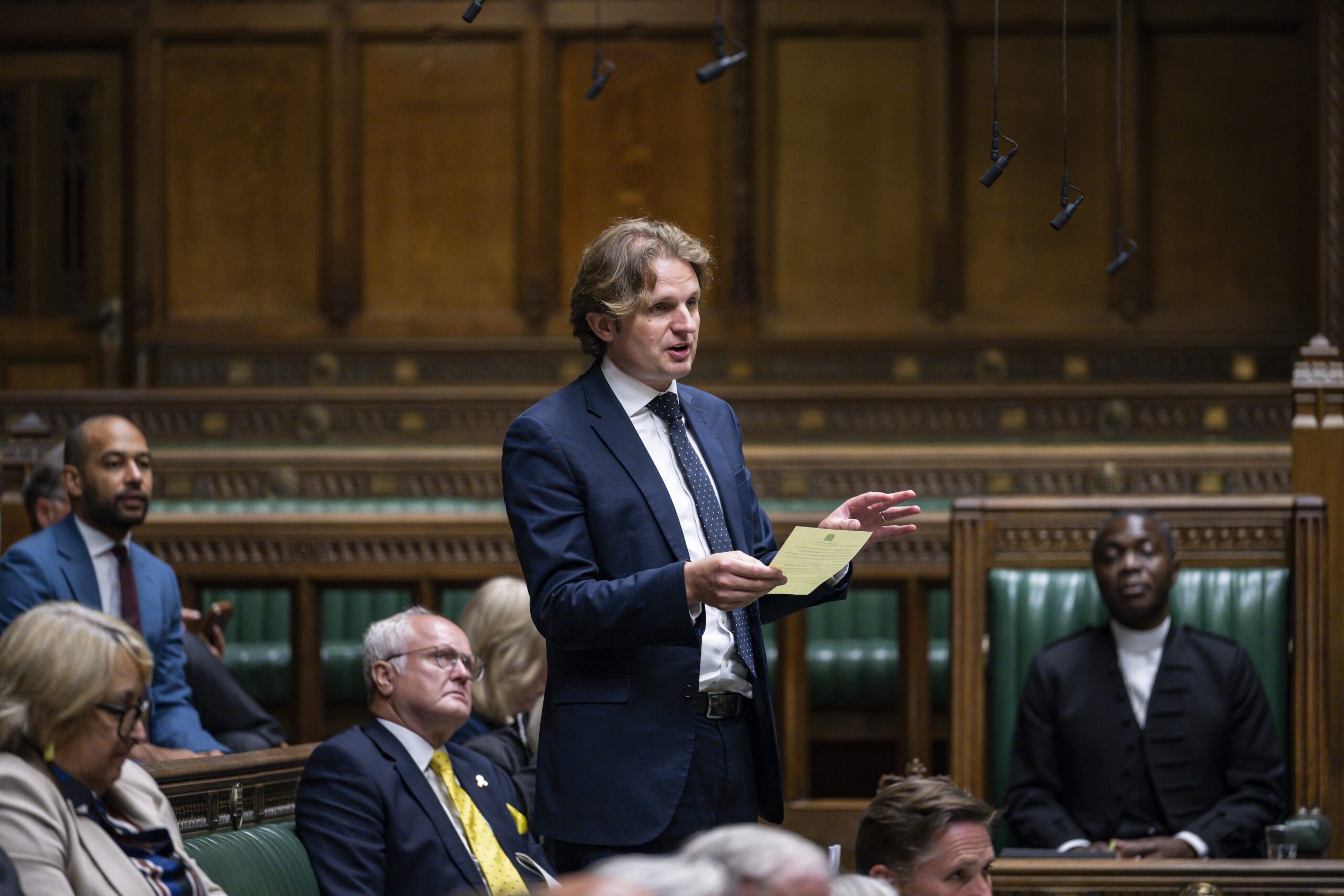
Steff Aquarone’s North Norfolk seat has a strong Liberal Democrat pedigree. His predecessor, Norman Lamb, represented the constituency for almost two decades before standing down in 2019, having defied the party’s collapse four years earlier at the 2015 general election.
In many ways then, Aquarone’s own electoral story is a familiar one. He unseated a Conservative incumbent in 2024 as part of the Liberal Democrat resurgence under Ed Davey, reclaiming a former party stronghold with a swing of 16.8 points. But the ground has shifted fast beneath him since then, and Aquarone now finds himself fighting a different kind of battle. “It is us or Reform in my constituency”, he tells me.
“I know it’s a Reform-facing seat, partly because of the local election results and polling, but partly because I knock on 100 doors a week. I get to hear about the sorts of things people are talking about.”
Reform UK did not finish second in any seat the Liberal Democrats won in 2024. But it finished third in 42 of them, including in North Norfolk.
The threat Reform poses in Aquarone’s pitch is personified by his constituency neighbour: the leader of Restore Britain and former Reform MP, Rupert Lowe. The Liberal Democrat leadership has spoken at length about the influence of Elon Musk on British politics, including at the party’s recent conference; Aquarone shares a seat boundary with the tech billionaire’s favourite British parliamentarian. No other Liberal Democrat MP neighbours an MP elected as a Reform candidate in 2024.
At the 2026 Norfolk County Council elections, Reform won 40 seats (up 38), finishing just three short of a majority. Great Yarmouth First, the local arm of Restore Britain, leapfrogged both the Conservatives and Labour to become the council’s fourth-largest party. The Liberal Democrats roughly held their ground, winning 13 seats and performing strongly in North Norfolk.
Significantly, Reform finished second in 12 of the 13 Liberal Democrat wins in Norfolk – including all seven of the party’s wins in North Norfolk.
Despite North Norfolk’s Liberal Democrat roots therefore – they also run the district council – the constituency does not conform to the modern stereotype of a party stronghold. The “Gail’s strategy” caricature does not apply here; in fact, the closest Gail’s is in Ely, Cambridgeshire, some 65 miles away. For Aquarone, a national strategy targeting the custodians of bourgeois bakeries simply will not do.
Representing a seat in arguably the most politically diverse part of the country comes with unlikely company. “There are issues around our coastline which unite occasionally even me and Rupert Lowe”, Aquarone admits.
“I agree with him that when there are marine disasters, the local member should be informed and kept up to date as a key stakeholder. Maybe we don’t agree on much beyond that, but we do agree on that.”
In purely geographical terms, Aquarone leads a politically isolated existence. It is some distance from his nearest Liberal Democrat colleague in, yes, Ely and East Cambridgeshire (Charlotte Cane). He is even further removed from the party’s southern centre of gravity – the orange corridor that runs from North Devon and Sidmouth up through Oxford, briefly encroaches on London, and reaches the coast again at Eastbourne.
As such, Aquarone’s fighting posture in North Norfolk tells a different – but no less significant – story about the future of the Liberal Democrats.
***
This conference season, Ed Davey has argued that Nigel Farage’s route to No 10 is paved with constituencies occupied by Liberal Democrat incumbents. In this rendering of Britain’s electoral landscape, Aquarone finds himself on the frontline.
There is a tactical rationale to Davey’s soaring anti-Reform rhetoric. This presentation – that Reform UK represents an existential threat to Britain – is designed to court left-leaning tactical voters and moderate Conservatives who fear the prospect of a Farage-led government. Aquarone endorses this framing, calling it “the choice voters will face in my country”.
But the thrust of our conversation revolves around whether the Liberal Democrats can balance a tactical message aimed at those alarmed by the march of Reform with a positive case for those persuaded by Farage’s platform, who might yet be convinced not to vote for it.
Aquarone, a former councillor, brings the same hyper-local instincts as any Liberal Democrat to his exclave in East Anglia. This doorstep work shapes his approach to immigration, an issue he insists the party cannot afford to ignore.
Aquarone believes that to “dodge” the issue of immigration would be “irresponsible.” He praises the Liberal Democrat home affairs spokesperson, Max Wilkinson, for “starting to speak up about what a liberal solution to stopping the boats looks like. It’s vital for credibility for the first start.”
The liberal answer, he argues, is re-establishing legal routes for asylum, so that the state can “justify being far, far more forceful on our coastal borders”.
Aquarone explains: “Beneath a lot of the bluster and rhetoric and rumour around immigration is a genuine concern which I share about how incompetent this country has become at maintaining the pretence that it’s controlling its borders.
“No matter who’s coming across the channel, no matter how many migrants we have… there’s this sense that things aren’t working, and the sense of unfairness and injustice that’s fuelling some of the more severe responses to migration is also because it seems like nothing’s working in this country.”
That sense of dysfunction, Aquarone maintains, is felt acutely in coastal communities like those in North Norfolk. “Reform are right about one thing: that this country isn’t working”, he says. “What I fear is their solution of total trash and burn is not going to work any better for anyone, apart from perhaps some people who are interested in deregulating cryptocurrency.”
What the Liberal Democrats offer instead, Aquarone argues, is a “belief in radicalism, in rebuilding things, rewiring things, reworking things.”
He adds: “I think that for Reform-leaning people, I find myself totally agreeing with the circumstances. This country does not have a fair tax burden. It is not fair that certain communities do not get equal access to healthcare, to education, to training, to opportunity…
“We have to take these concerns seriously – but it’s my job as a Liberal MP, hell-bent on changing this country, to show that creative destruction, not just destruction for its own sake, is what’s needed at this point in time.”
When asked what the country at large requires, Aquarone has a formulation in mind. “I think we need a progressive Thatcher in British politics within the next 10 years who’s prepared to have the vision”, he says.
“That’s the problem that Liberal Democrats have. We’ve got to get over this idea that we’re wet or weak. I want to see strong liberalism – one that’s prepared to make difficult choices and face down vested interests.”
Aquarone saw Thatcher as someone who grabbed the “apparatus of the state” and made it work to serve a vision. “As I say, I think she broke a lot of stuff, and I think she created untold harm and damage because I did not share her political vision. But we need somebody with that degree of conviction.”
This prescription ties into Aquarone’s analysis of state failure. “This place is run by very clever people”, he says. “They’re not scheming or scurrilous, but the degree of compliance and conformity is incredibly overwhelming and overpowering. This is a place built on conformity and the repression of change and innovation.”
Aquarone insists that his party’s current role, under the first past the post electoral system, must be more measured: growing its 72 seats. “Then we get to talk about all this bigger stuff”, he adds.
Nevertheless, Aquarone’s emphasis on vision arguably colours how he reviews the more theatrical side of recent Liberal Democrat campaigns. As a candidate contesting a target seat with 40 miles of coastline, you will not be surprised to learn Aquarone found himself in the water alongside his leader in 2024. “I just thought that whole campaign was exactly what the country needed, and we were rewarded by it, especially at the time”, he says.
But this era, he suspects, has passed. “I think the stunts have kind of gone.” Now, he says, “part of what we are afforded to do, as long as we keep our seats and grow our numbers, is talk about our vision for the country.”
***
Until recently, Aquarone served as chair of the Liberal Democrats parliamentary party – an internally elected post with, by his own description, mostly modest formal power. Aquarone chose not to seek re-election, handing the role to his colleague Roz Savage earlier this month.
I ask him about his own election in September 2025, against Anna Sabine, then Ed Davey’s parliamentary private secretary (PPS). Some observers read the contest as a proxy battle between backbenchers and leadership. Aquarone rejects the framing. “I wasn’t a backbench steward, and Anna wasn’t a leadership stooge. So none of those, none of those sort of caricatures is true.
He adds: “There was definitely some motivation – not to stick it to the leadership at all – but to be able to have someone who wasn’t perhaps associated with them.”
Aquarone’s role, he explains, was mainly administrative. His chief responsibility was to chair a meeting for an hour and a half a week of Liberal Democrat MPs. But his tenure also coincided with an important moment in the party’s recent history. Going from 11 MPs to 72 almost overnight following the 2024 general election, he argues, demanded infrastructure the party simply did not have in place. “I was pleased to play a role at the point in time when, after the sort of chaos of growth, there needs to be some codification, some establishment of process, a little bit of tinkering with the balances, and I was glad to have that opportunity”, he says.
The role, as he describes it, faces in two directions at once, providing something of a bridge between backbench colleagues and the leadership. Asked whether he found himself a conduit for colleagues’ frustrations, he demurs: “A bit, but not much.”
The party, he says, has “plenty of ways in which colleagues can vent their anger and upset at what things that they think the party should or shouldn’t be doing.”
He adds: “Was I at the coalface of all of the grumbling about the stunts? No, I’m glad to say I wasn’t. But I saw that as an indication that colleagues needed to feel heard in general, not that the stunts should stop or Ed Davey should be dispossessed of his wetsuit or anything.”
His proudest achievement in the post, he says, was commissioning a “skills audit” of Liberal Democrat MPs – mapping the professional backgrounds and expertise of a much-enlarged parliamentary party. He suggests that the scramble of a sudden intake left some colleagues feeling under-appreciated. “I think not feeling perhaps as though that was sort of known or seen or understood was perhaps where some of the frustration was coming from.”
Asked what the Liberal Democrats must do before the next general election, Aquarone once again calls for a clear sense of conviction. He points to the need for sharper positions on “uncomfortable questions” regarding tax, welfare, defence and Britain’s place in the world, as well as a clear engagement with the trade-offs involved. His own contribution in our conversation is on offshore tax evasion, which he calls “a sitting prize for anyone prepared to see it through”.
Aquarone concludes: “For me, we’ve got to be bold and radical about the extent of change this country needs. I’d like to see a Lib Dem position on every issue of salience.”
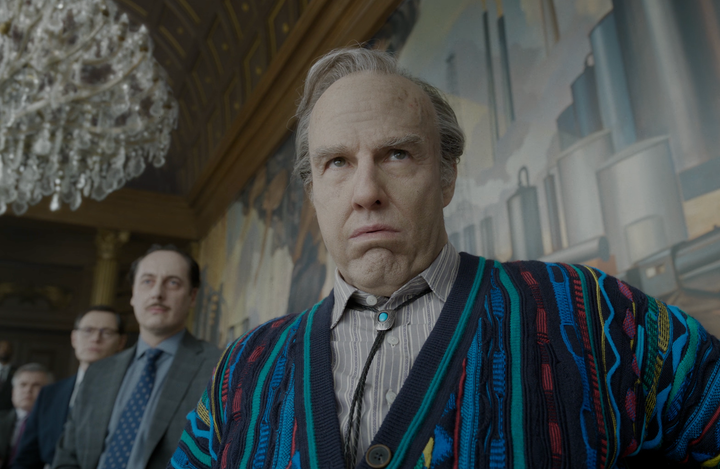
Tom Cruise has insisted it was no walk in the park to undergo the physical transformation required for his latest film role.
During a new interview on The Graham Norton Show, the Oscar nominee opened up about what went into making his new movie Digger – including six hours’ worth of makeup and prosthetics work.
“Let me make it clear – none of that is me!” he quipped. “The makeup was taking so long that I decided to get it down from six hours to one – it was like a ballet getting everything in place.”

“It was just like Formula 1,” he added, joking: “I had someone else hold the stopwatch!”
Speaking more generally about the role, Tom teased: “My character is outrageous and unpredictable. He says things that others may be thinking and never say.”
He continued: “It’s a timeless story about power, greed, and ego framed in a very timely manner by Alejandro G. Iñárritu – one of the greatest filmmakers of all time.
“I’ve never read a script like it, and I have never seen a character like Digger.”

Details about Digger are largely being kept under wraps until its release – but what we do know is that it’s about a fictitious figure described as the “most powerful man in the world”, who is called on to prevent a disaster of his own making before it destroys the world.
Co-starring John Goodman, Sandra Hüller, Jesse Plemons and Riz Ahmed, the film was helmed by Alejandro G. Iñárritu, whose past work includes the Oscar-winning Birdman and The Revenant.
Tom is already at the centre of Oscar buzz for his performance in the disaster movie, although early reactions on social media indicate that the film itself could be about to become one of 2026’s most divisive big-screen offerings.
Watch Tom Cruise’s full interview on The Graham Norton Show on Friday 25 September at 10.40pm on BBC One. Digger hits cinemas on Friday 2 October.
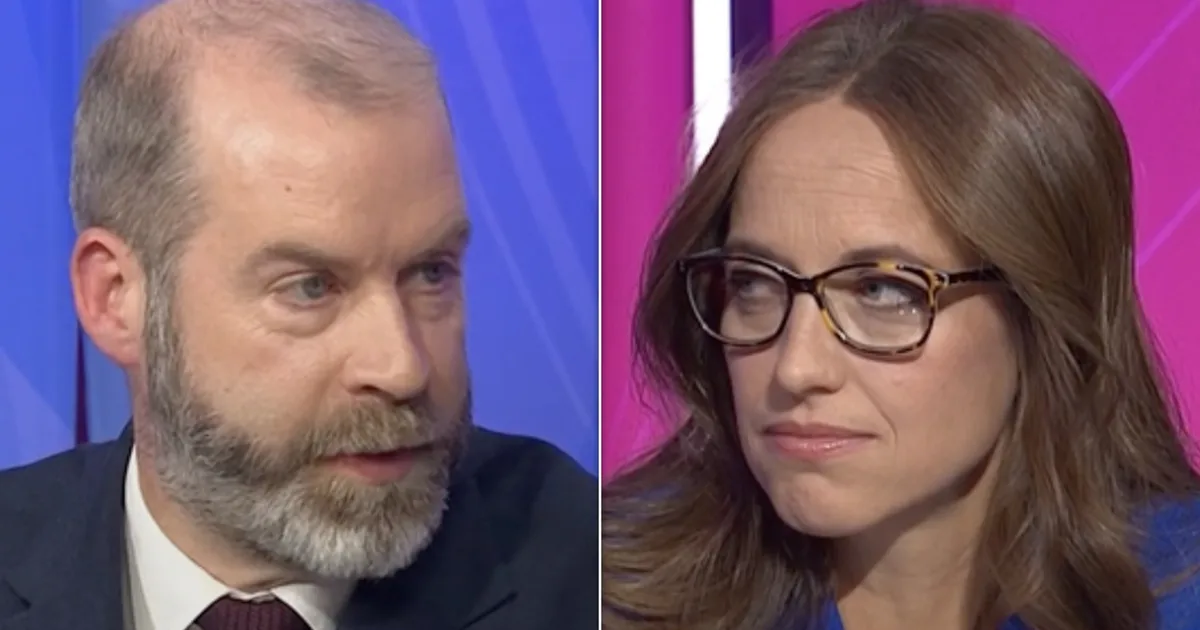
A senior Tory was told “you don’t like poor people” as she was monstered over her party’s plans to slash welfare.
Conservative leader Kemi Badenoch said the long-term unemployed who haven’t contributed enough tax into the system will see their Universal Credit payments cut by nearly a third if she becomes prime minister.
The new “subsistence level” benefit they do receive would be loaded onto a pre-payment card, which would ban spending on cigarettes, alcohol and betting.
Shadow work and pensions secretary Helen Whately defended the policy on BBC Question Time on Thursday.
She said: “Fundamentally, we have a problem that our welfare bill is out of control and we can’t afford it as a country.
“We also have a problem of people who are long-term unemployed, and I’m talking about people who should be working but aren’t.”
Whately insisted the policy was “about stopping people living a lifestyle on welfare”.
But she was condemned by business secretary Jonathan Reynolds, who accused the Tories of reheating the policies of some of their previous leaders.
He said: “You can tell how old you are by how many times you’ve heard Tory MPs announce this policy before.
“Iain Duncan Smith announced this, I’m pretty sure William Hague might have mentioned it. You can probably go back to Michael Howard.
“The reason you never do it is that frankly there is no evidence to suggest unemployed people spend all their money on fags and booze. It just isn’t there.”
To applause from the audience, he added: “It’ll never happen. It’s just a way of you saying you don’t like poor people.”
Listen to Commons People, the podcast that makes politics easy. Every week, Kevin Schofield and Kate Nicholson unpack the week’s biggest stories to keep you informed. Join us for straightforward analysis of what’s going on at Westminster.


Health Surveillance Assistant Dingase measures 8-month-old Sosten’s arms while his mother, Leah, holds him outside their home in Northern Malawi. Photo credit: UNICEF/UNI919830/Elephant.

Dr Philip Goodwin, CEO of Unicef
| The UK Committee for UNICEF (UNICEF UK)
Investing in childhood and supporting the most vulnerable children around the world isn’t just the right thing to do – it’s one of the smartest choices the UK government can make
Childhood is being cut short by conflict, eroded by poverty and harmed by climate change. With a new Prime Minister and Cabinet, the government must take the opportunity to put children at the top of its foreign policy and international development agenda.
Children are among those most affected by aid reductions worldwide. Without a deliberate and strategic focus on children within the FCDO, spending decisions will ignore their unique needs and vulnerabilities. It’s vital that UK development policy prioritises children’s rights, wellbeing and access to essential services.
The UK has contributed towards significant progress for children globally. But cuts to UK aid will undermine these efforts. In 2024, 4.9 million children died before their 5th birthday – almost half in their first month of life.
While official statistics will be released next March, early modelling predicts that 2025 will be the first year this decade that the under-5 mortality rate increases. UK Official Development Assistance (ODA) allocations published in March reveal that more than half of current funding to African countries will end by 2028-29, despite these being the countries facing the highest burden of child mortality.
Countries like Malawi, which has some of the highest mortality rates in the world, stand to lose 90 per cent of their UK ODA funding. This will undoubtedly have a detrimental impact on health systems that are working to protect children from infectious disease.
Humanitarian funding has been cut by 20 per cent at a time when there are more children impacted by conflict than ever before. One in five children are living in conflict – that’s one in five childhoods upended by fear, violence and displacement.
The climate crisis is a child rights crisis. 1.1 billion children globally are exposed to at least three climate hazards. Climate driven health risks, such as infectious diseases, threaten children’s survival while increasing pressure on health systems that impact economic stability and resilience for all. Sustained child-focused UK investment and leadership is critical.
Investing in children has one of the best returns on investment. Vaccinated children who are in education, well-nourished and protected from conflict and climate shocks are more likely to grow into adults who contribute to society, drive economic growth, and support a more stable world.
Every £1 invested in children through ODA leads to £10 in benefits to their community. Cutting aid does the opposite and risks reversing decades of progress on child immunisation, health, nutrition, and education. The UK must not allow progress to row back any further.
Children don’t choose to be born into conflict, hunger or poverty. But the UK government can choose how to respond. UNICEF UK is calling on the government to choose childhood and prioritise children in its international approach by investing at least 25 per cent of the ODA budget on childhood, with a focus on health, nutrition, and education.
If caring about childhood is ‘yes’ in principle, it should be ‘yes’ in practice. By choosing childhood, we can build better futures for children and help make childhood unstoppable.
Please join us at our stall, at Stand H3, in the Exhibition Hall at Labour Party Conference to learn about UNICEF UK’s work to protect children’s rights around the world.

Taylor Swift has unveiled the Encore edition of her Life Of A Showgirl album – which includes one song that references her recent wedding to Travis Kelce.
More than a decade on from her signature hit Shake It Off, the Grammy winner has unveiled another new track poking fun at the public’s perception of her in the Encore cut Cleveland!.
Riffing on the comments that have frequently been made about her over the years, Taylor opens the song singing: “She’s not as hot as she was, but she was only a four She was never a girls’ girl, she was just a…
“And with all of that money, why’s she dressed like trash? When she smiles, it’s annoying, and have you seen her? Stumbling clumsily? Would you even call that dancing?”

Shrugging off these criticisms, Taylor then continues in the chorus: “I guess there’s something we all can agree on, but my baby likes what he likes.
“He already took me to Cleveland, and showed me The Heights, so hate all you like, this is the love of my life.”
It’s probably worth pointing out that Taylor’s NFL star husband grew up in Cleveland Heights, Ohio and also fronts a podcast with his brother Jason Kelce titled The Heights.

Towards the end of the song, Taylor makes light of her public persona even further when she declares: “You only need to find one person in this entire world who doesn’t find you completely insufferable, and I have an important announcement to make: I found mine.”
As the song reaches its climax, she tweaks the chorus’ lyrics to say: “He already took me to Cleveland, now I’m wearing white, so hate all you like, this is the love of my life.”
Taylor and Travis have lived much of their romance in the public eye, but have successfully managed to keep details out of their July wedding out of the spotlight.
What we do know is that they tied the knot in an elaborate ceremony at the New York venue Madison Square Garden, attended by a 1000-strong crowd of friends, family and A-list celebrities, with Adam Sandler officiating the ceremony.
Photos of her wedding dress have not been made public, but it was designed by Jonathan Anderson for Christian Dor, with performers at the reception including Sir Paul McCartney, Stevie Knicks, Haim and Avril Lavigne.
Jobs report, inflation data to test US rate path, economic strength

Bitcoin holders are taking profits, is a selloff coming?

Packers booed by own fans during loss to Falcons




-

 Fashion7 days ago
Weekend Open Thread: Talbots – Corporette.com
-

 Crypto World2 days ago
Goldman Sachs and Deutsche Bank Agree: The S&P 500 Rally Isn't Over
-

 Tech4 days ago
Researchers escape OpenAI Codex sandbox to run commands on host
-

 Fashion23 hours ago
8 iPhone Accessories That Add Personality
-

 Crypto World4 days ago
Who Needs CLARITY Anyway? ARB Could See 70X Increase: Hodler’s Digest
-

 Crypto World6 days ago
Circle launches Arc Studio AI agent for building onchain apps
-
 NewsBeat6 days ago
Trump says US has reached an agreement to take permanent control of Greenland’s security
-

 Crypto World6 days ago
Trading Bitcoin on Robinhood? Why 2% Spread Has Traders Worried
-

 Tech6 days ago
Trump suggests rebranding AI with a new name, says he’s also creating an AI Force
-

 Crypto World6 days ago
Bitcoin price breaks channel as RSI climbs to 63
-

 Business4 days ago
Analog Devices (ADI) Bets $1.35 Billion on Chips that Let Machines Think for Themselves
-

 Tech4 days ago
Google’s $899 Googlebook is a bet that you’ll buy a new laptop for Gemini
-

 Crypto World4 days ago
Coinbase, Robinhood, Circle Seen as Tokenized-Stock Winners
-

 Crypto World2 days ago
This Bearish Netflix Stock Trade Can Cash In On Video Streaming Giant’s Woes
-
 Business2 days ago
Oil Price Today (September 23): Crude oil below $100 on hopes of US-Iran talks. What did Trump say?
-

 Crypto World3 days ago
Trump-Xi Polymarket Odds for Handshake Hit 50%
-

 Crypto World1 day ago
Crude Oil Prices Pressured by Diplomatic Hopes in the Middle East
-

 Crypto World6 days ago
World Money launches in 150+ countries with Stripe
-

 Entertainment2 days ago
These 17 Fall Amazon Dresses Seriously Look Like Anthropologie
-

 Crypto World7 days ago
Silver prices recover quickly, hitting weekly high today
You must be logged in to post a comment Login