Connect with us
DAPA Banner
DAPA Coin
DAPA
COIN PAYMENT ASSET
PRIVACY · BLOCKDAG · HOMOMORPHIC ENCRYPTION · RUST
ElGamal Encrypted MINE DAPA
🚫 GENESIS SOLD OUT
DAPAPAY COMING

Business

Wiltshire music festival to go ahead despite planning refusal

Published

on

Business Live

The line-up includes Professor Green, Liberty X, Amelle from Sugababes, and S Club 7’s Jon Lee and Jo O’Meara

Wiltshire Throwback Festival

Wiltshire Throwback Festival(Image: Local Democracy Reporting Service)

A music festival is set to proceed next weekend despite having its planning application rejected last week. The Wiltshire Throwback Festival is a two-day event scheduled to take place at Oakfield Stadium in Melksham next Friday and Saturday, June 26 and 27.

Advertisement

The festival, branded as WTF26! features a line-up that includes platinum-selling London rapper Professor Green, chart-toppers Liberty X, Amelle from all-girl pop band Sugababes, and Jon Lee & Jo O’Meara from S Club 7.

Also on the bill are late-90s UK R&B boy band Another Level, London R&B/hip-hop collective Big Brovaz, UK garage outfit DJ Pied Piper and MC DT, Manchester garage act Sweet Female Attitude, and British ninja-masked Radio 1 DJ Jaguar Skills.

Last year, ahead of the inaugural festival, Wiltshire Council turned down a planning application on ecological grounds, citing the need to protect land at the periphery of the stadium site from being trampled underfoot.

A licence was ultimately granted and the festival went ahead as planned.

Advertisement

This year, festival organisers resubmitted their planning application – only for it to be refused once again, this time on both ecological grounds and concerns over noise pollution.

Organisers have lodged an appeal against the ruling, effectively placing the planning process in a holding pattern and permitting the festival to go ahead.

In May, Bowerhill-based events firm Jarboom submitted a planning application to Wiltshire Council seeking approval to stage the festival at the stadium, which serves as the shared home of Melksham’s football and rugby clubs.

The company informed the council it wished to expand the audience capacity to 5,000 over-18s ticket-holders on each day – double the previous size.

Advertisement

It also sought approval for an additional, smaller stage at the venue, dedicated to 80s music enthusiasts, to “enhance the festival experience.”

However, on June 17 — fewer than two weeks before the event — the council rejected the planning application.

Throughout the 30-day consultation period, the council’s Public Protection team said: “the submitted Noise Management Plan is insufficient to assess the likely impacts of noise on residential amenity.”

A late objection from the council’s ecology officer added: “Insufficient information has been provided to demonstrate that the proposal would avoid significant harm to habitats and species.”

Advertisement

By contrast, Melksham Town Council backed the application, “on the basis that it is a one-off event only and granting permission does not establish a right for multiple events.”

Melksham Without Parish Council said it “welcomes this application and reflected positively on the successful running of the previous event, noting effective crowd management, good security arrangements, minimal traffic issues and positive police feedback.”

Speaking to the Local Democracy Reporting Service, Nico Menghini of Jarboom said: “We are naturally disappointed by Wiltshire Council’s decision to refuse the planning application for WTF26! , particularly as we have worked extensively to address the concerns raised during the 2025 process.

“The reasons cited relate primarily to the wildlife area located alongside the pedestrian route to the festival site and the assessment of our Noise Management Plan.

Advertisement

“We had proposed additional mitigation measures, including fencing to protect the wildlife area, and submitted a comprehensive noise management strategy based on the same successful procedures implemented during WTF25! , which received no formal noise complaints and was praised by stakeholders for its effective management.

“We firmly believe these matters can be satisfactorily resolved and have already begun the process of appealing the decision.

“We remain confident in our plans and are continuing to work closely with all relevant parties to ensure the event is delivered safely, responsibly, and in line with all requirements.”

He went on to add: “Most importantly, WTF26! is going ahead as planned.

Advertisement

“We are incredibly excited to welcome thousands of festival-goers back to Oakfields Stadium.

“The support from our community, ticket holders, local businesses, and partners has been phenomenal, and we remain committed to delivering our biggest and best festival yet.

“With ticket sales continuing strongly and only a limited number remaining, we can’t wait to bring people together from across Wiltshire and beyond for another unforgettable weekend of music, entertainment, and community spirit.”

A spokesperson for Wiltshire Council has been contacted for comment.

Advertisement
Continue Reading
Click to comment

You must be logged in to post a comment Login

Leave a Reply

Business

Belgians win $50m dredging contract as govt tries to prevent port nightmare

Published

on

Belgians win $50m dredging contract as govt tries to prevent port nightmare

Belgian maritime engineering group Jan De Nul has won a $50 million contract to help the state government prevent mayhem at Port Hedland.

Continue Reading

Business

Aussie shares edge lower as WiseTech leads IT sell-off

Published

on

Aussie shares edge lower as WiseTech leads IT sell-off

Australia’s share market has had a bland session as investors weighed progress in US-Iran peace talks, while the local IT sector was hit by a significant stock plunge.

Continue Reading

Business

WiseTech Global Shares Crash 18% as Police Investigate Founder Over Trafficking Allegations

Published

on

WiseTech Global Shares Crash 18% as Police Investigate Founder Over

Shares of WiseTech Global plunged 18.44% on Monday, closing at $30.08, as Australian media reports that federal police are investigating company founder and Executive Chairman Richard White over serious trafficking-related allegations sent the logistics software giant to its lowest share price in years.

The Allegations at the Center of the Selloff

Shares of WiseTech Global fell on Monday on widespread media reports that the Australian Federal Police were investigating its executive chairman, Richard White, over claims he exploited a woman’s immigration status for sex and provided false information on a visa application. Reuters could not independently verify the reports. The news was first reported by the Australian Financial Review. The federal police told Reuters they will comment “at an appropriate time.” WiseTech did not immediately respond to a request for comment.

The AFR article and others said the federal police launched an investigation into White, WiseTech’s billionaire founder, this year after a complaint from the former head of Kyckr, a separate company controlled by White. The complaint alleged White made up a reason to hire a woman once employed by WiseTech as a cleaner, and provided false information to the government to get her a visa, the AFR said.

Advertisement

A Multi-Year Low for the Stock

The scale of Monday’s decline pushed the stock to territory not seen in several years. WiseTech, which had already declined sharply from its 52-week high of $121.31, now trades at a multi-year low, sending shares to their lowest level since August 2021 and making WiseTech the worst-performing stock on the ASX 200 for the session.

A Founder Already Carrying Significant Baggage

The severity of the sell-off reflects more than just a single headline. White had only returned to WiseTech’s leadership in February 2026 as executive chairman — having previously stepped down as CEO in late 2024 amid separate sexual misconduct allegations — and the company was already carrying a notable governance discount in the market.

Advertisement

White’s continued prominence at WiseTech makes the latest allegations particularly material for shareholders. The company’s own website lists him as co-founder, Executive Chair and Chief Innovation Officer, maintaining significant influence over the company’s vision, culture and product strategy even after his earlier departure as CEO.

A Pattern of Governance Turmoil Throughout 2026

Monday’s news adds to what has already been a difficult year for WiseTech’s leadership and governance standing. The company previously placed its shares in a trading halt while the board initiated reviews of governance-related matters. Analysts warned at the time that volatility would remain elevated and that institutional confidence would depend heavily on the credibility of any governance reset.

Markets are not only reacting to one headline. They are asking whether WiseTech can finally move past the Richard White overhang, or whether founder risk remains a recurring drag on the stock.

Advertisement

A Brutal Year for the Stock Overall

Monday’s plunge extends what has already been one of the steepest declines among Australia’s large-cap technology names this year. WiseTech Global shares have tumbled sharply in 2026, with the decline representing one of the steepest reversals among Australia’s large-cap technology names, with WiseTech caught in a mix of company-specific challenges and broader sector headwinds. The stock has gone rapidly from index darling, up 65% through 2024, to a startling reversal in 2025 that has continued in similar fashion into 2026.

Sector-Wide Headwinds Compounding the Stock’s Troubles

WiseTech’s company-specific challenges have been amplified by sector-wide technology weakness, with the ASX 200 Info Tech Index down sharply over the past 12 months. The ASX Information Technology sector has faced persistent pressure throughout 2026, with the Reserve Bank of Australia having raised rates cumulatively by 75 basis points since January, compressing valuations for high-multiple growth names.

Advertisement

A Workforce Restructuring Adding to the Turmoil

Beyond the governance concerns, WiseTech has also been navigating significant operational changes that have added their own layer of complexity to the company’s narrative. Earlier this year, WiseTech announced plans to cut approximately 2,000 jobs over two years as it increases the use of artificial intelligence and automation across the business. While management framed the restructuring as a productivity enhancement and margin expansion opportunity, the scale of the cuts has raised questions about prior hiring decisions and potential cultural strain.

A Business That Has Continued Performing Despite the Turmoil

Despite the cascading governance and reputational concerns, WiseTech’s underlying financial performance has remained resilient throughout the upheaval. Despite the governance turmoil and collapsing share price, WiseTech’s underlying business has continued to deliver growth. The company posted first-half underlying net profit of $114.5 million in its 1H FY26 results and reaffirmed its full-year outlook, signaling management confidence in near-term revenue and margin trajectory.

Advertisement

WiseTech is best known for its CargoWise software platform, which has become deeply entrenched in the global logistics and customs software market, giving the company a sticky customer base and recurring revenue even amid the leadership controversy.

Analysts Remain Divided on the Stock’s Value

Despite the severity of Monday’s decline, Wall Street coverage of the stock remains notably split between bullish and cautious perspectives. Based on nine analysts giving stock ratings to WiseTech in the past three months, eight rate the stock a buy and one rates it a hold, with none recommending a sell. The average 12-month price target sits well above the current trading level, reflecting continued underlying confidence in the company’s business fundamentals among at least some segment of analyst coverage, even as the immediate market reaction to Monday’s news proved overwhelmingly negative.

With the Australian Federal Police having indicated they will comment on the investigation “at an appropriate time,” and with WiseTech yet to issue a public response to the allegations, the coming days are likely to bring further developments that could meaningfully shape investor sentiment toward the stock. Given the combination of a fresh and serious law enforcement investigation into the company’s most influential figure, a pre-existing governance discount, an ongoing workforce restructuring, and a challenging rate environment for growth stocks, market participants are reassessing whether WiseTech’s premium valuation can be restored without a decisive resolution to the founder-risk question that has now repeatedly weighed on the stock throughout 2026.

Advertisement
Continue Reading

Business

Brexit Cost UK Economy 6%, Bank of England Company Data Shows

Published

on

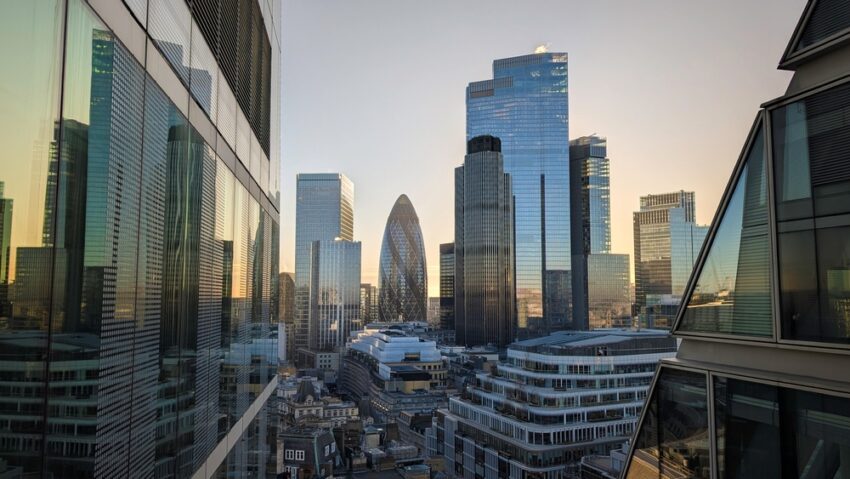
The head of one of Britain’s best-known law firms has warned that Rachel Reeves’s reported plan to raise taxes on limited liability partnerships (LLPs) could drive professionals and entrepreneurs out of the UK, undermining London’s status as a global business hub.

Brexit has stripped roughly 6 per cent from the size of the UK economy over the past decade, according to economists who have analysed internal Bank of England data covering the decisions, views and financial results of thousands of British firms since the 2016 referendum.

The study drew on the same intelligence the Bank uses to set interest rates, reconstructing how the UK might have grown had it voted to stay in the EU. Its conclusion is that about half the damage came from the sheer shock and uncertainty of the post-referendum years, with the remainder flowing from the higher trade barriers that followed Britain’s exit from the customs union and single market in 2021.

For the small and medium-sized firms that make up the bulk of the UK economy, the finding will feel less like an academic revision and more like a description of the past ten years: thinner margins, postponed investment and the steady accretion of paperwork at the EU border.

The research is co-authored by the British economist Nick Bloom, a professor at Stanford University, alongside economists at the Bank of England. Crucially, it is the first time the Bank’s granular information on the corporate sector has been deployed in this way.

That information comes from the Decision Maker Panel, a survey the Bank set up in 2016 with the express purpose of gauging the economic impact of Brexit. Normally used to help inform interest-rate decisions, it allowed the authors to track, year by year, how exposed individual firms were to different facets of Brexit, the impacts they reported, and the changes that showed up in their accounts.

Advertisement

The company-level data point to a 6 per cent hit over ten years. Set alongside five more traditional methods of analysis, the wider studies suggest a steeper average of around 8 per cent. The full paper, published through the National Bureau of Economic Research, sets out the economic impact of Brexit in detail, and carries the customary disclaimer that “the views expressed do not necessarily represent those of the Bank of England”.

Bloom argues that the UK was growing briskly in the years before the vote and could have at least partly matched the United States but for the disruption. The Bank’s company data, he says, offers important corroboration. His paper concludes that “in the case of Brexit, there was a substantial economic impact on the United Kingdom, but it arose gradually over the subsequent decade”.

The timing is notable. The Bank’s most senior figures have become markedly more forthcoming in recent months about the consequences of leaving the EU, a shift Business Matters has tracked as the governor warned the Brexit impact would stay negative for the foreseeable future.

Speaking to journalists, governor Andrew Bailey said that as a result of Brexit, “I think the level of activity and growth in the economy has been lower.” He went on: “And the reason for that is that if you reduce the size of the markets that we trade with, so we reduce our export markets, then that does tend to have a negative impact on growth,” adding that productivity and the size of the market had also been affected.

Advertisement

Bailey did, however, temper the verdict on the City. The impact on financial services, he said, was “not good”, but “nowhere near as detrimental as many people predicted at the time”.

Not everyone accepts the headline number. Some policy economists contend that it is inherently difficult to model how the UK would have fared without Brexit, and that such studies risk overstating the effect at a time of overlapping global shocks. Critics also argue the analysis does not fully capture the outperformance of US investment and technology, or the European energy crisis that struck four years ago.

The 6 per cent estimate sits within a familiar range. It is a touch above the 5 per cent blow calculated by Goldman Sachs, and it chimes with mounting evidence that smaller exporters have borne the brunt, as seen in the £27bn hit to UK exporters where the smallest firms have been squeezed hardest.

The latest version of the study has landed just ahead of the tenth anniversary of the referendum, and against a backdrop of cautious rapprochement. Prime Minister Sir Keir Starmer has said he will meet his EU counterparts at a summit in July to agree deals on food and farm exports, as well as electricity and emissions trading, with further areas of cooperation and alignment expected to be on the table.

Advertisement

For Britain’s business owners, the political mood music matters less than what it eventually delivers at the border. A decade on from the vote, the lesson buried in the Bank’s own company data is a sobering one: the cost of Brexit did not arrive in a single dramatic shock, but accumulated quietly, firm by firm, year after year.


Jamie Young

Jamie Young

Jamie is Senior Reporter at Business Matters, bringing over a decade of experience in UK SME business reporting.
Jamie holds a degree in Business Administration and regularly participates in industry conferences and workshops.

When not reporting on the latest business developments, Jamie is passionate about mentoring up-and-coming journalists and entrepreneurs to inspire the next generation of business leaders.

Advertisement
Continue Reading

Business

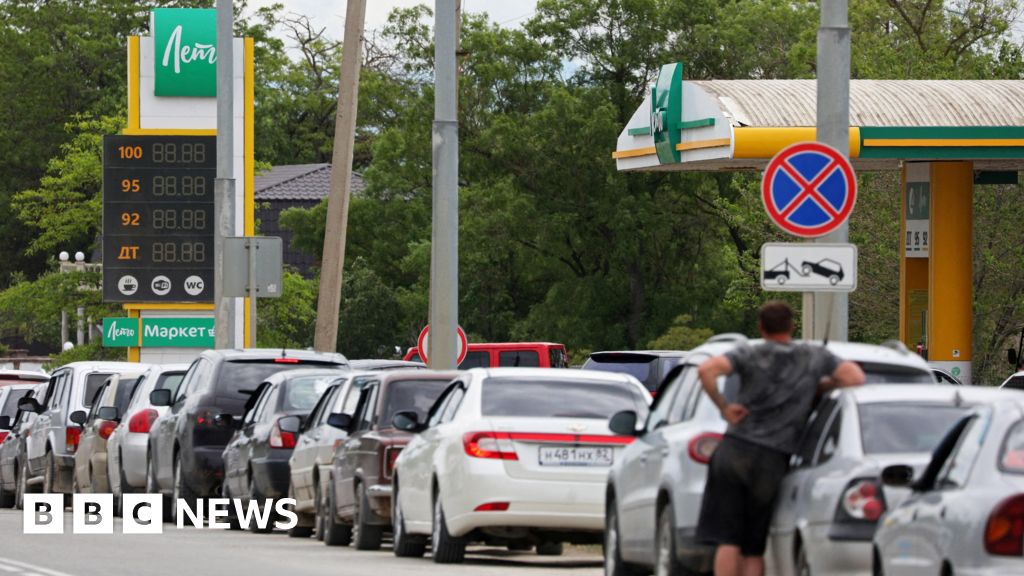
Fuel sales halted in occupied Crimea as Ukraine targets oil facilities

Published

on

Fuel sales halted in occupied Crimea as Ukraine targets oil facilities

Fuel had already been rationed due to shortages caused by Kyiv’s attacks against supply routes in Russian-occupied territories.

Continue Reading

Business

South East Water annouces new chief executive

Published

on

South East Water annouces new chief executive

John Halsall has previously worked for Thames Water, South West Water and Network Rail.

Continue Reading

Business

Singapore Eyes East Africa as Its Next Major Investment Destination

Published

on

How Foreign Investors Should Structure Company Formation in Singapore

President Tharman visited Tanzania, highlighting East Africa as a promising partner for Singapore amid global uncertainty. Singapore plans a free trade agreement with eight East African nations, targeting opportunities in logistics, tourism, agribusiness, and fintech while encouraging younger Singaporeans to engage with Africa.

Key Points

• President Tharman Shanmugaratnam, concluding a three-day Tanzania state visit, urged Singaporeans to better understand Africa, announcing negotiations for Singapore’s first free trade agreement with eight East African Community nations, whose combined GDP mirrors ASEAN’s economy from 35 years ago.

• Key opportunities for Singapore firms include logistics, industrial park development, agribusiness, fintech, tourism, and food security, with Tanzania and Zanzibar offering manufacturing expansion, deep-water port development, and diverse food supply sources to strengthen Singapore’s resilience.

• Singapore aims to leverage its 2027 ASEAN chairmanship to strengthen region-to-region ties with Africa, while addressing investment challenges like foreign currency shortages by encouraging African financial institutions to establish a presence in Singapore to facilitate trade financing.

Advertisement

East Africa as Singapore’s New Strategic Frontier

President Tharman Shanmugaratnam has identified East Africa as a promising new frontier for Singapore, emphasizing the need for stronger bilateral ties during his three-day state visit to Tanzania. Speaking in Zanzibar, he announced that Singapore would negotiate its first free trade agreement with the eight-nation East African Community (EAC). He highlighted that the EAC’s combined GDP mirrors ASEAN’s economic size from 35 years ago, positioning it as one of the world’s fastest-growing regions. President Tharman also encouraged more Singaporeans, particularly the youth, to engage with and better understand Africa’s diverse opportunities.


Key Sectors Driving Singapore-Tanzania Collaboration

Singapore’s core strengths align well with Tanzania and Zanzibar’s development goals. Logistics, industrial park development, agribusiness, tourism, fintech, and digitisation were highlighted as priority areas. Zanzibar’s planned deep-water port at Mangapwani and accompanying industrial park present significant opportunities for Singapore firms with expertise in port operations and manufacturing infrastructure. Minister Indranee Rajah further emphasized tourism investment and food security, noting Tanzania’s competitive workforce, abundant land, and agricultural resources, including fisheries and produce, which could diversify Singapore’s food supply. Financial services and professional services were also identified as promising collaboration areas.


Strengthening Regional and Community Ties

Beyond bilateral trade, Singapore aims to leverage its 2027 ASEAN Chairmanship to strengthen region-to-region ties between ASEAN and Africa, where trade currently represents only 2% of ASEAN’s total international trade. Minister of State Zhulkarnain Abdul Rahim highlighted shared challenges, including climate change, energy security, and pandemics, as common ground for cooperation. On the ground, Singapore’s involvement was visible at Darajani Souk in Stone Town, where Singapore agro-commodities firm Nomanbhoy & Sons partnered with local group Africab to transform the historic marketplace into a thriving commercial and cultural destination, benefiting hundreds of local merchants and small businesses.

Advertisement
Continue Reading

Business

Form 4 Venu Holding For: 22 June

Published

on


Form 4 Venu Holding For: 22 June

Continue Reading

Business

Perenti expands further into US market with $275m contract

Published

on

Perenti expands further into US market with $275m contract

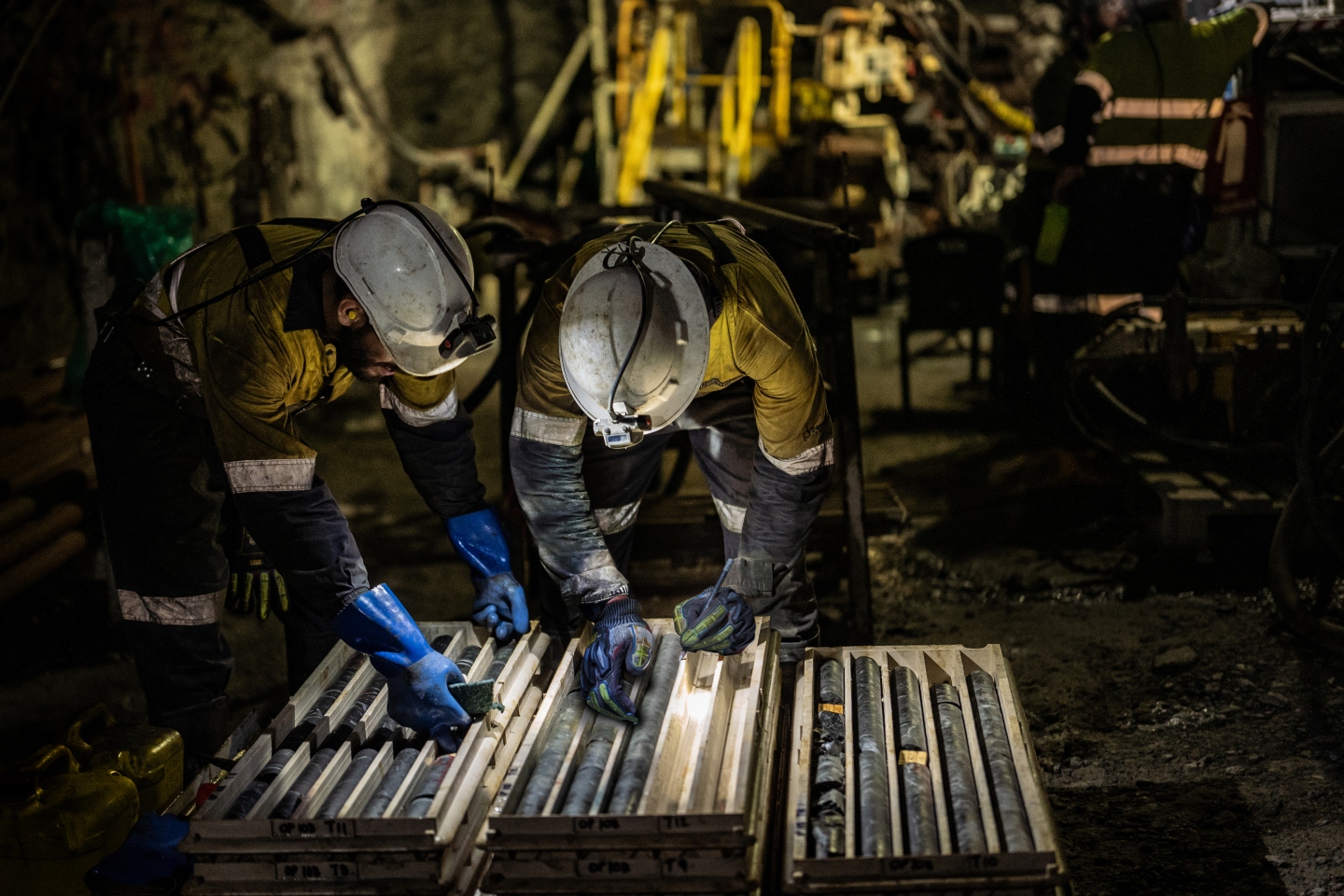
Perenti’s underground mining services division has secured its second project in the United States after being awarded a $275 million contract by Barrick Mining Corporation.

Continue Reading

Business

Tata Capital shares slip 3% after stock rallies 17% in one week to lifetime high. What’s ahead?

Published

on

Tata Capital shares slip 3% after stock rallies 17% in one week to lifetime high. What’s ahead?
Tata Capital shares dropped around 2.5% on Monday after a 17% rally over the last one week pushed the stock to a lifetime high on Friday.

The shares of the non banking financial company (NBFC) dropped to Rs 357.7 apiece on the NSE on Monday morning. The stock jumped 21% in one month to hit a fresh all-time high of Rs 379.95 apiece on Friday.

Shares of Tata Capital made a muted debut on the stock exchanges in October last year, listing at a 1.2% premium at Rs 330 on both the BSE and NSE. This came after the Rs 15,512-crore IPO was fully subscribed 1.95 times, led by Qualified Institutional Buyers (QIBs).

The company’s shares have been more or less range-bound since then, dropping over 10% to hit a 52-week low of Rs 296 apiece earlier this month. The stock then gained 28% to hit a 52-week high of Rs 379.95 apiece on Friday.

Advertisement

Also Read | Tata Capital shares make weak debut, list at just 1% premium after 2025’s biggest IPO

JM Financial on Tata Capital

JM Financial last week upgraded its rating on the stock to ‘Buy’ from ‘Add’, noting that the company’s management remains confident in delivering 23–25% growth in FY25–28E, supported by continued retailisation, branch expansion and deeper product penetration. “Tata Motors Finance’s integration remains on track, and it is expected to become a meaningful profitability contributor over the medium term with ~2% RoA expected by FY28,” it added.


The domestic brokerage noted the post IPO correction in the stock, adding, “Given upcoming visible levers like high yield book expansion (affordable housing/PL etc.), improving profitability trajectory in motor finance while maintaining high growth reinforces our confidence in healthy earnings compounding in the medium term.”
JM Financial also increased its target price to Rs 400 apiece from Rs 380 apiece, with the latest target price implying a 9% upside potential from the stock’s previous closing price of Rs 366.80 apiece on NSE.Also Read | Tata Capital targets 23–25% loan growth through FY28, bets on GenAI and falling credit costs to boost returns

Tata Capital Q4 snapshot

Tata Capital in April reported a 43% year-on-year (YoY) surge in consolidated net profit to Rs 1,502 crore for the fourth quarter of the financial year 2026, along with a final dividend of Rs 0.57 per share for its shareholders.

While net profit surged 43% YoY, revenue from operations grew 9% YoY to Rs 8,160 crore during the quarter under review. Its net interest income (NII) rose 28% YoY to Rs 3,127 crore, and net assets under management (AUM) grew 28% YoY to nearly Rs 2.52 lakh crore at the end of the quarter.

Advertisement

Tata Capital’s annualised operating expense on the average net loan book was stable at 2.3%, while the cost-to-income ratio improved to 36.1%. Annualised credit cost slightly reduced to 0.8%, while annualised ROA and annualised ROE rose to 2.5% and 14.6%, respectively, during the fourth quarter of FY26. However, these numbers exclude the firm’s motor finance business.

Also Read | Should you buy, sell or hold Tata Capital shares after Q4 net profit surges 43%

(Disclaimer: Recommendations, suggestions, views and opinions given by the experts are their own. These do not represent the views of The Economic Times)

Advertisement
Continue Reading

Trending

Copyright © 2025