Incoming Manchester City manager Enzo Maresca finds a situation he cannot have expected with Jeremy Doku
World Cups come along once every four years, the birth of your first child is a once-in-a-lifetime event and – unfortunately – there is no premium on rent-a-gobs in a world where the more controversial or distasteful your view the more chance of it being amplified on the mainstream social media platforms.
Advertisement
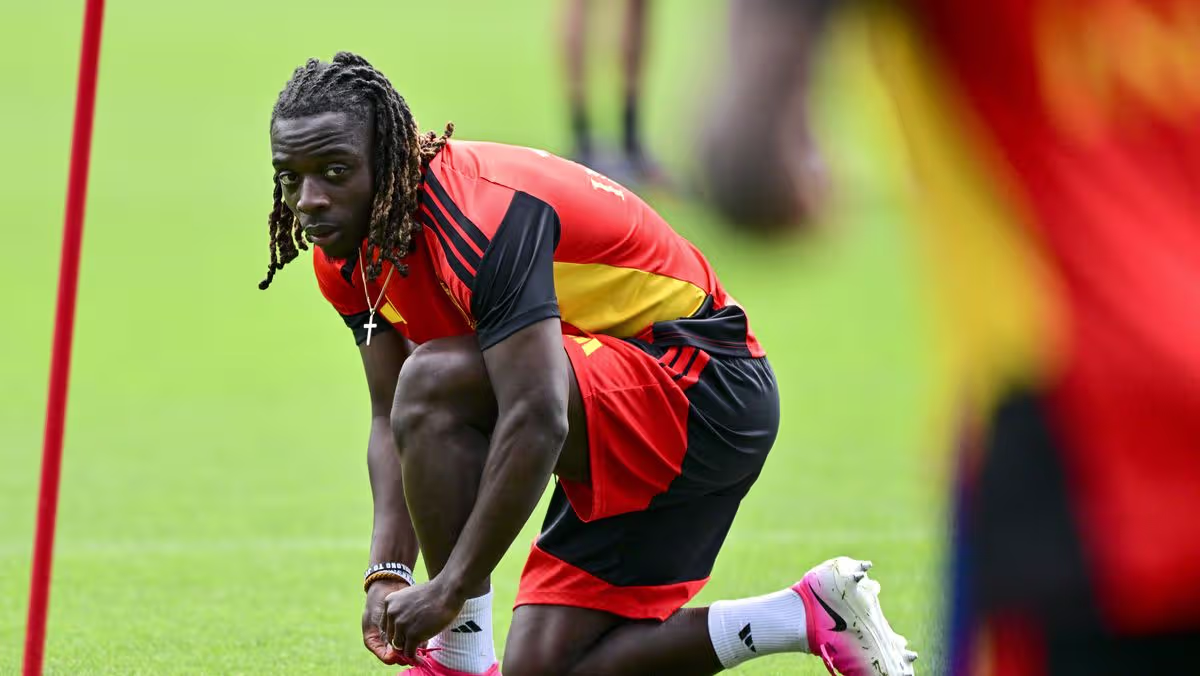
Jeremy Doku has found himself the latest footballer to be on the wrong end of bizarre and unfair criticism because major football tournaments attract the worst kind of opinions.
It is depressing enough that the content of the attack isn’t really worth regurgitating, but safe to say it isn’t even new. Rewind 10 years to when Pep Guardiola was ready to take over and there was another (also black, would you believe!) footballer who played for City who was getting a barrage of abuse.
Guardiola hadn’t been officially unveiled as City manager while England were embarrassing themselves with a dismal exit at the hands of Iceland, yet the new boss went out of his way to ring Raheem Sterling up and tell him to ignore the abuse that he was getting in the stands and on social media from people who couldn’t recognise talent when they saw it. Sterling was reassured that not only did Guardiola believe he could shine on the international stage but that regardless he was counted on at City.
That meant a lot to a young player who had struggled after an acrimonious move from Liverpool in a City side that had drifted during Manuel Pellegrini’s final year in charge, with Sterling not even holding a regular place at the Etihad by the end of his first year there as he headed off for Euro 2016. Despite a terrible tournament for all, he came back to Manchester with a bounce because of Guardiola’s words and became one of the best players in the Premier League.
Doku has not been criticised for his football yet the abuse, and the subsequent debate it has prompted, will still have cut through and stung. In what should have been one of the happiest moments of his life, some have chosen to assassinate his character over a football match.
The winger’s phone will almost certainly have lit up with support from teammates and friends – possibly Guardiola as well – and a message from incoming City manager Enzo Maresca would surely go down well. Even if the content of the messages shouldn’t need to be said, they will all be appreciated.
Whether it is now or weeks down the road, Maresca will have to address the situation with Doku to check in on how he is and the sooner that happens it could be better for the manager. In his task of replacing Guardiola, it is a dressing room that needs to be convinced by the new coach.
Advertisement
Doku shouldn’t have become a story in this World Cup, but now that he is Maresca could do worse than replicating one of Guardiola’s first moves at City.
This coming month, Netflix has plenty of new original movies that are sure to get people talking.
Robert De Niro is teaming up with Adam Scott in the mystery thriller The Whisper Man, Greta Lee and Wagner Moura are gearing up to trigger our claustrophobia in The Last House and there’s a coming-of-age musical dramedy that is going to be the talk of every theatre on the planet.
But it’s not just about the feature-length offerings on Netflix this month.
Users also have some new TV to look forward to, including the returns of action-adventure Outer Banks and your favourite trashy reality shows – plus yet another of the authorised documentaries the streaming giant is becoming synonymous with.
Advertisement
Here are just 11 of our top picks to stream in the coming weeks…
Big Chicken: A Fast Food Conspiracy (5 August)
Tell me more: Comedian Mo Gilligan is adding another string to his bow with this new investigative documentary for Netflix.
Advertisement
Billed as a 28-day experiment, Big Chicken sees the Masked Singer judge replacing all of his meals with fried chicken for almost an entire month.
He also promises to dive into what Netflix describes as the “global fried chicken obsession” with surprisingly profound results as he examines the dish’s cultural, economic and environmental impact.
Netflix says: “A self-proclaimed lover of the food, Mo puts his body to the test in a bold experiment by eating fried chicken three times a day for 28 days straight.
“Over the course of the month, he embarks on an eye-opening journey from South London to the United States to reveal the historical origins of fried chicken and the social, economic and industrial forces driving our mass consumption of it – from fast-food chains to large-scale farming – and the impact on our health, our planet and the way we eat.
Advertisement
“As a Black British comedian, Mo also seeks to reframe perceptions of the dish by confronting negative stereotypes associated with it, examining how it’s been culturally appropriated and advertised in today’s market.”
Let’s Marry Harry (5 August)
Tell me more: Already a notorious reality TV star Down Under, Harry Jowsey became an international name when he was cast on the infamous dating series Too Hot To Handle.
Advertisement
Since then he’s been a reality fixture, competing on everything from The Amazing Race and Dancing With The Stars – and now, Netflix is giving him his own series.
In another dating format, Let’s Marry Harry sees the titular lothario vowing to put his badboy days behind him, as his loved ones help him find love from a group of young hopefuls.
Netflix says: “Heartthrob Harry Jowsey is done playing the field. This time, he’s handing the reins of his love life to those who know him best. After years of dating in the spotlight – and getting it wrong – his closest confidants are stepping in to make the tough calls.
“From a carefully selected pool of potential matches, they’ll decide who stays and who goes, guiding Harry toward what he truly wants: authentic love and marriage.”
Advertisement
One Hundred Years Of Solitude (Part 2) (5 August)
Tell me more: When adapting Colombian author Gabriel García Márquez’s beloved multi-generational novel One Hundred Years Of Solitude, Netflix, perhaps wisely, made the decision to split it into two separate seasons.
In his lifetime, García Márquez had always been reluctant to grant production companies the rights to adapt his works, believing a feature film would not be sufficient to tell the story fully, with this TV adaptation being made in collaboration with his surviving family members on the condition it was shot entirely on location in Colombia, featuring Spanish-speaking actors.
Advertisement
Almost two years after the success and acclaim of season one, the second half of the series is finally almost here, resuming the story at a time of more political unrest and personal drama for the central family.
Netflix says: “After the armistice and signing of the treaty of Neerlandia, peace still does not reach Macondo. The Conservatives, fearful of Colonel Aureliano Buendía’s threats, plot an attack that – by a twist of fate – brings Fernanda del Carpio from Bogotá to the town. When she marries Aureliano Segundo, one of the bastard Arcadio’s untamable twin sons, she gives Úrsula Iguarán her first legitimate heirs.
“Meanwhile, the other twin, José Arcardo Segundo, absorbed in José Arcadio Buendía’s manuscripts accomplishes the patriarch’s wild dreams of connecting Macondo with the world. The railroad’s arrival opens the doors to the banana company, which unleashes the town’s downfall and ultimately fulfills Úrsula Iguarán’s curse: for the races condemned to one hundred years of solitude were not granted a second opportunity on earth.”
My Life With The Walter Boys (6 August)
Advertisement
Tell me more: Coming-of-age teen drama My Life With The Walter Boys premiered in 2023, introducing us to our heroine Jackie Howard, who moves from Manhattan, New York after the deaths of her parents to live with a sprawling new family in rural Colorado.
Since then, the story has moved on quite considerably, with several characters in the young cast now grappling with the highs and lows of their first loves.
In the new run of episodes, Jackie once again finds herself torn, not just between two boys, but also her old and new life, when a familiar face from her past arrives in Silver Falls unexpectedly.
Advertisement
Netflix says: “The path of true love never runs smooth, especially in Silver Falls. The last time we saw the Walters, Jackie and Cole finally confessed their love for each other, only for Jackie’s boyfriend – and Cole’s brother – Alex to overhear. But their conversation was interrupted when Walter patriarch George was rushed to the hospital.
“Season three sees the Walters realise what’s important in the fallout from this – and discover that it’s okay to go after what you want. With their love lives still hanging in the balance, Alex turns to his new rodeo riding team, and Cole gets back in the driver’s seat of his life, literally, when a race car driver sees potential in him.
“Meanwhile, Jackie pours her heart into developing the town’s community space. But when a childhood friend arrives from New York, the life she left behind proves harder to forget than she expected.”
The Last House (7 August)
Advertisement
Tell me more: Oscar nominee Wagner Moura and Greta Lee take the lead in this unsettling new thriller as Jason and Riley, the heads of a small family who suddenly find themselves being held captive in their home by a mysterious malevolent force.
Louis Leterrier takes on directing duties in this claustrophobic psychological horror, having previously enjoyed success with Now You See Me and films in the Marvel Cinematic Universe and Fast & Furious franchise.
Netflix says: “A family of four are suddenly sealed inside their home with no way out, and must work together to survive against both their dwindling resources and the mysterious, looming threat that is keeping them trapped.”
Advertisement
Ricky Gervais’ Alley Cats (7 August)
Tell me more: Given what a vocal animal lover he is, we’re surprised it’s taken Ricky Gervais this long to come up with a show like Alley Cats, an adult animation series about a group of street cats.
As well as Ricky himself, the comedy features voice work from Kerry Godliman, Diane Morgan and EastEnders icon Natalie Cassidy, among others.
Advertisement
Netflix says: “Alley Cats is an adult animated sitcom created by and starring the multi award-winning Ricky Gervais.
“The series follows the trials and tribulations of a group of feral British cats from all walks of society, who seek companionship while ruminating on everyday life. From the funny to the absurd, the series is packed with Gervais’ signature style of heart and social commentary that audiences have come to expect.”
Mourinho (11 August)
Advertisement
Tell me more: Still on a high from the World Cup? Well, Netflix has got something you might be interested in.
If you enjoyed Netflix’s sports documentaries about the likes of David Beckham, Rafael Nadal and Jamie Vardy, you’re going to love this three-part series, which chronicles the rise of José Mourinho, the former footballer who went on to became one of the game’s most revered managers.
Mourinho himself allowed Netflix access to his life over a two-year period, with those who’ve known and worked with him also contributing interviews to bring his story to the screen.
Netflix says: “Filmed over two years, Mourinho tells the story of the man who revolutionised what it meant to be a football manager, charting his rise into one of football’s most trophy-laden and outspoken figures – winning league titles in four different countries and lifting the Champions League twice.
Advertisement
“With exclusive access to Mourinho himself, alongside candid interviews with Sir Alex Ferguson, John Terry, Iker Casillas, Zlatan Ibrahimović, Didier Drogba, Marcelo, Samuel Eto’o, Javier Zanetti, Frank Lampard, Petr Čech and more of football’s greatest names – this three-part documentary goes beyond the headlines and the touchline theatrics to get under the skin of the ‘Special One’.”
Don’t Say Good Luck (14 August)
Tell me more: A must-watch for theatre kids past and present, this dramedy introduces us to high school student Sophie Birenbaum as she prepares to try out for her high school’s annual musical production while grappling with regular teen life.
Advertisement
However, she finds it all difficult to juggle alone when her family life is unexpectedly turned upside down.
You Are So Not Invited To My Bat Mitzvah’s Sunny Sandler (yes, the daughter of Adam Sandler) leads a cast that includes everyone from New Girl’s Max Greenfield and Emmy winner Steve Buscemi to Encanto’s Stephanie Beatriz and Avatar’s Jack Champion.
Netflix says: “In this coming-of-age dramedy, Sophie Birenbaum is ready for the spotlight as the lead in her high school musical – until suddenly she’s living with even more drama at home than on the stage.”
Love Is Blind UK (19 August)
Advertisement
Matt and Emma Willis on the set of Love Is Blind UK
Tell me more: You know the drill by now – a group of singles embark on an experiment try and find lasting love, by dating in “pods”, where their partners are kept completely separate from them until the moment they declare they’re ready to get married.
From there, they quickly move in together and try to fit into one another’s lives as they prepare for their big days, before deciding whether or not to commit to one another forever by saying “I do”.
An international reality TV fave since 2020, the UK version of Love Is Blind is now into its third season, with Emma and Matt Willis back on presenting duties.
Netflix says: “UK and Ireland-based singles who want to be loved for who they are have signed up for a less-conventional approach to modern dating, and will choose someone to marry without ever meeting them.
Advertisement
“Over several weeks, the newly engaged couples will move in together, plan their wedding and find out if their physical connection matches their strong emotional bond developed in the Pods. When their wedding day arrives, will real-world realities and external factors push them apart, or will they marry the person they fell blindly in love with?
“Hosted by Emma and Matt Willis, this series will uncover whether looks, race or age do matter, or if love really is blind.”
Outer Banks (20 August)
Advertisement
Tell me more: Six years on from its debut, it’s almost time for Outer Banks’ final curtain – but not before one last adventure.
Netflix’s action-packed teen drama returns after a critically-acclaimed fourth season, with its two rival gangs, the “Kooks” and “Pogues” both pushed to their limits after the tragic events of last year.
Madison Bailey’s Kiara, Jonathan Daviss’ Pope, Carlacia Grant’s Cleo and Drew Starkey’s Rafe are all present and correct in the new episodes, in which J. Anthony Crane’s murderous Chandler Groff is also still at large.
Netflix says: “Season five finds the Pogues at their absolute breaking point following the tragic loss of JJ in Morocco. Stranded far from home and mourning the heart of their crew, they’ve lost the Blue Crown and continue to face a gauntlet of familiar threats.
Advertisement
“With Chandler Groff still at large, Dalia and the Corsairs closing in, and the Kooks ensuring the Pogues have no home to return to, John B, Sarah, Kiara, Pope, and Cleo must rely on their scrappy instincts – and an uneasy alliance with Rafe – to keep from falling apart for good.
“Their mission is now a desperate race to reclaim their future and finally win the freedom they’ve been chasing since the beginning. It’s the Pogues against the world as they seek to avenge their best friend and bring it on home… one final time.”
The Whisper Man (28 August)
Advertisement
Tell me more: If you’ve been hooked on Netflix’s past mystery thrillers, you’re definitely going to want to get comfortable for this feature-length offering.
Featuring an all-star cast led by Robert De Niro and Emmy winner Adam Scott, The Whisper Man blends elements of crime drama, psychological thriller and detective mystery as a crime writer takes it upon himself to investigate the disappearance of his eight-year-old son alongside his retired detective father.
Netflix says: “When his eight-year-old son is abducted, a widowed crime writer looks to his estranged father, a retired former police detective, for help, only to discover a connection with the decades-old case of a convicted serial killer known as ‘The Whisper Man’.”
FIFA has abandoned controversial plans to sell stakes in the World Cup and its other tournaments to private investors following a fierce backlash from football’s governing bodies. The news leaves president Gianni Infantino publicly humiliated and facing serious doubts over his future.
The governing body confirmed on Saturday that the proposal, known as FIFA Forward Enterprise (FFE), “will not proceed” after three continental confederations rejected the plans, with UEFA warning that its member nations would boycott FIFA competitions if they went ahead.
FIFA president Gianni Infantino said the proposal had been designed to generate more investment for member associations around the world, particularly in developing football nations, but admitted it had become too divisive.
In a statement, Infantino said: “The FIFA Forward Enterprise project was intended to provide a basis for further strengthening our FIFA Member Associations and our sport worldwide, especially in those countries where support is most needed.
Advertisement
“And more so, as we said from the outset, to do this only if a majority of the FIFA Member Associations were in support and always subject to a consultation process with them, the FIFA Council, the Confederations and wider stakeholders.
“Having listened carefully to all the views, it has become clear that the project has created divisions of a nature that, regardless of the level of support, are no longer in the interest of the objective set out in the first place.
“Our purpose has always been – and will always be – to unite and improve.
“As a result, this proposal will not proceed.
Advertisement
“Moving forward, my intent is to bring all interested parties back together in the coming days and weeks in the spirit of shared interest in our game, and with the objective to continue growing football everywhere, particularly in those countries that mostly need our support.”
The proposal centred on the creation of FIFA Forward Enterprise to manage the commercial and operational aspects of FIFA competitions, including the men’s and women’s World Cups. The most contentious element was a plan to sell a 20 per cent stake in the company to private investors.
Advertisement
Thrive Eternal, a company founded by Joshua Kushner, the brother of United States President Donald Trump’s son-in-law Jared Kushner, had been identified as the leading investor, although the firm declined to comment on the proposals.
The plans sparked widespread criticism across world football and led to the resignation of Infantino’s senior adviser Carlos Cordeiro. FIFA chief operating officer Kevin Lamour also distanced himself from the proposal, telling the Associated Press it was “a project of one person”.
Political figures also joined the criticism, with Prime Minister Andy Burnham branding the proposal “an outrageous suggestion”.
“The idea that it could even be brought forward shows that, in my view, (Infantino) is the wrong man to lead the organisation,” Burnham said.
Advertisement
The Asian Football Confederation welcomed FIFA’s decision to withdraw the plans, with president Shaikh Salman bin Ebrahim Al Khalifa saying any major reforms must be based on “proper consultation, collective dialogue and respect for the established governance structures of our game”.
He added: “The AFC stands ready to support any initiative that strengthens the unity of the football family, contributes to the continued growth of the game globally and delivers meaningful benefits to all stakeholders.”
Alongside UEFA’s threat of a boycott, the proposals had also been rejected by CONCACAF, while the AFC called for an urgent review of FIFA’s governance and decision-making processes. South American governing body CONMEBOL had also sought further information and clarification before FIFA ultimately withdrew the plans.
The Netflix period drama has viewers calling it the perfect Bridgerton alternative, combining period drama with dark comedy
If you’ve reached the end of Bridgerton and find yourself searching for something to fill that period drama void, this series is the ideal place to begin – and you won’t even need to switch streaming platforms.
Advertisement
Netflix subscribers have been heaping praise on this dark comedy series set in 14th-century Italy. What many are unaware of, however, is that its entertaining storyline is drawn from a collection of 100 tales penned by an Italian writer, dating back to that very same period.
The Decameron is a mini-series inspired by the work of the same name, which unfolds during the devastating Black Death pandemic. Its narrative revolves around a wealthy family as they go to extraordinary lengths to survive the outbreak, all handled with an abundance of humour.
It carries a 15 rating, as The Decameron boldly incorporates sexual content, strong language, violence, and graphic details within its darkly comedic narrative. These elements are precisely what set it apart from the rest and earn it a wealth of five-star reviews.
One viewer wrote on Rotten Tomatoes: “A strange and amusing limited series. Characters that once seemed irredeemable are likeable, if not lovable by the final episode. Absurd and enjoyable, the series manages to stay light while investigating the dark underbelly of humanity.”, reports Wales Online.
Advertisement
Another shared their thoughts on the show in relation to the original text, writing: “While the show is loosely based on a 700 year old book, I found The Decameron fresh and engaging.
“The plot and characters felt like it was faithful to the 1300s without being stodgy. The characters are absolutely absurd, but that is part of their charm.”
Viewers are whisked away on a journey, beginning in 1348 in a fictionalised retelling of events, as the Black Death tightens its grip on Florence. In response, a group of nobles and their servants retreat to a countryside villa in Tuscany, riding out further outbreaks while indulging in their luxuries and lavish lifestyle.
Advertisement
It isn’t long before the disease reaches the tranquil hills and they are left with little option but to battle for their survival.
Bringing these characters to life are Tanya Reynolds from Sex Education, alongside Zosia Mamet, best known for her role in Girls. Also appearing on screen are Lou Gala, Leila Farzard, Jessica Plummer and Amar Chadha-Patel.
The cast have garnered considerable praise amongst critics, with one saying that they delivered “enjoyable performances”. Their review reads: “A period historical series that throws all the comedy and romance tropes out of the window is escalated by the enjoyable performances of a diverse cast untangled from any political narrative.
Advertisement
“This series is proof that even a story with unpredictable direction and story arcs makes for a hilariously entertaining one.”
Others simply ssaid that it was “well acted”, while one viewer said that the script and actors had them “laughing out loud” throughout. The period drama encompasses a great deal in its concise eight episodes and was regrettably never commissioned for a second series following its release in 2024, making it the perfect binge-watch.
Chrissy Bell is a senior advisor with Acas and spent 10 years working on its helpline.
Acas provides free, impartial advice to employees and employers on workplace rights and disputes.
“If someone is expecting their wages on a certain date and it doesn’t arrive or it doesn’t arrive in full, then if people haven’t got savings, even a small amount of difference can be the difference between them paying their bills and not being able to pay them,” says Chrissy.
She has this advice to anyone who believes they have not been paid the correct amount,
Advertisement
“Firstly, work out the amount you should have been paid. So check payslips, timesheets, contracts and the first step is to speak to the employers, as there may have been a genuine mistake.”
If this does not work, she suggests putting a more formal grievance in writing, setting out any evidence, including timesheets, and then giving the employer a reasonable chance to respond.
Finally, she says if it is not resolved internally after a reasonable amount of time then the person should consider making a claim to an employment tribunal if they are owed outstanding wages.
“If someone gets an award at an employment tribunal then there are systems in place to help them enforce it if necessary,” she says.
Advertisement
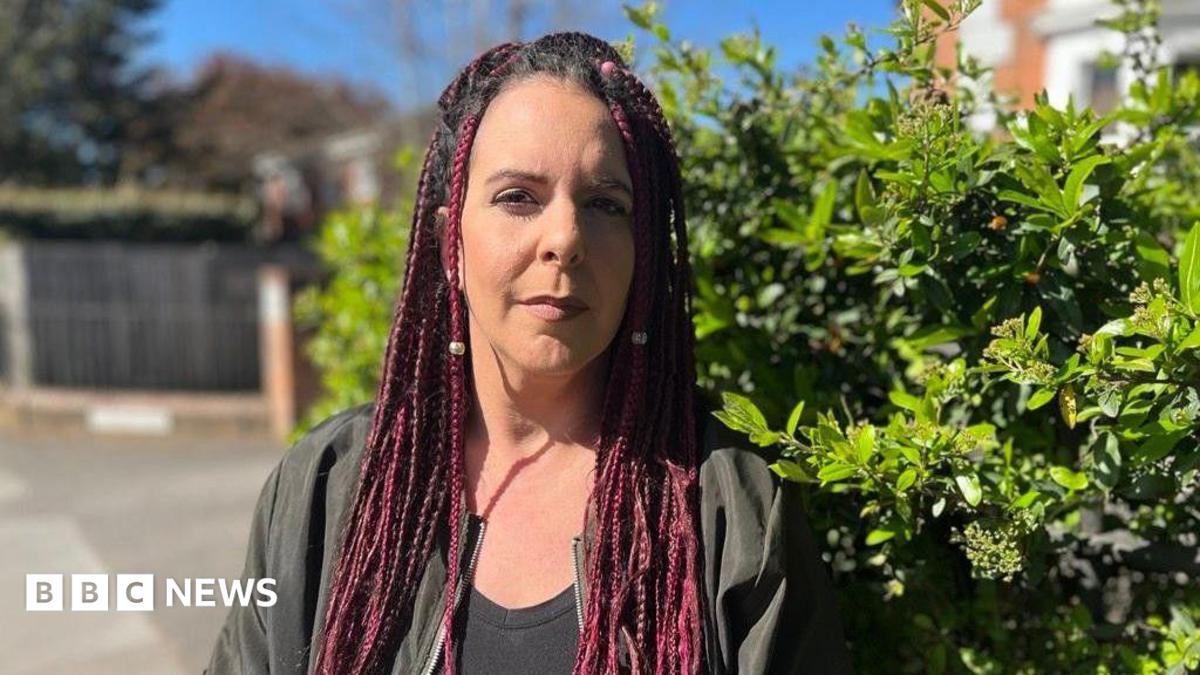
Martha Lindeque declined to provide a statement, but the BBC understands that her position is that she strongly denies the allegations made by her ex-staff.
Three dead as Russia pounds Kyiv with ballistic missiles and drones
At least three people were killed and over a dozen others injured after Russia launched an intense barrage of ballistic missiles and drones targeting Kyiv overnight into Saturday, local authorities said.
A five-story residential building in the Solomianskyi District was damaged by falling debris with people believed to be still trapped inside and a fire in the courtyard, said Kyiv mayor Vitalii Klitschko in a post on Telegram.
People were also reportedly trapped in another residential building the Shevchenkivskyi district, after a partial collapse on the first and second floors, Klitschko said.
Advertisement
Elsewhere in the capital, warehouse buildings were on fire in the Darnytskyi district, he said.
The attack came just two days after a large-scale Russian ballistic missile and drone attack across Ukraine killed 10 civilians and wounded more than 50 others and saw a Russian missile enter Polish airspace.
Adam Withnall1 August 2026 04:55
Advertisement
Recap: Romania briefly scrambles jets as aerial targets detected near Ukraine border
Nato member Romania briefly scrambled two fighter jets as a group of aerial targets was detected near its river border with Ukraine, the Romanian Defence Ministry said on Friday.
The targets later disappeared from the radar monitoring systems without entering the national airspace, it said in a follow up post, adding that the air alert was lifted and explosions were reported on the Ukrainian territory.
James Reynolds31 July 2026 23:00
Advertisement
Recap: Trump casts doubt on allowing Ukraine Patriot missile production
US president Donald Trump said he was “not sure” he would let Ukraine build Patriot surface-to-air interceptor missiles.
“It’s a very extraordinary weapon, and we have to be a little bit careful of who we licence to,” the president said in his comments to FT yesterday. This comes weeks after offering to share the license of the coveted air defence systems with the war-hit nation.
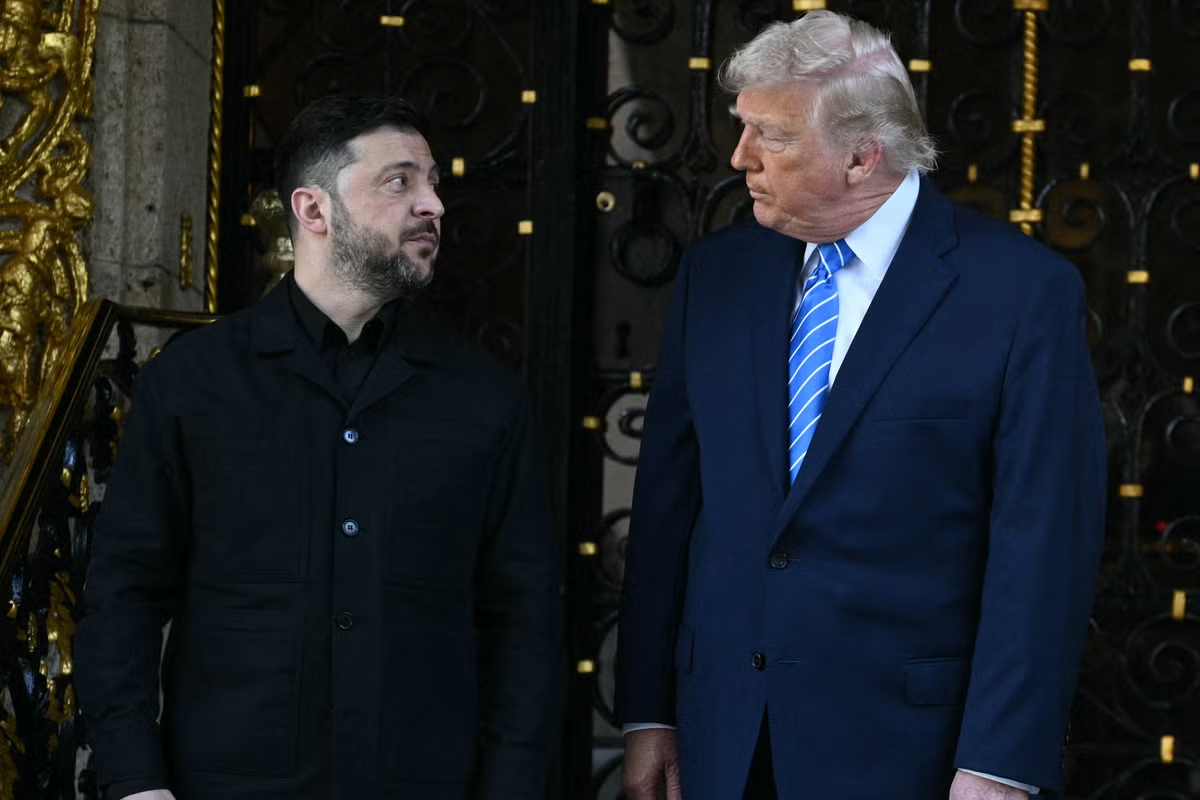
On 10 July at the Nato summit in Ankara, Turkey, Trump said: “We’ll give them the right to make Patriots. We’ll show them how to do it,” Trump said. “I think they can produce them pretty quickly.”
Ukraine has been requesting the US for Patriot missiles to shoot down incoming Russian missiles, drones and bombs.
First look: ‘Can I go home now?’: The heartbreaking voices of Ukraine’s stolen children
Exclusive: An extraordinary new documentary gives Ukrainian children the chance to tell their own stories of war, forced deportation from their homes and survival. Their testimony lays bare the devastating human cost of Russia’s invasion, reports Mark Hollingsworth:
James Reynolds31 July 2026 21:00
Advertisement
Six family members killed after Putin launches ‘North Korean ballistic missile’ at Ukrainian village, Zelensky says
Six family members killed after Putin launches ‘North Korean ballistic missile’ at Ukrainian village, Zelensky says
James Reynolds31 July 2026 20:00
How the wars in Iran and Ukraine are colliding on the world’s largest lake
Fears have mounted over the world’s two major wars converging after Ukraine attacked an Iranian vessel in the Caspian Sea, with Tehran vowing to respond.
Advertisement
Iran claimed one sailor was killed and another injured in the Ukrainian attack, as the ministry summoned Ukraine’s chargé d’affaires in Tehran to protest against what it described as a “hostile and criminal” act.
Foreign minister Abbas Araghchi said on Sunday the reported strike on a commercial vessel “cannot go unanswered” in a call with the EU’s top diplomat, Kaja Kallas, and his Russian counterpart, Sergei Lavrov.
James Reynolds31 July 2026 19:00
Advertisement
Pictured: Smoke billows near Wildberries warehouse in Volgograd
A drone attack set ablaze an energy facility and warehouses in Russia’s Volgograd region on Friday, injuring five, the regional governor, Andrei Bocharov, said, but stopped short of giving details of the facilities.
The region is home to a Lukoil-owned oil refinery. Five people are seeking medical help after the attacks, Bocharov added on Telegram.
Top online retailer Wildberries said in a Telegram statement that one of its logistic hubs in the city of Volgograd caught fire following the attack, but there were no injuries.
Smoke billows into the sky from the direction of a building hit during Ukraine’s strikes in Volgograd on Friday (Social media)
James Reynolds31 July 2026 18:00
Advertisement
Russian e-commerce giant forced to evacuate warehouse over Ukrainian drone alert
Russia’s second-largest e-commerce company, Ozon, says it has been forced to evacuate its warehouse in the town of Zelenodolsk in the Tatarstan region due to a Ukrainian drone alert.
The evacuation took just a few minutes to complete and there were no casualties. The logistics centre was undamaged and has since resumed operations, the company said.
Video showed a plume of white smoke rising next to a blue-coloured Ozon warehouse. Another unverified video posted on social media showed warehouse workers hurrying out of an Ozon warehouse and watching as a drone crashed into the ground some distance away with a loud explosion.
Ukraine has attacked at least a dozen warehouses belonging to Ozon’s main rival, Wildberries, since July 18 in a bid to disrupt the operations of the company, a linchpin in Russia’s consumer economy.
Advertisement
Ozon and Wildberries warehouses are located next to each other in many locations – including Zelenodolsk – and it was not clear on Friday which of the warehouses Ukraine was targeting.
James Reynolds31 July 2026 17:00
Watch: British tourist films moment air raid sirens sound during Russian strikes in Ukraine
A British tourist in Poland has captured on camera the moment air raid sirens started blaring during Russian strikes in Ukraine.
Advertisement
In the early hours of Thursday (30 July), Ryan, who was staying in Lublin, was woken to the sounds of sirens. “As a British tourist this scared the hell out of me,” he wrote.
The alarm was triggered by Russian airstrikes in neighbouring Ukraine, which killed eight people. The sirens stopped after a few minutes.
British tourist films moment air raid sirens sound during Russian strikes in Ukraine
James Reynolds31 July 2026 16:00
Advertisement
First look: ‘Can I go home now?’: The tragic voices of Ukraine’s stolen children
Exclusive: An extraordinary new documentary gives Ukrainian children the chance to tell their own stories of war, forced deportation from their homes and survival. Their testimony lays bare the devastating human cost of Russia’s invasion, reports Mark Hollingsworth:
Will said he could “see his sternum moving” before finding out his heart rate had skyrocketed to 227 beats per minute
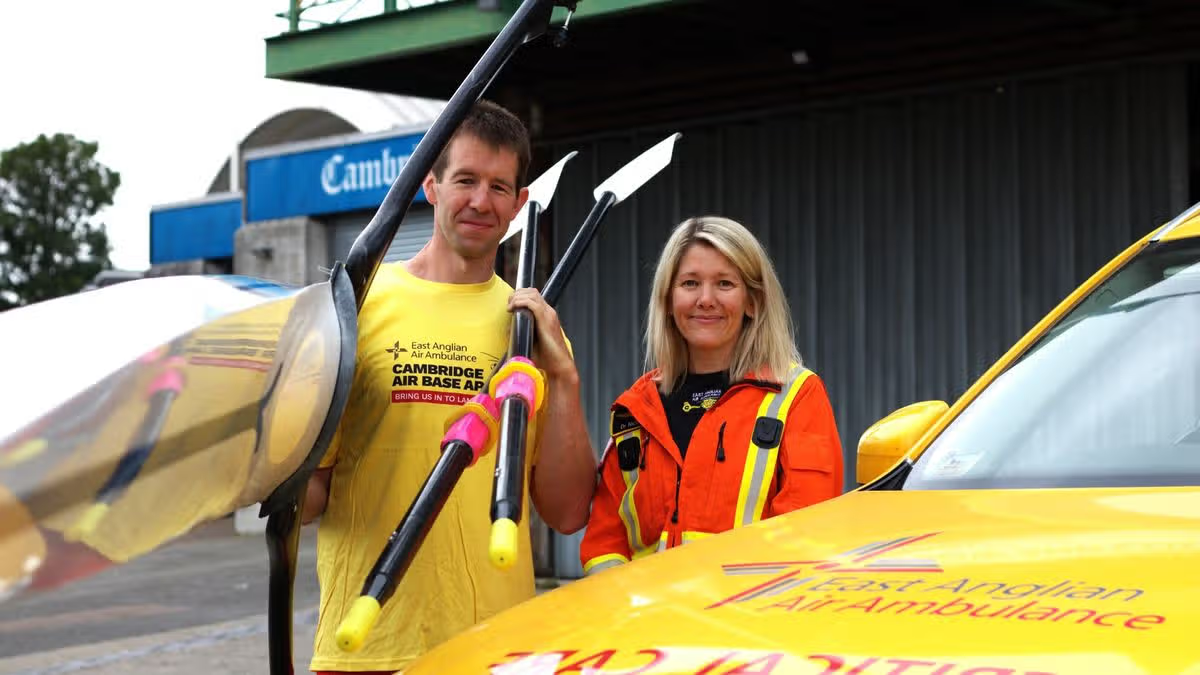
A star rower whose heart rate soared to 227 beats per minute was rescued by the air ambulance. Will Young was rowing alone early one summer morning when he began losing his vision and the strength in his arms.
Advertisement
The 34-year-old began falling towards the river but managed to row 100m back to the boathouse and put his boat away. While resting on the second floor of the building, his heart rate skyrocketed to 227bpm.
“I’d never felt like that before,” Will said. “I felt weird and weak. I looked down at my chest and could see my sternum moving really fast. I put my heart strap on and, straight away, it showed my heart rate as 227bpm. I rang 999 and told the call handler I was having a serious cardiac event.”
Paramedics arrived and saw that Will was at immediate risk of a cardiac arrest with dangerously low blood pressure, so they requested support from the East Anglian Air Ambulance. A doctor and critical care paramedic arrived at the scene and sedated Will before delivering a controlled shock to his heart to reset it to a normal rhythm.
Will’s heart stopped briefly and the team needed to carry out CPR until his heart and breathing restarted. He had to be removed from the second floor of the building over the balcony due to its spiral staircase.
Advertisement
He was taken by land ambulance to Addenbrooke’s Hospital with the East Anglian Air Ambulance team. He is now raising awareness to ensure the charity can continue to save lives across the region.
Will said: “I’ve always known about the East Anglian Air Ambulance, but only later became aware that it was a charity; something I think many people don’t know. The service they provide is unbelievably important – critical in fact. I have since been able to meet the team from East Anglian Air Ambulance – it was really cool to meet the people who saved my life.”
Dr Nicola Ebbs, deputy medical director from East Anglian Air Ambulance, said: “At just 33 years old, Will faced a life-threatening situation, and thanks to the charity’s supporters, he was given urgent treatment and care at the scene. To see him now using his experience to support our new air base appeal is incredibly moving.
Advertisement
“People who have experienced first-hand the difference the service can make understand better than anyone why this appeal matters. Their stories help bring to life the impact that rapid, specialist pre-hospital care can have on patients and their families. We are immensely grateful to Will for lending his support to our campaign and for helping us raise awareness of the need for a new air base.”
Will returned to Cambridge in 2016 where he fell in love with rowing, competing at a national level. He had experienced a previous suspected episode of Ventricular Tachycardia (VT) – a dangerously fast heart rhythm that can lead to cardiac arrest.
During this first incident, his heart rate increased to 222 beats per minute for 20 minutes. After investigations at hospital, he learned that he had part of his heart was inflamed. He returned to the sport after time spent recovering, before the second incident which saw him rescued by air ambulance staff.
Dr Ebbs continued: “We’d also like to extend our thanks to everyone who has donated to the Cambridge Air Base Appeal so far. Together, we’ve made an incredibly strong start and have been humbled by people’s generosity.
“But this is only the beginning. There’s still a significant amount of money to raise. As we push on with our fundraising efforts, every gift and every piece of support will be gratefully received – helping to ensure our crews can continue to reach critically ill and injured patients, in the quickest time possible, when every second counts.”
The East Anglian Air Ambulance relies entirely on charitable donations for its 24/7 critical care service. It also provides aftercare support for former patients and their families.
The Cambridge Air Base Appeal aims to fund the construction of a new and improved facility on land at New Shardelowes Farm, on the outskirts of the Cambridgeshire village of Fulbourn. A spokesperson said the new base will ensure the charity continues to deliver hospital-level critical care to patients in Cambridgeshire, Norfolk, Bedfordshire, and Suffolk for decades to come.
Advertisement
They said: “Without a Cambridge base, East Anglian Air Ambulance’s lifesaving service would be cut in half, leaving just one air base in Norfolk and dramatically increasing response times to people like Will facing life-threatening emergencies across the region.”
Brighton’s annual Pride event is taking place this weekend with performances from over 150 LGBTQ+ artists. (Photo: Getty Images)
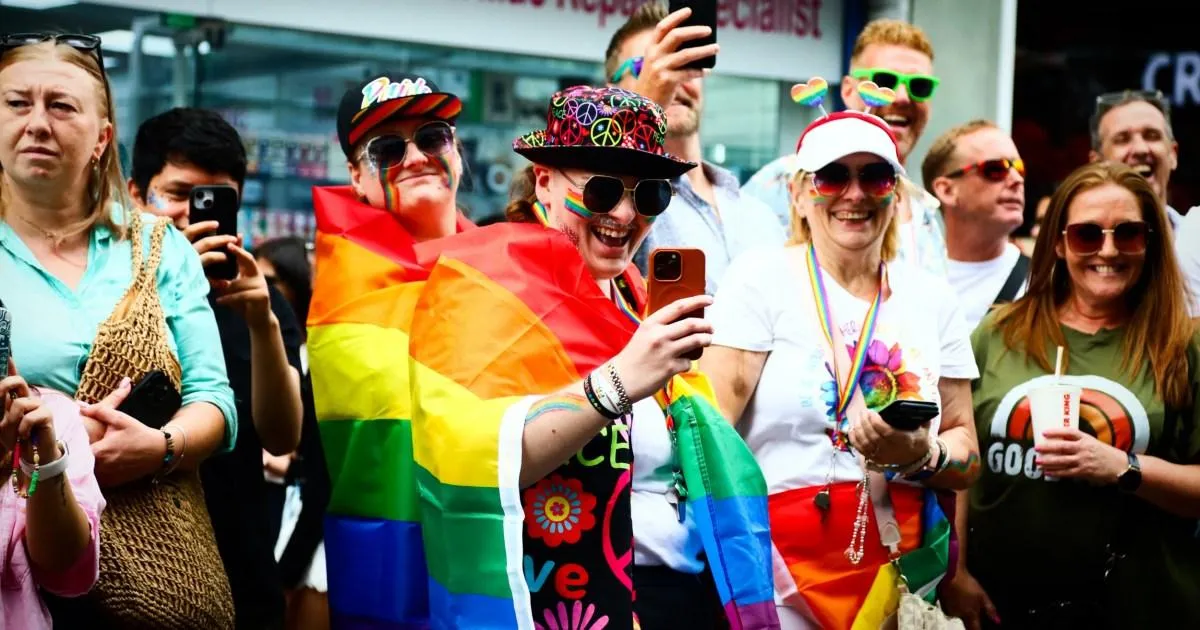
Brighton is preparing to welcome revellers for its annual Pride event this weekend, and it’s going to be a big one.
Brighton & Hove Pride 2026 starts today with a parade, where hundreds of thousands wearing their brightest rainbow gear will march through the coastal city.
Pride-goers will then pack into Preston Park for a joyous two-day concert with over 150 LGBTQ+ performers, including Diana Ross, Raye, Jessie J, and more.
This year’s theme is ‘the power of love’, as Pride organisers look back and honour the courage, protest, unity and love that carried the community through decades of change.
Advertisement
If you’re looking to attend the giant celebration, we’ve got all the details, including the full parade route, start and end times, Pride in the Park lineup, and everything else you need to enjoy the event.
What is the Brighton Pride parade route and when does it start?
The Brighton Pride parade will begin at Hove Lawns today at 11am and is expected to finish at Preston Park for the Pride on the Park concert, which starts around 1pm.
The parade route (Picture: Brighton & Hove Pride)
From the beachfront Hove Lawns, the parade will follow King’s Road before taking a left onto West Street, taking a right onto North Street at the clock tower, and then following London Road until the parade’s end at Preston Park.
Join Metro’s LGBTQ+ community on WhatsApp
With thousands of members from all over the world, our vibrant LGBTQ+ WhatsApp channel is a hub for all the latest news and important issues that face the LGBTQ+ community.
Simply click on this link, select ‘Join Chat’ and you’re in! Don’t forget to turn on notifications!
Advertisement
Charities, community groups, local businesses, and blue-light service workers are expected to attend in what has been described as one of the ‘biggest and brightest’ events in Brighton and Hove’s calendar.
Who is performing at Pride on the Park?
Pride on the Park is a two-day ticketed festival that takes over Preston Park from 1pm, acting as the official fundraiser for local community groups.
Advertisement
Over the years, the festival has welcomed performances from international artists, including Mariah Carey, Britney Spears, Grace Jones, Nile Rodgers and Chic, the Pet Shop Boys, Dua Lipa, Kylie Minogue, and more.
Mariah Carey treated party-goers to a stunning performance at last year’s Pride on the Park. (Photo: Samir Hussein/WireImage for ABA)
Both days consist of two main stages – main and dance – along with seven other stages available across the weekend, including a family area.
This year’s two-day festival will see a star-studded line-up of LGBTQ+ performers and allies, including:
On Saturday
On the main stage, which is hosted by Jonny Woo and Rhys’ Pieces, the line-up includes:
Raye
Jessie J
Self Esteem
Leigh-Anne
G Flip
Moonchild Sanelly
RuPaul (Icon slot, DJ set)
Meanwhile, on the dance stage you can expect:
Purple Disco Machine
Bimini
Daniel Avery (Electro set)
Oxylion & Danger
Patrick Mason (House set)
and more
British singer-songwriter Raye will headline the main stage today. (Credits: Valentin Flauraud/Keystone via A)
On Sunday
On the Sunday, the main stage line-up includes:
Diana Ross
Five
Holly Johnson of Frankie Goes to Hollywood
Mel C (DJ set)
Paris Hilton (Icon slot)
The dance stage includes performers:
Armand Van Helden
The Blessed Madonna
Girls Don’t Sync
Haai
Hannah Wants
I. Jordan
and more
What about the Pride Street Party?
The Pride Street Party will also take place today and tomorrow on Marine Parade with drag queens, music zones and daytime clubbing all on hand for you to enjoy.
Day one of the Street Party will begin at 3pm and run through to 11pm, and it’ll include artists like Alex Fincher, Benji James, Baga Chipz, Bimini, Cherry Bomb, Gok Wan, DILF, Kerry Ellis, and more.
Advertisement
Day two of the event will begin at 2pm on Marine Parade. It’ll finish around 9pm and include performances from Absolute Britney, Cherry Liquor, Davina Sparkles, The Madame, Mary O’Kart, PXSSY PALACE, and more.
Travelling to and from Brighton Pride this weekend
Brighton and Hove Pride has issued warnings to travellers for over the weekend. (Photo: Getty Images)
With thousands of people expected to light up Brighton today and tomorrow, transport services have been modified to help manage the crowds.
By train
Brighton and Hove Pride has partnered with Govia Thameslink Railway (GTR), the operator of Thameslink, Gatwick Express, and Southern train services, which will run more trains and implement additional train carriages to assist travellers over the weekend.
Brighton and Hove Pride has urged revellers to allow plenty of time to get to and from events in the city and to use Brighton Station for travel, as Preston Park and London Road stations are closed.
Pride organisers have encouraged attendees to travel by public transport when possible. (Credits: EPA)
Pride attendees have also been warned about the return journey home, with Brighton Pride suggesting party-goers give themselves an hour to get to Brighton station from any event due to the large crowds.
Like last year, a rainbow queue system will help facilitate passengers as they leave the event, directing people to the right queue for their train and destination before reaching the station.
Advertisement
By bus
Festival-goers can also travel to the event by bus. Anyone travelling from West Sussex can reach Brighton by using the 270, 271, 272 or 273 bus routes.
For those of you located in East Essex, you can take the Regency routes 28 and 29 or the Coaster routes 12, 12X, and 13X.
A bus shuttle service between Preston Park, Old Steine and Kempt Town will run, alongside a second shuttle service running between the Pride Campsite, Pride on the Park, and the City Centre.
By car
If you’re driving, please be aware that there will be a series of road closures taking place for the event. There’s also no parking at Preston Park and its surroundings, and parking is restricted on a large section of Madeira Drive.
Advertisement
Brighton and Hove Pride warns that parking in the city centre can be expensive and limited, and so suggests visitors take public transport when possible.
The two-day event will see the inclusion of several stages as well as a family area so everyone can celebrate! (Photo: Getty Images)
What’s the weather forecast for Brighton Park?
Like last year’s glorious event, we’re once again being treated to beautiful weather over the two-day Pride event.
The Met Office has predicted sunshine and clear skies for today with highs of 23°C. Tomorrow’s conditions will be similar, although a few degrees hotter and peaking at 26°C.
The site at Pickaxe Mountain may have been chosen to protect it from air strikes with some analysts estimating, external the core of the facility could be roughly 100m (328ft) underground.
This would also mean it’s buried deeper than Iran’s two nuclear enrichment complexes at Fordo and Natanz which the US bombed last year using what are known as bunker buster bombs – the only known weapon that could conceivably reach such concealed sites.
The US GBU-57 bomb weighs about 13,000kg (30,000lb) and is reported to able to penetrate 18m (60ft) of concrete or 61m (200ft) of earth before exploding.
But even using these munitions, experts say the US would be unlikely to completely destroy Pickaxe Mountain.
Advertisement
“Obliterating every underground chamber would be extremely difficult because of the facility’s depth and uncertain layout,” says Arman Mahmoudian, a research fellow specialising in Iran at the University of South Florida.
However, the US could target tunnel entrances, communications systems, access roads, and other supporting infrastructure, Mahmoudian adds, which “could paralyse the facility’s operations even if some of its deepest underground sections survived”.
Meanwhile, Faragasso says the site may be potentially vulnerable and that “targeting the ventilation shafts would enable the weapons to reach deeper into the facility, and the tunnel portals can be collapsed using bunker buster weapons”.
Chelsea and Tottenham go toe-to-toe in a friendly derby clash this morning, facing off at the Accor Stadium in Sydney.
Roberto De Zerbi wasted little time overhauling his squad, bolstering his back line with the additions of Marcos Senesi, Andy Robertson, and Jan Paul van Hecke, also adding Mateus Fernandes and Sandro Tonali to his midfield.
They have made a reasonable start to pre-season,too, besting MK Dons, Auckland FC and Sydney FC over the past couple of weeks.
Their long-time rivals Chelsea, though, will prove their toughest opposition of the summer so far. The Blues have also been busy in the transfer market this summer, spending heavily on Morgan Rogers, who has yet to report for pre-season.
Advertisement
Xabi Alonso made a dramatic start to his summer campaign as Chelsea beat A-League strugglers Western Sydney Wanderers 6-4 in a hectic affair which was ultimately settled by a late Joao Pedro hat trick.
How to watch Chelsea vs Tottenham
TV channel and live stream: In the UK, the game will be televised live on CFC+ and SPURSPLAY, Chelsea and Tottenham’s respective in-house video streaming services.
All of Chelsea’s pre-season fixtures will be broadcast via CFC+, which requires a membership. An annual subscription costs £15, while pay-per-view passes worth £9.99 are also available for each match.
Advertisement
The same is true of Tottenham’s, which will be broadcast via SPURSPLAY. An annual subscription is worth £45.
Live blog: You can follow all the action on matchday via Standard Sport’s live blog.
Israelis in the West Bank are still subject to Israel’s civilian law and enjoy widespread freedom of movement, while Palestinians are subject to Israel’s military occupation and military courts, and are tightly restricted by road closures and checkpoints – a system described by some prominent human rights groups as “apartheid”.
Israel has rejected that label as “absurd and distorted”.
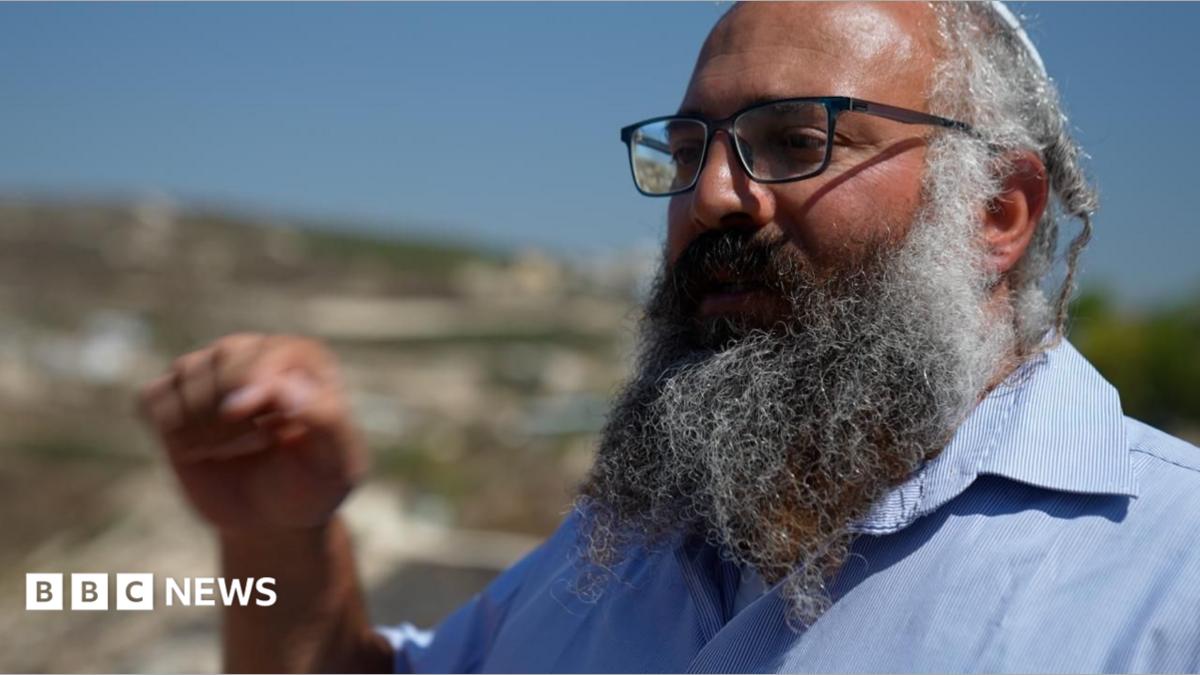
Asked about the Palestinian residents of the West Bank, Shimon laid out three options: live quietly under Israeli rule and ownership of the land; voluntarily emigrate to other Arab or Muslim nations; or “if you don’t want to make peace with us, and you don’t want to get out, I don’t have a choice: I must kill you, and I kill you all,” he said.
This vision from one radical settler seems strikingly close to a plan outlined by Israel’s now-Finance Minister, Bezalel Smotrich, in a blueprint published in 2017, before he joined the government.
Advertisement
In it, he presented a plan for the West Bank in which Palestinians would be told to give up any struggle for a Palestinian state and live quietly under Israeli rule. Those who had “difficulty letting go of national ambitions” could leave the territory, he said at the time, and those who stayed and continued armed struggle against Israel would be killed by Israel’s armed forces.
More recently, while in government, he has pushed for the “voluntary migration” of Palestinians from the Gaza Strip and the re-settlement of Israelis there, and has described Palestinian identity as “an invention”.
One Palestinian living within sight of Havat Gilad told me she watched the outpost from her window constantly, for signs of an imminent settler attack.
Many Palestinians we spoke to said they felt unprotected – that Israel’s occupying army was focused on protecting Israeli settlers, that their own security forces were absent, and that the international community had abandoned them.
Advertisement
“It’s a very bad situation,” one told me. “Europe is busy, America is occupied with Iran, China doesn’t care, Russia is fighting Ukraine, the UN are finished and the Arabs have internal problems. We don’t know what we can do.”
From Havat Gilad, the nearest Palestinian villages are less than a mile away, but the landscape here is divided by Israeli law, Israeli power and mutual hostility.







![NEWS Weekend Redirect - Brighton Pride 2025 is here - what you need to know from parade time to weather [UK] [Sat 7am] MAP PRIDE ROUTE picture: metro](https://metro.co.uk/wp-content/uploads/2025/07/SEI_260737266-071e.jpg?quality=90&strip=all&w=646)











































You must be logged in to post a comment Login