
Business
Xiao-I Corp Stock Explodes 157% as China Court Victory Over Apple Patent Bolsters AI Patent Portfolio


Shares of Xiao-I Corp (NASDAQ: AIXI) skyrocketed more than 156% Monday, surging to around $0.34 in afternoon trading as retail investors piled into the micro-cap artificial intelligence company following a major legal victory in its long-running patent dispute with Apple in China.

The dramatic intraday move saw the stock open sharply higher and maintain strong momentum, with trading volume spiking to extraordinary levels for the small company. The rally built on earlier gains triggered by news that China’s Supreme People’s Court rejected Apple’s appeal to invalidate key AI patents held by Xiao-I’s variable interest entity (VIE) in Shanghai.
Xiao-I Corporation, a Shanghai-based provider of cognitive intelligence solutions founded in 2001, specializes in natural language processing, conversational AI, knowledge graphs, hyperautomation and multimodal technologies. The company serves sectors including finance, contact centers, government services, manufacturing and healthcare through platforms that integrate deep learning and affective computing.
The patent ruling, finalized on March 27, 2026, affirmed the validity of Xiao-I’s core AI intellectual property that forms the basis of its infringement lawsuit against Apple. The Supreme Court’s decision, which is final and non-appealable on the validity issue, removed a significant legal hurdle and validated the company’s technological claims. While the infringement proceedings continue and no financial compensation is guaranteed, the outcome strengthened Xiao-I’s position in China’s competitive AI landscape.
The stock had already shown volatility in early April. It surged more than 33% on April 2 following initial reports of the court decision, with massive volume reflecting retail enthusiasm. Monday’s continuation pushed the price well above recent levels, though it remained far below its 52-week high near $4 and reflected the stock’s history of sharp swings as a low-float micro-cap name.
Analysts and market observers described the move as driven primarily by sentiment and short-term momentum rather than fundamental shifts in operations. Xiao-I’s market capitalization stayed under $5 million even after the surge, underscoring its status as a highly speculative play. The company has faced challenges including dilution from convertible notes, governance issues and limited revenue scale compared with global AI leaders.
Despite the legal win, risks remain substantial. The broader infringement case against Apple entities in China is ongoing, and outcomes on damages or licensing are uncertain. Xiao-I operates primarily through a VIE structure, a common but complex arrangement for foreign-listed Chinese companies that carries inherent regulatory and ownership risks.
The company’s core offerings include a conversational AI platform, knowledge fusion tools, intelligent voice systems and hyperautomation solutions. It has positioned itself as a pioneer in cognitive intelligence since its early days, with applications in smart city services, financial institutions and industrial digitization. Revenue comes from software licenses, maintenance services and cloud-based AI products.
Recent company updates highlighted client renewals in the automotive sector and continued development of metaverse and vision analysis platforms. However, like many small AI firms, Xiao-I competes against much larger players with deeper resources, including domestic giants and international technology firms.
Monday’s trading frenzy echoed patterns seen in other low-priced, news-driven stocks where retail participation on platforms can amplify moves. Volume exceeded typical daily averages by multiples, with significant pre-market and intraday interest. Some traders noted the stock breaking technical levels, including attempts to reclaim the 50-day moving average for the first time in months.
Wall Street coverage of AIXI is limited due to its size. Price targets and ratings are sparse, and the stock carries high volatility warnings. Investors are cautioned about the potential for rapid reversals, as micro-cap names often experience profit-taking after sharp rallies.
For long-term holders, the patent victory could enhance licensing opportunities or strengthen negotiating power in China’s AI ecosystem. Yet execution risks, competition and the need for sustained revenue growth remain key concerns. The company has emphasized its 20-plus years of R&D in cognitive technologies and partnerships across industries.
As of Monday afternoon, AIXI traded with elevated volatility, reflecting the speculative nature of the move. Broader market sentiment, including interest in Chinese AI plays amid geopolitical and regulatory developments, may have contributed to the enthusiasm.
Xiao-I Corporation went public on Nasdaq in 2023 through an American Depositary Shares offering. Its business model focuses on industrializing AI technologies for practical enterprise applications rather than consumer-facing products. The firm maintains research centers and collaborates with universities and industry partners.
Retail investors on forums and social platforms celebrated the surge, with some calling it validation of the company’s IP strength. Skeptics warned of classic pump dynamics in low-float stocks and urged caution, noting the absence of immediate revenue impact from the court ruling.
Company officials have stated they will continue updating shareholders on material developments in the Apple litigation. No specific timeline for resolution of the remaining infringement claims has been provided.
In the wider AI sector, patent battles are increasingly common as companies seek to protect innovations in natural language processing, machine learning and related fields. Xiao-I’s win, while significant for the firm, highlights the strategic importance of intellectual property in China’s rapidly evolving technology market.
Monday’s price action pushed the stock well into positive territory for the session, though it continued to trade as a high-risk name with limited institutional following. Market participants will watch for any follow-through momentum or profit-taking in coming sessions.
Xiao-I Corp, with roughly 162 employees, operates from Shanghai and focuses on delivering AI solutions that drive industrial digitization and intelligent transformation. Its technologies power applications from intelligent customer service to smart city initiatives.
As trading continued Monday, the surge in AIXI served as a reminder of the speculative opportunities — and risks — in small-cap AI stocks reacting to legal or technological developments. Investors are advised to conduct thorough due diligence, considering the company’s financial position, competitive landscape and the uncertain path from patent validation to commercial success.

Business
Chapel Down Hits 1 Million Bottles as English Sparkling Wine Eyes 1% of Global Champagne Market

Britain’s biggest winemaker uncorks a record-breaking year as chief executive James Pennefather sticks to his audacious target of capturing 1 per cent of the global champagne market by 2035.
Chapel Down, Britain’s largest winemaker, has sold more than a million bottles of English sparkling wine in a single year for the first time, a watershed moment in its bid to seize 1 per cent of the global champagne market by 2035.
The Kent-based producer, listed on London’s junior Aim market and backed by the billionaire Lord Spencer of Alresford, said the million-bottle haul equates to roughly 0.4 per cent of champagne’s worldwide market share. James Pennefather, who took the helm as chief executive last year, expects that figure to climb to 0.7 per cent by the end of the decade.
Pennefather said the company’s long-term ambition was anchored in the available acreage across its native Kent. “We certainly do have options to get there faster, but it also slightly depends on what happens to the wider champagne market,” he said.
While champagne has historically been the preserve of formal celebrations, Pennefather argued that English sparkling wine was redrawing the boundaries of the category. “One of the real strengths of Chapel Down and English sparkling wine is that we’ve expanded the number of occasions on which people are drinking high-value sparkling wines,” he said. “That gives us confidence that we are also expanding the category as a whole.”
The company farms more than 1,000 acres of vineyards across the south-east of England, producing both still and sparkling wines. Its growing brand profile has been bolstered by partnerships with Ascot, The Boat Race and the England and Wales Cricket Board.
Results for the year ending 31 December 2025 lay bare the appetite for home-grown fizz. Group revenues climbed 19 per cent to £19.4 million, fuelled chiefly by a 38 per cent surge in off-trade sales through supermarkets to £9.4 million on the back of a 5 per cent rise in listings.
On-trade sales, those flowing through pubs, bars and restaurants, edged up 5 per cent to £2.6 million, helped by new account wins. International revenues jumped 49 per cent to £1 million, lifted by the firm’s tie-up with Jackson Family Wines in the United States and a higher profile at British airports and St Pancras International station.
The performance pushed Chapel Down back into the black, with pre-tax profits of £469,000 compared with a £1.4 million loss the previous year. Buoyed by a strong start to 2026, the board reaffirmed guidance for net sales of £22.1 million, in line with City consensus.
Pennefather conceded that the conflict in Iran was a watch-point for the business, although the Middle East accounts for only a “small” share of revenues. “We haven’t seen any immediate impact,” he said, “but a sustained increase in fuel costs could have an impact on profitability.”
Elsewhere, investors raised a glass to Carlsberg after the Danish brewer posted its first quarterly volume rise in a year, helped by its push into soft drinks. The world’s third-largest brewer, which counts Kronenbourg, Skol and Somersby cider among its stable, reported a 2.8 per cent lift in total organic volumes during the first quarter, with growth across every region. Soft drinks volumes leapt 10 per cent, driven in no small part by its £3.3 billion takeover of Britvic, while beer volumes nudged 0.4 per cent higher.

Amy Ingham
Amy is a newly qualified journalist specialising in business journalism at Business Matters with responsibility for news content for what is now the UK’s largest print and online source of current business news.

Intercontinental Exchange raises quarterly dividend 8% to $0.52
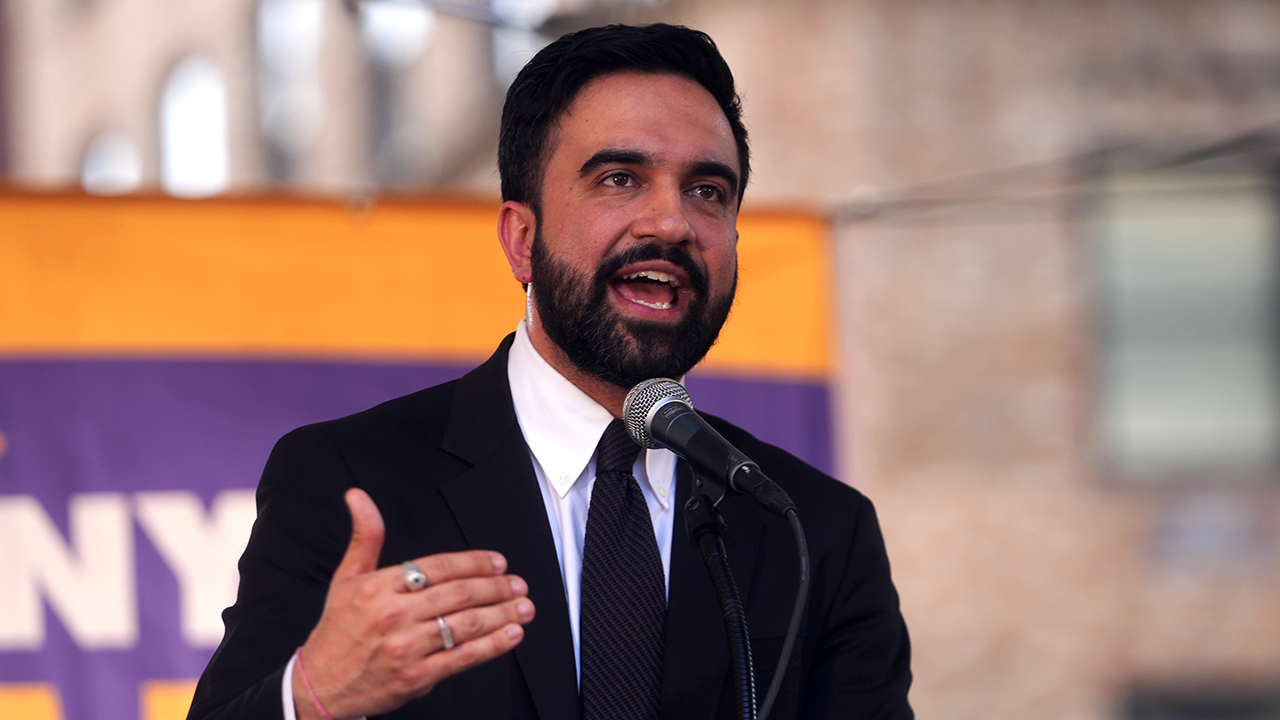
FOX Business’ Gerri Willis reports NYC Mayor Zohran Mamdani is pushing new taxes on businesses and the wealthy to close a growing budget gap.
New York City Mayor Zohran Mamdani’s latest effort to close a widening budget gap is intensifying concerns among business leaders, as his proposal to scale back a key tax credit threatens a broad range of companies that rely on it to remain competitive.
FOX Business’ Gerri Willis joined “Varney & Co.” host David Asman to report on the proposal, which would reduce the pass-through entity tax (PTET) credit, used heavily by small- and mid-sized businesses, to help generate revenue for the city.
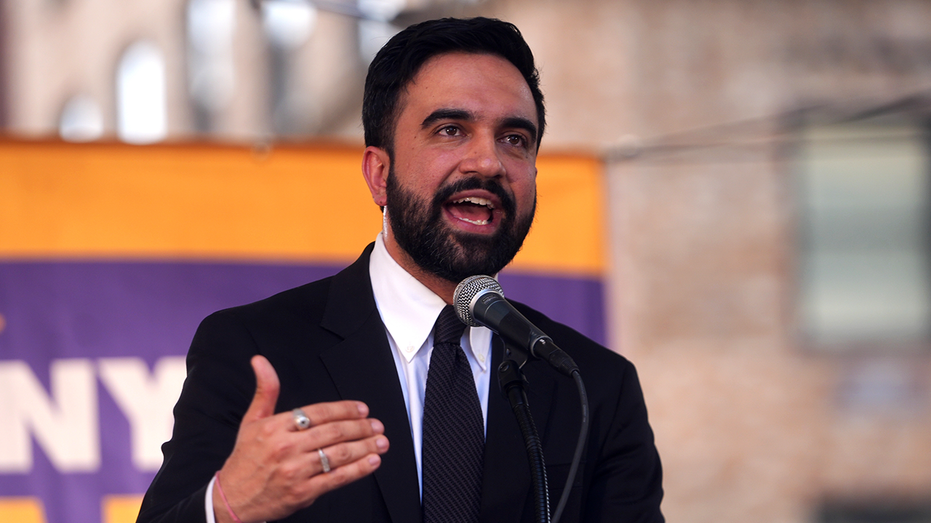
New York City Mayor Zohran Mamdani delivering remarks at a rally in NYC. (Selcuk Acar/Anadolu / Getty Images)
The PTET credit was introduced as a workaround to federal limits on state and local tax deductions (SALT) and has since become a financial lifeline for many businesses structured as S corporations and LLCs. Critics argue cutting it risks undermining those firms at a time when economic conditions remain uncertain.
O’LEARY SLAMS NYC TAX PLAN AS ‘SHEER BLIND STUPIDITY,’ DEFENDS WEALTHY INVESTORS
“Many states implemented a pass-through entity tax because many businesses file via the S corp or LLCs. And this became a workaround to keep them competitive,” Partnership for NYC President and CEO Steven Fulop said. “In a time where the economy is fragile in New York City, we’re saying just be cautious on these sort of things.”
Economist Steve Moore criticizes the ‘tax the rich’ agenda and ‘tax tyranny’ in blue states on ‘The Bottom Line.’
The proposal is part of a broader push that includes higher income, property and corporate taxes, raising concerns about long-term economic stability and business retention.
TAX FIGHT HEATS UP AS NEW YORK TARGETS WEALTHY HOMEOWNERS
Gristedes CEO John Catsimatidis warned that the impact could extend beyond top earners, noting middle-income professionals and small-business owners could feel the strain.
O’Leary Ventures Chairman Kevin O’Leary weighs in on the dispute between New York City Mayor Zohran Mamdani and Citadel CEO Ken Griffin on ‘Varney & Co.’
“The people that make $300, $400, $500,000 a year, they are the ones… They have an option. They get up and leave,” Catsimatidis said during an appearance on “Varney & Co.” “You can’t destroy the real estate industry… In London, it’s been destroyed… If you do the same thing in New York that is a disaster.”
As policymakers weigh competing approaches, the outcome could shape how attractive New York remains for businesses navigating rising costs and fiscal uncertainty.

Operator
Good morning, ladies and gentlemen. Welcome at the presentation of the financial results for the first quarter. We have Cezary Stypulkowski, CEO; Vice President responsible for Finance, Dagmara Wojnar; Vice President for Risk Division, Marcin Jablczynski; and Ernest Pytlarczyk, Chief Economist of the Bank. Over to Cezary.
Cezary Stypulkowski
President of Management Board
Good morning, ladies and gentlemen. The first quarter was successful for the bank. We recorded net profit at PLN 1.2 billion. We feel a revival of credit action both in retail and in corporate markets, maybe excluding mortgage loans, but that’s a separate topic. We see increasing digitization of Pekao S.A. clients who historically followed the market.
With respect to this trend and the capital position remains very strong. I would like to stress here that we maintain a low level of risk cost although we assume that there might be a certain increase here. Anyway, the boundaries within which we move were defined more broadly than the current actuals.
We see 11% growth in loan funding covering various categories. Return on equity continues at a decent expected level. Cost to income ratio is not set in stone in connection with the need to inject capital in the bank. But stays at almost 30.5%, excluding the effects of burdens of the first quarter, mainly in relation to the contributions to the fund for banking stability.
We see the developments that relate to the principal lines in which Pekao S.A. has been not sufficiently invested in particular with regard to micro market, but

Displeased couple having problems during a meeting with their agent in the office.
Skynesher | E+ | Getty Images
A version of this article first appeared in CNBC’s Inside Wealth newsletter with Robert Frank, a weekly guide to the high-net-worth investor and consumer. Sign up to receive future editions, straight to your inbox.
Lawyer Tasha Dickinson said she gets calls every week from clients asking about legal advice they got from ChatGPT, Claude or another artificial intelligence chatbot. Some don’t admit it, but she can tell from their line of questioning, she said.
One client, a high-net-worth Florida resident, asked Dickinson about creating a community property trust — an attractive option for married couples — saying he got the suggestion from AI to save on taxes for his heirs, she said. Dickinson quickly pointed out a problem: The client’s wife had recently died.
“I said, ‘Well, you do understand that a community property trust is between husband and wife, right?’ And there was silence on the phone,” said Dickinson, a partner at Day Pitney. “‘They’re like, ‘Oh, well, AI thought it was a good strategy.’ Well, like, in the universe, maybe it’s a good strategy, but it’s not a good strategy for you.”
Lawyers to the wealthy told Inside Wealth that their clients are increasingly using AI not only to research tax topics but to second guess their lawyers’ advice. While some lawyers said AI helps clients come up with informed questions and learn basic concepts, they also say it poses a headache and legal risks.
Robert Strauss, partner at Weinstock Manion, said several clients have uploaded trust documents to AI systems and come back with a list of questions and suggested edits, forcing Strauss to defend his work and explain why the AI recommendations aren’t appropriate for the client’s situation.
“The questions are fine, but it results in spending more time on the matter than we would ordinarily spend,” he said. “We end up spending two, three, four hours of time dealing with stuff that so far has amounted to nothing. I have not actually received a single workable suggestion from that process.”
The result, he said, is a lack of trust on the part of the client in their lawyer.
What’s more troubling, Strauss said, is that clients are sharing sensitive information with large-language models, raising data privacy concerns and legal pitfalls. Strauss said his firm is currently revising their client contract to warn clients that using AI chatbots like this can void attorney-client privilege.
In February, a federal judge ruled that a criminal defendant’s conversation with Claude about his legal defense strategy were not protected by attorney-client privilege.
“What’s keeping me awake at night as it relates to AI? It’s not that AI is sometimes wrong, because I can correct those mistakes. And it’s not that people are double-checking my work on AI, because I have a lot of confidence in my work,” Dickinson said. “What I am concerned about is that when people put documents and do these searches into AI, they’re waiving the attorney-client privilege, and that is a huge issue.”
Dan Griffith, director of wealth strategy at Huntington Bank, warned that asking a chatbot how to protect your assets with a prenuptial agreement or how to sell your business while paying less in taxes, for example, could be used against you in court.
While high-net-worth clients can generally access — and afford — the best legal advice, they, like the rest of us, enjoy the convenience of AI, according to Griffith.
Dickinson added that the cost savings are still a draw. (“It’s not fun to pay for professional services,” she said.) She added that many of her clients are confident entrepreneurs.
“A lot of our clients have been so successful. I mean, they’re smart, right? And they have a drive for knowledge,” she said. “I think some err on the side of assuming that they understand more about this than they actually do.”
Using these AI tools, she said, “gives a false sense of knowledge.”
In some ways, this isn’t a new problem. Clients often bring suggestions to their lawyer that they got from a country club friend or an article. Dickinson described it as “a more evolved form of cocktail party talk.”
And the trend isn’t one-sided. Many lawyers use AI in their professional and personal lives. This has led to headline-making blunders like briefs with fake citations.
But few clients are familiar enough with AI and the law to write an effective prompt, lawyers said.
Ed Renn of Withers gave the example of a client who wanted to transfer unlimited assets to his spouse upon ChatGPT’s advice. The client, however, didn’t mention his wife was foreign-born, which means he couldn’t take advantage of the unlimited marital deduction without a special type of trust, according to Renn.
“If you don’t know quite what you’re doing, it’s garbage in, garbage out,” he said.
Renn added that AI tools appear to make more mistakes with more complex topics like international taxes and aren’t up to date with new legislation or guidance from the Internal Revenue Service.
Griffith said that deciding how to transfer your wealth to your loved ones requires a more complicated discussion than ChatGPT is prepared for. There are rarely easy answers when deciding, for instance, how to divide assets between children from a first marriage and a second spouse, he said.
“If your client asks, ‘Hey, if I do this trust, will my son have access to the funds that I give him at some point in time?’ The answer shouldn’t be ‘yes’ or ‘no.’ The answer should be, ‘Tell me more about your relationship with your son, or what’s the situation like?’” he said. “AI tends to be very solution-oriented and tries to find some way to get to yes. It doesn’t do a good enough job of saying, ‘You know what? Let’s get to the core of what your question is.’”

The benchmark indices had slipped over 1% each in the morning, with Sensex crashing over 1,200 points and Nifty falling below 23,800 briefly. However, markets recovered some losses by afternoon. At close, Sensex was down 583 points at 76,913l, while Nifty was down over 180 points at 23,998. The sharp drop erased nearly Rs 5 lakh crore from the total market capitalisation of all companies listed on BSE, pulling it down to Rs 464 lakh crore.
Zomato-parent Eternal, Hindustan Unilever (HUL), Tata Steel, UltraTech Cement, M&M, Trent, L&T and Axis Bank shares were the top losers on Sensex, falling nearly 2-3%. Bucking the trend, Sun Pharma shares jumped 2% to emerge as the top gainer.
The sharp selloff in the stock market was broad-based, spilling over to small and midcap counters as well. The Nifty Smallcap 100 index declined 0.5%, while the Nifty Midcap 100 index tumbled nearly 1%. This came as India VIX, which measures volatility in the market, jumped around 6% to 18.46.
Nifty Metal and Nifty PSU Bank index declined around 2% each to emerge as the top sectoral loser. Nifty Pharma and Nifty IT meanwhile closed in the green. Around 1,976 stocks declined on NSE, while 1,295 advanced and 98 remained unchanged.

Here are the key factors impacting markets today:
1) Trump’s ‘extended blockade’ warning
US President Donald Trump said that the US blockade of Iranian ports could last months as peace talks remained stalled. While Iran has reportedly submitted a fresh peace proposal to end the weeks-long War, Trump is not satisfied. The Wall Street Journal said he had told national security officials to prepare for a prolonged blockade to compel the Islamic Republic to give up its nuclear programme.
“The blockade is somewhat more effective than the bombing. They are choking like a stuffed pig. And it is going to be worse for them. They can’t have a nuclear weapon,” Trump told Axios. His latest comments further spooked investors.
2) Oil prices cross $120/barrel
Oil prices surged amid escalating tensions, crossing $120 per barrel for the first time since Russia’s invasion of Ukraine in 2022. Brent crude futures rose around 4% to $123 per barrel in Thursday morning trade.
After comfortably falling below the $100 per barrel mark earlier this month, oil prices moved back above the crucial level last week as fresh attacks near the Strait of Hormuz raised concerns about supply disruptions.
3) Fed’s hawkish commentary
The US Federal Reserve kept its policy rates unchanged, with the decision being its most divided since 1992, as three officials dissented over guidance that still signalled a bias towards easing.
“Developments in the Middle East are contributing to a high level of uncertainty about the economic outlook,” the Committee said, adding that it remains attentive to risks on both sides of its dual mandate of growth and inflation.
4) Rupee weakens to all-time low
Rupee declined to a fresh all-time low of 95.07 against the US dollar on Thursday. Later, it pared some losses to close at 94.9050. Jateen Trivedi, VP Research Analyst of Commodity and Currency at LKP Securities, had warned that sustained FII outflows and elevated crude prices are pressuring the currency. “Higher oil prices are significantly increasing India’s import bill and inflation risks, limiting any meaningful recovery in the rupee,” he said. “The trend remains weak, with the currency consistently facing selling pressure on rebounds, indicating a lack of strong support at higher levels,” he added.
5) Global markets in red
Global markets mostly remained in the red as oil prices soared. Japan’s Nikkei tumbled nearly 1.3%, while Hong Kong’s Hang Seng and South Korea’s Kospi fell around 1.4% each, although China’s Shanghai Composite closed nearly flat in the green.
European markets remained mixed, with UK’s FTSE rising over 1%. France’s CAC fell 0.5% while Germany’s DAX gained 0.18%. Wall Street, however, closed nearly flat, with the Nasdaq ending the session in the green with marginal gains.
6) FII selling continues
Foreign investors remained net sellers of Indian equities on Wednesday, net selling shares worth Rs 2,469 crore, according to provisional data available on NSE. FIIs have now been net sellers of Indian equities for the sixth consecutive session.
While this does not reflect their trading activity today, sustained FII selling dampens investor sentiment and fuels the selloff in the market.
7) Bond yields soar
US Treasury yields rose to a one-month high after the Fed’s hawkish signal of growing inflation concerns. The yield on benchmark US 10-year notes rose 7.6 basis points to 4.43%, from 4.354% late on Tuesday, while the 30-year bond yield rose 5.7 basis points to 5.0011%. The 2-year note yield, which typically moves in step with interest rate expectations for the Federal Reserve, rose 10.7 basis points to 3.951%, from 3.844% late on Tuesday.
Exit polls lead to volatility
Exit polls across four states and one union territory indicate a strong maiden electoral win for the Bharatiya Janata Party (BJP) in West Bengal, while incumbents are likely to retain power in Tamil Nadu, Assam and Puducherry, JM Financial said in its latest note. Kerala also appears set for a regime change, with the Congress-led United Democratic Front (UDF) likely to unseat the Left Democratic Front (LDF), which has ruled the state for the last 10 years, the domestic brokerage added.
Analysts say that exit polls often trigger short-term volatility, although their broader impact tends to be limited. Vishnu Tripathi, AVP at Garud Investment Managers, noted that such developments lead investors to reassess positions based on expected policy direction at the state level.
In this context, investors remember the sharp market volatility around the 2024 General Elections. After voting concluded, exit polls predicted a landslide victory for the National Democratic Alliance (NDA), led by Prime Minister Narendra Modi. They projected that the BJP would win more than 272 seats in the 543-member Parliament, while the NDA could win up to 370 seats. This had pushed markets sharply higher on Monday (June 3, 2024), a day before the correction.
As the session began on June 4, 2024, investors panicked as early trends in the actual results diverged sharply from expectations. The BJP failed to reach the halfway mark on its own, and the NDA won 293 seats to form the government, although with fewer seats than expected. Sensex and Nifty fell nearly 6% each on June 4, 2024, wiping off a significant portion of investors’ wealth.
(With inputs from agencies)
(Disclaimer: Recommendations, suggestions, views and opinions given by the experts are their own. These do not represent the views of The Economic Times)


Global oil price retreats after hitting 4-year high on concern of US-Iran war escalation

RIYADH, Saudi Arabia — Cristiano Ronaldo delivered another trademark moment Wednesday, netting his 970th career goal to propel Al Nassr to an eight-point lead atop the Saudi Pro League with four matches remaining, underscoring the Portuguese superstar’s enduring brilliance at age 41.
The five-time Ballon d’Or winner continues to defy expectations in his fourth season with Al Nassr, blending veteran savvy with relentless scoring form. His latest strike against rivals Al Ahli not only tightened the title race but fueled talk of a third consecutive Golden Boot in the Saudi league while keeping his sights set on the historic 1,000-goal milestone.
Ronaldo’s performance comes amid a strong campaign. He has tallied 24 league goals and 26 across all competitions in 2025-26, maintaining elite efficiency despite reduced minutes designed to preserve him for Portugal’s 2026 World Cup campaign. Al Nassr sits atop the table, two wins from potential silverware, with Ronaldo serving as both scorer and talisman.
The goal against Al Ahli sparked chaotic celebrations and highlighted Ronaldo’s enduring aura. Opposing player Merih Demiral’s provocative display with an Asian Champions League medal drew a swift social media retort from Ronaldo referencing his five UEFA Champions League titles, reminding critics of his unmatched pedigree.
Off the pitch, Ronaldo briefly made headlines in February when he reportedly went on strike over perceived lack of squad investment by Al Nassr’s backers compared to rivals. The situation resolved quickly, with Ronaldo affirming his commitment. “I belong to Saudi Arabia,” he told reporters, praising the country’s welcome for him and his family.
Injury concerns surfaced earlier in 2026 when a hamstring issue sidelined him for several weeks, prompting his omission from Portugal’s March friendlies against Mexico and the United States. Coach Roberto Martinez insisted the absence was precautionary and Ronaldo’s World Cup participation remains assured. Ronaldo returned with a brace in a 5-2 thrashing of Al Najma on April 3.
Data from recent matches shows a deliberate workload management strategy. Ronaldo has not completed a full 90 minutes since late February, often substituted around the 70- to 80-minute mark. The approach has preserved his sharpness without diminishing impact, a testament to modern sports science and Al Nassr’s focus on peak condition for the summer’s global showcase.
Ronaldo’s club form bolsters Portugal’s hopes ahead of the 2026 World Cup, where the Selecao landed in Group K alongside Colombia, Uzbekistan and Congo. At 41, Ronaldo will make history as the first player to appear in six World Cups. He confirmed to CNN in a November interview that the tournament will “definitely” be his last.
“I will be 41 years old and I think it will be the moment,” Ronaldo said during a video link from Portugal training to a Saudi tourism event. He acknowledged one or two years remain in his playing career but expressed optimism about his current sharpness and enjoyment of the game.
The World Cup represents unfinished business for Ronaldo, who has never lifted the trophy despite a record 143 international goals in 266 appearances. Portugal enters as favorites in their group, though questions linger about Ronaldo’s optimal role as younger talents emerge. Some analysts suggest his presence could both inspire and complicate tactical setups for coach Roberto Martinez.
Beyond club and country, Ronaldo’s influence extends into business and legacy-building. He recently acquired a stake in Spanish club Almeria, signaling growing off-field ambitions. Rumors of a post-Al Nassr move, including potential MLS interest alongside Lionel Messi, have surfaced, but Ronaldo has dismissed immediate exit talk.
Former players and pundits remain divided on his future. Some urge retirement after the World Cup to preserve his legacy, while others marvel at his consistency. Ronaldo has averaged goals at a rate that could see him reach 1,000 before year’s end or early 2027 if he sustains his current pace.
In the Saudi Pro League, Ronaldo’s presence has elevated the competition’s profile globally. Matches draw record audiences, and his professionalism sets standards. He recently voiced concerns about player complaints and referee criticism, urging focus on elevating the league to European levels.
Al Nassr’s continental ambitions remain alive. The club advanced deep into AFC Champions League competitions, with Ronaldo contributing key goals, including his 969th in a dominant win over Al Wasl.
At 41, Ronaldo’s physique and dedication continue to set him apart. Rigorous training, diet and recovery protocols enable performances that younger players struggle to match. His aerial ability, penalty prowess and leadership remain elite, even as his explosive pace has moderated.
The 2025-26 season has not been without challenges. Early-year results tested Al Nassr’s unbeaten run, and squad depth questions arose amid transfer market comparisons with rivals like Al Hilal. Yet Ronaldo’s scoring touch — including a double on his return from injury — has steadied the ship.
Portugal’s path to World Cup glory will test Ronaldo’s adaptability. With stars like Bruno Fernandes, Bernardo Silva and rising talents pushing for prominence, Martinez must balance Ronaldo’s experience with tactical fluidity. Ronaldo’s leadership, however, remains unquestioned; teammates view him as motivational bedrock.
As the Saudi league season hurtles toward its climax, Ronaldo stands on the cusp of more silverware and personal milestones. A league title would cap another dominant chapter, while the looming World Cup offers a final shot at football’s ultimate prize on American soil — a stage he last graced in a 2014 club friendly.
Fans worldwide continue to celebrate Ronaldo’s longevity. Social media erupts with each goal, debates rage over his place in the GOAT conversation alongside Messi, and young supporters discover his highlights for the first time. His journey from Madeira prodigy to global icon spans more than two decades of excellence.
Ronaldo has repeatedly credited mental strength and passion for his sustained success. “I see many bad things,” he noted recently about league culture, advocating professionalism as the path forward. That mindset has defined his career and continues to drive him as the curtain prepares to fall on one of sport’s greatest stories.
With Al Nassr pushing for domestic glory and Portugal eyeing World Cup contention, Ronaldo’s 2026 remains packed with purpose. Whether he reaches 1,000 goals this year or lifts major silverware, his impact transcends numbers. At an age when most players have long retired, the Portuguese phenomenon keeps rewriting what’s possible.
The football world watches with anticipation. For Ronaldo, every goal, every match and every headline adds another chapter to a legacy already etched in history — one that may culminate on the grandest stage one final time.
Meta and its subcontractor disagree over why over 1000 Kenya-based workers were made redundant.

Grow with Google founder Lisa Gevelber discusses Google’s new program to teach small businesses about AI usage and highlights examples of it’s application on ‘Varney & Co.’
Sticker Mule is demanding Google fix what it says is a “misleading” error that labeled its business ads as funded by its CEO’s political campaign.
In a legal letter obtained by FOX Business, the company said its ads were incorrectly tagged in Google’s Ads Transparency Center as “Paid for by Constantino for Congress,” despite having no ties to campaign financing. Sticker Mule CEO Anthony Constantino, a Republican, is running for Congress in New York’s 21st District.
“This mislabeling is erroneous, misleading, and must be immediately and permanently corrected,” the company wrote. ” … Sticker Mule has never used Constantino for Congress funds to pay for its ads, nor have any Sticker Mule ads promoted Anthony Constantino as a political candidate.”
The company said the issue likely stems from a technical glitch in Google’s election ad verification system — possibly triggered by an employee logged into both business and campaign ad accounts during verification.
GOOGLE CO-FOUNDER RIPS CALIFORNIA BILLIONAIRE TAX: ‘I FLED SOCIALISM’
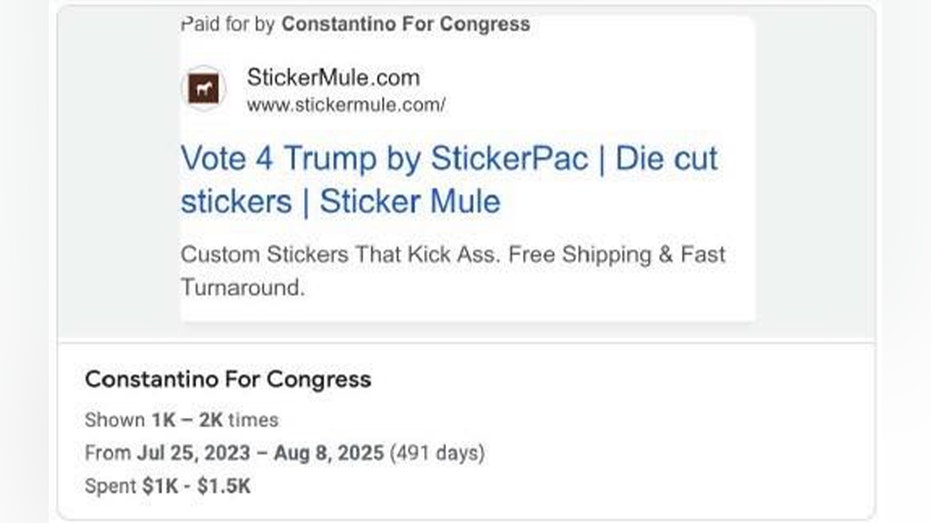
Screenshots from Google’s Ads Transparency Center appear to show Sticker Mule ads labeled as “Paid for by Constantino for Congress.” (@constantino via X)
Sticker Mule noted Google had previously acknowledged and temporarily fixed the problem after it was flagged.
The company is now calling on Google to remove the label, explain the root cause, confirm the fix in writing and ensure it does not happen again.
If not resolved, Sticker Mule said it may escalate the issue to federal regulators, including the Federal Trade Commission (FTC) and the Federal Election Commission (FEC).
The dispute comes as Constantino faces a March 2026 FEC complaint alleging he improperly used campaign funds to promote his business. The complainant is described in filings as an ally of Assemblyman Robert Smullen, his Republican primary opponent.
Constantino denied the allegations, calling them “meritless” and blaming Google’s labeling error. He also noted some of the ads cited date back to 2023, before his campaign existed.
SOCIAL MEDIA TRIAL VERDICT: WHAT HAPPENS NOW, HOW MUCH WILL TECH GIANTS REALLY PAY?
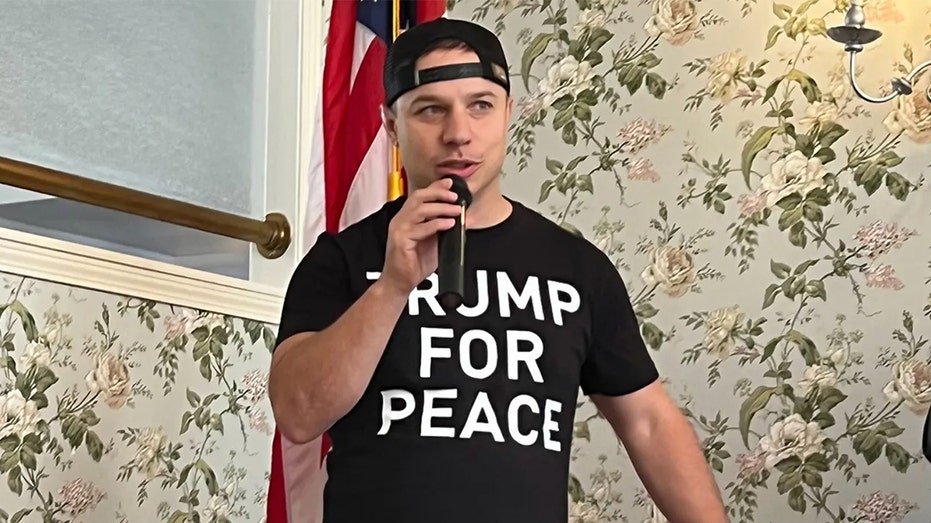
Sticker Mule CEO Anthony Constantino speaks at an event in New York. (Paul Antonelli)
“For some reason they were mislabeled and we asked Google to fix that as it’s hurting our brand. Smullen has already been served with multiple cease and desists for lying,” Constantino wrote in a March 30 post on X.
Smullen has pushed back, disputing the explanation, according to WPTZ.
“It’s quite clear that my opponent has been violating the federal law, having to do with co-mingling his business and campaign activities and funds,” Smullen said. “He’s been lying about it, this whole thing.”
Earlier this year, President Donald Trump endorsed Constantino in the race.
“It is my Great Honor to endorse America First Patriot, Anthony Constantino, who is running to represent the fantastic people of New York’s 21st Congressional District,” Trump wrote on Truth Social.
TECH CEO WHO WENT VIRAL FOR PRO-TRUMP EMAIL DEFENDS CALL TO ACTION OVER ‘POLITICAL HATE’
A Google logo is displayed outside an office building on December 12, 2025, in San Diego, California. (Kevin Carter/Getty Images / Getty Images)
Constantino told Fox News Digital at the time that he spoke with Trump and was honored to receive the nod.
“He noted every primary candidate he endorses wins, so I look forward to winning the general election and making everyone who supported me very proud once I am in Congress,” Constantino said.
GET FOX BUSINESS ON THE GO BY CLICKING HERE
Google and Smullen did not immediately respond to FOX Business’ request for comment.
Fox News Digital’s Brian Flood and Louis Casiano contributed to this report.

Prospects Report: Landon DuPont, Silvertips eye elusive title

Best Gifts for Hikers, Backpackers, Outdoorsy People (2026)

Manchester Airport launches direct Algiers flights

Manchester United reach agreement with Casemiro over contract clause amid transfer speculation

US brings back mandatory military draft registration

Steven Gerrard disagrees with Gary Neville over ‘shock’ Chelsea and Arsenal claim | Football


-

 Tech3 days ago
Register Renaming | Hackaday
-

 Fashion6 days ago
Weekend Open Thread – Corporette.com
-
 Crypto World5 days ago
Hyperliquid $HYPE Rally Builds Momentum as AI Sector Enters Prove-It Phase
-

 Business6 days ago
Patterson-UTI Energy, Inc. (PTEN) Q1 2026 Earnings Call Transcript
-
 Sports4 days ago
IPL 2026: Ruturaj Gaikwad registers slowest fifty of the season, enters all-time unwanted list | Cricket News
-

 Politics3 days ago
Drax board avoid their own AGM, accused of greenwashing & environmental racism
-

 NewsBeat4 days ago
LK Bennett closes all stores after entering administration
-

 Crypto World6 days ago
Michael Saylor says BTC winter is over. Market analyst disagrees, says bitcoin was in a pullback
-

 Fashion2 days ago
Kylie Jenner’s KHY Enters a New Era with ‘Born in LA’
-

 Tech3 days ago
Images of Samsung’s rumored smart glasses have leaked
-
 Entertainment5 days ago
Mariah Carey Slams Deposition Claims In Brother’s Lawsuit
-

 Business2 days ago
Most Commercial Energy Audits Miss the Real Losses
-
Crypto World7 days ago
Is Algorand One of the Few Quantum-Resistant Blockchains? Here’s What the Data Shows
-
 NewsBeat6 days ago
Trump threatens to review UK’s claim to Falkland Islands and punish Nato allies over Iran war disagreement
-
 Business6 days ago
Jeanine Pirro announces closure of Federal Reserve building cost probe
-

 Tech3 days ago
Why Blue Badges Disappeared From Toyota Hybrids
-

 Business3 days ago
(VIDEO) Charlize Theron Climbs Times Square Billboard to Promote New Netflix Thriller ‘Apex’
-

 Crypto World7 days ago
Kraken Builds Beyond Crypto With Futures, Tokenized Stocks, and Payments
-

 Tech4 days ago
Microsoft to roll out Entra passkeys on Windows in late April
-

 Crypto World2 days ago
CFTC’s AI will review U.S. crypto registration applications, chairman tells CoinDesk
You must be logged in to post a comment Login