European aviation is staring down the barrel of a fuel crisis that could ground flights across the continent by June, the International Energy Agency has warned, with reserves thinning at an alarming pace and replacement supplies proving stubbornly difficult to secure.
In its latest monthly oil market report, the Paris-based watchdog, which counsels 32 member states on energy security, said Europe was sitting on roughly six weeks’ worth of jet fuel. Unless the bloc can source at least half of the volumes it would ordinarily draw from the Middle East, stocks will hit a critical threshold within weeks.
The warning comes as the Strait of Hormuz, the artery through which the bulk of Gulf jet fuel flows to international markets, remains effectively shut. Iran moved to close the waterway more than six weeks ago in retaliation for joint American and Israeli military strikes, and the blockade has sent kerosene prices soaring and rattled airline finance directors from Luton to Lisbon.
Speaking to the Associated Press, IEA executive director Fatih Birol did not mince his words: flight cancellations, he cautioned, could be weeks away if the taps remain shut.
Historically, Europe has leaned on the Gulf for around three-quarters of its imported jet fuel. The IEA noted that refineries in other major exporting nations, South Korea, India and China chief among them, are themselves heavily reliant on Middle Eastern crude, meaning the disruption has, in its own phrasing, jammed the gears of the global aviation fuel market.
Advertisement
European buyers are now scrambling to plug the gap. American refiners have sharply accelerated jet fuel exports in recent weeks, but the IEA reckons that even if every barrel leaving US shores were routed to European airports, it would cover only a little over half the shortfall.
Under the agency’s modelling, a replacement rate below 50 per cent would trigger physical shortages at selected airports, forcing cancellations and what analysts politely term “demand destruction”. Even if three-quarters of the missing volumes can be replaced, the same squeeze is expected to bite by August. The upshot, the IEA concluded, is that European markets will need to hustle considerably harder to attract cargoes from alternative sources if inventories are to hold through the summer peak.
The financial strain on carriers is already acute. Fuel typically accounts for between 20 and 40 per cent of an airline’s operating costs, and the benchmark European jet fuel price touched a record $1,838 (£1,387) per tonne at the start of April, more than double the $831 recorded before hostilities erupted.
Brussels, for its part, is treading carefully. The European Commission said this week there was no evidence of shortages within the EU but conceded that supply issues could surface in the near future. A spokesperson confirmed that crude flows to European refineries remained stable with no immediate need to tap strategic reserves, adding that oil and gas coordination groups were now meeting weekly. Commission president Ursula von der Leyen is expected to unveil a package of energy measures next week.
Advertisement
The mood at Europe’s airports is less sanguine. Airports Council International, the continent’s airport trade body, wrote to the Commission last week warning that fuel shortages could materialise unless the Strait of Hormuz reopens within three weeks.
The pressure is already showing on airline balance sheets. In a trading update on Thursday, EasyJet said it had absorbed £25m of additional fuel costs in March alone as a direct consequence of the Middle East conflict, and that was despite the Luton-based low-cost carrier having hedged more than three-quarters of its jet fuel requirement at pre-war prices. The airline flagged near-term uncertainty over both fuel costs and passenger demand, a combination that rarely bodes well for earnings.
For SME operators in the aviation supply chain, ground handlers, charter firms, regional carriers and the small logistics businesses that depend on dependable air freight, the coming weeks will be a test of cash reserves and commercial nerve. With prices at record highs and supply far from guaranteed, the summer schedule is shaping up to be the most precarious Europe’s aviation sector has faced in a generation.
Amy Ingham
Amy is a newly qualified journalist specialising in business journalism at Business Matters with responsibility for news content for what is now the UK’s largest print and online source of current business news.
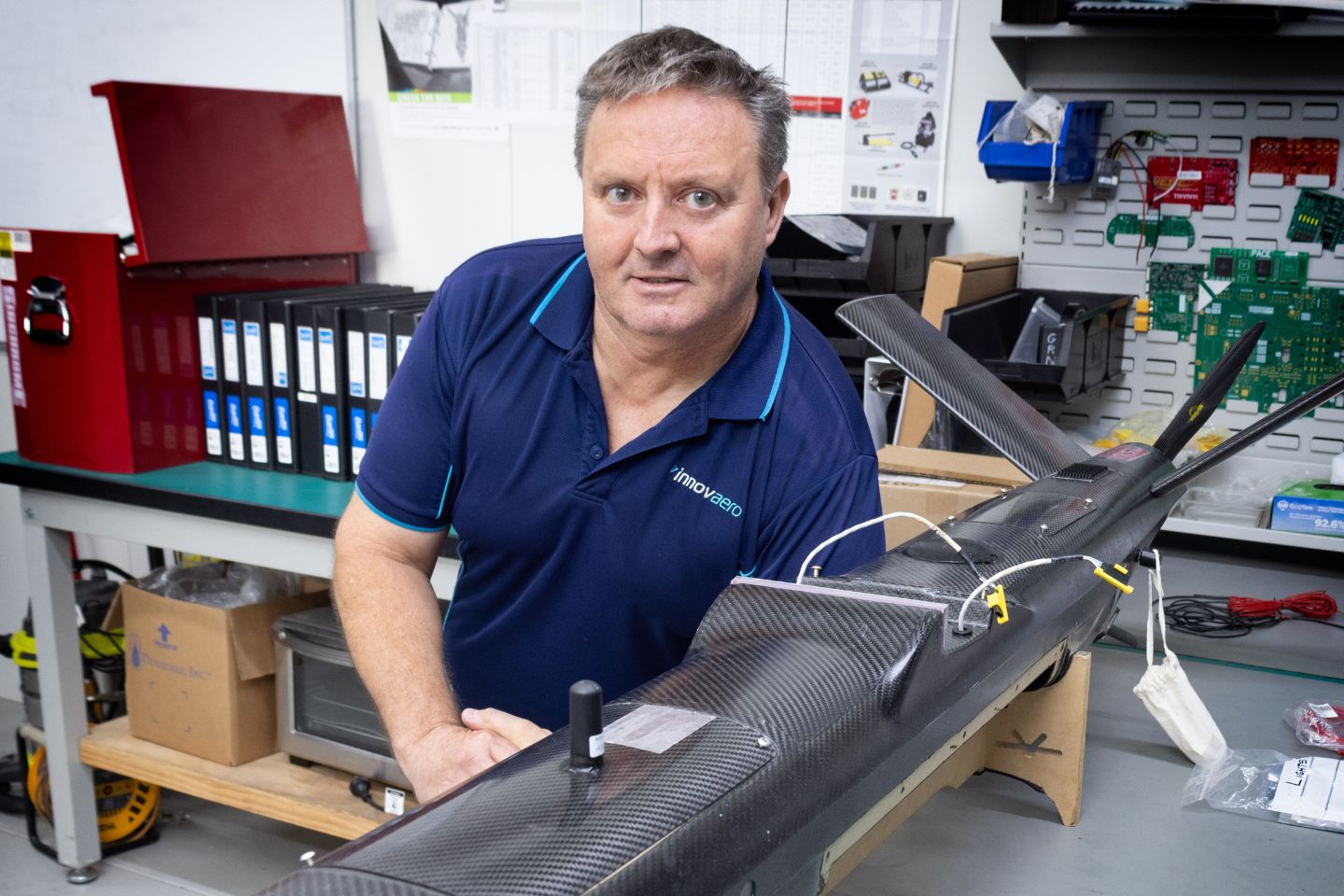
Perth-based drone manufacturer Innovaero will collaborate with Australian munitions company NIOA to develop a range of modular warheads and launch systems for loitering munitions.
The U.S. Internal Revenue Service (IRS) building stands after it was reported the IRS will lay off about 6,700 employees, a restructuring that could strain the tax-collecting agency’s resources during the critical tax-filing season, in Washington, D.C., Feb. 20, 2025.
Kent Nishimura | Reuters
A version of this article first appeared in CNBC’s Inside Wealth newsletter with Robert Frank, a weekly guide to the high-net-worth investor and consumer. Sign up to receive future editions, straight to your inbox.
Advertisement
For seven years, wealthy Americans faced a looming deadline to take advantage of tax provisions that were set to expire at the end of 2025. While the One Big Beautiful Bill Act alleviated much of the uncertainty by making most of the cuts permanent, lawyers and tax accountants say the ever-shifting tax code requires constant planning.
With this year’s Tax Day now behind us, here are five of the most important planning strategies wealthy investors and high earners are thinking about for next year and beyond.
1. Long-short tax-loss harvesting
Last year’s tax bill permanently raised the estate tax exemption to $15 million per person, up from $13.99 million. (It was initially set to be cut in half at the end of 2025.)
The higher threshold has prompted a shift in focus from minimizing federal estate taxes to lowering taxes on income and capital gains. Minimizing capital gains has become crucial after several years of strong market gains, according to Mitchell Drossman, head of national wealth strategies in Bank of America’s chief investment office. The S&P 500 has surged more than 75% since the beginning of 2023.
Advertisement
“The biggest tax story to me is a capital gains and investing story,” said Drossman. “You have lots of clients who are sitting on significant gains.”
Investors are increasingly turning to long-short tax-loss harvesting, an aggressive form of a popular strategy, in order to minimize capital gains, Drossman said. With traditional tax-loss harvesting, investors sell losing assets to offset realized gains on others. Long-short tax strategies, on the other hand, borrow against the portfolio to buy short positions expected to fall and maintain long positions expected to thrive.
“If there’s natural volatility in the markets, you have, now, a greater amount of an asset base to choose from in terms of harvesting losses,” he said. “But when you look at your overall portfolio, you’re still kind of neutral.”
2. Bonus depreciation
The 2025 tax bill renewed bonus depreciation, allowing businesses to deduct the full cost of qualifying assets like machinery, computers or vehicles the first year they are used.
Advertisement
Adam Ludman, head of tax strategy at J.P. Morgan Private Bank, said many clients with operating businesses are investing with bonus depreciation in mind, such as buying private jets.
Real estate developers and investors are trying to get the most bang for their buck by assessing which parts of their properties can be depreciated faster, according to Ludman. For instance, while a commercial building can take 39 years to depreciate, a parking lot can be depreciated over 15 years, allowing owners to recover costs faster.
Get Inside Wealth directly to your inbox
3. Changing domiciles
A wave of blue states are considering new taxes on top earners and high-net-worth individuals in order to cover cuts in federal aid. California’s one-time billionaire tax proposal may end up on the November ballot, while Maine and Washington have recently passed millionaire taxes.
Jane Ditelberg, chief tax strategist for Northern Trust Wealth Management, said a growing number of clients are asking how to change their tax status as these proposals gain traction. Depending on their state, residents can avoid state-level taxes by creating trusts in states with favorable trust income laws like Delaware.
Advertisement
The most straightforward way to avoid local taxes is to change your domicile, which is easier said than done, according to Jere Doyle of BNY Wealth. The senior estate planning strategist based in Massachusetts, which imposes a millionaire tax, said he has had clients move to New Hampshire and establish residency before selling their businesses.
But clients are often loath to take the steps necessary to establish intent not to return, Doyle said. For instance, moving to Florida may not be enough to avoid Massachusetts taxes if you refuse to sell your Martha’s Vineyard home, he said.
“Everyone thinks that if they spend 183 days in another state, you’re domiciled in that state. That’s not necessarily true. Each state’s a little bit different,” he said. “You [have] got to change where you vote, where your car is registered, even where your doctors are, what clubs you belong to, golf clubs, country clubs, things like that.”
The bill limits top-earning donors in two ways. First, starting this year, donors who itemize will only be able to deduct charitable contributions in excess of 0.5% of their adjusted gross income, or AGI.
Second, taxpayers in the 37% tax bracket will have their itemized deductions reduced by 2/37th of the value. This ceiling reduces the effective tax benefit from 37% to 35%.
Ditelberg said many clients accelerated their charitable giving last year before these new rules took effect. She said she anticipates clients will continue to “bunch” their donations, by giving a larger sum in one year rather than spreading it over multiple years, so they only trigger the 0.5% haircut once, either through their foundations or donor-advised funds.
5. Opportunity zones
The tax bill also offered an incentive for business owners and real estate owners to postpone selling their assets. The bill made permanent the qualified opportunity zone program, which allows investors to defer capital gains by rolling them over into a fund that invests in a low-income community.
Advertisement
The opportunity zone funds created under the first Trump administration still exist, but you can only defer the taxes until the end of the year. The new opportunity zones, which have yet to be designated, come with enhanced benefits, especially for investors in rural communities. For instance, if you hold your investment in a qualified rural opportunity fund for five years, your capital gains are reduced by 30% for tax purposes.
But you only have 180 days to roll over your gains, and the new opportunity zone rules don’t take effect until 2027, Ditelberg noted.
“If you’re thinking of incurring a major gain, you may want to defer it until August or September, instead of doing it in May or June, if you think you would like to take advantage of the opportunity zone deferral,” she said. “I think we’re going to see people who are incurring gains in the second half of this year.”
That said, investors are waiting to see what the new funds entail. Drossman said some clients are reluctant to invest in opportunity zones again after their previous investments underperformed.
Advertisement
“It’s a classic example of not letting the tax-tail wag the dog because these need to be sound investments,” he said. “Like with all investments, there is an element of risk and return.”
It has secured backing in a round led by the Development Bank of Wales
Left to right: Cai Gwinnutt, co-founder of Openmoove; Mike Rees, Investment Executive at the Development Bank of Wales; Ross McKenzie, CEO and co-founder of Openmoove.
Cardiff-based property tech venture Openmoove is looking to scale-up following a £700,000 equity investment round boost.
The tech start-up has secured £350,000 equity from the £20m Wales Technology Fund, managed by the Development Bank of Wales, matched with a £335,000 investment from early-stage venture firm, HAATCH and a group of Welsh angel investors. The deal marks the second time HAATCH and the Development Bank have invested together.
Founded in 2024 by Ross McKenzie and Cai Gwinnutt, Openmoove has developed a business to business platform designed to streamline the workflows of estate agents, conveyancers and mortgage brokers, helping reduce administration, improve communication and make property transactions easier to manage for all parties involved.
It has spent the last 18 months building and refining its product, testing it with early customers and securing commercial interest from major estate agency groups and conveyancers. The investment will now enable the business to scale up its team, accelerate market activity and roll out the platform more widely.
Advertisement
The funding is expected to create six jobs in Cardiff in the coming months. Chief executive Mr McKenzie brings extensive experience in the property sector, having held senior roles at Purplebricks and Countrywide before founding Cardiff-based estate agency Isla-Alexander. The firm’s chief technology officer Mr Gwinnutt, brings 20 years of experience across start-ups and engineering, with previous roles including OnExamination, Amplyfi, Cyber Innovation Hub and Tramshed Tech.
Mr McKenzie said:“We’ve spent the last 18 months building the product, working closely with estate agents, conveyancers and mortgage brokers, and proving there is real demand for a better way to manage the property transaction process. This investment gives us the backing to scale up, build our team in Cardiff and start rolling the platform out more widely.
“We’re proud to be building Openmoove in Wales. This is a Welsh business, founded by two people who have grown up and built their careers here, and we’re excited to be creating jobs in Cardiff as we move into the next phase of growth.”
Mr Gwinnutt added:“Our focus has been on creating technology that fits around the systems professionals already use, rather than forcing them to change behaviour or adopt a completely new way of working. We’ve developed a market-ready product, tested it with early customers and are now in a strong position to accelerate our growth.“This funding allows us to keep building with intent — expanding the team, strengthening the platform and taking a product that will improve the way property transactions happen.”
Advertisement
Mike Rees, investment executive at the Development Bank of Wales, said: “Ross and Cai have combined deep sector knowledge with strong technical expertise to build a compelling platform in a large and important market. They have made significant progress in a short space of time, developing the product, securing early commercial interest and setting out a clear route to growth.
“Our investment from the Wales Technology Fund will help Openmoove scale from Cardiff, create new jobs and build on the commercial foundations already in place. It is also encouraging to be investing alongside HAATCH again, demonstrating the value of co-investment in supporting ambitious Welsh businesses with high-growth potential.”
India’s mining and metals sectors are flashing opportunity signals, with spot price surges in coal and iron ore creating a compelling earnings catalyst for Coal India and NMDC, according to Siddhartha Khemka, Head of Retail Research at brokerage firm Motilal Oswal.
“Coal India is expected to see a 6% QoQ volume growth while NMDC is likely to see a strong 20% QoQ volume growth,” Khemka told ET Now, adding that rising e-auction premiums stand to materially boost Coal India’s profitability. The stock is his preferred pick within the mining space, underpinned by a structural demand thesis: India’s thermal power requirements are set to climb sharply, driven by an expected intense summer season and the longer-term electricity appetite of AI infrastructure and data centres.
Motilal is pencilling in approximately 9% sequential revenue growth for the sector, with realisations improving by Rs 4,000–5,000 per tonne on a sequential basis. Hot-rolled coil prices are seen rising by Rs 6,700 per tonne and rebars by Rs 10,000 per tonne. Base industrial metals are the standout performers — aluminium and copper are tracking 13%–16% sequential improvement, supported by constrained supply and robust global demand. Chinese export prices and EU prices have also firmed, with the latter up around 9% sequentially.
Within non-ferrous metals, Khemka singles out Nalco, citing strong alumina volumes, higher alumina prices, a debt-free balance sheet, and a multi-year capacity expansion roadmap. On the ferrous side, Jindal Stainless earns a place in his portfolio for its shift toward higher value-added products and its exposure to firming nickel prices. Alongside Coal India, these three names constitute his metals picks for the current cycle.
Advertisement
Banking: The Tide Turns Toward Private
Live Events
The Q4 earnings season is set to expose a widening gulf between India’s private and public sector banks. Khemka projects aggregate earnings growth of roughly 12% year-on-year for private banks, against a meagre 2% for their PSU counterparts, a gap he attributes squarely to base effects and the NIM recovery dynamic now unfolding. With the Reserve Bank of India having held rates steady, banks that spent much of the last financial year passing on cuts to borrowers are beginning to see margins stabilise and recover. “With the status quo maintained, they will be able to see a stronger NIM improvement,” Khemka said. SBI remains Motilal Oswal’s top pick in the large-bank space. Khemka forecasts a 13% earnings CAGR over the next two to three years, with return on assets of 1.1% and return on equity of approximately 16% — all while the stock continues to trade at a meaningful discount to HDFC Bank and ICICI Bank. “Despite the ups and downs in the market, in the industry, in the environment, SBI has been delivering on a consistent basis,” he said. ICICI Bank follows closely. After a period of valuation-driven caution, a time correction in the stock has brought multiples to more comfortable levels. Khemka sees domestic loan growth of around 12%, steady NIMs of approximately 4.3%, and best-in-class asset quality supporting a re-rating toward 2.2 times one-year forward adjusted price-to-book, up from current levels near 1.8 times.
The auto sector delivered a strong Q4 on volumes, with the overall segment clocking 23% growth. Tractors led at 33%, followed by two-wheelers at 25% and commercial vehicles at 22%, the latter benefiting from a cyclical recovery. Passenger vehicles lagged at 15%. Input cost pressures are a headwind, but Khemka remains bullish on two-wheelers, tractors, and CVs as the three sub-segments to watch.
Advertisement
Within consumption, jewellery has proven resilient despite gold’s sharp rally, making Titan its top pick in discretionary. Radico Khaitan is expected to deliver strong numbers in the liquor space. Among staples, Marico screens well. Quick-service restaurants show early signs of recovery but face near-term uncertainty from LPG supply disruptions.
(Disclaimer: Recommendations, suggestions, views and opinions given by the experts are their own. These do not represent the views of The Economic Times)
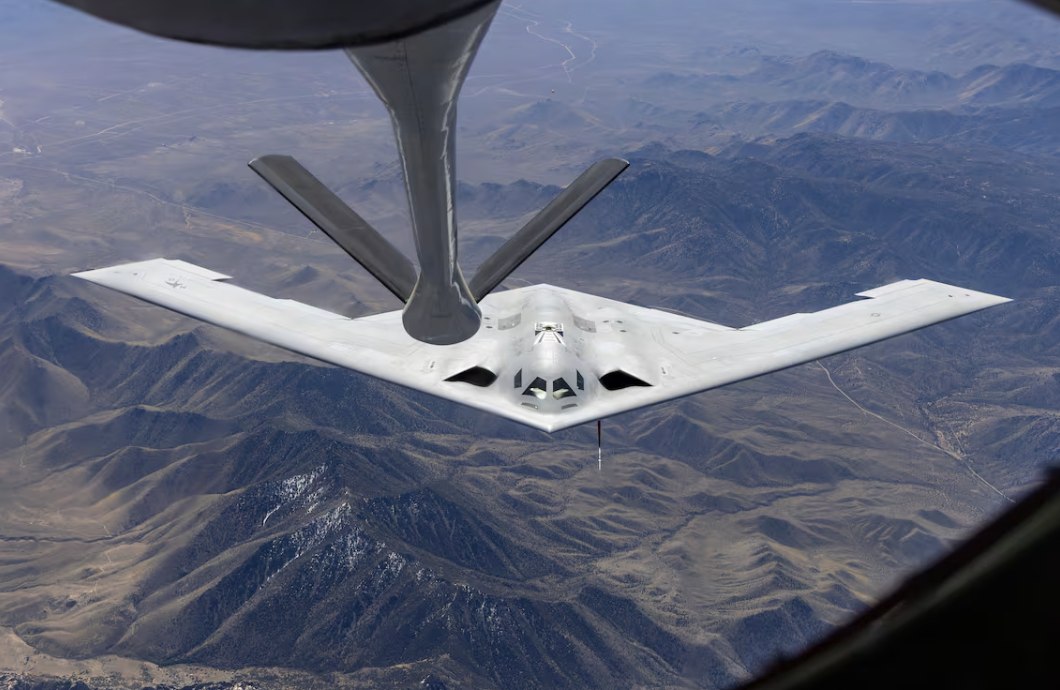
WASHINGTON — The U.S. Air Force released striking new images of its next-generation B-21 Raider stealth bomber in midair refueling this week, a dramatic public display that comes amid heightened tensions with Iran and underscores America’s advancing long-range strike capabilities.
US Air Force Boldly Reveals B-21 Raider Stealth Bomber, Mocking Iranian Radar Defenses
The photographs, shared Tuesday by the Air Force and analyzed widely by defense observers, offer the first clear overhead view of the B-21 Raider during aerial refueling with a KC-135 Stratotanker. The images highlight the aircraft’s sleek flying-wing design, refueling receptacle and subtle exhaust features, showcasing its advanced low-observable technology designed to evade even sophisticated enemy air defenses.
Military analysts and Korean media outlets quickly dubbed the B-21 “the sky’s assassin that laughs at radar,” framing the release as a deliberate show of force directed at adversaries like Iran following recent U.S. operations in the region. The timing amplifies the message: while the B-21 has not yet entered combat, its predecessor, the B-2 Spirit, played a pivotal role in striking deeply into Iranian territory during Operation Epic Fury.
The B-21 Raider, developed by Northrop Grumman, represents the first new American bomber in decades and is engineered as a dual-capable platform able to deliver both conventional and nuclear weapons. Smaller and more affordable than the B-2, the Raider is intended to form the backbone of the Air Force’s future bomber fleet, with plans calling for at least 100 aircraft and discussions of expanding to 145.
Recent flight testing milestones, including successful aerial refueling near Edwards Air Force Base in California, mark significant progress. The new overhead imagery reveals details that differentiate the B-21 from its larger predecessor, such as refined shaping and surface treatments aimed at further reducing its radar cross-section. Defense experts note that these features could allow the Raider to penetrate contested airspace with even greater impunity than the B-2.
Advertisement
The public reveal coincides with accelerated production efforts. In February and March 2026, the Air Force and Northrop Grumman finalized a $4.5 billion agreement to boost annual production capacity by approximately 25%. The move compresses delivery timelines while preserving cost and performance targets, driven in part by the demands of great-power competition and recent conflicts.
First operational B-21 Raiders are still slated for delivery to Ellsworth Air Force Base in South Dakota in 2027, though senior officials have signaled urgency. U.S. Strategic Command leaders have advocated for a larger fleet and even a potential second production line to meet emerging threats from Iran, China and Russia.
The B-21’s development has benefited from lessons learned in actual operations. During strikes against Iranian hardened targets and underground facilities, B-2 bombers demonstrated the unmatched value of stealth platforms in modern warfare. Operating without losses, the Spirits delivered precision munitions against heavily defended sites, proving that penetrating bombers remain essential even against integrated air defense systems.
Iranian officials have long boasted about their radar networks and anti-access capabilities, yet the B-2’s success exposed vulnerabilities. The B-21, with its improved stealth, networked systems and potentially lower operating costs, is positioned to exploit those gaps more effectively in future scenarios.
Advertisement
Air Force officials have been cautious about linking the new images directly to any specific adversary. However, the bold release of high-resolution photos — including the first full top-down perspective — sends a clear strategic signal at a time when regional tensions persist.
The Raider program remains highly classified, with many performance details withheld. What is known is that the aircraft builds on the B-2’s flying-wing configuration but incorporates modern manufacturing techniques, open-system architecture for easier upgrades and enhanced survivability features.
Test flights have ramped up in recent months. Multiple B-21 airframes are now involved in the program, with at least two aircraft conducting flights from Palmdale, California, and Edwards AFB. The recent refueling tests validate the bomber’s ability to extend its already impressive range, critical for global power projection without relying solely on forward bases.
Cost remains a key focus. Each B-21 is projected to cost significantly less than the B-2, which ran over $2 billion per aircraft in adjusted dollars. The Air Force aims to keep unit costs around $700 million or lower in current dollars, making the Raider more sustainable for a larger fleet.
Advertisement
Production acceleration comes as the broader bomber force faces strain. The Air Force’s current fleet of B-52s, B-1s and B-2s is aging, with the B-2 fleet particularly small at just 20 operational aircraft. The B-21 is designed not only to replace retiring bombers but to complement them in high-end conflicts.
Defense analysts say the images serve multiple purposes: reassuring allies, deterring potential aggressors and building public and congressional support for the program. In an era of rapid technological change, demonstrating tangible progress on a sixth-generation platform carries psychological weight.
Korean-language coverage, including headlines calling the B-21 the “radar-mocking sky assassin” that appeared defiantly before Iran, reflects global interest in how the aircraft could reshape deterrence in the Indo-Pacific and Middle East. South Korea and other U.S. partners view advanced American stealth capabilities as vital to countering regional threats.
Northrop Grumman has released limited additional details, emphasizing the aircraft’s maturation through ground and flight testing. Company executives have expressed confidence in meeting the 2027 initial operational capability target at Ellsworth.
Advertisement
Challenges remain. Integrating the B-21 into existing force structures, developing tactics for its unique capabilities and ensuring supply chain resilience for stealth materials will require sustained effort. The program has faced typical developmental hurdles, though officials describe progress as on track.
The new photographs also fuel speculation about future combat roles. With greater automation potential and improved sensor fusion, the Raider could one day operate alongside unmanned systems in collaborative combat aircraft concepts.
As testing continues, the Air Force plans further public and congressional briefings. The service has stressed that while the B-21 enhances conventional deterrence, it also bolsters the nuclear triad’s credibility.
The timing of the imagery release — just days after intense media focus on stealth operations in the Iran conflict — has not gone unnoticed. Some observers interpret it as psychological messaging: America’s stealth edge is not static but evolving rapidly.
Advertisement
Iranian state media has downplayed the significance, claiming its own air defenses and asymmetric capabilities would counter any new American bomber. However, the proven performance of the B-2 has already forced adversaries to reassess their strategies.
U.S. lawmakers from both parties have largely supported the B-21 program, viewing it as essential national security investment. Recent budget actions, including the so-called “One Big Beautiful Bill,” provided the funding flex needed to ramp up production without new appropriations fights.
Looking ahead, the Raider’s entry into service will mark a generational shift in bomber aviation. Its ability to loiter undetected, strike with precision and return safely could redefine how the U.S. projects power in an era of anti-access/area-denial threats.
For now, the sleek black silhouette captured against the sky during refueling serves as a potent reminder of ongoing American technological superiority in the air domain. As one defense commentator noted, the B-21 doesn’t just evade radar — in the eyes of adversaries, it appears to mock it.
Advertisement
The Air Force continues to withhold exact performance metrics, but the visual evidence of successful refueling and the accelerated production schedule suggest the “sky’s assassin” is steadily approaching operational reality.
With global tensions unlikely to ease soon, the B-21 Raider’s development carries strategic weight far beyond its airframe. It embodies a commitment to maintaining air dominance and long-range strike options well into the 21st century.























































You must be logged in to post a comment Login