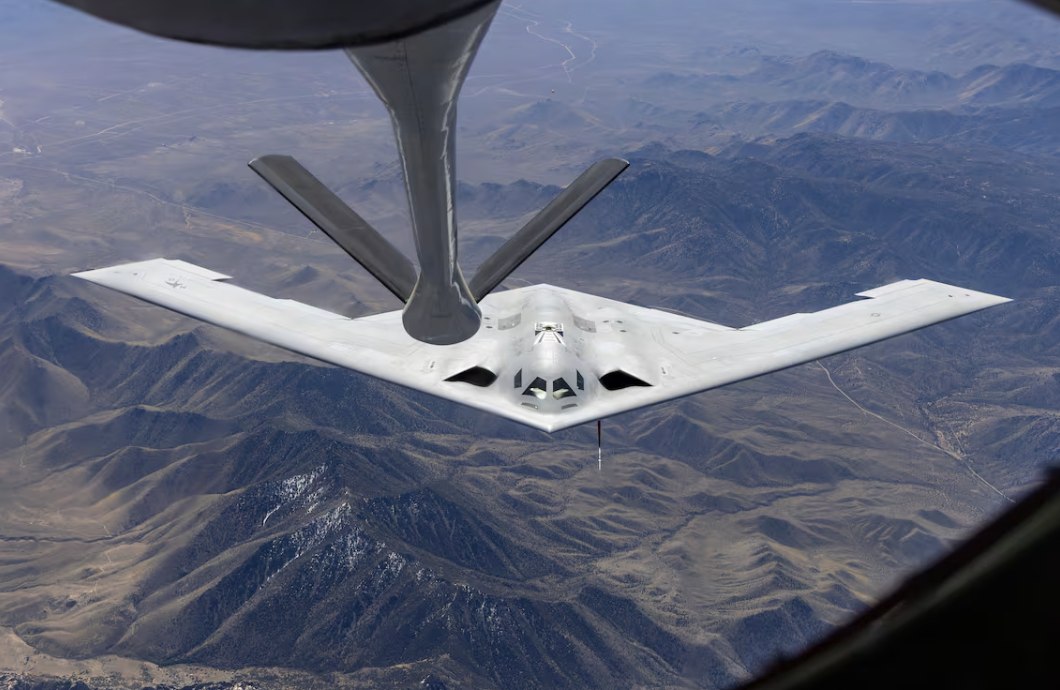
WASHINGTON — The U.S. Air Force released striking new images of its next-generation B-21 Raider stealth bomber in midair refueling this week, a dramatic public display that comes amid heightened tensions with Iran and underscores America’s advancing long-range strike capabilities.
US Air Force Boldly Reveals B-21 Raider Stealth Bomber, Mocking Iranian Radar Defenses
The photographs, shared Tuesday by the Air Force and analyzed widely by defense observers, offer the first clear overhead view of the B-21 Raider during aerial refueling with a KC-135 Stratotanker. The images highlight the aircraft’s sleek flying-wing design, refueling receptacle and subtle exhaust features, showcasing its advanced low-observable technology designed to evade even sophisticated enemy air defenses.
Military analysts and Korean media outlets quickly dubbed the B-21 “the sky’s assassin that laughs at radar,” framing the release as a deliberate show of force directed at adversaries like Iran following recent U.S. operations in the region. The timing amplifies the message: while the B-21 has not yet entered combat, its predecessor, the B-2 Spirit, played a pivotal role in striking deeply into Iranian territory during Operation Epic Fury.
The B-21 Raider, developed by Northrop Grumman, represents the first new American bomber in decades and is engineered as a dual-capable platform able to deliver both conventional and nuclear weapons. Smaller and more affordable than the B-2, the Raider is intended to form the backbone of the Air Force’s future bomber fleet, with plans calling for at least 100 aircraft and discussions of expanding to 145.
Recent flight testing milestones, including successful aerial refueling near Edwards Air Force Base in California, mark significant progress. The new overhead imagery reveals details that differentiate the B-21 from its larger predecessor, such as refined shaping and surface treatments aimed at further reducing its radar cross-section. Defense experts note that these features could allow the Raider to penetrate contested airspace with even greater impunity than the B-2.
Advertisement
The public reveal coincides with accelerated production efforts. In February and March 2026, the Air Force and Northrop Grumman finalized a $4.5 billion agreement to boost annual production capacity by approximately 25%. The move compresses delivery timelines while preserving cost and performance targets, driven in part by the demands of great-power competition and recent conflicts.
First operational B-21 Raiders are still slated for delivery to Ellsworth Air Force Base in South Dakota in 2027, though senior officials have signaled urgency. U.S. Strategic Command leaders have advocated for a larger fleet and even a potential second production line to meet emerging threats from Iran, China and Russia.
The B-21’s development has benefited from lessons learned in actual operations. During strikes against Iranian hardened targets and underground facilities, B-2 bombers demonstrated the unmatched value of stealth platforms in modern warfare. Operating without losses, the Spirits delivered precision munitions against heavily defended sites, proving that penetrating bombers remain essential even against integrated air defense systems.
Iranian officials have long boasted about their radar networks and anti-access capabilities, yet the B-2’s success exposed vulnerabilities. The B-21, with its improved stealth, networked systems and potentially lower operating costs, is positioned to exploit those gaps more effectively in future scenarios.
Advertisement
Air Force officials have been cautious about linking the new images directly to any specific adversary. However, the bold release of high-resolution photos — including the first full top-down perspective — sends a clear strategic signal at a time when regional tensions persist.
The Raider program remains highly classified, with many performance details withheld. What is known is that the aircraft builds on the B-2’s flying-wing configuration but incorporates modern manufacturing techniques, open-system architecture for easier upgrades and enhanced survivability features.
Test flights have ramped up in recent months. Multiple B-21 airframes are now involved in the program, with at least two aircraft conducting flights from Palmdale, California, and Edwards AFB. The recent refueling tests validate the bomber’s ability to extend its already impressive range, critical for global power projection without relying solely on forward bases.
Cost remains a key focus. Each B-21 is projected to cost significantly less than the B-2, which ran over $2 billion per aircraft in adjusted dollars. The Air Force aims to keep unit costs around $700 million or lower in current dollars, making the Raider more sustainable for a larger fleet.
Advertisement
Production acceleration comes as the broader bomber force faces strain. The Air Force’s current fleet of B-52s, B-1s and B-2s is aging, with the B-2 fleet particularly small at just 20 operational aircraft. The B-21 is designed not only to replace retiring bombers but to complement them in high-end conflicts.
Defense analysts say the images serve multiple purposes: reassuring allies, deterring potential aggressors and building public and congressional support for the program. In an era of rapid technological change, demonstrating tangible progress on a sixth-generation platform carries psychological weight.
Korean-language coverage, including headlines calling the B-21 the “radar-mocking sky assassin” that appeared defiantly before Iran, reflects global interest in how the aircraft could reshape deterrence in the Indo-Pacific and Middle East. South Korea and other U.S. partners view advanced American stealth capabilities as vital to countering regional threats.
Northrop Grumman has released limited additional details, emphasizing the aircraft’s maturation through ground and flight testing. Company executives have expressed confidence in meeting the 2027 initial operational capability target at Ellsworth.
Advertisement
Challenges remain. Integrating the B-21 into existing force structures, developing tactics for its unique capabilities and ensuring supply chain resilience for stealth materials will require sustained effort. The program has faced typical developmental hurdles, though officials describe progress as on track.
The new photographs also fuel speculation about future combat roles. With greater automation potential and improved sensor fusion, the Raider could one day operate alongside unmanned systems in collaborative combat aircraft concepts.
As testing continues, the Air Force plans further public and congressional briefings. The service has stressed that while the B-21 enhances conventional deterrence, it also bolsters the nuclear triad’s credibility.
The timing of the imagery release — just days after intense media focus on stealth operations in the Iran conflict — has not gone unnoticed. Some observers interpret it as psychological messaging: America’s stealth edge is not static but evolving rapidly.
Advertisement
Iranian state media has downplayed the significance, claiming its own air defenses and asymmetric capabilities would counter any new American bomber. However, the proven performance of the B-2 has already forced adversaries to reassess their strategies.
U.S. lawmakers from both parties have largely supported the B-21 program, viewing it as essential national security investment. Recent budget actions, including the so-called “One Big Beautiful Bill,” provided the funding flex needed to ramp up production without new appropriations fights.
Looking ahead, the Raider’s entry into service will mark a generational shift in bomber aviation. Its ability to loiter undetected, strike with precision and return safely could redefine how the U.S. projects power in an era of anti-access/area-denial threats.
For now, the sleek black silhouette captured against the sky during refueling serves as a potent reminder of ongoing American technological superiority in the air domain. As one defense commentator noted, the B-21 doesn’t just evade radar — in the eyes of adversaries, it appears to mock it.
Advertisement
The Air Force continues to withhold exact performance metrics, but the visual evidence of successful refueling and the accelerated production schedule suggest the “sky’s assassin” is steadily approaching operational reality.
With global tensions unlikely to ease soon, the B-21 Raider’s development carries strategic weight far beyond its airframe. It embodies a commitment to maintaining air dominance and long-range strike options well into the 21st century.
Mr Moulton and GM&C Life Sciences Fund join £4.3m funding round
Infex Therapeutics has secured £4.3m in funding(Image: Infex Therapeutics)
Venture capitalist Jon Moulton has backed a biotech firm that’s looking to tackle the “critical global threat” of infections that are resistant to antibiotics.
Infex Therapeutics, of Alderley Edge, has secured £4.3m in a funding round led by Mr Moulton alongside the GM&C Life Sciences Fund, managed by Catapult Ventures, and existing high net worth investors.
The company will use the funding to develop its pipeline of new anti-infectives targeting antimicrobial resistance (AMR) and other “critical-priority infectious diseases”.
Dr Peter Jackson, CEO of Infex Therapeutics, said: “We are delighted to secure this investment led by Jon Moulton, with support from the Greater Manchester and Cheshire Lifescience Investment Fund and our existing investors.
Advertisement
“This funding represents strong validation of our progress in developing novel anti-infectives to address the critical global threat of antimicrobial resistance.”
Jon Moulton, founder of Better Capital and now chair of Infex Therapeutics, said: “We have supported Infex from the beginning and continue to be impressed by the company’s scientific progress and strategic execution.”
He highlighted Infex’s lead programme RESP-X, which is being trialled as a therapy for non-cystic fibrosis bronchiectasis (NCFB) patients.
And he said: ”This additional investment reflects our strong conviction in both the team and its innovative approach to tackling antimicrobial resistance.
Advertisement
Nick Wright, CEO of Catapult Ventures which manages the GM&C Life Sciences Fund, said: “Infex Therapeutics has made excellent scientific progress since we first invested several years ago. The company has clearly established itself as a world leader in the AMR and related space and the data it is generating is very compelling.”
Gatestone Institute senior fellow Gordon Chang joins ‘Mornings with Maria’ to break down President Donald Trump’s Beijing trip, Iran tensions, and rising concerns over China’s economy and surveillance-linked EVs.
President Donald Trump is slated to visit China this week, and according to a White House official, business figures including Elon Musk, Apple CEO Tim Cook and more than a dozen others will travel to China with the U.S. delegation.
Blackrock CEO Larry Fink, Boeing CEO Kelly Ortberg, and Goldman Sachs CEO David Solomon are some of the other figures listed.
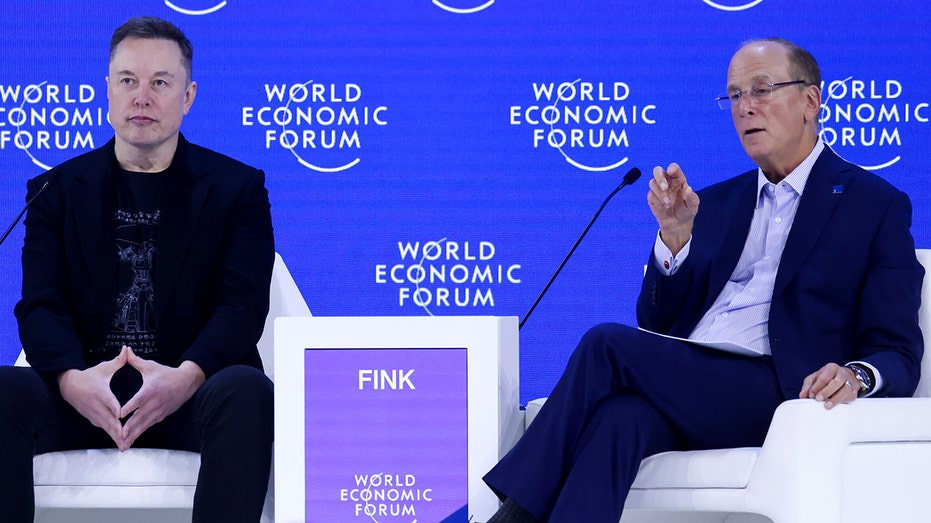
Elon Musk, chief executive officer of Tesla Inc., left, and Larry Fink, chief executive officer of BlackRock Inc., during the World Economic Forum (WEF) in Davos, Switzerland, on Thursday, Jan. 22, 2026. (Krisztian Bocsi/Bloomberg via Getty Images / Getty Images)
Others on the list provided by the White House official include Blackstone Chairman, CEO and co-founder Stephen Schwarzman, Cargill Board Chair and CEO Brian Sikes, Citi Board Chair and CEO Jane Fraser, Coherent CEO Jim Anderson, GE Aerospace chairman and CEO H. Lawrence Culp, Jr., Illumina CEO Jacob Thaysen, Mastercard CEO Michael Miebach, Meta President and Vice Chairman Dina Powell McCormick, Micron Chairman, President and CEO Sanjay Mehrotra, Qualcomm President and CEO Cristiano Amon and Visa CEO Ryan McInerney.
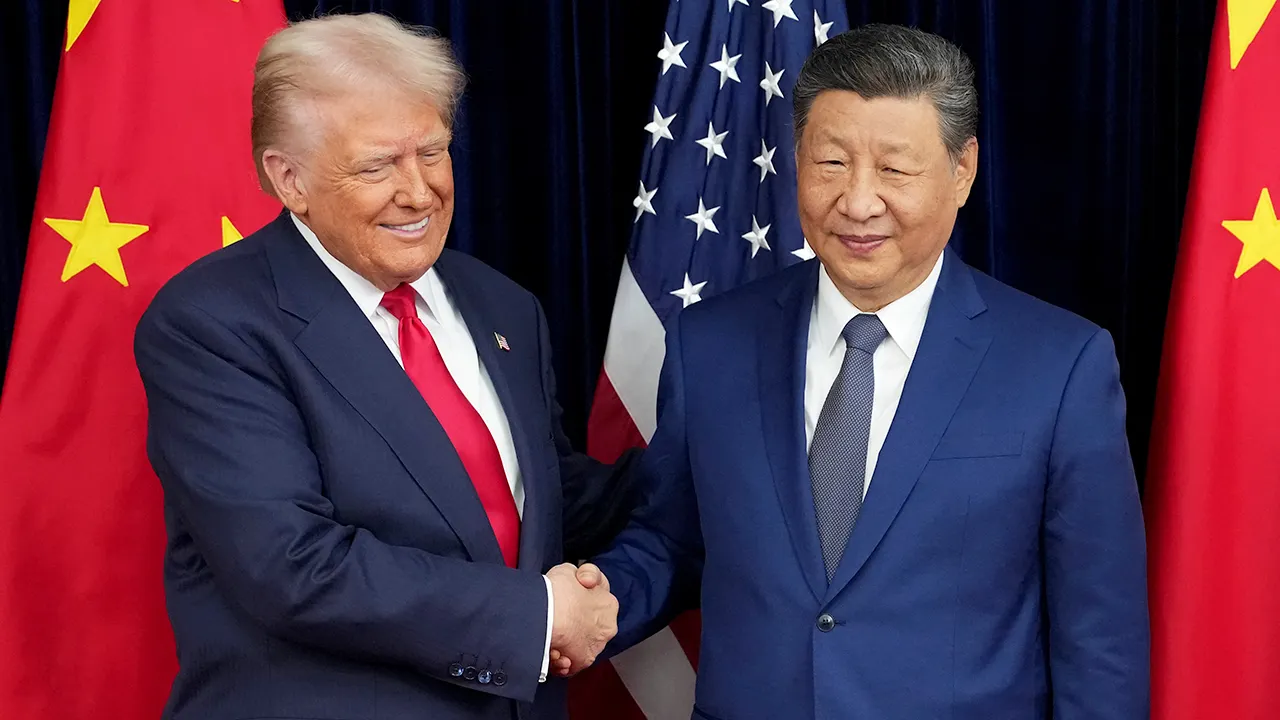
“I am very much looking forward to my trip to China, an amazing Country, with a Leader, President Xi, respected by all,” Trump declared in a Monday Truth Social post.
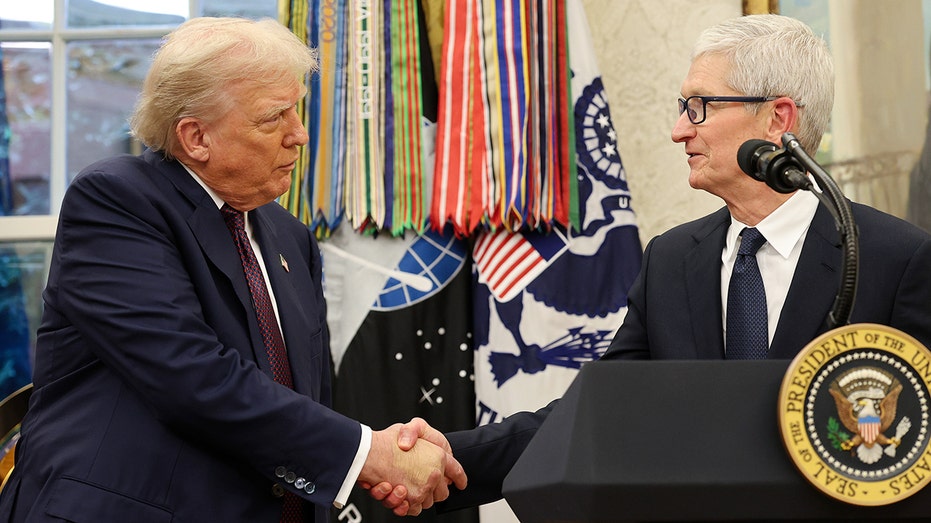
Apple CEO Tim Cook (R) shakes hands with U.S. President Donald Trump during an event in the Oval Office of the White House on Aug. 6, 2025 in Washington, D.C. (Win McNamee/Getty Images / Getty Images)
“Great things will happen for both Countries!” he added.
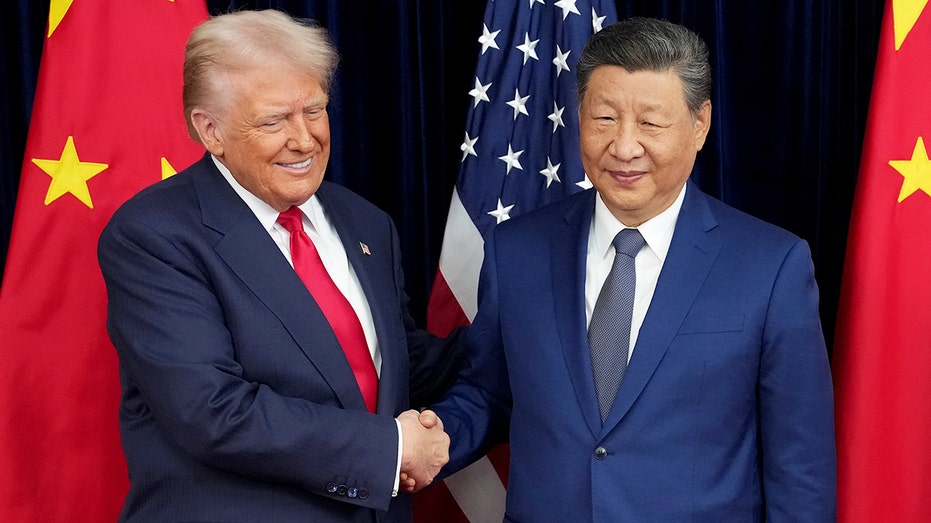
President Donald Trump met with Chinese President Xi Jinping in October in South Korea, according to Reuters.
U.S. President Donald Trump greets Chinese President Xi Jinping ahead of a bilateral meeting at Gimhae Air Base on Oct. 30, 2025 in Busan, South Korea. (Andrew Harnik/Getty Images / Getty Images)
Mike Ashley’s retail empire has scored a notable courtroom victory after the Court of Appeal threw out a substantial damages award handed down in a protracted trademark infringement dispute, sparing the FTSE-listed group what could have proved a punishing financial blow.
The ruling brings to a head a long-running tussle between the Shirebrook-based discount sports chain, rebranded as Frasers Group in 2019, and Lifestyle Equities, the company that owns and licenses the Beverly Hills Polo Club marque. Lifestyle Equities had alleged that Ashley’s group infringed its trademark by flogging goods under the rival ‘Santa Monica Polo Club’ label, a claim it first lodged back in 2018.
Frasers had lost the underlying infringement case seven years ago but mounted a fresh challenge against the scale of damages it was ordered to stump up. At an appeal hearing in April, the retailer’s lawyers argued that the bill should be slashed because the third-party companies trading under the Beverly Hills Polo Club name, and on whose behalf Lifestyle Equities was attempting to recover losses, had never been officially registered as licensees in the United Kingdom.
The Court of Appeal duly sided with the high street giant, ruling that it was “too late” for Lifestyle Equities to retrospectively register the licences in question. With the original claim dating back to 2018 and the licensing arrangements stretching back nearly a decade, the court concluded that the additional claims “appear to be well out of time” and that allowing them through would amount to an “unprincipled windfall” for businesses that had not properly placed themselves on the public register.
Counsel for Frasers warned during the appeal that permitting such claims to succeed would expose accused infringers to ambush litigation, leaving defendants “suddenly confronted with a Trojan Horse full of licensees claiming damages” of whose existence they had no prior knowledge. Without strict adherence to public registration, the retailer’s legal team argued, the regime risked becoming “a charter of unjust enrichment”, allowing trademark owners to scoop up compensation for unregistered partners alongside their own losses.
Advertisement
The judgment represents a material win for Frasers, which has shrugged off a potentially eye-watering damages bill that, had it stood, would have set an awkward precedent for the wider retail sector. The decision is likely to be studied closely by intellectual property lawyers and brand owners alike, given the implications for how licensing arrangements must be formally documented to be enforceable in the British courts.
The legal win follows news first reported by City AM that the magic circle-adjacent law firm RPC has lost one of its highest-billing partners, Jeremy Drew, who represents Ashley personally, to Taylor Wessing.
The trademark victory comes hard on the heels of an extraordinary admission by Ashley, the man who founded Sports Direct in his native Burnham in 1982 and ran it as chief executive until handing the reins to son-in-law Michael Murray in 2022.
The 61-year-old billionaire has confirmed publicly for the first time that he engineered the downfall of his most prominent retail adversary, the former JD Sports executive chairman Peter Cowgill.
Advertisement
Cowgill stepped down from the FTSE 100 trainer chain in 2022 in the wake of a Competition and Markets Authority probe, triggered after leaked footage emerged of him in a clandestine car park meeting with Footasylum chief executive Barry Brown. The pair had been expressly barred from exchanging commercially sensitive information while JD Sports was attempting to acquire Footasylum, and the leaked footage led the CMA to impose fines of nearly £5m on the two businesses.
In an interview with the Financial Times last weekend, Ashley conceded that the footage had been obtained by one of his own employees and said he was “not hiding from the fact” that he was the architect of Cowgill’s removal, a candid acknowledgement that lifts the lid on one of the more colourful boardroom feuds in recent British retail history.
Jamie Young
Jamie is Senior Reporter at Business Matters, bringing over a decade of experience in UK SME business reporting.
Jamie holds a degree in Business Administration and regularly participates in industry conferences and workshops.
When not reporting on the latest business developments, Jamie is passionate about mentoring up-and-coming journalists and entrepreneurs to inspire the next generation of business leaders.
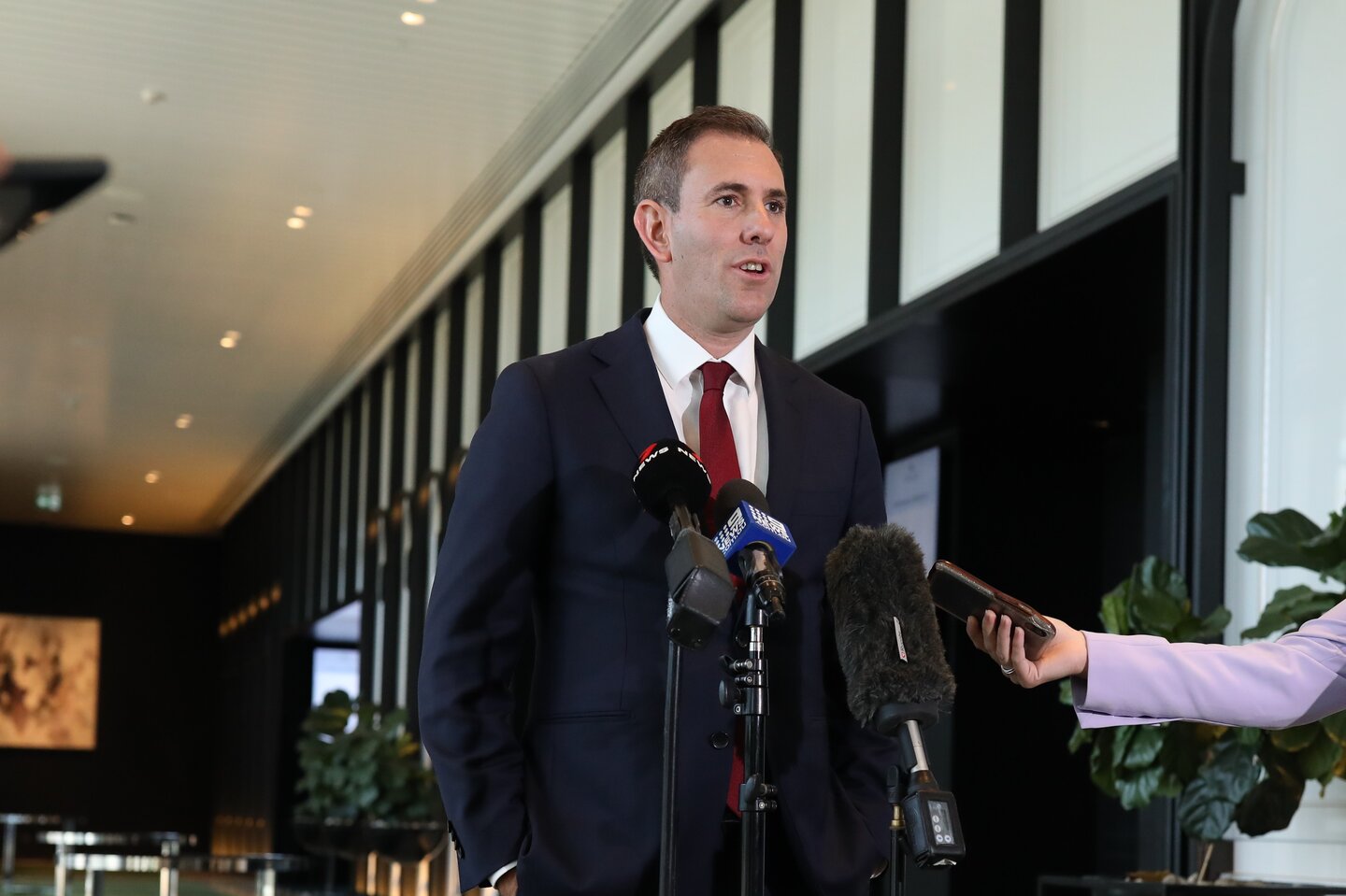
Treasurer Jim Chalmers, Prime Minister Anthony Albanese and Finance Minister Katy Gallagher have released a video online to confirm tax changes for property owners.
Sir Keir Starmer has confirmed that British Steel will be taken into full public ownership, ending months of speculation about the future of the loss-making Scunthorpe plant and drawing a line under fraught negotiations with its Chinese owner, Jingye.
In a speech designed in part to head off a brewing leadership challenge after Labour’s bruising local election results, the prime minister told supporters that emergency legislation would be laid before Parliament this week to grant ministers the powers needed to take “full ownership” of the business, subject to a public interest test.
“Public ownership is in the public interest,” Sir Keir said, adding that he intended to prove his “doubters” wrong and that, for the British public, “change cannot come quickly enough.”
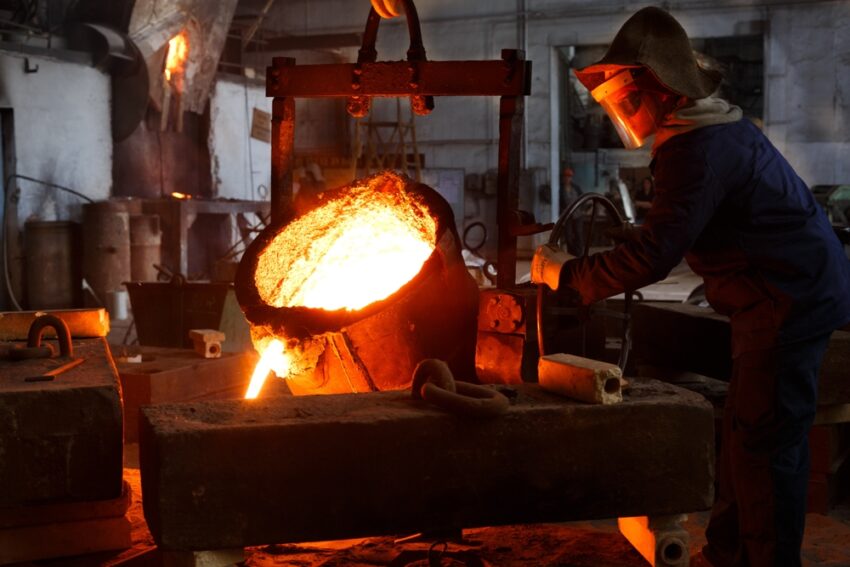
The decision marks a significant shift in approach. Whitehall had previously stopped short of full nationalisation, preferring instead to court private investors while keeping the blast furnaces alight through an emergency supervision regime. That regime was imposed last April after the government seized operational control of the Scunthorpe site amid mounting concerns that Jingye was preparing to switch the furnaces off, a step that would almost certainly have ended the United Kingdom’s ability to produce so-called virgin steel.
Virgin steel, smelted from iron ore rather than recycled scrap, is the grade used in heavy infrastructure projects, from new rail lines to large-scale construction. Restarting a blast furnace once it has gone cold is both technically forbidding and extraordinarily expensive, and the loss of that domestic capability has been viewed in Westminster as a strategic red line.
Advertisement
Talks with Jingye, the prime minister confirmed, had failed to produce a workable deal. “A commercial sale has not been possible, and now a public test could be met,” he said.
The response from the steel sector was swift and broadly supportive. Gareth Stace, director-general of trade body UK Steel, said the announcement offered “vital certainty” to the 2,700-strong Scunthorpe workforce, as well as the customers who rely on British Steel for rail, structural sections and specialist products.
“Maintaining domestic production capability for British Steel’s products is essential not only for economic growth but also for our national security and resilience,” Stace said.
However, he was clear that nationalisation alone would not be sufficient. “It is not an end goal,” he cautioned, urging ministers to use the moment as the “beginning of a clear and credible long-term plan for British Steel,” underpinned by a proper investment strategy.
Advertisement
The unions echoed that sentiment. In a joint statement, Roy Rickhuss, general secretary of the Community union, and Unite’s Sharon Graham said they “fully support” nationalisation, arguing that British Steel had a “bright future, with a world class highly skilled workforce making strategically important steels for the UK’s rail and infrastructure.” The pair also pressed the Treasury to mandate that government-funded projects source British-made steel — a long-standing demand of the domestic industry.
Charlotte Brumpton-Childs, national secretary of the GMB Union, said it was “right the government does everything in its power to secure its long term future.”
The Exchequer’s bill for propping up the company has already proved eye-watering. The National Audit Office reported in March that £377 million had been spent in just nine months to fund operations, wages and raw materials at Scunthorpe. Should the present rate of spending persist, the NAO warned, the total could exceed £1.5 billion by 2028, “depending on policy choices that may be taken in the future.”
The BBC understands the government is currently spending in the region of £1 million a day to keep the business afloat. Jingye, for its part, claimed the site was haemorrhaging £700,000 a day and was no longer commercially viable before ministers intervened.
Advertisement
No headline figure has yet been put on the cost of full nationalisation. Officials say an independent valuation of the business will be carried out once legislation is in place, with any compensation due to Jingye to be determined on the basis of that exercise.
It is not the first time the state has stepped in. The Insolvency Service ran British Steel for nine months following its 2019 collapse, at a cost to the taxpayer of around £600 million, before its sale to Jingye.
For the SME supply chain, the fabricators, hauliers and engineering firms clustered around Scunthorpe and across the wider Humber industrial corridor, the announcement removes the immediate threat of a catastrophic shutdown. Many of these businesses operate on tight margins and would have struggled to survive the loss of their principal customer.
The broader question, however, is whether public ownership can deliver the modernisation that successive private owners have failed to fund. Decarbonising primary steelmaking, replacing ageing blast furnaces with electric arc technology, and securing reliable long-term contracts with British infrastructure projects will all require capital commitments measured in billions, not millions.
Advertisement
The public interest test required to complete the takeover will weigh national security, the protection of critical national infrastructure and broader economic considerations. On all three counts, the government appears to have concluded that the case for intervention is now unanswerable.
Jamie Young
Jamie is Senior Reporter at Business Matters, bringing over a decade of experience in UK SME business reporting.
Jamie holds a degree in Business Administration and regularly participates in industry conferences and workshops.
When not reporting on the latest business developments, Jamie is passionate about mentoring up-and-coming journalists and entrepreneurs to inspire the next generation of business leaders.


























































You must be logged in to post a comment Login