Connect with us

Business

Yatharth Hospital shares jump 5% as Aster, Advent likely eye controlling stake

Published

on

Yatharth Hospital shares jump 5% as Aster, Advent likely eye controlling stake
Shares of Yatharth Hospital & Trauma Care Services jumped more than 5% amid buzz around Advent International and Blackstone-backed Aster DM Quality Care negotiating to acquire a controlling stake in the specialty hospital chain.

Yatharth Hospital shares surged to a fresh 52-week high of Rs 1,024.85 apiece on the NSE. India’s second-largest hospital chain is looking to consolidate amid a buyout spree by large private equity groups, people familiar with the matter told The Economic Times.

The existing promoters may retain a sliver of ownership, but final negotiations are still underway, the report said, adding that there is no guarantee that the talks will lead to a transaction. Yatharth, however, denied it is in any sale discussions.

Headquartered in Noida and Greater Noida, Yatharth has about nine hospitals with a total bed capacity of over 2,800. The company is targeting a total capacity of over 5,000 beds in the next three years through new facilities and expansion. Its footprint also covers Jhansi-Orchha in Madhya Pradesh and Faridabad in Haryana.

Advertisement

Advent has been a big backer of Indian pharma companies but has, so far, not made an investment in the hospitals sector other than a 2012 investment in Care Hospitals. Aster DM Quality Care, meanwhile, was formed by a mega merger of Moopen family-founded Aster DM Healthcare and Quality Care India, unifying four healthcare brands — Aster DM, CARE Hospitals, Evercare and KIMSHEALTH. It also saw two of the biggest PE groups, TPG and Blackstone, join forces to create the country’s second-largest healthcare chain.


Also read | Yatharth Hospitals draws interest from Aster, Advent as healthcare consolidation heats up

Yatharth Hospital share price

Yatharth Hospital shares jumped more than 18% in one week and 21% in one month, with the stock overall jumping around 50% in 2026 so far. The shares of the company have overall jumped 43% in three years.In the longer term, Yatharth Hospital shares have delivered multibagger returns of more than 167% in three years. The company currently has a market capitalisation of around Rs 9,676 crore.

For the first quarter ended June, Yatharth reported a 51% year-on-year increase in consolidated revenue to Rs 392.70 crore. Average revenue per occupied bed was at Rs 34,758, up 7% from a year ago. Whole-time director Yatharth Tyagi recently told analysts on an earnings call that the hospital chain grew at 37% in FY26 and is set to “easily surpass that growth” this year.

Also read | These 19 stocks turned into tenbaggers in 5 years: Peter Lynch’s rules to find the next

Advertisement

(Disclaimer: Recommendations, suggestions, views and opinions given by the experts are their own. These do not represent the views of The Economic Times)

Continue Reading
Click to comment

You must be logged in to post a comment Login

Leave a Reply

Business

U.S. Treasury yields rise amid Fed chief Warsh’s Jackson Hole opening remarks

Published

on


U.S. Treasury yields rise amid Fed chief Warsh’s Jackson Hole opening remarks

Continue Reading

Business

Go-ahead for major housing scheme at former Revlon factory site

Published

on

Business Live

The scheme in Maesteg will be delivered by the commercial arim of housing association Valleys to Coast and Tai Derw Developments

The former Revlon site in Maesteg.

Plans for a £41.8m housing scheme at the site of the former cosmetics Revlon factory in Maesteg have been approved.

The development will see more than 192 homes built at the brownfield that has been vacant for more than 12 years. It will be delivered by Sylfaen, the commercially driven development subsidiary of Bridgend-based housing association Valleys to Coast, in partnership with housebuilders Tai Derw Developments, an Edenstone Group company.

Advertisement

The site has become construction ready following £3.5m remediation funding from Bridgend County Borough Council and the Cardiff Capital Region.

Located adjacent to the Oakwood Estate and a short walk from Ewenny Road railway station, the project represents Sylfaen’s first scheme.

It will consist of 35 homes for social rent, 19 affordable rent homes, 54 shared ownership properties and 84 homes for open-market sale.

Work on-site is scheduled to commence in October, with the first homes expected to be ready by April 2027. Phased construction will continue through to target completion in 2031.

Advertisement

James Griffiths, managing director of Sylfaen, said:“For more than a decade, this site has stood empty, but soon it will be a vibrant, thriving neighborhood. By offering a true mix of social rent, affordable ownership, and open market sale properties, we are creating opportunity and meeting a range of local housing needs.

“Our goal is to build communities where people can grow, work and belong and we look forward to working closely with key partners and local residents as we turn this long-awaited vision into reality.”

The scheme will provide a contribution of more than £100,000 to support local initiatives. Revenue generated from the open-market sales will be reinvested to help strengthen Valleys to Coast’s ongoing investment in delivering and maintaining social homes across South Wales.

Sylfaen is also inviting local residents and customers to help shape the identity of the site by submitting naming suggestions for the development, its six new streets, and its eight house types, honoring the rich industrial heritage of the former Revlon factory.

Advertisement
Continue Reading

Business

Asda says sales set to return to growth for first time in two years

Published

on

Business Live

The private equity-backed retailer said it is still in the “foothills of recovery” as it continues to push ahead with a major turnaround plan, with like-for-like sales now rising for the first time in two years

Waterlooville, UK - May 2, 2018: Asda Stores Ltd. trading as Asda, is a British supermarket retailer. The logo is prominent above the glass fronted store-front. 
Advertising, products and Sshoppers are all visible.

An Asda store(Image: MMassel via Getty Images)

Supermarket giant Asda has acknowledged that the challenging economic climate has put pressure on household budgets, but has revealed sales are poised to return to growth for the first time in two years.

The Leeds-based retailer stressed it remains in the “foothills of recovery” as it presses on with an ambitious turnaround strategy. Chief executive Allan Leighton suggested the business is approximately a third of the way through its transformation programme.

Advertisement

Speaking to reporters, he said the group is broadly where he anticipated it would be following his return to Asda’s top role in late 2024, having previously steered the retailer 25 years ago.

“We have been very consistent with the fact the turnaround will take between three and five years,” Mr Leighton said. “Whenever someone says that they think it is taking a long time, I make it clear that for something of this scale, this is just how long it takes.”

His remarks came as Asda disclosed that sales have moved back into positive territory for the current quarter for the first time in two years.

Like-for-like sales for the opening seven weeks of the current quarter, stripping out fuel, have increased by 0.2%. The retailer said it is consequently closing the gap on its biggest supermarket competitors, having watched its slice of the UK market shrink in recent years.

Advertisement

On Friday, the Leeds-headquartered chain posted revenues of £5.1bn for the second quarter of 2026. It said like-for-like sales fell 2.3% for the quarter, with food sales declining 1.9% over the period.

Mr Leighton added: “We saw momentum build in Q2 with stable market share, and we’re now seeing that translate into more customers choosing Asda. While this progress is encouraging, we are still in the foothills of recovery.

“There’s still more work to do as we focus on building a stronger business for the long term.”

Michael Gleeson, Asda’s chief financial officer, said: “A challenging geopolitical and economic backdrop continued to weigh on consumer confidence and household budgets during Q2. Despite these pressures, our continued investment in price and the overall customer proposition means we continue to make steady progress in our turnaround journey.”

Advertisement

In May, Asda unveiled plans to join forces with retail technology giant Ocado in an effort to enhance its online grocery offering for customers.

Continue Reading

Business

AI memory chip shortages could push consumer electronics prices higher

Published

on

AI memory chip shortages could push consumer electronics prices higher

FIRST ON FOX: A new policy report warns that the AI data center boom could drive up the cost of laptops, smartphones, cars and other everyday products as chipmakers shift scarce memory-chip capacity toward more profitable AI applications.

The report, published by the Abundance Institute and first viewed by Fox News Digital, says manufacturers are shifting capacity toward high-bandwidth memory, or HBM, for AI data centers, constraining the supply of conventional DRAM used in consumer devices. 

Advertisement

To address the growing affordability concern, the report argues that Washington should avoid new tariffs and other trade restrictions that could further tighten supplies.

“You see consumer goods prices, consumer prices going up for average everyday technology because of this pull into the highest quality, highest capacity chipsets that are available, that are needed for the frontier models in AI,” former Rep. Patrick McHenry, R-N.C., told Fox News Digital, reacting to the new report.

“That has really tightened up the whole set of production from getting sand out of the ground and turning it into chips. Lower value to higher value, the cutting edge versus the second, third generation of chips. And all of this is really complicated, complicates things for consumers in a way that they cannot directly see, but they’re certainly being affected by it,” he said.

TRUMP SAYS ANY GOVERNOR OR MAYOR SHOULD WANT TO WELCOME AN AI DATA CENTER

Advertisement
Patrick McHenry speaks during a Senate Commerce Subcommittee on Consumer Protection, Technology, and Data Privacy hearing in Washington, DC, US, on Wednesday, May 20, 2026.

Patrick McHenry speaks during a Senate Commerce Subcommittee on Consumer Protection, Technology, and Data Privacy hearing in Washington, D.C., on Wednesday, May 20, 2026.  (Al Drago/Bloomberg via Getty Images / Getty Images)

 The report says the current memory-chip shortage differs from the COVID-era semiconductor crunch because it is driven largely by AI data centers’ growing demand, even as supply bottlenecks persist. But it warns consumers may face similar effects: higher prices, fewer available products and delays in replacing or upgrading phones, computers and other electronics.

“Demand is surging, and supply bottlenecks persist. However, this time, demand is driven by the rapid growth of data centers,” the paper read. “Hyperscale data center companies are buying unprecedented quantities of the world’s most advanced memory chips. American consumers will face the same consequences: higher prices, longer wait times for products, and supply shortages that may persist for years. The memory chip imbalance is quickly becoming yet another affordability concern for households and policymakers alike.”

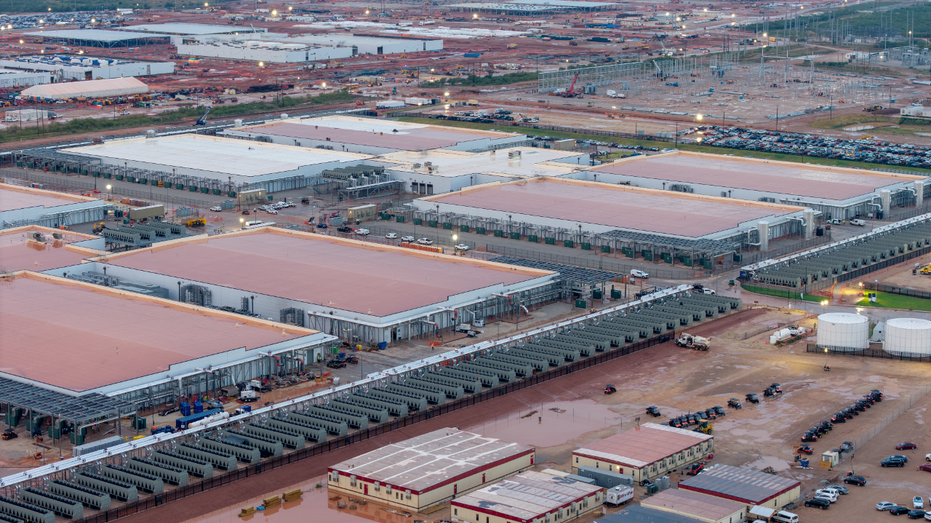
Stargate facility Abilene

The Stargate AI data center in Abilene, Texas, on Sept. 24, 2025. (Kyle Grillot/Bloomberg via Getty Images / Getty Images)

McHenry noted that tight supplies of memory chips — parts used in many everyday electronics — are helping push up consumer costs. He argued that less-advanced chips used in household products should be treated differently from the most sophisticated chips, which he said raise greater national-security concerns.

He also argued that efforts to de-risk supply chains from China are contributing to higher costs in the short term.

Advertisement

“When you change supply chains, it will have an impact for a period of time. And consumers will pay the price for moving supply chains out of existing production capacity into new production capacity. We’re experiencing that right now. Every large international corporation is de-risking from China,” McHenry said. “And so we can call that ‘reshoring’ here into the United States, ‘friendshoring’ for allies across the globe. You see that connected with the president’s trade agenda as well. But for a period of time during that reallocation of those resources, you’re going to see supply costs go up and supply being constrained as you’re rebuilding these supply chains.”

“But consumers are going to pay the price for that in the short term. And that’s what we’re trying to remedy through better policy to get those supply chains up and running faster so you have less consumer impact and better choices for consumers,” he added.

TRUMP WARNS AI RACE IS ‘BIGGEST THING’ IN HUNDREDS OF YEARS

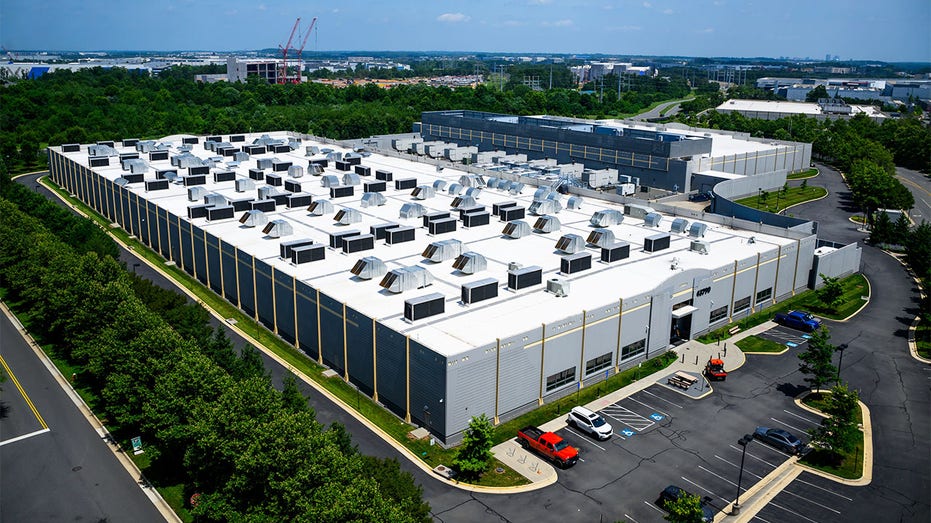
data center alley

“Data Center Alley” during high temperatures in Sterling, Virginia, US, on Monday, June 23, 2025. (Pete Kiehart/Bloomberg via Getty Images / Getty Images)

McHenry argued that the most advanced chips used to develop “frontier models” — AI systems with the most advanced capabilities — should be protected from China and produced through U.S. and allied supply chains. He said the resulting short-term price increases are a worthwhile tradeoff for national security.

Advertisement

“We’re over the hump, I believe, on these costs being borne by the American people,” McHenry said. “I think we’re actually more five to eight years into bearing that burden, and I think the next five years are going to be far better for the American consumer because of the policies that this administration has gotten right on energy, on production of chips here in the United States and having an important distinction between high-value chipsets, low-value chip sets, high-value technology, low-value technology and what that means for the American consumer and for national security. They’ve really balanced that in a very smart way.” 

McHenry explained lawmakers must balance national-security priorities with keeping consumer costs down by distinguishing cutting-edge chips from lower-end technologies used in everyday products.

“We want to make sure we have this full stack of production and capacity here in the United States. The Trump administration has prioritized that. That is a welcome and good thing. And over time, we’re going to see the benefits. The consumer is going to see the benefits, and then you have to have the distinction between those important matters and then all the stuff that should be freely tradeable around the globe,” McHenry said. “And it’s those lower-value things like memory chips that will have a major impact on consumers and the way that the American people live. We wanna be sensitive to that and we wanna be smart as American policymakers on that.”

The Abundance Institute report called on the Federal Trade Commission (FTC) to study how  major chipmakers allocate manufacturing capacity between conventional DRAM chips used in everyday electronics and high-bandwidth memory, or HBM, used in AI data centers. 

Advertisement

“The study could confirm that each firm is independently responding to price signals,” the policy report reads. 

GET FOX BUSINESS ON THE GO BY CLICKING HERE

McHenry argued that policymakers should distinguish between cutting-edge chips with national-security implications and lower-value chips used in consumer products.

Fox News Digital contacted the FTC for comment. 

Advertisement
Continue Reading

Business

Korn Ferry stock hits all-time high at 86.38 USD

Published

on


Korn Ferry stock hits all-time high at 86.38 USD

Continue Reading

Business

Mayor backs SeaGrown seaweed firm in carbon-negative Yorkshire region bid

Published

on

Business Live

SeaGrown, a Scarborough company creating jobs and protecting the environment with an innovative approach to growing seaweed and shellfish in the North Sea, has been backed by York and North Yorkshire’s elected Mayor, David Skaith, as the county aims to become England’s first carbon-negative region by 2040

Elected Mayor Of York And North Yorkshire, David Skaith, On Seagrown'S Boat. YNYCA

Elected Mayor Of York And North Yorkshire, David Skaith, On Seagrown’S Boat.(Image: Local Democracy Reporting Service)

The mayor of York and North Yorkshire has thrown his support behind an innovative seaweed cultivation firm as the region pushes to become England’s first carbon-negative area.

SeaGrown, a pioneering Scarborough-based company generating employment and safeguarding the environment through a groundbreaking approach to cultivating seaweed and shellfish in the North Sea, has secured the backing of the region’s elected Mayor, David Skaith.

Advertisement

The mayor recently joined the SeaGrown team aboard their workboat, Bright Blue, to witness first-hand how their revolutionary Kelpedo units are sustainably producing kelp four miles off the Scarborough coastline. The initiative, supported by combined authority funding, has allowed SeaGrown to recruit new personnel, including trainee marine crew members and scientists, to bolster their growing team.

Mr Skaith said: “We’ve got the landscape, coastline, expertise and the ambition to go further than any other region in England and become the first carbon-negative region by 2040. With my Carbon Negative Challenge Fund, we’re taking big steps towards our goal by backing the people behind our most pioneering projects.

“Just like our partners at SeaGrown, who are using our support to not only create jobs and growth in the county but also protect the rich biodiversity of our coast.”

David Skaith In Scarborough Harbour. YNYCA.

David Skaith In Scarborough(Image: Local Democracy Reporting Service)

Backed by funding from the York and North Yorkshire Mayor’s Carbon Negative Challenge Fund, the company has launched project SeaSwell — an initiative to transform Yorkshire seaweed into biostimulants for crop growth and food ingredients. The project holds significant potential to bolster the food and agricultural sectors across North Yorkshire, while simultaneously cutting carbon emissions, improving ocean health, and supporting biodiversity.

Advertisement

The firm was established in 2018 by Captain Wave Crookes, a former fisherman who has held senior positions within the Royal Navy and RNLI, alongside marine scientist Professor Laura Robinson. The pair first met while working on the British Antarctic Survey.

“Joining forces with York and North Yorkshire Combined Authority on Project SeaSwell lets us take what we do every day in the North Sea and put it to good use on land,” said Captain Crookes, SeaGrown founder and director.

He added: “We’ve been growing seaweed on our KelpedoTM units for years. Now we’re working with local partners to see what that seaweed can do for the region, with trials on biostimulants and food products aimed at cutting carbon emissions.

“The Combined Authority set out to make York and North Yorkshire England’s first carbon-negative region by 2040. At SeaGrown, we love a challenge, and we’re pleased to be adding our weight to this vital task.”

Advertisement

The Carbon Negative Challenge Fund is a multi-million-pound programme providing support to pioneering projects aimed at decarbonising the region while driving growth and backing businesses and communities. This encompasses community energy initiatives, building retrofitting schemes and sustainable agriculture projects.

The fund underpins York and North Yorkshire’s ambition to become England’s first carbon-negative region by 2040. York and North Yorkshire Combined Authority is due to publish its Strategy for a Sustainable Future this autumn. The document will set out how the county intends to achieve its 2040 target.

The business recently submitted an application to transform a farm shop and café at Flatts Farm, situated less than 1km inland from the east coast and roughly 250m south-east of Burniston, into a centre for seaweed and shellfish cultivation, research and development, and product processing.

SeaGrown explained that its former premises had become “too small to accommodate 16 members of staff, a larger hatchery facility and further growth in product lines, meaning only packaging and a limited amount of production could take place” at the site.

Advertisement

The landowner has consented to lease Flatts Farm to SeaGrown, which stated the new premises would enable visitors, including schools, to attend and discover the environmental advantages of cultivating seaweed and shellfish.

Continue Reading

Business

(VIDEO) Miss Virginia Justus Kelley Wins Miss USA 2026 in Miami, Becoming the Pageant’s First-Ever Mom to Win

Published

on

Justus Kelley

MIAMI — Justus Kelley, representing Virginia, was crowned Miss USA 2026 on Thursday night at the Adrienne Arsht Center for the Performing Arts, becoming the first mother in the pageant’s history to win the national title.

Kelley, 31, was named the winner of the 75th Miss USA competition after advancing through a field of 51 contestants representing all 50 states and the District of Columbia. She was crowned by outgoing titleholder Audrey Eckert, Miss USA 2025, whose farewell moment on stage included two accidental tumbles moments before the winner was announced, drawing a standing ovation from the crowd.

Kelley’s win carries multiple firsts for the organization. She is the first married woman to hold the Miss USA title, the first woman in her 30s to win, and the first mother, as she and her husband have served as licensed foster parents in Virginia for nearly two years. She is also Virginia’s first Miss USA winner since 1970.

Advertisement

The Miss USA organization only began allowing married women and mothers to compete in 2023, with 2024 marking the first year the competition was open to all eligible women 18 and older regardless of marital or parental status. Kelley’s victory is the first tangible result of that rule change at the national level.

“I look at this like a responsibility to know that I was trusted to be the first,” Kelley said of becoming the pageant’s first mother and married titleholder, adding that she “won’t be the last.”

In a video posted to the pageant’s official Instagram account shortly after her win, Kelley reflected on the significance of the moment. “I’m Justus Kelley and I just won Miss USA 2026. This opportunity means the world to me, and not only are we celebrating the 75th anniversary but we made history tonight,” she said. “I’m the first married woman, first mom, and first woman in her 30s. It’s a great night.”

Kelley, a foster mother of two, is also a nonprofit founder and children’s book author. Her hometown has previously honored her community work by declaring March 11 “Justus Kelley Day,” according to her official Miss USA biography. She has described meeting her husband in college and discovering early in their relationship that he shared her dream of fostering children. “I married my college sweetheart, who shared with me on one of our very first dates that he, too, dreamed of fostering someday,” she has said. “Thirteen years later, we have welcomed children ranging from 7 months to 10 years old into our home.”

Advertisement

Kelley also spoke about her approach to the pageant’s wardrobe requirements, saying she wore secondhand clothing throughout the competition weekend to make a point about affordability in pageantry. “I had gone into the competition weekend wearing an all-thrifted wardrobe for each phase,” she said. She recalled one moment from an earlier state-level pageant when judges complimented a suit she had found at Goodwill. “I loved one of my first USA state pageants, walking in with a really special suit that I found in Goodwill, and as soon as I walked in, the judges said, ‘Oh, you look stunning,’ and I said, ‘Thank you, $9.99 at Goodwill.’” She said the experience reinforced her belief that contestants “don’t have to spend a million dollars” to compete at a high level.

Miss Florida Aileen Cerchiara finished as first runner-up and will step in to represent the United States at Miss Universe if Kelley is unable to fulfill that role. Pennsylvania’s Elizabeth Voight placed second runner-up, followed by Iowa’s Madeline Erickson as third runner-up and Utah’s Alayzia Christopher as fourth runner-up.

As Miss USA, Kelley will represent the United States at the Miss Universe pageant in Puerto Rico in November. Her prize package is valued at more than $685,000 and includes a $150,000 salary, a Range Rover, a one-year lease in a luxury Miami apartment, a Westgate Vacation Home Club membership and a $30,000 wardrobe for the Miss Universe competition.

This year’s Miss USA marked the pageant’s 75th anniversary, presented under a “75 Years of Icons” theme, and was streamed on the Queen Beauty Network after The CW dropped both Miss USA and Miss Teen USA from its programming days before the events were set to air. The pageant also followed a leadership change within the organization, after pageant coach and judge Thom Brodeur announced last September that he would acquire the Miss USA and Miss Teen USA brands.

Advertisement

The competition came a year after 2024 winner Alma Cooper announced she would not attend the 2025 pageant in Reno, Nevada, citing personal values and integrity in explaining her decision to skip the crowning of her successor.

The Miss Teen USA title was also decided this week, with Miss Georgia Teen USA Kiran Reddy, 18, crowned the 44th Miss Teen USA on Wednesday, one night before Kelley’s win.

Continue Reading

Business

Laser-Powered Mosquito Killer Hits US Market as California Sees Five-Year High in West Nile Virus Cases

Published

on

Australia Records Its First Suspected Mass Bird Flu Die-Off as

A Chinese startup is betting American consumers will pay nearly $1,000 for a laser-equipped device that hunts and kills mosquitoes in midair, as the pest-control gadget arrives on the market at the same time California is logging its worst West Nile virus activity in five years.

The company, Photon Matrix, is selling an indoor version of its laser mosquito air-defense system for $988, along with an outdoor blue laser model starting at $1,088. The devices use a combination of lidar, radar and AI-based vision to detect and confirm a mosquito before firing a targeted laser at the insect, according to the company.

The outdoor unit is marketed for use on patios, campsites and outdoor dinner settings. Company-released videos show the device firing bright blue flashes at flying targets as it tracks them through the air.

According to Photon Matrix, the outdoor version scans a 20-foot field extending 90 degrees in front of the device and is designed to detect insects as small as 2 millimeters moving at speeds up to 3.3 feet per second. A rotating base gives the system 360-degree coverage, and the company says a single charge from a power bank can keep the unit running for roughly four to five hours.

Advertisement

The system works by first scanning its surroundings and measuring the distance to background objects, the company says. When an insect crosses into the detection field, the device evaluates its size and shape and fires only if the target matches the profile of a mosquito. Photon Matrix says the laser is calibrated to disable a mosquito’s wings while distinguishing the pests from other flying insects, such as butterflies, and that the system automatically shuts off if it cannot identify a solid background within its range.

The indoor model relies on infrared detection paired with a laser invisible to the human eye, and is pitched for use in bedrooms, hotel rooms and other enclosed spaces. The outdoor model’s visible blue flash, by contrast, signals to nearby people each time the device fires.

Photon Matrix also advertises the system as chemical-free, with app-based controls, a 12-month warranty and a design the company says is safe around pets and children. Those performance and safety claims come from the company itself and have not been independently verified.

The device has already attracted attention on social media, where commentators have likened it to military-grade technology scaled down for backyard use. One commentator on X described the system as an “Iron Dome for mosquitoes,” while another characterized it as a personal air-defense system that “locks onto a mosquito in 3 milliseconds” before firing. A separate post claimed the device can eliminate up to 30 mosquitoes per second and operate in total darkness, comparing the underlying technology to Reagan-era missile defense research.

Advertisement

The product’s debut comes as California’s West Nile virus season has intensified. The state’s official West Nile virus dashboard, last updated Aug. 21, reported 46 human cases across 14 counties so far in 2026, along with four virus-related deaths. The same update logged 437 positive dead birds, 2,644 positive mosquito samples, 64 sentinel chickens and six horses that tested positive for the virus.

West Nile virus is the leading mosquito-borne disease in the United States, according to the Centers for Disease Control and Prevention. Most people who become infected do not develop symptoms, but roughly one in five experience fever, headaches, body aches, vomiting, diarrhea or a rash. Fewer than 1% of infected people develop a serious neurological illness affecting the brain or spinal cord, with older adults and people with weakened immune systems facing the greatest risk, the CDC says.

Public health officials across the country trap and test mosquitoes throughout the summer months to track West Nile activity. A positive mosquito sample does not guarantee that people in the surrounding area will become infected, officials say, but it can serve as an early signal that the virus is circulating locally.

Health officials continue to recommend more conventional prevention measures alongside any technological solutions, including eliminating standing water from bird baths, flowerpots, buckets, old tires and children’s toys, where mosquitoes commonly lay their eggs. Trimming overgrown vegetation around homes can also reduce mosquito activity, officials say.

Advertisement

Whether laser-based devices like the one from Photon Matrix will meaningfully reduce mosquito populations or disease transmission at the household level remains untested by independent researchers, and the company’s claims about detection accuracy and kill rates have not been verified outside of its own promotional materials.

Continue Reading

Business

Neptune Sonar expands East Riding operations with new Melton West business park unit

Published

on

Business Live

The East Riding subsea technology specialist is set to move into the largest unit at Evolve @ Melton West, developed by Wykeland Group, as part of its expansion plans

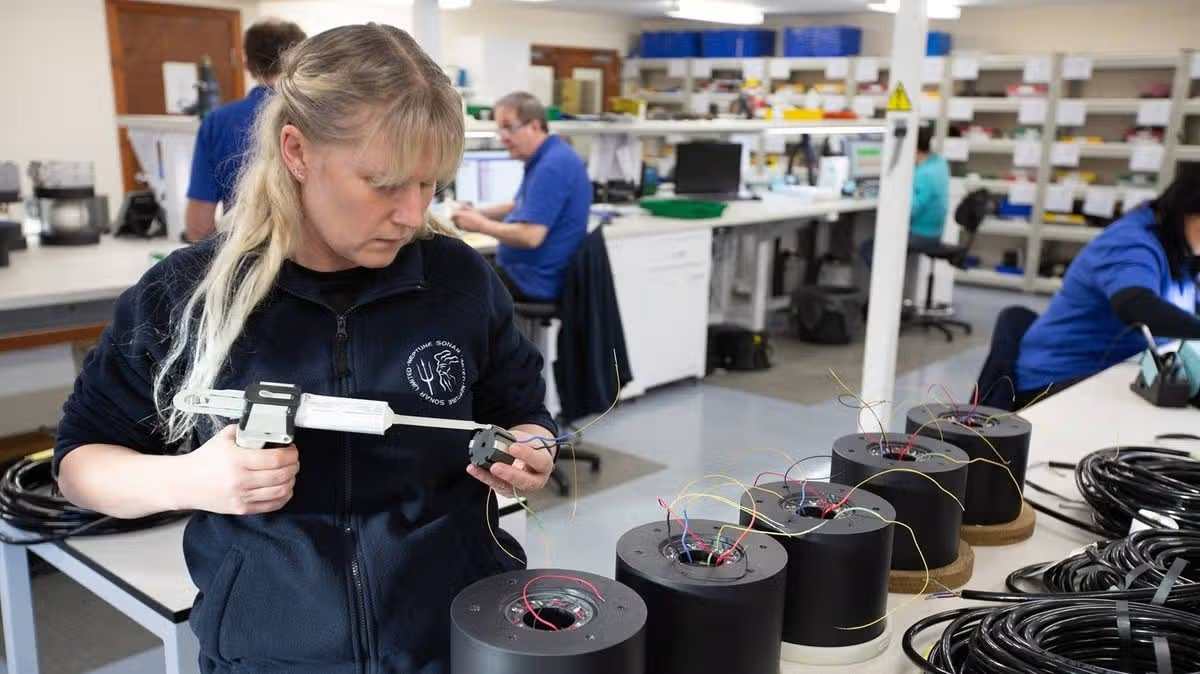
Neptune Sonar manufactures devices called transducers, which map out underwater conditions.

Neptune Sonar manufactures devices called transducers, which map out underwater conditions.(Image: Jessica Rowbottom for Neptune Sonar.)

A flourishing East Riding technology firm has announced ambitious expansion plans after securing a substantial unit at a business park.

Neptune Sonar was established in 1990 and has grown into a global leader in underwater technology, operating from its base near Driffield.

Advertisement

Its team of highly skilled technicians design and manufacture products for maritime technology clients, including bespoke sonar transducers – sensor devices that transmit pulses of sound through water to chart sea depth, underwater objects and fish movements. The company is now on the move after agreeing a deal for new premises at the rapidly expanding Melton West business park.

Neptune Sonar is set to occupy the largest unit at Evolve @ Melton West, which has been developed by commercial property developer Wykeland Group. The subsea specialist – which forms part of the OceanSight group of companies – is currently situated on the banks of Kelk Lake, near Driffield, and the relocation to Evolve will consolidate three of its existing sites under one roof, while also providing considerable room for further growth down the line.

Neptune Sonar intends to utilise the 38,000 sq ft unit at Evolve as a manufacturing facility, distribution centre and storage space, with operations expected to commence later this year.

David Bradley, managing director of Neptune Sonar, said: “This investment marks an exciting milestone for Neptune Sonar and reflects OceanSight’s confidence in our business, our people and our future. Since joining OceanSight, we’ve gained a partner that is accelerating our growth through strategic investment, commercial expertise, global market access, and enhanced operational expertise.

Advertisement

“This new facility at Evolve provides the foundation to expand our manufacturing capabilities, drive continued innovation, and better serve customers worldwide.”, reports Hull Live.

The largest unit at the Evolve @ Melton West development. Underwater technology business Neptune Sonar is set to move in.

The largest unit at the Evolve @ Melton West development. Underwater technology business Neptune Sonar is set to move in.(Image: R&R Studio.)

Neptune Sonar will join fellow Evolve occupant Medequip, a supplier of community equipment loan services, along with Revive Auto Repairs, which occupies one of the smaller units on the site. Demand for the remaining terrace units at Evolve is strong, with spaces available to let as four 5,000 sq ft units or in combinations to create a larger area.

Wykeland’s head of business space, Liam Knaggs, said: “We’re delighted to welcome Neptune Sonar to the growing community at Evolve, and to have secured another ambitious, innovative business at Melton West. We delivered Evolve speculatively, reflecting both our confidence that there was an unmet demand from growing businesses looking for modern, high-spec facilities, and our commitment to stimulating investment and growth in the region.

“This has been confirmed by the high levels of interest we’ve seen at the development. We look forward to seeing Neptune Sonar grow with us at Melton West.”

Advertisement

The Evolve development received grant funding from East Riding of Yorkshire Council, aimed at boosting economic growth across the region.

Continue Reading

Business

Hormel’s retail volume woes continue

Published

on

Hormel’s retail volume woes continue

AUSTIN, MINN. — Hormel Foods Corp. continued to see volume drop in its Retail operating unit — the company’s largest — during its fiscal third quarter, extending a decline from the first and second quarters this year.

“In Retail, as I mentioned last quarter, we expected a noisier top line in the back half of the year,” said John Ghingo, president and chief executive officer-elect of Hormel. “The divestiture of our whole bird turkey business and the exit from certain private label snack nut products weighed on year-over-year net sales comparisons.

“These actions, along with pricing elasticities and a challenging consumer environment, also affected volume during the quarter. While many of these factors were anticipated, the impact on volume was somewhat greater than we originally expected.”

Ghingo added that the consumer environment overall right now is “not improving.”

Advertisement

“Consumers are still feeling quite strained with low sentiment, and that strain, a lot of it comes from those cumulative effects of inflation, which we’ve talked about before,” he said. “I would add that high fuel prices have contributed further to that strain as this year has unfolded.”

For the third quarter ended July 26, net earnings fell to $59.6 million, equal to 11¢ per share on the common stock, compared with $183.7 million, or 33¢ per share, a year ago. Hormel’s net sales fell 2% to $2.96 billion from $3.03 billion the prior third quarter.

AdobeStock_603152196_Editorial_Use_Only.jpg

Hormel Chili was one of the company’s priority brands that delivered dollar sales growth during the third quarter. 

| Photo: ©BILLTSTER – STOCK.ADOBE.COM

Hormel’s overall volume declined 7% across its three operating units (Retail, Foodservice and International) compared with the third quarter last year.

Advertisement

Retail volume dropped 9% while Retail net sales declined to $1.77 billion, down 4.3% from $1.85 billion a year ago. Retail profit also fell, easing 3.7% to $118 million from $122 million the year prior.

Despite the decline in Retail volume, sales and profit, Ghingo said, “The work we are doing to strengthen our protein-centric offerings is translating into marketplace momentum for our priority brands, with several delivering net sales growth in the quarter and continuing to gain traction with consumers. Sales of Jennie-O ground turkey and the Applegate portfolio grew this quarter, benefiting from sustained demand for protein-rich offerings.

Hormel chili and our refrigerated entrees also delivered dollar sales growth, reflecting consumers’ desire for convenient, versatile, and flavor-forward meal solutions. Planters also delivered a strong quarter, fueled by impactful in-store activations and continued investment behind the brand.”

Ghingo said other brands that saw growth for Hormel during the quarter included Herdez and Black Label bacon.

Advertisement

Foodservice volume fell slightly by 1.5%, while net sales rose 1.6% to $1 billion from $987 million last year. Foodservice profit increased 2.7% compared with the previous year’s third quarter, and the company saw a 12th consecutive quarter of organic net sales growth in the segment.

“Premium prepared proteins and branded pepperoni were particularly strong contributors (in Foodservice) during the quarter, reflecting our ability to align with operator demand for differentiated value-added solutions,” Ghingo said. “Importantly, our top-line results were achieved despite the impact of lower commodity-based pricing in portions of the business. Foodservice profit growth once again outpaced sales performance, driving another quarter of margin expansion.”

AdobeStock_495920985_Editorial_Use_Only.jpg

Hormel said its branded pepperoni was a “strong contributor” to the company’s positive results in its Foodservice segment during the quarter.  

| Photo: ©BILL – STOCK.ADOBE.COM

The International unit saw the biggest decrease in volume (11%) while net sales dropped 4.7%, and the segment lost $29 million compared with a profit of $19 million a year ago.

Advertisement

The company said the loss came from a combination of selling its operations in Brazil — which Ghingo said was a “subscale business in a challenging environment” — an impairment related to a minority investment in Indonesia, and certain Spam export sales adversely impacted due to a one-time legal entity transition.   

“We announced the definitive agreement to sell our operations in Brazil,” said Paul Kuehneman, interim chief financial officer and controller. “As a result, we recognized a loss during the quarter, which was recorded at the corporate level. The transaction closed early in the fourth quarter. As such, Brazil’s operating results will be excluded from our organic volume and net sales comparisons going forward.”

Based on its third-quarter results, Hormel adjusted its outlook slightly for the rest of fiscal 2026.

“We expect fiscal 2026 net sales to be in the range of $12.1 billion to $12.2 billion (previously $12.2 billion to $12.5 billion), which represents organic growth of 1% to 2%,” Kuehneman said. “We narrowed and raised our full-year adjusted operating income and adjusted earnings per share guidance ($1.45 to $1.51), which now represents growth of 6% to 10% year over year.”

Advertisement
Continue Reading

Trending

Copyright © 2025