
Business
Ziemnisky to join IDDBA as CEO




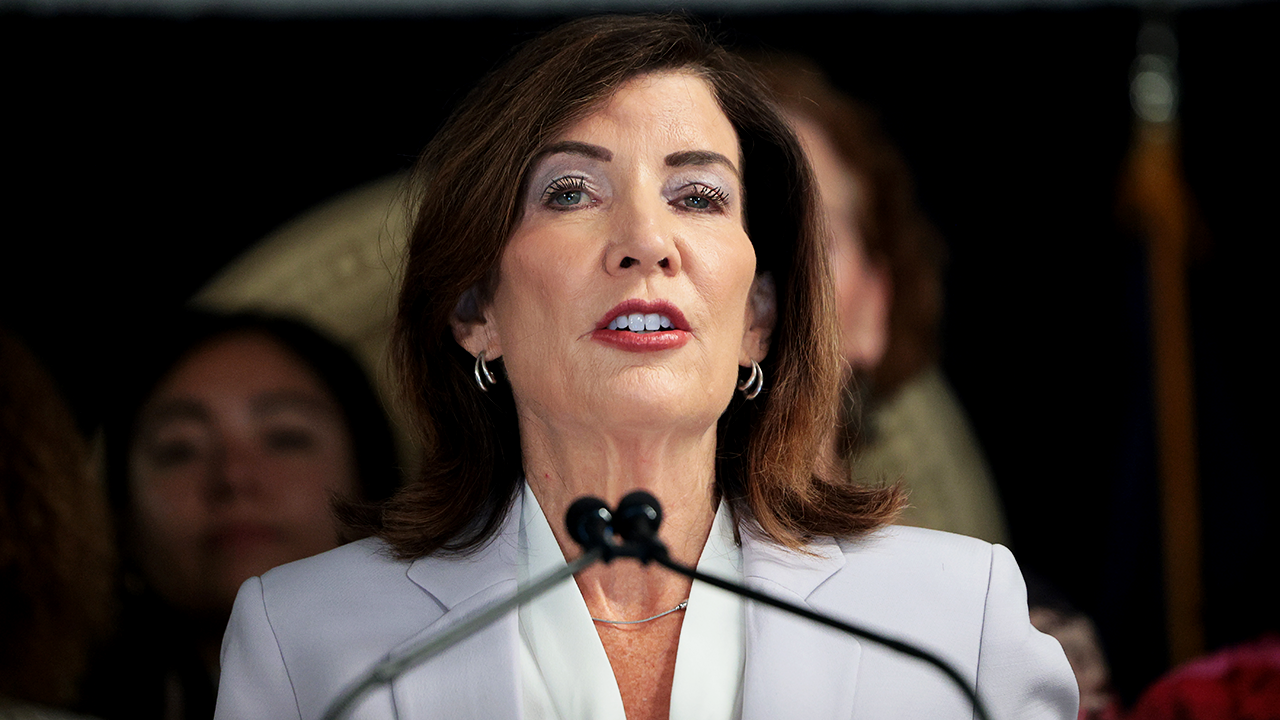
Rep. Mike Lawler blasts New York Governor Kathy Hochul’s energy policies and data center moratorium. He warns that banning natural gas and shutting down nuclear power plants has caused utility rates to skyrocket and forced businesses to flee.
New York’s business climate is back in the spotlight after Gov. Kathy Hochul’s pause on new hyperscale data centers added to a broader debate over whether the state’s energy and economic policies are pushing investment elsewhere.
Rep. Mike Lawler, R-N.Y., joined FOX Business’ Cheryl Casone on “Mornings with Maria” to discuss New York’s energy policies, business climate and continued taxpayer out-migration.
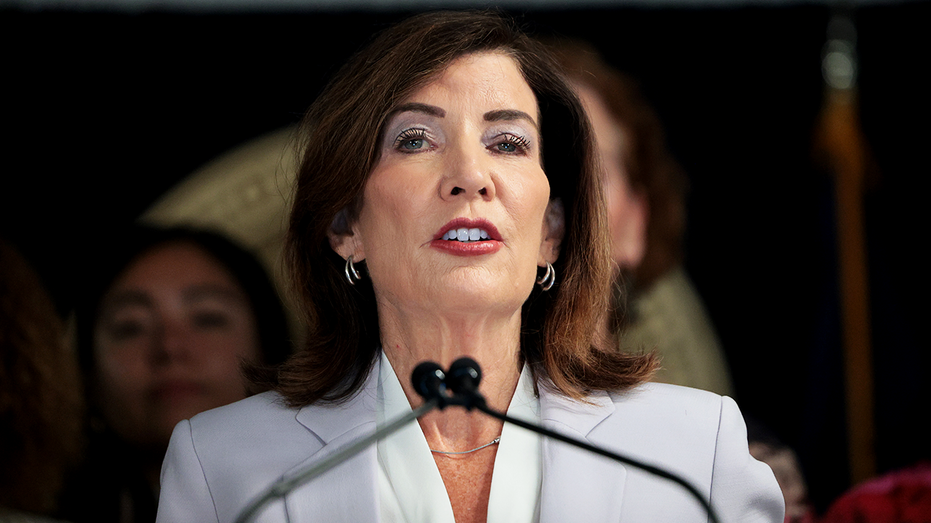
New York Gov. Kathy Hochul speaks during a press conference. (Michael M. Santiago / Getty Images)
Hochul announced a statewide moratorium of up to one year on July 14 on new hyperscale data centers while New York develops a regulatory framework intended to protect utility ratepayers and address the facilities’ energy and infrastructure demands. The pause applies to state environmental permits for new hyperscale data centers.
Nassau County Executive and Republican gubernatorial candidate Bruce Blakeman shares his confidence in defeating Governor Kathy Hochul, pledging to address New York’s high taxes and migrant crisis.
Lawler argued the move sends the wrong message to companies considering investing in New York.
“What she is saying is, don’t come here. Go do your business elsewhere, which is why New York State leads the nation in out-migration,” Lawler said. “It’s why it is a terrible place to do business and why people are expanding in Florida and Texas and Tennessee and North Carolina and South Carolina and elsewhere. We have the highest tax burden and the worst business climate.”
TRUMP WARNS NEW HOCHUL, MAMDANI PIED-À-TERRE TAX COULD ACCELERATE NYC WEALTH EXODUS
New York has experienced net out-migration among part-year resident tax filers every year since 2015, according to state Comptroller Thomas DiNapoli’s office. In 2024, 134,913 part-year resident filers left the state while 121,251 moved in, resulting in a net loss of 13,662 filers. The pace, however, slowed considerably from the pandemic-era surge.
Rep. Mike Lawler, R-N.Y., joins ‘Mornings with Maria’ to discuss socialism’s rise among Democrats, New York electricity costs, nuclear power and the data center fight.
Lawler also tied the state’s business challenges to its energy policies, pointing to nuclear plant closures, restrictions on natural gas and pipeline projects and electrification requirements.
“If you want to address these problems, you need to have a coherent economic and energy policy,” Lawler said. “And that is fundamental if New York is going to prosper moving forward.”

Lumentum: This Optical Shortage Is Getting Even Bigger

Tech selloff pulls Wall Street to two-week lows as bond yields climb

There is a striking paradox at the heart of small business logistics in the UK. The shortest journeys the ones covering the final one to five miles between a local depot, a shop, or a tradesperson’s vehicle and the customer’s door are consistently the most expensive, the least efficient, and the most disruptive to the working day.
The last mile, despite being the smallest fraction of any supply chain, accounts for an average of 53 percent of total shipping costs. For small businesses operating without the buying power of large logistics operations, that proportion can be even higher.
The problem is well understood. The solutions, however, remain unequally adopted particularly among the smaller, independent businesses that stand to benefit most from getting short-journey efficiency right. Van-dependent approaches that made sense a decade ago are struggling under the weight of rising fuel costs, congestion charges, parking restrictions, and an urban environment that has become progressively less hospitable to larger vehicles on shorter routes. Meanwhile, a practical, cost-effective, and genuinely flexible alternative has matured to the point where it deserves serious consideration from any small business owner thinking clearly about their operational costs.
Portable electric scooters compact, foldable, zero-emission, and capable of navigating urban environments with a speed and agility that no van can match are emerging as one of the most practical short-journey tools available to small businesses in 2026. This article examines the last-mile challenge in detail, explores the specific business contexts where electric scooters make an immediate operational difference, and outlines what to look for when choosing the right model for business use.
Understanding the Last-Mile Problem for Small Businesses
Before exploring solutions, it is worth being precise about what makes the last mile so consistently challenging particularly for smaller operations that cannot absorb inefficiencies as easily as large fleets.
The Cost Structure Problem
For large logistics companies, last-mile costs are high but distributed across thousands of deliveries and offset by economies of scale in everything from vehicle purchasing to route optimisation software. For a small business making ten to thirty local deliveries or site visits per week, the cost structure looks very different. A van covering local journeys of one to three miles consumes fuel in the least efficient part of its operating cycle stop-start urban driving burns significantly more fuel per mile than motorway cruising, while also accelerating wear on brakes, clutch, and tyres.
Add to this the hidden costs of urban operation: congestion charges in cities that have introduced them, daily parking fees that can reach £20 to £40 in central urban areas, and the time cost of a driver searching for a legal parking space before every delivery. A single local delivery that takes five minutes of actual travel time can consume 20 to 30 minutes of total time when parking, loading, and compliance overhead are included. At the national living wage, those additional minutes across a working week represent a meaningful payroll cost.
The Urban Access Problem
UK town and city centres are becoming progressively less accessible to vans and larger vehicles. Low Emission Zones (LEZ) and Ultra Low Emission Zones (ULEZ) now operate in London and are being adopted in Birmingham, Bristol, and other major cities. Clean Air Zones carry daily charges for non-compliant vehicles, adding a direct cost to every urban delivery made by an older van. Pedestrianised zones, time-restricted loading areas, and the proliferation of street furniture bollards, cycle lanes, widened pavements have narrowed the practical operating window for van-based local delivery.
For independent traders, florists, caterers, estate agents, plumbers, photographers, and the hundreds of other small business types that rely on regular short local journeys, the urban access problem is not abstract. It translates directly into delayed arrivals, missed time windows, fines, and the kind of operational friction that erodes profit margins and damages customer relationships.
The Environmental and Reputational Pressure
A final dimension of the last-mile challenge for small businesses is increasingly reputational. Customers particularly in urban areas and among younger demographics are paying greater attention to the environmental practices of the businesses they use. A florist delivering orders by cargo bike or electric scooter communicates something very different about its values than one arriving in a diesel van. Research consistently shows that more than half of consumers actively prefer businesses that demonstrate environmental responsibility in their operations.
For small businesses building a local reputation and competing on service quality rather than price alone, sustainable short-journey solutions are not merely a cost consideration. They are a brand statement.
Where Electric Scooters Make an Immediate Business Difference
Not every short-journey business challenge is best solved by a portable electric scooter. But the range of contexts in which they offer genuine operational advantage is broader than many business owners realise.
The Local Service Professional: Plumbers, Electricians, IT Technicians
The tradesperson or service professional making multiple local site visits per day faces a specific version of the last-mile problem. The van is necessary for tools and materials but in many cases, the professional arrives at a parking location that is a five-to-fifteen-minute walk from the actual site. A building in a pedestrianised street, a residential complex with restricted vehicle access, a city centre office block all of these require the professional to walk the final distance while carrying equipment.
A foldable electric scooter stored in the van’s load area eliminates this inefficiency. The professional drives to the nearest practical parking point, unfolds the scooter in under thirty seconds, and covers the remaining distance in a fraction of the walking time. For a service professional making six to eight site visits per day, the cumulative time saving across a working week is substantial and the professional arrives less fatigued, having spent less of their day walking unnecessarily.
The Retail and Hospitality Supplier: Catering, Florists, Specialist Food
Small-scale suppliers to restaurants, cafés, event venues, and retail outlets typically operate regular delivery rounds within a defined local radius. The stops are often in close proximity to each other a town centre delivery round covering eight to twelve addresses within a one-mile area is a common pattern. Van-based delivery on such a route involves constant stopping and starting, repeated parking manoeuvrings, and the cumulative time cost of engine-on idling while each delivery is made.
For these businesses, a micro-depot model parking the van at a central location and completing individual deliveries by electric scooter or cargo-capable e-bike reduces per-delivery time, eliminates parking costs at each stop, and allows the driver to navigate pedestrianised areas, market squares, and shared spaces that are inaccessible to the van.
The Estate Agent: Property Viewings and Key Management
Estate agents in busy town centres face a specific challenge: conducting multiple property viewings at addresses within walking or short cycling distance of each other, while managing the logistics of key collection, client transport, and the need to return between appointments. A portable electric scooter allows a single agent to cover a half-mile viewing radius efficiently moving between properties in minutes rather than the ten-to-fifteen minutes required on foot without the parking overhead of a car.
For the agency, this means more viewings per day without additional staffing, and a more responsive service for clients who want quick turnaround between viewing slots.
The Mobile Photographer and Creative Professional
Photographers, videographers, and creative professionals who work on location face a version of the last-mile problem that is often overlooked: getting themselves and their core equipment from a car or van to a shoot location that may not be vehicle-accessible. Urban shoots at rooftop venues, in markets, in parks, or in pedestrianised high streets all require the professional to transport kit from a parked vehicle to the site.
A robust electric scooter with a carry bag or backpack the professional’s kit carried on their back allows this transit to happen quickly and without the physical fatigue of repeated load-carrying on foot. For the creative professional juggling multiple location shoots in a single day across an urban area, the time and energy saving is directly reflected in the quality and pace of their work.
The Healthcare and Wellness Practitioner: Mobile Therapists, Physiotherapists, Counsellors
Mobile practitioners visiting clients at home face a particularly time-sensitive version of the last-mile challenge. Appointment slots are fixed. Late arrival due to parking difficulty or traffic is professionally unacceptable and damages client trust. In urban residential areas where parking is scarce and restrictions are extensive, arriving reliably on time session after session requires either extreme time buffers or a different approach to the final mile.
A compact electric scooter allows the practitioner to park once at a convenient location and cover their client visits within a neighbourhood on the scooter arriving on time, minimising parking costs, and maintaining the professional reliability that underpins a successful practice.
The Small Business Owner: Inter-Site and Supplier Runs
Small businesses operating across multiple nearby locations a coffee shop and its kitchen, a retail shop and its stockroom, a studio and its despatch area frequently make multiple short journeys between sites throughout the working day. These journeys are too short to justify the overhead of a vehicle, too frequent to absorb comfortably on foot, and too operationally important to delay.
An electric scooter kept at the primary site handles these inter-site journeys with zero fuel cost, no parking requirement, and journey times that often beat a car in urban traffic freeing the business owner or designated member of staff to move between locations with a speed and efficiency that the alternatives simply cannot match.
What Small Businesses Need from an Electric Scooter
The requirements of a business-use electric scooter differ from those of a leisure or commuter rider in several important respects. Reliability, durability, range, and practicality under daily professional use are the criteria that matter most.
Durability and Build Quality
A scooter used for business purposes will accumulate significantly more operating hours per week than a leisure model. The frame, folding mechanism, deck, and electrical systems need to withstand consistent daily use without degrading and minor component failures that a leisure rider might tolerate represent unacceptable operational disruptions for a business user.
Look for aluminium alloy frames, reinforced folding joints, IP-rated weather protection (ideally IP54 or above for reliable wet-weather operation in the UK), and a brand that provides genuine warranty coverage and accessible UK-based after-sales support. A scooter that fails with no local recourse creates a business problem, not merely an inconvenience.
Range: Matching the Operating Radius
Range requirements for business use depend on the daily journey profile. A professional making multiple short hops of half a mile to two miles within a defined area needs reliable range across their full working day ideally 20 to 30 kilometres on a full charge, with enough reserve to complete the final runs of the day without range anxiety.
Always apply a 20 to 25 percent real-world reduction to manufacturer range figures, which are measured under optimal conditions. For business use in variable UK conditions stop-start movement, cold mornings, occasional gradients the practical range will be lower than the headline figure. A scooter with a stated range of 30 kilometres provides a comfortable working range of approximately 22 to 24 kilometres in real conditions.
Portability: Weight and the Folding Mechanism
The defining feature of a portable electric scooter for business use is its ability to be deployed and stowed quickly and transported easily. A model that requires two hands and twenty seconds to fold or that weighs 18 kilograms is not truly portable in a demanding professional context.
Under 14 kilograms is the practical target for a scooter that will be regularly lifted in and out of a van load area, carried up steps, or stored under a desk between deployments. The folding mechanism should be single-step or two-step at most, operable with one hand, and mechanically secure once folded to prevent unintended deployment during transport.
Motor Power and Hill Performance
Urban UK environments are rarely perfectly flat. A business user covering a hilly town centre, a mixed residential area with gradients, or a route that includes several bridge crossings needs a motor with sufficient torque to maintain speed on inclines without draining the battery disproportionately.
A motor of 350W to 500W covers the majority of urban business use scenarios reliably. Models rated at 800W offer additional headroom for heavier riders, more frequent stop-start operation, or hillier terrain and the additional motor investment is quickly recovered in the reduction of journey time and rider fatigue.
Braking and Safety in Working Conditions
Business users typically operate in traffic at junctions, near pedestrians, in areas with unpredictable hazards. The braking system needs to be genuinely reliable in wet conditions, not just in ideal circumstances. Dual disc brakes, or disc brakes combined with an electronic brake, provide the most consistent and predictable stopping performance across weather conditions and repeated daily use.
Front and rear lighting integrated into the scooter not clip-on add-ons is essential for year-round use in the UK, where early mornings and late afternoons are frequently dim even outside winter months.
Connectivity and Security
For business users leaving their scooter unattended between appointments locked outside a client’s premises or stored in a communal space security features matter more than for leisure riders. Scooters with Bluetooth app connectivity that enables remote locking provide meaningful additional theft protection. A physical lock point compatible with a D-lock or cable lock is an additional security measure worth factoring into the total purchase.
The Financial Case: What Small Businesses Actually Save
The financial argument for integrating portable electric scooters into small business short-journey operations is straightforward and verifiable.
Running costs: The electricity cost of a full charge cycle on a typical business electric scooter is approximately 5p to 10p at current UK rates sufficient for 20 to 30 kilometres of riding. Over 250 working days, the annual electricity cost of operating a scooter for short business journeys is between £12 and £25. Against a van covering the same journeys at average urban fuel consumption, the saving on fuel alone can exceed £1,500 to £3,000 per year for a business making regular short local journeys.
Parking costs: A business paying £10 to £20 per day in urban parking across 250 working days spends £2,500 to £5,000 per year on parking alone. An electric scooter eliminates or dramatically reduces this cost folded and carried into a premises, locked to a cycle rack, or stored in the van at a single parking point while the rider covers multiple stops.
Congestion and clean air charges: Businesses operating vans in ULEZ or Clean Air Zones face daily charges that accumulate rapidly £12.50 per day in Greater London for a non-compliant van adds £3,125 per year across 250 working days. An electric scooter, producing zero emissions, is exempt from these charges.
Time value: At the national living wage of approximately £12.21 per hour, recovering 30 minutes of productive time per working day through faster local journeys represents an annual time value of approximately £763. For higher-paid professionals or business owners, the time value is proportionally greater.
The combined saving from fuel, parking, congestion charges, and recovered time can easily exceed £5,000 to £8,000 per year for a small business making regular short urban journeys a figure that puts the purchase cost of even a premium portable electric scooter into clear perspective.
Choosing the Right Scooter: Where to Start
With the business case established and the specification requirements understood, the final step is identifying the right source. For small business owners who need reliable products, proper warranty coverage, and fast UK delivery without the uncertainty of grey-market imports or unverified marketplace sellers, choosing a reputable dedicated retailer is the most important single decision in the purchase process.
A quality retailer for business-use electric scooters will offer:
- A clearly stated range of models with honest, verifiable specification data
- UK stock with defined delivery windows not indefinite waiting times
- Minimum 12-month warranty with accessible UK customer support
- A meaningful return window on new products
- Genuine availability of spare parts for ongoing maintenance
For small businesses ready to act on the last-mile opportunity and equipped with the right vehicle for the job, exploring the full range of portable electric scooters at isinwheel UK is a practical starting point where quality-tested adult models are available with proper UK support, fast delivery, and specification levels that meet the demands of professional daily use.
Final Thoughts: The Last Mile as a Competitive Advantage
The last-mile challenge is real, persistent, and costly. But it is also, for the small businesses willing to think differently about it, an opportunity. The businesses that solve their short-journey efficiency problem before their competitors do gain a structural cost advantage, a time advantage, a reputational advantage, and the operational flexibility that comes from not being dependent on a single, increasingly impractical mode of short-distance transport.
Portable electric scooters are not a complete solution for every last-mile scenario. But for the significant proportion of small business short journeys that fall within two to five miles of a parked vehicle, a depot, or a base of operations, they offer a combination of speed, cost, flexibility, and zero-emission practicality that no other vehicle class currently matches.
The businesses that recognise this and act on it will be the ones whose customers notice that they always arrive on time, that their delivery costs are lower than competitors, and that their commitment to efficient, sustainable operation is reflected in the quality of the service they provide.
Shorter journeys. Lower costs. Smarter business.

Many companies would continue to release earnings statements quarterly—but not the more involved regulatory filings—even if U.S. authorities approve an option to file only semiannually.
A new survey from KPMG provided a glimpse of the varied landscape of financial reporting that could emerge under a proposal from the SEC that would provide the option to file earnings reports twice year instead of the usual four times.
Copyright ©2026 Dow Jones & Company, Inc. All Rights Reserved. 87990cbe856818d5eddac44c7b1cdeb8

Macquarie Capital is advising Rio Tinto on the sale of the mothballed Mt Cattlin mine, the last WA lithium operation still on care and maintenance.

The number of people entering insolvency in England and Wales was 14 per cent higher in July than in the same month last year, according to official figures, driven by a rise in individual voluntary arrangements.
A total of 11,926 individuals entered insolvency during the month, Insolvency Service data show, of which 7,442 were individual voluntary arrangements (IVAs) – agreements in which people who cannot pay their debts reach a deal with their creditors as an alternative to bankruptcy. With the exception of December 2025, when figures were inflated by the clearing of a backlog of cases agreed in earlier months, it was the highest monthly IVA total since November 2022.
In the 12 months to the end of July, one in 360 adults in England and Wales entered insolvency, a rate of 27.8 per 10,000 adults. A year earlier the rate stood at 24.3 per 10,000, or one in 412.
Sonia Jordan, the president of R3, the insolvency trade body, said the figures underlined “the continued pressure on household finances”.
“Many households continue to struggle with debt and there is a clear need for effective support and breathing space,” she said. “Government support such as the £150 energy bill discount and the freeze on bus fares will provide some relief. Recent figures showing a decline in mortgage arrears and repossessions are also encouraging, but financial pressures remain.”
Debt relief orders (DROs) – which allow people with debts below £50,000, few assets and little spare income to write off what they cannot pay – fell 4 per cent compared with July 2025, to 3,820. Monthly numbers so far this year remain above last year’s average, and since the fee for entering a DRO was removed in April 2024, monthly totals have been higher than at any point since the orders were introduced in 2009.
There were 5,248 registrations under the “breathing space” scheme, which gives people temporary protection from creditors while they take debt advice and put a plan in place – 38 per cent fewer than in July 2025. Numbers have been lower since December 2025, after StepChange, the largest money adviser group by number of cases, updated its suitability criteria.
The overall number of individual insolvencies in July was similar to June. Across the 12 months to 31 July, IVAs accounted for 59 per cent of individual insolvencies, debt relief orders 35 per cent and bankruptcies 6 per cent, with the Insolvency Service noting a long-term decline in the proportion of cases that are bankruptcies.
IVA numbers have been rising since 2023, and in the first seven months of 2026 were 14 per cent higher than the 2025 monthly average, although they remain below the levels recorded between 2018 and 2022. The highest numbers came before the Financial Conduct Authority banned debt packagers from receiving referral fees for introducing customers to IVA firms in June 2023, and before professional insolvency bodies tightened related rules.
Separately, 1,931 registered company insolvencies were recorded in England and Wales in July, 5 per cent higher than in June but 5 per cent lower than the same month a year earlier.

Amy Ingham
Amy Ingham is a reporter at Business Matters, covering UK business news with a focus on breaking news, business policy, late payments and insolvency. She joined the magazine in 2026 after completing the NCTJ Diploma in Journalism at Harlow College’s journalism school. Her recent reporting includes British Steel’s nationalisation and its impact on SME suppliers, the decline in late payments by large firms, and Insolvency Service director disqualifications. Reach her at aingham@cbmeg.co.uk.

Meta faces a landmark lawsuit in California from 29 states seeking $200 billion in damages over claims its platforms are addictive to children. FOX Business’ Ashley Webster reports on the potential financial and existential threat to the company.
Meta faced accusations of targeting children for addictions to Facebook and Instagram in federal court on Tuesday.
Deputy California Attorney General Meghan O’Neill launched her case against Meta in a trial that could reshape how Facebook, Instagram and other social media platforms operate.
O’Neill told the jury that Meta’s business model was all about trying to “hook the users, hold them for as long as they can, harvest their data and then hide the truth from the public.”
She said children were particularly susceptible to Meta’s algorithms and that Meta was aware of and sought to exploit that fact, pointing to an internal report at Meta, “The Young Ones are the Best Ones.”
WE GREW UP BEFORE SCREENS TOOK OVER. OUR KIDS DESERVE THAT CHANCE TOO

Meta unveiled a new campaign promoting an optimistic vision for artificial intelligence, saying the technology should help people build, connect and create. (Samuel Boivin/NurPhoto via Getty Images / Getty Images)
California, Colorado, Kentucky and New Jersey are leading a bipartisan group of 29 states suing Meta.
The states argue that Meta’s addictive platforms resulted in such harms as anxiety, depression and even suicide, and misled consumers about the platforms’ safety.
“Meta needed kids, and it needed to reassure the people who cared about those kids that the kids are safe,” O’Neill said.
WHEN IS A MENTAL HEALTH CRISIS TOO SEVERE FOR TELEHEALTH? WARNING SIGNS FAMILIES SHOULDN’T IGNORE
Meta co-founder and CEO Mark Zuckerberg and Instagram chief Adam Mosseri are expected to testify in the weekslong trial.
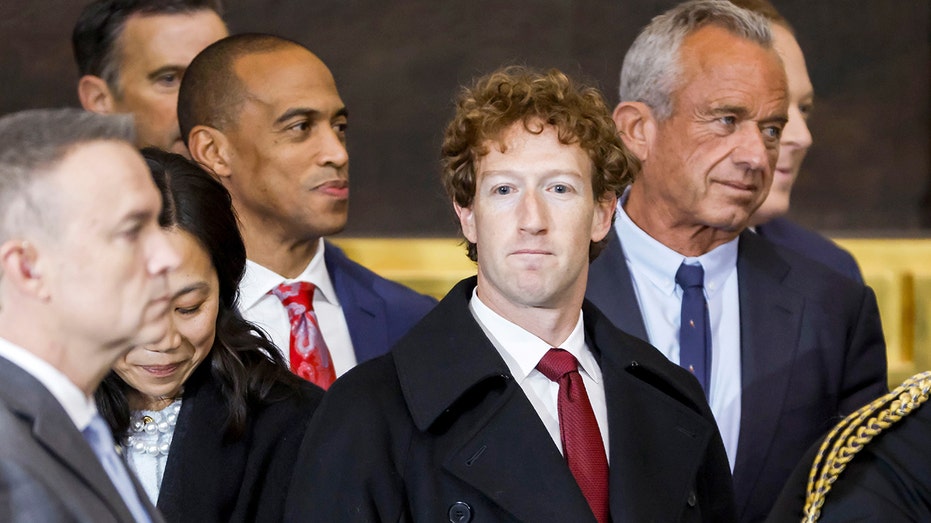
Mark Zuckerberg, CEO of Meta Platforms Inc., center, arrives for the 60th presidential inauguration in the rotunda of the U.S. Capitol in Washington, D.C., Jan. 20, 2025. (Shawn Thew/EPA/Bloomberg via Getty Images / Getty Images)
Meta faces steep financial penalties depending on the outcome of the trial, with attorneys general stating last week that it could cost the company around $200 billion.
Representatives for Meta have denied wrongdoing and pointed to measures they put in place to protect teens and keep younger children off of their platforms.

Silhouettes of mobile users next to a screen projection of Facebook logo in this illustration taken March 28, 2018. (Reuters/Dado Ruvic/File Photo / Reuters)
GET FOX BUSINESS ON THE GO BY CLICKING HERE
“The AGs offer no proof anyone in their states was misled, claim benign features like having an additional Instagram account somehow harmed their residents, and attempt to penalize Meta for industry-wide challenges like age verification,” a Meta spokesperson said before the trial this week.
“Rather than sticking to the facts or the law, the states have instead decided to chase an outlandish payout.”
Reuters contributed to this report.
Business
Before Her Death, Hayden Panettiere Spoke Candidly About Trauma, Motherhood and Mental Health Struggles

In the months before her death at age 36, actress Hayden Panettiere had spoken with unusual candor about the traumas that had shaped her life, from a childhood spent performing catastrophe on screen to her adult struggles with addiction, postpartum depression and an abusive relationship.
Panettiere, known for her roles in “Heroes” and “Nashville,” was found unresponsive in an apartment in Greenville, South Carolina, and was pronounced dead at the scene on Sunday, police said. A cause of death has not yet been established, but authorities said there were no signs of foul play.
Her death came just months after the publication of her memoir, “This Is Me: A Reckoning,” a book in which she said she wanted to be “brutally honest” about “every aspect of my life, from childhood to now.” Speaking to The Independent in May, Panettiere described the process of writing the book. “I had to learn not to be afraid of what people would think about it. Or if they would judge me,” she said.
Panettiere began performing as an infant, when her mother, former soap opera actress Lesley Vogel, started bringing her to commercial auditions. She went on to voice Princess Dot in the 1998 Pixar film “A Bug’s Life” and appeared in soap operas as a young child. In her memoir, Panettiere wrote about how the traumatic storylines she portrayed as a child actor shaped her early understanding of attention and love. “Grown-ups gave me positive attention when — as an actor — I failed, got sick, screamed and cried, killed, grieved, and suffered,” she wrote. “Is it any wonder why I’ve faced so many real struggles in my life? I’ve often wondered whether — unintentionally — I’ve brought on my traumas because I’m wired to think they’re good for me.”
Panettiere achieved mainstream fame in 2006 for her role as a superpowered cheerleader on NBC’s “Heroes,” a breakthrough that prompted her entire family to relocate to Los Angeles. Speaking to Jay Shetty on his podcast “On Purpose,” Panettiere described the strange dynamics that success brought to her family life as a teenager. “My mum bought an apartment for me when I was 16 and my whole family lived in it. So again, it was just that very strange, uncomfortable feeling of the role reversal and desperately wanting to still feel like the kid and still feel like I had parents to lean on,” she said. She described her mother as functioning primarily as her manager throughout her childhood, a dynamic that shaped how she understood approval. “She was my boss, that’s how I saw her. Even if she was the most supportive person when I did what I was supposed to do and did it well and was the one cheering me on, it did feel like it was what I had to do to get her love,” Panettiere said.
In 2014, at age 25, Panettiere welcomed her daughter, Kaya, with her then-partner, former professional boxer Wladimir Klitschko. The birth itself was medically traumatic; Panettiere told the outlet Momé in July that she experienced severe hemorrhaging following delivery, requiring seven blood transfusions and surgery. She said that when she was finally able to see her newborn daughter after the operation, she “felt nothing.” “I had always heard that mums feel an instant rush of love, but I didn’t — and I had no idea why,” she told Momé. After attempting to self-medicate with alcohol, Panettiere eventually sought professional help and received a diagnosis of postpartum depression, which she first spoke about publicly in 2015 on the talk show “Live with Kelly and Michael.”
Panettiere later described the broad and often misunderstood spectrum of postpartum depression symptoms, pushing back against narrow public assumptions about the condition. “When they tell you about postpartum depression, you think about, ‘Okay, I feel negative feelings towards my child, I want to injure my child, I want to hurt my child,’” she said. “I’ve never ever had those feelings and some women do, but you don’t realise what broad of a spectrum you can really experience that on, and it’s something, I think, that needs to be talked about and women need to know that they’re not alone.” She added that public skepticism toward the condition compounded its difficulty. “There’s a lot of misunderstanding and I feel like there’s a lot of people out there who think that it’s not real, that it’s not true, that it’s something that’s made up in their mind. It’s something that’s completely uncontrollable and it’s really painful and scary,” she said. Panettiere also told Shetty that cosmetics brand Neutrogena ended a decade-long endorsement deal with her after she spoke publicly about her postpartum depression, citing a morality clause in her contract. “Of all the things I had been caught doing, that being the thing where they drew the line, was shocking to me,” she said.
On the set of “Nashville,” Panettiere said the storylines written for her character, Juliette Barnes, closely mirrored what she was privately experiencing at the time, including struggles tied to pregnancy, substance use and early motherhood. “I was suffering from debilitating anxiety and an addiction I couldn’t shake, and I had to live through it twice. First at home, as Hayden, and then in front of millions as Juliette,” she wrote in her memoir. She told Shetty the boundary between herself and her character became difficult to distinguish. “I didn’t know where Juliette ended and Hayden began,” she said. “I couldn’t come up to air from it.” To manage her anxiety and panic attacks during that period, she said she turned to substances. “I was self-medicating and looking for relief at the bottom of a bottle … I needed to self-numb,” she said.
When Panettiere and Klitschko separated in 2018, their daughter, then 2 years old, began living full time in Ukraine with her father. Panettiere was in the midst of her struggles with substance abuse at the time. “It wasn’t a decision I made lightly, nor was it a decision I even wanted to make,” she told Momé. “I was going through a really challenging time in my life … I knew I needed to be able to put her first so that I could get the help I needed and be the mum she needed me to be.” She said she remained close to her daughter despite the distance. “I love my daughter, and I’m so proud of the young woman she is becoming. I talk to her all the time, and I feel so connected to her,” she said.
Panettiere also spoke to Shetty about the difficulty of leaving an abusive relationship, describing the sustained effort required to fully end contact. “At one point I thought I had gotten out of it and gotten away from it,” she said. “Abusers, they weave themselves like weeds into your life and there’s always something that they left behind. There’s always something they have to come back for, there’s always something that they find to keep that connection, keep you on the hook.” She said she initially believed she could manage the separation alone before recognizing she needed outside help. “I thought I was capable of doing it by myself but I needed an incredible amount of support and back-up in order to make sure that there was no way for him to find his way back in,” she said.
Panettiere’s final Instagram post, shared July 27, showed a photo of her with photographer Randall Slavin, captioned simply, “Good times and good friends.” In her memoir, she described herself as an “optimist to the core” who resisted being defined by tragedy, despite the many hardships she experienced throughout her life, including the sudden death of her younger brother, actor Jansen Panettiere, in 2023. “One thing I know from my 36 years in the public eye is this: Life is a process that evolves day by day, year by year and — like it or not — you are engaged in a cycle of growth until the moment you take your last breath,” she wrote.
This story discusses sensitive topics including postpartum depression, addiction and domestic abuse. If you or someone you know is struggling with any of these issues, support is available. In Australia, contact Lifeline on 13 11 14, Beyond Blue on 1300 22 46 36, or 1800RESPECT for domestic violence support. In the United States, you can call or text 988 for the Suicide and Crisis Lifeline, or contact the National Domestic Violence Hotline at 1-800-799-7233.


The company is launching a Red Bull-fueled beverage option.

Jordyn Woods Shares One Rule KAT Had For Engagement

Rep Mike Lawler says Hochul’s data center pause harms NY business

Digital wealth needs safer paths to liquidity, XPlace CEO says





-

 Fashion4 days ago
Weekend Open Thread: Ann Taylor
-
 NewsBeat7 days ago
Communication cards help banking customers access services or report scams
-
 Sports5 days ago
This U.S. Amateur is a glimpse into golf’s future in more ways than you think
-

 Sports4 days ago
Birmingham 2026: Day 6 Timetable for Irish Athletes
-
 NewsBeat4 days ago
Myanmar says over 300,000 Rohingya refugees verified for repatriation as exodus enters ninth year
-
 Tech4 days ago
11 Ways to Rank Your Videos
-

 Politics3 days ago
SEQ Code: The Three Letter Boarding Pass Code That Could Give You The Worst Seat
-
 Entertainment6 days ago
Keke Palmer Subtly Hints At Sean Evans Drama With Cryptic Post
-
 Crypto World7 days ago
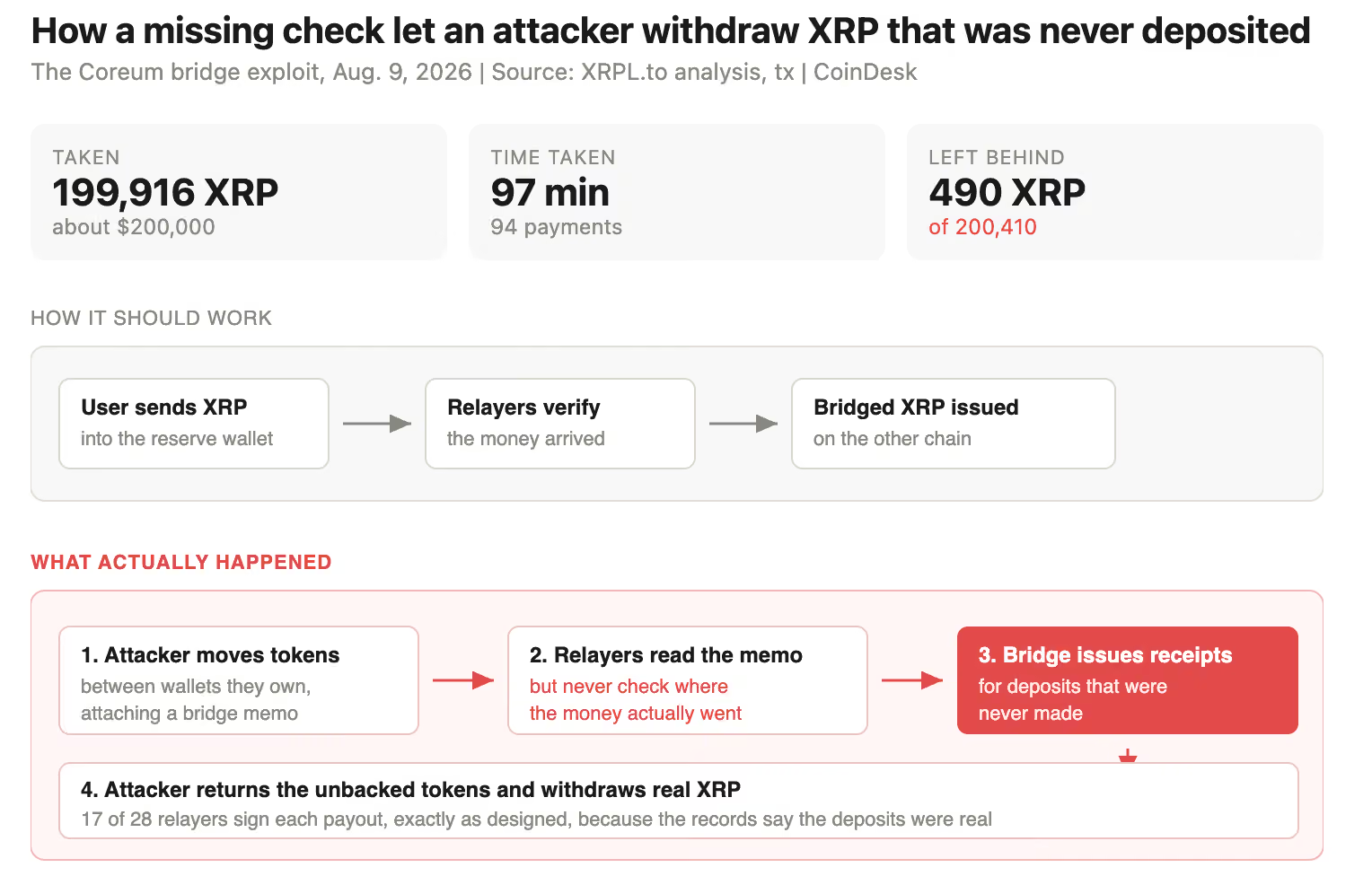
XRP bridge drained after software mistook fake deposits for real ones
-
 Tech5 days ago
DeepSeek Harness launches as open source rival to Claude Code, alongside V4-Pro on API with higher prices
-

 Sports6 days ago
DeQuan Jones in ‘high spirits’ after successful leg surgery
-
 Crypto World6 days ago
Perplexity AI Predicts an XRP Scenario Few Analysts Are Discussing
-

 Tech7 days ago
SpaceXAI’s Grok Bot turns agents into persistent digital coworkers that can operate your apps for $120-per-month
-

 Politics6 days ago
How Average Are You In The UK?
-
 Entertainment6 days ago
2026’s Most Ambitious Fantasy Movie Officially Scores Sequel Update
-

 Business7 days ago
Evolv Technologies Holdings, Inc. (EVLV) Q2 2026 Earnings Call Transcript
-

 Fashion6 days ago
The Details Do the Dressing
-
 Tech7 days ago
A Zoom Screen-Sharing Bug Let Anyone Take Over Other Devices On a Call
-

 NewsBeat7 days ago
‘Regret is a major theme of my work’: Matt Haig on finding acceptance
-

 Fashion6 days ago
Why Botanical Fashion Never Goes Out of Style
You must be logged in to post a comment Login