

Business
Zoom Stock Jumps 12.86% to $109.20 After Strong Q1 Earnings and AI Growth


NEW YORK — Zoom Communications Inc. (NASDAQ: ZM) shares surged 12.86% to $109.20 in morning trading on Friday, May 22, 2026, after the company reported first-quarter fiscal 2027 results that beat expectations and raised its full-year guidance on strong enterprise demand and AI adoption.
Zoom reported revenue of $1.239 billion for the quarter ended April 30, 2026, up 5.5% from the prior year and above analyst estimates of $1.223 billion. Adjusted earnings per share reached $1.55, exceeding forecasts.
Enterprise revenue grew 7.2% to $755.7 million, while online revenue increased 2.8% to $483.3 million. Customers contributing more than $100,000 in trailing 12-month revenue rose 8% year-over-year and now account for 33% of total revenue.
CEO Eric S. Yuan highlighted AI momentum. Paid users of AI Companion features increased 184% year-over-year. The company noted customers are increasingly adopting Zoom as an AI-first platform.
Zoom raised its full-year fiscal 2027 revenue guidance to $5.08 billion to $5.09 billion. It also authorized an additional $1 billion for share repurchases, bringing the total program to $2 billion.
The results marked five straight quarters of accelerating growth. Non-GAAP operating margin reached 41.1%, reflecting improved efficiency. GAAP net income was $425.7 million, or $1.42 per diluted share.
Trading volume was significantly elevated on May 22 as the earnings reaction drew strong investor interest. The stock had been trading in a more moderate range prior to the report.
Analysts responded positively. Jefferies raised its price target, citing AI momentum. Multiple firms maintained buy ratings, highlighting Zoom’s transition toward higher-margin AI and enterprise solutions.
Zoom has focused on AI integration across its platform, including features like Companion for meeting summaries, smart recording and productivity tools. The company continues to expand its enterprise customer base while stabilizing its online business.
The video conferencing leader has evolved since its pandemic-era peak. It now emphasizes hybrid work solutions, AI enhancements and long-term enterprise contracts. Zoom reported strong cash flow and maintains a solid balance sheet.
No new corporate announcements were released on May 22 beyond the earnings momentum. The company’s next update is expected with second-quarter results in late August.
Market capitalization exceeded $30 billion in recent sessions. The stock has shown resilience in 2026 amid broader technology sector movements and growing AI interest.
Zoom serves millions of users worldwide through its core video platform and expanding suite of collaboration tools. The company has invested heavily in security, compliance and AI capabilities to meet enterprise demands.
Investors will monitor execution on the raised guidance and continued AI monetization. Zoom’s performance reflects broader market enthusiasm for technology companies demonstrating consistent growth and innovation.
The earnings beat and guidance increase contributed to the strong market reaction. Shares had faced pressure in prior periods amid concerns about post-pandemic demand normalization.
Zoom continues to face competition in the collaboration space but has differentiated through AI features and enterprise focus. The company reported positive trends in customer retention and expansion.
No specific second-quarter guidance details were provided beyond the full-year outlook. Management expressed confidence in sustained momentum across segments.
The stock’s movement on May 22 underscores investor confidence in Zoom’s strategic shift toward AI and higher-value enterprise revenue. Market participants will watch for further progress in coming quarters.



Tens of thousands march in Madrid to demand prime minister’s resignation


Police and protesters clash in Serbia as crowds demand president’s exit

Atlassian’s SWOT analysis: stock faces AI headwinds and cloud growth

Sprott Rare Earths Ex-China ETF: A Laser-Focused Pure Play On REEs

Meta Platforms’ SWOT analysis: stock faces margin pressure amid AI push

General Motors’ SWOT analysis: automaker stock faces EV headwinds


Colombian right-wing presidential hopeful leads poll for runoff vote
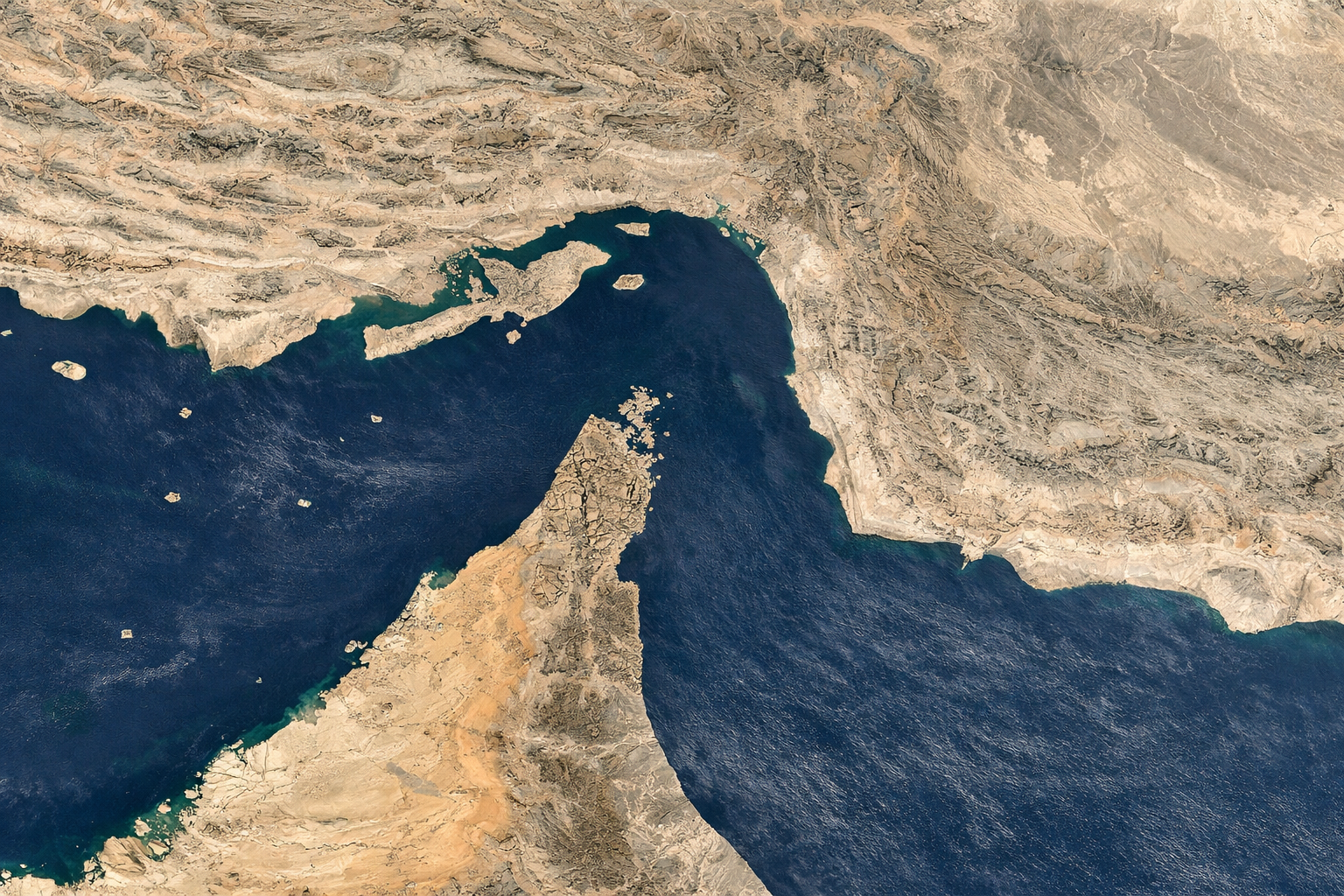
WASHINGTON — President Donald Trump said the United States does not want tolls imposed in the Strait of Hormuz, as tensions with Iran remained high and House Republican leaders delayed a planned vote on legislation aimed at limiting presidential military action against Iran.
Trump’s comment came as U.S. officials continued to focus on the strategic waterway, one of the world’s most important corridors for oil shipments and commercial shipping. The president’s remarks underscored the administration’s insistence that traffic through the strait should remain open and free of any Iranian-imposed charges or restrictions.
Secretary of State Marco Rubio also weighed in on the issue, saying any tolling system in the strait would be illegal. Rubio’s comments added to the administration’s public pressure campaign as it balanced diplomacy, military readiness and concerns about maritime security in the Persian Gulf region.
The debate comes amid renewed anxiety over shipping lanes and broader U.S.-Iran tensions. Maritime security agencies have warned vessels to remain cautious while transiting the area, and commercial traffic through the Strait of Hormuz has faced disruptions as regional tensions remained elevated.
The Strait of Hormuz is one of the most closely watched chokepoints in global energy trade. A significant share of the world’s crude oil passes through the narrow waterway, making even the threat of interference enough to move markets and alarm governments. Any move to impose tolls, restrictions or other barriers would likely raise concerns about fuel prices, shipping costs and supply security far beyond the Middle East.
The White House has not signaled support for any Iranian role in controlling commercial access to the strait. Trump’s comments were consistent with that posture, emphasizing opposition to tolls and stressing the need to keep the shipping lane open. The remarks were reported on May 22, 2026, as the administration continued to address both diplomatic and security concerns tied to Iran.
At the same time, House Republican leaders delayed a vote on a resolution that would have restricted Trump’s ability to engage in military action against Iran without additional congressional approval. The vote was pulled from the schedule as lawmakers continued internal discussions over the scope of executive authority and the timing of any action related to Iran.
ABC News reported that the resolution was withdrawn at the last minute, with attendance issues cited as a reason for the delay. The move reflected the political sensitivity surrounding Iran policy and the difficulty Republican leaders faced in balancing party unity, congressional oversight and the administration’s preferred flexibility in foreign affairs.
The resolution was intended to limit the president’s ability to carry out sustained military action without explicit congressional approval. Supporters of the measure have argued that Congress should play a direct role in any major escalation involving Iran. Opponents have said the White House needs room to respond quickly to threats and negotiate from a position of strength.
The delay in the House vote came as U.S. officials continued to describe the situation as fluid. Trump administration officials have tried to keep diplomatic channels open even as they maintain a hard line on Iran’s behavior in the region. Rubio said there had been some progress in talks, but also noted that more work remained to be done.
The comments and the vote delay add another layer to the broader policy debate in Washington. Lawmakers have increasingly focused on questions of military authority, the limits of executive power and the risk of widening conflict in the Middle East. Iran policy has again become a central issue as the administration confronts both regional instability and pressure from Congress.
Maritime officials have also been tracking the security environment closely. The UK Maritime Trade Operations agency previously described conditions in the Strait of Hormuz and the Persian Gulf as critically tense and warned of reduced traffic, reflecting the dangers facing commercial shipping in the region. Even without a formal blockade, heightened threats have forced shipping companies to adjust routes, schedules and risk assessments.
The administration’s message has been that the strait must remain open and that any Iranian attempt to control traffic through it would be unacceptable. Rubio’s remark that a tolling system would be illegal reflected that position in especially direct terms. The comments were part of a broader warning to Tehran not to interfere with commercial shipping or use the chokepoint as leverage in negotiations.
The U.S. military presence in the region remains a factor in the crisis. American forces continue to support maritime security and help deter threats to commercial vessels. Officials have not publicly detailed every incident or decision that has shaped the current shipping environment, but the regional posture indicates the United States is treating the issue as a serious security concern.
At the same time, the administration has tried to avoid saying diplomacy is over. Rubio said the president would prefer to reach a deal, while also making clear that the United States would not accept an Iranian tolling scheme in the strait. That balance — pressure backed by military readiness but still leaving room for negotiations — has defined the administration’s approach.
The political fight in Congress reflects that same uncertainty. Some lawmakers want stricter constraints on the president before any expanded military action, while others argue that such limits could weaken U.S. leverage at a moment when diplomacy is still unfolding. The postponed vote suggests that leaders are still searching for a consensus on how to proceed.
For now, the central facts remain the same: Trump wants toll-free access through the Strait of Hormuz, Rubio says any tolling plan would be illegal, and House Republican leaders have delayed a vote on an Iran war powers resolution. Together, those developments show how shipping security, congressional oversight and executive authority are colliding as the U.S. manages its latest confrontation with Iran.
The stakes are high because the Strait of Hormuz is not just a regional issue. It is a global energy and trade corridor whose stability affects shipping companies, oil producers, consumers and governments around the world. That is why even brief comments about tolls or restrictions can attract immediate attention in Washington and beyond.
As of now, the administration has kept its position focused on opposing tolls, defending freedom of navigation and preserving room for diplomacy. Congress, meanwhile, is still deciding how much room to give the president if the situation escalates further. The dispute is likely to continue as long as tensions remain high in the Gulf and the political fight over Iran policy remains unresolved.

Salesforce’s SWOT analysis: stock faces AI transformation test
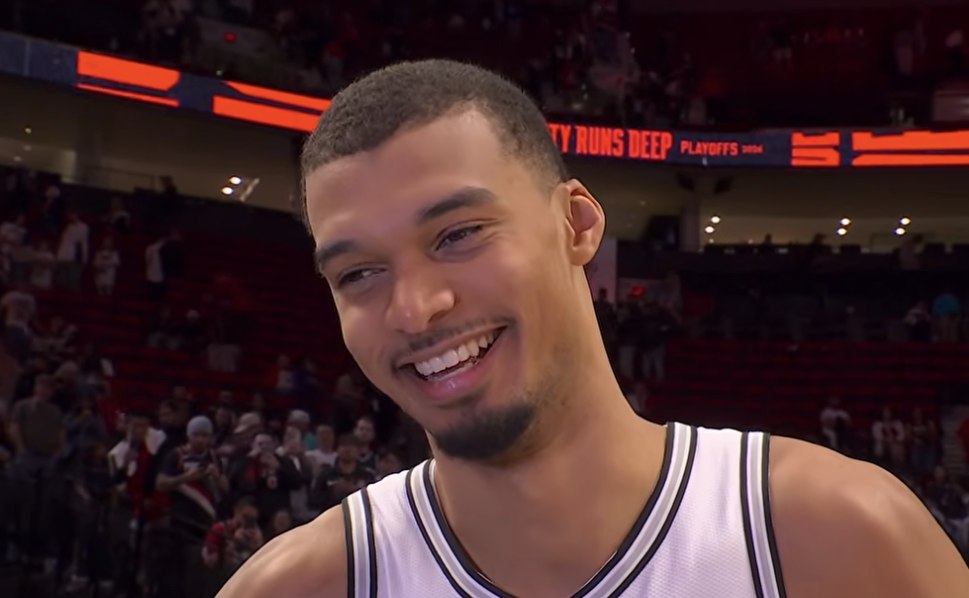
SAN ANTONIO — The Oklahoma City Thunder held Victor Wembanyama to 26 points on 8-of-15 shooting in a 123-108 victory over the San Antonio Spurs in Game 3 of the 2026 Western Conference Finals on May 22 at Frost Bank Center.
The Thunder took a 2-1 series lead with the win. Wembanyama added four rebounds, three assists, one steal and two blocks in the loss. He scored 41 points and grabbed 24 rebounds in Game 1 and posted 21 points with 17 rebounds in Game 2.
Defensive Adjustments
Thunder coach Mark Daigneault utilized multiple defenders against the 7-foot-4 Wembanyama, including Isaiah Hartenstein, Chet Holmgren and wing players. Oklahoma City employed physical defense, contesting shots and limiting Wembanyama’s drives to the rim.
Wembanyama made six of 10 shots inside the arc. The Thunder built a wall between him and the basket, forcing more perimeter attempts. He did not score his first two-point basket until late in the third quarter.
The Thunder outscored the Spurs 97-77 after the first period. Oklahoma City’s bench produced a playoff record 76 points in the game.
Series Context
The Spurs won Game 1 in double overtime 122-115 in Oklahoma City behind Wembanyama’s 41-point, 24-rebound performance. The Thunder responded with a 122-113 home victory in Game 2, limiting Wembanyama to 21 points.
Shai Gilgeous-Alexander led the Thunder with 26 points and 12 assists in Game 3. Jared McCain scored a playoff career-high 24 points off the bench. Jaylin Williams added 18 points with five three-pointers.
For the Spurs, Devin Vassell scored 20 points. De’Aaron Fox added 15 points in his series debut after missing Game 2 with an ankle injury. Dylan Harper remained sidelined with an adductor injury.
Wembanyama’s Playoff Performance
Wembanyama has averaged strong numbers through the first three games of the series. He has recorded multiple double-doubles and continued to impact the game defensively with blocks and rim protection.
The Spurs have relied heavily on the 22-year-old Defensive Player of the Year candidate. San Antonio’s bench was outscored 76-23 in Game 3.
Coaching Comments
Daigneault emphasized depth and physicality after the Game 3 win. He noted the importance of the bench in overcoming the early 15-0 deficit.
Gilgeous-Alexander addressed the slow start, saying the team focused on competing possession by possession after the Spurs’ opening run.
Wembanyama expressed disappointment following the Game 3 loss but highlighted team effort. He has faced increased physical play throughout the series, with defenders grabbing and pushing to disrupt his positioning.
Broader Series Outlook
Game 4 is scheduled for Sunday, May 24, 2026, at Frost Bank Center. The series could return to Oklahoma City for Game 5 if necessary.
The Thunder have shown the ability to adjust defensively after Wembanyama’s dominant Game 1 performance. San Antonio has countered with strong starts but struggled to sustain output against Oklahoma City’s depth.
The matchup features two young cores. Oklahoma City, the defending champions, have utilized bench scoring and defensive versatility. The Spurs have leaned on Wembanyama’s versatility and contributions from players like Stephon Castle and Devin Vassell.
Historical Notes
Wembanyama’s scoring and rebounding totals through the first two games placed him among elite company historically. The Thunder’s strategy in Games 2 and 3 focused on making his touches more difficult and contesting shots at the rim.
Physical play has been a theme. Spurs players have noted instances of grabbing and jersey tugging, while Thunder defenders have emphasized legal physicality within playoff parameters.
Upcoming Factors
Player availability will remain key. The Spurs hope for returns or increased contributions from injured guards. The Thunder will monitor Jalen Williams’ hamstring status after he missed Game 3.
Both teams have young talent and future assets. The series has featured high-level basketball with clutch moments and defensive stands. Further adjustments are expected as the Western Conference Finals progresses.

Ex-Ryder Cupper’s emotional DP World Tour farewell came with a message

Nvidia posts record $81.6bn Q1 amid AI infrastructure boom

M6 crash LIVE as all motorway traffic stopped with major delays


-

 Crypto World2 days ago
Blockchain.com files with SEC for U.S. IPO
-

 Fashion1 day ago
Holiday Weekend Open Thread – Corporette.com
-

 Crypto World6 days ago
Intesa Sanpaolo’s crypto holdings jump to $235M as XRP enters
-

 Business1 day ago
Dell Technologies DELL Stock Surges 15% on AI Server Momentum and Analyst Upgrades in 2026
-

 Crypto World1 day ago
Space X IPO Is ‘Bad News’ for Tech Stocks: But What About Bitcoin?
-

 Crypto World10 hours ago
Robinhood crypto COO Tanya Denisova exits
-

 Fashion7 days ago
On the Scene at Gucci’s Cruise Show in New York City: Mariah Carey, Kim Kardashian, Lindsay Lohan, Iman, and More!
-

 Politics1 day ago
Makerfield: a tale of two social-media histories
-

 Crypto World1 day ago
AI infrastructure race heats up as IREN pitches full-stack strategy, WhiteFiber lands $160M deal
-
 Tech1 day ago
A 0.12% parameter add-on gives AI agents the working memory RAG can’t
-

 Tech2 days ago
WhatsApp ads could make Irish debut after discussions with DPC
-

 Fashion7 days ago
Amazon Sundays: Memorial Day Hosting
-

 Entertainment7 days ago
Off Campus Easter Eggs Explained: Characters, Stories, More
-
 Crypto World5 days ago
Revolut Launches Dogecoin Debit Card Across UK and EU
-

 Crypto World2 days ago
Bitcoin Accumulation Weakens as BTC Realized Losses Hit $600M
-
 NewsBeat2 days ago
Charity run by Reform leader Malcolm Offord accused of ‘law breaking’ over Scottish registration
-

 Sports2 days ago
2026 CJ Cup Byron Nelson leaderboard: Brooks Koepka finds putting stroke in Round 1
-

 Business2 days ago
Trump Invests $1M-$5M in Kura Sushi USA Chain With 27 California Locations
-

 Crypto World2 days ago
Trump Media’s Bitcoin Stash Shrinks Again as 2,650 BTC Lands on Crypto.com
-
Business7 days ago
Australia defends property tax changes designed to fix ‘broken’ housing
You must be logged in to post a comment Login