
Crypto
$6.3 Billion Binance Hack Is the Biggest Crypto Theft on Record, Analysts Say, and They Point to North Korea

The Binance hack, which affected roughly $6.3 billion in assets, is being described by analysts as the largest cryptocurrency theft ever recorded. Two US blockchain analysis firms, TRM Labs and Chainalysis, have tied it to a North Korean hacking unit known as TraderTraitor. Binance itself has not confirmed that attribution.
The attribution comes from the analytics firms, not from Binance or a government. TRM Labs said it reached its judgment “with high confidence.” Chainalysis CEO Jonathan Levin wrote that the theft was “likely done by” the group. Asked about the North Korea link, a Binance spokesperson said only that the company is working with law enforcement to confirm the identity of the criminals. North Korea’s mission in Geneva and its embassy in China did not immediately respond to requests for comment.
How the Binance hack unfolded
According to Chainalysis, funds began leaving Binance hot wallets around 4:20 p.m. Eastern on October 29. TRM said the attacker moved about $6.36 billion across ten blockchains, most of it in around 20 minutes. Chainalysis’s own tally is slightly higher, at $6.4 billion.
Chainalysis described an operational wallet funded through the Tornado Cash mixing service. It said the wallet submitted signed authorizations that let a Binance hot wallet run code the attacker had deployed. Assets were then swept into addresses the attacker controlled.
The thieves also appear to have raced the clock. Chainalysis says they swapped $325 million in stablecoins for $285 million in ether, since issuers can freeze stablecoins but not ether. They sent another $175 million to intermediate wallets. Freezes began by 5:14 p.m. Eastern, less than an hour after the first withdrawals.
Binance’s account of the entry point has shifted. Its first findings pointed to a compromised engineer’s laptop that gave access to a service container. It later said further investigation had uncovered additional “points of breach.” The exchange says it has found no evidence of a wallet private key leak and has promised more technical detail once its probe is finished. Kok Tin Gan, CEO of security firm NyxLab, said the pattern looks like a single signature handing the attacker a never-expiring, full-access token. He asked why stronger approval controls were not in place.
Frozen funds and promises to cover losses
Binance says about $3 billion has been frozen onchain. Tether’s CEO said it froze more than $1.567 billion in USDT, and Circle said it froze over $800 million in USDC in coordination with law enforcement. The issuer of FDUSD said the stolen tokens of that type are frozen too. The fate of the remaining roughly $3.3 billion has not been spelled out.
Users are being told they will not bear the loss. Binance says it has set aside more than $6.34 billion of company funds, about $5 billion of it in the same token types that were affected, and is buying the rest on the market and over the counter. Deposits were unaffected, but withdrawals were suspended and are expected to resume within a day or two. Binance also plans to publish an updated Proof of Reserves. Reuters, citing a person familiar with the matter, reported that the exchange is working with the FBI and the US Secret Service.
A familiar playbook, and a market under strain
TRM said several features of the attack match earlier North Korea-linked heists. It specifically cited the $1.5 billion Bybit theft in 2025, which the FBI attributed to North Korea and TraderTraitor. Experts say Pyongyang has turned to crypto theft as a source of foreign currency for its economy and nuclear program after heavy UN sanctions. South Korea’s spy agency estimated in 2022 that North Korean hackers had stolen about $1.1 billion in digital assets over five years.
Markets took the news badly. Bitcoin fell more than 3 percent to a six-week low near $76,400. Ether dropped to a two-month low around $2,178, and BNB, the exchange’s own token, slid about 5 percent. Total crypto liquidations reached $1.5 billion, mostly from traders betting on higher prices. Coinbase shares fell 4.8 percent and Strategy shares nearly 6 percent in extended US trading.
Analysts see consequences beyond the price drop. Moody’s Ratings’ Cristiano Ventricelli said the Binance hack shows the risk of hot wallets and of concentrating assets in large centralized intermediaries. Bernardo Brites of Trace Finance expects users to drift away from smaller exchanges that could not absorb a loss on this scale. Standard Chartered’s Geoffrey Kendrick suggested more downside may come before prices settle. He also argued the episode could speed a shift toward decentralized exchanges.
Binance, which has 335 million registered users and held about $162.8 billion in custody at the end of 2025, says user funds remain safe. Chainalysis has warned that scammers are posing as the firm to offer fund recovery services, so victims should use official channels only. Key open questions are whether the frozen assets can be returned, how the attacker got in, and whether governments will formally back the North Korea attribution.
Explore more on this topic with Vexel Search.
WordUp Morning
Ten stories, both sides of each, in five minutes. Free, every weekday at 7am, plus a Saturday weekend edition.
We'll email you a link to confirm. Unsubscribe any time.

Binance says it has earmarked more than $6.34 billion of its own money to make customers whole after the largest cryptocurrency theft on record. Independent analysts say they cannot yet confirm that claim. The exchange’s promise to cover Binance hack losses is a bold one, and it now depends on proof that outsiders have not been able to check.
What Binance says it has set aside
According to Binance, the $6.34 billion comes from company funds, and about $5 billion of it is already held in the exact tokens that were stolen. “These assets are in Binance custody,” a spokesperson said. The exchange did not say when it acquired them, and it declined to publish wallet addresses, citing security. It said the holdings will appear in its next proof-of-reserves report, which shows the assets backing customer balances.
Binance has not said which tokens it still needs to buy, when those purchases will finish, or how much of the stolen crypto has been recovered. It did say that roughly $3 billion in affected assets was frozen with help from blockchain partners. That money is not counted in the $6.34 billion.
How the attack unfolded
Binance confirmed the roughly $6.3 billion hack on Friday. The blockchain intelligence firm TRM Labs said funds were drained from Binance wallets across 10 blockchains the day before, and it attributed the attack to the North Korean hacking group TraderTraitor. That attribution comes from TRM Labs, not from a court or from Binance’s own statement in the source reporting.
Analysts want proof before they accept the numbers
Security firm CertiK said it needs more information from Binance before it can judge whether the claimed $5 billion in matching tokens can be verified on-chain. Earlier on Friday, CertiK CEO Ronghui Gu had estimated that the frozen assets plus Binance’s $1.17 billion emergency fund could cover about 66% of the losses. That would leave a gap of around $2.1 billion, which Gu put at about 1.3% of the $165 billion in reserves Binance reports.
Nansen, another analytics firm, said it could not verify what funds Binance had beyond its roughly $1.16 billion emergency fund, or where the money for the remaining losses would come from. Without wallet addresses, the claim rests on Binance’s word until the proof-of-reserves report is published.
Founders point to revenue and other holdings
Binance’s leaders have pointed to the company’s finances. Co-founder Yi He said the exchange’s revenue for the year was enough to cover the losses and that Binance would not need to sell its stake in SpaceX. Changpeng Zhao, who stepped down as CEO in 2023 and later served four months in a US prison over anti-money-laundering violations, said the SpaceX holdings alone are worth more than $1 billion. He added that Binance accumulates the cryptocurrencies it lists because customers can pay trading fees in those tokens. He also said Gulf, Binance’s partner in Thailand, had offered financial support.
Binance said it already sends weekly reports on company funds to Abu Dhabi’s Financial Services Regulatory Authority, and that this requirement predated the hack.
What to watch next
The next proof-of-reserves report is the key test. If it shows the promised tokens in Binance custody, it would back up the company’s claim that customers will not bear the Binance hack losses. If it is delayed or incomplete, the gap between the exchange’s assurances and the independent estimates will stay open. Binance also still has to say which tokens it must buy and how much of the stolen money it can recover.
- Binance says it holds $5B in matching tokens to cover hack losses (cointelegraph.com)
Explore more on this topic with Vexel Search.
File photo: 5 years birthday Binance cake in Paris – 2022-07-08.jpg by Bretwa, CC BY-SA 4.0, via Wikimedia Commons.
WordUp Morning
Ten stories, both sides of each, in five minutes. Free, every weekday at 7am, plus a Saturday weekend edition.
We'll email you a link to confirm. Unsubscribe any time.
Crypto
Binance hack: $6.3bn stolen, users promised full cover, and North Korea suspected but unproven
The Binance hack, which Binance puts at roughly $6.3bn (£4.7bn), is believed to be the largest theft in cryptocurrency history. It has sent a jolt through an industry used to security scandals. The exchange says customers will not lose out, but several questions remain open, including who did it and how much of the money can be clawed back.
How the Binance hack unfolded
The first signs came from crypto watchers on X, who noticed large sums leaving wallets linked to Binance. Founder Changpeng Zhao then confirmed a problem. Binance later said its early investigation pointed to a compromised laptop belonging to a DevOps engineer. That access, it said, let an attacker reach a service container and submit unauthorised withdrawals.
Co-chief executive Richard Teng stressed it was not a simple “one-click” break-in. He later said more than one person was involved, and that the attackers used sophisticated methods to cover their tracks, including a “self-destruct mechanism”. Security experts quoted by the BBC suggested an engineer may have been tricked into running something like a test, allowing malware onto a machine with enough privileges to act as a direct route into production systems and then to the wallets. As one cybersecurity executive put it, a vault is only as safe as the people holding the keys.
Only Binance’s main global exchange, Binance.com, was affected. Binance.us, which serves US residents, says it was not.
What was taken
Estimates circulating online ranged from $2bn to $8bn before Binance settled on its $6.3bn figure, and the final tally could take days to establish. Early reports, cited by Fortune, say about $1.5bn was in Bitcoin and a similar amount in the Tether stablecoin. Slightly under $1bn was reportedly in Ethereum and the USDC stablecoin, with other tokens likely taken as well.
Who is behind the Binance hack?
Nobody has claimed responsibility, and Binance has not named a culprit. Some analytics firms, including TRM Labs, have pointed towards North Korea. They say elements of the attack resemble earlier incidents, such as the $1.5bn ByBit theft in 2025, which was linked to the Lazarus Group, also known as TraderTraitor. Fortune reports that TRM and others consider North Korea almost certainly responsible, but both outlets stress there is no definitive proof.
The theory is plausible. Oxford academic Dr Edward Howell told the BBC that Pyongyang has a long record of using cyber operations to raise cash, and estimated that 40-50% of its weapons programmes are funded this way. North Korea has consistently denied involvement in such attacks, and Binance has not directly addressed the possible link.
Is my money safe?
Binance says user funds are safe. It temporarily suspended deposits and withdrawals as a precaution. It says it will cover all losses from an emergency reserve built for such events, topped up with company money if needed. Fortune notes that rivals, including Coinbase and Tether, pledged support. Markets appear to have taken that reassurance on board: Bitcoin and Ethereum fell around 3%, a dip that coincided with a broader market sell-off.
Recovery is another matter. Binance says it is working with partners to freeze stolen assets and that about $3bn has reportedly been located. Tether and Circle, which issue USDT and USDC, said they would freeze stablecoins tied to the theft. But Fortune reports evidence that the hacker quickly deposited stolen funds on the lending platform Aave as collateral for an Ethereum loan. If so, the thief could walk away with the borrowed Ethereum even if the collateral is frozen, so freezes may only be partly effective.
What users should do now
Experts advise checking balances only through the official Binance app or a web address you already trust. Crisis moments like this are prime time for scammers, so the warning signs include:
- emails claiming your funds are at risk;
- fake support accounts offering help;
- messages urging you to move your crypto to a “safe” wallet.
Never share passwords, verification codes or wallet recovery phrases, and avoid links in unsolicited messages.
The bigger picture
The incident lands on a company that has faced scrutiny before. Zhao resigned as chief executive in 2023 after pleading guilty to money laundering violations, and a US lawsuit last year accused the firm of helping send money to designated terrorist groups. Binance said in 2024 that it held more than $160bn in assets, which helps explain why it can promise to absorb the loss.
Some people online have questioned how one compromised laptop could open the door to billions. Binance promised fuller details soon, and the answers will matter for confidence in the exchange.
Explore more on this topic with Vexel Search.
File photo: 5 years birthday Binance cake in Paris – 2022-07-08.jpg by Bretwa, CC BY-SA 4.0, via Wikimedia Commons.
WordUp Morning
Ten stories, both sides of each, in five minutes. Free, every weekday at 7am, plus a Saturday weekend edition.
We'll email you a link to confirm. Unsubscribe any time.
Trezor is warning that a suspected Trezor Safe 5 implant, reportedly able to beam a wallet’s recovery phrase over a mobile network, may be hiding in devices sold by the reseller CryptoBilis. The company has not yet examined the hardware, but it says it considers the report credible enough to tell customers to act now.
What the Indonesian customer reported
The alarm began with a user in Indonesia who bought a Safe 5 from CryptoBilis through the Tokopedia marketplace in August 2026. After opening the device, the buyer said, they found an extra circuit board sandwiched between the wallet’s main board and its screen. The board reportedly carried a cellular module and an antenna.
Based on that customer’s unconfirmed account, the add-on appears able to read whatever is shown on the display, including the recovery phrase, and send it out over a cellular connection once the wallet is plugged in. A recovery phrase is the master key to a wallet. Anyone who has it can restore the wallet on another device and move the funds out.
Why Trezor is acting before it has the device
The device is still being shipped to Trezor’s lab. Even so, the company chose not to wait for confirmation. “We haven’t had the device in our lab yet, but we’re treating the report as credible, and we’d rather warn people now than wait for confirmation and find out someone lost their funds in the meantime,” chief commercial officer Danny Sanders told Cointelegraph.
Trezor says it knows of no stolen funds tied to a supply-chain attack. It also describes its sales through CryptoBilis as “very small,” though it declined to give numbers. A spokesperson said the company has not worked out where any tampering happened, and that it is reviewing its hardware protections. The spokesperson acknowledged that seals and packaging alone are not enough.
What buyers should do
Trezor’s guidance is direct:
- Do not set up or use any device bought through CryptoBilis from March 2026 onward.
- If you already have, create a new wallet with a fresh recovery phrase and move your assets into it.
- Buyers with proof of purchase can ask Trezor for a replacement device or a voucher toward a new one.
- Do not rely on weighing the device to detect tampering. Trezor says that is not a reliable test.
A pattern that began with Ledger
The report follows a similar episode involving Ledger earlier this month. Losses among Ledger users who bought through CryptoBilis surfaced on October 9, and Ledger confirmed an unauthorized hardware implant in at least one device. It then asked resellers and distributors in Southeast Asia and Hong Kong to pause sales until the devices could be vetted. The implant in that case reportedly resembles the one now described on the Trezor device in form and function. Coverage of Singapore police figures put the losses from tampered Ledger wallets at a few million dollars, though the outlets cited different totals, $2.7 million in one headline and $3.5 million in another account.
Trezor says it halted sales through CryptoBilis on October 9, before it had any sign its own products were affected. It later said it would shrink and tighten its reseller network globally.
Questions about earlier assurances
The episode also complicates Trezor’s earlier reassurances. Security researcher Joe Grand told Cointelegraph he warned Trezor in August about tampered Trezor One and Model T wallets bought from unauthorized sellers on TikTok and Facebook. Trezor responded that its earlier statement, that it had seen no evidence of compromised devices, covered only new wallets sold through authorized resellers.
The company also noted that its setup checks are designed to catch counterfeit devices and modified firmware. The Ledger implant read the screen without altering firmware, so a screen-reading add-on could slip past checks built for a different kind of attack. If the Trezor Safe 5 implant is confirmed, it would show a gap in how users are told to verify new hardware.
What to watch next
Trezor has promised updates once the device reaches its lab. Until then, the main open questions are whether the board is real, who installed it and at what point in the supply chain, and how many units might be affected. For anyone who bought through CryptoBilis since March, Trezor’s advice is to move funds now and sort out replacements afterward.
- Trezor warns of suspected crypto-theft implant in hardware wallet (bleepingcomputer.com)
- Trezor Warns CryptoBilis Buyers After Report of Hardware Implant in Safe 5 (Decrypt)
- Trezor warns CryptoBilis buyers to move funds over suspected implant (cointelegraph.com)
Explore more on this topic with Vexel Search.
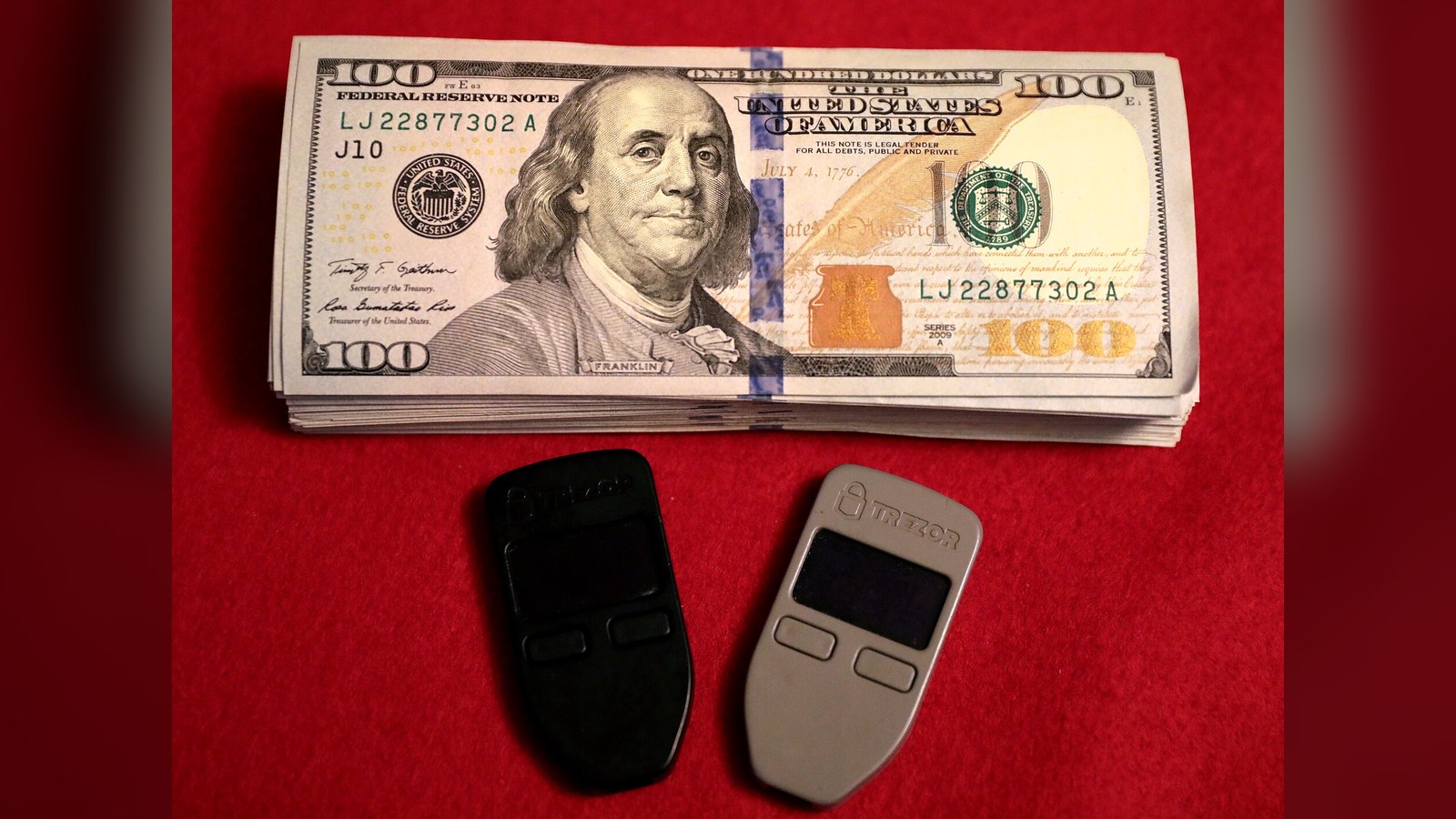
File photo: $10,000 USD fiat and two Trezor One hardware wallets by Gage Skidmore.jpg by Gage Skidmore, CC BY-SA 3.0, via Wikimedia Commons.
WordUp Morning
Ten stories, both sides of each, in five minutes. Free, every weekday at 7am, plus a Saturday weekend edition.
We'll email you a link to confirm. Unsubscribe any time.
VanEck has launched the Wealth Builder ETF, a single actively managed fund that mixes stocks, bonds, gold and indirect bitcoin exposure for a net annual expense ratio of 0.26%. The fund began trading on Oct. 27 under the ticker WBMO.
The product takes an approach that VanEck, which reported $244.1 billion in assets under management as of Sept. 30, previously sold to financial advisers through third-party wealth platforms as model portfolios. Packaged as an ETF, it is open to anyone with a brokerage account. VanEck picks the holdings, sets the weights and handles rebalancing.
https://www.youtube.com/watch?v=videoseries
What is inside the Wealth Builder ETF
The fund holds global equities, fixed income and real assets, including gold. VanEck describes an open-architecture design, meaning it can use its own funds alongside third-party ETFs. Portfolio manager David Schassler said the strategy collects “the asset classes we believe are best positioned to perform over the next decade.” According to the announcement, the fund also targets long-term themes such as technological change and fiscal and inflation trends.
Allocations rest on macroeconomic analysis, capital-market expectations and a review of each underlying product’s strategy, liquidity, costs and risk-adjusted returns. WBMO does not invest directly in futures, options or swaps, according to the prospectus, though some of the products it owns may use derivatives.
Bitcoin exposure is indirect and unspecified
Buyers should not read the headline as a bitcoin fund. WBMO owns no bitcoin. Instead, a wholly owned Cayman Islands subsidiary holds certain investments and gets digital asset exposure through exchange-traded products. The prospectus generally caps the fund’s investment in that subsidiary at 25% of total assets at each quarter-end, but that limit covers digital assets, commodities and related instruments together. It is not a bitcoin target, and the prospectus sets no specific bitcoin allocation.
The structure has trade-offs. Investors need no wallet, seed phrase or exchange account, but they also cannot control the bitcoin position. Because bitcoin is only one slice of a diversified mix, a sharp rally would lift the fund only partly. In a sell-off, bonds and gold may soften the blow without preventing losses. VanEck itself warned that digital asset ETPs can be extremely volatile and that some are not registered under the Investment Company Act of 1940, so they lack certain investor protections.
The fee math
The fee table shows a 0.15% management fee plus estimated acquired-fund expenses of 0.18%, for a gross expense ratio of 0.33%. A 0.07% waiver brings the net figure to 0.26%. The adviser waives management fees equal to what it or its affiliates earn from underlying funds. The underlying bitcoin products charge their own fees, which are reflected in the acquired-fund line.
A pattern in VanEck’s portfolios
The launch fits a broader trend at VanEck. Its separate NODE fund, which holds blockchain companies rather than a multi-asset mix, raised its bitcoin ETP exposure from about 7% at the end of June to 16.8% at the end of September. That is a different product, but it shows the firm is willing to add more bitcoin when it sees fit.
The launch also arrives amid ongoing debate over long-term risks to bitcoin. VanEck’s head of digital assets research, Matthew Sigel, has said quantum computing is a real risk but that the community is working on upgrade paths, even if governance moves slowly.
For investors, the Wealth Builder ETF offers a one-ticket way to hold a diversified portfolio with a modest crypto component at a relatively low fee. Because the prospectus sets no bitcoin target, the actual size of that component will depend on VanEck’s active choices, and buyers will need to watch the fund’s disclosures to see how much bitcoin they hold.
- VanEck Launches All-in-One Wealth Builder ETF With Bitcoin Exposure (Bitcoin Magazine)
- VanEck launches Wealth Builder ETF with Bitcoin exposure at 0.26% fee (crypto.news)
Explore more on this topic with Vexel Search.
WordUp Morning
Ten stories, both sides of each, in five minutes. Free, every weekday at 7am, plus a Saturday weekend edition.
We'll email you a link to confirm. Unsubscribe any time.
Crypto
Tokenized Nasdaq-100 Fund Launches on Stellar as Janus Henderson’s Onchain Assets Top $1 Billion
Janus Henderson and the tokenization platform Centrifuge have launched a tokenized Nasdaq-100 fund on the Stellar blockchain, putting one of Wall Street’s best-known equity benchmarks onto crypto rails through a manager-issued product. The fund, called JQQQ, was announced Tuesday and is aimed at eligible investors outside the United States.
Centrifuge supplies the tokenization infrastructure, and the fund seeks to track the index under a licensing agreement with Nasdaq. Janus Henderson, a London-based manager overseeing roughly $500 billion, said its institutional onchain strategies now exceed $1 billion. Those strategies span Treasurys, structured credit and now equities.
How the tokenized Nasdaq-100 fund is structured
JQQQ is not a token that gives holders direct ownership of Nvidia, Apple or Microsoft shares. According to Cointelegraph, it is a segregated portfolio of a British Virgin Islands investment company and provides indirect exposure to the index. The Wall Street Journal reported that it targets professional investors and carries a minimum investment of $100,000, which puts it well out of reach for ordinary retail buyers.
The more interesting distinction is who is behind the product. CoinDesk framed the launch as an issuer-sponsored fund: Janus Henderson issues and manages it, Centrifuge provides the plumbing and Nasdaq licenses the index. That contrasts with third-party stock tokens created without the involvement of the underlying issuer, a category at the center of a growing debate over who gets to tokenize traditional securities.
A licensing shift opens the door
The timing follows a change at Nasdaq. In April, the exchange said it would license the Nasdaq-100 to additional asset managers, including BlackRock and State Street, while keeping its long-standing relationship with Invesco. Invesco runs the QQQ trust, which Cointelegraph put at a $499 billion market cap. JQQQ shows that the wider licensing push now extends to blockchain-based vehicles as well as conventional funds.
It is also not Janus Henderson’s first move of this kind. CoinDesk noted that the firm introduced the Janus Henderson Anemoy S&P 500 Fund last year, which it described as the first tokenized index fund licensed by S&P Dow Jones Indices. The new launch applies the same playbook to a second major benchmark.
Why Stellar keeps landing institutional products
For Stellar, the launch adds to a steady run of institutional activity. Citing RWA.xyz, Cointelegraph reports that the network ranks fourth by distributed real-world asset value, with about $3.8 billion in tokenized assets. Only Ethereum, BNB Chain and Solana rank ahead of it. Issuers on the network include Spiko, Franklin Templeton and Ondo.
More is lined up. Tradable said in July that it plans to bring up to $1 billion of private credit to Stellar, with $500 million expected at launch. The Depository Trust & Clearing Corporation said in May that it would connect its tokenization service to the network, with DTCC-tokenized assets expected in the first half of 2027. Those could include Treasurys, major index ETFs and Russell 1000 stocks.
Yet the market has not rewarded the token. XLM has fallen about 16% this year and traded near $0.17 on Tuesday, according to CoinGecko data cited by Cointelegraph. That gap shows that growth in tokenized assets does not automatically lift the price of the underlying blockchain’s native coin.
For now, the tokenized Nasdaq-100 fund is a narrow product with a high entry bar and a geographic restriction. Its significance is less about immediate scale than about the model it demonstrates. Established managers are using licensed benchmarks and their own issuance to bring equity exposure onchain, rather than leaving that space to third-party tokens.
Explore more on this topic with Vexel Search.
WordUp Morning
Ten stories, both sides of each, in five minutes. Free, every weekday at 7am, plus a Saturday weekend edition.
We'll email you a link to confirm. Unsubscribe any time.

Zcash grants funding could soon face its biggest change since the program began. Co-founder Sean Bowe has published a draft proposal to switch off the automatic stream of newly created ZEC that flows to Zcash Community Grants (ZCG), arguing the program is already sitting on far more money than it can sensibly spend.
Under the draft, released late Monday, ZCG’s 8% share of newly minted ZEC would be redirected into the Network Sustainability Mechanism, a reserve meant to support future mining rewards. The committee would keep everything it already holds and keep awarding grants from that pot. Because the allocation is built into the protocol, ending it would require a change to Zcash’s network rules.
The Numbers Behind the Proposal
Bowe puts ZCG’s assets at roughly $125 million after outstanding commitments, using an illustrative ZEC price of $1,300. The committee’s dashboard showed about 91,453 ZEC and $8.8 million in cash, with $2.4 million already promised to grantees. Those figures are consistent with his estimate.
The flow of new money is the bigger issue. At the network’s target pace, ZCG receives about 144 ZEC a day, or about $68 million a year at that same price. By contrast, the Financial Privacy Foundation, which administers ZCG’s funds, reported just over $1.5 million in program expenses in the first quarter, about $6 million annualized. That is less than a tenth of the annual inflow.
Bowe also stress-tested the case. If ZEC dropped to $500 and spending rose to $10 million a year, he estimates the treasury would still last about five years. In a post announcing the draft, he said the program “was never designed to handle this amount of funding.”
Governance and Risk
The proposal is as much about governance as arithmetic. ZCG’s five-member committee is elected by a community advisory panel and chooses grants without a separate coinholder vote. Bowe’s draft argues that continuing to pile money into that custody and decision-making setup adds risk when reserves are already large.
He does not want to end all ecosystem funding. A second program receives 12% of newly created ZEC, and holders vote on its grants every quarter. Bowe wants that allocation left alone. The redirected 8% would stay in the sustainability reserve for the remainder of the grants stream’s existing term.
Timing Draws Attention
The proposal arrived as a ZCG-funded outreach effort drew criticism. The team behind it, ZECsy, demonstrated private payments at an adult-industry convention in Edison, New Jersey, over the weekend. It had requested $550,000 for work spanning adult-industry events and crypto conferences. Bowe’s draft does not mention the controversy, and its case rests on the treasury’s size and the continuing inflow rather than any single grant.
Whether the community embraces the change is an open question. The draft still has to move through Zcash’s improvement-proposal process, and it would need to win support before any network-rule change could take effect. For now, the debate over Zcash grants funding turns on one question: whether a program with a $125 million cushion still needs a guaranteed stream of new coins.
Explore more on this topic with Vexel Search.
WordUp Morning
Ten stories, both sides of each, in five minutes. Free, every weekday at 7am, plus a Saturday weekend edition.
We'll email you a link to confirm. Unsubscribe any time.
Tokenized stock objections against the planned OKX-ICE trading venue rose to 26 this week, after IBM, Oracle, Intel and quantum-computing firm IonQ asked not to have their shares offered on the platform. The four names appeared in an updated public notice from the OKX-ICE joint venture dated Monday, Oct. 26, and were first flagged publicly by journalist Eleanor Terrett.
The latest additions follow an Oct. 23 disclosure that counted 22 objecting issuers. That earlier list included Microsoft, Alphabet, Qualcomm, Cisco, Broadcom, CoreWeave, Goldman Sachs and Wells Fargo. Taken together, the objectors span technology, banking, telecommunications and healthcare, so the pushback is not confined to one sector.
What the SEC’s opt-out rule allows
The objections stem from the SEC’s five-year Innovation Exemption, issued Sept. 17. It lets qualifying venues test round-the-clock, blockchain-based trading of certain stocks through permissioned automated market makers. Platforms must notify a company before offering shares that were tokenized by an unaffiliated third party, and the company then has 30 calendar days to object in writing. A timely objection keeps those shares off the venue under the exemption.
OKX-ICE, a partnership between crypto exchange OKX and NYSE owner Intercontinental Exchange, issued its first notice on Oct. 4. It outlined a design using Uniswap v4 liquidity pools on OKX’s X Layer blockchain, with the venture initially naming 63 prospective securities.
What the objections do and don’t mean
The scope of these tokenized stock objections is narrower than the headline count suggests. They do not amount to a general ban on tokenization, and they do not stop a company from issuing its own blockchain-based securities. Nor do they show that any affected shares have already traded. They simply remove a company’s stock from this particular venue’s third-party offering.
Why so many large issuers are opting out is not spelled out in the notices. Industry experts previously told CoinDesk the pattern may reflect a wait-and-see stance, with companies wanting more clarity on shareholder protections and the practical benefits of tokenized trading before taking part. Some industry groups are going further, urging regulators to replace the opt-out model with one requiring affirmative issuer consent.
A market that needs issuers to join
The larger test for OKX-ICE is whether it can assemble a credible roster. Round-the-clock trading is the main selling point of the exemption, but a venue is only as appealing as the companies on it. With 26 objections already logged against an initial list of 63 securities, the venture faces a thinner menu than it first outlined, though the sources do not say how many of the objectors fell within that original list.
The notice process is also ongoing, so the count could keep climbing. How OKX-ICE responds, and whether regulators revisit the opt-out mechanism, will shape how the first real test of the SEC’s tokenization framework unfolds.
Explore more on this topic with Vexel Search.
WordUp Morning
Ten stories, both sides of each, in five minutes. Free, every weekday at 7am, plus a Saturday weekend edition.
We'll email you a link to confirm. Unsubscribe any time.


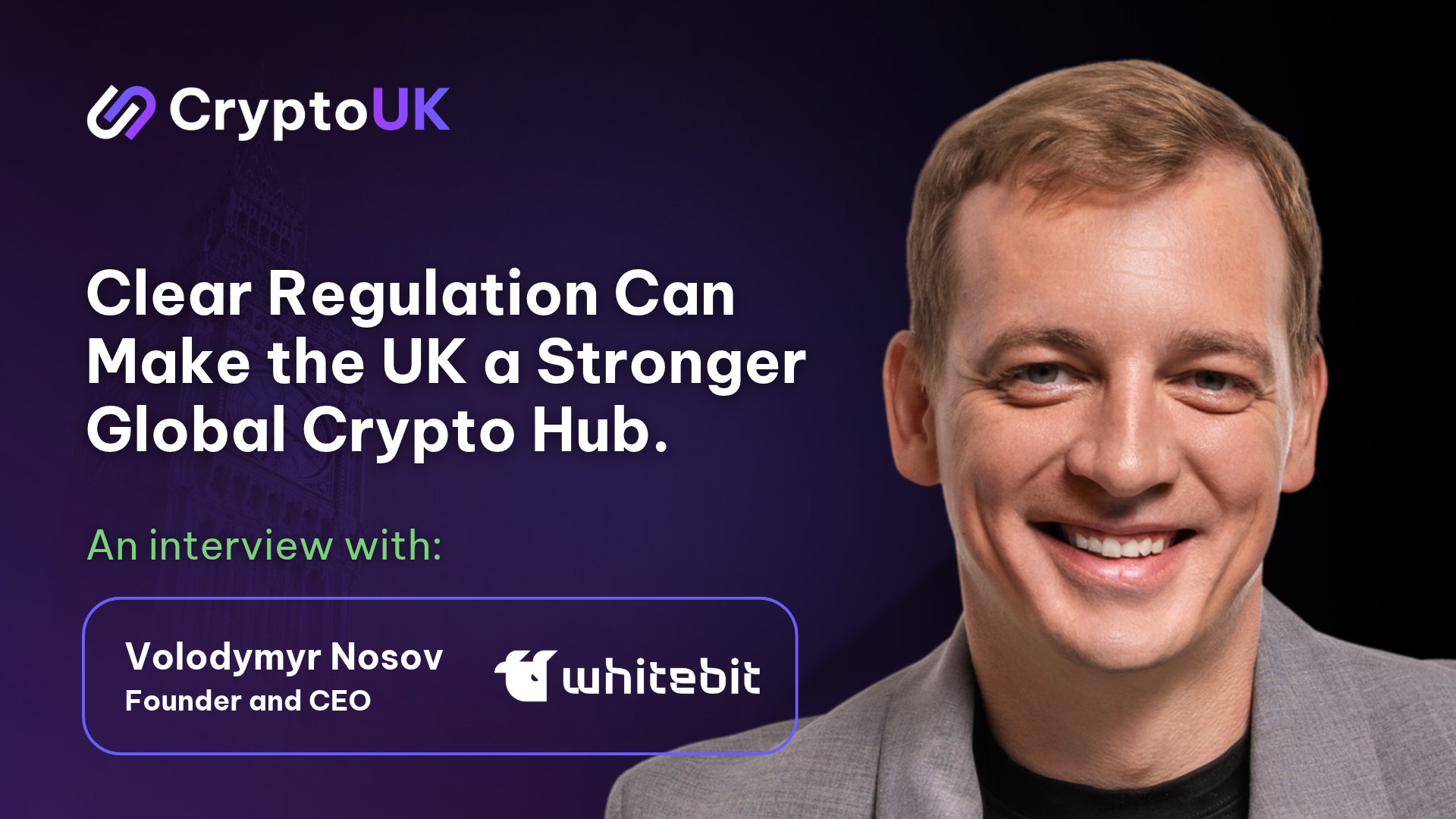
UK crypto regulation is shifting from a narrow focus on anti-money-laundering checks and marketing rules toward a fuller rulebook, and exchanges are already positioning themselves for it. In a recent CryptoUK interview, WhiteBIT founder Volodymyr Nosov argued that clarity from regulators is the missing ingredient for turning widespread awareness of digital assets into broader, safer adoption.
A big gap between awareness and ownership
The numbers Nosov leans on come from the Financial Conduct Authority’s 2025 Cryptoassets Consumer Research. By that account, 91% of UK adults are aware of cryptoassets, but only around 8% currently hold them. Nosov reads that gap as room for “responsible growth” once the framework matures.
One statistic he highlights points to why regulation matters commercially: 26% of non-users said they would be more likely to enter the market if cryptoassets were fully regulated. Nosov also notes the FCA’s finding that centralised exchanges remain the most common route into crypto for UK users, which puts platforms like his at the center of any regulatory shift.
What exchanges say users now want
Nosov describes a change in priorities. Early adopters valued access and simplicity. As the market matures, he says, users want a combination of accessibility, simplicity, security and trust, with trust increasingly resting on strong security and transparency. He points to growing attention to asset protection, liquidity, institutional-grade custody and intuitive products.
For retail customers, he sketches a good experience as one where users can fund an account in pounds, convert and trade easily, and see clear analytics. Education, transparent fees and practical risk information should sit inside the platform rather than behind a link, he says.
From AML box-ticking to market integrity
The more consequential argument concerns what a comprehensive regime changes for businesses. Nosov says the conversation moves beyond basic AML compliance toward market abuse monitoring, robust custody standards, conflict-of-interest management and capital adequacy. In his view, institutions such as hedge funds, asset managers and family offices want operational clarity, while retail users want clear disclosures, fair treatment and protection from predatory practices.
He also claims that exchanges which invested in compliance from the start now hold a significant advantage. That is a self-interested position, and worth reading as such: WhiteBIT recently launched a UK-specific arm, WhiteBIT UK, under the Section 21 regime, and Nosov sits on its board as a non-executive director. He describes the entity as a step toward a directly authorised route, offering local GBP banking through Faster Payments, UK-based customer support and products tailored to British users.
What to take from it
The interview is a conversation hosted by a trade association, so it reflects an industry view rather than an independent assessment. The published portion, which cuts off before Nosov’s answers on institutional demand, offers no detail on timelines, specific rules or how his firm’s authorisation will progress. Still, it captures a clear industry thesis: that UK crypto regulation, if it delivers predictable standards on custody, disclosure and market conduct, will reward firms that built compliance early and could draw in the cautious majority who have heard of crypto but have not yet bought any.
Whether that 26% of hesitant non-users actually converts is the real test, and the FCA’s research suggests it will depend as much on trust as on technology.
Explore more on this topic with Vexel Search.
WordUp Morning
Ten stories, both sides of each, in five minutes. Free, every weekday at 7am, plus a Saturday weekend edition.
We'll email you a link to confirm. Unsubscribe any time.
Crypto
Goldman Sachs, JPMorgan and Morgan Stanley are dominating the AI stock boom. Here’s their edge

[ad_1]
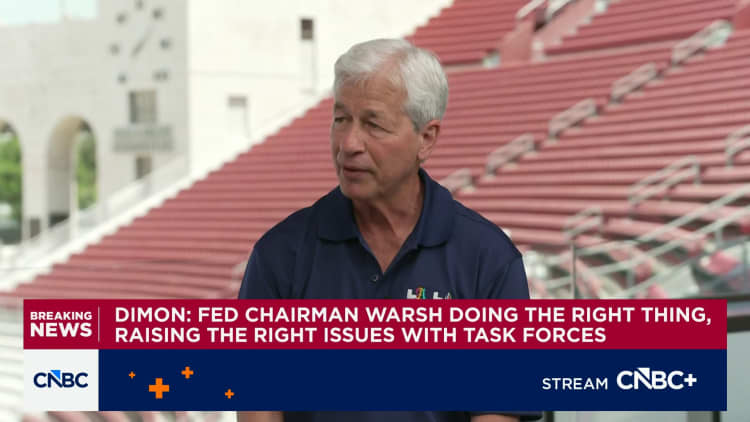
David Solomon, CEO of Goldman Sachs (L), Jamie Dimon, CEO of JP Morgan (C), and Ted Pick, CEO of Morgan Stanley.
CNBC | Getty Images | CNBC
Fueled by the global boom in artificial intelligence stocks, relaxed capital rules and greater lending to hedge funds, big Wall Street banks have already had a banner year for equities trading — even with one quarter left to go.
The five biggest investment banks have generated about $67 billion in equities revenue through Sept. 30, according to company filings. That is $7 billion more than what the group made during all of 2025, which itself was a record haul.
But it’s Wall Street’s Big Three that have captured the largest slice of what is shaping up to be the industry’s most lucrative arena: Goldman Sachs, JPMorgan Chase and Morgan Stanley have made a combined $52 billion in stock trading revenue so far this year, nearly 80% of the total.
“When it comes to the AI mega trade, the Big Three consider each other their main competitors, and that’s pretty much it,” Mike Mayo, Wells Fargo banking analyst, told CNBC. “They’ve been best positioned to take advantage of this market.”
Wall Street banks are experiencing an epic run of blockbuster profits as the total value of the stock market balloons and trading activity from institutional and retail investors rises across stocks, exchange-traded funds and derivatives. Helping drive this activity are the loans that the banks, through their prime brokerages, are extending to hedge funds so that they can amplify their bets.
Prime brokerage — the business of providing hedge funds with margin loans, securities lending and other trading services — has become a key battleground and source of growth. The Big Three’s prime brokers are central to the larger equities story because they serve the largest funds across markets and products.
Demand for leverage to make bets on AI hardware, hyperscalers and chip suppliers has reached new heights, bank executives said last week.
At Goldman Sachs, equities financing activities jumped 96% in the third quarter to a record $3.37 billion. JPMorgan and Morgan Stanley don’t break out that figure, but said they saw a similar dynamic.
“I like your ‘insatiable demand for capital’ point. That feels about right,” JPMorgan CFO Jeremy Barnum said on the bank’s third-quarter conference call, responding to analyst questions about financing demands.
“In this moment where AI is such an overwhelming theme … there is capital being tapped through all kinds of different mechanisms,” Barnum said.
That demand has helped transform equity desks at the Big Three from cyclical, transactional businesses into more durable, high-margin lending engines, Wall Street executives say.
The performance gap between Wall Street’s giants and rivals including Bank of America and Citigroup highlights a widening divide in capital markets.
“For clients, the value isn’t just a price on one trade, it’s coverage and continuity,” Rachid Alaoui, JPMorgan global head of equities, told CNBC in an interview. “You want a dealer that can give you the full suite across products, and you want that service to travel with you across regions. That matters in stressed markets and periods of volatility.”
Executing multibillion-dollar bets, like leveraged swaps on volatile AI stocks or sector ETFs, can require an enormous balance sheet. The biggest banks can absorb potential $100 million losses without threatening their quarters, according to trading executives. Smaller or more niche banks can’t underwrite single-trade risks of that magnitude, forcing them to decline the business or cede share.
U.S. prime brokers have also benefited from the retreat of European banks including Credit Suisse from the equities business, said Bloomberg Intelligence analyst Herman Chan.
“Prime is one of the ultimate scale businesses,” Chan said. “If you have a strong equities franchise, the hedge funds will want to transact with you because you have a bigger pool of trading opportunities with counterparties.”
Picks and shovels
While U.S. markets were swept up in software and cloud computing giants this year, trading executives say the fastest-growing frontier for equities was in Asia.
Institutional investors poured into South Korea and Taiwan, targeting the “picks and shovels” of the AI supply chain: the memory chipmakers and semiconductor manufacturers supporting data center construction, Alaoui said.
For the Big Three, with their footprints across Tokyo; Hong Kong; Seoul, South Korea; and Mumbai, India; the Asia trade was a goldmine. However, trading executives point out that transaction taxes and stamp duties are included in top-line revenue, artificially inflating Asia prime totals.
There is also no agreed-upon definition of what equities trading revenue should include, so some banks include business lines like clearing services that others exclude from their stock trading totals, making apples-to-apples comparisons difficult.
But that doesn’t change the overall momentum of the business, boosted by a stock rally that began in October 2022, weeks before OpenAI released ChatGPT.
“We’re still in a stock-based world,” Morgan Stanley CEO Ted Pick said on the firm’s earnings call. “Equities are still, all things being equal, the attractive asset class.”
While the CEOs of Goldman Sachs and Morgan Stanley have said the AI build-out is still in its early years, if AI turns out to be not as transformative as hoped, a downturn could impact those banks more than others, analysts said.
The boom has also drawn some concern over the possible risks posed by hedge funds.
The International Monetary Fund warned this month that growing leverage, crowded positions and correlated selling from hedge funds could create potential stability risks. The IMF estimated that global hedge fund assets had reached $13 trillion.
In August, JPMorgan CEO Jamie Dimon said industrywide leverage was “the highest it’s ever been,” though he stopped short of calling the risk big enough to pose a threat to the financial markets.
Wall Street executives and analysts pointed out that the industry wasn’t fazed by the meltdown of several hedge funds this summer. While the hedge fund run by former OpenAI researcher Leopold Aschenbrenner, Situational Awareness, garnered the most headlines, several smaller firms also experienced a forced unwinding.
Prime brokers have learned to leap on margin calls and quickly take down risk when markets move against clients, JPMorgan’s Alaoui said.
“In the summer, some investors had positions they were forced to unwind,” he told CNBC. “They deleveraged, risk came down, and the market moved on.”
‘Known unknowns’
Another factor driving the equities boom: Trump administration regulators have eased some leverage rules for the largest U.S. banks, giving them more room to expand balance sheet-heavy businesses including prime brokerage. The revised rules were finalized in 2025, and banks were allowed to adopt them as early as January.
By easing the stringent balance sheet caps that previously treated Treasurys and prime brokerage loans, which are collateralized, the same as riskier assets, regulators gave dealers greater flexibility to deploy balance sheet capital.
“Capital did go down, so you have to say the system is somewhat more levered because of the relaxation in regulations,” said Darrell Duffie, a finance professor at Stanford University and a leading expert on financial stability. “It’s not a good idea, but it hasn’t gotten dramatically out of whack.”
The larger size of the market and higher volatility can create more trading, derivatives activity and leverage, he said, but that’s not inherently alarming.
Wall Street executives also downplayed concerns over leverage, pointing out that they use collateral and frequent stress testing to get ahead of problems.
“Hedge fund leverage as a contributor of risk to the system is very much in the category of known unknowns,” JPMorgan’s Barnum said last week. “It doesn’t mean it’s riskless, but we kind of know what it is.”
— CNBC’s Leslie Picker and Ritika Shah contributed to this report.

[ad_2]
Source link
WordUp Morning
Ten stories, both sides of each, in five minutes. Free, every weekday at 7am, plus a Saturday weekend edition.
We'll email you a link to confirm. Unsubscribe any time.

The list of approved Russia crypto exchangers has more than quadrupled in just over two weeks, and the country’s two largest banks are preparing to put Bitcoin and other coins in front of ordinary customers before the year ends. The Bank of Russia added Prosto LLC as the 17th firm on its register of crypto exchange providers on Thursday, up from four when the register opened on 6 October.
A regulated market takes shape
The rush follows a law “On Digital Currencies and Digital Rights,” which took effect on 1 September and pulls crypto trading inside Russia’s regulated financial system for the first time. A second register, for digital depositories that record who owns which coins, now holds eight names.
The two roles are distinct. Exchange providers can trade digital currencies for their own account outside organised venues. Depositories keep the ownership records and give clients access to the addresses where assets are held. Sberbank and VTB, both state-controlled, hold both statuses. VTB was listed in both registers on 6 October, while Sberbank joined the exchange register on 12 October after being among the first five depositories approved.

Retail launch dates and spending caps
VTB says it will open trading to a broad range of investors in November and December, through its VTB My Investments app and then directly through the bank’s exchange. Its broker has already settled its first stablecoin deals for corporate clients through accounts at its new depository. Sberbank is aiming for 1 December, using apps customers already have, though it says timing depends on the final regulations. It is reportedly already testing Bitcoin, Ether and USDT trades in its app.
Ordinary buyers will face tight limits. Non-qualified investors can buy only the most liquid cryptocurrencies, up to 300,000 roubles (about $3,800) a year through any one intermediary, and only after passing a test. Qualified investors must also pass the test but can trade any coin without a cap.
Payments still restricted, cross-border use allowed
The opening has a clear boundary. Using crypto to pay for goods and services inside Russia remains banned. Importers and exporters, however, can use it for cross-border settlements without restrictions, through intermediaries or directly from any type of wallet. Sberbank launched such a service for foreign-trade companies on 1 September. Its first deputy chairman, Alexander Vedyakhin, said transfers take a couple of minutes, have no minimum payment and cost 0.3% on average. The product followed a central bank pilot that began under an experimental legal regime in September 2024.
Enforcement is the other side of the framework. Buying and selling crypto without a central bank-issued permit can bring a forced labour sentence of up to seven years, according to coverage of the new laws.
Beyond the big two
The growth in Russia crypto exchangers is not limited to the state giants. T-Technologies, parent of T-Bank, has registered its Atomyze unit as a depository and T-Invest Lab as an exchange provider. Several newly formed companies have also appeared on the register, and MTS Bank has said it plans basic crypto services in the fourth quarter.
The speed is partly procedural. Banks and other licensed institutions can join the registers through a simplified process that takes one working day. That helps explain how quickly the Russia crypto exchangers list has grown, and it suggests more names could follow as the retail launches approach.
What remains to be seen is how much demand the capped retail products will draw, and whether the final regulations arrive in time for Sberbank to meet its 1 December target.
Explore more on this topic with Vexel Search.
WordUp Morning
Ten stories, both sides of each, in five minutes. Free, every weekday at 7am, plus a Saturday weekend edition.
We'll email you a link to confirm. Unsubscribe any time.

Binance Hack Losses: $6.34B Set Aside, $5B Already Held in Matching Tokens

CMA Meta Investigation Targets Terms Affecting “Thousands of UK Businesses”

IOPC investigation opens into Met’s failure to pass on 2019 letter about Meghan’s father


-

 Fashion7 days ago
Weekend Open Thread: Anine Bing
-

 Tech & AI5 days ago
New conversion kit lets builders fit ATX motherboards and standard PC GPUs inside Apple Mac Pro case
-

 Tech & AI7 days ago
Startups don’t need to go viral to win customers
-

 Tech & AI6 days ago
S’pore’s NTU ranks 1st globally in AI & NUS dominates engineering
-
 Crypto5 days ago
Pump Fun’s Kimchi partnership has turned into chaos
-
 Entertainment7 days ago
‘Shocked’ Director Addresses Amanda Bynes’ Last On-Screen Performance
-

 Fashion6 days ago
Breaking the Color Rules – Julia Berolzheimer
-

 Tech & AI6 days ago
Pushing Bluetooth Out To 12 Kilometers
-

 Business & Hustles6 days ago
Slideshow: Operators lean on limited-time menu innovations
-

 Tech & AI6 days ago
Instacart reportedly discussed selling itself with DoorDash and Uber
-

 Business & Hustles6 days ago
US oil company plans first well in Greenland in 2027 amid Trump push
-
Tech & AI6 days ago
What’s The Difference Between Gear Oil And Hydraulic Oil?
-

 Tech & AI6 days ago
Apple is exploring ways to make Safari websites less cramped on its foldable iPhone
-
 Crypto6 days ago
Grayscale Names 3 Cryptocurrencies That Could Benefit From AI Growth
-
 Tech & AI5 days ago
Greece Enacts Social Media Ban For Kids Under 15
-

 Crypto6 days ago
IRS Targets 120-Day Tax Disclosure Process: Forbes
-
 Crypto6 days ago
AmEx fires 5% of workers, raises profit forecast just 1%
-

 Crypto5 days ago
Bitcoin ETFs reversed course in a day. Who is buying when the funds sell?
-

 Tech & AI5 days ago
The AI agents Muse and Dots, explained: What are they and what they do
-

 Tech & AI4 days ago
Anker Soundcore Space 2 Pro Review
You must be logged in to post a comment Login