
Crypto World
$20 Million in XRP Stolen From Thousands of Hardware Wallets

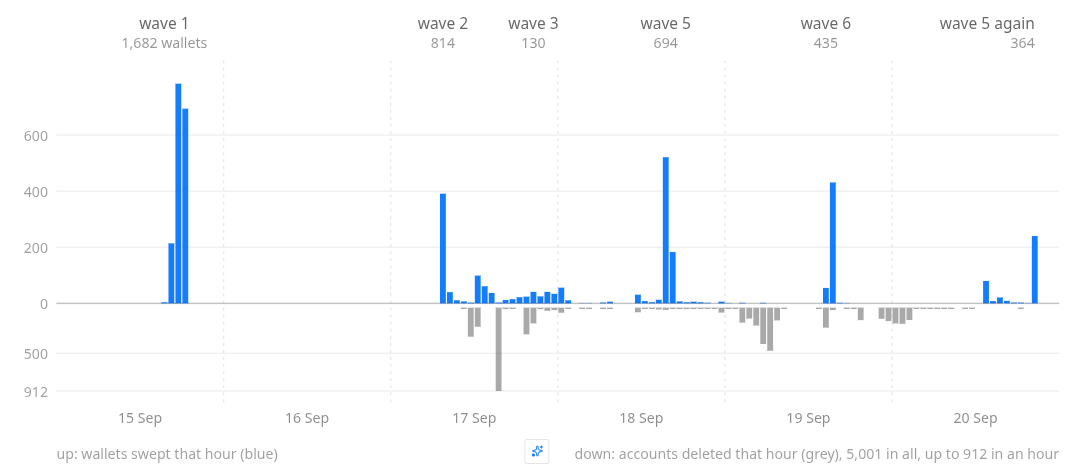
Attackers drained roughly 11.7 million XRP from thousands of D’CENT App Wallet users. The theft, worth close to $20 million, unfolded between September 15 and 20. XRPL.to published the on-chain forensic timeline.
The operation unfolded across six separate waves. It hit a combined 6,678 wallets using keys the thief already controlled.
How the Attack Actually Unfolded
Someone manually drained eight wallets, each holding over 99,999 XRP, within an hour on September 15. An automated script then swept a total of 1,682 wallets that same day.
Five more waves followed through September 20. Each wave reused the same script, manual tool, and stolen keys.
Attackers went beyond simple transfers, too. They deleted 5,001 accounts entirely to claim their remaining reserve balances, XRPL.to reported.
Notably, 2,470 of those wallets had never been swept. That detail suggests the thief held a broader list of compromised keys than the initial drain revealed.
Follow us on X to get the latest news as it happens.

The stolen funds moved fast. Roughly 5.6 million XRP crossed into Ethereum through THORChain. Other funds are routed through exchanges, including Binance, as well as services like unionchain.ai and NEAR Intents.
Each sweep often reached an off-ramp within hours, limiting the window available for freezing stolen funds. About 1.3 million XRP still sat in the attacker’s own wallets as of September 21.
Why Are D’CENT Users Specifically at Risk?
D’CENT confirmed abnormal transfers affecting its App Wallet on September 16. The company clarified that hardware wallets remained unaffected. It later urged users to move funds immediately, though it has not confirmed whether reimbursement will follow.
Notably, no XRP Ledger exploit caused this incident. Every sweep used valid signatures from the wallets’ own private keys. That detail means the compromise originated from how those keys were exposed, not from any flaw in the network itself.

XRPL.to’s analysis found the operation reused identical scripts and fee patterns across multiple waves. That pattern strongly suggests a single coordinated actor carried out every stage. Security researchers now recommend one specific step.
Anyone who used D’CENT’s App Wallet at any point should migrate funds to a new wallet immediately. The exact method behind the original key compromise still remains unconfirmed.
XRP trades near $1.49 at the time of writing. That figure marked a 6% drop over the past 24 hours, according to BeInCrypto data. The token’s market cap stood near $93.82 billion, ranking fifth among all cryptocurrencies.
Subscribe to our YouTube channel to watch leaders and journalists provide expert insights.
The post $20 Million in XRP Stolen From Thousands of Hardware Wallets appeared first on BeInCrypto.

Crypto World
How Is Gen Digital’s Stock Performance Compared to Other Software – Infrastructure Stocks?


Valued at a market cap of $17.4 billion, Tempe, Arizona-based Gen Digital Inc. (GEN) is a global company focused on enabling Digital Freedom through trusted consumer brands including Norton, Avast, LifeLock, and MoneyLion. The company provides products and services spanning cybersecurity, online privacy, identity protection, and financial wellness.
Companies valued at $10 billion or more are generally classified as “large-cap” stocks, and Gen Digital fits this criterion perfectly, exceeding the mark. Gen Digital serves nearly 500 million users across more than 150 countries, helping consumers live their digital lives safely, privately, and confidently.
More News from Barchart
Shares of Gen Digital have dipped 9.9% from its 52-week high of $31.65. The stock has increased 25% over the past three months, outperforming the broader iShares Expanded Tech-Software Sector ETF’s (IGV) return of 22.4% during the same period.

Gen Digital’s shares have risen 5.8% on a YTD basis, outpacing IGV’s 1.1% gain. The stock has declined marginally over the past 52 weeks, compared to IGV’s 9.3% drop over the same time frame.
GEN stock has been trading above its 50-day moving average since May.

Gen Digital shares rose 3.8% following its Q1 2027 results on Aug. 6 as adjusted revenue increased 11% to $1.34 billion, bookings grew 11% to $1.28 billion, and adjusted EPS jumped 19% to $0.71, reflecting broad-based growth across both segments. The company also generated $430 million in free cash flow and delivered $668 million in adjusted operating income, up 9%, including EPS surged 65% to $0.36.
In addition, Gen Digital raised its fiscal 2027 revenue guidance to $5.38 billion – $5.48 billion and adjusted EPS guidance to $2.87 – $2.97.
In comparison, rival Microsoft Corporation (MSFT) has underperformed GEN stock. Shares of Microsoft have gained 3% on a YTD basis and declined 3.2% over the past 52 weeks.
Despite the stock’s outperformance relative to its industry peers, analysts are cautiously optimistic, with a consensus rating of “Moderate Buy” from 10 analysts. The mean price target of $33.60 suggests a premium of 17.6% to current levels.
On the date of publication, Sohini Mondal did not have (either directly or indirectly) positions in any of the securities mentioned in this article. All information and data in this article is solely for informational purposes. This article was originally published on Barchart.com

Prediction markets operator Kalshi said it has not been contacted by the Commodity Futures Trading Commission and does not believe there is any formal examination, after a report that the regulator was reviewing a flurry of trading activity in its Ether perpetual futures market.
On Tuesday, The Wall Street Journal reported that the CFTC is examining a pattern of rapid trades clustered around $5,500, citing a person familiar with the matter. The trading pattern has prompted allegations of wash trading.
The scrutiny comes as Kalshi has reported rapid growth in its perpetual futures business. A week after launching its perpetual futures markets in May, the company told CNBC that trading volume had surpassed $1 billion.
Elisabeth Diana, head of communications at Kalshi, described the discourse as “rumors seeded by competitors.”
“We have not been contacted by the CFTC and don’t believe there is any formal examination,” Diana told Cointelegraph. “As we’ve said, these data patterns are typical of liquidity incentive programs and common in financial markets. Don’t believe everything you read on X.”
Cluster of trades on Ether perpetual futures
The trades took place in one of Kalshi’s markets for perpetual futures, where users speculate on the price of an asset without buying it; in this case, the price of Ether.
The trades of roughly $5,500 each accounted for over $5 billion in Ether perp volume over the past month, according to the Journal.
The Journal also reported that Kalshi offered some traders opportunities to buy equity in the company if they met trading-volume targets, citing people familiar with the arrangements. It also said the company waived trading fees and provided monthly cash payments to encourage large traders to provide liquidity.
In a blog post on Wednesday, Kalshi attributed the repeated trade sizes to programs that pay market makers to keep buy and sell orders available at specified sizes and at a set price range. It said those payments reward the availability of orders, not the volume of trades executed.
The post did not directly address the equity-purchase opportunity tied to trading volume targets as reported by the Journal.
Kalshi denies wash trading claims
Market makers help financial markets function by continuously quoting prices at which they are willing to buy and sell an asset, giving other traders ready counterparties to trade with. Market makers can profit from the difference between their buying and selling prices, but risk losses if prices move against them. Traders who accept their quoted prices are known as takers.
Related: Kalshi joins Coinbase with own filing for US stock perpetual futures
Kalshi said traders could profit when prices changed on other exchanges by buying or selling at a market maker’s outdated price.
“The fixed size trades are entirely consistent with a single maker putting up resting orders of a fixed size and getting traded against by many takers,” Kalshi said.
It said the trades involved hundreds of distinct traders taking a market maker’s orders, with the takers “pretty consistently right” and the maker “pretty consistently wrong.”
“This is a sign of genuine economic activity rather than wash (where you’d expect volume to increase without either side taking a profit/loss),” Kalshi said.
Magazine: Winners and losers of the SEC’s new tokenized stocks rules
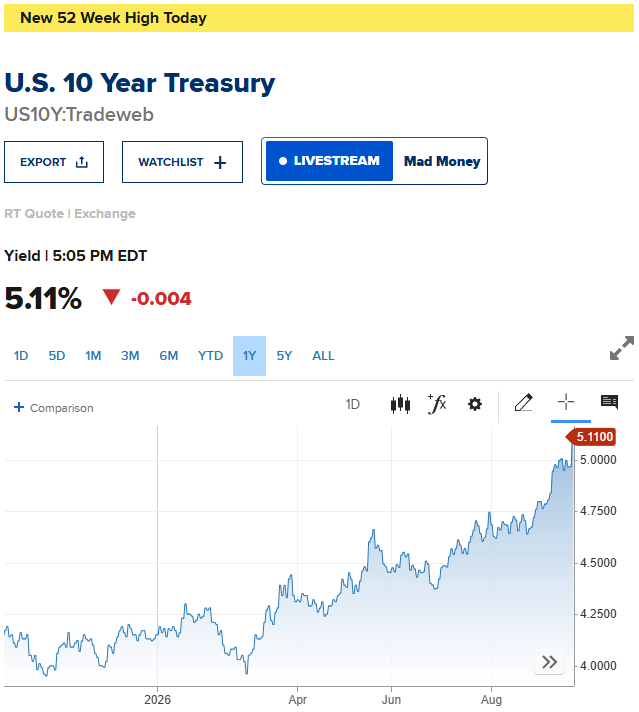
The US Treasury paid its highest yield on a 5-year note since June 2006, a sign that demand for government debt is weakening even as yields stay elevated across the board.
Rising yields raise borrowing costs across the economy. They also tend to pressure stocks, bonds, and other risk assets as investors demand more compensation for holding debt.
Rising Yield, Dropping Interest
Wednesday’s $70 billion auction priced at 5.033%, above the 5.002% when-issued level, according to Dow Jones. That is up from 4.393% at the prior sale in August.
The bid-to-cover ratio measures how many bids came in for each note sold. It fell to 2.212, the lowest since December 2018.
Indirect bidders, a group that includes foreign central banks, took just 54.3% of the sale. That is down from 61.5% at the last auction and the lowest share since March 2020.
Yields Are Rising Across the Curve
The pressure was not limited to 5-year debt. The 10-year Treasury yield also climbed to 5.12% on Wednesday, its highest level since 2007, while the 30-year touched 5.37%.

CNBC’s Rick Santelli called the 5-year results weak, saying traders had little time to adjust before the sale. Business activity accelerated at its fastest pace since July 2021, according to flash survey data, adding to the pressure on yields that morning.
Federal Reserve governor Michael Barr said Wednesday that further rate hikes are still needed to bring down inflation. Traders have since pushed the odds of an October hike to 70%.
Santelli noted 10-year Treasury yields have averaged roughly 5.5% since 1980. That history suggests current levels are less extreme than they appear. Still, he flagged the next resistance level for 5-year yields near 5.19%.
What It Means for Bitcoin
Higher long-term yields raise the opportunity cost of holding non-yielding assets like bitcoin (BTC). Bitcoin already fell below $84,000 after a separate hot data print pushed the 10-year yield above 5%.
A soft 5-year auction adds to that pressure. Bitcoin has increasingly traded in step with tech stocks, making it sensitive to shifts in the rate outlook.
The sell-off follows a broader pattern of global bond yields surging to multi-decade highs across major economies this year.
Traders will now watch whether yields keep grinding higher across the curve. Santelli still expects the current sell-off to prove temporary rather than the start of a deeper repricing.
The post Treasury's 5-Year Auction Hits 20-Year Yield High: What This Means for Bitcoin appeared first on BeInCrypto.
The US Commodity Futures Trading Commission has begun preparing financial markets for what Chair Michael Selig called “mass tokenization,” as the agency works to adapt existing rules for blockchain, artificial intelligence and onchain finance.
Summary
- CFTC Chair Michael Selig said financial markets should prepare for mass tokenization, with real world assets potentially settling almost instantly on blockchain based infrastructure.
- Selig said tokenized collateral could move in real time between clearinghouses, intermediaries and users as the CFTC adapts existing rules for onchain markets.
- The CFTC is moving ahead with crypto regulation under its existing authority after the Senate failed to advance the CLARITY Act on Sept. 15.
- The SEC has taken a parallel step by granting a five year exemption that allows qualifying platforms to trade tokenized versions of US listed stocks under specific conditions.
CFTC Chair Michael Selig said during the U.S. Treasury Market Conference on Sept. 22 that regulators need to prepare existing market structures for tokenized real world assets, 24/7 trading and technologies that could operate across traditional financial infrastructure.
Selig described tokenization as one of the technologies that could change how assets and collateral move through financial markets. High quality tokenized collateral, he said, could make liquidity more dynamic while allowing assets to move between clearinghouses, intermediaries and end users in real time.
Blockchain based financial infrastructure could eventually support near instantaneous settlement alongside that movement of collateral, according to Selig. He compared the potential change with the transition from trading through hand signals to electronic markets.
“Just as the transition from hand signals to electronic trading advanced our financial system, I believe tokenization can do the same for all asset classes,” Selig said.
CFTC sees tokenization reaching multiple asset classes
Preparing markets for “mass tokenization” will require regulators to adjust older frameworks so blockchain and AI can be used at scale, Selig said. His remarks covered real world asset tokenization alongside onchain finance and markets that could operate around the clock.
Stablecoins are part of that work. Earlier in 2026, the CFTC expanded the types of eligible tokenized collateral to include certain payment stablecoins issued by national trust banks and published guidance covering the use of crypto assets and blockchain technology by regulated entities.
Selig said the commission plans to continue looking for ways to support stablecoin use by market participants, exchanges and clearinghouses. The agency intends to rely on principles based regulation as tokenization develops, while maintaining its existing market integrity responsibilities.
Around the clock trading is being treated separately depending on the asset involved. Selig said crypto and precious metals may currently be suited to 24/7 markets, while agricultural products, energy contracts and some financial products may not be ready for the same structure.
The CFTC has already sought public feedback on expanding trading hours and issued staff guidance covering 24/7 trading, clearing and settlement. Selig said surveillance systems, margin frameworks and operational safeguards would need to function continuously if markets move toward that model.
The tokenization push is unfolding while the agency is working on a separate regulatory framework for crypto markets using powers it already has.
As crypto.news previously reported, the CFTC submitted its crypto market framework to the White House Office of Information and Regulatory Affairs on Sept. 17, two days after the Senate failed to advance the CLARITY Act.
The filing, titled “Regulation Crypto Asset Transactions and Regulation Crypto Asset Markets,” remains at the prerule stage. Proposed regulatory text has not been released, and the filing itself does not create new trading or registration requirements.
Selig had already said in August that the agency was prepared to pursue digital asset market rules even if Congress did not complete the CLARITY Act. The proposals under consideration included rules for leveraged or margined crypto transactions through regulated markets and possible regulatory routes for developers building onchain financial products.
CLARITY Act setback leaves agencies working under existing powers
The Senate failed to invoke cloture on the CLARITY Act on Sept. 15 in a 49 to 50 vote, leaving the measure 11 votes short of the 60 required to advance.
The failed procedural vote did not end work on the legislation. Seven Democratic senators who voted against cloture later said negotiations could continue, leaving open the possibility of another attempt if lawmakers reach an agreement on outstanding provisions. Talks over the CLARITY Act resumed after the vote, although no new Senate vote has been scheduled.
While Congress continues negotiations, both the CFTC and Securities and Exchange Commission have taken regulatory steps under their current statutory powers.
The CFTC’s Market Participants Division on Sept. 17 issued a no action position covering qualifying passive software providers that connect users with registered derivatives exchanges, brokers and futures commission merchants. Under the relief, staff will not recommend enforcement for certain failures to register as introducing brokers or associated persons when providers meet 10 specified conditions. The conditional registration relief applies only to activities covered by the staff letter.
SEC opens a five year route for tokenized US stocks
The SEC has moved further into tokenized markets through a temporary exemption that gives qualifying platforms a regulatory route for trading digital versions of US listed stocks.
On Sept. 17, the commission granted Tokenized Securities Venues temporary conditional relief from the definition of an exchange under the Securities Exchange Act. The exemption permits eligible venues to use permissioned automated market makers and liquidity pools to facilitate trading in tokenized National Market System stocks.
The five year tokenized stock exemption carries several conditions. Tokens traded under the framework must give holders the same rights and privileges as the corresponding traditional shares, while synthetic products that provide only price exposure do not qualify.
Venues must give the underlying company notice and an opportunity to object when an unaffiliated third party tokenizes its shares. Smart contracts used by participating venues must be public and auditable, while trading in a tokenized stock must stop when trading in the underlying stock is halted on its primary exchange.
The SEC placed limits on the number of symbols and trading volume permitted under the framework. Qualifying venues are required to disclose information about their operations and trading activity, while certain liquidity providers can receive temporary conditional relief from the Exchange Act’s dealer definition.
The exemption is scheduled to expire five years after publication, with the commission requesting public feedback while it considers longer term rules for onchain securities markets. SEC Chair Paul Atkins described the framework as an interim measure that would allow tokenized stock trading in a permissioned environment while regulators evaluate further changes.
US regulators prepare existing market rules for onchain finance
SEC Division of Trading and Markets Director Jamie Selway has said tokenization and crypto have become politically contentious even though he does not view market technology as inherently political. He said US development of the technology should be capable of drawing support across party lines.
The SEC’s September order puts part of that approach into practice by letting qualifying venues experiment with tokenized listed stocks without removing the underlying securities from federal securities law.
Commissioner Mark Uyeda said tokenization could be used across issuance, trading, transfer, settlement and ownership records. Under the temporary framework, regulators will be able to observe trading venues and market participants while considering permanent rules, he said.
CFTC policy is developing along a parallel track in derivatives markets. Selig said the agency expects blockchain, tokenized assets and continuous trading to become a larger part of financial infrastructure, but he rejected a single approach for every market.
The commission has instead tied potential 24/7 trading to the characteristics of individual asset classes. Selig said its role would include ensuring surveillance, margin systems and operational safeguards can work continuously where markets adopt round the clock trading.
For tokenized collateral, the agency has already permitted certain payment stablecoins issued by national trust banks to qualify under its collateral framework. Selig said the CFTC plans to continue examining additional uses for stablecoins across regulated market participants, exchanges and clearinghouses.
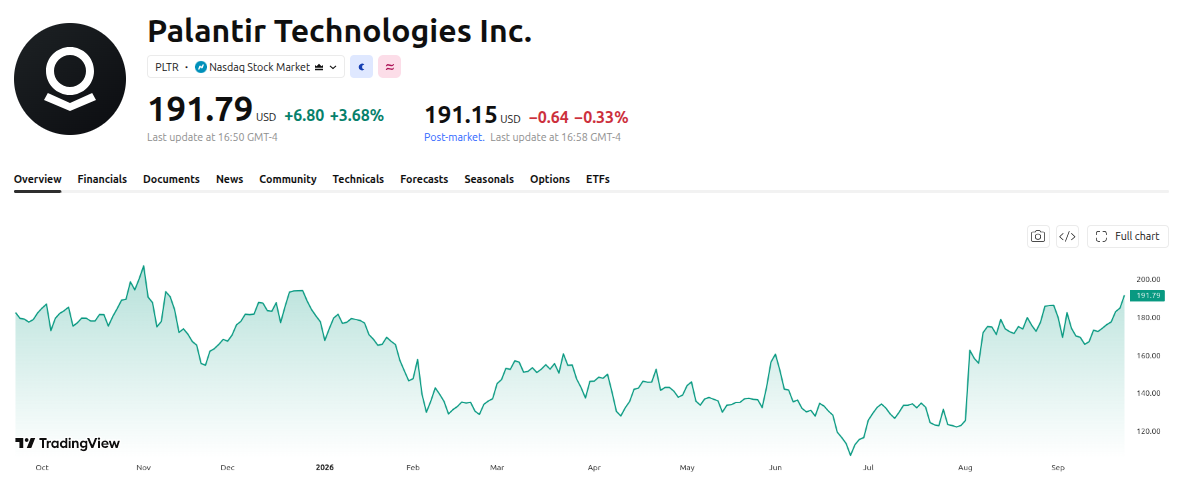
Palantir Technologies shares climbed above $190 on September 23, 2026. That marked its highest level in nearly a year, extending a rally built on three separate catalysts.
The stock advanced more than 3.5% intraday, reflecting renewed confidence in both its government and commercial growth engines.

What’s Fueling Palantir’s Rally This Week
A catalyst refers to a specific event or announcement that triggers a noticeable shift in a stock’s price. For Palantir, three distinct catalysts converged within days of each other.
CEO Alex Karp met with Polish President Karol Nawrocki and Lithuanian President Gitanas Nausėda in New York this week.
They discussed expanded investment and potential technology hubs supporting NATO’s eastern flank. Lithuanian officials described their country as a potential regional hub for defense and security technology.
Separately, the U.S. Army awarded Palantir a $48.1 million contract to build an enterprise ammunition management system. The platform will replace nine legacy systems with one unified view. That view spans planning, storage, and distribution across the full munitions lifecycle.
Chipotle also confirmed it is piloting a food safety platform built on Palantir’s Foundry software. The system aggregates inspection scores and health data to flag risk at individual restaurant locations.
Can Palantir’s Momentum Push Past $200?
Recent momentum extends beyond these three deals. Palantir also announced fresh partnerships with NVIDIA, Nebius, and Method Security this week. It also expanded its deployment, together with Fujitsu, across enterprise networks in Japan.
Wall Street took notice. Both DA Davidson and UBS raised their price targets on the stock. Both firms cited the accelerating adoption of Palantir’s Artificial Intelligence Platform and the strengthening of US sovereign AI demand.
Together, these developments paint a picture of Palantir deepening its relevance across defense, government, and everyday commercial operations simultaneously. Geopolitical engagement in Europe, a concrete logistics contract, and tangible retail adoption all point in the same direction.
Whether that combined momentum carries the stock toward $200 remains an open question. Much depends on how these partnerships translate into revenue over the coming quarters.
Subscribe to our YouTube channel to watch leaders and journalists provide expert insights.
For now, investors appear willing to reward Palantir’s broadening footprint. That footprint now spans markets that, until recently, seemed unrelated to its core business.
The post Palantir Stock Hits Yearly High at $190. What’s Driving the Price? appeared first on BeInCrypto.
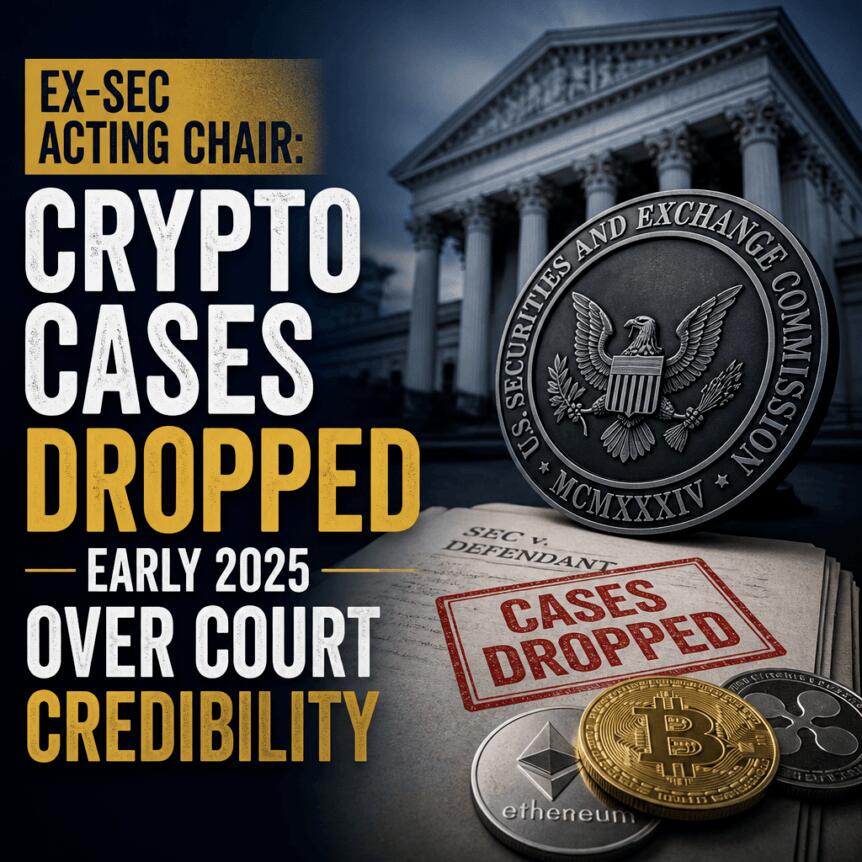
The U.S. Securities and Exchange Commission has withdrawn several civil enforcement actions targeting cryptocurrency companies that were initiated under the prior administration, SEC Commissioner Mark Uyeda said. Speaking at a Wednesday panel at the Psaros Center for Financial Markets and Policy’s Financial Markets Quality Conference, Uyeda framed the decision as part of a broader shift in how the agency plans to approach rulemaking and litigation.
Uyeda, who served as acting SEC chair from January to April 2025 before Paul Atkins’s confirmation, said the SEC dropped cases brought earlier in 2025 because pursuing them could conflict with the agency’s impending policy direction. He also suggested that keeping litigators committed to arguments made under the earlier framework would undermine the SEC’s credibility if the commission’s positions effectively changed.
Key takeaways
- SEC Commissioner Mark Uyeda said the agency stopped crypto-related civil cases in early 2025 to avoid credibility problems tied to forthcoming rulemaking changes.
- Uyeda argued it would be damaging for SEC litigators to defend interpretations in court that would later be reversed through a “180-degree” policy shift.
- The withdrawn matters included actions involving Kraken, Ripple Labs, Coinbase, and others, according to earlier coverage referenced by Uyeda.
- The SEC’s leadership structure is expected to narrow further after Commissioner Hester Peirce’s planned departure in November, leaving fewer members to shape enforcement priorities.
Why the SEC moved to drop crypto cases
On the Psaros Center panel, Uyeda described the decision as a response to an expected policy turnaround. He said the SEC was preparing a “180-degree change” in rulemaking, making it strategically and reputationally risky to continue pursuing cases that would require the agency to argue positions that the commission planned to abandon.
Uyeda said the SEC could not justify asking its legal team to stand in court on arguments authorized under the prior administration while the agency simultaneously issued a fundamentally different interpretation. In his remarks, he linked the move directly to institutional credibility—arguing that the commission’s effectiveness depends on consistency between litigation positions and the SEC’s evolving stance.
He emphasized that there were “significant concerns” about whether the earlier crypto company cases were truly defensible under law, particularly given how the agency’s approach was expected to change. The implication for market participants is that enforcement risk may be as much about where the SEC’s policy is heading as it is about individual company conduct.
Link to earlier enforcement and the political context
The SEC’s decision follows a period when crypto firms were repeatedly targeted through civil cases associated with the prior leadership. Under Uyeda’s acting chairmanship, the SEC dropped cases filed against Kraken, Ripple Labs, Coinbase and others, according to earlier reporting cited in the article describing his comments.
That earlier reporting characterized the withdrawals as reflecting broader tensions between the crypto industry and the SEC during the prior administration. It also tied the enforcement push to the general environment surrounding U.S. political leadership changes, including former SEC Chair Gary Gensler’s resignation after President Donald Trump took office.
Notably, the shift described by Uyeda is not presented as a narrow case-by-case retreat, but rather as a decision shaped by the SEC’s planned regulatory pivot. For investors and compliance teams, that distinction matters: a litigation strategy driven by anticipated rulemaking changes may affect how future enforcement decisions are evaluated, even for companies not directly covered by the withdrawn suits.
What “rulemaking change” could mean for crypto policy
Uyeda’s remarks connect litigation strategy to a planned transformation in how the SEC intends to develop and apply rules. By describing a “180-degree change,” he signaled that the SEC’s future stance may not simply refine the agency’s current arguments—it could overturn core assumptions underpinning the earlier cases.
While he did not specify the precise contours of the forthcoming approach in the remarks summarized here, the practical takeaway is that the SEC is attempting to align courtroom positions with policy direction. That alignment can influence how quickly regulated firms expect clarity, and it can also affect the perceived durability of legal theories used previously in enforcement actions.
For market participants, the key watch point is whether the agency’s changed posture results in new regulatory frameworks, revised interpretations of existing statutes, or both. Until those details are established, the SEC’s broader enforcement stance may remain difficult to predict—especially for companies whose compliance strategies were built around litigation risk tied to the previous administration’s approach.
Leadership reshuffle and the SEC’s enforcement calculus
Uyeda’s comments came as the SEC’s internal composition is expected to change again. Uyeda has been a commissioner since 2022 and currently serves in leadership alongside Paul Atkins and Commissioner Hester Peirce. However, Peirce’s departure is expected in November, leaving only two of the SEC’s five members on the leadership panel at that time.
The SEC has not announced nominations for replacements, according to the context provided alongside Uyeda’s remarks. A smaller leadership group can affect institutional priorities, since fewer commissioners may be responsible for setting the direction of enforcement and policy initiatives during the transition period.
In practice, leadership concentration can accelerate strategic shifts—either by enabling faster decision-making or by increasing the impact of a narrower set of views on whether and how to bring future cases. Combined with Uyeda’s stated rationale for dropping earlier matters, the leadership transition could further shape how crypto-related enforcement risk is assessed over the coming months.
What to watch next
Investors and builders should watch for how the SEC translates Uyeda’s stated rulemaking pivot into concrete policy signals—whether through new proposals, updated guidance, or further enforcement decisions that reflect the agency’s changing litigation posture. The next developments will reveal how far the shift goes and whether it produces clearer standards for crypto companies or simply changes the SEC’s enforcement tactics.
The Trump administration is considering a push to expand US dollar stablecoins overseas, according to Bloomberg. The idea could bring more foreign money into US government debt while making digital dollars easier to use around the world.
The timing is important as US national debt passed $40 trillion last month.
The Plan: Get More of the World Using Digital Dollars
Bloomberg reports that officials are discussing public-private partnerships to expand dollar-backed stablecoins abroad. Treasury, the State Department and the US International Development Finance Corporation could potentially play roles. No countries, companies or funding commitments have been announced.
The broader policy is already public. Trump ordered his administration in 2025 to promote the growth of legitimate dollar-backed stablecoins worldwide.
The logic is simple.
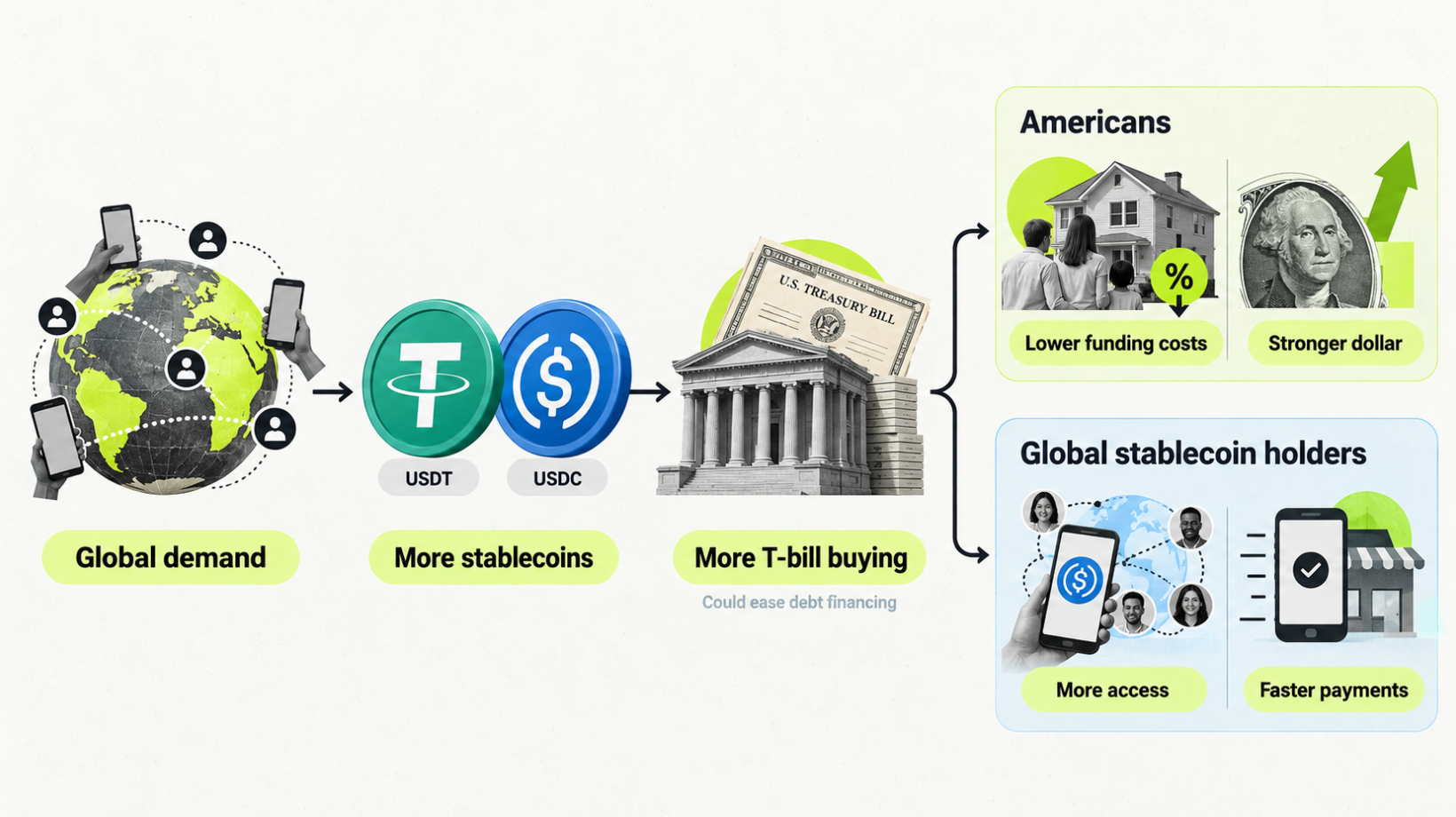
Someone abroad buys $1,000 of a reserve-backed stablecoin. The issuer then needs assets backing those tokens. For major stablecoins such as USDC and USDT, those reserves include US government securities and related dollar assets.
More stablecoins can therefore mean more buyers for Treasury debt.
Will This Help Americans?
It would not erase America’s $40 trillion debt. But it could make that debt easier and potentially cheaper to finance.
The Richmond Fed found that wider adoption of reserve-backed stablecoins increases demand for Treasuries and can put downward pressure on interest rates. Treasury Secretary Scott Bessent has similarly said stablecoin growth could create a surge in Treasury demand.
Even modestly lower borrowing costs matter when Washington owes tens of trillions of dollars.
Lower government interest costs could eventually leave more fiscal room elsewhere, although there is no guaranteed or immediate saving for households.

New Opportunity For USDT and USDC Stablecoin Holders?
For holders worldwide, the bigger opportunity is access.
If Washington helps build regulated stablecoin infrastructure abroad, USDC and potentially USDT could gain more banking connections, fiat on-ramps, payment integrations and merchant acceptance.
That could make digital dollars easier to use for remittances, international payments and savings in countries where accessing actual US dollars is difficult.
There is historical precedent for the broader strategy. In the 1970s, Washington encouraged Saudi oil surpluses to flow back into US government securities. US records say Saudi institutions eventually placed more than $8 billion in US government debt.
Stablecoins could create a modern version of that recycling system — except the dollars could come from millions of ordinary users around the world.
The post Trump Has a New Crypto Plan to Reduce America’s $40 Trillion Debt appeared first on BeInCrypto.

The U.S. and China have extended a truce to keep tariffs lower for longer and rare earths flowing, U.S. Treasury Secretary Scott Bessent said Wednesday local time.
He was speaking on Fox News, as Chinese President Xi Jinping landed in Washington, D.C. for a state visit through Friday.
Xi and Trump agreed to a one-year trade truce at a meeting in South Korea last October. The deal, which was set to expire in November, will now be extended to Jan. 10, Bessent said. He added that Beijing needs to fulfill more deliverables.
Ahead of this week’s summit, many had expected the truce would be extended by six months or longer.
Chinese state media did not immediately note Bessent’s comments on the trade truce.
Footage streamed on China’s state broadcaster showed U.S. President Donald Trump and First Lady Melania Trump meeting Xi and First Lady of China Peng Liyuan at the foot of the Chinese leader’s jet. The video did not show the U.S. and Chinese leaders shaking hands — it focused on Xi and his wife shaking hands with two children presenting them each with bouquets.
Bessent met with Chinese Vice Premier He Lifeng in New York ahead of Xi’s arrival in the U.S. The two sides discussed setting up an alert system for artificial intelligence incidents, according to Bessent.

MoonPay, a crypto payments company, agreed to acquire private-markets infrastructure provider North Capital, expanding into regulated US securities infrastructure as it builds out services for tokenized real-world assets (RWAs).
The acquisition would allow MoonPay to expand into the issuance, custody and secondary trading of private securities, including tokenized securities, the company said in an announcement shared with Cointelegraph on Wednesday.
MoonPay’s all-stock deal to acquire North Capital is worth more than $60 million, a person familiar with the matter told Cointelegraph. MoonPay CEO Ivan Soto-Wright said the acquisition would help the company connect parts of the financial system through “modern, programmable infrastructure.”
The Midvale, Utah company last raised money in October 2021, in a $2.18 million seed round at an unspecified valuation, according to data compiled by Traxcn. Investors include Karlani Capital and Fiduciary Trust International. MoonPay is currently valued at $3.4 billion, according to Traxcn.
North Capital’s businesses include broker-dealers, an alternative trading system (ATS), a transfer agent and an investment adviser, all registered with the US Securities and Exchange Commission. The company has supported more than $8.7 billion in primary and secondary transaction volume, according to the announcement.
North Capital will become a wholly owned MoonPay subsidiary after the transaction closes. Both companies’ boards approved the acquisition, which remains subject to regulatory approvals and other customary closing conditions.
The acquisition is the latest in MoonPay’s buying spree this year as the company expands beyond crypto payments. Earlier purchases included key management company Sodot, trading infrastructure platform DFlow and AI finance operations platform Entendre, adding capabilities across institutional custody, onchain trading and financial operations.
Related: Robinhood takes stakes in Crypto.com, OG.com in prediction markets deal
“Tokenization is coming to America,” said Robinhood chief executive Vlad Tenev after the SEC announced its Innovation Exemption last week — and it seems the markets looked kindly on the development.
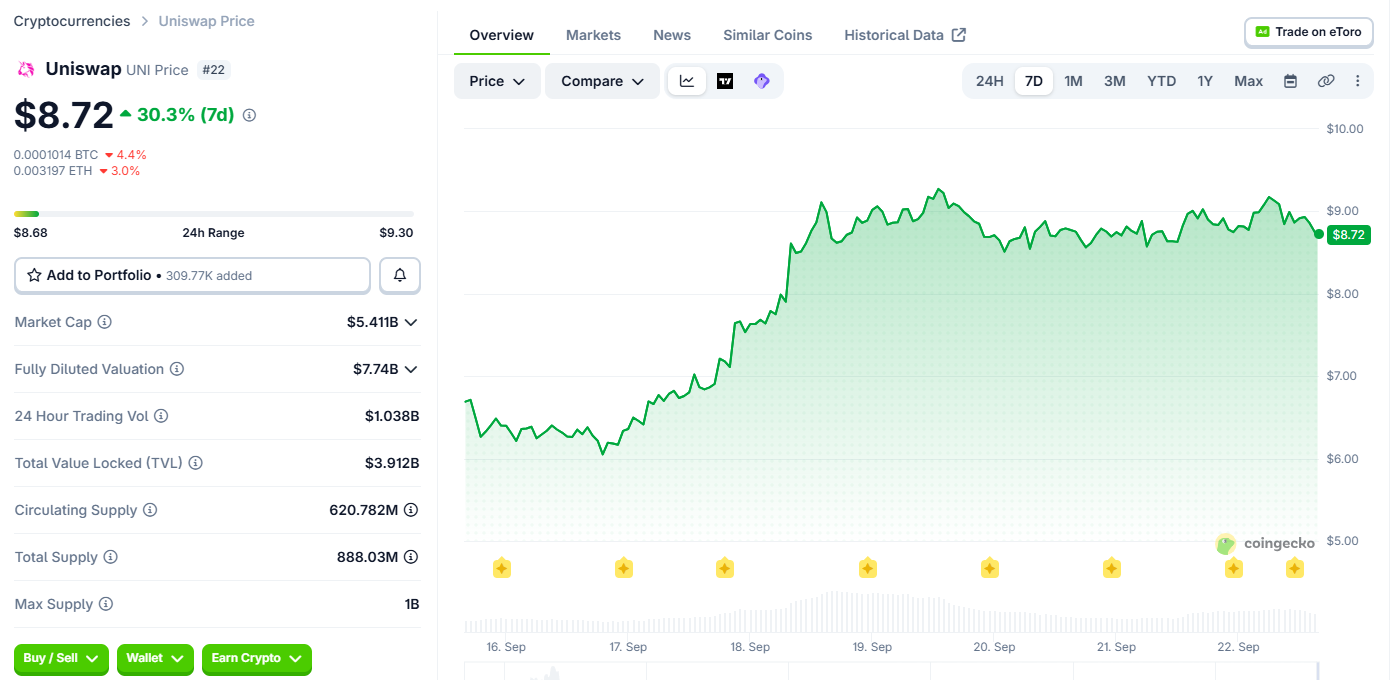
BTC and ETH soared over 10%, and Uniswap’s UNI token — a protocol that looks as it if could become prime real estate for tokenized stock trading — gained more than 30% in the days that followed.
While the Securities and Exchange Commission has indeed greenlit tokenized stocks in America, most of the existing stock tokens fall outside of the new rules.
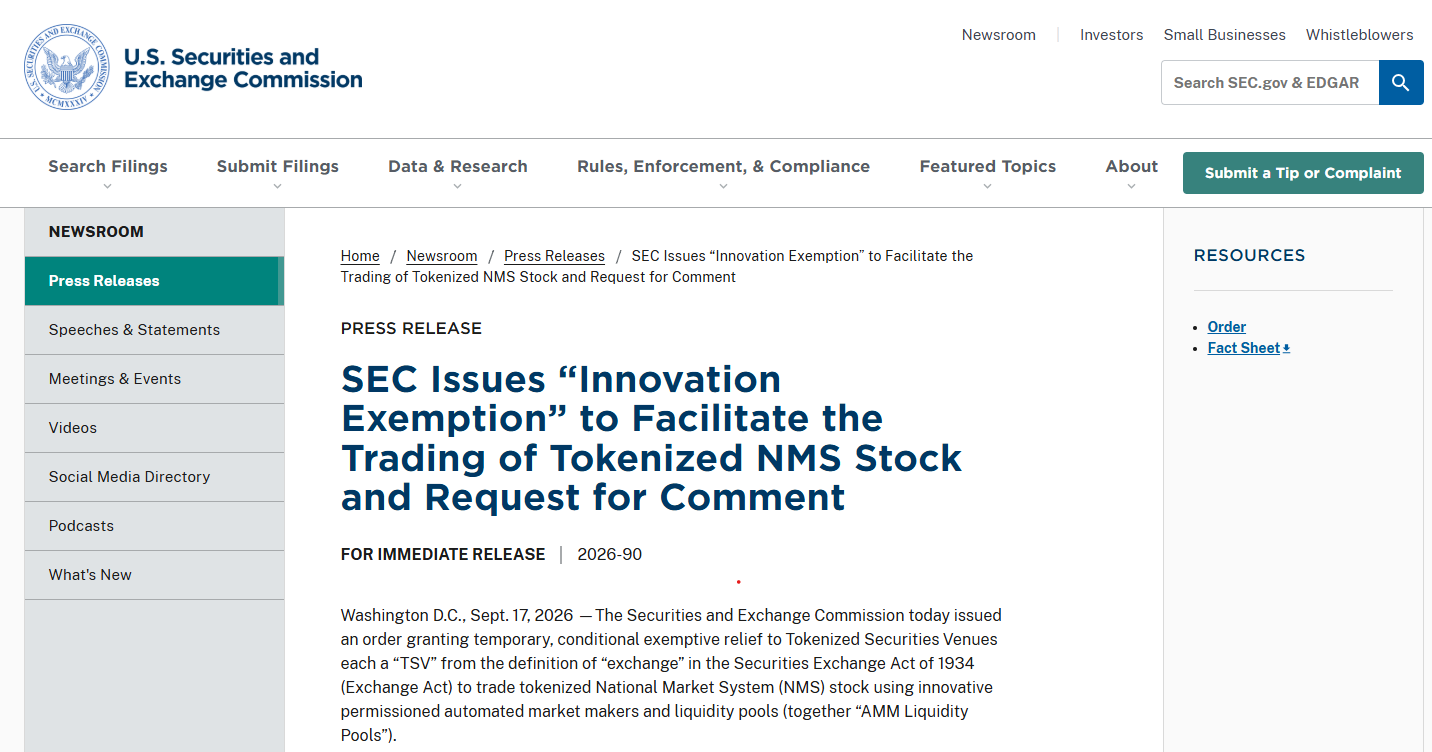
The commission’s new five-year Innovation Exemption creates a path for certain venues to trade tokenized National Market System (NMS) stocks onchain without registering as a securities exchange, and for third parties to tokenize stocks — but only under a specific set of conditions.
Tokens must give holders the same “rights and privileges” as the underlying shares and trading venues need to permission users and pools.
Related: Kraken brings DeFi yield to tokenized stocks and ETFs
Not all tokenized stocks are created equal. A token can look like a share and track the price of a share without providing the shareholder rights of a share. Under the new rules that’s classified as a synthetic stock and it’s not compliant.
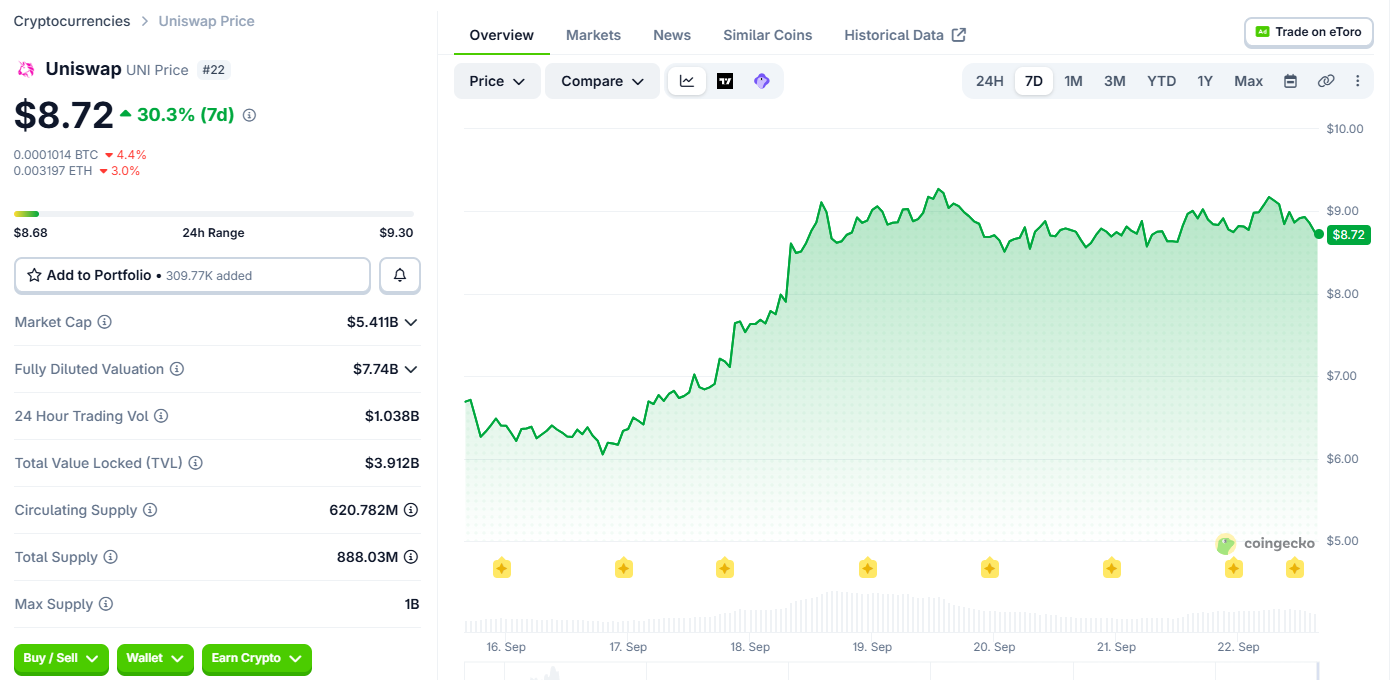
UNI gained over 30% after the SEC announcement. Source: Coingecko
That means some of the industry’s biggest players may already have a head start, while others will have to play catch-up. As Ondo Finance’s head of global regulatory affairs, Peter Curley, tells Magazine:
“Not everything we do will fit, and that’s fine. What matters is that the SEC acted instead of waiting on Congress to finish the job.”
The SEC’s tokenization lane is narrow
The SEC’s Sept. 17 order gives certain venues temporary relief from having to register as exchanges when they trade tokenized NMS stocks through permissioned AMM liquidity pools.
In other words, the agency has opened a lane for onchain stock trading, but it’s a fairly specific one, and the token itself becomes just as important as the venue.
To qualify, a tokenized stock must give holders the same dividends and voting rights as the underlying security.
While a third party can tokenize a stock without being affiliated with the issuer, the issuer gets a chance to nix the token before it can be traded.
That rules out synthetic exposure which is bad news for Robinhood’s Stock Tokens and Kraken’s xStocks in their current forms.
Commissioner Hester Peirce stressed that the exemption covers one particular model rather than every possible way of trading tokenized securities, although she said the SEC is open to other models outside the TSV structure.
The products closest to the SEC’s model
Coinbase’s stock tokens are in the ballpark.
On Sept. 14, chief executive Brian Armstrong said the company had “set the standard” with its tokenized stocks, as they are not synthetic or debt instruments, but are “real fully-backed securities, redeemable for the underlying shares, with dividends integrated,” and voting rights “coming soon.”
Related: Robinhood chain to generate $160M in annual fees by 2028: Bernstein
However, Coinbase’s current tokenized stock offering is for non-US customers, and its exchange infrastructure is built around a central limit order book. The SEC’s exemption is built around TSVs providing permissioned AMM liquidity pools. Coinbase operates the Base network however, so it has options in that regard.
Ondo launched tokenized US securities in June, with the underlying shares held in traditional custody and the token representing the investor’s entitlement onchain.
SEC issues Innovation Exemption. Source: SEC
It also acquired Oasis Pro, which includes an SEC-registered broker-dealer, ATS and transfer agent, with infrastructure across the traditional and onchain sides of the market.
Curley says the SEC’s exemption favors “exactly the model we’ve already proven out: custodial, entitlement-based, with real shareholder rights and corporate actions passing through to the holder.” However, he adds, “we’re not assuming anything clears automatically.”
Both Coinbase and Ondo have pieces of the infrastructure the SEC seems to want. Neither can assume its existing setup qualifies without some finessing, but they may have less to rebuild.
Uniswap’s permissioned pools could open the door
The SEC exemption is specifically designed around permissioned AMM liquidity pools, which looks like being good news for Uniswap.
The protocol introduced Permissioned Pools for v4 in July, allowing regulated assets to trade through AMMs with compliance enforced directly onchain.
While that doesn’t make Uniswap itself a TSV, its v4 infrastructure could be used by operators building one, as Permissioned Pools let issuers control who can trade or provide liquidity, which is consistent with the SEC’s requirements.
Permissioned access requires Know Your Customer (KYC) verification, record keeping, public notices and transaction transparency.
If that infrastructure can be connected to the shareholder rights and regulatory infrastructure required for US securities trading, Uniswap potentially has a framework that could be adapted to the SEC’s model.
Robinhood has the users, but not the right product
Robinhood already has around 200 stock tokens trading on Robinhood Chain, which Tenev has described as one-to-one backed and fully DeFi composable.
But the head of research at Four Pillars, Jaewon Kim, pointed out that the SEC’s order excludes synthetic exposure, which rules out products like Stock Tokens and Kraken’s xStocks.
Robinhood’s Stock Tokens are tokenized debt securities issued by Robinhood Assets (Jersey) Limited. That means they provide economic exposure to the underlying stocks but don’t give holders legal or beneficial rights. They’re also not registered under US securities laws and not available to US persons.
Chairman Paul Atkins says the period will allow the market to “develop.” Source: SEC
But while Robinhood’s existing product doesn’t fit the SEC’s rules, its distribution and blockchain infrastructure could give it a big advantage if it can adapt its model to the new requirements.
Kraken’s xStocks are fully backed by underlying equities but they also don’t give holders the same rights as conventional shares. And being backed by shares is not enough to qualify for this exemption.
Bryan Choe, head of research and operations at RWA.xyz, a market intelligence platform for tokenized real-world assets (RWAs), says most existing tokenized equity products are currently third-party sponsored, but he expects that to change in the next 12 months.
He tells Magazine, “We expect most of the products to shift to issuer-sponsored models.” He says the exemption “aligns the token issuers with the stock issuers,” and could bring more balance between different issuance models.
Five years to prove tokenized stocks are actually better
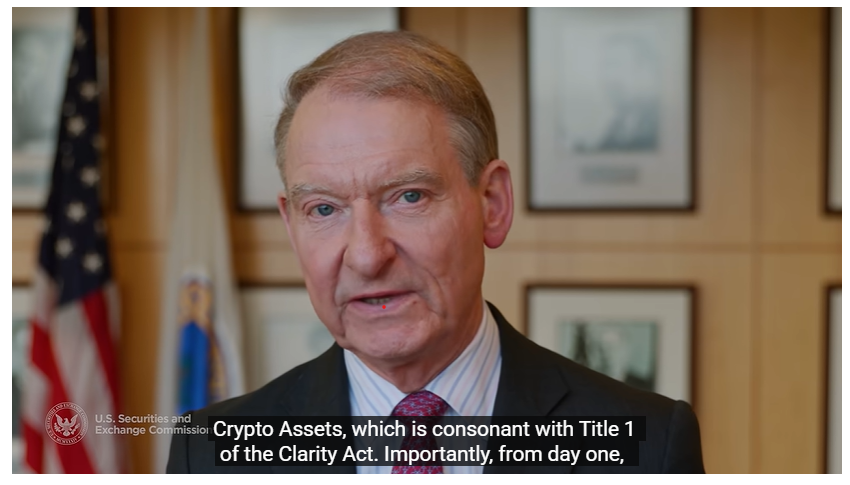
The SEC describes the exemption as temporary, and chairman Paul Atkins says the five-year-long period will allow the market to “develop” while the commission “evaluates future rulemaking.”
Beyond which company gets the first compliant venue, the real test is whether tokenized stocks will take off in the first place.
As Curley says, investors need to end up with something “faster, cheaper, or more useful than a conventional brokerage position.” Questions have already been raised over whether the fragmented liquidity for stock tokens will provide good prices or a decent user experience.
The exemption could enable 24/7 trading, fractional ownership, faster settlement, onchain composability and shareholder rights. But at the end of the day, those advantages only matter if investors actually care.
Cointelegraph publishes long-form journalism, analysis and narrative reporting produced by Cointelegraph’s in-house editorial team with subject-matter expertise. All articles are edited and reviewed by Cointelegraph editors in line with our editorial standards. Some articles contain affiliate links, from which Cointelegraph may earn a commission. These relationships do not influence which products we review or our editorial conclusions. Content published in here does not constitute financial, legal or investment advice. Readers should conduct their own research and consult qualified professionals where appropriate. Cointelegraph maintains full editorial independence.

Best in class price to features balance

Rockliffe Hall hotel reopens with new Atlas restaurant

Adidas and Unrivaled league announce multi-year apparel partnership

Weekend Open Thread – Corporette.com

Weekend Open Thread: Talbots – Corporette.com

Memory prices are slowing because buyers ran out of money

Ripple XRP: SEPTEMBER 18th!? JAPAN JUST TRIGGERED THE UN-THINKABLE FOR XRP! (INSANE CRYPTO NEWS)

Financial behaviour of Top Indian cities. #earning #expenditure #savings #investing #nationalincome

XRP CLARITY ALIVE?! i got Second MOTION CONFIRMED NEWS!!!
-
 Fashion5 days ago
Weekend Open Thread: Talbots – Corporette.com
-

 Tech3 days ago
Researchers escape OpenAI Codex sandbox to run commands on host
-

 Crypto World5 days ago
Circle launches Arc Studio AI agent for building onchain apps
-

 Crypto World3 days ago
Who Needs CLARITY Anyway? ARB Could See 70X Increase: Hodler’s Digest
-
 NewsBeat5 days ago
Trump says US has reached an agreement to take permanent control of Greenland’s security
-

 Crypto World5 days ago
Trading Bitcoin on Robinhood? Why 2% Spread Has Traders Worried
-

 Crypto World1 day ago
Goldman Sachs and Deutsche Bank Agree: The S&P 500 Rally Isn't Over
-

 Crypto World6 days ago
Mortgage and refinance interest rates today, Thursday, September 17, 2026
-

 Crypto World5 days ago
Bitcoin price breaks channel as RSI climbs to 63
-

 Tech2 days ago
Google’s $899 Googlebook is a bet that you’ll buy a new laptop for Gemini
-

 Business3 days ago
Analog Devices (ADI) Bets $1.35 Billion on Chips that Let Machines Think for Themselves
-

 Crypto World3 days ago
Coinbase, Robinhood, Circle Seen as Tokenized-Stock Winners
-

 Crypto World5 days ago
World Money launches in 150+ countries with Stripe
-

 Tech4 days ago
Trump suggests rebranding AI with a new name, says he’s also creating an AI Force
-

 Crypto World6 days ago
Silver prices recover quickly, hitting weekly high today
-
 Business23 hours ago
Oil Price Today (September 23): Crude oil below $100 on hopes of US-Iran talks. What did Trump say?
-

 Tech6 days ago
GPT-6 Astra Reached the Nether in Minecraft, Lost Its Stash to a Creeper, and Farmed Potatoes for Hours
-
 NewsBeat5 days ago
US was ‘on brink of war’ with China over false AI report of nukes moving in Middle East
-
 Crypto World2 days ago
Meta Jumps 11% As Muse Shines and Investors Show an Appetite for Advancing AI
-

 Crypto World5 days ago
CFTC sends crypto market structure rulemaking to White House
You must be logged in to post a comment Login