
Crypto World
3 Central Banks Could Raise Rates Within Eight Days. Here's Which Ones and When

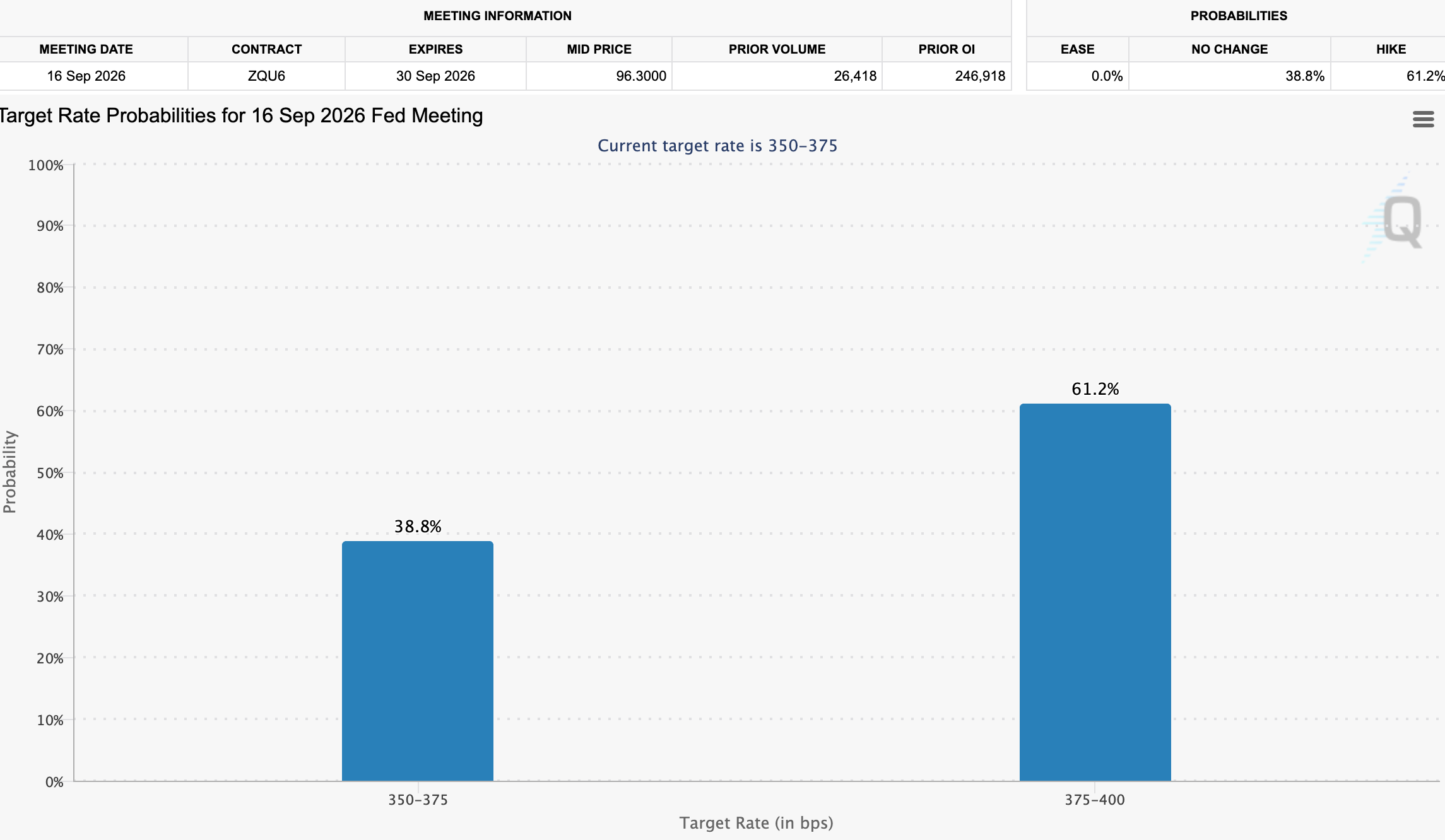
Rate markets are pricing hikes from three major central banks this month. Fed futures put the odds of a rate hike at 61.2%, and swaps give the Bank of Japan 97%.
The European Central Bank (ECB) decides on Thursday in Berlin. The BOJ meets on September 18, with the Fed in between. All three are weighing the same energy shock from the war in Iran.
Energy Shock Turns Europe and Japan Hawkish
The ECB is expected to lift its deposit rate by a quarter point to 2.5% from 2.25%. All but one analyst in a Bloomberg poll forecasts the move.
Furthermore, all 65 economists surveyed by Reuters between August 31 and September 3 expect a quarter-point hike next week. This outlook has strengthened since August, with 83% backing a hike in August and 72% ahead of the July meeting, when the ECB held rates steady.
The last time the central bank raised rates was in June. Euro area inflation climbed above 3% last month, reaching its highest level in nearly three years. Price pressures are also unlikely to ease significantly in the near term.
A hike would make the ECB the most hawkish central bank among the Group of Seven.
Follow us on X to get the latest news as it happens
In Japan, Board member Kazuyuki Masu said the BOJ will keep raising its policy rate. Swap contracts show roughly 97% odds of an increase from 1% on September 18.
“If inflation accelerates here, there is a risk that the Bank might inevitably need to implement a rapid policy interest rate hike,” Masu said.
A quarter-point move would take the rate to 1.25%. The BOJ estimates the neutral level sits between 1.1% and 2.5%.
Masu tied higher fuel and chemical prices from the Iran war to broader goods inflation. Shipping fees and fertilizer costs are feeding into food prices, he said.
“There are concerns that the price hikes in these goods may not be temporary shocks but rather represent more enduring trends that risk pushing up overall prices,” Masu added.
The Fed’s Case Comes Down to Friday
The Fed carries the widest range of outcomes. CME FedWatch shows a 61.2% probability of a move to 375-400 basis points from the current 350-375. A hold registers 38.8%, and futures assign no probability to a cut.

That marks a full reversal from January, when most economists still forecast at least one cut this year. The Federal Open Market Committee held on July 29, but three officials dissented in favor of a quarter-point increase.
Inflation is cooling, but not fast enough. Headline CPI eased to 3.4% in July from 3.5% in June, still well above the 2% target.
The jobs market gave the Fed room to focus on prices. Employers added 162,000 jobs in August against forecasts near 53,000, and unemployment held at 4.1%.
August CPI lands Friday, September 11, five days before the decision. A hotter print would strengthen the hike case. A cooler one gives the committee room to wait.
Subscribe to our YouTube channel to watch leaders and journalists provide expert insights
The post 3 Central Banks Could Raise Rates Within Eight Days. Here's Which Ones and When appeared first on BeInCrypto.

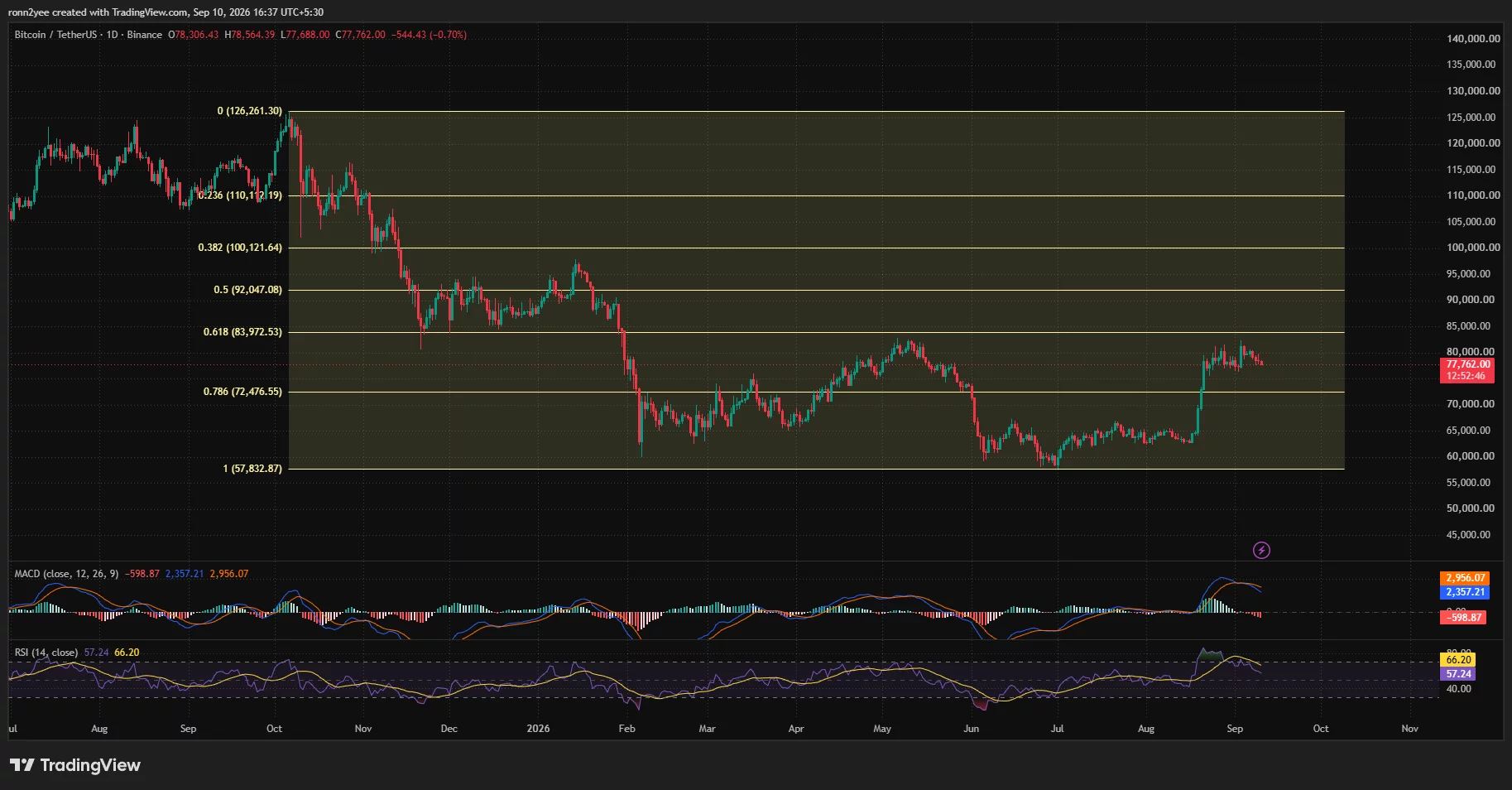
Bitcoin price extended its decline below $78,000 on Sept. 10 as fading momentum, elevated Treasury yields and caution before U.S. inflation data kept buyers on the sidelines.
Summary
- Bitcoin price fell to an intraday low of $77,688 after failing to hold above $78,000.
- Daily MACD momentum turned bearish, while RSI retreated from near-overbought levels.
- Liquidation clusters sit near $77,300 below and between $80,500 and $81,800 above.
- Analysts view the wider $76,000 to $81,000 area as a volatile range without a clear trend.
Bitcoin price falls below $78,000
According to data from crypto.news, Bitcoin (BTC) price traded near $77,800 at the time of writing after opening the daily session at $78,306. The cryptocurrency reached an intraday high of $78,564 before sellers pushed it as low as $77,688.
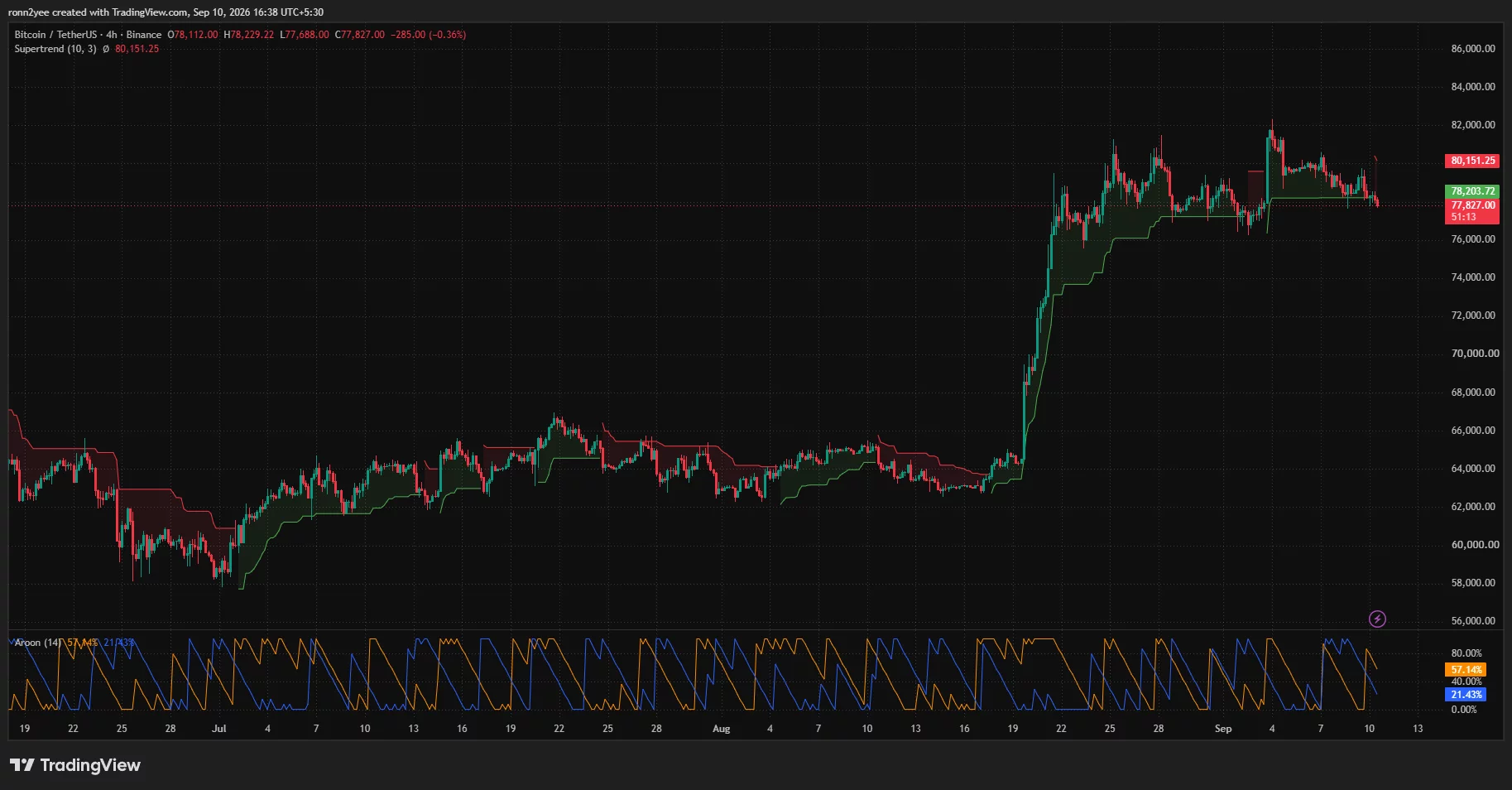
The move extended the pullback from the Sept. 3 peak near $82,280. Bitcoin has since formed a series of lower highs on the 4-hour chart, showing that buyers have struggled to maintain each rebound.
Price also slipped below the 4-hour Supertrend level around $78,203. The indicator will continue to favor sellers unless Bitcoin recovers that mark and holds above it on a closing basis.
A stronger resistance area sits near $80,151, where the previous Supertrend barrier overlaps with recent intraday highs. Bitcoin repeatedly failed to sustain moves above $80,000 during the past week, making the psychological level an important test for any recovery attempt.
Crypto trader Daan Crypto Trades said Bitcoin had recorded its fifth drawdown of between 4% and 6% over the past three weeks. Despite the repeated declines, the analyst noted that BTC remained inside a broader range between $76,000 and $81,000.
According to Daan, volatility has increased without producing a clear directional trend. He said traders may need to wait for a confirmed break from the range before assuming that Bitcoin has started a larger move.
US inflation risks limit demand for Bitcoin
Bitcoin’s latest decline came as markets prepared for U.S. producer and consumer inflation reports ahead of the Federal Reserve’s Sept. 15–16 meeting.
Oil prices above $100 per barrel have revived concerns that energy costs could keep inflation elevated. Higher inflation readings could strengthen the case for the Fed to maintain restrictive monetary policy or raise rates.
U.S. Treasury yields also remained elevated as investors assessed inflation risks and growing government borrowing. The 10-year yield traded near 4.86%, while the 30-year yield approached 5.31%.
Higher bond yields can reduce demand for Bitcoin and other non-yielding assets because Treasury securities offer investors a fixed return. The same pressure has encouraged some U.S. ETF investors to favor short- and intermediate-term bond funds, according to Reuters.
Uncertainty around the inflation figures has also made it harder for spot Bitcoin demand to offset selling in the derivatives market. Leveraged positions can intensify short-term moves when price crosses heavily traded liquidation levels, particularly during periods of weak spot buying.
The Federal Reserve’s decision remains the main U.S. catalyst for Bitcoin. Markets are weighing whether policymakers will hold the federal funds target range at 3.50% to 3.75% or raise it by 25 basis points.
Momentum indicators turn lower
Bitcoin’s daily chart still shows a broader recovery from its June and July lows, but short-term indicators have weakened.
The daily relative strength index fell to 57.24 from its recent elevated reading, while its moving average stood at 66.20. An RSI above 50 generally shows that buyers retain some control, but the decline indicates that bullish momentum has cooled.
The moving average convergence divergence indicator produced a bearish crossover. The MACD line dropped to 2,357, below the signal line at 2,956, while the histogram fell to minus 598.
The negative histogram shows that upward momentum is losing strength, although both main MACD lines remain above zero. Bitcoin would need renewed buying pressure to prevent the crossover from developing into a broader bearish reversal.
The Aroon indicator on the 4-hour chart also favored sellers. Aroon Down stood at 57.14%, compared with an Aroon Up reading of 21.43%, reflecting the recent pattern of lower highs and repeated tests of support.
Bitcoin remains below the 0.618 Fibonacci retracement level at $83,972. The level, calculated from the decline between $126,261 and $57,833, represents the main resistance separating the current recovery from a larger trend reversal.
Bitcoin liquidation map points to $77,300 support
CoinGlass’s one-week liquidation heatmap shows a concentration of leveraged positions immediately below the current price.
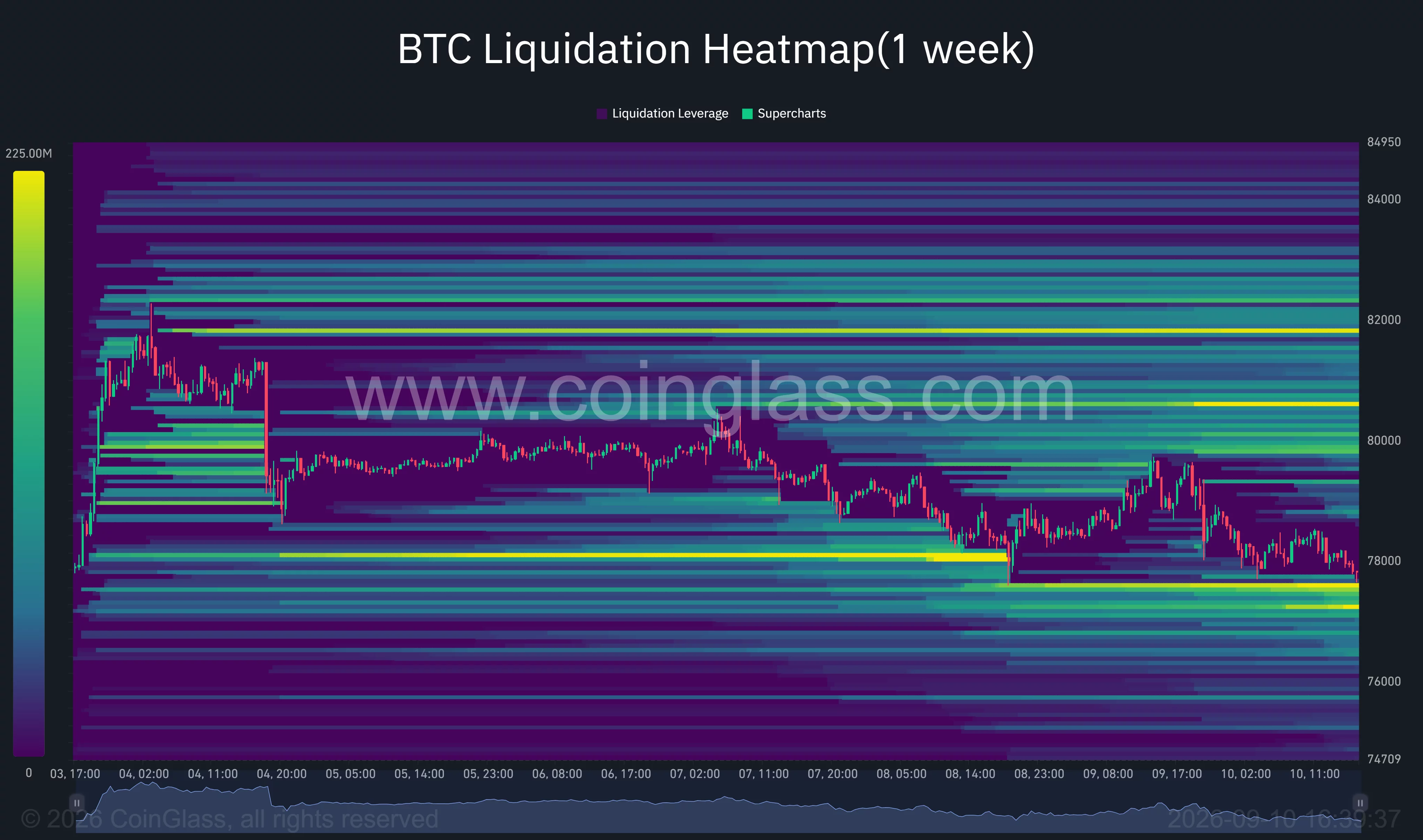
The closest large liquidity band sits between approximately $77,300 and $77,600. A decline into the area could trigger additional long liquidations, but it may also attract buyers seeking a sweep of the recent lows.
Trader Lennaert Snyder said he was watching for Bitcoin to take out the $77,600 low and possibly test $77,300 before forming a long setup. He identified the area as an extreme of the weekly range and said a successful liquidity sweep could support a recovery toward $80,000.
The daily chart places the next major technical support at the 78.6% Fibonacci retracement near $72,477. Before that level comes into play, buyers may attempt to defend the wider $76,000 to $77,000 range that has contained several recent declines.
Above the market, the heatmap shows notable liquidation clusters near $80,500 and $81,800. A recovery through $80,000 could force short positions to close and accelerate a move toward those pools.
Snyder identified the $80,000 region as a possible area for new short setups if Bitcoin tests it without establishing support. His view keeps the immediate trading range between roughly $77,300 and $80,000.
Bitcoin, therefore, remains caught between nearby long-liquidation risk below and larger short-liquidation pools above. A confirmed daily close outside the $76,000 to $81,000 range would provide clearer evidence of its next direction.
Disclosure: This article does not represent investment advice. The content and materials featured on this page are for educational purposes only.
Crypto World
Dow Jones Futures Rise, Techs Fall As Oil Prices, Yields Keep Climbing. Inflation Data Due.

Dow Jones futures edged higher early Thursday, while S&P 500 futures and Nasdaq futures fell. Crude oil prices and Treasury yields keep climbing. A key inflation report is on deck. The stock market rally struggled again on Wednesday, with the Dow Jones and small-cap Russell 2000 falling further below key support. Crude oil prices jumped, extending a big run, as…
Copyright ©2026 Investor’s Business Daily, LLC. All rights reserved. 87990cbe856818d5eddac44c7b1cdeb8
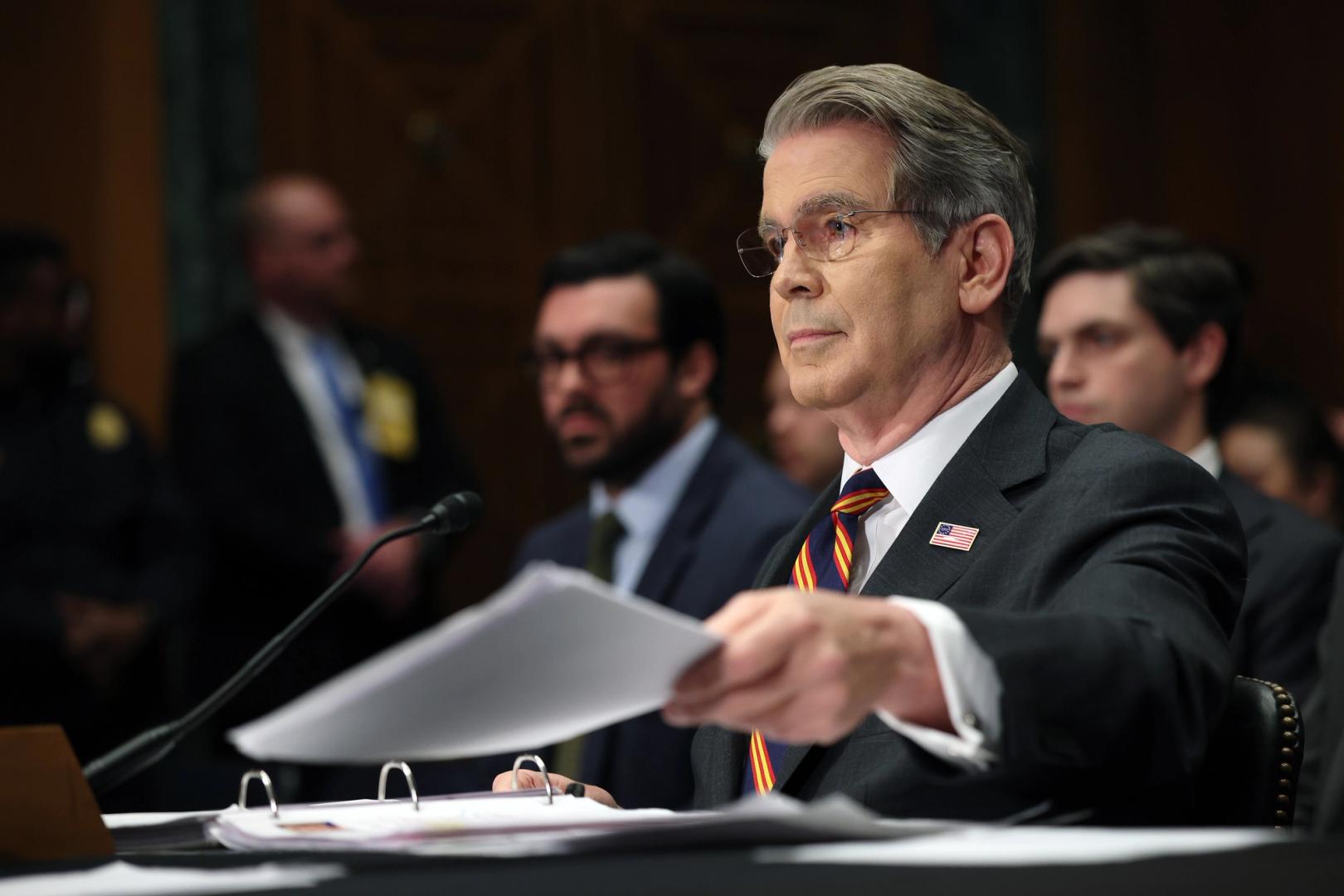
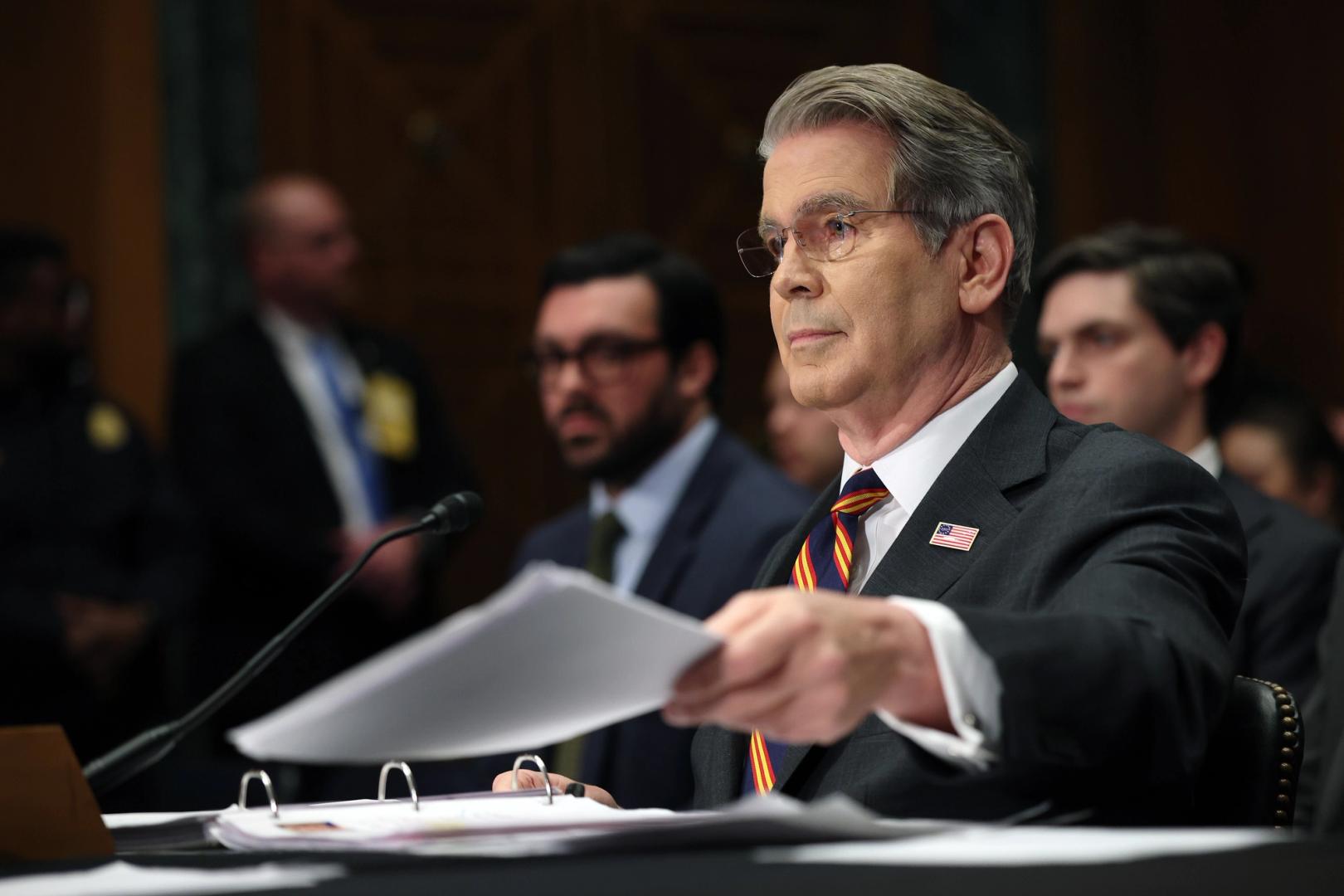
Long-term yields moved higher despite a $6 billion Treasury buyback, as debt concerns and rising oil prices continue to pressure global bond markets.


Nasdaq is investing $100 million in Payward, the parent company of crypto exchange Kraken, in a deal that values the firm at $21 billion, Bloomberg reported Thursday.
The money comes from Nasdaq’s venture investment arm and expands a partnership the two companies struck in March. Neither firm has announced the deal publicly.
Why Nasdaq Is Buying Into Kraken Parent Payward
Nasdaq wants shares to trade as tokens, meaning digital records held on a blockchain that can change hands outside normal exchange hours. Building that machinery from scratch takes years.
Payward already runs it. Its xStocks service, which issues blockchain versions of listed shares, had processed more than $25 billion in trades by March, according to Kraken. Under the partnership, Payward settles Nasdaq’s equity token trades and checks who is using them.
BeInCrypto reported on Sept. 2 that Kraken was quietly building a Wall Street crypto gateway with Nasdaq, the London Stock Exchange and Deutsche Börse while stalling its own listing. Nasdaq has now bought a piece of that gateway.
What the Money Does Not Buy
Nothing in the Bloomberg account speeds up the initial public offering. Payward filed confidentially with the US Securities and Exchange Commission in November 2025, delayed twice, and now targets the second quarter of 2027 at the earliest.
Fresh cash cuts the pressure to list. The $21 billion price tag also marks a modest step up from the $20 billion valuation set in November 2025, when Jane Street, DRW Venture Capital and Citadel Securities backed the company.
That matters more than the size of the cheque. Payward’s latest quarterly earnings showed revenue climbing 17% while profit collapsed. A backer whose own product depends on Payward’s plumbing, from tokenized London stocks to US equity tokens, carries weight no ordinary investor brings.
Nasdaq is not betting on another crypto exchange. It is paying to own part of the supplier it plans to depend on.
The post Kraken Parent Lands $100 Million Nasdaq Bet Before Planned IPO, But Why? appeared first on BeInCrypto.

Key takeaways
- XRP has dipped more than 2% over the past few days.
- On-chain data shows sell-side dominance in XRP’s market.
- XRP’s long-to-short ratio of 0.83 and negative funding rate reflect bearish positioning.
- XRP is approaching critical support at its 200-day EMA near $1.354.
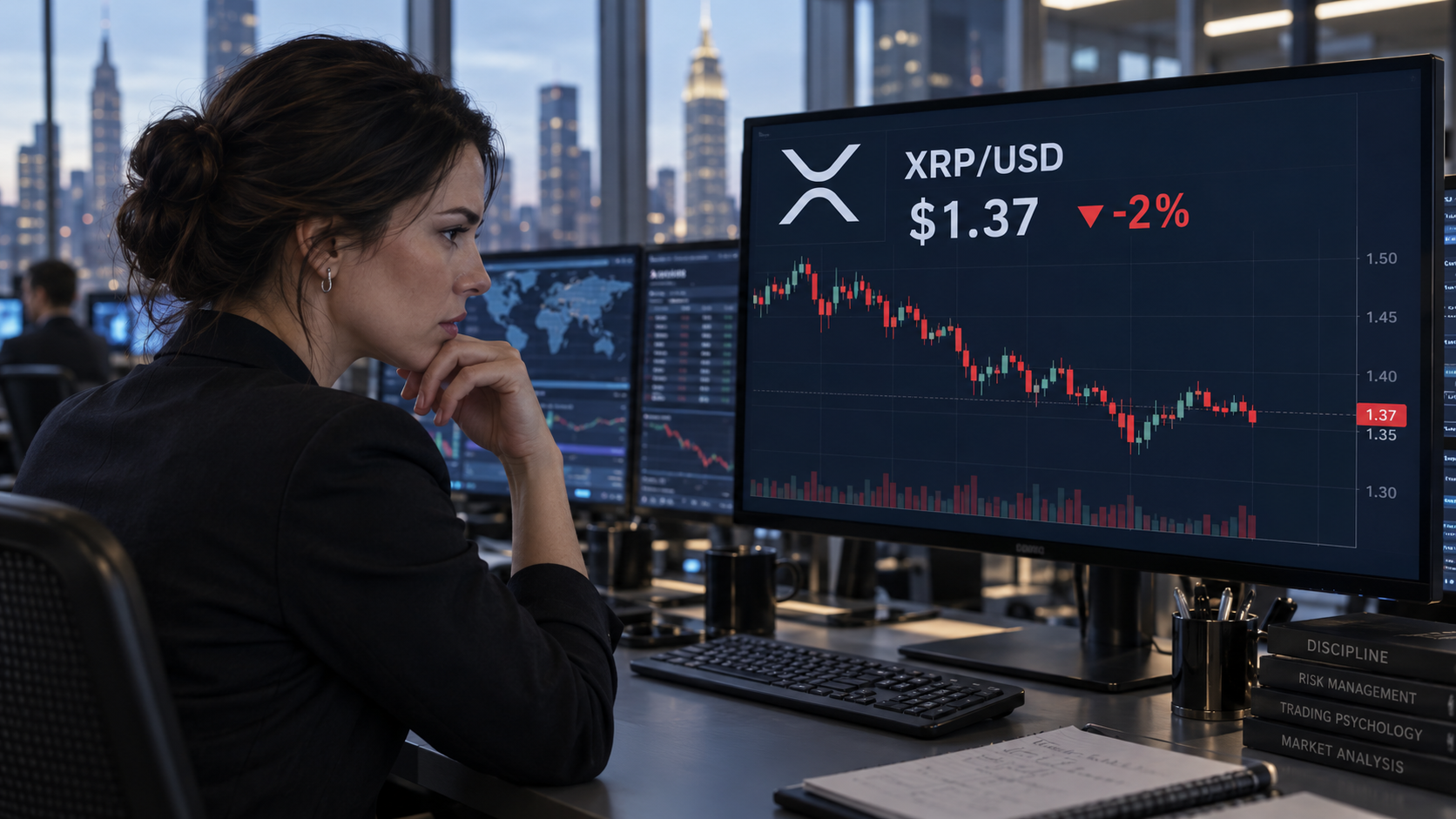
Ripple (XRP) remains under pressure on Thursday after falling more than 2% this week. The cryptocurrency is approaching an important support zone that could determine its next directional moves. However, a combination of sell-side activity, cautious on-chain signals, and mixed derivatives positioning suggests that its near-term upside may remain limited.
XRP on-chain data tilts bearish
CryptoQuant’s market summary indicates a cautious outlook for both altcoins. XRP’s futures market is showing signs of overheating and sell-side dominance, while retail traders account for some of the current activity. Similar overheating conditions are emerging in the spot market, although several other indicators remain neutral.
Together, these signals point to cautious and moderately bearish sentiment among XRP traders.
Derivatives positioning shows conflicting sentiment between XRP and Stellar traders. XRP’s long-to-short ratio fell to 0.83 on Tuesday, approaching its lowest level in a month.
A reading below 1 means short positions outnumber long positions, indicating that more traders expect XRP’s price to decline.
The XRP funding rate also turned negative on Wednesday and stood at -0.0012% on Thursday. Negative funding means traders holding short positions are paying those with long positions, reinforcing the bearish tone surrounding the token.
XRP approaches the critical 200-day EMA
XRP traded around $1.392 on Thursday after declining more than 2% this week. Despite the pullback, the token remains above its 50-day, 100-day, and 200-day exponential moving averages. These indicators are clustered between approximately $1.244 and $1.354, maintaining XRP’s constructive underlying structure while they continue to hold.
The Relative Strength Index sits in the mid-50s, indicating that bullish momentum has moderated without completely disappearing. Meanwhile, the Moving Average Convergence Divergence line remains below zero, signaling weakening upside momentum.

XRP’s first major support is the 200-day EMA near $1.354. A break below this level could expose the horizontal support at $1.300, followed by the 50-day and 100-day EMAs. The next significant downside target would sit around $1.000.
On the upside, XRP faces major resistance near $1.900. A daily close above this level would be required to restore stronger bullish momentum and support a more substantial price recovery.
Until that happens, weakening derivatives demand and fading momentum could keep XRP under pressure near its moving-average support zone.

Key takeaways
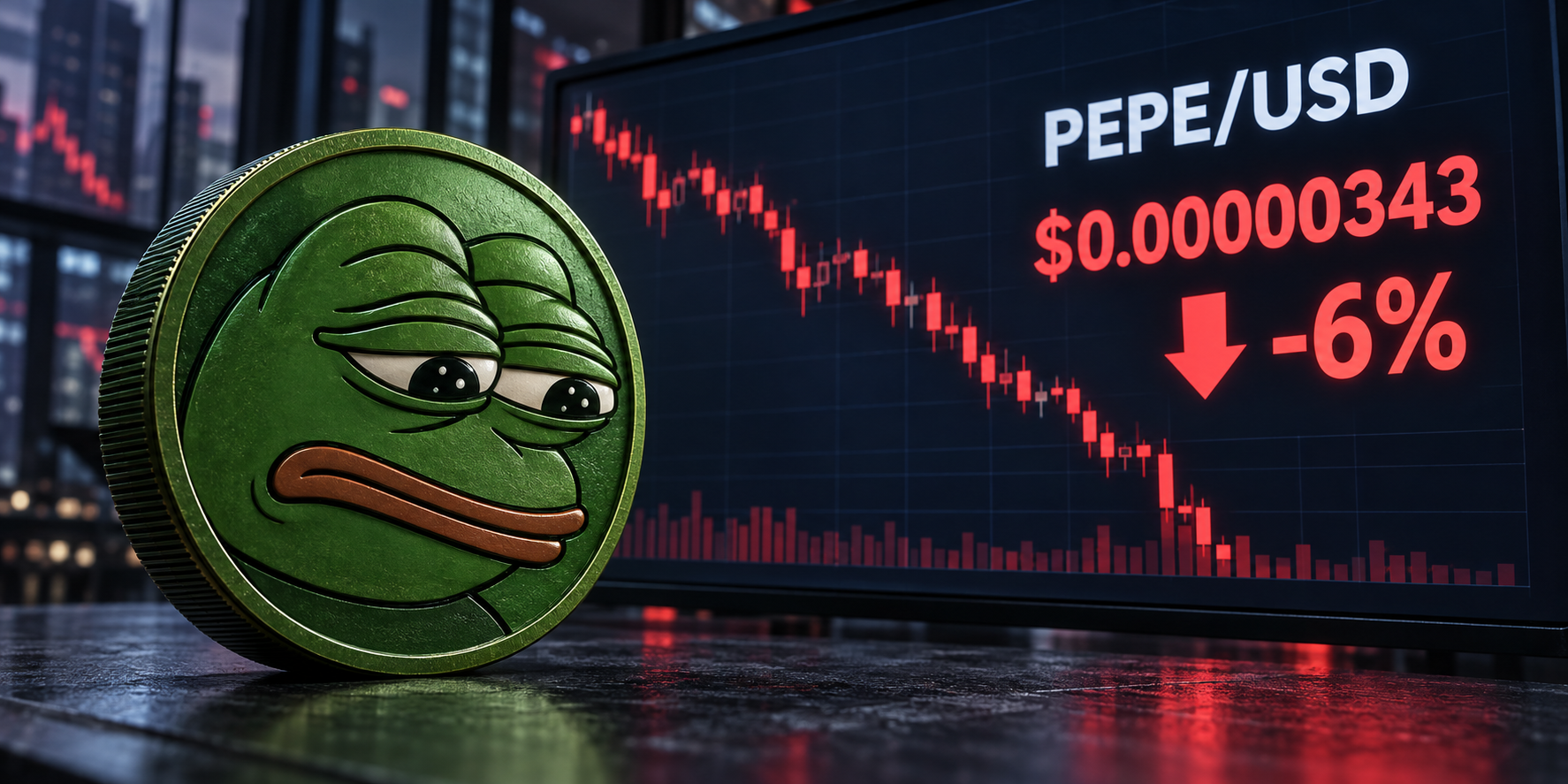
- PEPE trades near $0.00000348 after rejection at its 200-day EMA.
- Whales holding 10 million to 100 million PEPE have sold 80 billion tokens since August 25.
- A break below $0.00000313 could trigger a correction toward $0.00000230.
Pepe (PEPE) remained under pressure on Thursday, trading near $0.00000348 after failing to overcome a crucial resistance level.
On-chain data shows that large holders have been reducing their positions, potentially increasing near-term selling pressure. Meanwhile, conflicting derivatives signals and weakening technical momentum leave PEPE exposed to a deeper price correction.
PEPE whales take profits after August rally
Santiment’s Supply Distribution data shows that some of PEPE’s largest holders have been selling tokens following the meme coin’s strong gains in mid-August.
Wallets holding between 10 million and 100 million PEPE have collectively offloaded approximately 80 billion tokens since August 25. This substantial distribution suggests that larger investors are taking profits after the recent rally.
Over the same period, smaller and mid-sized wallets holding between 100,000 and 10 million PEPE accumulated a combined 5.06 billion tokens.
However, buying from these smaller investors represents only a fraction of the amount sold by whales. The imbalance could limit PEPE’s recovery and maintain downward pressure in the short term.
PEPE’s derivatives market presents a mixed outlook. The token’s long-to-short ratio stood at 1.05 on Thursday, close to its highest level in more than a month. A reading above 1 indicates that long positions outnumber shorts, suggesting that slightly more traders expect PEPE to rally.
However, funding-rate data points to a more cautious market. PEPE’s open-interest-weighted funding rate turned negative on Wednesday and fell to -0.0067% on Thursday.
A negative funding rate means short-position holders are paying traders with long positions. This typically reflects stronger bearish positioning and contradicts the optimism shown by the long-to-short ratio.
PEPE rejected at 200-day EMA resistance
PEPE traded around $0.00000348 on Thursday after facing rejection at its 200-day exponential moving average near $0.00000364 during the previous session.
The failed breakout highlights the 200-day EMA as an important barrier that bulls must overcome to regain control.
Momentum indicators also show that buying pressure is weakening. The Relative Strength Index is moving lower toward the neutral level of 50, suggesting the earlier bullish momentum is fading.
The Moving Average Convergence Divergence indicator produced a bearish crossover last week, which remains in place and reinforces the risk of further losses.

PEPE’s 50-day and 100-day EMAs provide an initial support zone near $0.00000320. The next important horizontal support sits around $0.00000313.
A daily close below this area could confirm a deeper correction and expose PEPE to its next major support near $0.00000230. Such a move would represent a decline of approximately 34% from its current price.
Conversely, PEPE must close above the 200-day EMA at $0.00000364 to weaken the bearish outlook. A successful breakout could open the door to a recovery toward the next daily resistance at approximately $0.00000442.
The investment expands a strategic partnership to bring tokenized, voting-enabled equities to crypto exchange users.

XRP trades at $1.38, sitting well below the $1.50 price line that traders now treat as the line in the sand. That gap matters more this week than most. A procedural vote in Washington could decide whether the next leg is a breakout or another slow bleed toward the mid-$1.30s.
Senate Majority Leader John Thune has scheduled a September 15 cloture vote on the CLARITY Act. This is a 60-vote threshold with all 53 Senate Republicans reportedly on board, leaving a 7-vote gap that Democrats need to close. Recent reporting on the bill’s path shows just how tight the math is.
— RippleXity (@RippleXity) September 8, 2026
 JUST IN: The CLARITY Act will strengthen $XRP’s path into mainstream U.S. finance.
Here’s why $XRP holders should pay attention:
➜ Clearer rules for market participants. The proposed framework defines SEC and CFTC responsibilities across digital asset markets. Senate… https://t.co/VPq6IbU93A pic.twitter.com/pd4SFwbAK7
The interesting part? When the bill previously cleared the Senate Banking Committee, XRP jumped 4.51% to $1.49 within hours, a reminder of how sensitive this asset is to legislative headlines.
Add in an FOMC meeting and fresh inflation prints landing the same week, and risk appetite across crypto markets could swing hard in either direction. XRP’s chart has already priced in some optimism.
Earn $50 and Enter $300K Prize Draw on EdgeX
Can XRP Price Hit $1.50 This Week?
At $1.38, XRP sits inside a support band analysts have flagged between $1.35 and $1.38, with a deeper floor near $1.31–$1.33 if selling accelerates. Momentum indicators lean cautiously bullish, but derivatives data shows conviction thinning; open interest hasn’t kept pace with the recent bounce, which tends to precede chop rather than trend continuation.
The bull case: a clean reclaim of $1.48–$1.51 opens the door to $1.60–$1.68, with Ali Charts pointing to $1.70 as the next technical magnet and Dark Defender’s model eyeing $1.8815 en route to $2. Whale accumulation patterns support that thesis if they continue.

The base case: sideways consolidation near current levels until the Senate vote resolves the uncertainty one way or the other.
The bear case: a failed cloture vote or a hawkish FOMC surprise sends XRP back toward $1.31, invalidating the near-term bullish structure.
Procedural risk around the vote remains the single biggest wildcard traders are pricing in right now.
Discover: The Best Token Presales
Maxi Doge Targets Early Mover Upside as XRP Tests Key Levels
XRP holders sitting on positions from the $1.50 zone are watching a market that’s given back gains twice already this month. Even a clean breakout to $1.70 is a respectable swing, not a life-changing one, at XRP’s market cap.
The math is exactly why traders with smaller stacks keep rotating into early-stage plays where the upside ceiling isn’t capped by a multi-billion-dollar float.
Maxi Doge ($MAXI) leans into that gap with a leverage-trading meme identity, a 240-lb canine mascot built around “1000x energy” and gym-bro humor aimed squarely at degens who miss the early DOGE days.
The presale has raised $4.8 million at a current token price of $0.0002838, with dynamic APY staking live for participants. Holder-only trading competitions with leaderboard rewards and a dedicated Maxi Fund treasury for liquidity round out the pitch.
Find Maxi Doge before the presale window ends.
Trade Crypto on Bybit and Get a Chance to Win Our $1,000 USDT Airdrop
The post XRP Price Needs a $1.50 Breakout Ahead of CLARITY Act Vote appeared first on Cryptonews.


In 2001, I lost the world I knew. Twenty-five years later, I’m accidentally rebuilding it.
“I think people think you’re my mother,” my six-year-old niece whispered to me as we walked through the parking lot toward CVS.
“I think you’re right,” I said, smiling back at her impish grin that suggested we were pulling one over on the world. I had picked her up from school and was indulging her request to buy fake nails for our sleepover. She gripped my hand tightly, as a daughter would. We proudly walked through the automatic sliding doors, as one.
I don’t have children of my own, which means my niece is the beneficiary of my pent-up maternal love and obsession. She was born in 2020, and four months later, I left my job as the executive producer of a morning news show in New York and moved to Los Angeles. It was the first time I’d disrupted my ambitious climb up the media ladder, and when my feet landed in the California sand, my role as an aunt became the foundation of my daily life.
Birthdays, ballet recitals, and school performances anchored my calendar. Playing hide-and-seek before dinner, getting ice cream on a Tuesday, and letting her empty my closet for dress-up replaced late-night calls, breaking news, and media dinners. Recently, when my sister traveled abroad for work, my niece wanted assurance that her “substitute mother” would be around. The phrase made me laugh, but also squeezed my heart like a vise. Because I know what it’s like to have a substitute mother.
Daphne Pouletsos worked for the insurance company AON, her office was located in the south tower of the World Trade Center, and she was among the 2,977 victims killed in the 9/11 attacks.
Saza, as we called her, was my mother’s younger sister. Her nickname was a name given by my oldest cousin, Dayna, whose toddler tongue couldn’t say “Aunt Daphne.”
Although Saza lived in New Jersey and I grew up in Virginia, she was a constant light in my life. We drove up north for summers and holidays, and Saza would visit us throughout the year. Once, she hid in the back of our Chrysler minivan when my mom picked my siblings and me up from school, and she revealed herself by suddenly piping into the conversation. We squealed with excitement.
Saza knew how to make a mundane moment sparkle. Her sense of humor was the first thing to enter the room, and sleepovers at her house meant staying up late to watch Saturday Night Live. In my young mind, “The Church Lady” and “Coffee Talk” were extensions of my aunt (it helped that she also had a New Jersey accent). Shimmying our shoulders like “Sprockets” was like a special inside joke. Her laugh could sweeten the sourest mood.
But the best moments with her were always Christmas morning. Saza would come to my grandparents’ house first thing in the morning, the jingle bell on the back door announcing her arrival. She’d sit in the big, blue upholstered wingback chair, her feet tucked under her like a teenager, eyes shining behind her ‘90s rimless glasses. I can’t separate the thrill I got from opening a new baby doll from the joy I got from showing it to her. She would coo with enthusiasm, amplifying my delight. One time, she gave all of her nieces and nephews thick black plastic glasses with rubber banana noses attached. It was the silliest gift I’ve ever received, and one of the best. We took a picture, all piled on top of each other: laughing, goofy, family. Her presence carried a promise that everything was okay. As a kid, I assumed it always would be.

I was studying abroad in the fall of 2001. Classes at University College London hadn’t started yet, so I was traipsing around Europe with a sorority sister. We were at a restaurant in Barcelona when a waiter expressed dismay about “what happened at the World Trade Center.”
“My aunt works there,” I told my friend. But I was sure she was fine. How could she not be?
Still, I found a payphone and called home. My father tried to convey a stoic message: “We don’t know anything yet, we’re calling all the hospitals.”
Then I saw the footage on the TV in our hostel. I couldn’t believe that she could be one of the victims. Not Saza.
As a journalist, I know the questions that are typical in the wake of a tragedy. How old were they? Did she or he have kids? It’s natural. We’re inclined to measure loss by what, or rather, who, is left behind. But the true impact of a person’s life is not reflected in titles or preconceived roles. Every one of the 2,977 victims on 9/11 had a world that was wide and meaningful. You may not know the details of that world, but someone does. And they mourn not just the loss of that person, but the moments they made possible. For me, saying “I lost my aunt on September 11th” doesn’t begin to tell the story. My loss isn’t constricted by norms. Her legacy doesn’t fit neatly into a headline.
How old was she? Forty-seven. No, she didn’t have kids, but she had us. Twenty-five years later, I am 45, and I have my niece. Saza was the person who gave me the gift of knowing what an aunt can be.
While I could never fill her slippers, I feel Saza with me every day. She’s there when my niece and I are feeding the stray cat in my backyard. She’s there when we’re laughing at the Sunday comics. She’s there as we get dolled up in fancy dresses to go to the neighborhood pizza place. I am alive in these moments because she lived.
I wonder what else her life would have included if she had kept living it. What it would be like to have her visit me in Los Angeles. How she, my sister, and I would stay up late watching SNL together. How much love she would pour into life’s middle moments.
And most of all, what joy she would take in getting to know my niece, her namesake: Daphne.
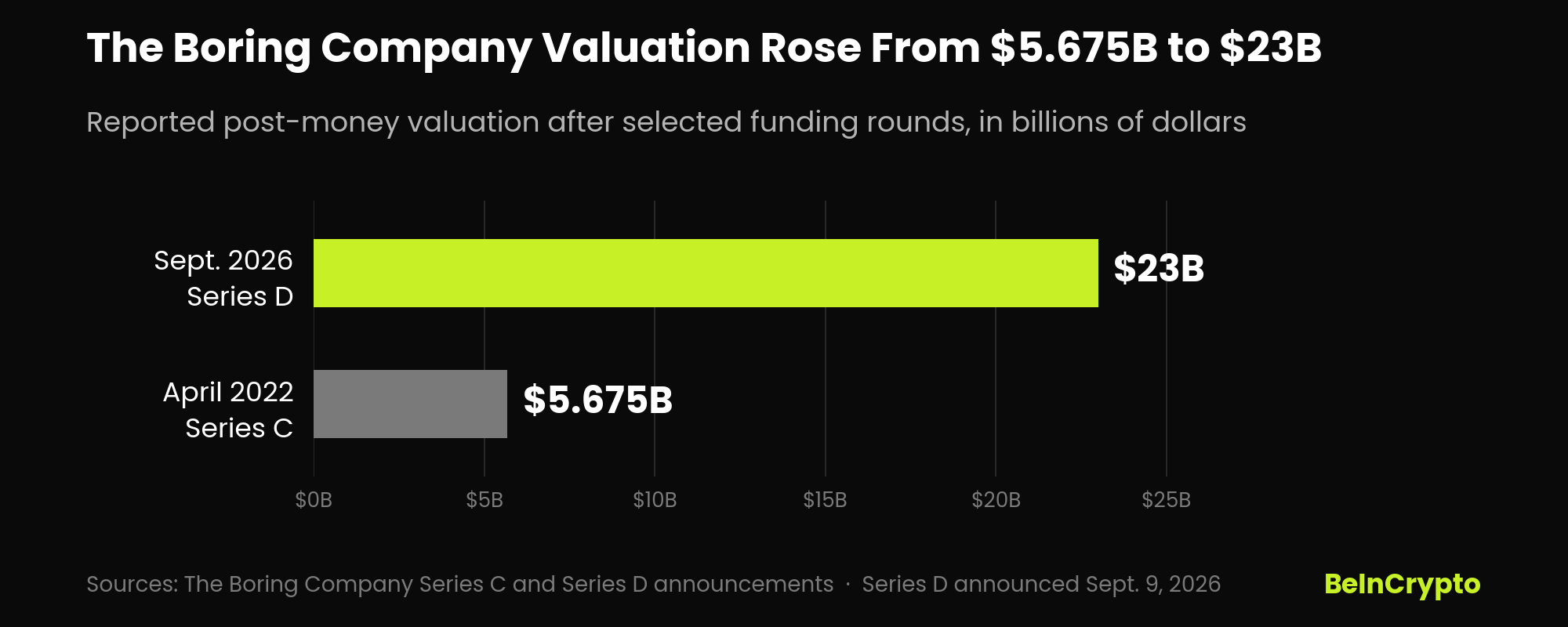
The Boring Company has raised $3 billion in a Series D round led by the United Arab Emirates. The deal lifts the valuation of Elon Musk’s tunneling firm to $23 billion.
That price sits at roughly four times the $5.675 billion the firm carried after its Series C in April 2022.
Why the Musk Boring Company Valuation Jumped
The Emirati capital drove the deal. The company named the UAE and affiliated investment entities as the lead investor. Its previous raise, the 2022 round, drew just $675 million.
It also named eight more backers. The list runs from Human Capital, Vy Capital, and Valor Equity Partners to Sequoia Capital, Andreessen Horowitz, Temasek, Shamal Holding, and Baron Capital.

Emirati money keeps flowing into the sector. Abu Dhabi’s sovereign funds already hold spot Bitcoin ETF exposure, while a state vehicle also backs Binance with $2 billion.
In return, the UAE gets scale. The tunnel partnership covers more than 150 kilometers and comes in addition to the Dubai Loop project, whcih the company won previously.
Where the $3 Billion Goes
The company will hire across engineering, operations, and production. It also plans to build and scale its Loop networks in Las Vegas, Nashville, and Dubai.
Prufrock takes the rest. The company says newer versions of its boring platform launch and retrieve from a transporter, which removes the traditional launch pit and crane.
Las Vegas remains the proof point. The Vegas Loop has carried more than four million passengers, and the entitled network now runs to 123 stations. The company recently began its 25th tunnel overall, the 14th in Las Vegas.
Dubai carries the international test. The company holds a construction contract with the city’s Roads and Transport Authority for a pilot of 6.4 kilometers and four stations. Precast production for that phase has already started.
The Boring Company, therefore, ranks among Musk’s larger private assets. He said this month that his fortune sits in SpaceX and Tesla stock rather than cash.
“Defeating traffic is the ultimate boss battle. Even the most powerful humans in the world cannot defeat traffic,” Musk, said in the announcement.
The company frames the round as proof of a shift. Two years ago, it ran a single Loop system, and it now calls itself a multi-city tunneling program.
The post Elon Musk's Boring Company Valuation Hits $23 Billion, 4 Times Its 2022 Mark appeared first on BeInCrypto.
IMC Rare Earths reports terbium recovery up to 95.2% at Brazil project

Bitcoin price eyes $72K after bearish MACD crossover

Angelina Jolie Reveals How She Raised Six Kids Her Way


-

 Crypto World1 day ago
Bitcoin price risks $76K drop as $78K support weakens
-
 Tech2 days ago
Memory prices are slowing because buyers ran out of money
-

 Crypto World1 day ago
Ethereum price stalls below $2,500 as ADX drops to 11
-

 Crypto World2 days ago
Robinhood Stock: How To Take Advantage With Reduced Risk
-

 Business11 hours ago
AMD Stock Climbs After Management Lifts 2027 Data Center Outlook Toward $70 Billion in AI Sales
-

 NewsBeat1 day ago
What went right this week: an ‘historic’ fall in violent crime, plus more
-

 Crypto World12 hours ago
Bitcoin price risks $70K if $78K neckline breaks
-

 Business10 hours ago
Micron Stock Climbs Above $1,031 as AI Memory Crunch and a $50 Billion Outlook Fuel the Rally
-
 Crypto World1 day ago
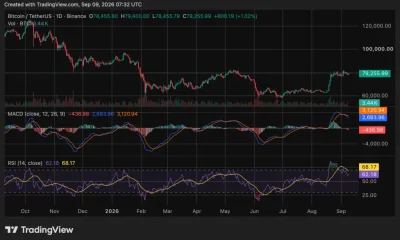
Bitcoin price holds near $79K as cycle drawdowns narrow
-
 Sports2 days ago
Phones confiscated, players sent home: Pakistan’s England tour turmoil revives memories of Mohammad Amir, Salman Butt and Mohammad Asif’s 2010 Lord’s spot-fixing scandal | Cricket News
-

 NewsBeat2 days ago
England up in reading, maths and science rankings as Scotland and Wales dip
-

 Business1 day ago
Meta debuts long-awaited personal AI agent, Muse
-
 Crypto World2 days ago
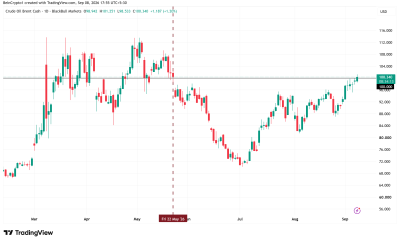
Brent Crude Oil Moves Above $100 for the First Time in 3 Months
-

 Crypto World2 days ago
Pump Fun and Kraken delete Hunter Biden $LAPTOP promotion
-

 Crypto World2 days ago
Intel Stock Jumps 9% on Chip Price Hike Report, US Stake Gains $36 Billion
-

 Crypto World2 days ago
Visa expands stablecoin card network to 160 programs
-

 Business2 days ago
Egyptian TV Presenter Sarah Khalifa, 11 Others Sentenced To Death In Major Drug Trafficking Case In Cairo
-
 Tech2 days ago
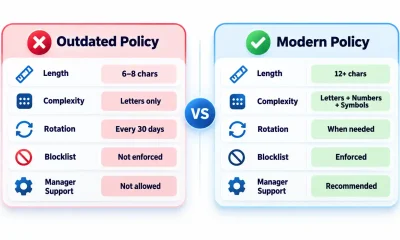
Strong Password Policy and Password Manager Guide
-
Business2 days ago
Xometry at Goldman Sachs Communacopia + Technology Conference 2026: growth, AI and Siemens
-

 Business1 day ago
ServiceTitan, Inc. (TTAN) Q2 2027 Earnings Call Transcript
You must be logged in to post a comment Login