
Crypto World
3 Red Flags Are Emerging for Chainlink After LINK’s Powerful 95% Rally


Chainlink has staged a strong rally after the mid-August breakout. But its momentum may be cooling down.
A new analysis suggests that LINK’s latest price move is facing several signs of caution after it surged 95% from around $7 to a recent high of $13.77 in just two months.
Three Red Flags
Ali Martinez has flagged a sell signal from the TD Sequential on LINK’s weekly chart, which comes after the crypto asset’s sharp climb and raises the possibility of profit-taking. At the same time, activity from large holders has cooled noticeably. In fact, transactions worth more than $1 million have dropped from roughly 59 over the past two weeks to about 10 on September 7th.
Meanwhile, exchange deposits are adding to the concern, as Martinez found that 1.75 million LINK moved onto exchanges and the total exchange balance rose from 269.25 million to approximately 271 million units. The analyst explained that the combination of these developments could signal a cooldown after LINK’s strong advance.
So while short-term momentum is showing some strain, the broader setup remains constructive. The important development for LINK is that it has now closed above the $10.87 higher-timeframe level, which, according to Crypto Patel, keeps the bullish outlook intact as long as that level holds. With the asset trading above this mark, the current targets remain $50 and $100.
Michaël van de Poppe does not think that “LINK will stall much” and expects to see a strong continuation here towards the next area at $14.50-15 as a potential target zone.
Industry Developments
LINK is among the latest cryptocurrencies being added to Charles Schwab’s crypto trading service, alongside Solana and Avalanche. The expansion means eligible Schwab clients will soon have direct access to the token. The financial giant initially launched the service with Bitcoin and Ethereum in May.
Additionally, Wyoming is expanding its use of Chainlink to give near-real-time, on-chain visibility into the reserves backing its official Frontier Stable Token (FRNT). The state has adopted Chainlink Proof of Reserve after moving FRNT to CCIP in August, in a bid to make reserve verification more continuous by combining independent checks with automated on-chain monitoring.
The post 3 Red Flags Are Emerging for Chainlink After LINK’s Powerful 95% Rally appeared first on CryptoPotato.



Castle has opened its automated financial platform to individual users, allowing customers to convert any portion of the 12% annual dividend paid by Strategy’s STRC preferred stock into Bitcoin.
Summary
- Castle users can receive STRC dividends in cash, Bitcoin, or a combination of both.
- STRC carries a 12% variable annual dividend rate for September record dates.
- Strategy pays the dividend in cash before Castle converts the selected portion into Bitcoin.
- Castle previously limited its automated Bitcoin financial services to businesses and nonprofit organizations.
Castle said in a Tuesday statement that personal account holders can choose how much of each STRC dividend payment they want to receive in cash and how much should be converted into Bitcoin.
Castle automates STRC dividend conversions
Under the new account structure, customers can keep the entire payout in cash, convert all of it into Bitcoin, or set a percentage between the two options. Once selected, the allocation runs automatically at each dividend payment unless the user changes the instruction.
Strategy pays the STRC dividend in cash, while Castle handles the subsequent Bitcoin purchase based on the percentage set by the account holder. The arrangement does not change the terms of the underlying preferred stock or turn STRC itself into a Bitcoin-paying security.
Castle said many customers choose a mixed allocation. Cash can cover expenses or remain available for other uses, while the remaining portion purchases Bitcoin without requiring a separate transfer to an exchange or brokerage account.
Co-founder and CTO João Almeida said the feature was designed for investors who want regular income while continuing to build a Bitcoin position.
“Investors have long faced a choice between earning steady yield and holding bitcoin. Castle eliminates that trade-off,” Almeida said.
According to the executive, customers can direct part of their dividend income into Bitcoin while keeping the rest as cash flow. Castle’s automation executes the allocation with each eligible payment rather than requiring users to place individual Bitcoin orders.
Operating cash, fixed-income holdings, and Bitcoin purchases sit within the same platform. Castle said the setup removes several manual steps normally involved in moving money from a bank to a brokerage or crypto onramp.
STRC pays a variable 12% annual dividend
STRC, formally called Strategy’s Variable Rate Series A Perpetual Stretch Preferred Stock, is a Nasdaq-listed security with a $100 stated amount. Unlike common stock, the preferred shares are structured mainly to provide cash income and do not have a fixed maturity date.
Castle added STRC to its platform earlier in 2026. According to Strategy’s STRC information, the annualized dividend rate for record dates beginning in Sep. 2026 is 12%, based on the security’s $100 stated amount.
The 12% figure is a variable annual rate rather than a guaranteed return for every investor. Strategy states that the rate can be adjusted monthly, the effective yield depends on the market price paid for STRC, and its board must declare each cash dividend.
Dividend payments also depend on the issuer’s ability and decision to continue paying them. Strategy warns investors that the current rate does not indicate what future rates will be and could fall below its present level.
In June, Strategy shareholders approved semi-monthly payments for STRC. Record dates fall on the 15th and final day of each month, with payment scheduled for the following record date, subject to board approval.
The twice-monthly schedule started with a June 30 record date and a July 15 payment date. Castle uses the same payment cycle to carry out the cash-and-Bitcoin allocation selected by each customer.
STRC also carries risks that differ from holding Bitcoin directly. Its price can trade above or below the $100 stated amount, while the dividend rate, Strategy’s financial position, and market demand for the preferred shares can influence an investor’s total return.
Bitcoin purchased through the dividend conversion carries a separate source of volatility. Castle did not state that converting income into Bitcoin protects users from a decline in either STRC or Bitcoin prices.
Personal accounts extend Castle beyond business treasuries
Before Tuesday’s expansion, Castle served business entities that wanted to automate cash management and Bitcoin accumulation. Its clients included restaurants, gyms, churches, accounting firms, online retailers, auto dealerships, software companies, real estate businesses, and nonprofit organizations.
Rather than requiring each company to maintain separate systems for bank cash, income assets, and Bitcoin purchases, Castle allowed users to establish an allocation strategy and automate later transactions.
The company said requests from existing business customers led it to develop personal accounts. Some owners who used Castle for their companies also wanted access to the same tools for their private finances.
“Feedback we heard over and over from business owners was: ‘I love this stack — when can I use it personally?’” co-founder and CEO Stephen Cole said.
Personal access introduces the STRC allocation feature to people outside Castle’s original corporate customer base. Individual users can now apply the same automated rules to dividend income without operating through a company or nonprofit entity.
Castle has not disclosed how many business customers use its platform, how many personal accounts it expects to open, or the total value of assets it manages. The company also did not provide details in the statement about account minimums, trading fees, or the price used when converting dividend cash into Bitcoin.
U.S. users gain exposure to two different assets
For U.S. customers, the account combines exposure to a Nasdaq-listed preferred stock with purchases of a digital asset. STRC holders own a security issued by Strategy, while Bitcoin acquired from the dividend proceeds remains a separate asset.
The structure means Castle users are not receiving an in-kind Bitcoin dividend from Strategy. Strategy declares and pays cash distributions on STRC, after which Castle converts the customer’s selected amount into Bitcoin.
Such a distinction may matter for account records because users have transactions involving both dividend income and Bitcoin purchases. Castle’s statement did not explain how its platform reports the conversions for U.S. tax purposes or whether it provides cost-basis information for the acquired Bitcoin.
The Internal Revenue Service treats digital assets as property for federal tax purposes. U.S. taxpayers generally must maintain records showing when digital assets were acquired, their cost basis, and the proceeds received when they are later sold or otherwise disposed of, although the treatment of each user’s transactions depends on individual circumstances.
Castle was founded by Cole and Almeida. Boost VC and Winklevoss Capital back the company, which announced a $1 million funding round in 2025 to develop its automated Bitcoin treasury tools for small and medium-sized businesses.
Crypto.com will slash annual rewards on new CRO lockups on Thursday by 25% or more.
The disappointment for holders of Crypto.com’s proprietary token is merely the latest chapter in a years-long odyssey of roadmap changes, altered promotions, and other reneged forecasts by Crypto.com and its predecessor, Monaco.
On September 10, lockup rewards for “Obsidian/Private” tier CRO owners are dropping to 6% from 9%, 5% from 8.5% for the “Icy/Rose/Private” tier, and 3% from 4% for “Jade/Indigo/Pro.”
The fresh cut continues a disappointing series of news with a voluminous back catalog.
Throughout its history, CRO leaders have reversed prior guidance, reduced payouts, and penalized retail holders for the benefit of institutional partners.
Indeed, retail investors had to suffer through triple-digit supply inflation of their token to help with “Making America the world capital of crypto.”
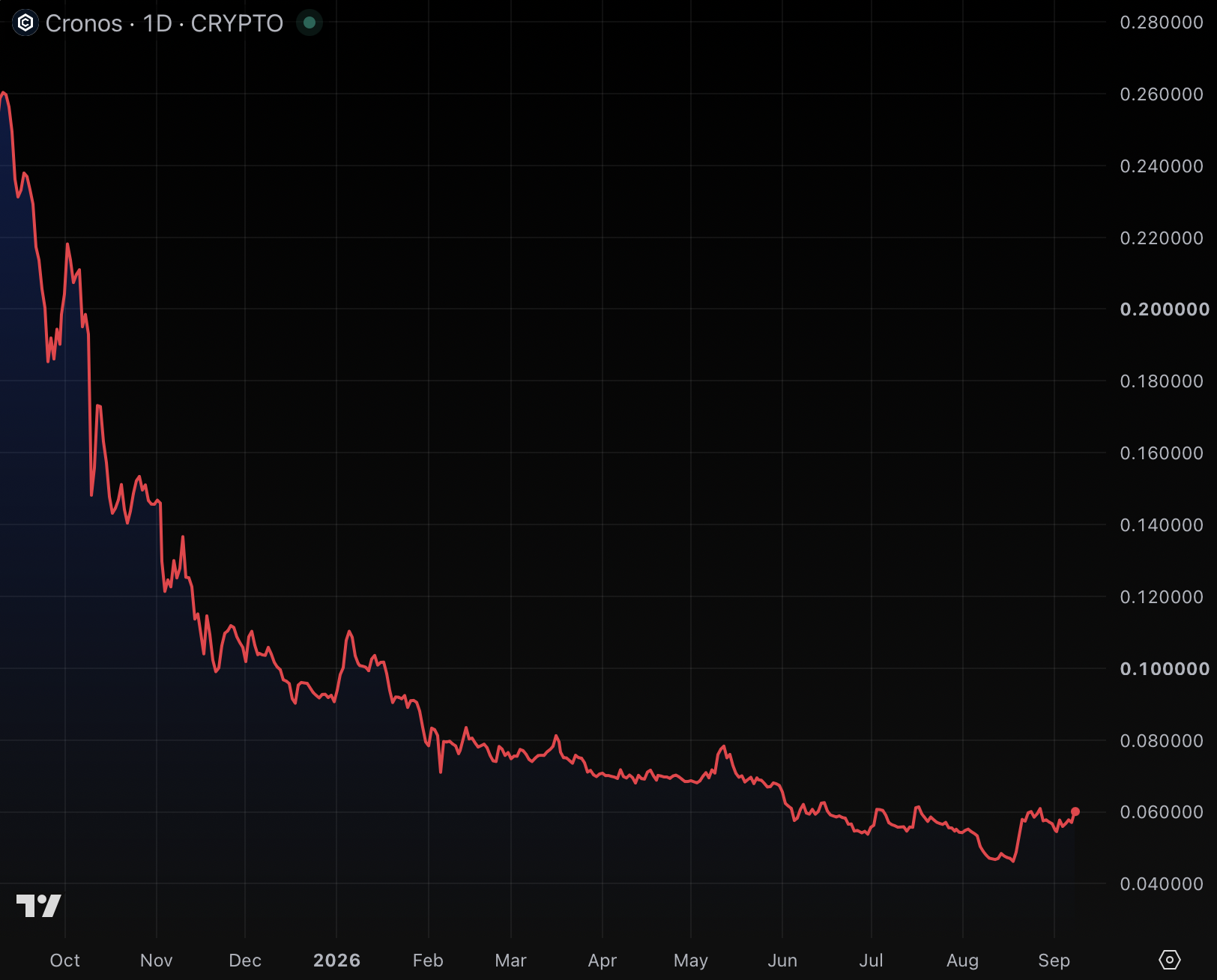
For context, the price of CRO has declined 75% over the past year, thanks in part to that initiative and other Crypto.com disappointments.
After roadmap changes, expired promotions, layoffs, and other unfortunate incidents that were supposed to clean up the CRO community, the price of CRO has declined since November 2021 and remains 93% below its all-time high almost five years ago.
Crypto.com’s Cronos blockchain also erased a few hours of activity today as it struggles with even basic infrastructure uptime.
Read more: Crypto.com-promoted Tectonic forces Cronos to halt, rewind
Ever since Monaco’s whitepaper, the terms have kept changing
Monaco, Crypto.com’s predecessor, initially sold MCO, the original coin that migrated to CRO, with an “asset contract” funded by a 1% fee on certain Monaco Card transactions.
Holders would even be allowed to burn their MCO in exchange for a proportional share of this asset contract, a mechanism designed to create revenue-linked redemption value.
By late 2017, Monaco removed that contract from its roadmap, citing regulatory changes. It raised its Monaco Card cashback rate to as much as 2% as a distinct type of compensation, despite renegeing on the original token economic promise.
On November 20, 2018, Crypto.com announced 60 monthly CRO airdrops for eligible MCO holders that were supposed to last, obviously, five years. However, the airdrops ended prematurely in June 2019, roughly seven months into that five year schedule, with the remaining allocation redirected.
More than 50 of those promised monthly distributions to MCO holders never arrived.
In 2020, Crypto.com pushed MCO holders to migrate blockchain contracts to CRO, then stopped supporting unswapped MCO across its product suite.
The MCO token technically survived on Ethereum, although its company-backed utility did not.
Read more: Crypto.com-promoted Tectonic forces Cronos to halt, rewind
Next, Crypto.com cut cashback rates for its cardholders in May 2022 and initially planned to eliminate card staking rewards altogether after 180-day terms expired.
Following a backlash over that total reduction, it restored smaller rewards within days and allowed existing users to retain their old rates until expiry.
Benefits continued to shrink. In 2020, Crypto.com advertised Airbnb, Expedia, and Amazon Prime rebates to its highest card tiers.
By 2025, Crypto.com announced it would remove those vendors from Icy, Rose, and Obsidian tier users’ rewards programs. It also eliminated 1% and 2% non-staking spending rewards for cards issued before November 6, 2024.
Lounge access followed the same trajectory.
Crypto.com restricted the benefit in September 2025 to customers with an active CRO lockup, stake, or annual subscription. This month, it halved annual visits for Pro users, and removed complimentary guest access from Private tiers in most markets.
Lastly and most importantly, Crypto.com led an initiative to un-burn the supply of CRO.
In February 2021, Crypto.com announced and began conducting a 70 billion CRO token burn program, calling it a step toward full decentralization.
In 2025, the Crypto.com-aligned Cronos described its 2025 plan to re-mint those 70 billion CRO into a “Strategic Reserve,” reversing the burn entirely.
On Thursday, as mentioned above, Crypto.com is revising its rewards rates downward on new CRO lockups on Thursday by 25% or more.
Got a tip? Send us an email securely via Protos Leaks. For more informed news and investigations, follow us on X, Bluesky, and Google News, or subscribe to our YouTube channel.
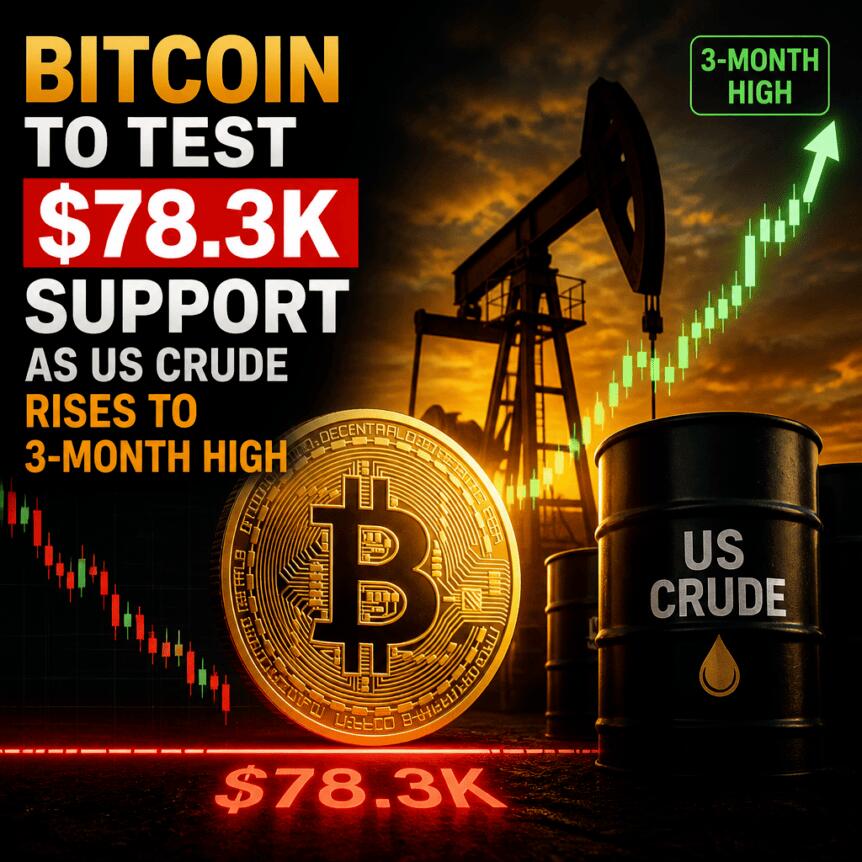
Bitcoin slid beneath the $78,000 level at the Wall Street open on Tuesday, under pressure from a broader risk-off move that followed renewed Middle East tensions. The drop marked Bitcoin’s first move under $78,000 since Sept. 3, with BTC/USD hitting as low as $77,600 before a modest rebound.
Macro conditions appeared to be the main driver. US equity markets fell in early trading, while crude oil jumped sharply—adding fresh inflation concerns ahead of upcoming US data.
Key takeaways
- BTC briefly traded under $78,000 for the first time since Sept. 3 after equities weakened at the start of the Wall Street session.
- WTI crude surged toward $95 per barrel, while Brent pushed toward the $100 area, intensifying inflation sensitivity.
- Trader Rekt Capital said the market is “copying” the failed May breakout scenario, with $78,300 highlighted as a key support level.
- A weekly close below ~$78,300 followed by a bearish retest would likely strengthen the case for another breakdown.
Risk assets weaken as oil spikes on renewed tensions
According to TradingView data cited in market coverage, BTC/USD dropped to $77,600 before attempting to recover. The move came alongside declines in US stocks right after the Labor Day holiday, as news tied to Houthi strikes on Saudi cities and oil-related infrastructure pressured sentiment.
At the time of writing, the S&P 500 was down about 0.5% and the Nasdaq Composite was down roughly 0.4%, reflecting the typical spillover from geopolitical risk into equities and, by extension, liquidity conditions that can affect crypto.
Oil reacted more forcefully. WTI crude climbed toward the $95 per barrel mark, reported as the highest level since June 8, while Brent crude targeted $100 for the first time since July 24. This matters for Bitcoin because higher energy costs tend to feed into inflation expectations, which can pressure broader risk appetite—especially when markets are already looking ahead to fresh economic prints.
Trade publication The Kobeissi Letter pointed to a similar theme, noting that a rise in diesel costs is contributing to “inflation expectations” building. Earlier coverage from Cointelegraph also tied these worries to CPI expectations, flagging that the CPI release is scheduled for Friday.
Inflation expectations return to the spotlight
Rising energy prices can quickly become a crypto market issue because they influence rate expectations and the discount rate applied to speculative assets. While the immediate driver of Bitcoin’s move was risk sentiment, the oil surge raised the stakes for investors focused on interest-rate trajectory and inflation momentum.
The market narrative is also complicated by politics. In a Monday Truth Social post, US President Donald Trump played down the oil spike and suggested prices could fall sharply in the future, claiming: “Oil prices will drop precipitously.” While such comments may influence sentiment, oil is still trading as a concrete input into inflation expectations, and that can’t be hand-waved away in the short term.
BTC’s chart setup echoes a “failed May breakout”
Beyond the macro backdrop, the day’s price action also fed technical debate. Trader and analyst Rekt Capital suggested that Bitcoin’s behavior is resembling the market structure that followed a failed breakout in May.
As described in Rekt Capital’s earlier analysis, BTC/USD had reached about $82,800 before reversing, then consolidating around $78,300 before eventually falling to new macro lows near $57,000. In his current view, the retest of the ~$78,300 area is now in progress, based on a post on X.
Rekt Capital warned that if this zone does not hold, the market could print yet another lower high. He framed the risk as part of a broader sequence extending back to October 2025, reinforcing what he described as an ongoing bear-market condition into 2026.
Importantly, his threshold was specific: he argued that a weekly close below $78,300, followed by a bearish retest “just like in early May,” would likely confirm a breakdown. For traders and investors, this distinguishes between an intraday dip—which can often be bought on mean reversion—and a more durable technical failure that tends to reset expectations.
What to watch next around $78,300
With BTC briefly trading under $78,000, attention has shifted to whether the broader support structure around $78,300 can withstand renewed volatility. The next catalyst will likely be a combination of market-wide risk appetite and incoming US data that could change how investors price inflation and potential rate moves.
For now, the crucial question remains whether Bitcoin can reclaim stability above the key support area—or whether the May-style sequence repeats, turning Tuesday’s dip into a larger technical breakdown.

Visa has unveiled a new initiative that blends its traditional payment settlement data with blockchain-based lending infrastructure, aiming to let lenders underwrite and finance obligations tied to card payments. The move spotlights a possible shift in how onchain lending could grow—not just within crypto markets, but also alongside everyday payment settlement.
The company says it will combine VisaNet settlement records with onchain transaction data so lenders can evaluate borrowers and provide financing against payment obligations. Visa also points to early activity through a blockchain lending protocol, Credit Coop, which it describes as having used the approach to fund business settlement needs since 2023.
Key takeaways
- Visa will link VisaNet settlement data with onchain lending tooling to help lenders finance payment obligations using combined offchain and onchain records.
- Credit Coop is cited as an early example, with more than $2.5 billion in cumulative settlement volume since 2023, according to Visa.
- Visa is continuing to expand its stablecoin-linked card business, including claims of nearly 200% year-over-year growth in payment volume.
- Visa says its stablecoin settlement volume has moved beyond a $20 billion annualized run rate—over 15x year-ago levels.
Visa’s settlement-to-lending model
In an announcement released Tuesday, Visa described how its settlement network data can be used within blockchain-based lending. The core idea is straightforward: lenders can use settlement records from Visa’s network alongside onchain transaction activity to assess creditworthiness and support financing tied to card payment flows.
Rather than treating payments as a separate world from crypto-native finance, Visa’s plan is designed to bring the two together at the underwriting stage—by grounding lending decisions in settlement outcomes and payment performance that are traceable through VisaNet records and blockchain data.
For market participants, this matters because it reframes onchain lending around payment settlement rather than relying only on typical crypto collateral or internal onchain histories. If settlement-linked lending scales, it could widen the audience for onchain credit, particularly for businesses whose cash-flow timing depends on payment processing and repayment schedules.
Credit Coop as an early proof point
Visa highlighted Credit Coop, described as a blockchain-based protocol that extends credit lines to businesses, as an early example of the settlement-and-lending approach. Visa says Credit Coop has financed more than $2.5 billion in cumulative settlement volume since 2023 across participating facilities.
Visa also provided usage metrics: it claims the program involved more than 3,000 borrowing events and 9,000 repayments. While these figures don’t necessarily indicate how widely the model will spread across all Visa participants, they do provide a concrete reference point that settlement-linked credit has already been operating.
What remains unclear is how quickly the initiative will expand beyond early facilities or what specific integration requirements different lenders or partners would face. Those details will likely determine whether Visa’s model scales smoothly or remains a niche capability.
Stablecoins remain central to Visa’s payments strategy
Visa positioned the announcement within an ongoing stablecoin push. In July, the company said on a fiscal third-quarter earnings call that it is “investing in each layer of the stablecoin stack,” spanning blockchains, wallets, infrastructure, and applications. In other words, the settlement-and-lending initiative appears to sit on top of broader stablecoin-related infrastructure developments rather than functioning as a standalone product.
Visa also pointed to participation in the OpenStandard consortium, which aims to issue OpenUSD. Visa noted that the consortium includes Stripe among more than 140 participating businesses.
On the usage side, Visa claims its stablecoin-linked card ecosystem is growing rapidly. Visa says more than 160 stablecoin-linked card programs operate on its network, and that payment volume is up nearly 200% year over year. Separately, Visa said its stablecoin settlement volume has exceeded a $20 billion annualized run rate—more than 15 times year-ago levels.
What the data says about the broader trajectory
The broader context is that stablecoin activity tied to payment flows is continuing to expand, which can create a larger base for settlement-linked lending. Visa’s analytics dashboard, Visa Onchain Analytics, has previously cited major transaction-volume milestones for stablecoins; for example, it reported adjusted stablecoin transaction volume reaching a record $1.79 trillion in June, with volume over the past 30 days at roughly $1.2 trillion, according to Visa.
By connecting that growing settlement and stablecoin ecosystem to credit infrastructure, Visa is effectively testing whether payment settlement itself can become an underwriting input for onchain lending. If it works as intended, lenders could structure financing around real payment performance—potentially improving risk assessment compared with approaches that rely solely on generic onchain behavior.
Still, readers should watch for the conditions that determine whether this model becomes widely adoptable. Key questions include how settlement records are standardized across participants, how lenders calibrate risk when payment obligations are financed onchain, and what regulatory or operational guardrails apply when offchain payment networks interact with blockchain lending systems.
Next, investors and builders should monitor whether Visa’s settlement-to-onchain lending initiative expands beyond the early Credit Coop example and how stablecoin-linked card volume translates into measurable lending growth. The strongest signal will be clear evidence that settlement-linked credit can scale without compromising underwriting quality or operational reliability.

The Clarity Act faces another Senate setback as lawmakers remain divided over ethics rules tied to President Donald Trump and his family. The dispute has reduced the bill’s chances of advancing when senators return next week. Meanwhile, Republicans warn that unresolved demands could derail the latest effort to pass major crypto market structure legislation.
Clarity Act Stalls Over Ethics Dispute
Democratic lawmakers continue to demand stronger ethics rules before supporting the Clarity Act. They want provisions that would limit potential profits from crypto assets involving the president and his family. However, Republican negotiators have yet to secure an agreement that satisfies both sides.
The disagreement has slowed months of negotiations and created fresh uncertainty around the legislation. Several Republican senators now expect the bill to struggle unless the White House accepts changes to the ethics language. As a result, Senate leaders face growing pressure to reach a compromise before the scheduled vote.
Democrats also argue that the current ethics language does not sufficiently address family business interests. They want state attorneys general to help enforce the rules because they question whether federal oversight would provide enough protection. Meanwhile, Republicans continue seeking changes that could attract wider support for the measure.
Senate Vote Faces Growing Pressure
The Senate plans to hold a cloture vote on the Clarity Act on September 15 at 2:15 PM ET. The procedure requires 60 votes to overcome a Democratic filibuster and move the legislation forward. Therefore, both parties must resolve key disagreements before the chamber considers the measure.
The crypto industry has also increased pressure ahead of the Senate vote. Fairshake-linked Cedar Innovation Foundation plans to run three national advertisements supporting the legislation. Meanwhile, some lawmakers warn that a failed vote could encourage crypto groups to increase campaign spending.
Stablecoin provisions have created another challenge for the bill. Community banks and several Republican senators oppose rules covering stablecoin rewards because they fear deposit losses. Senators Josh Hawley and Rand Paul remain among the lawmakers expected to oppose the current version.
House Schedule Adds New Risk
The Senate faces a narrow window because lawmakers have limited time before the November midterm elections. If the chamber passes the bill, the House would still need enough time to consider and approve the legislation. Therefore, delays in the Senate could prevent lawmakers from completing the process this month.
House leadership has canceled sessions during the final two weeks of September. The chamber plans to enter its midterm election recess by September 17. Consequently, the House schedule could create another barrier even if Senate negotiators settle their remaining disputes.
The Clarity Act aims to establish clearer rules for digital assets and define regulatory responsibilities. Its passage would mark a major step toward broader U.S. crypto market regulation. However, ethics disputes, banking concerns, and limited legislative time now threaten its progress.


Copper CEO Amar Kuchinad has left the crypto custody company four months into a sale process that reportedly values the firm at $500 million despite potential offers near $200 million.
Summary
- Kuchinad has departed less than two years after taking over from Copper founder Dmitry Tokarev.
- Cantor Fitzgerald has been marketing the custody company with a reported $500 million price tag.
- Potential buyers have submitted offers near $200 million, according to an earlier report.
- Copper recently appointed Elin Cherry and Sean Bowen to senior compliance and operations roles.
Copper CEO leaves during buyer search
According to a report on Sep. 8, citing two people familiar with the matter, Kuchinad had left Copper while the company continued seeking a buyer. The report did not name a temporary or permanent replacement, disclose the reason for his exit, or say when he completed his final day.
Kuchinad’s departure has come during the fourth month of the sale process. Copper appointed financial services firm Cantor Fitzgerald to find potential buyers and market the company at a reported valuation of $500 million, according to people familiar with the process.
The custody firm began exploring a sale by at least May, when the same publication first reported that Cantor was handling the process. Copper had received acquisition interest before appointing the financial firm, although the May report did not identify the interested parties or confirm that any bidder had submitted a formal offer.
By August, potential buyers had emerged, but the reported bids were near $200 million. A transaction at that price would be $300 million below the amount sought by Copper and around 90% below the valuation the business reached during the previous crypto market cycle.
No buyer has been identified publicly, and Copper has not announced a sale agreement. The available reports also do not disclose the number of bidders, the conditions attached to their proposals, or whether Cantor has changed the company’s asking price.
Copper’s ownership has not released financial information showing how it arrived at the $500 million valuation. Without a signed agreement, the offers mentioned in the reports remain part of an ongoing process rather than a completed transaction.
Copper’s valuation has fallen from its 2021 peak
During funding discussions in 2021, Copper sought to raise as much as $500 million at a valuation of about $2.5 billion. The company was valued at more than $2 billion at its height, placing the current reported asking price at less than one-quarter of that level.
Even Copper’s $500 million target represents a steep reduction from its previous valuation. Offers near $200 million would cut the difference further, although neither Copper nor Cantor has publicly confirmed the reported figures.
Founded in 2018, Copper provides custody, collateral management, and settlement services for institutional clients trading digital assets. Its ClearLoop network allows clients to settle trades with participating exchanges while keeping assets under custody rather than moving them onto an exchange before every transaction.
Coinbase, Bitfinex, and Kraken are among the companies listed as ClearLoop clients. By reducing the need to place assets directly on trading venues, the system addresses the counterparty exposure institutions face when transferring funds to an exchange for execution.
Institutional custody remains a contested part of the digital asset industry as banks and crypto-native firms compete for clients. As crypto.news reported in August, Coinbase Custody, BitGo and Fireblocks serve the existing digital asset market, while BNY Mellon, State Street and Standard Chartered have built or acquired infrastructure for institutional tokenization and custody.
The same report noted that Standard Chartered agreed in May to acquire the crypto custody operations of Zodia Custody, a company the bank had helped establish. Unlike Copper’s reported sale effort, that transaction involved a traditional financial institution bringing a specialist custody business into its existing operations.
Growing bank participation gives prospective buyers a clearer commercial reason to consider custody assets while adding competition for independent providers. Copper’s client network and off-exchange settlement system could therefore form part of a bidder’s assessment, though none of the reports have identified the features drawing interest or the reasons bids have remained below the asking price.
Leadership changes continue at Copper
Kuchinad took charge of Copper in October 2024 after founder and former CEO Dmitry Tokarev left the top position. Before joining the company, Kuchinad worked at Goldman Sachs and served as an adviser to the U.S. Securities and Exchange Commission.
His SEC experience gave Copper a leader familiar with American financial regulation at a time when custody rules were becoming a central issue for institutional crypto services. However, the sources did not say whether his departure was connected to the sale process, Copper’s valuation, its operations, or any regulatory matter.
Alongside the CEO’s exit, Copper has recently added two executives to its leadership team. The company named Elin Cherry as chief compliance officer and Sean Bowen as chief operating officer, according to announcements published through Copper’s LinkedIn page.
Cherry’s appointment places a new executive over compliance while Copper considers offers, and Bowen takes charge of operations during the same period. Copper has not said whether either executive will assume additional responsibilities following Kuchinad’s departure.
The company also has not disclosed who is leading negotiations with Cantor or whether its board has appointed an interim chief executive. The reports do not provide a deadline for receiving final bids, completing due diligence, or deciding whether to abandon the sale.
U.S. custody market draws more regulated competitors
For U.S. investors and institutions, Copper’s reported sale comes as federally supervised companies expand into digital asset custody. The Office of the Comptroller of the Currency has granted conditional national trust bank approvals to several crypto firms since December 2025, including Circle, Ripple, Paxos, BitGo and Fidelity Digital Assets.
An Aug. 19 report said OCC digital asset approval activity had increased eightfold under the current administration, according to Comptroller Jonathan Gould. The agency’s proposed GENIUS Act framework also covers custody, reserves, redemptions, risk controls and regulatory examinations for payment stablecoin issuers under its supervision.
Competition is also developing outside the United States. In South Korea, BitGo Korea obtained virtual asset service provider registration from the Korea Financial Intelligence Unit in August, allowing it to develop institutional custody and transfer services.
A separate report on corporate access said Hana Financial Group owns 25% of BitGo Korea, while SK Telecom holds a 10% stake. BitGo had not disclosed a launch date, supported assets, custody fees or named clients at the time of that report.
Copper, meanwhile, has not announced a buyer, accepted an offer or revised its valuation, leaving the Cantor-led sale process open as the company operates without its recently appointed chief executive.

ICE’s stake in tZERO signals a shift toward tokenized securities as core market infrastructure, linking blockchain settlement with established financial markets.
ICE’s investment in tZERO points to tokenization becoming part of mainstream securities infrastructure rather than a separate crypto market.
Key Highlights
- ICE’s tZERO investment signals a major shift toward tokenized securities infrastructure.
- Tokenization is moving closer to established exchanges and regulated markets worldwide.
- ICE will use tZERO technology to support future on-chain securities settlement.
- The deal connects blockchain rails with traditional transfer and brokerage systems.
- Market infrastructure could become faster and more automated through tokenization.
Bitcoin traded at about $79,442 on September 8, while ICE advanced plans for tokenized securities infrastructure. The move strengthens the link between blockchain technology and established financial markets.
Intercontinental Exchange has agreed to invest in tZERO and support its latest financing round. The agreement also gives ICE access to tZERO’s blockchain patent portfolio.
The companies also signed a memorandum covering infrastructure for public tokenized securities markets. Under the plan, tZERO will help design digital transfer-agent and broker-dealer infrastructure.
The infrastructure will support on-chain settlement for transactions on ICE’s planned NYSE-affiliated digital trading platform. Therefore, the initiative connects blockchain settlement with systems used across traditional capital markets.
The move changes how tokenization fits into the financial system. Instead of operating separately, tokenized securities can connect directly with established market structures.
ICE’s involvement also gives the sector stronger institutional backing. The company operates major financial infrastructure and owns the New York Stock Exchange.
TZERO Provides The Technology Layer
tZERO already operates infrastructure covering issuance, trading, custody, settlement, and investor services. Its regulated platform supports secondary trading for digital securities in the United States.
The company also operates an SEC-registered transfer agent and broker-dealer. These capabilities give tZERO a direct role across several stages of the securities lifecycle.
Moreover, tZERO offers blockchain-based systems for equities, debt, funds, and other real-world assets. Its infrastructure can also support automated transfers, reporting, distributions, and settlement.
That existing structure helps explain ICE’s interest in the company. The partnership can combine established exchange infrastructure with blockchain-based securities technology.
The agreement also includes licensing for tZERO’s blockchain patents. The portfolio covers areas including compliant transfers, smart contracts, and corporate actions.
Tokenization Could Reshape Market Operations
The broader signal concerns how financial markets could process securities in coming years. Tokenization can place ownership records and transaction rules directly onto blockchain networks.
That structure could reduce manual processes across issuance, transfers, settlement, and corporate actions. It could also allow markets to operate with faster settlement while maintaining regulatory controls.
tZERO already promotes T+0 settlement through its proprietary technology. ICE’s involvement could therefore push faster settlement concepts toward larger financial markets.
Deepankar Kapoor, Chief Growth Officer for Global Markets at eXchange1, sees the deal as a significant infrastructure signal. His view places the emphasis on settlement efficiency, lower costs, and more efficient market operations.
The development also shows that traditional exchanges can treat tokenization as infrastructure rather than a separate crypto trend. That distinction could influence how other exchanges and financial institutions approach blockchain technology.
ICE’s strategy also comes as tokenized securities gain attention across financial markets. Several firms now explore blockchain-based versions of equities, funds, bonds, and other assets.
The industry still needs strong compliance, custody, trading, and settlement systems before tokenized markets can scale. ICE and tZERO are targeting those core functions rather than focusing only on digital assets.
As a result, the partnership could mark a broader change in financial market design. Blockchain technology may increasingly operate behind regulated markets without changing their basic investor protections.
The direction also creates pressure for other exchanges to develop compatible infrastructure. Firms that delay adoption could face higher costs when tokenized securities become more widely integrated.
For ICE, the tZERO investment therefore represents more than exposure to blockchain technology. It places the company closer to the infrastructure that could support future tokenized securities markets.
The next stage will depend on regulatory approvals, platform development, and market adoption. However, the agreement already shows that tokenization has entered a more established phase within financial infrastructure.

Polymarket’s monthly trading volume fell to $8.41 billion in August, down about 35% from July’s $12.89 billion, as the post-World Cup rush that drove prediction markets earlier this summer faded.
Rival Kalshi barely flinched, closing the month at $38.67 billion, a gap that shows how unevenly the slowdown hit the two biggest platforms in the space.
Polymarket’s Volume Cools While Kalshi Holds Steady
According to data compiled by The Block, Polymarket’s combined volume, its core platform plus the separate Polymarket US product, ran $13.95 billion in June, dipped modestly to $12.89 billion in July, then dropped to $8.41 billion in August.
The core Polymarket platform did most of the falling, sliding from $7.89 billion in July to $4.59 billion in August, while Polymarket US held up better, going from $5 billion to $3.82 billion.
Kalshi’s numbers moved in almost the opposite direction. It closed June at $33 billion, climbed to $40.1 billion in July, and only eased back to $38.67 billion in August, a drop of roughly 4%. The gap between the two platforms has widened: Kalshi now processes close to five times Polymarket’s monthly volume, based on the same figures.
DeFiLlama’s tracking shows the pullback has continued into September too, with weekly volume across the industry running around $4 billion, well below the pace platforms saw during the tournament.
A Trading Slowdown That Hasn’t Scared Off Investors
As CryptoPotato reported in July, the World Cup pushed prediction market volume from about $65 million at the beginning of that month to a peak of $5.6 billion by the 22nd, with football pulling in a wave of first-time users across multiple platforms.
That run is the high point the industry has been coming down from. But the volume drop hasn’t dented interest from investors, though, with Donald Trump Jr.’s venture capital firm, 1789 Capital, leading a $1 billion funding round that values Polymarket at $21 billion, a 40% jump from the roughly $15 billion valuation it carried earlier this year.
Data from Predictefy puts Polymarket’s 30-day volume at $3.8 billion against Kalshi’s $11.28 billion, though Polymarket still counts more than 3 million users on its platform.
Legal pressure hasn’t gone away either. Recall that Baltimore sued both Kalshi and Polymarket last month, arguing the companies are running unlicensed sports betting operations, one of several lawsuits the two platforms are juggling.
Kalshi is also fighting a lawsuit from New York Attorney General Letitia James, prompting the CFTC to invoke emergency powers to keep it running in the state, all as trading volume settles into a quieter rhythm.
The post Polymarket Trading Slumps 35% as Post-World Cup Lull Hits Prediction Markets appeared first on CryptoPotato.

Treasury yields have reached fresh 2026 highs, while the 30-year yield approaches 5.26%. Meanwhile, the Treasury prepares to increase its buyback program from September 9.
The move now faces rising yields that could weaken the liquidity boost expected to support crypto prices.
The Treasury market has shifted since the rally that followed August 19. At that time, traders priced in the potential impact of larger Treasury buybacks. However, yields have since moved higher, creating a tougher test for that market view.
Rising Treasury Yields Challenge the Liquidity Narrative
The 30-year Treasury yield has moved toward 5.26%, marking another high for 2026. At the same time, longer-term borrowing costs have risen despite expectations for stronger Treasury demand.
Therefore, the move raises questions about whether buybacks can offset broader pressure across the bond market.
Treasury buybacks can support market liquidity by purchasing existing government debt. However, they do not automatically remove every force pushing yields higher. Instead, other factors can continue lifting yields even as the Treasury increases purchases.
The latest yield move therefore creates a direct test for the liquidity narrative supporting crypto markets. Higher yields can increase the appeal of government debt relative to riskier assets. Meanwhile, they can also raise financing costs across markets and reduce the impact of easier liquidity conditions.
September 9 Buybacks Face Their First Major Test
The Treasury is scheduled to enter the market with the larger buyback program on September 9. Until then, markets can only price the expected effects of the policy change. Consequently, the coming operations could provide a clearer signal about their influence on Treasury liquidity.
The rally after August 19 reflected expectations around larger Treasury purchases before actual buying began. Now, rising yields have placed those expectations under greater pressure. The market must determine whether real purchases can produce the support that earlier pricing anticipated.
However, the buyback program does not operate in isolation from broader Treasury market conditions. Demand, supply, inflation expectations, monetary policy, and term premiums can also influence longer-term yields. As a result, stronger Treasury purchases may support liquidity without immediately forcing long-term yields lower.
Bitcoin Faces a More Complicated Macro Backdrop
Bitcoin has benefited from broader liquidity expectations, but higher Treasury yields can challenge that setup. The cryptocurrency market often reacts to changes in financial conditions and expectations for future liquidity. Therefore, sustained increases in long-term yields could create additional pressure on risk assets.
The current setup does not automatically signal a deep Bitcoin correction. Instead, it shows that the liquidity argument now faces a stronger macro counterforce. Higher yields could limit the effect of Treasury operations if other market pressures remain strong.
The September 9 buyback activity should therefore provide important evidence for the broader liquidity thesis. If Treasury purchases improve market conditions, risk assets could receive additional support. Conversely, continued yield increases would suggest that other forces remain stronger than the buyback effect.
The bond market has already challenged the assumption that larger buybacks would quickly ease financial conditions. Now, actual Treasury operations will show whether those expectations match market reality. Until then, rising yields remain the clearest sign that liquidity alone does not control the direction of rates.
For crypto markets, the outcome could shape expectations around Bitcoin’s next major move. A stronger Treasury liquidity effect could reinforce the bullish macro case for digital assets. Yet, persistent yield pressure could make that case harder to sustain without additional supportive factors.

Robinhood is deepening its push into US event trading by taking equity stakes in Crypto.com and its newly created prediction markets spin-off, OG.com. The brokerage says the multi-year arrangement is designed to let it route retail event contracts through OG.com’s CFTC-regulated derivatives infrastructure.
According to a Tuesday announcement from Robinhood, the rollout starts for eligible customers in the United States, with Robinhood directing event contracts to OG.com’s CFTC-regulated derivatives exchange and clearinghouse. The companies did not disclose how large Robinhood’s equity positions are, but the stakes are priced using the valuations set in an earlier investment by Citadel Securities.
Key takeaways
- Robinhood will route eligible retail event contracts through OG.com’s CFTC-regulated exchange and clearinghouse.
- Robinhood will receive initial equity stakes in both Crypto.com and OG.com; deal values were not publicly disclosed.
- The agreement follows OG.com’s spin-off from Crypto.com at a reported $5 billion valuation.
- The move comes as prediction market products face intensifying state-level legal scrutiny over whether they should be treated like gambling.
- OG.com plans to expand beyond prediction markets into broader derivatives products, including futures and perpetual contracts.
How the OG.com infrastructure fits Robinhood’s event trading
The operational core of the deal is straightforward: Robinhood intends to use OG.com’s regulated setup for event contracts. In practical terms, this means customers participating through Robinhood’s platform will be connected to a derivatives exchange and clearinghouse operating under CFTC oversight, rather than relying solely on other third-party venues.
Robinhood’s choice is notable given how quickly the brokerage has positioned prediction markets as part of its retail-facing growth story. The announcement places OG.com alongside Robinhood’s other CFTC-regulated market infrastructure partner, Kalshi, which was used when Robinhood first launched its prediction markets hub in March 2025.
Equity stakes and valuations tied to Citadel Securities
Robinhood will obtain equity positions in both Crypto.com and OG.com as part of the agreement. The stakes are “priced at the valuations established” by Citadel Securities’ earlier investment in those platforms, per the announcement.
While the companies declined to reveal the number of shares or dollar value of Robinhood’s holdings, the structure matters for investors tracking whether Robinhood is treating event trading as a strategic line of business or a temporary test. Equity participation typically suggests longer-term commitment and alignment incentives beyond a pure technology or routing relationship.
Robinhood’s decision also arrives less than two months after reporting that it was in talks with Crypto.com to expand its prediction markets offering, according to earlier coverage from Cointelegraph: Robinhood crypto.com prediction markets.
OG.com’s spin-off timing and expansion plans
OG.com emerged as a separate entity from Crypto.com, with the spin-off reported at a $5 billion valuation. In Tuesday’s announcement, OG.com CEO Kris Marszalek framed the platform as operating independently from the crypto exchange business and described an ambition to broaden its product toolkit.
Specifically, Marszalek said OG.com intends to expand beyond prediction markets into futures and perpetual contracts. That matters because event contracts are only one segment of the broader derivatives landscape. If OG.com’s planned expansion proceeds, it could influence how retail demand migrates from strictly event-based payoffs toward other forms of derivatives exposure—though the timing and regulatory pathways for those products would still be subject to the relevant jurisdictional approvals.
Growth momentum meets a mounting legal battle
Robinhood’s new infrastructure partnership lands amid escalating uncertainty for prediction markets in the US. The sector’s growth has been strong, but legal challenges have increasingly targeted how these products are classified under state law.
Robinhood reported that event contracts generated $156 million in revenue in the second quarter of 2026, according to Robinhood’s quarterly results release: Robinhood reports second quarter 2026 results. That figure represents a more than tenfold increase compared with the prior year and also placed event contracts ahead of Robinhood’s equities transaction revenue and its reported crypto-related revenue for the quarter.
Analyst estimates also suggest significant upside if the model scales. Bernstein analysts projected in July that Robinhood’s revenue—including prediction markets—could reach $1.7 billion by 2028, as referenced in earlier Cointelegraph coverage: Bernstein estimates.
However, the legal pressure on prediction markets has intensified. According to Cointelegraph, operators have faced efforts by US states to apply gambling laws to sports event contracts. A key example is litigation involving Kalshi, where a Nevada judge extended a ban preventing the company from offering event contracts in the state without a gaming license. The ruling rejected the argument that the contracts were swaps subject exclusively to CFTC oversight, as discussed in Cointelegraph reporting: Nevada judge extends ban.
Last week, New Jersey petitioned the US Supreme Court on whether states can regulate sports contracts offered on CFTC-regulated prediction market platforms. Cointelegraph reported on the development in New Jersey Supreme Court filing, noting that New Jersey Attorney General Jennifer Davenport argued that companies claim to provide legal sports betting nationwide while refusing to comply with state gambling laws.
What to watch next for Robinhood and the sector
Robinhood’s use of OG.com’s CFTC-regulated exchange and clearinghouse may strengthen its compliance posture for event contracts, but it does not remove the broader risk stemming from the state-federal jurisdiction fight over classification. Traders and users should watch how the Supreme Court proceedings evolve—and whether OG.com’s planned expansion beyond prediction markets faces additional regulatory hurdles as these products scale.

The Western Quentin Tarantino Called “The Best-Directed Movie of All Time” Is Officially a Global Streaming Hit

Porto v Man City LIVE: Champions League latest score and updates

CXMT Highlights Smartphone, AI Advances as Market Share Climbs


-
 Tech7 hours ago
Memory prices are slowing because buyers ran out of money
-

 NewsBeat5 hours ago
England up in reading, maths and science rankings as Scotland and Wales dip
-

 Business9 hours ago
Egyptian TV Presenter Sarah Khalifa, 11 Others Sentenced To Death In Major Drug Trafficking Case In Cairo
-
 Tech9 hours ago
Strong Password Policy and Password Manager Guide
-
 NewsBeat4 hours ago
Tehran’s assertive rhetoric signals a new and dangerous phase in conflict
-

 Business7 hours ago
US-Canada tariffs: Canada braces for prolonged trade war as counter-tariffs on US take effect
-

 Tech4 hours ago
Google’s revived nuclear power plant gets $1.9B loan from US government
-

 Crypto World9 hours ago
Visa expands stablecoin card network to 160 programs
-

 Crypto World8 hours ago
Arm Stock: Arm Extends Reach To Physical AI
-
 Fashion5 hours ago
New tops for women from EGO
-

 Crypto World9 hours ago
Stablecoins could save South Korean merchants up to $3.8 billion a year, budget office says
-

 Business9 hours ago
model backs CBD drinks brand
-
 Entertainment9 hours ago
The 10 Most Influential Books of the 20th Century, Ranked
-

 Crypto World9 hours ago
How Democrats Plan to Investigate Trump’s Ballroom
-

 Sports9 hours ago
Rob Baxter: Exeter boss says England should pick English-based players
-
Business9 hours ago
Goldman Sachs maintains neutral stance amid market shifts
-

 Entertainment6 hours ago
Fat Joe Prompts Debate Claiming He’s Black, Marc Lamont Reacts
-

 Entertainment4 hours ago
Aritzia-Inspired Fashion Finds for Fall at Amazon, From $7
-

 Politics4 hours ago
The Ultimate September Reset Guide: How To Refresh Your Mind And Life This Autumn
-

 Business4 hours ago
Corning Stock Climbs On Multibillion-Dollar Verizon Network Deal
You must be logged in to post a comment Login