
Crypto World
30-Year Mortgage Rate Hits 7.45%. What Does It Mean for Crypto?

The average 30-year fixed US mortgage rate jumped 19 basis points to 7.45% on Thursday. Mortgage News Daily recorded the move in its daily survey of brokers and lenders.
The jump tracks a broader selloff in US government bonds. For crypto markets, the Treasury yield at the center of that selloff carries the clearer signal.
Treasuries Drag the 30-Year Mortgage Rate Higher
The 30-year rate had sunk as low as 5.99% in late February, according to CNBC. It began rising once the Iran war started, then accelerated after the Federal Reserve (Fed) raised rates in September.
Mortgage News Daily Chief Operating Officer Matthew Graham traced the climb since September 10 to three drivers. He pointed to Fed commentary, higher oil prices, and stronger economic data.
However, Graham could not find a clear catalyst for Thursday afternoon’s bond selloff.
“No obvious catalyst. Explanations require concocting narratives and then defending them. There’s no objective, irrefutable way to connect the dots today. Sellers decided to sell… a lot,” he said.
That selloff matters because mortgage rates tend to track longer-dated Treasury yields. The 10-year yield closed at 5.18% on Thursday, up from 4.96% on Tuesday, according to the Treasury.
The Kobeissi Letter blamed inflation for the bond rout. It cited Brent crude above $105 a barrel and record diesel prices. It also noted consumers expect inflation near 4.6% over the next year.
Follow us on X to get the latest news as it happens
Crypto Pays the Price of Higher Yields
For crypto, the key link runs through those yields. When government debt pays more, holding Bitcoin (BTC) carries a higher opportunity cost.
That pressure showed on Wednesday. Bitcoin fell below $84,000 after strong US business activity data pushed the 10-year yield past 5%.

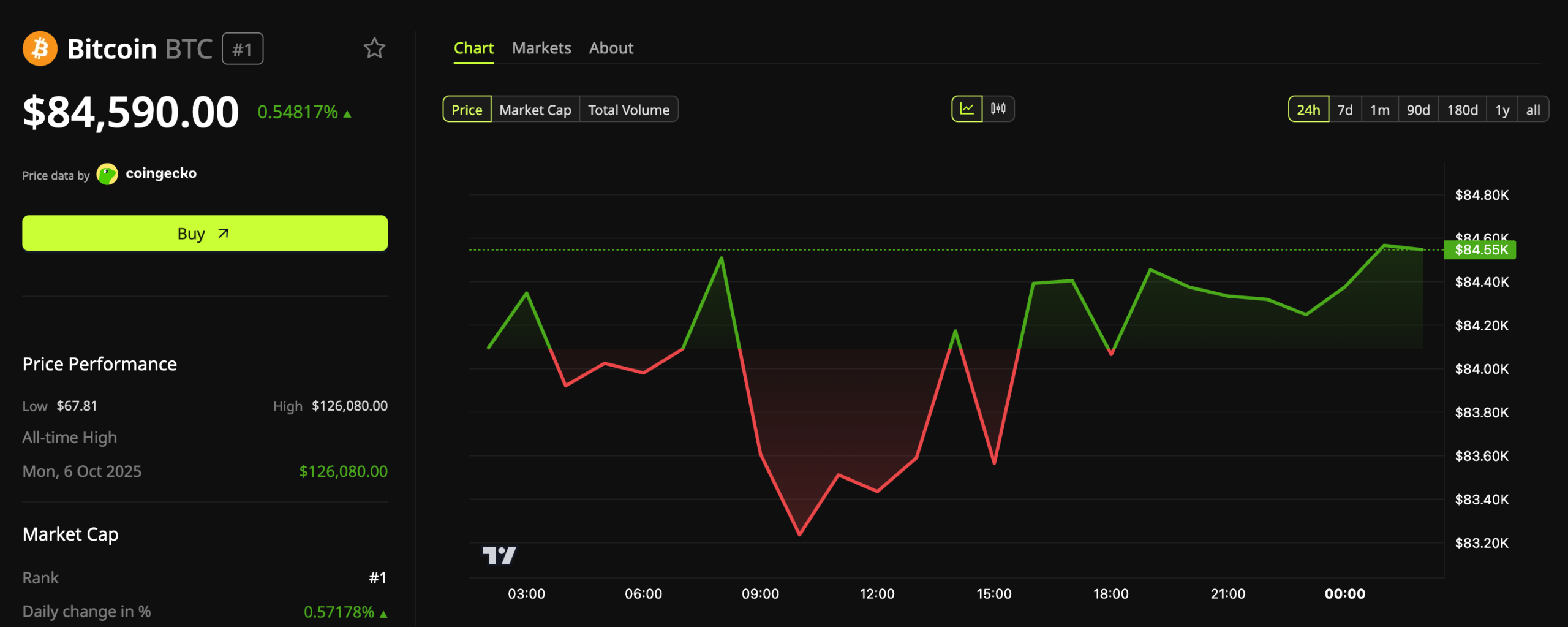
By Friday, BTC traded at $84,590, posting a modest gain over the past 24 hours, BeInCrypto Markets data shows. Altcoins moved faster in the rebound. Solana (SOL) gained 2.2%, and XRP (XRP) added 3.4% over the same period.
This leaves an open question. Can crypto buyers keep absorbing pressure from a Treasury market paying more than 5%?
Subscribe to our YouTube channel to watch leaders and journalists provide expert insights
The post 30-Year Mortgage Rate Hits 7.45%. What Does It Mean for Crypto? appeared first on BeInCrypto.


Samourai Wallet co-founder Keonne Rodriguez faces another prison transfer after the drug treatment program at FCI McKean was deactivated, he said Wednesday.
Rodriguez said on X that McKean’s warden told program participants that Rodriguez and 70 others would be moved to facilities where treatment remains available. He entered the program because completing it could reduce his sentence by up to a year.
In a letter published by The Rage, Rodriguez called his earlier journey from FPC Morgantown to McKean the “absolute worst 30 days” of his life. He said his request to make the roughly four-hour trip himself was denied.
Rodriguez is serving a five-year sentence after pleading guilty to conspiring to operate an unlicensed money-transmitting business. The Justice Department said he and Samourai co-founder William Lonergan Hill transmitted more than $237 million in criminal proceeds through the service.
A four-hour drive became 30 days in transit
Rodriguez said inmates leaving Morgantown were placed in ankle shackles and handcuffs attached to waist chains before being taken by bus to an airport and flown to the Federal Transfer Center in Oklahoma City.
Related: Samourai Wallet co-founder spends Christmas Eve recounting first day in prison
At the facility, Rodriguez said he was held with prisoners from different security classifications and spent most of his time locked in a cell. At one point, he wrote that he wondered whether “all the circles of hell” were contained within the federal transfer facility.
Rodriguez said he was eventually assigned a cell with an inmate serving a murder sentence and was given only part of a foam mattress, leaving part of his body resting on a metal bunk overnight.
Developer protections remain uncertain after CLARITY setback
The case unfolded alongside congressional efforts to protect developers who do not control users’ assets from being treated as financial intermediaries.
The latest Senate CLARITY Act draft retained Blockchain Regulatory Certainty Act provisions protecting non-controlling developers from certain money-transmission requirements under the Bank Secrecy Act.
The Senate failed to advance the CLARITY Act on Sept. 15 after a procedural vote fell short of the 60 votes needed to move the legislation forward.
Magazine: Winners and losers of the SEC’s new tokenized stocks rules

Magic Eden has faced reports of a possible contract exploit after unusual transactions showed thousands of NFTs being sold for 0 ETH, although one account involved in the activity has claimed the transfers are part of a whitehat operation.
Summary
- Magic Eden faces reports of a possible contract exploit after thousands of NFTs were reportedly sold for 0 ETH.
- NFT trader Cirrus warned users to revoke approvals after spotting the unusual activity, but said it could potentially involve a whitehat.
- Pseudonymous user Quit later claimed the transfers were a whitehat operation and said assets held at the identified wallet would be returned.
- Magic Eden has not yet confirmed an exploit or disclosed how many NFTs or wallets may have been affected.
NFT trader Cirrus first flagged the activity on Sept. 25, saying NFTs were showing sales originating from Magic Eden and that the marketplace’s contract may have been exploited.
Cirrus later warned users who had previously interacted with Magic Eden to remove their approvals after observing someone selling thousands of NFTs to themselves for 0 ETH. The trader noted at the time that the activity could potentially be linked to a whitehat.
Magic Eden had not released an official statement confirming an exploit at the time of writing, leaving the nature and scale of the incident unclear.
Possible whitehat says NFTs are safe
Shortly after the warning, pseudonymous X user Quit claimed the activity was a whitehat operation.
Quit said assets held at 0x71cf3f5724bD2B72Ef6464992aCd26216DE7fe33 were safe and would be returned once they were no longer considered at risk.
No confirmation from Magic Eden has established that the address belongs to an authorized whitehat or that the transactions were carried out as part of a coordinated recovery effort.
Details about the vulnerability that may have allowed the transactions, how many wallets were affected and the total value of NFTs moved have not yet been disclosed.
Magic Eden had ended EVM marketplace support
The unusual Ethereum NFT activity comes months after Magic Eden changed its marketplace operations.
Crypto.news previously reported that Magic Eden ended support for its Bitcoin and EVM based NFT marketplaces earlier this year while retaining its Solana marketplace.
Magic Eden’s own support documentation states that EVM marketplace support ended on March 9. The company said listings, bids and offers on its EVM marketplace were offchain and would stop being visible or actionable after the shutdown.
The platform continues to support its Solana marketplace, while its current products include Packs, which can contain NFTs from Ethereum collections. Magic Eden says NFTs revealed through Packs can be traded on the marketplace.
Magic Eden has yet to say whether the activity reported on Sept. 25 affected any of those services or involved contracts associated with its discontinued EVM marketplace.
(This is a developing story.)

The US 10-year Treasury yield has reached 5.2% during trading, raising questions about whether crypto can hold its recent gains while another Federal Reserve rate hike remains possible and a major US digital asset bill is stalled.
Summary
- The 10-year Treasury yield reached 5.2% during trading on Sept. 24 as oil prices rose and Fed officials kept another rate hike in view.
- Bitcoin traded near $84,000 after retreating from $87,000, while recent ETF inflows showed that demand had continued despite higher yields.
- The Senate has yet to advance the CLARITY Act, leaving crypto firms waiting for legislation as the SEC and CFTC pursue separate rules.
The US Treasury recorded a 10-year yield of 5.18% on Sept. 24, up from 5.11% a day earlier. The 30-year yield closed at 5.47%, its highest level since 2004. The 10-year yield reached 5.20% during the session before ending below that level.
Bitcoin traded around $84,000 after retreating from the $87,000 area earlier in the week. The pullback has been limited so far, but higher bond yields have arrived at a time when investors are watching whether recent buying through US spot Bitcoin funds will continue.
Why are Treasury yields rising?
Oil prices climbed on Sept. 24 after a Houthi missile attack on Saudi Arabia renewed concerns about supply. Brent crude futures settled at $106.60 a barrel, up $3.52, while West Texas Intermediate crude finished at $94.61, up $2.45. Prices eased from their intraday highs following reports of US-Iran discussions about reopening the Strait of Hormuz.
Higher energy costs have kept inflation in focus for the Federal Reserve. Philadelphia Fed President Anna Paulson said on Sept. 24 that underlying inflation was running around 2.5% to 3%, above the central bank’s 2% target. Paulson supported last week’s quarter-point rate hike and said modest further tightening may be warranted if economic conditions develop as she expects.
New York Fed President John Williams described another hike before the end of the year as a reasonable expectation, though he said the decision would depend on incoming data. The Fed raised its benchmark rate to a range of 3.75% to 4.00% on Sept. 16, and its latest projections indicated that another increase could follow this year.
Recent economic figures have done little to settle the question. Initial claims for unemployment benefits fell to 197,000 in the week ended Sept. 19, according to the Labor Department. S&P Global’s preliminary US composite purchasing managers’ index rose from 56.0 in August to 58.4 in September, pointing to the fastest growth in business activity in more than five years.
The Census Bureau estimated that August new home sales rose 6.4% from July. Its stated margin of error was wider than the reported monthly change, so that estimate alone does not establish a firm rise in housing demand.
Can crypto hold up while bond yields climb?
A 10-year Treasury yield near 5.2% gives investors a higher return on US government debt at the same time that further Fed tightening remains under discussion. Bitcoin’s response has been mixed. It rallied after the Sept. 16 rate hike and moved above $82,000 this week, but later fell back from the $87,000 area.
As previously reported by crypto.news, wallets holding 100 to 1,000 BTC had accumulated 113,950 BTC between July 15 and Sept. 24. US spot Bitcoin exchange-traded funds recorded their fifth consecutive session of net inflows on Sept. 23. Both figures point to buying during the rally, though neither establishes how investors will respond if yields continue to rise.
Demand through the funds has varied considerably this month. Bitcoin ETFs ended the Sept. 14 to Sept. 18 week with roughly $6.1 million in net inflows despite taking in $433 million on its final trading day. The subsequent run of positive sessions accompanied Bitcoin’s move higher. HashKey Group senior researcher Tim Sun said short-term ETF flows often follow Bitcoin’s price instead of reliably predicting its next move.
Buying after the Fed decision came from several parts of the market, including spot investors, ETF buyers and traders closing short positions. The rally showed that last week’s rate increase did not prevent Bitcoin from gaining. Its retreat from $87,000 leaves the durability of that demand open to another test as Treasury yields rise.
US shares offered little indication of a broad selloff on Sept. 24. The S&P 500 slipped 0.02%, the Nasdaq Composite gained 0.01% and the Dow Jones Industrial Average fell 0.31%, despite the rise in borrowing costs.
Regulatory uncertainty remains another pressure point
Higher Treasury yields are testing demand for crypto just as the industry faces a longer wait for US market rules. The Senate failed to advance the Digital Asset Market Clarity Act on Sept. 15, with 49 senators voting for the procedural motion and 50 against. It needed 60 votes to proceed. The bill would define how the Securities and Exchange Commission and the Commodity Futures Trading Commission oversee digital asset markets.
The vote did not stop Bitcoin’s subsequent rally, but it left firms and investors without the legislation they had expected Congress to consider. Seven Senate Democrats reopened negotiations after the vote, though no new vote has been secured. Fireblocks US policy director Jessica Martinez said companies would continue developing products without the bill, while legislation would give them rules with more staying power than agency decisions.
Regulators have continued work as the market weighs the prospect of another Fed hike. The CFTC submitted proposed crypto market rules for White House review on Sept. 18, a step that precedes any commission vote or public comment period. The SEC has issued an exemption for certain tokenized securities activity. Neither action resolves the Senate bill, leaving the timing of a federal market structure law unsettled while crypto investors assess higher yields.
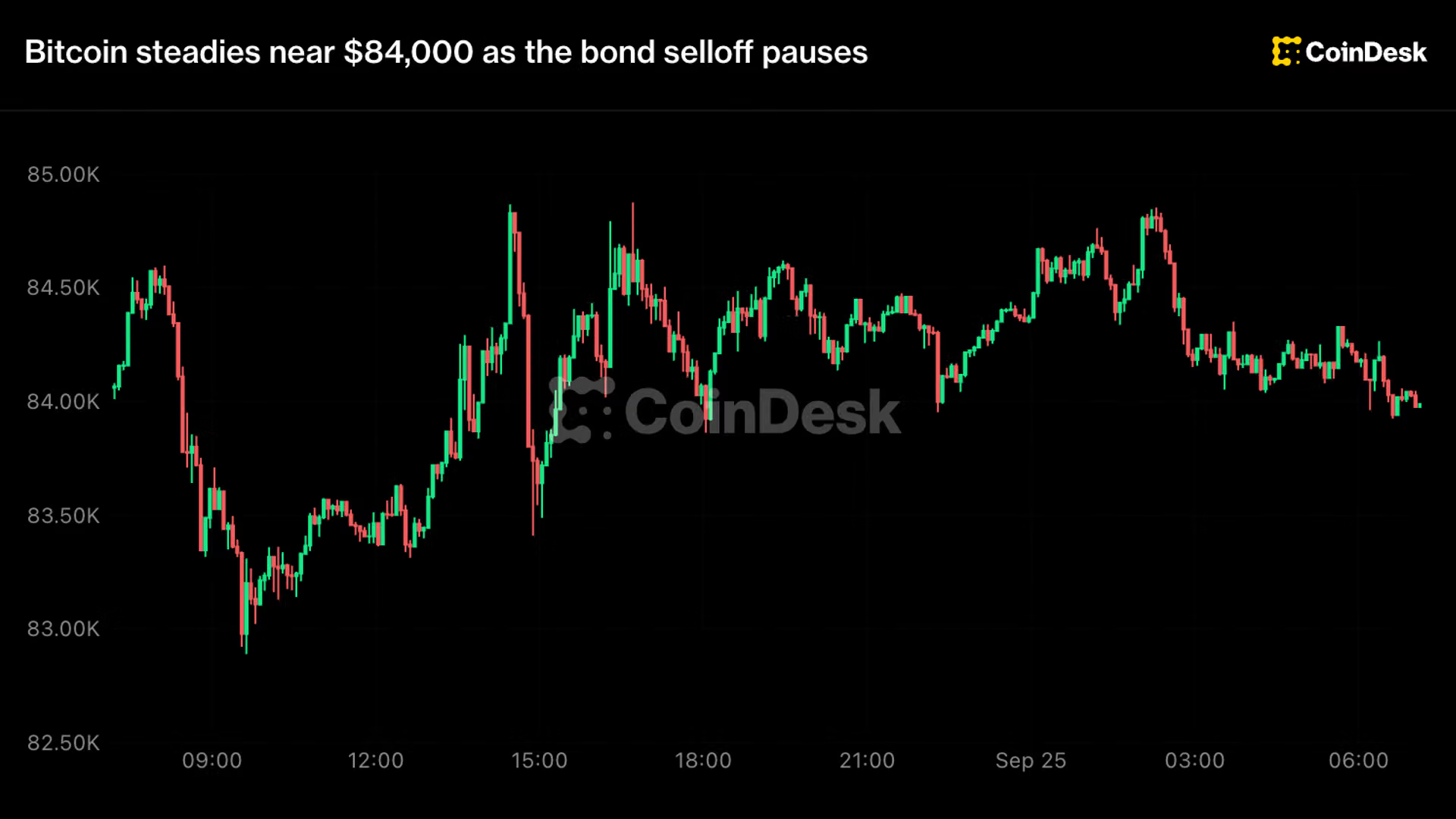
Bitcoin traded just above $84,000 on Friday, flat over 24 hours after falling below that level on Wednesday, CoinDesk data show. Most major tokens moved less than 2%. Smaller names did the running, with ONDO up 27% to about 54 cents and Quant up 39% to nearly $100.
Bonds found a floor in Asia. The 10-year Treasury yield slipped two basis points to 5.17% after jumping more than 20 basis points over the previous two sessions, and Brent fell 1% to about $105 a barrel on reports that Washington and Tehran are exploring a phased deal to reopen the Strait of Hormuz.
FxPro chief market analyst Alex Kuptsikevich reads bitcoin’s drop as a stall short of the target technical traders had projected for the rally that began in mid-August.
“As with the overall market capitalisation, the leading cryptocurrency encountered resistance near a previously significant support level. However, BTC failed to complete the Fibonacci extension pattern to 161.8% of the impulse that began in mid-August in a single move. Despite the pullback, the ongoing, unfinished nature of the uptrend suggests it may be a temporary pause on the way up,” he said in a note.
“It is worth remembering that in 2021, Bitcoin lost over 50% from its peak before reaching new highs. Similarly, today, a decline to $70K may be painful for short-term speculators, but it does not undermine the bullish outlook,” he added.
Bitcoin heads into Friday’s Deribit expiry below $85,000, the strike carrying one of the largest blocks of call options.
Bitcoin has held near $84,000 after twice failing to sustain moves above $87,000, while ETF inflows, whale accumulation and falling exchange balances continue beneath the price consolidation.
Summary
- Bitcoin trades near $84,400 after rejecting $87,000, while seven-day gains remain above ten percent currently.
- U.S. spot Bitcoin ETFs drew $191 million September 24, extending net inflows to six sessions.
- Large entities accumulated 30,269 BTC over 96 hours as Bitcoin corrected from highs, Martinez says.
- CryptoQuant data show Binance recorded 13,800 BTC net outflows in one day, largest since 2023.
- BBP remains positive near 4,790, while neutral CMF shows no clear buying-flow confirmation yet.
CoinGecko shows Bitcoin near $84,403 at the latest check, with a 24-hour range between $82,941 and $84,843. BTC has gained roughly 10.3% over seven days, keeping most of its rebound from last week’s low near $75,000.
The current pause follows a sharp reversal from September 16, when the Federal Reserve raised its target rate by 25 basis points to 3.75%–4.00%. One day earlier, Senate cloture on the CLARITY Act failed 49–50, short of the 60 votes needed to advance the bill.
BTC briefly traded close to $75,000 around those events before recovering above $80,000 and reaching $87,392 on September 21. The price has since retreated toward $84,000, leaving traders to assess whether demand behind the rebound remains strong enough for another attempt higher.
Why is Bitcoin price holding near $84K?
Bitcoin’s latest rejection came from the 86,000–87,000 zone, which has now stopped the price more than once. Crypto.news previously identified the $86,700 Bitcoin resistance and $82,000 support setup after the asset returned from its eight-month high.
Rekt Capital said BTC needs to stay above roughly $82,000, or successfully retest the level during another correction, to avoid falling back into its former 60,000–80,000 trading range. Bitfinex separately identified 85,000–86,500 as a dense buyer cost area after the latest rally.
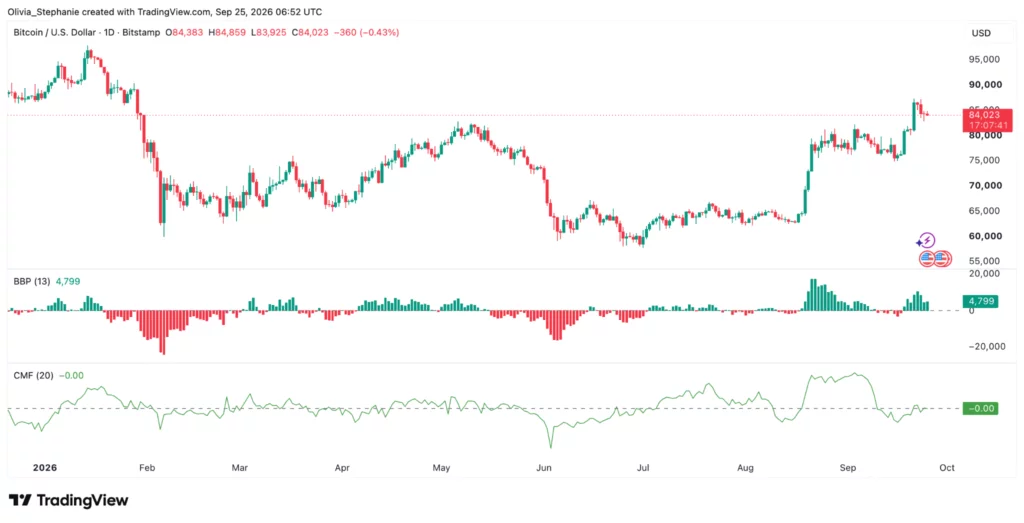
The chart’s Bull Bear Power reading remains near +4,790. A positive BBP figure means bulls still exert more pressure than bears, though the latest histogram bars have fallen from their recent peak. Momentum therefore remains positive but weaker than during the surge through $82,000.
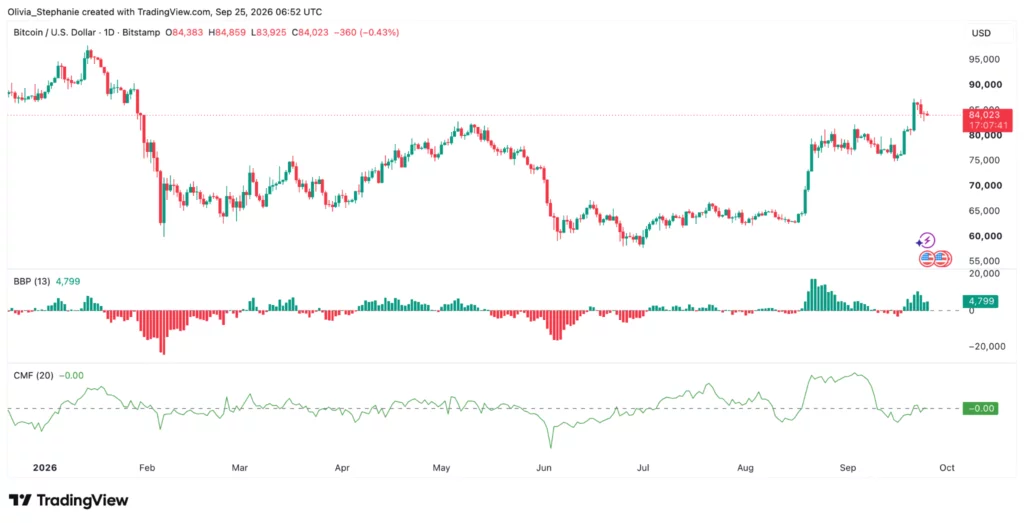
Chaikin Money Flow gives a less aggressive reading. CMF sits around 0.00 after recovering from negative territory, leaving buying and selling pressure close to balanced. A sustained move above zero would provide stronger volume-based evidence of accumulation, while another move below zero would show capital flow weakening as BTC tests support.
The combination leaves price momentum stronger than money flow. BBP continues to favor buyers, but CMF has not confirmed persistent buying pressure behind the move toward $87,000.
ETF inflows continue even as BTC consolidates
U.S. spot Bitcoin ETFs recorded another $191 million in net inflows on September 24, extending their positive streak to six trading sessions, according to SoSoValue data. BlackRock’s IBIT led the session with approximately $163 million, while Fidelity’s FBTC received $12.86 million.
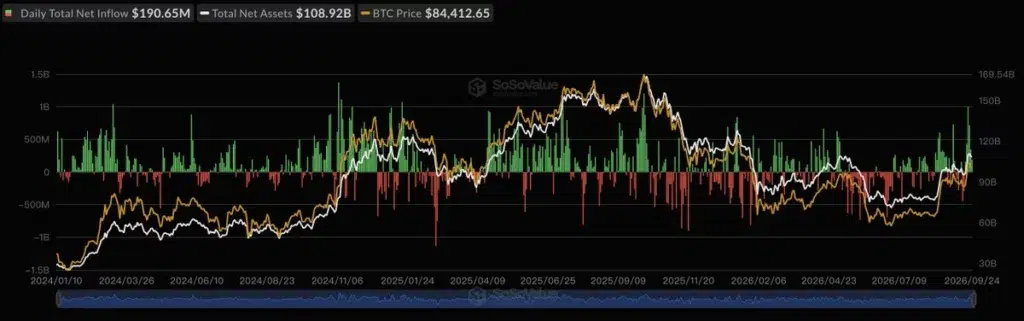
The latest figure follows much larger subscriptions earlier in the week. Funds received approximately $999 million on September 21, $714.7 million on September 22 and $346.98 million on September 23.
ETF flows had moved in the opposite direction around the Fed meeting. U.S. funds lost approximately $746.3 million across September 15 and 16 before demand returned, according to crypto.news’ analysis of who bought Bitcoin after the Fed rate hike.
The September 24 inflow brings the current streak to six sessions even though BTC has pulled back from $87,000. SoSoValue data reported through current coverage put cumulative U.S. spot Bitcoin ETF inflows near $57.41 billion, with net assets around $108.9 billion.
Are Bitcoin whales buying the pullback?
Large-holder activity has stayed active during the retreat. Crypto analyst Ali Martinez reported that large entities accumulated approximately 30,269 BTC during a 96-hour period, worth roughly $2.57 billion at the prices used in his calculation.
His estimate covers a period when Bitcoin fell around 5.24%, from approximately $87,400 to $82,800. The accumulation figure comes from on-chain wallet analysis and does not establish the identities of the entities buying the coins.
A separate Santiment dataset showed sustained accumulation before the latest correction. Wallets holding 100–1,000 BTC added 113,950 BTC between July 15 and September 23, increasing their combined holdings to roughly 5.24 million BTC.
Wallet cohorts do not map directly to individual investors. One institution may control several addresses, while exchanges, custodians and funds can consolidate or separate holdings. The figures document changes in wallet balances without proving who ultimately owns each position.
Binance outflows add another signal below $87K
Exchange balances have moved in the same direction as large-wallet accumulation. CryptoQuant contributor Darkfost reported more than 13,800 BTC in net withdrawals from Binance during a single day, the exchange’s biggest daily net outflow since 2023.
Recent Binance netflows have averaged around negative 2,000 BTC per week, while the exchange’s Bitcoin holdings fell from approximately 705,000 BTC to 685,000 BTC within four days. Darkfost interpreted the withdrawals as accumulation because coins leaving an exchange may be moved into personal or institutional custody.
Exchange withdrawals do not prove that holders will keep their BTC or that prices must rise. Coins can leave an exchange for custody transfers, collateral use, over-the-counter transactions or other purposes. Darkfost’s interpretation remains an analyst assessment of the flow data.
CryptoQuant contributor Amr Taha reported a similar pattern across several venues from September 22 through September 24. His figures put combined negative netflows from Binance, Coinbase, Kraken and Bitfinex at roughly $2.52 billion over the three-day period.
The reported flows included approximately $1.57 billion in combined withdrawals on September 22, $438 million the following day and $511 million on September 24. The withdrawals continued while Bitcoin slipped from roughly $87,400 toward $84,000.
Is a Bitcoin breakout coming before October?
The first technical hurdle remains the same area that rejected BTC twice this week. A recovery through roughly $86,700 would return Bitcoin to the upper end of its recent range, while $87,392 remains the latest eight-month high. Crypto.news’ Bitcoin ETF and $86,000 breakout analysis previously identified returning fund demand and short covering as contributors to the rally.
October seasonality provides another data point, though historical returns cannot establish the next move. CoinGlass data tracks Bitcoin’s monthly performance, while historical records show October finished higher in 10 of the 13 years from 2013 through 2025.
Ali Martinez has cited the same 10-of-13 record while describing the approaching month as a possible “Uptober.” The pattern remains backward-looking: Bitcoin broke the streak in October 2025, when the asset finished the month around 3.9% lower.
The Federal Reserve’s next scheduled policy meeting is October 27–28. Its September statement said inflation remained elevated when officials raised the federal funds target range to 3.75%–4.00%.
Disclosure: This article does not represent investment advice. The content and materials featured on this page are for educational purposes only.
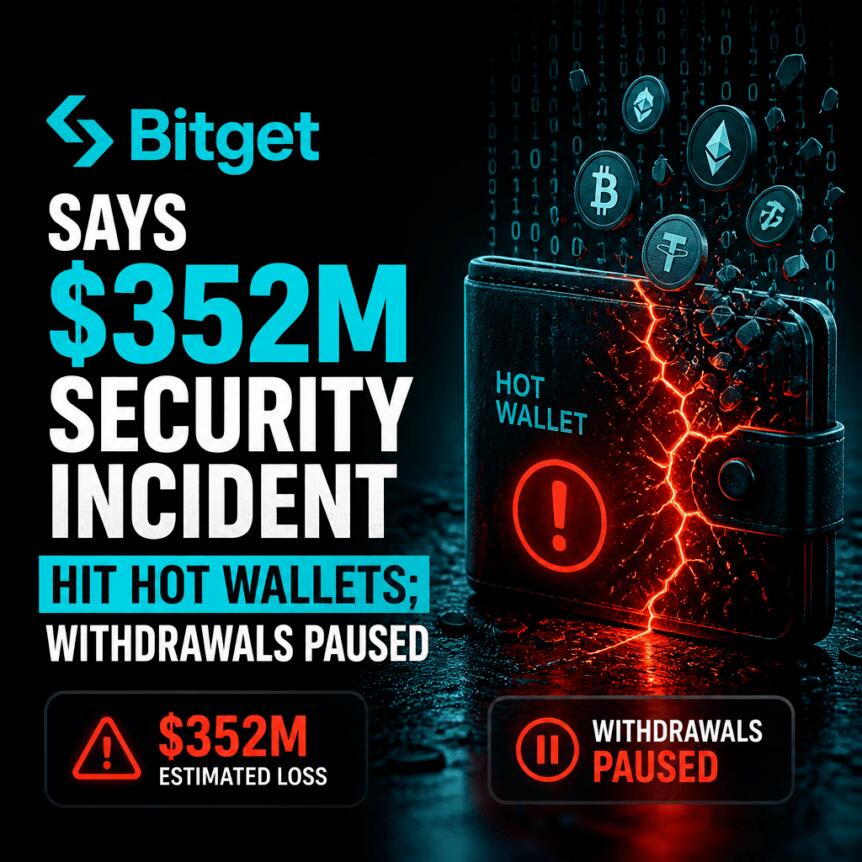
Crypto exchange Bitget has confirmed that it detected unauthorized transfers tied to a security breach and has temporarily suspended withdrawals while it investigates. The exchange said the incident impacted assets totaling about $351.6 million, affecting a limited set of hot-wallet holdings.
Bitget reported that its systems identified the suspicious activity at 18:31 UTC on Thursday, triggering emergency response measures. In an effort to contain the damage, the company said the breach was limited to certain hot and warm wallet layers, while cold wallets remained secure.
Key takeaways
- Bitget says unauthorized transfers impacted approximately $351.6 million and were traced to a limited number of hot wallets.
- The exchange temporarily suspended withdrawals and is conducting a security review after detecting activity at 18:31 UTC.
- CEO Gracy Chen said affected funds were primarily concentrated on Ethereum, with other networks including XRP Ledger, Avalanche, BNB Smart Chain, and Arbitrum also involved.
- Bitget stated that user balances remain accurate and that deposits and trading continue normally.
- Chen said affected assets are more than covered by Bitget’s User Protection Fund, which the exchange says holds more than $464 million.
Unauthorized transfers detected in hot-wallet layers
In a statement posted on X, Bitget said its security monitoring systems detected unauthorized transfers originating from a small number of hot wallets. The firm linked the activity to emergency response procedures initiated immediately after the alert, with the incident date and time cited as 18:31 UTC on Thursday.
Speaking directly in a live Q&A, CEO Gracy Chen emphasized that the breach was contained to a portion of the exchange’s hot and warm wallet infrastructure. She also said Bitget’s cold wallets were not compromised.
According to Chen, the stolen or affected assets included Ether (ETH), XRP (XRP), USDt (USDT), USDC (USDC), Avalanche (AVAX), BNB (BNB), and USDT0 (USDT0) on Arbitrum. She attributed the largest concentration of observed stolen funds to Ethereum.
Multiple chains involved, with Ethereum the main concentration
Chen named several networks as affected, including Ethereum, the XRP Ledger, Avalanche, BNB Smart Chain, and Arbitrum. While Bitget highlighted Ethereum as the primary venue for the observed stolen funds, the exchange also reported activity across other ecosystems, suggesting the attacker or attackers operated across multiple wallet and chain configurations rather than a single isolated target.
Bitget’s communications also acknowledged how early onchain reporting differed from later disclosures. Chen said early onchain monitoring captured a smaller amount than what Bitget later reported because the incident extended beyond the Ethereum activity reflected in those initial traces. That distinction matters for traders and users because estimates of breach scope can change as investigators widen the analysis window and broaden the search beyond the first chain clusters detected.
Withdrawals paused; deposits and trading continue
Bitget said it has temporarily suspended withdrawals as part of its security review. Chen indicated that she expected withdrawals to resume within hours or days, framing the pause as a precaution while the exchange verifies controls and assesses the extent of the unauthorized movement.
At the same time, Bitget told users that account balances remain accurate. The exchange also said deposits and trading are operating normally, a key operational detail for customers who might otherwise anticipate a full platform halt during a security incident.
The exchange said it has flagged addresses associated with the transfers and has reached out to law enforcement as well as onchain security firms, aligning with the typical process exchanges follow in response to suspected theft—identify suspect sources, trace downstream movements, and coordinate takedown or mitigation efforts where possible.
User Protection Fund to cover affected assets
Beyond containment and monitoring, Bitget addressed customer risk directly by referencing its User Protection Fund. Chen said the affected funds are more than covered by the fund, which the exchange stated currently holds more than $464 million.
Bitget also said it would provide hourly updates to reflect its ongoing investigation. In addition, the exchange committed to publishing a full incident report within 24 hours, including a root-cause analysis and corrective actions. For users and market participants, those deliverables are especially important: a clear explanation of what allowed unauthorized transfers to occur—such as weaknesses in wallet controls, key management, operational procedures, or monitoring—can determine whether the incident is isolated or indicative of a broader systemic risk.
As the investigation progresses, readers should watch for whether Bitget’s promised incident report supports its claim that only hot and warm wallet layers were impacted, and whether the exchange’s address flagging results in measurable mitigation on-chain. The next few updates will likely clarify the exact mechanism of compromise and confirm when withdrawals resume.
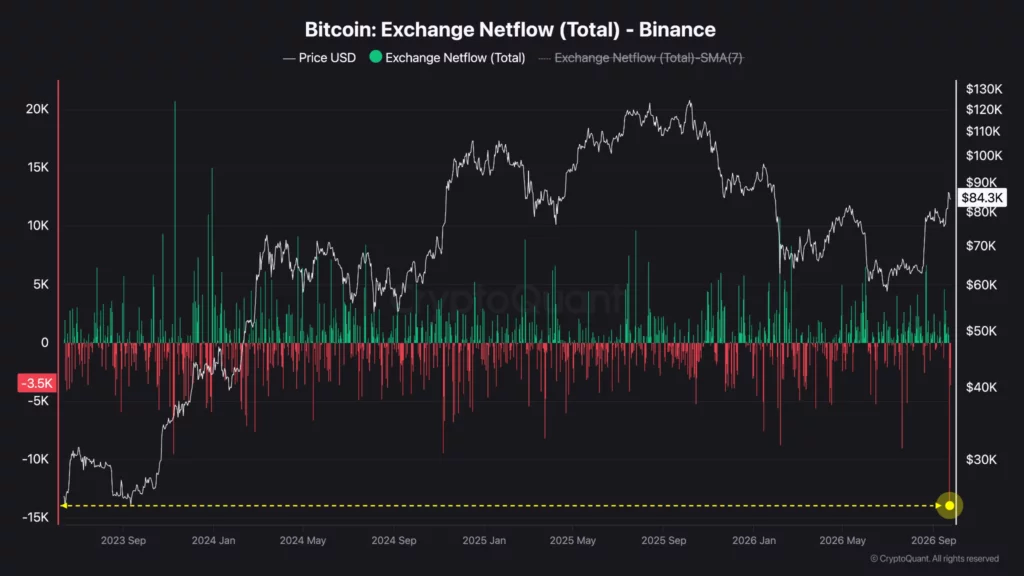
Bitcoin has seen its largest single day net outflow from Binance since 2023, with more than 13,800 BTC leaving the exchange as the cryptocurrency holds above $84,000 following its latest rally.
Summary
- Binance recorded more than 13,800 BTC in daily net outflows, its largest such reading since 2023.
- The exchange’s Bitcoin reserves fell by roughly 20,000 BTC over four days as BTC held above $84,000.
- Withdrawals reduce the BTC immediately available on Binance, though netflow data cannot show why holders moved their coins.
CryptoQuant analyst Darkfrost said on Sept. 25 that withdrawals have dominated recent activity on Binance, which holds around 30% of the Bitcoin available across exchanges accessible to different types of investors.
The seven day average netflow has fallen to roughly negative 2,000 BTC, while Binance recorded more than 13,800 BTC in net withdrawals during the latest daily reading. The analyst described it as the exchange’s largest net outflow day in three years.
Binance’s Bitcoin reserves fell from around 705,000 BTC to 685,000 BTC over four days, removing roughly 20,000 BTC from the exchange during that period.
CryptoQuant’s chart showed the latest outflow reaching levels last seen in 2023. Bitcoin was trading near $84,300 when the data was recorded, having climbed roughly 45% from its July levels.
Binance Bitcoin outflows follow BTC break above $82,000
Bitcoin’s latest move has taken it through a price area that had previously capped its recovery.
Darkfrost said BTC has closed above its May high near $82,000 for several consecutive days, which he viewed as an important change in the market structure. Bitcoin was trading around $84,000 on Sept. 25 after recently reaching the $87,000 area.
The move followed a period of accumulation among some larger holders. Crypto.news previously reported that wallets holding 100 to 1,000 BTC had accumulated 113,950 BTC between July 15 and Sept. 24, bringing their combined holdings to approximately 5.24 million BTC. U.S. spot Bitcoin exchange traded funds recorded $346.98 million in net inflows on Sept. 23, their fifth consecutive positive session.
Demand from ETFs has changed considerably from earlier in September. Bitcoin funds finished the Sept. 14 to Sept. 18 week with just $6.1 million in net inflows after a $433 million inflow on the final trading day, while Ether funds lost roughly $140.6 million over the same week.
Binance flows have moved in the opposite direction from conditions seen earlier in the year. In May, Darkfrost reported that the exchange’s weekly average Bitcoin inflows had risen from 378 BTC to 1,190 BTC in less than 10 days, while reserves climbed by 16,000 BTC over one month.
At the time, the rise in Binance inflows coincided with pressure on Bitcoin as more coins became available on the exchange. One daily inflow exceeded 3,600 BTC on May 18.
The latest data shows that direction has reversed, with withdrawals now outweighing deposits.
What do Binance’s record Bitcoin outflows mean for BTC?
Darkfrost said dominant outflows indicate that some investors are choosing to hold Bitcoin themselves instead of leaving their coins on an exchange. He associated the behavior with longer term holding and said a decline in exchange balances mechanically reduces potential selling pressure.
Bitcoin sent away from an exchange is not necessarily being accumulated, however. Transfers can involve private custody, movements between platforms, institutional custody arrangements or other wallet activity. Exchange netflows show where coins are moving but do not establish what an owner plans to do with them.
Binance’s own reserve data provides an example of how quickly balances can change. An Aug. 1 snapshot showed that Binance users held approximately 657,000 BTC, up 16,349 BTC from the previous monthly snapshot. User holdings had already risen by 25,838 BTC in May and another 7,715 BTC in June.
CryptoQuant’s latest exchange netflow data measures a different period and shows BTC moving away from Binance during the current rally.
A similar supply pattern developed earlier this year. By May 7, nearly 100,000 BTC had left Binance, OKX and Gemini reserves since February. Binance accounted for around 50,000 BTC of that decline, with its reserves falling from nearly 670,000 BTC on Feb. 21 to approximately 620,000 BTC.
The decline across major exchanges reduced the amount of Bitcoin readily available on trading venues, although whale transfers to exchanges continued at the time.
For the current move, Darkfrost’s interpretation depends on withdrawn coins remaining away from exchanges. Continued negative netflows would leave fewer BTC immediately available on Binance, while a return of large deposits would reverse part of the recent decline in exchange supply.
Bitcoin accumulation follows a 45% recovery from July
The timing of the latest withdrawals stands out because Bitcoin has continued to leave Binance while its price has moved higher.
According to Darkfrost Bitcoin has gained roughly 45% since its July levels, yet accumulation appears to have continued throughout the rally. He argued that some investors who had waited for another decline similar to previous bear markets may now be entering the market as the recovery continues.
He described the sudden Binance withdrawals as possible FOMO among latecomers who had expected Bitcoin to fall further.
Bitcoin exchange supply had already reached unusually low levels earlier in 2026. In May, total reserves across major exchanges fell to approximately 2.67 million BTC, a level comparable with August 2019. The decline in exchange reserves occurred while BTC traded near $73,000, although weak short term momentum and holder profitability meant lower reserves alone did not confirm a price bottom.
The latest Binance data comes with Bitcoin trading at a considerably higher level. BTC was near $84,000 on Sept. 25 after pulling back from the $87,000 area, with resistance recently forming around $86,700.
Darkfrost said similar exchange withdrawal events could appear again if Bitcoin continues its current progression, particularly if investors who remained on the sidelines begin moving into the market.

Hyperliquid Strategies has bought another 494,200 HYPE worth $45.8 million as the company continues to build its treasury while large holders move millions of dollars worth of the token toward potential sale.
Summary
- Hyperliquid Strategies bought another 494,200 HYPE worth $45.8 million, taking its purchases over the past month to $476 million.
- Five large addresses began unstaking nearly $90.4 million in HYPE, while Multicoin Capital moved another $12.15 million to Coinbase Prime.
- HYPE has fallen roughly 6.6% from its $97.99 all time high as large holder movements put potential supply in focus.
- Hyperliquid buybacks remain a source of demand, with 97% of protocol trading fees directed toward continuous HYPE purchases.
Lookonchain reported on Sept. 25 that wallet 0x6436, which it linked to Hyperliquid Strategies, made the latest purchases over a 16 hour period. The address has now accumulated 5.51 million HYPE worth roughly $476 million over the past month.
Purchases during the period averaged 183,574 HYPE, or $15.86 million, per day. Hyperliquid Strategies currently holds around 35.1 million HYPE valued at approximately $3.2 billion.
The latest purchases come less than a month after the Nasdaq listed company reported a much smaller treasury. As crypto.news previously reported, Hyperliquid Strategies held approximately 29.3 million HYPE worth $1.9 billion as of June 30 after raising $647 million in equity capital.
At the time, the company said it had spent $773.4 million buying approximately 16.5 million HYPE since December. Its latest holdings indicate that the treasury has continued to grow since the end of its fiscal year.
Hyperliquid Strategies keeps buying HYPE
The latest accumulation has taken place near some of the highest prices HYPE has recorded since its launch.
Separate monitoring from onchain analyst EmberCN showed that Hyperliquid Strategies acquired 1.444 million HYPE worth $135 million over the week ending Sept. 24. The tokens were purchased at an average price of approximately $93.70.
HYPE reached a record $97.99 on Sept. 23 before pulling back. The token traded near $91.50 at the time of writing on Sept. 25, leaving it roughly 6.6% below its record.
Trading activity remained high during the pullback. CoinGecko data showed around $1.24 billion in HYPE trading volume on Sept. 25, while its market capitalization stood near $20.5 billion.
The rally into the record followed a series of developments around Hyperliquid. HYPE reached a previous record of $92.56 on Sept. 18 after the platform introduced manual borrowing of USDC and USDT against HYPE and Bitcoin collateral.
Users can supply HYPE or Bitcoin and borrow stablecoins through the system. HYPE carries a 65% loan to value ratio, while Bitcoin has a 50% ratio.
Large HYPE holders have moved tokens toward potential sale
Buying from Hyperliquid Strategies has arrived alongside a series of transactions from other large HYPE holders that have put potential supply in focus.
Multicoin Capital transferred another 130,331 HYPE worth $12.15 million to Coinbase Prime on Sept. 24 after a one week pause, according to Lookonchain.
The latest transaction brought Multicoin’s transfers to Coinbase Prime since July 28 to approximately 4.23 million HYPE worth $285 million.
A transfer to Coinbase Prime does not confirm that the assets were sold. The institutional platform provides custody and execution services, meaning the available onchain data does not show what happened to the tokens after they arrived.
The transfers have nevertheless occurred as HYPE has traded close to record levels. Multicoin’s latest deposit came one day after the token reached $97.99, with HYPE subsequently falling below $92 during trading on Sept. 25.
Multicoin had substantial exposure to HYPE earlier this year. Three wallets associated with the investment firm had staked approximately 1.96 million HYPE on HyperCore in May, while their combined holdings stood near 2.83 million tokens at the time.
Similar movements involving other large holders have appeared before. In July, a whale moved previously unstaked HYPE to FalconX and Coinbase Prime as the token fell below $55.
Nearly $90 million in HYPE is being unstaked
Another batch of HYPE could become available to move at the start of October.
Five large addresses began unstaking a combined 983,600 HYPE worth approximately $90.44 million on Sept. 24, according to TradingBeats data cited by Lookonchain.
The largest address started unstaking 391,800 HYPE worth nearly $36 million. Another removed 209,600 HYPE worth $19.24 million from staking, while three other addresses initiated withdrawals totaling roughly 382,200 HYPE.
None of the transactions means the tokens have been sold.
Hyperliquid requires users to wait seven days after initiating the native unstaking process before HYPE can move from staking balances into spot balances. The tokens involved in the latest transactions therefore cannot currently be sold, transferred or restaked and are expected to become available around Oct. 1.
A similar situation developed in late August when a wallet attributed to HyperLabs requested the unstaking of approximately 433,000 HYPE worth $36.14 million. Previous HyperLabs withdrawals had been routed through Flowdesk, though the transaction itself did not establish whether the tokens would eventually be sold.
Large unlocks have not consistently resulted in equivalent exchange inflows either. Hyperliquid released approximately 9.92 million HYPE worth around $820 million on Sept. 6, but historical data from an earlier unlock showed that only about 1.75% of released tokens reached exchanges during the following 30 days.
Why is HYPE price pulling back from its all time high?
HYPE has lost ground since reaching an all time high of $97.99 earlier this week, with the token trading near $91.50 on Sept. 25. The move has left HYPE roughly 6.6% below its record level after sellers repeatedly emerged near $98.
Historical market data showed HYPE closing around $97.19 on Sept. 22 before falling to $93.98 on Sept. 23 and $92.08 on Sept. 24. The token continued to trade lower on Sept. 25 as several large holders moved or prepared to unlock substantial amounts of HYPE.
Multicoin Capital transferred 130,331 HYPE worth $12.15 million to Coinbase Prime on Sept. 24, while five other addresses began unstaking a combined 983,600 HYPE worth approximately $90.44 million. The unstaking process takes seven days, meaning those tokens are expected to become transferable around Oct. 1.
Neither development confirms that the HYPE will be sold. Coinbase Prime provides custody and execution services, while unstaking only makes tokens available for transfer once the waiting period ends. Still, the transactions have placed nearly $103 million worth of HYPE in positions where the tokens could potentially become available for sale.
Buying has continued on the other side of the market. Hyperliquid Strategies accumulated another 494,200 HYPE worth $45.8 million over 16 hours and has purchased 5.51 million tokens worth $476 million during the past month, according to Lookonchain.
Can HYPE buybacks offset potential selling pressure?
Protocol purchases provide another source of HYPE demand while large holders move or unstake tokens. Hyperliquid directs 97% of protocol trading fees toward continuous HYPE purchases through its Assistance Fund.
By May, the fund had spent more than $1.3 billion acquiring HYPE and held roughly 28.5 million tokens. The mechanism remained active in September, with OnchainLens data cited by Lookonchain showing that 32,770 HYPE worth approximately $2.65 million was bought and burned during a 24 hour period ending Sept. 12 at an average price of $81.01.
Cumulative burns had reached roughly 48.57 million HYPE at the time, equivalent to around 4.86% of the token’s maximum supply.
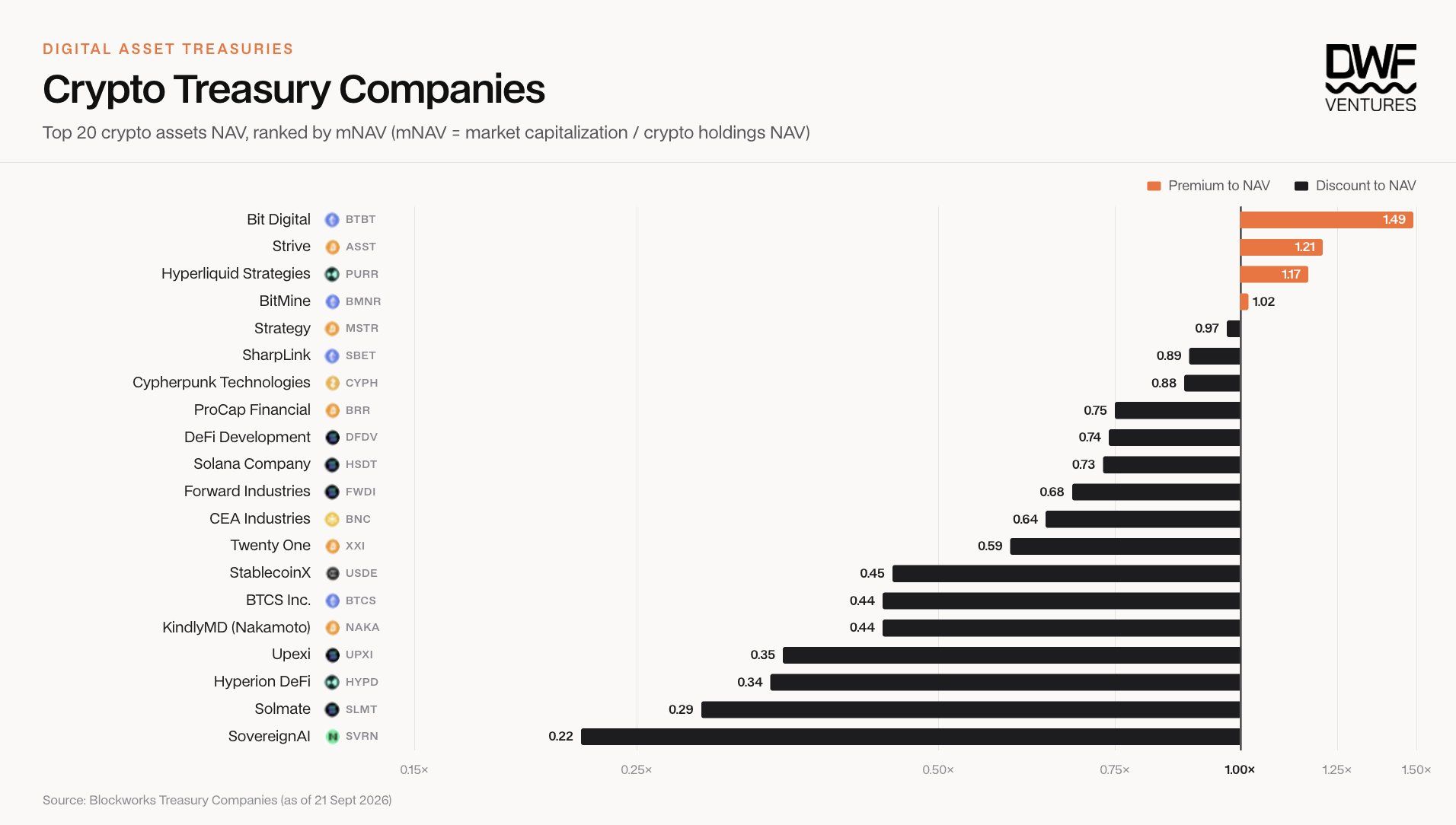
Only 4 of the top 20 crypto treasury stocks trade above the value of their holdings, DWF Ventures found.
The firm also found that most top treasuries have trailed the tokens they hold since inception. These digital asset treasuries (DATs) are listed companies built around buying and holding crypto.
Why Crypto Treasury Stocks Lost Their Shine
Market-value-to-net-asset-value (mNAV) compares a DAT’s market capitalization with the value of its crypto holdings. A reading below 1 means the shares trade at a discount to those holdings.
DWF’s September 24 report puts Bit Digital at the top with 1.49x, using data as of September 21. Strive, Hyperliquid Strategies and BitMine follow at 1.21x, 1.17x and 1.02x.
Strategy, the largest corporate Bitcoin (BTC) holder, sits at 0.97x on DWF’s count. SovereignAI ranks last at 0.22x. DWF noted that these mNAV figures exclude debt and preferred stock.
Follow us on X to get the latest news as it happens

The report blames these discounts on a shrinking access premium. Institutions once paid extra for DAT shares because regulated funds struggled to own crypto directly.
That door has since opened, as institutions can now use exchange-traded funds (ETFs), regulated private funds and custody services.
“However, as SEC proposed to quicken the listing process by over 75% for ETFs, the access premium has reduced significantly over the years. Institutional buyers have a lot more assets to choose from for ETFs, regulated private funds and custodian infrastructure allowing for direct deployment – which was not possible before,” the report read.
A Catch-Up Trade With a 3-Month Shelf Life
Since inception, DWF found investors were mostly better off holding the token. The few DATs that beat their assets did so by margins too thin for the risk.
Shorter windows look different, with shares outrunning tokens by 15% to 40% since July. Over that span, mNAV ratios rose from lows of 0.5x to 0.8x to between 0.7x and 1.0x.
Hyperliquid Strategies (PURR), which holds Hyperliquid (HYPE), gained 31% more than HYPE. Zcash (ZEC) treasury Cypherpunk Technologies (CYPH) beat its token by 38%. Tokens per share barely moved, so DWF read the rally as sentiment. Beyond 3 months, however, the token stayed the better bet.
Going forward, DWF expects boards and capital structures to increasingly shape how DATs are valued. It pointed to Strategy, which ranks debt holders first and carries steady preferred dividend obligations.
Those payments could force Bitcoin sales that dilute shareholders, the report warned. Once confidence cracks, DWF said, Strategy’s mNAV could enter a downward spiral.
Subscribe to our YouTube channel to watch leaders and journalists provide expert insights
The post Buy the Coin or the Crypto Treasury Stock? DWF Ventures Has a Verdict appeared first on BeInCrypto.

Tether has confirmed that it holds assets at offshore banking partner EQIBank, while saying the exposure represents less than 0.034% of group assets as the bank contests a major U.S. seizure.
Summary
- Tether says assets held at EQIBank represent less than 0.034% of the group’s total assets.
- U.S. prosecutors seek forfeiture of roughly $84.2 million seized from Capstone-linked accounts and cryptocurrency holdings.
- EQIBank says approximately $89 million seized by U.S. authorities represents around 80% of monetary holdings.
- A federal judge denied EQIBank’s property-return motion after prosecutors filed a separate civil forfeiture complaint.
- Tether’s June attestation reported $187.75 billion in assets and a $4.11 billion excess reserve buffer.
The Information reported that Dominica-licensed EQIBank had provided banking services to Tether, including processing wire transfers connected with purchases and redemptions of USDT. Tether confirmed the relationship in a written response and said it did not know about the conduct U.S. prosecutors have alleged against payment provider Capstone Ltd.
“Tether had no knowledge of the conduct by Capstone alleged by the Department of Justice,” a Tether spokesperson told The Information. The company said assets held at EQIBank were limited to “less than 0.034% of the assets of the group.” Tether did not disclose the exact dollar amount.
Tether says its EQIBank exposure remains limited
Applying Tether’s 0.034% ceiling to its latest published quarterly asset total provides only an upper-bound reference, not a disclosed deposit balance. Tether reported $187.75 billion in assets at June 30, meaning 0.034% of that figure equals roughly $63.8 million. Tether’s actual EQIBank exposure could be lower.
The June reserve report placed liabilities at around $183.64 billion and excess reserves at $4.11 billion. USDT issuance stood near $184.6 billion at quarter-end. Tether said its reserves remained concentrated in short-duration and liquid assets, including U.S. Treasury-related holdings and repurchase agreements.
As crypto.news previously reported in its coverage of Tether’s second-quarter reserve position, the company generated roughly $1.5 billion in second-quarter operating profit while its excess reserve balance ended June at $4.11 billion. The reported buffer had fallen from $8.23 billion at the end of the first quarter.
The EQIBank issue therefore concerns one banking counterparty inside Tether’s asset base. Tether has not published a breakdown showing its total deposits across offshore banks, and the 0.034% statement applies specifically to assets held at EQIBank. No verified disclosure reviewed for this report establishes that other Tether banking relationships face the same seizure or liquidity issue.
U.S. forfeiture case targets about $84.2 million
Court documents provide a more precise picture of the assets U.S. prosecutors are seeking to forfeit. A September 14 federal court order lists approximately $79.11 million seized from a Wells Fargo Securities account held in Capstone’s name.
The same filing lists another $1.86 million from a Wells Fargo Bank account and approximately $2.06 million from a JPMorgan Chase account. Prosecutors named another 1.12 million USDT from one cryptocurrency address and 54,578.45 USDT from a second address. Combined at their dollar peg, the listed property totals roughly $84.2 million.
EQIBank has described its claimed loss differently. The bank says U.S. authorities seized approximately $89 million belonging to it through Capstone and that the amount represents around 80% of its monetary holdings. EQIBank has warned in court filings that losing access to the funds could place it at risk of liquidation.
The difference between the bank’s roughly $89 million claim and the government’s approximately $84.2 million forfeiture property should not be treated as an inconsistency that has already been resolved. EQIBank’s property claim and the government’s current forfeiture complaint use different figures and arise from separate filings.
EQIBank failed to recover funds through its first motion
EQIBank began its federal challenge on June 29 by seeking the return of property under Rule 41(g) in the U.S. District Court for the Eastern District of California. The government later filed a separate civil forfeiture complaint on July 15 involving the Capstone accounts and cryptocurrency.
During a July 16 hearing, District Judge Dale A. Drozd denied EQIBank’s return-of-property motion for lack of equitable jurisdiction after the government filed the civil forfeiture proceeding. The docket does not show that the judge decided whether EQIBank ultimately owns the seized funds or whether prosecutors are entitled to keep them.
The litigation remains active. On September 16, Judge Drozd ordered the original EQIBank matter and the government’s forfeiture action assigned to the same district and magistrate judges because the cases are related. The court expressly stated that the reassignment did not consolidate them.
A separate September 14 order requires the government to publish notice of the forfeiture action for 30 consecutive days on the federal forfeiture website. Anyone asserting an interest in the property must follow the claim procedure set out under Supplemental Rule G, after which responses to the complaint can proceed.
EQIBank maintains that it is an innocent owner of the money. In court papers quoted by The Information, the bank said “EQIBank is not a rogue bank” and said the government had not identified it as a target of the investigation. U.S. prosecutors have not adopted EQIBank’s characterization, and the forfeiture litigation has not reached a final judgment.
Tether’s latest audit provides separate reserve context
Tether completed its first full independent financial statement audit in August, covering the year ended December 31, 2025. KPMG U.S. issued an unqualified opinion on the audited financial statements, according to Tether’s August 13 announcement.
Tether said the 2025 audited statements showed reserves exceeding liabilities tied to issued tokens by $6.814 billion at year-end. KPMG examined transactions, asset ownership, valuations, counterparties, internal systems and supporting documentation, while physically inspecting Tether’s gold holdings.
As crypto.news reported in its coverage of Tether’s first full KPMG audit, the audit covered the company’s full 2025 financial statements and differed from quarterly reserve attestations that measure assets and liabilities at a specific date.
The KPMG opinion predates the June 2026 quarter-end figures and does not determine how much money Tether currently holds at EQIBank. Tether’s latest public statement on the bank gives only the percentage ceiling, while the federal proceeding concerns funds held through Capstone accounts at Wells Fargo and JPMorgan Chase.
The next procedural steps sit in the Eastern District of California forfeiture case. The September publication order gives parties claiming an interest in the seized property up to 60 days after the first day of publication to file claims, followed by a 21-day period to answer the government’s complaint or seek relief under Rule 12.

Samourai Wallet Co-Founder Recounts 30-Day Prison Transfer

Meat Recall Issued For Over 160K Pounds With Fake USDA Labels

Financial Education | The 4 Rules Of Being Financially Literate




-

 Fashion7 days ago
Weekend Open Thread: Talbots – Corporette.com
-

 Crypto World2 days ago
Goldman Sachs and Deutsche Bank Agree: The S&P 500 Rally Isn't Over
-

 Tech4 days ago
Researchers escape OpenAI Codex sandbox to run commands on host
-

 Fashion20 hours ago
8 iPhone Accessories That Add Personality
-

 Crypto World4 days ago
Who Needs CLARITY Anyway? ARB Could See 70X Increase: Hodler’s Digest
-

 Crypto World6 days ago
Circle launches Arc Studio AI agent for building onchain apps
-
 NewsBeat6 days ago
Trump says US has reached an agreement to take permanent control of Greenland’s security
-

 Crypto World6 days ago
Trading Bitcoin on Robinhood? Why 2% Spread Has Traders Worried
-

 Crypto World6 days ago
Bitcoin price breaks channel as RSI climbs to 63
-

 Tech5 days ago
Trump suggests rebranding AI with a new name, says he’s also creating an AI Force
-

 Business4 days ago
Analog Devices (ADI) Bets $1.35 Billion on Chips that Let Machines Think for Themselves
-

 Tech4 days ago
Google’s $899 Googlebook is a bet that you’ll buy a new laptop for Gemini
-

 Crypto World4 days ago
Coinbase, Robinhood, Circle Seen as Tokenized-Stock Winners
-

 Crypto World2 days ago
This Bearish Netflix Stock Trade Can Cash In On Video Streaming Giant’s Woes
-
 Business2 days ago
Oil Price Today (September 23): Crude oil below $100 on hopes of US-Iran talks. What did Trump say?
-
 Crypto World3 days ago
Trump-Xi Polymarket Odds for Handshake Hit 50%
-

 Crypto World6 days ago
World Money launches in 150+ countries with Stripe
-

 Crypto World1 day ago
Crude Oil Prices Pressured by Diplomatic Hopes in the Middle East
-

 Crypto World7 days ago
Silver prices recover quickly, hitting weekly high today
-

 Entertainment2 days ago
These 17 Fall Amazon Dresses Seriously Look Like Anthropologie
You must be logged in to post a comment Login