

Crypto World
7RCC launches Bitcoin and carbon credit ETF on NYSE Arca



7RCC Global has launched trading of BTCK, an exchange-traded fund that allocates 80% to Bitcoin and 20% to regulated carbon credit futures, bringing one of the crypto industry’s earliest ESG-focused ETF concepts to the public market.
Summary
- 7RCC’s BTCK ETF has begun trading on NYSE Arca with an allocation of 80% Bitcoin and 20% regulated carbon credit futures.
- The fund provides exposure to Bitcoin alongside carbon markets linked to the EU ETS, California Cap and Trade, and RGGI programs.
- BTCK launches as ETF issuers continue expanding crypto investment products beyond traditional spot cryptocurrency exposure.
According to a press release shared with crypto.news, the 7RCC Spot Bitcoin and Carbon Credit Futures ETF began trading on NYSE Arca under the ticker BTCK, giving investors access to Bitcoin and carbon credit futures through a single listed product. The fund tracks the 7RCC Kaiko Bitcoin Carbon Credit Index and is structured to follow daily changes in the value of both asset classes, minus expenses.
Under the fund’s investment framework, approximately 80% of assets are allocated to Bitcoin, while the remaining 20% is invested in carbon credit futures tied to regulated emissions markets, including the European Union Emissions Trading System, California Cap-and-Trade, and the Regional Greenhouse Gas Initiative.
The launch arrives as competition among crypto ETF issuers continues to intensify. In recent weeks, firms including Grayscale, 21Shares and Bitwise have expanded offerings linked to digital assets such as Hyperliquid’s HYPE token, while issuers have increasingly sought differentiated strategies beyond traditional spot cryptocurrency exposure.
Bitcoin ETF adds carbon market exposure
Unlike conventional spot Bitcoin ETFs, BTCK combines exposure to the cryptocurrency market with regulated environmental commodities. According to 7RCC Global, Bitcoin adoption trends and monetary factors influence one side of the portfolio, while emissions policies and compliance demand drive the carbon credit allocation.
“We started 7RCC because we believed digital assets would become a permanent part of the global financial system and that investors would want them in familiar, regulated structures built for the long term,” said Rali Perduhova, co-founder and chief executive officer of 7RCC Global.
Perduhova said the product combines “two asset classes driven by distinct market forces” and provides investors with a transparent way to access exposures that have historically been difficult to hold within a single investment vehicle.
As previously reported by crypto.news, nearly two and a half years ago, 7RCC filed plans with the U.S. Securities and Exchange Commission for an ESG-oriented Bitcoin ETF built around the same 80/20 allocation model. At the time, industry observers, including ETF analyst Nate Geraci, viewed the proposal as one of the first attempts to merge spot Bitcoin exposure with environmental market investments.
Carbon credits gain institutional attention
Interest in carbon-related financial products has also expanded among major financial institutions. In July 2025, Bloomberg reported that JPMorgan’s blockchain division, Kinexys, partnered with S&P Global Commodity Insights, EcoRegistry and the International Carbon Registry to test the tokenization of carbon credits on blockchain infrastructure.
According to Bloomberg, the project explored ways to improve transparency and record-keeping in carbon markets by converting registry-held credits into blockchain-based tokens. JPMorgan said the effort formed part of its work in climate finance and carbon market infrastructure.
For BTCK, carbon credit exposure remains tied to regulated futures contracts rather than tokenized credits. Still, the fund enters a market where both digital assets and environmental commodities have attracted growing institutional interest.
According to 7RCC Global, investors can access BTCK through brokerage accounts that support listed ETFs without opening cryptocurrency exchange accounts or maintaining digital asset wallets.
BTCK is a series of Teucrium Commodity Trust, sponsored by Teucrium Trading LLC, with PINE Distributors LLC serving as marketing agent. Gemini Trust Company holds the fund’s Bitcoin, while U.S. Bank acts as cash custodian and administrator. The index is administered by Kaiko and calculated by Solactive AG.



Popular investor and entrepreneur Kyle Samani has accused Hyperliquid of misleading the public over its permissionless status. The Forward Industries chairman made the claim after Singapore’s financial regulator added the platform to its Investor Alert List.
The Monetary Authority of Singapore (MAS) placed Hyperliquid on its Investor Alert List (IAL) on June 26. The IAL flags entities that residents may mistakenly perceive as licensed or MAS-authorized. An IAL listing carries no ban or enforcement weight. It signals, instead, that local users may not receive MAS protections if something goes wrong on the platform.
Hyperliquid Defends Its Permissionless Infrastructure
Hyperliquid responded to the Singapore IAL listing, noting that it has never claimed MAS licensing or authorization. The platform maintained that users retain full self-custody and all transactions settle transparently on-chain. It added that nothing about the network has changed.
Bybit received the same warning earlier in June. The MAS has been tightening oversight of offshore exchanges throughout 2026. It ordered unlicensed platforms to seek regulatory approval or cease operations accessible to Singapore residents.
Samani’s Case Against Permissionlessness
Samani took direct aim at Hyperliquid’s core claims.
Hyperliquid is not permissionless. Stop gaslighting the public.
He argued that genuine permissionlessness requires at a minimum two conditions. The protocol must be open source. Validators must also operate globally, not concentrated in a single location.
He further raised governance concerns. Samani said the Hyperliquid Foundation can jail validators and remove them from the active set without justification.
Furthermore, the Foundation can push forced software upgrades on validators, he argued, stripping them of control over their own nodes.
Hyperliquid’s current setup lends some weight to those claims. The network runs only 24 active validators and plans a modest expansion to 27. Its node repository distributes a signed binary rather than full source code. The team says open-sourcing will follow once HyperCore reaches feature completion.
Samani’s Motivations Under Scrutiny
Critics have previously targeted Hyperliquid on similar decentralization grounds, and the platform has typically held its position. Samani’s Multicoin Capital exit in February 2026 adds personal context. His former firm held notable exposure to competing protocols, prompting some observers to question his motivations.
How Hyperliquid responds to pressure from regulators and industry critics may shape its standing with institutional users in the months ahead.
The post Hyperliquid Criticized Over Permissionless Claims After MAS Alert appeared first on BeInCrypto.
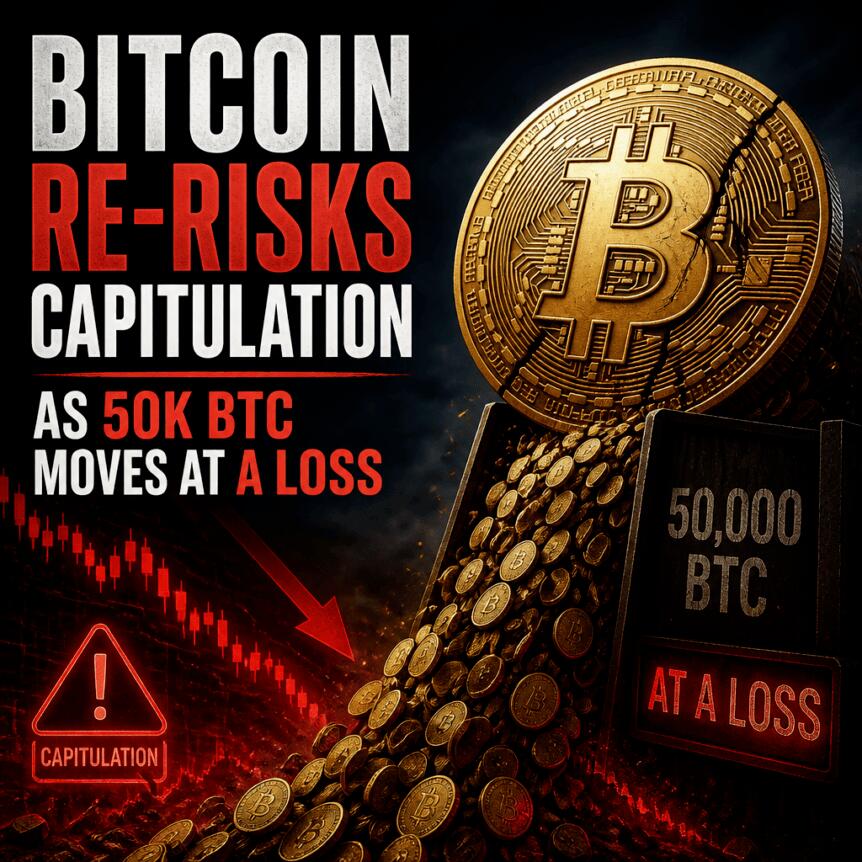
Bitcoin is flashing renewed signs of stress among short-term holders after a meaningful wave of coins moved to exchanges at losses over the past day. At the same time, the market value of short-term holder supply has dropped to $237.7 billion—its lowest point since October 2024—according to CryptoQuant.
While near-term sell pressure appears to be rising, the picture is not uniform. CryptoQuant also reported record inflows to long-term accumulation addresses, suggesting some longer-horizon investors are absorbing supply even as newer buyers reduce exposure.
Key takeaways
- CryptoQuant data shows Bitcoin’s short-term holder market capitalization fell to $237.7 billion on June 26, the lowest since Oct. 2, 2024.
- About 50,000 BTC moved to exchanges at a loss in the prior 24 hours, the largest such flow since June 4.
- Accumulation addresses saw record inflows of 181,000 BTC on Thursday, pointing to continued long-term buying.
- Multiple macro indicators and persistent institutional discount signals (Coinbase Premium Index below zero) have kept the risk-asset backdrop unfavorable.
- CryptoQuant flagged funding strains for Strategy (STRC) after its share-linked discount widened and its cash reserve declined in 2026.
Short-term holder capitulation signals return
CryptoQuant analyst Amr Taha said Bitcoin’s short-term holder (STH) market capitalization fell to $237.7 billion on June 26. That marks the lowest reading since Oct. 2, 2024, when the metric hovered near $239.7 billion.
The STH market cap tracks the market value of coins held by investors who bought Bitcoin within the past 155 days. When this measure drops below the cohort’s realized value, it typically implies that many of those relatively recent buyers are sitting on larger unrealized losses.
CryptoQuant notes a comparable pattern surfaced during the October 2024 correction, when the market later found an important bottom. However, the latest reading is framed as a stress signal rather than definitive confirmation that a low has already formed.
Exchange flows add a second, more immediate layer to the capitulation narrative. CryptoQuant reported that around 50,000 BTC from short-term holders moved to exchanges at a loss during the past 24 hours. Binance received about 9,500 BTC under similar conditions, the highest reading since June 3.
In practical terms, loss-to-exchange activity often reflects more aggressive sell decisions from near-term investors reacting to weaker prices—an asymmetry that can intensify downside pressure in the absence of fresh demand.
Long-term accumulation offsets the selling pressure
Despite the renewed loss-driven exchange activity, CryptoQuant highlighted a countervailing trend: Bitcoin inflows to accumulation addresses climbed to a record 181,000 BTC on Thursday.
CryptoQuant compared that figure with a prior peak of 94,700 BTC recorded in February 2022, emphasizing how unusual the current uptick is. Accumulation addresses typically receive coins with a history of low spending, and the reported surge suggests that longer-term investors are continuing to take supply off the table while short-term holders reduce exposure.
This divergence matters because it can help explain why sell-side pressure among newer holders does not automatically translate into a sustained, uninterrupted bear trend. Even if near-term holders keep capitulating, persistent absorption from long-term participants can limit how far the market extends downward.
Institutional demand remains constrained as rates stay tight
Several macro and institutional-demand indicators point to a cautious environment for Bitcoin buyers. Analyst Darkfost said institutional demand has continued to weaken, noting that the Coinbase Premium Index has remained below zero for 40 consecutive days since May 15.
The Coinbase Premium Index compares Bitcoin’s price on Coinbase Advanced with Binance. A persistent discount on Coinbase is generally interpreted as heavier selling from professional venues relative to more retail-linked pricing.
At the same time, US macro data contributed to expectations that monetary policy may not ease soon. The source cited headline PCE inflation at 4.1% versus an expectation of 4.0%, and core PCE at 3.4% versus 3.3%. GDP also came in above estimates at 2.1%, reinforcing a narrative of limited near-term relief for risk assets.
“This dynamic is a perfect reflection of the current macro backdrop, which remains deeply unfavorable for risk assets such as BTC.”
Asset manager Bitwise pointed to the Federal Reserve meeting referenced in its update as accelerating a hawkish shift. Bitwise said policymakers removed their easing bias and increased the median 2026 Fed funds projection to 3.8% from 3.4% in March.
Bitwise also linked tighter financial conditions to ongoing outflows from crypto exchange-traded products, including spot ETFs. The immediate takeaway for traders is that when funding conditions tighten and institutional inflows slow, dips can attract less immediate “buy-the-drop” behavior—even if long-term wallets continue to accumulate.
Strategy’s funding strain could matter for institutional flows
Attention has also shifted to Strategy, one of Bitcoin’s best-known institutional buyers. Bitwise estimated that Strategy accumulated 174,300 BTC in 2026, including about 96,000 BTC (55%) financed via STRC preferred equity issuances and another 77,500 BTC funded through MSTR common stock offerings.
CryptoQuant later argued that the purchasing capacity behind that activity may be weakening. In a report released this week, CryptoQuant said STRC traded at a record 17.5% discount to its $100 par value after falling to $82.5 last week, before slipping to around $73 in premarket trading on Friday.
CryptoQuant also said Strategy’s cash reserve has dropped 38% since the start of 2026 following the repurchase of a $1.5 billion convertible note. It further noted that annual dividend obligations tied to STRC have risen to $1.2 billion from $300 million, while dividend coverage has narrowed to about 14 months from as long as seven years.
Those constraints matter because Strategy’s continued buying has been a key element in the institutional-demand narrative around Bitcoin. If the company’s ability or willingness to finance additional acquisitions tightens, the market may face fewer incremental bids from one of its most prominent corporate participants—just as loss-to-exchange flows among short-term holders are rising.
For readers tracking the downside-to-absorption balance, the next developments to watch are whether short-term holder exchange inflows cool off after this day’s spike, and whether institutional demand signals improve as macro expectations evolve. At the same time, investors should monitor whether Strategy’s funding conditions stabilize—since that could influence how quickly large-scale institutional buying resumes if price volatility increases.


Nearly 50,000 BTC shifted to exchanges at a loss while short-term Bitcoin holders’ stress level reached 2-year highs. Is BTC headed toward new lows?

The crypto ecosystem rushed to help Venezuela after the devastating earthquakes of June 24. Humanitarian organizations, exchanges, and community campaigns activated channels to enable cryptocurrency donations.
The speed of the crypto industry is key to accelerating the arrival of funds to the most affected areas.
Crypto is Critical During Humanitarian Emergencies
A donation in cryptocurrencies allows funds to be sent directly between wallets without going through traditional banks. The transaction is completed in minutes, crosses borders without restrictions, and is especially useful in countries with financial systems under pressure or international sanctions.
The scale of the Venezuelan tragedy justifies the urgency. The 7.2 and 7.5 magnitude earthquakes shook the center-north of the country. La Guaira was among the hardest-hit areas, with collapsed apartments and rescuers digging by hand because heavy machinery was unavailable.
UN reports cited by the BBC speak of dramatic numbers. At least 920 dead, more than 3,300 injured, and over 50,000 people missing. These numbers could rise as families continue searching for loved ones among debris, in hospitals, and in improvised shelters throughout the region.
The prior context makes the response even harder. Venezuela has faced years of economic crisis, massive migration, and the deterioration of public services. Interruptions in electricity, water, communications, and transport complicate rescue efforts, while international aid is arriving from the Dominican Republic, Mexico, El Salvador, Spain, Switzerland, India, and Colombia.
Stablecoins are becoming the preferred vehicle. Assets like USDT and USDC reduce volatility and make it easier to pay locally for food, medicine, and rescue equipment.
This efficiency explains why so many initiatives choose crypto channels over traditional banking in emergency situations.
The Main Ways to Donate Crypto to Venezuelan Users
The world’s largest exchange by trading volume launched a corporate response. Binance announced a $3 million donation for affected users, offering 20 USDT coupons and temporarily eliminating P2P fees. The measure covers seven states impacted by the June 24 earthquakes.
El Dorado, the Latin American P2P exchange, also joined the effort, coordinating aid to the most affected regions and leveraging its reach among Venezuelan users who already regularly use stablecoins in bolivars.
In this regard, it enabled commission-free transfers to Venezuela for users outside the country.
The campaign led by Ana Ojeda Caracas has become one of the ecosystem’s most visible. The Venezuelan “Criptolawyer”, a well-known figure within the Latin American community, announced on X a partnership with the Decaf platform to channel international donations to families affected by the earthquakes.
Decaf Pay, the technical infrastructure behind the project, allows for contributions in USDC, card, and international bank transfer. The total amount raised is publicly visible, and the platform facilitates local payments in Venezuela through Airtm’s infrastructure to speed up conversion.
The BTC UCAB Academy activated an Emergency Earthquake Fund Venezuela 2026. This initiative from Universidad Católica Andrés Bello offers institutional custody and on-chain transparency.
Each donation and disbursement will be verifiable on the blockchain and communicated via official social media.
International organizations round out the map. Mercy Corps and World Vision accept crypto donations through The Giving Block, a platform specializing in digital asset donations. Both receive Bitcoin, Ethereum, USDC, and other popular cryptocurrencies for their global humanitarian response.
Community initiatives have also joined in. X user LIVRE is raising funds in Bitcoin, Ethereum, Solana, SUI, and USDC to buy gloves, gauze, alcohol, food, water, and rescue tools.
Caution and Verification When Donating in Times of Crisis
Cryptocurrencies offer speed, but also risks. Transactions are irreversible, addresses can be spoofed, and fake campaigns often proliferate after natural disasters. Emotional urgency can lead donors to skip basic verifications during an emergency.
Professional recommendations involve several filters:
- Verify official links, check original posts.
- Avoid copying addresses from unverified screenshots and prefer organizations with public traceability.
- Reports on the use of funds and a proven track record are the best indicators of reliability.
The diversity of initiatives also helps the donor. There are options for different profiles: community campaigns for direct impact in La Guaira, institutional funds with regulated custody, and global organizations with a presence in nearly one hundred countries. Each profile can choose the channel that best fits their needs.
This wave of solidarity confirms a broader trend. Cryptocurrencies are no longer just speculative assets but are becoming a global humanitarian response infrastructure.
Venezuela thus adds a new chapter to the record of disasters in which crypto has served as a bridge of solidarity.
The post Bitcoin and Stablecoins Become Lifelines After Venezuela Earthquakes appeared first on BeInCrypto.
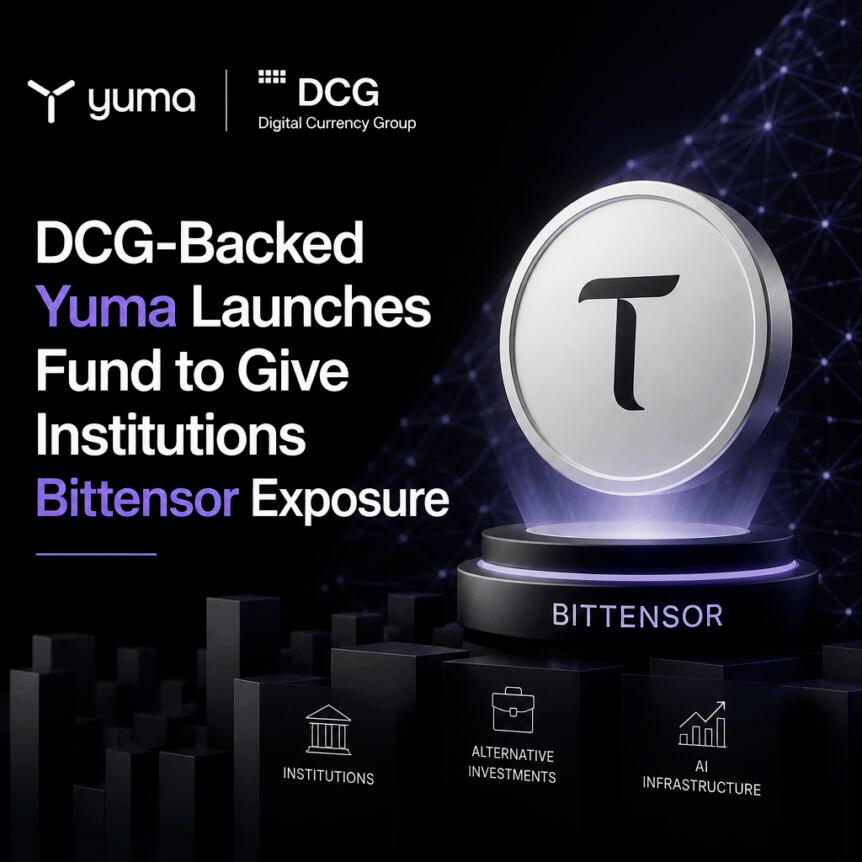
Yuma, an investment firm backed by Digital Currency Group, has launched the Yuma Total Market Fund to give institutional investors diversified exposure to the Bittensor decentralized AI ecosystem in a single vehicle. The fund is designed to track both Bittensor’s native TAO token and a basket of AI-focused subnets without requiring investors to hold or select individual subnet tokens.
In a Thursday announcement, Yuma said the fund began with seed capital from an undisclosed anchor investor. The launch comes as asset managers increasingly look for regulated products tied to decentralized AI networks, following broader institutional interest in blockchain-based alternatives to centralized AI providers.
Key takeaways
- Yuma’s fund targets diversified exposure to Bittensor by combining TAO holdings with a basket of AI subnet exposure under one investment strategy.
- The fund is positioned as a simpler entry point for investors who want Bittensor exposure without manually building a subnet portfolio.
- Bittensor’s subnet economy is often cited as very large, but network data from Taostats indicates the combined subnet value is closer to $300 million than higher estimates.
- Institutional allocation shifts already signal growing interest in TAO and the broader decentralized AI theme, including changes in Grayscale’s Decentralized AI Fund.
- Regulatory product momentum continues, with filings and conversions aimed at bringing TAO exposure into ETF wrappers.
A one-stop fund for Bittensor exposure
According to Yuma, the Yuma Total Market Fund provides exposure to TAO and a basket of AI-oriented subnets through a single investment vehicle. The stated intent is to reduce complexity for institutions that want exposure to the ecosystem’s “total market” rather than picking specific subnets themselves.
Yuma also framed the timing around expanding institutional demand for decentralized AI products. Bittensor, the network behind the ecosystem, supports AI infrastructure and application development using specialized subnets that span areas including compute, marketplaces, and identity.
How big is the subnet economy?
Yuma pointed to Bittensor’s scale, stating that its 128 subnets represent more than $900 million in combined value. However, network tracker Taostats shows a combined subnet value closer to $300 million.
For investors, the difference matters because it can affect how the “basket” inside the fund is sized, weighted, and interpreted relative to the overall ecosystem. Even if TAO remains the focal point for market attention, subnet value is relevant for understanding how diversified exposure may behave when network activity, demand for specific subnet services, or token economics shift.
Institutional interest in TAO is evolving
Yuma’s announcement arrives amid a broader institutional pivot toward decentralized AI exposure, particularly through TAO. Earlier this year, Grayscale increased TAO’s weighting in its Grayscale Decentralized AI Fund to 43% during the fund’s quarterly rebalance in April. Since then, the allocation has reportedly fallen to about 20%.
As Grayscale’s rebalancing progressed, Near Protocol’s NEAR moved into the lead position within the fund at roughly 44%. The shifting weights underscore that decentralized AI exposure inside institutional portfolios is not static—asset managers are adjusting allocations as constituent components change in relative performance, risk, and market interest.
TAO’s broader institutional visibility has also been reflected in its market capitalization being cited at nearly $2.4 billion, according to CoinMarketCap.
ETF momentum and product building
The fund launch also fits a larger wave of attempts to package TAO exposure into familiar exchange-traded wrappers. In April, Bitwise filed for a TAO Strategy ETF with the US Securities and Exchange Commission (SEC). Separately, Grayscale submitted an amended registration statement aimed at converting its existing Bittensor Trust into a spot TAO exchange-traded fund that—if approved—would list on NYSE Arca. The SEC filing is available through its public EDGAR archive.
While Yuma’s product is a fund and not necessarily an ETF, the parallel push highlights a shared strategy among managers: broaden access to TAO and decentralized AI networks in forms that institutions can more easily allocate to, benchmark, and trade compared with direct, token-by-token exposure.
Why decentralized AI is back in the spotlight
Interest in decentralized AI has also been reinforced by renewed attention to the risks of reliance on a single provider. The renewed debate picked up momentum after the US Commerce Department suspended public access to Anthropic’s Fable 5 and Mythos 5 models over national security and export control concerns.
Grayscale head of research Zach Pandl argued at the time that the restrictions highlighted the dangers of centralized control over AI systems, adding that he expected demand for decentralized AI such as Bittensor and its TAO token to rise as investors look for alternatives to centralized model providers. Earlier coverage also linked the shutdown to a broader case for decentralized approaches to AI infrastructure.
Since then, the situation appears to have eased: the Commerce Department restored access to Mythos 5 on Friday, and Axios reported Saturday that the Trump administration is expected to allow Anthropic to resume public access to Fable 5 as soon as next week.
Even with the access restoration, the episode illustrates the kind of operational and policy risk that can make “provider diversity” an investment theme—exactly the idea behind products that bundle exposure across decentralized ecosystems rather than hinging on a single company’s model availability.
Investors should watch how Yuma’s fund constructs its subnet basket over time and how quickly institutional allocations shift between TAO-centric exposure and broader subnet diversification. With multiple TAO ETF-related filings in motion and policy-driven headlines repeatedly reshaping the decentralized AI narrative, the next key signal will be how regulators and asset managers respond as demand for decentralized AI wrappers grows.
Digital asset infrastructure company BitGo is reducing its workforce by nearly 15% as it shifts its focus toward stablecoins, trading, security, settlement services, and AI-powered infrastructure.
BitGo co-founder and CEO Mike Belshe said the company made the decision because the financial services and crypto sectors have changed significantly, requiring the firm to become more focused and “deliberate” in how it operates.
Workforce Reduction
According to Belshe’s official tweet, the job cuts are intended to help BitGo concentrate its people and resources on areas considered most important for future growth and client needs. He described the move as a difficult decision and acknowledged the contributions of employees who helped build the company.
Belshe said all affected workers would be informed directly by their managers and human resources teams before the announcement became public. Addressing the remaining staff, Belshe urged employees to support one another and communicate closely as the company reorganizes.
The exec also stated that the layoffs are a one-time action, while adding that the company does not expect additional workforce reductions.
“To those of you who are leaving: thank you. You helped shape BitGo into what it is today, and the company will always be better because you were here. I wish you nothing but success ahead. To the team that remains: I know this is still hard. Be good to each other and overcommunicate as we reorganize. We have a clear, strong path forward, and this is a one-time action.”
AI and Market Slump
BitGo’s job cuts come as the crypto industry continues to see layoffs this year. Many firms have blamed weak market conditions and the growing use of artificial intelligence, which has improved efficiency and reduced the need for larger workforces. Coinbase cut roughly 14% of its workforce in May. Besides market conditions and cost discipline, CEO Brian Armstrong also pointed to AI tools helping teams become more efficient, making the company leaner.
Gemini also slashed about 30% of its workforce in March, in the same week as Crypto.com cut 12%.
The post BitGo Slashes Workforce as CEO Bets on AI, Stablecoin and Settlement Growth appeared first on CryptoPotato.
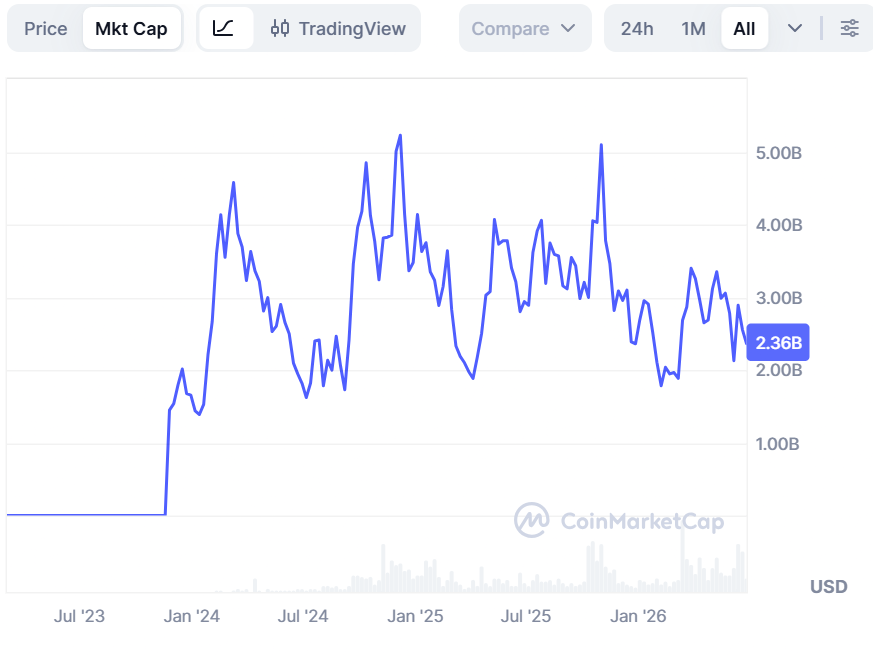
Yuma, a Digital Currency Group-backed investment company, has launched a fund that gives institutional investors diversified exposure to the Bittensor ecosystem, as asset managers expand investment products tied to decentralized AI.
According to a Thursday announcement, the Yuma Total Market Fund provides exposure to Bittensor’s native TAO token and a basket of AI-focused subnets through a single investment vehicle. The strategy is intended to simplify access to the broader Bittensor ecosystem without requiring investors to select individual subnet tokens.
The fund launched with seed capital from an undisclosed anchor investor.
Bittensor is a decentralized network that supports the development of AI infrastructure and applications through specialized subnets spanning areas such as compute, marketplaces and identity. According to Yuma, the network’s 128 subnets represent more than $900 million in combined value. However, data from network tracker Taostats shows a combined subnet value closer to $300 million.
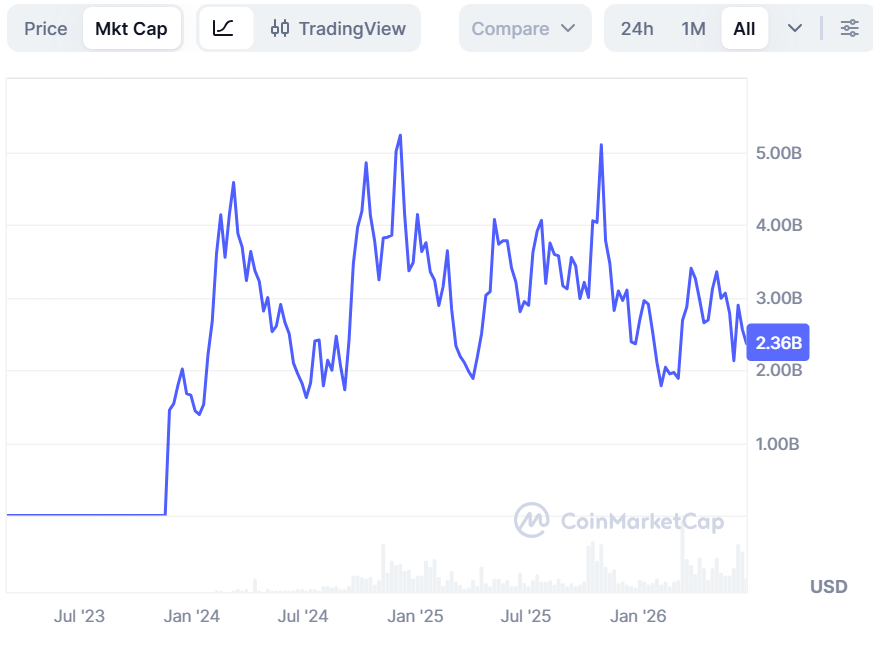
TAO, the native token of the Bittensor ecosystem, has a market capitalization of nearly $2.4 billion. Source: CoinMarketCap
Institutional interest in the Bittensor ecosystem has grown alongside the network’s expanding subnet economy. In April, Grayscale increased TAO’s weighting in its Grayscale Decentralized AI Fund to 43% during the fund’s quarterly rebalance. TAO’s allocation has since fallen to about 20%, with Near Protocol’s NEAR now comprising the fund’s largest holding at roughly 44%.
Asset managers are also seeking to broaden investor access to TAO. Bitwise filed for a TAO Strategy ETF with the US Securities and Exchange Commission (SEC) in April, while Grayscale submitted an amended registration statement to convert its existing Bittensor Trust into a spot TAO exchange-traded fund that would list on NYSE Arca if approved.

Grayscale Bittensor Trust (TAO) application with the SEC. Source: SEC
Related: Amazon warning triggered US crackdown on Anthropic AI models: Reports
Anthropic restrictions renew focus on decentralized AI
The case for decentralized AI, which distributes AI infrastructure and computing across blockchain-based networks rather than relying on a single provider, gained renewed attention after the US Commerce Department suspended public access to Anthropic’s Fable 5 and Mythos 5 models over national security and export control concerns.
At the time, Grayscale head of research Zach Pandl said the restrictions underscored the risks of relying on centralized AI providers. The government order limiting access to Anthropic’s Fable 5 and Mythos 5 “highlights the risks of centralized control of AI,” Pandl said. “We expect demand for decentralized AI, like Bittensor and its TAO token, to rise as investors seek alternatives.”
The restrictions appear to be easing. The Commerce Department restored access to Mythos 5 on Friday, and Axios reported Saturday that the Trump administration is expected to allow Anthropic to resume public access to Fable 5 as soon as next week.
Magazine: How AI just dramatically sped up the quantum risk for Bitcoin


The ongoing artificial intelligence stock frenzy has pulled in capital from across the market, from traditional metals, considered the safest assets, to crypto, considered the riskiest.
Gold dropped below $4,000 for the first time since November earlier this week, silver has lost more than half its value from its high, and bitcoin has slipped to nearly $58,000.
The three selloffs are not a coincidence. For much of the past two years, they have been, to a large degree, the same trade, and now the same forces are unwinding it.
That trade even has a name, the “debasement” trade. It is the bet that heavy government spending and rising national debt will slowly erode the value of paper money, which pushes investors toward scarce assets that no government can print more of.
Gold and silver are the oldest versions of that bet, while bitcoin, with a supply capped at 21 million coins, got marketed as the digital version. Through 2025, as the dollar looked vulnerable, money poured into all three, and they were treated as one basket.


Sony Interactive Entertainment is removing 551 purchased films from UK PlayStation Store accounts on September 1, 2026, citing content licensing agreements with StudioCanal.
The affected library spans decades of cinema, from Terminator 2: Judgment Day and Rambo: First Blood to Bridget Jones’ Diary, Pan’s Labyrinth, and Paddington. Customers who paid for those titles will lose access regardless of their purchase history.
When a Purchase is Not Ownership
Sony published a formal legal notice confirming the removal, attributing it to the expiration of its licensing agreement with StudioCanal. The notice offered no refunds or alternative compensation for affected buyers.
The situation exposes a structural reality most consumers overlook at checkout. A digital “purchase” on any platform-controlled storefront functions more like a temporary license than outright ownership.
Therefore, Sony and StudioCanal can modify or terminate that license, and the buyer absorbs the loss.
With 551 titles set for deletion, this is one of the largest single-event disappearances of purchased digital content in recent memory.
PlayStation Digital Ownership and the Gaming Parallel
The concern is not limited to films. When GTA 6 pre-orders opened this week, Rockstar confirmed that physical retail editions would include only a digital download code, with no disc.
For buyers who assumed a boxed copy meant a physical artifact they owned outright, that detail reinforced a growing unease. The GTA launch also sent shockwaves through crypto markets that same day, highlighting how far the digital ownership question now extends across gaming and finance.
Together, the two events make the same point. Across entertainment and gaming, consumers are paying for access, not ownership.
The Web3 Argument Gets Louder
Non-fungible tokens (NFTs) were built to address exactly this problem by creating on-chain, portable title deeds that no single platform can revoke. If StudioCanal had issued film rights as NFTs, Sony could not have overridden them.
Those tokens would remain in the buyer’s wallet, transferable and verifiable, independent of any licensing dispute between corporations.
That argument is gaining fresh credibility. Earlier this year, market observers noted a shift in the NFT sector away from speculation toward tangible utility, with digital ownership emerging as the strongest long-term use case.
Meanwhile, Worldcoin’s biometric identity push brought parallel questions about who controls proof-of-ownership in digital spaces into mainstream debate. Across the broader GameFi sector, 2026 has already seen renewed investor appetite for blockchain-backed digital economies.
The PlayStation film deletions may appear to be a routine licensing dispute on paper.
However, they crystallize a question that streaming, gaming, and digital media platforms have not resolved: when a platform changes its terms, what does a consumer actually own?
For blockchain advocates, Sony just provided the most mainstream illustration yet.
The post Sony Deletes 500+ Purchased Movies From PlayStation, Reigniting Blockchain Debate appeared first on BeInCrypto.
Jeremy Grantham, the GMO co-founder who called both the 2000 dot-com crash and the 2008 housing collapse, branded Bitcoin (BTC) “a useless, speculative mechanism” and predicted it would dwindle over the next few decades.
The veteran strategist built his critique around three failures he sees in crypto. Bitcoin pays no yield, holds no stable value, and fails as a usable currency in daily life, he argued.
Proof of Work, Proof of Nothing
Grantham singled out Bitcoin’s proof-of-work design for particular scorn. The energy burned to validate transactions, he argued, generates no economic benefit for society.
“Proof of unnecessary work shouldn’t be worth a bucket of warm spit, and it will not be.”
Bitcoin Falls Short as Money and Store of Value
Beyond the mining critique, he said Bitcoin does not work as a practical currency. Regular users do not accept it at the supermarket, and serious investors do not settle large transactions with it. Without a functioning transaction layer, the asset cannot claim monetary legitimacy, he added.
He also dismissed Bitcoin as a store of value. Unlike equities, it pays no dividend and generates no cash flow. In his view, that leaves speculators with nothing to anchor a fair price.
A Skeptic With a Record
Grantham’s warnings carry weight because of his track record. He flagged the dot-com bubble before 2000 and warned of the US housing collapse before 2008. His more recent AI bubble stock warning extended that thesis to US equities, where he now sees downside of up to 70%.
However, his timing is not always precise. His 2021 epic-bubble call on US stocks arrived early, as markets climbed before their 2022 correction.
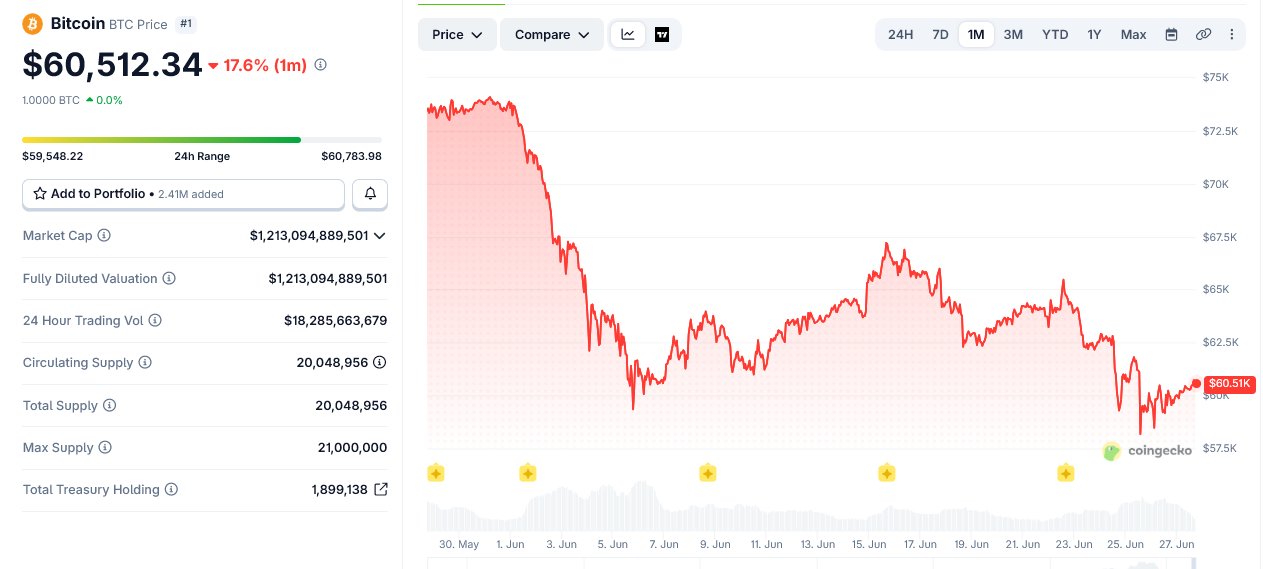
The Bitcoin remarks land as BTC trades near $60,500, down sharply from its late-2025 peak above $126,000. US spot Bitcoin ETF records outflows of $6.35 billion over 30 days through mid-June, reflecting cooling institutional demand.
Earlier, Coinbase CEO’s Bitcoin outlook has also flagged AI infrastructure costs as a variable reshaping crypto capital flows.

Grantham is not alone in his skepticism. Peter Schiff has made similar bearish arguments, contending that Bitcoin holds no intrinsic value.
Whether Bitcoin’s current price holds key support in Q3 2026 will test both camps. Grantham predicted the decline would come gradually, over years or even decades, not all at once.
The post Billionaire Grantham Uses Extreme Words to Describe Bitcoin appeared first on BeInCrypto.

North West Raises Alarm After Debuting Lip Piercings At Show

Why a development project linked to Donald Trump’s son-in-law has rocked Albania

Trump says he will nominate Lance Schroyer as ICE director


-

 Entertainment7 days ago
Renter of Home in Anne Heche Crash Denies Settlement With Son
-
 Sports4 days ago
Two goals and an assist by sheer aura: Cristiano Ronaldo just entered the World Cup chat
-

 Tech5 days ago
Microsoft accidentally kills epic Outlook email threads
-

 Fashion1 day ago
Weekend Open Thread: Staud – Corporette.com
-

 Business7 days ago
Soccer-U.S. defends Iran World Cup travel restrictions, says discussions ongoing
-

 Politics2 days ago
The House | Manchesterism won’t survive the painful trade-offs unless it gets citizens on board
-

 Politics2 days ago
Potential 2028er World Cup attendee leaderboard
-

 Business2 days ago
Asia stock markets slide as tech shares slump
-

 Tech2 days ago
A Look At A Gaggle Of Transputer Boards
-
Crypto World4 days ago
Bitcoin (BTC) Dips Below $62K, Ethereum (ETH) Plunges 6% Daily: Market Watch
-

 Crypto World4 days ago
Securitize Wraps Roubini's SEC-Registered ETF as Dubai VARA Digital Security
-
 Crypto World2 days ago
Dell (DELL) Shares Tumble Over 5% Following Analyst Downgrade to Hold
-
Business4 days ago
Entergy settles forward sale agreements, raises $672 million in cash proceeds
-

 Sports24 hours ago
FIH Pro League: India defeat Pakistan 7-1, register biggest win of campaign | Other Sports News
-

 Crypto World15 hours ago
Kraken's xStocks Opens Bending Spoons IPO Registration to EEA Retail
-

 Crypto World1 day ago
RTX holders must register wallets before token distribution begins
-
 Crypto World1 day ago
Hyperliquid Named on Singapore MAS Investor Alert Register
-

 Sports2 days ago
India vs Bangladesh LIVE Score, Women’s T20 World Cup: Bangladesh Opt To Bat; India Enter ‘Do-Or-Die’ Stage As Semi-Final Race Heats Up
-
 Tech6 days ago
Signal’s Meredith Whittaker says AI chatbots ‘are not your friends’ and calls Copilot agents a backdoor
-
Crypto World2 days ago
The DATA Foundation Launches to Tackle AI’s Multi-Billion Dollar Training Data Bottleneck
You must be logged in to post a comment Login