
Crypto World
A Deep Dive Into One Of The Most Significant Hacks In Recent Memory

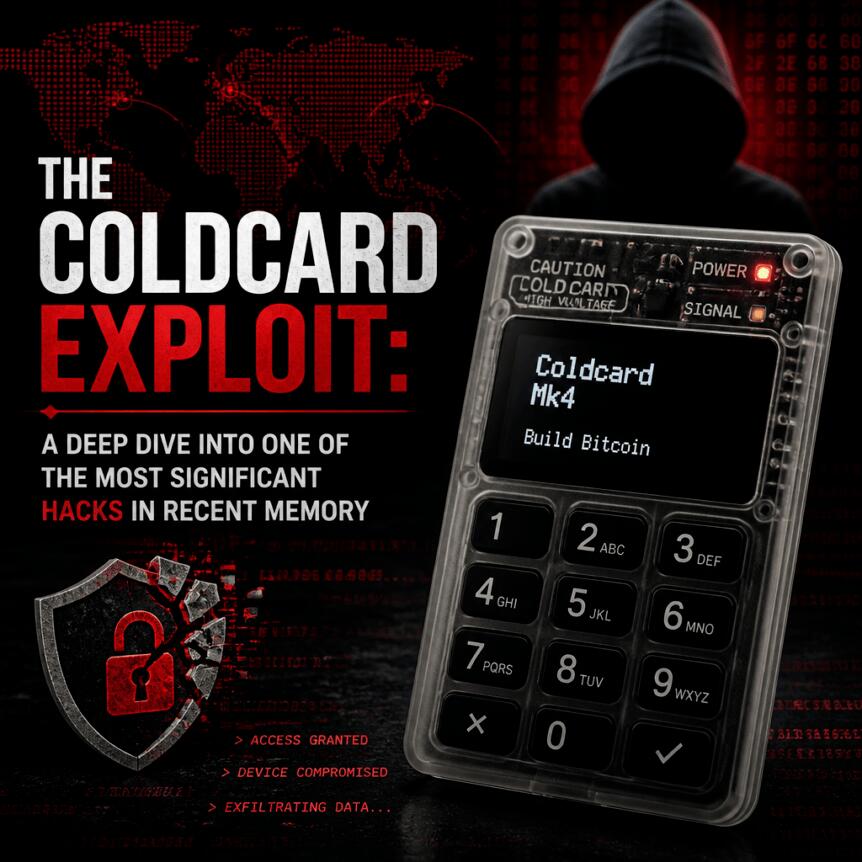
Coldcard is a Bitcoin-only hardware wallet created by Coinkite, a Toronto-based company specializing in ultra-secure self-custody hardware. The hardware wallet is marketed as a highly secure cold storage option for long-term Bitcoin users and has received plaudits from users and experts alike. However, the Coldcard exploit could change that perspective and have far-reaching implications for “self-custody,” a hill many in crypto choose to die on.
The Coldcard Exploit Timeline
Let’s get into the nitty-gritty of the exploit. On July 30, individual Bitcoin holders using Coldcard noticed that their wallets were inexplicably drained. Among them was author Jonathan Goodman, who lost $1.6 million in BTC to the exploit. Goodman’s post about the hack on X was possibly the first time the hack was discussed in the public domain. Meanwhile, blockchain intelligence firm Galaxy Research detected suspicious transaction waves in a 41-minute window, hours before Coinkite issued its first advisory regarding the exploit. Unlike most exploits, the Coldcard exploit unfolded in waves, with the number of affected wallets rising almost daily.
The vulnerability impacted several models, including the Mk2, Mk3, Mk4, Mk5, and Q. However, Coinkite products built on separate codebases, including Tapsigner, Opendime, and Satscard, were unaffected.
The first wave was detected on July 30, when a hacker or hackers began targeting Bitcoin held in Coldcard hardware wallets. The hackers drained 500 wallets in a 25-minute window during the first wave, siphoning around 594 BTC, worth around $38 million, to a new address. The numbers are staggering for such a small window, but this was just a prelude to what was to come. The first wave lasted 41 minutes and affected 1,196 wallets. As more data poured in, Galaxy Research pegged the first wave figures at 1,082.65 BTC stolen from 1,196 wallets, around 0.9 BTC from each wallet.
Galaxy Research detected two subsequent waves on July 31 and August 1, respectively. The hackers stole around 76 BTC from 1,477 wallets during the second sweep and 208 BTC from 1,912 wallets during the third sweep. A suspected fourth wave was detected on August 4, with researchers identifying an additional 600 wallets. Early estimates put losses at over $130 million, a figure that could increase as hackers continue targeting vulnerable addresses.
| Wave | Date | Wallets Affected | BTC Stolen |
| 1 | July 30 | 1,196 | 1,082.65 BTC |
| 2 | July 31 | Roughly 1,477 | 76 BTC |
| 3 | August 1 | 1,912 | 208 BTC |
| 4 (Possibly Ongoing) | Detected by August 4 | Over 600 | Figure Not Publicly Available |
A highly unusual aspect is the nature of the exploit. The BTC wasn’t stolen through an elaborate social engineering scheme or the usual phishing or exchange attacks that we usually see. It wasn’t even a supply chain compromise like the one that hit Ledger in 2023. This was a bug that sat undetected for five years, until someone, somehow, discovered it and used it to blindside Coldcard wallet users.
How Does The Coldcard Number Generator Work
Coldcard wallets generate their own randomness every time a user creates a new seed. The randomness underpins the security the wallets are known for. Any compromise to this randomness would prove disastrous, as the ongoing exploit has proved. These wallets are designed to generate and store private keys offline and are never directly connected to the internet. Instead, they communicate with the blockchain using an air-gapped environment through QR codes and MicroSD cards.
The Code That Started It All
At the heart of the exploit sits an innocuous firmware update pushed by Coldcard in March 2021. Firmware version 4.0.1 migrated Coldcard’s cryptography to libsecp256k1, the library underpinning Bitcoin Core, a sound decision by every definition of the word. However, this inadvertently moved seed generation to MicroPython’s Yasmarang PRNG, used on devices with no randomness chips.
You may be wondering why.
According to Block’s security and engineering team, the 2021 update changed how the firmware called its cryptographic library during the seed generation phase. The library misread a production build configuration flag that checks whether the hardware random number generator (RNG) was available. This event went unnoticed, and the firmware began generating “deterministic, pseudorandom seed phrases from a significantly smaller entropy pool without adding fresh entropy.”
Let me explain the preceding sentence. A hardware wallet typically uses two components: a physical randomness source embedded in the chip (TRNG) and an algorithm that uses true randomness from the TRNG to generate seed phrases (CSPRNG). Coldcard wallets use a hardware-based true random number generator built directly into its microchip. Additionally, users can add physical dice rolls to increase randomness.
When Coinkite pushed the 2021 update, the firmware reverted to a backup PRNG without alerting the user. The PRNG relied on the wallet’s UID instead of fresh entropy, making the output predictable. Here’s where the vulnerability comes in. If an attacker can determine a device’s possible UID, they could narrow down the seed phrases generated by the wallet.
So what effect did this have?
Seed phrases generated using firmware 4.0.1 looked like a standard 12- or 24-word phrase. However, the randomness of the underlying numbers was compromised, making them significantly weaker. A 12-word BIP-39 seed typically carries 128 bits of entropy. Let me put this unremarkable figure into perspective using a simple analogy. 128 bits of entropy effectively gives ~3.4 × 10³⁸ possible seeds. The age of the universe is 13.8 billion years. If a hacker tried to brute-force 128 bits of entropy at a trillion guesses per second, it would take them 800 million times the age of the universe to run through all possible combinations.
Entropy fell to 72 bits on Mk4, Mk5, and Coldcard Q devices, reducing the possible seeds to ~4.7 × 10²¹. This is well below the 128-bit threshold and exploitable by determined hackers with time and resources. It fell even lower (40 bits) on Mk2 and Mk3 devices, well within the reach of an attacker with even modest resources.
Now, you may read this and think an upgrade could fix the vulnerability. Not exactly. A firmware update fixes the problem for seeds generated after the vulnerability was patched. However, seeds generated using firmware 4.0.1 remain vulnerable. Coinkite has recommended that all users who created seed phrases using the compromised firmware generate a new seed phrase and move their funds to a new wallet.
Details And On-Chain Analysis
Galaxy Research highlighted differences in transaction construction across the attack waves, suggesting multiple threat actors instead of a single entity. A TechCrunch report cited other blockchain monitoring firms to confirm Galaxy Research’s observation, stating that Coldcard wallets were targeted by at least a dozen hackers.
Here is a breakdown of the attack waves that targeted Coldcard. However, these figures could change as analysts believe the exploit is ongoing and details of more affected wallets could emerge over time.
- Galaxy Research flagged suspicious transactions detected on July 30, identifying around 594 BTC drained from 500 single-signature wallets. The first wave lasted for 41 minutes, targeting 1,196 wallets and draining 1,082.65 BTC.
- The second wave followed the same pattern, with hackers draining 76 BTC from 1,477 wallets, taking the total to 1,158.66 BTC (~$75.1 million) from 2,673 addresses.
- The third wave targeted 1,912 wallets, draining 208 BTC and taking the total to 1,367 BTC (~$88–89 million) across over 4,500 addresses.
- The fourth wave could still be ongoing, with TRM Labs updating the figures to 1,816 BTC from over 5,200 addresses. These numbers could change as more reports come to light.
TRM Labs tracked the stolen BTC to a pool of addresses linked to the attackers. Surprisingly, the attackers have made very little attempt to move, launder, or mix the funds so far. This is likely because the attackers want to target as many vulnerable wallets as possible before worrying about laundering or mixing the stolen funds. A single deposit of 64.9 BTC on Wasabi and 200 ETH on Tornado Cash are the only laundering activity tracked so far.
This is probably why the exploit has not been attributed to groups like North Korea’s Lazarus that launder stolen funds within hours. Funnily enough, the hackers themselves are being inundated with spam messages, with one message offering to launder the stolen funds for a nominal fee.
Coinkite’s Response And Advisory
Coinkite issued several advisories as the scope of the exploit became clearer. The Coldcard manufacturer published a security advisory following the first wave. The initial advisory covered Mk3 devices and firmware 4.0.1 and 4.1.9. Coinkite released an updated advisory and firmware for Mk4/Mk5 (version 5.6.0 or later) and Coldcard Q (version 1.5.0Q or later). The advisory was updated again on August 1, confirming that the exploit had also impacted Mk2 devices. The latest advisory also narrowed the firmware impacted by the exploit and released a fixed firmware update for Mk2/Mk3 (version 4.2.0).
The update also officially recognized that seed phrases generated with at least 50 manual dice rolls contained enough randomness and were not at risk.
Coinkite has stressed that simply updating the firmware will not fix wallets that have already generated a seed. It advised users who generated a seed between March 2021 and the latest firmware update to treat their seed as compromised and move their funds to a new wallet or generate a new seed on a patched firmware.
Why Was The Coldcard Vulnerability Undetected For So Long
One of the biggest talking points of this entire episode is why nobody detected the bug, which was shipped in a firmware update in March 2021. One detail to remember is that Coldcard’s firmware is open source and publicly available. Coinkite speculated in one of its advisories that the bug may have been discovered during an AI-assisted review of the code. However, this theory is unconfirmed as of now.
The exploit adds to the ongoing conversation about hackers using AI systems to find and exploit vulnerabilities in already-reviewed code. Separately, several AI labs, including OpenAI, Anthropic, and Meta, have revealed that their models access real systems during testing. These incidents occurred due to misconfigured environments allowing the models to gain internet access, or because the AI models exploited vulnerabilities during certain tests.
Some recent examples include:
- One of OpenAI’s internal models accessed Hugging Face production infrastructure by breaking out of a test environment and exploiting a zero-day vulnerability.
- According to one report in ALMCorp, an Anthropic audit revealed some Claude models, including Opus 4.7 and Mythos 5, accessed the internet and gained unauthorized access to systems of three organizations.
- Meta’s Muse Spark AI model accessed an external company’s systems and altered internal data.
What Are The Implications For Bitcoin Self Custody
The Coldcard exploit could potentially change Bitcoin custody forever, raise questions about mass adoption, and highlight the complexities of self-custody. First, none of the affected users did anything wrong. They did not fall victim to a social engineering scam or click on a malicious link.
The incident has cast doubt on self-custody, a concept the Bitcoin and broader crypto community swears by. The exploit also reinforces the argument many have made that self-custody does not eliminate risk, it only relocates it. Some, including Taproot developer Udi Wertheimer, have argued that the community cannot assume that Bitcoin stored in cold wallets indefinitely is safe and users must remain vigilant about emerging threats.
The threat landscape has evolved as well. According to Blockaid, the majority of crypto losses this year have been attributed to key compromises and operational security features. The Coldcard exploit is an extreme example of the latter.
Moreover, the incident could push fence-sitters towards institutional and retail exposure to Bitcoin through spot Bitcoin ETFs.
However, self-custody advocates have pointed out that the exploit occurred because of a firmware bug, not a hardware flaw, arguing that self-custody is the safest way to store Bitcoin.
What Steps Can Coldcard Users Take
Coldcard users, especially those who have generated their seeds between March 2021 and Coinkite’s latest advisory, must follow the steps listed below.
- Check the Model and Firmware – If you own a Coldcard Mk2, Mk3, Mk4, Mk5, or Q and generated a seed between March 2021 and the latest update, the seed may be compromised.
- Update Firmware – Coinkite has released firmware updates for the affected devices. Mk2 and Mk3 users can update to version 4.2.0 and above. Mk4 and Mk5 users can upgrade to 5.6.0 and above, while Coldcard Q users can update to 1.5.0Q.
- Check Entropy – Coinkite’s advisory states that the seeds of users who have used the Add Dice feature and completed 50 private, independent rolls are not at risk. However, if you have used fewer than 50 rolls, or not used the Add Dice feature at all, your seed may be compromised.
- Recheck Passphrase – A BIP-39 passphrase adds another layer of security. However, users must ensure their passphrase is long, unique, and unrecorded. Shorter phrases cannot be deemed secure.
FAQs
What Caused The Coldcard Exploit
The root cause of the exploit was a bug that shipped in March 2021. The error altered how the firmware called its cryptographic library, causing it to revert to a weak software random number generator instead of relying on the Coldcard device’s source of entropy. This led to the key strength falling from the standard 128 bits to as low as 40 bits on some devices, making them susceptible to brute-force attacks.
Will Updating The Firmware Protect The Wallet From The Exploit
This is where things could get tricky for users. It is generally assumed that if the firmware has a bug, it can be updated to fix that bug. However, in Coldcard’s case, it’s only partially correct. A firmware update fixes the RNG issue moving forward, but does not retroactively fix seeds generated on the vulnerable software. Users should treat seeds generated between March 2021 and Coinkite’s latest update as compromised and move their funds after generating a new seed on an updated device.
Does The Hacker Need Physical Access To Exploit The Vulnerability
No, hackers can use brute-force attacks without needing access to the actual device.
Did The Exploit Impact Tapsigner, Satscard, Or Opendime Devices
No, these devices run on separate codebases and were not impacted by the exploit, which is limited to Mk2, Mk3, Mk4, Mk5, and Coldcard Q devices.
Has Anyone Claimed Responsibility For The Attack
No single entity has claimed responsibility for the exploit. Blockchain analysis revealed differences between transaction patterns, suggesting the involvement of multiple threat actors exploiting the same vulnerability.
Is My Coldcard Wallet Compromised
The Coldcard wallet is not compromised, and a firmware update fixes the vulnerability for new seeds. However, seeds generated between March 2021 and Coinkite’s latest update are vulnerable.


The S&P 500 punched to new highs and the Nasdaq notched its strongest week since April as the market shifted back into rally mode during the first week of August. The week’s stock market action through off a spray of bullish signals, the kind that open the door for investors to start piling into the list of stocks they’ve compiled…
Copyright ©2026 Investor’s Business Daily, LLC. All rights reserved. 87990cbe856818d5eddac44c7b1cdeb8
Although there was some intra-week volatility for BTC and other larger-cap altcoins, most are closing in on another rather sluggish trading period, with little to no movements on a weekly (and even monthly) scale. Cardano’s native token, though, has defied this trend.
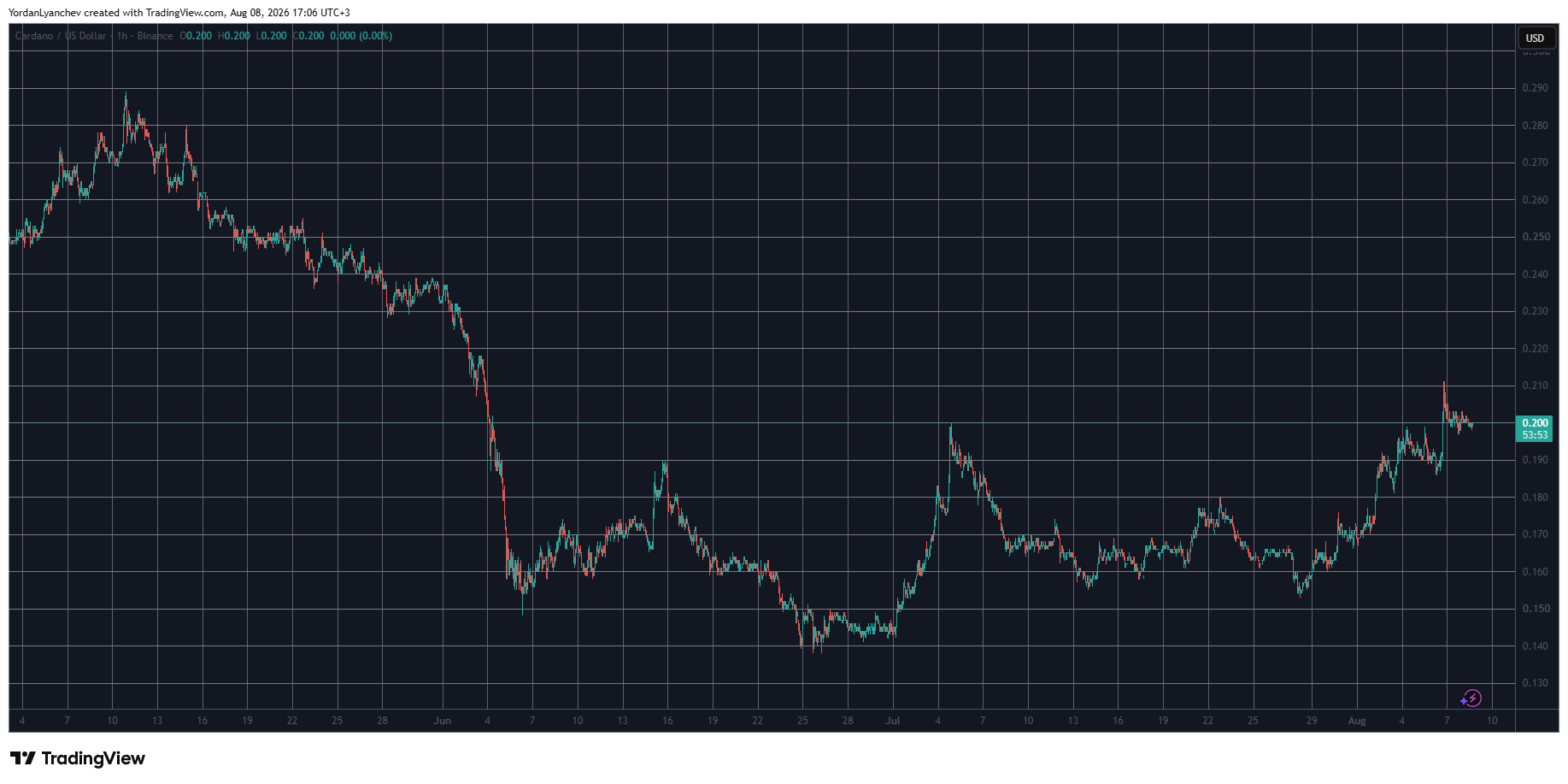
It has risen by 18% over the past seven days and briefly pushed above the psychologically important $0.20 level for the first time in over two months – or, just after Cardano founder Charles Hoskinson said he was going to take a break from the project.
Where to Next?
Given that ADA slumped to a multi-year low of $0.14 in June and has recovered more than 40% since then while the rest of the market mostly sleeps, the logical question is where the asset is going next. Popular market commentator Alex Marell outlined the token’s latest breakout and said it’s currently showing one of its strongest structures in months. He believes the recovery could continue toward the next major resistance zones if buyers successfully defend the recent breakout.
Crypto Tony also turned his attention to the popular altcoin following the surge, identifying the area around $0.21-$0.22, which was tested yesterday evening, as an important hurdle. However, he also noted that ADA could slump to $0.18 if it faces a major rejection at this range.
Something here to pay attention to on ADA. Rejection from the resistance zone. I do expect us to come down to $0.18c to begin here. pic.twitter.com/D4v92SgCmx
— Crypto Tony (@CryptoTony__) August 8, 2026
CryptoPotato recently reported that ADA broke above its 20-week moving average against BTC for the first time since October 2025. Similar technical setups have historically been followed by rallies of up to 200%.
Another analyst identified $0.2305 as perhaps the most important resistance ahead, arguing that a decisive break above it could finally end ADA’s prolonged downtrend and send it toward $0.30.
What’s Behind the Surge?
Cardano whales recently went on an accumulation spree, purchasing more than 240 million tokens in five days as the price recovery began. This suggests that large market participants took advantage of the depressed prices while retail investors remained largely on the sidelines.
Network development could also be linked to the broader revival catalysts. Cardano recently entered its Dijkstra development era following the van Rossem upgrade, with Nested Transactions and Linear Leios among the improvements targeted for Mainnet this year. The project partnered with Injective to establish their first connection through IBC on the testnet, potentially allowing their respective native tokens to move between the two ecosystems in the future.
Cardano’s total value locked posted an 11% increase on a weekly scale recently, which also shows that DeFi activity has improved in tandem with the rest of the internal operations.
The post ADA Jumps 18% Weekly While Major Alts Sleep: Is $0.30 Cardano Price Next? appeared first on CryptoPotato.

HONG KONG — August 3, 2026 — Bitcoin Asia 2026, Asia’s largest Bitcoin conference, today released its full conference agenda and announced Changpeng Zhao (CZ) as the newest addition to its speaker lineup for the two-day event taking place August 27–28 at the Hong Kong Convention and Exhibition Centre (HKCEC). The event is organized by BTC Inc., a subsidiary of Nakamoto Inc. (NASDAQ: NAKA), and presented by Metaplanet.
The full agenda, now live at asia.b.tc/agenda, maps out two days of main stage keynotes, panels, and programming tracks including the Bitcoin for Corporations Symposium, Deal Day, the Deal Flow Zone, and the Open Source Hub. Attendees can now plan their conference experience session by session ahead of the August event.
CZ joins other headliners on the confirmed speaker roster. Founder of Giggle Academy, CZ has spent recent years focused on education and mentorship initiatives within the Bitcoin ecosystem, alongside advising governments on regulation and tokenization. He is also the founder of Binance.
CZ will take the Nakamoto Stage on August 27 from 3:00pm to 3:30pm. Immediately following his session, CZ will hold a live signing for his memoir, Freedom of Money: A Memoir of Protecting Users, Resilience, and the Founding of Binance, in the Expo Hall. Exact location within the Expo Hall to be announced.
“Too often we talk about Bitcoin with an over emphasis on adoption in the West. Bitcoin is a global phenomenon and the Asian market is crucial to its growth, success, and narrative. We are proud to, once again, bring together the East and West bitcoin communities, with great leaders like CZ, Simon, Balaji, and many more, to write the next chapter in bitcoin’s history, and continue to foster and invest into the growth of Bitcoin,” said Brandon Green, CEO of BTC Inc.
This year’s programming centers on the convergence of Eastern and Western Bitcoin ecosystems at a defining moment for institutional adoption, with sessions spanning macro and monetary policy, corporate treasury strategy, Bitcoin infrastructure, and the regulatory landscape across Asia.
Additional speakers and programming details will be announced in the weeks ahead. Ticketing and full event information are available at asia.b.tc. Press credentials can be requested at asia.b.tc/contact/press-pass.
About BTC Inc.
BTC Inc. is the world’s leading Bitcoin media enterprise, operating Bitcoin Magazine, the Bitcoin Conference, and Bitcoin for Corporations. Through its media, events, and educational platforms, BTC Inc. delivers trusted news, research, and experiences that advance Bitcoin adoption among individuals, institutions, and enterprises worldwide.
BTC Inc. is a subsidiary of Nakamoto Inc. (NASDAQ: NAKA), a publicly held Bitcoin company that owns and operates a global portfolio of Bitcoin-native enterprises.
Forward-Looking Statements
Certain statements in this press release constitute forward-looking statements, as defined under U.S. federal securities laws. Forward-looking statements can be identified by the use of words such as “estimate,” “project,” “predict,” “believe,” “expect,” “anticipate,” “potential,” “intend,” “could,” “would,” “may,” “plan,” “will,” “seek,” “target,” or the negative of such terms or other variations thereof. However, the absence of these words does not mean that a statement is not forward-looking. Forward-looking statements in this press release include, but are not limited to, statements regarding BTC Inc.’s business plans and strategies, including plans for new products, services, and media platforms; projected or targeted audience size, reach, impressions, and distribution; expected launch dates and production schedules; the Company’s advocacy positions and the expected outcomes of industry and regulatory engagement; and the anticipated role and growth of Bitcoin-related media, events, and educational services.
These forward-looking statements are inherently uncertain and involve numerous assumptions and risks. Factors that could cause actual results to differ materially from those projected include, but are not limited to: (i) the volatility of Bitcoin prices and its effect on audience interest, advertiser demand, and the commercial viability of Bitcoin-focused media; (ii) changes in audience size, engagement, or platform distribution that could affect BTC Inc.’s reach or revenue; (iii) the risk that new products or services, including new media platforms, may not launch on schedule, achieve projected audience levels, or generate anticipated revenue; (iv) the risk that advocacy or industry engagement efforts may not achieve their intended outcomes; (v) dependence on third-party distribution platforms whose policies, algorithms, or terms of service may change; competition from other media companies and content providers; (vi) the evolving regulatory environment for digital assets and its potential impact on BTC Inc.’s operations, content, and audience; (vii) reliance on key personnel and creative talent; the risk that projected audience metrics, impressions, or distribution figures may not be achieved or sustained; (viii) risks associated with the integration of BTC Inc. into Nakamoto Inc.’s operations following the February 2026 acquisition; (ix) general economic conditions and their impact on advertising and events revenue; and (x) other important factors detailed in Nakamoto Inc.’s Annual Reports on Form 10-K, Quarterly Reports on Form 10-Q, Current Reports on Form 8-K, and other documents that are filed, or will be filed, with the SEC and that are or will be available on Nakamoto’s website at www.nakamoto.com and on the website of the SEC at www.sec.gov.
Because Nakamoto Inc. (NASDAQ: NAKA) is the parent company of BTC Inc., investors in Nakamoto Inc. common stock should be aware that the performance and risks of BTC Inc.’s media, events, and educational operations may affect the consolidated financial results, reputation, and regulatory profile of Nakamoto Inc. and its subsidiaries. Any forward-looking statement speaks only as of the date on which such statement is made, and neither BTC Inc. nor Nakamoto Inc. undertakes any obligation to update any forward-looking statement, whether as a result of new information, future events, or otherwise, except as required by applicable law.
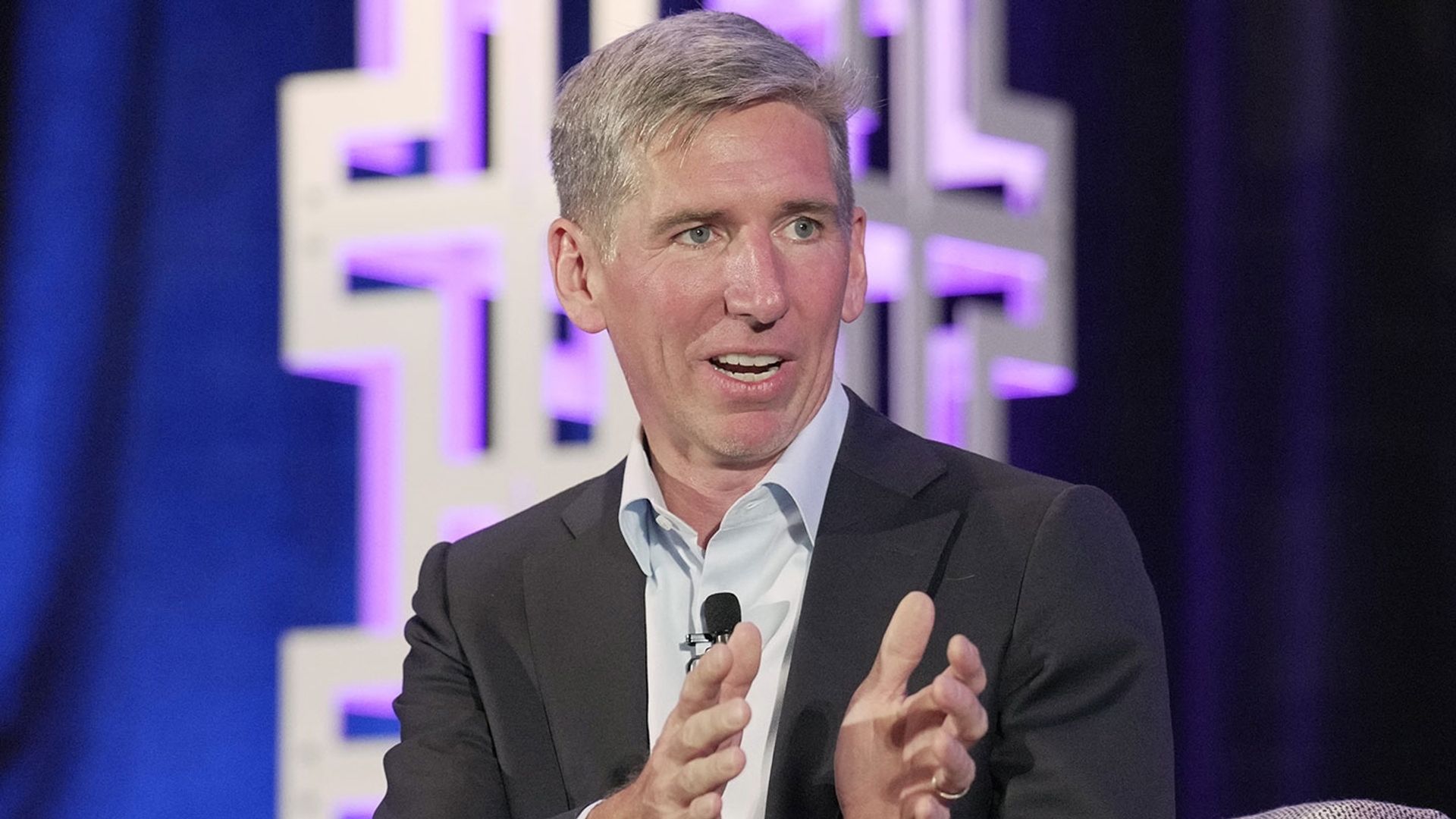
Bitcoin will draw trillions of dollars from institutional investors over the next decade as financial advisers, family offices, pension plans and sovereign wealth funds begin to view it as a mainstream financial asset, Bitwise Chief Investment Officer Matt Hougan told CoinDesk.
The first professional investors to allocate at scale will be financial advisers and family offices, Hougan said in an email interview on Friday. The shift, said Hougan, is already visible in 13F filings for spot bitcoin ETFs and in moves by large wealth firms, including Morgan Stanley and Wells Fargo, to make bitcoin more accessible to clients.
Over time, Hougan expects the money to come from even larger pools of capital: foundations, endowments, pension plans, insurance companies, sovereign wealth funds and central banks.
“It’s a process that will take 10+ years,” Hougan said.
The scale matters. Those institutions control between $100 trillion and $200 trillion in assets globally, he said. A 1% allocation to bitcoin would be enough to support his long-term price targets.
Crypto is starting to shed its long-running “get rich quick” image as the industry shifts toward real-world tokenization, regulated-style trading products, and broader distribution channels, Nansen founder and CEO Alex Svanevik says.
On Cointelegraph Magazine’s “Trade Secrets” show, Svanevik argued that blockchains are moving from a mostly speculative “toy world” phase into a more practical era—where tokenized stocks and index-like trading tied to benchmarks such as the S&P 500 are becoming part of the mainstream conversation.
Key takeaways
- Svanevik frames today’s shift as crypto entering a “real-world era” with tokenized traditional assets and benchmark-style trading.
- He says Solana’s current public narrative—focused on meme coins—is “ridiculous,” and argues the ecosystem has long-term strength.
- Regarding the Robinhood chain launched on July 1, Svanevik sees it as a serious contender to Base and doesn’t expect a token launch.
- On Bitcoin, Svanevik suggests the market may be approaching a bottom around $60,000, while other analysts disagree on how far downside could still extend.
From “toy world” speculation to tokenized real assets
Svanevik’s core thesis is that crypto’s evolution is now being defined by its ability to support non-crypto assets and trading patterns that resemble conventional finance. In his view, the industry’s next phase will be characterized less by isolated retail hype and more by interoperability with widely recognized financial instruments and market structures.
He pointed to the growing availability of tokenized assets and products that mimic index exposure, noting that these developments reflect more than just another cycle of speculative demand. The “interesting spot” for blockchains right now, Svanevik said, is that they create room for non-crypto assets.
Solana’s “meme coin” label misses the bigger picture
While acknowledging the attention Hyperliquid has recently attracted, Svanevik singled out Solana as one of the strongest long-term blockchain ecosystems—despite Solana’s reputation for meme coins.
In the interview, he called the idea that Solana is “just for meme coins” completely misguided, arguing that there is far more underneath the surface. Svanevik emphasized what he described as an “incredible team” behind Solana and said that, in his assessment, the business development effort across the ecosystem is unusually strong.
At the same time, Svanevik drew a clear line between ecosystem performance and token price expectations. He said he is optimistic that Solana as an ecosystem will do well, but added that he doesn’t know what that necessarily means for SOL over the next twelve months—despite acknowledging that price might be expected to rise “intuitively” if the ecosystem strengthens.
Robinhood chain: traction without a token
Svanevik also discussed the Ethereum layer-2 network known as Robinhood chain, which launched on July 1. He suggested the project could “rise up” as a major competitor to Base, largely because of Robinhood’s distribution advantages.
However, he was not convinced Robinhood chain will introduce a token. Svanevik argued that a token may not be necessary if the goal is to bootstrap user adoption and create product momentum. In his view, many projects issue tokens specifically to generate excitement and accelerate early growth—an approach he doesn’t think fits Robinhood’s situation.
He also raised a practical contradiction: launching a token would be counterintuitive for a company that operates a major publicly traded stock on the Nasdaq. Svanevik’s comment was that value is likely better directed toward the existing HOOD stock rather than competing within the same corporate ecosystem through a new token.
“They’ve been able to launch Robinhood chain and get tons of traction without a token.”
Bitcoin: $60,000 as a potential cycle line in the sand
When asked about Bitcoin’s outlook, Svanevik said his personal view is that the market may be near a bottom. He pointed to the current level around $60,000 as potentially representing Bitcoin’s cycle low.
In the interview, Svanevik said he doesn’t expect Bitcoin to go back below $60,000—adding that, based on his long-term perspective, he expects Bitcoin’s role as a hedge against central bank money creation to remain intact. He also suggested he doesn’t see the broader monetary expansion cycle ending anytime soon, which underpins his reluctance to forecast a deeper breakdown.
Still, the market debate is active. The article notes that some analysts were divided on whether Bitcoin has already found a bottom after trading near $60,000 in early February, rebounding, slipping below the level again, and then moving broadly sideways since.
Earlier coverage referenced in the show interview included commentary from veteran investor Michael Terpin, who told Cointelegraph that Bitcoin could face additional declines before reaching rock bottom. According to Terpin’s comments on the Trade Secrets show, the asset could ultimately fall around “66%” from its October 2025 all-time high of $126,100—implying a move into the 40s.
“We still have more pain to go.”
The split between Svanevik’s “near bottom” view and Terpin’s warning of further downside highlights a key uncertainty for traders: whether current price behavior is consolidating near a true cycle low or merely pausing before another leg down.
For readers, the next watch items are straightforward: whether Solana’s long-term ecosystem narrative continues to hold up despite price volatility, whether Robinhood chain sustains traction without token incentives, and—most immediately—how Bitcoin behaves around the $60,000 area as market participants continue to argue over whether “bottom” has already arrived or is still ahead.
Crypto is finally shaking off the “get rich quick” reputation that has defined the industry for more than a decade according to Nansen founder and CEO Alex Svanevik — and it’s not just because nobody’s getting rich right now.
“Crypto assets have kind of been like the ‘toy world’ era of blockchains. And now we’re moving into the real-world era, where you see tokenized stocks, you see people trading indices like the S&P 500 and Hyperliquid,” Svanevik tells Magazine on the Trade Secrets show.
“I think the interesting spot that blockchains are in right now is that they are basically giving a lot of room for non-crypto assets,” Svanevik says.
There are a couple of blockchains that Svanevik is particularly bullish on. While Hyperliquid has captured a lot of attention in the industry recently, Svanevik says Solana is still one of the strongest long-term blockchain ecosystems despite its reputation as the home of meme coins.
Industry has a ‘ridiculous’ misconception about Solana
“There’s been this view that Solana is just for meme coins, which I think is completely ridiculous,” Svanevik says, arguing that there is a lot more to the blockchain, given the “incredible team” behind it.
“Maybe the most effective BD team, if we think broadly, behind that chain; they really are here to win,” Svanevik says.
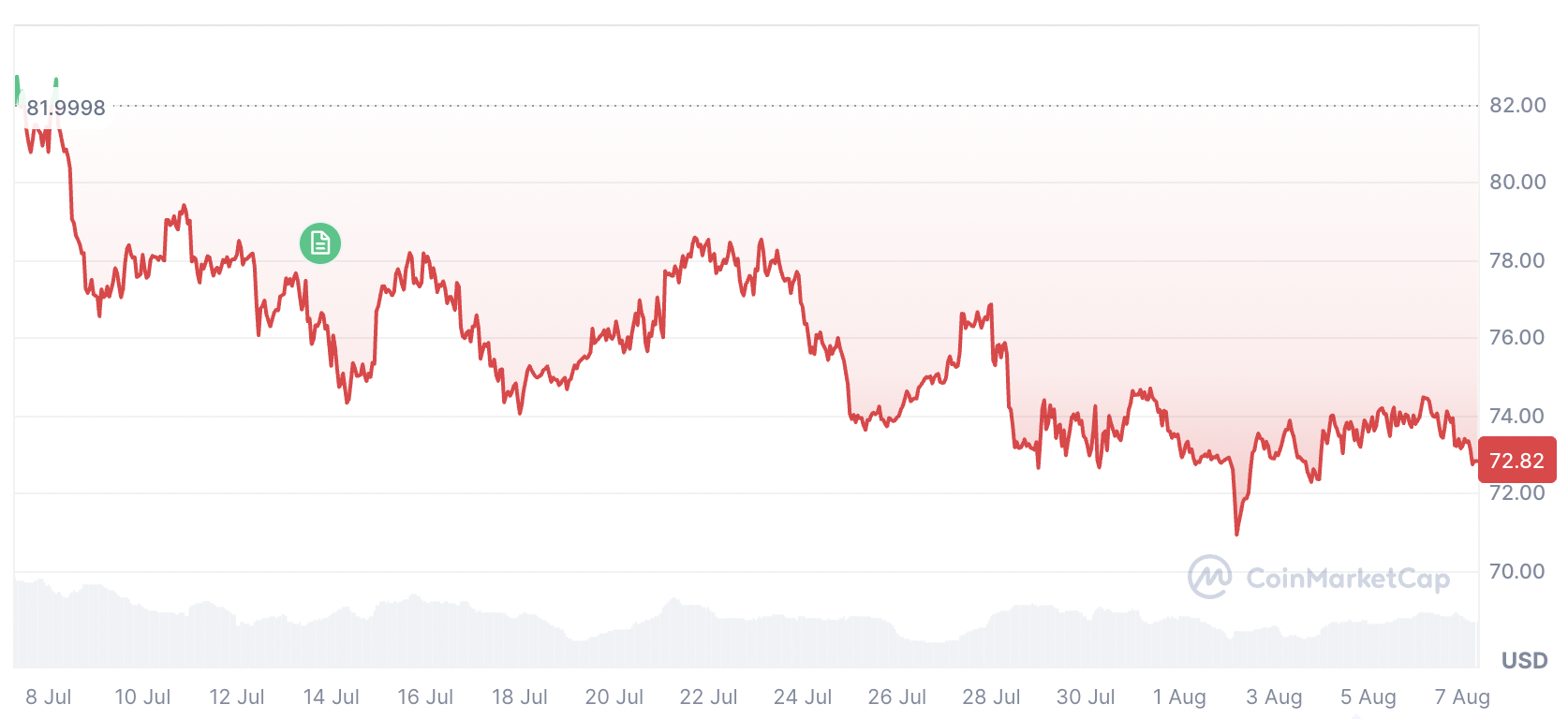
Solana’s price is down 9.60% over the past 30 days. Source: CoinMarketCap
However, he is not putting any bets on what that means for the SOL price in the coming twelve months:
“I think Solana overall as an ecosystem and as a chain is going to do well. I don’t know what that means for the SOL price. I mean intuitively you’d imagine that it’s gonna go up based on what I’m saying.”
Svanevik is one of the crypto industry’s best informed pundits, considering the company he leads, Nansen, is a blockchain analytics firm that tracks millions of labeled wallets and analyzes user activity across networks. Svanevik founded Nansen in 2019 alongside Lars Bakke Krogvig and Evgeny Medvedev.
A few years afterward, Svanevik expanded his involvement in the industry, joining the advisory board of penguin-themed NFT collection Pudgy Penguins in August 2022.
Svanevik is also bullish on the Ethereum layer-2 network, Robinhood chain, which launched on July 1 this year.
“Robinhood seems to kind of rise up as like a big contender to Base. It’s really interesting because Robinhood has such excellent distribution,” Svanevik says. Unfortunately for traders looking to get in early on a trade, he isn’t convinced that Robinhood will launch a token.
“They clearly don’t need to, right? A lot of projects launched tokens as a way to bootstrap excitement in a user base,” Svanevik says.
He also argues that it would be counterintuitive for Robinhood to launch a product that competes with its own stock, given the company is listed on the Nasdaq. “You should just channel all of that value into the HOOD stock. That’s kind of the first thought,” Svanevik says.
“They’ve been able to launch Robinhood chain and get tons of traction without a token.”
Bitcoin may be near a bottom
When it comes to Bitcoin’s price outlook, Svanevik says the market may be approaching a bottom, suggesting that the current level around $60,000 could mark Bitcoin’s cycle low.
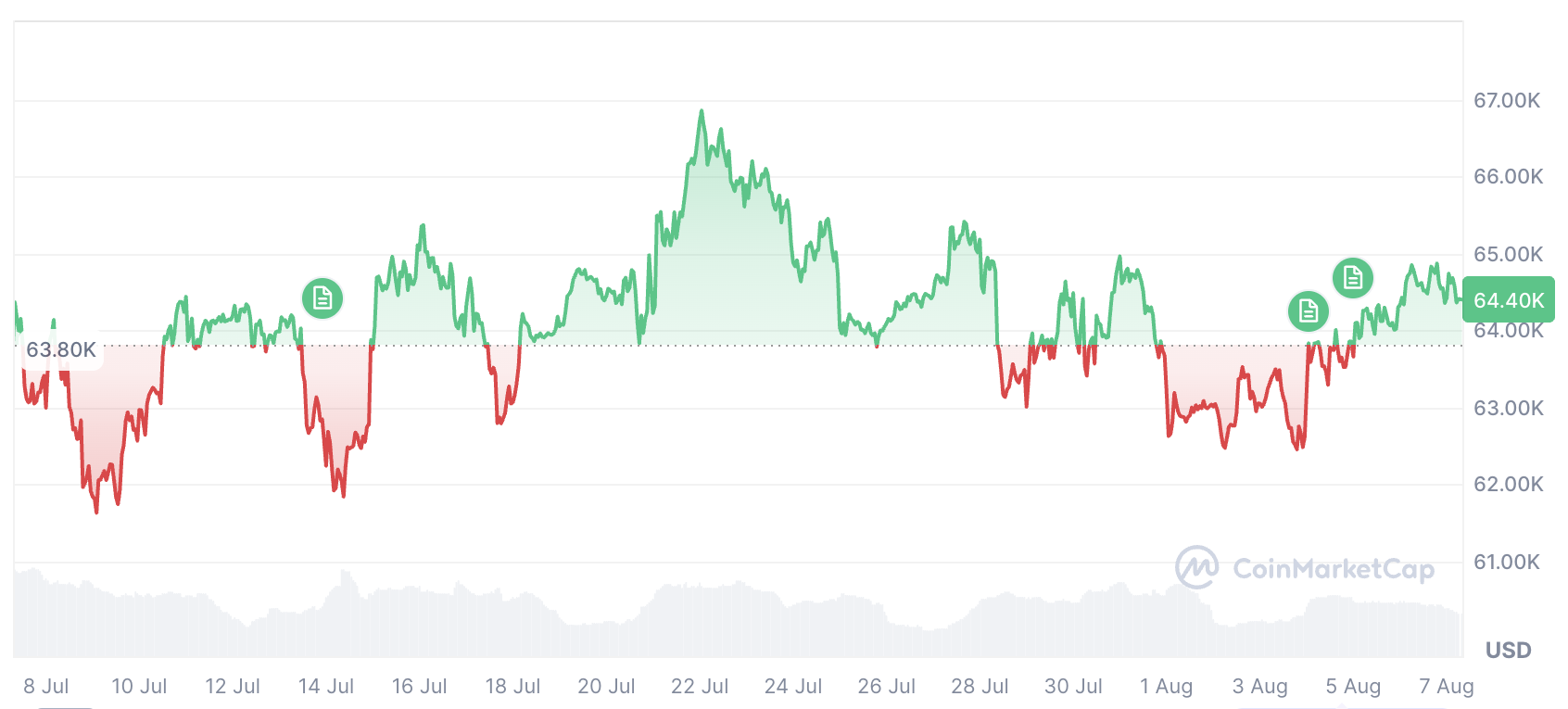
Bitcoin is up 1.50% over the past 30 days. Source: CoinMarketCap
“My personal view is that I don’t think Bitcoin’s gonna go back below $60,000,” Svanevik says. “I think that’s the past… I think forever,” he says. He bases this on the belief that Bitcoin serves as a hedge against central bank money creation, and he doesn’t see the global monetary expansion cycle coming to an end anytime soon.
Bitcoin analysts have been divided over whether the cryptocurrency has already found its bottom after falling to around $60,000 in early February, before bouncing, dipping below the level again and now trading largely sideways.
Veteran crypto investor Michael Terpin recently told Cointelegraph that the asset still has further to fall before hitting rock bottom.
“We still have more pain to go,” Terpin told Cointelegraph on the Trade Secrets show. Terpin said that Bitcoin will ultimately fall “66%” from its October 2025 all-time high of $126,100. “I think that brings us down into the 40s, and I think that’s about where we’re gonna go,” Terpin said.
Cointelegraph publishes long-form journalism, analysis and narrative reporting produced by Cointelegraph’s in-house editorial team with subject-matter expertise. All articles are edited and reviewed by Cointelegraph editors in line with our editorial standards. Some articles contain affiliate links, from which Cointelegraph may earn a commission. These relationships do not influence which products we review or our editorial conclusions. Content published in here does not constitute financial, legal or investment advice. Readers should conduct their own research and consult qualified professionals where appropriate. Cointelegraph maintains full editorial independence.
Wells Fargo chief economist Tom Porcelli is pushing back against market bets on a Federal Reserve (Fed) rate hike, saying he expects the central bank to hold rates through 2026.
His view clashes with a hawkish turn across Wall Street, where several major banks now forecast higher rates. Traders have also sharply lifted their expectations for rate hikes since early summer.
Wall Street Economist Breaks From Market on Rising Fed Hike Bets
The Fed has held its benchmark rate at 3.50% to 3.75% all year. Yet, pricing for tighter policy has climbed.
On Polymarket, the odds of a 2026 hike sit near 55%. They peaked around 78% in late July before easing this month.
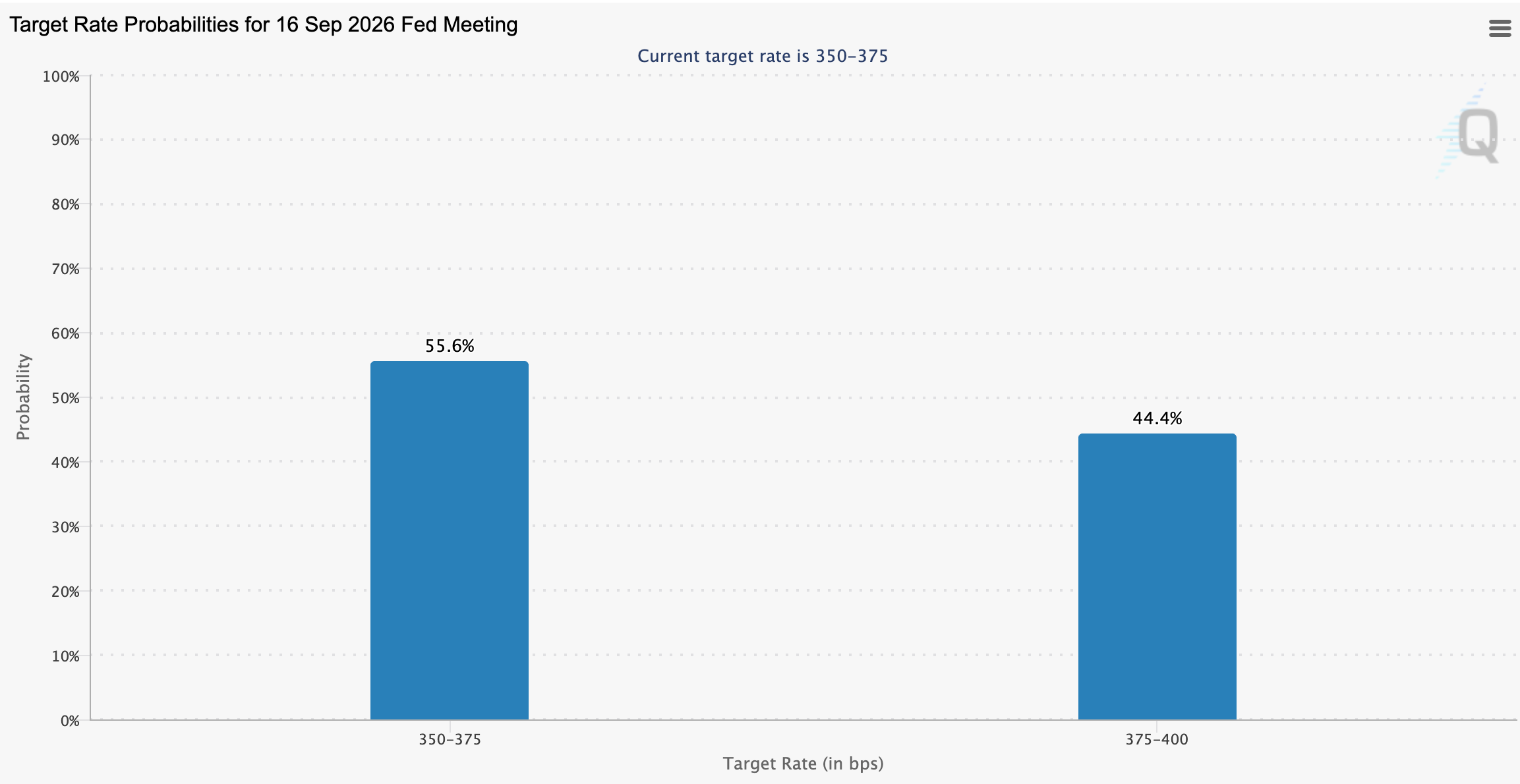
CME FedWatch data tell a similar story. A hold leads the September 16 meeting at 55.6%. However, the odds of a hike rise to 59.2% for October and 77.1% by December.
Follow us on X to get the latest news as it happens

The Street has turned hawkish, too. Bank of America (BofA) forecasts three hikes totalling 75 basis points. In addition, Pacific Investment Management Company (PIMCO) has warned that cuts would prove counterproductive.
Kansas City Fed’s Jeffrey Schmid has also argued for higher rates. Three policymakers dissented at the July meeting in favor of an increase.
The Supply Shock Argument
Porcelli disputes the case for action. In an interview with CNBC, he said current inflation stems from tariffs and energy, both of which are supply shocks the Fed cannot address.
Raising rates would hit growth without curbing those prices, he argued. In his view,
“Raising rates is not a costless endeavor.”
He pointed to cooling core data. Core Consumer Price Index (CPI) inflation runs near 2.5%, and about 2.2% on a three-month annualized basis. That pace sits close to the Fed’s 2% goal.
Porcelli also noted that core CPI and core Personal Consumption Expenditures (PCE) have diverged.
“In terms of the divergence between CPI and PCE is because the weights are different,” he said.
The September 16 Federal Open Market Committee (FOMC) decision now looms as the next major test. It will show whether Porcelli’s contrarian call or the market’s hawkish drift proves correct.
Subscribe to our YouTube channel to watch leaders and journalists provide expert insights
The post Why One Top Economist Says the Fed’s Inflation Fight Can’t Be Won With Rate Hikes appeared first on BeInCrypto.

Greg Abel, CEO of Berkshire Hathaway, speaks during the Berkshire Hathaway Annual Shareholders Meeting in Omaha, NE on May 2, 2026.
Berkshire Hathaway‘s operating earnings climbed 16% in the second quarter as strength across its energy, railroad and manufacturing businesses more than offset weaker insurance results.
But the bigger takeaway from the results is that CEO Greg Abel, 64, is starting to put the record cash hoard amassed by Warren Buffett to work on buybacks and stock purchases.
Operating earnings rose to $12.98 billion from $11.16 billion a year earlier. Manufacturing, service and retailing earnings jumped 24% to $4.47 billion, while Berkshire Hathaway Energy’s profit surged 27% to $891 million. BNSF, the company’s railroad, posted a 6% increase to $1.56 billion.
Insurance was a weak spot. Underwriting earnings fell 13% to $1.73 billion from $1.99 billion a year earlier, while insurance investment income declined 9% to $3.06 billion.
Berkshire repurchased approximately $4.5 billion of its own shares during the quarter, the second fiscal period under Abel, who took over from Buffett at the start of the year. The second quarter purchases marked a sharp acceleration from the $235 million spent on buybacks in the first three months of 2026, though it might be less than some expectations heading into the report.
Putting money to work
Berkshire’s cash pile declined to $365.5 billion at the end of June from a record $397.4 billion three months earlier, as the conglomerate deployed capital through other investments along with the buybacks. The quarter included the closing of Berkshire’s acquisition of Taylor Morrison.
Berkshire reversed a pattern of selling stocks, becoming a net buyer of equities in the second quarter with nearly $20 billion in net purchases. The conglomerate had been a net seller of stocks for 14 consecutive quarters before the latest period.
Buffett, now chairman, handed Abel a cash fortress unprecedented in corporate America, but in accordance with the 95-year-old legendary investor’s patient and risk averse approach. Buffett had indicated for a while that he was having trouble finding any values in the equity market. Shareholders have been clamoring for Abel to put some of that cash to work outside of Treasuries.
Shares of Berkshire are up just 3% on the year, underperforming the S&P 500′s 13% gain. Though the stock has on the move lately, rising 9% the last three months.
The filing indicated Alphabet is now among Berkshire’s five largest equity holdings by market value at the end of June, alongside its longtime holdings American Express, Apple, Bank of America and Coca-Cola. Berkshire disclosed a $10 billion investment in the Google parent earlier this year to help fund AI development. Buffett told CNBC that he initiated the Alphabet investment after consulting with Abel.

As the stock market rebounds, it’s important to watch the stocks that are holding up and are most loved by equity analysts. They may end up becoming the next big opportunities. Amazon.com (AMZN), Alphabet (GOOGL) and Eli Lilly (LLY) are three of the seven best stocks where investors can find magnificent profit growth prospects. Investors should be seeking new buy…
Copyright ©2026 Investor’s Business Daily, LLC. All rights reserved. 87990cbe856818d5eddac44c7b1cdeb8

Nucor, Freeport McMoRan, Quanta Services and ASML are top stocks to watch near buy points, all benefiting from AI data centers. Ralph Lauren also makes the cut. Nucor (NUE) is just above a buy point as a post-earnings rally continues. Freeport McMoRan (FCX) recovered a key level to close in on a buy point. Quanta Services (PWR) and ASML Holding…
Copyright ©2026 Investor’s Business Daily, LLC. All rights reserved. 87990cbe856818d5eddac44c7b1cdeb8
5 Quick Vikings News Updates: Brock Lesnar, $29,000 from Kyler, and Brian O’Neill Payday Crushed

XRP Collateral LOCK UP & Clarity Act Countdown!

‘I live in same Portuguese town as Princess Eugenie – one gesture showed her true colours’


-

 Politics6 days ago
Zack Polanski: an incitement to murder Nigel Farage?
-

 Crypto World7 days ago
MicroStrategy Post-Earnings CLARITY Act Push Could Add New Catalyst for Its Stock
-

 Crypto World6 days ago
Crypto PAC spending tops $2M in Michigan House race
-

 Fashion1 day ago
Frugal Friday’s Workwear Report: Cap-Sleeve Pointelle Crewneck Sweater
-

 Business6 days ago
DTCR: Deleveraging And A Hedge Fund Collapse Point To A Possible AI Bottom
-

 Tech6 days ago
ESET tracks rise in malicious AI skills and adaptable malware
-

 Crypto World6 days ago
XRP Ledger urges node upgrade after manifest flood
-

 Fashion21 hours ago
Weekend Open Thread: Mattifying Sunscreen
-

 Sports3 days ago
Jordan Coyle & Cordiamo take Laya Arena Stakes at RDS
-

 News Videos7 days ago
Financial Crash Expert: The 90-Day Collapse Timeline They Are Desperately Hiding.
-
 Crypto World5 days ago
US Tech Stocks See Largest 5-Week Inflow in History: Can Nasdaq Break Its Downtrend?
-
 Business3 days ago
US stocks: Dow closes at record on Mideast optimism; SpaceX, AMD drag Nasdaq
-
 NewsBeat7 days ago
Tourist plane on sightseeing flight in Peru crashes into a field, killing all 13 people on board
-

 Tech6 days ago
Page Not Found | WIRED
-

 Politics2 days ago
Reform UK And Greens Sink To Lowest Favourability Ratings To Date
-
 NewsBeat7 days ago
Bikini-clad Jennifer Aniston, 57, kisses hypnotist boyfriend Jim Curtis as they enjoy a romantic getaway aboard a luxury yacht in Spain
-

 Crypto World4 days ago
Polymarket targets $20 billion valuation as competition heats up in prediction market sector
-

 Business4 days ago
Nvidia Stock Climbs 2.5% as Chip Sector Rally Builds Ahead of AMD Earnings, Nvidia’s Own Report Looms
-
 NewsBeat7 days ago
MICHAEL GOVE: Burnham’s Labour doesn’t believe in aspiration, just the soft bigotry of low expectations. From education to home ownership, their message to the working class is… know your place
-

 NewsBeat6 days ago
Trump says he is cancelling strikes on Iran subject to ‘rapidly’ making deal
You must be logged in to post a comment Login