
Crypto World
Nucor, ASML Lead Five Stocks Near Buy Points Without This Big Risk


Nucor, Freeport McMoRan, Quanta Services and ASML are top stocks to watch near buy points, all benefiting from AI data centers. Ralph Lauren also makes the cut. Nucor (NUE) is just above a buy point as a post-earnings rally continues. Freeport McMoRan (FCX) recovered a key level to close in on a buy point. Quanta Services (PWR) and ASML Holding…
Copyright ©2026 Investor’s Business Daily, LLC. All rights reserved. 87990cbe856818d5eddac44c7b1cdeb8

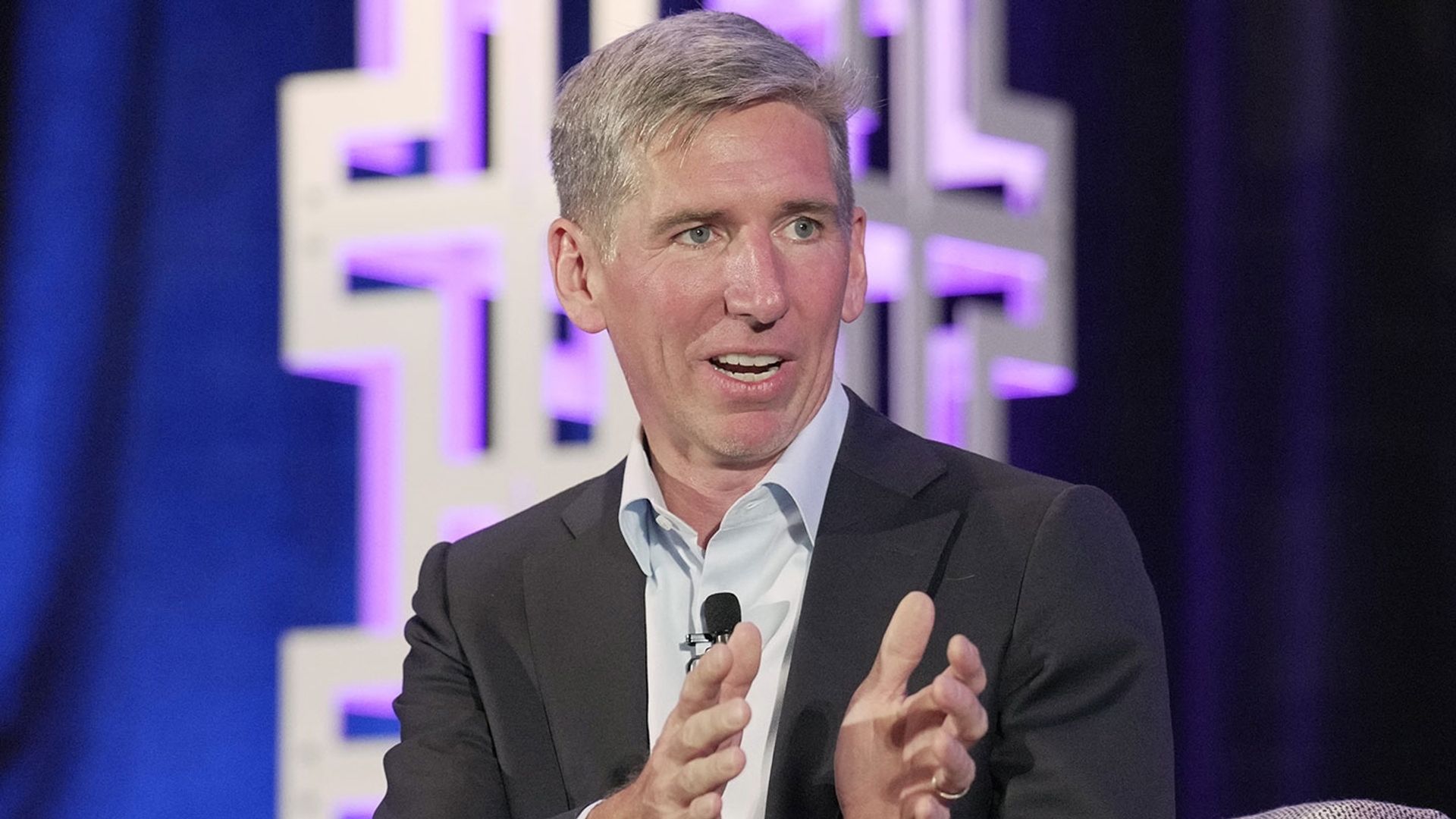
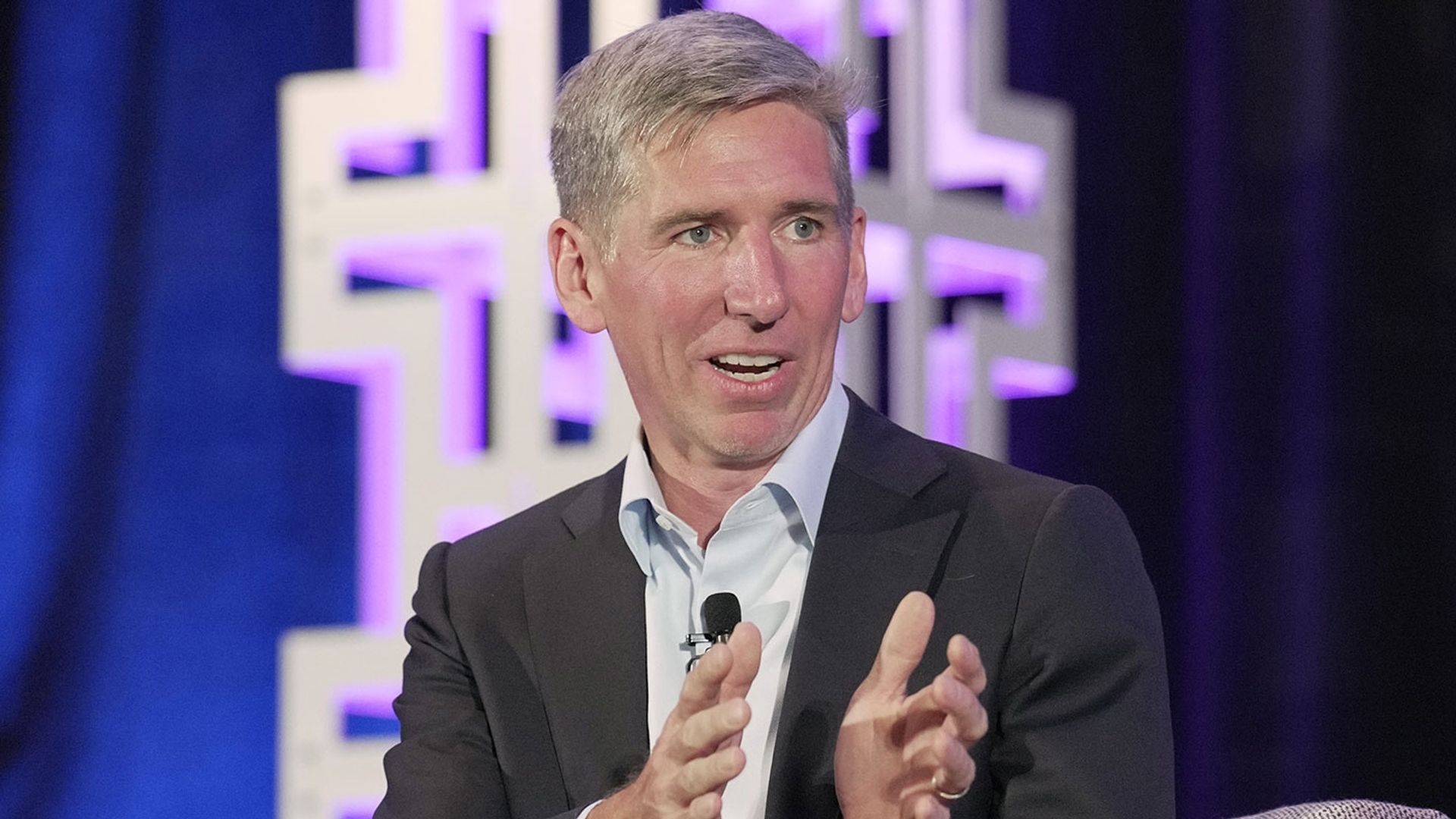
Bitcoin will draw trillions of dollars from institutional investors over the next decade as financial advisers, family offices, pension plans and sovereign wealth funds begin to view it as a mainstream financial asset, Bitwise Chief Investment Officer Matt Hougan told CoinDesk.
The first professional investors to allocate at scale will be financial advisers and family offices, Hougan said in an email interview on Friday. The shift, said Hougan, is already visible in 13F filings for spot bitcoin ETFs and in moves by large wealth firms, including Morgan Stanley and Wells Fargo, to make bitcoin more accessible to clients.
Over time, Hougan expects the money to come from even larger pools of capital: foundations, endowments, pension plans, insurance companies, sovereign wealth funds and central banks.
“It’s a process that will take 10+ years,” Hougan said.
The scale matters. Those institutions control between $100 trillion and $200 trillion in assets globally, he said. A 1% allocation to bitcoin would be enough to support his long-term price targets.
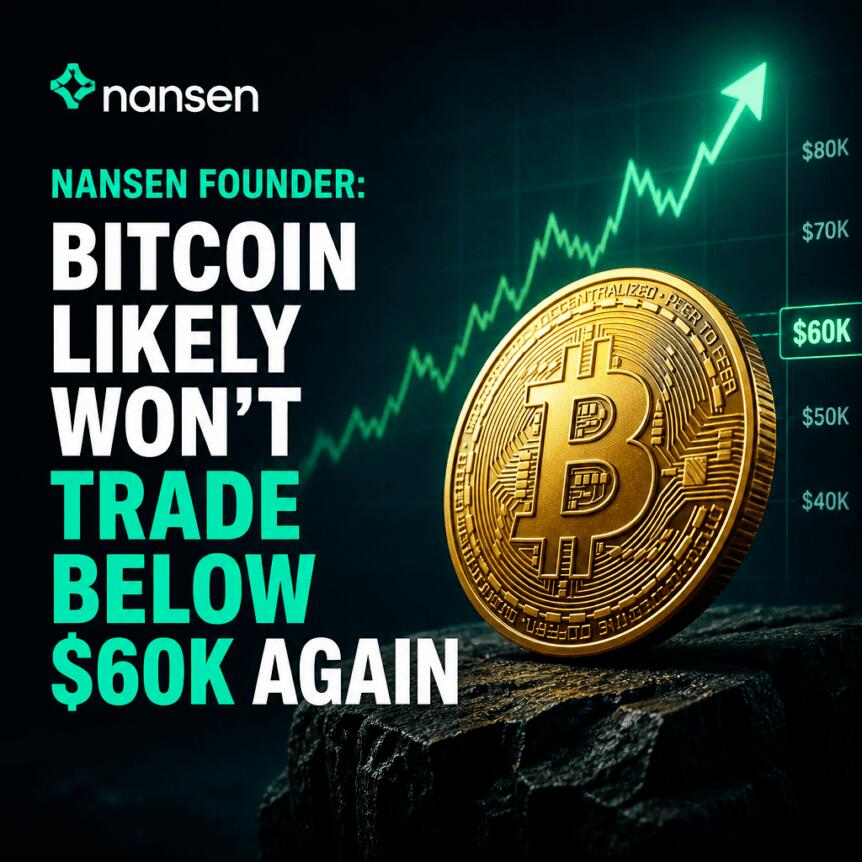
Crypto is starting to shed its long-running “get rich quick” image as the industry shifts toward real-world tokenization, regulated-style trading products, and broader distribution channels, Nansen founder and CEO Alex Svanevik says.
On Cointelegraph Magazine’s “Trade Secrets” show, Svanevik argued that blockchains are moving from a mostly speculative “toy world” phase into a more practical era—where tokenized stocks and index-like trading tied to benchmarks such as the S&P 500 are becoming part of the mainstream conversation.
Key takeaways
- Svanevik frames today’s shift as crypto entering a “real-world era” with tokenized traditional assets and benchmark-style trading.
- He says Solana’s current public narrative—focused on meme coins—is “ridiculous,” and argues the ecosystem has long-term strength.
- Regarding the Robinhood chain launched on July 1, Svanevik sees it as a serious contender to Base and doesn’t expect a token launch.
- On Bitcoin, Svanevik suggests the market may be approaching a bottom around $60,000, while other analysts disagree on how far downside could still extend.
From “toy world” speculation to tokenized real assets
Svanevik’s core thesis is that crypto’s evolution is now being defined by its ability to support non-crypto assets and trading patterns that resemble conventional finance. In his view, the industry’s next phase will be characterized less by isolated retail hype and more by interoperability with widely recognized financial instruments and market structures.
He pointed to the growing availability of tokenized assets and products that mimic index exposure, noting that these developments reflect more than just another cycle of speculative demand. The “interesting spot” for blockchains right now, Svanevik said, is that they create room for non-crypto assets.
Solana’s “meme coin” label misses the bigger picture
While acknowledging the attention Hyperliquid has recently attracted, Svanevik singled out Solana as one of the strongest long-term blockchain ecosystems—despite Solana’s reputation for meme coins.
In the interview, he called the idea that Solana is “just for meme coins” completely misguided, arguing that there is far more underneath the surface. Svanevik emphasized what he described as an “incredible team” behind Solana and said that, in his assessment, the business development effort across the ecosystem is unusually strong.
At the same time, Svanevik drew a clear line between ecosystem performance and token price expectations. He said he is optimistic that Solana as an ecosystem will do well, but added that he doesn’t know what that necessarily means for SOL over the next twelve months—despite acknowledging that price might be expected to rise “intuitively” if the ecosystem strengthens.
Robinhood chain: traction without a token
Svanevik also discussed the Ethereum layer-2 network known as Robinhood chain, which launched on July 1. He suggested the project could “rise up” as a major competitor to Base, largely because of Robinhood’s distribution advantages.
However, he was not convinced Robinhood chain will introduce a token. Svanevik argued that a token may not be necessary if the goal is to bootstrap user adoption and create product momentum. In his view, many projects issue tokens specifically to generate excitement and accelerate early growth—an approach he doesn’t think fits Robinhood’s situation.
He also raised a practical contradiction: launching a token would be counterintuitive for a company that operates a major publicly traded stock on the Nasdaq. Svanevik’s comment was that value is likely better directed toward the existing HOOD stock rather than competing within the same corporate ecosystem through a new token.
“They’ve been able to launch Robinhood chain and get tons of traction without a token.”
Bitcoin: $60,000 as a potential cycle line in the sand
When asked about Bitcoin’s outlook, Svanevik said his personal view is that the market may be near a bottom. He pointed to the current level around $60,000 as potentially representing Bitcoin’s cycle low.
In the interview, Svanevik said he doesn’t expect Bitcoin to go back below $60,000—adding that, based on his long-term perspective, he expects Bitcoin’s role as a hedge against central bank money creation to remain intact. He also suggested he doesn’t see the broader monetary expansion cycle ending anytime soon, which underpins his reluctance to forecast a deeper breakdown.
Still, the market debate is active. The article notes that some analysts were divided on whether Bitcoin has already found a bottom after trading near $60,000 in early February, rebounding, slipping below the level again, and then moving broadly sideways since.
Earlier coverage referenced in the show interview included commentary from veteran investor Michael Terpin, who told Cointelegraph that Bitcoin could face additional declines before reaching rock bottom. According to Terpin’s comments on the Trade Secrets show, the asset could ultimately fall around “66%” from its October 2025 all-time high of $126,100—implying a move into the 40s.
“We still have more pain to go.”
The split between Svanevik’s “near bottom” view and Terpin’s warning of further downside highlights a key uncertainty for traders: whether current price behavior is consolidating near a true cycle low or merely pausing before another leg down.
For readers, the next watch items are straightforward: whether Solana’s long-term ecosystem narrative continues to hold up despite price volatility, whether Robinhood chain sustains traction without token incentives, and—most immediately—how Bitcoin behaves around the $60,000 area as market participants continue to argue over whether “bottom” has already arrived or is still ahead.
Crypto is finally shaking off the “get rich quick” reputation that has defined the industry for more than a decade according to Nansen founder and CEO Alex Svanevik — and it’s not just because nobody’s getting rich right now.
“Crypto assets have kind of been like the ‘toy world’ era of blockchains. And now we’re moving into the real-world era, where you see tokenized stocks, you see people trading indices like the S&P 500 and Hyperliquid,” Svanevik tells Magazine on the Trade Secrets show.
“I think the interesting spot that blockchains are in right now is that they are basically giving a lot of room for non-crypto assets,” Svanevik says.
There are a couple of blockchains that Svanevik is particularly bullish on. While Hyperliquid has captured a lot of attention in the industry recently, Svanevik says Solana is still one of the strongest long-term blockchain ecosystems despite its reputation as the home of meme coins.
Industry has a ‘ridiculous’ misconception about Solana
“There’s been this view that Solana is just for meme coins, which I think is completely ridiculous,” Svanevik says, arguing that there is a lot more to the blockchain, given the “incredible team” behind it.
“Maybe the most effective BD team, if we think broadly, behind that chain; they really are here to win,” Svanevik says.
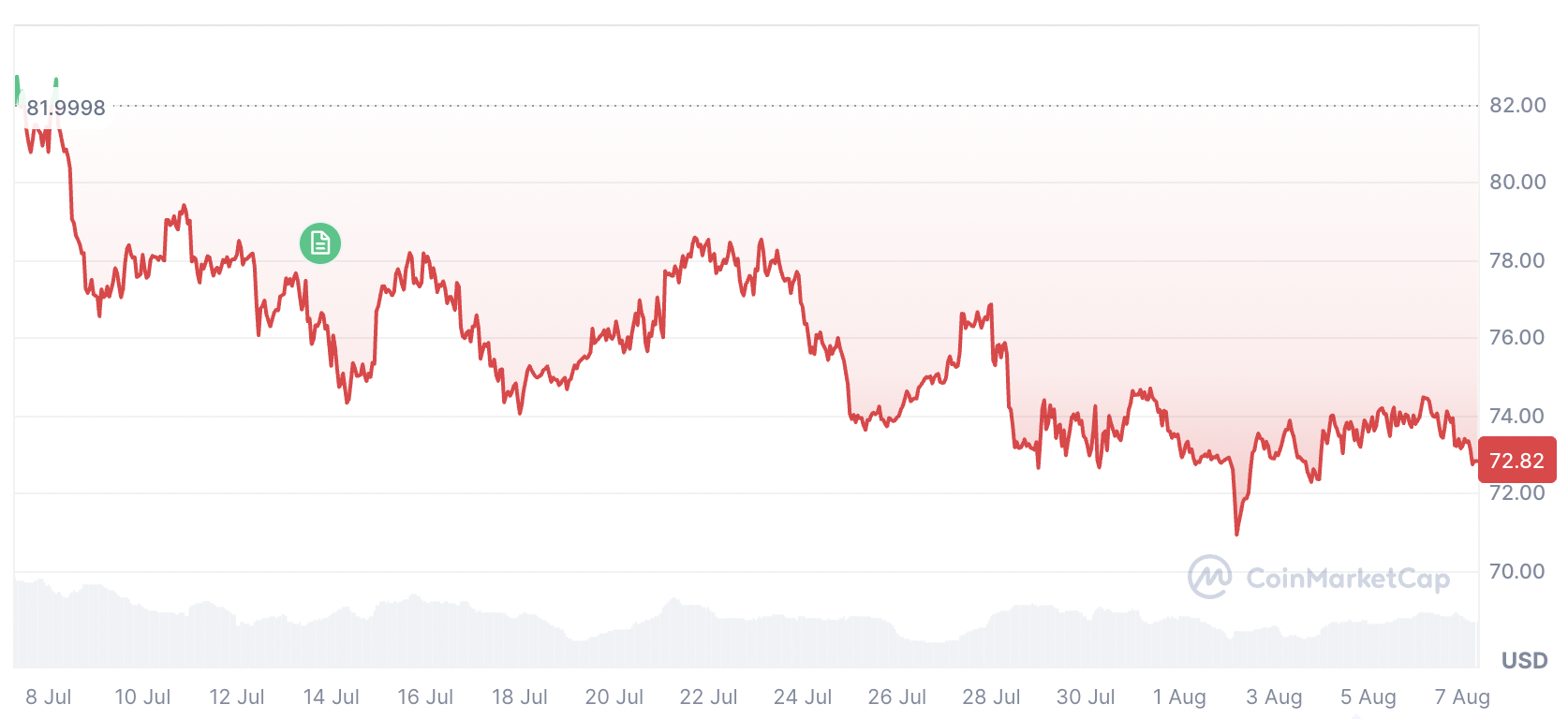
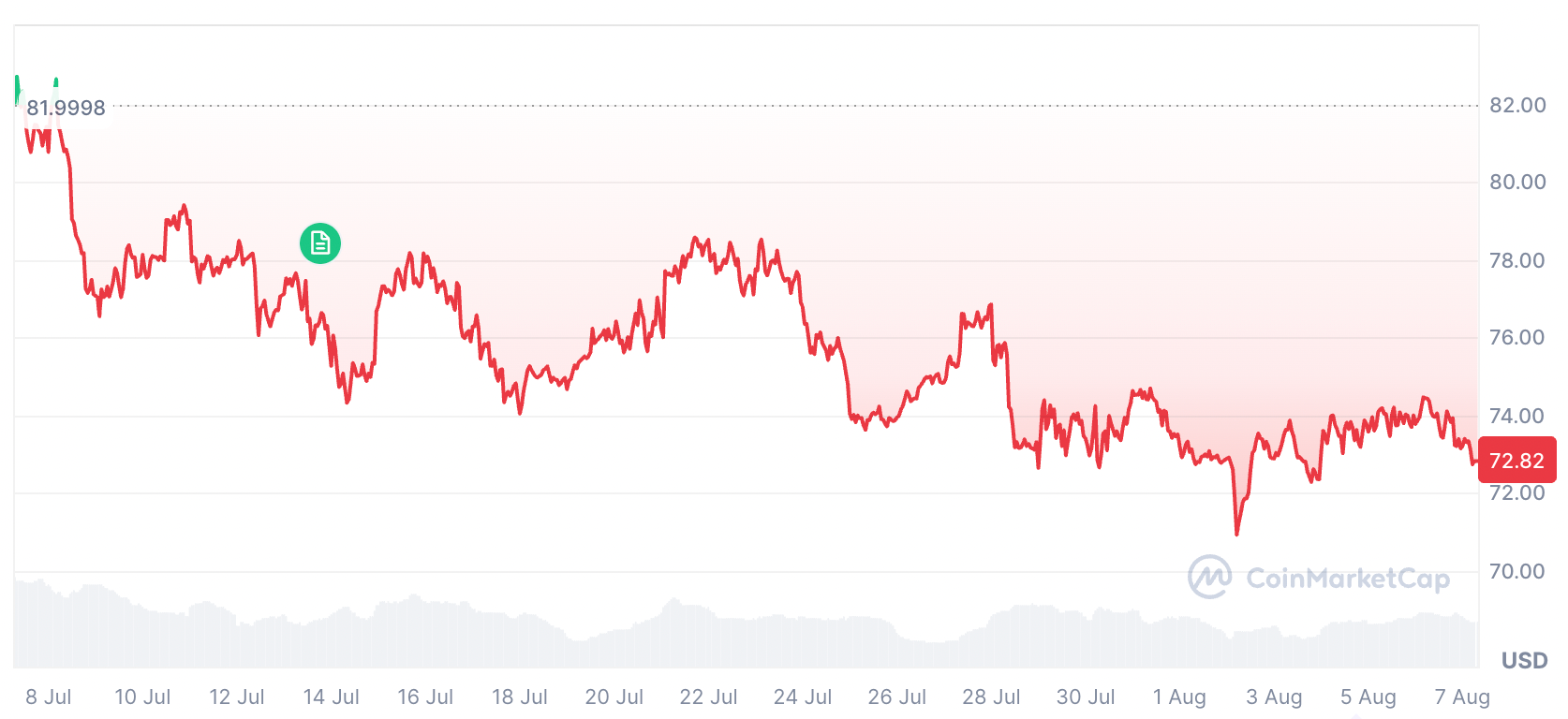
Solana’s price is down 9.60% over the past 30 days. Source: CoinMarketCap
However, he is not putting any bets on what that means for the SOL price in the coming twelve months:
“I think Solana overall as an ecosystem and as a chain is going to do well. I don’t know what that means for the SOL price. I mean intuitively you’d imagine that it’s gonna go up based on what I’m saying.”
Svanevik is one of the crypto industry’s best informed pundits, considering the company he leads, Nansen, is a blockchain analytics firm that tracks millions of labeled wallets and analyzes user activity across networks. Svanevik founded Nansen in 2019 alongside Lars Bakke Krogvig and Evgeny Medvedev.
A few years afterward, Svanevik expanded his involvement in the industry, joining the advisory board of penguin-themed NFT collection Pudgy Penguins in August 2022.
Svanevik is also bullish on the Ethereum layer-2 network, Robinhood chain, which launched on July 1 this year.
“Robinhood seems to kind of rise up as like a big contender to Base. It’s really interesting because Robinhood has such excellent distribution,” Svanevik says. Unfortunately for traders looking to get in early on a trade, he isn’t convinced that Robinhood will launch a token.
“They clearly don’t need to, right? A lot of projects launched tokens as a way to bootstrap excitement in a user base,” Svanevik says.
He also argues that it would be counterintuitive for Robinhood to launch a product that competes with its own stock, given the company is listed on the Nasdaq. “You should just channel all of that value into the HOOD stock. That’s kind of the first thought,” Svanevik says.
“They’ve been able to launch Robinhood chain and get tons of traction without a token.”
Bitcoin may be near a bottom
When it comes to Bitcoin’s price outlook, Svanevik says the market may be approaching a bottom, suggesting that the current level around $60,000 could mark Bitcoin’s cycle low.
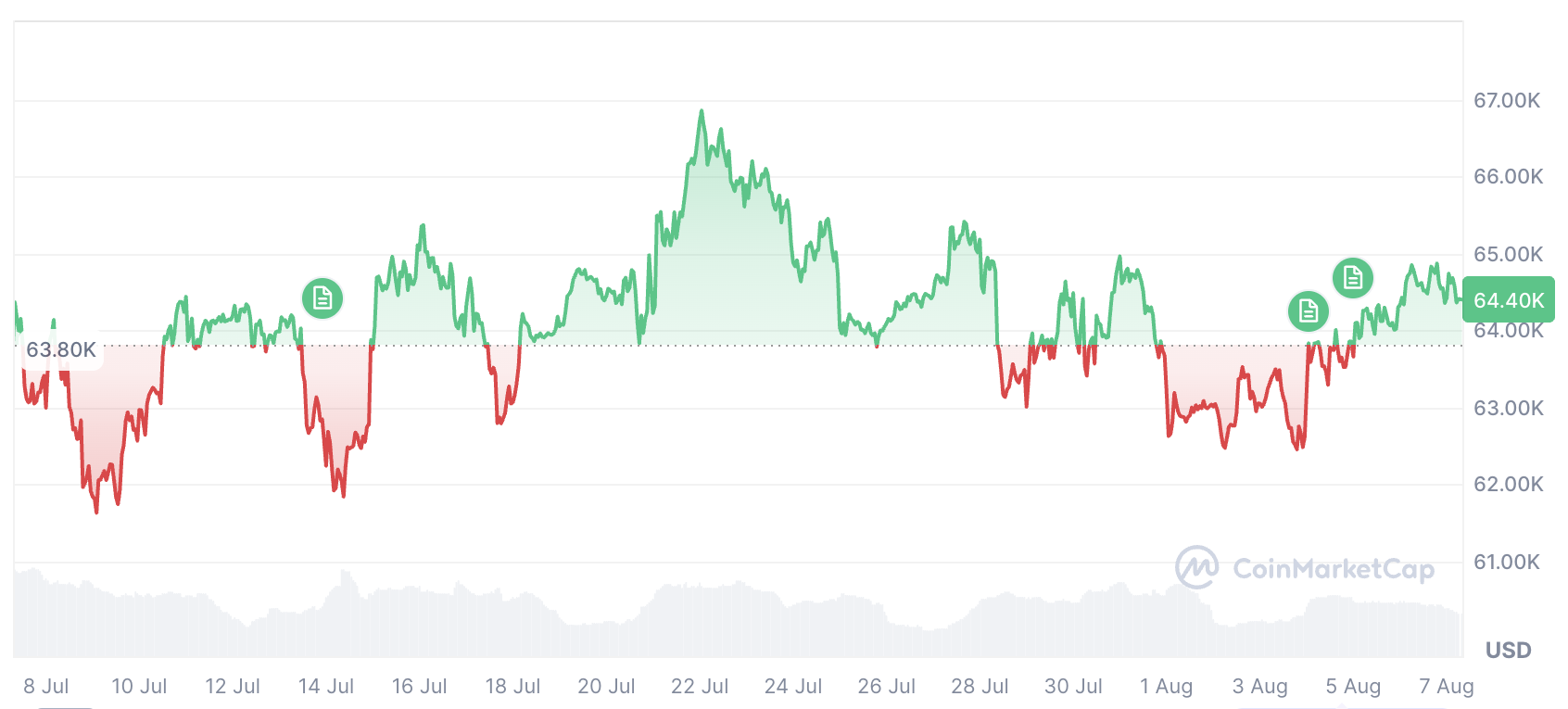
Bitcoin is up 1.50% over the past 30 days. Source: CoinMarketCap
“My personal view is that I don’t think Bitcoin’s gonna go back below $60,000,” Svanevik says. “I think that’s the past… I think forever,” he says. He bases this on the belief that Bitcoin serves as a hedge against central bank money creation, and he doesn’t see the global monetary expansion cycle coming to an end anytime soon.
Bitcoin analysts have been divided over whether the cryptocurrency has already found its bottom after falling to around $60,000 in early February, before bouncing, dipping below the level again and now trading largely sideways.
Veteran crypto investor Michael Terpin recently told Cointelegraph that the asset still has further to fall before hitting rock bottom.
“We still have more pain to go,” Terpin told Cointelegraph on the Trade Secrets show. Terpin said that Bitcoin will ultimately fall “66%” from its October 2025 all-time high of $126,100. “I think that brings us down into the 40s, and I think that’s about where we’re gonna go,” Terpin said.
Cointelegraph publishes long-form journalism, analysis and narrative reporting produced by Cointelegraph’s in-house editorial team with subject-matter expertise. All articles are edited and reviewed by Cointelegraph editors in line with our editorial standards. Some articles contain affiliate links, from which Cointelegraph may earn a commission. These relationships do not influence which products we review or our editorial conclusions. Content published in here does not constitute financial, legal or investment advice. Readers should conduct their own research and consult qualified professionals where appropriate. Cointelegraph maintains full editorial independence.
Wells Fargo chief economist Tom Porcelli is pushing back against market bets on a Federal Reserve (Fed) rate hike, saying he expects the central bank to hold rates through 2026.
His view clashes with a hawkish turn across Wall Street, where several major banks now forecast higher rates. Traders have also sharply lifted their expectations for rate hikes since early summer.
Wall Street Economist Breaks From Market on Rising Fed Hike Bets
The Fed has held its benchmark rate at 3.50% to 3.75% all year. Yet, pricing for tighter policy has climbed.
On Polymarket, the odds of a 2026 hike sit near 55%. They peaked around 78% in late July before easing this month.
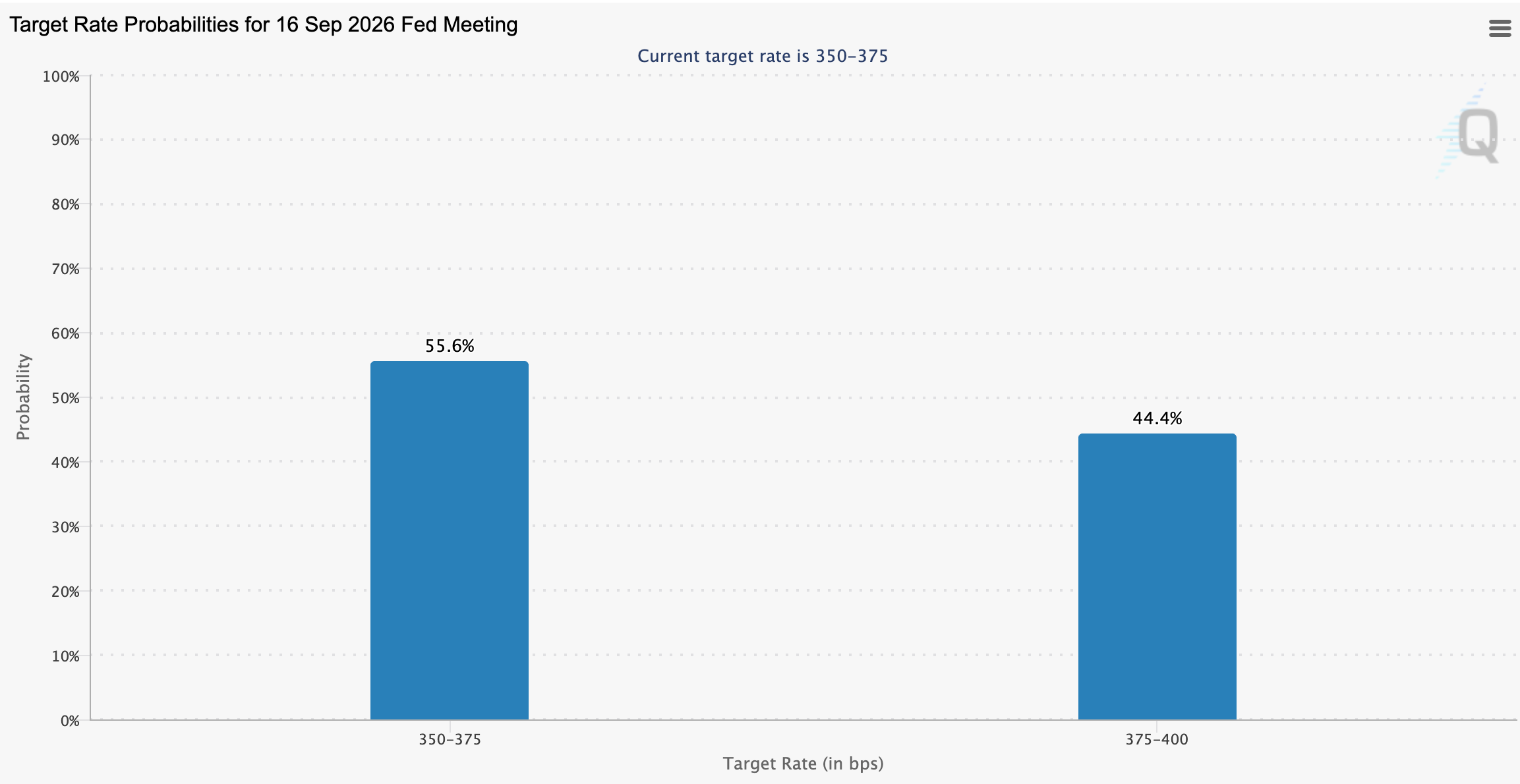
CME FedWatch data tell a similar story. A hold leads the September 16 meeting at 55.6%. However, the odds of a hike rise to 59.2% for October and 77.1% by December.
Follow us on X to get the latest news as it happens

The Street has turned hawkish, too. Bank of America (BofA) forecasts three hikes totalling 75 basis points. In addition, Pacific Investment Management Company (PIMCO) has warned that cuts would prove counterproductive.
Kansas City Fed’s Jeffrey Schmid has also argued for higher rates. Three policymakers dissented at the July meeting in favor of an increase.
The Supply Shock Argument
Porcelli disputes the case for action. In an interview with CNBC, he said current inflation stems from tariffs and energy, both of which are supply shocks the Fed cannot address.
Raising rates would hit growth without curbing those prices, he argued. In his view,
“Raising rates is not a costless endeavor.”
He pointed to cooling core data. Core Consumer Price Index (CPI) inflation runs near 2.5%, and about 2.2% on a three-month annualized basis. That pace sits close to the Fed’s 2% goal.
Porcelli also noted that core CPI and core Personal Consumption Expenditures (PCE) have diverged.
“In terms of the divergence between CPI and PCE is because the weights are different,” he said.
The September 16 Federal Open Market Committee (FOMC) decision now looms as the next major test. It will show whether Porcelli’s contrarian call or the market’s hawkish drift proves correct.
Subscribe to our YouTube channel to watch leaders and journalists provide expert insights
The post Why One Top Economist Says the Fed’s Inflation Fight Can’t Be Won With Rate Hikes appeared first on BeInCrypto.
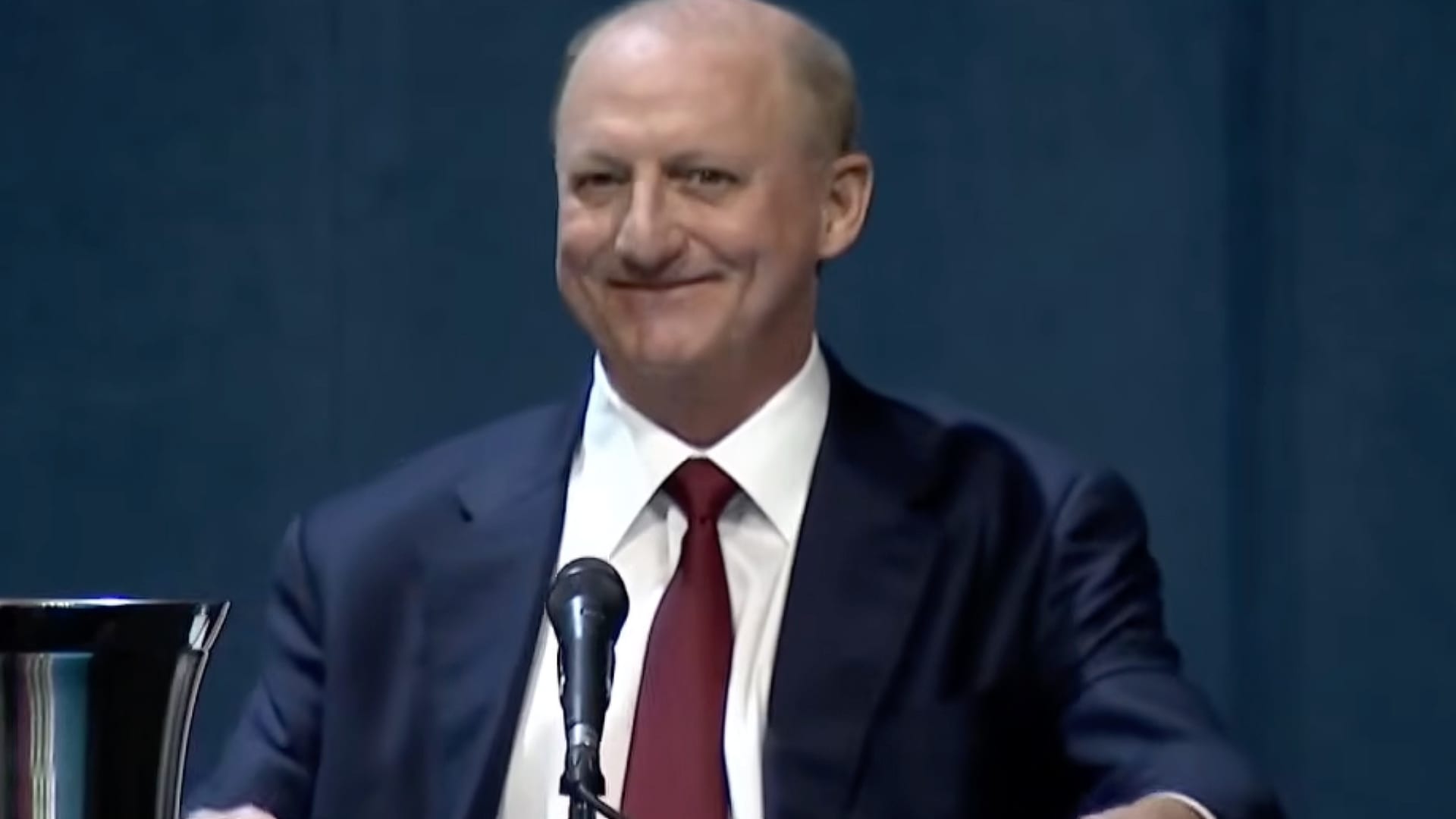
Greg Abel, CEO of Berkshire Hathaway, speaks during the Berkshire Hathaway Annual Shareholders Meeting in Omaha, NE on May 2, 2026.
Berkshire Hathaway‘s operating earnings climbed 16% in the second quarter as strength across its energy, railroad and manufacturing businesses more than offset weaker insurance results.
But the bigger takeaway from the results is that CEO Greg Abel, 64, is starting to put the record cash hoard amassed by Warren Buffett to work on buybacks and stock purchases.
Operating earnings rose to $12.98 billion from $11.16 billion a year earlier. Manufacturing, service and retailing earnings jumped 24% to $4.47 billion, while Berkshire Hathaway Energy’s profit surged 27% to $891 million. BNSF, the company’s railroad, posted a 6% increase to $1.56 billion.
Insurance was a weak spot. Underwriting earnings fell 13% to $1.73 billion from $1.99 billion a year earlier, while insurance investment income declined 9% to $3.06 billion.
Berkshire repurchased approximately $4.5 billion of its own shares during the quarter, the second fiscal period under Abel, who took over from Buffett at the start of the year. The second quarter purchases marked a sharp acceleration from the $235 million spent on buybacks in the first three months of 2026, though it might be less than some expectations heading into the report.
Putting money to work
Berkshire’s cash pile declined to $365.5 billion at the end of June from a record $397.4 billion three months earlier, as the conglomerate deployed capital through other investments along with the buybacks. The quarter included the closing of Berkshire’s acquisition of Taylor Morrison.
Berkshire reversed a pattern of selling stocks, becoming a net buyer of equities in the second quarter with nearly $20 billion in net purchases. The conglomerate had been a net seller of stocks for 14 consecutive quarters before the latest period.
Buffett, now chairman, handed Abel a cash fortress unprecedented in corporate America, but in accordance with the 95-year-old legendary investor’s patient and risk averse approach. Buffett had indicated for a while that he was having trouble finding any values in the equity market. Shareholders have been clamoring for Abel to put some of that cash to work outside of Treasuries.
Shares of Berkshire are up just 3% on the year, underperforming the S&P 500′s 13% gain. Though the stock has on the move lately, rising 9% the last three months.
The filing indicated Alphabet is now among Berkshire’s five largest equity holdings by market value at the end of June, alongside its longtime holdings American Express, Apple, Bank of America and Coca-Cola. Berkshire disclosed a $10 billion investment in the Google parent earlier this year to help fund AI development. Buffett told CNBC that he initiated the Alphabet investment after consulting with Abel.

As the stock market rebounds, it’s important to watch the stocks that are holding up and are most loved by equity analysts. They may end up becoming the next big opportunities. Amazon.com (AMZN), Alphabet (GOOGL) and Eli Lilly (LLY) are three of the seven best stocks where investors can find magnificent profit growth prospects. Investors should be seeking new buy…
Copyright ©2026 Investor’s Business Daily, LLC. All rights reserved. 87990cbe856818d5eddac44c7b1cdeb8
Crypto World
T. Rowe Price defends memecoin exposure in new crypto ETF, calling it a blockchain ‘stress test’
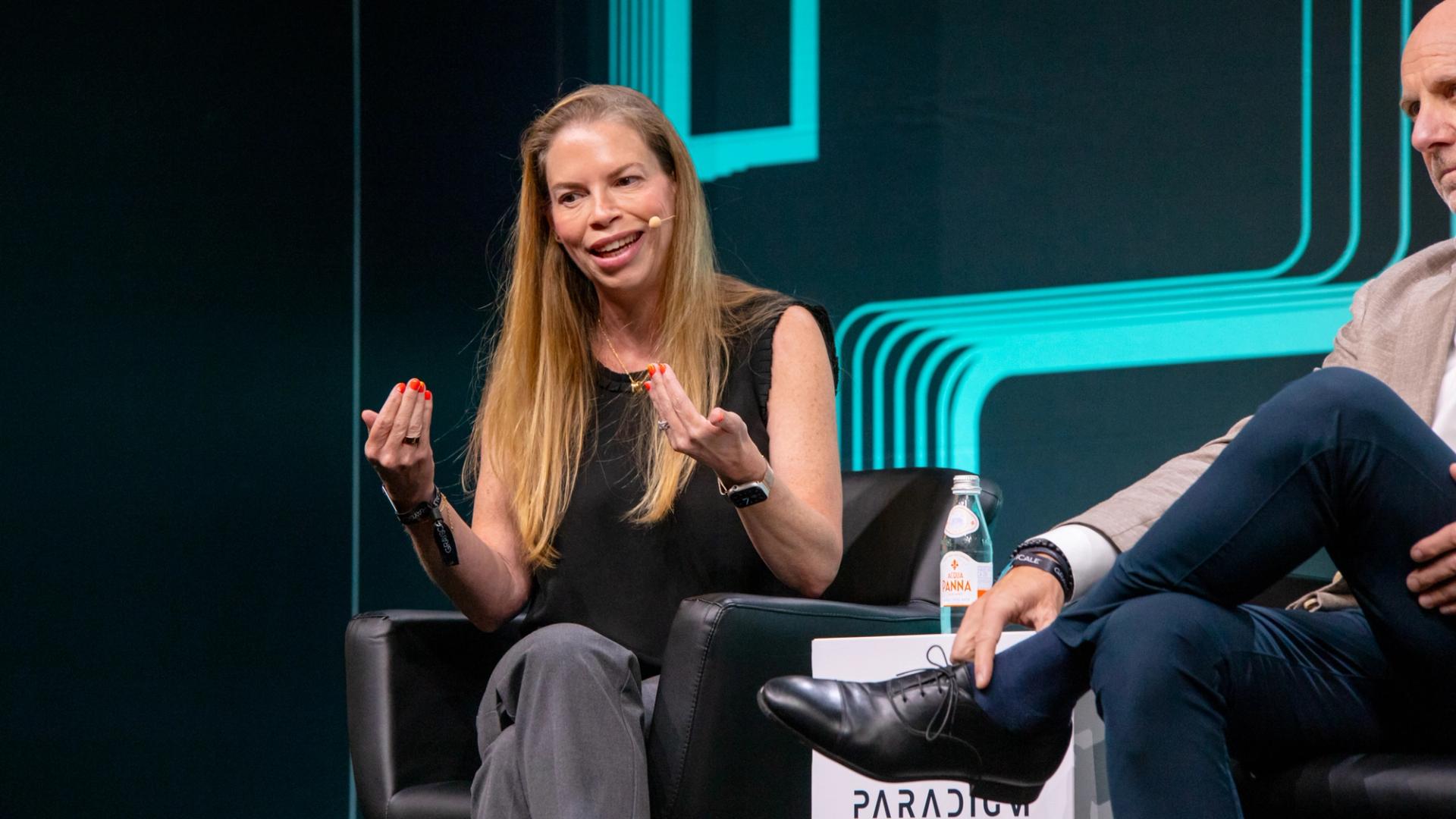
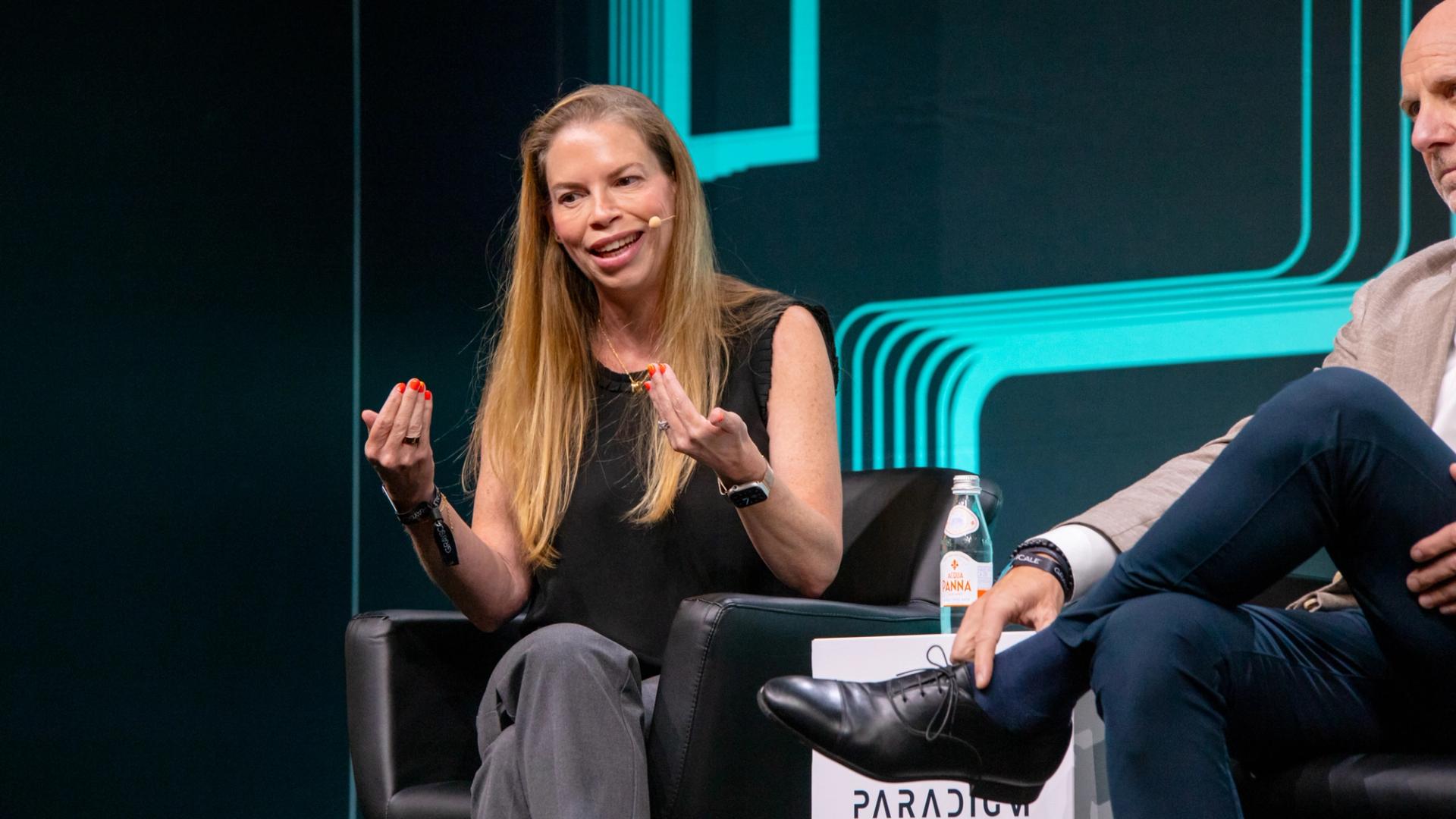
That testing has implications beyond speculative trading. As stablecoins move further into mainstream finance, networks will need to handle everything from multi-million-dollar transfers to everyday consumer payments.
“It needs to be cost-effective to send $100 million in stablecoins,” Macellari said. “But it also needs to be cost-effective to send $3.”
The fund’s active approach also reflects T. Rowe Price’s broader investment philosophy. Unlike many ETF issuers that simply track market-cap-weighted indexes, the firm believes crypto requires active security selection.
“We think good judgment and good decision making and active management probably matters more in crypto than any other asset class,” Macellari said.
Rather than simply buying the largest cryptocurrencies, the team evaluates assets using three layers of analysis: blockchain technology and token economics, ecosystem growth and adoption, and market momentum.
“You can be right on the fundamentals,” she said. “But if crypto Twitter doesn’t see it or doesn’t agree with you, you kind of stand in their way at your peril.”
Building beyond one ETF
Macellari says TKNZ was designed as a “grow-with-me” product that can expand as the regulatory landscape evolves. The ETF currently invests in between five and 15 cryptocurrencies, but its eligible universe is expected to grow as additional assets meet the Securities and Exchange Commission (SEC) generic listing standards.

Cloudflare (NET) stock jumped on Friday after the software maker reported second-quarter earnings and revenue that handily beat Wall Street targets. The software maker’s strategy of focusing on artificial intelligence autonomous “agents” on the internet seems to be gaining traction, analysts say. The company reported financial results after the market close on Thursday. Started in 2009, Cloudflare works to speed…
Copyright ©2026 Investor’s Business Daily, LLC. All rights reserved. 87990cbe856818d5eddac44c7b1cdeb8


Bitcoin holders could lose real BTC if they try to sell coins created by a potential BIP-110 chain split without first separating their balances.
Summary
- BIP-110 nodes will reject non-signaling blocks beginning at Bitcoin block 961,632.
- A minority chain could emerge without built-in replay protection if miners continue producing compatible blocks.
- Transactions selling forked coins could also move the holder’s real BTC on the main chain.
- Miner signaling stood near 2.6% on Friday, far below the proposal’s 55% threshold.
BIP-110 fork could put real Bitcoin at risk
Bitcoin developer Kevin Loaec warned holders against moving coins following a possible BIP-110 chain split, citing the risk of replay attacks.
A split would create two transaction histories with the same balances at the point of separation. Anyone holding 10 BTC before the fork, for example, would initially control 10 coins on each resulting chain.
This second balance may appear to offer free money if a buyer offers to purchase the BIP-110 coins. However, both networks could initially recognize the same signed transaction.
A buyer could copy the transaction used to transfer the forked coins and broadcast it on the main Bitcoin network. If accepted, the seller would transfer the same amount of real BTC to the buyer’s address.
The attack would not give the buyer access to the holder’s entire wallet. Only the inputs included in the signed transaction would move, while transaction fees could be charged on both chains.
Loaec said large holders may be targeted first because a successful replay involving their wallets would produce a larger return. Holders who do not know how to separate the balances can avoid that risk by leaving their coins unmoved, as there would be no signed transaction to replay.
Why Bitcoin could split at block 961,632
BIP-110, formally called the Reduced Data Temporary Softfork, seeks to restrict images, text and other non-payment data stored through Bitcoin transactions for about one year.
Miners can activate the proposal early by signaling support in 1,109 of a 2,016-block difficulty period, equal to 55% of blocks. That threshold has not been reached.
The proposal also contains a mandatory signaling mechanism. From block 961,632 through block 963,647, nodes enforcing BIP-110 will reject any block that does not signal support through bit 4. Lock-in would occur no later than block 963,648, with the new data restrictions becoming active at block 965,664.
Most miners are not signaling for the proposal. The BIP-110 tracker showed support near 2.6% on Friday, making it possible that enforcing nodes reject the chain supported by most Bitcoin mining power.
A second chain would emerge only if miners continue extending the BIP-110 branch. Without enough mining power, that branch could produce blocks slowly or stop advancing entirely. The split is therefore possible, but not guaranteed.
Replay protection remains absent during the split
BIP-110 does not automatically make transactions valid on one branch and invalid on the other. Its restrictions on transaction data are not scheduled to activate until block 965,664, expected around the beginning of September.
Until the chains produce coins unique to their respective histories, ordinary transactions may remain valid on both. Users would need to “split” their coins by obtaining and spending outputs that exist on only one branch before transacting safely.
Wallet providers or exchanges could eventually create tools to handle that process. However, users who attempt to sell forked coins immediately may have no clear way to confirm that the transaction cannot be replayed.
US holders could also face tax and record-keeping questions if the minority-chain coins acquire a market value. The immediate concern, however, is technical: spending the new asset could unintentionally transfer an equivalent amount of BTC.
BIP-110 opposition grows before signaling window
crypto.news previously reported that Blockstream co-founder Adam Back and Strategy founder Michael Saylor opposed BIP-110, citing censorship and chain-split concerns.
Saylor described the proposal as a consensus change arising from a dispute over spam and warned that it would establish a dangerous precedent. Bitcoin developer Luke Dashjr has continued supporting BIP-110, arguing that non-payment data increases storage costs and moves Bitcoin away from its monetary purpose.
The mandatory signaling window is expected to begin this weekend, although the timing could shift because Bitcoin blocks do not arrive at exact ten-minute intervals. Holders who cannot verify that their coins have been separated face the lowest replay risk by waiting until wallets, exchanges, and miners clarify which chain they support.


BitMEX reportedly spent two years seeking a buyer before deciding to close the crypto derivatives exchange, as founder control, declining activity and legal baggage deterred potential acquirers.
Summary
- BitMEX discussed a sale with multiple prospective buyers, including competing exchanges and Exodus.
- Founder control, shrinking revenue and reputation concerns reportedly complicated the negotiations.
- The exchange was reportedly seeking a valuation of about $1 billion during the process.
- BitMEX will restrict trading on Aug. 26 and close the exchange on Sept. 23.
BitMEX held sale talks for two years
BitMEX explored a sale with several potential acquirers over approximately two years but failed to secure an agreement, CoinDesk reported, citing a person familiar with the private discussions.
Potential buyers included rival cryptocurrency exchanges and payment and wallet company Exodus.
Broadhaven Capital Partners reportedly advised the Seychelles-based exchange during the process. crypto.news first reported BitMEX’s search for a buyer in February 2025, although the investment bank had reportedly joined the process in late 2024.
BitMEX was said to be seeking a valuation of approximately $1 billion. However, it remains unclear whether any interested company submitted a formal bid.
The reported sale attempt ended without a deal before BitMEX’s parent company, HDR Global Trading, completed a strategic review and approved the exchange’s closure.
Founder ownership reportedly complicated negotiations
BitMEX co-founders Arthur Hayes, Ben Delo and Samuel Reed left management after U.S. authorities filed criminal charges against them in 2020. Despite their departures, the three reportedly retained control of a large majority of the company’s equity.
According to CoinDesk’s source, the structure concerned at least one prospective buyer and made negotiations more difficult. Acquirers often reserve part of a transaction’s consideration for current managers, giving executives an incentive to remain with the business after a takeover.
That arrangement was harder to structure at BitMEX because the founders remained major owners without operating the exchange, the report said.
The company also experienced a management overhaul while its future remained uncertain. crypto.news previously reported that BitMEX replaced CEO Stephan Lutz with chief financial officer Ina Steiner, and growth chief Raphael Polansky also left. Former chief operating officer Peter Wilkinson subsequently became CEO.
Declining market share weakened buyer interest
BitMEX continued losing trading activity while the sale discussions were underway, limiting the valuation prospective buyers were willing to consider.
Monthly futures volume had exceeded $100 billion during parts of 2021 but declined to between $25 billion and $30 billion in late 2024, according to figures previously cited by The Block. CoinDesk’s source said the deteriorating business made buyers reluctant to pay the revenue multiple normally attached to a growing company.
Activity migrated to larger centralized exchanges and decentralized perpetual futures platforms. Hyperliquid recorded about $2.6 trillion in notional trading volume during 2025, nearly double Coinbase’s $1.4 trillion, according to Artemis data previously covered by crypto.news.
The shift carries added symbolism because BitMEX helped popularize perpetual swaps through its XBTUSD contract in 2016. The product allows leveraged positions without an expiry date and uses funding payments to keep contract prices close to the underlying spot market.
US legal history added reputational risk
BitMEX’s U.S. regulatory record reportedly presented another obstacle. The exchange pleaded guilty to violating the Bank Secrecy Act after authorities accused it of operating without an adequate anti-money laundering program. Its co-founders also pleaded guilty before receiving presidential pardons in 2025.
BitMEX now faces a proposed U.S. class action alleging that it profited from forced customer liquidations. As crypto.news reported, the plaintiffs are seeking the return of 622.66 BTC plus damages. The claims remain allegations and have not been proven in court.
BitMEX will move into reduce-only trading on Aug. 26, preventing users from opening new positions. The exchange will close on Sept. 23, ending an 11-year run. Customers have been asked to close positions and withdraw their assets before operations end.

Lionel Messi’s father Jorge Messi passes away after health battle, aged 68 | Football News

Money Man – Hit Different (Official Audio)

Arbroath FC to hold minute’s silence in memory of tragic Minnie Merriman after alleged murder in town


-

 Politics6 days ago
Zack Polanski: an incitement to murder Nigel Farage?
-

 Crypto World7 days ago
MicroStrategy Post-Earnings CLARITY Act Push Could Add New Catalyst for Its Stock
-

 Crypto World6 days ago
Crypto PAC spending tops $2M in Michigan House race
-

 Fashion1 day ago
Frugal Friday’s Workwear Report: Cap-Sleeve Pointelle Crewneck Sweater
-

 Business6 days ago
DTCR: Deleveraging And A Hedge Fund Collapse Point To A Possible AI Bottom
-

 Tech6 days ago
ESET tracks rise in malicious AI skills and adaptable malware
-

 Crypto World6 days ago
XRP Ledger urges node upgrade after manifest flood
-

 Fashion20 hours ago
Weekend Open Thread: Mattifying Sunscreen
-

 Sports2 days ago
Jordan Coyle & Cordiamo take Laya Arena Stakes at RDS
-

 News Videos7 days ago
Financial Crash Expert: The 90-Day Collapse Timeline They Are Desperately Hiding.
-
 Crypto World5 days ago
US Tech Stocks See Largest 5-Week Inflow in History: Can Nasdaq Break Its Downtrend?
-
 NewsBeat7 days ago
Tourist plane on sightseeing flight in Peru crashes into a field, killing all 13 people on board
-

 Tech6 days ago
Page Not Found | WIRED
-
 Business3 days ago
US stocks: Dow closes at record on Mideast optimism; SpaceX, AMD drag Nasdaq
-

 Politics2 days ago
Reform UK And Greens Sink To Lowest Favourability Ratings To Date
-
 NewsBeat7 days ago
Bikini-clad Jennifer Aniston, 57, kisses hypnotist boyfriend Jim Curtis as they enjoy a romantic getaway aboard a luxury yacht in Spain
-

 Crypto World4 days ago
Polymarket targets $20 billion valuation as competition heats up in prediction market sector
-

 Business4 days ago
Nvidia Stock Climbs 2.5% as Chip Sector Rally Builds Ahead of AMD Earnings, Nvidia’s Own Report Looms
-
 NewsBeat7 days ago
MICHAEL GOVE: Burnham’s Labour doesn’t believe in aspiration, just the soft bigotry of low expectations. From education to home ownership, their message to the working class is… know your place
-

 NewsBeat6 days ago
Trump says he is cancelling strikes on Iran subject to ‘rapidly’ making deal
You must be logged in to post a comment Login