
Crypto World
Aave TVL still down 43% since KelpDAO hack



Aave, one of crypto’s largest lending and borrowing protocols, still hasn’t recovered from the April 18 hack of KelpDAO.
Indeed, the value of all crypto assets in its smart contracts is down 43% since the attack, and 67% below its 52-week high.
Despite KelpDAO users entrusting $26.4 billion to Aave just prior to the hack — already way down on the October 2025 peak of $45.9 billion — there’s a mere $14.9 billion worth of assets in the ecosystem today.
North Korean hackers looted KelpDAO in mid-April, and through its acceptance of KelpDAO tokens as collateral for loans, Aave was left nursing a nine-figure loss.
North Korea infected the industry
Despite Aave itself never being hacked, per its own report, its utility for lending cost it a long-held title as DeFi’s biggest platform. Four months later, depositors still have cold feet.
LayerZero, the KelpDAO bridge’s software provider, blamed North Korea within 48 hours — an early call that outside investigators later confirmed.
KelpDAO takes deposits of ETH, stakes on Ethereum’s blockchain for yield, and issues a tradeable receipt token called rsETH. The thieves parked stolen rsETH on Aave and borrowed real ETH against it, leaving Aave and fellow lender Compound with an estimated $246 million of combined bad debt.
Aave forcibly liquidated the attacker’s positions, industry allies rebuilt the missing collateral, and by late May, Aave had declared every market back to normal.
Nevertheless, the dollar value of its liquidity pools never recovered and Aave still sits about two-thirds below its October peak.
Read more: DeFi sector in $14B meltdown as $290M rsETH hack fallout burns Aave
Aave’s decline matters for DeFi
A non-custodial lending app, Aave ended 2025 with $55 billion in TVL, worth more than half of the DeFi lending sector’s TVL.
For a borrower, TVL isn’t an abstraction. It illustrates the dollar equivalent values of deposits and inventory that borrowers can draw on.
A pool worth 43% less has that much less to lend and much higher volatility.
According to investigators at Chainalysis, North Korea’s Lazarus Group was probably helping KelpDAO attackers while LayerZero’s own post-mortem attributed the operation to a North Korean-linked cluster going by TraderTraitor.
Protos has also reported alleged on-chain links to Bybit and BTC Turk hacks.
Aave never really recovered from KelpDAO
Aave fell about 20% over the day after the theft, from roughly $115 to below $92. The token trades near $89 today, still slightly below its pre-hack level.
Within two days of the hack, Aave’s deposits collapsed by more than $8 billion and its stablecoin pools hit 100% utilization, leaving billions of crypto dollars effectively frozen with no room for anyone else to withdraw stablecoins.
On April 27, Aave announced that a new coalition, DeFi United, had pledged enough ETH to restore rsETH’s full backing. It then liquidated the attacker’s positions on Ethereum and Arbitrum on May 6. Replacement collateral flowed into the bridge’s reserves in tranches through late May.
The panic hadn’t ended even by May. TVL kept draining into June, bottoming near $11.9 billion before partially recovering.
Aave now sits near $14.9 billion, down 43% from hack day.
According to its own report, Aave’s contracts, oracles and liquidation mechanics worked exactly as designed, yet North Korea was still able to withdraw money using phony collateral.
Got a tip? Send us an email securely via Protos Leaks. For more informed news and investigations, follow us on X, Bluesky, and Google News, or subscribe to our YouTube channel.

The exchange that lost $1.46 billion to North Korean hackers is the first large centralized firm to put numbers on a claim bitcoin developers have been making all month.
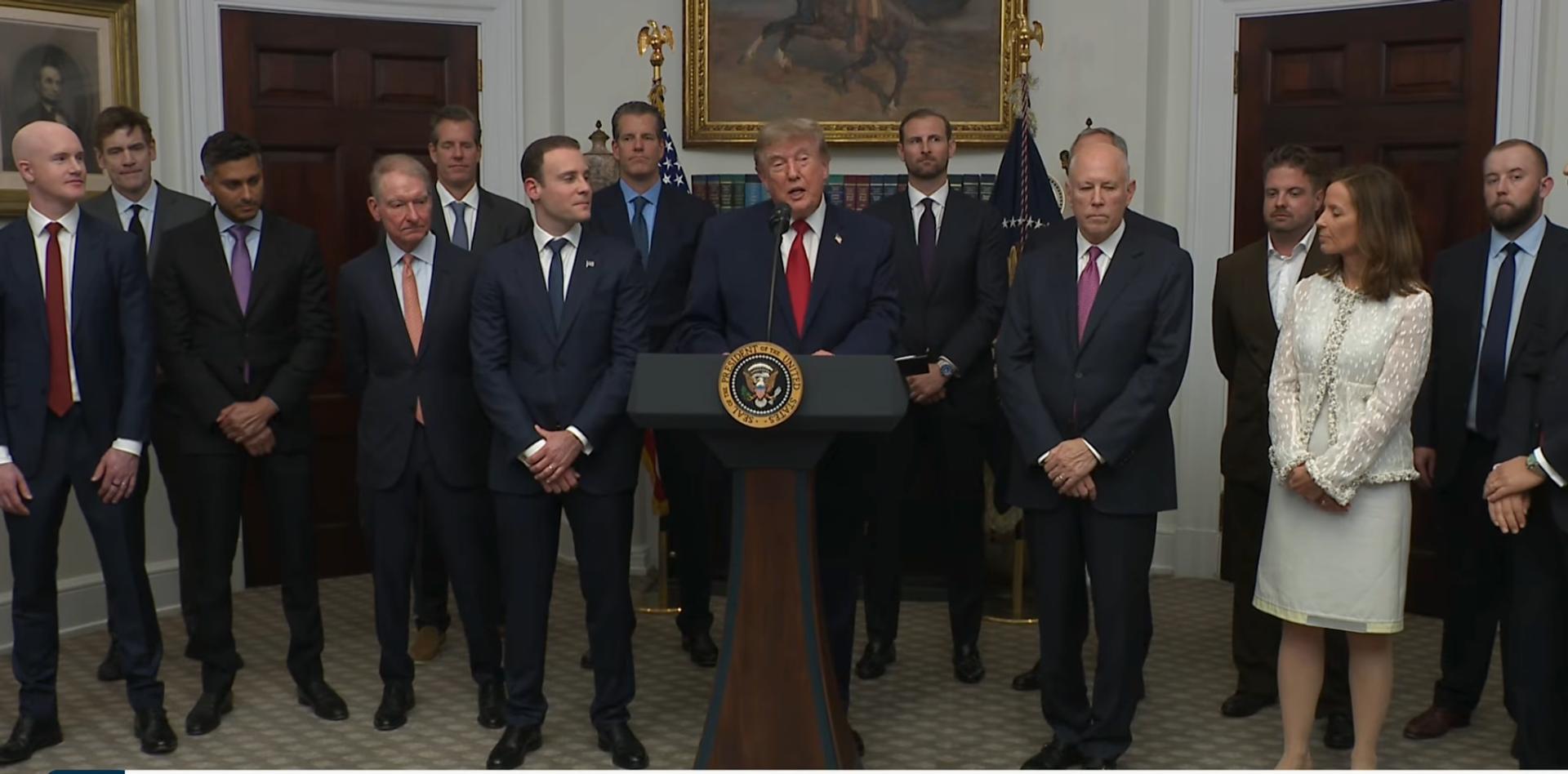
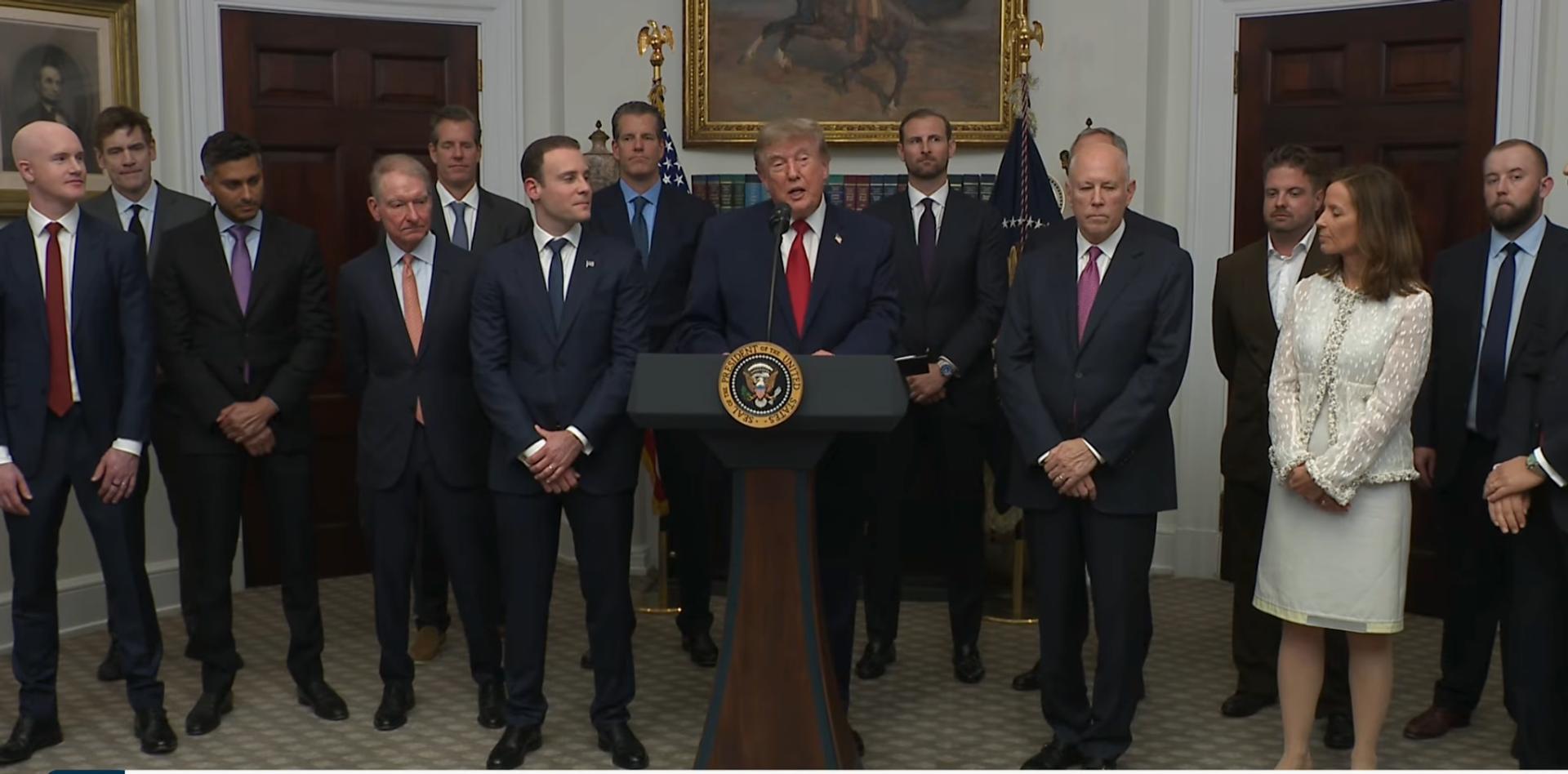
The CEOs from companies across several tech-forward sectors met with the president in advance of this week’s first Innovation Advisory Committee at the CFTC.
Gnosis Chain is transitioning from a standalone Layer 1 to an Ethereum-settled rollup and retiring its independent validator set, according to an announcement from Gnosis Chain and a proposal published on GnosisDAO's governance forum. For GNO stakers, the approved direction would unlock roughly… Read the full story at The Defiant


US President Donald Trump continued to push for passage of a crypto market structure bill as the Senate remains in recess.
In a Wednesday press conference with crypto company executives including Coinbase CEO Brian Armstrong and Gemini co-founders Cameron and Tyler Winklevoss, Trump said members of Congress should pass “a fair version” of the Digital Asset Market Clarity (CLARITY) Act to keep the US “ahead of China.” The market structure bill, passed by the House of Representatives in July 2025, has been stalled in the Senate for months amid concerns about tokenized equities, stablecoin rewards and the Trump family’s potential conflicts of interest with the crypto industry.
Armstrong, who spoke after Trump and US regulatory heads, said that the bill would make crypto policies in the US “durable into the future, so it could survive for decades and decades to come.” The Coinbase CEO speculated that the bill could have “more than 60 votes” once the Senate addressed a cloture motion on Sept. 15.
“It’s very bipartisan, I would say,” said Trump following Armstrong’s comments. “Lot of Democrats support.”
The president pushed for Congress to pass CLARITY in July following the death of Senator Lindsey Graham. Trump said that Graham had been a “big supporter” of the bill, and lawmakers in the Senate should advance CLARITY in his honor.
Crypto company executives’ remarks to the press came one day before the Commodity Futures Trading Commission (CFTC) was scheduled to hold an Innovation Advisory Committee meeting. CFTC Chair Michael Selig said the agency would explore moving forward on crypto regulations at the meeting, as Congress wouldn’t be returning to session for another month.
The White House meeting happened the same week that the Securities and Exchange Commission proposed crypto rules offering companies a safe harbor from tokens being treated as “investment contracts” and certain exemptions for token issuance.
Related: SEC proposes new crypto rules in absence of CLARITY Act
This is a developing story and will be updated as more information becomes available.


Geo founder Yaniv Tal has identified four weaknesses in online information that he says make AI answers unreliable: lost provenance, flattened authority, hidden disagreement, and repeated model-generated errors.
Summary
- Geo separates claims, sources, and supporting evidence inside community-governed knowledge Spaces.
- Tal says human judgment can help rank credible reasoning without removing competing views.
- A Nature study found that repeated training on synthetic material can cause model collapse.
- NIST recommends tracking training sources and incorporating expert human feedback into AI systems.
Geo founder Yaniv Tal told crypto.news that unreliable AI answers often begin with the material models receive, arguing that the internet was designed to distribute information rather than preserve its authority, origin, or accountability.
“AI doesn’t have a truth problem, the internet does,” Tal said.
According to Tal, information loses critical context as websites scrape and republish it. A claim may pass through several pages before entering a training set, leaving a model with the statement but no clear route back to its original source.
Authority also becomes difficult to measure when a research paper, company announcement, and anonymous forum post enter the same data pipeline as text. Tal said models may then treat material with different standards of evidence as if it carries similar weight.
“Provenance collapses. A claim gets scraped, restated, and re-scraped until the original source is unrecoverable,” he said.
Geo founder identifies four failures behind unreliable AI answers
Disagreement creates another problem because language models often combine competing positions into one response. Tal said such compression can hide genuine disputes among qualified experts, giving users a single confident answer without showing that credible alternatives exist.
The fourth weakness arises when AI-generated material returns to the data supply used by later models. Errors can survive repeated publication, while synthetic articles, posts, and summaries make it harder to locate the human-produced material from which a claim originated.
“Models increasingly train on output from other models, so errors don’t just persist, they amplify,” Tal said.
Independent research has documented a related risk. A 2024 Nature study examined what happens when generative models repeatedly learn from material produced by earlier models. Researchers described “model collapse” as a process in which systems gradually lose information about the original data distribution.
Less common material began disappearing during the early stages of the experiments, according to the paper, while later model generations produced distributions bearing little resemblance to the source data. Researchers said access to original, human-produced information remains important as AI-generated material spreads across the internet.
Tal does not classify the four weaknesses as failures confined to model design. In his account, models reproduce flaws already embedded in their training material, including missing sources and a lack of visible distinctions between evidence, opinion, and promotion.
Human verification would rank claims without removing disagreement
Geo’s proposed answer starts by separating a statement from its author and the evidence supporting it. Relationships between entries can show whether one argument supports another, contradicts it, or responds directly to a disputed point.
Once those links are recorded, Geo can order arguments by their assessed strength while retaining competing material beneath them, Tal said. The structure is intended to keep disagreement available without displaying every contribution as an undifferentiated comment feed.
“Pluralism doesn’t have to mean noise,” Tal said. “We think several well-structured competing perspectives is often the more honest answer.”
Geo organizes information through independent communities called Spaces. Its current website lists initial Spaces covering crypto, health, AI, education, world affairs, and US politics.
Members can contribute and participate in discussions, while people with relevant knowledge can apply to become editors. According to Geo, its curator program asks participants to evaluate sources, connect arguments, and add structured information to an open knowledge graph.
The model was developed from Geo Genesis, which entered early access in January 2025. As previously reported, its default governance structure divided participants into Editors and Members. Editors received voting authority, while Members could contribute information to individual Spaces.
Built on the Aragon OSx governance framework, Geo Genesis followed the release of GRC-20, a standard for representing connected knowledge. The Graph said in June 2025 that GRC-20 could let communities publish structured information onchain and retrieve it through subgraphs and Substreams.
Tal, who co-founded The Graph before starting Geo, said expertise would not be assigned by one central authority under the proposed system. Contributors would build a reputation through their work, and Geo intends for that record to follow a person between Spaces.
“Human judgment is the scarce input now, not the redundant one. Machines generate more content than people can process, and almost none of it has anyone accountable for its truth.”
Community governance still faces an identity problem
A human-run knowledge network must still determine whether contributors are genuine, qualified, and independent. Open governance systems can face Sybil attacks, in which one participant creates multiple identities to gain influence over voting, rankings, or rewards.
A June 2026 explainer examined how biometric checks, social trust networks, and zero-knowledge identity tools attempt to verify unique people. Each method involves trade-offs between privacy, attack resistance, accessibility, and control, while AI can help attackers create convincing personas at low cost.
Tal said Geo would rely on contribution records and domain-specific communities rather than allowing anonymous material to carry the same status as claims attached to people with public histories. Editors would apply through individual Spaces, and members would take part in governing the subjects they follow.
“Skin in the game without financial stakes changes the quality of what people are willing to put their name to,” Tal said.
The approach does not remove the need to decide who selects editors, how communities resolve coordinated manipulation, or whether expertise earned in one subject should carry weight in another. Tal described the gatekeeper issue as real but argued that independent Spaces would prevent one institution from controlling every field.
Human involvement has also gained attention in crypto security, where automated tools may detect malicious activity, but users still authorize transactions. In May 2026, a Ledger security report described manual verification and clear transaction displays as safeguards against AI-assisted phishing, fake interfaces, and automated scams.
Onchain records separate transactions from surrounding claims
Crypto is one of Geo’s first Spaces because blockchain activity offers a direct test of the difference between verifiable records and human interpretation, Tal said.
A blockchain can confirm that a transaction occurred at a recorded address and block. It cannot, without additional evidence, establish who controls the address, why funds moved, whether activity was organic, or what a project plans to do next.
“On-chain data is verifiable by construction. A transaction happened or it didn’t,” Tal said. “Everything wrapped around it is claims.”
Project announcements, partnership descriptions, market forecasts, and explanations of token movements therefore require separate treatment, according to Tal. Geo intends to attach such claims to named contributors and preserve their records, including earlier statements that proved wrong.
Promotional activity makes the distinction especially important in digital-asset markets, where teams may present selected metrics beside verifiable transaction data. Tal said a trustworthy knowledge layer should label the categories rather than presenting both in the same voice.
US guidance also calls for provenance and human review
For US developers and companies deploying generative AI, the National Institute of Standards and Technology has recommended several controls that overlap with parts of Tal’s argument.
NIST’s Generative AI Profile, published in July 2024, advises organizations to document training-data sources, monitor the origin of generated material, and evaluate feedback between provenance systems and human reviewers. The voluntary framework also calls for domain experts and affected communities to take part in certain assessments.
Content provenance standards offer another method for recording where digital material originated. The Coalition for Content Provenance and Authenticity uses cryptographically signed Content Credentials to preserve information about who created or changed an asset and how it was edited.
Under the C2PA specification, however, validated provenance does not determine whether an attached claim is good, bad, or truthful. The standard verifies that assertions are connected to the underlying asset, correctly formed, and free from tampering.


During a White House meeting Wednesday, President Donald Trump said CFTC Chair Mike Selig is working to bring the perpetual futures platform into the U.S. under federal rules.

“I mean she thinks that he saved her life, so, like, somebody living with that kind of gratitude—that must feel pretty good,” he continued.
Harp has not publicly spoken about her relationship with Trump in the wake of Ossoff’s comments, but other White House aides and Republicans have jumped to her defense.
In a statement to TIME, White House spokesperson Davis Ingle called Ossoff’s comments “cringeworthy” and criticized the Senator’s voting record, in addition to defending Harp.
“Natalie Harp is one of the most loyal and hardest working aides on President Trump’s team,” Ingle said in the statement.
Eric Trump, one of the President’s sons, slammed CNN’s interview with Preston Harp on Wednesday.
“What absolute trash,” he said in a post on X. “Natalie is an incredible young woman — a cancer survivor, a genuinely good person, and arguably one of the hardest-working people in the White House. She’s deeply committed to my father, to her job, and to this country.”
President Donald Trump says regulators are working to bring Hyperliquid into the US in a fully compliant and legal fashion. HYPE, the exchange’s native token, jumped more than 6% within hours.
Trump spoke at a White House gathering of crypto and technology executives on Wednesday, August 19. He credited Commodity Futures Trading Commission (CFTC) Chairman Michael Selig with leading the effort.
Trump Says Selig Is Clearing Hyperliquid’s Path Into the US
The president hosted executives from Coinbase, Ripple, and Nasdaq, according to Sinclair coverage of the event. Securities and Exchange Commission (SEC) Chair Paul Atkins and Selig also attended.
During his remarks, Trump singled out Hyperliquid, the dominant decentralized perpetual futures exchange. The platform blocks US users, treating them as restricted persons under its terms of use.
“I understand that Mike (Selig) is also working to bring Hyperliquid into the United States in a fully compliant and legal fashion,” Trump said.
Selig, meanwhile, said he will provide more details on the regulatory path forward on Thursday.
That timing is no accident. The CFTC convenes its first-ever Innovation Advisory Committee meeting in Washington on Aug. 20, with an agenda covering crypto assets, artificial intelligence, and prediction markets.
Groundwork for this moment has been building for months. The Hyperliquid Policy Center and wallet provider Phantom jointly petitioned the CFTC in July, asking regulators to exempt DeFi protocols from legacy exchange rules.
How Will HYPE Price React?
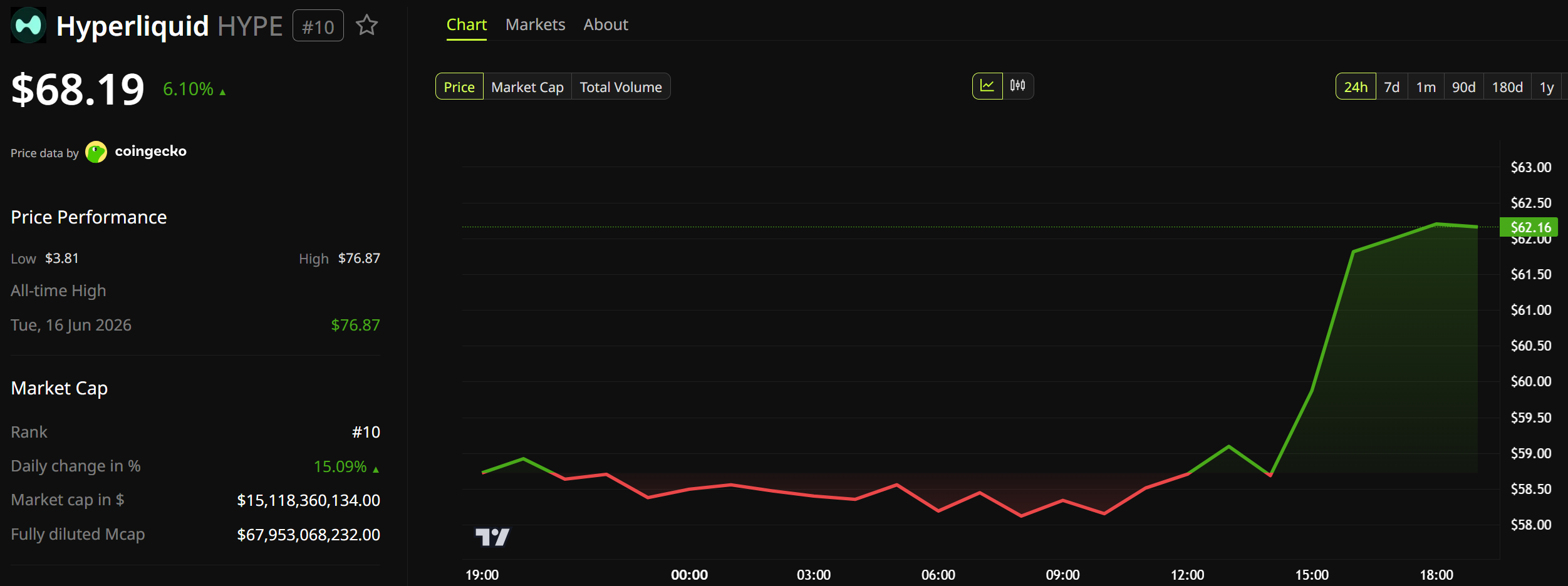
Markets answered quickly. HYPE gained over 6% in the past 24 hours, trading near $68.19 at press time.

The token’s market cap now sits at roughly $15.1 billion, ranking tenth among all crypto assets. HYPE first flipped Dogecoin in May to secure that top-10 position.
A legal US pathway would matter beyond sentiment. American traders represent the deepest derivatives market in the world, and onshore access could channel new volume and fees into the Hyperliquid ecosystem.
However, resistance persists. CME Group and NYSE parent ICE have reportedly lobbied for tighter scrutiny of the platform, citing manipulation and sanctions exposure concerns.
Compliance questions also remain unresolved. Registration, know-your-customer checks, and leverage limits do not map neatly onto a non-custodial, onchain order book.
Thursday’s committee meeting now stands as the immediate catalyst. Whether Selig offers concrete terms or broad principles could shape the next leg of the HYPE price outlook.
The post Trump Says CFTC Working to Bring Hyperliquid to US. How Will HYPE Price React? appeared first on BeInCrypto.


The pseudonymous co-founder of crypto casino Rollbit is the subject of an attempted doxxing by an online researcher who says the platform stole from customers, and that some of its games are rigged.
According to a 128-page dossier put together by X user “HalfRetired,” Rollbit co-founder “Lucky” is actually a British national called Daniel Robert Dixon.
The dossier specifically ties Lucky to Counter-Strike:Global Offensive (CSGO) video game skin-gambling scandals, and claims that his companies have refused valid withdrawal requests by some customers.
The research also alleges that Rollbit and its predecessor Interdax built their audiences by quietly paying crypto influencers BTC to shill the platforms through referral links, without disclosing those payments to followers.
It frames the practice as a repeat playbook, as though the same undisclosed arrangements that drove Interdax’s growth were carried over to Rollbit.
HalfRetired’s allegations rely on UK corporate filings, years-old CSGO community drama, and social media posts by aggrieved customers.
Protos hasn’t verified their accuracy and doesn’t endorse these allegations.
Who is Daniel Robert Dixon?
Dixon was a director of DAX Financial Technologies Ltd and International Digital Assets Exchange Ltd, a derivatives exchange known as Interdax.
Interdax offered up to 100x leverage before it was dissolved in 2022. Dixon is listed as an Interdax co-founder.
Because Rollbit’s parent company is licensed in Curaçao, official UK registers cannot confirm that Dixon is Lucky, nor that he owns Rollbit.
HalfRetired’s claim rests on a screenshot of a CSGO Empire user called “Monarch” who is widely known in that community, and on other secondhand posts from social media.
Rollbit co-founder “Razer” has publicly denied any Dixon or CSGO Diamonds connection, a denial that HalfRetired calls dishonest. People have alleged that Dixon is Lucky since at least 2025.
Rollbit hasn’t publicly responded to HalfRetired’s dossier.
Read more: Crypto gambling livestreams to be banned from Twitch after $200K scam
Livestream rigging?
HalfRetired revived the 2016 CSGO Diamonds scandal, which saw streamer “m0E” accuse the site’s owner — who HalfRetired alleges is Dixon — of secretly feeding livestreamers advance dice roll outcomes.
The dispute ended after CSGO developer Valve sent cease-and-desist letters.
After m0E publicly accused the site of predetermining outcomes for promoted players, its owner admitted in a post, “We made a mistake with m0E and decided to tell him some of his future rolls in an effort to make his stream more entertaining on our site.”
In July 2016, CSGO Diamonds went offline.
Withheld withdrawal requests?
HalfRetired also catalogs a pattern of user complaints. “Rov777,” for example, claims Rollbit froze a $250,000 balance in June 2026.
Another, “anonadep,” said the platform withheld a withdrawal request that HalfRetired estimated at more than $29,000.
HalfRetired argues that Rollbit cited a different justification each time for delays, such various regional restrictions, once certain users tried to cash out winning balances.
Selvlabs founder Foobar has separately alleged that Rollbit is “notorious for stealing people’s money” by “locking accounts” and “delaying payouts.”
‘Provably fair’
Rollbit also markets its in-house games as “provably fair,” but HalfRetired doubts that claim.
A 2023 analysis alleged that Rollbit’s then-current Plinko game changed the server seed for every bet.
Changing a server seed breaks the mathematical design that makes provably fair games trustworthy.
In a standard setup, the operator publishes a cryptographic hash of a secret server seed before gameplay. The player supplies a client seed, and the result is derived from both.
Once the server seed is disclosed, the player can verify the commitment and reproduce the result, provided the protocol and implementation are sound.
Changing the server seed after new gameplay rounds removes that commitment.
HalfRetired argues that Rollbit previously let its house server choose when to serve a favorable seed. HalfRetired conceded the analysis didn’t establish that Rollbit was cheating currently, only doubting the fairness of its historical games.
Rollbit has since said it moved several games to a verifiably random system requiring no revealed server seed. The older design at the center of unfairness allegations is no longer in use.
Got a tip? Send us an email securely via Protos Leaks. For more informed news and investigations, follow us on X, Bluesky, and Google News, or subscribe to our YouTube channel.


Similar setups have historically produced below-average 90-day and 180-day bitcoin returns, said the asset manager.

These 7 Cool Denim Styles Are Trending in 2026 — See Them

Pollination Group Limited of Boroughbridge in liquidation

HDV: The Monthly Payout Change Doesn’t Solve Its Problems (NYSEARCA:HDV)





-

 Fashion5 days ago
Weekend Open Thread: Ann Taylor
-
 Sports6 days ago
This U.S. Amateur is a glimpse into golf’s future in more ways than you think
-
 Tech5 days ago
11 Ways to Rank Your Videos
-
 NewsBeat5 days ago
Myanmar says over 300,000 Rohingya refugees verified for repatriation as exodus enters ninth year
-

 Sports5 days ago
Birmingham 2026: Day 6 Timetable for Irish Athletes
-

 Politics4 days ago
SEQ Code: The Three Letter Boarding Pass Code That Could Give You The Worst Seat
-

 Tech6 days ago
DeepSeek Harness launches as open source rival to Claude Code, alongside V4-Pro on API with higher prices
-

 Crypto World2 days ago
OCC Greenlights Trump Family Crypto Firm for Trust Charter
-

 Tech2 days ago
Qwen3.8-27B runs frontier-class coding agents and reasoning locally, no cloud API required
-
 Entertainment5 days ago
10 Netflix Shows That Quietly Became Modern Classics
-

 Fashion5 days ago
Weekly News Update, 8.14.26 – Corporette.com
-
 Tech4 days ago
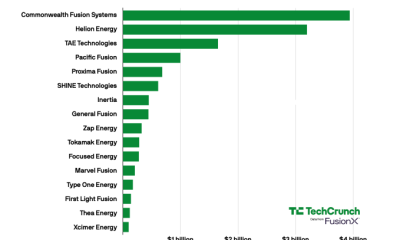
Every fusion startup that has raised over $100M
-
 Entertainment5 days ago
Marvel Studios Reveals New X-Men Cast Including Adam Driver and Sadie Sink
-

 Fashion7 days ago
The Details Do the Dressing
-

 Business5 days ago
Facebook Down Now? Users Report Login And Loading Problems As Outage Trackers Monitor Ongoing Issues
-

 Crypto World6 days ago
Robinhood Chain Approaches $1B TVL as Uniswap Integration Boosts Liquidity
-

 Fashion5 days ago
Cart Confidential Vol. 44 – Julia Berolzheimer
-
 Business4 days ago
Monarch Mutual Fund set to enter MF space with maiden overnight fund; files draft with Sebi
-

 Tech6 days ago
Troubleshooting Video Delay On The Raspberry Pi
-

 Entertainment6 days ago
Eva Longoria’s Bubblegum Pink Bikini Turned Heads in Spain
You must be logged in to post a comment Login