
Crypto World
A'ja Wilson






The first public earnings from Elon Musk’s space company reveal the real cost of holding bitcoin on a balance sheet under the new accounting rules. The numbers tell a story that the “laser eyes” crowd would prefer to skip.
Summary
- SpaceX reported second quarter revenue of $7.8 billion, beating Wall Street expectations by $900 million, but its bitcoin holdings fell from $1.64 billion at the end of 2025 to $1.10 billion at the end of June 2026, a decline of $540 million that flowed directly through the income statement.
- The company disclosed it holds 18,712 BTC in its SEC filing, more than double the 8,285 coins that on-chain analytics firm Arkham Intelligence had tracked to SpaceX wallets as recently as May 2026, suggesting the company aggressively accumulated bitcoin in the weeks surrounding its $86 billion IPO.
- Under the FASB fair-value accounting standard (ASU 2023-08) that took effect for fiscal years beginning after December 15, 2024, companies must now report both gains and losses on crypto holdings through the income statement each quarter, replacing the old impairment-only model that could only write values down.
- SpaceX is the first major company to report its initial quarterly earnings as a public entity under the new rules during a significant bitcoin drawdown, making its filing a template for how markets will react to crypto volatility on corporate balance sheets.
- The timing is particularly exposed: on August 6, roughly 912 million shares held by employees and early backers become eligible for sale, and the bitcoin loss will factor into every analyst model used to price that unlock.
SpaceX topped every financial estimate Wall Street had for it. Revenue came in $900 million above consensus. Adjusted EBITDA nearly tripled year over year to $3.5 billion. The net loss narrowed from $1.0 billion to $541 million. By every operational measure, the company’s launch business, Starlink subscriber growth, and AI infrastructure expansion are performing ahead of schedule.
None of that made the stock go up after hours. SPCX fell six percent in extended trading on August 4, the same day the Nasdaq 100 gained 3.3 percent. The reason is not in the revenue line. It is in the balance sheet, where 18,712 bitcoin sat at the end of June worth $540 million less than they were worth six months earlier.
This is the first time a company of SpaceX’s size has published quarterly earnings as a newly public entity while holding a significant bitcoin position during a major drawdown. The filing is not just an earnings report. It is a live demonstration of what the new FASB fair-value accounting rules do to a corporate income statement when bitcoin drops 33 percent in six months.
What the filing actually shows
SpaceX’s SEC filing disclosed $1.10 billion in digital assets as of June 30, 2026, down from $1.64 billion at the end of 2025. The $540 million decline represents the mark-to-market impact of bitcoin’s price falling from roughly $87,600 at the end of December 2025 to approximately $58,800 at the end of June 2026, a 33 percent drop.
The 18,712 BTC position is itself a revelation. As recently as May 18, 2026, on-chain analytics from Arkham Intelligence showed SpaceX holding 8,285 BTC in Coinbase Prime custody, a position that had been unchanged since June 2022. The SEC filing showing 18,712 BTC means SpaceX acquired approximately 10,427 additional bitcoin in the weeks surrounding its June IPO.
That acquisition timing is significant. SpaceX was buying bitcoin while the price was falling, accumulating more than $600 million in additional exposure during a period when the asset was in a sustained downtrend. Whether this was a deliberate dollar-cost averaging strategy, part of the IPO capital allocation plan, or simply the transfer of previously untracked cold storage into the disclosed entity is not clear from the filing. What is clear is that the company’s bitcoin exposure is substantially larger than the market believed before these earnings.
The net loss of $541 million is almost exactly equal to the decline in bitcoin holdings. Strip out the crypto mark-to-market, and SpaceX’s core operations would have been approximately breakeven, a significant milestone for a company that has historically reinvested aggressively at the expense of profitability.
How the new accounting rules changed the math
Before FASB ASU 2023-08 took effect, companies that held bitcoin classified it as an indefinite-lived intangible asset. Under those rules, if bitcoin’s price fell below the carrying value at any point during a quarter, the company had to write the asset down to the lowest price reached. But if the price recovered, the company could not write the value back up. The accounting was one directional: losses were permanent on the books, gains were invisible until the company sold.
This created a perverse incentive structure. A company that bought bitcoin at $60,000 and watched it fall to $30,000 and then recover to $60,000 within the same quarter would still report a $30,000 per coin impairment loss. The balance sheet would show the asset at $30,000 even though it was trading at $60,000. The only way to recognize the recovery was to sell the bitcoin and realize the gain, which defeated the purpose of holding it as a long-term treasury asset.
Strategy, formerly MicroStrategy, reported a $670 million impairment loss in its fourth quarter 2024 earnings under the old rules. That loss appeared on the income statement despite bitcoin’s price being higher at the end of the quarter than at the beginning. The loss reflected intra-quarter price dips that triggered mandatory write-downs, not actual economic losses.
The new standard, which applies to fiscal years beginning after December 15, 2024, replaces this with fair-value measurement. Companies report bitcoin at its market price on the last day of the quarter. If the price goes up, that gain flows through the income statement. If it goes down, that loss flows through the income statement. The accounting now reflects economic reality in both directions.
For SpaceX, this means the $540 million loss is real in the accounting sense but potentially temporary in the economic sense. If bitcoin recovers to its year-end 2025 price, SpaceX would report a corresponding $540 million gain in a future quarter. Under the old rules, the $540 million loss would have been permanent on the books regardless of any price recovery.
The arithmetic of corporate bitcoin at $63,000
The current bitcoin price of approximately $63,000 creates a specific set of exposures for the major public company holders. The arithmetic illustrates why SpaceX’s earnings report sent a ripple through every corporate treasury that holds bitcoin.
SpaceX holds 18,712 BTC at a current market value of approximately $1.18 billion. Every one percent move in bitcoin’s price changes SpaceX’s reported earnings by roughly $11.8 million. A ten percent quarterly swing, which is historically common for bitcoin, would produce a $118 million line item on the income statement, positive or negative.
Strategy holds approximately 580,000 BTC, making it the largest corporate holder by a wide margin. At $63,000, that position is worth roughly $36.5 billion. A one percent bitcoin move changes Strategy’s reported earnings by $365 million. Strategy’s entire business model is now a leveraged bitcoin bet, so investors expect this volatility. But for companies where bitcoin is a treasury allocation alongside an operating business, like SpaceX, Tesla, and Block, the earnings volatility creates a communication problem.
Tesla sold roughly 75 percent of its bitcoin position in 2022, retaining a smaller allocation. Block holds bitcoin as both a treasury asset and a product feature through its Cash App. Neither company has the combination of a massive bitcoin position and a first-ever public earnings report that made SpaceX’s filing uniquely consequential.
The problem for CFOs considering a bitcoin treasury allocation is straightforward: under fair-value accounting, the bitcoin position will dominate the earnings narrative in any quarter where bitcoin moves significantly. SpaceX beat revenue estimates by 13 percent and tripled its EBITDA, and the post-earnings conversation is about bitcoin. That is the cost of holding a volatile asset on a public balance sheet under mark-to-market rules.
Why SpaceX bought more bitcoin into the decline
The increase from 8,285 to 18,712 BTC is the most under-discussed element of the filing. SpaceX more than doubled its bitcoin position during a period when the price was falling.
Several explanations are plausible. The most straightforward is that SpaceX used a portion of its IPO proceeds to purchase additional bitcoin as part of a predetermined treasury allocation strategy. The $86 billion IPO raised substantial capital, and allocating roughly $600 million to bitcoin would represent less than one percent of the company’s market capitalization.
Another possibility is that the Arkham Intelligence data was incomplete. On-chain analytics can only track wallets that have been identified and linked to a known entity. If SpaceX held bitcoin in wallets that Arkham had not attributed to the company, the “new” purchases may actually be the disclosure of a position that already existed but was not publicly known. The SEC filing requires disclosure of total holdings regardless of which wallets hold them.
A third explanation is that the increase reflects bitcoin received as payment for Starlink subscriptions or launch services. SpaceX began accepting bitcoin payments for certain services in 2022, and accumulated bitcoin from customer payments would appear in the total holdings disclosed in the SEC filing.
Whatever the reason, the decision to maintain or increase bitcoin exposure while the price was declining signals that SpaceX’s bitcoin position is strategic rather than opportunistic. Companies that view bitcoin as a short-term trade typically sell into weakness. Companies that view it as a long-term treasury allocation buy into weakness. SpaceX’s behavior matches the second pattern.
The August 6 share unlock and the bitcoin overhang
Two days after this earnings report, on August 6, approximately 912 million SpaceX shares held by employees and early backers become eligible for sale. This is the first major share unlock since the June IPO, and it will significantly increase the stock’s public float.
The bitcoin loss complicates the unlock pricing. Every analyst covering SPCX must now model the bitcoin position as a source of earnings volatility. A shareholder deciding whether to sell at unlock must factor in not just SpaceX’s launch revenue and Starlink growth but also their view on bitcoin’s price trajectory for the remainder of the year.
If bitcoin remains at $63,000 or falls further, the Q3 earnings report will show another markdown or a flat position at best. If bitcoin recovers to $80,000, SpaceX would report a gain of approximately $318 million, which would make Q3 earnings look dramatically better without any change in the underlying business.
This is the volatility import problem. By holding 18,712 BTC, SpaceX has imported the volatility of the bitcoin market into its equity. Shareholders who bought SPCX for exposure to the space economy and Starlink’s subscriber growth now also have exposure to bitcoin’s price, whether they wanted it or not. There is no way to separate the two exposures in the stock price.
The unlock timing creates a specific risk scenario. If bitcoin drops further between now and August 6, unlocking shareholders face the prospect of selling into a stock that carries both the dilution pressure of increased float and the uncertainty of a declining bitcoin position. Conversely, if bitcoin rallies before the unlock date, some shareholders may hold rather than sell, reducing the supply pressure. Bitcoin’s price has become a variable in SpaceX’s equity supply and demand dynamics, a relationship that did not exist before the company went public with a significant crypto position.
For institutional investors analyzing the unlock, the bitcoin position complicates standard models. A fund that typically evaluates aerospace companies based on launch cadence, satellite deployment, and government contract revenue must now incorporate a cryptocurrency price forecast into its SpaceX model. Many institutional investors lack the internal expertise or mandate to evaluate bitcoin as an asset class, which may lead them to apply a discount to SPCX shares simply because the bitcoin exposure introduces a risk factor they cannot model with confidence.
The earnings call problem: when bitcoin overshadows the business
SpaceX’s post-earnings price action illustrates a dynamic that every corporate bitcoin holder will face: the bitcoin line becomes the story, regardless of how the rest of the business performs.
Consider the information hierarchy that analysts process after an earnings release. Revenue beat by 13 percent. EBITDA tripled. The net loss narrowed by nearly half compared to the prior year. Under normal circumstances, these numbers would produce a positive after-hours reaction. Instead, SPCX fell six percent.
The bitcoin loss did not cause a financial crisis for SpaceX. The company has billions in cash and growing revenue streams. The $540 million decline is a paper loss that could reverse in any future quarter. But earnings reports are not evaluated in isolation. They are evaluated relative to expectations and narratives, and the narrative for SpaceX’s first public earnings was supposed to be about the launch business and Starlink momentum. Instead, the narrative became about bitcoin.
This is the communication tax that bitcoin imposes on any company that holds it. Investor relations teams must prepare for bitcoin questions on every earnings call. Analysts must build bitcoin price sensitivity tables into their models. Media coverage will lead with the bitcoin loss or gain rather than the operational metrics that management considers more relevant to the company’s value.
For a company like Strategy, which has explicitly positioned itself as a bitcoin investment vehicle, this is not a problem. Strategy’s investors bought the stock specifically for bitcoin exposure. But for SpaceX, Tesla, Block, or any operating company that holds bitcoin as a treasury allocation, the communication tax is real and recurring. Every quarter where bitcoin moves more than ten percent in either direction, the earnings narrative will be hijacked by the crypto position.
The CFOs at companies considering bitcoin allocations are watching SpaceX’s experience closely. The question is no longer whether bitcoin can appreciate over the long term. The question is whether the quarterly earnings disruption is worth the potential long-term return, and whether there are ways to gain bitcoin exposure without importing the volatility directly into the income statement.
What this means for the corporate bitcoin thesis
The corporate bitcoin treasury thesis, popularized by Michael Saylor at Strategy, rests on the argument that bitcoin is superior to cash or treasury bonds as a reserve asset because of its fixed supply and potential for long-term appreciation. Under the old accounting rules, this thesis was harder to evaluate because the impairment-only model obscured the true economic performance of the bitcoin position.
Under fair-value accounting, the thesis is fully exposed. Every quarter, the market gets to see exactly how much bitcoin helped or hurt the company’s earnings. SpaceX’s Q2 2026 filing is the first high-profile test case, and the result is a $540 million loss that turned what would have been a breakeven or profitable quarter into a half-billion-dollar loss.
This does not disprove the thesis. Bitcoin could recover and produce gains in future quarters that more than offset this loss. But it does reveal the cost of the thesis in practical terms. A CFO who allocates to bitcoin must be prepared to explain to analysts, board members, and shareholders why the company’s earnings swung by hundreds of millions of dollars because of an asset that has nothing to do with the company’s core business.
For companies already holding bitcoin, the SpaceX filing provides a preview of what their own earnings calls will look like in quarters where bitcoin moves significantly. For companies considering a bitcoin allocation, the filing is a case study in what they are signing up for.
The distinction between stablecoins and bitcoin as corporate treasury assets becomes sharper in this context. A company holding USDC does not face mark-to-market earnings volatility because the asset is pegged to the dollar. A company holding bitcoin does, and SpaceX’s filing quantifies exactly how much.
What to watch
SpaceX Q3 earnings and the bitcoin line. If bitcoin remains near $63,000, the Q3 filing will show a roughly flat or modestly positive bitcoin line. If bitcoin recovers to $80,000 or above, the reversal gain will show the upside of fair-value accounting as clearly as this quarter showed the downside.
Strategy’s next quarterly filing. Strategy holds roughly 31 times more bitcoin than SpaceX. Its earnings volatility under the new accounting rules will be correspondingly more extreme. How Strategy’s stock responds to fair-value reporting will signal whether the market values bitcoin treasury companies differently from operating companies that happen to hold bitcoin.
New corporate bitcoin buyers. Watch whether the SpaceX filing accelerates or decelerates corporate bitcoin adoption. If new companies see the earnings volatility and decide the communication cost is too high, the corporate adoption wave may have peaked. If they see SpaceX buying more bitcoin during the drawdown as a signal of conviction, more may follow.
Bitcoin ETF flows versus corporate treasury flows. The emergence of spot bitcoin ETFs in 2024 gave institutions a way to gain bitcoin exposure without the balance sheet volatility. Corporate treasuries that might have held bitcoin directly may increasingly prefer the ETF route, which does not create income statement effects for the holding company.
The share unlock aftermath. How SPCX trades after the August 6 unlock, and whether insider selling is concentrated or distributed, will reveal whether SpaceX’s own employees and investors are comfortable holding a stock with embedded bitcoin volatility or whether they prefer to reduce that exposure.
What is SpaceX’s bitcoin loss?
SpaceX reported that its bitcoin holdings declined in value by approximately $540 million during the first half of 2026, from $1.64 billion at the end of 2025 to $1.10 billion at the end of June 2026. This decline flowed through the income statement under the new FASB fair-value accounting rules, contributing to the company’s reported net loss of $541 million for the second quarter.
How much bitcoin does SpaceX hold?
SpaceX holds 18,712 BTC according to its SEC filing for the second quarter of 2026. This is significantly more than the 8,285 BTC that on-chain analytics firm Arkham Intelligence had tracked to SpaceX wallets as recently as May 2026, suggesting the company acquired additional bitcoin around the time of its IPO.
What are the FASB fair-value accounting rules for bitcoin?
FASB ASU 2023-08, which took effect for fiscal years beginning after December 15, 2024, requires companies to report crypto asset holdings at fair market value each quarter. Both gains and losses flow through the income statement. This replaced the previous impairment-only model, which required companies to write down bitcoin to its lowest price during the quarter but never allowed them to write the value back up, even if the price recovered.
Did SpaceX lose money on its core business?
No. SpaceX’s core business performed strongly, with revenue of $7.8 billion (beating the $6.9 billion consensus estimate) and adjusted EBITDA of $3.5 billion (nearly triple the prior year). The $541 million net loss was almost entirely attributable to the mark-to-market decline in bitcoin holdings. Without the bitcoin position, the company’s operations would have been approximately breakeven.
Why did SPCX stock fall after earnings?
SPCX fell six percent in after-hours trading despite beating revenue and EBITDA estimates because the bitcoin loss dominated the earnings narrative. The decline also came ahead of the August 6 share unlock, when approximately 912 million shares held by employees and early investors become eligible for sale, creating additional selling pressure concerns.
How does SpaceX’s bitcoin position compare to other companies?
SpaceX’s 18,712 BTC makes it one of the largest known corporate bitcoin holders. Strategy (formerly MicroStrategy) holds approximately 580,000 BTC, making it the largest by far. Tesla retains a smaller position after selling roughly 75 percent of its holdings in 2022. Block (formerly Square) holds bitcoin as both a treasury asset and a product feature.
What would happen if bitcoin recovers?
Under fair-value accounting, if bitcoin returns to its year-end 2025 price of approximately $87,600, SpaceX would report a gain of roughly $540 million in the quarter when that recovery occurs. This is a key advantage of the new accounting rules over the old impairment model, where such a recovery would not have been reflected in the financial statements unless the company sold its bitcoin.
Should companies hold bitcoin on their balance sheet?
The SpaceX filing illustrates the tradeoff clearly. Holding bitcoin provides potential long-term appreciation and diversification from dollar-denominated assets, but under fair-value accounting, it introduces quarterly earnings volatility that can overshadow the company’s operational performance. Companies considering a bitcoin allocation must weigh the strategic benefits against the communication cost of explaining crypto-driven earnings swings to analysts and shareholders.
Disclaimer: This article is for informational purposes only and does not constitute financial, investment, or legal advice. Cryptocurrency investments carry significant risks. Always conduct your own research before making any financial decisions. The information in this article is current as of August 4, 2026.




The CLARITY Act faces a growing risk of failing a procedural Senate vote as Democrats demand progress on ethics, illicit finance and stablecoin yield provisions.
Summary
- Senate Democrats may reject cloture without movement on three unresolved policy disputes.
- The bill was absent from the Senate’s Aug. 4 schedule, leaving little time before recess.
- Majority Leader John Thune said he expects a vote but acknowledged that its path remains uncertain.
- Negotiators warn that crypto campaign spending in August could damage bipartisan talks.
Democrats threaten to block CLARITY Act vote
Senate Democrats have reportedly reached a broad consensus that they will not vote to end debate on the CLARITY Act unless negotiators resolve several outstanding issues.
Punchbowl News reporter Brendan Pedersen said Democratic lawmakers are seeking movement on ethics restrictions, illicit finance rules and stablecoin yield before supporting cloture.
“There is a clear consensus among Senate Democrats right now that — without movement on ethics, illicit finance and stablecoin yield — a cloture vote this week on the Clarity Act will fail,” Pedersen wrote on X.
“Democrats won’t be moved by crypto cash at this point,” he added.
Cloture would allow the Senate to limit debate and move the legislation toward a final vote. Advancing the measure would require 60 senators, meaning Republicans cannot proceed without Democratic support.
Republicans control 53 Senate seats. Assuming full Republican backing, they would still need at least seven Democrats to vote for cloture.
The current vote count does not appear to provide that support, raising the risk that calling a procedural vote before reaching an agreement could produce a public defeat.
Senate schedule leaves little room before recess
The CLARITY Act was not included in the Senate’s official schedule for Aug. 4. No cloture motion had been filed on H.R. 3633 as of Tuesday, leaving the chamber without the procedural step normally required to begin advancing the bill.
Senate Majority Leader John Thune has continued to identify digital asset market structure as a priority. However, government funding remains ahead of the crypto legislation as lawmakers work through a continuing resolution.
“We have a bunch of stuff that we have to finish, and we’ll just stay here until we finish it,” Thune said.
Asked about the CLARITY Act, Thune said he still expected the Senate to address the measure but did not guarantee that it would advance.
“I think market structure we’ll get a vote on. Whether we can get on it or not, we’ll see,” he said.
Senate leaders could still add the bill to the calendar. Still, the lack of a scheduled vote or cloture filing further narrows the window before lawmakers leave Washington for the August recess.
Campaign spending could derail bipartisan negotiations
The dispute has expanded beyond the bill’s policy language to include concerns about political spending by crypto-backed groups.
“If they spend in August, it’s done,” one Democratic aide involved in the negotiations said, referring to the possibility that industry-backed organizations could target competitive races while Congress is away.
Some Democrats believe aggressive campaign activity could make it harder to resume bipartisan negotiations when lawmakers return in September.
Senator Ruben Gallego also questioned whether Republicans were doing enough to preserve momentum.
“We are clearly here, trying to engage in a constructive manner,” Gallego said. “At this point, if they’re not engaging, it’s telling me that they don’t want this to happen.”
The comments indicate that the dispute now concerns both the bill’s substance and the political environment surrounding the negotiations.
What happens next for the crypto bill
Supporters could seek to delay cloture until negotiators reach compromises on ethics, illicit finance protections and stablecoin yield. Avoiding an unsuccessful vote could preserve the bill’s path while lawmakers continue reconciling differences between the House and Senate approaches.
Failure to act before the recess would push the debate into a tighter US legislative calendar. Lawmakers would return with government funding and other priorities still competing for floor time, while the November elections could further limit the opportunity for a bipartisan agreement.
The CLARITY Act is intended to establish a federal framework for digital asset markets and clarify regulatory responsibilities in the United States. Its immediate prospects now depend on whether Senate negotiators can settle the remaining disputes before leaders decide to test support on the floor.

Crypto security leaders are grappling with a growing mismatch: attackers increasingly benefit from cutting-edge, AI-assisted capabilities, while many major crypto firms still lack direct access to the most powerful “frontier” cyber models used for security testing and code hardening.
In June, Coinbase said it had secured access to Anthropic’s restricted Mythos model, and Zcash founder Zooko Wilcox said Anthropic used Mythos to help audit the Zcash protocol at the request of Shielded Labs. Yet other large players, including Binance, have publicly indicated they have not been able to obtain similar access—highlighting an emerging “security divide” across the industry.
Key takeaways
- Major crypto firms have uneven access to restricted frontier cyber models like Anthropic’s Mythos, leaving some with fewer defensive tools than others.
- Executives argue gating advanced models is initially necessary because attackers may adopt new capabilities faster than defenders.
- As publicly available models close the capability gap, industry pressure is likely to increase for wider defender access to restricted tools.
- Recent incidents involving AI-assisted exploitation and wallet/bridge security show why faster defensive iteration is becoming critical.
Why access to “frontier” cyber models is uneven
Anthropic’s Mythos is positioned as a restricted version of a model also related to a more public offering—its developers say the underlying base is similar, but that Mythos removes certain safeguards that limit sensitive cybersecurity work. OpenAI has described a comparable approach, offering different tiers of capability depending on the type of user and intended use, including “Trusted Access for Cyber” for verified defenders.
Binance chief security officer Jimmy Su told Cointelegraph that the gap remains meaningful. According to Su, Binance has been trying to make progress on obtaining such tools, including conversations with other crypto exchanges and investors, but it has not obtained the most advanced model like Mythos.
This uneven rollout matters because the cyber threat landscape is moving faster than traditional security review cycles. In an ecosystem where vulnerabilities can be exploited rapidly—often with automated or semi-automated assistance—having fewer defensive options can translate into slower discovery and patching.
Executives back initial gating—then question the long-term rationale
Crypto security executives interviewed by Cointelegraph said there is likely a legitimate need to restrict initial access to frontier cyber models. The reasoning is straightforward: if a new model enhances attackers more quickly than defenders, it can increase the ecosystem’s exposure before the security community catches up.
Su suggested that controlled rollout can reduce the “blast radius,” especially early on. However, he also argued that the justification changes as competing models become more powerful and more widely available. In that scenario, the pressure shifts to model developers to broaden access—and the key question becomes whether defenders can use the tools effectively at the same pace attackers do.
Michael Coates, chief information security officer at the Solana Foundation, echoed the tension. Coates supported safeguards but said verification and acceptance pathways can slow down legitimate defensive usage. In his view, defenders need a more streamlined process to get advanced models into the hands of teams that can evaluate code and identify issues before they are exploited.
Blockchain Capital’s Sean Cheetham also leaned toward eventual opening. He argued that while malicious actors are skilled, the broader pool of security researchers tends to be larger. If “good people” can scale their defensive work, broader access could ultimately strengthen the ecosystem more than it helps attackers.
Large exchanges and builders still waiting, while some crypto-adjacent firms got in
Binance’s access situation is notable given its scale: DefiLlama data cited by Cointelegraph places Binance’s total assets at $137.8 billion. Despite that footprint, Su indicated the exchange had not reached the highest tier of frontier cyber-model access.
Cointelegraph also reported additional signals of staggered access within the sector. Fireblocks, a major crypto custodian, said in April it had sought access to Mythos. At that time, it relied on Anthropic’s publicly available model for penetration testing rather than restricted access. Uniswap founder Hayden Adams similarly criticized safeguards tied to cybersecurity prompts in relation to Fable 5.
Separately, the Ethereum Foundation said in July that it has been running “coordinated AI agents” to find bugs across its systems but did not specify which models were being used. Cointelegraph reached out to the Ethereum Foundation, Fireblocks, and Uniswap to confirm whether they had received access to restricted frontier models since those earlier statements.
While many crypto players appear to be waiting, some crypto-adjacent organizations have moved ahead. FIS, which provides technology to banks and partnered with Circle last year for USDC payments, said it joined Anthropic’s Project Glasswing program last month. Project Glasswing is designed as a gated channel for vetted cyber defenders and critical software infrastructure organizations to obtain early access to restricted Mythos models.
HackerOne—known for bug bounty and security testing—also said it joined Project Glasswing. Cointelegraph notes that, in this case, testing is limited to HackerOne’s own infrastructure rather than being extended to customer programs.
Cointelegraph reached out to OpenAI and Anthropic for details on how many crypto companies have been granted access to restricted models, but those responses are not included in the article text provided.
Why the stakes are rising: AI-assisted exploitation and faster attacker iteration
The access debate is playing out against a backdrop of security incidents that organizations link to faster exploitation cycles. On Monday, Bitcoin swap service Boltz said it paused its non-custodial bridge after it observed a steady rise in AI-assisted hacking attempts over the past few months. Boltz’s statement, as reported by Cointelegraph, argued that the pattern is that attackers can iterate faster than a smaller security team can find and patch issues.
Hardware wallet maker Coinkite reported last week that some of its Coldcard devices were exploited due to a flaw in wallet seed generation. Coinkite indicated the randomness of the seed generation was less than expected and speculated that the attacker may have used AI to examine previous firmware versions to identify and exploit the weakness—even though the company said it had used “one of the best available AI models” to review its code only weeks earlier.
These examples underscore a key practical problem: even when defenders use advanced tools, the cadence mismatch—how quickly attackers can adapt and how quickly defenders can verify fixes—can still drive outcomes. Access to restricted models may be only part of the answer; process, testing rigor, and deployment speed remain central to reducing real-world risk.
Next, readers should watch whether frontier-model providers expand defender access beyond the current limited pipelines and whether security teams can demonstrate that broader availability improves outcomes rather than accelerating exploitation. The gap between who can test with the most capable tools—and how quickly they can patch—may become one of the defining operational fault lines in crypto security.



Well over $100 million worth of Bitcoin (BTC) has now been stolen through the ongoing Coldcard wallet exploit, said Galaxy Research, but market commentator Joe Consorti has argued that the attacker may struggle to spend much of that haul since every BTC is being tracked on the public blockchain.
Instead of focusing on the size of the theft alone, Consorti said the incident also shows an often-overlooked feature of the OG crypto: while private keys can be compromised, the movement of stolen units remains visible to law enforcement, exchanges, and blockchain analysts.
Transparency Leaves Stolen Bitcoin Under Watch
In a post on X, Consorti wrote:
“The thief who stole $100 million in BTC is going to have a hard time spending most of it. Every coin is sitting in plain sight, tracked by Galaxy, the FBI, and thousands of others.”
He added that Bitcoin “might be the worst money for crime ever invented.” In a video accompanying the post, the analyst pointed out that the exploit was not a failure of the Bitcoin network itself but of wallet software that generated weak seed phrases on affected Coldcard firmware released after March 2021.
He also noted that users who followed recommended self-custody practices still became victims because the underlying randomness used to generate wallet seeds had been weakened.
Galaxy Research has so far identified 1,596 BTC stolen across roughly 7,300 addresses in three confirmed attack waves. If suspected but unconfirmed activity is included, then the losses could reach 2,055 BTC, worth north of $130 million.
According to the firm, about 90% of the stolen Bitcoin has not been moved, while all the coins from the first three confirmed waves are still in wallets controlled by the attacker. It also said that it had shared all the confirmed attacker addresses with US law enforcement agencies, as well as crypto exchanges and blockchain investigation companies.
Despite the scale of the theft and the headlines it has since generated, BTC was trading near $64,000 at the time of writing, up 2% in the last 24 hours, a point Consorti cited as evidence that the market has largely separated the security failure from the Bitcoin protocol itself.
The first confirmed theft emerged on July 31, when 594.5 BTC was swept from about 500 addresses across four blocks. Coinkite, the company behind the Coldcard device, said that the affected seeds carry around 72 bits of entropy instead of the 128 bits they are supposed to have, making them guessable with enough computing power.
The company has since patched newer firmware but cannot fix seeds already generated on vulnerable devices and has advised users of its Mk3, Mk4, Mk5, and Q devices to move their funds to unaffected hardware.
Debate Continues Over Whether the Loot Can Be Laundered
Crypto commentator Shagun had the same idea as Consorti, arguing that blockchain analytics, compliance checks, and operational mistakes would make moving such a large amount of stolen Bitcoin far more difficult than stealing it. Instead, they advised the attacker to return the funds in exchange for a negotiated security bounty.
However, not everyone agreed that the thief would be unable to cash out, suggesting that they could cover their track using privacy tools such as mixers, privacy-focused coins, Taproot transactions, and the Lightning Network.
The post Coldcard Exploit Tops $100M as Expert Says Stolen BTC May Be Hard to Spend appeared first on CryptoPotato.
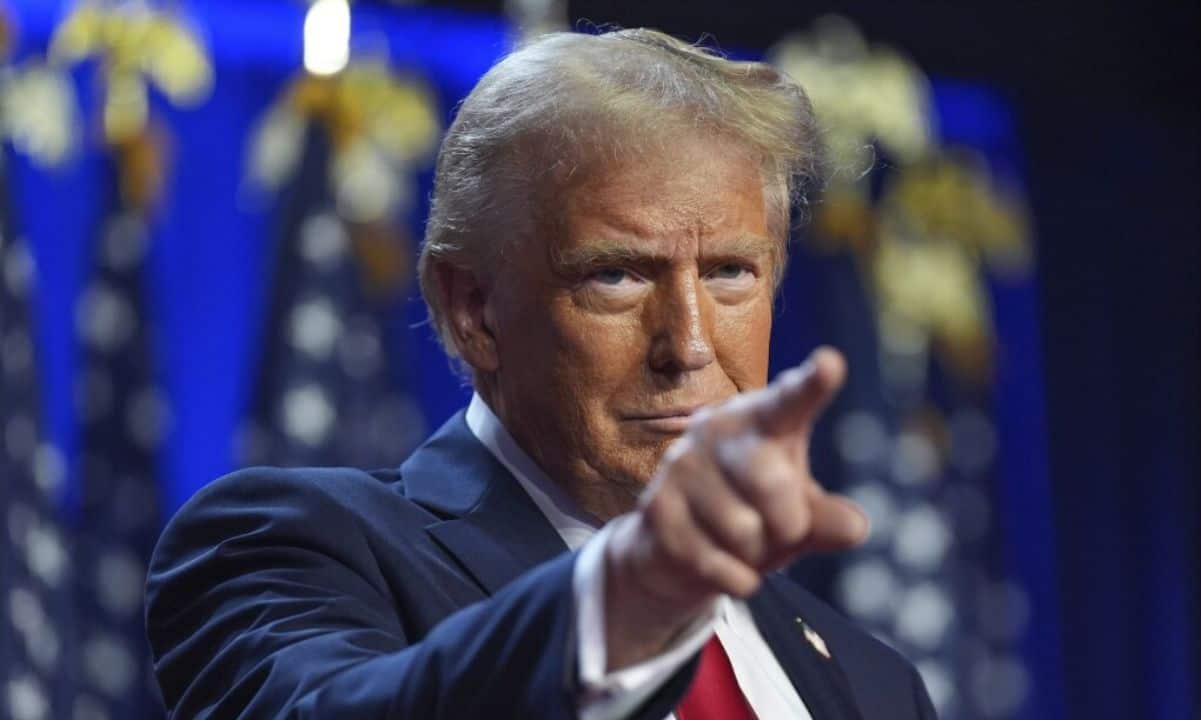
US Senators Elizabeth Warren and Richard Blumenthal have sent a letter to SEC Chair Paul Atkins asking the agency to investigate President Donald Trump’s meme coin, arguing it may have facilitated fraud or unlawful enrichment at the expense of retail investors.
The lawmakers cited reports showing that nearly a million investors collectively lost over $3.8 billion on the token between its launch in January 2025, just days before Trump’s inauguration, and the end of June 2026.
Within the same timeframe, the POTUS and his family have reportedly earned around $636 million through trading fees and other revenue streams connected to the token.
Warren and Blumenthal claimed that the asymmetry between investor losses and insider gains warrants a formal SEC probe into the project’s structure and marketing.
They pointed to allegations that some traders profited from the meme coin’s launch before the broader public could react, which raised some eyebrows about possible insider trading.
They argued that such actions and the subsequent TRUMP price slump of 98% since its all-time high may resemble a “soft rug pull.”
The letter references previous SEC enforcement actions against similar crypto schemes and recent warnings from certain state regulators, such as New York’s, about pump-and-dump and rug pulls in the meme coin niche.
Official Trump skyrocketed to over $70 within hours after launch, but it has crumbled to under $1.50 as of press time. It has also left the top 100 alts by market cap a year and a half after becoming a top 20 asset and the second-largest meme coin.
Meanwhile, the team behind the token has been linked to countless sales as the price tumbled.
The post US Senators Urge SEC to Probe Trump Meme Coin Over Billions in Investor Losses appeared first on CryptoPotato.


The crypto industry’s most important regulatory bill is stuck because of the president’s own memecoin. Senators Elizabeth Warren and Richard Blumenthal just asked the SEC to investigate while the Clarity Act’s ethics provision remains the last unresolved section blocking a vote. The irony is precise: the bill that would bring regulatory clarity to crypto cannot advance because the most powerful person in the country launched a token that embodies exactly the regulatory ambiguity the bill was designed to resolve.
Summary
- Senators Elizabeth Warren and Richard Blumenthal sent a letter to SEC Chairman Paul Atkins on August 4 requesting an investigation into $TRUMP, citing $3.8 billion in estimated investor losses and $636 million in reported profits for the president from the token.
- The Digital Asset Market Clarity Act, the crypto industry’s best prospect for comprehensive US market structure legislation, remains stalled because Democrats and Republicans cannot agree on an ethics provision governing government officials’ involvement in crypto projects.
- The SEC has already declared that memecoins are “generally outside its sphere of influence” and do not qualify as securities under existing law, making enforcement action on $TRUMP unlikely under the current commission.
- President Trump agreed to narrow restrictions on his crypto involvement, but Democrats rejected the proposal as insufficient, and bipartisan negotiators Thom Tillis and Ruben Gallego are attempting to draft compromise language that both parties can accept.
- The $TRUMP token peaked at approximately $46 in January 2025 and currently trades near $1.47, with the vast majority of the nearly one million buyers sitting on losses while the president’s entity collected revenue from transaction fees and initial allocation sales.
The letter arrived on the same day that crypto lobbyists in Washington were counting votes for the Clarity Act, the legislation that would for the first time define which digital assets fall under SEC jurisdiction and which belong to the CFTC. The bill has bipartisan support in principle. It passed committee with votes from both parties. The industry has spent millions pushing it toward a floor vote. And it is stuck, not on a technical question about token classification or a policy disagreement about decentralized exchange regulation, but on the question of whether the president of the United States should be allowed to profit from a memecoin while his appointees regulate the industry.
What the Clarity Act would actually do
The Digital Asset Market Clarity Act is designed to solve the jurisdictional ambiguity that has defined US crypto regulation since the industry’s inception. Currently, there is no clear statutory framework determining whether a given token is a security (regulated by the SEC), a commodity (regulated by the CFTC), or something else entirely.
The bill creates a functional test for determining a token’s regulatory classification. Tokens that are sufficiently decentralized, meaning no single entity controls them, would be classified as digital commodities and regulated by the CFTC. Tokens that function as investment contracts, where buyers depend on the efforts of a centralized team for returns, would remain securities under SEC jurisdiction.
The legislation also creates registration pathways for crypto exchanges, sets disclosure requirements for token issuers, and provides a framework for stablecoin oversight that complements the separate GENIUS Act focused specifically on stablecoins.
For the crypto industry, the Clarity Act represents the difference between operating in regulatory limbo and having a defined set of rules. Projects that have delayed US launches because of enforcement risk would have a path forward. Exchanges that have restricted token listings because of securities law uncertainty would have clearer criteria. Investors would have standardized disclosures that currently do not exist for most crypto assets.
The bill’s journey through Congress has been broadly supported by both parties. The political dynamic that historically divided crypto along partisan lines, with Republicans favoring lighter regulation and Democrats favoring stricter oversight, had begun to shift as both parties recognized the electoral weight of crypto-interested voters. The White House said in April that a deal was “very close.”
Then the ethics provision became the obstacle.
The ethics fight that froze everything
The core dispute is narrow but politically explosive: should the Clarity Act include provisions that restrict senior government officials, including the president, from directly profiting from crypto projects while in office?
Democrats argue that any comprehensive crypto regulation bill must address the conflict of interest created when the president launches a token, profits from it, and simultaneously appoints the regulators who oversee the industry. Without an ethics provision, they contend, the bill effectively legalizes a regulatory framework while leaving the most prominent conflict of interest in the industry unaddressed.
Republicans counter that the ethics provision is scope creep, that the bill’s purpose is market structure regulation, not ethics reform, and that adding restrictions targeted at a specific individual risks turning a bipartisan bill into a partisan weapon. The president agreed to accept limited restrictions, but the proposed language was so narrow that Democrats described it as meaningless in practice.
The negotiation is now in the hands of Senators Thom Tillis, a North Carolina Republican, and Ruben Gallego, an Arizona Democrat, who are drafting compromise language. The White House has been involved in the discussions but has not publicly committed to signing a bill with meaningful ethics restrictions. Every day the bill remains stalled, the industry operates without the regulatory clarity it was designed to provide.
The $TRUMP token: $636 million in, $3.8 billion out
The numbers around $TRUMP are what give the ethics debate its weight. The token launched on January 17, 2025, three days before the presidential inauguration. It peaked at approximately $46 within days and has since declined to roughly $1.47, a 97 percent drop from its all-time high.
According to blockchain data analyzed by The New York Times and confirmed by the president’s 2025 financial disclosure, Trump-linked entities earned approximately $636 million from the token through a combination of initial allocation sales and ongoing transaction fees collected by the protocol.
On the other side of the ledger, nearly one million buyers collectively lost an estimated $3.8 billion. The asymmetry is stark: for every dollar the president’s side earned, buyers lost approximately six dollars. This ratio is not unusual for memecoins, but the involvement of a sitting president in the profit-taking entity is unprecedented.
The token saw brief price spikes around two Mar-a-Lago gala events where top token holders were invited to dine with the president. These events temporarily reversed the price decline but did not sustain any recovery. The galas themselves highlighted the conflict: the president was simultaneously the most powerful figure in crypto regulation and the host of an event that rewarded the largest holders of his personal memecoin.
What Warren’s letter asks and why it probably will not work
The Warren-Blumenthal letter to SEC Chairman Paul Atkins requests a formal investigation into whether $TRUMP involves “potentially fraudulent enrichment schemes with implications for market integrity and stability.” The letter cites the $3.8 billion in estimated buyer losses and the $636 million in presidential profits as evidence of an asymmetry that warrants regulatory scrutiny.
The request faces several obstacles. First, the SEC under Chairman Atkins has taken a materially different approach to crypto enforcement than the Gensler-era commission. The current SEC has paused or dropped numerous crypto enforcement actions and adopted a policy of regulation through rulemaking rather than enforcement.
Second, the SEC issued a staff statement in February 2025 explicitly declaring that memecoins are “generally outside its sphere of influence.” The statement said memecoins have “limited or no use or functionality” and do not qualify as securities under the Howey test because buyers are not investing based on the expectation of profits from the efforts of others. By the SEC’s own published position, $TRUMP is not a security and therefore falls outside the agency’s enforcement jurisdiction.
Third, Atkins was appointed by President Trump. Asking a presidential appointee to investigate the president’s personal financial interests is a political act more than a regulatory one. Warren and Blumenthal know this. The letter’s primary function is political: it creates a public record of the conflict of interest and forces a response (or conspicuous non-response) from the SEC that can be cited in the Clarity Act debate.
The letter is a negotiating tool dressed as a regulatory request. Its real audience is not the SEC. It is the handful of senators whose votes will determine whether the Clarity Act passes with or without meaningful ethics restrictions.
The SEC’s memecoin blind spot
The SEC’s February 2025 memecoin statement created a regulatory gap that the $TRUMP situation has exposed. By declaring memecoins outside its jurisdiction, the SEC effectively created a category of financial product that no federal regulator oversees.
The CFTC regulates commodities and derivatives but has not asserted jurisdiction over memecoins. The FTC regulates consumer fraud but has not acted on memecoin losses. State securities regulators have limited resources and jurisdictional reach for tokens that trade globally.
This gap means that a sitting president can launch a token, collect hundreds of millions of dollars in revenue, watch nearly a million buyers lose billions, and no federal agency has clear authority to investigate or act. The Clarity Act was supposed to fill gaps like this by creating a comprehensive framework for token classification. Instead, the most prominent example of the gap’s consequences is the reason the bill cannot pass.
The irony compounds. If the Clarity Act passes without an ethics provision, it would create a legal framework that implicitly permits government officials to profit from token launches. If it passes with a strong ethics provision, it would retroactively create restrictions that apply to the president’s existing token. If it does not pass at all, the entire industry continues operating without the regulatory clarity that would attract institutional capital, encourage responsible innovation, and protect retail investors from exactly the kind of losses that $TRUMP buyers experienced.
The crypto industry’s impossible position
The crypto industry’s Washington lobby has spent years and hundreds of millions of dollars building bipartisan support for regulatory legislation. The Clarity Act is the culmination of that effort. And it is being held hostage by a conflict of interest that the industry cannot publicly criticize without alienating the president whose administration has been broadly favorable to crypto.
Major industry trade groups have carefully avoided commenting on $TRUMP specifically. Their public statements focus on the importance of passing the Clarity Act and avoid any reference to the ethics provision. Privately, industry leaders acknowledge that the president’s memecoin has complicated their legislative strategy. The token’s existence makes it harder for Democrats to vote for the bill without ethics restrictions, and harder for the industry to argue that ethics restrictions are unnecessary without appearing to endorse a presidential conflict of interest.
Some industry participants have taken a different approach, arguing that the $TRUMP situation is precisely why clear rules are needed. Under a comprehensive regulatory framework, the argument goes, a presidential memecoin would either be subject to disclosure requirements and trading restrictions or it would be clearly categorized as outside the regulated perimeter. Either outcome would be better than the current ambiguity, where no one knows which rules apply and no agency claims jurisdiction.
The problem with this argument is timing. The industry wants the bill passed now, and the ethics provision is the obstacle to passing it now. Any delay risks losing the political window entirely. If the bill carries over into a new Congress, it must restart the committee process, and the bipartisan coalition that brought it this far may not reassemble.
What happens if the bill dies
If the Clarity Act fails to pass this session, the consequences extend beyond the crypto industry’s policy wishlist.
The SEC would continue operating under the enforcement-first approach of previous years or the current hands-off approach, depending on which administration is in power. Neither approach provides the predictable, statute-based framework that institutional capital requires. Major financial institutions that have waited for regulatory clarity before offering crypto products would continue waiting or would structure their offerings under existing securities law, which adds compliance costs that make many crypto products uneconomical.
Token projects would continue launching in offshore jurisdictions and restricting US access, as they have for years. The US share of global crypto innovation and trading volume would continue declining relative to jurisdictions like the EU, which implemented its MiCA framework in 2024 and is already attracting projects that want regulatory certainty.
Retail investors would remain in the current environment where memecoins exist in a regulatory vacuum, where disclosure requirements are absent, and where losses like the $3.8 billion from $TRUMP buyers have no regulatory pathway for investigation or remedy. The Clarity Act does not specifically address memecoins, but its classification framework would at minimum force a determination about whether specific tokens fall under SEC or CFTC jurisdiction, ending the current situation where no agency claims responsibility.
The deepest irony is that the $TRUMP token is the strongest argument for why the Clarity Act is necessary, and simultaneously the reason the Clarity Act cannot pass.
What to watch
The Tillis-Gallego compromise language. The bipartisan pair negotiating the ethics provision will determine whether the bill lives or dies in this Congress. Watch for a draft that restricts government officials from launching new tokens while grandfathering existing ones, a structure that addresses Democratic concerns without requiring the president to divest from $TRUMP.
The SEC’s response to Warren’s letter. A formal investigation is unlikely, but the SEC must respond in some form. The nature of the response, whether a brief dismissal or a detailed explanation of jurisdictional limitations, will signal how the current commission views its role in the memecoin space.
The September legislative calendar. Congress returns from recess with a narrow window before the midterm election cycle consumes legislative bandwidth. If the Clarity Act does not advance in September and October, its chances of passing this session diminish sharply.
$TRUMP token price action. Any significant price movement in $TRUMP, up or down, will reignite media attention on the ethics question. A rally would raise questions about insider trading. A further decline would increase the estimated buyer losses and strengthen the case for an investigation.
Other government official tokens. If $TRUMP’s existence normalizes the practice, other elected officials may launch their own tokens. Each new launch would add pressure to the ethics provision debate and make the Clarity Act’s passage without restrictions increasingly untenable.
What is the Clarity Act?
The Digital Asset Market Clarity Act is proposed US legislation that would create a comprehensive framework for classifying crypto assets as either securities (regulated by the SEC) or digital commodities (regulated by the CFTC). It would also create registration pathways for crypto exchanges and set disclosure requirements for token issuers, providing the regulatory clarity the industry has sought for years.
Why is the Clarity Act stalled?
The bill is stalled because Democrats and Republicans cannot agree on an ethics provision that would restrict senior government officials, including the president, from directly profiting from crypto projects while in office. President Trump’s $TRUMP memecoin has made this provision the central point of contention, with Democrats refusing to support the bill without meaningful restrictions.
What did Warren and Blumenthal ask the SEC to do?
On August 4, 2026, Senators Elizabeth Warren and Richard Blumenthal sent a letter to SEC Chairman Paul Atkins requesting a formal investigation into the $TRUMP memecoin. They cited $3.8 billion in estimated investor losses and $636 million in presidential profits, arguing the asymmetry raises questions about potentially fraudulent enrichment.
Will the SEC investigate $TRUMP?
A formal SEC investigation is unlikely under the current commission. The SEC under Chairman Paul Atkins (appointed by President Trump) has scaled back crypto enforcement, and the agency issued a February 2025 staff statement declaring memecoins generally outside its jurisdiction. The Warren-Blumenthal letter functions more as a political pressure tool in the Clarity Act negotiations than as a realistic enforcement request.
How much did Trump make from $TRUMP?
According to the president’s 2025 financial disclosure and blockchain data analysis, Trump-linked entities earned approximately $636 million from the $TRUMP token through initial allocation sales and ongoing transaction fees. Nearly one million buyers collectively lost an estimated $3.8 billion over the same period.
Is $TRUMP a security?
The SEC’s February 2025 staff statement declared that memecoins generally do not qualify as securities because they have limited or no use or functionality and buyers are not investing based on the expectation of profits from the efforts of others (the Howey test standard). By the SEC’s own published position, $TRUMP falls outside securities law, though critics argue the token’s connection to a sitting president creates unique circumstances not contemplated by the staff statement.
What happens if the Clarity Act does not pass?
If the bill fails, the US crypto industry continues operating without a comprehensive regulatory framework. The SEC and CFTC would continue disputing jurisdiction over various tokens. Projects would continue launching offshore to avoid US regulatory ambiguity. Institutional investors would continue waiting for clarity before entering the market at scale. And memecoins would remain in a regulatory vacuum where no federal agency claims oversight authority.
What is the ethics provision compromise being negotiated?
Senators Thom Tillis (R-NC) and Ruben Gallego (D-AZ) are drafting compromise language for the Clarity Act’s ethics section. The expected approach would restrict government officials from launching new tokens while potentially grandfathering existing positions. The White House has been involved but has not committed to signing a bill with meaningful restrictions on the president’s existing crypto interests.
Disclaimer: This article is for informational purposes only and does not constitute financial, investment, or legal advice. Cryptocurrency investments carry significant risks. Always conduct your own research before making any financial decisions. The information in this article is current as of August 4, 2026.

Just a few days after admitting to a key vulnerability that left millions and millions worth of BTC in jeopardy, the team behind the self-proclaimed ‘best bitcoin hardware wallet’ published a key message urging users to migrate their funds.
Coldcard’s official X account informed customers that they should “treat this as urgent” and move their funds. The posts added that they have to follow the advisory of their models, upgrade their devices, generate a new seed, and “carefully” move their funds.
Please treat this as urgent. Migrate your funds. Follow the advisory for your model, upgrade your device, generate a new seed, and carefully move your funds.
Help spread the word, especially to people who are less online and may not see this update.
The threat is still ongoing. https://t.co/cbJxJles8x
— COLDCARD (@COLDCARDwallet) August 4, 2026
The Coldcard saga unraveled at the end of July. Some users first issued warnings online that their funds, stored on the hard wallet, had disappeared before the team admitted to a critical vulnerability in the code.
According to the latest estimations by Galaxy Research, the confirmed amount stolen is over $100 million. Some reports noted that the actual number could be around $130 million.
Market commentator Joe Consorti argued earlier that the attacker may struggle to spend a large portion of the swiped BTC since every BTC is being tracked on the public blockchain.
The post Coldcard Urges Users to ‘Carefully Move Funds’ as Exploit Losses Mount appeared first on CryptoPotato.



EA Is Now Officially Privately Owned

What is CryptoCurrency? | Everything About Bitcoin & Cryptocurrencies Explained for Beginners

Anthropic’s AI used fake human profiles to trick people in safety test


-

 Business6 days ago
Why Trees Belong on the Risk Register
-

 Fashion4 days ago
Weekend Open Thread: Wit & Wisdom
-

 Politics4 days ago
Meta enters AI-training agreement with far-right ‘propaganda rag’ Newsmax
-

 Politics6 days ago
Reform UK betrays West Mids residents by running from party pledges
-

 Crypto World3 days ago
MicroStrategy Post-Earnings CLARITY Act Push Could Add New Catalyst for Its Stock
-

 Business7 days ago
Major shareholder moves on Canyon
-

 Politics2 days ago
Zack Polanski: an incitement to murder Nigel Farage?
-

 Crypto World4 days ago
XRP Ledger v3.3.0 brings five institutional features
-

 News Videos6 days ago
Bitcoin Enters the 3rd Stage of the Bear Market
-

 Politics5 days ago
Luke Littler’s dominance sparks GOAT debate
-

 Sports5 days ago
Seema Kaliramna Wins Discus Throw Bronze, Takes India’s CWG Medals Tally To 17
-

 Crypto World4 days ago
New York sues Kalshi over prediction market gambling
-

 Crypto World3 days ago
Crypto PAC spending tops $2M in Michigan House race
-

 Business4 days ago
Trump Announces Hamas Disarmament Agreement as Iran Strikes Kuwait Air Base and US Attacks Pause Overnight
-

 Tech7 days ago
Gemini can now summarize the messiest comment threads in Google Docs
-

 Tech3 days ago
ESET tracks rise in malicious AI skills and adaptable malware
-

 Business2 days ago
DTCR: Deleveraging And A Hedge Fund Collapse Point To A Possible AI Bottom
-

 NewsBeat6 days ago
Four people die trying to cross Channel in small boats
-

 Tech5 days ago
Gemini Spark can now use Chrome logins and saved passwords to run errands on your behalf
-

 Tech5 days ago
Building A Reproduction PlayStation Motherboard
You must be logged in to post a comment Login