

Crypto World
Are we done Finding Satoshi?



Even after more than a decade and a half, the identity of Bitcoin’s pseudonymous creator, Satoshi Nakamoto, is still an active mystery that provokes discourse and disagreement.
In the last couple weeks, a New York Times piece authored by investigative journalist John Carreyrou suggested that Satoshi is in fact Adam Back, while the recent documentary Finding Satoshi pegged a two-person team, namely Hal Finney and Len Sassaman.
Protos has reviewed the evidence pointing to several of the internet’s favored candidates for this illustrious role and laid out our findings below.
Adam Back
Adam Back, the chief executive officer (CEO) of Blockstream, has often been labeled as a likely candidate for Satoshi.
Among the reasons for this is his identity as a cypherpunk, an online community which believed in the beneficial effects of freedom technology tools developed using cryptography.
Satoshi generally appears to be a cypherpunk, or at the very least to be sympathetic to cypherpunk ideas, regularly citing and conversing with others in the community.
Back was also behind HashCash, another cryptographically based digital cash technology that was cited by Satoshi.
Notably, there exist emails that Back has shared in court cases which seem to show Satoshi reaching out to Back to make sure that he appropriately cites the HashCash paper. This has led Carreyrou to ask us to consider if “Mr. Back…sent those emails to himself as a cover story.”
Carreyrou’s reporting also emphasized the fact that Back shared certain stylistic markers with Satoshi.
Among these similarities were certain phrases like “backup” and “human friendly” as well as inconsistent hyphenation in words like e-mail/email.
Despite these stylistic similarities, there are still differences, with Carreyrou noting, “Mr. Back made a lot of typos and had a rambling style when he posted to mailing lists, while Satoshi’s writing was crisp and mostly typo-free.”
Others, like YouTuber BarelySociable, have also suggested that Back is the most likely Satoshi candidate.
Back strongly denies being Satoshi.
He was also briefly considered as a candidate by Finding Satoshi; however, it concluded he didn’t post at the appropriate times to be Satoshi.
Hal Finney
Hal Finney was a cryptographer who was the first person to receive bitcoin (BTC) from Satoshi.
Like Back, he seems to have many of the necessary skills, even working on a previous digital cash, Reusable Proofs of Work.
Finney was the first person to participate in a BTC transaction with Satoshi.
Read more: Why Hal Finney might not be Satoshi Nakamoto
Multiple previous analyses have pointed to Finney as one of the more likely Satoshi candidates.
Even the stylistic analysis commissioned by Carreyrou initially concluded, “After comparing papers from the 12 suspects to the Bitcoin white paper, Mr. Cafiero’s stylometry program showed Mr. Back as the closest match. But he said it wasn’t a snug fit and that Mr. Finney was a very close second. In fact, the difference between them was barely distinguishable, he said, and he considered the overall result inconclusive.”
In response to this inconclusive result, Carreyrou suggested that Cafiero change the methodology, and “Mr. Cafiero changed the way he computed the distance between the 12 suspects’ texts and Satoshi’s white paper. The result was the opposite of what I’d hoped: Other candidates pulled ahead of Mr. Back. Mr. Cafiero said he considered these results inconclusive too.”
However, there are key stylistic differences between Finney and Satoshi, especially the use of British spellings for many of the words.
Interestingly, Finney at one point proposed creating a protocol called P2Poker that would use his digital cash, RPOW, for poker. Similarly, the original Bitcoin client contained code for a poker client.
Finney was one of the two candidates that Finding Satoshi flags as the likely Satoshi. This was supported by the times of day at which Finney posted.
Additionally, the failure of Satoshi to cite Finney is used as evidence that Finney might be trying to misdirect.
Finney also was apparently quite unproductive in the two months before Bitcoin launched and was coding at that time in C++, the language that the original client used.
Jameson Lopp, a developer in the Bitcoin ecosystem, was interviewed for the documentary due to his post insisting that Finney wasn’t Satoshi.
Lopp focuses on various emails and transactions that were sent by Satoshi while Finney was running a race.
Finney and his wife have both denied that he was Satoshi.
Paul Le Roux
Paul Le Roux created Encryption for the Masses and may be behind TrueCrypt (although denies involvement in the project).
Additionally, Le Roux was behind an international drug cartel, got involved with arms dealing, and was involved in a variety of murders and assassinations.
Besides that illustrious career, some speculate that he may be behind Bitcoin.
Le Roux has been included as a possible Satoshi since 2019 when Evan Ratliff suggested it as a possibility in an article in Wired.
However, Ratliff also noted that there was insufficient evidence at the time to substantiate the idea.
One of the reasons that Le Roux is an attractive candidate is that his arrest corresponds somewhat to some of the late Satoshi posts, suggesting to some viewers that Satoshi’s withdrawal from the public may have been rooted in these legal issues.
Le Roux was arrested in September 2012, after several of his conspirators and associates had been arrested in the months beforehand. Satoshi told Mike Hearn that he’d “moved on to other things” in April 2011.
However, we should note that there are 17 months between these two dates, over a year, for a technology that was only a few years old.
Finding Satoshi considered Le Roux before concluding that he wasn’t the Satoshi candidate, believing he didn’t fit the profile they constructed for him.
Craig Wright
Craig Wright is one of the least likely candidates, despite his prolific claims to being Satoshi.
Wright has spent years in complex legal cases trying to claim various levels of creation, control, or ownership over the Bitcoin system as a whole, eventually committing his reputation to a fork of a fork, Bitcoin Satoshi Vision.
Read more: Craig Wright trial reveals never-before-seen emails from Satoshi Nakamoto
Throughout Wright’s legal battles, judges, lawyers, critics, journalists, and neutral viewers of every sort have regularly observed his willingness to flout reality and invent history.
Eventually courts in the UK ordered Wright to display a notice that made clear that he wasn’t Satoshi, and acknowledge that he had “lied to the Court extensively and repeatedly.”
Dave Kleiman
Dave Kleiman was, largely, pulled posthumously into Satoshi speculation by Wright.
Kleiman was initially suggested as a possible Satoshi candidate when documents suggesting his involvement with Wright to create Bitcoin were distributed to the press in 2015.
Wright would later endorse this theory publicly.
Read more: David Kleiman’s estate appeals Bitcoin verdict, says ‘Wright is wrong’
Kleiman’s family would end up suing Wright, claiming he’d misappropriated Bitcoin-related intellectual property from the partnership between the men.
Wright owes the Kleiman estate substantial amounts in this case.
Len Sassaman
Len Sassaman was a cryptographer and cypherpunk.
Sassaman has been proposed a couple times, often again because he had both the technical skills and desire to build this kind of thing.
There are also some stylistic similarities between the two.
Sassaman died by suicide in July 2011, several months after Satoshi said he had “moved on to other things.”
Read more: Will HBO documentary unveil Bitcoin’s creator, Satoshi Nakamoto?
Sassaman was the other candidate flagged by Finding Satoshi because of the times that he posted.
Additionally, we are told by Sassaman’s widow that Sassaman was very interested in pseudoynyms and avoiding stylometric analysis.
Interestingly, as the documentary observes, Sassaman regularly publicly criticized Bitcoin.
Peter Todd
Peter Todd, a bitcoin developer, was the candidate flagged as Satoshi in the HBO documentary Money Electric.
This theory relied on Todd’s background as a cryptographer, raised by an economist.
Todd denies being Satoshi.
Todd has also been accused of sexual misconduct, allegations he also denies, and he has filed a suit against the person who made the allegations.
Nick Szabo
Nick Szabo is a programmer, cryptographer, and the creator of smart contracts and Bit Gold.
Szabo is one of the forerunners cited in the Bitcoin whitepaper and has been put forward as a Satoshi candidate for years.
Szabo was considered a possible candidate by Finding Satoshi before concluding he didn’t post at the appropriate times to be Satoshi.
Other Satoshi candidates
Dorian Satoshi Nakamoto was originally flagged by Newsweek in a disastrous misdiagnosis.
Wei Dai was considered as a possible Satoshi by Finding Satoshi; however, it concluded he didn’t post at the right times.
Other even less credible candidates have been put forward, including Elon Musk, Ross Ulbricht, and assorted random mathematicians and cryptographers.
Did Finding Satoshi find Finney and Sassaman?
Put simply, the documentary provides effectively zero new insight into the long-standing question: Who is Satoshi Nakamoto?
At one point, Kathleen Puckett, a former behavioral analyst at the FBI, makes the argument that Satoshi is an individual because Satoshi always used “we,” a plural pronoun, just like Theodore Kaczynski, the Unabomber, who she exposed.
That isn’t evidence.
Another piece of “evidence” she cites is the fact that Satoshi cited a book from the 1950s, An Introduction to Probability Theory and Applications, in the whitepaper.
Puckett believes this suggests that Satoshi is either older than we thought or a free thinker.
However, Satoshi cited this paper because he believed that the best way to capture the probability of an attacker catching the honest chain was an example of a “Gambler’s Ruin” problem.
So rather than being evidence about the type of person that Satoshi is, instead it mostly tells us that he knew probability math.
The very fact that every serious investigative journalist, documentarian, and random Twitter personality has their own candidate really suggests that we need to stop trying.
Each and every one uses a different combination of stylistic analysis, a different set of vibes, and a different set of hunches from people who maybe worked with Satoshi; at the end of the day they’re all speculating.
There are quite a few people who have the interest, who have the capability, who were present in these communities at this time.
None of these candidates are willing to sign; none of these candidates are willing to move BTC; none of these candidates (at least the believable ones) claim to be Satoshi.
This is a cryptographic system where every person who investigates it is forced to rely on weak circumstantial evidence, because the cryptography that would provide real evidence will not appear.
Let dead men lie.
Got a tip? Send us an email securely via Protos Leaks. For more informed news and investigations, follow us on X, Bluesky, and Google News, or subscribe to our YouTube channel.

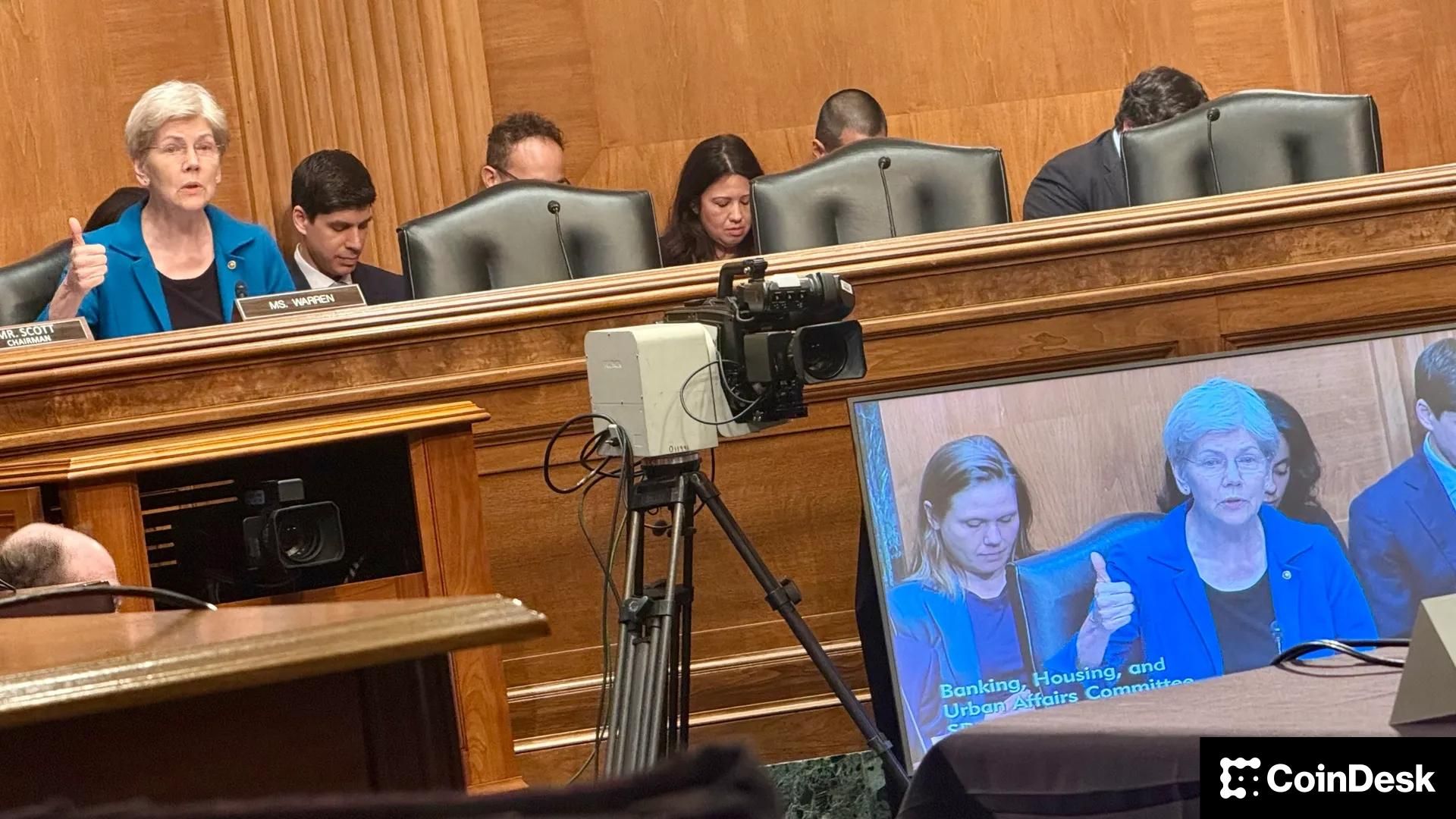
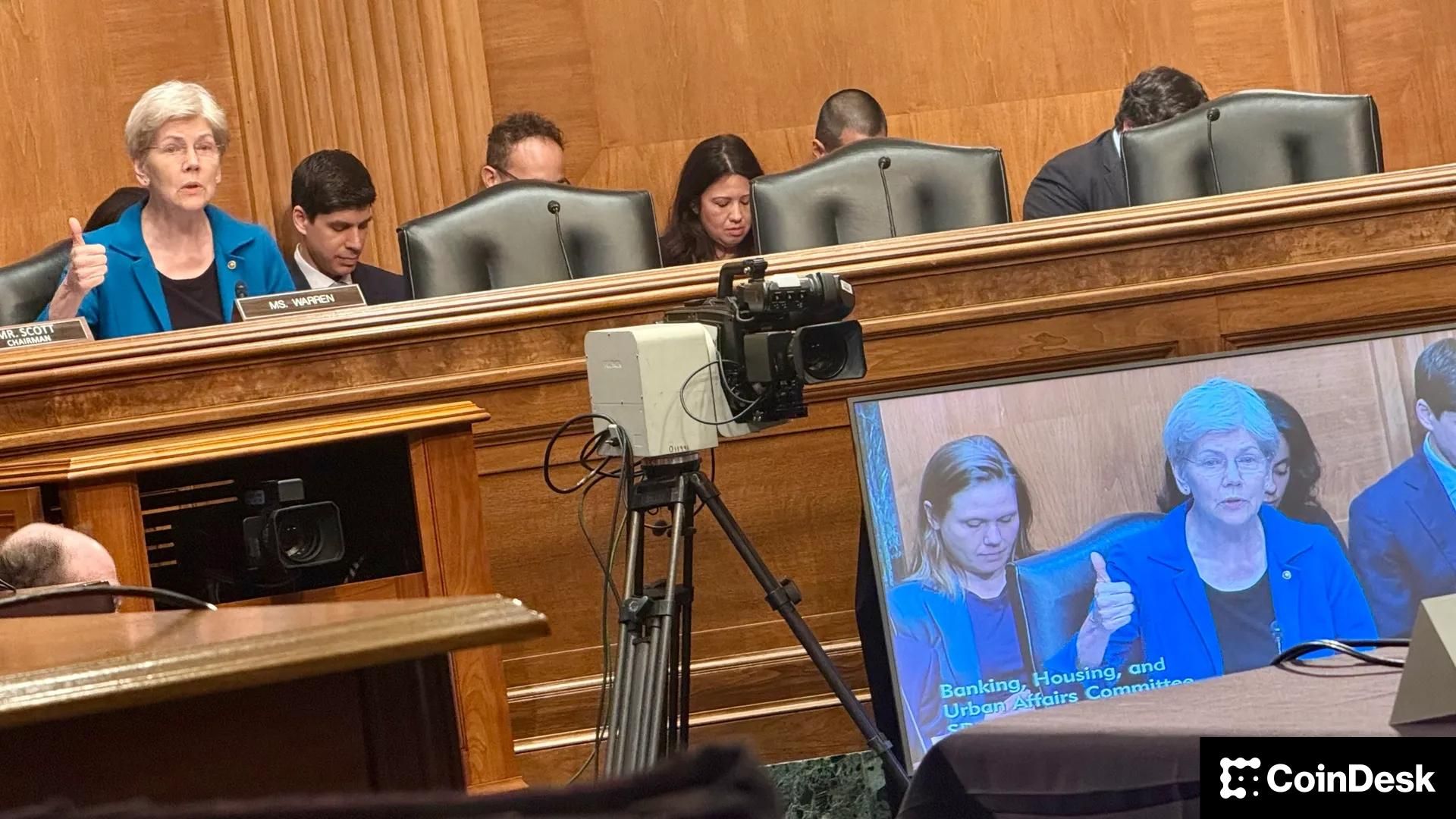
This week’s U.S. Senate Banking Committee hearing to consider edits to the Digital Asset Market Clarity Act has dozens of amendments to weigh, though it’s likely that almost all of them won’t survive the process of Thursday’s event.
Lawmakers have pushed forward a range of proposed changes for the market structure bill as it approaches the hearing known as a “markup,” from amendments that would establish government-ethics rules to others setting safe harbors for developers to one that would cut out a must-have protection for the decentralized finance (DeFi) sector, plus a number of other smaller, technical adjustments.
The list is particularly dominated by a few lawmakers’ names, including Democratic Senators Elizabeth Warren and Jack Reed. Their items are expected to be a rhetorical wish list as other members of the committee — mostly Republicans — seek to advance the bill without significant overhauls.
Each amendment will be discussed during the hearing and will eventually receive a vote, unless they’re withdrawn. A simple majority will be needed to adopt or reject an amendment. Eventually, the Banking Committee will vote to advance the bill itself.
Here are some highlights, according to a list of the proposals circulated ahead of the hearing:
- Senator Reed, a Rhode Island Democrat, wants to adopt some of the requests from bank lobbyists to further restrict stablecoin yields, according to one of his 18 amendments.
- He would also entirely scrap the section known as the Blockchain Regulatory Certainty Act, which shields software developers that don’t control people’s money from being regulated as money transmitters.
- On the same topic, Senator Catherine Cortez-Masto, a Nevada Democrat, wants to “protect software developers by creating a safe harbor from criminal liability for not registering as a money transmitter at the state or federal level.”
- Senator Chris Van Hollen, a Maryland Democrat, is pushing eight amendments, including one that would institute a major Democratic request: banning the president and other senior government officials from “owning, promoting or affiliating with” digital assets businesses.
- Senator Warren would more specifically “prohibit political corruption in banking applications and presidential bank ownership,” seeming to directly target the effort from World Liberty Financial — a company tied to President Donald Trump and his family — to obtain a U.S. banking charter.
- Warren, who is also seeking to cut out whole swaths of the current bill regarding the oversight of digital commodities, went farther afield with some amendments, trying to cap credit card interest rates and calling for bank supervisory records involving “Jeffrey Epstein and his co-conspirators.” (The bill itself does include some non-crypto provisions, including legislation targeted at housing championed by Senator John Kennedy, a Louisiana Republican.)
- Senator Mark Warner, a Virginia Democrat who has been at the center of illicit-finance negotiations involving DeFi, is proposing “a control test to determine when persons operating non-decentralized finance trading protocols are subject to” Bank Secrecy Act anti-money laundering obligations.
- On the Republican side of the committee, Senator Bill Hagerty from Tennessee is seeking a ban of central bank digital currencies (CBDCs) issued by the U.S. Federal Reserve. CBDC bans have already been pushed in various other bills by lawmakers, most recently in the House of Representatives’ bill to reauthorize the Foreign Intelligence Surveillance Act.
Thursday’s session to consider advancing the Clarity Act is likely already well planned for what the Republican majority will allow into the legislation. The last time the Clarity Act was on final approach to a markup in this same committee, it made it to this stage in which some 75 amendments were offered, though that hearing was postponed shortly after.
Previous wrinkles in the negotiation have since been ironed out over four months of talks, clearing a path for committee approval this week. Once that happens, this bill can be merged with the parallel effort that already cleared the Senate Agriculture Committee.
However, some significant changes are still expected after this week, including the effort to resolve the Democrats’ demand for a conflict-of-interest provision on cutting ties between government officials and the crypto sector, most notably seen with the president and his family. A meeting earlier this week on that ethics provision reportedly remained contentious, and Democrats including Senator Kirsten Gillibrand have said the Clarity Act will not get approved in the Senate without it.
Clarity’s advocates need to secure a number of Democratic supporters for the bill if it’s going to clear the 60-vote hurdle that’s standard in the Senate. Then the bill needs to get another approval from the U.S. House, which had already passed a similar bill last year.
In a Wednesday posting on social media site X, Coinbase CEO Brian Armstrong called the bill “strong” and said it “will benefit the American people by making the US financial system faster, cheaper and more accessible.”
“Mark it up,” he said.
Read More: Clarity Act, in the flesh, unveiled by U.S. Senate Banking Committee before hearing

The Senate Banking Committee’s CLARITY Act is heading into Thursday’s markup, buried under opposition.
According to reports, Senator Elizabeth Warren alone filed more than 40 amendments before Tuesday’s 5 p.m. ET deadline, and American Bankers Association members sent over 8,000 letters to Senate offices in less than a week demanding changes to the bill’s stablecoin yield rules.
Over 100 Amendments Filed
The total number of proposed amendments going into Thursday is still being confirmed, but according to a list obtained by Politico, there have been more than 100 proposed. To put things in perspective, a total of 137 revisions were proposed before the markup scheduled for January, which was canceled.
Warren’s batch alone covers a wide range of restrictions. One amendment that stood out would bar the Federal Reserve from issuing master accounts to crypto companies, which would effectively cut such firms off from the core infrastructure of the US banking system.
The lawmaker also attacked the updated bill on X, arguing that it lacked ethics provisions tied to President Donald Trump’s crypto businesses.
“No bill should move through the Banking Committee without real ethics guardrails,” she wrote.
That dispute has become harder for negotiators to avoid. Late last month, analyst Simon Dedic claimed that Trump’s meme coin and his crypto-related dinners were part of the reason the CLARITY Act was going nowhere, with Democrats demanding conflict-of-interest language before backing the legislation.
Another revision, filed by Senator Jack Reed of Rhode Island, would prohibit crypto from being used as legal tender, including for paying taxes. That proposal runs directly counter to a bill Representative Warren Davidson introduced last year that would have allowed Bitcoin to be used for precisely that purpose.
Senators Reed and Tina Smith of Minnesota also filed a joint amendment that would incorporate bank-requested changes to the stablecoin yield language.
According to journalist Brendan Pedersen, the proposal will force senators to choose between crypto and the banks on a single vote, making it an uncomfortable moment for Republicans who tend to side with both.
Bankers Blitz Senators With 8,000 Letters
Elsewhere, members of the American Bankers Association have reportedly sent more than 8,000 letters to Senate offices since last Friday, pushing lawmakers to change the bill’s stablecoin yield compromise.
However, Stand With Crypto, the crypto advocacy group, responded with its own numbers on Tuesday, saying its advocates had called Congress 8,000 times and sent 300,000 emails over recent months to protect stablecoin rewards, and have contacted lawmakers nearly 1.5 million times in support of the CLARITY Act overall.
Those on the side of digital assets are framing the banking industry’s lobbying campaign as an attempt to block competition from yield-bearing stablecoins.
Senator Bernie Moreno accused banks of trying to “kill stablecoins that would let everyday Americans earn real yields on their own money.” He also described the banking industry as a “cartel” protecting low-interest deposit models.
But not everyone inside Washington thinks this fight ends at Thursday’s committee vote. According to reporter Sander Lutz, banking policy leaders are already preparing for another push on the Senate floor if they lose the markup battle over yield restrictions.
Meanwhile, crypto journalist Eleanor Terrett reported that Senate Minority Leader Chuck Schumer privately encouraged Democrats to work toward supporting the bill.
The post CLARITY Act Faces Wave of Amendments Ahead of Markup appeared first on CryptoPotato.
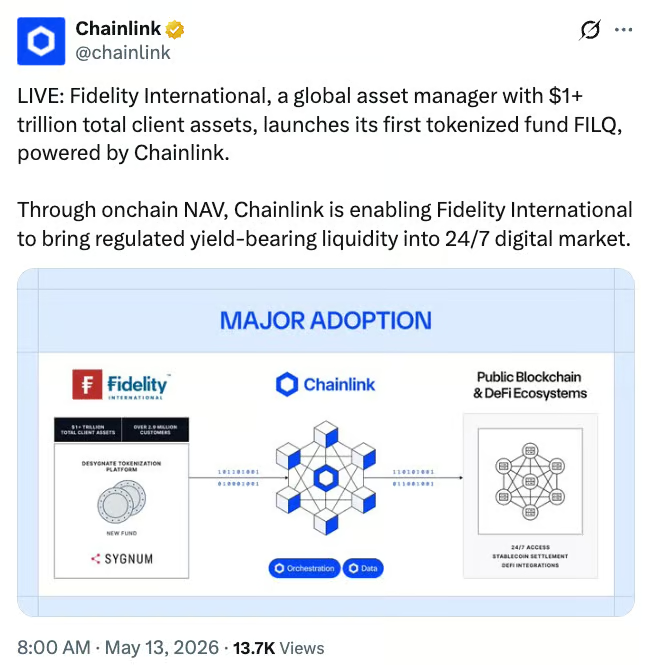
Fidelity International, a global asset manager with about $1 trillion in client assets, has launched a tokenized liquidity fund assessed by Moody’s Ratings.
The new Fidelity USD Digital Liquidity Fund (FILQ) is issued on blockchain infrastructure linked to Chainlink and was launched through Sygnum Bank’s tokenization platform.
According to Sygnum, the fund received a AAA-mf assessment from Moody’s Ratings, a designation used for money market funds that signals strong credit quality and liquidity.
“This marks an important milestone in the evolution of capital markets, demonstrating how tokenized liquidity products can bring high-quality, yield-bearing liquidity on-chain in a regulated and scalable way,” said Fatmire Bekiri, Sygnum’s head of tokenization.
Cointelegraph approached Fidelity International for comment regarding the news but did not receive a response at the time of publication. Bermuda-based Fidelity International and US-based Fidelity Investments are separate companies that operate in different jurisdictions through their subsidiaries and affiliates.
Chainlink expands role in real-world assets
Fidelity International’s FILQ adds to Chainlink’s growing presence in the tokenized real-world asset (RWA) sector, as the platform is focused on connecting blockchain applications with external real-world data that cannot be accessed natively onchain.
As part of the collaboration, Chainlink will provide onchain net asset value (NAV) and distribution data for the fund, allowing international investors to track fund value and payouts in near real time.

Source: Chainlink
“By adopting Chainlink’s industry-standard platform to deliver verifiable, real-time NAV and distribution metrics, FILQ utilizes the tamper-proof transparency required to securely bridge traditional finance with the onchain economy,” said Fernando Vazquez, president of capital markets at Chainlink Labs.
JPMorgan will provide approved daily NAV data for the fund, Chainlink mentioned.
Related: DTCC to use Chainlink to power 24/7 collateral management network
Chainlink previously collaborated with both Sygnum Bank and Fidelity International for onchain NAV data integration in 2024, marking an earlier production use case for tokenized assets tied to the latter’s Institutional Liquidity Fund.
Tokenized funds expand across markets
The launch comes as large asset managers continue moving traditional cash and treasury products onto blockchain networks. Firms from BlackRock to Franklin Templeton have already debuted tokenized money market funds aimed at bringing short-term yield products onchain.
On Tuesday, JPMorgan filed with the US securities regulator to launch a tokenized money market fund on Ethereum, allowing stablecoin issuers to hold reserves backing their stablecoins.
Boston, Massachusetts-based Fidelity Investments also previously issued the Fidelity Digital Interest Token (FDIT), a tokenized money market fund in which Ondo Finance’s OUSG fund serves as the primary anchor investor and accounts for the vast majority of its assets.
Magazine: eToro founder timed Bitcoin top perfectly due to belief in 4 year cycles
Blockchain investigator ZachXBT has linked US-based alleged threat actor Dritan Kapllani Jr. to more than $19 million in crypto thefts carried out through social engineering attacks targeting cryptocurrency holders.
In a series of posts on X, ZachXBT alleged that Dritan frequently showcased luxury cars, designer watches, private jets, and nightlife activities across social media while interacting with other threat actors online.
Crypto Laundering Network Exposed
According to the investigator, Dritan was recently recorded during a Discord “band 4 band” (B4B) call on April 23, 2026, wherein he displayed an Exodus wallet allegedly holding $3.68 million in cryptocurrency in an attempt to prove he possessed more funds than another individual on the call.
ZachXBT identified the Ethereum wallet address shown during the exchange and connected it to a major Bitcoin theft that took place on March 14, 2026. The investigator claimed the address traced back to the theft of 185 BTC, worth around $13 million at the time, from a victim targeted through social engineering tactics.
According to the findings, Dritan’s wallet allegedly received approximately $5.3 million from the theft on March 15. ZachXBT stated that by the time the Discord call took place, six weeks later, nearly $1.6 million had already been spent or laundered. The allegations surfaced one day after US authorities unsealed a criminal complaint against Trenton Johnson for his alleged role in the 185 BTC theft.
ZachXBT claimed Dritan was identified in the complaint as “Co-Conspirator 1,” although he has not been formally charged. The investigator also noted that meme coin influencer “yelotree” was charged for allegedly helping launder stolen funds through a Miami-based rental car business and could face up to 30 years in prison if convicted.
Link to “Lick” Investigation
ZachXBT further connected Dritan to an earlier January 2026 investigation involving John Daghita, also known as “Lick,” who was accused of stealing $46 million from the US government. According to the prominent on-chain sleuth, one of Dritan’s previously used wallet addresses was exposed in a deleted Telegram post shared by Daghita. ZachXBT claimed the wallet was tied to at least five additional social engineering thefts in 2025 that stole more than $5.85 million.
The investigator said he delayed publicly sharing his findings until charges connected to the 185 BTC theft became public and added that Dritan had avoided prosecution partly because he was a minor until recently turning 18.
The post ZachXBT Links Teen Crypto Flaunter to $19M Theft Network appeared first on CryptoPotato.
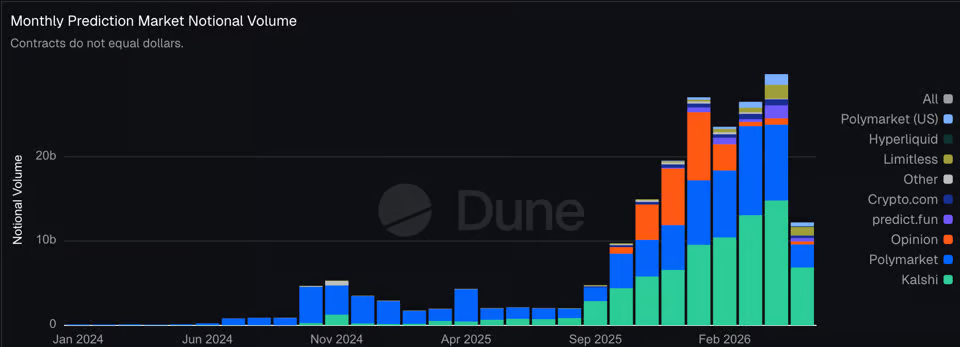
Monthly trading volume on the Polymarket prediction market fell by about 8.9% in April, the first decline in month-to-month activity since August as rivals like Kalshi increased their market share.
Polymarket and its US-based trading application collectively generated more than $10.2 billion in volume in April, compared to more than $11.2 billion in March, according to data from Dune Analytics.
However, rival Kalshi’s April trading volume surged by about 13%, climbing to about $14.8 billion, Dune data shows.
The total monthly trading volume for prediction markets also increased to about $29.8 billion in April from about $26.5 billion in March, an increase of about 12.4%.

Monthly volume figures for prediction markets. Source: Dune
Polymarket’s volume drop came as the company attempts to fully integrate US markets again, amid increased legal and regulatory scrutiny of prediction markets by US lawmakers after the sector experienced a meteoric growth during the 2024 elections.
To be sure, prediction markets are proving to be attractive to a slew of new competitors.
Prophet, an AI-native prediction market platform, last week launched its first live trading tranche, introducing a system where an AI model acts as the counterparty using real capital. Earlier this week, financial technology company MoonPay debuted an AI technology tool for trading strategies on prediction markets.
Related: Dutch users still access prediction markets despite Polymarket ban
Polymarket eyes US expansion as prediction markets come under fire
Polymarket is seeking to expand its presence in the US after exiting in 2022 as part of a settlement with the US Commodity Futures Trading Commission (CFTC), which barred the platform from allowing US residents on its main, global exchange.
In a bid to regain a foothold, the company launched a dedicated app for US customers in December 2025, albeit a platform that is siloed off from the Polymarket’s global platform and its liquidity.
Several US lawmakers and regulatory officials have raised concerns about insider trading on prediction markets, particularly in markets related to war, energy prices, and other geopolitically sensitive issues.

A letter from Senator Elizabeth Warren and other US lawmakers asks the CFTC to crack down on insider trading. Source: Senator Elizabeth Warren
In March, Senator Elizabeth Warren and more than 40 Congressional representatives wrote to the CFTC demanding a ban on government insiders using prediction market platforms to profit while in office or serving in an official capacity.
“The CFTC maintains that event contracts are a type of swap subject to its jurisdiction, and, therefore, it should ensure that federal employees understand existing restrictions on prediction market insider trading,” the lawmakers said.
Wisconsin Attorney General Josh Kaul also filed lawsuits against Kalshi, Polymarket, and other prediction markets in April, accusing the platforms of violating state sports betting laws.
Magazine: Should users be allowed to bet on war and death in prediction markets?
BNB Chain introduced a framework enabling autonomous agents to obtain verifiable on-chain identities, receive payments, hire other agents, and build reputation through new token standards and skill integrations.


KDDI, one of Japan’s largest telecom companies, is set to hold a 14.9% stake in local crypto exchange operator Coincheck Group (CNCK) after agreeing to a $65 million deal.
The telecom giant will subscribe for 28.5 million newly issued Coincheck Group shares at $2.28 each, Coincheck said on Wednesday. The deal is expected to close in June.
Coincheck and KDDI also signed what both firms called a business alliance covering customer referrals, revenue sharing and referral fees. The companies said the partnership is aimed at expanding crypto access in Japan through KDDI’s consumer channels and Coincheck’s trading, custody, staking and asset-management services.
KDDI has been building around crypto and Web3 since at least 2023, when it launched αU, a metaverse and Web3 service with a non-fungible token (NFT) marketplace and crypto wallet.
The company deepened that push through a capital and business alliance with HashPort, a Japanese Web3 wallet developer. The deal was tied to plans allowing users to convert Ponta loyalty points into stablecoins and crypto, and convert those assets into au PAY gift cards.
KDDI will receive registration rights for the shares and the right to nominate one non-executive director to Coincheck Group’s board at its next annual general meeting, expected in September.
Coincheck’s Dutch parent listed on Nasdaq in late 2024 under the ticker CNCK, after a delayed plan to go public through a SPAC deal. The company has since pushed into institutional crypto services, including through its acquisition of digital asset prime broker Aplo.
KDDI, as of December 2025, had over 72 million mobile subscriptions. J.P. Morgan advised Coincheck Group on the deal. De Brauw Blackstone Westbroek and Simpson Thacher & Bartlett acted as legal counsel.

Etoro reported a robust first quarter, with net income of $82 million, up 37% from the same period last year, as gains in commodities trading helped offset softer activity in crypto. The earnings beat was driven by a higher trading contribution and an improved profitability profile, even as the crypto segment faced headwinds that echoed broader industry softness.
The company announced adjusted EBITDA of $109 million, up 35% year over year, while net contribution rose 19% to $258 million. On the revenue side, funded accounts climbed 12% to 4.02 million, and assets under administration rose 15% to $17 billion. Etoro also held $1.3 billion in cash, cash equivalents and short-term investments as of March 31. In a related trend, Etoro said that assets under administration reached $18.7 billion in April, up 19% year over year, with total money transfers for the month totaling $1.4 billion, up 53% from a year earlier.
Commodities trading was the standout driver in the quarter, accounting for roughly 60% of trading commissions, with volumes up nearly fourfold versus a year earlier. The shift helped the firm diversify revenue streams even as crypto volumes and on-chain activity faced a softer backdrop. In addition to expansion in traditional markets, Etoro expanded its equities footprint, adding Japanese stocks to bring its exchange coverage to 26. The broker also activated its BitLicense to enable crypto trading in New York, a milestone that aligns with its strategy to bridge traditional finance with on-chain infrastructure. Separately, Etoro completed the acquisition of Zengo, a self-custodial wallet provider, on April 30, a move CEO Yoni Assia described as advancing the firm’s bridging objectives between fiat and crypto rails.
Crypto trading volumes retreat even as product innovation advances
Despite the resilience of its commodities business, Etoro’s crypto trading volumes deteriorated in April. The company disclosed that crypto trade volumes fell 32% year over year to two million trades, with the average invested amount per trade dropping 22% to $207. The softness in crypto activity comes amid a broader crypto market backdrop that has challenged exchanges and brokers to translate on-chain interest into sustainable revenue growth.
On the product side, Etoro has been moving to diversify its crypto offerings and improve user onboarding. The firm rolled out an AI-powered Agent Portfolios feature and deepened its collaboration with xAI, embedding Grok 4.2-powered market sentiment into Tori, its AI investing assistant. These enhancements aim to give users sharper market signals and a more interactive experience, even as overall trading volumes remain volatile.
Market observers noted that Etoro’s results sit within a broader pattern seen in listed crypto platforms. For instance, Coinbase reported a net loss of $394.1 million in the first quarter, its second consecutive quarterly loss, with revenue of $1.41 billion, reflecting a 40% drop in transaction revenue and a 13.5% decline in subscription and services revenue. The quarter also saw overall crypto market cap and trading volume retreat by more than 20% quarter over quarter. The juxtaposition highlights how firms with diversified revenue mixes—combining conventional asset classes with crypto—are navigating contrasting dynamics in traditional markets and digital assets.
Growth in users and on-ramp activity amid regulatory and strategic moves
Etoro’s top-line resilience rests not only on trading activity but also on user growth and capital deployment. The jump in funded accounts and the expansion of assets under administration suggest a broadening audience, supported by stronger cash reserves and liquidity. The company’s strategic push into New York crypto trading, backed by BitLicense authorization, signals a continued commitment to regulatory compliance as a pathway to broader market access. The Zengo acquisition further reinforces this trend by enabling on-chain self-custody options for users, potentially expanding wallet and custody capabilities across Etoro’s platform.
From a strategic standpoint, these moves indicate Etoro’s intention to blend the familiarity of traditional trading with evolving on-chain infrastructure. The addition of Japanese equities broadens its international reach, offering clients additional diversification options while leveraging the company’s growing global footprint. The April 30 closing of Zengo closes a loop in Etoro’s product strategy: a self-custody pathway that complements its hosted custody and trading experiences, providing a more complete platform for users who want direct control of their crypto assets.
Industry context and what to watch next
Etoro’s quarterly results arrive as the crypto sector grapples with a delicate balance: growing adoption of on-chain products and cross-asset wallets against persistent volatility in crypto volumes and macro headwinds in several geographies. The company’s mixed performance underscores the value of diversified revenue streams while spotlighting the fragility of relying heavily on active trading in a cyclic market.
Investors and users should monitor several developments in the coming quarters. First, whether commodity-driven revenue can sustain earnings momentum as crypto volatility persists. Second, the impact of product enhancements—such as AI-powered advisory features and improved sentiment analysis—on user engagement and average revenue per user. Third, regulatory movements, particularly in major markets, and how they shape the pace at which Etoro and peers can expand crypto trading and custody services. Finally, the effectiveness of the Zengo integration and the broader strategy to blend traditional finance with on-chain infrastructure will be key to assessing Etoro’s long-term growth trajectory.
As the sector evolves, Etoro’s Q1 performance offers a nuanced view: while crypto volumes may swing, a well-rounded platform that folds commodities, equities, and on-chain capabilities into a cohesive service can still deliver meaningful profitability and user growth. The question for readers and investors is how these dynamics unfold in the next few quarters, and whether the company’s regulatory-first approach and product diversification translate into durable, multi-asset momentum.
What’s next to watch: any sustained uptick in total money transfers and assets under administration, the cadence of new crypto product features, and the continued integration of Zengo’s wallet framework into Etoro’s platform. Those factors will help determine whether the current quarterly strength in non-crypto trading can offset ongoing pressures in crypto activity and what that means for Etoro’s overall margin profile in a shifting market.

A former Celsius executive is set to forfeit more than $1 million ahead of a sentencing hearing in the U.S. district court system, according to court filings. The U.S. Attorney for the Southern District of New York indicated that Roni Cohen-Pavon consented to a judgment of $1,070,000 representing proceeds traceable to his alleged crimes, with credit for funds—whether cash or cryptocurrency—held in Celsius that may be available through the platform’s bankruptcy process.
Cohen-Pavon pleaded guilty in September 2023 to fraud and conspiracy to commit price manipulation tied to Celsius’s CEL token. In advancing the case, U.S. authorities did not prescribe a specific sentence but requested the judge consider a potential sentencing reduction for substantial assistance rendered by the defendant. He is scheduled to appear for sentencing in the U.S. District Court for the Southern District of New York on Thursday.
The Celsius collapse stands among the crypto industry’s most consequential bankruptcies of 2022. It unfolded in a period that also saw the Terra ecosystem’s downfall and contributed to a broader wave of distress that culminated in FTX’s Chapter 11 filing. In a related development, former Celsius CEO Alex Mashinsky was sentenced to 12 years in prison in May 2025 after pleading guilty to commodities and securities fraud and agreeing to a forfeiture exceeding $48 million.
In April, Cohen-Pavon’s counsel sought leniency, asking for a sentence of time served, underscoring the cooperation agreement and Cohen-Pavon’s potential role in Mashinsky’s guilty plea. They argued that the Celsius executive had taken “full responsibility for his conduct.” In a letter to Judge John Koeltl, Cohen-Pavon stated, “I pleaded guilty because I am guilty … I participated in the manipulation of the CEL token. I did not stop it when I should have, and I did not leave when I could have. I take full responsibility for that.”
Key takeaways
- The court-approved forfeiture amounts to $1,070,000 linked to proceeds traced to Cohen-Pavon’s wrongdoing, with potential offsets for Celsius assets under bankruptcy.
- Cohen-Pavon pleaded guilty to fraud and conspiracy to manipulate the CEL token price in September 2023; sentencing factors will consider substantial cooperation with prosecutors.
- The Celsius case is part of a broader post-2022 enforcement narrative targeting crypto firms, market manipulation, and misrepresentation in crypto lending ecosystems.
- Separately, Judge Lewis Kaplan ordered that $10 million of assets tied to Sam Bankman-Fried be applied to his forfeiture obligations as part of the FTX proceedings, with Bankman-Fried sentenced to 25 years and a liability exceeding $11 billion; appeals remained pending as of the latest filings.
- In related filings, prosecutors and defense teams have highlighted cooperation and ongoing policy implications for crypto governance, market integrity, and bankruptcy treatment of digital assets.
Forfeiture, sentencing, and the enforcement context for crypto executives
The Cohen-Pavon matter illustrates how U.S. prosecutors pursue financial penalties that trace to illicit conduct in crypto markets and how those penalties interact with bankruptcy procedures. The $1.07 million judgment signals the government’s effort to recover proceeds believed to originate from manipulation schemes associated with a high-profile token tied to a bankrupt platform. The court filings also reflect a structural tension in crypto enforcement: penalties are pursued in parallel with complex asset recovery processes that cross into bankruptcy estates and digital asset holdings.
From a regulatory and compliance perspective, the case underscores several practical implications for crypto firms, exchanges, and platform operators. First, it highlights the risk that executives and employees can face aggressive enforcement actions for market manipulation and related fraud in crypto markets. Second, it reinforces the role of cooperation credits in sentencing, a factor that may influence corporate governance considerations, internal investigations, and the design of compliance programs. Third, it emphasizes the importance of transparent asset tracing and the treatment of digital assets in bankruptcy contexts, an area that has grown increasingly intricate as crypto assets are exchanged, stored, and audited in real-world estate-like processes.
Broader context: Celsius, Terra, and the evolving enforcement landscape
The Celsius collapse was a watershed event in 2022, signaling vulnerabilities in crypto lender models and the liquidity risks tied to yield strategies that relied on volatile token economics. Analysts note that the episode occurred in a tumultuous period that also involved the Terra collapse and major platform distress that culminated in the FTX bankruptcy. In the wake of these events, U.S. authorities intensified scrutiny over market manipulation, disclosures, and the legality of complex tokenized instruments used by crypto firms to attract and retain customers.
The broader enforcement environment continues to evolve, with agencies such as the Department of Justice (DOJ) and the Securities and Exchange Commission (SEC) pursuing cases that touch on securities, commodities, and payment token questions. In parallel, the criminal-justice approach to enforcement intersects with regulatory regimes abroad, including the European Union’s Markets in Crypto-Assets Regulation (MiCA), which aims to harmonize licensing, investor protection, and market integrity standards. For institutions, this convergence reinforces the necessity of robust AML/KYC frameworks, rigorous internal controls, and clear governance structures to manage legal risk across cross-border operations.
Enforcement actions tied to the SBF case and implications for policy
In a separate but contemporaneous action, SDNY Judge Lewis Kaplan ordered that $10 million in assets associated with Sam Bankman-Fried be applied toward his forfeiture agreement. Bankman-Fried, who was sentenced to 25 years in prison, faces a total liability exceeding $11 billion for the fraud and misappropriation of customer funds. As of the latest proceedings, his attempts to seek a new trial had been denied, and his appeal to overturn the conviction remained under review by the Second Circuit. The Kaplan decision highlights how asset recovery and forfeiture play a central role in high-profile crypto prosecutions, alongside traditional sentencing considerations.
For policymakers and compliance professionals, the Bankman-Fried case and related Celsius developments illustrate ongoing tensions between rapid innovation in crypto markets and the need for robust oversight. The enforcement trajectory reinforces the expectation that regulators will scrutinize token economics, disclosures around custody and custody arrangements, and the handling of customer funds in the context of corporate restructuring. It also underscores the importance of coordinated actions across jurisdictions as regulators pursue cross-border asset tracing and restitution in complex digital-asset ecosystems.
Looking ahead, market participants and observers should monitor how potential sentencing outcomes, asset-recovery decisions, and regulatory developments interact with ongoing bankruptcy proceedings, licensing considerations, and international regulatory alignment. The convergence of criminal enforcement, bankruptcy law, and regulatory oversight is likely to shape governance standards for crypto firms, influence licensing decisions, and inform AML/KYC policy design in the period ahead.
Closing perspective: The sequence of cases surrounding Celsius and FTX-era executives reinforces a clear priority for enforcement authorities—establishing accountability for market manipulation, fraud, and misuse of customer assets within digital-asset platforms. As regulatory frameworks mature and cross-border cooperation intensifies, institutions engaging in crypto activities should expect continued scrutiny, greater emphasis on compliance infrastructure, and a measured but persistent risk of execution actions tied to misconduct in crypto markets.
Key takeaways:
- A successful Hyperliquid whale opened a $70 million short position, but data suggests this is a technical move.
- Rising oil prices and Fed liquidity injections could devalue US Treasuries, boosting Bitcoin as a scarce macro asset.
Bitcoin below $80,000 as Hyperliquid whale flips bearish on crypto
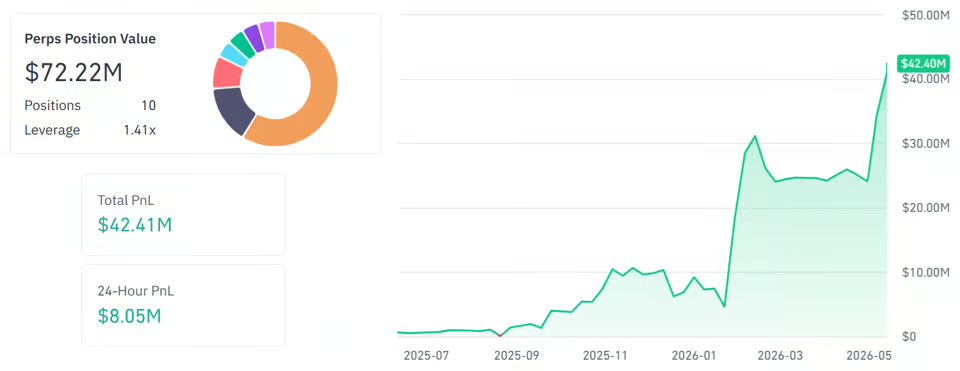
Bitcoin (BTC) failed to sustain bullish momentum on Wednesday, retreating below the psychological $80,000 level. Traders grew anxious as persistently high oil prices applied pressure to inflation and consumer spending. A Hyperliquid whale with $42 million in historical profits flipped bearish, leaving investors to question whether the recent rally is losing its foundation.

Hyperliquid whale 0x8def…992dae profit/loss, USD. Source: CoinGlass
The Hyperliquid whale at address 0x8def…992dae recently opened a $70 million bearish position on various cryptocurrencies and synthetic tokens tied to major technology stocks. According to the Hyperdash trading and data platform, the address belongs to Loracle, an early developer within the Hyperliquid ecosystem. This account began betting more aggressively in September 2025.
Related: Bitcoin price targets $79K as US PPI inflation hits highest since 2022
Interestingly, the majority of this whale’s past profits were generated through bullish bets, including several successful trades over the last month. A long position in Bitcoin, Zcash (ZEC), and Toncoin (TON) closed on Monday, netting a $9.2 million profit in just two weeks. On Thursday, the same entity secured a $3 million profit on bullish synthetic tokens linked to oil prices after a nine-day hold.

Hyperliquid whale 0x94d373…c933814 position on May 13. Source: app.trade.xyz
Over the past week, this whale flipped bearishly by accumulating a massive $49 million short position on HYPE. These bets on downside price movements expanded to include a $12.5 million short in Bitcoin, alongside $8 million in synthetic tokens tracking chipmaker Sandisk (SNDK US) and the Nasdaq-100 Index.
Why is the whale shorting BTC, HYPE, and tech stocks?
This bearish assessment is further supported by a $1.7 million long position in a gold-backed stablecoin. However, trade data analysis from app.trade.xyz reveals an algorithmic trading style, with positions typically lasting less than a week. These findings suggest the whale is reacting to short-term technical moves rather than a fundamental breakdown in risk-on assets.

Brent crude oil (left) vs. US 5-year Treasury yield (right). Source: TradingView
The ongoing war in Iran has pushed Brent crude oil prices above $100. This spike likely pushes the US Federal Reserve to expand its balance sheet as US Treasury yields spiral out of control. As US fiscal budget issues mount, investors are increasingly incentivized to seek shelter in scarce assets, especially since higher inflation expectations reduce the appeal of fixed-income investments.

US Federal Reserve total assets, USD millions. Source: St Louis Fed
The US Fed has begun accumulating bonds and mortgage-backed assets to relieve pressure on financial institutions. While providing liquidity eases immediate concerns, this intervention causes inflation to accelerate. This remedy, though efficient, curbs the potential for expansionist monetary policies, as the Fed has less room to trim interest rates effectively.
Even if Bitcoin and tech stocks initially react negatively to signs of an overheating economy, traders will likely eventually exit fixed-income investments as the expansion of the monetary base becomes evident. Lower demand for US Treasuries indicates eroding trust in monetary policy, which serves as a positive driver for Bitcoin over the medium term.
Ultimately, little reason exists to fear this Hyperliquid whale’s bearish bets, even when accounting for the entity’s successful track record.

Joel Embiid trade rumors: Why 76ers star would be ‘tricky’ to trade this summer

The FCC Banned Foreign-Made Routers. Here’s Why I Would Hold Off On Buying One

US mum who wrote children’s grief book jailed for murdering her husband

Manchester United reach agreement with Casemiro over contract clause amid transfer speculation

US brings back mandatory military draft registration

Steven Gerrard disagrees with Gary Neville over ‘shock’ Chelsea and Arsenal claim | Football

Jio financial share latest news, jio financial share anelysis, jio financial share target

#billionairearmy #automobile #viralvideo #top10richestperson #money #top5richest #richpeopleliving

126m Money Puggy ist gespawnt #roblox
-
 Crypto World6 days ago
HarrisX Poll Found 52% of Registered Voters Support the CLARITY Act
-

 Fashion5 days ago
Weekend Open Thread: Marianne Dress
-

 Crypto World7 days ago
Upbit adds B3 Korean won pair as Base token gains Korea access
-
 NewsBeat7 days ago
NCP car park operator enters administration putting 340 UK sites at risk of closure
-

 Fashion2 days ago
Coffee Break: Travel Steam Iron
-

 Tech4 days ago
Auto Enthusiast Carves Functional Two-Stroke Engine from Solid Metal
-

 Fashion3 days ago
What to Know Before Buying a Curling Wand or Curling Iron
-

 Politics2 days ago
What to expect when you’re expecting a budget
-
 Business4 days ago
Ignore market noise, India’s long-term story intact, say D-Street bulls Ramesh Damani and Sunil Singhania
-

 Politics5 days ago
Politics Home Article | Starmer Enters The Danger Zone
-

 Tech3 days ago
GM Agrees To Pay $12.75 Million To Settle California Lawsuit Over Misuse Of Customers’ Driving Data
-

 Politics6 days ago
Simon Cowell Says He Was ‘Horrible’ To Susan Boyle During BGT Audition
-

 Entertainment7 days ago
Sarah Paulson Called Out For Met Gala ‘Hypocrisy’
-

 Entertainment6 days ago
General Hospital: Ric & Ava Bombshell – Ric’s Massive Secret Exposed!
-

 Crypto World7 days ago
Robinhood says Wall Street is building onchain
-

 Sports7 days ago
UEFA Champions League final schedule, teams, venue, live time and streaming | Football News
-

 Entertainment6 days ago
Why David Letterman Called CBS ‘Lying Weasels’
-

 Fashion7 days ago
The Best Work Pants for Women in 2026
-
 Sports7 days ago
Mike Tyson speaks out on status of Floyd Mayweather fight
-
Entertainment7 days ago
Hayden Panettiere reveals she's estranged from mom, addresses brother Jansen's sudden death: 'I was floored'
You must be logged in to post a comment Login