

Crypto World
Artelo Biosciences (ARTL) Stock Plunges 23% After $31M Offering Following 600% Surge


Key Takeaways
- ARTL shares skyrocketed 618% following the company’s announcement about developing ART27.13 as a complementary treatment for GLP-1 obesity medications.
- Shares plummeted over 23% Monday when Artelo disclosed a $31.4 million fundraising initiative involving share and warrant issuance.
- The company plans to issue roughly 3.18 million shares priced at $3.45 each, generating approximately $11 million in gross revenue.
- Warrant agreements for up to 6.37 million additional shares could yield another $20.4 million if fully exercised by investors.
- The financing arrangement was structured at-the-market under Nasdaq compliance guidelines and was scheduled to finalize on March 30.
Shares of Artelo Biosciences experienced a significant downturn exceeding 23% during early trading Monday following the biotechnology firm’s announcement of a financing plan targeting up to $31.4 million through combined share and warrant issuance.
Artelo Biosciences, Inc., ARTL
This sharp decline occurred after an impressive 230.41% rally the preceding Friday, which followed by two days the company’s revelation that it was investigating ART27.13, its experimental compound, as a complementary therapeutic option for GLP-1-based obesity medications.
The strategic decision to pursue capital raising immediately following such substantial share price appreciation seems to have triggered investor apprehension regarding potential ownership dilution.
Artelo revealed it executed binding agreements for the sale of roughly 3.18 million common shares at a combined offering price of $3.45 per unit. This transaction is projected to yield gross revenues of approximately $11 million prior to deducting placement fees and related costs.
Additionally, the biotechnology company intends to issue warrants providing purchasers with rights to acquire up to 6.37 million supplementary shares. Should these warrants be fully exercised through cash payment, Artelo could secure an additional $20.4 million in funding.
The company explicitly cautioned investors that warrant exercise remains uncertain. “No assurance can be given that any of the warrants will be exercised, or that the Company will receive cash proceeds from the exercise of the warrants,” Artelo stated in its official announcement.
H.C. Wainwright & Co. serves as the sole placement agent facilitating this financing transaction.
The private offering is being executed pursuant to Section 4(a)(2) of the Securities Act alongside Regulation D requirements. The offered securities remain unregistered under federal and state securities regulations. Artelo has committed to submitting a resale registration statement encompassing the newly issued securities.
Capital generated from this financing will be allocated toward operational expenses, settlement of specific bridge financing obligations, and broader corporate initiatives.
ART27.13’s Role in the GLP-1 Treatment Landscape
The initial dramatic price increase stemmed from Artelo’s Wednesday disclosure regarding its exploration of ART27.13 — an investigational therapeutic targeting the endocannabinoid system — as a possible adjunct therapy to GLP-1 medications.
GLP-1 therapeutics, which regulate glucose metabolism and appetite control, represent the cornerstone of the rapidly expanding obesity pharmaceutical market. This sector is currently led by Eli Lilly (LLY) and Novo Nordisk (NVO).
According to Artelo, previous clinical observations in oncology patients indicated that ART27.13 might help maintain lean muscle tissue in individuals receiving GLP-1 treatments. The company has subsequently submitted a provisional patent application addressing this therapeutic indication.
“With new non-clinical research commencing and the recent filing of a patent application covering the use of CB2 agonists with GLP-1 drugs, we are aiming to build a scientific and strategic foundation with ART27.13 in an area of potentially significant commercial relevance,” stated Andrew Yates, Artelo’s chief scientific officer.


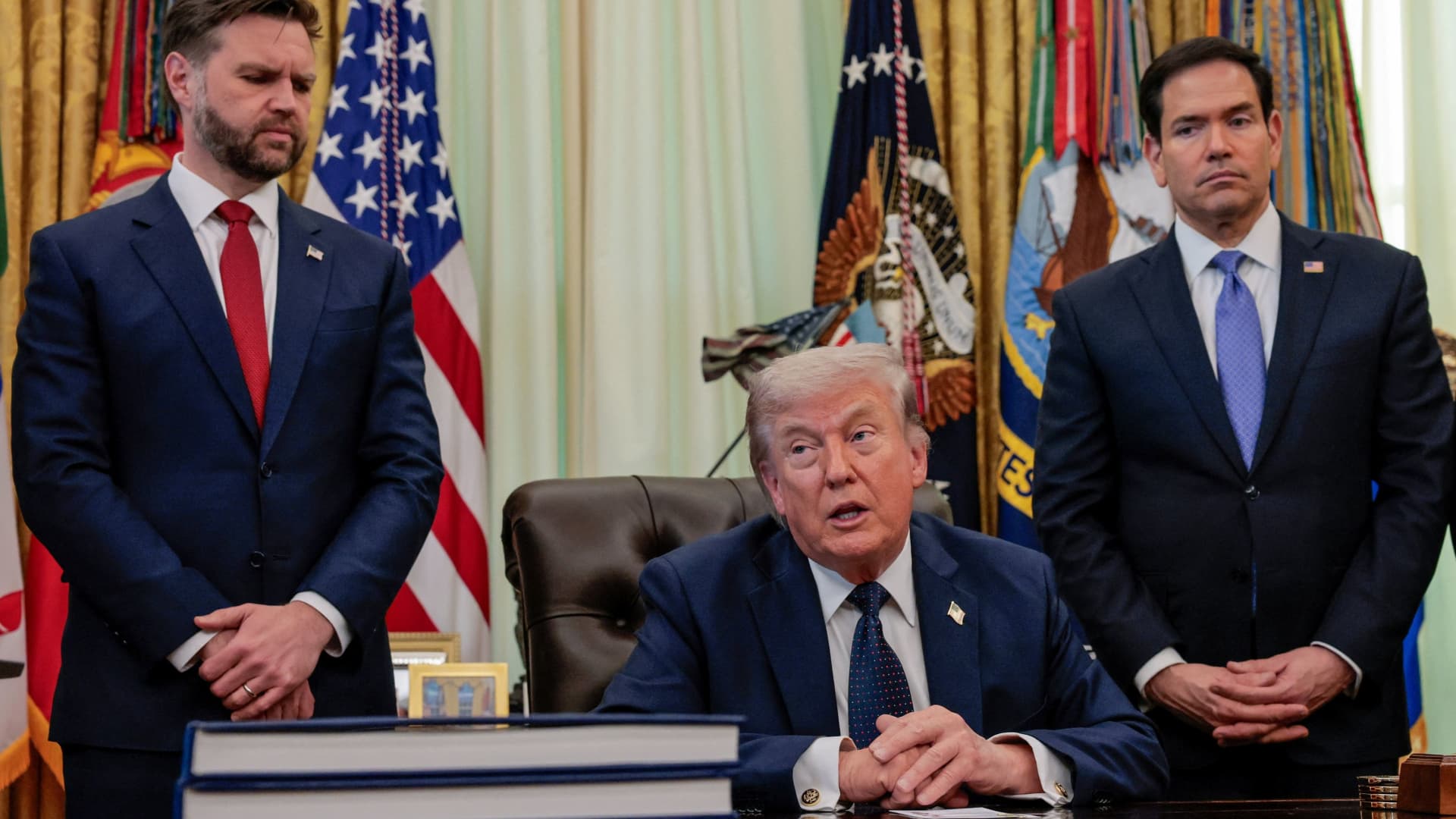
U.S. President Donald Trump speaks in the Oval Office, with Vice President JD Vance and Secretary of State Marco Rubio standing behind him, at the White House in Washington, D.C., U.S., April 23, 2026.
Kylie Cooper | Reuters
Secretary of State Marco Rubio is seen as increasingly likely to be the GOP nominee in 2028, according to traders on prediction market platforms.
While Vice President JD Vance is still favored by traders on Kalshi, his odds have slipped to just 33% on Monday from around 50% on Jan. 1. Rubio, meanwhile, has risen to 30% from around 12% odds.
Vance was seen as the heir to President Donald Trump’s “Make America Great Again” movement, considering his high-profile role in the administration as formally second in command.
However, Trump has reportedly cast doubts about whether he views Vance as his successor, as most recently detailed by a report from The New York Times over the weekend. The Times said that Trump brings up Vance’s initial opposition to the war in Iran when musing over his candidacy.
Rubio’s odds have risen throughout the year, but have sharply increased around the initiation of key military operations, including the capture of Venezuelan President Nicolas Maduro in January and the start of the war with Iran in late February.
Rubio also delivered a short impromptu speech from the White House press room about his hopes for America in May that he clipped into a viral short-form video, creating questions about what the Cabinet member’s plans are for 2028.
While Rubio’s role in military conflicts has increased his chances to be the Republican nominee, those same conflicts have hurt the party’s chances of winning the presidency as Trump’s approval ratings have fallen since the start of the year. Odds that the GOP wins the White House in 2028 have fallen to 39% on Monday from 45% before the war with Iran.
Traders on Polymarket give Vance a 31% chance of being the Republican nominee in 2028, while Rubio is close behind at just under 27%.
Disclosure: CNBC and Kalshi have a commercial relationship that includes customer acquisition and a minority investment.
Dogecoin is trading around $0.10 after House of Doge and Paxos unveiled a partnership that could funnel the meme coin into PayPal and Venmo’s combined base of hundreds of millions of users.
Summary
- Dogecoin’s corporate arm strikes Paxos deal to plug DOGE into PayPal and Venmo’s crypto rails.
- DOGE hovers near $0.10 with a roughly $16.9 billion market cap as traders weigh mainstream access against meme fatigue.
- Most 2026 forecasts cluster in a restrained $0.14–$0.16 band unless a fresh meme mania re‑rates the asset.
House of Doge, the official corporate arm of the Dogecoin Foundation, has announced a strategic partnership with Paxos that will route DOGE (DOGE) into Paxos’ regulated crypto brokerage and custody stack, potentially putting Dogecoin in front of PayPal and Venmo’s mainstream user bases, just as the token trades near $0.10 with a market capitalization of about $16.9 billion. In a GlobeNewswire release, House of Doge said the deal will “integrate the listing of Dogecoin (DOGE) across Paxos’ enterprise‑grade crypto brokerage and custody infrastructure,” opening distribution via clients including PayPal, Venmo, Interactive Brokers and Mercado Libre across more than 150 countries.
The partnership is explicitly about scale: Paxos “powers crypto brokerage and infrastructure solutions for a number of globally recognized platforms, including PayPal, Venmo, Interactive Brokers, and Mercado Libre,” while the Dogecoin side frames this as a bridge to “hundreds of millions of users” reachable through that network. “This partnership with Paxos represents a major step forward in accelerating global access for Dogecoin,” House of Doge CEO Marco Margiotta said, adding that “by integrating with Paxos’ trusted and regulated infrastructure, we are creating a powerful pathway for leading global fintech platforms to make Dogecoin accessible to their users.” Paxos, for its part, has already been the back‑end engine for PayPal’s crypto services and the issuer of its PYUSD stablecoin, which PayPal recently expanded to 70 markets, reinforcing the idea that DOGE is hitching a ride on a maturing, regulated payments stack rather than a pure meme trade.
Dogecoin price sits on the $0.10 knife edge
On the market side, DOGE is changing hands around $0.10, with sources like CoinMarketCap and Trust Wallet putting the live price in the $0.099–$0.101 band and 24‑hour volumes near or above $700 million. That leaves Dogecoin roughly flat on the year but still miles below its prior cycle blow‑off highs, as liquidity has shifted toward more serious L1 and AI narratives, according to recent Dogecoin coverage on crypto.news. A crypto.news Dogecoin price piece notes that “Dogecoin is trading around $0.10–$0.105 today, with most serious 2026 forecasts clustering in a restrained $0.12–$0.18 band unless another meme‑mania shock hits,” a sober framing that contrasts with the retail obsession over a return to $1. For live market data and intraday moves, crypto.news maintains a dedicated Dogecoin price page tracking DOGE’s spot performance, market cap and volume.
External models echo that capped‑upside posture: CoinCodex and CoinDataFlow both see DOGE drifting into the mid‑teens by 2026, with forecasts in the $0.10–$0.16 range implying perhaps 40%–60% upside from current levels if the coin simply grinds along with the broader market. A separate Dogecoin outlook referenced in crypto.news reporting lines up with that trajectory, suggesting that absent a new Elon Musk‑sparked frenzy or a broader meme re‑rating, DOGE is more likely to oscillate between high single‑digits and the mid‑teens than to credibly attack $1 in this cycle.
Price prediction: infrastructure coup, narrative drag
The Paxos integration is, structurally, exactly the sort of plumbing win that token bulls usually fantasize about: a meme asset piggy‑backing on a regulated broker that already pipes crypto into PayPal and Venmo, with PYUSD demonstrating how quickly Paxos‑backed assets can spread once they’re embedded in a giant payments platform. If even a tiny fraction of PayPal and Venmo’s users start dollar‑cost‑averaging into DOGE alongside bitcoin and ether, the steady bid could justify those $0.14–$0.16 2026 targets and push realized volatility lower than in past meme cycles.
The counterpoint is that every serious model you can cite—including the range‑bound projections highlighted in crypto.news Dogecoin coverage—treats DOGE as a structurally capped asset whose fair value lives in a tight band around $0.10–$0.20 unless a full‑blown speculative mania returns. Over the next 12–18 months, a defensible base case is a slow grind toward the mid‑teens, with a realistic 2026 end‑of‑year range of $0.12–$0.18, a bullish tail where the Paxos distribution firehose plus meme reflexivity squeezes DOGE into the $0.20–$0.25 zone, and a bearish path where macro risk‑off or regulatory hostility toward meme coins pushes it back into the $0.06–$0.08 support area.
Crypto World
Michael Saylor’s Strategy sells $2.5 million bitcoin. Chaos ensues in a major prediction market over who gets paid
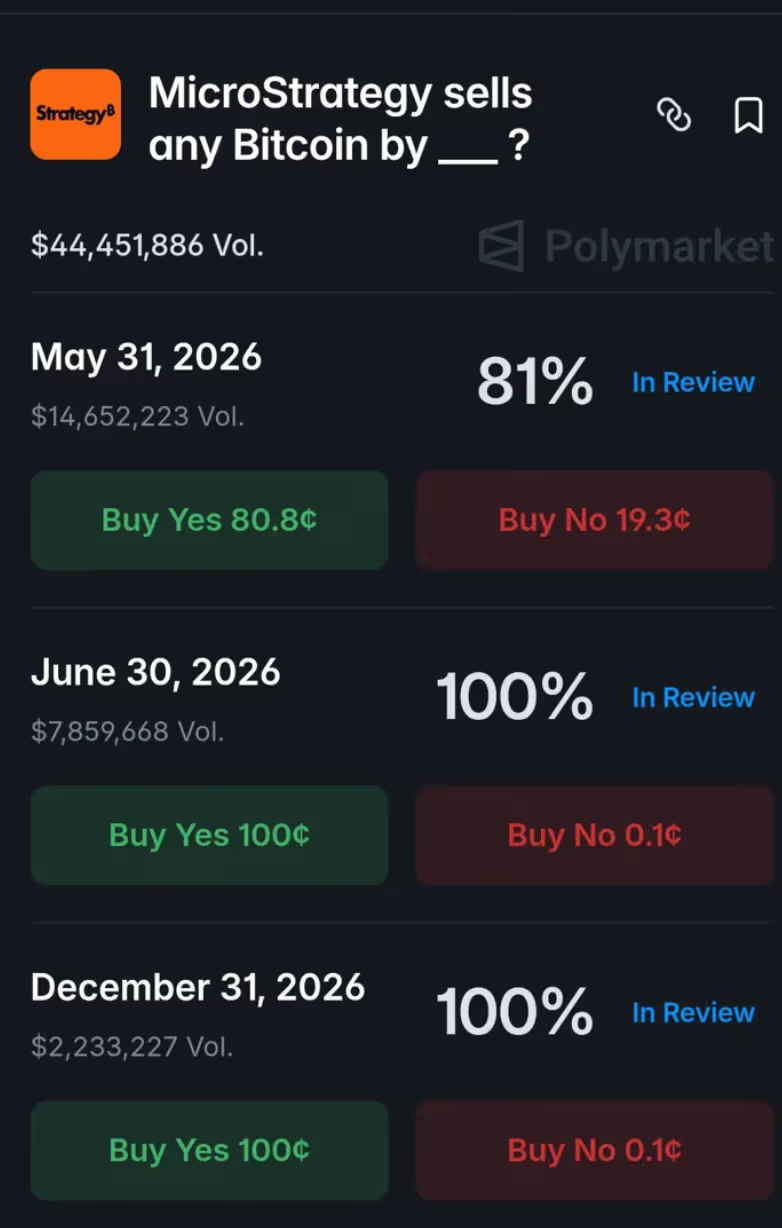
Strategy’s (formerly MicroStrategy) first publicized bitcoin sale has triggered a $15 million resolution dispute on Polymarket.
While the sale was announced in a June 1 filing, the actual disposition occurred in late May. Bettors are now split on whether sales executed between May 26 and May 31 should count for the prediction market’s May 31 deadline, with the contract sitting at 81% Yes and flagged “in review.”
The bet “MicroStrategy sells any Bitcoin by ___?” in Polymarket is built on time-stamp-based contracts, each resolving to ‘Yes’ if Michael Saylor’s Strategy sold any bitcoin by 11:59 p.m. ET on its specified deadline.
Where it gets complicated is that the primary sources for the rules governing bet resolution state that the news will be based on MSTR’s filings and onchain data, with a “consensus of credible reporting” as backup.
Strategy sold those bitcoin between May 26 and May 31, but the 8-K was filed on Monday, June 1.
Now that the sale has occurred, the ‘Yes’ contract holders on May 31 argue that, according to the resolution rules, the bet should settle in their favor. Their argument is that the 8-K’s table states the sale occurred before May 31, as the contract states that ‘Yes’ holders should win if the bitcoin activity is ‘presented as of May 31, 2026, 4:00 p.m. Eastern Time.’
However, the ‘No’ holders counter that no public information existed before the filing dropped on June 1, after the May 31 deadline had passed, despite when the actual sale had taken place.

Meanwhile, the June 30 and December 31 contracts have both been priced to 100% ‘Yes’ since the disclosure, reading 99.9 cents on the ‘Yes’ side and 0.1 cents on ‘No.’ Combined, the three contested timeframes have drawn roughly $24.7 million in volume, with the May 31 market alone at $14.65 million.
While the war over the resolution continues, UMA’s optimistic oracle, the dispute-resolution system Polymarket uses for ambiguous markets, will issue the final call. Usually, these disputes get reviewed over a 2-day period.
Heading into the filing, Polymarket had priced odds of any Strategy bitcoin sale before year-end at 84%, up from 10% earlier in the spring, after CEO Phong Le’s first-quarter earnings call comments treating “disciplined sale of bitcoin” as a capital management tool.
The market is now arguing not over whether the sale happened, but over which day’s calendar it sits on and who gets the big payout.
Read more: Michael Saylor’s Strategy signals potential bitcoin sale to fund dividends obligations
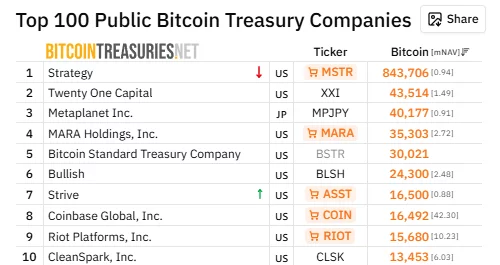
Strive has expanded its fundraising plans by $4.2 billion as the Bitcoin treasury company seeks additional capital for future BTC purchases.
Summary
- Strive plans to expand its ASST and SATA fundraising programs by $4.2 billion to support additional Bitcoin purchases.
- The company recently acquired 1,109 BTC for $85.4 million, increasing its holdings to 16,500 BTC and moving ahead of Coinbase and Riot Platforms.
- Strategy disclosed the sale of 32 BTC worth about $2.5 million, with proceeds expected to support distributions tied to its preferred stock offerings.
According to a June 1 X post by Strive chief executive Matthew Cole, the company expects to increase the size of its at-the-market programs tied to ASST and SATA securities by $2.1 billion each. The proposed expansion would add a combined $4.2 billion in new fundraising capacity.
Cole stated that the decision follows rising liquidity and investor demand for both securities. He also said Strive plans to release an updated balance sheet before U.S. markets open on Tuesday.
The announcement comes days after the company disclosed another large Bitcoin acquisition. In an 8-K filing submitted on May 26, Strive reported buying 1,109 BTC between May 19 and May 22 for approximately $85.4 million. The filing showed an average purchase price of roughly $76,988 per coin.
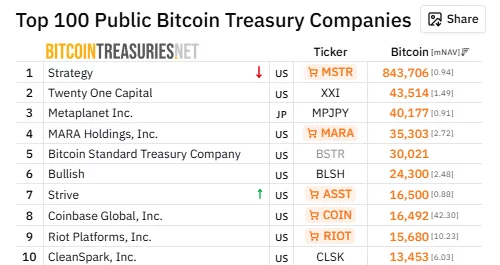
Following that transaction, Strive’s Bitcoin holdings increased to 16,500 BTC. Data cited in the filing placed the company ahead of Coinbase, which holds 16,492 BTC, and Riot Platforms, which holds 15,680 BTC.
ASST and SATA remain central to Bitcoin acquisition strategy
Funds raised through ASST and SATA form a key part of Strive’s Bitcoin treasury model. Rather than relying on traditional borrowing, the company uses proceeds from these securities to finance additional Bitcoin purchases.
Recent fundraising activity indicates the approach is already bringing in fresh capital. According to data from Bitcoin Treasuries, Strive’s Series A Perpetual Preferred Stock, traded under the SATA ticker, raised approximately $194.3 million during the previous week.
Based on current market prices, that amount could support the purchase of roughly 2,621 BTC. Bitcoin Treasuries provided the estimate in its assessment of the offering.
At the same time, Strive has sought to make the security more attractive to investors. SATA’s dividend yield recently rose to 13%, exceeding the 11.50% yield currently offered by Strategy’s STRC preferred stock.
Corporate Bitcoin accumulation has become increasingly concentrated among a small number of public companies. Although Strive has climbed the rankings with its latest purchases, a substantial gap remains between the firm and the industry’s largest holder.
Strategy pauses accumulation streak while Strive raises capital
While Strive is preparing to sell more securities to fund future Bitcoin acquisitions, Strategy recently moved in the opposite direction.
As reported by crypto.news, Strategy disclosed in a Monday 8-K filing that it sold 32 BTC worth approximately $2.5 million during the final week of May. The company said the proceeds are expected to be used for distributions associated with its preferred stock offerings.
Although the sale represented only a small portion of Strategy’s holdings, the filing showed it was the company’s first reported Bitcoin sale since a tax-related transaction completed in December 2022.
Strategy continues to hold 843,706 BTC, maintaining a substantial lead over every other publicly traded corporate holder. Even so, Strive’s latest fundraising plans indicate the company is continuing to expand its Bitcoin treasury strategy through equity-linked capital markets rather than slowing its pace of accumulation.


Japan should create a legal framework for trading cryptocurrency exchange-traded funds (ETFs), the ruling Liberal Democratic Party (LDP) said, according to a Reuters report on Monday.
A party panel on promoting blockchain technology submitted the proposal to Finance Minister Satsuki Katayama, also saying the state should promote usage of yen-based stablecoins.
“Crypto-ETFs would provide investors with easy-to-understand ways of investment,” the proposal said, according to Reuters’ report.
The country’s cabinet approved a draft amendment to classify crypto as a financial product in April, having previously treated it as a payment tool.
Japan would be joining other major markets such as the U.S. and Hong Kong in offering ETFs as a means to gain exposure to the crypto market without having to buy and store the underlying assets themselves.
Attempts are already underway to develop and promote yen-based stablecoins, which are digital tokens pegged to the value of a traditional financial asset, such as a fiat currency.
The $315 billion market is dominated by tokens pegged to the dollar, prompting concerns by policymakers in countries outside the U.S. that dollar dominance could circumvent their own banking and payments systems.

30 May 2026 – Spot Bitcoin exchange-traded funds (ETFs) have logged ten consecutive days of net outflows, with total redemptions surpassing $2.97 billion since May 15, according to data tracked by SoSoValue. Daily withdrawals ranged from roughly $70 million to $733.43 million, with the steepest single-day exit recorded midweek. Over the two-week span, assets held across spot Bitcoin ETFs have declined from about $104.29 billion on May 15 to $94.17 billion by Friday, a drop of roughly $10 billion.
The streak extends a record for ETF outflows, surpassing an eight-session decline seen earlier last year that culminated in about $3.2 billion in withdrawals. By framing the current run as the longest on record, investors and analysts are watching for signals that the mood around institutional demand toward Bitcoin may be shifting—and whether the downward pressure in flows could precede a stabilization or rebound in prices.
Key takeaways
- BTC spot ETFs have experienced 10 straight days of net outflows, with total withdrawals exceeding $2.97 billion since May 15; daily outflows have ranged from $70 million to $733.43 million, and the largest single-day exit occurred midweek.
- Overall, spot BTC ETF assets fell from about $104.29 billion on May 15 to roughly $94.17 billion by Friday, marking a near $10 billion decline in two weeks.
- The current stretch breaks the prior record of eight consecutive outflows, which was set in early last year and involved around $3.2 billion in withdrawals.
- Ether spot ETFs have not been immune, posting 14 consecutive days of outflows from May 11 through Friday, with daily withdrawals ranging from $5.65 million to $130.62 million and total assets decreasing from $13.85 billion to $11.27 billion.
- In contrast, Hyperliquid ETFs (ticker: HYPE) have drawn inflows in every session since their May 12 launch, with cumulative net inflows surpassing $100 million by May 28 and assets rising to about $122.2 million.
- Analysts at Santiment Intelligence describe the persistent ETF outflows as potentially signaling a contrarian bottom, noting that extreme outflows often accompany peaks in fear or risk aversion and may precede a price rebound.
BTC ETF outflows extend the longest streak on record
Data compiled by SoSoValue show that spot Bitcoin ETFs have endured a continuous drain for ten trading sessions, marking the longest outflow run on record. The daily declines have varied substantially, but the overall trend is clear: investors have been trimming exposure to BTC-backed ETFs at a rapid pace since May 15, as market participants reassess risk and adjust portfolios in a challenging macro environment.
As of Friday, the total net assets held by spot BTC ETFs stood at roughly $94.17 billion, down from $104.29 billion on May 15—a two-week retreat of about $10 billion. This pace of redemptions has dwarfed prior periods of outflows and has intensified focus on what the data could imply for the broader market cycle. The earlier benchmark eight-day stretch, recorded in the previous year, included approximately $3.2 billion in withdrawals, underscoring how current conditions are shaping a new baseline for institutional appetite in the space.
Spot Bitcoin ETFs have long operated as a barometer for institutional demand. When inflows surge, they typically reflect growing confidence and demand for BTC exposure; when outflows accelerate, they often align with risk-off sentiment and de-risking across portfolios. The latest chapter, though outflows are mounting, continues to provoke questions about whether capitulation has occurred or a capitulation-like moment may be near a potential market bottom.
Markets eye a potential bottom as outflows attract scrutiny
In a perspective echoed by analytics firm Santiment Intelligence, the sustained ETF outflows could be interpreted as a contrarian signal. The firm noted on X that when large sums exit Bitcoin ETFs over a short span, it can reflect “peak fear, frustration, or risk aversion” among investors, sometimes preceding a reversal once the sentiment shifts. The argument rests on historical patterns where extreme fund outflows accompany bottoming behavior, though such inferences are not predictive guarantees.
“History has shown that extreme ETF outflows typically work as a contrarian indicator, since prices often move opposite to trader expectations,” Santiment wrote in a Friday post. The firm highlighted a notable example from November 2025, when a near-$904 million single-day outflow occurred close to a market low and preceded a price recovery.
The takeaway for market watchers is nuanced. While the current rate and duration of outflows may appear bearish in the near term, they could be signaling a period of price discovery rather than a one-way slide. As with any ETF flow analysis, the interpretation depends on a constellation of factors, including macro momentum, risk appetite among large holders, and the evolving regulatory backdrop that shapes institutional engagement with crypto markets.
Ether ETFs slide, while Hyperliquids hint at a different demand dynamic
The broader spot ETF landscape offers a mixed picture beyond Bitcoin. Spot Ether (ETH) ETFs have logged 14 consecutive days of outflows from May 11 to Friday, with daily redemptions ranging from about $5.65 million to $130.62 million. Total assets declined from $13.85 billion on May 11 to $11.27 billion on May 29, a decrease of roughly $2.6 billion over the period. The Ether ETF trend mirrors the risk-off mood that has dominated broad crypto markets in recent weeks, reinforcing the sense that investors are prioritizing de-risking and liquidity preservation over new allocations to crypto assets.
In a contrasting development, Hyperliquid ETFs (HYPE) have drawn interest as a newer product category. Since launching on May 12, HYPE has posted inflows in every trading session, crossing $100 million in cumulative net inflows by May 28. Net assets for HYPE rose to about $122.2 million within just over two weeks, illustrating that a segment of market participants is experimenting with niche vehicles that promise higher liquidity and different risk profiles compared with traditional spot ETFs.
These dynamics suggest a market that is not monolithic in its response to volatility and macro forces. While BTC and ETH spot ETFs continue to experience targeted outflows, the emergence of inflows into Hyperliquid products points to appetite for newer, perhaps more flexible vehicles among institutional and sophisticated retail participants.
For investors and traders, the evolving ETF flow picture emphasizes the need to distinguish between broad risk-off sentiment and the search for tactical exposure through alternative products. The next phase will hinge on whether BTC and ETH ETF outflows moderate or reverse, how prices respond to stabilizing levels, and whether new inflows into non-traditional ETFs persist as market conditions unfold.
Looking ahead, attention will focus on whether BTC’s price action can anchor a rebound in ETF demand or whether macro headwinds keep trimming risk-on bets. As the flow data continue to accumulate, readers should watch for any signaling shifts in the pace of withdrawals, inflows, and net asset levels across both traditional spot ETFs and the newer Hyperliquid offerings, alongside any regulatory or macro developments that could reframe institutional appetite.

Key Takeaways
- Motorola Solutions is acquiring D-Fend Solutions, an Israeli anti-drone technology firm, in a $1.5 billion transaction
- The Israeli startup’s EnforceAir platform uses radio frequency technology to neutralize unauthorized drones — currently operational across more than 30 nations
- Shares of MSI climbed 2.75% following the announcement, reaching $414.37
- D-Fend projects $185 million in revenue for full-year 2026, maintaining annual growth exceeding 50% across three years
- Transaction completion is anticipated in Q4 2026, subject to standard regulatory clearance
Motorola Solutions revealed plans Monday to purchase D-Fend Solutions, a counter-unmanned aerial systems technology provider based in Israel, in a transaction valued at $1.5 billion. Following the announcement, MSI shares gained 2.75%, closing at $414.37.
Established in 2016, D-Fend develops systems that commandeer unauthorized drones during flight through radio frequency technology. Instead of destroying or jamming signals to hostile aircraft, the EnforceAir platform intercepts drone control systems and guides the vessels to secure landing zones.
The Israeli firm’s technology currently operates across more than 30 nations, with NATO alliance members among its clients, along with multiple U.S. federal agencies including Homeland Security, Defense, and Justice departments.
D-Fend has maintained annual revenue expansion exceeding 50% throughout the past three years. The organization anticipates reaching $185 million in total revenues for the full 2026 calendar year.
“Rogue drones have transformed our skies into a landscape of unpredictable risk, where simple detection is no longer enough,” said Motorola Solutions CEO Greg Brown.
Federal Legislation Creates Domestic Opportunities
The acquisition’s strategic timing aligns with recent legislative developments. The Safer Skies Act, incorporated within the FY2026 National Defense Authorization Act, authorizes certified state and municipal law enforcement agencies to detect, monitor, and disable drones presenting public safety threats.
This legislation establishes a fresh commercial pathway for D-Fend’s technology within the United States civilian marketplace — an opportunity Motorola can capitalize on through its extensive network of public safety agency partnerships.
The counter-UAS industry reached a valuation of $2.47 billion in 2026 and analysts project growth to $8.42 billion by 2031, based on research from Mordor Intelligence.
Comprehensive Drone Technology Portfolio Strategy
This transaction represents a continuation of Motorola’s strategic expansion in unmanned systems. The company completed a $4.4 billion purchase of Silvus last year, acquiring secure communications and networking solutions for drone operations. The D-Fend acquisition now provides capabilities across both drone deployment and neutralization.
Motorola has additionally pledged $100 million toward manufacturing expansion for Silvus technologies at a newly established Salt Lake City production facility dedicated to StreamCaster MANET radio systems.
From a financial perspective, Motorola Solutions generated $11.87 billion in revenues with 8% expansion over the trailing twelve months. The corporation maintains a P/E ratio of 32.6 alongside a 100% return on equity metric.
According to InvestingPro intelligence, six analysts have recently increased their earnings projections for MSI.
The $1.5 billion acquisition price comprises approximately 2% of Motorola’s $66.94 billion total market capitalization.
D-Fend CEO Zohar Halachmi expressed that integration with Motorola Solutions will enable access to the acquiring company’s extensive customer network spanning public safety, federal government, and enterprise markets.
The deal is scheduled to finalize during Q4 2026, contingent upon regulatory authorization and standard closing requirements.
Motorola recently announced a quarterly dividend distribution of $1.21 per share, scheduled for July 15, 2026 payment to shareholders registered as of June 17, 2026.
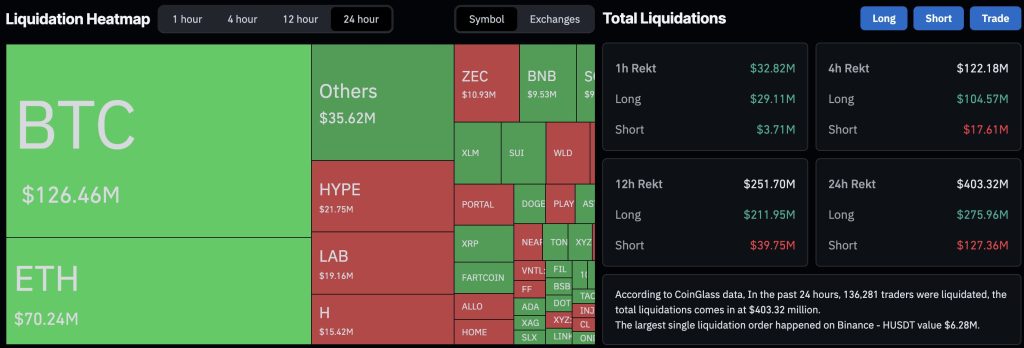
In Bitcoin news today, BTC crashed from $73,500 to a low of $71,500 on June 1 after news of US-Iran strikes hit the wires, triggering a violent risk-off flush across crypto derivatives markets.
More than $400M in leveraged long positions were liquidated within a four-hour window, with Binance and OKX absorbing the largest clusters of forced closures.
The crypto selloff confirmed what prior episodes have repeatedly demonstrated: crowded bullish leverage and geopolitical shock are a destructive combination.
Bitcoin News: How US-Iran Strikes Converted Into a Liquidation Cascade
The transmission mechanism was clear: strike headlines triggered risk-off repositioning across asset classes. Crude oil surged over 5%, gold approached record highs, and capital shifted away from high-beta assets like Bitcoin. BTC’s correlation with the Nasdaq, rather than with gold, during this time undermined its “digital gold” narrative from 2025.
On the derivatives side, elevated open interest in BTC futures left long positions vulnerable. The US-Iran strikes served as a negative catalyst, triggering forced liquidations across exchanges as key price levels such as $72,200 and $71,800 broke down, exacerbating the decline.
Exchange inflow data indicated a spike with short-term holders moving assets to hedge or exit, while long-term holders remained inactive, suggesting this was a speculative washout rather than a fundamental capitulation. CryptoQuant data had already highlighted structural fragility before the geopolitical event triggered the downturn.
Discover: The Best Crypto to Diversify Your Portfolio
Can Bitcoin Price Recover, or Does $71,500 Mark a Deeper Break
The damage to Bitcoin’s price is more than cosmetic. Breaking the 50-day moving average and losing the $72,000 psychological level in a single session shifts the technical structure from consolidation to distribution.
Immediate support now sits at $71,500, with a more meaningful cushion around $73,000, the zone that absorbed selling pressure during the February-March 2025 deleveraging episode.
ETF outflows compounded the bearish read. US spot Bitcoin ETFs logged an estimated $2.97Bn in net outflows as institutional allocators rotated defensively, with BlackRock’s iShares Bitcoin Trust (IBIT) recording one of its largest single-day outflow events since launch.
That is significant; IBIT outflows of that magnitude signal that even the most liquid ETF capital is not immune to geopolitical risk repricing. This mirrors a pattern seen earlier in 2025, where politically and geopolitically charged headlines triggered sharp BTC price drops regardless of underlying fundamentals.
Fund manager Michael Kramer of Mott Capital Management has argued that US dollar liquidity conditions remain a structural headwind, warning that large Treasury settlements drain the excess liquidity that speculative assets like Bitcoin depend on.
If that liquidity pressure persists alongside unresolved tensions in the Middle East, the near-term Bitcoin news price outlook remains skewed to the downside.
Here is what the three scenarios look like from current levels:
- Bull case: Geopolitical de-escalation within 48–72 hours triggers a relief rally; ETF inflows resume, BTC reclaims $73,000, and the 50-day MA is retested as support, opening a path back toward $75,000.
- Base case: Bitcoin consolidates in the $71,500–$74,000 range as leveraged positions are cleared and sentiment stabilizes; recovery is slow, capped by cautious ETF flows and dollar liquidity headwinds.
- Bear case: Escalation in the Middle East triggers a second leg down; $70,000 fails, $68,000 becomes the next test, and sustained ETF outflows push price toward the $63,000–$55,000 range last seen in Q1 2025.
The structural read is bearish until $73,000 is reclaimed on a closing basis. Everything below that level is damage control territory.
Discover: The Best Token Presales
The post Bitcoin Slumps to $71,500 as Geopolitical Tensions Trigger $400M+ in Liquidations appeared first on Cryptonews.


Disclosure: This article does not represent investment advice. The content and materials featured on this page are for educational purposes only.
XRPPower expands AI-powered ecosystem as investors seek new ways to participate in digital asset income beyond holding.
Summary
- XRPPower integrates AI analysis, cloud computing, and automation to enhance digital finance ecosystem experiences and workflows.
- XRPPower references ISO 27001, SOC 2, GDPR and PwC/Deloitte practices to strengthen governance, compliance, and security frameworks.
- AI-driven risk systems combine AML, KYC, 2FA, and anomaly monitoring to improve account protection, risk control, and user trust.
In recent years, the cryptocurrency market has experienced several rounds of dramatic fluctuations. From Bitcoin to XRP and ETH, significant price increases and corrections have become the norm. For many long-term holders, relying solely on asset price appreciation for returns is becoming increasingly challenging.
As digital finance enters a new stage of development, more and more investors are beginning to focus on another question: besides holding, are there more ways to participate in digital assets?
2026 is ushering in a new era driven by AI intelligent technology. Against this backdrop, XRPPower is continuously improving its intelligent ecosystem, integrating AI intelligent analysis, cloud computing resources, and automated operation capabilities to provide users with a smoother and more intelligent digital experience, helping more people easily integrate into the rapidly developing era of passive income in digital finance.
XRPPower AI intelligent global security system and intelligent risk control architecture
In terms of data security and risk management, XRPPower continuously references international security and privacy protection frameworks such as ISO/IEC 27001, SOC 2 Type II, and GDPR.
The platform draws on best practices from international professional services firms such as PwC and Deloitte in enterprise risk governance, information security management, and compliance, continuously improving its security system.
Simultaneously, the platform introduces an AI-powered intelligent risk identification system, combined with AML anti-money laundering mechanisms, KYC identity verification, and 2FA two-factor authentication, constructing a multi-layered security architecture covering identity verification, abnormal behavior monitoring, risk warnings, and account protection, continuously enhancing platform security and user trust.
How to start using the XRPPower app and earn passive income
1. Quick Account Registration
2. Choose a Suitable Plan
Choose a participation period and plan that suits your needs and preferences.
3. Activate with Cryptocurrency
Activate by paying the contract fee with a supported cryptocurrency to begin using the platform’s services.
4. Automated AI Intelligent System Operation
After activation, the XRPPower AI Intelligent System will automatically execute relevant processes. Users can view account dynamics and balance changes at any time in their personal center. (Daily earnings are automatically returned to the account.)
5. Flexible Account Asset Management
Account balances can be managed according to platform rules. Users can choose to withdraw funds or continue participating in other plans.
Partial AI Intelligent Contracts
Investment Amount: $1,000, Contract Term: 7 days, Daily Earnings: $13.20, Total Earnings: $92.40, Principal Returned at Maturity: $1,000
Investment Amount: $3,000, Contract Term: 10 days, Daily Earnings: $40.80, Total Earnings: $408, Principal Returned at Maturity: $3,000
Click to view more contract details
About XRPPower
XRPPower is committed to promoting the deep integration of artificial intelligence and digital finance, providing users with a more convenient digital experience through advanced technology architecture and a global service network. Currently, the platform has users in 189 countries and regions worldwide, totaling over 3 million. In the future, XRPPower will continue to expand the application scenarios of smart technologies, creating a more innovative and connected digital ecosystem.
For more information, visit the official website and download the Android and iOS apps.
Disclosure: This content is provided by a third party. Neither crypto.news nor the author of this article endorses any product mentioned on this page. Users should conduct their own research before taking any action related to the company.
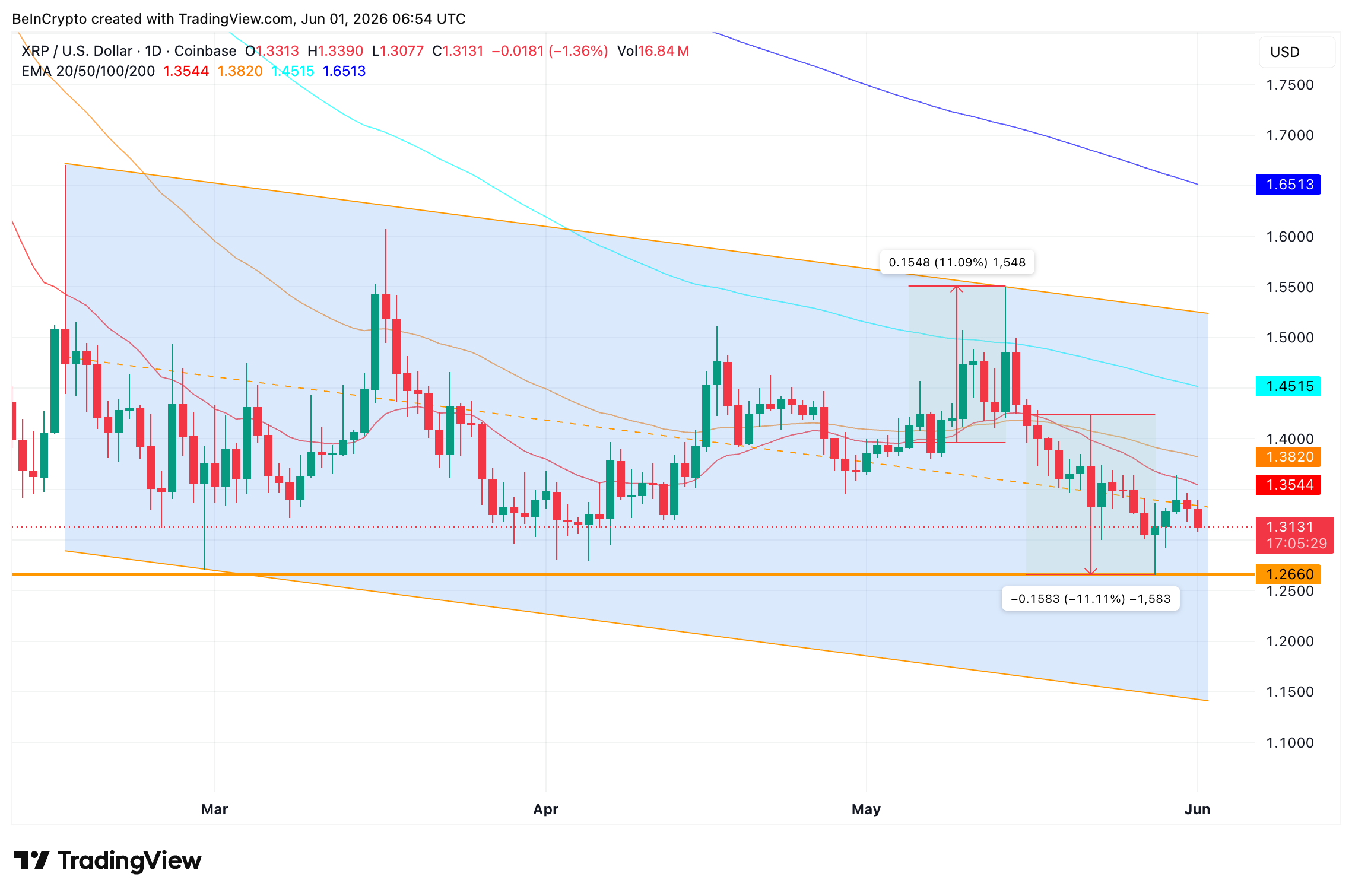
XRP (XRP) price is stuck near $1.31 inside a falling channel, unable to reclaim a single level that has capped key recovery attempts.
Beneath the surface, the two largest whale cohorts and long-term holders all cut their stash this weekend, leaving the token’s next move resting on whether buyers can take back one critical line.
Price Slides in a Falling Channel as Whales Cut Exposure
XRP has traded inside a falling channel since mid-February, a pattern where price grinds lower between two downward-sloping parallel lines while printing lower highs. Price has crept back toward the channel’s midline after a recent drop, yet reclaiming that midline alone would not turn the structure bullish.
Want more token insights like this? Sign up for Editor Harsh Notariya’s Daily Crypto Newsletter here.
Now the key levels come into focus. XRP price must reclaim the 20-day exponential moving average (EMA), a trend line that weights recent prices more heavily, sitting near $1.35. History shows why it matters. When XRP lost the 20-day EMA on May 16, it corrected roughly 11%. When it reclaimed the line in early May, price rose nearly 11%. This makes this technical line a critical pivot point.

Yet, the bigger warning sits in XRP whale behavior. The two largest cohorts both trimmed holdings starting May 31, suggesting they expect a weak June.
The 100 million to 1 billion XRP cohort cut its share from 11.54% to about 9.9%, a sharp drop. The smaller 10 million to 100 million cohort eased from 17.61% to 17.36%.

Both moving lower at once points to inherent weakness rather than a single seller. That selling raises the question of whether anyone is stepping in to absorb it.
Holders Cut Stash as Accumulation Signal Weakens
The picture does not improve among longer-term owners. The Hodler Net Position Change, a metric that tracks whether mid-to-long-term holders are net adding or shedding coins, dropped hard this weekend.
The reading fell from roughly 268.4 million XRP on May 30 to about 216.6 million XRP a day later, a steep 19% one-day decline that suggests distribution rather than accumulation.

With whales and holders both reducing exposure at the same time, the buy-side support needed for a clean recovery looks thin. XRP exchange outflows elsewhere hint at some accumulation, but that demand has not yet shown up in price. That leaves the XRP price chart to settle whether the weakness deepens or stalls.
XRP Price Levels to Watch as the 20-Day EMA Reclaim Stalls
The critical 20-day EMA level closely aligns with the 0.618 Fibonacci level at $1.348 (the $1.35 zone).
A move above $1.35, a gain of about 2.6%, opens the path toward $1.38 (50-day EMA), then $1.42 and $1.47. A push over $1.55 would flip the bias bullish. On the downside, XRP must hold $1.29 and $1.26. The immediate risk sits at $1.29, just 1.45% below current price, and losing $1.26 exposes $1.22.

For now, $1.35 separates a double-digit recovery from a slide back toward $1.22.
The post XRP’s $1.35 Reclaim Is Failing as Whales and Holders Bail Together appeared first on BeInCrypto.

Devon farming supply business Mole Valley returns to profit

Rubio odds for GOP 2028 nominee close to overtaking Vance on Kalshi

Sam Levinson Praises ‘Game’ Sydney Sweeney Over Euphoria OnlyFans Scenes


-

 NewsBeat5 days ago
Israel says it has killed new Hamas military leader in Gaza City airstrikes
-

 Tech5 days ago
NASA taps Blue Origin to deliver lunar rovers for Moon Base initiative
-

 Sports6 days ago
2026 NBA Finals schedule, odds: Knicks await Thunder or Spurs after winning East
-

 News Videos5 days ago
XRP *JUST* SUCCEEDED!!!! CLARITY ACT EXPOSED!!! (SHE EXPOSED IT)
-

 News Videos3 days ago
This is BROKEN! INSANE 5x MONEY CAR WASH WEEK! The NEW GTA Online UPDATE Today! (GTA5 New Update)
-
 Crypto World6 days ago
Micron Crosses $1 Trillion Market Cap as AI Demand Reshapes Memory Sector
-
 NewsBeat7 days ago
Hottest May day ever as London hits 34.8C in 2C leap from previous records
-

 Business6 days ago
Selena Gomez Reportedly Upset Over Benny Blanco’s Comments on Her ‘Terrible’ Diet
-
 Tech6 days ago
China assigns ID codes to 28,000+ humanoid robots
-

 Business7 days ago
Nikkei 225 Surges Past 65,000 for First Time as Iran Peace Hopes Fuel Record Rally
-

 Tech3 days ago
Waymo dominates autonomous vehicle registrations as Tesla trails behind
-
 Entertainment7 days ago
‘Breaking Bad’ Star’s Easy-to-Binge 6-Part Crime Series Spin-Off Is Finally Heading to Free Streaming
-

 Tech5 days ago
The Samsung pay deal is the moment Korean unions changed register
-
 Tech2 days ago
SpaceX just won a second Golden Dome contract. This one is $4.16 billion.
-

 Entertainment6 days ago
Days of our Lives 2-Week Spoilers May 25-June 5: Gwen Rages, Abe Confesses & 2 Tragic Anniversaries!
-
 Entertainment6 days ago
Taylor Swift Fans Label Travis Kelce’s Beer-Chugging A ‘Red Flag
-
 NewsBeat3 days ago
FIRST NIGHT REVIEW: Take That bring the Circus back to life in spectacular sun-soaked style
-

 Tech6 days ago
Millions of AI agents imperiled by critical vulnerability in open source package
-

 News Videos3 days ago
SHE IS KILLING XRP!!! WATCH URGENT AND ACT FAST
-
Crypto World3 days ago
CFTC Has Approved the First Regulated Bitcoin Perpetual Contract in the U.S.
You must be logged in to post a comment Login