Connect with us
DAPA Banner
DAPA Coin
DAPA
COIN PAYMENT ASSET
PRIVACY · BLOCKDAG · HOMOMORPHIC ENCRYPTION · RUST
ElGamal Encrypted MINE DAPA
🚫 GENESIS SOLD OUT
DAPAPAY COMING

Tech

Best Sleep Trackers of 2026: Oura, Whoop, and Eight Sleep

Published

on

Apple Watch Series 11 for $399: If you already have an Apple Watch Series 4 or later, you can use it to track your sleep. Between the heart rate sensor and the accelerometer, your Apple Watch can break your slumber down into four stages. Newer models can also measure blood oxygen and temperature. It feels like a general overview compared to some of the other sleep trackers I tried, and there’s no sleep score, though this is obviously by design (it’s debatable whether you need more data).

Garmin Epix Pro (Gen 2) for $1,000: All of Garmin’s fitness trackers track sleep to some extent, but the Epix Pro has what Garmin calls advanced sleep monitoring, or the ability to track sleep stages, your blood oxygen saturation, your respiratory rate, and restlessness. Contributor Adrienne So found that the Epix Pro regularly accounted for her getting a half-hour to an hour more sleep than she actually got most nights, as double-checked by a Whoop and Oura. It also doesn’t add naps to your sleep score.

Best Sleep Trackers of 2026 Oura Whoop and Eight Sleep

Photograph: Simon Hill

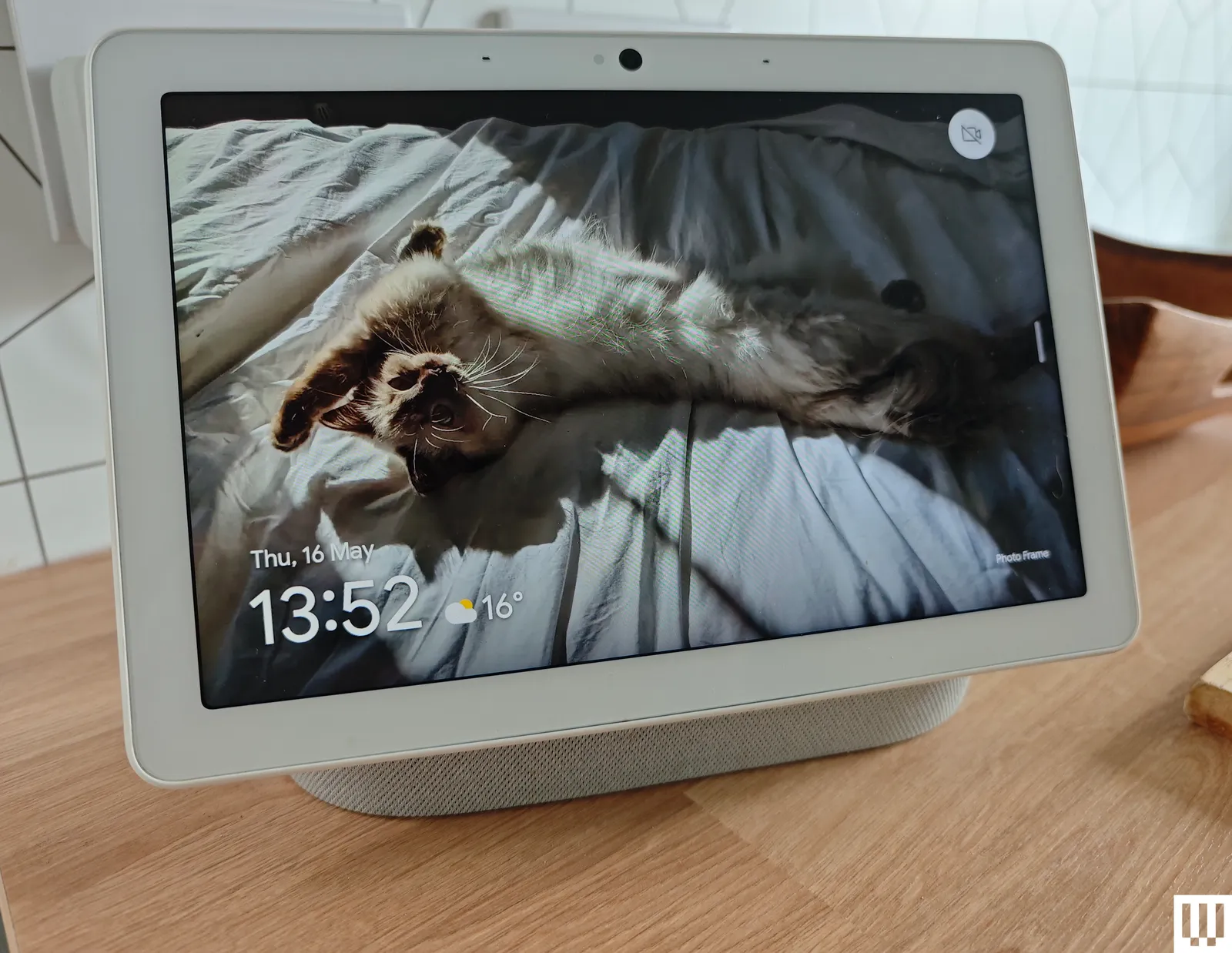
Google Nest Hub Max for $229: The Nest Hub Max uses radar to track your sleep, which means you don’t need to wear a tracker; it also has a microphone to track snoring, sleep talking, and other nocturnal sounds. I love the Nest Hub on my nightstand for smart home controls, family photos, and listening to sleep sounds or podcasts in bed, but the sleep tracking consistently overestimated my REM phases and missed periods of wakefulness that other trackers recorded. When I used multiple trackers simultaneously, the Nest Hub was the outlier. The second-generation Nest Hub ($100) offers a similar sleep-tracking experience if you’re looking for something cheaper. —Simon Hill

Muse S Athena Headband for $475: This headband has sensors capable of tracking your brain activity, similar to an electroencephalogram (EEG), alongside an accelerometer and gyroscope, and a PPG sensor to measure heart rate and blood circulation. It’s chiefly a meditation aid designed to help you relax, but it can also track your sleep by recording your heart rate, respiration, time to fall asleep, and how much you moved around for an overall sleep score. Sadly, I found it uncomfortable to wear and often woke to discover the sleep tracking had failed, usually because I’d removed it during the night. —Simon Hill

Advertisement

Withings ScanWatch 2 for $370: Wear the Withings ScanWatch 2 to bed and you will get a sleep score out of 100 in the morning. It covers the same four stages as other trackers (awake, REM, light, and deep) but boasts a PPG sensor for measuring your respiratory rate. It can also track your heart rate, temperature, and blood oxygen levels. The ScanWatch 2 provides a wealth of data and advice in the Withings app. Some folks may find it bulky and uncomfortable for sleep, though, and it had problems distinguishing between light sleep and when I was lying awake in bed. —Simon Hill

Overhead view of the Withings Sleep Tracking Mat a flat rectangular pad with a cord coming out of one end on top of a...

Photograph: Simon Hill

Withings Sleep Tracking Mat for $200: Another alternative to wearables, this sensor-packed mat from Withings slips underneath your mattress where your chest rests. You need to calibrate it during the initial setup, but it’s quick and easy. It tracks your movements, breathing, and heart rate throughout the night, detects snoring or other sounds, and alerts you about potential breathing problems that might indicate sleep apnea. I have doubts about the accuracy as it assumes you are trying to sleep if you are lying still in bed watching TV or reading, and that can skew your score (though it’s best to only use your bed for sleep if you suffer from insomnia). I found it often marked periods of wakefulness as light sleep. It requires a power outlet, but that does mean you never need to worry about charging). —Simon Hill

Sleep Routine: Tracker & Alarm for $60/year (iOS/Android): Sleep Routine is a sleep-tracking app that provides a report for each night, breaking your sleep into stages. Reviewer Simon Hill says the results were somewhat accurate and broadly matched the Ultrahuman Ring Air, but the app can be a bit wonky. There were frequent occasions where he’d get an error message the morning after with no report or a brief recorded sleep. There was also no indication of why it failed. You can test Sleep Routine for a week before you need to subscribe.

Source link

Advertisement
Continue Reading
Click to comment

You must be logged in to post a comment Login

Leave a Reply

Tech

Microsoft investigates Office Apps, Teams file access issues

Published

on

Microsoft

Microsoft says an ongoing incident is preventing users of its Teams collaboration platform and Office for the web cloud-based productivity suite from opening files.

“We’re investigating reports that some users are unable to open files in Office for the web or Microsoft Teams,” the company’s Microsoft 365 Status tweeted earlier.

According to further information shared in the admin center under MO1329446, this issue impacts multiple Office Apps, including Microsoft Excel for the web.

image

“Users may be unable to open files in Office for the web. Impacted Office Apps include, but are not limited to Excel, PowerPoint,” Microsoft added. “When users open documents, impacted users are shown the following the following error message’ Office Online services aren’t available right now. We’re working to restore all services as soon as possible.”

While it hasn’t specified which regions are affected or provided a final timeline for full remediation, the company says it’s currently investigating service telemetry to isolate the root cause of the issue.

Advertisement

In a subsequent update, the company revealed that “initial analysis indicates a potential cross-service issue impacting Office for the web experiences.”

Microsoft has also tagged this ongoing outage as an incident, a term commonly used for critical service issues involving noticeable user impact.

MO1329446 Teams Office Apps incident

Earlier today, Microsoft addressed another incident that blocked customers from setting up multi-factor authentication (MFA) on some accounts or from accessing the MySignIn service.

The company blamed the platform access issues on a recent cache configuration change that required a failover, triggering high CPU and memory utilization as traffic from European Union customers began to peak.

Advertisement

In April, Microsoft also fixed a known issue caused by a recently deployed backend change that blocked some Microsoft Teams Free users from chatting and calling others, as well as a bug introduced by a Microsoft Edge browser update that prevented Windows users from joining Teams meetings.

The same month, it reverted a recent service update that had blocked some Teams users from launching the desktop client, leaving them stuck on the loading screen with a “We’re having trouble loading your message. Try refreshing.” error.

This is a developing story…


article image

Automated pentesting tools deliver real value, but they were built to answer one question: can an attacker move through the network? They were not built to test whether your controls block threats, your detection rules fire, or your cloud configs hold.

This guide covers the 6 surfaces you actually need to validate.

Advertisement

Download Now

Source link

Continue Reading

Tech

Nvidia’s RTX Spark wants to turn your Windows laptop into an AI agent powerhouse

Published

on

Nvidia’s RTX Spark marks one of the most aggressive pushes yet toward turning the PC into an agentic AI system by redesigning both hardware expectations and how Windows is meant to be used.

At the centre of the platform is the RTX Spark Superchip, a Windows-on-Arm design announced at Computex 2026 that combines up to 20 Arm CPU cores with a Blackwell-based GPU featuring 6,144 CUDA cores. It pairs up to 128GB of LPDDR5X unified memory with up to 300 GB/s of bandwidth, all tied together via NVLink C2C.

Nvidia says this architecture specifically handles AI agents running locally. In other words, systems that don’t just respond to commands but actively plan, execute tasks, and refine outputs over time.

That shift is important because Nvidia is effectively redefining what “using a PC” means. Instead of relying on traditional mouse-and-keyboard workflows, users would interact with natural language prompts. By doing this, they hand off complex tasks to AI agents that can continue working in the background, even when the system is idle or overnight.

Advertisement

Beyond AI workloads, Nvidia is also positioning RTX Spark as a full premium computing platform. It promises up to “100 FPS 1440p gaming” using DLSS 4.5 and Multi Frame Generation. There is also support for demanding creative workflows such as high-resolution video editing and large-scale 3D projects.

Advertisement

Nvidia even claims the memory configuration will allow handling of extremely large assets, suggesting the system can handle 12K video timelines without running into typical resource bottlenecks.

A major part of the pitch is software integration. Nvidia says it is working with Adobe to rebuild core parts of Photoshop into a fully GPU-accelerated application, enabling more advanced generative workflows and HDR editing. Adobe is also reworking Premiere to better support AI-driven editing and effects, and to provide deeper integration of agent-style controls via Model Context Protocol.

Advertisement

Hardware partners, including Dell, HP, Lenovo, Microsoft, Asus, and MSI, plan to ship RTX Spark systems from autumn 2026 onwards, spanning both high-end laptops and compact desktops. Nvidia claims these machines will deliver consistent performance whether plugged in or on battery, will support tandem OLED G-Sync displays and feature premium chassis designs.

Taken as a whole, RTX Spark isn’t just another laptop platform refresh. It’s Nvidia attempting to reframe the Windows PC as an always-on AI workspace, where performance, memory, and software are built around delegating work to intelligent agents rather than running apps manually.

Source link

Advertisement
Continue Reading

Tech

Is college worth it? The data says yes, even in a rough job market.

Published

on

There are many ways to bomb a college commencement speech.

You can tell everyone you composed the talk while high on ayahuasca, like Chris Pan at Ohio State. You can deliver the entirety of your speech in the voices of your incredibly annoying cartoon characters, like Tom Kenny and Bill Fagerbakke at the University of Vermont. You can even, like my graduation speaker in 2001, admonish the graduating class for depending too much on their parents and generally being an ungrateful lot, before later being convicted of multiple counts of sexual assault and undergoing a dramatic fall from grace. (Yes, that was none other than Bill Cosby, whose convictions were later overturned.)

But the surest way to turn your graduate audience hostile in 2026 is to refer positively to AI, as speakers ranging from former Google CEO Eric Schmidt at the University of Arizona to real estate executive Gloria Caulfield at the University of Central Florida to record label honcho Scott Borchetta at Middle Tennessee State University discovered. And that’s because AI has — not unreasonably — become the symbol of growing fears that a college degree is no longer as valuable as it once was, and that today’s college grads are uniquely screwed. (The only speaker I could find whose comments on AI were well received was The Daily Show’s Ronny Chieng at Harvard, probably because they included the line: “fuck AI, fuck AI, fuck AI.”)

In a late-2025 NBC News poll, 63 percent of voters said a college degree isn’t worth it, against just 33 percent who said it was. A Gallup poll found that the share of Americans who say college is “very important” had fallen to 35 percent in 2025, a huge drop from 75 percent in 2010. And that pessimism has real grounding. Recent graduates ages 22 to 27 had an unemployment rate of about 5.7 percent in early 2026, above the national average of 4.3 percent. Hiring has slowed to the lowest rate outside the pandemic since 2014, while entry-level postings have fallen roughly 35 percent over the past 18 months.

Advertisement

So there’s no doubt that 2026 will be a rough launch for new college grads. But a rough launch doesn’t mean a rough life, and while the longer-term impact of AI is unknowable, it’s far from the worst time even in recent memory to graduate into the workforce. The data still says, for most graduates, a college degree is more than worth the investment.

The vibes out there for college grads are not good. But when the bad vibes are outpacing the actual reality, that qualifies as qualified good news.

One of the best investments you can make

Let’s start with the number the college panic ignores. In 2025, the Federal Reserve Bank of New York asked the question “Is college still worth it?” and came back with a very specific answer: Yes — to the tune of 12.5 percent.

Advertisement

That was the median return on investment in a college degree, after accounting for the cost of tuition and the amount lost by not spending those years working. College graduates in recent years have earned a median of around $80,000 a year, compared to around $47,000 a year for high school graduates. Government data in 2024 put median weekly earnings for workers with a bachelor’s degree at $1,543, compared with $930 for workers with only a high school diploma — about 66 percent more. And while it’s true that the growth of this premium has largely flattened over the past two decades, after roughly doubling between 1980 and 2000, it hasn’t disappeared. Graduating from college, even in 2026, still puts you on a better path than skipping it.

It’s telling that when you shift from the abstract idea of college to the value of individual degrees, the vibes change. Asked about their own degree, according to a 2026 Gallup poll, about 80 percent of bachelor’s graduates call it critical or important to their careers, while 71 percent say they landed a good job within six months. It’s a bit like the perennial attitude toward Congress: People hate the institution and yet tend to rate their own representatives highly. Abstract views are influenced by the deluge of content about the crisis of college, while individual views are influenced by what is actually happening to people.

It’s the timing, not the degree

Speaking as a proud member of the college class of 2001, I can tell you that 2026 is far from the first year when it was tough to graduate into the workforce. My friends one year above me in college entered an economy that had an astoundingly low unemployment rate of 1.4 to 1.7 percent for college grads ages 25 to 34, while real hourly wages for young college graduates had grown at 3 percent a year between 1995 and 2000. My classmates assumed we were headed for the same golden outcome.

Advertisement

“Psych!”, as we used to say back then. By the spring of 2001, the dot-com crash was in full effect, wiping out startups and jobs. More than a few people I knew had lined up lucrative starting jobs at investment banks and consulting businesses, only to have those gigs rescinded as they were preparing to receive their diplomas. (I cleverly avoided this by never getting those offers in the first place and instead entering the thriving field of journalism.) By December 2001, in the aftermath of 9/11, the unemployment rate for college grads ages 25 to 34 had jumped to 4 percent.

The class of 2010 had it even worse — recent college grads had a 7 percent unemployment rate. But though both the classes of 2001 and 2010 experienced what economists call “recession scarring” that had lasting effects on their income, those scars largely, though not completely, faded as time passed and the economy improved. The lesson? You can’t control when you graduate college, but you can largely control whether you graduate college at all — and finishing school is likely to still benefit you over the long term.

It’s true that the class of 2026 is facing an extra layer of uncertainty: the fear that AI is eating away at the bottom rung of the career ladder before graduates can reach it. Goldman Sachs finds unemployment among 20- to 30-year-olds in tech-exposed roles is up nearly 3 percentage points since early 2025, while research from Stanford has counted a roughly 20 percent drop in employment for young software developers in highly automatable jobs.

But every time you think the case has been made that AI is causing a jobpocalypse, new data complicates the picture. Vanguard reports that employment in highly AI-exposed occupations rose 1.7 percent between 2023 and 2025, while a Federal Reserve study this year of more than a million firms found no clear connection between adopting AI and posting fewer jobs so far. At the moment, hiring problems have more to do with a cautious, high-interest-rate economy. And employer hiring plans for the class of 2026 are actually being revised upward — not the move you make while deleting the entry level.

Advertisement

“To you, the class of 2026, I say…”

None of this data means that college bet is a sure thing for everyone. Tracking by the Burning Glass Institute and Strada finds that 52 percent of graduates are underemployed a year out, and 45 percent are underemployed a decade later. A college grad who takes a first job that doesn’t require a degree is 3.5 times more likely to be underemployed 10 years on. For that group, the earnings premium over a high school grad shrinks to about 25 percent — roughly the same as a college dropout.

Outcomes are also influenced by what a graduate chooses to study: Underemployment runs under 10 percent for nursing graduates and above 65 percent for criminal justice majors. (I realize telling someone who just claimed their diploma that maybe they should have picked a different major is not exactly actionable advice.) And the financing has gotten tougher — for Gen Z, it cost 32 percent of the typical American family’s annual income to pay for one year at a state university in 2021, compared to mid-20s for Gen X in the 1990s and 15 percent for Boomers in 1975.

But generational comparisons obscure as well. When people say college doesn’t pay like it used to, they may not realize they’re comparing against a past when a far smaller and more homogenous slice of Americans got their degree: Among 25- to 29-year-olds, the share holding a bachelor’s has roughly doubled between 1980 and 2021, from about a fifth to nearly two in five. That much larger and more varied pool of graduates skews the individual outcomes, even if the average largely holds up.

Advertisement

So what would I tell the class of 2026 if someone were misguided enough to put me on the dais? Mustering my best commencement-grade metaphors, I’d tell them that, yes, they are graduating into a sea of troubles, but that they are far from the first academic sailors to make such a voyage, and that the diploma they hold is still the most oceanworthy raft they can find. (Can you tell I was an English major?) And if I were so bold as to mention AI, I’d lean more Ronny Chieng than Eric Schmidt.

A version of this story originally appeared in the Good News newsletter. Sign up here!

Source link

Continue Reading

Tech

AT&T Sues California Regulators For Trying To Make Broadband Affordable

Published

on

from the this-is-why-we-can’t-have-nice-things dept

Five years years ago AT&T effectively stopped selling DSL and started hanging up on DSL and copper phone line customers. While killing landlines and DSL is understandable given the limitations of the dated copper-based tech, the problem is that thanks to concentrated telecom monopolization, many of these customers were left without any replacement options due to a lack of competition.

There are other issues at play too. AT&T has, for decades, received countless billions in tax cutssubsidiesmerger approvals, and regulatory favors in exchange for building infrastructure it either didn’t complete, didn’t maintain, or didn’t upgrade. There’s a rich back history of AT&T taking taxpayer money and then failing to deliver upgrades that were promised local municipalities.

Many of folks impacted by AT&T’s decision to hang up on copper are rural or elderly folks who relied on traditional landlines for reliable 911 access but are either outside the range of cellular, or find cellular to be less reliable and significantly more expensive on fixed budgets. The system has a tendency to downplay or ignore these folks.

So you can see how there’s a tension between private telecom monopolies and public interest regulators (the few we still have) tasked with protecting taxpayers and the public interest.

Advertisement

In 20 of the 21 states AT&T operates in, its lobbyists have managed to sell lawmakers on eliminating Carrier of Last Resort (COLR) obligations requiring it provide landline telephone service to any potential customer in its service territory. It’s easy to lobby lawmakers on the idea that the company needs to “move forward past outdated regulations,” and ignore the actual real-world impact or AT&T’s rich history of subsidy fraud or limitations of wireless as a fixed-line alternative.

But they’ve run into trouble in California, after the California Public Utilities Commission (CPUC) told AT&T in 2024 it can’t just hang up on these unwanted (taxpayer subsidized) connections. The CPUC said it’s not blocking AT&T from retiring its aging copper networks, but it wants some AT&T dedication to upgrading failing infrastructure to more modern fiber, not just throw “good enough” wireless at the problem.

Last week AT&T sued California and CPUC (full lawsuit here). AT&T is also asking the Trump FCC to intervene and prevent the CPUC from doing its job. AT&T, for its part, sells this as a story of California leveraging outdated regulations to block AT&T from embracing modernization:

“The federal government and virtually all States where AT&T historically offered POTS [Plain Old Telephone Service] have now eliminated outdated regulatory obstacles, allowing AT&T to begin powering down its POTS network and increasing its investments in modern communication technologies. California stands alone in resisting this progress.”

CPUC counters by saying they don’t want customers who used to have reliable landline service shoveled off to costly and less reliable wireless services instead of fiber. Or left without any connection whatsoever after spending the last four decades slathering AT&T with subsidies.

Advertisement

But it’s worth noting that AT&T’s legal assault is about more than just the fate of dying copper landlines.

California’s CPUC has been filling the void left by Trump regulators and attempting to ensure U.S. broadband is somewhat affordable. That’s involved conditions affixed to grants, affordability conditions applied to recent telecom mergers, and public safety requirements in response to climate-related risks. AT&T, as you might expect, doesn’t like that. Their goal is, with no hyperbole, no oversight at all.

So in addition to this lawsuit, they appear to be leveraging Dem politicians (like Assemblymember Tasha Boerner) in the state to push amendments to the state constitution that would strip the CPUC of its independence, ensuring that AT&T would have more direct lobbying control over the CPUC’s makeup through its robust lobbying control of state legislators.

The changes, which were approved by a California State Assembly vote (67-1), would need to be voted on by California residents later this year. As such, they are being sold to local state folks as a way to keep CPUC focused on soaring electrical utility rates. But the timing of the effort to limit CPUC’s oversight of broadband, just as AT&T tries to deliver the killing blow to the agency, is hard to miss.

Advertisement

Ultimately the broader narrative in the press sold to voters will be that California regulators are engaged in broad over-reach and hampering AT&T’s potential innovation. Downplayed or ignored will be the fact that federal consumer protection has largely been destroyed, and semi-independent regulators like the CPUC in a handful of states are the last line of defense in a country being devoured by corruption.

It’s a lopsided fight that historically telecom monopolies tend to win, which is why, as you can see with your own eyes, most U.S. broadband is patchy, expensive, sluggish, with abysmal customer service. Instead of empowering regulators that protect affordability and competition, we have a nasty tendency to lobotomize them on behalf of “free market competition” that isn’t real, and that monopolies don’t want.

Filed Under: affordability, california, california public utilities commission, cpuc, dsl, fiber, telecom, upgrades

Companies: at&t

Advertisement

Source link

Continue Reading

Tech

US export curbs push China’s AI chips away from GPUs to custom ASICs

Published

on

TL;DR

US export controls are pushing China’s AI chip industry away from general-purpose GPUs and toward custom ASICs. Huawei leads with 62% projected market share, while Alibaba and Cambricon pursue alternative architectures that may create a structurally different ecosystem from the Nvidia-dominated West.

China’s AI chip industry is no longer trying to build an Nvidia clone. Under sustained US export controls that block access to the most powerful general-purpose GPUs, the country’s largest technology companies are pivoting toward application-specific integrated circuits, custom chips designed to do one thing extremely well rather than handle any workload. The shift is creating a domestic semiconductor ecosystem that may end up architecturally distinct from the Nvidia-dominated model that powers AI in the West.

Advertisement

At the centre of this divergence is a design choice that export controls have accelerated. General-purpose GPUs, the kind Nvidia sells, are flexible and programmable, making them ideal for the fast-moving research phase of AI development where model architectures change constantly. ASICs sacrifice that flexibility for raw efficiency, delivering faster performance at lower power consumption for specific AI tasks. In a market where the best Nvidia hardware is unavailable, the economics of custom silicon become far more compelling.

Three paths to custom chips

Chinese companies are pursuing three distinct ASIC architectures. Huawei is betting on neural processing units through its Ascend series, including the widely deployed 910C and the upcoming Ascend 950. Cambricon Technologies is building domain-specific architectures with its Siyuan 590 and 690 series. Alibaba is taking a third route through its semiconductor unit T-Head, which launched the Zhenwu M890 parallel processing unit at its annual cloud computing summit last week, claiming three times the performance of its predecessor.

On the GPU side, Moore Threads leads the domestic effort. Founded in 2020 by Zhang Jianzhong, Nvidia’s former China executive, the company has dedicated itself to general-purpose chips like the MTT S5000 series. Biren Technology, Enflame, and Iluvatar CoreX are also competing in the space, but none has achieved the scale of the ASIC leaders.

Morgan Stanley report published on 8 May made the market dynamics clear. Huawei is projected to capture 62% of China’s domestic AI accelerator market in 2026, followed by Cambricon at 14%. Among big tech firms building proprietary chips, Baidu and Alibaba are each expected to take roughly 5%. The ASIC heavyweights are winning on volume and momentum.

Performance is no longer the bottleneck

The performance gap between Chinese chips and Nvidia’s export-compliant hardware has narrowed significantly. Morgan Stanley data shows that Huawei’s Ascend 950 cards and Cambricon’s Siyuan 690 can outperform Nvidia’s H20, the most powerful chip Nvidia is currently permitted to sell to China, by 50 to 150% as measured in tokens per second.

Advertisement

Huawei expects AI chip revenue to reach roughly $12 billion in 2026, up from $7.5 billion in 2025. Nvidia’s share of the Chinese AI accelerator market has effectively collapsed to zero, a development that CEO Jensen Huang has described as a “horrible outcome” for the United States because it breaks the software dependency on Nvidia’s CUDA ecosystem that took two decades to build.

For China’s highly commercialised AI market, which focuses on deploying applications to hundreds of millions of users rather than conducting frontier research, the ASIC approach makes particular sense. Inference, the process of running a trained model at scale, rewards the kind of narrow optimisation that custom silicon provides. Training new models still benefits from GPU flexibility, but the revenue is in deployment.

The software stack problem

Hardware performance is only half the equation. The deeper challenge for China’s chip industry is breaking the lock-in created by Nvidia’s CUDA platform, the software layer that millions of AI developers worldwide use to write code for Nvidia hardware. CUDA’s network effects are enormous. Virtually every AI framework, every research paper, and every pre-trained model assumes CUDA compatibility.

Huawei is building CANN as its alternative, while Moore Threads has developed MUSA. DeepSeek has spent months rewriting its core code to work with Huawei’s CANN framework, moving away from the CUDA ecosystem. But semiconductor analyst Zhang Haijun notes that as AI models grow more complex, the boundaries between custom ASICs and flexible GPUs are “becoming increasingly blurry,” suggesting that the winning architecture may eventually combine elements of both.

Advertisement

Omdia chief analyst Su Lian Jye frames the choice practically: enterprises with robust AI engineering capabilities and a clear roadmap benefit from ASICs, while those running mixed workloads still lean toward general-purpose GPUs. For now, market momentum in China favours the specialist approach, partly by choice and partly because the general-purpose option from Nvidia remains either unavailable or restricted.

A structurally different ecosystem

The long-term consequence of this divergence may be more significant than the near-term performance benchmarks. If China’s AI industry standardises on a mix of Huawei NPUs, Alibaba PPUs, and Cambricon domain-specific chips, each running its own software stack, the result will be a fragmented but domestically self-sufficient ecosystem that operates on fundamentally different architectural assumptions from the West.

That fragmentation carries costs. Developers building for the Chinese market may need to support multiple hardware platforms simultaneously, increasing complexity. Cross-border AI collaboration becomes harder when the underlying compute stacks are incompatible. And the lack of a single dominant platform means no Chinese chip maker benefits from the kind of ecosystem lock-in that made Nvidia’s CUDA so powerful in the first place.

But the direction is set. US export controls intended to slow China’s AI progress have instead accelerated a structural redesign of its chip industry, pushing it toward custom silicon, domestic software stacks, and an architecture that no longer depends on American hardware. Whether that ecosystem can match the pace of innovation in the Nvidia-powered West is the defining question of the AI chip race.

Advertisement

Source link

Continue Reading

Tech

MSI Sharpens Its Focus With the Claw 8 EX AI+ Handheld Gaming PC

Published

on

MSI Claw 8 EX AI+ Handheld Gaming PC
Photo credit: PC World
MSI will release the Claw 8 EX AI+ handheld gaming PC on June 23. The company sets the device at a premium level, with early pricing talk centering on $1,500 for the loaded version that includes 32GB of LPDDR5x-8533 memory and a one-terabyte drive. That figure places it well above many current Windows handhelds and gives it clear ambitions against established names in portable PC gaming.


The new body stretches out the handles wider, giving them the feel of a normal controller. The preview units weigh approximately 785 grams, but they are balanced in such a way that they are less of a handful even when held for extended periods of time. Hall effect sticks and triggers are making a comeback since they are dependable and do not float around like older ones did. A redesigned D-pad and button layout completes the controls, and the small RGB lights around the sticks give a pop of color without causing too much confusion.


msi Claw A8 PC Gaming Handheld: AMD Ryzen Z2 Extreme, 8″ FHD+ 120Hz Display, 24GB LPDDR5x, 1TB NVMe SSD…
  • High-Performance Computing: Harness the power of the AMD Ryzen Z2 Extreme processor to effortlessly handle demanding tasks. Enjoy reliable…
  • Simplistic Design: Enjoy the latest generation of Windows 11 Home for your everyday needs. MSI recommends Windows 11 Pro for business use.
  • Perfection Through Anthropometry: As a handheld device, Claw has achieved the optimal balance between its grip and weight. We have meticulously…

Haptics have also been thoroughly redone, as new linear motors replace the old vibration units. They provide crisp, precise feedback with significantly less noise and power draw. Early users have reported that the improvement is noticeable in compatible games, since it adds texture to what you’re doing and eliminates the unpleasant buzzy rumbling that prior versions were prone to.


Next, and most importantly, the Claw 8 EX AI+ has power, thanks to its Intel Arc G3 Extreme processor. It’s a processor that accomplishes the fundamental tasks well and has a graphics component on top of 12 Xe cores. MSI believes it’s fairly efficient and can compete with some of the other mobile CPUs on the market while using significantly less power. Dual fans suck air throughout the entire device, which is approximately 25% better than the last one, and to be honest, it’s quite quiet even when working hard.

Advertisement

When users got their hands on some prototype gear, they were able to see just how well the chip handled recent games at the screen’s native resolution. It also supports Intel’s XeSS 3, which is a fancy term for upscaling and frame generation that helps boost frame rate when needed. You can also plug this device in and turn up the performance if you want, although there’s an endurance mode to keep the power drain low. The eight-inch screen is the same as previously, but with upgraded internals that allow it to display 1920 by 1200 resolution, refresh at 120 times per second, and use VSync to reduce screen tearing. It covers the entire sRGB range and gets bright enough to see at around 500 nits.

MSI Claw 8 EX AI+ Handheld Gaming PC
An 80-watt-hour battery powers the show, and those who have tried it say it will last a long time, possibly even longer than its predecessor. It charges via one of the two Thunderbolt 4 connectors, which also support external displays and rapid data transfers. Storage is a single M.2 2280 slot, so if you want to upgrade to a larger drive later on, you can simply swap it out without the need for any tools. Memory is fixed at 32GB in the launch model. There’s also a microSD slot and an audio jack, since who doesn’t appreciate a little extra flexibility?

MSI Claw 8 EX AI+ Handheld Gaming PC
MSI’s Xbox Mode overlay is linked with the operating system, Windows 11. This device allows you to adjust performance parameters, monitor the battery level, and switch between games without leaving the handheld experience. It aims to be like a console, but you can still access the complete desktop if you need to connect a monitor. Other connectivity options include Wi-Fi 7 and Bluetooth, as well as a fingerprint scanner embedded into the power button that eliminates the need to constantly enter in a password.
[Source]

Source link

Advertisement
Continue Reading

Tech

Nvidia’s Apple Silicon rival is already two years behind

Published

on

Nvidia has stepped into the processor market with its RTX Spark, but at first glance, it’s clearly behind Apple Silicon by a considerable margin.

Computex 2026 is underway, and Nvidia has formally stepped into the processor ring with its own chip. Nvidia calls the RTX Spark a “superchip” for Windows PCs that have massive AI performance.

This chip consists of an ARM-based Nvidia Grace CPU with 20 cores, as well as an Nvidia Blackwell RTX GPU with 6,144 CUDA cores. There’s also fifth-generation Tensor cores, up to 128GB of unified memory, and a 600GB/s Nvidia NVLink-C2C interconnect providing high-bandwidth communications between the elements.

According to Nvidia, it is “designed for AI, creating, and gaming,” with the intention of it being used to help create slim Windows notebooks with all-day battery life, but massive performance capabilities. This includes rendering massive 90GB 3D scenes for games, generating 4K AI video, and 12K video editing.

Advertisement

More handily for AI researchers, it will also be capable of running a 120 billion-parameter large language model with up to a million tokens of context, using local agents.

“The PC is being reinvented,” said Nvidia CEO Jensen Huang, referring to users predominantly launching apps and manually doing work. Instead, RTX Spark is made to enable “local agents, frontier models, creative workflows, RTX games” on a notebook.

“This is the new PC,” he declared in a press release. “The personal AI computer.”

Apple Silicon-esque

Undoubtedly, this is a big move for Nvidia, and a major chip introduction that can dramatically affect the Windows notebook market in general. However, Nvidia is still working to catch up to Apple.

Advertisement

Nvidia’s chip shares many of the same core concepts as Apple Silicon, in that it combines a CPU, GPU, neural processing elements, and high-speed unified memory on a single chip. Viewed from a high level, the architectures follow the same approach.

Evidently, when Apple Silicon stunned the world at its launch, it made an impression on the PC industry.

However, despite Nvidia’s bluster about its chip being extremely fast and powerful, it does need to be more directly compared against Apple Silicon to see whether it truly stands up. There’s no real official benchmark result from Nvidia to compare against at this time, but there was a pre-release benchmark that’s noteworthy.

Posted to Geekbench in June 2025 and subsequently removed, but archived by Wccftech, the listing for the Nvidia N1x is believed to be an early version of the GPU maker’s chip.

Advertisement

The version listed includes an ARMv8 chip with 20 cores, a base clock speed of 2.81GHz, and 128GB of unified memory.

Horizontal bar chart titled Geekbench Single-Core comparing chips: M5 Max 4280, M5 4224, M3 Max 3128, M3 Pro 3105, N1x 3096, showing M5 series significantly faster.

Geekbench single-core score comparison between the unreleased N1x and a selection of Apple Silicon scores

When it comes to performance, the single-core score is listed at 3,096 points, with the multi-core score reaching 18,837.

The immediate comparison made by the publication was to the M3 Max chip in a 16-inch MacBook Pro. On checking Geekbench’s listings, the 16-inch MacBook Pro with M3 has a single-core score of 3,128 and a multi-core of 20,969.

Advertisement

For reference, the highest M3 Pro result in a MacBook Pro is 3,105 for the single-core score and 15,255 for the multi-core.

Under the current M5 generation, the 14-inch MacBook Pro with M5 gets a massive 4,224 for the single-core score and 17,465 for the multi-core.

Horizontal bar chart titled Geekbench Multi-Core showing M5 Max leading, followed by M3 Max, N1x, M5, and M3 Pro, with scores around 29,700 down to 15,300 respectively

Geekbench multi-core scores compared between N1x results and various Apple Silicon versions.

This doesn’t seem massively impressive, until you check the core counts of Apple’s chips. The M3 Max in question has 16 cores, the M3 Pro has 12 cores, and even the M5 result involved just 10 cores.

Advertisement

The current Apple Silicon leader, the 18-core M5 Max, is seen setting scores at around 4,200 again for the single-core, but the multi-core is hovering within touching distance of 30,000.

Admittedly the N1x result is a pre-release listing and a year old. It’s entirely possible that Nvidia has updated the design, increased the clock speed, and made other changes since that time.

However, with modern manufacturing lead times being extremely long, there probably hasn’t been much change since then.

An impressive first try

The main takeaway here is that Nvidia has seen Apple Silicon as a threat, and believes it can do something better for the Windows market.

Advertisement

It probably could. Eventually.

Stage presentation showing a speaker beside a large screen displaying a computer motherboard, a laptop, and text reading Three Revolutionary Windows Machines, One Architecture, Agent-Ready on a dark background

The Computex launch of Nvidia’s RTX Spark

If the N1x result actually reflects the capabilities of the first chip, it’s a good start for the company’s initial release. But that said, it’s up against some considerable competition.

As much as Nvidia boasts about the AI capabilities of RTX Spark, Apple’s already got a counter for it. Aside from the Neural Engine, the M5 generation has neural accelerators in each GPU core, making it massively more capable of AI tasks.

Advertisement

As it stands, on the CPU front, it is trailing behind a chip from Apple that’s more than two years old. Nvidia has some considerable catching up to do.

Source link

Advertisement
Continue Reading

Tech

Critical Windows Netlogon RCE flaw now exploited in attacks

Published

on

Windows

The Centre for Cybersecurity Belgium (CCB), the country’s national authority for cybersecurity, warned on Friday that threat actors are now exploiting a recently patched critical Windows Netlogon vulnerability in attacks.

Netlogon is a remote procedure call (RPC) interface and a core Microsoft Windows Server background service that authenticates services and users on Windows domain-based networks.

Microsoft patched this vulnerability (CVE-2026-41089) during the May 2026 Patch Tuesday, describing it as a stack-based buffer overflow in Windows Netlogon that allows attackers without privileges to gain remote code execution on targeted domain controllers.

image

“An attacker could send a specially crafted network request to a Windows server that is acting as a domain controller,” it said. “If successful, this could cause the Netlogon service to improperly handle the request, potentially allowing the attacker to run code on the affected system without needing to sign in or have prior access.”

CVE-2026-41089 impacts all currently supported Windows Server versions, including the latest release, Windows Server 2025.

Advertisement

According to a security advisory published by the company on May 12, the vulnerability was discovered by Windows Attack Research & Protection (WARP), an internal offensive cybersecurity and engineering research team at Microsoft.

On Friday, Belgium’s national cybersecurity authority (CCB) warned that attackers are now actively exploiting the CVE-2026-41089 security flaw in the wild and urged admins to immediately patch vulnerable servers.

“CVE-2026-41089 in #Windows #Netlogon is now actively #exploited in the wild and could lead to #RCE. CVSS(3.1): 9.8,” the CBC warned in a Friday tweet. “Patch as quickly as possible.”

CVE-2026-41089 active exploitation alert
CVE-2026-41089 active exploitation alert (CCB)

​However, the CCB didn’t provide further details on these ongoing attacks and didn’t respond to a BleepingComputer request for more information.

Microsoft has yet to update its advisory, and a company spokesperson didn’t reply to an email from BleepingComputer requesting confirmation that CVE-2026-41089 is now actively exploited.

Advertisement

Two weeks ago, Microsoft shared mitigation measures for YellowKey (CVE-2026-45585), a Windows BitLocker zero-day vulnerability that grants access to protected drives, described as a backdoor by anonymous security researcher ‘Nightmare Eclipse,’ who also disclosed it and published a proof-of-concept (PoC) exploit.

Over the past several months, Nightmare Eclipse also disclosed the BlueHammer (CVE-2026-33825) and RedSun (CVE-2026-41091) privilege escalation zero-day flaws (both now being exploited in attacks), the GreenPlasma and MiniPlasma zero-day privilege escalation flaws that provide SYSTEM privileges, and UnDefend (CVE-2026-45498), another zero-day that attackers with standard user permissions can exploit to block Microsoft Defender definition updates.

Initially, Microsoft has reacted to Nightmare Eclipse with thinly veiled threats of legal action, followed by a tweet saying that the company “will work with law enforcement as appropriate” when “an individual breaks the law and engages in malicious activity causing real harm to our customers.” 


article image

Automated pentesting tools deliver real value, but they were built to answer one question: can an attacker move through the network? They were not built to test whether your controls block threats, your detection rules fire, or your cloud configs hold.

This guide covers the 6 surfaces you actually need to validate.

Advertisement

Download Now

Source link

Continue Reading

Tech

NVIDIA RTX Spark is the New Processor That Puts Full NVIDIA Power Into Windows Laptops and Desktops

Published

on

NVIDIA RTX Spark Processor windows Laptops Desktops
During his keynote at GTC Taipei, NVIDIA chief Jensen Huang laid out a clear shift. People will soon treat their computers less like tools that wait for commands and more like capable partners that can take on real work when asked. RTX Spark sits at the center of that change. The new processor marks NVIDIA’s first complete silicon solution built specifically for Windows PCs. It combines a powerful graphics engine with an efficient central processor in one tightly linked package. This setup brings the full range of NVIDIA’s software tools directly to laptops and small desktops without requiring a separate graphics card.


On the graphics side, the chip is based on the Blackwell architecture, with 6,144 CUDA cores that use fifth-generation FP4 precision to conduct AI calculations with ease. A 20-core proprietary Grace processor, co-developed with MediaTek, handles general computing tasks and connects to the graphics side via a super-fast chip-to-chip interface. The design shares memory between the two, allowing configurations of up to 128GB of unified memory. NVIDIA claims that this arrangement will increase AI performance beyond one petaflop.


acer Nitro V Gaming Laptop | Intel Core i5-13420H Processor | NVIDIA GeForce RTX 4050 Laptop GPU…
  • Beyond Performance: The Intel Core i5-13420H processor goes beyond performance to let your PC do even more at once. With a first-of-its-kind design…
  • AI-Powered Graphics: The state-of-the-art GeForce RTX 4050 graphics (194 AI TOPS) provide stunning visuals and exceptional performance. DLSS…
  • Visual Excellence: See your digital conquests unfold in vibrant Full HD on a 15.6″ screen, perfectly timed at a quick 165Hz refresh rate and a wide…

That tech combination enables some real-world advantages. For example, systems can run massive language models with 120 billion parameters and context windows containing up to a million tokens on the device from the start. Users can also work with personal AI agents that run locally, keeping their data private and allowing them to navigate between apps without constantly sending queries to the cloud. Creative tasks benefit as well, as video editing now supports 12K resolution with full decoder support, 3D scenes render more smoothly, and Adobe and other toolsets experience significant improvements in their AI-powered capabilities.


Gaming performance improves significantly, as laptops can now achieve high frame rates at 1440p while utilizing ray tracing and frame generation technology familiar from NVIDIA’s other platforms. Furthermore, this hardware is designed to handle new rendering approaches coming to games and creative apps. NVIDIA collaborated extensively with Microsoft to make Windows compatible with this architecture, which includes optimizations for workload scheduling, power management, and increased support for neural rendering in DirectX. A new runtime dubbed NVIDIA OpenShell gives consumers and developers more control over how their AI agents act, including rules for task routing and data protection. To top it all off, new Windows security capabilities have been added to keep agent activity under control while maintaining user oversight.

Advertisement


The RTX Spark laptops are designed to be exceedingly thin, with some measuring only 14mm thick and weighing 3 pounds, but still providing all-day battery life. Screen sizes range from 14 to 16 inches, with aluminum enclosures and high-end screens that use sync technology. Desktops will also be available in compact sizes for individuals who prefer to use a stationary system while maintaining the same capabilities.

Multiple manufacturers, including ASUS, Dell, HP, Lenovo, Microsoft Surface, and MSI, intend to debut products this autumn, with Acer and GIGABYTE following closely behind. HP, for example, will offer the super-slim OmniBook Ultra 16 and OmniBook X 14. The first batch of systems are focused at the high end of the market, but NVIDIA and its partners anticipate that lower-end configurations with less memory will become more affordable in the future.

Source link

Advertisement
Continue Reading

Tech

NVIDIA Unveils New ARM-Based AI/Graphics Superchip Coming to Windows PCs and Laptops

Published

on

“The company best known for powering the AI boom is coming for the PC,” reports Axios.

Nvidia’s CEO unveiled a new ARM-based “N1X processor made alongside Microsoft,” reports CNBC, that “will be incorporated into a new RTX Spark superchip, debuting in the fall on a fresh line of Windows PCs from Microsoft, Dell, HP, ASUS, Lenovo and MSI.”

More details from Engadget:


It was only a matter of time before NVIDIA released a powerful system-on-a-chip (SOC) to take on AMD’s Ryzen AI Max and Qualcomm’s latest Snapdragon X2 chips. At Computex today, NVIDIA unveiled the RTX Spark, a “superchip” meant to give both laptops and small desktops fast AI and graphics performance…

Advertisement

The company says it offers 1 petaflop of AI computing power, and that it has 6,144 Blackwell RTX cores and 20 Mediatek Arm CPU cores. NVIDIA claims it’s similar to the RTX 5070 laptop GPU but with much lower power draw. RTX Spark also has an NPU that’s fast enough to be part of Microsoft’s Copilot+ initiative, which requires a 40 TOPS NPU, but NVIDIA says it’s mainly touting the tensor cores as part of the chip’s Blackwell GPU for AI performance. RTX Spark’s GPU can directly draw on the chip’s large pool of unified memory, which can span from 16GB to 128GB, and the chip itself can use anywhere from single-digit wattage up to 80W…

NVIDIA CEO Jensen Huang positions RTX Spark as a complete reinvention of the PC, eventually turning them more into devices meant for AI agents than manual human input… NVIDIA has been working together with Microsoft for “several years” while designing the RTX Spark, according to NVIDIA representatives… In a blog post provided to media, Microsoft head of Windows and devices, Pavan Davuluri, noted that the company optimized Windows 11’s workload profile scheduling for the RTX Spark. “Whether you’re checking your email or running an agent locally to debug code, the Windows scheduler on RTX Spark will ensure you get the best performance and efficiency out of your CPU,” he wrote.

Source link

Advertisement
Continue Reading

Trending

Copyright © 2025