
Crypto World
Bernstein warns Clarity Act failure could spark another crypto selloff



The Clarity Act is widely viewed as the crypto industry’s most important piece of U.S. legislation, with supporters arguing it would establish clear rules for digital assets, reduce regulatory uncertainty and unlock broader institutional adoption. Analysts say passage would improve market sentiment by giving banks, asset managers and exchanges greater confidence to invest in blockchain infrastructure and expand crypto products.
Bernstein’s analysts said they expect regulators to move more quickly on token classifications, decentralized finance (DeFi) guidance, self-custody rules and innovation exemptions for token issuance, while continuing to support tokenization, crypto derivatives and prediction markets.
The Clarity Act remains strategically important because it would provide permanent regulatory certainty, encourage banks, broker-dealers and exchanges to invest in blockchain infrastructure, clarify the division between securities and commodities oversight and establish a long-term framework for decentralized finance and digital assets regardless of future political administrations, the report said.
Even if the legislation stalls, the broker expects the crypto industry’s political influence to remain strong ahead of the U.S. midterm elections and sees the current downturn ending in late third or early fourth quarter, helped by the prospect of further White House policy support.
For listed companies, failure to pass the bill would preserve the status quo for stablecoin regulation.



Introduction
Ethereum’s shift to proof of stake in September 2022 created a pool of economic security: over 30 million ETH staked by validators who risk losing their deposit (slashing) if they behave maliciously. This security pool protects Ethereum, but it sits idle with respect to every other protocol.
New protocols that need decentralized validation face a bootstrapping problem. An oracle network, a data availability layer, or a cross-chain bridge needs validators, and those validators need economic stakes large enough to make attacks unprofitable. Building this security from scratch is expensive. Each new protocol must attract its own set of stakers, issue its own token for staking rewards, and hope that enough capital commits to make the system secure.
Restaking proposes a different model. Instead of building independent security, new protocols borrow it from Ethereum. Stakers who already have ETH committed to Ethereum’s consensus opt in to additionally securing other services. The same capital backs multiple protocols simultaneously.
EigenLayer formalized this concept and built the infrastructure for it. This guide explains how restaking works, what EigenLayer introduced, and where the risks compound.
How Ethereum staking works before restaking
To understand restaking, start with what it extends.
Ethereum validators deposit 32 ETH into a staking contract. In return, they earn rewards for proposing and attesting to blocks (currently around 3% to 4% annualized). If a validator acts maliciously (double-signing, proposing conflicting blocks) or goes offline for extended periods, a portion of their 32 ETH is slashed.
This creates an economic security guarantee. Attacking Ethereum’s consensus requires controlling enough staked ETH that the cost of being slashed exceeds the profit from the attack. With over 30 million ETH staked (roughly $100 billion at mid-2026 prices), that threshold is prohibitively high.
Liquid staking protocols like Lido (stETH) and Rocket Pool (rETH) added a layer on top. Users deposit ETH, receive a liquid token representing their stake, and can use that token in DeFi while still earning staking rewards. The underlying ETH remains staked with validators. For a detailed breakdown of how liquid staking tokens work and the depeg risks they carry, the mechanics are important context for understanding the additional risk layer that restaking introduces.
Restaking adds a second layer on top of staking (or liquid staking). The same ETH that secures Ethereum also secures additional protocols.
EigenLayer’s architecture
EigenLayer is a set of smart contracts on Ethereum that coordinate restaking. The system has three roles:
Restakers. Users who commit their staked ETH (or liquid staking tokens like stETH) to EigenLayer. Restakers deposit into EigenLayer’s contracts and delegate their stake to an operator.
Operators. Entities that run validation software for actively validated services. An operator registers with EigenLayer, receives delegated stake from restakers, and opts into one or more AVSs. Operators are responsible for meeting each AVS’s validation requirements and face slashing if they fail.
Actively validated services (AVSs). Protocols that use EigenLayer’s restaked security. An AVS defines its own validation logic, reward structure, and slashing conditions. When an operator opts into an AVS, the restaked ETH backing that operator becomes subject to the AVS’s slashing rules.
The flow:
- A restaker deposits stETH (or native ETH) into EigenLayer.
- The restaker delegates to an operator.
- The operator opts into AVSs (for example, EigenDA, a data availability service).
- The operator runs the AVS’s validation software.
- The restaker earns additional rewards from the AVS, on top of their base Ethereum staking yield.
- If the operator violates an AVS’s rules, the delegated stake can be slashed.
EigenLayer’s contracts enforce the delegation and slashing logic, but they do not define what constitutes a slashable offense. Each AVS writes its own slashing contract, which EigenLayer’s DelegationManager calls when a slashing event is proven. This modularity is what allows any type of protocol to become an AVS, but it also means the security of each AVS’s slashing logic varies independently.
What actively validated services look like
AVSs are the demand side of the restaking marketplace. They are protocols that need decentralized validation but do not want to build their own validator set and token economy from scratch.
The first and largest AVS is EigenDA, a data availability layer built by EigenLayer’s team. Rollups can post their transaction data to EigenDA instead of Ethereum’s calldata or blobs, reducing costs while inheriting security from restaked ETH. By mid-2026, EigenDA was processing data for multiple L2 rollups, providing an alternative to Celestia and Ethereum’s native blob space.
Other AVS categories include:
Oracle networks. A decentralized oracle can use restaked ETH as its security bond instead of requiring oracles to stake a separate token. If an oracle submits a false price, the restaked ETH backing it gets slashed. This provides stronger economic guarantees than a standalone oracle token with a small market capitalization.
Cross-chain bridges. Bridge validators can be backed by restaked ETH, creating an economic deterrent against fraudulent attestations far larger than what a standalone bridge token could provide. Given that bridge exploits have caused over $4 billion in losses, the appeal of Ethereum-grade security for bridge validation is significant.
Keeper networks. Protocols that require off-chain computation or automation (liquidation keepers, MEV relayers) can use restaked security to guarantee performance. An AVS slashing contract can penalize operators who fail to execute required actions within a time window.
Coprocessors. Off-chain computation services that produce verifiable results, such as ZK proof generation or AI inference verification, can use AVS slashing to enforce correct output. This category is expanding as more protocols look to verify off-chain computation without running it on-chain.
By mid-2026, over 20 AVSs had launched on EigenLayer, with EigenDA processing the highest volume. EigenLayer’s expansion to accept any ERC-20 token as a restakable asset broadened the potential collateral base beyond ETH and its liquid staking derivatives.
Liquid restaking tokens: the third layer
Just as liquid staking created tradable representations of staked ETH (stETH, rETH), liquid restaking protocols create tradable tokens representing restaked positions.
The major liquid restaking protocols:
Ether.fi (eETH). The largest liquid restaking protocol by TVL. Users deposit ETH, Ether.fi stakes it and restakes it through EigenLayer, and users receive eETH that they can use across DeFi. Ether.fi outpaced competitors in the liquid staking sector by offering a streamlined one-step deposit flow and integrating with major DeFi protocols for composability.
Renzo (ezETH). Abstracts the EigenLayer delegation process. Users deposit ETH or stETH, Renzo handles operator selection and AVS opt-in, and users receive ezETH. Renzo differentiates by offering diversified AVS exposure: the protocol spreads delegated stake across multiple operators and AVSs to reduce concentration risk.
Puffer (pufETH). Focuses on solo validator participation and anti-slashing technology alongside liquid restaking. Puffer’s approach includes secure-signer technology that aims to prevent validators from producing slashable messages, even if their keys are compromised.
Kelp (rsETH). Aggregates restaked positions across operators and AVSs into a single liquid token. Kelp aims to provide diversified restaking exposure similar to an index fund approach.
LRTs add convenience but also add another layer of smart contract risk. The stack becomes: ETH -> staked ETH -> liquid staking token -> restaked on EigenLayer -> liquid restaking token. Each layer introduces its own contract, its own governance, and its own potential failure mode. A bug or exploit at any layer can cascade downward.
The arithmetic of shared security
Restaking’s value proposition depends on simple economics.
Suppose a new oracle network needs $100 million in economic security to make attacks unprofitable. Without restaking, it must convince stakers to buy and lock $100 million worth of its native token. The token needs price stability, liquidity, and market confidence, none of which a new project has on day one.
With restaking, the oracle network becomes an AVS on EigenLayer. It borrows security from ETH already staked, a liquid asset with deep markets and established value. The oracle does not issue a staking token. It pays ETH-denominated rewards to operators, and the $100 million in restaked ETH backing those operators provides the security.
The cost to the AVS is the reward it must pay operators (and by extension restakers) to opt in. This is typically denominated in the AVS’s own token or in ETH. The cost is lower than bootstrapping a standalone staking economy because restakers already earn base staking yield. The AVS only needs to offer enough marginal reward to justify the additional slashing risk.
For restakers, the appeal is yield stacking. A position might earn:
- 3.5% from Ethereum consensus staking
- 0.5% from liquid staking protocol fees
- 1% to 3% from AVS rewards via restaking
Aggregate yields of 5% to 7% on ETH drew significant capital into restaking during 2024 and 2025. At its peak, EigenLayer held over $15 billion in restaked assets, making it one of the largest DeFi protocols by TVL.
However, yield stacking is not free money. Each additional percentage point of yield comes with a corresponding increase in risk exposure. The higher the aggregate yield, the more slashing vectors the position is exposed to.
Slashing risk: where restaking gets dangerous
The compounding of yield comes with compounding of risk. Restaked ETH is subject to slashing from multiple sources simultaneously.
Ethereum consensus slashing. If the underlying validator double-signs or commits an attributable fault, the base stake is slashed under Ethereum’s rules. This risk exists with or without restaking.
AVS slashing. Each AVS the operator opts into introduces its own slashing conditions. An operator running three AVSs faces three independent sets of slashing rules. A bug in any single AVS’s slashing contract could trigger an incorrect slash.
Correlated slashing. If an operator runs multiple AVSs and a single infrastructure failure (a data center outage, a key compromise) causes violations across all of them, the same stake can be slashed multiple times. EigenLayer’s contracts permit proportional slashing, meaning the total slash can exceed what would occur from any single AVS.
Smart contract risk in slashing contracts. AVS slashing logic is defined in smart contracts written by the AVS team. A bug in the slashing contract could slash honest operators. Unlike Ethereum’s consensus slashing, which has been battle-tested since 2020, AVS slashing contracts are new and less audited.
LRT compounding risk. Users holding liquid restaking tokens face all the above risks plus the smart contract risk of the LRT protocol itself, and the risk that the LRT depegs from its underlying value during a slashing event or a liquidity crisis.
Systemic risk. If a large-scale slashing event hits a major operator, the resulting sell pressure on LRTs could trigger cascading liquidations in DeFi protocols that accept LRTs as collateral. A restaking-linked liquidation cascade has not occurred yet, but the structural possibility exists as more DeFi protocols integrate LRTs as collateral types.
The competitive landscape beyond EigenLayer
Restaking is no longer an EigenLayer monopoly.
Symbiotic launched in 2024 as a permissionless restaking protocol. Unlike EigenLayer, which initially only accepted ETH and liquid staking tokens, Symbiotic accepts any ERC-20 token as collateral. This allows protocols to restake their own governance tokens or stablecoins. Symbiotic’s architecture is also more modular: slashing conditions, reward distribution, and operator management are separated into distinct contracts that each AVS can customize independently.
Karak introduced the concept of restaking across multiple chains, with support for restaking on Arbitrum, Mantle, and other L2s in addition to Ethereum mainnet. Karak’s multi-chain approach appeals to AVSs that want security from assets on chains other than Ethereum, and to restakers who want to avoid bridging to Ethereum mainnet.
Babylon applies the restaking concept to Bitcoin. BTC holders lock their Bitcoin in a time-locked script and use it to secure proof-of-stake chains. The Bitcoin never leaves the Bitcoin blockchain (no wrapping, no bridging), but it is subject to slashing via a cryptographic penalty mechanism called extractable one-time signatures. If a staker signs conflicting messages, the EOTS scheme reveals their private key, allowing anyone to claim the locked Bitcoin as a penalty.
The emergence of competitors suggests that restaking is becoming a category, not a single product. The long-term question is whether security fragmentation across competing restaking layers weakens the shared security model that makes restaking valuable in the first place. If the same capital is split across EigenLayer, Symbiotic, and Karak, the security each provides is proportionally reduced.
How operator selection shapes risk
Not all EigenLayer operators carry the same risk profile. The choice of operator determines which AVSs your stake is exposed to, the quality of the infrastructure running those AVSs, and the operational maturity of the team managing the node.
Professional operators (Figment, P2P, Kiln, and similar institutional staking providers) typically run redundant infrastructure across multiple data centers, maintain dedicated security teams, and limit the number of AVSs they opt into. Solo operators or smaller teams may offer higher yields by opting into more AVSs, but they also concentrate risk in fewer hands and less resilient infrastructure.
The operator’s track record is the most reliable signal. EigenLayer’s delegation dashboard shows historical uptime, slashing events (if any), and the list of active AVS commitments. An operator with 99.9% uptime across 12 months of operation and a conservative AVS selection provides a meaningfully different risk profile than a new operator running aggressive multi-AVS strategies.
Delegation is not permanent. Restakers can re-delegate to a different operator, though the process involves a withdrawal delay. If an operator begins opting into AVSs with unclear slashing conditions or questionable audit histories, re-delegation is the primary risk management tool available to restakers.
What this does not cover
This guide explains restaking mechanics and risks. It does not cover:
- Detailed comparison of individual AVSs and their reward structures
- The tokenomics of the EIGEN token and its governance functions
- Step-by-step instructions for restaking through specific protocols
- The regulatory classification of restaking yields
Practical checks before restaking
Understand operator risk. When you delegate to an operator, you inherit their slashing exposure. Review which AVSs the operator has opted into, their uptime history, and their infrastructure setup. An operator running 15 AVSs on a single server in a single data center is a concentrated risk.
Review AVS slashing conditions. Before your operator opts into a new AVS, understand what triggers a slash. Some AVS slashing conditions are straightforward (fail to submit data within a window). Others are complex or depend on dispute resolution mechanisms that have not been tested under stress.
Assess LRT risks separately. If you hold a liquid restaking token, you carry the restaking risk plus the LRT protocol’s smart contract risk. Check audit reports for both the LRT protocol and the underlying restaking contracts. Consider the LRT’s redemption mechanism: some LRTs allow instant redemption, while others queue withdrawals.
Monitor your position. Restaking is not a deposit-and-forget strategy. New AVSs, operator changes, and slashing events can alter your risk profile. Protocols like EigenLayer provide dashboards showing operator performance and AVS status. Set up notifications for operator changes if the protocol supports them.
Consider the withdrawal queue. Restaked positions may have longer withdrawal periods than simple staking. EigenLayer enforces a withdrawal delay (currently 7 days), and during high-demand periods the queue can extend. Do not restake funds you may need to access quickly. Factor withdrawal timing into your liquidity planning.
What is restaking in simple terms?
Restaking means using ETH that is already staked on Ethereum to simultaneously secure other protocols. The same deposit earns staking rewards from Ethereum and additional rewards from the other protocols it helps secure, in exchange for accepting additional slashing risk.
What is an actively validated service?
An actively validated service (AVS) is a protocol that uses restaked ETH from EigenLayer for its security. Examples include data availability layers, oracle networks, bridges, and keeper networks. Each AVS defines its own validation requirements and slashing conditions.
How is restaking different from liquid staking?
Liquid staking (Lido, Rocket Pool) creates a tradable token representing staked ETH. The ETH secures only Ethereum’s consensus. Restaking takes that staked ETH and commits it to securing additional protocols beyond Ethereum. Liquid restaking combines both: it creates a tradable token representing a restaked position.
Can I lose my ETH through restaking?
Yes. Restaked ETH is subject to slashing from Ethereum’s consensus rules and from every AVS the operator has opted into. If the operator behaves maliciously or suffers a fault that triggers AVS slashing conditions, a portion of the restaked ETH can be permanently destroyed.
What returns does restaking offer?
Returns vary by operator and AVS. Base Ethereum staking yields approximately 3% to 4%. AVS rewards can add 1% to 3% or more, depending on the service. Total yields of 5% to 7% were common during 2024 and 2025, though these fluctuate with market conditions and AVS demand.
Is restaking safe?
Restaking introduces additional risk layers beyond standard staking. Each AVS adds a new slashing vector, and the slashing contracts are newer and less battle-tested than Ethereum’s consensus penalties. Operator selection, AVS due diligence, and smart contract audit quality all affect the safety of a restaking position.
What is a liquid restaking token?
A liquid restaking token (LRT) is a tradable token representing a restaked position. Protocols like Ether.fi (eETH), Renzo (ezETH), and Puffer (pufETH) issue LRTs that let users maintain DeFi composability while their ETH is restaked. LRTs carry the underlying restaking risk plus the LRT protocol’s own smart contract risk.
Can I restake Bitcoin?
Yes, through Babylon Protocol. BTC holders lock Bitcoin in a time-locked script on the Bitcoin blockchain (no wrapping or bridging required) and use it to secure proof-of-stake chains. Slashing is enforced through a cryptographic mechanism that extracts the staker’s private key if they sign conflicting messages.
*Disclaimer: This article is for informational purposes only and does not constitute financial, investment, or legal advice. Cryptocurrency involves significant risk, and you should conduct your own research before making any decisions. Information is accurate as of August 2026.*
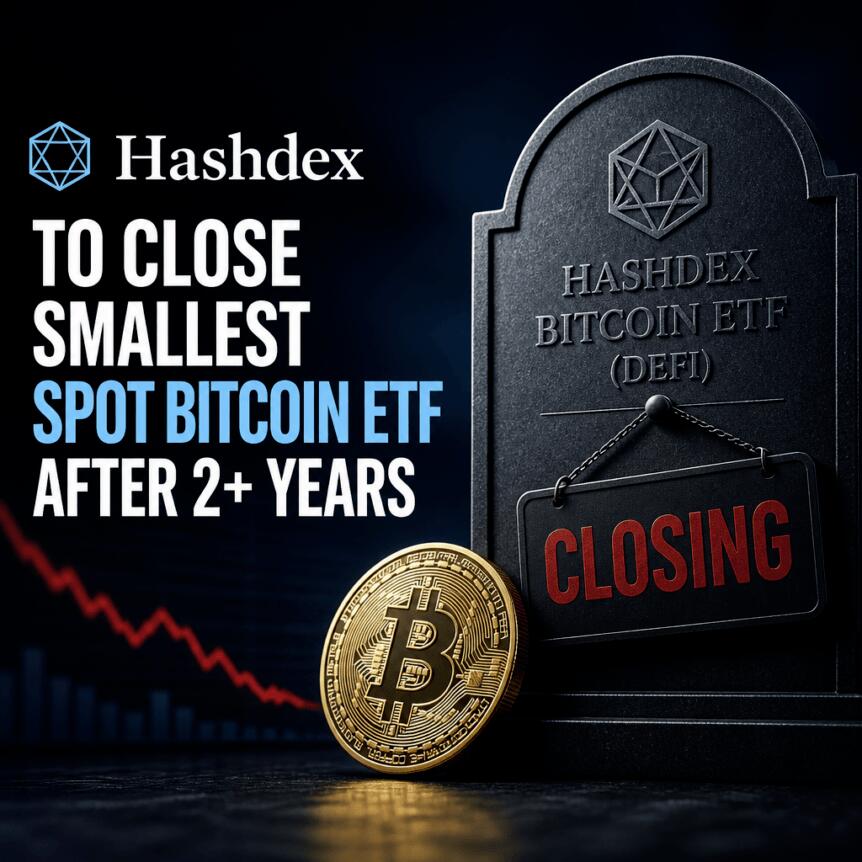
Hashdex has announced that it plans to liquidate its Bitcoin spot exchange-traded fund (ETF) later this month, moving to sell the fund’s remaining Bitcoin holdings and distribute the resulting cash to remaining shareholders. In an SEC filing made public on Monday, the issuer said the wind-down follows a review of factors such as trading liquidity, ongoing operating costs, and investor demand.
The fund—listed on NYSE Arca under the DEFI ticker—holds roughly 225 BTC, according to the fund’s own disclosures. The filing also states that the fund’s 200,000 shares have traded on NYSE Arca since March 2024, and that net assets amount to $14.25 million, based on figures published on the fund’s website.
Key takeaways
- Hashdex says it will liquidate its DEFI Bitcoin spot ETF and sell its remaining Bitcoin holdings.
- The decision follows an SEC filing citing trading liquidity, operating expenses, and investor interest.
- The DEFI fund has net assets of about $14.25 million, with roughly 225 BTC reported in the fund’s holdings.
- DEFI has been trading on NYSE Arca since March 2024, after debuting later than many peers in the spot-BTC ETF launch wave.
SEC filing details the liquidation plan
In the Monday filing, Hashdex described its plan to liquidate the Bitcoin spot ETF and distribute cash proceeds to all remaining shareholders. The filing links the move to an internal assessment of market conditions and fund economics, specifically naming trading liquidity, operating costs, and investor interest as key considerations.
The fund issuer noted that the ETF’s shares—200,000 in total—have been available to investors on NYSE Arca under the DEFI ticker since March 2024. The filing also aligns with the fund’s public materials: its website lists net assets of $14.25 million.
For investors, a liquidation notice like this typically shifts the question from performance to logistics—how proceeds will be calculated, how quickly holdings are sold, and how distributions to shareholders are handled during the wind-down period. Readers who hold shares may want to monitor announcements closely for details around timing and the mechanics of the cash distribution.
Why DEFI’s wind-down matters in the spot-BTC ETF era
The liquidation arrives in a market where the spot Bitcoin ETF lineup quickly expanded after the first wave of approvals. Earlier coverage around the launch period emphasized the competitive landscape, and DEFI’s own history reflects that timing. Analysts have previously pointed to how early mover advantage and scale have played a major role for many of the products that followed.
The fund initially launched in 2022 as a Bitcoin futures ETF (Hashdex Bitcoin Futures ETF). Over time, DEFI entered the spot-BTC ETF category and began trading on NYSE Arca in March 2024—months after the first of 10 competing US-traded Bitcoin ETFs debuted.
In hindsight, that later start appears to have mattered. SoSoValue data shows DEFI’s highest asset level was $17.54 million, reached on May 9, 2025, using SoSoValue’s tracking of the ETF. While that peak suggests the product once gained traction, it also underscores how quickly investor preferences and capital flows can concentrate among larger, more established options in the crowded spot-BTC ETF market.
Investor demand vs. fund economics
Hashdex’s stated rationale—trading liquidity, operating costs, and investor interest—gets to the core of why some ETFs struggle even when the underlying asset is widely followed. In ETF structures, costs and trading efficiency can become more difficult to justify as assets shrink, particularly if bid-ask spreads or market activity don’t remain strong enough to support the product’s economics.
The fund’s size offers a straightforward datapoint. With net assets reported at $14.25 million and holdings around 225 BTC, DEFI is far smaller than the largest US-listed Bitcoin ETFs. According to figures cited via SoSoValue, WisdomTree Bitcoin Trust (BTCW) had $140.37 million in net assets as of Friday’s market close—an order of magnitude larger than DEFI.
That size gap can influence investor behavior in practical ways: larger funds typically attract more attention, may offer tighter trading conditions due to deeper liquidity, and can have an easier time sustaining ongoing operations. Hashdex’s liquidation choice suggests that, after reviewing those dynamics, the firm concluded continuing the product was no longer economically viable.
Separately, Bloomberg ETF analyst Eric Balchunas previously highlighted DEFI’s “late” arrival in the spot-BTC ETF race. In a March 27, 2024 post on X, he wrote: “The getting is so good right now I could see this one getting some bites (if the fee is competitive) despite being so late.” The current liquidation indicates that, regardless of the initial optimism around fees and demand, the fund ultimately failed to maintain sufficient scale to continue.
What happens next for shareholders
For holders, the main near-term change is the shift from holding an ETF that tracks Bitcoin spot exposure to receiving a cash distribution following liquidation. The SEC filing makes clear that Hashdex intends to sell the fund’s roughly 225 BTC holdings and distribute the cash to remaining shareholders.
Because the wind-down is tied to evaluation factors such as liquidity and investor interest, the most important thing to watch next is the timeline and execution details: how quickly the Bitcoin is sold, whether there are any market-impact considerations during liquidation, and when investors can expect distributions.
While the underlying Bitcoin market remains the same, ETF-specific outcomes—share trading, liquidity conditions, and fund operating structure—can change quickly. The DEFI liquidation is a reminder that in the current spot-BTC ETF landscape, product survival depends not just on exposure to Bitcoin, but also on maintaining enough investor demand and fund scale to make operations sustainable.
Going forward, market participants will likely watch which remaining smaller Bitcoin ETFs either consolidate, adjust their strategies, or continue to seek liquidity and investor flow—especially as investors weigh the trade-off between fee levels, fund size, and day-to-day trading conditions.
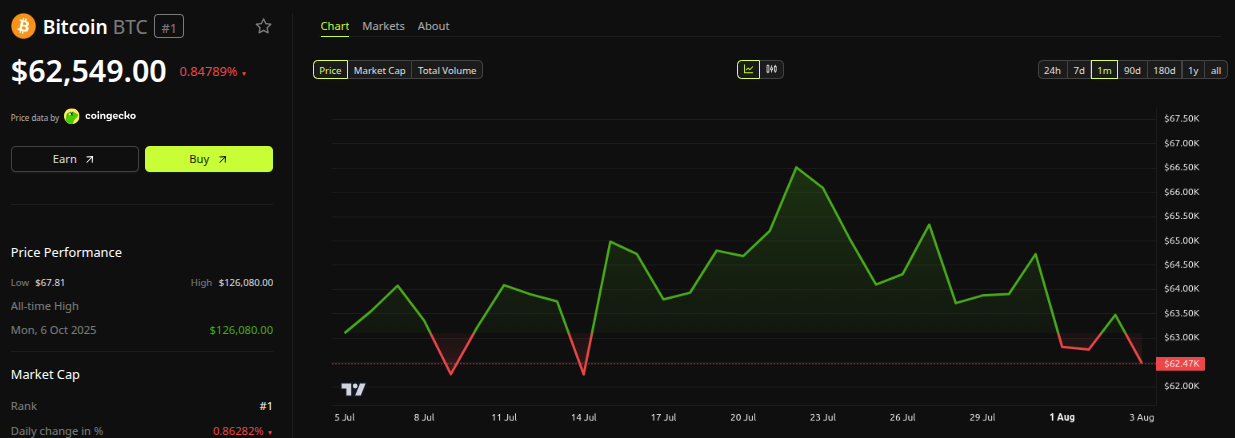
Analysts warned that every major Bitcoin drop in 2026 coincided with Japan’s yen defense, backing the claim with charts that mark each intervention against BTC corrections.
Bitcoin trades near $62,500 as analysts split over whether $50,000 comes next.

Top 3 Bitcoin Corrections That Matched Japan’s Yen Defense in 2026
The yen carry trade involves borrowing the Japanese currency cheaply to invest in higher-yielding assets, including cryptocurrencies. A sharp strengthening forces investors to close those positions.
Popular analyst Crypto Rover published a post overlaying BTC/USDT against the USD/JPY pair. Red circles mark intervention moments, linking them directly to Bitcoin’s declines.
The examples are specific:
- Between late January and mid-February, Bitcoin fell 35.43% alongside a notable move in the currency pair.
- From late April through June 10, the asset corrected by 26.28%, including an intermediate 9.34% drop, again aligned with yen-defense signals.
- The most recent case closed the pattern. Bitcoin faced renewed bearish pressure in late July as the yen approached its 40-year low near 164 per dollar.
Follow us on X to get the latest news as it happens.
Context arrived days later. Both governments officially confirmed a coordinated yen-buying intervention executed last Friday.
The scale was substantial. Japan reportedly spent around $59 billion on recent interventions, according to data from the Bank of Japan. This marks the first joint yen purchase between Tokyo and Washington since 1998, nearly three decades ago.
The bearish case has prominent backers. Another analyst, Ted Pillows, posted on August 2 that $50,000 could materialize if the CLARITY Act fails and the carry trade unwinds.
Ted also flagged a striking figure. The Bank of Japan spent nearly $32 billion during the previous week alone.
Why Some Analysts See the Opposite Outcome
Not every prominent voice shares that pessimism. Michaël van de Poppe called the yen chart the most important one to monitor. Both governments have partnered up to strengthen the currency, changing the calculus for dollar holders.
His argument inverts the logic entirely. If the dollar keeps falling while the yen strengthens, holding dollars carries more risk than it did in the previous period.
That shift would push capital out of government bonds. Liquidity would then flow toward risk assets, with Bitcoin among the primary beneficiaries. Van de Poppe had anticipated this earlier. He wrote that Bitcoin’s bull run would have started if those conditions materialized.
“Monday dump is happening on #Bitcoin. Probably we’ll go slightly lower and then we’ll turn back upwards,” Van de Poppe said on X.
Price context tempers both narratives. Bitcoin slipped below $63,000 in previous sessions and remains nearly 50% below its record high of $126,198, set in October 2025, according to BeInCrypto data.
The debate is now clearly framed. Crypto Rover is bearish, Ted sees a rapid unwind pushing Bitcoin toward $50,000, and Van de Poppe sees the opposite outcome. Orderly yen strengthening paired with a weaker dollar would channel liquidity into Bitcoin instead.
The market stays on alert for now. Bitcoin’s next direction may depend once again on how quickly and how far the yen strengthens.
Subscribe to our YouTube channel to watch leaders and journalists provide expert insights.
The post Is Bitcoin Price Heading to $50,000? Analysts Warn About The Yen Pattern appeared first on BeInCrypto.


Matt Prusak, president and interim chief financial officer of Trump-linked bitcoin miner American Bitcoin (ABTC), is leaving the company to join AI and energy infrastructure developer Giga Energy, marking another senior executive move toward the power sector that is increasingly underpinning both bitcoin mining and artificial intelligence.
Prusak said he will step down from American Bitcoin effective Aug. 4 and join Giga Energy as chief business officer and interim CFO.
He said in emailed comments that after “years building bitcoin businesses,” he was shifting “upstream to the power infrastructure now constraining both mining and AI compute.”
The departure reflects a broader shift as bitcoin miners reposition around AI and power infrastructure. As mining becomes increasingly commoditized and margins come under pressure, a growing number of miners are pivoting toward artificial intelligence infrastructure, repurposing their power, land and data center expertise to serve the surging demand for AI compute.
The shift has accelerated as hyperscalers race to secure electricity and capacity, allowing mining companies to diversify revenue beyond bitcoin production and tap the higher valuations being awarded to AI infrastructure businesses.
Crypto World
California’s diesel prices have jumped since the Iran war started, with ripple effects across the country


California is home to the highest fuel prices in the U.S. as well as the busiest containership port complex in the nation. So as the Iran war enters its sixth month and petroleum-product prices remain elevated, consumers across the U.S. could be hit with higher prices for a host of everyday products.
Nearly one-third of containership imports and exports travel through the San Pedro Bay port complex. In other words, before goods end up on shelves across the nation, they’re first hauled by trucks and trains paying California fuel prices.
Since the war in Iran began, much of the focus has been on oil itself, but experts say petroleum product markets are much tighter — especially when it comes to diesel.
“I think this refining challenge is going to be with the world for a while,” ExxonMobil CEO Darren Woods told CNBC on Friday.
“Even after the Strait opens up, we’ll see more products start to flow through the Strait, which is going to be critically important. But we’ve still got the Russia capacity that’s been lost, and we’ll have to see what the Chinese do with respect to exporting,” he added.
The combination of the war in Iran and Ukraine ramping up attacks on Russian refining infrastructure means the world is now short about 8% of global diesel demand, according to Lipow Oil Associates’ Andy Lipow.
Diesel is sometimes known as the workhorse of the American economy since trucks and trains that transport goods across the U.S. are powered by it. The U.S. is the world’s largest energy producer, but California’s fossil fuel industry has shrunk over the years and refiners have closed. The state also doesn’t have major fuel pipelines that connect it to other parts of the U.S., and has strict environmental regulations, all of which drive up prices at the pump.
The average price for a gallon of diesel in the U.S. is $5.36, according to AAA, but in California it’s $6.92, up from $5.10 prior to the war.
“[A] meaningful share of America’s supply chain pays West Coast fuel prices,” JPMorgan analysts led by Natasha Kaneva said in a June note to clients. “These prices influence freight costs, transportation margins, and ultimately the delivered cost of goods nationwide,” the firm added.
Watch the video above to hear more about how California’s fuel prices trickle through the U.S. economy.
— CNBC’s Macklin Fishman contributed reporting.


Hashdex said it will liquidate its eponymous spot-price Bitcoin exchange-traded fund this month, distributing the cash to all remaining shareholders and selling the fund’s roughly 225 BTC holdings.
In a filing on Monday, the fund issuer said the decision was made after evaluating factors including trading liquidity, operating costs and investor interest. The 200,000 shares, which have traded on NYSE ARCA under the DEFI ticker since March 2024, have net assets of $14.25 million, according to the fund’s website.
Late to the game, which saw the first of 10 other competing BTC ETFs debut months ahead of it, analysts saw opportunity at a time when BTC was trading for the then-all-time high of more than $73,000.
“The getting is so good right now I could see this one getting some bites (if the fee is competitive) despite being so late,” said Bloomberg Senior ETF analyst Eric Balchunas in a March 27, 2024 post.
Originally launched in 2022 as a Bitcoin futures ETF, Hashdex Bitcoin Futures ETF, its highest asset level was $17.54 million, reached on May 9, 2025, according to data tracker SoSoValue. The next largest ETF among the US-traded BTC issues is WisdomTree Bitcoin Trust (BTCW), with $140.37 million in net assets as of Friday’s market close.
Related: Bitcoin may find bear market bottom in August: 10x Research

When asked why the United States intervened to support the Japanese currency, U.S. President Donald Trump told reporters aboard Air Force One over the weekend that the U.S. is “always there” for Japan.
“They have a weakening yen, and they wanted a little bit of help,” he said. When questioned over what the U.S. is “getting out of that arrangement,” Trump replied “financial benefit,” but emphasized it’s also “good for the world economy.”
What is behind the fall in the yen?
Japan had already expressed “serious concern” over the yen’s rapid depreciation in March and conducted unilateral intervention between April 28 and May 27.
Despite those efforts, the currency continued to weaken, with the yen sliding to 163.73 per dollar on Thursday before rebounding to 157.57 on Friday.
One reason a stronger yen matters is Japan’s dependence on imported energy. According to the International Energy Agency, Japan remains heavily reliant on imported oil and gas, particularly from the Middle East.
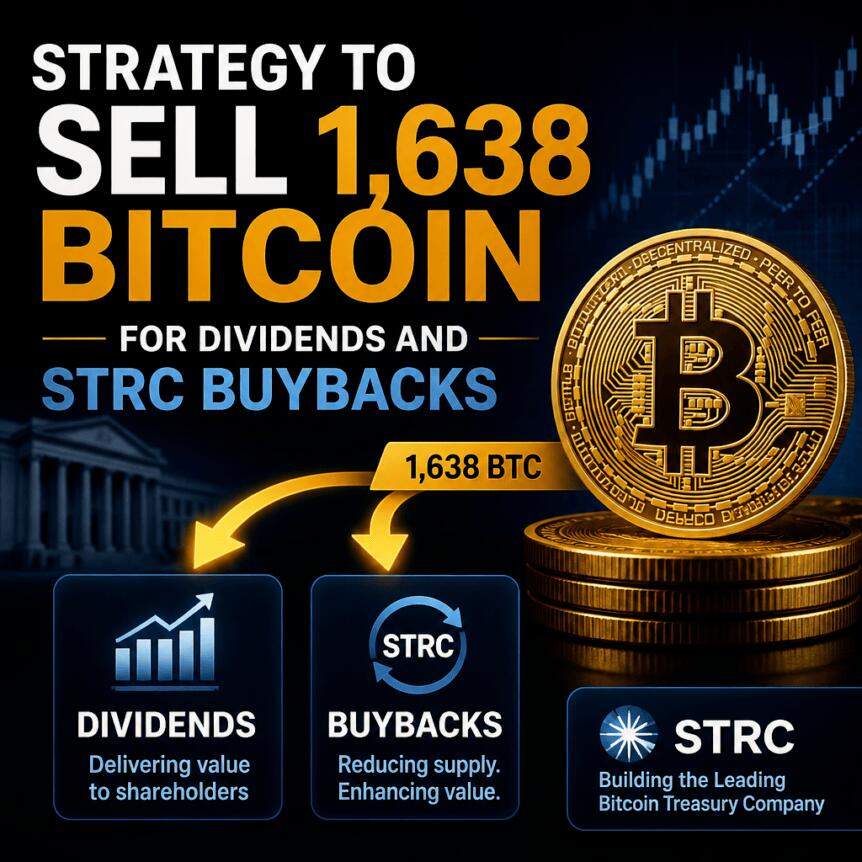
Strategy, the publicly traded Bitcoin holding company formerly known as MicroStrategy and led by chairman Michael Saylor, disclosed another sizable Bitcoin sale in an SEC filing. In the period from July 27 through Sunday, the company sold 1,638 BTC and used the proceeds to support capital-market obligations tied to its preferred stock financing structure.
According to the company’s Monday 8-K filing, the sale totaled $104.7 million at an average price of $63,957. Of that amount, $52.4 million was allocated to dividend payments on its STRC preferred stock, while $52.3 million funded STRC share repurchases.
Key takeaways
- Strategy sold 1,638 Bitcoin from July 27 through Sunday, generating $104.7 million, per an SEC 8-K.
- Dividend funding and STRC buybacks accounted for nearly all sale proceeds, underscoring how Bitcoin liquidity is being used to manage preferred-stock obligations.
- The company says it now holds 842,138 BTC, bought at an aggregate cost of $63.5 billion.
- Strategy also raised $290.6 million through MSTR share sales during the same period, increasing its US dollar reserve to $4 billion as of Sunday.
- STRC trades below its $100 target value—something investors may watch because it can affect the attractiveness and efficiency of future STRC fundraising.
Bitcoin sales feed dividends and STRC repurchases
In the latest disclosure, Strategy characterized the July 27-to-Sunday transaction as one of its larger BTC sales for the year. The company’s filing indicates this was its second-largest Bitcoin sale of 2024.
Crucially, the proceeds were not used for general corporate purposes. Instead, they were split between two items linked to STRC: dividend payments on the preferred stock and STRC repurchases. Together, those allocations amounted to just over $104.7 million, leaving little room for other uses from this tranche.
Strategy’s total Bitcoin balance after the sale stands at 842,138 BTC, with the company reporting an aggregate acquisition cost of $63.5 billion.
How this compares with earlier reported BTC sales
The latest sale follows other previously disclosed events that frame Strategy’s approach to managing its capital structure.
Earlier coverage noted that Strategy sold 3,588 BTC for about $216 million on July 6. The company also disclosed that it sold 32 Bitcoin in early June—its first reported BTC sale since a 2022 tax-loss transaction.
While each sale reduces the company’s Bitcoin exposure, the repeated pattern of tying sale proceeds to STRC-related obligations suggests Strategy is treating Bitcoin liquidity as part of a broader financing and cash-management playbook rather than treating every sale as an isolated departure from its prior accumulation stance.
Cash buffer grows as USD reserve rises to $4 billion
Alongside the BTC sale disclosure, Strategy reported raising additional funds through MSTR share sales during the same period. According to the 8-K, it raised $290.6 million, with multiple allocations.
The filing states that $250 million of the MSTR proceeds was used to increase Strategy’s US dollar reserve, which stood at $4 billion as of Sunday. It also reports that $28.9 million funded STRC repurchases and $11.7 million was added to the company’s cash balance.
In a post on X on Monday, Michael Saylor said Strategy repurchased $81.2 million worth of STRC stock and extended its US dollar “runway” by 57 days to 2.3 years.
STRC trading below target and what that may imply
Strategy’s financing mechanism includes its perpetual preferred stock, STRC. Market data cited in the report suggests STRC was trading at $89.40 during Monday’s pre-market session, or about 10.6% below its $100 target value, according to Yahoo Finance data.
In the same period, the company’s common stock—MSTR—was indicated to have declined roughly 0.9% in pre-market trading, based on Yahoo Finance data referenced in the article.
Trading below STRC’s intended par has potential consequences for Strategy’s capital strategy. If STRC remains below target value, investors may view future fundraising through STRC sales as less efficient for Strategy—because selling preferred stock at a discount typically brings in fewer dollars per unit sold relative to the target. That, in turn, can increase the importance of the company’s dividend policy to attract buyers and provide support to STRC pricing.
Earlier comments from CryptoQuant CEO Ki Young Ju had urged Strategy to pause Bitcoin purchases and replenish cash reserves after dividend coverage deteriorated. In a June 24 X post, Ju said the company should “pause Bitcoin purchases, rebuild cash reserves, and adopt a systematic framework for purchase timing.” Earlier reporting in the same context noted that dividend coverage had fallen to 14 months from seven years.
Strategy has previously responded to these concerns by laying out a framework for capital allocation. A June 29 8-K filing described a capital framework allowing Bitcoin sales to fund dividends, raised the annual dividend rate on STRC preferred stock to 12%, and disclosed that the US dollar reserve had grown to $2.55 billion.
What investors should watch next is whether the new $4 billion USD reserve and the disclosed approach—using Bitcoin sales to service STRC dividends and repurchases—continues alongside STRC trading conditions, particularly how far STRC remains below target and whether Strategy’s dividend and preferred-stock buyback activity accelerates or slows in subsequent filings.


Hashdex will close and liquidate its US-listed Bitcoin ETF, DEFI, after the fund struggled to attract enough assets and trading activity to remain viable.
Summary
- DEFI held approximately $14.7 million in assets as of July 30.
- The fund’s final trading day is Aug. 17, followed by its NYSE Arca delisting.
- Remaining shareholders should receive a cash liquidation payment around Aug. 28.
- Hashdex’s separate $206.8 million NCIQ crypto index ETF remains active.
DEFI will stop trading on Aug. 17
According to a WSJ report, asset management company Hashdex said the Hashdex Bitcoin ETF, which trades on NYSE Arca under the DEFI ticker, will stop trading after the market closes on Aug. 17. The company will then begin liquidating the fund’s assets and delist its shares.
The fund will also stop accepting creation orders from authorized participants after that date. Investors can continue buying and selling shares through their brokers until the final trading session, although market prices may differ from the fund’s net asset value as the closure approaches.
Hashdex attributed the decision to several factors, including the fund’s asset base, trading liquidity, operating expenses and investor demand. DEFI managed about $14.7 million as of July 30, placing it among the smaller US spot Bitcoin products.
The fund’s website listed a net asset value of $71.32 per share and a closing price of $71.15 as of July 31. DEFI normally invests at least 95% of its assets in spot Bitcoin, with the remainder available for cash, cash equivalents, and CME-listed Bitcoin futures.
Shareholders will receive cash after liquidation
Investors who continue holding DEFI shares after the final trading day will not receive Bitcoin. Instead, the fund will sell its holdings and distribute the remaining proceeds in cash after deducting its liabilities and liquidation costs.
Hashdex expects to make the distribution around Aug. 28. The amount shareholders receive will depend partly on Bitcoin’s price while the portfolio is being liquidated, meaning the final payment may differ from DEFI’s net asset value before trading ends.
The liquidation could also create tax consequences for US investors. A cash distribution may be treated as a taxable disposal, depending on the shareholder’s cost basis, account type and individual circumstances.
Investors who sell their shares before Aug. 17 will receive the prevailing market price rather than the final liquidation value. Trading volume and the spread between bid and ask prices could become more important as the fund approaches delisting.
Hashdex faced heavy competition from larger Bitcoin ETFs
DEFI entered the US spot Bitcoin ETF market through a conversion of an existing futures-based product. The fund began holding spot Bitcoin in March 2024, more than two months after the SEC approved the first wave of spot Bitcoin ETFs in January.
That timing placed DEFI behind larger competitors that had already accumulated substantial assets and trading volume. Its relatively small asset base made it harder to compete on liquidity, despite charging a 0.25% expense ratio.
The closure does not signal Hashdex’s exit from the US crypto ETF market. Its separate Hashdex Nasdaq CME Crypto Index ETF, trading under NCIQ, held about $206.82 million in net assets as of July 31.
NCIQ currently provides market-cap-weighted exposure to Bitcoin, Ethereum, XRP, Solana, Cardano, Chainlink, Stellar and Bitcoin Cash. Bitcoin represented 78% of its portfolio as of July 27, while Ethereum accounted for 12.2%.
Hashdex also reduced NCIQ’s annual management fee from 0.50% to 0.25% in March. The fund was renamed from the Hashdex Nasdaq Crypto Index US ETF in January but retained its existing ticker.
DEFI investors face three remaining dates
DEFI shareholders now face a short liquidation timeline. Aug. 17 will be the final day to sell shares on NYSE Arca and the cutoff for new creation orders. Hashdex will then unwind the portfolio before making the expected cash payment around Aug. 28.
Bitcoin price changes during that period will affect the fund’s remaining assets and, in turn, its final distribution. Investors who retain their shares through liquidation should also expect the position to disappear from their brokerage accounts once the cash payment is processed.
The closure applies only to DEFI and does not affect NCIQ or Hashdex’s other crypto investment products.


South Korean cryptocurrency exchange Bithumb said Monday it plans to apply for a preliminary listing review in 2027 and complete an initial public offering in 2028.
Bithumb said it has reorganized its business structure, including spinning off Bithumb Asset, to clarify responsibilities across its business units and reduce potential conflicts of interest ahead of the listing review.
The exchange said its preparations will include upgrading internal controls and shifting from domestic accounting standards to K-IFRS, the international accounting framework used by listed companies in South Korea.
Bithumb said the timetable could change depending on market conditions and the review schedules of relevant authorities.
The exchange is one of five South Korean platforms that support fiat currency trading through real-name bank accounts, offered through its partnership with KB Kookmin Bank.
Bithumb’s listing push comes as rival South Korean exchanges deepen their ties with traditional finance and technology groups. Mirae Asset Consulting took control of rival exchange Korbit on July 23, while Upbit operator Dunamu is pursuing a share-swap deal that would make it a wholly owned subsidiary of Naver Financial, subject to regulatory and shareholder approval.
Related: Kiwoom eyes Bithumb stake as Korean brokerages push into crypto: Report
Bithumb’s 620,000 BTC crediting error
In a February promotional error, Bithumb mistakenly credited customer accounts with balances totaling 620,000 Bitcoin instead of distributing 620,000 Korean won in cash rewards. Bithumb recovered 99.7% of the erroneous credits, though customers sold about 1,788 BTC before accounts were frozen.
At a Feb. 11 National Assembly parliamentary hearing, Bithumb CEO Lee Jae-won said the exchange’s process for checking the planned distribution against its actual holdings had failed and that the promotional amount had not been earmarked in a separate account.
Its IPO preparations also come as two Bithumb-linked listed companies face continuing audit and listing problems. Vidente, a major Bithumb shareholder, and Bucket Studio, which indirectly controls Vidente, have had trading in their shares suspended since March 2023 over audit and other listing issues.
According to Yonhap news agency, Bucket Studio appointed a former police official as its standing auditor in June, while Vidente plans to appoint a former National Tax Service official to the same role. South Korea’s Government Public Service Ethics Committee cleared both hires after finding no close relationship between the officials’ previous duties and their new roles.
Magazine: The 100x obsession: Fundamentals grow in importance as crypto matures

Food poisoning denied me Commonwealth Games gold, says Selva Prabhu after winning bronze | Commonwealth Games News

Samsung bans smart TV apps that share users’ internet connections with strangers

BITCOIN HOLDERS… I HOPE I’M WRONG.


-

 Business5 days ago
Why Trees Belong on the Risk Register
-

 Fashion3 days ago
Weekend Open Thread: Wit & Wisdom
-

 Politics3 days ago
Meta enters AI-training agreement with far-right ‘propaganda rag’ Newsmax
-
 Entertainment6 days ago
‘Stargate’ Creator’s New Sci-Fi Series Returns for Season 3 Tomorrow
-

 Crypto World2 days ago
MicroStrategy Post-Earnings CLARITY Act Push Could Add New Catalyst for Its Stock
-

 Politics6 days ago
The Part of the Electric Transition Nobody Wants to Discuss
-

 Business5 days ago
Major shareholder moves on Canyon
-

 Crypto World2 days ago
XRP Ledger v3.3.0 brings five institutional features
-

 News Videos4 days ago
Bitcoin Enters the 3rd Stage of the Bear Market
-

 Crypto World6 days ago
Kraken Enables Retail Access to Jersey Mike’s IPO via Tokenized Shares
-

 Tech7 days ago
New macOS Sequoia & Sonoma security updates for older Macs
-

 Politics4 days ago
Luke Littler’s dominance sparks GOAT debate
-

 News Videos6 days ago
Claude: Build Financial Dashboards in Minutes (2026)
-

 Business6 days ago
Johnson & Johnson agrees to $5.5B settlement over talc cancer claims
-

 Sports4 days ago
Seema Kaliramna Wins Discus Throw Bronze, Takes India’s CWG Medals Tally To 17
-

 Crypto World1 day ago
Crypto PAC spending tops $2M in Michigan House race
-

 Business3 days ago
Trump Announces Hamas Disarmament Agreement as Iran Strikes Kuwait Air Base and US Attacks Pause Overnight
-

 Crypto World3 days ago
New York sues Kalshi over prediction market gambling
-

 Tech5 days ago
Gemini can now summarize the messiest comment threads in Google Docs
-

 Tech1 day ago
ESET tracks rise in malicious AI skills and adaptable malware
You must be logged in to post a comment Login