
Crypto World
Bitcoin (BTC) Slips Below $85,000 As Rally Loses Momentum

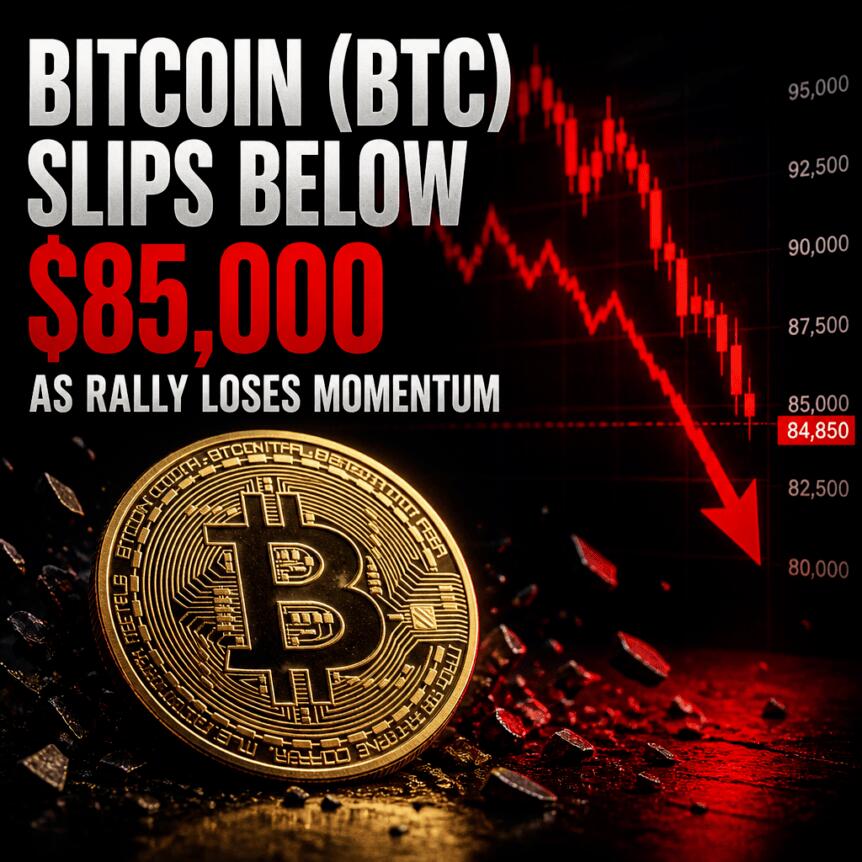
Bitcoin’s latest rally has lost momentum after reaching a high of $87,397 on Monday (September 21). The price pulled back sharply after stronger-than-expected PMI data pushed Treasury yields higher and flushed $125.9 million in long positions.
The flagship cryptocurrency is currently trading around $83,698, down 2.58% over the past 24 hours.
Bitcoin (BTC) Pulls Back After $87,000 Rejection
<a href=
This article was originally published as Bitcoin (BTC) Slips Below $85,000 As Rally Loses Momentum on Crypto Breaking News – your trusted source for crypto news, Bitcoin news, and blockchain updates.

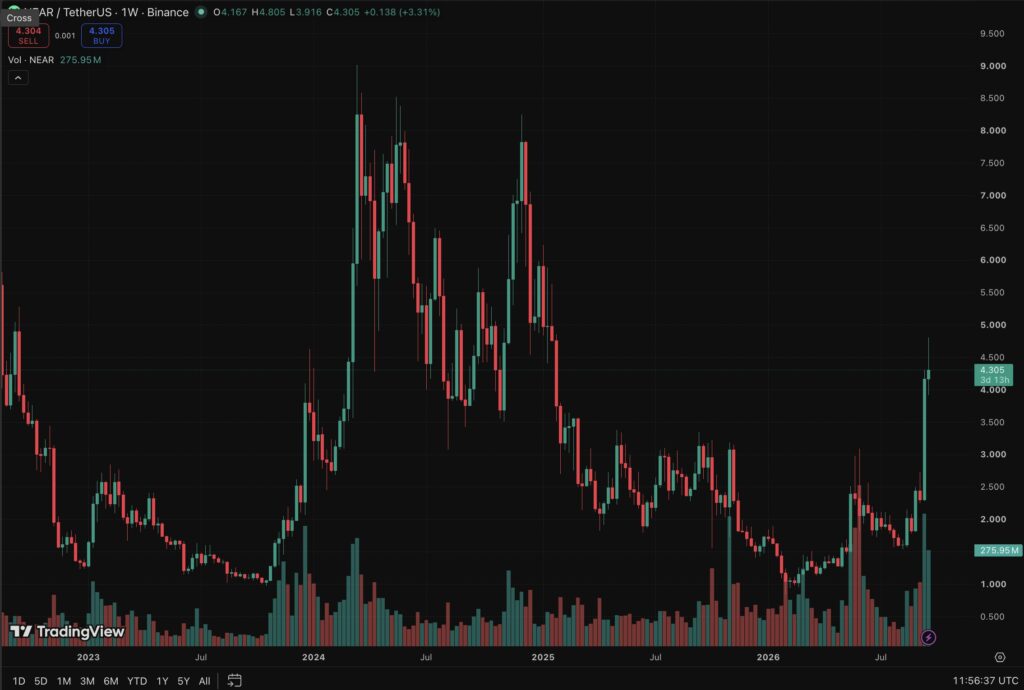
NEAR crypto and Ondo Finance have launched access to tokenized U.S. stocks and ETFs on near.com, opening with 20 assets including Nvidia, Tesla, Apple, Microsoft, Amazon, SPY and QQQ.
Eligible users fund their accounts with stablecoins or other supported crypto from more than 30 networks, with NEAR Intents acting as the cross-chain distribution layer that can eventually route these tokenized securities to connected wallets, applications, and DeFi protocols.
The launch is a distribution story before it is an asset-count story. Ondo’s broader tokenized stocks platform already lists more than 100 stocks and ETFs, according to Ondo’s own documentation, but NEAR’s initial rollout exposes only a fifth of that catalog through Near.com.
NEAR Crypto and the Multichain Route to Ondo Stocks
Near.com functions as the initial user-facing surface for this integration, while NEAR Intents is positioned separately as the cross-chain routing layer, according to the launch material from Ondo Finance.
That distinction matters: near.com is where users open accounts and trade, while NEAR Intents is the plumbing intended to eventually let other wallets and DeFi protocols surface the same real-world assets to their own users.
Ondo’s own documentation describes the broader Ondo Stocks platform as offering more than 100 tokenized stocks and ETFs, spanning individual equities, indexes such as QQQ and SPY, and fixed-income ETFs like TLT, TIP and AGG.
The 20-asset NEAR selection is a subset of that catalog, not a replacement, and Ondo has said the full app at app.ondo.finance remains the reference point for the complete list.
Purchases run through USDon, a stablecoin Ondo says is backed 1:1 by a U.S. dollar held in an Ondo Stocks brokerage account. When a user buys with a different stablecoin, the platform atomically swaps it into USDon before executing the tokenized stock purchase.
It then reverses the process on redemption, a mechanic Ondo’s documentation frames as designed to keep the buy-and-sell flow instant rather than dependent on settlement windows.
How Users Access the Initial Offering
The reported flow is straightforward: an eligible near.com user deposits stablecoins or other supported crypto from any of the more than 30 connected networks, then swaps directly into an available tokenized stock or ETF in a single transaction.
That collapses what would normally be a multi-step bridging-and-onboarding process into one action inside the near.com interface. The current selection is capped at 20 assets, not the full Ondo catalog, and the source material doesn’t publish a complete list beyond the named examples.
Traders looking for a specific ticker outside that initial set should check current availability directly rather than assume parity with Ondo’s broader 100-plus offering.
Earn $50 and Enter $300K Prize Draw on EdgeX
Why Distribution, Not Asset Count, Is the Main Change
The more consequential piece of this launch is the routing layer, not the ticker list. NEAR Intents is a cross-chain distribution mechanism that can push Ondo’s tokenized equities to wallets, applications, and DeFi protocols beyond near.com itself, meaning the 20-asset figure is a starting point for a pipe built to widen, not a ceiling.
Ondo currently restricts its tokenized securities to names trading on the NYSE and NASDAQ, though its documentation leaves room to expand to other countries’ exchanges over time.
Other issuers are pursuing distribution through different rails; Robinhood’s tokenized-stock push on its own chain is a useful comparison point for how competing platforms are structuring access, though the mechanics differ enough that a direct read-across isn’t warranted here.
What are the Eligibility and Jurisdiction Limits for the Near Crypto Ondo Stocks?
None of this is available to US persons. Ondo’s documentation states plainly that Ondo Stocks products are offered only to organizations and individuals outside the United States and other prohibited jurisdictions, subject to its own eligibility criteria, and that the products are not accessible in certain regions at all.
These are tokenized exposures to NYSE and NASDAQ-listed securities, not shares held in a conventional brokerage account, and regulators are still working out how to treat that distinction across jurisdictions.
The broader US regulatory posture toward tokenized equities remains unsettled, and nothing in this launch changes that for US-based traders.
Discover: The Best Token Presales This Bullrun
The post NEAR Crypto Tokenized Stock Launch Puts Distribution Ahead of Scale appeared first on Cryptonews.


IBM’s beta link lets banks instruct tokenized deposit transfers on Swift’s ledger using existing payment messages and compliance processes.
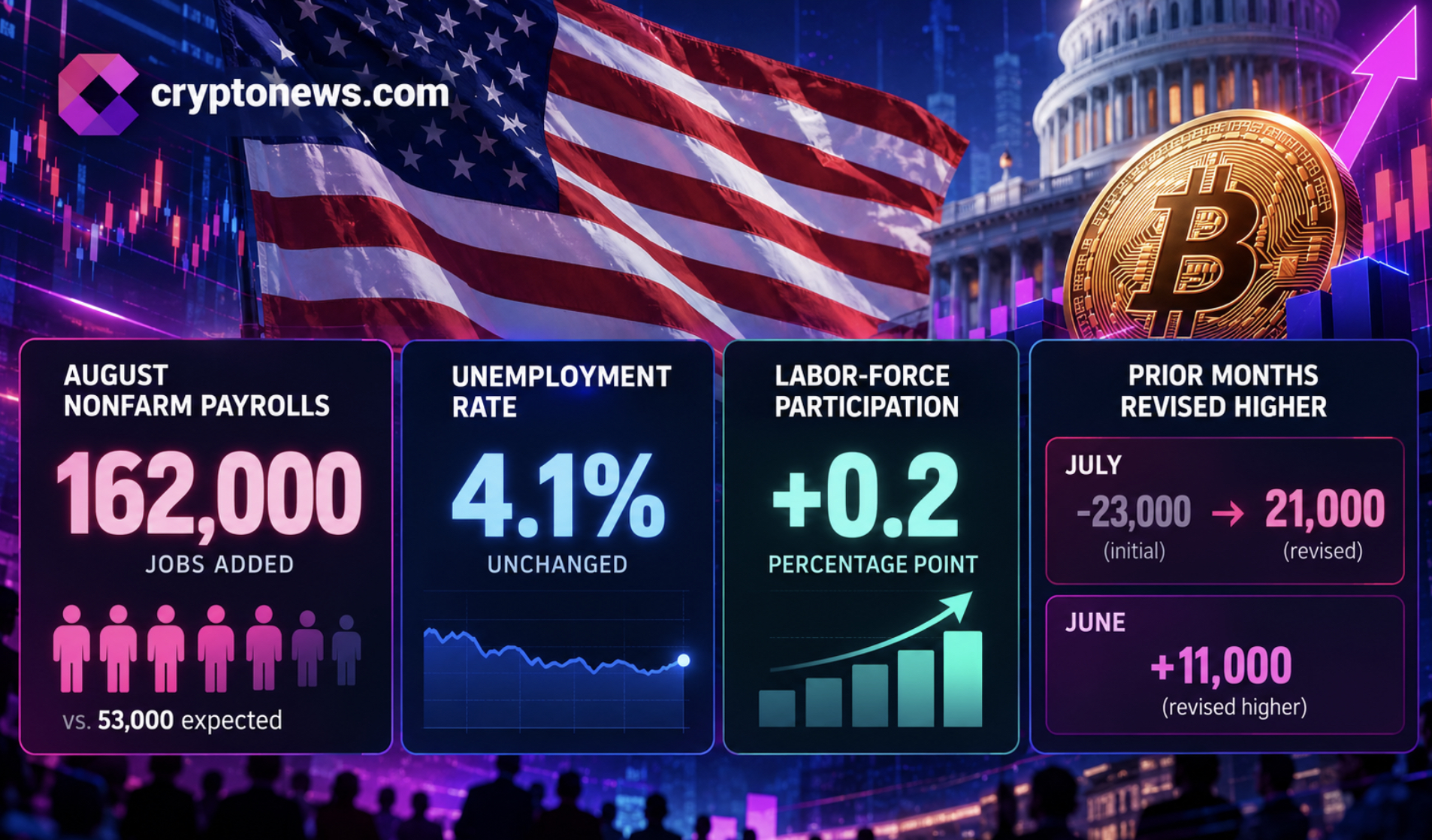
Citigroup pushed its forecast for the Fed first interest rate cut to June 2027 after US employers added 162,000 jobs in August, more than triple the 53,000 economists had penciled in. The revision extends the timeline for lower borrowing costs by nine months.
Now, it opens a question Bitcoin traders have been circling all year: how much longer can a resilient labor market keep real yields, the dollar, and interest rates elevated before it actually breaks risk-asset demand?
The August payrolls report did more than beat expectations on the headline number. The unemployment rate held at 4.1%, labor-force participation rose 0.2 percentage point, and prior months were revised sharply higher: July payrolls flipped from a reported loss of 23,000 to a gain of 21,000, while June was revised up by 11,000.
Citi economists Andrew Hollenhorst and Veronica Clark concluded that employment conditions looked stable enough for the Federal Reserve to shift its attention squarely to inflation.
Citi had previously been one of the more dovish desks on Wall Street, calling for cuts in October and December 2026 and January 2027. That call is gone. The bank now projects reductions in June, September, and December 2027, and the market reaction was immediate: rate futures pushed the probability of a September Fed hike from 52% to 61% the day the jobs data landed, a repricing that rattled Bitcoin within hours.
Discover: The Best Token Presales
What Does the Higher-for-Longer Policy Mean for Bitcoin?
The Fed followed through. On September 16, the Fed raised the benchmark rate by 25 basis points to a 3.75%-4% target range, the first hike since July 2023, despite traders wanting a cut. Sixteen of 18 officials projected at least one more increase before year-end, and inflation has now sat above the Fed’s 2% target for more than five years, according to the Fed’s own framing of the data.
The mechanical case against Bitcoin here is straightforward: Treasury yields and a stronger dollar compete with risk assets for capital, and Bitcoin generates no yield simply by being held, so every basis point of delay in cuts raises the opportunity cost of parking capital in it instead of government debt.
This is the textbook crypto liquidity headwind, and it showed up in price. But the textbook case stopped predicting price action the moment the hike actually landed.

Bitcoin briefly dropped toward $75,000 immediately after the September 16 decision, then reversed and climbed past $86,000 as ETF demand returned, yields eased and short sellers were squeezed out of bearish positions, a pattern consistent with BTC’s prior recoveries when yields soften. That rebound can’t be pinned on a single cause, and it doesn’t prove Bitcoin has decoupled from monetary policy. It does prove that a rate hike alone isn’t a mechanical sell signal once other flows are running in the opposite direction.
Earn $50 and Enter $300K Prize Draw on EdgeX
Bitcoin Levels, Flows, and Citi Fed Rate Cut Expectation
The price path around these events is the clearest evidence of how sensitive BTC remains to macro surprises. Bitcoin fell below $80,000 right after the August jobs release, reversing from an intraday high near $81,370, and was later quoted near $79,600, down about 1.5% on the day.
Ahead of the September Fed meeting, as hike odds moved above 92%, BTC fell below $76,000 before the post-decision dip toward $75,000 and the subsequent climb to a brief touch of $87,000, per the latest price action review.
Flow data backs up the recovery narrative. US spot Bitcoin ETFs logged $433 million in net inflows on September 18 after a stretch of heavy withdrawals earlier that week, suggesting institutional demand re-engaged once the hike was priced in rather than feared.
For us, the actionable variables are the same ones that moved Bitcoin twice in the past month: real yields, Treasury yields, dollar strength, spot ETF flows, and the next round of inflation and payroll prints.
If labor data stays firm and inflation proves sticky, a higher-for-longer stance keeps yields elevated and tightens the liquidity backdrop for crypto. If yields ease and ETF demand persists, Bitcoin can keep absorbing hawkish surprises well before Citi’s June 2027 cut ever arrives.
Trade Crypto on Bybit and Get a Chance to Win Our $1,000 USDT Airdrop
The post Fed Rate Cut Delayed as Strong Jobs Data Tests Bitcoin appeared first on Cryptonews.

Solana Foundation has appointed former Binance chief marketing officer Rachel Conlan as chief strategy officer and former Polygon Labs executive Jamal Raees as general manager of payments.
Conlan will lead strategy across institutional partnerships, ecosystem growth and efforts to bring businesses onto Solana, the foundation said Thursday. She spent three years at Binance and previously held senior roles at OKX, CAA Sports and Havas.
Raees said he would deepen the foundation’s engagement with major payments companies and focus on infrastructure used by teams building payment services on Solana.
“My focus will be on driving greater adoption and usage of stablecoins and tokenized deposits, with an emphasis on global markets,” he said in a statement provided by Solana Foundation.
The appointments follow the March launch of the Solana Developer Platform, which includes Modern Treasury as a payments infrastructure partner. Mastercard and Western Union were named as early users of the platform.
Separately, Amazon Web Services included Solana among the networks supported by its x402 feature, which lets website owners charge AI agents in USDC for access to content.
Solana is preparing to deploy Alpenglow, a planned network upgrade intended to reduce transaction finality from about 12.8 seconds to roughly 150 milliseconds. The faster finality remains a target for the upgrade.
The network has processed more than $5 trillion in stablecoin volume so far in 2026. It also reported more than $4.5 billion in real-world assets on the network and more than $620 million in tokenized equity supply.
Related: Era of pure crypto exchanges is ending, Bybit CEO says
Crypto World
Solana news: Solana Foundation hires Binance, Polygon veterans for tokenized finance push

The Solana Foundation has appointed former Binance executive Rachel Conlan as its new chief strategy officer, adding a high-profile crypto industry veteran as the Solana (SOL) blockchain makes a bigger push into institutional finance and tokenized assets.
Conlan will lead strategy across institutional partnerships, ecosystem growth and efforts to bring more companies onto Solana, the foundation said Thursday. She spent previously three years at Binance, most recently as global chief marketing officer, before leaving the crypto exchange in June.
The foundation also hired Jamal Raees as general manager for payments. Raees joins from Polygon Labs, the development organization behind the Polygon network (POL), and previously worked at stablecoin infrastructure firm Bridge (now part of Stripe) and crypto payments firm Wyre. He will focus on getting payments companies and other businesses to use Solana for moving money.
The appointments come as Solana increasingly courts traditional financial firms and positions its network as infrastructure for more than crypto trading. Stablecoin payments, tokenized funds and equities have become a bigger part of that pitch as financial institutions experiment with moving assets and settlement onto public blockchains.
Crypto World
ARK Invest, Securitize (SECZ) tokenize venture fund with OpenAI, Anthropic stakes on Ethereum
Cathie Wood’s ARK Invest is putting its venture fund on blockchain rails, bringing a portfolio that includes stakes in OpenAI, Anthropic, Stripe and Databricks onto blockchain rails.
The ARK Venture Fund (ARKVX) will issue tokenized interests using infrastructure from Securitize (SECZ), with the tokenization firm handling onchain issuance and the investor experience.
ARKVX will be first available on Ethereum with other networks potentially following, the firms said.
“Making the ARK Venture Fund available onchain is a natural extension of our mission to democratize access to technologically enabled disruptive innovation,” Wood, ARK’s founder, CEO and chief investment officer, said in a statement.
For Securitize CEO Carlos Domingo, one draw is giving investors diversified exposure to sought-after private technology companies.
“If you don’t know whether OpenAI or Anthropic are gonna win the AI race, here you get both of them in a diversified pool,” Domingo told CoinDesk TV.
Crypto World
Pressure from the bond market hits a new level, and US stocks slide on worries about inflation
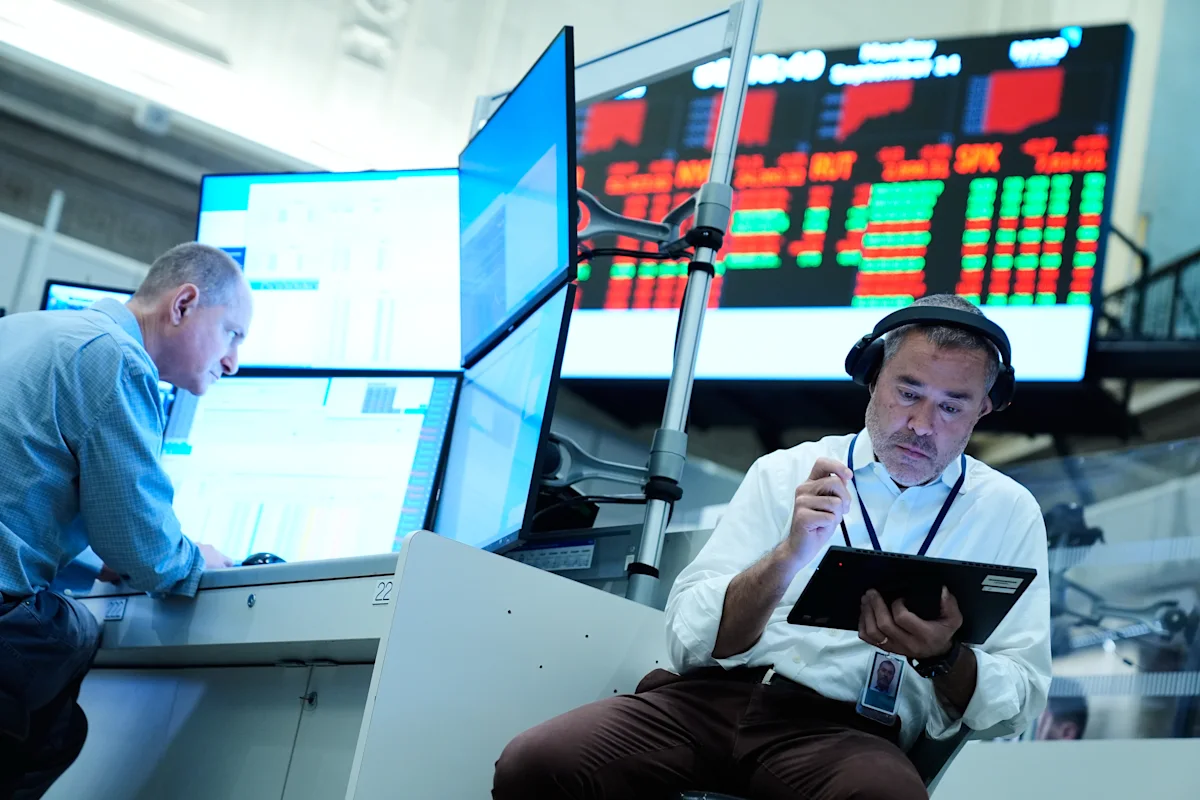
NEW YORK (AP) — Pressure from the U.S. bond market hit a new level on Wall Street Wednesday after a surprisingly strong report on the economy raised worries about inflation, while oil prices halted their slide. The squeeze caused U.S. stocks to sink.
The S&P 500 fell 0.8% after finishing the prior day just 0.4% below its record set last month. The Dow Jones Industrial Average dropped 352 points, or 0.7%, while the Nasdaq composite sank 1.1% from its own all-time high.
Stocks wilted after the yield on the 10-year Treasury jumped to 5.10% from 4.96% late Tuesday, which is a considerable move for the bond market. High yields undercut prices for stocks and other investments, while also slowing the economy by making it more expensive for everyone to borrow money.
Wednesday’s jump briefly sent the 10-year yield near 5.14%, back to where it was in 2007 before the global financial crisis caused yields to crater. Yields have been climbing since bottoming out in the COVID pandemic, and they’ve accelerated recently because of worries about high inflation, the U.S. government’s heavy debt and other concerns.
Worries about inflation got a jolt Wednesday morning after a preliminary report suggested growth in U.S. business activity surged to its strongest level in more than five years. That’s an encouraging signal, to be sure, but it indicates the economy may have plenty of fuel for more inflation.
The report also suggested costs for businesses are leaping at the fastest rate in four years, in part because of more expensive oil, according to Chris Williamson, chief business economist at S&P Global Market Intelligence. That could mean businesses will pass those higher costs onto their customers in coming months.
Oil prices are high because of worries that the war with Iran will keep oil bottled up in the Middle East for a long time.
The price for a barrel of Brent oil to be delivered in November rose 3.9% to $103.08 on Wednesday. That reversed a decline for Brent, which had been falling since it neared $110 last week. Talks are continuing with mediators between U.S. and Iranian officials, but nothing concrete has come from it yet.
Brent oil to be delivered in December, where most of the trading in the market has moved, rose 2.8% to $98.12 per barrel.
Even with its recent decline, the price for a barrel of Brent remains much higher than the roughly $72 it cost before the war with Iran began.
Inflation has remained so stubbornly high that the Federal Reserve raised its short-term interest rate last week for the first time in three years in hopes of slowing down increases in the cost of living.

An AI ad for crypto prediction market Kalshi stole a YouTube video by popular Asian content creator Elliot Choy and “turned him into a white dude.”
Choy shared a screenshot of Kalshi’s advert alongside his original New York apartment video yesterday.
The content creator said, “I guess Kalshi saw this and thought they should steal my video, turn me into a white dude, and run it as an ad.”

Read more: Suspicious Kalshi bot shuts down amid wash trading claims
NPR correspondent Bobby Allyn confirmed that Kalshi’s advert was real and that the firm is now reviewing its relationship with its marketing agency.
Kalshi told Allyn it was an old advert, and that it no longer uses AI-generated ads.
Despite this claim, the advert was promoted this week on YouTube and spotted by Choy.
Another Kalshi ad branded ‘insane’
Another AI-generated Kalshi ad is also being ridiculed by users online.
Made in the style of a Pixar animation, it depicts a couple in financial trouble and features cheating as its main theme.
By the end of the video, one partner reveals she isn’t cheating, and that she’s actually gambling egg prices on Kalshi using her knowledge of running a bakery.
Users have described the spot as “cringe,” “out of touch,” and “insane.”
Some have noted that the animation style might make it appealing to kids, while others suggested that the woman depicted in the ad might actually be insider trading.
One user bluntly pointed out that “this ad is just showing gambling addiction.”
Kalshi accused of wash-trading
Kalshi has been under a lot of scrutiny this week after it was forced to deny a series of wash trading allegations.
The Wall Street Journal recently found that there was $5 billion worth of uniform $5,500 trades across ETH perp volume in one month.
Its report built upon the findings of quant analyst Benoit Dubosson, who decided to investigate the platform after falling out with its crypto lead IcoBeast.eth.
Read more: CFTC orders Kalshi to continue operations amid New York lawsuit
To top it off, users have begun to speculate that Kalshi paid various popular X accounts, many of which are unrelated to the prediction market niche, to share its rejection of wash trading allegations.
Others claim to have spotted Kalshi inflating user metrics by boosting the number of people chatting.
Protos has reached out to Kalshi for comment and will update this piece should we hear anything back.
Got a tip? Send us an email securely via Protos Leaks. For more informed news and investigations, follow us on X, Bluesky, and Google News, or subscribe to our YouTube channel.
The slow-motion liquidity crisis in private credit has rolled into its third quarter, with Apollo gating another three months of withdrawal requests from its flagship retail private credit fund.
On Tuesday, the fund disappointed investors who had asked to cash out 14.7% of their shares.
It will honor about two thirds less at just 5%, and has gated withdrawals for at least nine months.
The rationed exit is supposed to prevent a stampede for the exits that gating during the first and second quarters was supposed to alleviate.
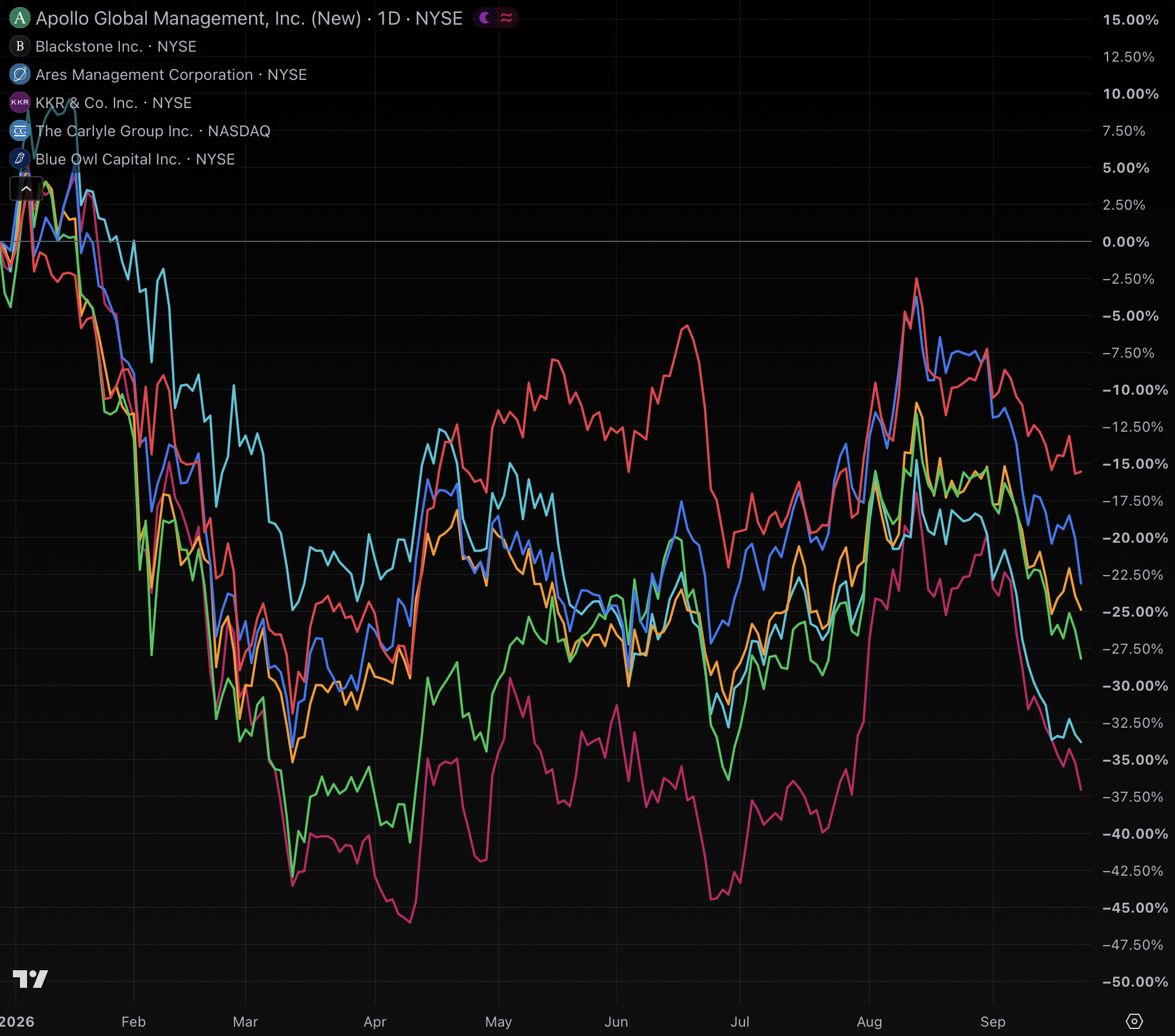
Stock prices across the private credit market continue to crater. Apollo’s own common stock closed down 14% year-to-date, far underperforming the S&P 500 at +12% YTD.
Private credit peers are also underperforming their benchmarks year-to-date: Blackstone has lost 22%, Ares is down 24%, KKR is down 23%, Carlyle is down 33%, and Blue Owl has declined 36%.
Apollo Debt Solutions BDC, a private credit fund, is a retail vehicle holding a $25.9 billion portfolio of senior secured loans.
Investors wanted to redeem 11.2% of shares in the first quarter but were told to expect about 45 cents per dollar worth of requests.
In the second quarter, they asked for 16.8% of shares back, yet received just 5%.
Apollo has even titled its quarterly 5% limitation using corporate jargon. It prefers another name for denials of its customers’ full withdrawal requests: “Quarterly Liquidity: Considered & Intentional.”
Read more: Private credit firms prepare for bank run-type panic by gating investor withdrawals
Private credit redemption requests have piled up
Cliffwater’s $31 billion Corporate Lending Fund similarly limited withdrawals to 5% this month after investors asked for about 16%.
It was that fund’s third consecutive redemption limitation.
Blackstone also had to limit withdrawals this quarter. Its $77 billion BCRED private credit fund gated third quarter withdrawals at 5%, with requests running at roughly double that threshold.
Another fund, BlackRock’s HPS Corporate Lending Fund, fielded requests for 11.5% of shares that it will only honor at 5% this quarter.
Apollo tried to recast the ongoing crisis in a positive light for media in August, estimating that many withdrawal requests were simplying carrying over from prior months.
To everyone’s ostensible relief, withdrawals weren’t accelerating in current months. “The vast majority of third-quarter requests reflect investors re-tendering unfulfilled requests from prior quarters,” the company claimed.
Apollo also tried to highlight its other fundamentals. It booked $200 million in gross subscriptions for the quarter, it said, and reported a net total return of 8.2% since launch.
Industry-wide, analysts at Fitch estimated the US private credit default rate at a record 6.3% for the 12 months ending August 2026.
Got a tip? Send us an email securely via Protos Leaks. For more informed news and investigations, follow us on X, Bluesky, and Google News, or subscribe to our YouTube channel.
Crypto World
Judge Orders White House to Restore Access for CNN, MS NOW, and Politico. What Happens Next?
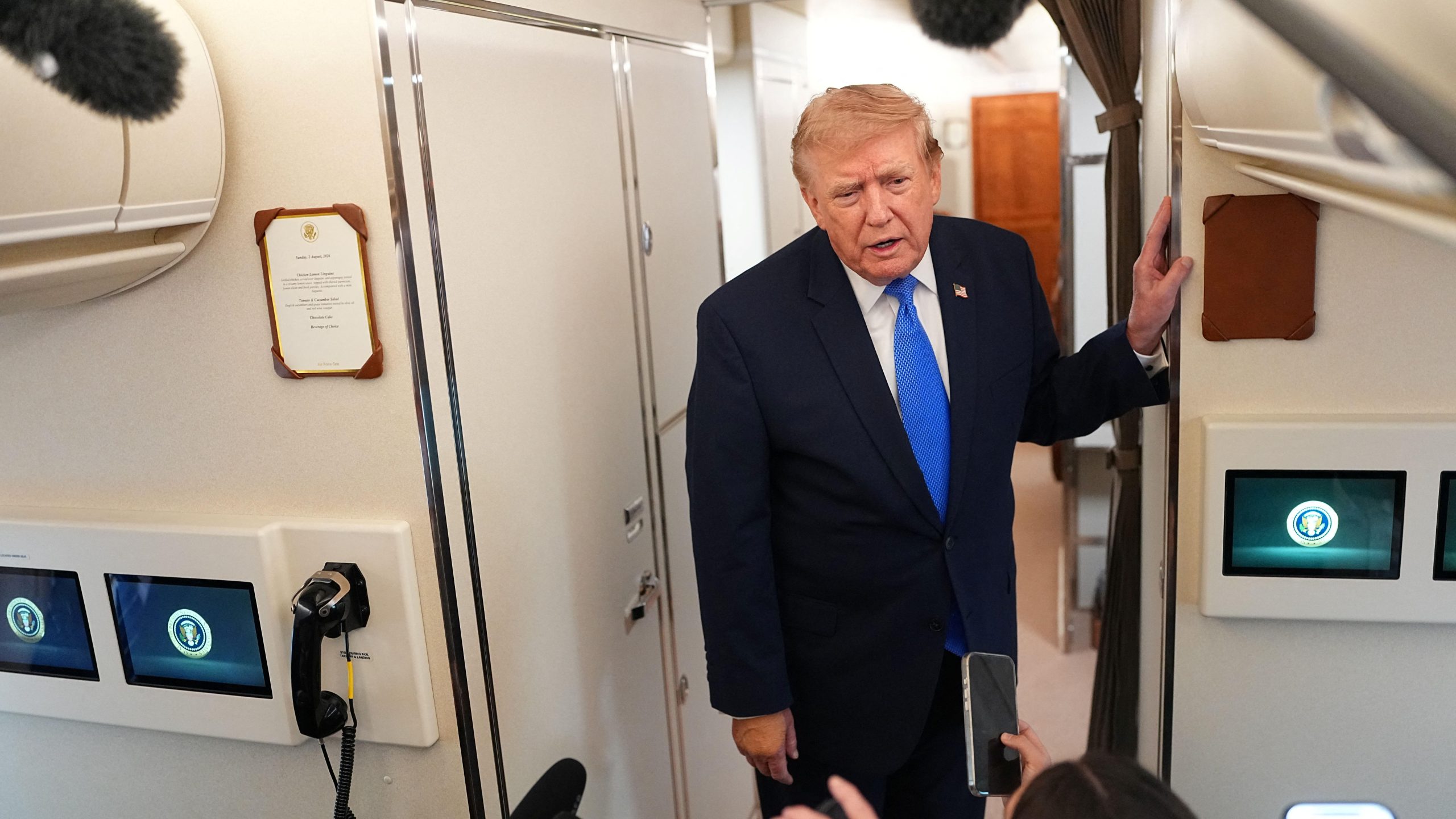
Vowing to fight any legal block on his ban, Trump insisted: “Almost without question and, as usual, we’ll go for appeal, because fake news people and publications that only write negatively, and who violate our national security by writing false and defamatory stories with unknown ‘sources,’ shouldn’t be allowed access to the [Oval Office].”
However, in the court filing, Kelly has stated that “temporary restraining orders are generally unappealable.”
Instead, during the 14-day period, the court “will set a schedule for expedited briefing on a motion for a preliminary injunction,” allowing Trump and the media outlets to submit further evidence for Kelly to consider.
Trump, during his first term, revoked the White House press credentials of Jim Acosta, who was then a CNN correspondent, after a tense exchange during a news conference.

Trinidad Chambliss Is The Best QB In College Football. What’s His NFL Draft Ceiling?

Solar Powered Traffic Monitoring | Hackaday

Ripple’s CEO Brad Garlinghouse Reveals Whats About To Happen With XRP……..



![Young Thug - Money On Money (feat. Future) [Official Video]](https://wordupnews.com/wp-content/uploads/2026/04/1776012320_maxresdefault-80x80.jpg)
-

 Fashion6 days ago
Weekend Open Thread: Talbots – Corporette.com
-

 Tech4 days ago
Researchers escape OpenAI Codex sandbox to run commands on host
-

 Crypto World2 days ago
Goldman Sachs and Deutsche Bank Agree: The S&P 500 Rally Isn't Over
-

 Crypto World6 days ago
Circle launches Arc Studio AI agent for building onchain apps
-

 Crypto World4 days ago
Who Needs CLARITY Anyway? ARB Could See 70X Increase: Hodler’s Digest
-
 NewsBeat6 days ago
Trump says US has reached an agreement to take permanent control of Greenland’s security
-

 Crypto World6 days ago
Trading Bitcoin on Robinhood? Why 2% Spread Has Traders Worried
-

 Crypto World7 days ago
Mortgage and refinance interest rates today, Thursday, September 17, 2026
-

 Crypto World6 days ago
Bitcoin price breaks channel as RSI climbs to 63
-

 Tech3 days ago
Google’s $899 Googlebook is a bet that you’ll buy a new laptop for Gemini
-

 Business4 days ago
Analog Devices (ADI) Bets $1.35 Billion on Chips that Let Machines Think for Themselves
-

 Crypto World4 days ago
Coinbase, Robinhood, Circle Seen as Tokenized-Stock Winners
-

 Tech5 days ago
Trump suggests rebranding AI with a new name, says he’s also creating an AI Force
-
 Business1 day ago
Oil Price Today (September 23): Crude oil below $100 on hopes of US-Iran talks. What did Trump say?
-

 Tech7 days ago
GPT-6 Astra Reached the Nether in Minecraft, Lost Its Stash to a Creeper, and Farmed Potatoes for Hours
-

 Crypto World5 days ago
World Money launches in 150+ countries with Stripe
-

 Crypto World6 days ago
Silver prices recover quickly, hitting weekly high today
-
 NewsBeat6 days ago
US was ‘on brink of war’ with China over false AI report of nukes moving in Middle East
-

 Crypto World3 days ago
Bitcoin price holds above $81K as key catalysts line up
-
 Crypto World2 days ago
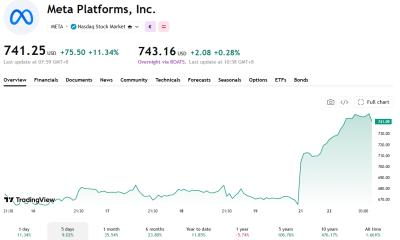
Meta Jumps 11% As Muse Shines and Investors Show an Appetite for Advancing AI
You must be logged in to post a comment Login