
Crypto World
Bitcoin Clears $74K as Spot ETF Demand Outpaces Miner Sell Pressure

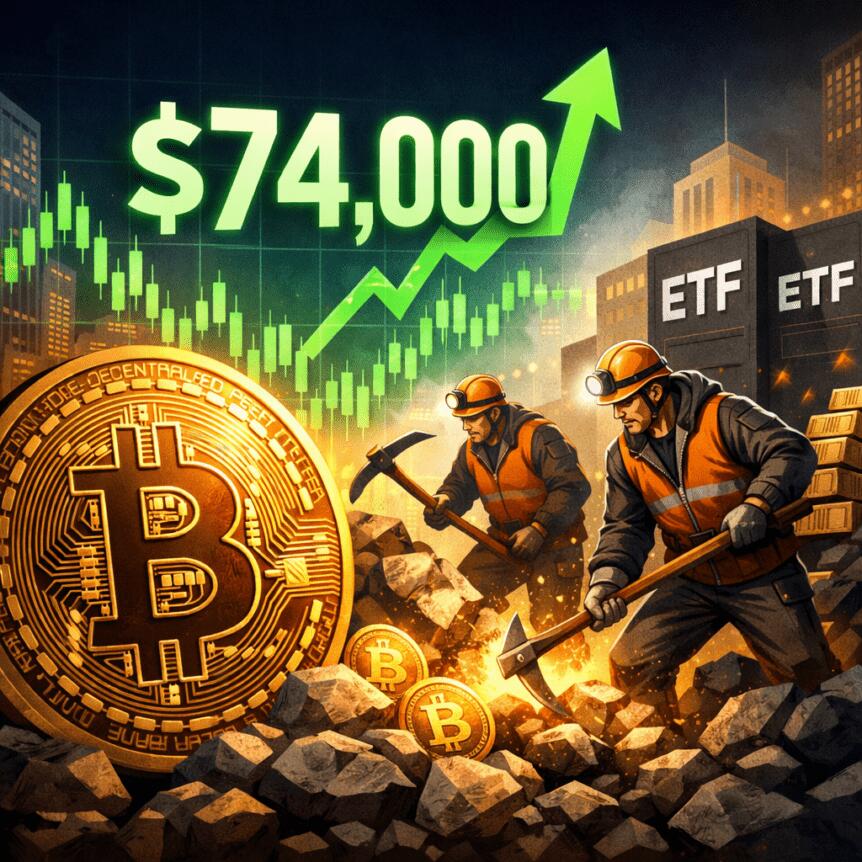
Bitcoin avoided a fresh collapse after a weekend dip and reclaimed the $74,000 level, buoyed by a wave of institutional demand for spot BTC ETFs in the United States. Yet the path ahead remains tethered to traditional markets and macro headlines, with derivatives signals suggesting cautious optimism rather than a decisive shift out of bear-market territory. The saga underscores how flow-driven rallies can coexist with persistent structural headwinds, including miner inventory dynamics and an unsettled regulatory backdrop.
Key takeaways
- US-listed spot Bitcoin ETFs drew net inflows of about $615 million over Thursday and Friday, forming a key pillar of renewed investor interest.
- Bitcoin’s price action remains closely correlated with the S&P 500 and broader macro developments, even as the market tests higher levels.
- Derivatives indicators, including a 2-month futures premium around 2% annualized, point to tepid bullish leverage rather than a bullish breakout.
- Miners continue to trim exposure, with Mara, Riot, and Cango reporting BTC sales in the last 30 days, adding to near-term selling pressure.
- Regulatory progress remains a tether for upside: lawmakers weigh the CLARITY Act and exchanges voice concerns over DeFi scope and tokenized assets, while the SEC signals urgency.
ETF inflows, price recovery, and a signaling rally
Bitcoin’s struggle to decisively break into new highs remains tempered by the same macro currents that have dominated the market for months. On the supply side, fresh evidence of institutional demand surfaced as US-listed spot Bitcoin ETFs posted strong net inflows, with the cohort pulling in roughly $615 million between Thursday and Friday. This inflow coincided with a broader bid for risk assets that helped Bitcoin reclaim the $74,000 level after a period of choppy trading tied to macro headlines and evolving geopolitical risk sentiment.
In parallel, a recent weekly update highlighted renewed buying by Strategy (a notable corporate investor), which reportedly acquired about 13,927 BTC over the past week using its yield-bearing instrument STRC. The development underscores how yield strategies and institutional capital are attempting to materialize into direct BTC exposure, even as the sector remains mindful of ongoing regulatory and market uncertainties. See the broader market picture: a backdrop where ETF inflows can act as a stabilizing bid, yet do not automatically translate into a sustained breakout without accompanying improvements in risk appetite.
The price action around $74,000 comes after Bitcoin briefly cooled from higher ground as markets weighed geopolitical headlines and macro risk. The S&P 500 futures shifted higher in intraday trade, helping risk assets recover from a weekend dip that pushed Bitcoin toward $70,500. Analysts caution that while the rally looks constructive on a technical basis, the absence of multipliers in the derivatives market signals that long-only conviction remains limited. The reconciled picture suggests an environment where spot demand supports price, but leveraged bets are not yet aligned with a true bull run.
Analysts also point to the interplay between Bitcoin and traditional asset classes as a continuing price driver. With the S&P 500 trading fairly flat year to date and Brent futures hovering near recent highs before a pullback, the macro regime continues to shape Bitcoin’s trajectory more than idiosyncratic crypto developments. The takeaway for investors is clear: ETF-driven inflows are meaningful but not a guarantee of a lasting leg up unless macro momentum shifts decisively higher.
“The latest inflows into US-listed spot BTC ETFs show there is durable institutional interest, but the bear-market dynamics haven’t disappeared,”
said one market observer, noting that price recovery alone does not reflect broad market conviction.
Derivatives signals and what they imply for momentum
Two-month Bitcoin futures markets offer a useful lens into the mood of traders and whether the rally has legs. The latest data show a 2-month futures annualized premium of roughly 2%, well below neutral levels that would typically compensate for the cost of carry (roughly 4% to 8%). This suggests a market waiting for clearer catalysts before expanding bullish exposure. Even as the spot price pushes toward higher ground, the lack of a robust premium indicates that institutions and risk-takers are not yet prepared to fund aggressive long positions with leverage.
The 18% year-to-date decline in Bitcoin against a relatively flat S&P 500 adds to the narrative: a market that has faced significant drawdowns and is seeking confirmation that demand can outpace selling pressure. Traders will be watching whether the ETF inflows can sustain demand over a fuller cycle or whether volatility returns as geopolitical and macro headlines evolve.
“Derivatives remain a caution flag—spot demand is supportive, but leverage remains restrained,”
noted a researcher tracking term-structure data.
Regulatory clarity and the broader policy backdrop
Beyond price action, the sector continues to grapple with a regulatory landscape that remains uncertain in places even as clearer signals emerge in others. Lawmakers have shown renewed appetite to articulate a framework for crypto activities that could shape incentives, compliance burdens, and the operational latitude for stablecoins and tokenized assets.
U.S. Senator Cynthia Lummis has urged colleagues to consider the CLARITY Act, a proposal that could define how stablecoin issuers operate and set thresholds for tokens to be considered decentralized. The bill is at a pivotal stage as it moves through the Senate Banking Committee, where lawmakers weigh potential late-stage amendments related to DeFi restrictions and asset tokenization.
Meanwhile, the US Securities and Exchange Commission’s leadership has signaled urgency for Congress to advance crypto regulation, underscoring a broader appetite for a formal framework rather than piecemeal rulemaking. Stakeholders—including major exchanges—have voiced concerns about the scope of DeFi provisions and the precise coverage of tokenized assets, arguing for clarity that can protect investors without stifling innovation.
Amid this regulatory flux, stablecoin markets are also signaling demand dynamics. Data showing USD stablecoins trading at a modest discount to the official USD/CNY rate points to capital flight expectations and the regulatory friction associated with cross-border remittances in certain corridors. The dynamic underscores how policy moves can ripple through the liquidity chains that crypto markets rely on, particularly when capital controls and FX considerations interact with crypto demand.
Miners’ selling pressure and its implications for supply/demand balance
The supply side of the Bitcoin market remains a point of emphasis for several analysts. Publicly listed miners have been trimming exposure and reducing inventories, a trend that could offset some of the renewed demand from ETFs and strategic buyers. Over the past 30 days, Mara Mining (MARA US) disclosed the sale of 15,133 BTC, Riot Platforms (RIOT US) reduced its holdings by 2,325 BTC, and Cango (CANG US) sold 2,000 BTC. While a single month of activity cannot fully define supply dynamics, these moves contribute to a broader narrative of mitigated miner accumulation and, in some cases, outright selling pressure.
For Bitcoin to extend its rally toward higher targets—such as an anticipated move to $80,000—the market will need a more favorable risk environment and a shift in trader mood toward higher appetite for leveraged positions. The macro regime and regulatory clarity will continue to shape how much of the current ETF-driven demand translates into sustained price momentum.
The network’s fundamentals—miner economics, hash rate resilience, and energy-price dynamics—also continue to interact with these flows. If miners remain in a mode of balancing cash flow with treasury management, their selling could limit the upside unless offset by robust inflows or a shift in risk sentiment.
What to watch next
Looking ahead, the next several weeks will test whether ETF inflows can remain a reliable driver of price in an environment still dominated by macro and policy headlines. Key watchpoints include ongoing regulatory developments around the CLARITY Act and DeFi, the trajectory of major ETFs’ inflows, and any new indications from miners about inventory strategies. Bitcoin’s path to new highs will likely hinge on a convergence of improved risk appetite, a positive macro backdrop, and a sustainable uptick in leveraged long positions—signals that have yet to fully coalesce.
This evolving mix of institutional demand, policy clarity, and miner behavior suggests a market that can mount rallies without losing sight of the structural challenges that still characterize the current cycle. Investors should remain mindful of the potential for further volatility as the regulatory environment clarifies and macro data evolve.
Sources: Cointelegraph, SoSoValue, TradingView, Laevitas

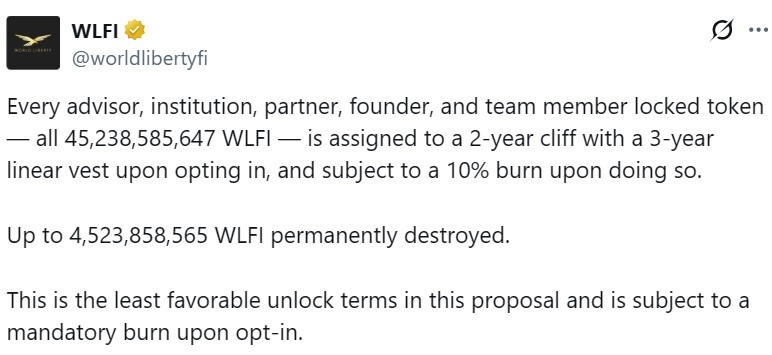
Decentralized finance (DeFi) platform World Liberty Financial on Wednesday posted a governance proposal that would place 62.28 billion locked WLFI tokens under new multiyear vesting schedules and introduce a potential burn for founder, team, adviser and partner allocations.
Under the proposal, early supporters’ locked tokens would face a two-year cliff followed by a two-year linear vest. Founder, team, adviser and partner allocations would face a two-year cliff followed by a three-year linear vest if those holders opt in to the new terms.
The plan also provides for a burn of up to 4.52 billion WLFI tokens, or 10% of the founder, team, adviser and partner allocation. Holders who do not accept the new vesting terms would remain locked indefinitely.
The move formalizes a phased unlock approach previously signaled by the project, offering a structured release of tokens while avoiding a near-term increase in supply. It comes as the Trump-linked platform faces growing pressure from holders and broader scrutiny of its governance.

WLFI proposal follows backlash, governance scrutiny
The proposal follows mounting criticism from early WLFI buyers over prolonged lockups and limited liquidity. On April 10, the project said it would introduce the proposal after some holders threatened legal action.
Additional scrutiny emerged around the platform’s governance structure and decision-making process.
On Monday, Tron founder Justin Sun, who previously invested $30 million in WLFI, criticized the platform over transparency concerns, alleging that prior governance votes were dominated by a small number of wallets and lacked meaningful participation. In response, WLFI threatened to file a lawsuit against Sun.
Related: Trump faces renewed backlash as Trump-linked crypto tokens hit lows
On the same day, Sun urged WLFI to disclose who controls key wallets tied to its smart contracts, warning that the setup could allow significant control, including the ability to freeze tokens.
The proposal also follows recent concerns around WLFI’s treasury activity and market performance. On Saturday, WLFI fell to a new all-time low, just days after wallets linked to the project used billions of tokens as collateral to borrow about $75 million in stablecoins.
Magazine: Singapore isn’t a ‘crypto hub’ — it’s something better: StraitsX CEO


Key takeaways
- DOGE is down 0.5% and continues to trade below the $0.10 psychological level.
- The coin has been consolidating and could rally higher in the near term.
Dogecoin (DOGE), the largest meme coin with a market capitalization of $14.27 billion, represents over 0.50% of the $2.49 trillion cryptocurrency market as of Wednesday.
Dogecoin underperforms despite a disinflationary model
Dogecoin defends its inflationary model, stating that inflation will decrease gradually to 3.1% from 3.6% as the total DOGE supply increases.
The assumption driving this claim is that demand for the meme coin will remain steady, supported by its robust community that uses DOGE for tipping, institutions launching DOGE-focused Exchange Traded Funds (ETFs), and its growing use in Decentralized Finance (DeFi) services.
While the narrative suggests a stable demand, it may not guarantee sustained positive pressure on DOGE’s price.
While Dogecoin’s fixed issuance model reduces inflation relative to the increasing supply, it does not necessarily reduce the overall supply, as deflation would. The continued minting of 5 billion DOGE per year could become a persistent downside risk, especially during periods of low demand.
Dogecoin’s strategy emphasizes practical usage as a currency rather than hoarding, and it incentivizes miners to secure the network. However, the ongoing supply pressure may limit the effectiveness of this disinflationary model in the long term.
In addition to this, institutional demand for DOgecoin remains muted. Since the launch of DOGE spot ETFs on November 24, there have been just 15 days of inflows, totaling a net asset value of $10.80 million. With 79 days showing no flows and two days with net outflows, institutional interest in DOGE remains limited.
The Dogecoin Treasury currently holds just over 780.54 million DOGE, which represents 0.51% of the total DOGE supply. Gaining further institutional support is key for Dogecoin to progress into the global financial system, providing the demand necessary to support the disinflationary model.
DOGE could rally above $0.10 if the bulls regain control
The DOGE/USD 4-hour chart remains bearish and efficient despite the broader crypto market rallying recently. At press time, DOGE is trading at $0.094 after rejecting at the $0.098 swing high earlier this week.
The RSI of 55 is above the neutral 50, indicating a fading bearish momentum. The MACD lines are also above the zero region, adding further bullish narrative to the pair.

If the bulls regain control, DOGE could surpass the $0.098 swing high and hit the $0.10 psychological level for the first time since March 16.
However, if the bearish correction persists, DOGE could retest the Sunday low of $0.09012 in the near term.
Crypto World
Justin Sun Just Revealed a Quantum-Resistant Roadmap for Tron: Is TRX About to Break $0.40?

Justin Sun just dropped a new strategic framework for Tron and TRX is responding.
The token is trading at $0.3234, up 1.1% in 24 hours. The modest price move understates what the roadmap is actually signaling if it gains traction.
The detail most headlines are missing is the quantum angle. Sun is positioning Tron as a quantum-resistant Layer-1, with protocol-level upgrades targeting post-quantum cryptographic standards alongside expanded DeFi and stablecoin settlement rails. That reframes the entire long-term infrastructure thesis for the network.
The announcement hit Sun’s official channels and immediately split crypto Twitter between technical optimism and the skepticism that follows any Sun-led initiative. Both reactions are predictable. The more important context is that Tron’s stablecoin volume is already among the highest of any chain. This roadmap is building on a concrete base, not a whitepaper premise.
While Bitcoin debates whether to freeze vulnerable coins and Ethereum forms research committees, TRON is building.
Today I'm announcing that TRON is officially launching its post-quantum upgrade initiative. TRON will be the first major public blockchain to deploy…— H.E. Justin Sun

(@justinsuntron) April 14, 2026
The broader market is recovering on macro tailwinds, which gives this announcement better timing than it might otherwise deserve. TRX price action now becomes the cleanest read on whether the market is pricing the roadmap as signal or noise.
Can Tron (TRX) Crypto Price Hit $0.40 This Week?
TRX is holding $0.32 as immediate support, a level it has defended across multiple sessions. CoinLore’s forecast data places near-term resistance in the $0.34–$0.36 band, a range that has capped rallies throughout the current consolidation phase. Volume on the 24-hour print remains moderate, suggesting accumulation rather than a momentum-driven breakout, for now.
Moving average structure is constructive. Price sits above the 50-day MA, and short-term momentum indicators have not flashed overbought conditions, leaving room for a leg higher without immediate mean-reversion risk.
Projections flag $0.38–$0.42 as achievable within a 30-day window under a sustained bull scenario.

TRX is still orbiting that same decision zone, and $0.36 is the trigger, because if price breaks and holds above it with real volume, that is where momentum unlocks and a quick push toward $0.40 becomes realistic.
For now though it still looks like digestion, with price stuck between $0.32 and $0.36 while the market processes the news, so instead of a breakout you get a slow grind as long as sentiment does not fade.
The level that really matters underneath is $0.30, because as long as it holds, structure is still intact, but if it breaks, things flip bearish fast and $0.27 comes into play, especially if the broader market weakens.
What makes this more interesting is the longer term angle, because expectations are still leaning bullish, but it all depends on execution, and that is the part the market will price in quickly, not months later.
So in the short term, $0.34 is the tell, because how price reacts around that level this week will show whether buyers are actually stepping in or just waiting.
Maxi Doge Targets Early-Mover Upside as TRX Tests Key Resistance
TRX at $0.32, with a clear ceiling at $0.36, means the upside for late entrants is capped at 10–12% to the next resistance band. For traders who missed the base, the broader bull market setup raises an obvious question: where does the asymmetric risk actually sit right now?
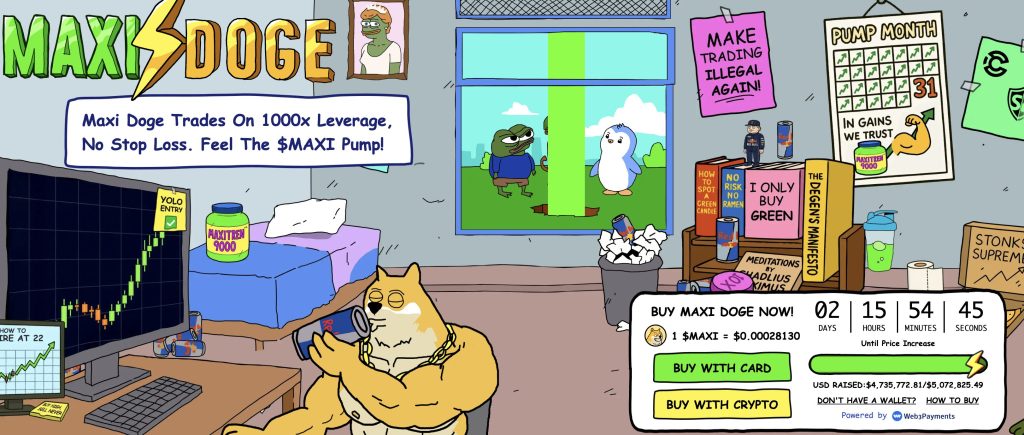
One answer generating traction in presale circles is Maxi Doge (MAXI), a meme token built on Ethereum that packages the 1000x leverage trading mentality into a community-driven ecosystem.
The concept (a 240-lb canine juggernaut who never skips leg day, never skips a pump) is absurd by design, which is exactly the point.
The presale has now raised $4,734,794.34 at a current token price of $0.0002813, with staking rewards distributed daily via smart contract.
Features include holder-only trading competitions with leaderboard rewards, a Maxi Fund treasury backing liquidity and partnerships, and futures platform integrations built for the ROI-hunter demographic. Early-stage meme tokens carry substantial risk of total loss, that’s the trade-off for the entry price. For those who’ve done the research, the Maxi Doge presale is live now.
The post Justin Sun Just Revealed a Quantum-Resistant Roadmap for Tron: Is TRX About to Break $0.40? appeared first on Cryptonews.


Pakistan’s central bank notified all banks and financial institutions in the country that the ban on providing crypto services has been lifted.
However, according to the new state bank rules, banks are banned from investing, trading or holding crypto assets using their own funds or customer deposits.
The State Bank of Pakistan’s move follows the recent enactment of the 2026 Virtual Assets Act, which establishes Pakistan’s Virtual Asset Regulatory Authority (PVARA to license, regulate and supervise the sector.
The central bank replaced its 2018 ban on crypto with new rules that permit regulated banks and other financial institutions to open accounts for crypto firms approved under PVARA.
Under the new state bank framework, banks can provide services to virtual asset service providers (VASPs) licensed under the new crypto act, as well as to those seeking approval, subject to strict compliance with anti-money laundering (AML), know-your-customer (KYC), and other counter-terrorism financing regulations.
“Subject to strict compliance with the conditions outlined herein, SBP Regulated Entities (REs) may open bank accounts of entities duly licensed by PVARA as Virtual Asset Service Providers (VASPs),” the State Bank of Pakistan said.
The central bank’s rules also set out detailed conditions for onboarding crypto firms, which include mandatory verification of licenses, enhanced due diligence and ongoing supervision of all their transactions.
In December, the government of Pakistan and Binance signed a memorandum of understanding (MOU) allowing the world’s largest crypto exchange by trade volume to explore the tokenization of up to $2 billion in bonds, treasury bills and commodity reserves in Pakistan.
That same month, the Chairman of Pakistan’s Virtual Assets Regulatory Authority (VARA), Bilal Bin Saqib, announced in a video interview with CoinDesk his country’s plans to accelerate crypto adoption, leverage Bitcoin mining, and launch a national stablecoin.
Roughly 40 million or about 17% of the Pakistani population are involved in crypto trading, the government said in February. The country is the third-largest crypto market by retail activity, ahead of places like Germany and Japan.
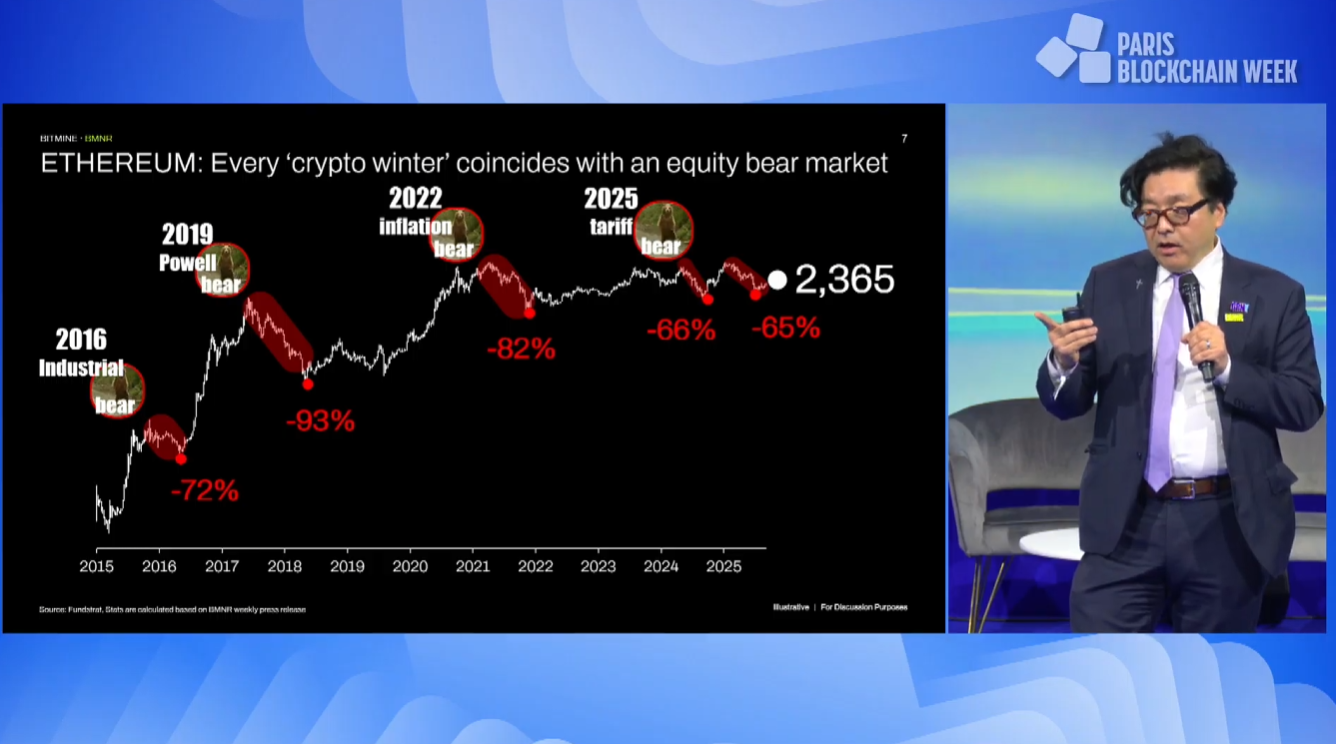
Bitmine Immersion Technologies chairman Tom Lee said Wednesday that the recent crypto slump was a “mini crypto winter” that may already be ending, in comments that came shortly after the company disclosed a multibillion-dollar quarterly loss tied largely to unrealized markdowns on the company’s Ether holdings.
During a keynote speech at Paris Blockchain Week 2026, Lee said that equity markets have bottomed due to the US-Israel war with Iran, and that Ether (ETH) will emerge from its “massive consolidation,” driven by tokenization and agentic artificial intelligence initiatives tied to the smart contract network.
Lee argued that equities have reached their bottom, leading to a recovery from what he called an “unusual” crypto market downturn, which didn’t coincide with a wider bear market in stocks for the first time. “Equity markets bottom on bad news. And we’ve had a lot of bad news,” said Lee, citing historical examples of stock markets bottoming out after the outbreak of wars.
Lee also said ETH is “probably on its way to 60,000” if his market thesis is correct and later described $62,000 as a fair-value scenario over the next few years, based on Ethereum reaching roughly one-quarter of Bitcoin’s (BTC) long-term value.
His comments come amid a wider crypto market downturn that has seen Ether’s price fall 43% since October 2025 to trade around $2,327 at the time of writing, significantly below Bitmine’s average cost basis of $3,660, according to data from Bitminetracker.

Bitmine posts $3.8 billion quarterly loss on Ether holdings
Lee’s comments also follow Bitmine’s posting of a $3.82 billion loss on its Ether holdings during the first quarter of the year, according to a Tuesday filing with the US Securities and Exchange Commission.

The figure was mainly driven by the company’s over $3.78 billion in unrealized losses on its crypto holdings. Bitmine also reported $11 million in revenue, including $10.2 million from ETH staking.
Related: Ether treasuries need liquid staking edge to beat ETFs, says Lido exec
Despite the mounting losses, Bitmine announced a purchase of 71,524 Ether on Monday, with the company now holding roughly 4.04% of the total Ether supply. The latest acquisitions came shortly after Bitmine debuted on the New York Stock Exchange on April 9, uplisting from NYSE American.
Bitmine and Exodus Movement are the only two Ether treasury companies to publicly disclose Ether investments over the past 30 days.

Bitmine is the largest corporate Ether holder with 4.6 million ETH currently valued at over $10 billion, while SharpLink Gaming is second, with 863,000 Ether worth $1.89 billion, data from StrategicEthReserve shows.
Magazine: Sharplink exec shocked by level of BTC and ETH ETF hodling — Joseph Chalom
eToro has announced an agreement to acquire Zengo, a self-custodial crypto wallet provider, to combine eToro’s global, multi-asset platform with Zengo’s wallet technology. The move aims to broaden self-custody options and accelerate access to on-chain finance, linking traditional investing with on-chain infrastructure as digital assets evolve. The press release notes that the combination could support tokenized assets and emerging decentralized trading models, including prediction markets and perpetuals, while maintaining e- toro’s broad investing ecosystem. The transaction remains subject to customary closing conditions and reflects eToro’s long-term strategy to expand digital asset capabilities.
Key points
- Acquisition merges eToro’s multi-asset platform with Zengo’s non-custodial wallet technology to broaden self-custody capabilities.
- Zengo offers on- and off-ramp capabilities, token swaps, staking, and access to decentralized applications on a wallet powered by MPC cryptography.
- The deal supports evolving digital asset use cases, including tokenized assets and decentralized trading models such as prediction markets and perpetuals.
- The transaction is subject to customary closing conditions and reflects eToro’s long-term strategy to expand digital asset capabilities.
Why it matters
By bringing Zengo’s self-custodial wallet into its ecosystem, eToro could give users more control over private keys and on-chain access while staying within a regulated, multi-asset platform. The arrangement signals a strategic bet on self-custody as part of mainstream investing and could shape how readers engage with digital assets through tokenized assets and on-chain trading. This approach aligns with eToro’s broader strategy to broaden access to digital assets within its regulated ecosystem.
What to watch
- Progress toward closing conditions and regulatory approvals.
- Integration timeline for Zengo technology into the eToro platform and any related product roadmap.
- Any announcements of new self-custody features or on-chain services after closing.
Disclosure: The content below is a press release provided by the company or its PR representative. It is published for informational purposes.
eToro Acquires Zengo to Expand Self-Custodial Crypto Capabilities
Abu Dhabi, UAE -15 April 2026: eToro, the trading and investing platform, has entered into an agreement to acquire Zengo, a leading self-custodial crypto wallet provider, in a move that deepens eToro’s digital asset capabilities and accelerates its strategy of connecting traditional finance with on-chain infrastructure and the crypto native economy.
The acquisition brings together eToro’s global multi-asset platform and distribution with Zengo’s non-custodial wallet technology, supporting Zengo’s next phase of growth while expanding eToro’s digital asset capabilities.
The transaction strengthens eToro’s ability to support evolving digital asset use cases, including tokenized assets and emerging decentralized trading models such as prediction markets and perpetuals, as these markets develop.
Yoni Assia, Co-founder and CEO of eToro, said: “We believe the future of finance will be increasingly digital, decentralized and user-controlled, with self-custody playing an important role in that evolution. Zengo has built an innovative and secure wallet experience, and this acquisition will enable us to accelerate its growth while continuing to provide users with choice in how they access digital assets.
“As we often say, crypto downtimes are the time to build and this acquisition reflects that long-term approach. At the same time, we continue to demonstrate the strength of our diversified business model. We’ve seen strong capital market activity so far this year, with commodity trading accounting for 60% of trading commissions by asset class in Q1 2026, with commodities trading volume nearly 4x higher year over year. This growth was driven by shifting global macro dynamics, our standing as a top-tier global multi-asset platform, and our strategic expansion of 24/7 trading, including gold and oil.”
Founded in 2018, Zengo is a pioneer in multi-party computation (MPC) cryptography and provides a market-leading crypto wallet, known for its keyless wallet architecture designed to enhance security while simplifying self-custody. Zengo offers a full-service crypto experience, including on- and off-ramp capabilities, token swaps, staking and access to decentralized applications, making it one of the most comprehensive consumer self-custodial solutions in the market.
“From day one, Zengo has focused on making self-custody simple and secure for everyday users,” said Ouriel Ohayon, Co-founder and CEO of Zengo. “Joining eToro allows us to accelerate that mission at a global scale. Together, we can expand access to self-custody and on-chain finance while connecting it to a broader investing ecosystem that bridges traditional and on-chain finance.”
Notes
The deal is subject to customary closing conditions.
Media contact
pr@etoro.com
About eToro
eToro is the trading and investing platform that empowers you to invest, share and learn. We were founded in 2007 with the vision of a world where everyone can trade and invest in a simple and transparent way. Today we have over 40 million registered users from 75 countries. We believe there is power in shared knowledge and that we can become more successful by investing together. So we’ve created a collaborative investment community designed to provide you with the tools you need to grow your knowledge and wealth. On eToro, you can hold a range of traditional and innovative assets and choose how you invest: trade directly, invest in a portfolio, or copy other investors. You can visit our media centre here for our latest news.
About Zengo
Zengo Wallet is the most secure self-custodial cryptowallet, trusted by over 2 million individuals and businesses in 180+ countries. Since 2018, no Zengo wallet has ever been hacked. Zengo Pro includes advanced features like Bitcoin Vaults, an inheritance-style feature, and now, heavily discounted fees on purchase. Zengo Business offers institutional-grade security and team wallets for SMBs and enterprises. Powered by MPC cryptography, Zengo has no seed phrase vulnerability and is backed by Insight Partners, Tether, and other leading investors.
Disclaimers
Zengo’s non-custodial wallet is a separate product from eToro’s regulated exchange services. Access to Web3 services through the wallet, including decentralized applications, token swaps, and staking, is not a regulated activity and is not offered, managed, or guaranteed by any eToro regulated entity. Users interact directly with third-party protocols and are responsible for their own actions.
eToro is a multi-asset investment platform. The value of your investments may go up or down. Your capital is at risk. Past performance is not an indication of future results.
eToro is a group of companies that are authorised and regulated in their respective jurisdictions. The regulatory authorities overseeing eToro include:
- The Financial Conduct Authority (FCA) in the UK
- The Cyprus Securities and Exchange Commission (CySEC) in Cyprus
- The Australian Securities and Investments Commission (ASIC) in Australia
- The Financial Services Authority (FSA) in the Seychelles
- The Financial Services Regulatory Authority (FSRA) of the Abu Dhabi Global Market (ADGM) in the UAE
- The Monetary Authority of Singapore (MAS) in Singapore
- eToro USA Securities Inc., registered with Securities and Exchange Commission (SEC) and member of FINRA and SIPC
- eToro USA LLC state and FinCEN (31000318247697) registered
- eToro NY LLC hold licenses with the State of New York (MTL #104940 and VC #122584)
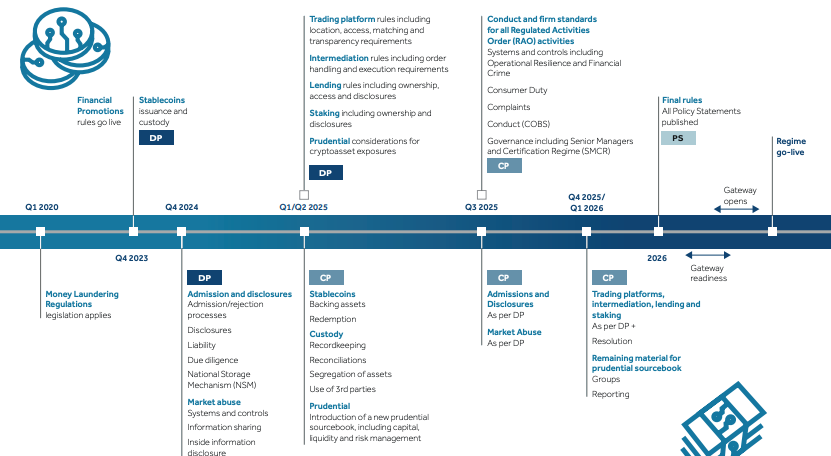
The United Kingdom’s Financial Conduct Authority (FCA) said Wednesday it is consulting on guidance for the country’s future crypto regime, in the latest step toward a broader framework that is expected to take effect on Oct. 25, 2027.
In a statement published Wednesday, the FCA said it is seeking industry feedback on the guidance to help companies understand how they might be affected by the regime. The full consultation text is available on the FCA website, with the feedback window closing on June 3, 2026.
The regulator said the guidance will clarify requirements for areas such as stablecoin issuance, crypto trading, custody and staking. “We want to develop a competitive and sustainable cryptoasset sector where UK consumers are served by authorised cryptoasset firms and can make informed decisions,” the FCA said.
The guidance consultation follows a run of FCA rule consultations published since late 2025 covering trading platforms, intermediaries, prudential standards, admissions and disclosures, market abuse, and how the FCA Handbook will apply to crypto companies. Until the regime comes into force, crypto in the UK remains only partially regulated, mainly restricted to areas such as financial promotions and Anti-Money Laundering (AML) regulations.
Related: UK regulator takes High Court action against HTX over crypto promotions
Authorization window opens later this year
According to the FCA, the broader crypto regime is expected to come into force in October 2027, but companies will be able to start applying for authorization as early as September 2026.
That aligns with the authority’s timeline published in January, when it said the license application period would open in September. According to the FCA, the application period is expected to end in February 2027.

The FCA previously said that the authorization under the upcoming crypto regime will not be automatically granted to companies that have already been registered under existing Money Laundering Regulations (MLRs) and payment-related frameworks.
According to the plan, all companies providing regulated crypto asset services in the UK will need to be authorized under the Financial Services and Markets Act (FSMA).
Magazine: How crypto laws changed in 2025 — and how they’ll change in 2026
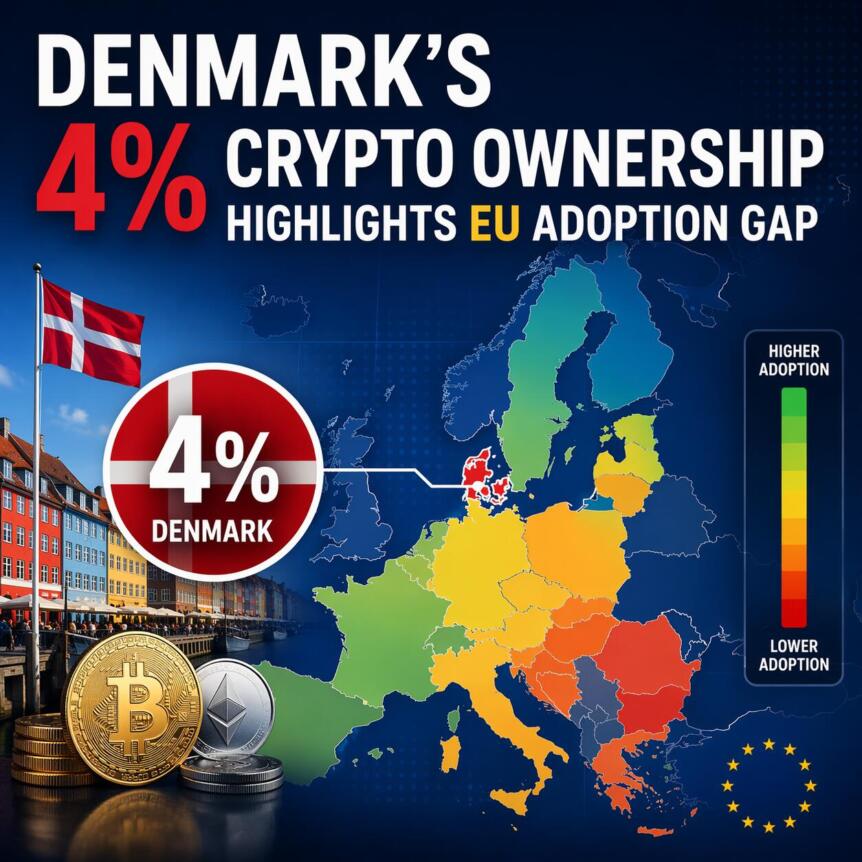
A Danmarks Nationalbank staff paper published this week places Denmark’s crypto exposure in a distinctly cautious light, revealing that only 4% of Danes own cryptocurrencies. The figure has remained flat since 2023 even as crypto markets expanded across Europe. The study, based on a 2025 survey conducted by Epinion, estimates national holdings between roughly $317 million and $847 million and shows that the typical position is small.
The paper draws on responses from 3,013 citizens aged 15 and older, collected between October and November 2025 through Denmark’s Digital Post system. Respondents could answer online or by phone, and the sample was weighted to reflect national demographics. Alongside the ownership rate, the report highlights how Danish crypto activity is distributed and what factors appear to influence adoption, including historical banking norms and tax treatment.
Key takeaways
- Only 4% of Danes own cryptocurrency, a share unchanged since 2023.
- Among holders, most positions are under 10,000 Danish kroner (about $1,570); national exposure is estimated at $317 million to $847 million.
- Indirect exposure through crypto-linked stocks and exchange-traded products stands at about $211 million, roughly 0.4% of total equity holdings.
- Crypto ownership skews toward younger, higher-income individuals; participation declines sharply after age 60.
- Retention and custody patterns show 70%–75% of users rely on service providers, while 20%–30% self-custody assets; Danske Bank began offering crypto exposure via BTC and ETH ETFs earlier this year.
Denmark’s crypto footprint versus Europe
The National Bank’s assessment places Denmark toward the lower end of crypto adoption in Europe. The paper notes that other European countries—such as Norway and Finland—along with the United Kingdom, report crypto ownership rates above 10% of their populations, indicating a broader regional ascent. The disparity underscores how local factors shape investor behavior even as global interest in digital assets grows.
Several explanations surface in the report for Denmark’s slower uptake. The Danish banking system has historically taken a cautious stance toward crypto, with banks rarely enabling purchases on their platforms and often discouraging crypto investments as high-risk. The analysis also cites earlier asymmetric tax treatment as a potential dampener on widespread adoption, suggesting that regulatory and fiscal clarity could be pivotal in shifting attitudes over time.
Banking shifts, investor attitudes, and regulatory context
Despite the cautious backdrop, institutional moves are beginning to reshape access. Earlier this year, Danske Bank—the country’s largest lender—began permitting customers to invest in crypto exposure through exchange-traded products tied to Bitcoin and Ethereum. The bank characterized the shift as part of a broader trend of growing demand for crypto exposure among clients, coupled with a clearer regulatory framework at the European level, including developments around the Markets in Crypto-Assets Regulation (MiCA).
While the Danmarks Nationalbank study confirms that most Danes remain wary of crypto as a daily payments method, the fact that a major bank is offering regulated crypto access suggests a potential for incremental uptake. Regulatory clarity, particularly from MiCA and any subsequent EU iterations, is singled out as a key factor shaping future adoption. The paper reinforces that, for many Danes, crypto remains an investment play rather than a transactional technology.
What to watch next for Danish crypto exposure
Several dynamics will likely determine whether Denmark’s crypto footprint grows. First, stricter or clearer EU-wide rules could lower perceived risk and encourage more institutions to offer regulated products. Second, tax policy changes—if pursued—could alter the cost-benefit calculus for individual investors and wealth managers. Third, ongoing shifts in custody infrastructure and product availability (for example, more self-hosted options or regulated custody services) may affect how Danes choose to hold crypto assets.
Overall, the NatBank’s survey paints a picture of a crypto market that has yet to become mainstream in Denmark, despite pockets of growing interest. The alignment (or misalignment) between regulatory signals, tax treatment, and bank-driven access will be critical to watch in the coming months as European markets continue to mature in their approach to digital assets.
What remains uncertain is how swiftly these systemic factors will translate into higher participation, especially among younger cohorts who have historically driven crypto adoption elsewhere. As MiCA 2 and related national policies evolve, observers will be watching whether Denmark’s modest baseline remains unchanged or begins to pick up pace in the next wave of retail involvement.


Allbirds (BIRD) surged as much as 400% after saying it will pivot from making sneakers into AI computation services, underscoring one of the market’s dominant themes: the race to secure scarce AI infrastructure.
The company said it agreed to sell its footwear brand to American Exchange Group (AXNY) and reinvent itself as NewBird AI, backed by a $50 million convertible financing facility to acquire processing units and build AI infrastructure.
The loan is roughly double the company’s $22 million pre-announcement market cap.
Demand for computing power to support AI is surging, while supply remains constrained. The scarcity has already prompted bitcoin miners such as Bitfarms, now renamed Keel (KEEL), and MARA Holdings (MARA) to reduce or abandon their crypto aspirations and switch their computing resources into supporting the AI industry.
Now, echoing the headlong rush into blockchain technology that engulfed companies such as Long Island Iced Tea Corp. in 2017, it seems even small-cap companies are attempting to position themselves to capture the AI opportunity.
Allbirds’ pivot comes after a steep decline in its core business, with the stock down roughly 99% from its peak. The shares, which closed $2.49 on Tuesday, surged to as high as $12.72 and were recently trading around $11.
Convertible financing means the investor initially provides capital to the company as debt, and can later convert it into equity, often at a discount, which can lead to significant dilution for existing shareholders.
UPDATE (April 15, 14:34 UTC): Updates share price move, adds bitcoin miners in fourth paragraph, Long Island Iced Tea in fifth.
OKX said Wednesday it is rolling out a Europe-specific crypto derivatives product called X-Perps, extending its regulated offering across the European Economic Area (EEA) through its Malta-based MiFID business.
The company said the new derivatives product is available to retail and institutional traders across all 30 EEA countries.
OKX said the platform is purpose-built in compliance with the Markets in Financial Instruments Directive (MiFID), a European Union regulatory framework governing financial instruments such as securities and derivatives.
The launch follows OKX’s March 2025 announcement that it had acquired a MiFID-licensed entity in Malta, which allowed the exchange to expand its derivatives trading across the EEA.
Platform features multi-asset collateral and up to 10x leverage
OKX said X-Perps offers five-year expiry crypto derivatives with up to 10x leverage and supports multi-asset collateral, including euros, US dollars and crypto assets.
At launch, the platform offers pairs for numerous crypto assets, including major coins such as Bitcoin (BTC), Ether (ETH) and XRP (XRP), as well as memecoins such as Dogecoin (DOGE) and Pepe (PEPE).
“OKX will be rolling out more pairs and exploring high-demand products for retail and institutional traders as it builds out its fully featured, regulated European derivatives platform,” the company said in an announcement shared with Cointelegraph.
A structurally different product designed for Europe
OKX’s launch of X-Perps comes as the exchange has emerged as a major player in derivatives trading.
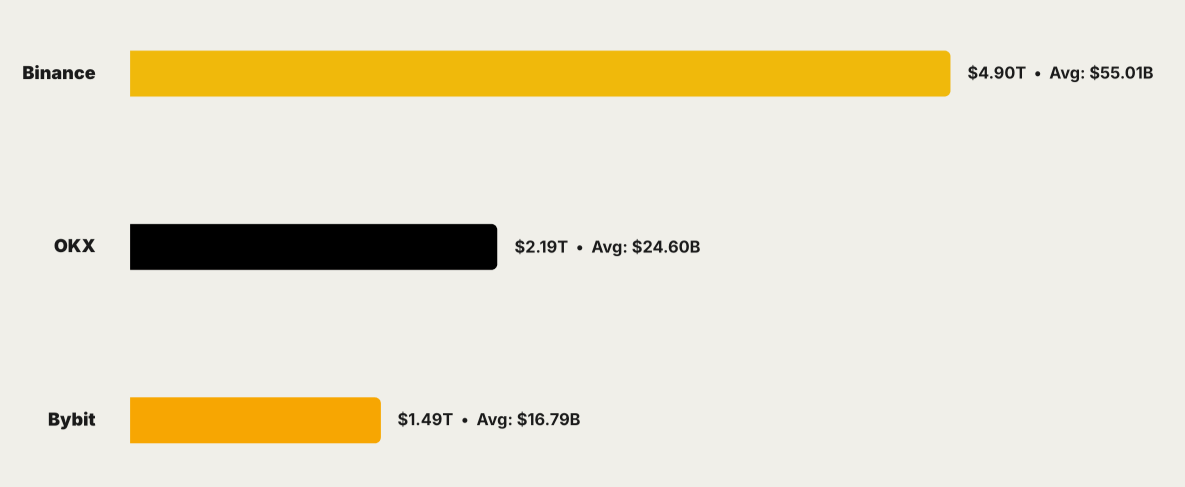
According to CoinGlass, OKX ranked as the second-largest exchange in crypto derivatives in the first quarter of 2026, after Binance, with a cumulative quarterly trading volume of $2.19 trillion, versus Binance’s $4.9 trillion.

X-Perps is specifically structured to comply with MiFID requirements and will differ from products offered under other regulatory frameworks.
Related: Onchain perp DEX volumes fall for five straight months after October peak
OKX Europe CEO Erald Ghoos told Cointelegraph at Paris Blockchain Week that perpetual derivatives “cannot exist” under MiFID II because they would otherwise be classified as contracts for difference (CFDs). He said the exchange instead structured the product as a five-year expiry futures contract to ensure compliance with regional regulatory requirements.
He also said in a post on X that as much as 95% of crypto derivatives trading volume still occurs offshore.

“I do believe that a lot of users will transition from offshore back to a fully regulated onshore environment,” Ghoos said, adding: “With X-Perps, we are bridging that gap under a fully regulated exchange where we offer great liquidity.”
Magazine: How crypto laws changed in 2025 — and how they’ll change in 2026

Preferred bidder identified for Speciality Steel UK

WLFI Proposes Vesting Plan for 62B Tokens With Conditional Burn

‘Criticise Palantir, lose your job’, NHS staff told

Why Israel is blocking foreign journalists from entering

Bitcoin: We’re Entering The Most Dangerous Phase

Alan Cumming Brands Baftas Ceremony A ‘Triggering S**tshow’

XRP JUST IN!! ELON MUSK BLOCKING CRYPTO?! TRUMP GIVES HIS FINAL WARNING TO IRAN!

5,000 XRP is More Powerful Than You Think || XRP NEWS TODAY

7 Habits That Stop Money From Coming | Break These Financial Mistakes#motivation#viral#shorts
-

 Politics5 days ago
US brings back mandatory military draft registration
-
 Sports5 days ago
Man United discover Nico Schlotterbeck transfer fee as defender reaches Dortmund agreement
-

 Fashion5 days ago
Weekend Open Thread: Veronica Beard
-

 Politics5 days ago
Malcolm In The Middle OG Turned Down ‘Buckets Of Money’ To Appear In Reboot
-

 Politics3 days ago
World Cup exit makes Italy enter crisis mode
-

 Crypto World6 days ago
Canary Capital Files SEC Registration for PEPE ETF
-

 Business5 days ago
Tesla Model Y Tops China Auto Sales in March 2026 With 39,827 Registrations, Beating Cheaper EVs and Gas Cars
-

 Crypto World2 days ago
The SEC Conditionalises DeFi Platforms to Be Avoided for Broker Registration
-

 Crypto World2 days ago
SEC Signals Exemption for Crypto Interfaces From Broker Registration
-

 News Videos7 hours ago
Secure crypto trading starts with an FIU-registered
-
 NewsBeat3 days ago
Pep Guardiola and Gary Neville agree over Arsenal title problem that benefits Man City
-

 Business5 days ago
OpenAI Halts Stargate UK Data Centre Project Over Energy Costs and Copyright Row
-

 Business4 days ago
Ireland Fuel Protests Enter Day 5 as Blockades Spark Shortages and Government Prepares Support Package
-

 Politics5 days ago
LBC Presenter Mocks Trump Over Iran War Failures
-

 Crypto World5 days ago
Federal judge blocks Arizona from bringing criminal charges against Kalshi
-
 NewsBeat3 days ago
JD Vance announces ‘no agreement’ with Iran over nuclear weapons fear
-

 NewsBeat1 day ago
Trump and Pope Leo: Behind their disagreement over Iran war
-

 Tech6 days ago
A version of Windows 10 released a decade ago is now eligible for additional security patches
-

 Crypto World1 day ago
SEC Proposes Certain Crypto Interfaces Don’t Need to Register as Brokers
-

 Business5 days ago
IMF retains floor for precautionary balances at SDR 20 billion
You must be logged in to post a comment Login