
Crypto World
Justin Sun Just Revealed a Quantum-Resistant Roadmap for Tron: Is TRX About to Break $0.40?


Justin Sun just dropped a new strategic framework for Tron and TRX is responding.
The token is trading at $0.3234, up 1.1% in 24 hours. The modest price move understates what the roadmap is actually signaling if it gains traction.
The detail most headlines are missing is the quantum angle. Sun is positioning Tron as a quantum-resistant Layer-1, with protocol-level upgrades targeting post-quantum cryptographic standards alongside expanded DeFi and stablecoin settlement rails. That reframes the entire long-term infrastructure thesis for the network.
The announcement hit Sun’s official channels and immediately split crypto Twitter between technical optimism and the skepticism that follows any Sun-led initiative. Both reactions are predictable. The more important context is that Tron’s stablecoin volume is already among the highest of any chain. This roadmap is building on a concrete base, not a whitepaper premise.
While Bitcoin debates whether to freeze vulnerable coins and Ethereum forms research committees, TRON is building.
Today I'm announcing that TRON is officially launching its post-quantum upgrade initiative. TRON will be the first major public blockchain to deploy…— H.E. Justin Sun

(@justinsuntron) April 14, 2026
The broader market is recovering on macro tailwinds, which gives this announcement better timing than it might otherwise deserve. TRX price action now becomes the cleanest read on whether the market is pricing the roadmap as signal or noise.
Can Tron (TRX) Crypto Price Hit $0.40 This Week?
TRX is holding $0.32 as immediate support, a level it has defended across multiple sessions. CoinLore’s forecast data places near-term resistance in the $0.34–$0.36 band, a range that has capped rallies throughout the current consolidation phase. Volume on the 24-hour print remains moderate, suggesting accumulation rather than a momentum-driven breakout, for now.
Moving average structure is constructive. Price sits above the 50-day MA, and short-term momentum indicators have not flashed overbought conditions, leaving room for a leg higher without immediate mean-reversion risk.
Projections flag $0.38–$0.42 as achievable within a 30-day window under a sustained bull scenario.

TRX is still orbiting that same decision zone, and $0.36 is the trigger, because if price breaks and holds above it with real volume, that is where momentum unlocks and a quick push toward $0.40 becomes realistic.
For now though it still looks like digestion, with price stuck between $0.32 and $0.36 while the market processes the news, so instead of a breakout you get a slow grind as long as sentiment does not fade.
The level that really matters underneath is $0.30, because as long as it holds, structure is still intact, but if it breaks, things flip bearish fast and $0.27 comes into play, especially if the broader market weakens.
What makes this more interesting is the longer term angle, because expectations are still leaning bullish, but it all depends on execution, and that is the part the market will price in quickly, not months later.
So in the short term, $0.34 is the tell, because how price reacts around that level this week will show whether buyers are actually stepping in or just waiting.
Maxi Doge Targets Early-Mover Upside as TRX Tests Key Resistance
TRX at $0.32, with a clear ceiling at $0.36, means the upside for late entrants is capped at 10–12% to the next resistance band. For traders who missed the base, the broader bull market setup raises an obvious question: where does the asymmetric risk actually sit right now?
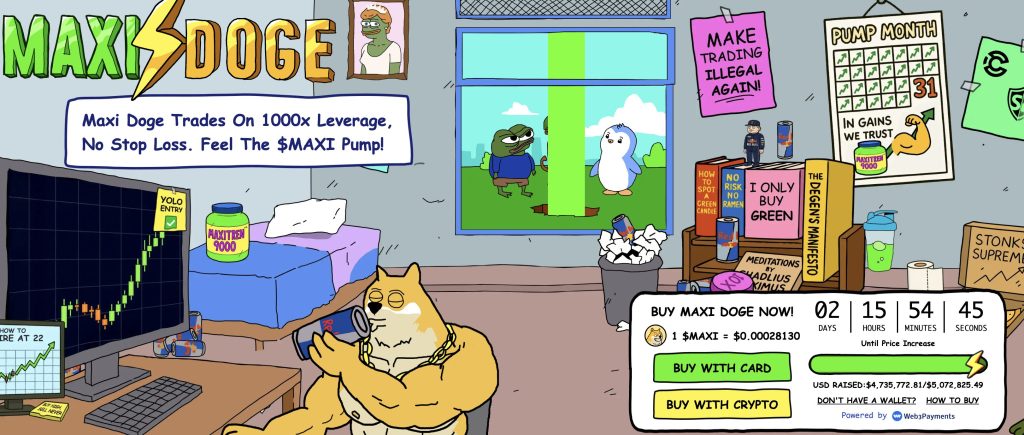
One answer generating traction in presale circles is Maxi Doge (MAXI), a meme token built on Ethereum that packages the 1000x leverage trading mentality into a community-driven ecosystem.
The concept (a 240-lb canine juggernaut who never skips leg day, never skips a pump) is absurd by design, which is exactly the point.
The presale has now raised $4,734,794.34 at a current token price of $0.0002813, with staking rewards distributed daily via smart contract.
Features include holder-only trading competitions with leaderboard rewards, a Maxi Fund treasury backing liquidity and partnerships, and futures platform integrations built for the ROI-hunter demographic. Early-stage meme tokens carry substantial risk of total loss, that’s the trade-off for the entry price. For those who’ve done the research, the Maxi Doge presale is live now.
The post Justin Sun Just Revealed a Quantum-Resistant Roadmap for Tron: Is TRX About to Break $0.40? appeared first on Cryptonews.



The derivatives giant is rolling out CFTC-regulated contracts that let traders isolate Bitcoin volatility from price direction, settling to a new 30-day implied volatility benchmark.
The agreement spans spot and perpetual trading, settlement, liquidations, and onboarding flows on the decentralized exchange.


The exchange’s strategic investment cements Centrifuge as the go-to issuance layer for compliant onchain assets, starting with a tokenized S&P 500 product for non-U.S. users.


Digital asset adoption is now moving through banks, asset managers, custodians, tokenization platforms, and crypto-native institutional arms. Leader in Digital Asset Adoption is an award category within The BeInCrypto Institutional 100, an annual research-driven program recognizing institutional digital asset excellence across 26 categories and six pillars.
This category sits in Pillar 3: Adoption & Use Cases. The long list tracks 15 firms that launched products, deployed capital, built infrastructure, or created market signals between April 2025 and March 2026. A shortlist will be named in May 2026, with the winner announced at Proof of Talk in Paris on June 2–3, 2026.
- Long list: 15 firms across banks, asset managers, custodians, tokenized funds, deposit tokens, stablecoins, and institutional crypto platforms
- Initial pool: More than 30 institutions screened; 15 advanced to the long list
- Scoring: 30% quantitative data · 50% Expert Council · 20% disclosed company data
- Criteria assessed: Strategic commitment, products launched, capital deployed, organizational investment, industry signal, forward momentum
- Data sources: SEC 13F filings, OCC approvals, MiCA-CASP authorizations, FCA, FINMA, MAS, BaFin, JFSA disclosures, audited reports, company releases, PitchBook, Tracxn, and Crunchbase
| # | Firm | Adoption Sub-Segment | HQ | Reach | Top Licensure / Live Product | Representative Work |
|---|---|---|---|---|---|---|
| 1 | JPMorgan Chase | Bank-led tokenization | New York, USA | $4T+ assets JPMD live on Base |
OCC-regulated national bank JPMD USD deposit token |
Hired Oliver Harris to lead Kinexys Kinexys Fund Flow live with private bank partners |
| 2 | BlackRock | Asset manager adoption | New York, USA | $12.5T+ AUM IBIT 800K+ BTC; BUIDL $2.85B |
IBIT, ETHA, ETHB BUIDL tokenized money market fund |
ETHB staked Ether ETF launched Mar 2026 IBIT became a major institutional Bitcoin vehicle |
| 3 | Goldman Sachs | Tokenization platform | New York, USA | $3.1T AUM GS DAP live on Canton |
SEC and FINRA registered GS DAP institutional DLT platform |
Tokenized MMF platform launched with BNY GS DAP planned industry-owned spinout |
| 4 | BNY | Crypto custody | New York, USA | $55.8T AUC/A $2.5T daily payments |
OCC-regulated bank Live BTC and ETH custody |
Co-custodian for Morgan Stanley MSBT IBIT cash custodian and administrator |
| 5 | Fidelity Investments | Full-stack crypto adoption | Boston, USA | $15T+ AUA FBTC and FETH live |
OCC conditional national trust charter Fidelity Digital Assets, NA |
National trust bank charter approved Dec 2025 Plans include stablecoin and staking services |
| 6 | Morgan Stanley | Wealth crypto distribution | New York, USA | $5.5T+ wealth assets MSBT live on NYSE Arca |
OCC charter pending Morgan Stanley Digital Trust filed |
Franklin Crypto launched via a 250 Digital deal BENJI used as part of acquisition consideration |
| 7 | Standard Chartered | Multi-product bank adoption | London, UK | $900B assets CIB custody live in Lux and HK |
FCA and multi-jurisdiction CIB HK stablecoin licence candidate |
Naveen Mallela joins as the payments head Zodia Custody reportedly moving into the CIB division |
| 8 | KuCoin | Crypto-native institutional bridge | Mahé, Seychelles | 40M+ users 200+ countries |
MiCAR-CASP via KuCoin EU Institutional custody integrations |
Ceffu and Cactus custody integrations Asseto tokenized RWA collateral pilot |
| 9 | Citi | Tokenized deposits | New York, USA | $2.4T assets CTS live in major markets |
OCC-regulated bank Citi Token Services |
CTS integrated with 24/7 USD clearing Ether custody pilot completed |
| 10 | Franklin Templeton | Tokenized funds | San Mateo, USA | $1.7T+ AUM BENJI/FOBXX ~$843M |
SEC-registered FOBXX EZBC and EZET live |
Franklin Crypto launched via a 250 Digital deal BENJI used as part of the acquisition consideration |
| 11 | Nomura · Laser Digital | TradFi crypto subsidiary | Tokyo / Zurich | Nomura $650B AUM Komainu regulated custody JV |
UAE VARA, ADGM, Switzerland OCC charter filed Jan 2026 |
Laser Digital National Trust Bank application filed Komainu custody active across jurisdictions |
| 12 | HSBC | Tokenization and digital securities | London, UK | $3T+ assets Orion $3.5B+ issuance |
UK DIGIT mandate HKMA stablecoin issuer licence |
HSBC Orion selected for UK DIGIT pilot Cross-bank tokenized deposit transaction completed |
| 13 | DBS | Bank-backed digital exchange | Singapore | $540B assets DDEx volume up 8x in 2025 |
MAS Recognised Market Operator DBS Digital Exchange |
Integrated crypto into trust planning Crypto options and ETF-linked notes live |
| 14 | Société Générale · SG-FORGE | Bank-issued stablecoins | Paris, France | SocGen €1.4T assets EURCV and USDCV live |
MiCA CASP authorized EUR and USD stablecoins |
Issued MiCA-compliant EUR and USD stablecoins SWIFT pilot for tokenized bond settlement |
| 15 | MEXC | Tokenized RWA bridge | Seychelles | 40M+ users 13.74M MAU |
100+ Ondo tokenized stock pairs listed Gold futures reached a strong global share |
100+ Ondo tokenized stock pairs listed Gold futures reached strong global share |
About This List
The BeInCrypto Institutional 100: Digital Asset Adoption (2026 Long List) identifies institutions making productized moves into digital assets. The category focuses on banks, custodians, asset managers, asset servicers, broker-dealers, and selected crypto-native institutional arms that connect traditional finance with tokenized assets, custody, settlement, stablecoins, or regulated digital asset access.
Crypto-native firms focused mainly on exchange infrastructure, prime brokerage, market making, or trading systems are evaluated separately under Pillar 2 categories.
Methodology
This category is evaluated under Track B of the BeInCrypto Institutional 100 methodology: 30% quantitative metrics, 50% Expert Council scoring, and 20% disclosed data.
Assessment spans six weighted criteria: strategic commitment, products launched, capital deployed, organizational investment, industry signal, and forward momentum.
Data was verified using SEC 13F filings, OCC national trust bank charter approvals, MiCA-CASP authorizations, FCA, FINMA, MAS, BaFin, and JFSA disclosures, audited annual reports, company releases, and private-market sources, including PitchBook, Tracxn, and Crunchbase.
The post BeInCrypto Institutional Research: 15 Firms Leading Digital Asset Adoption appeared first on BeInCrypto.
Forward Industries and crypto investment company RockawayX have co-led a strategic investment in OnRe, a startup building reinsurance infrastructure on the Solana blockchain, in a move aimed at bringing traditional risk-transfer markets onto decentralized rails.
The companies said Tuesday they co-led OnRe’s $5 million Series A round, with Forward planning to allocate up to $25 million into the platform’s yield-bearing token on Solana.
The funding will be used to expand OnRe’s platform and attract more institutional participants to onchain reinsurance, a niche but emerging segment within decentralized finance.
OnRe is attempting to shift parts of the reinsurance market — where insurers offload risk to third parties — onto blockchain infrastructure, using tokenization and smart contracts to manage underwriting and capital flows.
The initiative reflects a broader push to experiment with real-world financial services, including insurance and reinsurance, on blockchain networks, although adoption remains at an early stage.
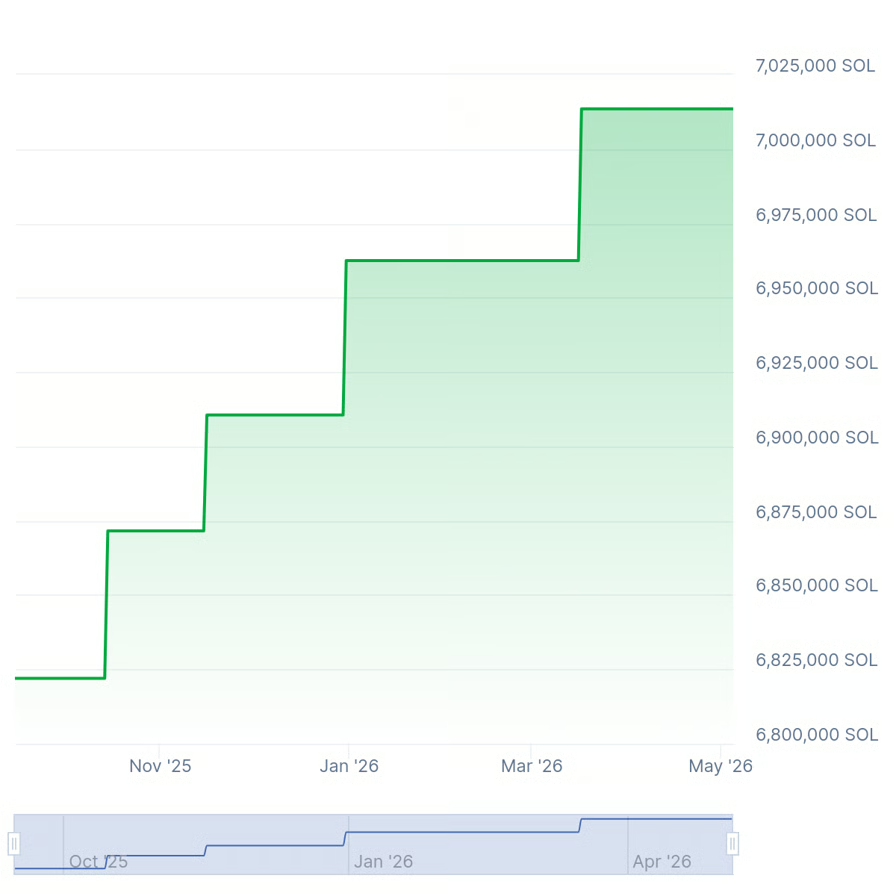
Forward Industries (FWDI) is the largest corporate holder of Solana (SOL), with more than 7.01 million SOL on its balance sheet, according to industry data. Its Nasdaq-traded shares gained about 5.8% in Tuesday’s regular session, according to Yahoo Finance. In after hours activity, at last look, most of that increase evaporated. SOL was last trading hands at $86.61, up about 2.7%.
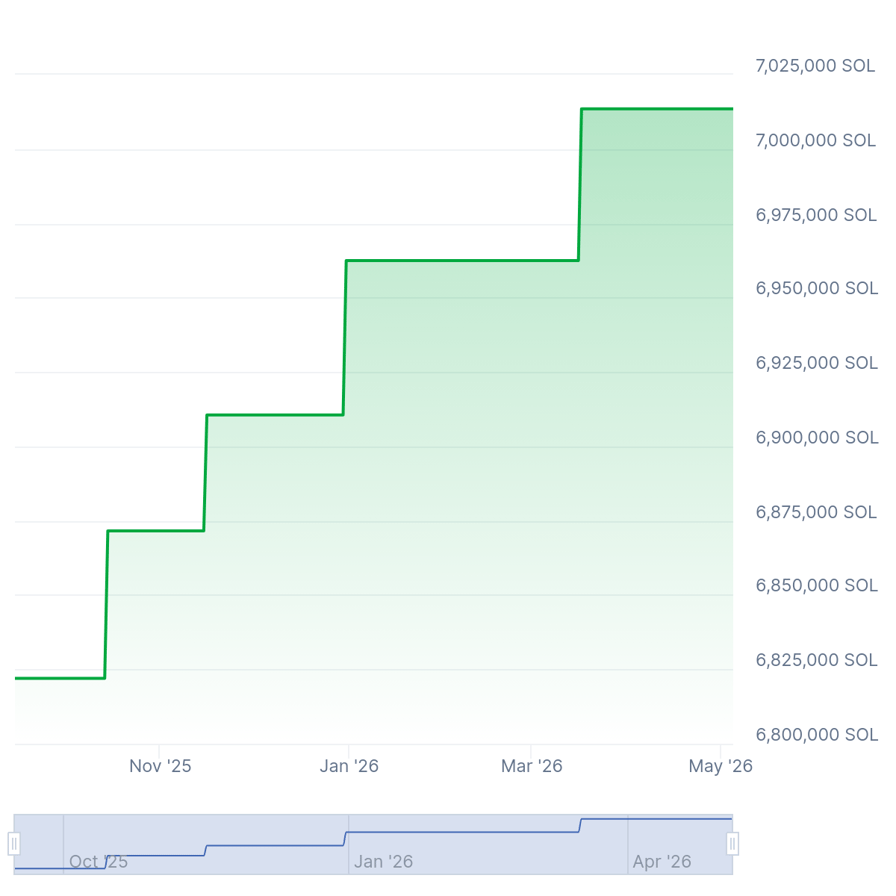
Forward Industries’ SOL accumulation over time. Source: CoinGecko
Related: Dubai Insurance launches crypto wallet for premium payments, claims
Blockchain pilots target inefficiencies in global reinsurance market
While estimates vary, the global reinsurance market is valued at more than $600 billion, with growth driven by rising demand for risk transfer. Total reinsurance premiums are closer to $2 trillion in value.
Blockchain-based platforms are being tested as a way to streamline traditionally manual processes by introducing shared ledgers for real-time tracking, underwriting and claims settlement.
OnRe is not alone in this effort. Re, a decentralized reinsurance protocol, is another project aiming to connect institutional capital with collateralized insurance risk while offering tokenized yield products.
Other protocols are also emerging to provide insurance and reinsurance coverage for decentralized finance applications and smart contracts, though the sector remains early-stage and largely experimental.
There are also efforts to apply blockchain and digital assets across different parts of the insurance value chain. For example, insurance broker Aon has tested the use of stablecoins for paying insurance premiums.
Tim Fletcher, CEO of Aon’s financial services devision, said tokenized assets are likely to become increasingly integrated into traditional financial systems.
Related: Crypto Biz: Capital has no consensus
Crypto World
Strategy Inc Posts $12.54B Net Loss in Q1 2026 as Bitcoin Price Drop Hits Holdings Hard

TLDR:
-
- Strategy held 818,334 BTC as of May 3, 2026, reflecting a 22% year-to-date growth in bitcoin holdings.
- STRC preferred stock raised $5.58B year to date, scaling to $8.5B total in just nine months of existence.
- Strategy achieved a 9.4% BTC Yield and a $4.97B BTC Dollar Gain through the first four months of 2026.
- The company has met 23 consecutive preferred dividend payments, totaling over $693 million since early 2025.
- Strategy held 818,334 BTC as of May 3, 2026, reflecting a 22% year-to-date growth in bitcoin holdings.
Strategy Inc posted a net loss of $12.54 billion for the first quarter of 2026. The loss was driven by a $14.46 billion unrealized loss on its bitcoin holdings.
Bitcoin prices fell during the quarter, pulling down the carrying value of the company’s digital assets. Despite the loss, Strategy continued expanding its bitcoin position and raising capital through its preferred equity products.
Bitcoin Holdings Expand Even as Prices Fall
Strategy held approximately 818,334 BTC as of May 3, 2026, marking a 22% growth year to date. The average purchase price per bitcoin stood at roughly $75,537.
The company’s total digital asset cost basis reached $61.81 billion. The market value of those holdings came in at $64.14 billion, based on a bitcoin price of about $78,374 as of May 1.
The company achieved a BTC Yield of 9.4% year to date through its capital markets activity. It also recorded a BTC Gain of 63,410 bitcoins and a BTC Dollar Gain of approximately $4.97 billion.
These figures reflect Strategy’s ongoing effort to grow bitcoin holdings on a per-share basis. The metrics are used internally to assess whether capital raises are accretive to shareholders.
President and CEO Phong Le addressed the broader market environment during the earnings announcement. “Adoption of Bitcoin continues to grow in 2026. Digital Credit, highlighted by STRC, has been a big success,” Le said.
He pointed to rising institutional activity from major banks as further validation of the company’s direction. Morgan Stanley, Goldman Sachs, and Citi were among those named as expanding into bitcoin-related services.
Strategy raised $11.68 billion year to date to fund its bitcoin acquisition strategy. The company used proceeds from its at-the-market offering program, pulling in $7.37 billion during Q1 alone.
An additional $4.32 billion came in between April 1 and May 3. Cash and cash equivalents stood at $2.21 billion as of March 31, 2026, down slightly from $2.30 billion at year-end 2025.
Total revenues rose 11.9% year over year to $124.3 million for the quarter. Gross profit reached $83.4 million, with a gross margin of 67.1%, compared to 69.4% in Q1 2025.
The software business remained a stable contributor to overall operations. Strategy continues to describe itself as an industry leader in AI-powered enterprise analytics software.
STRC Preferred Stock Sees Strong Demand
Strategy’s STRC preferred stock raised $5.58 billion year to date, representing 189% growth. The product scaled to $8.5 billion in just nine months, making it the largest preferred stock by market capitalization globally.
Daily trading volume reached $375 million, while volatility dropped to 3%. STRC maintained that stability even through the recent bitcoin bear market.
CFO Andrew Kang highlighted the company’s dividend track record during the quarter. “We continue to extend our track record of servicing our dividends, having now met our payment obligations on time and in full across 23 consecutive distributions,” Kang said.
Total cumulative preferred dividends declared and paid have reached over $693 million since early 2025. Kang also cited a BTC Dollar Gain of approximately $5 billion through the first four months of the year.
Executive Chairman Michael Saylor spoke to the growing ecosystem around the STRC instrument. “STRC has scaled to $8.5 billion in just 9 months and is now the largest preferred stock by market cap in the world,” Saylor said.
He attributed the product’s performance to its design, which extracts bitcoin’s returns while engineering price stability.
Saylor added that the company has proposed doubling STRC’s dividend payment frequency to a semi-monthly schedule.
Over $150 million of STRC is now held in corporate treasuries, including Prevalon, Strive, and Anchorage. More than $270 million sits across DeFi protocols such as Apyx and Saturn.
Strategy carries a Sharpe ratio of 2.53 on STRC. The company positions itself as the dominant issuer of digital credit instruments in the world.
Operating Loss Widens Year Over Year
Strategy’s operating loss for Q1 2026 reached $14.47 billion, compared to $5.92 billion for Q1 2025. The unrealized bitcoin loss of $14.46 billion accounted for nearly all of that figure.
Under current accounting standards, bitcoin must be marked to fair value each reporting period. Any price decline flows directly into the income statement as an unrealized loss.
Net loss attributable to common stockholders was $12.77 billion, compared to $4.23 billion in Q1 2025. On a diluted per-share basis, the loss came in at $38.25, versus $16.49 in the prior-year period.
The company’s preferred dividends contributed to the gap between net loss and the figure attributable to common stockholders. Strategy has declared and paid $692.5 million in cumulative preferred dividends to date.
Strategy confirmed it does not expect to generate accumulated earnings and profits for U.S. federal income tax purposes.
Distributions on preferred equity instruments are therefore expected to be treated as non-taxable return of capital for the foreseeable future.
This treatment is expected to remain in place for at least ten years. Shareholders are advised to consult their own tax advisors regarding individual circumstances.
Despite the reported losses, Strategy maintained its standing as the world’s largest corporate bitcoin holder. The company stated that its combination of bitcoin treasury management and enterprise analytics software supports long-term value creation.
Strategy’s dashboard at strategy.com serves as a public disclosure channel for its holdings, KPIs, and securities data. A live webinar covering the Q1 results was held on May 5 at 5:00 p.m. ET.

Crypto World
It’s transparency, not tech alone, that drives crypto adoption, panelists tell Consensus Miami
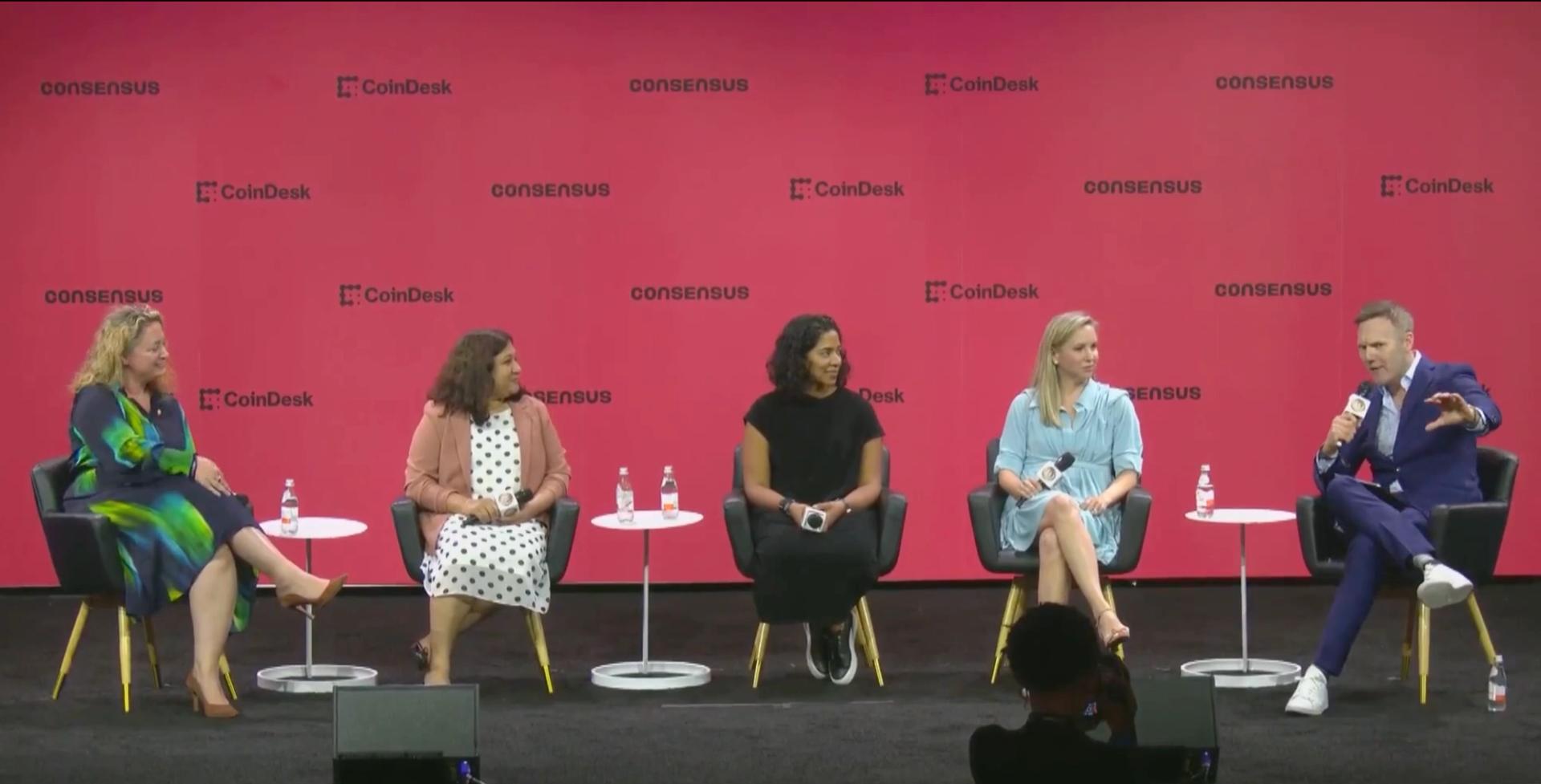
The path to mainstream crypto adoption runs through more visible, controllable product design, executives from PayPal, Robinhood, Public.com and 248 Ventures told CoinDesk’s Consensus Miami conference Tuesday.
“It’s important to tell users with AI products what the underlying system is not doing in addition to what it is doing,” Public.com CFO Sruthi Lanka said. Public has built its agentic-investing product so that users review and approve a “deterministic recipe” before any trade is placed. “Make sure it’s not a black box,” she said. The result, according to Lanka, is an organization where everyone is now writing code: “I have accountants writing code. We have marketing people playing with code. Everyone is an engineer, and I think that’s only going to become more commonplace.”
Smitha Purohit, PayPal’s senior director of product for crypto, said trust is “a factor of two things;” whether users can start small and experiment, and whether the company has their back when something goes wrong.
“When you build too fast, compliance comes as a secondary thought, and I don’t think that’s the way to build scalable products. It should be compliance first, regulatory first, and that’s how PayPal looks at everything,” she said.
Nicola White, Robinhood’s vice president of crypto institutions and general manager of Bitstamp, said 50% of the company’s new first-quarter users self-identified as first-time investors, pointing to that as the reason to push back on retail product velocity.
“We’re all building so quickly. I think we need to make sure that we’re slowing down and thinking about: is what we’re building the right thing for the customer? […] I think we’re introducing risks that maybe people don’t understand,” she said, citing the Oct. 10 crypto liquidation event and questioning, “Is 100x something that a retail client should be offered?”
Lindsey Bell, Chief Investment Strategist at 248 Ventures, framed adoption as ultimately an emotional decision. “People’s purchasing or usership is really driven by emotion; it’s driven by fear. You have to be able to tap into that. And I think you do that best by talking to your customers and your prospects and really figuring out what’s making their heart beat,” she said, citing earlier remarks from a former Mastercard CMO that traditional market research is now only “23% accurate.”
In a closing lightning round, Lanka predicted users will “increasingly make the wealth manager redundant”; White predicted CLARITY Act passage and tokenized RWAs hitting stride in the U.S.; Bell floated that “by the beginning of next year,” 80% of Americans could be operating with at least one AI agent; and Purohit predicted “pay as you go” models for content, pointing to stablecoins as a way to enable micropayments.


Wall Street executives warned at Consensus 2026 that legacy markets built for slower trading are breaking under 24/7 crypto pressure.
Summary
- Top executives at Consensus 2026 in Miami warned that traditional financial infrastructure was designed for human-paced, scheduled trading.
- Round-the-clock, machine-driven crypto activity is creating growing friction with settlement systems built for fixed market hours.
- The pressure is accelerating institutional demand for tokenized settlement, real-time clearing, and upgraded market infrastructure.
Wall Street executives gathering at Consensus 2026 in Miami on May 5 warned that traditional financial infrastructure was not built to absorb round-the-clock, machine-driven trading.
As crypto markets operate continuously and algorithmic activity accelerates, legacy systems built for scheduled market hours and human-paced settlement are showing strain. Consensus 2026 drew over 20,000 attendees and broke records for regulatory presence, with Bitcoin breaking $80,000 on the conference’s opening day.
The friction is most acute in settlement infrastructure. Traditional clearing systems process trades in scheduled batches tied to market open and close times, a design that works for equities with fixed hours but fails under continuous pressure.
Executives at the conference pointed to tokenized settlement as the most credible path forward, allowing trades to settle continuously on blockchain rails rather than queuing in legacy batch cycles.
Tokenization as the infrastructure answer
The argument maps directly to regulatory developments already in motion. Nasdaq won SEC approval to trial tokenized stock trading in March 2026, allowing eligible participants to trade securities in traditional or blockchain form on the same platform.
The Federal Reserve also issued guidance confirming that tokenized securities receive the same capital treatment as conventional equivalents, removing a key institutional adoption barrier.
Bullish’s $4.2 billion acquisition of transfer agent Equiniti, announced today, offers the most direct institutional response to the infrastructure gap. Bullish described the deal as creating “the global transfer agent for tokenized securities,” a company serving 3,000 existing corporate clients and 20 million shareholders.
The Consensus warnings and the Bullish deal together frame the conference as the moment the gap between legacy market infrastructure and 24/7 crypto reality became a shared institutional problem rather than a fringe concern.
Crypto World
Trust in crypto remains biggest barrier to adoption, say Consensus Miami 2026 panelists


Trust remains a primary barrier to broader crypto adoption, according to representatives from the National Cryptocurrency Association, Circle, U.S. Bank and ChangeNOW at Consensus 2026 in Miami.
Ali Tager of the National Cryptocurrency Association said research shows “the number one barrier to non-crypto holders is they just do not get it,” citing complexity, jargon and misinformation as persistent challenges.
Panelists from Circle, U.S. Bank and ChangeNOW said trust is built gradually through user experience rather than technical claims. Britt Cambas of Circle said “you are not going to get technical trust in 30 seconds,” emphasizing clarity and reducing complexity as prerequisites for adoption.
Rachel Castro of U.S. Bank said trust is central to financial services and “very easily broken,” adding that rebuilding it takes significantly longer once lost.
Speakers highlighted customer support and human interaction as critical differentiators in crypto platforms. Pauline Shangett of ChangeNOW said “the primary factor of trust for me when it comes to a web3 project is a feeling that you are working with real people,” pointing to gaps in user support across the industry.
Cambas said reducing ambiguity in products and partnerships is key, noting that simplifying complex systems can drive adoption more effectively than new features.
Panelists also pointed to education as a necessary step for onboarding new users. Tager said the industry must “make it super simple, make it accessible, make it trustworthy” to reach mainstream audiences.
The discussion, moderated by Ashley Wright, focused on designing systems that prioritize transparency, usability and communication, with speakers agreeing that trust must be embedded across product design, customer engagement and regulatory frameworks rather than treated as a standalone feature.


Polymarket’s official Panama headquarters does not appear to function as such, according to a new investigation that found no trace of the prediction market giant at the law office it lists as its corporate base.
Reporters who visited the 21st floor of Panama City’s Oceania Business Plaza found empty workstations and an employee who had never heard of Polymarket or its Panama entity, Adventure One QSS Inc.
Inside the Empty Office Polymarket Calls Home
Public records reportedly reviewed by NPR show Polymarket is far from alone. At least 15 other crypto companies use the same Panama City law firm as their registered base.
Names listed at the address include Helix, Drift Protocol, Goldfinch, and Parti. Parti runs a prediction-market live-streaming site that partners directly with Polymarket.
“We looked into Polymarket’s presence in Panama, obtained its government paperwork and visited its headquarters in Panama City. There was no sign of Polymarket. Nobody had heard of Polymarket there. After more digging, we found that more than a dozen other crypto companies were not just incorporated there but also claim the address as their HQ. Turns out, SBF even did business with the the office listed as Polymarket’s HQ,” noted Bobby Allyn of NPR.
The office is reportedly run by attorney Mario García de Paredes. His firm (García de Paredes Law) also did legal work for FTX, and is listed in FTX bankruptcy filings as an unsecured creditor owed $13,889 for prior legal work.
Founder Sam Bankman-Fried is serving a 25-year prison sentence for fraud. A bankruptcy filing lists the law office as a creditor owed $13,889 by the collapsed exchange.
Why Crypto Firms Choose Panama
The Biden administration penalized Polymarket in 2022 for operating without a license, prompting the company to relocate offshore. By 2024, FBI agents raided CEO Shayne Coplan’s Manhattan apartment.
Trump-era officials have since eased the pressure. The Justice Department dropped its probe.
Donald Trump Jr. later joined the advisory board through his fund 1789 Capital.
A regulated U.S. version of the company is now plotting a domestic return.
April volume on the offshore exchange exceeded $8 billion. Last month, prosecutors indicted a U.S. Army master sergeant for using a VPN. He allegedly bet on the toppling of Venezuelan leader Nicolás Maduro.
Lawyers say the appeal of Panama goes beyond tax. There is no income tax on companies operating outside the country. Foreign court judgements also require approval from Panama’s supreme court before they can be enforced locally.
“From a tax and regulatory point of view, Panama offers many advantages,” NPR reported, citing Bruce Zagaris, a Washington lawyer who specializes in international criminal law.
The post Polymarket’s Panama HQ Is Reportedly a Shared Law Office That Also Worked With FTX appeared first on BeInCrypto.

Valve Releases Design Files For Its Out-Of-Stock Steam Controller

MG ups its game as sleek IM6 takes on heavyweight rivals

AMC, Arena One to screen live concerts

Manchester United reach agreement with Casemiro over contract clause amid transfer speculation

US brings back mandatory military draft registration

Steven Gerrard disagrees with Gary Neville over ‘shock’ Chelsea and Arsenal claim | Football

The U.S. is Unknowingly Building Bitcoin’s Biggest On-Ramp!

#1 Leverage Analysis – Concept – Financial Management ~ B.COM / BBA / CMA

IRON CASH 3 (AKI & PAWPAW) – Nigerian Movies 2026 Latest Full Movies | OSITA IHEME, CHINEDU IKEDIEZE
-

 NewsBeat2 days ago
Channel 5 – All Creatures Great and Small series 7 new post
-
 Tech4 days ago
Trump’s 25% EU auto tariff breaches Turnberry Agreement that also covers semiconductors and digital trade
-
 Business6 days ago
Tesla Officially Registers Elon Musk’s Stock: What Investors Need to Know
-
 Sports4 days ago
Paul Scholes issues Marcus Rashford reality check as agreement emerges over Man United star
-

 Business7 days ago
Barclay Brothers Avoid Bankruptcy: HSBC Drops High Court Petitions After IVA Deal
-

 Entertainment4 days ago
Met Gala 2026 Rumored Guest List Is Turning Heads
-

 Entertainment6 days ago
Celebrities Who Are Attending the 2026 Met Gala Event
-

 Entertainment6 days ago
Insider Claims Reason Behind Key & Peele Split
-

 Tech6 days ago
Texas Instruments made a new flagship graphing calculator: the TI-84 Evo
-

 Crypto World6 days ago
Meta (META) starts stablecoin payout to creators in Circle’s USDC on Polygon, Solana via Stripe
-

 Business5 days ago
Two Powerball Tickets Split $143 Million Jackpot in Indiana and Kansas
-

 Business6 days ago
Strait of Hormuz Remains Heavily Restricted on April 29 Amid Iran Conflict
-
Business5 days ago
Strait of Hormuz Blockade Persists Amid US-Iran Standoff, Sending Oil Prices Soaring
-

 Entertainment4 days ago
Kylie Jenner Hit With Second Lawsuit From Ex-Housekeeper
-
Business2 days ago
Winning Numbers Drawn as Jackpot Resets to $20 Million
-

 Sports6 days ago
Saudi Arabia set to withdraw LIV Golf funding after 2026 season, per reports
-
 Crypto World5 days ago
CoreWeave (CRWV) Stock Climbs 8% Despite $45M Insider Share Dump
-
Crypto World6 days ago
Securitize and Computershare Enable Tokenized Equity Issuance for Over 25,000 U.S.-Listed Stocks
-

 Sports4 days ago
Cavaliers vs. Raptors Game 6 live score, updates, highlights from 2026 NBA playoffs first-round series
-
 Sports4 days ago
David Benavidez responds to team Canelo saying the fight will never happen
You must be logged in to post a comment Login